1. Introduction
Electric motors are among the fundamental actuators of modern drive systems and are widely used in applications ranging from domestic environments to industrial automation. Depending on their operating principles and structural characteristics, electric motors can be classified into various categories. Among these, permanent magnet synchronous motors (PMSMs) have gained significant attention in applications requiring high efficiency, fast dynamic response, and precise control performance. Owing to their high torque-to-inertia ratio and effective operation over a broad operating range, PMSMs offer notable advantages over direct current (DC) and induction motors (IM) in variable-speed drive applications, as discussed by Ramírez-Villalobos et al. [
1].
PMSM drive systems inherently exhibit nonlinear dynamic behavior, and a wide range of control strategies have been developed in the literature to enhance their performance. Field-oriented control (FOC) by Ghanayem et al. [
2] and Samar et al. [
3], auto-tuning PID controllers by Akpunar Bozkurt [
4] and Xi et al. [
5], direct torque control (DTC) by Bossoufi et al. [
6] and Meesala et al. [
7], model predictive control (MPC) by Akpunar and Iplikci [
8] and Zou et al. [
9], adaptive control by Chen et al. [
10], and robust speed control approaches by Mousavi et al. [
11] have been extensively investigated for improving the speed and torque control of PMSMs. Among these methods, FOC has been widely adopted in industrial applications due to its implementation simplicity and high dynamic performance.
The real-time implementation of FOC and similar advanced control strategies requires accurate and reliable information on rotor speed and position. In conventional PMSM drive systems, this information is typically obtained using physical position sensors such as encoders or Hall-effect sensors mounted on the rotor shaft. However, the use of such sensors increases system cost and volume and may adversely affect reliability under harsh operating conditions, as highlighted by Wang et al. [
12]. These limitations have motivated the development of sensorless control techniques, in which rotor speed and position are estimated from measured stator voltages and currents, as described by Khadija et al. [
13].
Sensorless control strategies for PMSMs can generally be classified into two main categories: high-frequency signal injection methods and model-based methods, as reported by Zhang et al. [
14]. High-frequency signal injection techniques are applicable only to motors exhibiting saliency effects and may introduce additional losses, acoustic noise, and mechanical vibrations. In contrast, model-based methods may suffer from sensitivity to measurement noise, nonlinear effects, unmodeled dynamics, and variations in motor parameters, particularly in low-speed operating regions, as discussed by Andreescu and Petcu [
15]. Within this context, extended Kalman filters (EKF), sliding mode observers (SMO), model reference adaptive systems (MRAS), Luenberger observers, and back-electromotive-force (back-EMF)-based approaches have been widely employed for sensorless speed and position estimation in PMSMs, as summarized by Li and Zhu [
16].
Sensorless speed and position estimation of PMSMs has been extensively investigated using model-based observer techniques. Kalman-filter-based approaches constitute one of the earliest and most widely adopted solutions. EKF-based sensorless control schemes were proposed to estimate rotor speed and position through nonlinear state-space formulations for PMSM drives by Zheng et al. [
17]. To further improve estimation accuracy, particularly under transient operating conditions, higher-order numerical integration techniques were incorporated into EKF structures. In this context, Runge–Kutta-based Extended Kalman Filters (RKEKF) were used to enhance numerical robustness and estimation precision, with real-time experimental validations confirming their effectiveness for simultaneous rotor speed and position estimation by Akpunar Bozkurt [
18].
SMO-based methods have also been widely explored due to their robustness against parameter uncertainties and external disturbances. Sensorless control strategies employing classical SMO demonstrated reliable speed estimation performance, especially in high-speed operating regions by Liang et al. [
19]. To address speed estimation accuracy degradation and vibration effects, improved adaptive super-twisting sliding mode observers (IAST-SMO) were introduced. These approaches were further supported by enhanced quadrature signal generators based on improved super-twisting algorithms (IST-QSG), leading to improved estimation performance Wang and Liu [
20].
MRAS-based sensorless control strategies have been predominantly investigated for electric vehicle and traction applications. Classical MRAS observers were employed to ensure reliable speed estimation and operational continuity in the event of speed sensor failures, particularly within FOC frameworks Bendjedia and Chouireb [
21]. To further improve dynamic performance and reduce vibration phenomena, fuzzy-logic-enhanced MRAS algorithms were proposed, enabling the minimization of errors between measured and estimated stator currents and resulting in improved rotor speed regulation quality by Khanh and Anh [
22].
Back-EMF-based methods remain among the classical sensorless control techniques for PMSMs. Sensorless speed control strategies integrated with FOC were developed by exploiting the back-EMF induced in stator windings by Krishnan et al. [
23]. These approaches were subsequently enhanced by incorporating additional observer structures to improve rotor speed and position reconstruction accuracy across a wider operating range by Zaghrini et al. [
24].
Within the class of Luenberger-observer-based methods, sensorless PMSM control systems derived from motor state equations were analyzed to investigate the effects of resistance and inductance variations on estimation accuracy. To improve robustness, current compensation mechanisms were incorporated into the observer structure by Gu et al. [
25]. Furthermore, optimization-based approaches were employed to enhance dynamic performance, where particle swarm optimization (PSO) algorithms were used to tune the PI controller parameters of speed loops in PLL- and Luenberger-observer-based sensorless PMSM control schemes by Luo et al. [
26].
The Runge–Kutta model-based nonlinear gradient observer (RKGO) employed in this study was originally developed for synchronization and observer-based control of chaotic systems by Beyhan [
27]. Unlike its original application domain, the proposed approach is adapted in this work to address the sensorless speed and position estimation problem of a nonlinear electromechanical system, namely a PMSM. The adopted and adapted observer aims to provide stable and reliable state estimation under discrete-time nonlinear dynamics, with a focus on practical drive system applications rather than chaos analysis. The proposed approach particularly targets reliable estimation under low-speed operating conditions. The experimental emphasis of the study clearly demonstrates the real-time applicability of the proposed method.
Table 1 presents a comparison of commonly used sensorless estimation methods for PMSM drives. EKF-based approaches provide high estimation accuracy but require significant computational resources due to matrix operations. SMO is robust but may suffer from chattering effects. MRAS-based methods offer a simpler structure but can be sensitive to parameter variations.
As summarized in
Table 1, conventional model-based sensorless control methods such as EKF, SMO, and MRAS generally exhibit limited performance in the low-speed region. In contrast, the proposed RKGO method demonstrates strong low-speed capability and provides reliable performance in the experimentally validated low-speed operating range.
The RKGO is designed to achieve a balanced compromise between these conflicting requirements. By integrating a nonlinear gradient adaptation mechanism with a Runge–Kutta discretization scheme, the proposed method ensures fast convergence and improved numerical stability while maintaining moderate computational complexity. This makes the RKGO particularly suitable for real-time implementation on platforms such as dSPACE DS1104.
To the best of the author’s knowledge, the RKGO has not previously been applied to sensorless PMSM control in the literature.
In this study, an RKGO is adopted and adapted for sensorless speed and rotor position estimation of a PMSM. The adapted approach utilizes stator voltage inputs and measured currents to estimate the unmeasured mechanical states under discrete-time nonlinear dynamics. The feasibility and effectiveness of the adopted observer are experimentally validated on a real-time PMSM drive system implemented on a dSPACE DS1104 platform under various operating conditions, including low-speed and loaded transient scenarios. Furthermore, a comparative analysis with the EKF and the RKEKF is conducted at 60 rad/s under the same experimental setup to provide a benchmark performance assessment.
The main contributions of this study are summarized as follows:
The RKGO is adapted to the nonlinear PMSM model for rotor speed and position estimation.
A sensorless PMSM control framework based on the RKGO is developed.
RKGO is implemented in real-time on a dSPACE DS1104 platform.
The estimation performance of the RKGO is experimentally compared with EKF and RKEKF.
The remainder of this paper is organized as follows.
Section 2 presents the mathematical model of the PMSM. The RKGO algorithm is described in
Section 3. Experimental results are provided in
Section 4, and concluding remarks are given in
Section 5.
2. PMSM Mathematical Equations
The dynamic behavior of a PMSM can be represented in a more compact and control-oriented form when expressed in the synchronously rotating d–q reference frame. Accordingly, the stator voltage equations of the PMSM, modeled as a two-phase system in the d–q axes, are given in Equation (1):
where
denotes the stator resistance,
and
represent the d-axis and q-axis inductances, respectively. The electrical angular speed is denoted by
, and
indicates the permanent magnet flux linkage [
28,
29,
30,
31].
The electromagnetic torque generated by the PMSM is expressed as a function of the d–q axis currents, and this relationship is shown in Equation (2):
where
denotes the number of pole pairs of the motor.
The relationship between the electromagnetic torque and the mechanical subsystem is described by the motion equation of the motor, which is given in Equation (3):
here,
represents the load torque,
is the viscous friction coefficient,
denotes the rotor moment of inertia, and
is the mechanical angular speed. The relationship between the electrical and mechanical angular speeds is defined as
.
All angular speed values presented in this study refer to mechanical angular speed unless otherwise stated.
By combining the electrical and mechanical equations, the nonlinear state equations of the PMSM are obtained, which are presented in Equation (4):
In this nonlinear model, it is important to note that the rotor position is obtained as the time integral of the mechanical angular speed. Accordingly, the rotor position is defined in Equation (5) as
This relationship plays a fundamental role in sensorless control and observer-based estimation algorithms, where the rotor position must be reconstructed without direct mechanical measurements [
28,
29,
30,
31].
3. Runge–Kutta Model-Based Nonlinear Gradient Observer
Unlike linear observers, which are typically derived from linearized PMSM models around a specific operating point, the RKGO is formulated directly based on the nonlinear system dynamics. Since the PMSM inherently exhibits nonlinear characteristics due to rotor position coupling and back-EMF terms, linear observers may suffer from performance degradation under varying speed and load conditions.
Nonlinear observers, such as the proposed gradient-based structure, provide improved convergence behavior and enhanced robustness against parameter mismatch, particularly under low-speed operation where back-EMF amplitude becomes small. However, these advantages come at the cost of moderately increased computational complexity and more careful gain tuning requirements.
The RKGO achieves a balanced compromise between estimation accuracy and implementation complexity, making it suitable for real-time applications on embedded platforms.
In this study, the RKGO is employed for the sensorless estimation of speed and position in a PMSM.
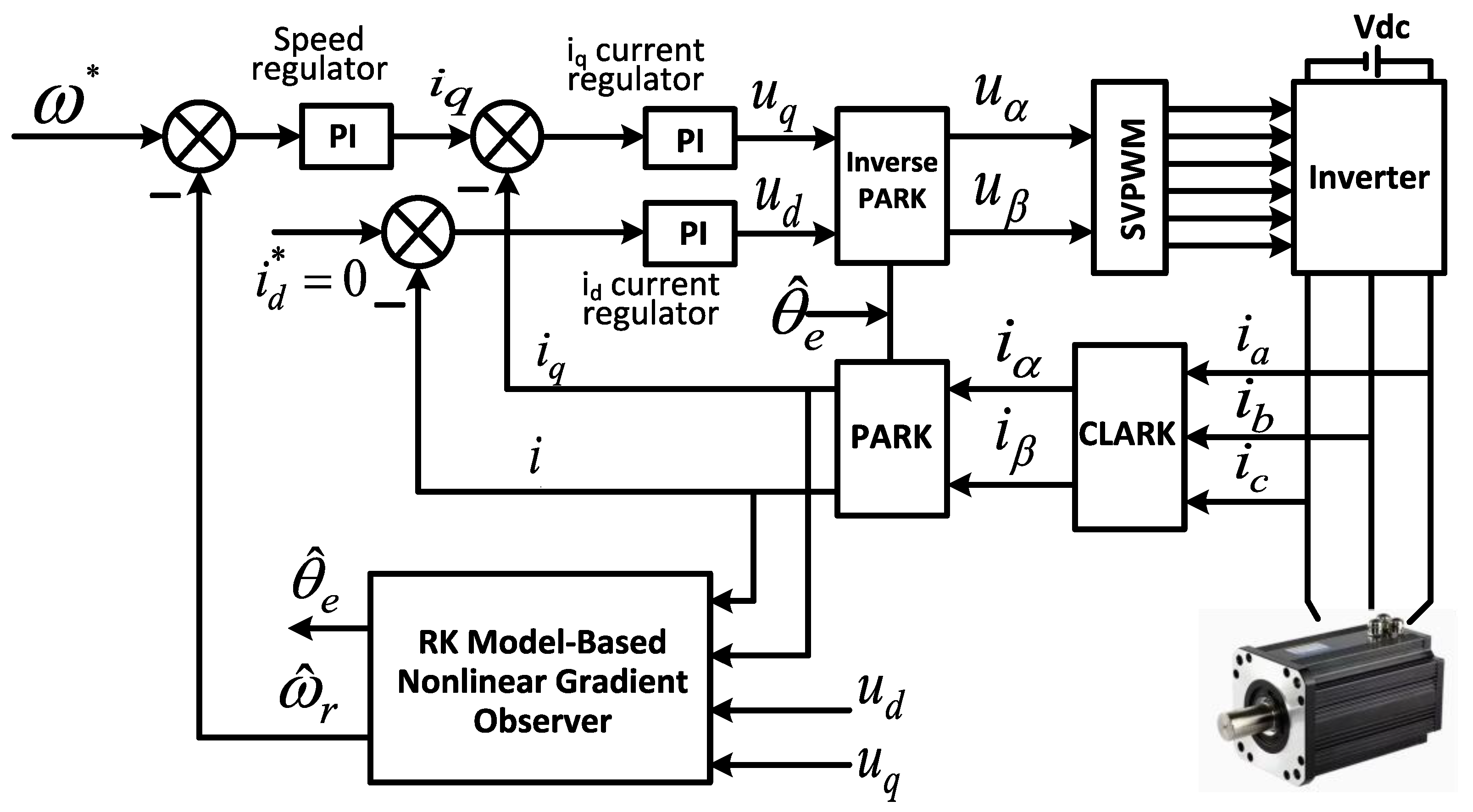
Figure 1 illustrates the block diagram of the sensorless PMSM control scheme based on the RKGO. In this structure, three-phase stator current signals are measured from the PMSM. These signals are first transformed into the α–β reference frame using the Clarke transformation and subsequently converted into the d–q reference frame through the Park transformation. The resulting d–q axis current components and d–q axis stator voltages are applied as input signals to the RKGO block in order to estimate the unmeasured system states. The observer outputs provide estimates of the rotor speed and position, which are used as feedback signals in the control loop.
The PMSM considered in this study operates under sensorless conditions and is modeled as a multi-input multi-output (MIMO) nonlinear system. The general state-space representation of a nonlinear MIMO system is given in Equation (6):
where
denotes the state vector,
represents the input vector, and
is the output vector. PMSMs are nonlinear yet controllable systems, whose dynamics are defined in terms of state variables, control inputs, and system parameters. Accordingly, the state vector of the PMSM is defined as
, the input vector as
, and the output vector as
.
To implement the nonlinear observer in discrete time, a fourth-order Runge–Kutta (RK) integration method is adopted for the discretization of the system states. When the nonlinear system in Equation (6) is sampled with a sampling period
, the discretized model at the
th discrete-time index can be expressed as shown in Equation (7):
The
k1,
k2,
k3, and
k4 variables are defined as shown in Equation (8) [
32]:
The RKGO follows the same structural form as the discretized system model defined in Equations (7) and (8). In the observer, the nonlinear functions
and
are approximately evaluated using the estimated state variables. When the observer accurately captures the system dynamics, the estimated states converge toward the true system states. The correction of the state estimates is performed using a gradient descent approach based on the current output measurement error. This update rule is given in Equation (9) [
27]:
where
and
denote the estimated state and output vectors, respectively. The quadratic cost function used in the estimation process is defined as
, where
represents the output estimation error. The gradient of the cost function with respect to the estimated states is expressed in Equation (10):
The term
plays a critical role in the observer structure. The Jacobian matrix of the output with respect to the state variables is derived using the Runge–Kutta discretized model. Accordingly, the output Jacobian matrix is given in Equation (11) [
27]:
The computation of the Jacobian matrix is carried out using the expressions provided in Equations (12) and (13), which enable the construction of the observer using exact derivative information in the discrete-time domain.
Finally, the measurement update of the state estimates is formulated using the Jacobian matrix and the Levenberg–Marquardt approach, as shown in Equation (14) [
27]:
here,
denotes the identity matrix, and
represents a coefficient. The resulting change in the estimated states is summarized in Equation (15):
The Levenberg–Marquardt coefficient μ plays an important role in the convergence characteristics of the RKGO. This parameter acts as a damping factor that balances the update behavior between the Gauss–Newton method and gradient descent during the optimization process. In practice, μ affects both the convergence speed and numerical stability of the observer. Smaller values of μ tend to accelerate the convergence rate but may lead to oscillatory behavior in the estimated states. Conversely, larger values improve numerical robustness but result in slower convergence of the observer dynamics. Therefore, μ should be selected to provide a compromise between fast transient response and stable estimation performance. In this study, the value of μ was determined through empirical tuning under different operating conditions. The selected value ensured stable convergence and satisfactory estimation performance in both transient and steady-state conditions.
4. Experimental Results
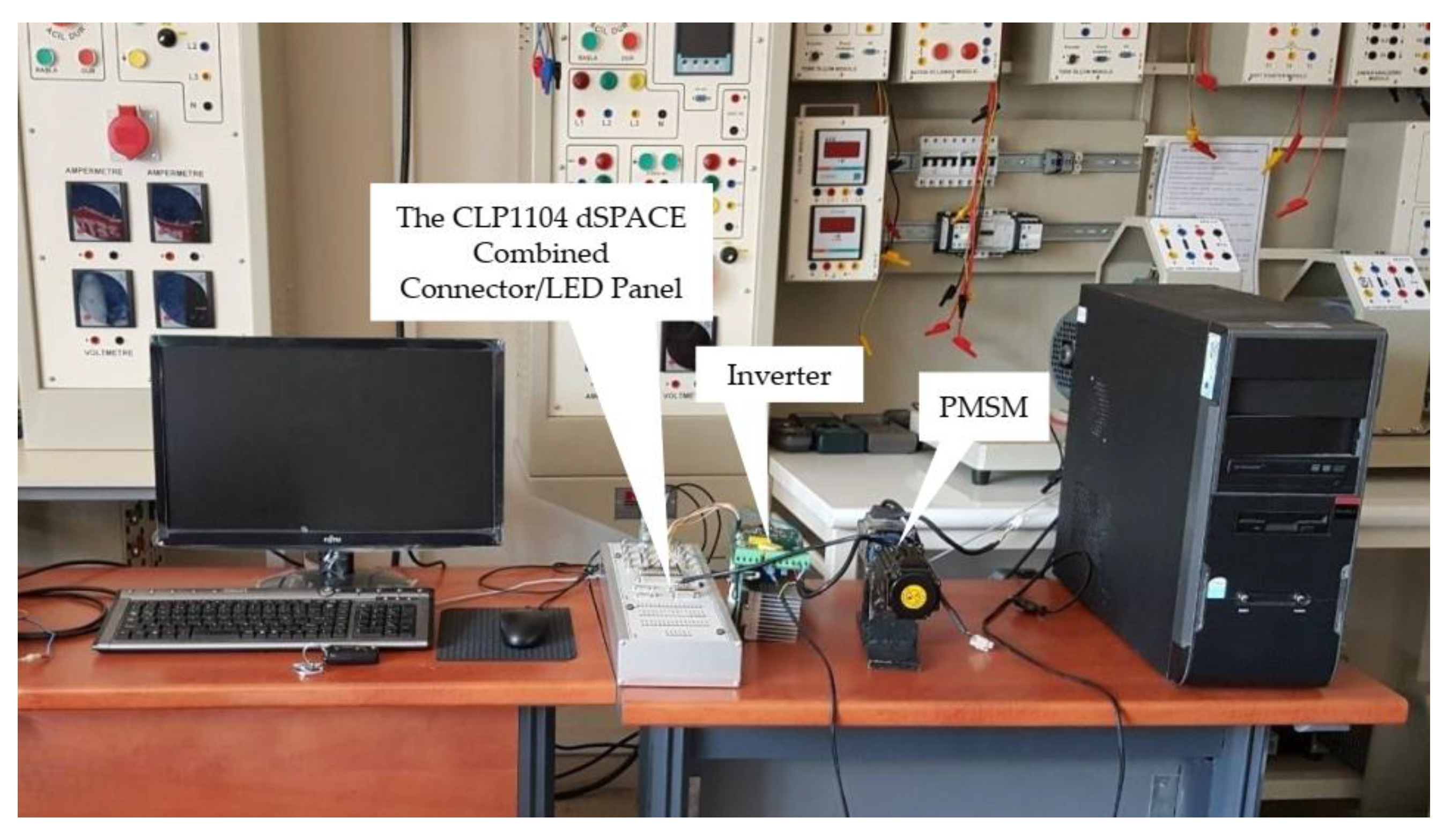
In order to verify the feasibility and performance of the adapted RKGO for the sensorless control of a PMSM, a series of experimental studies were conducted on the test platform shown in
Figure 2.
The experimental setup consists of a dSPACE DS1104 real-time control board (dSPACE GmbH, Paderborn, Germany), a PMSM operating under sensorless control, a permanent magnet synchronous generator (PMSG) used as a load machine, and a voltage source inverter implementing a space vector pulse width modulation (SVPWM) algorithm to apply the required voltages to the motor windings. The dSPACE DS1104 board is a standard rapid control prototyping platform designed for real-time applications and is based on a floating-point 250 MHz PowerPC processor with an auxiliary TMS320F240 DSP (Texas Instruments Inc., Dallas, TX, USA). This platform is particularly suitable for high-speed, multivariable digital control applications such as motor drives and robotic systems. In this study, it enabled the real-time sensorless control of the PMSM. The experimental validation focuses on low-speed operation, which represents the most challenging condition for sensorless PMSM control.
The main electrical and mechanical parameters of the PMSM used in the experimental validation are summarized in
Table 2.
During the experiments, the PMSM was operated entirely in sensorless mode. The three-phase stator current and voltage signals measured from the PMSM were first transformed into the α–β reference frame using the Clarke transformation and subsequently converted into the d–q reference frame via the Park transformation. The unmeasured system states, namely the rotor speed and rotor position, were estimated using the adapted RKGO algorithm. These estimated quantities were then fed back into the control loop and used for speed control of the motor. In this manner, sensor-based speed and position measurements obtained from an encoder mounted on the PMSM shaft were replaced by the RKGO-based estimates, enabling fully sensorless operation. The PWM signals were generated at a sampling frequency of 5 kHz.
The rated speed of 3000 r/min (314.16 rad/s) corresponds to the base speed of the motor. The maximum speed is not explicitly considered in this study, as the experimental validation focuses on the low-speed operating region, which represents the most critical operating condition for sensorless PMSM control.
The experimental validation is carried out at multiple speed levels (30, 60, 80, and 100 rad/s) to assess the performance of the proposed method under low-speed operating conditions.
First, the motor was operated at low-speed operating conditions, and the rotor position estimation performance was analyzed during both transient and steady-state operation. Subsequently, the system was evaluated under loaded conditions and step changes in the speed reference.
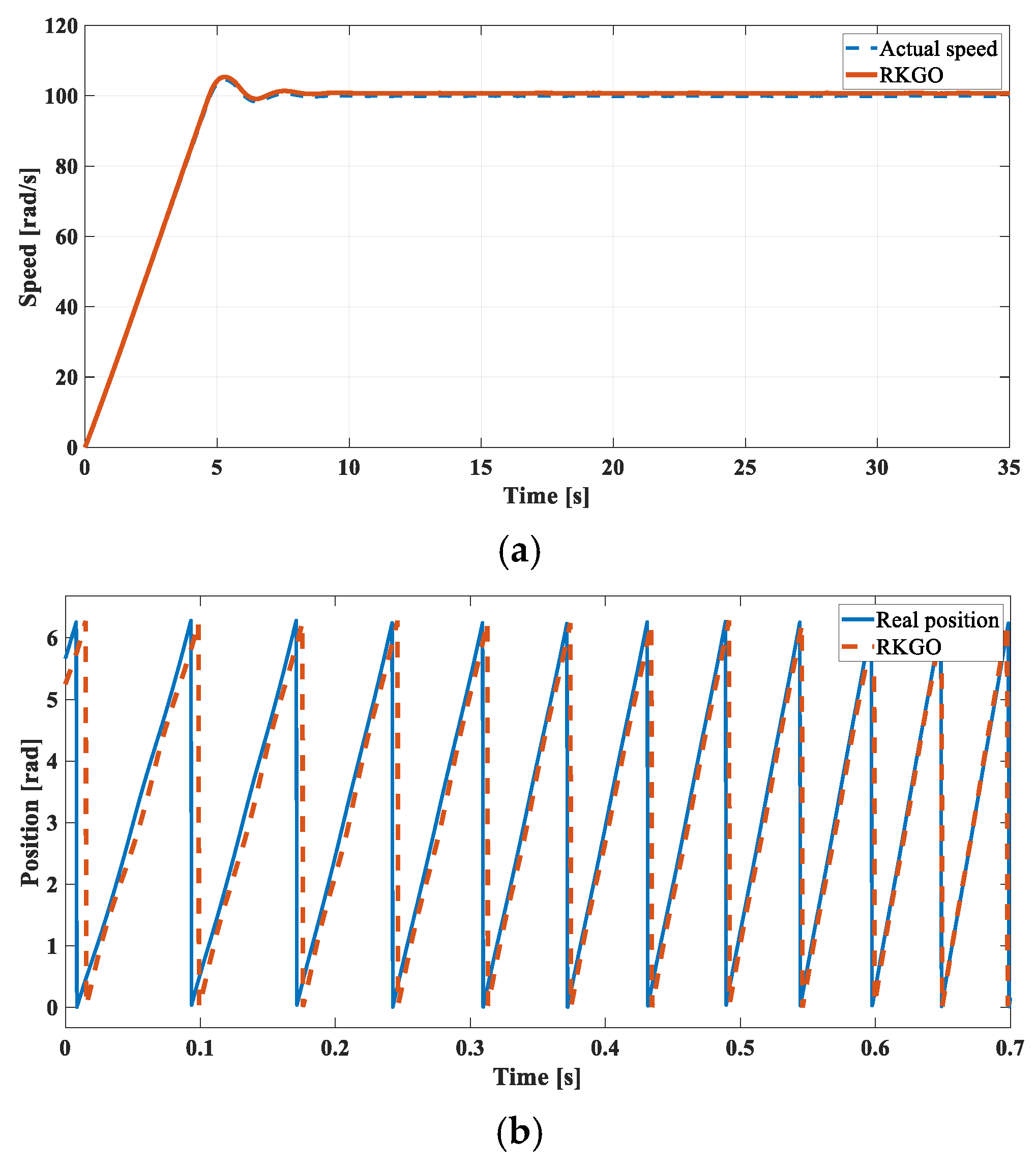
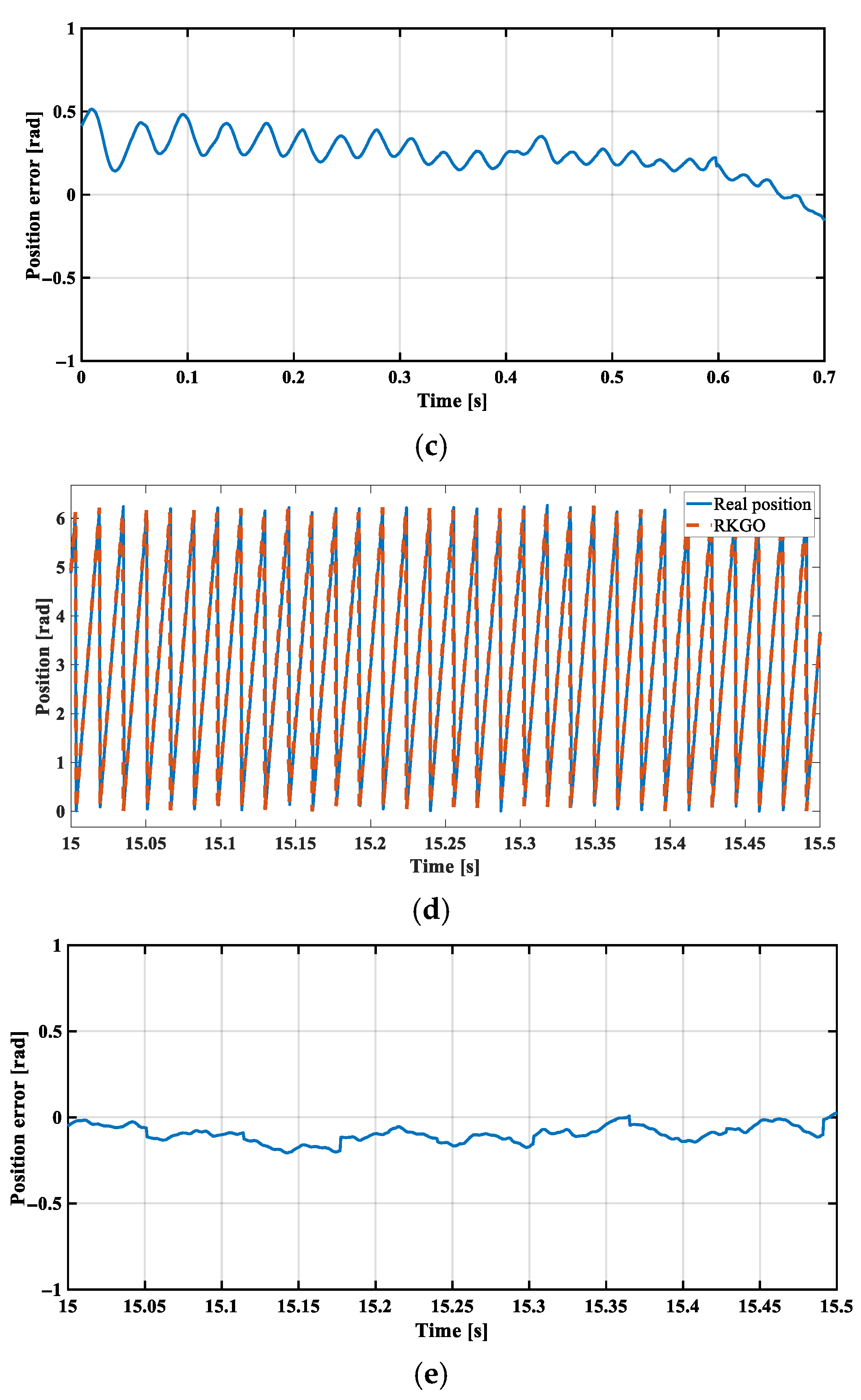
Figure 3 presents the experimental results obtained at a reference speed of 100 rad/s. As shown in
Figure 3a, both the speed estimated by the RKGO and the measured speed reach the reference value within approximately 8 s with a small overshoot.
Figure 3b,c show the real and estimated rotor positions and the corresponding rotor position error during the transient period (0 s < t < 0.7 s). At the initial stage, the rotor position estimated by the RKGO starts with a certain estimation error; however, it rapidly converges to the actual rotor position.
Figure 3d,e present the real and estimated rotor positions and the corresponding rotor position error under steady-state conditions (15 s < t < 15.5 s). The rotor position estimated by the RKGO closely follows the actual rotor position with high accuracy.
At a speed of 100 rad/s, the RKGO-based observer exhibits a steady-state position error of about 0.1 rad. This small offset is mainly attributed to model uncertainties and parameter mismatches. Nevertheless, the speed controller accurately tracks the reference speed, indicating that the estimated rotor position is sufficiently precise for closed-loop control. During the transient period, the estimation error converges to approximately 0.1 rad within 0.7 s, demonstrating satisfactory convergence and dynamic performance.
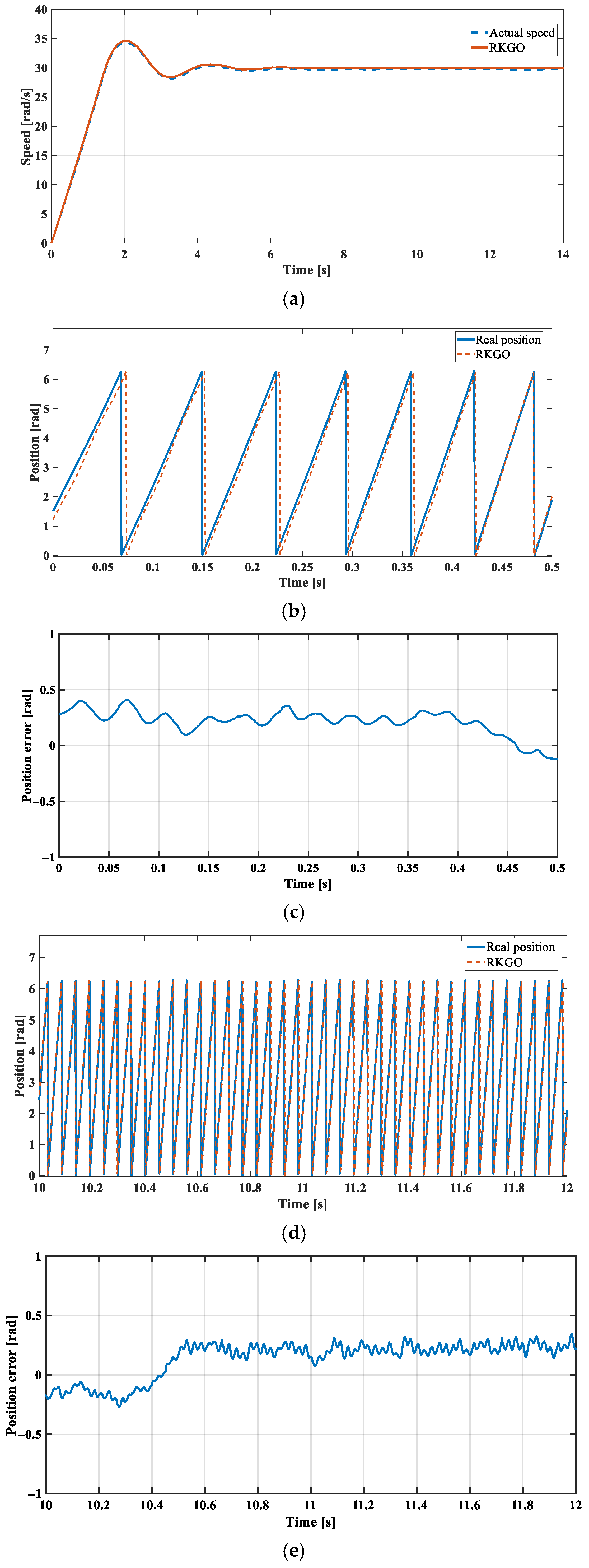
Figure 4 shows the experimental results corresponding to a reference speed of 30 rad/s. In
Figure 4a, both the measured speed and the RKGO-estimated speed reach the reference value within approximately 5 s with a small overshoot.
Figure 4b,c show the real and estimated rotor positions and the corresponding rotor position error during the transient period (0 s < t < 0.5 s), where the initial estimation error rapidly diminishes.
Figure 4d,e present the real and estimated rotor positions and the corresponding rotor position error under steady-state conditions (10 s < t < 12 s). The rotor position estimated by the RKGO closely follows the actual rotor position.
The proposed RKGO exhibits a small steady-state position error of approximately 0.2 rad at low speeds. This bias is mainly attributed to model uncertainties and unmodeled disturbances, including parameter mismatches. Despite this small offset, the speed control loop accurately tracks the reference speed, indicating that the observer provides sufficiently precise rotor position information for closed-loop control. Therefore, the proposed method ensures stable operation and satisfactory control performance.
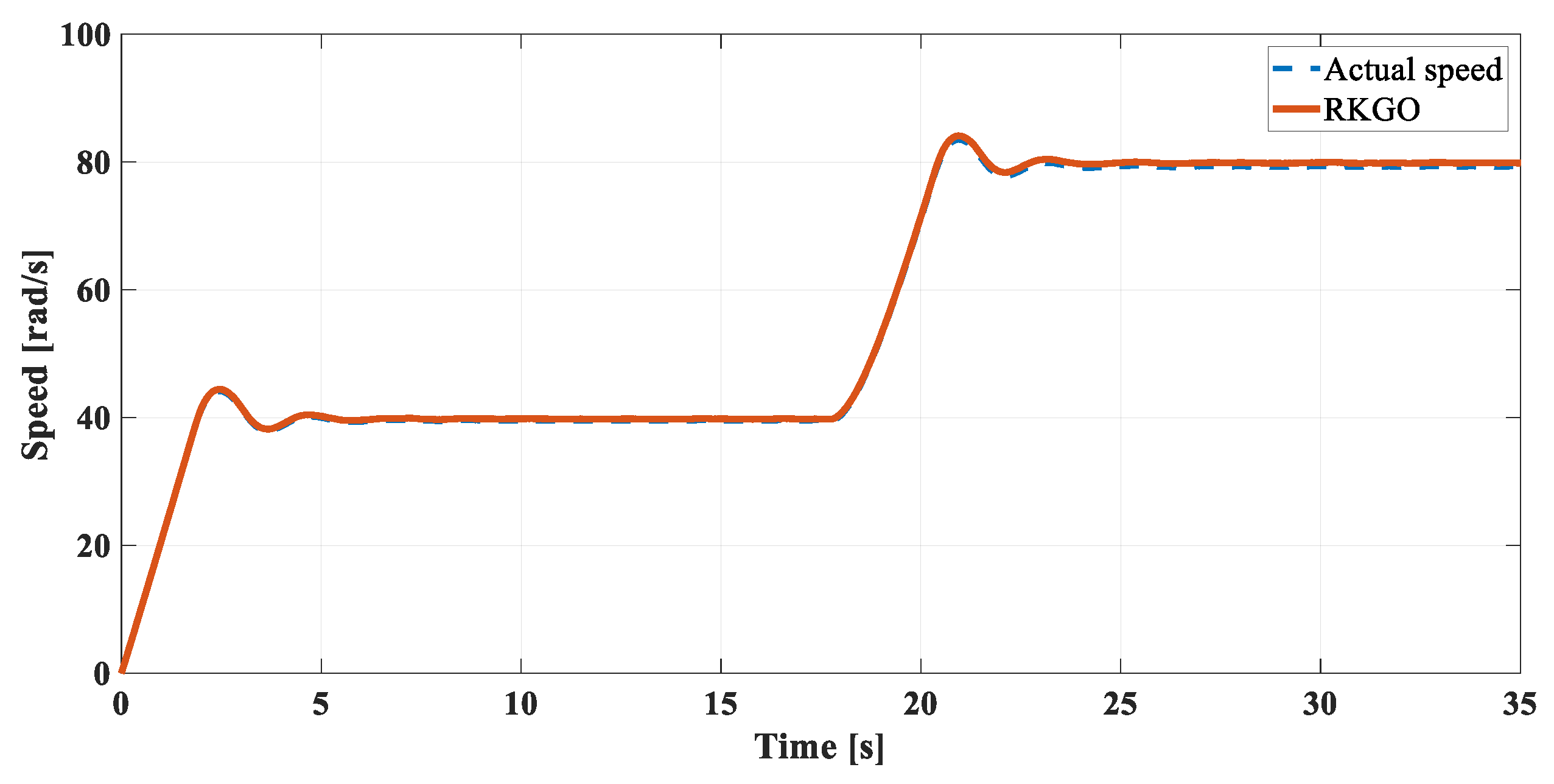
Figure 5 presents the results of the acceleration test conducted under loaded operating conditions. In this experiment, the motor was initially operated at a speed of 40 rad/s for approximately 18 s, after which the reference speed was increased to 80 rad/s. As shown in
Figure 5, the speed estimated by the RKGO and the actual speed follow the reference speed with a small overshoot. This result indicates that the proposed RKGO maintains stable and reliable estimation performance even under load disturbances and step changes in the speed reference.
In addition to the conventional EKF, the recently published RKEKF method [
18], which incorporates Runge–Kutta integration into the EKF framework, is included for comparison.
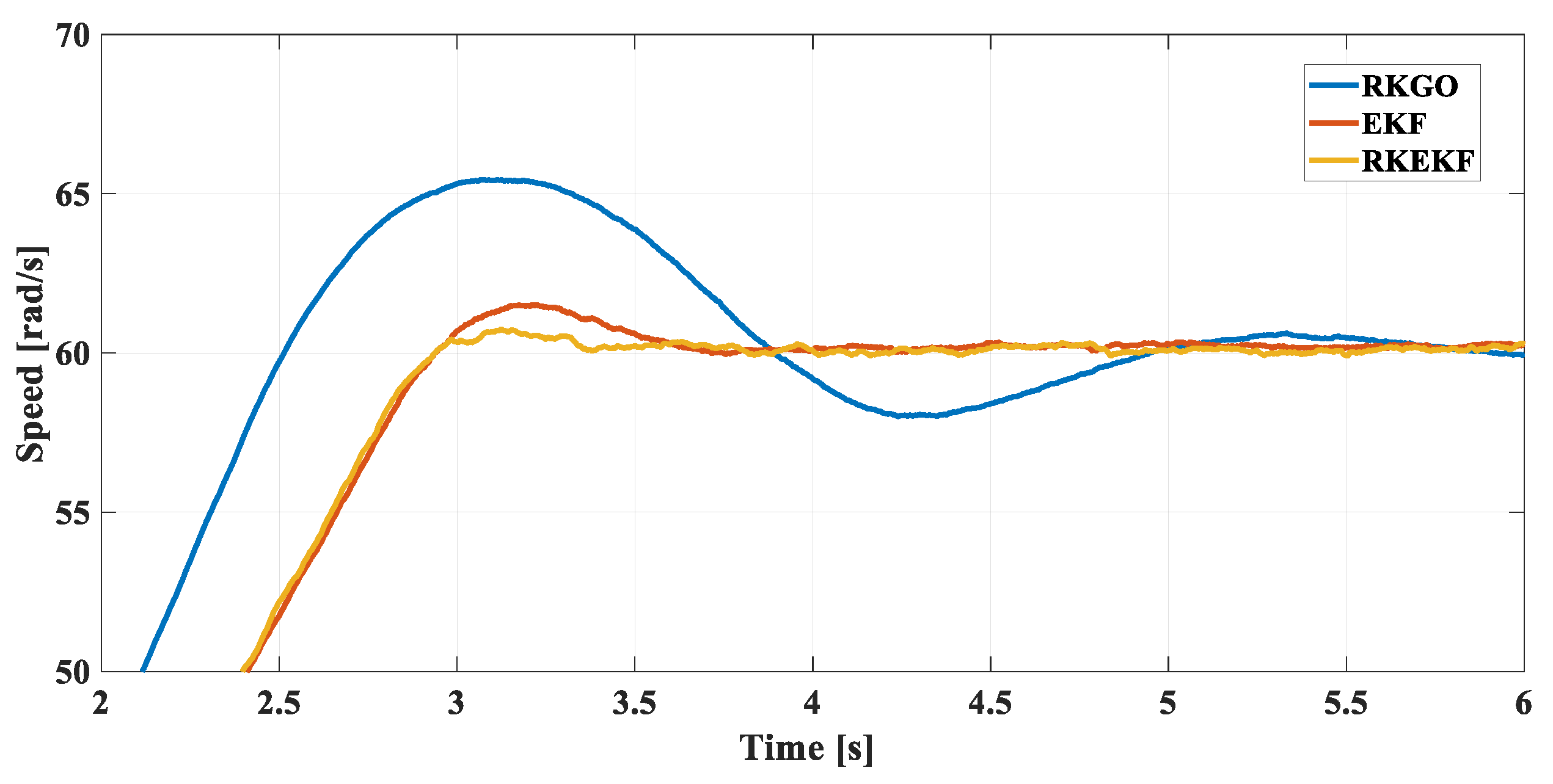
Finally, the speed responses obtained using RKGO, EKF and RKEKF observers are compared in
Figure 6. It can be observed that all three observers are capable of tracking the reference speed; however, their transient responses differ significantly.
The proposed RKGO demonstrates the fastest dynamic response among the compared methods. The speed reaches the reference value considerably faster than with the EKF and RKEKF observers. This behavior results from the Runge–Kutta-based observer structure, which improves the prediction accuracy and enables rapid convergence of the estimated states. Although the RKGO observer exhibits a transient overshoot during the acceleration period, the response quickly stabilizes and converges to the reference speed without steady-state error. The EKF and RKEKF observers show smoother transient responses due to the filtering effect inherent in the Kalman-based estimation methods; however, this filtering process introduces additional computational delay, resulting in a slower dynamic response. Therefore, the RKGO observer provides a better compromise between estimation accuracy and dynamic response speed, which is particularly advantageous for sensorless PMSM drives requiring rapid speed tracking under transient operating conditions.
Table 3 summarizes the transient performance metrics obtained from the experimental results at 60 rad/s reference speed, including rise time, settling time, overshoot, and steady-state error.
5. Conclusions
This study investigates the sensorless control of PMSMs, which are widely preferred in industrial and robotic applications due to their high efficiency, precision, and fast dynamic response. Accurate rotor speed and position information is essential for high-performance PMSM operation. In conventional drive systems, this information is obtained using mechanical sensors such as encoders or resolvers. However, these sensors increase system cost, require additional mechanical space, and may reduce overall reliability in the event of sensor failure. These limitations have led to increasing interest in sensorless control strategies. This study specifically focuses on low-speed operation, which represents the most challenging condition for sensorless PMSM control.
In this work, a Runge–Kutta-based gradient observer (RKGO) is adapted and experimentally validated for sensorless speed and position control of a PMSM. The proposed approach is implemented on a dSPACE DS1104 real-time control platform and evaluated under low-speed and loaded step-speed operating conditions.
In order to provide a comprehensive comparative assessment, the performance of the RKGO is evaluated against the EKF and RKEKF observers under identical experimental conditions. The experimental results demonstrate that the RKGO achieves the fastest transient response among the compared observers, reaching the reference speed significantly earlier than both EKF and RKEKF. The rise time of the RKGO is approximately 0.8 s, whereas the EKF and RKEKF exhibit slower responses due to the filtering process inherent in Kalman-based estimation methods. However, the rapid convergence of the RKGO leads to a moderate transient overshoot of approximately 8%, while the EKF and RKEKF observers present more damped responses with reduced overshoot levels. From the settling behavior perspective, the RKGO exhibits a longer settling time (approximately 5 s) due to transient oscillations following the initial overshoot. In contrast, EKF and RKEKF observers achieve smoother responses and slightly shorter settling times. Despite these transient differences, all observers reach the same steady-state speed with negligible steady-state error, indicating comparable tracking accuracy under nominal operating conditions.
The rotor position estimation results further confirm that the initial estimation errors are eliminated within a short transient interval. The RKGO-based position estimate closely follows the actual rotor position during steady-state operation, demonstrating reliable estimation performance. The experimental validation under different operating scenarios confirms that the adapted RKGO maintains stable and accurate estimation capability.
It is well known that the performance of EKF-based observers strongly depends on the appropriate tuning of the process and measurement covariance matrices (Q and R) as well as the initial error covariance matrix (P). When properly tuned, EKF and RKEKF can achieve high estimation accuracy; however, this tuning process often requires iterative adjustments and practical experience in real applications. In contrast, the RKGO structure does not rely on covariance matrix tuning, which significantly simplifies the implementation process and reduces parameter adjustment effort. This advantage makes the RKGO particularly attractive for practical sensorless PMSM drive applications.
Overall, the experimental findings demonstrate that the proposed RKGO provides a fast dynamic response and a computationally simple observer structure while maintaining satisfactory steady-state estimation accuracy. These characteristics confirm that the adapted RKGO represents an effective and practically implementable solution for sensorless speed and rotor position estimation in PMSM drives, particularly under dynamic and low-speed operating conditions.
Future work will focus on improving the transient performance of the proposed RKGO. Although the RKGO demonstrates fast convergence and reliable steady-state estimation accuracy, a moderate overshoot of approximately 8% is observed during rapid speed transitions. This behavior is mainly associated with the nonlinear gradient-based observer structure and the strong correction term scaled by the Levenberg–Marquardt coefficient (μ), which accelerates the convergence of the observer dynamics.
In addition, numerical discretization introduced by the Runge–Kutta integration method and possible modeling uncertainties in PMSM parameters may also influence the transient dynamics. Therefore, future research will investigate adaptive tuning strategies for the Levenberg–Marquardt coefficient, as well as gain scheduling approaches, in order to further reduce transient overshoot while preserving fast convergence characteristics.
Furthermore, future studies will include experimental validation of the proposed method at higher speeds to further assess its performance beyond the validated low-speed operating region. Such improvements are expected to enhance the overall dynamic performance of the RKGO and further strengthen its applicability in sensorless PMSM drive systems operating under dynamic conditions.