1. Introduction
Permanent magnet synchronous motors or permanent magnet-assisted synchronous electric motors (i.e., e-motors) are the key units in powertrain propulsion systems of electrified vehicles [
1,
2,
3]. Due to the rigorous demands of reliability and safety in the automotive industry sector, precise e-motor rotor position information is the key prerequisite in the control strategy of these motors [
1,
2,
3,
4,
5,
6].
For e-motor rotor position sensing, various measurement principles have been developed and proposed. In general, they can be categorized as magnetic-, inductive-, magneto-resistive, capacitive, and optical-based sensors [
1,
7,
8,
9,
10,
11,
12,
13]. They mainly differ in accuracy, robustness, and price. The rotor position sensors are also divided into absolute and incremental [
14,
15]; the latter provides a relatively cost-effective and simple solution for the relative position measurement of the rotating sample. However, in more demanding industrial settings requiring a high precision of e-motor control, information on the rotor absolute position is necessary, which can be measured using encoders providing the absolute position of the rotor [
15,
16,
17]. Specifically, in the vehicle electrification sector, an accurate measurement of the shaft position is of the utmost importance for the precise control of permanent magnet motors. It is also important to stress that in automotive applications, rotor positioning errors can be caused by a variety of factors, including installation, vibration, materials, sensor calibration, and manufacturing defects. However, modern manufacturing procedures of advanced rotor position devices and algorithms for rotor position error corrections attempt to minimize rotor position imperfections [
3,
4,
5,
6,
14]. Depending on the e-motor type and its working principle, magnetic- and inductive-based rotational position sensing devices are predominantly used for measurement of the absolute rotor position due to their precision and robustness [
10,
15]. In addition, both inductive and magnetic-based encoders and sensors are based on contactless measurements principles and can endure harsh physical conditions (such as high working temperatures which may often exceed 120 °C, mechanical shocks and vibrations, and the presence of accumulated excessive amounts of dust, oil, etc.) [
1]. The inductive-based rotational position sensing device, also referred to as an inductive resolver, consists of rotor and stator windings. The principle of operation involves rotor winding excitation and its rotation, which in turn results in an induced voltage in the two perpendicularly oriented stator windings. To reduce possible errors, several stator windings may also be employed. Another version of an inductive-based rotational position sensing device is a variable reluctance resolver, which has no winding on the rotor side but a ferromagnetic segment instead, shaped in such a way to produce the variation in magnetic reluctance as the rotor part rotates [
18]. The output signals (induced voltage) are captured at the stator side and processed via analog-to-digital signal conversion algorithms, based on which the mechanical angle of the e-motor rotor is provided. The advantages of the reluctance resolver are reduced copper losses, a simple and cost-effective manufacturing process, and operation in a wide range of working temperatures. However, the inductive rotational position sensing devices require additional power electronic elements for analog-to-digital signal conversion and a special excitation winding, which increases the price and makes the manufacturing process more complex. As opposed to inductive resolvers, magnetic-based rotational position sensing devices are smaller and simpler to manufacture and integrate into the e-motor, which makes them the devices of choice for rotor position measurement needed for the control of permanent magnet-based e-motors [
16].
Magnetic-based rotational position sensing devices consist of a permanent magnet which may be located either at the end of the e-motor shaft (referred to as end-of-shaft configuration) or a ring-shaped magnet mounted on the shaft (referred to as off-axis configuration) and a sensor with the electronic circuit that measures the radial and tangential component of magnetic flux density, based on which the mechanical angle of the motor shaft (rotor position) is determined [
16]. However, the precision of such magnet-based rotational position sensing devices can often be affected by different defects/errors which may occur during the manufacturing process (such as shape of magnet, magnetization procedure, magnet eccentricity, sensor position, etc.) [
16,
19]. Therefore, special attention should be given to the precise manufacturing process of all segments of the rotational position sensing device, as well as to the processing procedure of the captured magnetic flux density signals, based on which the mechanical angle of the rotor is identified. This is particularly important for the precise control of the permanent magnet-based e-motors using field-oriented control (FOC), where the maximum average torque and minimum torque ripple are mandatory to ensure an optimum performance of the e-motor throughout its entire operating speed range, and the possible errors in rotor position identification may lead to adverse effects such as excessive torque pulsations and safety concerns [
3,
4,
5,
20].
The primary objective of this study was to numerically and experimentally design and analyze a magnetic-based off-axis rotational position sensing device intended for control of a new permanent magnet electric motor, which was developed for electrification of a two-wheeler vehicle. The off-axis configuration of the sensing device was selected since the e-motor shaft needed to be free on both sides to readily allow for the attachment of the electromagnetic brake to the end of the motor shaft. First, the 3D finite element-based numerical model (FEM) of the off-axis sensing device was built, consisting of a magnetic ring mounted to the shaft and a sensor that measures the resulting magnetic flux density components as the rotor rotates. The FEM model was parametrically established to allow for variation and analysis of geometrical, material and magnetic properties of the modeled rotational position sensing device. Based on the numerical simulations, possible errors that may occur during the magnetic ring manufacturing process were numerically introduced and investigated. Based on the 3D FEM simulations, the appropriate geometrical and magnetic properties of the magnetic ring and the position of the sensor were determined considering the real e-motor’s properties, shaft and housing characteristics. Second, the prototype of the modeled off-axis rotational sensing device was manufactured according to the results of the 3D numerical simulations. Finally, the measurements on a real e-motor were performed to test the accuracy of the prototyped magnet-based off-axis sensing device. Namely, the output torque speed characteristic of the e-motor was measured with a commercially available high-precision sensor provided by a well-established manufacturer [
21] and compared to the torque speed characteristic obtained using the off-axis rotational position sensing device designed and prototyped in this study. The discrepancy between the two measured torque speed curves was explained by reduced accuracy of the prototyped off-axis sensing device due to the presence of manufacturing errors, which were numerically and experimentally identified and analyzed in this study. The obtained results reported here enable a better insight and understanding into manufacturing errors of magnet-based position sensors components (such as magnet ring eccentricity, nonhomogeneous magnetization of the magnetic ring, elliptic shape of the magnet ring and undesirable inclination of the magnetization field). Our results can subsequently be used in diagnostics of both the errors that may occur during the manufacturing process of the magnet-based sensors (the ring shape magnet mounted on the motor shaft) and the errors that may occur during the control of the e-motors and measurement of its output characteristics. The 3D numerical model, together with the novel algorithm presented in this study, facilitates the design of the magnetic encoders and enables the analysis and/or prediction of different errors that may occur during their manufacturing, which is particularly important in the control of newly designed and thus non-standard e-motors, where off-the-shelf encoders cannot be used due to the non-standard geometrical, material and other physical properties.
2. Materials and Methods
The 3D numerical models of the magnetic ring and the e-motor shaft were built using Ansys parametric design language (ANSYS APDL) software 2021 R1 [
22]. The modeling procedure using APDL software can be performed either using built-in geometrical shapes via a graphic user interface or entirely developed and controlled by manually writing the APDL software code. The latter was used in this study. Based on the ANSYS ADPL and Matlab R2024b software we developed an algorithm allowing for a controlled parametrization and analysis of the magnetic encoder segments and the e-motor shaft. The 3D model of the magnetic ring and the shaft were parametrically constructed by defining the geometrical and material variables that readily allow for rapid variations in model dimensions, geometry segmentation, magnetization direction of the defined geometrical segments, finite element mesh density, boundary condition assignment, controlled definition of its material properties and the electronic sensor position with respect to the magnetic ring and the e-motor shaft. The numerical simulations were performed using the 3D magnetostatic solution in ANSYS ADPL 2021 R1. The source of the magnetostatic field problem was defined by the permanent magnetization of the modeled magnetic ring [
22].
The 3D FEM modeling procedure and the post-processing of the output results integrated into the algorithm we developed are outlined by a flowchart in
Figure 1.
The measured rotor position angle
ϕ as a function of a real angle α (i.e., real position of the rotor) using the off-axis rotary position sensing device can be expressed by Equation (1):
where
Brad(α) and
Btang(α) stand for the radial and tangential components of the magnetic flux density captured by the sensor as a function of the rotor position α and
K is the compensation factor, which can be calculated according to Equation (2):
where
Btang max and
Btang min stand for the maximum and the minimum value of the tangential component of the magnetic flux density, whereas
Brad max and
Brad min stand for the maximum and the minimum value of the radial component of the magnetic flux density captured by the sensor. In theory, the amplitude ratio between radial
Brad and the tangential component of the magnetic flux density
Btang is 1 (Equation (3)), which provides an ideal linearity of the sensor. It should be noted that in practice, perfect sensor linearity is unattainable and can only be approximated through calibration, precise mounting and manufacturing procedure [
16].
The error profile can be further expressed as a difference between the real function
and the function
corresponding to the ideal linearity error, (Equation (4)):
It should be noted that an erroneous rotor angle (α
err) provided by the encoder may result in incorrect e-motor control, which affects the precision of the resulting electromagnetic torque value. Based on the
dq theory of rotating electrical machines, the output electromagnetic torque
Tem produced by a synchronous permanent magnet motor in the synchronous rotating
dq frame can be expressed using Equation (5) [
23,
24]:
where
is permanent magnet flux linkage,
and
are quadrature
q-axis and direct
d-axis stator currents and
and
are direct
d-axis and quadrature
q-axis inductances, respectively. The first term of Equation (5) is related to the torque produced due to the presence of permanent magnets (which are dominant in the surface-mounted permanent magnet motor (SMPM)), while the second term of Equation (5) corresponds to the reluctance torque being produced in other configurations of the e-motor, such as interior permanent magnet (IPM) and permanent magnet-assisted synchronous reluctance motors (PMaSynRMs).
Due to the rotor angle error α
err, the synchronous rotating
dq frame differs from the reference frame (
dref qref) used in the e-motor control algorithm. Due to the α
err, the resulting real values of the
id and
iq currents differ from their reference values (
id ref and
iq ref). Therefore, the real values of the
id and
iq can be expressed using Equations (6) and (7), respectively.
Introducing Equations (6) and (7) into Equation (5) and considering the
id ref = 0 (usually adopted in maximum torque per amper (MTPA) control for, e.g., surface-mounted permanent magnet motors (SMPMs)), the resulting output
can be calculated as
In both the MTPA and flux weakening regions, the presence of
id (imposed by
) affects the results of the
. Due to the small difference between the
and
, Equation (8) for the SMPM can be further simplified by considering the inductances
and
to be equal (
=
), meaning that no reluctance torque component is produced. Therefore, in this case, the
can be calculated using Equation (9):
Based on Equations (8) and (9) it can be concluded that the maximum torque is produced when perfect alignment between the two reference frames is obtained = 0. Otherwise, the output torque decreases with the cosines of the position angle error However, when analyzing the influence of the on the produced by the IPM and PMaSynRM motors, the second term in Equation (8) cannot be omitted due to a larger difference between the and . Therefore, in the case of IPM and PMaSynRM, the direct d-axis stator current additionally affects the resulting via e-motor control.
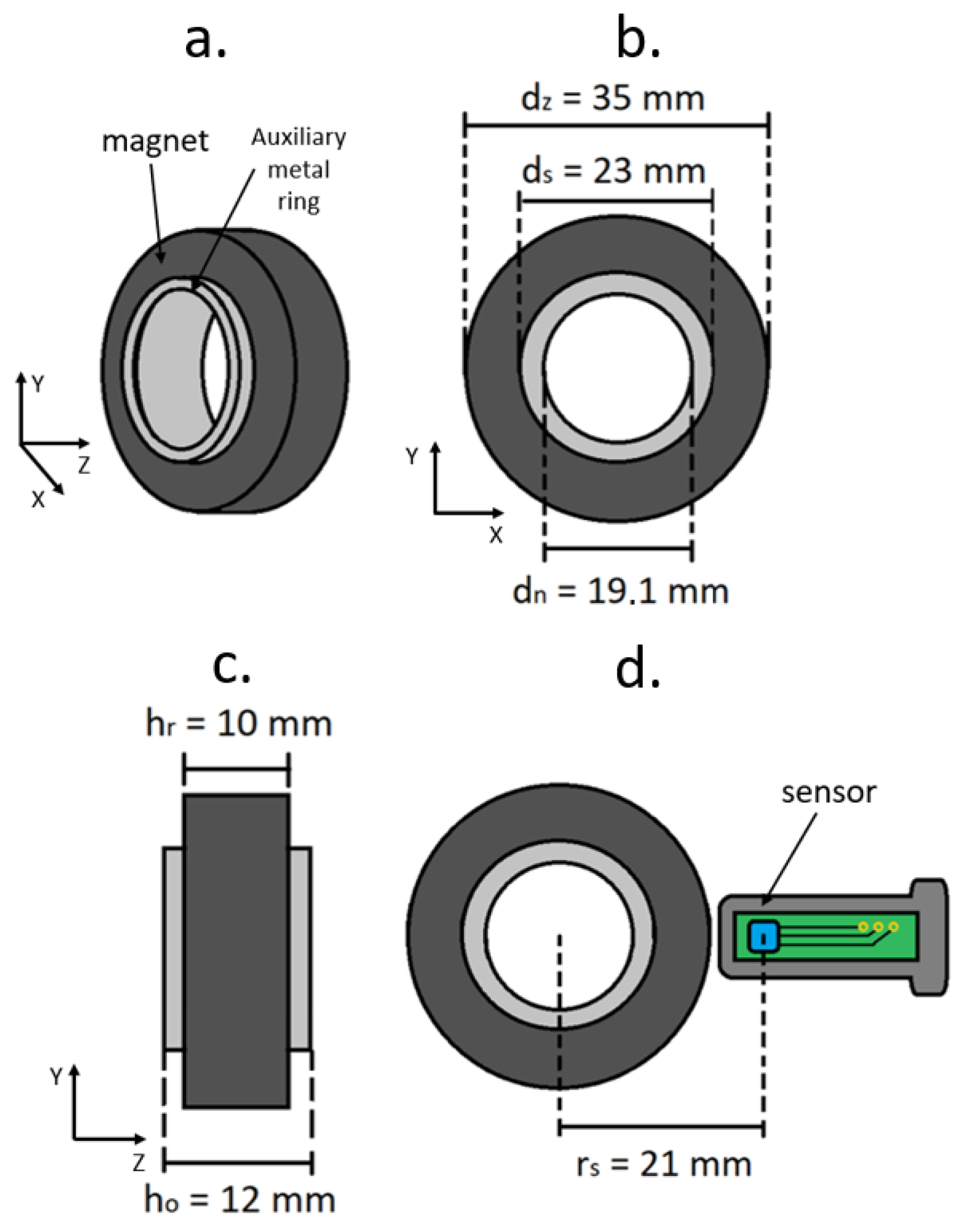
The geometry and the dimensions of the numerically modeled two-pole magnetic ring with the sensor location are shown in
Figure 2. For the sensing of the magnetic flux density of the permanent magnet and for the measurement of the absolute angular position of a permanent magnet, which in turn provide the angular position of the e-motor shaft, the MagAlpha MPS MAQ470 sensor (Monolithic Power Systems, Kirkland, WA, USA) has been used [
25]. It should be noted that this type of sensor requires that the magnetic flux density processed signal should be between the detection threshold values, ranging from 30 mT up to 150 mT, to precisely identify the e-motor rotor position [
25]. Therefore, we developed the parametric 3D numerical model and determined the two-pole magnetic ring dimensions (
Figure 2) considering the type of the magnetic material, its thermal properties, the maximum e-motor working temperature and the distance of the magnetic ring to the sensor to ensure that the captured values of magnetic flux densities (i.e.,
Brad and
Btang) are within the required range of the detection threshold values.
2.1. Parametric Determination of the Magnetic Ring Dimensions
The dimensions displayed in
Figure 2 have been determined based on the parametric analysis of the parameters
hr and
dz in order to satisfy the sensor requirements; hence, the maximum value of the magnetic flux density captured with the sensor should be between the minimum value 30 mT and maximum value 150 mT to ensure the reliable precision of the measurements. In parallel, the thermal properties of the magnetic ring have also been taken into account and analyzed to assure that the magnetic ring will not be irreversibly demagnetized (i.e., the permanent magnet residual magnetic flux density value should not be excessively and/or permanently reduced below the magnet’s
B-
H curve knee in the second quadrant of its hysteresis loop; in addition, the magnetic field at the sensor location should remain within the values ranging from 30 mT up to the maximum value 150 mT, as stated above).
The results of the parametric analysis for determination of the
hr parameter is given in
Table 1. The values of the
hr varied from 6 mm up to 16 mm and the
Brad max and
Btang max values were calculated for each examined increment. By satisfying the abovementioned magnetic thermal and geometrical requirements, the optimum value of the parameter
hr was determined to be 10 mm.
The values of the parameter dz were varied from 25 mm up to 35 mm and its optimum value was determined to be 35 mm (by satisfying the abovementioned magnetic thermal and geometrical requirements).
The values of the parameters
hr and
dz (
Table 1 and
Table 2) were determined based on the initial reference numerical model without the presence of manufacturing errors and with the magnetic properties of the magnetic ring valid for
T = 20 °C.
The 3D FEM model with the determined geometry dimensions (
Table 1 and
Table 2) of the magnetic ring with the modeled e-motor shaft is shown in
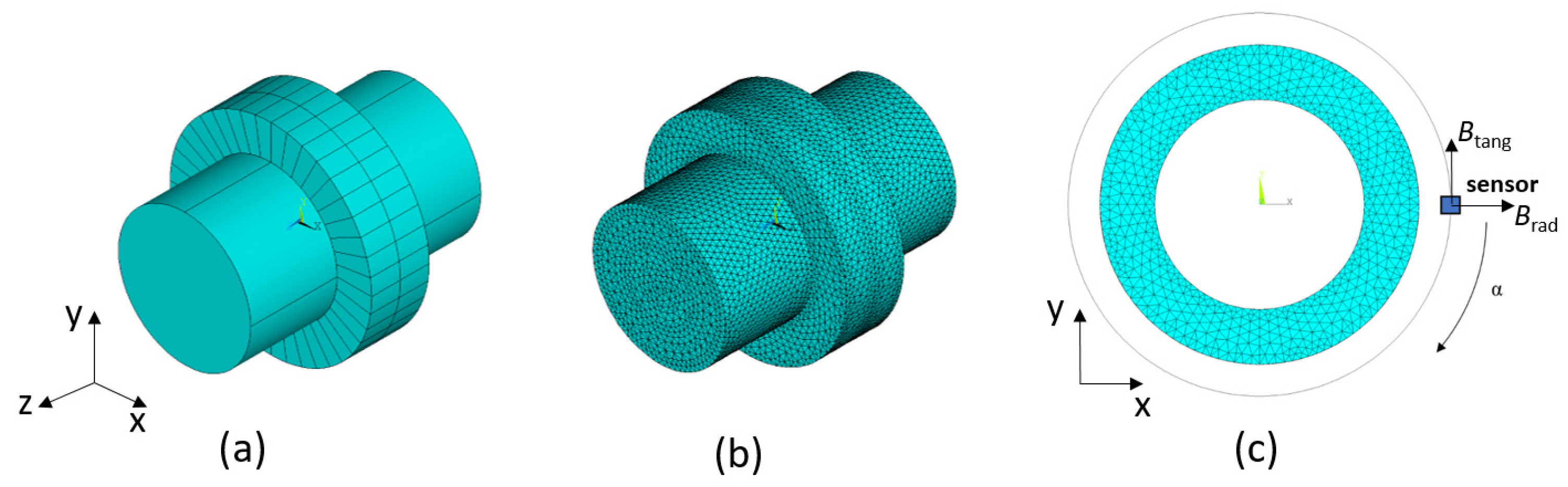
Figure 3.
The 3D segmented geometry of the magnetic ring and the model of the shaft are shown in
Figure 3a. The magnetic ring geometry is divided into separate segments, which allows for the parametric magnetization of the magnetic ring and definition of the modeled manufacturing defects. The generated finite element mesh within the models of the ring and the shaft is shown in
Figure 3b and the meshed ring only with the location of the sensor capturing the
Brad and
Btang components is shown in
Figure 3c.
2.2. Procedure of the Parametric Generation of the Finite Element Mesh
It should be noted that the numerical FEM model consisted of three parts with different mesh densities: the main part containing the magnetic ring with the shaft and a larger number of FEM elements (
Figure 3b), and two outer regions with two coarser mesh densities with the properties of the surrounding air, in order to also model the distribution of magnetic flux density around the sensor. The finite element mesh density within each modeled region was thereby optimized by our algorithm using the Ansys APDL software tool [
22] to ensure high accuracy of the numerical calculations and the shortest possible calculation time, still satisfying the requirements of the sensor precision [
25]. The mesh density was altered by changing the value of the parameter
esize, which represents the longest length of a finite element tetrahedron side that can occur during the meshing procedure. The number of FEM elements within the magnetic ring and shaft region was varied by gradually increasing the value of the parameter
esize from 0.4 mm to 1.4 mm by an increment of 0.2 mm. The maximum detected values of
Brad max and
Btang max and the total time needed for the numerical simulation to be executed were calculated and compared (
Table 3). Based on the obtained results, the optimum value of the parameter
esize (for the FEM of the ring and the shaft) was defined to be 0.8 mm. The obtained values of
Brad max and
Btang max were 139.54 mT and 51.01 mT, which fit best to the measurement threshold range required by the sensor (i.e., 30 mT to 150 mT). The total number of elements generated within the magnetic ring and shaft was 375,968.
The first and second surrounding air regions (named Air 1 and Air 2) were meshed with the elements size
esize = 1.4 mm and
esize = 15 mm, respectively (the results of parametrization are given in
Appendix A,
Table A1 and
Table A2, the surrounding region are also depicted in
Section 3). The total number of elements generated within the whole FEM model was 2,452,061. All numerical simulations were run on a personal computer with an Intel Core i7-9700 processor and 32 GB of memory. The numerical error of the simulations resulted from the generated mesh with the
esize = 0.8 mm was also evaluated by calculating of the maximum absolute value of the linearity error
and the standard deviation
σerr (i.e., the dispersion of measurements from the mean value of the angle error
calculated by Equation (10):
where
is angle error at a single sensor location and
is average angle error over the entire circumference of the sensor rotation. The maximum error along one full rotation of the sensor around the magnetic ring was
= 0.273° and the calculated deviation was only
σerr = 0.072°, which therefore represents the numerical error of the simulation. The obtained value of the deviation
σerr indicates that the error in this case (the
esize = 0.8 mm) is negligibly small. However, this numerical error was considered in all our numerical calculations.
2.3. Material Properties of the Magnetic Ring and the E-Motor Shaft
The material properties of the permanent magnet (NdFeB) used for the design of the magnetic ring [
25] in the FEM model and in the manufactured prototype of the rotor position sensing device are summarized in
Table 4.
The selection of the material for the FEM modeling of the motor shaft was also done based on parametric analysis using the 3D FEM model. Namely, we performed the FEM simulations using different material properties of the shaft including nonlinear
B(
H) curve of the 42CrMo4 steel [
26] and the linear curves by varying the relative permeability from
μr = 500 to
μr = 10,000. For the materials mentioned we calculated the maximum values of the radial and tangential components of the magnetic flux density captured by the sensor. The results of the parametric FEM calculations shown in
Table 5 demonstrated that the calculated values
Brad max and
Btang max were not significantly sensitive to the relative permeability of the material of the shaft. We therefore selected
μr = 2500 for the FEM modeling of the shaft, since it provided the values of the
Brad max and
Btang max that were closest to the threshold values required by the sensor (i.e., 30 mT to 150 mT). In addition, for the values
μr ≥ 2500, the
Brad max was not sensitive to the changes in
μr. The nonlinear B(H) curve corresponding to the 42CrMo4 steel material was therefore also excluded from the numerical simulations, since the nonlinearity only increased the computation time needed for the simulations, without contributing to the accuracy of the simulations.
2.4. Analysis of the Thermal Effects on the Magnetic Flux Density Detected with the Sensor
Given that the exposure of a permanent magnet to an excessively high temperature can lead to its complete or partial demagnetization, the thermal effects on the magnetic ring magnetic properties are also one of the key aspects that need to be considered when designing the magnetic device for the e-motor rotor position measurement. The thermal effects may reversibly or irreversibly alter the remanent magnetic flux density
Br of the magnet (depending on the working temperature). Therefore, the value of the working temperature dictates the amplitude of the radial and tangential component of the magnetic flux density signal captured with the sensor, which in turn strongly determines the accuracy of the rotor position measurement device. The maximum operating temperature of the permanent magnet type NdFeB used for the magnetic ring in this study is
Tworking = 160 °C A (
Table 4). The exposure of the magnetic ring to the temperature exceeding 160 °C irreversibly deteriorates its magnetic properties (its
Br value is permanently reduced and can be restored only after a re-magnetization process). Below this temperature, however, the magnetic properties are preserved, and the remanent
Br value of the magnet is restored to its initial value (
Table 4) after the thermally induced temporary reduction.
It should be noted that the maximum working temperature of the e-motor specified by the insulation class of its stator winding is 120 °C, which is below the maximum operating temperature of the permanent magnet of the magnetic ring
Tworking, 160 °C. Therefore, the irreversible demagnetization of the magnetic ring should not occur under the normal operating conditions of the e-motor. In addition, since the e-motor working temperature
T = 120° refers to the highest temperature, which is usually obtained in the stator windings, the region of the e-motor shaft is exposed to much lower temperatures due to cooling. However, reversible thermal effects can also decrease the magnetic flux density of the magnet, which subsequently decreases the magnetic flux density value detected by the sensor, which in turn deteriorates the accuracy of the e-motor rotor position assessment. This may occur if the detected magnetic flux density drops below the lower limit required by the sensor manufacturer (in our case below 30 mT) [
25]. Namely, in this case, an error will occur due to signal amplitude being too low rather than demagnetization of the magnetic ring, and the sensor will automatically report an error to the user due to the amplitude of the measured magnetic flux density being too low.
In order to verify the accuracy of the determined geometrical and material properties of the magnetic ring, including the shaft, and the location of the sensor with respect to the ring, we performed an analysis of the obtained magnetic flux density signals detected by the sensor by performing numerical simulations for three different working temperatures: the ambient temperature of 20 °C, the nominal working temperature of the e-motor of 120 °C, and the maximum working temperature of the NdFeB magnet, 160 °C. The remanent magnetic flux density
Br of the permanent magnet NdFeB as a function of the working temperature
T was calculated using Equation (11):
where
Br20 stands for the remanent value of the magnetic flux density of the permanent magnet at the ambient temperature of 20 °C,
RTCBr is the temperature coefficient, and
T is the working temperature.
2.5. Definition of the Manufacturing Errors Investigated in This Study
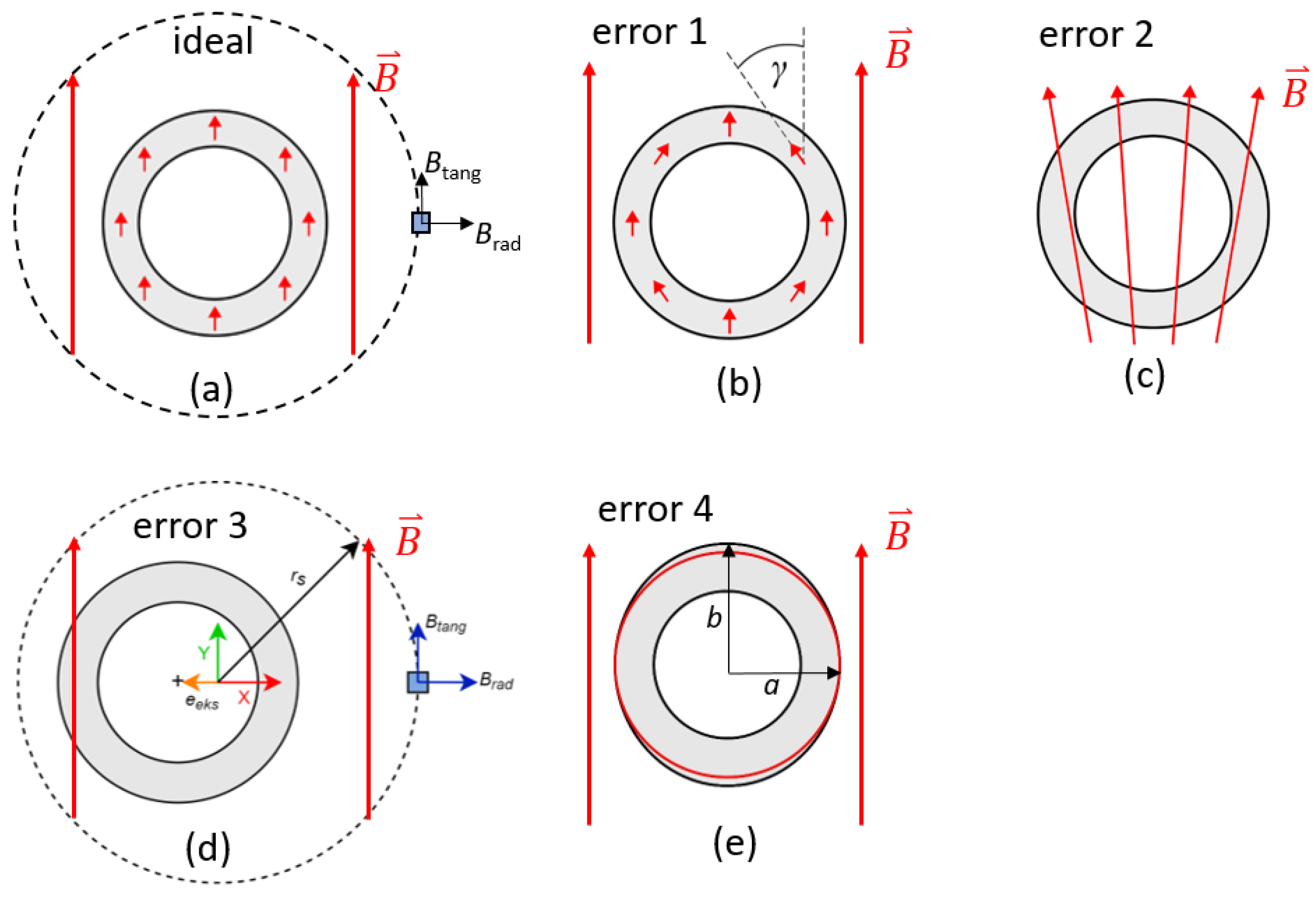
The manufacturing errors investigated that might have occurred due to the manufacturing procedure of the magnetic ring are shown in
Figure 4. The ideal magnetic ring manufacturing and magnetization process is shown in
Figure 4a. In this case, the magnetization direction in all segments of the ring was perfectly aligned to the external magnetic field (i.e., the vectors of magnetic flux density within all segments of the ring are parallel to the external magnetization vector of magnetic flux density). The vectors of magnetic flux density are represented with red arrows in
Figure 4.
Figure 4b–e depicts four different manufacturing errors that we intentionally injected into the numerical model to study their effects on the radial and tangential components of magnetic flux density captured with the electronic sensor, which consequently affects the precision of the e-machine rotor position and its control procedure.
Figure 4b shows the manufacturing error (indicated in this paper as error 1), which occurs due to the local deviations in magnet ring shape from a circular shape, due to which the magnetization vector in certain segments of the magnetic ring are not parallel to the external magnetization field but rather locally inclined. We defined this error as an angle
γ, as depicted in
Figure 4b. In this study, the effect of error 1 was investigated by variation in inclination angle
γ within the range 0° <
γ < 10°. Manufacturing error 2 (
Figure 4c) occurs due to the erroneous axial positioning of the magnetic ring with respect to the direction of external magnetization. In this case, due to the axial inclination, the upper half of the ring was magnetized with a lower amplitude of
B (i.e., the remanent value of
Br is thus smaller with respect to
Br in the lower part of the ring marked as
B%). In this study, error 2 was analyzed for the imposed ratio
B% ranging from 0 to 5% (i.e., the ratio of the
Br value in the upper half with respect to the value of
Br in the lower half of the magnetic ring). Error 3 (
Figure 4d) occurred due to the eccentric positioning of the magnet ring with respect to the ideal case (
Figure 4a), which is indicated by
eexc in
Figure 4d. The influence of the eccentricity error was investigated for the ring positioning values 0 mm <
eexc < 0.5 mm. The fourth manufacturing error we investigated in this study was the geometry of the magnetic ring. Namely, due to the manufacturing process, the resulting shape of the magnet ring can deviate from a cylindrical shape and can be oval-shaped, as depicted in
Figure 4e (the deviation from the perfect circle (
r =
a) is indicated with the parameter
b >
a and denoted by
e%). This deviation from the perfect circle was expressed as a percentage and investigated for the geometric errors
e% ranging from 0 to 5%.
2.6. Description of the Experimental Measurement Setup
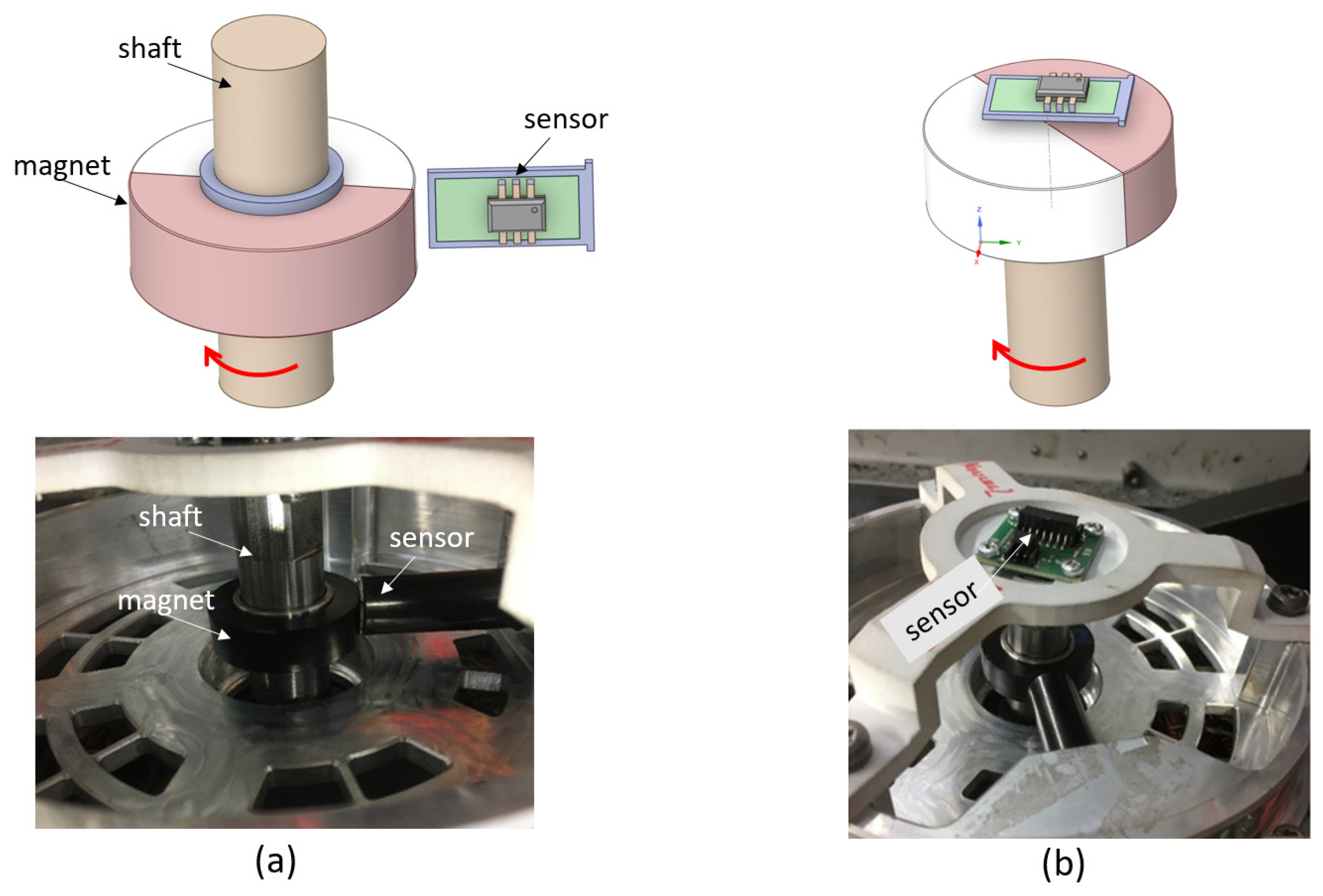
Our purpose was also to identify to what extent the rotor position errors may affect the output characteristics (torque vs. rotational speed) of the e-motor. The measurement setup of the real motor performance using two different sensors for control is shown in
Figure 5 (off-axis sensing device prototyped and modeled in this study (
Figure 5a) and a more precise reference end-of-shaft encoder (
Figure 5b)). The end-of-shaft rotational position encoder we used as reference was taken from ref. [
21]. Its accuracy was within ±0.38°.
The e-motor experiments with two different encoders were performed on the Kistler test bench measurement setup [
27], enabling precise assessment of all important characteristics of the e-motors to be tested, including the torque versus speed characteristic, which we measured and analyzed in this study.
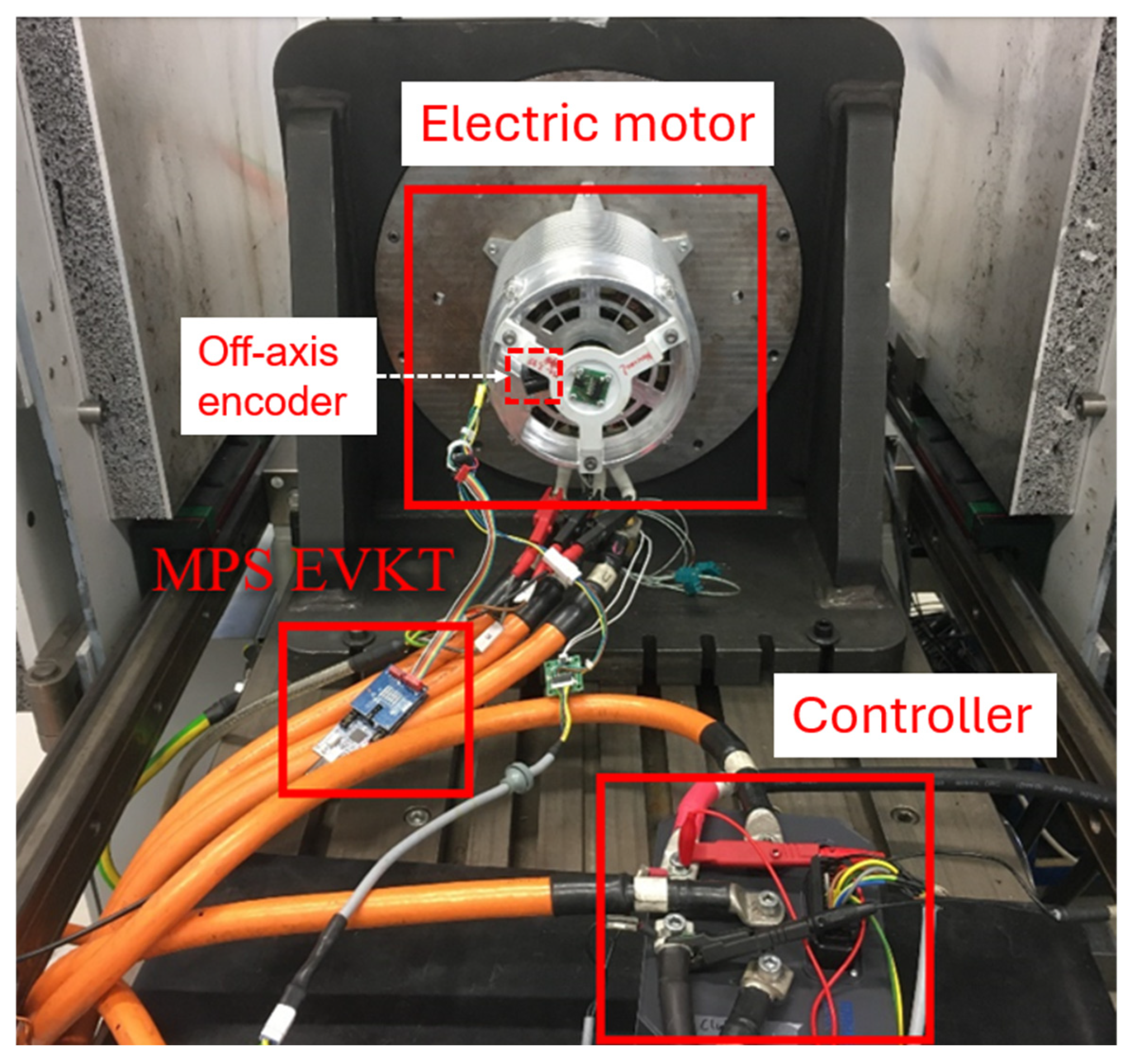
The complete experimental test bench, including the magnetic encoder installed on the e-motor shaft, the controller, and the MPS EVKT unit, is shown in
Appendix B,
Figure A1. The test bench enables the transfer of the measured data acquired from the encoder to the personal computer by means of MPS EVKT communication protocol. The encoder calibration and the mechanical angle error correction (including the correction/equalization of the
Brad and
Btang amplitudes) were carried out by setting the BCT parameter via the MPS graphic user interface. The measurement of the shaft position was carried out, and the mechanical angle with respect to the initial shaft position at zero speed was recorded at the constant speed of the e-motor. The profile of the mechanical angle error was then calculated as a discrepancy from the ideal linear profile of the
ɸ(α) along one full rotation angle of the shaft 0° ≤
α < 360°. The error profile was then processed by performing harmonic FFT analysis using Matlab. We particularly focused more precisely on the first four harmonics of the signal, which can be attributed to the magnet ring manufacturing errors described in
Figure 4.
Using our FEM model of the magnetic ring and shaft, we reproduced the equal error signal
ɸerr(α) as obtained in the experimental measurements from a real e-motor shaft, as described above, and performed the FFT analysis. We obtained the equal signals by synthetically imposing an amount of possible manufacturing errors, described in
Figure 4, onto the numerical FEM-based model.
Based on the described comparison between the experimental and the FEM-based modeling signals, we identified the possible errors which might have occurred during the manufacturing process of the magnetic ring of the encoder.
3. Results and Discussion
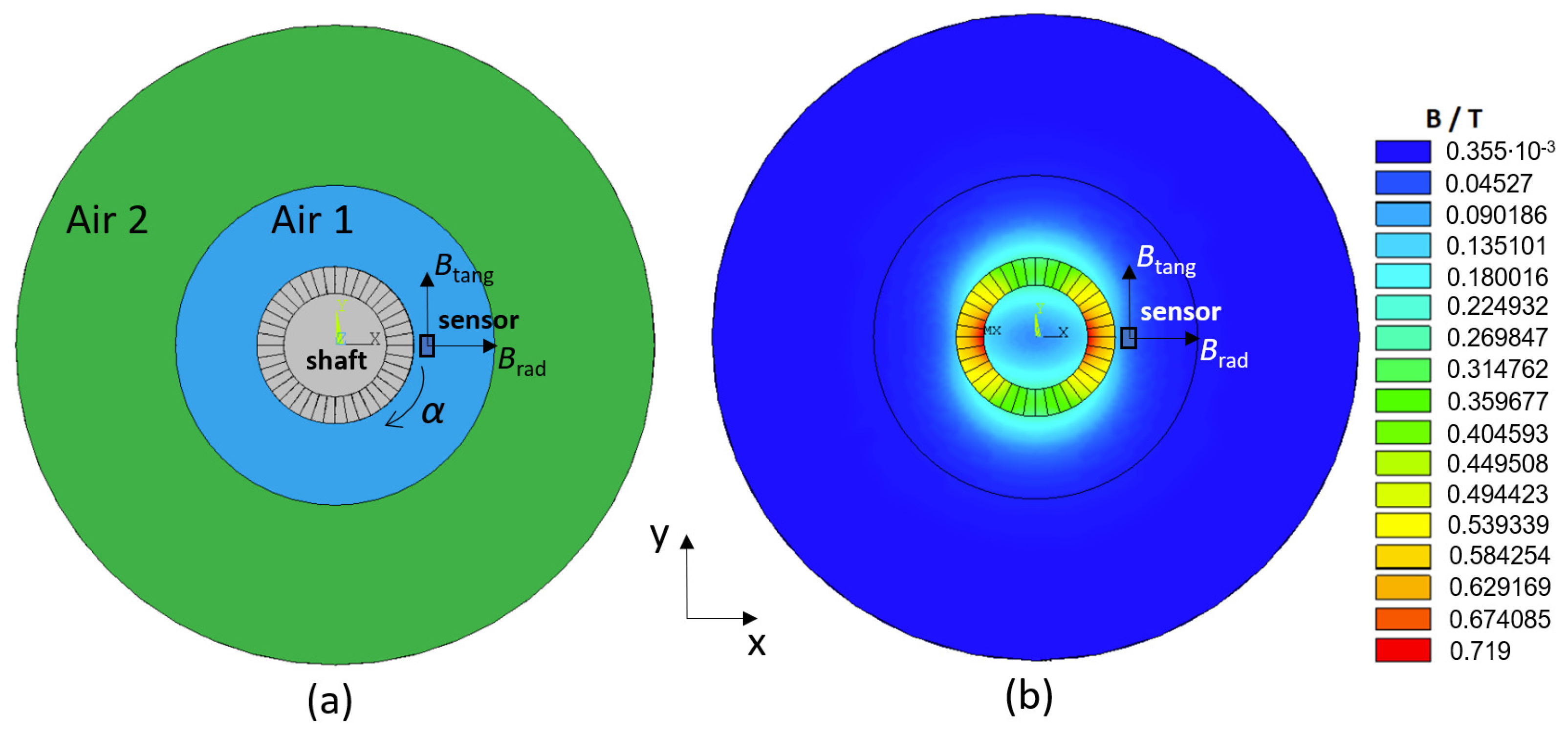
Within the first part of the numerical and experimental study we determined the adequate dimensions of the magnetic ring based on geometric and magnetic recommendations. The final geometry and the numerically calculated magnetic flux density distribution in the XY cross section plan in the central axial cross section of the 3D model at Z = 0 mm is displayed in
Figure 6. The 2D cross section view of the magnetic ring, shaft and the surrounding air regions’ geometries is given in
Figure 6a. The results in
Figure 6b clearly demonstrate that the obtained values of
B in the near proximity of the sensor achieved the required values, ranging from 35 mT to 150 mT.
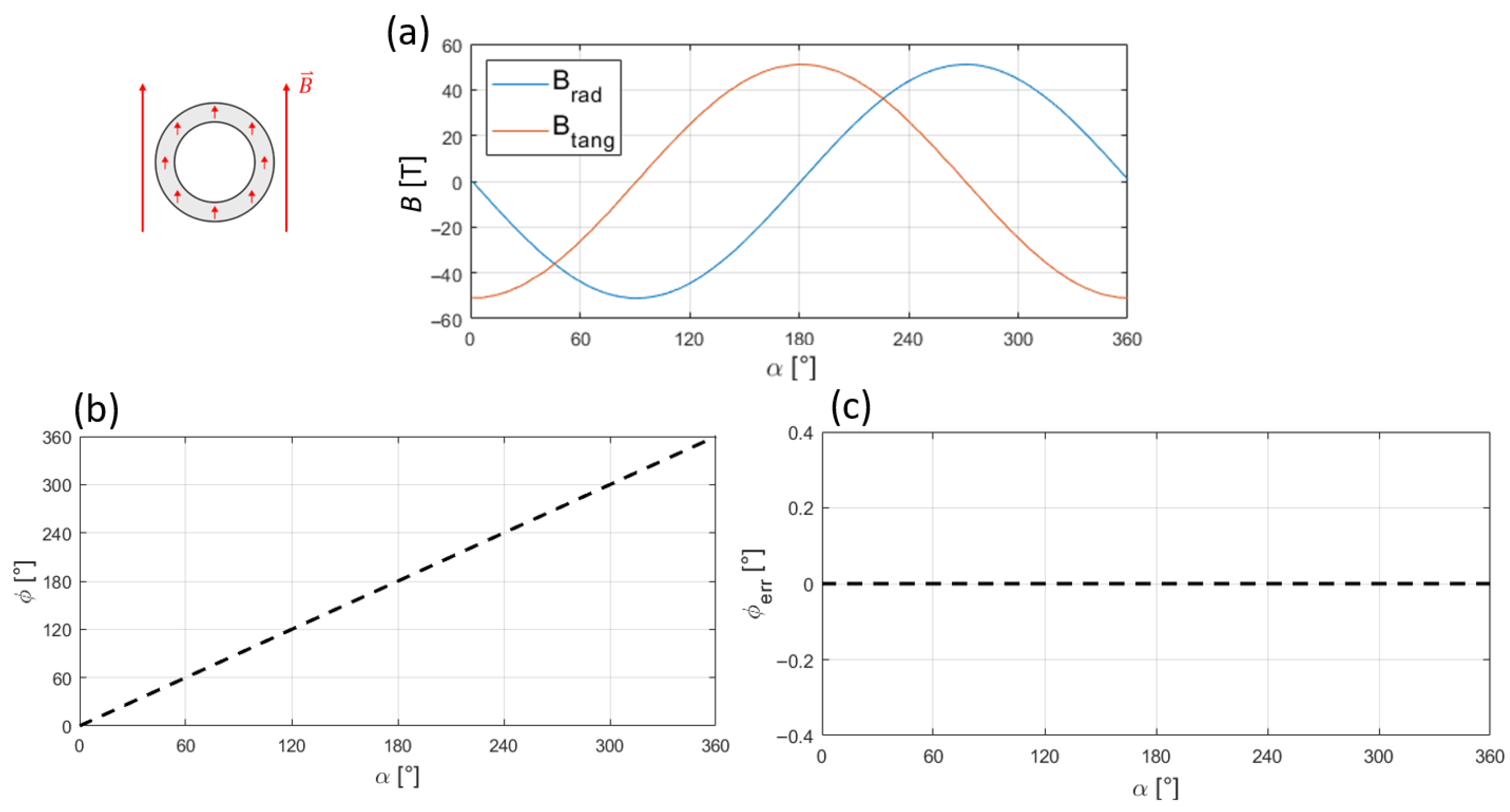
Figure 7 shows the calculated profiles of tangential and radial components of magnetic flux density captured by the sensor as a function of mechanical angle alpha (
Btang(α) and
Brad(α)) detected with the sensor for the ideal case of magnetic ring magnetization, where all segments of the magnets are perfectly aligned with the external magnetization field (
Figure 7a). It should be noted that the displayed radial component
Brad was already calibrated to the same amplitude corresponding to
Btang.
Figure 7b depicts the theoretical profile of the ϕ(α), which is perfectly linear and valid only for the ideal case when no manufacturing or numerical errors are present, and the theoretical profile of the corresponding error
ϕerr is
ϕerr(α) = 0° as depicted by the dashed red line in
Figure 7c. It is important to note that any presence of the manufacturing defects/errors results in deviation from the linear profile
ϕ(α) or from the constant profile of
ϕerr(α).
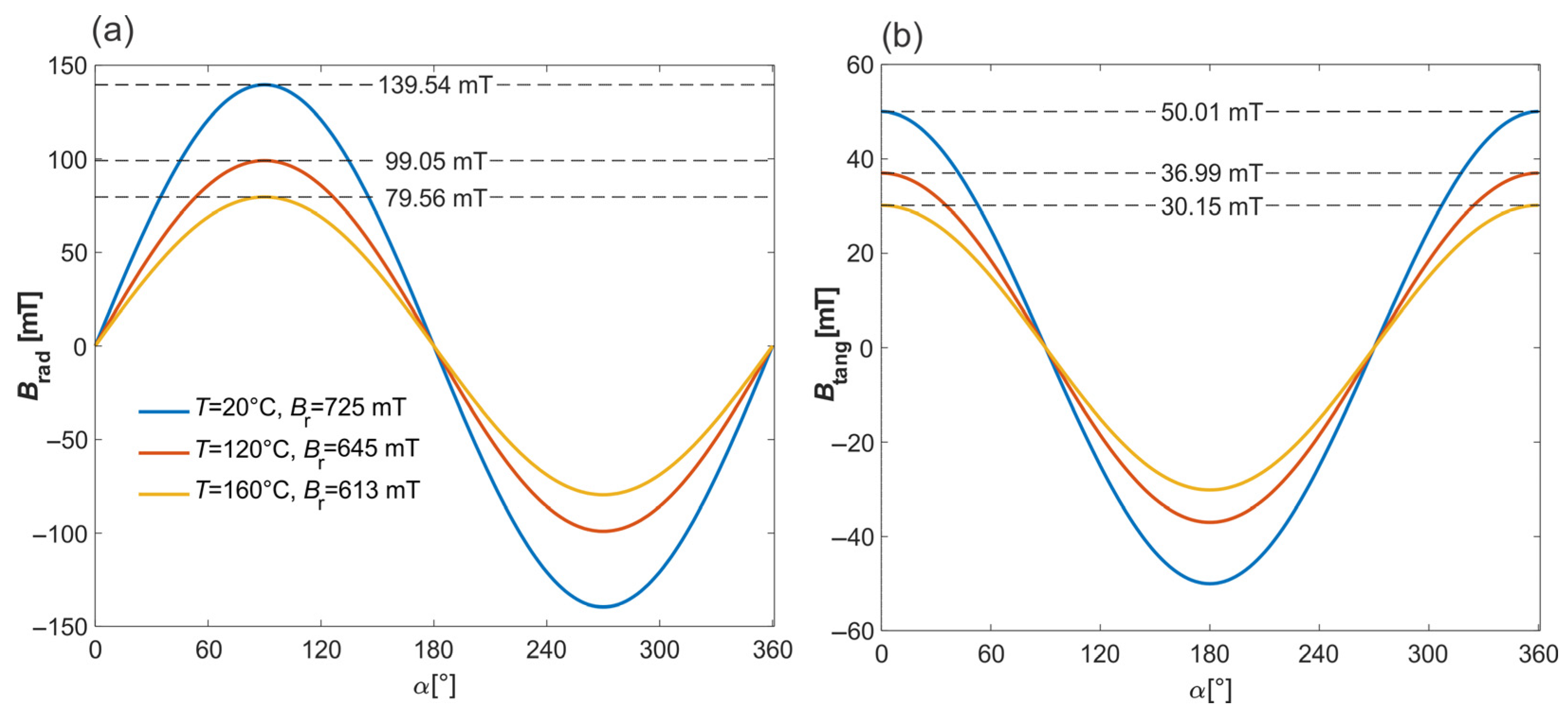
The influence of working temperature on the radial and tangential components of the magnetic flux density signals detected with the sensor for three different working temperatures (i.e., 20 °C, 120 °C and 160 °C), numerically calculated with the model and considering Equation (11), is shown in
Figure 8.
The maximum value of the radial magnetic flux density drops from
Brad = 139.54 mT (at 20°) to
Brad = 79.56 mT at the highest observed temperature of 160 °C (
Figure 8a). The results in
Figure 8b show that the maximum value of the tangential magnetic flux density
Btang drops from 50.01 mT (at
T = 20°) to 30.15 mT at
T = 160 °C, corresponding to the maximum working temperature of the permanent magnet. These results confirm that the selected magnetic material and the dimensions of the magnetic ring are suitable for the designed off-axis rotational position sensing device, since the minimum amplitude of the magnetic flux density is still above the required value of 30 mT. Also, the maximum detected value of magnetic flux density does not exceed 150 mT. This means that the sensor will operate with good accuracy within the whole investigated operating range of working temperatures 20 °C < T < 160 °C.
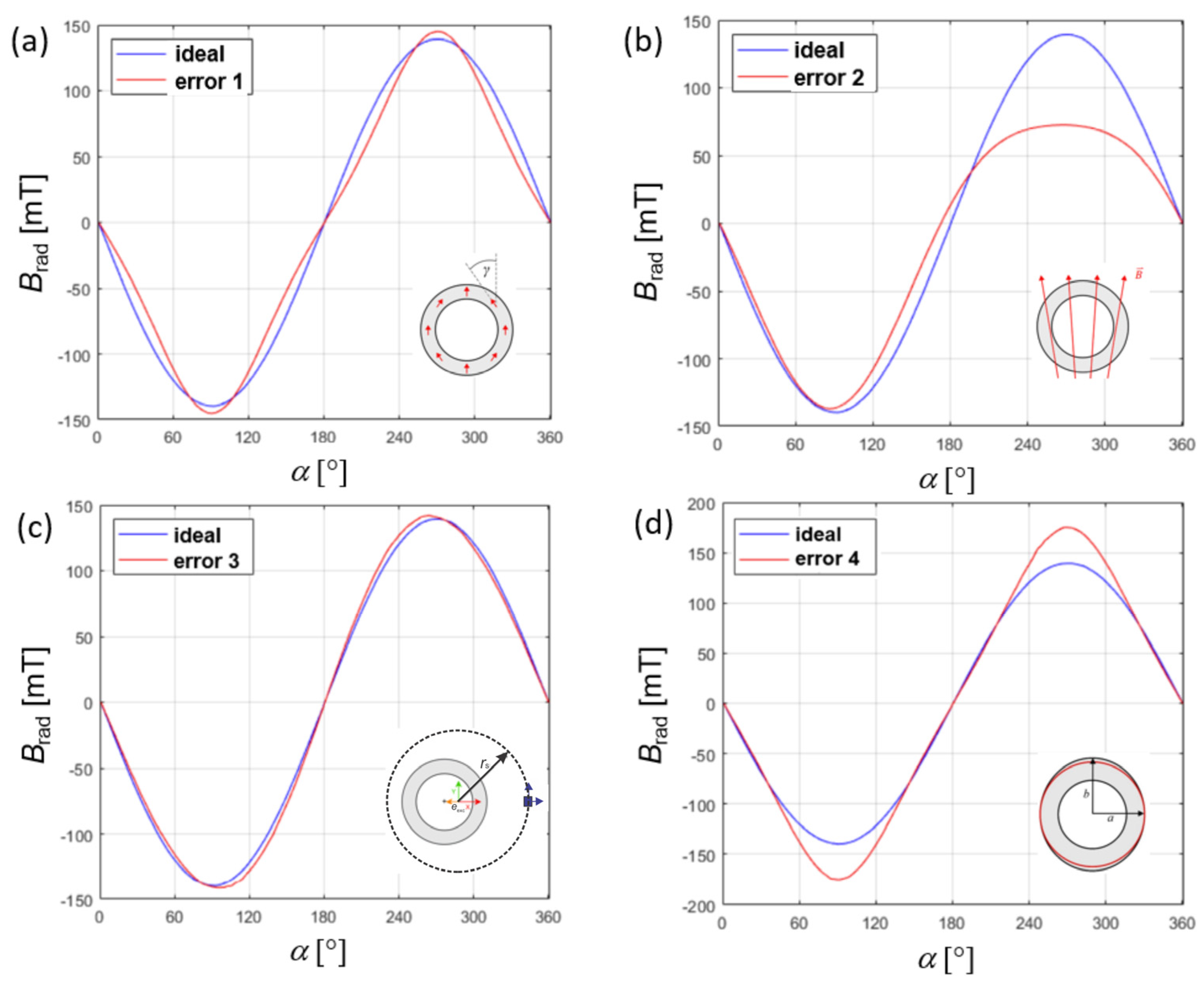
The comparison of the ideal and numerically modeled
Brad as a function of mechanical angle
Brad(α) with the numerically imposed manufacturing errors is shown in
Figure 9, while the comparison of the ideal and numerically modeled
Btang(α) profiles for the same imposed errors is shown in
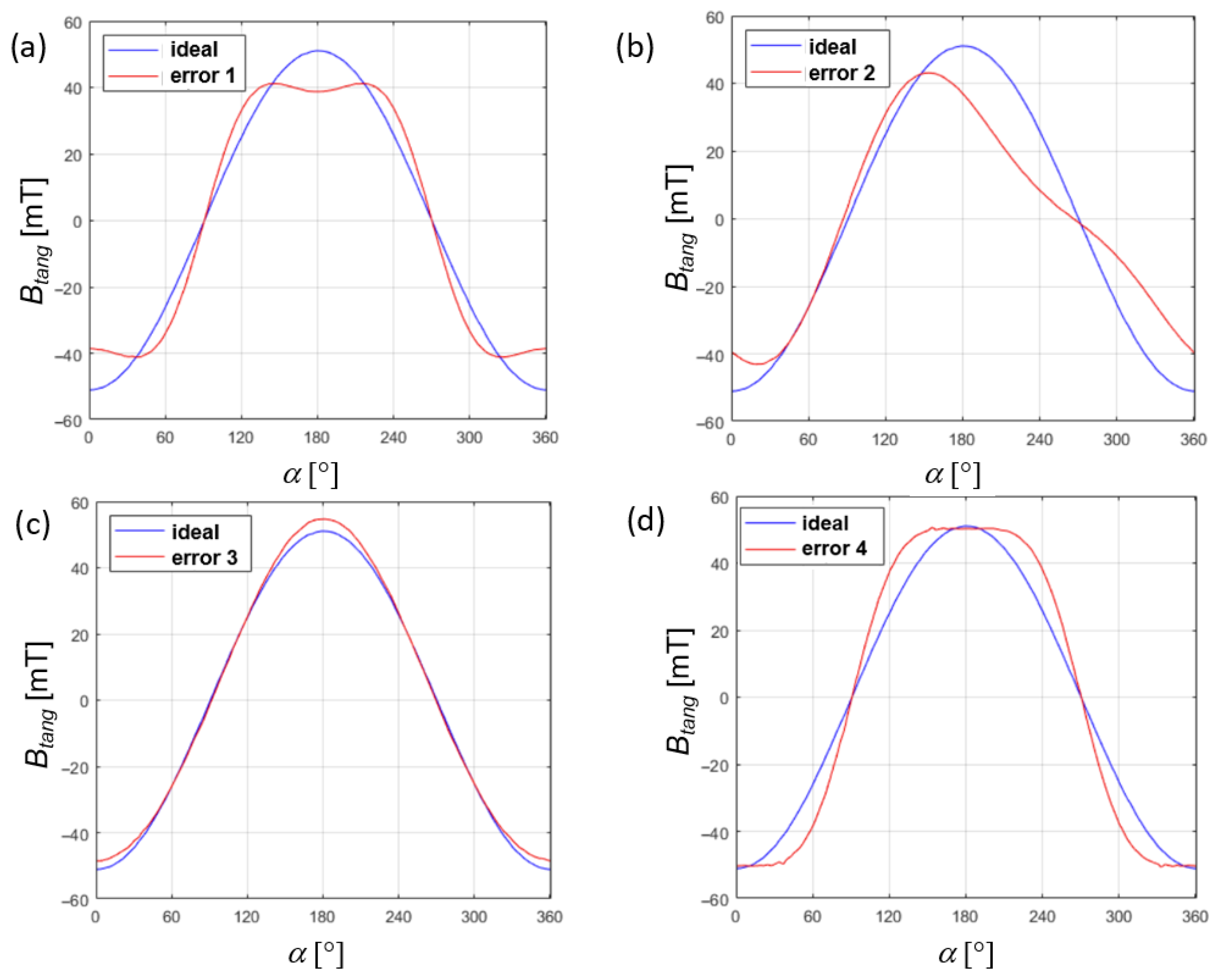
Figure 10. It should be noted that the figures show the results of the maximum errors investigated in this study: error 1 for
γ = 10°, error 2 for
B% = 5%, error 3 for
eexc = 0.5 mm and error 4 for
e% = 5%. The results shown in
Figure 9 and
Figure 10 demonstrate a pronounced deviation of the
Brad(α) and
Btang(α) profiles calculated for the model with imposed manufacturing errors with respect to the sinusoidal profiles obtained for the initial baseline model without the manufacturing errors (ideal case). It is important to note that despite the presence of a significant amount of manufacturing errors, the detected values of
Brad and
Btang remained within the sensor accuracy limits of above 30 mT and below 150 mT. Only the presence of error 4 (
Figure 9d) resulted in the magnetic flux density exceeding the upper required limit of 150 mT, which means that the precision of the sensor in this case had deteriorated.
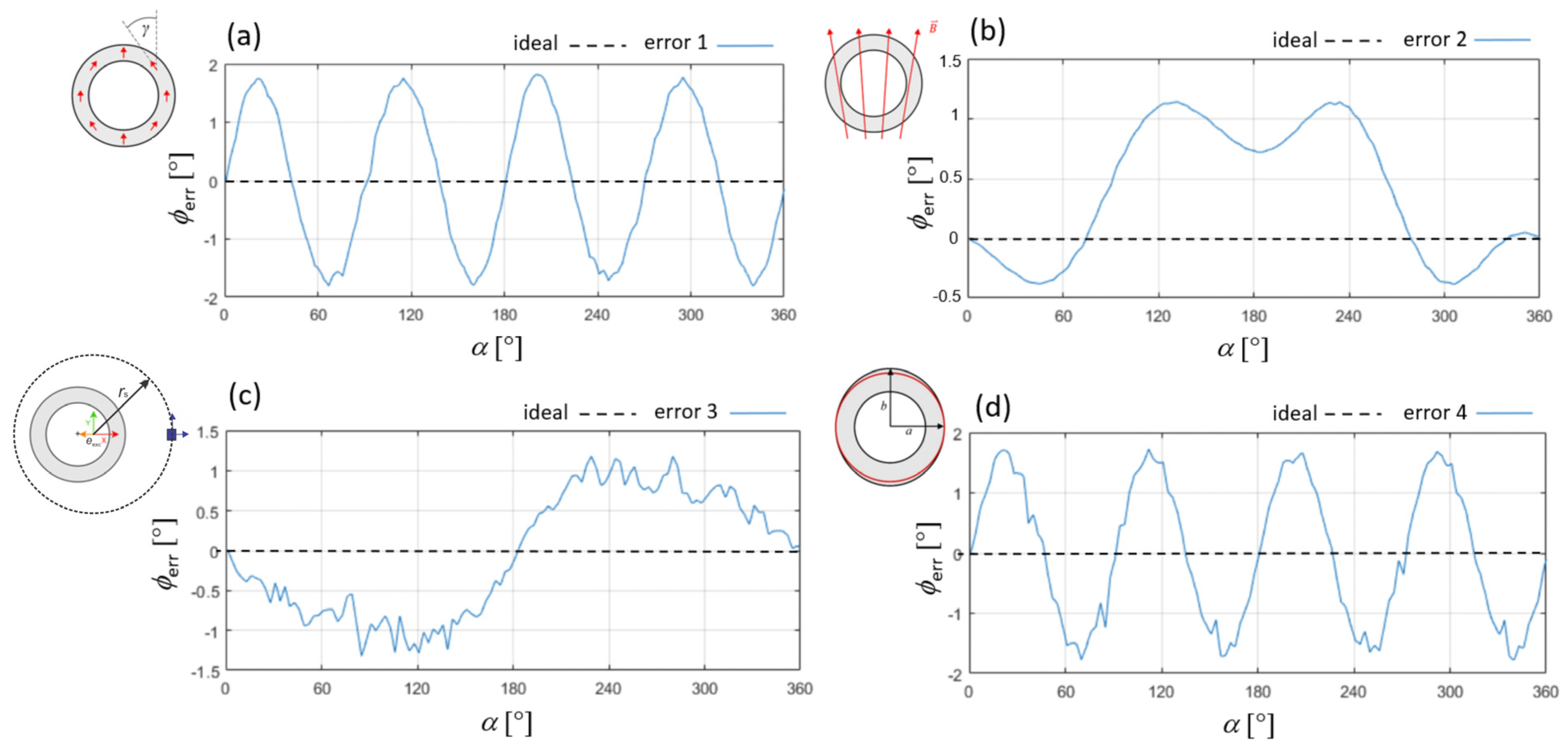
A comparison of the ideal and numerically calculated profiles of error as a function of mechanical angle
ϕerr(α) with the imposed manufacturing errors, a. error 1, b. error 2, c. error 3 and d. error 4, is shown in
Figure 11.
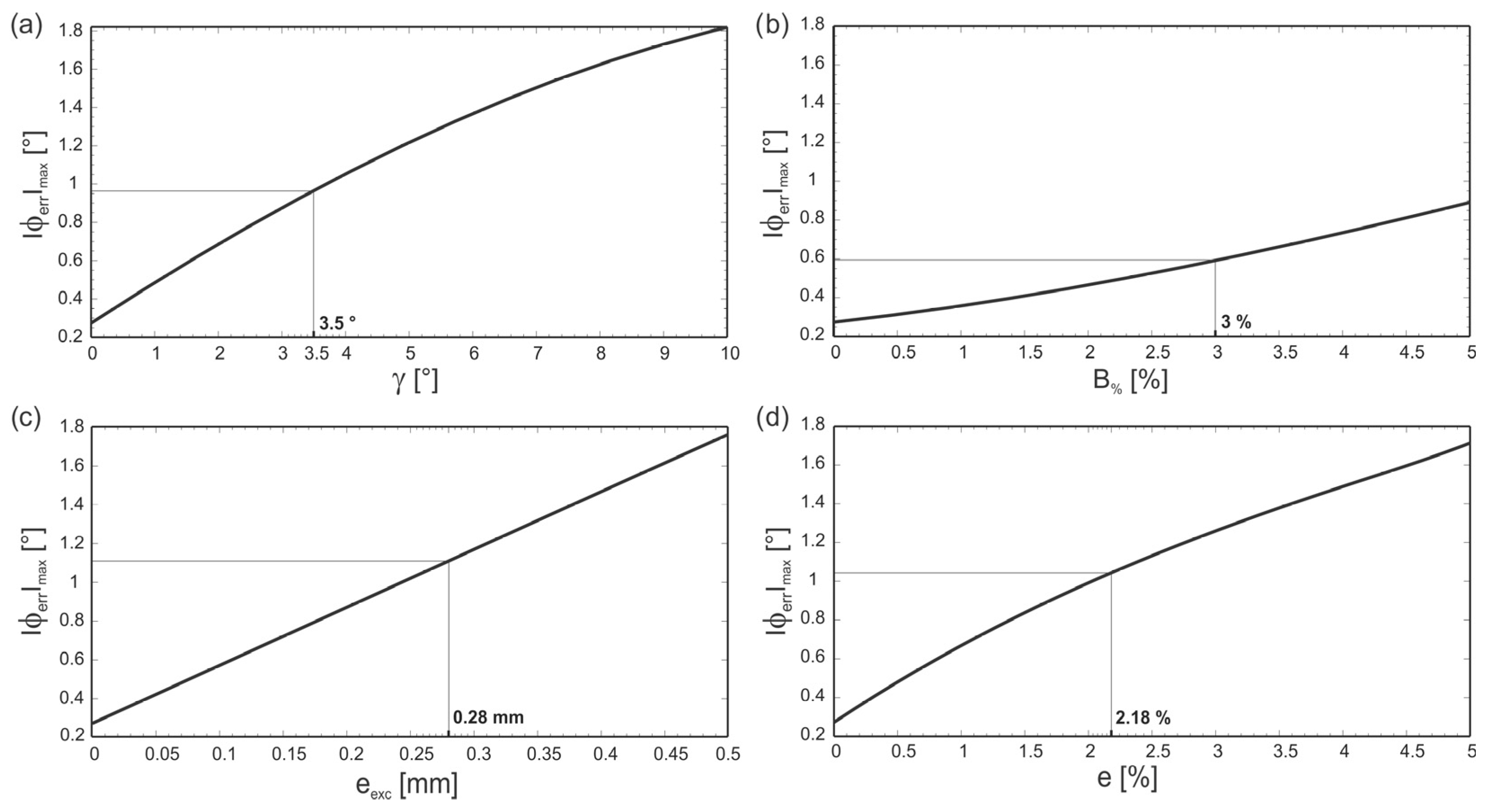
The maximum absolute values of the
ϕerr value calculated within the observed interval of each manufacturing error are depicted in
Figure 12.
The results shown in
Figure 12 indicate that maximum absolute values of the
ϕerr exponentially increase with the increase in the manufacturing error value imposed on the model. It can also be observed that the eccentricity of the magnetic ring (error 3,
Figure 12c) has the greatest impact on the resulting error
ϕerr, whereas error 2 has the least impact (
Figure 12b). An offset value present in all graphs shown in
Figure 12 (i.e.,
= 0.273°) corresponds to the numerical error, which we determined based on the mesh density optimization in the initial FEM model without the imposed manufacturing errors (
Table 3) and considered in all further numerical simulations. The value of each individual manufacturing error determined based on the comparison of the measurements and the FEM model is also indicated in all figures (marked in bold in
Figure 12).
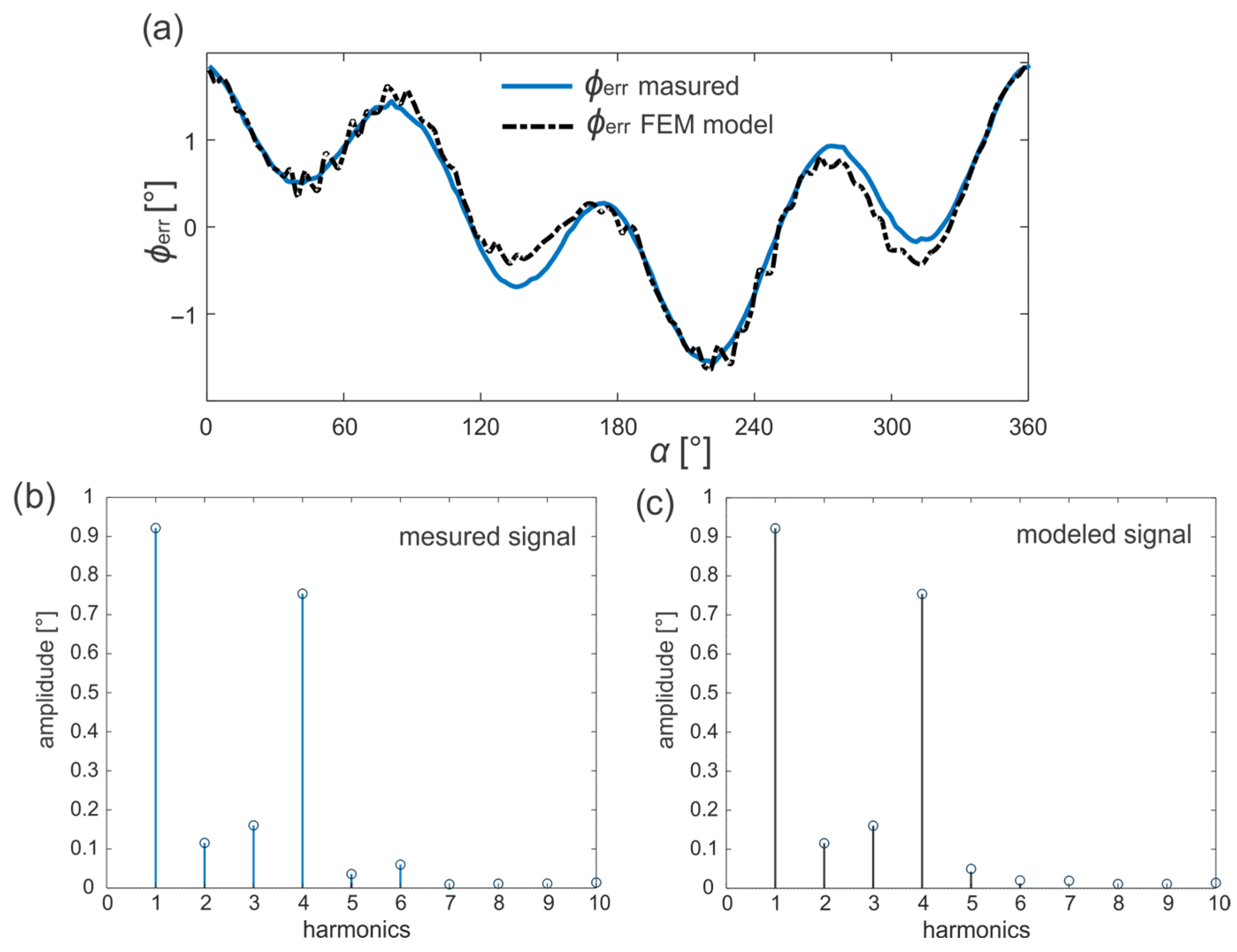
The comparison of the experimentally measured profile of the error function versus mechanical angle rotor position
ϕerr(α) on the real e-motor shaft and the simulated error obtained from the numerical model is given in
Figure 13a. The Fourier transform (FFT) of the experimentally measured
ϕerr(α) is shown in
Figure 13b. The FFT specter of the numerically simulated
ϕerr(α) with the imposed manufacturing errors (as shown in
Figure 4) to obtain the best possible alignment with the experimental error function is displayed in
Figure 13c. While aligning the experimental to the simulated error profile, we focused on the main errors that were responsible for the presence of the second, third and fourth harmonics in the signal, which consequently diminished the first/fundamental harmonic to the same amount as in the experimentally obtained signal. Based on the final obtained numerical signal
ϕerr(α), we established that the profile of the
ϕerr(α) can be achieved with the presence of 0.28 mm of eccentricity (
eexc = 0.28 mm) and 3% inhomogeneity of the magnetic ring (
B% = 3%), due to the inclined external magnetizing magnetic flux density. These two manufacturing errors were responsible for the presence of the second and third harmonic components in the error signal. We also established that the presence of the fourth harmonic component occurred due to the inclination magnetizing angle of the magnetic ring being
γ = 3.5°.
Figure 11a also indicates that the measured accuracy of the prototyped off-axis magnetic rotational position device was within the range ± 1.7° (while accuracy of the reference end-of-shaft encoder was ±0.38°).
We also investigated the possibility of a cylindrically shaped magnetic ring instead of a circular one and found out that such a manufacturing error could also be theoretically imposed to a certain extent to the numerical model to obtain the best alignment between the measured and simulated ϕerr(α) profiles. More precisely, for the best alignment the presence of e% = 2.18% of discrepancy in the y direction from the circularly shaped ring corresponds to the b = 35.76 mm. However, in real experimental settings, such deformation of the magnet ring is not possible (and it was not observed in our experiments), since in case of such deformation of the geometry the magnetic ring would be in close contact with the motor housing. Therefore, we can conclude that the following manufacturing errors contributed to the profile of errors: eccentricity, inhomogeneity of magnetic ring due to the inclined external magnetizing magnetic flux density, and the inclination magnetizing angle of the magnetic ring γ.
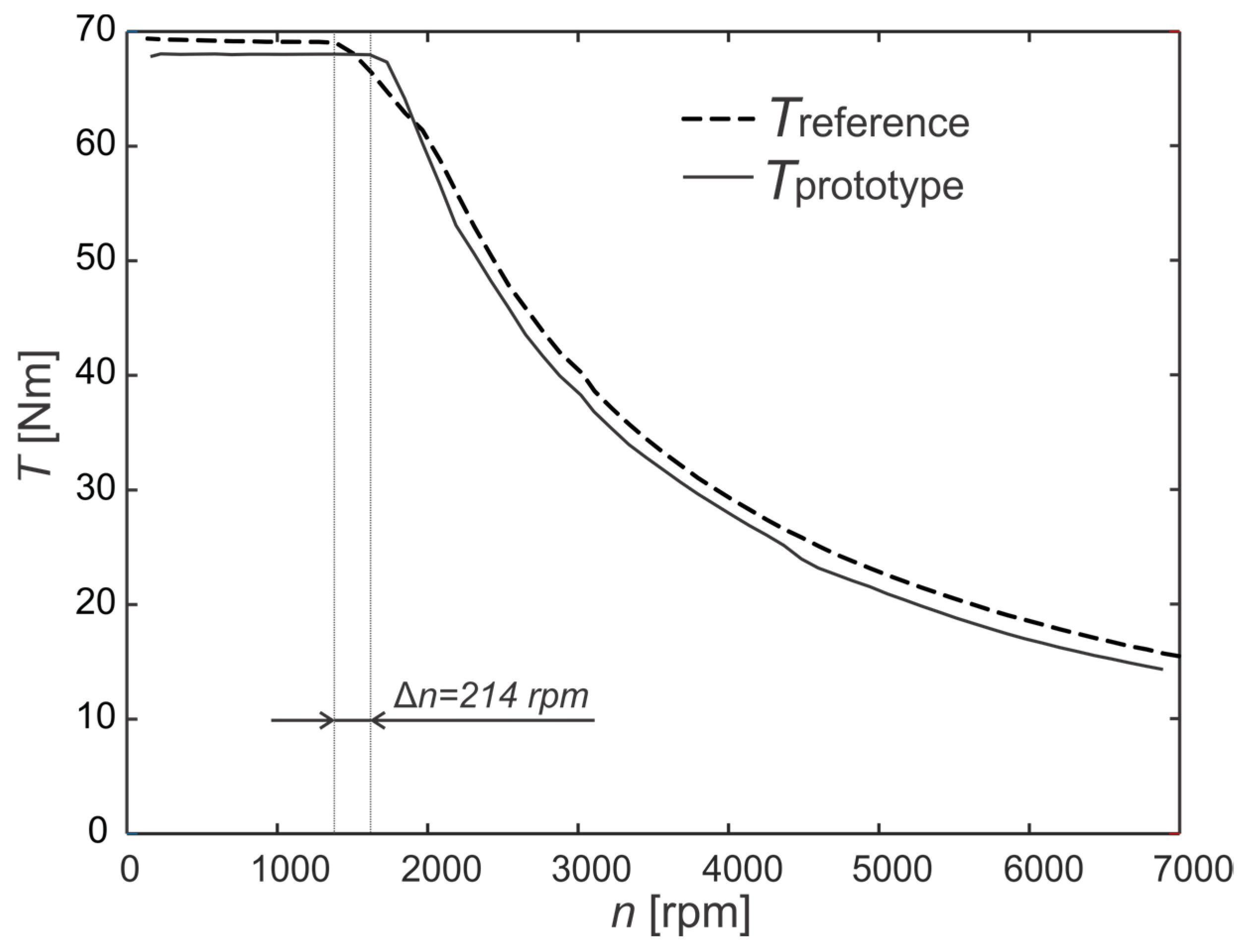
The comparison of the experimentally measured torque speed curves on the real e-motor using two different magnetic rotational position sensing devices (i.e., the prototype off-axis configuration versus the reference end-of-shaft encoder) is given in
Figure 14. The experimental results show that the output torque characteristic acquired with the usage of the prototyped off-axis sensing device provides lower values of the torque within the entire operational range (i.e., constant torque region and the field weakening region). Also, the difference in the two measured based speed values was observed (i.e., ∆
n = 214 rpm); a higher value (i.e., 1614 rpm) was obtained with the prototyped device compared to the rotational speed value at the corner point (i.e., 1400 rpm) obtained using the reference rotational position device (i.e., more precise end-of-shaft encoder). The calculated relative deviation of the e-motor base speed obtained using the rotational position device prototyped in this study with respect to the based speed value assessed using the reference end-of-shaft encoder was 15.29%. The difference between the assessed torque values within the constant torque region was 1.03 Nm (i.e.,
Treference = 69.01 Nm at 1400 rpm and the
Tprototyped = 67.98 Nm at 1614 rpm). Therefore, the calculated relative deviation between the two measured torque values was 1.5% (corresponding to the difference 1.03 Nm). Such degradation of the output torque value can be attributed to the errors of the e-motor control due to the miscalculation of the shaft position angle and misalignments between the rotor magnetic flux and stator current vectors, caused by the erroneous readings obtained from the sensor [
4,
23,
28]. The experimental results shown in
Figure 14 can be explained by Equations (8) and (9), which clearly indicate that the electromagnetic torque decreases with the rotor position error angle.
4. Conclusions
In this paper we delved into numerical modeling and experimental analysis of a magnetic off-axis rotational position sensing device for absolute rotor position assessment of permanent magnet synchronous motors. The main objectives of the study were to design and analyze the segments of the rotational position sensing device (i.e., magnetic ring with respect to the location of the sensor) by taking into account geometrical, material, magnetic and thermal constraints, in order to identify and analyze possible errors that may occur during the manufacturing process of the magnetic ring and to evaluate their influence on the e-motor output characteristics. First, a parametric finite element-based 3D numerical model of the permanent magnet-based ring and the e-motor shaft was developed using ANSYS APDL. To facilitate the identification of the appropriate dimensions of the magnetic ring so that it meets all mechanical, thermal and electromagnetic requirements, we developed a dedicated software tool based on the ANSYS APDL and Matlab software programs. The numerical model also enables parametric positioning of the sensor for assessment of radial and tangential components of the magnetic flux density during the rotation of the e-motor shaft and processing of the captured signals. Most importantly, the parametric 3D numerical model, together with the developed algorithm, allows us to reproduce and analyze different errors that may occur during the manufacturing process of the magnetic ring and/or the sensor positioning with respect to the e-motor shaft. The software tool was developed in such a way that it can also readily consider the space constraints imposed by the e-motor housing and shaft geometrical and material properties. This is particularly important in special applications such as the control of newly designed and thus non-standard e-motors, where off-the-shelf encoders cannot be used due to their non-standard dimensions and other physical properties.
Based on the 3D FEM simulations, the magnetic ring dimensions and the sensor position were determined considering the real e-motor’s properties, shaft and housing characteristics. Next, the prototype of the modeled off-axis rotational sensing device was successfully manufactured according to the results of the 3D numerical simulations, and measurements of the torque speed characteristic of a real e-motor were performed. To experimentally test and evaluate the accuracy of the prototype, the output torque speed characteristic of the e-motor was also measured with a commercially available high-precision rotational end-of-shaft encoder. The comparison of the measurements revealed that a smaller value of torque was found in the results of the prototype, indicating an inferior measurement precision (compared to the commercial encoder) due to the presence of the magnetic ring manufacturing errors. The measured accuracy of the prototyped off-axis magnetic rotational position device was ±1.7°, compared to that of the reference end-of-shaft encoder, which was ±0.38°. Based on the experimental and numerical analysis, we established that the lower precision of the prototyped rotational position device stemmed from the manufacturing errors, such as the manufacturing error due to the local deviations in the magnetization of the magnetic ring, the eccentricity of the magnetic ring with respect to the e-motor shaft, and the manufacturing error due to the erroneous positioning of the magnetic ring with respect to the external magnetization magnetic field. This is an important observation that indicates that our approach based on the algorithm we developed and implemented in this study can serve as a simple and useful tool for the identification of magnetic-based rotational position sensing device defects and their impact on permanent magnet-based e-motor performance. These results can also help in the further development of advanced compensation algorithms of e-motor rotor position errors.
The findings reported in this study have important implications for the design procedure of magnetic-based rotational position sensing devices, the identification of errors that may occur during assembly and/or the manufacturing process of their segments, and assessment of possible errors in e-motor control related to the quality of the rotational position sensing devices. In addition to permanent magnet synchronous motors, the findings reported in this study can be applied to other types of synchronous motors with control algorithms based on dq theory, such as permanent magnet-assisted synchronous reluctance motors (PMaSynRMs) and externally excited synchronous motors (EESMs).