
Article

Quality and Genesis of Shale Reservoir Rich in Feldspar, Taking the Qiongzhusi Formation in the Sichuan Basin of China as an Example


1
PetroChina Research Institute of Petroleum Exploration & Development, Beijing 100083, China
2
PetroChina Southwest Oil & Gas Field Company, Chengdu 610051, China
3
State Key Laboratory of Petroleum Resources and Engineering, China University of Petroleum (Beijing), Beijing 102249, China
*
Author to whom correspondence should be addressed.
Minerals 2026, 16(6), 564; https://doi.org/10.3390/min16060564
Submission received: 10 March 2026 / Revised: 19 May 2026 / Accepted: 20 May 2026 / Published: 24 May 2026

Abstract

Shale gas will be the focus of global oil and gas exploration in the future. As a key mineral component in shale, the characteristics and genesis of feldspar are of great significance for reservoir quality. The feldspar in the Qiongzhusi Formation shale was studied through core observation, X-ray diffraction (XRD), field emission scanning electron microscopy (FE-SEM), and major and trace elements analysis. The results show that the content of feldspar in the Qiongzhusi Formation shale is relatively high, with an average content of 27.3%, mainly sodium feldspar. The feldspar presents various forms, such as angular clastic particles and strongly altered particles. It exhibits localized dissolution and illitetization. The feldspar in the Qiongzhusi Formation shale is multi-source, mainly provided by the mixture of felsic sedimentary rocks and granites from the upper crust. The main source areas are the Western Sichuan Block, the Motianling Block, and the Hanyang Block. Rapid sedimentation leading to rapid burial is the primary sedimentary control factor for the high initial content of feldspar in the Qiongzhusi Formation shale. During the late burial and diagenetic stages, localized fluid action, comprising the synergy between micro-scale migration and chemical reactions driven by hydrocarbon generation, acts as a key factor influencing the minor variations in feldspar content. Under a stable tectonic background, the fluids in the Qiongzhusi Formation mainly come from organic acids produced by shale hydrocarbon generation, and the influence of formation water fluids is relatively limited, with a low degree of feldspar mineral transformation.

1. Introduction

As the global energy structure undergoes a transition towards a low-carbon model, shale gas has become an important successor energy source [1]. The characteristics of shale gas reservoirs determine the success or failure of exploration and development [2]. The shale reservoir is a complex system composed of quartz, feldspar, clay minerals, carbonate rocks, etc. Although authigenic quartz is considered the primary factor controlling rock brittleness in the Qiongzhusi Formation, the high content of feldspar, as a crucial rigid framework mineral, contributes significantly to the overall brittle response of the formation [3]. High feldspar concentration increases micropore development and rock heterogeneity through differential dissolution during diagenesis. Although this process is locally accompanied by the formation of secondary clay minerals, it effectively lowers the stress threshold for fracture initiation, thereby macroscopically enhancing the fracability of the reservoir while simultaneously improving the reservoir space. Therefore, clarifying the development characteristics and genesis of feldspar is crucial for reservoir quality evaluation [4].
Consequently, detailed investigations specifically targeting the diagenetic evolution of feldspar within these complex shale matrices remain relatively limited. Studies on the Paleoproterozoic Barney Creek Formation in the McArthur Basin, Australia, have demonstrated that feldspar content positively correlates with total porosity, as its dissolution can generate significant secondary porosity [5]. Similar to its application in sandstone reservoirs, the morphology and type of feldspar in shale can serve as key indicators of provenance, sedimentary environment, and diagenetic history, thereby providing a crucial mineralogical perspective for shale reservoir evaluation [6]. The feldspar mineral content of the Qiongzhusi Formation shale in the Sichuan Basin is significantly high [7]. However, its type and spatial distribution pattern are not clear, and its material source is controversial, whether it is the peripheral ancient crystalline basement or the contemporaneous volcanic material. The control mechanism of the enrichment and transformation of it during the sedimentary and diagenetic process is also lacking systematic explanation. Due to the fine particle size of shale minerals, which is mainly at the micro–nano scale, research on shale minerals is relatively complicated [8]. Therefore, this study aims to use multiple technical means in combination to reveal the development characteristics of feldspar in shale and deeply explore its formation mechanism in order to fill the research gap in this field.

2. Sample Selection and Experimental Methods

2.1. Background of the Sample

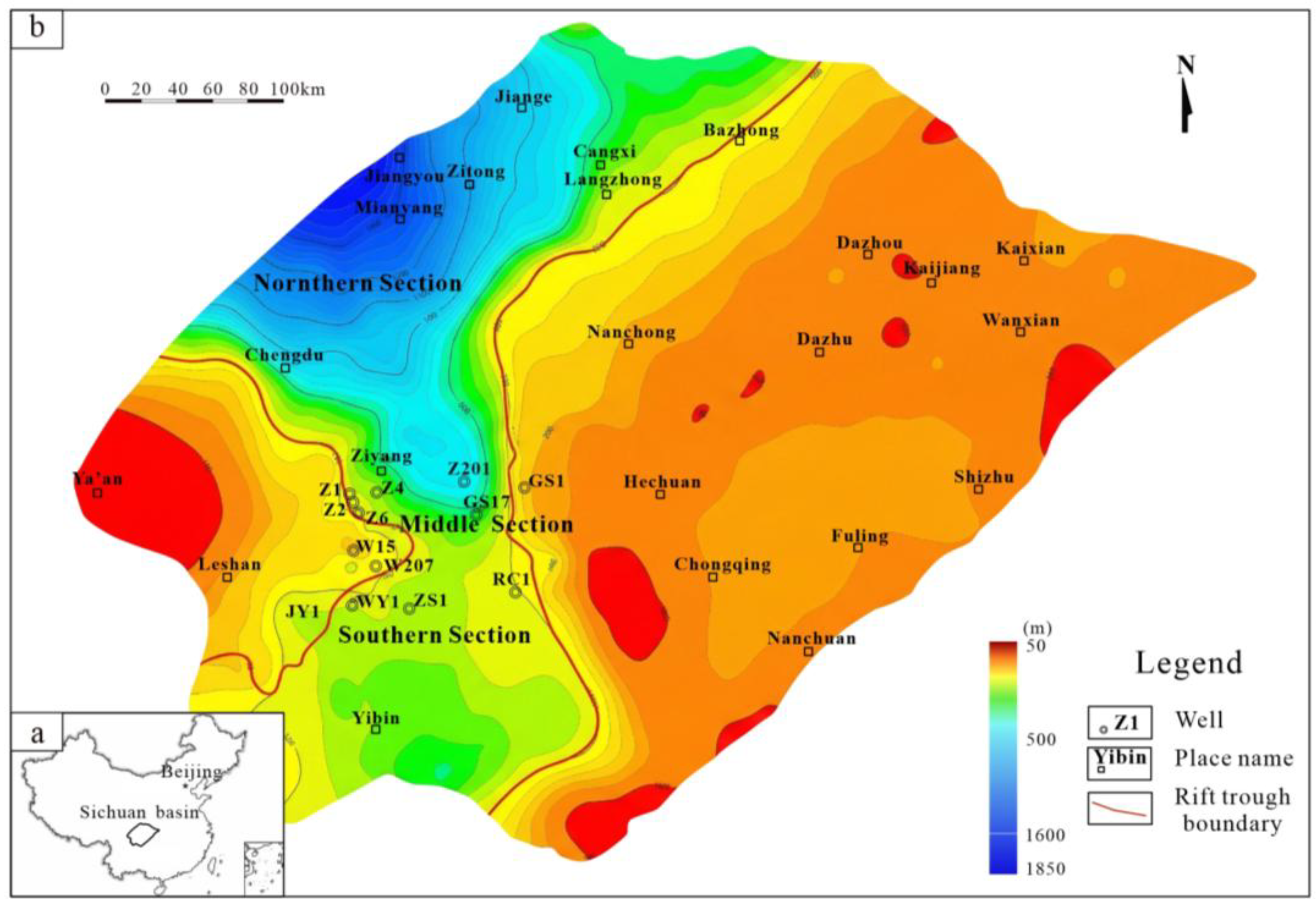
This study focuses on the key geological unit, the Deyang-Anyue rift trough in the Sichuan Basin (Figure 1). This area was characterized by a high sedimentation rate and abundant terrestrial clastic supply during the sedimentation period of the Qiongzhusi Formation in the Early Cambrian, providing a unique background for the abundant enrichment and preservation of feldspar in shale. To reveal the development characteristics and genesis of feldspar in the Qiongzhusi Formation shale, well Z201 located within the rift trough was selected as the research object. The target layer section is the Lower Cambrian Qiongzhusi Formation. During this period, the Deyang-Anyue rift trough primarily developed a deep-water shelf sedimentary environment, characterized by anoxic bottom water conditions and restricted hydrodynamics [9]. This stable, low-energy depositional setting facilitated the mass accumulation of organic-rich black shales, establishing a specific geochemical foundation for subsequent diagenetic mineral transformations [10]. As illustrated in Figure 1b, the Qiongzhusi Formation shale exhibits considerable thickness within the rift trough, generally ranging from 200 m to over 1600 m. Specifically, the shale thickness in the study well Z201 reaches approximately 400 m. A total of 218 shale core samples were collected from various depths within the Qiongzhusi Formation. All samples avoided the obvious later-stage fracture and vein development sections to ensure that the obtained data could effectively reflect the original sedimentation and diagenesis information.

2.2. Experimental Methods

2.2.1. Core Observation

This study collected 218 shale core samples from different depths of the Qiongzhusi Formation in well Z201. The samples were widely distributed vertically, covering Member 1 and Member 2 of the Qiongzhusi Formation, with sampling depths mainly ranging from 4460 m to 4860 m. To ensure representativeness, systematic sampling was conducted focusing on different lithofacies (such as siliceous shale and silty shale) and sections with varying organic matter content in order to accurately record petrological characteristics and their evolution in the vertical profile. Before the experimental analysis was carried out, macroscopic sedimentological observations and descriptions were conducted on the shale core samples of the Qiongzhusi Formation from Well Z201. The key points of the observation included changes in rock color, sedimentary structural characteristics, the degree and filling condition of fractures, and the distribution of mineral enrichment bands [11]. The differences in organic matter abundance were preliminarily determined based on the color depth, and the types of laminae (such as horizontal laminae and undulating laminae) were recorded in detail to reflect the water dynamic conditions during the sedimentary period [12].

2.2.2. XRD Analysis

To obtain precise quantitative data on the entire rock mineral composition, especially for feldspar-type minerals, XRD analysis was conducted on all samples. The experiment was carried out on a Bruker D8 Advance X-ray diffractometer, Bruker Corporation, Karlsruhe, Germany, using a Cu-Kα radiation source (working voltage 40 kV, current 40 mA), with a scanning range from 3° to 85° (2θ) and a speed of 2°/min. Representative samples were obtained via the quartering method and ground to <200 mesh (verified by LPSA with D50 ≈ 45 μm). Subsequently, the powder was side-loaded for sample preparation to ensure random orientation and mitigate preferred orientation effects. The final diffraction patterns were identified using the Jade9.0 software and refined using the Rietveld full spectrum fitting method, thereby quantitatively calculating the relative contents of each phase such as quartz, potassium feldspar, sodium feldspar, carbonate minerals, and clay minerals, providing key mineralogical data for this study. To ensure the accuracy of absolute weight percentages and account for amorphous components, 10 wt.% corundum (α-Al2O3) was added as an internal standard. For the detailed determination of clay mineralogy, the <2 μm fraction was separated by sedimentation and centrifugation. Oriented aggregate mounts were prepared and analyzed under three conditions: air-dried, ethylene glycol-saturated (48 h), and heat-treated (550 °C for 2 h) to differentiate between illite, chlorite, and mixed-layer minerals.

2.2.3. Scanning Electron Microscopy

To reveal the morphology and diagenetic evolution characteristics of feldspar at the microscopic scale, 20 representative samples were selected for FE-SEM observation. Sample preparation was a key step. All the samples to be observed were subjected to argon ion polishing to obtain non-destructive and flat observation surfaces. The experiment used a Zeiss Sigma300 field emission scanning electron microscope, Carl Zeiss, Oberkochen, Germany, equipped with an Oxford X-Max N80 energy dispersive spectrometer (EDS, Oxford Instruments, Abingdon, UK). Under a working voltage of 15 kV in the backscattered electron mode, the crystal morphology of feldspar (used to distinguish clastic genesis from authigenic genesis) and its symbiotic relationships with quartz, clay minerals and organic matter were mainly observed. Special attention was paid to observing and recording the dissolution phenomena at the edges and interiors of feldspar particles [13]. The composition of typical feldspar particles was analyzed using the EDS to provide direct chemical composition evidence for accurately distinguishing potassium feldspar from sodium feldspar [14].
Furthermore, quantitative image analysis was performed using ImageJ (version 1.52) software to characterize the morphological features of feldspar grains. Over 500 representative particles were measured to obtain their equivalent circular diameter and shape parameters. Circularity (Circ) was used to evaluate the shape deviation from a perfect circle, defined as Circ = 4π× (Area/Perim2). Solidity was employed to quantify the boundary roughness and the intensity of marginal dissolution, defined as the ratio of the particle area to its convex hull area (Solidity = Area/Convex Area). A lower solidity value indicates a more irregular or embayed boundary, reflecting more intense dissolution.

2.2.4. Major and Trace Elements

To explore the source area characteristics of feldspar and the paleoenvironmental background of its deposition and preservation, major and trace element analyses were performed on 101 samples. The contents of major elements (including SiO2, Al2O3, K2O, Na2O, etc.) were determined using the PANalytical Axios-type X-ray fluorescence spectrometer (XRF, Malvern Panalytical, Almelo, Netherlands), and the samples were made into glass sheets by the lithium tetraborate fusion method and then tested on the instrument. The analysis of trace elements and rare earth elements was completed using the Agilent 7900 ICP-MS, Agilent Technologies, Santa Clara, CA, USA. The sample pretreatment used a high-pressure sealed digestion tank, and a complete digestion was carried out using a mixed acid system of HNO3+HF [15]. Analysis of rare earth element (REE) fractionation patterns, together with geochemical parameters such as δCe and δEu, allowed the parent rock type, tectonic setting, and paleoredox conditions during deposition to be reconstructed, thereby providing geochemical constraints on the genesis of feldspar [16].

3. Results

3.1. Characteristics of the Qiongzhusi Formation Shale Core

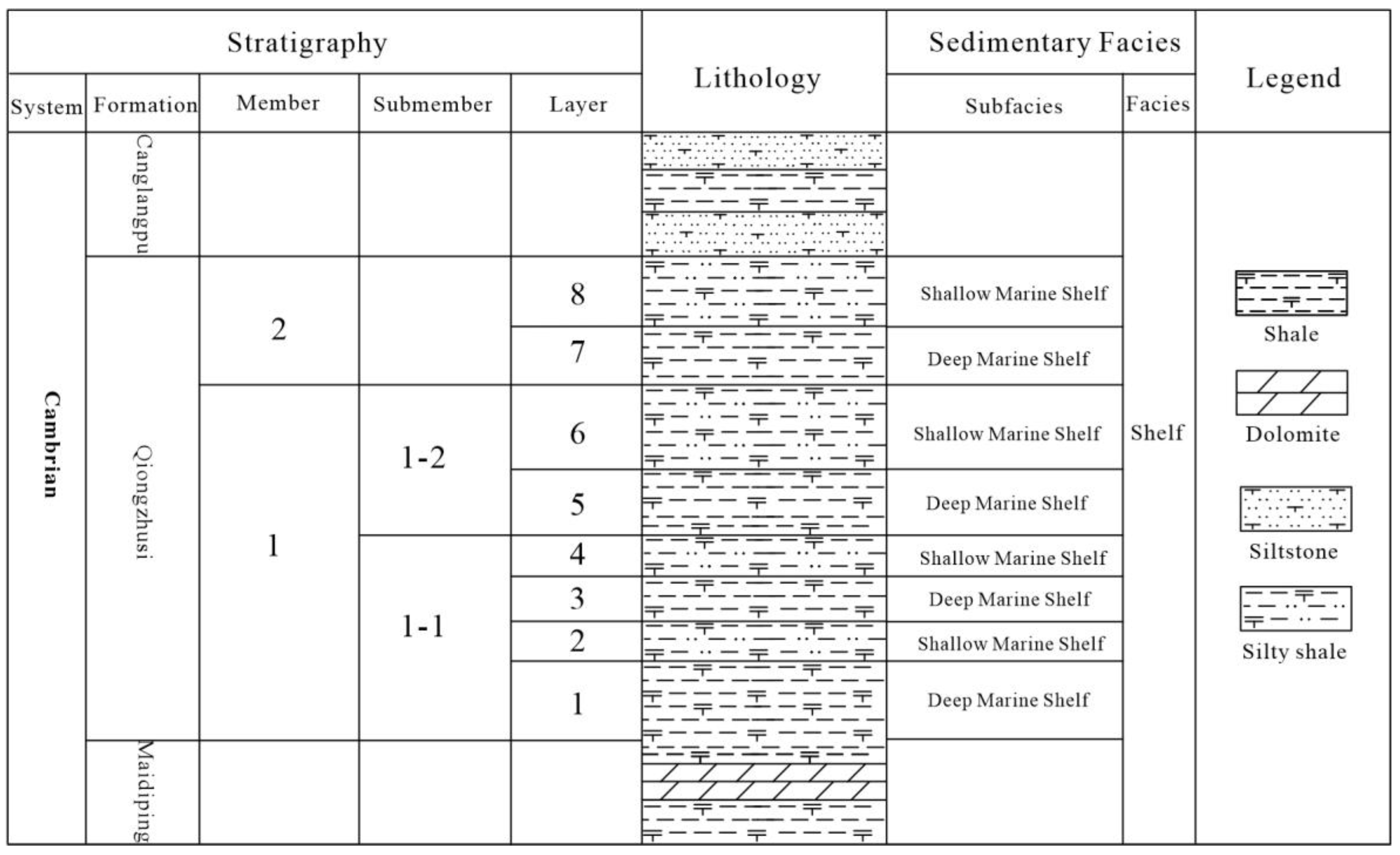
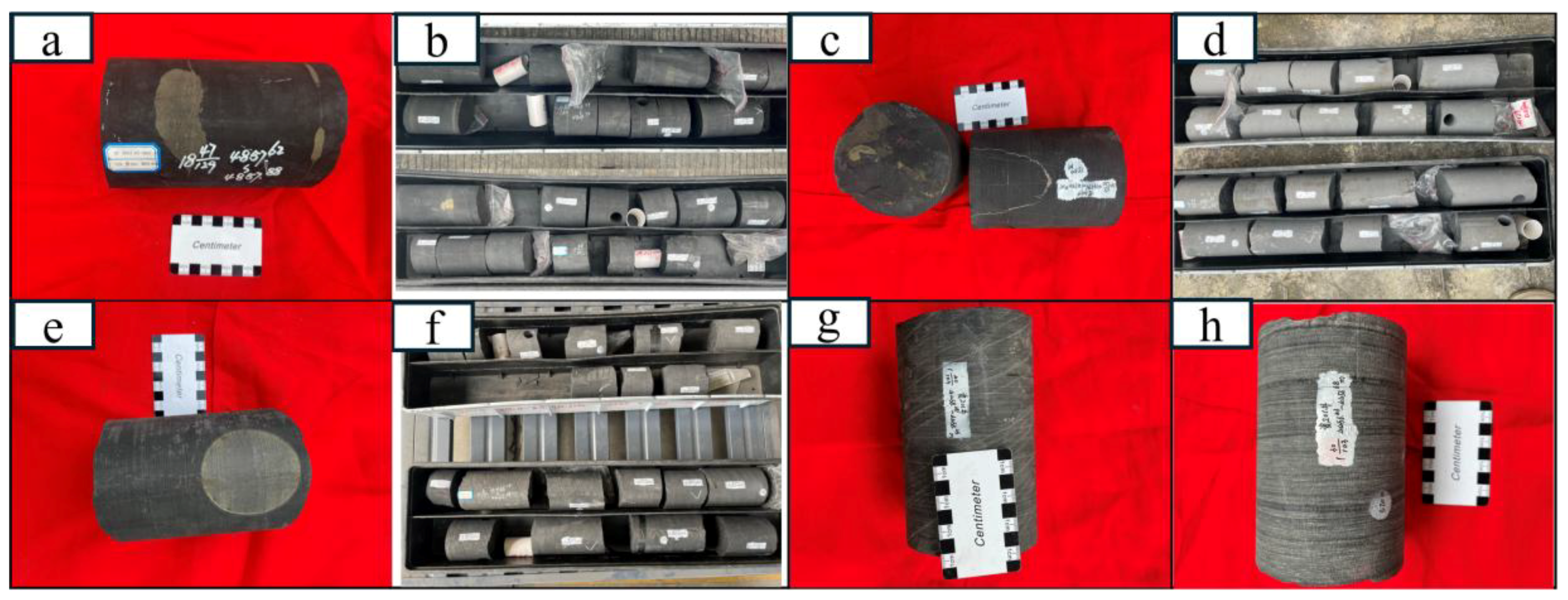
Core observations indicate that the Qiongzhusi Formation predominantly consists of black and dark-gray mudstones. These rocks exhibit well-developed planar-parallel lamination and are characterized by the presence of pyrite laminae and silt-bearing mudstone intervals (Figure 2). Based on lithofacies associations and stratigraphic organization, the Qiongzhusi Formation is divided into two members: Member 1 and Member 2. Member 1 is further subdivided into two submembers. Submember 1-1 contains four small layers, while Submember 1-2 contains two small layers, with individual small layers ranging from 15 to 65 m in thickness. Member 2 consists of two small layers, with individual small layers ranging from 15 to 25 m in thickness, bringing the total to eight small layers for the formation. Specifically, small layers 1, 3, 5, and 7 are characterized as deep-water shelf carbonaceous/siliceous mudstones. In contrast, small layers 2, 4, 6, and 8 are identified as shallow-water shelf silty mudstones with localized occurrences of sandy mudstones (Figure 3).

3.2. Characteristics of Major and Trace Element Contents

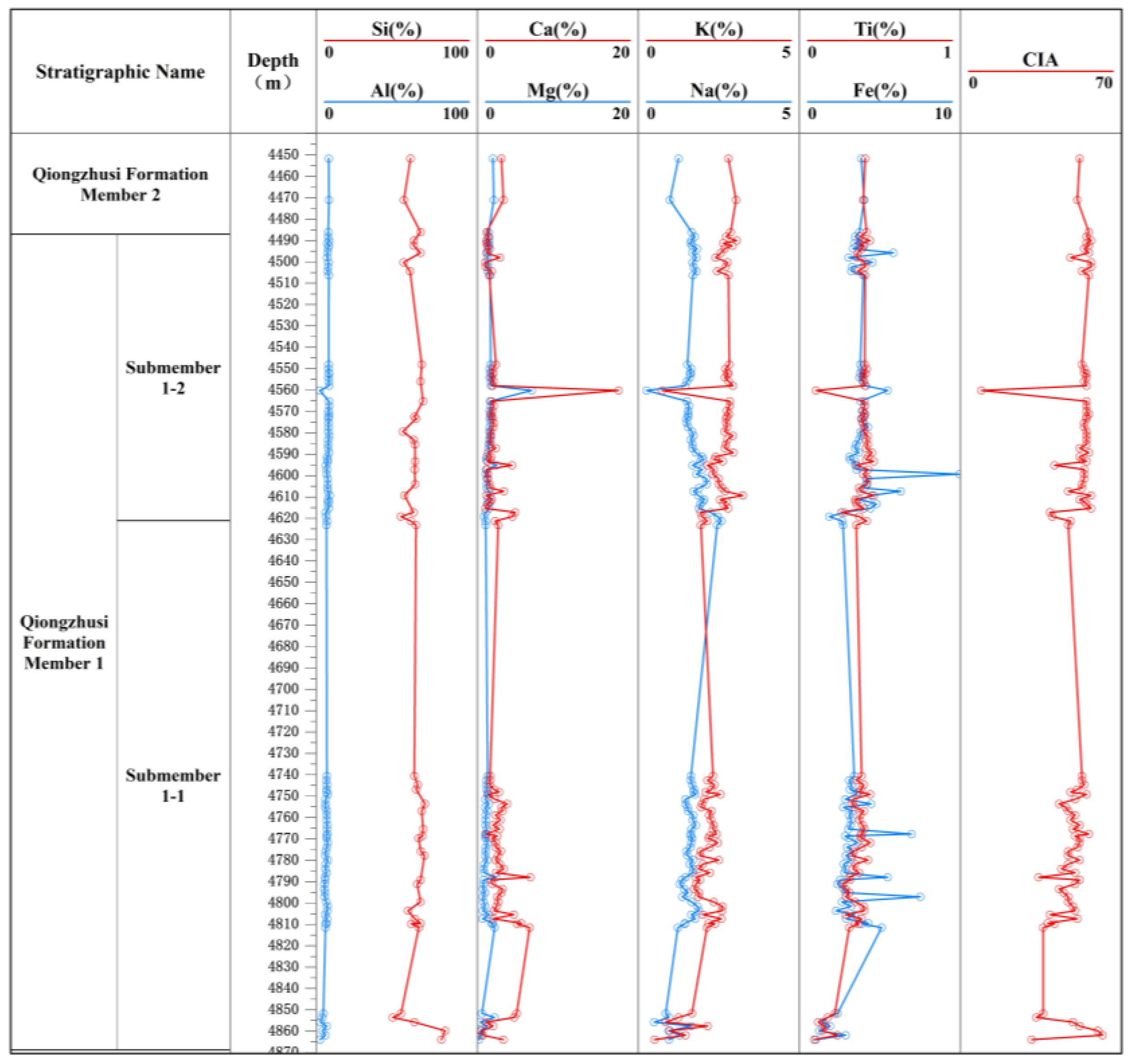
Major element compositions of the Qiongzhusi Formation shale are dominated by Si, with lesser amounts of Al, Fe, Ca, Na, Mg, K, Ti, P, and Mn (Table 1). The five most abundant elements, in order of concentration, are Si, Al, Fe, Ca, and Na. The silicon content ranges from 43.28% to 62.85%, with an average of 57.1%. The aluminum content ranges from 1.89% to 8.11%, with an average of 6.36%. The iron content ranges from 1.00% to 9.97%, with an average of 3.60%. The calcium content ranges from 0.45% to 17.6%, with an average of 2.38%. The sodium content ranges from 0.24% to 2.58%, with an average of 1.62% (Figure 4). The Chemical Index of Alteration (CIA), proposed by Nesbitt and Young (1982) to quantify the degree of silicate weathering, was calculated using the following equation (based on molar proportions) [17]:
C I A = [ A l 2 O 3 A l 2 O 3 + C a O + N a 2 O + K 2 O ] × 100
where CaO represents the CaO content associated only with the silicate fraction. In this study, the CIA value ranges from 9 to 61, with an average of 50.
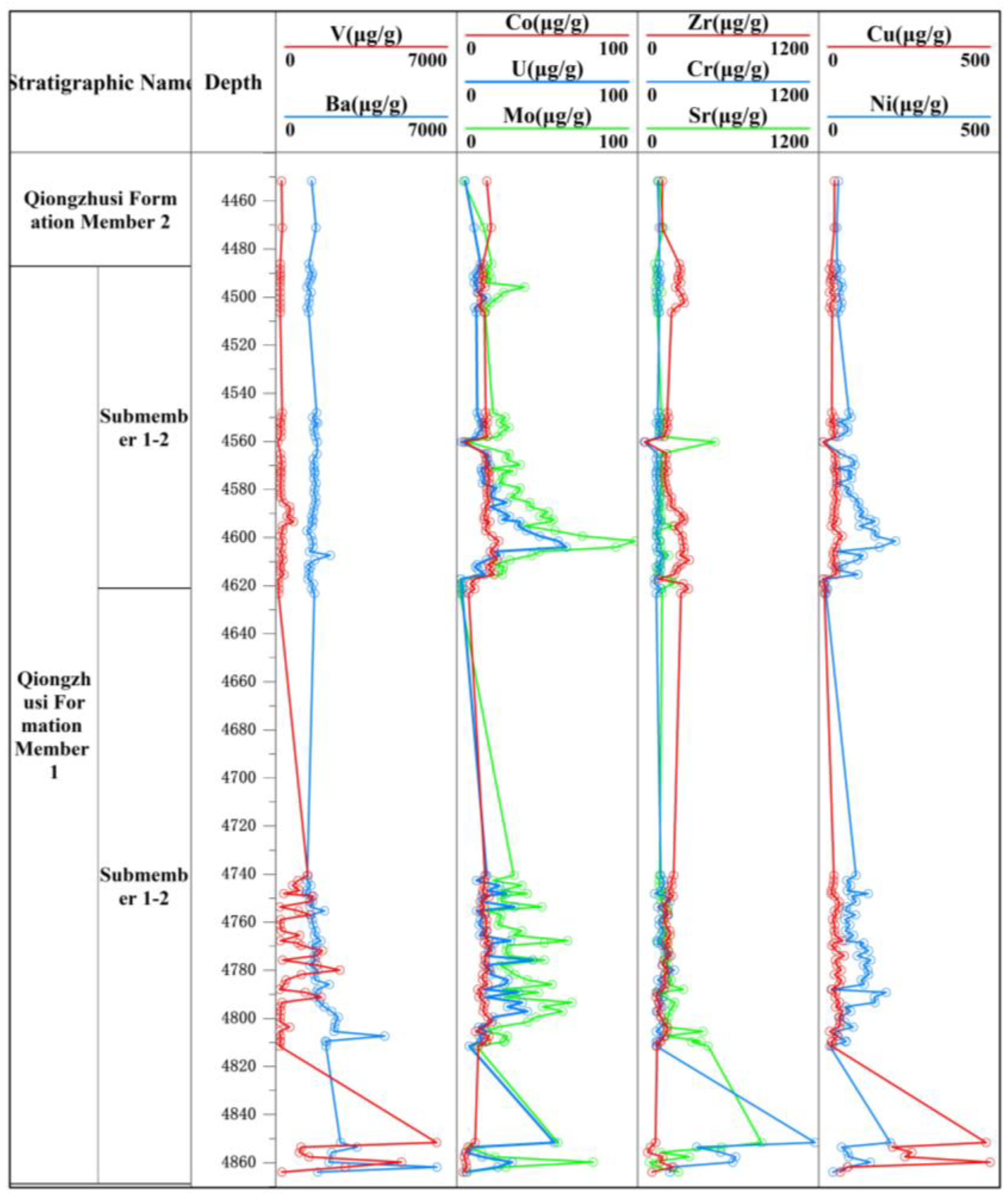
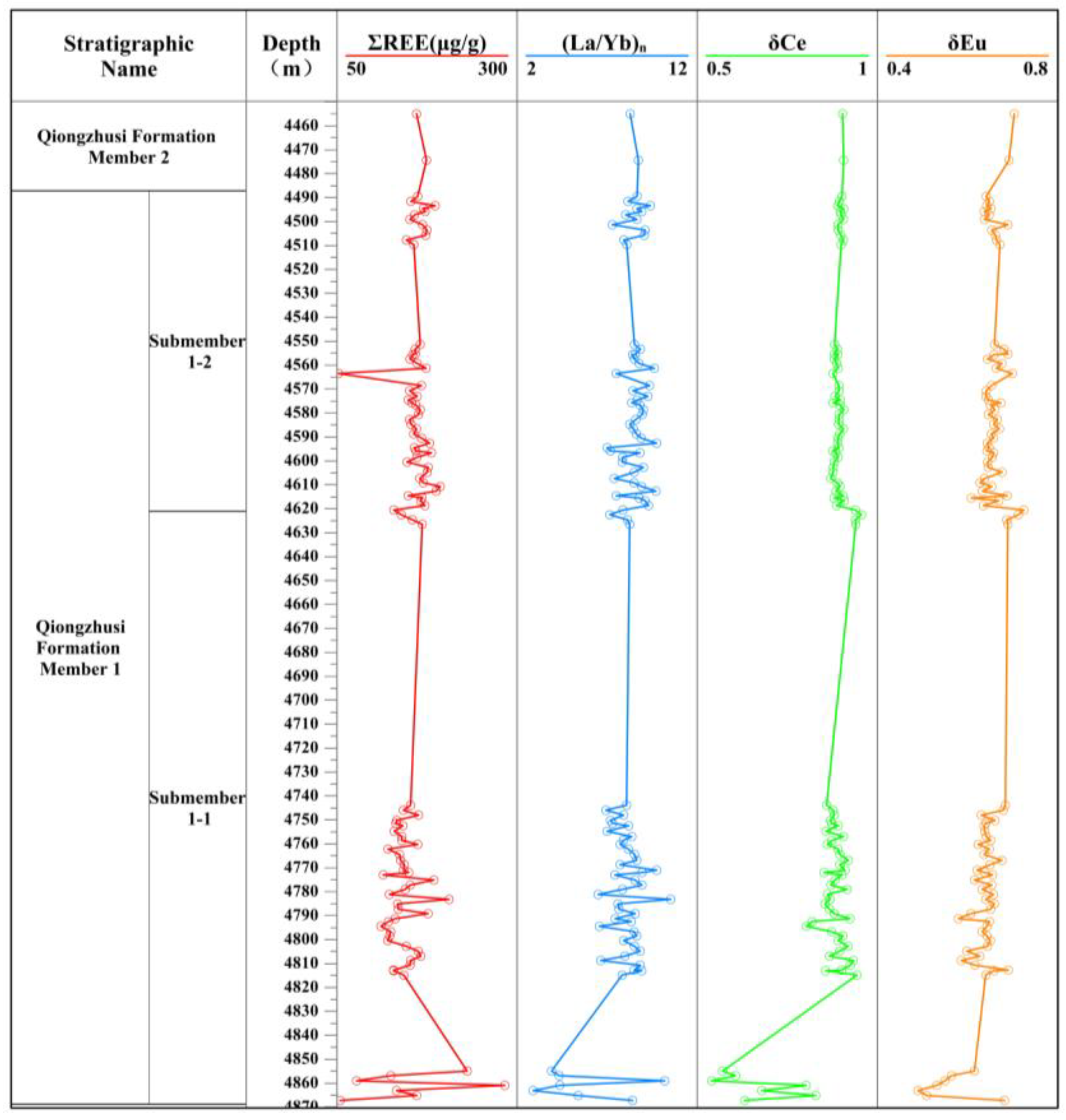
The trace elements in the Qiongzhusi Formation shale are mainly Ba, V, Ni, Mo, and Cu (Figure 5). The content of Ba ranges from 1150.00 to 6350.00 μg/g, with an average value of 1617.50 μg/g. The content of V ranges from 54.00 to 6240.00 μg/g, with an average value of 546.43 μg/g. The content of Ni ranges from 11.70 to 212.00 μg/g, with an average value of 86.71 μg/g. The composition of rare earth elements in the Qionguzhusi Formation shale mainly consists of Ce, Y, La, Nd, and Sc. The content of Ce ranges from 17.40 to 95.10 μg/g, with an average value of 59.51 μg/g. The content of Y ranges from 12.80 to 132.50 μg/g, with an average value of 32.82 μg/g. The content of La ranges from 10.00 to 52.80 μg/g, with an average value of 32.09 μg/g. The total amount of rare earth elements (ΣREE) (Figure 6) ranges from 90.595 × 10⁻⁶ to 147.061 × 10⁻⁶, with an average of 117.135 × 10⁻⁶. Rare earth element (REE) concentrations are normalized to the Post-Archean Australian Shale (PAAS) to eliminate the zigzag effect of the Oddo–Harkins rule [18]. The Ce and Eu anomalies are calculated as
δ C e = C e N L a N × P r N
δ E u = E u N S m N × G d N
where the subscript “N” denotes PAAS-normalized values. The δCe value ranges from 0.54 to 0.96, with an average of 0.88. The δEu value ranges from 0.49 to 0.73, with an average of 0.65. The (La/Yb)N value ranges from 2.86 to 10.55, with an average of 8.15.
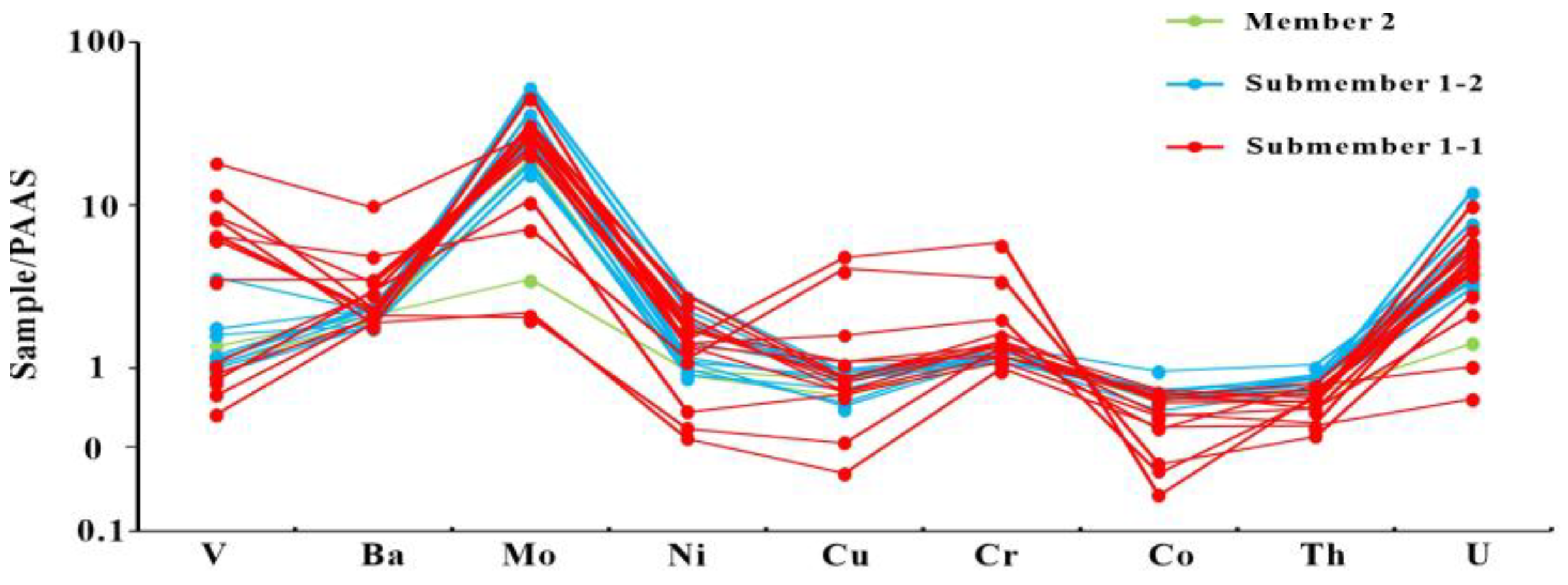
The results of comparing the contents of V, Ba, Mo, Ni, Cu, Co, Cr, Th, and U in the study area with the PAAS values show that Mo exhibits a strong enrichment feature (sample/PAAS value is 28.44), U and V show obvious enrichment features (sample/PAAS values are 5.53 and 4.64, respectively), Ni, Cu, Cr, and Ba show weak enrichment or no enrichment features (sample/PAAS values are 1.57, 1.39, 1.77, and 2.66, respectively), and Co and Th show depletion features (sample/PAAS values are 0.60 and 0.70) (Figure 7).

3.3. Characteristics of Mineral Composition

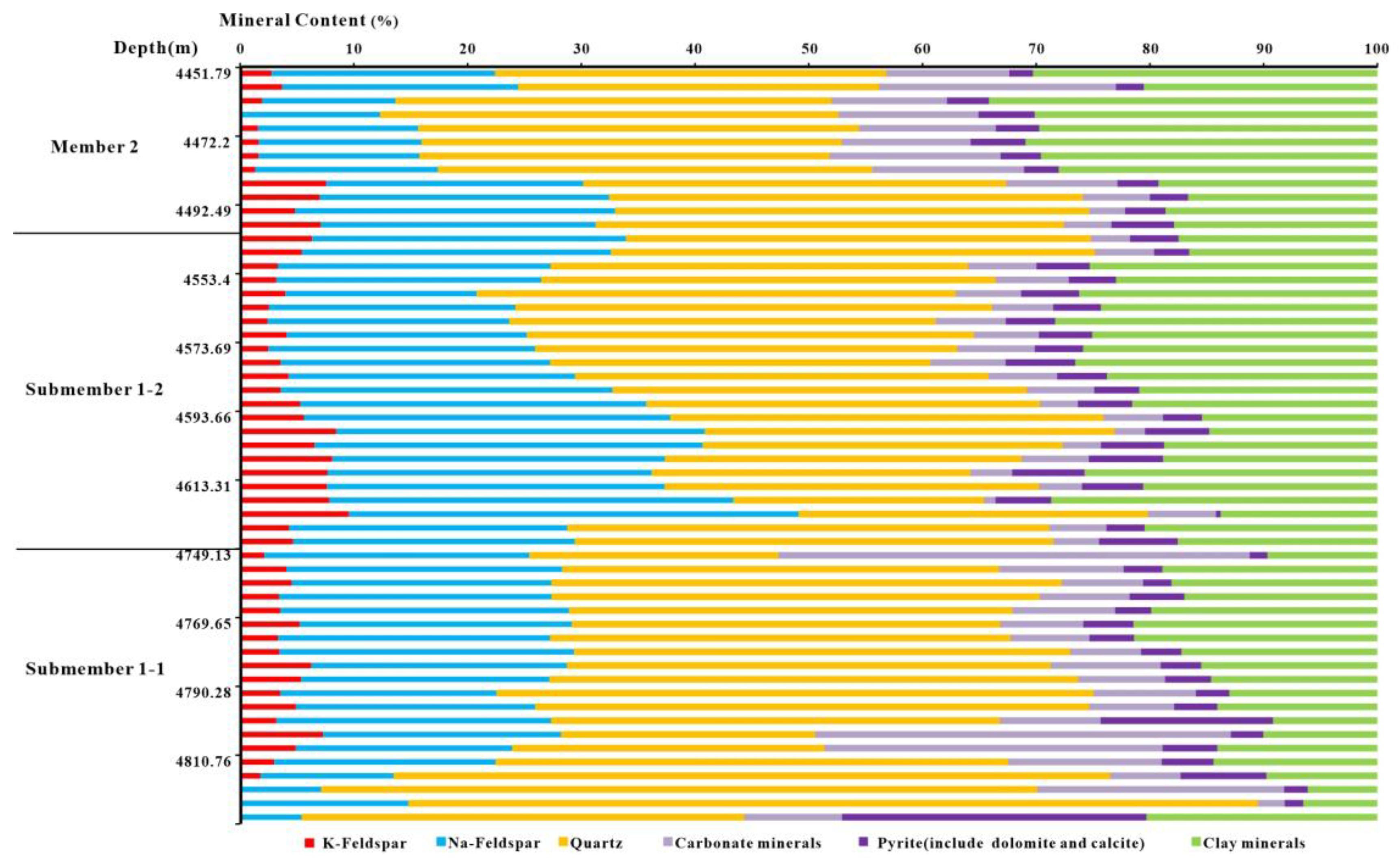
The full rock X-ray diffraction experiments indicate that the shale minerals in the Qiongzhusi Formation of the Sichuan Basin are mainly composed of quartz, feldspar and clay minerals, and contain a small amount of dolomite, calcite and pyrite (Figure 8). The content of feldspar ranges from 5.5% to 53.5%, with an average content of 27.3%. Among them, feldspar is mainly sodium feldspar, accounting for 84.4%, and a small amount of potassium feldspar, accounting for 15.6%. The content of quartz ranges from 4.6% to 85.5%, with an average content of 40.3%. The content of clay minerals ranges from 2.8% to 37.3%, with an average content of 19.3%; the clay minerals mainly include illite, chlorite, kaolinite and illite/smectite, with illite having the highest content, accounting for 62%, and the contents of kaolinite and illite/smectite being relatively low. The content of carbonate minerals ranges from 0.6% to 63.5%, with an average content of 8.6%. The content of pyrite ranges from 0 to 43.8%, with an average of 4.4%. Vertically, the content of feldspar is the lowest at the bottom of Submember 1-1, then increases rapidly. At the bottom of Submember 1-2, the content is the highest. At the top of Submember 1-2 and the bottom of Member 2, there is another peak of feldspar. At the top of Member 2, the content of feldspar slightly decreases.

3.4. Characteristic Under FE-SEM

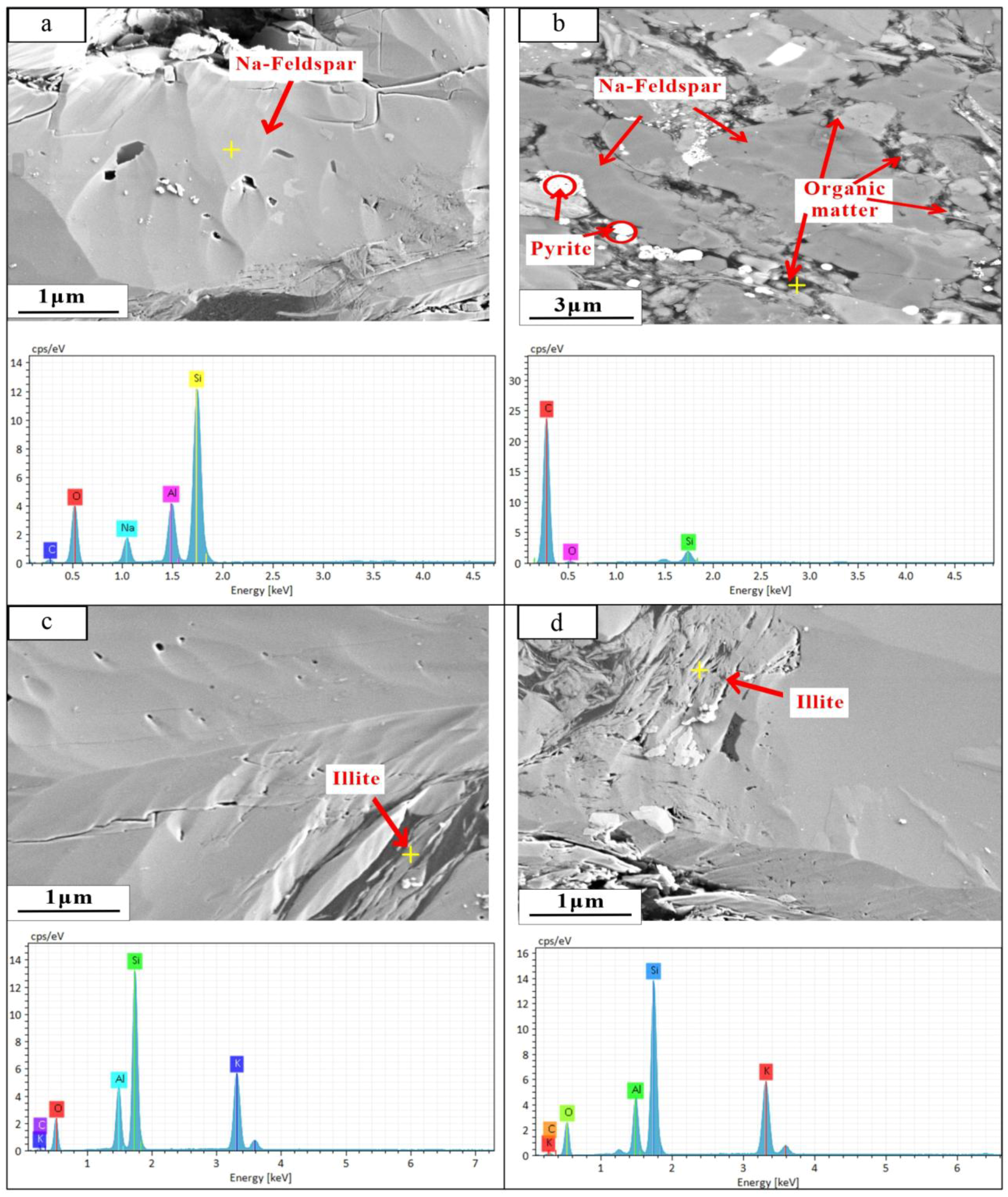
It can be observed that the feldspar is composed of potassium feldspar (K-feldspar) and sodium feldspar (Na-feldspar). The feldspar grains are predominantly anhedral to subhedral in shape. The diagenetic processes observable under the microscope are the dissolution of feldspar (Figure 9a) and illiterization or kaolinization of feldspar. The edges of the dissolved grains mostly show irregular depressions or honeycomb structures, and the dissolved cavities are filled with organic matter and pyrite (Figure 9b). Illitization or kaolinization is evidenced by the edges or surfaces of feldspar grains being altered to illite or kaolinite (Figure 9c,d).
Based on the analysis of FE-SEM images, feldspar particles were classified into three subgroups according to their area on the basis of feldspar types: sub-micron particles (<1 μm2), medium-micron particles (1–10 μm2), and coarse-micron particles (>10 μm2). The proportions of the three types of particles in potassium feldspar are 3.7%, 8.3% and 88%, respectively. The proportions of the three types of particles in sodium feldspar are 0.6%, 3.5% and 95.9%, respectively (Table 2).
The morphological parameters of potassium feldspar show regular changes with the increase in particle size, indicating that the diagenetic modification intensity of potassium feldspar also increases with the increase in particle size. Among them, sub-micron particles exhibit extremely high roundness (roundness = 0.900) and a solid outline (solidity = 1.00), with a nearly equant morphology (length–width ratio = 1.258). Mid-micron particles show a lower roundness (roundness = 0.574) and solidity (solidity = 0.826), with a long strip-like morphology (length–width ratio = 1.441). Coarse-micron particles show the lowest roundness (roundness = 0.348) and solidity (solidity = 0.738), with a long strip-like morphology (length–width ratio = 1.397), which is consistent with the morphology of mid-micron particles.
The evolution trend of sodium feldspar is similar to that of potassium feldspar, but the morphological parameter values of sodium feldspar are higher. The roundness (0.858 and 0.588, respectively) and solidity (0.966 and 0.845, respectively) of the sub-micron and meso-micron particles of sodium feldspar are all higher than those of potassium feldspar in the same size range. The morphological parameters of the coarse mesoparticle of sodium feldspar (roundness = 0.350, solidity = 0.744) are relatively close to those of potassium feldspar.

4. Discussion

4.1. The Influence of the Source Material on Feldspar

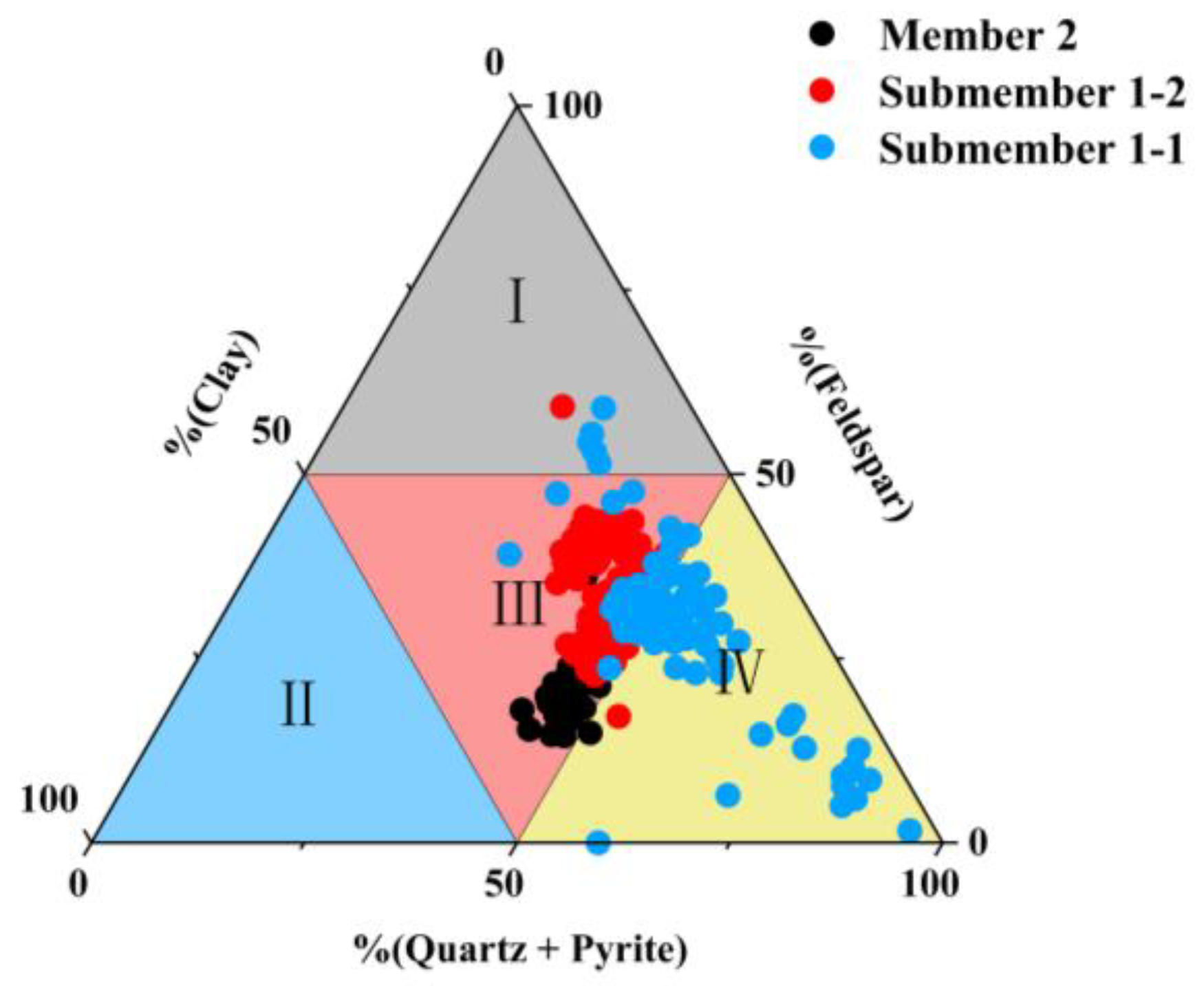
To provide a descriptive framework for discussing feldspar-bearing mineral assemblages in the shale of the study area, a three-end-member lithofacies classification (quartz + pyrite − feldspar − clay minerals) was adopted and revised based on previous studies [19]. In this scheme, the feldspar end-member is used to represent the relatively coarse-grained detrital component [20]. The clay mineral end-member is used to represent the fine-grained clay-rich component [21]. The quartz + pyrite end-member is interpreted to reflect a relatively more authigenic siliceous–sulfidic component, following previous studies [22,23,24]. The authigenic origin of a significant portion of quartz is supported by both geochemical and diagenetic evidence. Geochemically, the high Si/Al(Si/Al = 22.9) ratios observed in the samples indicate a substantial contribution of excess biogenic silica, which is typically associated with the radiolarian bloom in the Qiongzhusi Formation and is classified as an “intrabasinal” component. Diagenetically, the widespread dissolution and illitization of feldspar release abundant SiO2, facilitating the precipitation of authigenic microcrystalline quartz. Additionally, pyrite is a typical indicator mineral of anoxia; it can precipitate directly from the water column under sulfidic conditions or form just below the sediment–water interface during early diagenesis. Because the complex genesis of carbonate minerals would mask the primary terrigenous–authigenic signal, carbonate minerals were excluded from this framework. After carbonate minerals were excluded and the remaining components were renormalized, the data were projected onto the ternary diagram (Figure 10). The results show that samples from the first submember of the Qiongzhusi shale are mainly distributed in the mixed-shale and siliceous-shale fields, whereas samples from the overlying intervals are predominantly plotted in the mixed-shale field.
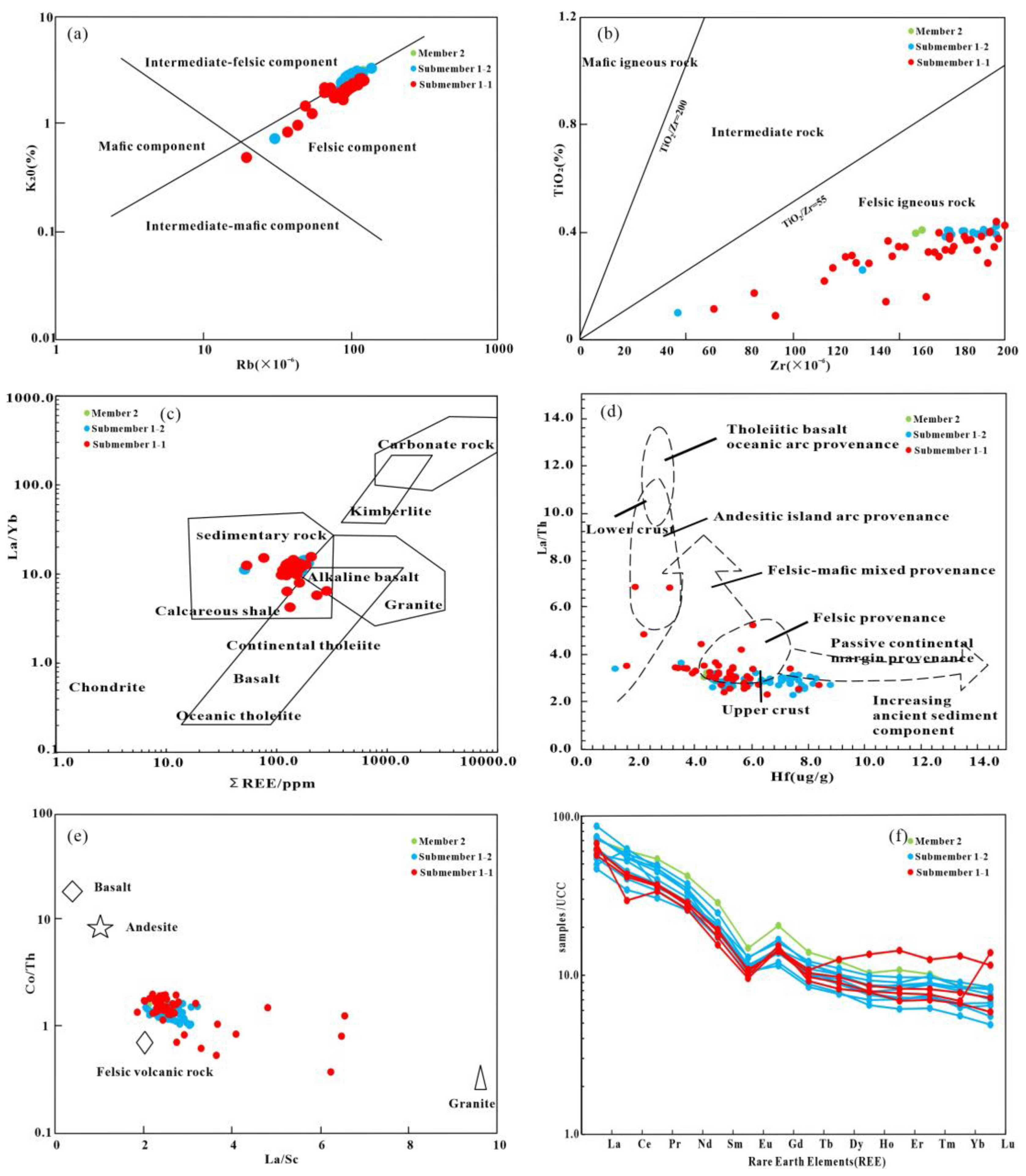
The establishment of the feldspar end-member confirms its genesis as the primary terrigenous clastic input. Building upon this mineralogical foundation, it is necessary to further quantitatively constrain the specific parent rock type and paleogeographic origin of this clastic input. The mineralogical and geochemical characteristics of the provenance served as critical factors controlling the primary accumulation and spatial distribution of feldspar within the Qiongzhusi Formation shales [25]. In this study, the parent rock types in the study area were comprehensively identified through major, trace and rare earth element analysis. Generally speaking, intermediate-acidic rocks have higher K2O, Rb, and Al2O3/TiO2 values and lower TiO2/Zr values [26]. The mean K2O value in the study area is 2.346%, which is higher than the crustal mean (1.81%) but lower than the upper crustal mean (2.8%). The mean Rb value is 101.850 × 10⁻⁶, which is much higher than the crustal mean (49 × 10−6) and the upper crustal mean (82 × 10−6). In the K2O–Rb diagram (Figure 11a), the samples all fall into the acidic component area and the data are concentrated, indicating that the source rock is acidic rock. In the TiO2–Zr (Figure 11b) binary diagram, the sample points all fall into the felsic igneous rock area, indicating that the source rock is mainly acidic felsic rocks [27]. With the continuous evolution of the magma, trace elements such as La and Th are enriched, while elements such as Sc, Cr, and Co are gradually depleted. Therefore, acidic rocks have a higher La/Sc value and a lower Co/Th value than basic rocks [28]. The La/Sc of the Qiongzhusi Formation shale is relatively high, with a mean value of 2.675, and the Co/Th is relatively low, with a mean value of 1.409. In the Co/Th–La/Sc diagram (Figure 11e), most of the samples fall into the area between felsic volcanic rocks and granites, indicating that the parent rock is mainly acidic felsic rocks and granitic rocks.
Rare earth elements can also be used as parameters for determining the source. Generally, neutral plagioclase rocks are characterized by a positive δEu anomaly (1.01 < δEu < 2.33), basalt by a δEuS anomaly (0.90 < δEu < 1.0), and acidic granites by a negative δEu anomaly (δEu < 0.90). The δEu values of the Qiongzhusi Formation shale range from 0.603 to 0.706, with a mean of 0.651, showing a significant negative anomaly (Figure 11f), indicating that the source rock is mainly acidic granites. The (La/Yb)N ratio ranges from 5.112 to 13.849, with LREE enrichment and HREE depletion, and the partitioning pattern diagram is “rightward” tilted. The source is from the continental felsic upper crust. Additionally, through the La/Yb–ΣREE diagram of shale samples (Figure 11c), it can be seen that the samples are mainly distributed in sedimentary rock and granite regions, indicating that the shale parent rock is mainly sedimentary rock and granite [29]. Through the La/Th–Hg diagram of shale samples (Figure 11d), it can be known that the samples are mainly distributed in felsic source areas and passive continental margin source areas, and the distribution overlap of samples in different sub-segments/segments is relatively high. Therefore, the Qiongzhusi Formation shale is mainly supplied by the upper crustal material, and the source supply during this period is relatively stable.
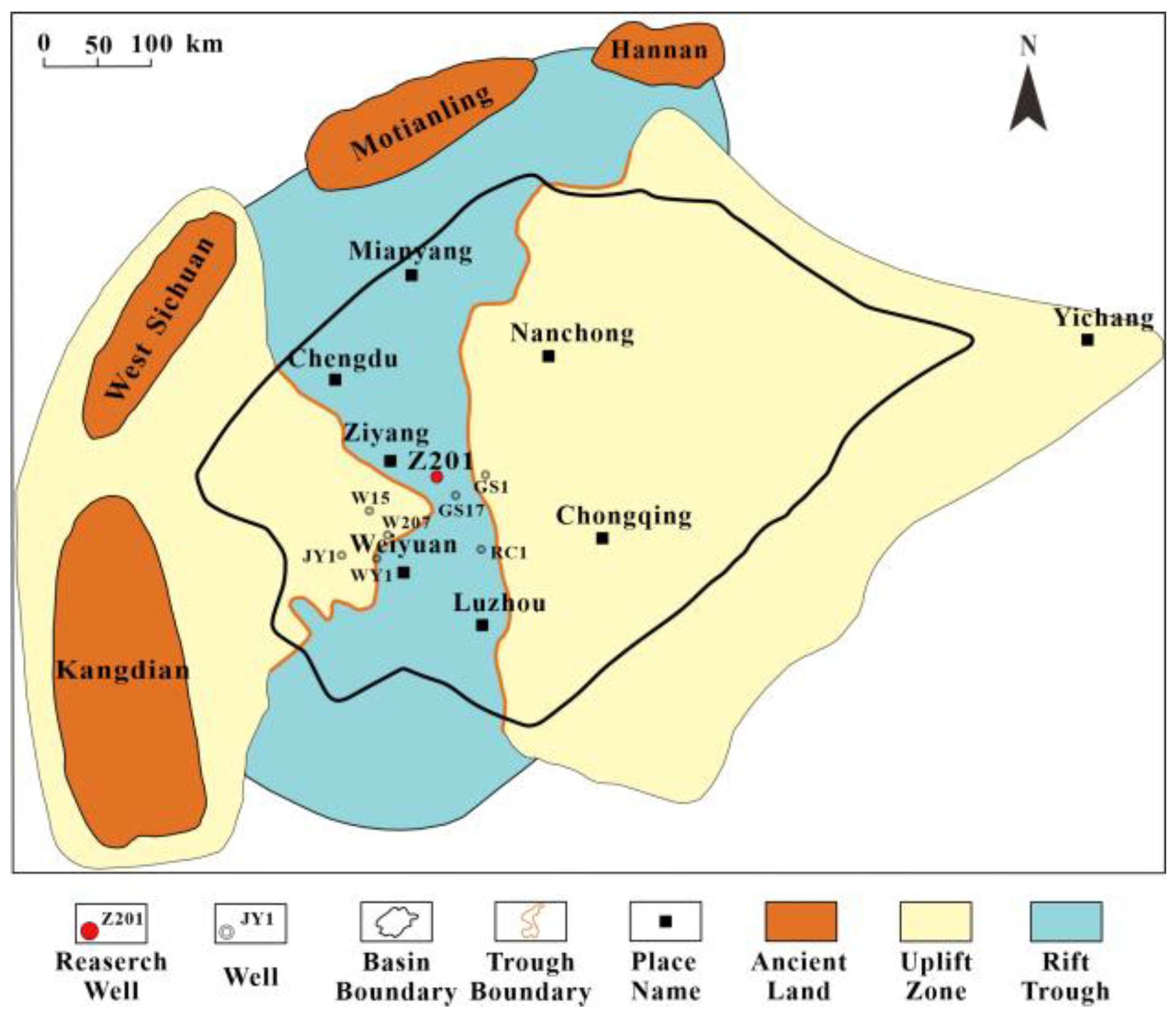
By using comprehensive discrimination based on major elements, trace elements and rare earth elements, it can be concluded that the parent rock of the study area mainly consists of acidic components, mainly including felsic sedimentary rocks and granites. Such source areas may be ancient geological bodies, cratons or recycle orogenic belts. The source area of the study area is complex, indicating that the source is not a single rock body, but a mixture of primary granite and recycle felsic sedimentary rocks [30]. Combined with the regional paleogeographic pattern (Figure 12), during the early Cambrian period, the Sichuan Basin was a restricted marine basin or under-compensated basin, a sedimentary basin where the rate of accommodation space creation significantly exceeds the rate of sediment supply. It was bounded by several Precambrian basement paleo-uplifts, including the Western Sichuan Paleo-uplift, Motianling Paleo-uplift, Hannan Paleo-uplift, and Kangdian Paleo-uplift [31]. The basement of the Western Sichuan Paleo-uplift, Motianling Paleo-uplift and Hannan Paleo-uplift was composed of Precambrian granites, metamorphic rocks and Sinian mature sedimentary covers [32]. The Kangdian Paleo-uplift was characterized by the exposure of a large number of basic–ultra-basic rocks. Among them, the sources that can simultaneously provide these two types of rocks include the Western Sichuan land, Motianling Paleo-uplift and Hannan Paleo-uplift. Therefore, it can be concluded that the shale in the Qiongzhusi Formation rift trough is a mixed product contributed by these three paleo-uplift masses (Figure 11).

4.2. The Influence of Sedimentary Environment on Feldspar

During the sedimentation period of the Qiongzhusi Formation, the surrounding paleo-uplift masses of the Western Sichuan Paleo-uplift, Motianling Paleo-uplift, and Hannan Paleo-uplift provided abundant granitic rock fragments and felsic terrigenous clasts to the basin [33]. However, whether these physically and chemically unstable minerals could be effectively preserved depended crucially on the sedimentation rate [34]. In this study, the control of the sedimentation rate on feldspar was clarified through the characteristics of core samples and major trace element features (paleoproductivity indicators, redox indicators, and input indicators of terrestrial sources) [35].
As shown in Figure 2 and Figure 3, the shale cores exhibit a regular alternation in the vertical direction between deep-water shelf gray-black shale (such as layers 1, 3, 5, and 7) and shallow-water shelf dark-gray silty shale (such as layers 2, 4, 6, and 8) (Figure 2 and Figure 3). This repeating macroscopic sedimentary sequence reflects transgressive–regressive cycles driven by relative sea-level fluctuations. Therefore, these recorded stratigraphic changes, combined with quantitative geochemical changes, provide an empirical basis for discussing how sedimentary environments and sedimentary rates control the initial content of feldspar [36].
The extremely low chemical weathering index (CIA) value in the study area (Figure 4) directly indicates a cold paleoclimate and weak chemical weathering [37]. The CIA values of the shale in this study area range from 9 to 61, with an average value of only 50. This value is much lower than that of shale formed in typical warm and humid climate areas under strong chemical weathering (CIA values are usually greater than 70–80) [38]. The extremely low CIA value reveals that, during the sedimentation period of the Qiongzhusi Formation, the source area was in a cold and arid paleoclimate background, with physical weathering playing a dominant role, while chemical weathering was extremely weak [39]. In this environment, the feldspar and other aluminosilicate minerals in the source rock did not undergo sufficient hydrolysis reactions to transform into clay minerals before being eroded and transported, thus entering the sediment basin in large quantities in their initial, chemically unstable particle form. Therefore, the cold paleoclimate and weak chemical weathering provided abundant initial sources for the high feldspar content [40].
The absolute concentrations of redox-sensitive trace elements in shales can be significantly influenced by the dilution effects of non-clastic components, such as organic matter and carbonate minerals. To eliminate these effects and evaluate the true degree of authigenic enrichment, the Enrichment Factor (EF) was calculated using Al as a proxy for the terrigenous clastic fraction. The EF is defined as
E F = ( X / A l ) s a m p l e ( X / A l ) P A S S
where (X/Al)sample and (X/Al)PAAS represent the weight ratios of element X to Al in the sample and the Post-Archean Australian Shale, respectively [18]. Generally, EF > 1 represents enrichment relative to PAAS, while EF > 3 is considered to indicate significant authigenic enrichment [41]. In this study, the significant enrichment of Mo, U, and V (average EF values of 28.44, 5.53, and 4.64, respectively) confirmed that the underlying water body was a strongly reducing and anoxic environment [42]. Such conditions were conducive to the preservation of organic matter but had no direct protective effect on feldspar (Figure 6). Conversely, the depletion of Co (EF = 0.65) and the fact that the enrichment degree of most trace elements did not reach extreme values rule out a quiet marine sedimentation mode with extremely low rates. Instead, these signatures indicate a continuous and considerable input of terrestrial detritus. This “anoxic but not absolutely stagnant” environment provided the possibility for the continuous injection of terrestrial detritus (including feldspar) and a medium to high sedimentation rate.
At the same time, feldspar is a chemically unstable mineral. Under the background of slow sedimentation, it would be exposed to the sediment–water interface for a long time and be dissolved by pore fluids [43]. The multiple cyclic stacking of deep-water continental shelf facies and shallow-water continental shelf facies in this study area is a direct petrological record of the frequent fluctuations of sea level, which led to intermittent input of terrestrial materials [44]. This rapid sedimentation–burial process played a role in preservation. It quickly isolated the unstable feldspar particles transported from the source area from the overlying water body and the active corrosive pore water, significantly shortening the time during which they were subjected to early diagenetic dissolution, thus enabling them to be largely preserved in the final formed rocks.
In summary, the sedimentary environment of the Qiongzhusi Formation shale was a continental shelf system under a cold climate, controlled by sea level fluctuations, with a moderately high sedimentation rate and anoxic water body. Among them, the rapid deposition–burial process was the primary sedimentary control factor determining the initial content of feldspar.

4.3. The Influence of Diagenesis on Feldspar

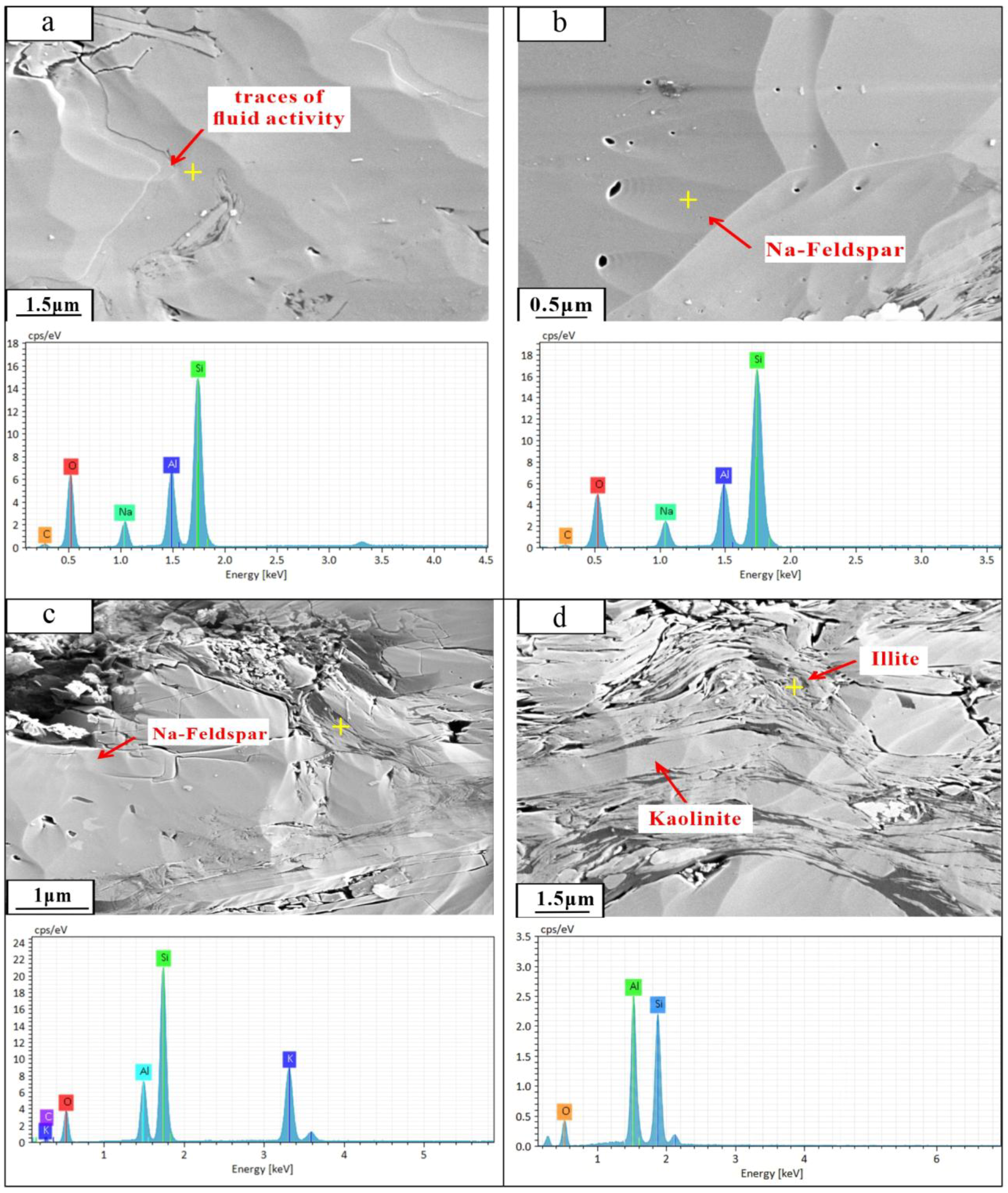
During the later burial and diagenesis stages, fluid action is an important factor influencing the variation in feldspar content [45]. In the early maturation stage, the decarboxylation of kerogen can produce 1–10 mg of organic acids (such as acetic acid and oxalic acid) per gram, which is sufficient to significantly lower the pH and promote feldspar dissolution in the local pore system [46]. The organic matter of the Qiongzhusi Formation is mainly composed of type I and type II kerogen. Although the oxygen content of marine kerogen is lower than that of type III, its functional groups (carboxyl and hydroxyl groups) still contain sufficient oxygen to produce organic acids during thermal evolution. During the diagenesis stage, under the combined effects of temperature, pressure and pore fluids, the detrital feldspar preserved during the sedimentary stage becomes an active “reactant”, undergoing a series of complex dissolution–precipitation and mineral-phase transformation processes, which alters the morphology, content and contribution of feldspar to the reservoir [47]. The weak feldspar dissolution and illitization observed under the microscope indicate that the fluids in the structurally stable Qiongzhusi Formation mainly originated from organic acids generated by hydrocarbon generation, with limited influence from formation water and a low degree of feldspar mineral transformation (Figure 13a).
Feldspar dissolution is the most significant constructive diagenetic process in the study area. Scanning electron microscope observations (Figure 13b) clearly show that the surfaces and edges of the feldspar particles are generally characterized by nano-micron-sized honeycomb-like and serrated dissolution cavities. This process is mainly driven by the acidic fluids formed by the organic acids and CO2 produced during hydrocarbon generation [48] (Equations (5)–(7)). This dissolution process is of constructive significance for the reservoir, as it generates a large number of nano-micron-sized secondary pores, not only directly increasing the storage space but also significantly improving the pore connectivity of the shale, providing a key channel for the storage and migration of hydrocarbons.
K A l S i 3 O 8 p o t a s s i u m   f e l d s p a r + C O 2 g + 1.5 H 2 O = 0.5 A l 2 S i 2 O 5 O H 4 k a o l i n i t e + 2 S i O 2 q u a r t z + K + + H C O 3
K A l S i 3 O 8 ( p o t a s s i u m   f e l d s p a r ) + 4 H + = 2 H 2 O + K + + A l 3 + + 3 S i O 2 ( a q )
N a A l S i 3 O 8 ( s o d i u m   f e l d s p a r ) + 4 H + = 2 H 2 O + N a + + A l 3 + + 3 S i O 2 ( a q )
Under the continuous action of acidic fluids, feldspar can transform into more stable clay minerals. The transitional forms are often observed under scanning electron microscopy as the blurring of the feldspar edges and the replacement by small illite aggregates (Figure 13c). This reaction not only consumes potassium feldspar, generating authigenic illite, but also releases SiO2, which provides a material source for the secondary increase in quartz or the formation of authigenic quartz, thereby enhancing the brittleness of the reservoir [46] (Equations (8)–(10)).
K A l S i 3 O 8 ( p o t a s s i u m   f e l d s p a r ) + H + + 0.5 H 2 O = 0.5 A l 2 S i 2 O 5 ( O H ) 4 ( k a o l i n i t e ) + 2 S i O 2 ( a q ) + K +
N a A l S i 3 O 8 ( s o d i u m   f e l d s p a r ) + H + + 0.5 H 2 O = 0.5 A l 2 S i 2 O 5 ( O H ) 4 ( k a o l i n i t e ) + 2 S i O 2 ( a q ) + N a +
K A l S i 3 O 8 ( p o t a s s i u m   f e l d s p a r ) + H + = 0.5 K A l 3 S i 3 O 10 ( O H ) 2 ( i l l i t e ) + 3 S i O 2 ( q u a r t z ) + K +
During the diagenesis process, the transitional clay minerals (such as kaolinite) previously formed by the dissolution of feldspar will further transform into more stable illite or chlorite in pores with rich K+ or Mg2+ (Figure 13d) [49]. These reactions deeply record the evolution of the nature of diagenetic fluids. The kaolinite illiteization occurs in a potassium-rich fluid environment (Equation (11)). Kaolinite chloritization occurs in a magnesium-rich fluid environment, usually with the participation of carbonate minerals (Equation (12)). On one hand, the transformation reactions of these clay minerals will consume specific ions in the pore fluids, changing the rock mechanical properties of the reservoir [50]. On the other hand, the newly formed fine illite and chlorite may partially block some previously formed dissolved pores, having a negative effect on the storage space [51].
3 A l 2 S i ( O H ) 4 ( k a o l i n i t e ) + 2 K + = 2 K A l 3 S i 3 O 10 ( O H ) 2 ( i l l i t e ) + 2 H + + H 2 O
3 A l 2 S i ( O H ) 4 ( k a o l i n i t e ) + 5 C a M g ( C O 3 ) 2 ( d o l o m i t e ) + S i O 2 + H 2 O M g 5 A l 2 S i 3 O 10 ( O H ) 8 ( c h l o r i t e ) + 5 C a C O 3 ( c a l c i t e ) + 5 C O 2

5. Conclusions

The feldspar content in the Qiongzhusi Formation shale of the Sichuan Basin is relatively high, with sodium feldspar being the dominant type. Microscopically, feldspar occurs in various forms, including angular clastic grains and strongly altered particles. The dissolution phenomenon is widespread and contributes significantly to the development of secondary pores. The source of feldspar in the Qiongzhusi Formation shale is multi-origin. The feldspar is mainly provided by a mixture of felsic sedimentary rocks and granites from the upper crust. The main source areas are the Western Sichuan Paleo-uplifts, Motianling Paleo-uplifts, and Hannan Paleo-uplifts. The rapid burial caused by rapid deposition is the primary sedimentary controlling factor for the high initial content of feldspar in the Qingzhusi Formation shale. In the later stages of burial and diagenesis, fluid action is an important factor affecting the change in feldspar content. Under the stable tectonic background, the fluids in the Qiongzhusi Formation mainly originate from organic acids produced by hydrocarbon generation, the influence of strata water fluids is relatively limited, and the degree of feldspar mineral transformation is not high.

Author Contributions

Conceptualization, M.Z. and X.T.; methodology, M.Z. and Y.W.; software, M.Z.; validation, M.Z., Y.W. and J.C.; formal analysis, J.C.; investigation, Z.W.; resources, X.T.; data curation, M.Z. and Z.W.; writing—original draft preparation, M.Z., Y.W., J.C. and Z.W.; writing—review and editing, X.T., D.L. and S.N.; visualization, D.L. and S.N.; supervision, X.T. and S.N.; project administration, X.T.; funding acquisition, X.T. All authors have read and agreed to the published version of the manuscript.

Funding

This research was funded by the National Natural Science Foundation of China (42372144) and the Natural Science Foundation of Xinjiang Uygur Autonomous Region (2024D01E09).

Data Availability Statement

The original contributions presented in this study are included in the article. Further inquiries can be directed to the corresponding author.

Conflicts of Interest

The authors declare no conflicts of interest. Majia Zheng is employees of PetroChina Research Institute of Petroleum Exploration & Development; Ya Wu and Junyu Chen are employees of PetroChina Southwest Oil & Gas Field Company. The paper reflects the views of the scientists and not the company.

References

  1. Tian, J.; Yu, L.; Xue, R.; Zhuang, S.; Shan, Y. Global low-carbon energy transition in the post-COVID-19 era. Appl. Energy 2022, 307, 118205. [Google Scholar] [CrossRef] [PubMed]
  2. Gilman, J.; Robinson, C. Success and failure in shale gas exploration and development: Attributes that make the difference. Search Discov. Artic. 2011, 80132, 12–15. [Google Scholar]
  3. Lei, W.; Liu, X.; Ding, Y.; Xiong, J.; Liang, L. The investigation on shale mechanical characteristics and brittleness evaluation. Sci. Rep. 2023, 13, 22936. [Google Scholar] [CrossRef]
  4. Zhang, Y.; Hu, Y.; Sun, N.; Liu, R.; Wang, Z.; Wang, L.; Sun, W. Systematic review of feldspar beneficiation and its comprehensive application. Miner. Eng. 2018, 128, 141–152. [Google Scholar] [CrossRef]
  5. Baruch, E.T.; Kennedy, M.J.; Löhr, S.C.; Dewhurst, D.N. Feldspar dissolution-enhanced porosity in Paleoproterozoic shale reservoir facies from the Barney Creek Formation (McArthur Basin, Australia). AAPG Bull. 2015, 99, 1745–1770. [Google Scholar] [CrossRef]
  6. Jiang, Z.; Zhang, W.; Liang, C.; Wang, Y.; Liu, H.; Chen, X. Basic characteristics and evaluation of shale oil reservoirs. Pet. Res. 2016, 1, 149–163. [Google Scholar] [CrossRef]
  7. Guo, T.; Deng, H.; Zhao, S.; Wei, L.; He, J. Formation mechanisms and exploration breakthroughs of new type of shale gas in Cambrian Qiongzhusi Formation, Sichuan Basin, SW China. Pet. Explor. Dev. 2025, 52, 64–78. [Google Scholar] [CrossRef]
  8. Zhu, H.; Ju, Y.; Lu, W.; Han, K.; Qi, Y.; Neupane, B.; Sun, Y.; Cai, J.; Xu, T.; Huang, C.; et al. The characteristics and evolution of micro-nano scale pores in shales and coals. J. Nanosci. Nanotechnol. 2017, 17, 6124–6138. [Google Scholar] [CrossRef]
  9. Ma, K.; Wen, L.; Zhang, B.; Li, Y.; Zhong, J.; Wang, Y.; Peng, H.; Zhang, X.; Yan, W.; Ding, Y.; et al. Segmented evolution of Deyang–Anyue erosion rift trough in Sichuan Basin and its significance for oil and gas exploration, SW China. Pet. Explor. Dev. 2022, 49, 313–326. [Google Scholar] [CrossRef]
  10. Fernández Martínez, J. An Integrated Geochemical and Ichnological Approach to Reconstructing the Formation of Organic-Carbon-Rich Sediments and Sedimentary Rocks: The Role of Anoxia Versus Productivity During Black Shale Deposition; Universidad de Granada: Granada, Spain, 2024. [Google Scholar]
  11. Lazar, O.R.; Bohacs, K.M.; Macquaker, J.H.; Schieber, J.; Demko, T.M. Capturing key attributes of fine-grained sedimentary rocks in outcrops, cores, and thin sections: Nomenclature and description guidelines. J. Sediment. Res. 2015, 85, 230–246. [Google Scholar] [CrossRef]
  12. Lazar, O.R.; Bohacs, K.M.; Schieber, J.; Macquaker, J.H.; Demko, T.M. Mudstone Primer: Lithofacies Variations, Diagnostic Criteria, and Sedimentologic–Stratigraphic Implications at Lamina to Bedset Scale; SEPM Society for Sedimentary Geology: Tulsa, OK, USA, 2015. [Google Scholar]
  13. Zhang, L.; Lüttge, A. Morphological evolution of dissolving feldspar particles with anisotropic surface kinetics and implications for dissolution rate normalization and grain size dependence: A kinetic modeling study. Geochim. Cosmochim. Acta 2009, 73, 6757–6770. [Google Scholar] [CrossRef]
  14. Aliyu, Z.S.; Garkida, A.D.; Ali, E.A.; Dauda, M. Characterization of Feldspar by instrumental analytical techniques. In Characterization of Minerals, Metals, and Materials 2015; Springer International Publishing: Cham, Switzerland, 2015; pp. 291–297. [Google Scholar]
  15. Dong, X.; Xiong, Y.; Wang, N.; Song, Z.; Yang, J.; Qiu, X.; Zhu, L. Determination of trace elements in high-purity quartz samples by ICP-OES and ICP-MS: A normal-pressure digestion pretreatment method for eliminating unfavorable substrate Si. Anal. Chim. Acta 2020, 1110, 11–18. [Google Scholar] [CrossRef]
  16. Wang, L.; Han, X.; Ding, S.; Liang, T.; Zhang, Y.; Xiao, J.; Dong, L.; Zhang, H. Combining multiple methods for provenance discrimination based on rare earth element geochemistry in lake sediment. Sci. Total Environ. 2019, 672, 264–274. [Google Scholar] [CrossRef]
  17. Nesbitt, H.W.; Young, G.M. Early Proterozoic climates and plate motions inferred from major element chemistry of lutites. Nature 1982, 299, 715–717. [Google Scholar] [CrossRef]
  18. Taylor, S.R.; McLennan, S.M. The Continental Crust: Its Composition and Evolution; Stony Brook University: Stony Brook, NY, USA, 1985. [Google Scholar]
  19. Gamero-Diaz, H.; Miller, C.; Lewis, R. sCore: A mineralogy based classification scheme for organic mudstones. In Proceedings of the SPE Annual Technical Conference and Exhibition, New Orleans, LA, USA, 30 September–2 October 2013; SPE: Dallas, TX, USA, 2013; p. D011S008R006. [Google Scholar]
  20. Zimmermann, U.; Bahlburg, H. Provenance analysis and tectonic setting of the Ordovician clastic deposits in the southern Puna Basin, NW Argentina. Sedimentology 2003, 50, 1079–1104. [Google Scholar] [CrossRef]
  21. Hillier, S. Erosion, sedimentation and sedimentary origin of clays. In Origin and Mineralogy of Clays: Clays and the Environment; Springer: Berlin/Heidelberg, Germany, 1995; pp. 162–219. [Google Scholar]
  22. Milliken, K. A compositional classification for grain assemblages in fine-grained sediments and sedimentary rocks. J. Sediment. Res. 2014, 84, 1185–1199. [Google Scholar] [CrossRef]
  23. Cheng, Y.; Liu, W.; Wu, W.; Zhang, Y.; Tang, G.; Liu, C.; Nie, Q.; Wen, Y.; Lu, P.; Zhang, C. Geochemical characteristics of the lower Cambrian Qiongzhusi Formation in Huize area, east Yunnan: Implications for paleo-ocean environment and the origin of black rock series. Arab. J. Geosci. 2021, 14, 2081. [Google Scholar] [CrossRef]
  24. Wilkin, R.T.; Barnes, H.L.; Brantley, S.L. The size distribution of framboidal pyrite in modern sediments: An indicator of redox conditions. Geochim. Cosmochim. Acta 1996, 60, 3897–3912. [Google Scholar] [CrossRef]
  25. Min, H.; Zhang, T.; Li, Y.; Zhao, S.; Li, J.; Lin, D.; Wang, J. The albitization of K-feldspar in organic-and silt-rich fine-grained rocks of the lower Cambrian Qiongzhusi Formation in the southwestern Upper Yangtze region, China. Minerals 2019, 9, 620. [Google Scholar] [CrossRef]
  26. Wang, J.; Wu, C.; Zhou, T.; Zhu, W.; Zhou, Y.; Jiang, X.; Yang, D. Source-to-sink analysis of a transtensional rift basin from syn-rift to uplift stages. J. Sediment. Res. 2019, 89, 335–352. [Google Scholar] [CrossRef]
  27. Garcia, D.; Coelho, J.; Perrin, M. Fractionation between TiO2 and Zr as a measure of sorting within shale and sandstone series (northern Portugal). Eur. J. Mineral. 1991, 3, 401–414. [Google Scholar] [CrossRef]
  28. Dokuz, A.; Tanyolu, E. Geochemical constraints on the provenance, mineral sorting and subaerial weathering of Lower Jurassic and Upper Cretaceous clastic rocks of the eastern Pontides, Yusufeli (Artvin), NE Turkey. Turk. J. Earth Sci. 2006, 15, 181–209. [Google Scholar]
  29. Xiao, B.; Guo, D.; Li, S.; Xiong, S.; Jing, Z.; Feng, M.; Fu, X.; Zhao, Z. Rare earth element characteristics of shales from Wufeng–Longmaxi Formations in deep-buried areas of the northern Sichuan Basin, southern China: Implications for provenance, depositional conditions, and paleoclimate. ACS Omega 2024, 9, 2088–2103. [Google Scholar] [CrossRef] [PubMed]
  30. Hu, J.; Li, Q.; Fang, N.; Yang, J.; Ge, D. Geochemistry characteristics of the Low Permian sedimentary rocks from central uplift zone, Qiangtang Basin, Tibet: Insights into source-area weathering, provenance, recycling, and tectonic setting. Arab. J. Geosci. 2015, 8, 5373–5388. [Google Scholar] [CrossRef]
  31. Wang, Z.; Jiang, H.; Chen, Z.; Liu, J.; Ma, K.; Li, W.; Xie, W.; Jiang, Q.; Zhai, X.; Shi, S.; et al. Tectonic paleogeography of Late Sinian and its significances for petroleum exploration in the middle-upper Yangtze region, South China. Pet. Explor. Dev. 2020, 47, 946–961. [Google Scholar] [CrossRef]
  32. Guo, L.; Shi, Y.; Lu, H.; Ma, R.; Dong, H.; Yang, S. The pre-Devonian tectonic patterns and evolution of South China. J. Southeast Asian Earth Sci. 1989, 3, 87–93. [Google Scholar] [CrossRef]
  33. Chen, S.; Wen, H.; Li, X.; Huo, F.; Mo, B.; Liang, J.; Duan, L. Influence of structural setting, depositional environment and differential diagenesis on reservoir quality of the Xixiangchi formation in the central and southern Sichuan Basin, China. Front. Earth Sci. 2025, 13, 1602273. [Google Scholar] [CrossRef]
  34. Maltman, A. The Geological Deformation of Sediments; Springer Science & Business Media: Berlin/Heidelberg, Germany, 2012. [Google Scholar]
  35. Banerji, U.S.; Dubey, C.P.; Goswami, V.; Joshi, K.B. Geochemical indicators in provenance estimation. In Geochemical Treasures and Petrogenetic Processes; Springer Nature: Singapore, 2022; pp. 95–121. [Google Scholar]
  36. Xu, J.; Yuan, G.; Cao, Y.; Jin, Z.; Liu, K. Feldspar dissolution rates and controlling factors under near-equilibrium conditions in subsurface settings. Sci. China Earth Sci. 2025, 68, 2558–2577. [Google Scholar] [CrossRef]
  37. Yang, J.; Cawood, P.A.; Du, Y.; Li, W.; Yan, J. Reconstructing Early Permian tropical climates from chemical weathering indices. Bulletin 2016, 128, 739–751. [Google Scholar] [CrossRef]
  38. Fathy, D.; Abart, R.; Wagreich, M.; Gier, S.; Ahmed, M.S.; Sami, M. Late campanian climatic-continental weathering assessment and its influence on source rocks deposition in southern Tethys, Egypt. Minerals 2023, 13, 160. [Google Scholar] [CrossRef]
  39. Luo, X.; Peng, S.; Li, Z.; He, F.; Li, X.; Zhang, Z. Petrography and geochemistry of sandstones from the middle Jurassic Zhiluo Formation in the northern margin, Ordos Basin: Implications for provenance, tectonic setting, paleoweathering, paleoclimate, and sandstone-type uranium mineralization. Front. Earth Sci. 2025, 13, 1573609. [Google Scholar] [CrossRef]
  40. Todd, T.W. Paleoclimatology and the relative stability of feldspar minerals under atmospheric conditions. J. Sediment. Res. 1968, 38, 832–844. [Google Scholar] [CrossRef]
  41. Tribovillard, N.; Algeo, T.J.; Lyons, T.; Riboulleau, A. Trace metals as paleoredox and paleoproductivity proxies: An update. Chem. Geol. 2006, 232, 12–32. [Google Scholar] [CrossRef]
  42. Zhang, Y.; Lyu, C.; Gao, X.; Dang, Z.; Sun, Z.; Zhou, Q.; Chen, G. Geochemical Characteristics and Organic Matter Accumulation of Wufeng-Longmaxi Shales in the Southeast of the Sichuan Basin of South China. Geofluids 2022, 2022, 7360065. [Google Scholar] [CrossRef]
  43. Bjørlykke, K. Fluid-flow processes and diagenesis in sedimentary basins. Geol. Soc. Lond. Spec. Publ. 1994, 78, 127–140. [Google Scholar] [CrossRef]
  44. Bjørlykke, K. Relationships between depositional environments, burial history and rock properties. Some principal aspects of diagenetic process in sedimentary basins. Sediment. Geol. 2014, 301, 1–14. [Google Scholar] [CrossRef]
  45. Lynch, F.L. Mineral/water interaction, fluid flow, and Frio sandstone diagenesis: Evidence from the rocks. AAPG Bull. 1996, 80, 486–504. [Google Scholar] [CrossRef]
  46. Putnis, A. Transient porosity resulting from fluid–mineral interaction and its consequences. Rev. Mineral. Geochem. 2015, 80, 1–23. [Google Scholar] [CrossRef]
  47. Li, J.; Ma, Y.; Huang, K.; Zhang, Y.; Wang, W.; Liu, J.; Li, Z.; Lu, S. Quantitative characterization of organic acid generation, decarboxylation, and dissolution in a shale reservoir and the corresponding applications—A case study of the Bohai Bay Basin. Fuel 2018, 214, 538–545. [Google Scholar] [CrossRef]
  48. van de Kamp, P.C. Smectite-illite-muscovite transformations, quartz dissolution, and silica release in shales. Clays Clay Miner. 2008, 56, 66–81. [Google Scholar] [CrossRef]
  49. De Segonzac, G.D. The transformation of clay minerals during diagenesis and low-grade metamorphism: A review. Sedimentology 1970, 15, 281–346. [Google Scholar] [CrossRef]
  50. Xie, W.; Chen, S.; Vandeginste, V.; Yu, Z.; Wang, H.; Wang, M. Review of the effect of diagenetic evolution of shale reservoir on the pore structure and adsorption capacity of clay minerals. Energy Fuels 2022, 36, 4728–4745. [Google Scholar] [CrossRef]
  51. Cao, Z.; Liu, G.; Meng, W.; Wang, P.; Yang, C. Origin of different chlorite occurrences and their effects on tight clastic reservoir porosity. J. Pet. Sci. Eng. 2018, 160, 384–392. [Google Scholar] [CrossRef]
Figure 1. Study area of the Qiongzhusi Formation shale in Sichuan Basin. (a) Geographic location of the Sichuan Basin in China; (b) distribution of shale thickness in Qiongzhusi Formation of the Sichuan Basin.
Minerals 16 00564 g001
Figure 2. Stratigraphic division of the Qiongzhusi Formation in Sichuan Basin.
Minerals 16 00564 g002
Figure 3. Core images of the Qiongzhusi Formation shale of the Sichuan Basin: (a) gray-black shale, 4857.62 m, layer 1; (b) dark-gray silty shale, 4806.73 m, layer 2; (c) gray-black shale, 4749.96 m, layer 3; (d) dark-gray silty shale, 4619.61 m, layer 4; (e) gray-black shale, 4458.28 m, layer 5; (f) dark-gray silty shale, 4503.46 m, layer 6; (g) gray-black shale, 4458.28 m, layer 7; (h) dark-gray silty shale, 4456.43 m, layer 8.
Minerals 16 00564 g003
Figure 4. Distribution of major elements in the Qiongzhusi Formation shale based on 101 samples.
Minerals 16 00564 g004
Figure 5. Distribution of trace elements in Qiongzhusi Formation shale based on 101 samples.
Minerals 16 00564 g005
Figure 6. Distribution of rare earth elements in Qiongzhusi Formation shale based on 101 samples.
Minerals 16 00564 g006
Figure 7. Standardized spider web diagram of trace element PAAS of shale in the Qiongzhusi Formation based on 51 samples.
Minerals 16 00564 g007
Figure 8. Vertical distribution of mineral composition in the Qionzhusi Formation of Well Z201.
Minerals 16 00564 g008
Figure 9. Scanning electron microscope (SEM) and energy dispersive spectroscopy (EDS) images of feldspar in the Qiongzhusi Formation shale. The upper of each figure is a scanning electron microscope image, and the lower is the energy dispersive spectroscopy (EDS) spectrum corresponding to the measurement points (marked with yellow crosses). (a) Dissolution pores on the feldspar surface; (b) pyrite and organic matter fill the feldspar pores; (c) feldspar alteration to illite; (d) feldspar alteration to illite.
Minerals 16 00564 g009
Figure 10. The ternary diagram of (feldspar) − (quartz + pyrite) − (clay) minerals of the Qiongzhusi Formation shale [19]. Zone I: Rich in terrigenous clastic shale; Zone II: rich in clay shale; Zone III: mixed shale; Zone IV: siliceous shale.
Minerals 16 00564 g010
Figure 11. Elemental analysis of the Qiongzhusi Formation shale. (a) K2O vs. Rb discrimination dia −gram for the source rock composition; (b) TiO2 vs. Zr discrimination diagram for the parent rock types; (c) La/Yb vs. ΣREE plot for identifying the source rock category; (d) La/Th vs. Hf diagram for tectonic setting and provenance attributes; (e) Co/Th vs. La/Sc plot for distinguishing the source rock lithology; (f) upper continental crust (UCC)-normalized rare earth element (REE) distribution patterns.
Minerals 16 00564 g011
Figure 12. Source model of the Qiongzhusi Formation shale.
Minerals 16 00564 g012
Figure 13. Scanning electron microscope (SEM) and energy dispersive spectroscopy (EDS) images of the diagenesis of the Qiongzhusi Formation shale. The upper portion of each figure is a scanning electron microscope image, and the lower portion is the EDS spectrum corresponding to the measurement points (marked with yellow crosses). (a) Fluid activity traces; (b) dissolution pores on the feldspar surface; (c) feldspar alteration to illite; (d) kaolinite to illite transformation.
Minerals 16 00564 g013
Table 1. Element composition analysis of the Qiongzhusi Formation shale.
Major
element
Average Value (%)Maximum Value (%)Minimum Value (%)
Si61.9180.2747.52
Al6.368.111.89
Ca2.3817.600.45
Mg1.276.730.15
K2.353.250.49
Na1.622.580.24
Fe3.609.971.00
Ti0.360.460.09
Trace
element
Average value (μg/g)Maximum value (μg/g)Minimum value (μg/g)
V546.436240.0054.00
Ba1617.506250.001150.00
Mo30.7198.901.34
Ni86.71212.0011.70
Cu56.64475.0010.60
Cr169.111180.0040.00
Co14.7523.103.30
U18.2160.602.00
Zr207.65341.0046.00
Sr187.74823.0075.50
Rare earth
element
Average value (μg/g)Maximum value (μg/g)Minimum value (μg/g)
Sc12.5116.402.20
Y32.82132.5012.80
La32.0952.8010.00
Ce59.5195.1017.40
Pr7.4414.202.40
Nd28.3356.309.60
Sm5.6412.351.66
Eu1.162.560.30
Gd5.1714.551.64
Tb0.812.150.26
Dy4.9614.501.94
Ho1.043.200.41
Er3.0810.001.10
Tm0.441.310.15
Yb2.748.200.90
Lu0.441.280.14
Th10.5415.352.93
ΣREE152.83283.5351.29
(La/Yb)n8.1510.552.86
δCe0.880.960.54
δEu0.650.730.49
Table 2. Statistical of feldspar morphological characteristics based on FE-SEM.
Feldspar TypeSubcategoryProportion (%)Area (μm2)Perimeter (μm)RoundnessSolidityLength–Width Ratio
K-FeldsparMicro-scale particle3.70.7653.2620.9001.0001.258
Meso-scale particle8.32.9238.1580.5740.8261.441
Macro-scale particle88.0102.44256.7500.3480.7381.397
Na-FeldsparMicro-scale particle0.60.5992.7310.8580.9661.134
Meso-scale particle3.53.7899.0380.5880.8451.465
Macro-scale particle95.9154.07673.3840.3500.7441.381
Disclaimer/Publisher’s Note: The statements, opinions and data contained in all publications are solely those of the individual author(s) and contributor(s) and not of MDPI and/or the editor(s). MDPI and/or the editor(s) disclaim responsibility for any injury to people or property resulting from any ideas, methods, instructions or products referred to in the content.