Article

Lithofacies Control on Pore–Throat Structure and Reservoir Effectiveness in Alkaline Lacustrine Hybrid Deposits: A Case Study of the Lower Permian Fengcheng Formation, Mahu Sag, Junggar Basin

1
School of Earth and Space Sciences, Peking University, Beijing 100871, China
2
Research Institute of Petroleum Exploration and Development, Xinjiang Oilfield Company, CNPC, Karamay 834000, China
*
Author to whom correspondence should be addressed.
Minerals 2026, 16(5), 493; https://doi.org/10.3390/min16050493
Submission received: 26 February 2026 / Revised: 23 April 2026 / Accepted: 29 April 2026 / Published: 7 May 2026

Abstract

The Lower Permian Fengcheng Formation (P1f) in the Mahu Sag, Junggar Basin, records an uncommon alkaline–lacustrine hybrid system where siliciclastic, volcaniclastic inputs, and endogenous carbonates jointly build strong reservoir heterogeneity. This study clarifies how depositional framework architecture and diagenetic evolution jointly control effective pore–throat connectivity and reservoir effectiveness. We examined 55 core samples from nine wells using X-ray diffraction (XRD), scanning electron microscopy (SEM), low-pressure N2 adsorption (LPNA), high-pressure mercury intrusion (HPMI), and nuclear magnetic resonance (NMR) T2 spectra, and identified five lithofacies: siliciclastic-dominated (SDF), volcaniclastic (VTF), mixed siliciclastic–carbonate (MSCF), carbonate-dominated (CDF), and alkaline mineral-rich (AMF). Reservoir quality is strongly lithofacies-dependent and cannot be inferred from pore volume alone. The SDF and CDF are both dominated by the >200 nm domain, but only the SDF preserves a coarse pore–throat framework that sustains effective flow; the MSCF is characterized by a stronger 10–50 nm contribution and a more tortuous network, and the VTF by enrichment of the 50–200 nm domain. In the SDF, quartz is preferentially associated with the >200 nm domain and dolomite with the 50–200 nm domain, consistent with coarse residual pores preserved by rigid grains and intercrystalline or dissolution-related pores, respectively. The AMF should be treated as two subtypes: the Na-borosilicate subtype shows high >200 nm volume but very high tortuosity, whereas the Na-carbonate subtype shows co-development of the 10–50 nm and >200 nm domains with lower threshold pressure and tortuosity, indicating better pore-body–throat matching and more favorable reservoir behavior. These findings provide a lithofacies-based framework for screening effective reservoir intervals in alkaline lacustrine hybrid systems.

1. Introduction

Unconventional hydrocarbon resources have become a critical component of global energy strategies [1,2]. The Lower Permian Fengcheng Formation (P1f) in the Mahu Sag represents a rare Early Permian alkaline lacustrine shale oil system [3,4,5,6,7]. Characterized by high-frequency lake-level fluctuations and intense evaporative conditions, the P1f evolved into a complex hybrid sedimentary system that integrates terrigenous siliciclastic materials, volcaniclastic debris, and endogenous carbonates [8,9]. This intricate mineralogical assemblage, combined with pervasive millimeter-scale laminations, induces profound reservoir heterogeneity, which complicates the predictive mapping of high-quality “sweet spots” [10].
Extensive research on the Fengcheng Formation has addressed petrology, pore types, and geochemical characteristics [11,12,13,14,15,16,17,18], yet two important questions remain underexplored. First, most existing pore-structure studies rely on a single characterization technique and treat lithofacies as broad binary categories, so how pore–throat geometry and fluid mobility vary systematically across the full spectrum of hybrid lithofacies has not been quantified. Second, the alkaline mineral-rich intervals—uniquely developed in this system through authigenic precipitation of sodium carbonates, sodium borosilicates, and zeolites [5,6,14]—have not been formally distinguished as a separate reservoir category, despite their distinct mineralogy and potential impact on pore–throat architecture. Resolving these gaps requires combining multiple pore-characterization techniques across a lithofacies spectrum that explicitly recognizes the alkaline mineral-rich intervals.
Beyond these specific gaps, a broader consideration is that reservoir effectiveness in fine-grained hybrid systems is not determined by pore volume alone. Lithofacies with rigid mineral frameworks tend to preserve coarser pore–throat networks and higher initial permeability, whereas fabrics dominated by carbonate cementation or clay-rich matrix may retain pore volume but lose effective connectivity [19,20,21]. Secondary modification - including dissolution, replacement, and authigenic precipitation - further modulates these contrasts [22,23,24,25,26,27,28,29], so that pore volume and pore–throat connectivity can become decoupled at the lithofacies scale. A full evaluation of reservoir quality therefore requires joint assessment of pore-size distribution, pore–throat geometry, and fluid mobility.
To address these issues, this study integrates whole-rock XRD, SEM petrography, low-pressure N2 adsorption (LPNA), high-pressure mercury intrusion (HPMI), and NMR T2 spectra across 55 core samples from nine wells in the Mahu Sag. On this basis, we establish a five-fold lithofacies classification—siliciclastic-dominated, volcaniclastic, mixed siliciclastic–carbonate, carbonate-dominated, and alkaline mineral-rich—and evaluate how depositional and mineralogical controls jointly govern pore-size distribution, pore–throat connectivity, and fluid mobility in each lithofacies. The main contributions are: (1) a full-range, multi-technique characterization of pore–throat structure across the hybrid lithofacies spectrum; (2) formal recognition of the alkaline mineral-rich facies as a distinct reservoir category, subdivided into Na-borosilicate and Na-carbonate subtypes; and (3) a lithofacies-based screening framework for identifying effective reservoir intervals in alkaline lacustrine hybrid systems.

2. Geological Background

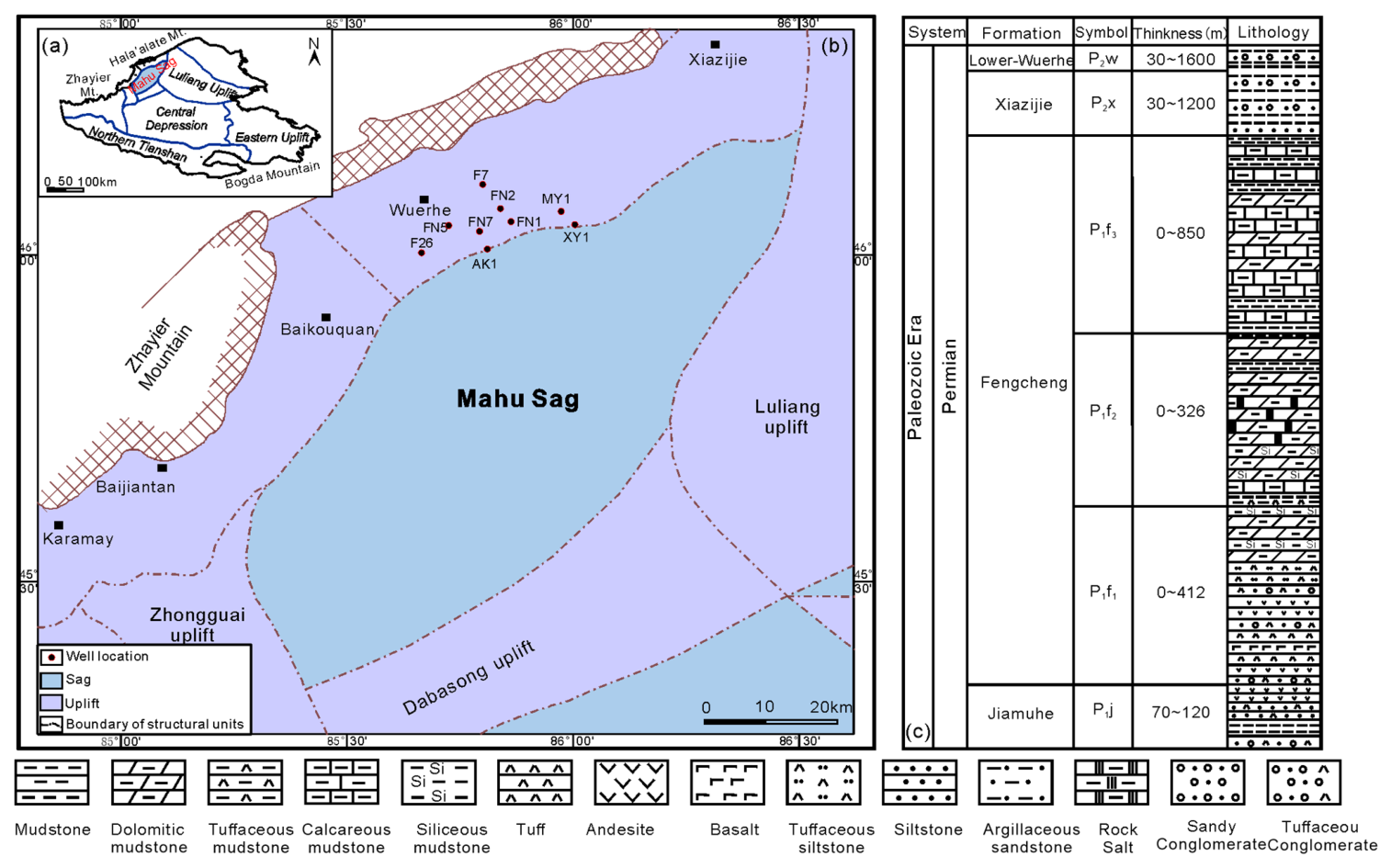
The Mahu Sag, located in the northwestern margin of the Junggar Basin, is one of the most prolific hydrocarbon-bearing depressions in Western China (Figure 1a,b) [6,30,31]. During the Early Permian, the Fengcheng Formation (P1f) was deposited in a restricted, high-salinity alkaline lacustrine environment under an arid to semi-arid paleoclimate [5,6,16,32,33]. This distinctive hydrochemical environment not only promoted the accumulation of hydrogen-rich organic matter but also facilitated the widespread precipitation of authigenic minerals, including carbonates, zeolites, and various alkaline minerals, such as trona, nahcolite, shortite, northupite, and reedmergnerite [5,6,14,34,35,36,37]. The nine wells examined in this study (MY1, XY1, FN1, FN2, FN5, FN7, AK1, F5, F26) are located in the northern Mahu Sag and penetrate the Fengcheng Formation (Figure 1b).
Stratigraphically, the Fengcheng Formation is subdivided into three members (P1f1, P1f2, and P1f3), based on lithological assemblages and lake-level cycles (Figure 1c) [16,38]. The P1f1 member mainly consists of volcaniclastic rocks and dolomitic mudstones, reflecting an early stage of lacustrine expansion influenced by volcanic activities [32]. The P1f2 member represents the peak of lake salinity and alkalinity, characterized by rhythmic laminations of organic-rich mudstones, dolomites, and saline minerals, such as reedmergnerite, northupite, and shortite [37,39,40]. The P1f3 member marks a transitional stage to a regressive lacustrine environment. During this period, the progradation of fan-deltas from the northwestern margin of the basin supplied abundant terrigenous siliciclastic to the lake center, forming hybrid lithologies rich in silt-sized quartz and feldspar grains [36].
The diagenetic history of the Fengcheng Formation is intricately coupled with its complex depositional architecture. Frequent volcanic eruptions provided abundant tuffaceous materials, which served as the primary source for reactive silica and aluminum during burial [31,36]. Multi-stage tectonic movements reactivated pre-existing faults and generated secondary fracture networks, particularly within the silt-rich hybrid intervals of P1f2 and P1f3. These fractures, when connected to the inherent primary intergranular pores of silt-supported layers, provided conduits for the migration of deep-seated hydrothermal fluids and organic-acid-rich pore waters, facilitating selective diagenetic dissolution and secondary porosity enhancement [22,41]. This intricate interplay between initial depositional components and subsequent burial environments pre-determined the heterogeneous pore structure evolution observed across different lithofacies in the Mahu Sag.

3. Samples and Methods

A total of 55 core samples were collected from the nine wells (MY1, XY1, FN1, FN2, FN5, FN7, AK1, F5, F26) in the Mahu Sag, specifically targeting the Lower Permian Fengcheng Formation (P1f). A summary of sample distribution by well is provided in Table 1, and detailed information for each individual sample, including depth, stratigraphic member, lithology, and assigned lithofacies, is given in Supplementary Table S1. The Fengcheng Formation was selected as the target interval because it represents the principal hydrocarbon-bearing succession in the Mahu Sag and uniquely preserves the full spectrum of hybrid lithofacies—including siliciclastic, volcaniclastic, carbonate, and authigenic alkaline mineral assemblages—that are essential for evaluating how depositional and diagenetic processes jointly control pore–throat structure and reservoir effectiveness. All 55 samples belong to the Fengcheng Formation and are distributed across its three members (P1f1, P1f2, and P1f3), with sampling depths ranging from 3302 to 5669 m. All samples were prepared as thin sections for petrographic analysis and crushed into powders (<200 mesh) for mineralogical and geochemical analyses.
Quantitative X-ray diffraction (XRD) analysis of bulk mineral compositions was performed using a D8 Advance diffractometer with Co Kα radiation, operated at 45 kV and 35 mA. The crushed samples were manually ground into powders and mounted onto glass slides for diffraction analysis. The diffracted beam was measured at a rate of 0.06° (2θ)/min through a fixed divergence slit (1.8 mm, 1.45°), and the XRD patterns were recorded over a range of 2–76° 2θ. Initially, the bulk mineral composition was determined, focusing on total clay content, followed by the measurement of specific mineral content within the clay fractions. Quantitative phase analysis was carried out using Rietveld refinement with customized clay mineral structure models.
Samples were coated with carbon to enhance conductivity and observed using a cold-field scanning electron microscope (SEM). The analysis was performed on an FEI Quanta 650 FEG SEM, equipped with an Oxford INCA Synergy EDS, at the Key Laboratory of Orogenic Belts and Crustal Evolution, School of Earth and Space Sciences, Peking University. The acceleration voltage was set between 10 and 15 kV, and the spot size was maintained at 5 μm. Energy Dispersive Spectroscopy (EDS) was employed to analyze the detailed mineral compositions of grains and cements. Pore structures were observed through backscattered electron (BSE) and secondary electron (SE) images.
Porosity and gas permeability measurements were performed at China University of Petroleum (Beijing). Porosity was determined by helium pycnometry on dried core plugs (25 mm in diameter and 50 mm in length), with a measurement accuracy of ±0.1%. Skeletal volume was calculated using Boyle’s law, from which porosity was derived. Gas permeability was measured on dried plugs of the same dimensions using the pulse-decay permeametry (PDP) method. The plugs were loaded into a core holder under confining pressure, and helium was introduced into the upstream reservoir at a predetermined pressure. After valve closure, the transient pressure decay across the sample was recorded, and permeability was calculated according to Darcy’s law. Klinkenberg correction was applied to all measurements to obtain the intrinsic permeability. Low-pressure nitrogen adsorption was conducted using a Micromeritics ASAP 2460 3.01 analyzer at Northeastern Petroleum University, China, following the Chinese National Standard GB/T 21650.3-2011. Prior to testing, crushed samples (60–80 mesh) were dewatered and desorbed under vacuum at 80 °C for 24 h. N2 adsorption–desorption isotherms were measured at 77.3 K, with relative pressure (P/P0) ranging from 0.001 to 0.995 for nitrogen adsorption.
High-pressure mercury intrusion (HPMI) was performed using a Micromeritics AutoPore IV 9520 mercury porosimeter at the China University of Geosciences (Wuhan). The instrument operated at a maximum pressure of 60,000 Psia, with a pore size range from 30 nm to 1000 μm. Block samples were dried at 110 °C and placed in a vacuum. Pore sizes were estimated using the Washburn equation based on pressure data. Samples were equilibrated at each pressure step for 10 s to ensure mercury stabilization. Both intrusion and extrusion curves were recorded, enabling analysis of pore geometry through mercury entrapment (hysteresis).
NMR T2 measurements were performed on brine-saturated core plugs (25 mm in diameter, 50 mm in length) at China University of Petroleum (Beijing). A RecCore-04 NMR instrument was used with the following acquisition parameters: echo spacing TE = 0.1 ms, waiting time TW = 1 s, and 32 signal averages. Prior to measurement, samples were vacuum-saturated with KCl brine and subsequently centrifuged at 6000 rpm to remove movable fluid. T2 spectra were acquired under both fully brine-saturated and post-centrifuge states. The T2 cutoff separating free-fluid index (FFI) from bound-fluid volume (BVI) was determined for each sample by correlating the cumulative T2 amplitude with centrifugation-derived irreducible water saturation. Movable fluid saturation (Sm) was calculated as: Sm = FFI/(BVI + FFI) × 100%.

4. Results

4.1. Mineralogical Composition and Lithofacies Classification

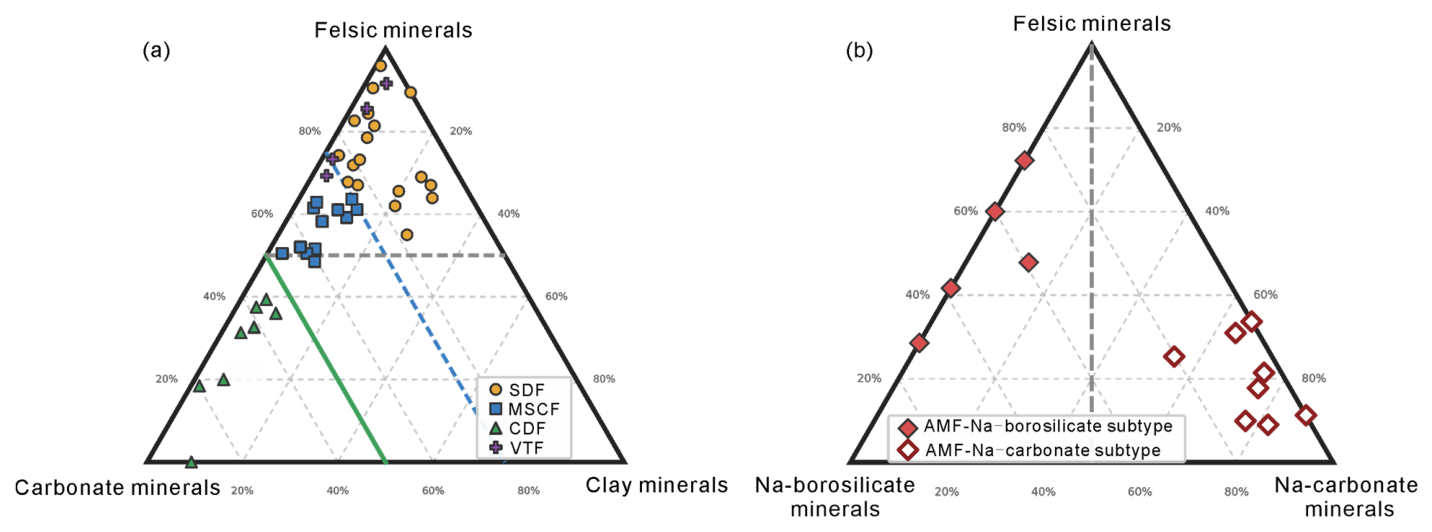
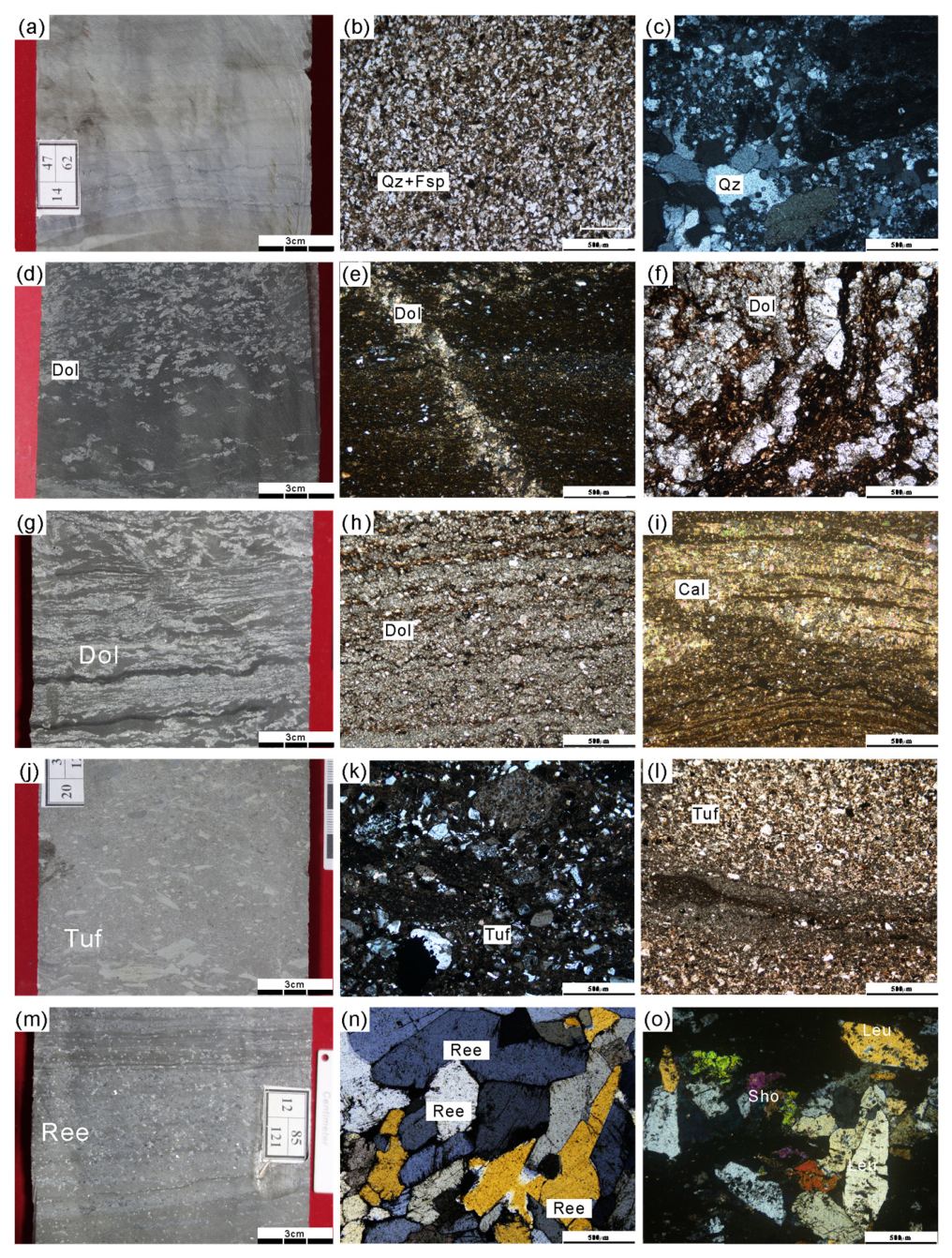
Based on whole-rock XRD data, core observations, and petrographic features, the Fengcheng Formation samples are classified into five lithofacies: siliciclastic-dominated facies (SDF), mixed siliciclastic-carbonate facies (MSCF), carbonate-dominated facies (CDF), volcaniclastic facies (VTF), and alkaline mineral-rich facies (AMF) (Figure 2 and Figure 3). Samples with total alkaline mineral contents >20% were first assigned to the AMF. The remaining samples were then classified into the SDF, MSCF, CDF, and VTF based on mineralogical proportions together with lithologic and petrographic criteria.
The SDF is defined by felsic mineral contents greater than 75%. In the core, it commonly appears as gray and massive to faintly laminated intervals of mudstone and siltstone, with occasional siliceous mudstone and siliceous siltstone (Figure 3a). Microscopically, it is dominated by silt-sized detrital quartz and feldspar grains, with locally evident siliciclastic framework and grain-supported fabric, whereas carbonate minerals are subordinate (Figure 3b,c). This lithofacies therefore represents the siliciclastic-dominated end member of the Fengcheng hybrid system.
The MSCF is defined by carbonate mineral contents between 25% and 50%, with felsic mineral contents greater than 50%. In core, it commonly shows laminated to banded structures (Figure 3d). Under the microscope, dolomite-rich bands occur closely interlayered with fine-grained siliciclastic material, forming clear mixed fabrics at the lamina to thin-section scale (Figure 3e,f). Dolomitic mudstone is the dominant lithology, with subordinate calcareous mudstone where calcite is more abundant than dolomite. This lithofacies records the strongest mixing between siliciclastic input and carbonate precipitation.
The CDF is defined by carbonate mineral contents greater than 50%. In core, it commonly occurs as laminated or banded carbonate-rich intervals (Figure 3g). Microscopically, it is dominated by carbonate minerals, mainly dolomite and calcite, and commonly shows carbonate laminae and dense crystalline carbonate fabrics, whereas detrital grains are relatively minor (Figure 3h,i). The lithology is correspondingly dolostone or limestone, depending on whether dolomite or calcite predominates. This lithofacies represents the carbonate-dominated end member of the main hybrid-lithology system.
The VTF is identified mainly on the basis of its tuffaceous lithology and volcaniclastic texture. In core, it typically appears as light gray massive tuff or tuffaceous siltstone (Figure 3j). Under the microscope, abundant tuffaceous matrix, volcanic ash-derived material, and volcaniclastic components are observed (Figure 3k,l). This lithofacies reflects direct volcanic input into the alkaline lacustrine system.
The AMF is further subdivided into two subtypes according to the dominant alkaline mineral assemblage. When Na-borosilicate minerals are dominant, the sample is classified as the AMF–Na-borosilicate subtype and corresponds to reedmergnerite- or searlesite-rich rock; when Na-carbonate minerals are dominant, it is classified as the AMF–Na-carbonate subtype and corresponds to northupite- or shortite-rich rock. In core, the AMF commonly occurs as gray massive alkaline mineral-rich intervals (Figure 3m). Microscopically, the AMF–Na-borosilicate subtype is characterized by abundant Na-borosilicate minerals such as reedmergnerite (Figure 3n), whereas the AMF–Na-carbonate subtype contains Na-carbonate minerals such as shortite, together with related alkaline mineral assemblages (Figure 3o).

4.2. Full-Scale Pore Size Distribution Characteristics

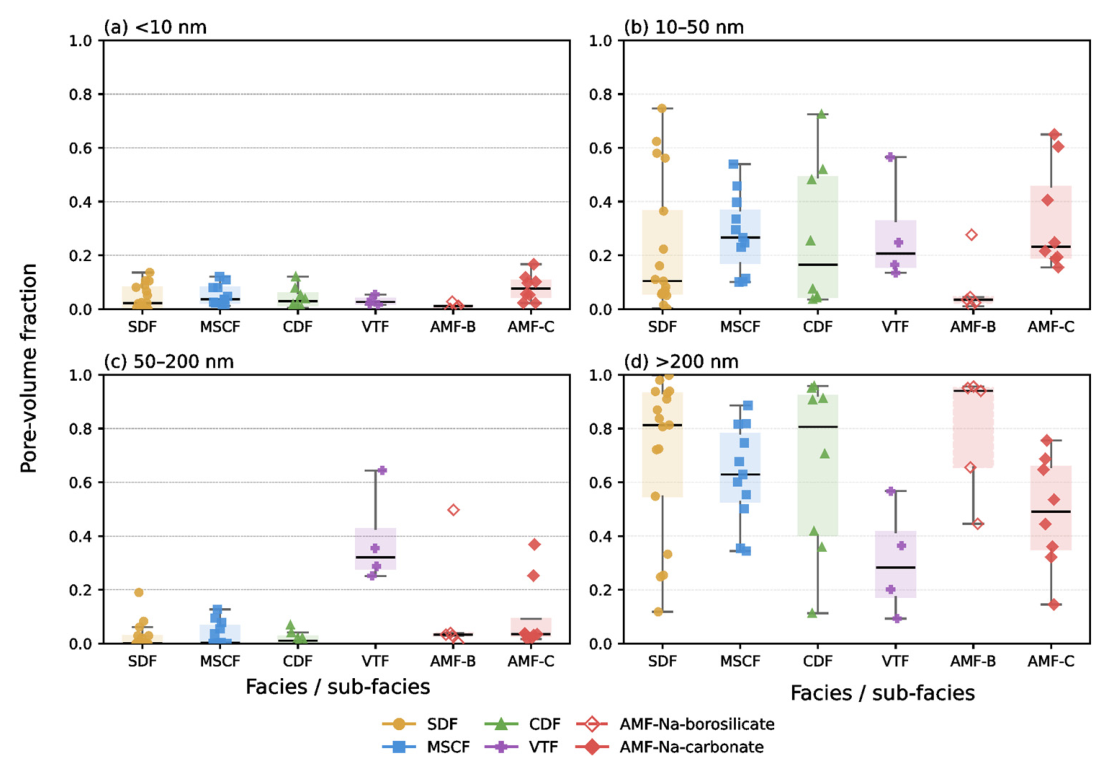
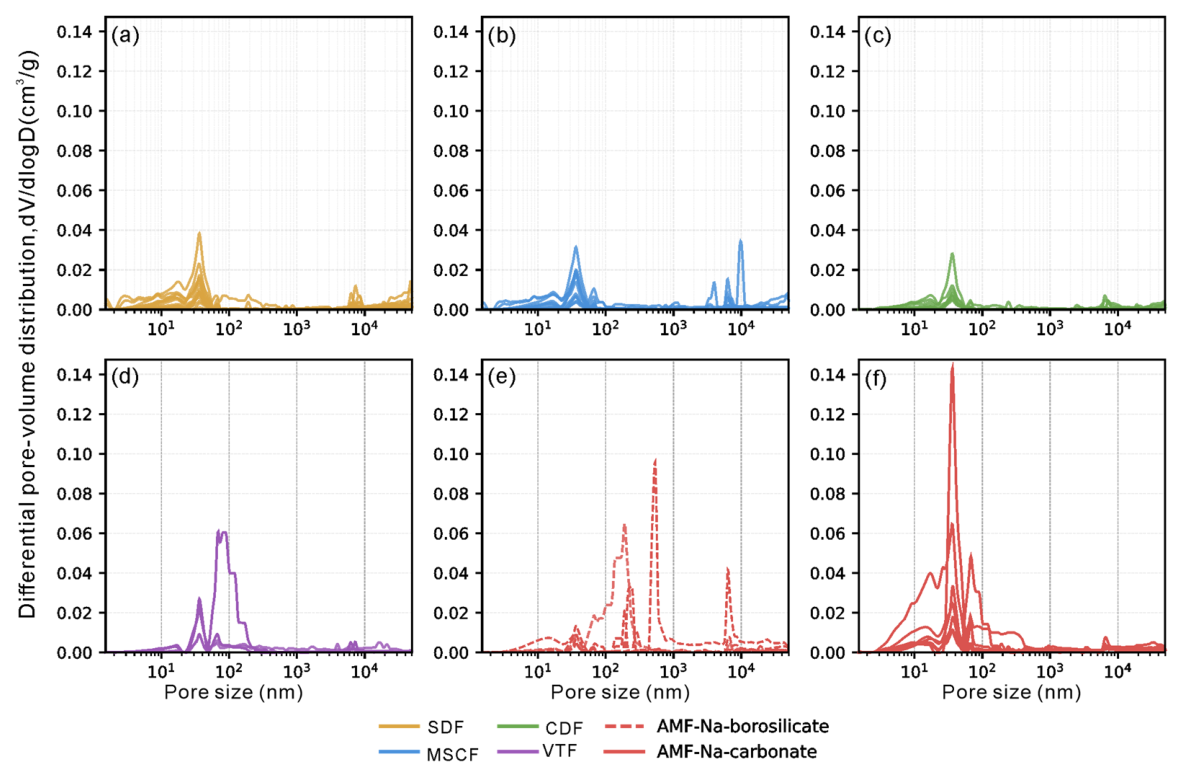
The full-range pore-size distribution curves were constructed by integrating low-pressure N2 adsorption and high-pressure mercury intrusion (HPMI) data, using 50 nm as the stitching boundary. LPNA mainly constrains pore space below 50 nm, whereas HPMI mainly characterizes pore space above 50 nm. The combined dataset therefore provides a full-range view of pore-size distribution in different lithofacies (Figure 4) and allows comparison of the relative pore-volume contributions from different pore-size intervals (Figure 5).
The studied lithofacies show distinct full-range pore-size distribution patterns, and the most diagnostic differences occur in the 10–50 nm, 50–200 nm, and >200 nm intervals.
In the SDF, the pore-size distribution curve shows a main peak within the 10–50 nm interval, but most pore volume is contributed by the >200 nm interval, whereas the 50–200 nm interval contributes little (Figure 4a and Figure 5b–d). The MSCF also shows a main peak within 10–50 nm, but this interval contributes more strongly and more consistently than in the SDF, while the >200 nm interval still accounts for a substantial proportion of total pore volume (Figure 4b and Figure 5b–d). The CDF shows a distribution broadly similar to that of the SDF, with a main peak in the 10–50 nm range and a high contribution from the >200 nm interval, but the contribution of the 10–50 nm interval is higher than in the SDF (Figure 4c and Figure 5b–d).
The VTF differs from the above lithofacies in showing a more pronounced development of the 50–200 nm interval (Figure 4d). Consistent with this, the 50–200 nm pore-volume fraction is highest in the VTF, whereas the contributions from the 10–50 nm and >200 nm intervals are relatively similar (Figure 5b–d). Thus, the intermediate pore-size range contributes more significantly to total pore volume in the VTF.
The two AMF subtypes also show clear differences. In the AMF–Na-borosilicate sub-facies, pore volume is mainly contributed by the >200 nm interval, whereas the other pore-size intervals remain minor (Figure 4e and Figure 5a–d). In contrast, the AMF–Na-carbonate sub-facies shows a relatively clear main peak in the 10–50 nm interval while still retaining a high contribution from the >200 nm interval (Figure 4f and Figure 5b,d), showing co-development of the 10–50 nm and >200 nm pore domains.

4.3. Mercury Intrusion–Extrusion Characteristics and Pore–Throat Parameter Differences

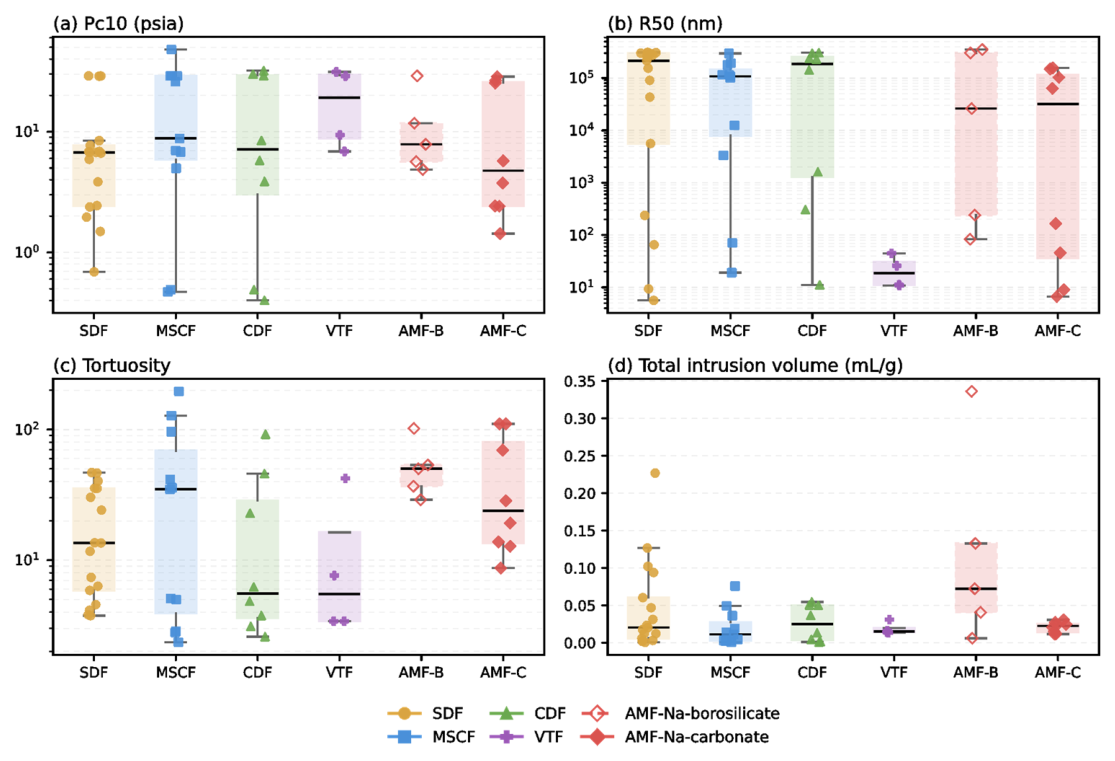
HPMI results show clear lithofacies-dependent differences in pore–throat parameters (Figure 6). The most diagnostic contrasts are expressed in Pc10, R50, tortuosity, and total intrusion volume, reflecting differences in entry pressure, effective throat size, network complexity, and accessible pore volume among the studied lithofacies and AMF subtypes.
The SDF shows a relatively low median Pc10 of 6.7 psia, together with an intermediate-range median R50, a median tortuosity of 13.5, and a median total intrusion volume of 0.020 mL/g (Figure 6). Overall, these samples are characterized by relatively low entry pressure and a moderate amount of accessible pore space, although variability among samples remains evident.
The MSCF is characterized by a higher median Pc10 (8.8 psia) than the SDF and CDF, a markedly higher median tortuosity (34.8), and a lower median total intrusion volume (0.011 mL/g) (Figure 6a,c,d). Its R50 values are also generally smaller than those of the SDF and CDF (Figure 6b). Compared with the SDF, the MSCF therefore shows a higher entry threshold, a more tortuous pore–throat network, and relatively limited accessible pore volume.
The CDF shows a median Pc10 of 7.1 psia, close to that of the SDF, but a much lower median tortuosity (5.5) and a higher median total intrusion volume (0.025 mL/g) than both the SDF and MSCF (Figure 6a,c,d). Its R50 values are also generally larger than those of the MSCF (Figure 6b). At the HPMI scale, this combination corresponds to relatively low entry pressure, low network complexity, and comparatively high cumulative intrusion volume.
The VTF differs from the other lithofacies mainly in its relatively high entry pressure. It shows the highest median Pc10, 19.2 psia, which is about 2.8 times that of the SDF and 2.7 times that of the CDF (Figure 6a). In contrast, its median tortuosity (5.5) is close to that of the CDF, and its median total intrusion volume (0.015 mL/g) remains moderate (Figure 6c,d). Its R50 values also remain in the intermediate range (Figure 6b). Taken together, the VTF is distinguished mainly by a higher pore–throat entry threshold rather than by unusually high tortuosity or large cumulative intrusion volume.
The two AMF subtypes also show marked differences. The AMF–Na-borosilicate subtype has a median Pc10 of 7.9 psia, but its median tortuosity reaches 50.1, the highest among all lithofacies and subtypes, and its median total intrusion volume reaches 0.072 mL/g, also the highest among all groups (Figure 6a,c,d). In contrast, the AMF–Na-carbonate subtype shows the lowest median Pc10, only 4.8 psia, together with a lower median tortuosity (23.9) and a lower median total intrusion volume (0.022 mL/g) than the Na-borosilicate subtype (Figure 6a,c,d). Differences in R50 are also evident between the two AMF subtypes (Figure 6b), suggesting that they differ not only in pore volume, but also in pore–throat geometry.
Overall, the HPMI-derived parameters reveal clear lithofacies-dependent contrasts. The VTF is mainly characterized by relatively high entry pressure, the AMF–Na-borosilicate subtype by very high tortuosity and total intrusion volume, and the MSCF by relatively high tortuosity but low total intrusion volume.

4.4. NMR T2 Spectral Characteristics and Movable Fluid Saturation

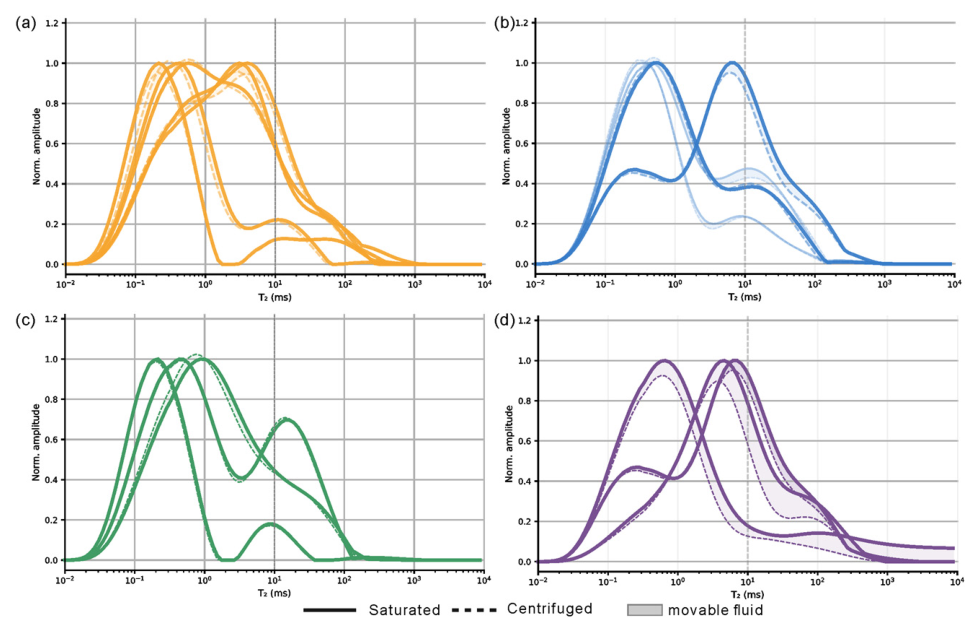
Nuclear magnetic resonance (NMR) T2 distributions were measured under two conditions, including fully saturated (S100%) and centrifuged states, to compare fluid occurrence before and after fluid removal and to evaluate movable fluid saturation (Sm) (Figure 7). By comparing the T2 spectra under these two states, the movable-fluid component and the residual bound fluid can be distinguished, providing a basis for assessing pore–throat connectivity and fluid mobility. NMR data are shown here for the main non-AMF lithofacies, including the SDF, MSCF, CDF, and VTF.
The SDF is characterized by T2 spectra distributed mainly between about 0.1 and 100 ms, with the main signal concentrated in the short- to intermediate-T2 range and only a weak long-T2 tail (Figure 7a). Spectral reduction after centrifugation is limited, indicating a generally weak movable fluid response. Its Sm values range from 0.5% to 3.8%, with a median of 1.1%, whereas T2 cutoff values range from 35.8 to 186.1 ms, with a median of 113.1 ms. This spectral pattern is consistent with domination by bound-fluid signals in the SDF.
The MSCF shows T2 spectra broadly similar to those of the SDF, with the main signal also concentrated in the short-T2 range, but with a more evident intermediate-T2 shoulder and stronger inter-sample variability (Figure 7b). In the samples with valid centrifugation data, the difference between saturated and centrifuged spectra remains small, suggesting limited movable fluid content. Within the limited valid centrifugation dataset available for the MSCF, Sm is 0.6% and the T2 cutoff is 103.7 ms. The MSCF therefore also shows a generally weak movable fluid response, although its spectral heterogeneity is more pronounced.
The CDF is distinguished by spectra strongly skewed toward short relaxation times and dominated by short-T2 signals (Figure 7c). Changes after centrifugation are generally minimal, and only minor reductions are observed locally in the intermediate-T2 range. Its Sm values range from 0.0% to 2.6%, with a median of 0.14%, whereas T2 cutoff values range from 15.1 to 1278.0 ms, with a median of 381.8 ms.
The VTF shows the most evident centrifugation response and relatively high movable fluid content. Compared with the other lithofacies, its spectra extend more clearly into the intermediate- to long-T2 range, and the reduction after centrifugation is more pronounced (Figure 7d). In the samples included in the main figure, Sm ranges from 5.2% to 21.2%, with a median of 17.5%, higher than in the SDF, MSCF, and CDF. Its T2 cutoff values range from 5.6 to 88.5 ms, with a median of 27.7 ms. This response suggests comparatively stronger movable fluid behavior in the VTF.
The NMR results indicate lithofacies-dependent differences in movable fluid response. The VTF tends to show a stronger movable fluid response, whereas the SDF, MSCF, and CDF are characterized mainly by low Sm values.

4.5. Porosity and Permeability

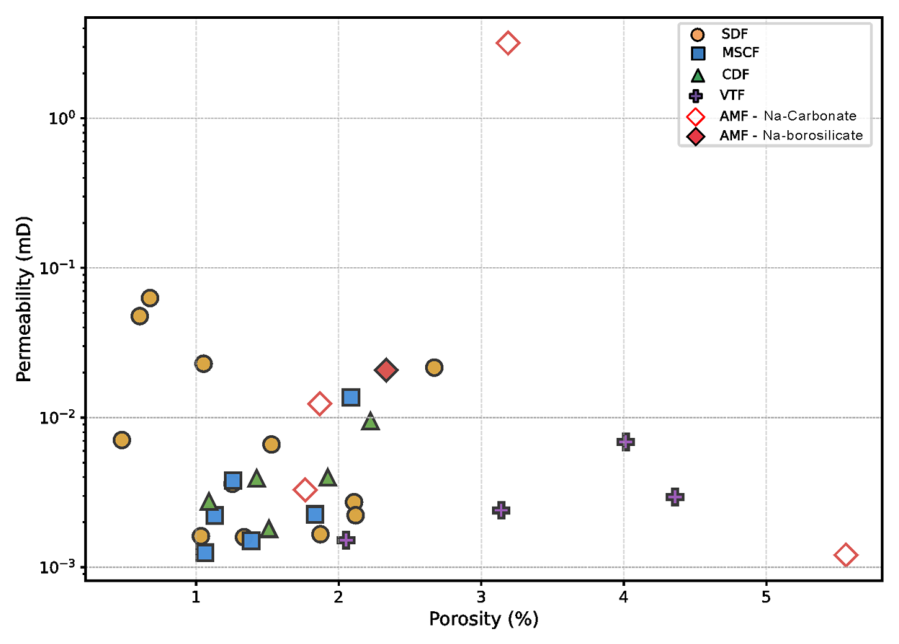
Porosity and permeability show different lithofacies-dependent patterns in the Fengcheng Formation (Figure 8). Compared with permeability, porosity varies within a narrower range among most lithofacies, whereas permeability shows stronger differentiation.
The SDF, MSCF, and CDF have broadly comparable porosity ranges of 0.48–2.67%, 1.06–2.09%, and 1.09–2.22%, with median values of 1.30%, 1.32%, and 1.51%, respectively. Their permeability ranges are more distinct. The SDF ranges from 1.6 × 10⁻³ to 6.3 × 10⁻² mD, with a median of 5.1 × 10⁻³ mD; the MSCF ranges from 1.3 × 10⁻³ to 1.4 × 10⁻² mD, with a median of 2.2 × 10⁻³ mD; and the CDF ranges from 1.8 × 10⁻³ to 9.5 × 10⁻³ mD, with a median of 3.9 × 10⁻³ mD (Figure 8). Among these three lithofacies, the SDF shows the widest permeability range and the highest upper limit.
The VTF and AMF generally show higher porosity than the SDF, MSCF, and CDF. The VTF has a porosity range of 2.05–4.36%, with a median of 3.58%, and a permeability range of 1.5 × 10⁻³ to 6.9 × 10⁻³ mD, with a median of 2.7 × 10⁻³ mD. The AMF shows a porosity range of 1.77–5.56%, with a median of 2.33%, and a permeability range of 1.2 × 10⁻³ to 3.19 mD, with a median of 1.2 × 10⁻² mD (Figure 8). Compared with the other lithofacies, the AMF shows the broadest permeability range and the highest maximum permeability, indicating strong internal heterogeneity.

5. Discussion

5.1. Lithofacies-Scale Pore Characteristics and Reservoir Effectiveness

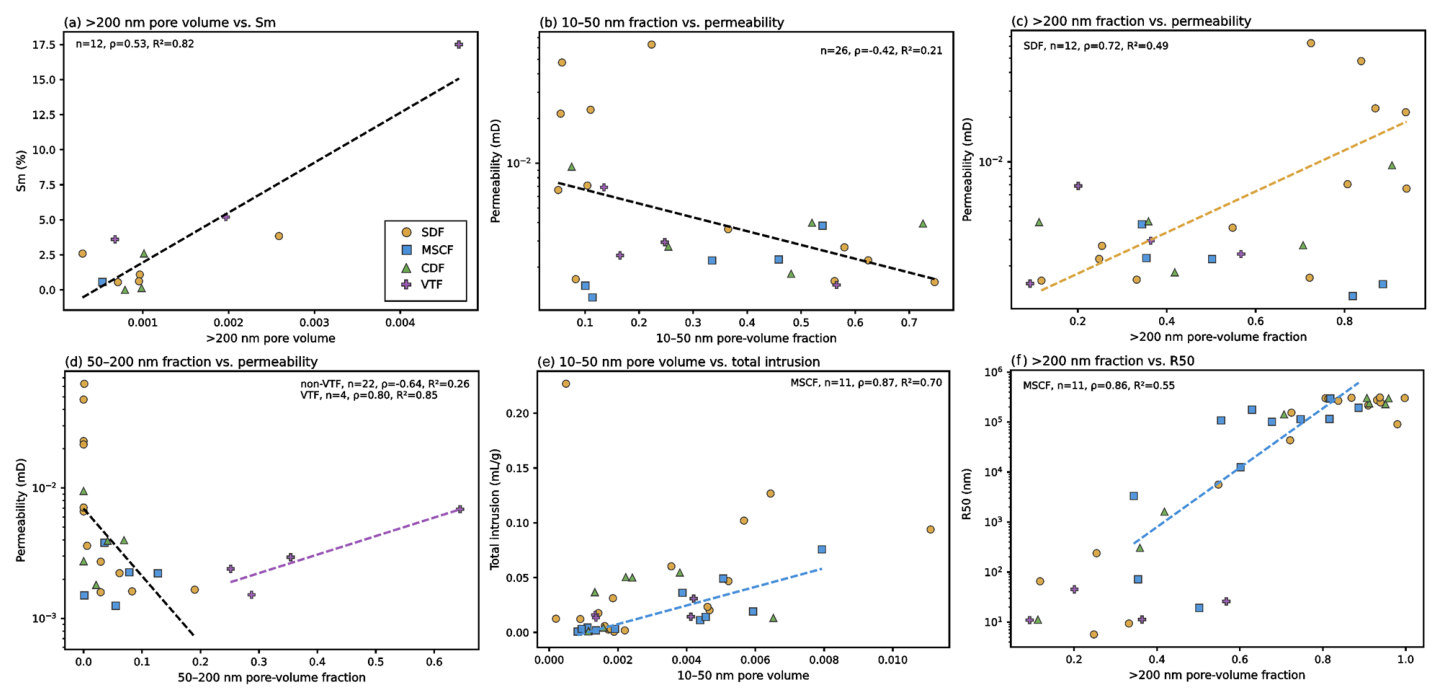
In the strongly heterogeneous alkaline lacustrine system of the Fengcheng Formation, a central issue in reservoir evaluation is distinguishing total storage capacity from an effective reservoir network. This distinction is particularly important in fine-grained and mixed lithologies, where pore volume alone may not reflect fluid mobility or effective connectivity. Integrated characterization using pore-structure and fluid-mobility data has been widely used to address this problem in tight and fine-grained reservoirs [42,43]. A systematic divergence in reservoir effectiveness is observed among lithofacies in the pore volume–fluid mobility relationships (Figure 9). This divergence is not controlled by porosity magnitude alone, but by the degree of coupling between pore space and pore–throat connectivity. At the whole-sample scale, Sm increases with the fraction of macropores (>200 nm) (Figure 9a), whereas permeability generally decreases with increasing micropore fraction (10–50 nm) (Figure 9b). This suggests that a larger contribution from macropores is more commonly associated with improved fluid mobility, whereas a greater proportion of micropores does not enhance bulk flow capacity. These whole-sample trends, however, do not fully explain lithofacies-dependent reservoir behavior, which becomes clearer when the relationships are examined at the facies level.
The clearest contrast is observed in the SDF. In this facies, permeability increases with the macropore fraction (Figure 9c), and total mercury intrusion also increases with macropore development (Figure 6). Together with its R50 and intrusion characteristics, this pattern suggests that the SDF is more closely associated with macropore-dominated networks and a relatively larger accessible pore–throat volume.
In the MSCF, total intrusion increases with the mesopore fraction (50–200 nm) (Figure 9e), whereas R50 increases with the macropore fraction (Figure 9f). These relationships suggest that, within the MSCF, variations in reservoir behavior are closely tied to the combined influence of mesopores on accessible pore volume and macropores on effective throat size.
The CDF does not show a clear positive correspondence between pore-size fractions and reservoir response. Although some HPMI parameters suggest relatively accessible pore space, the CDF is still characterized by weak movable-fluid response and limited permeability, implying that preserved pore volume does not necessarily translate into effective flow capacity. The VTF shows a different pattern in the 50–200 nm pore fraction: in non-VTF samples, permeability decreases with increasing mesopore fraction, whereas VTF samples show the opposite trend (Figure 9d). This contrast suggests that the 50–200 nm pore fraction has a different functional significance in the VTF, where it is more closely linked to permeability than in the other lithofacies.
These relationships show that reservoir effectiveness in the Fengcheng Formation depends not simply on the abundance of a given pore-size domain, but on how different pore domains are coupled to accessible pore throats and fluid mobility in each lithofacies.

5.2. Controls on Reservoir Heterogeneity Among Different Facies

5.2.1. Controls on Reservoir Differences Within the Main Hybrid-Lithology System

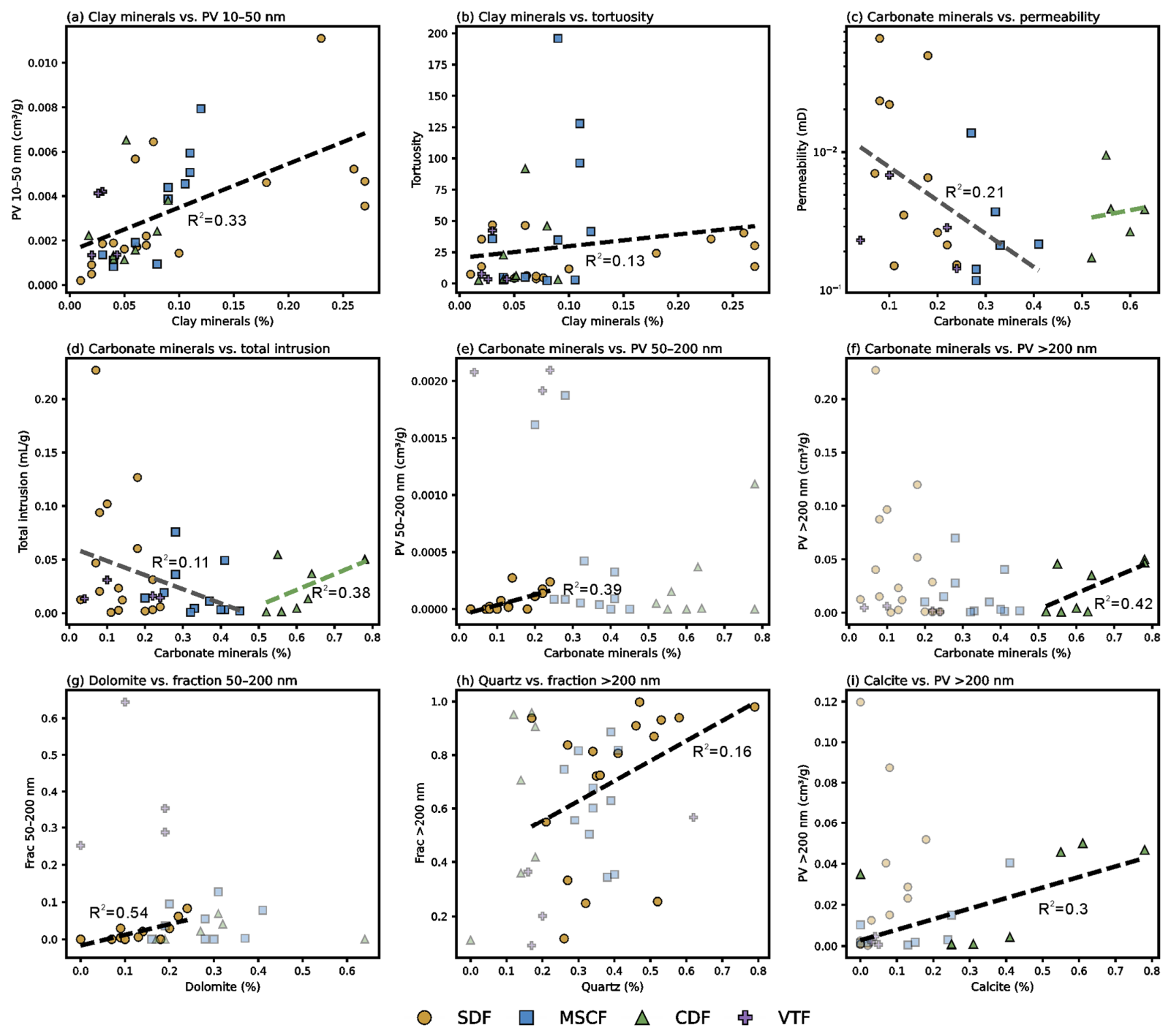
Reservoir differences within the main hybrid-lithology system of the Fengcheng Formation mainly reflect contrasts in framework rigidity, carbonate cementation, and clay-rich matrix development, all of which influence pore–throat preservation and connectivity (Figure 10 and Figure 11) [44,45]. These effects are most clearly expressed in the 10–50 nm, 50–200 nm, and >200 nm pore-size fractions.
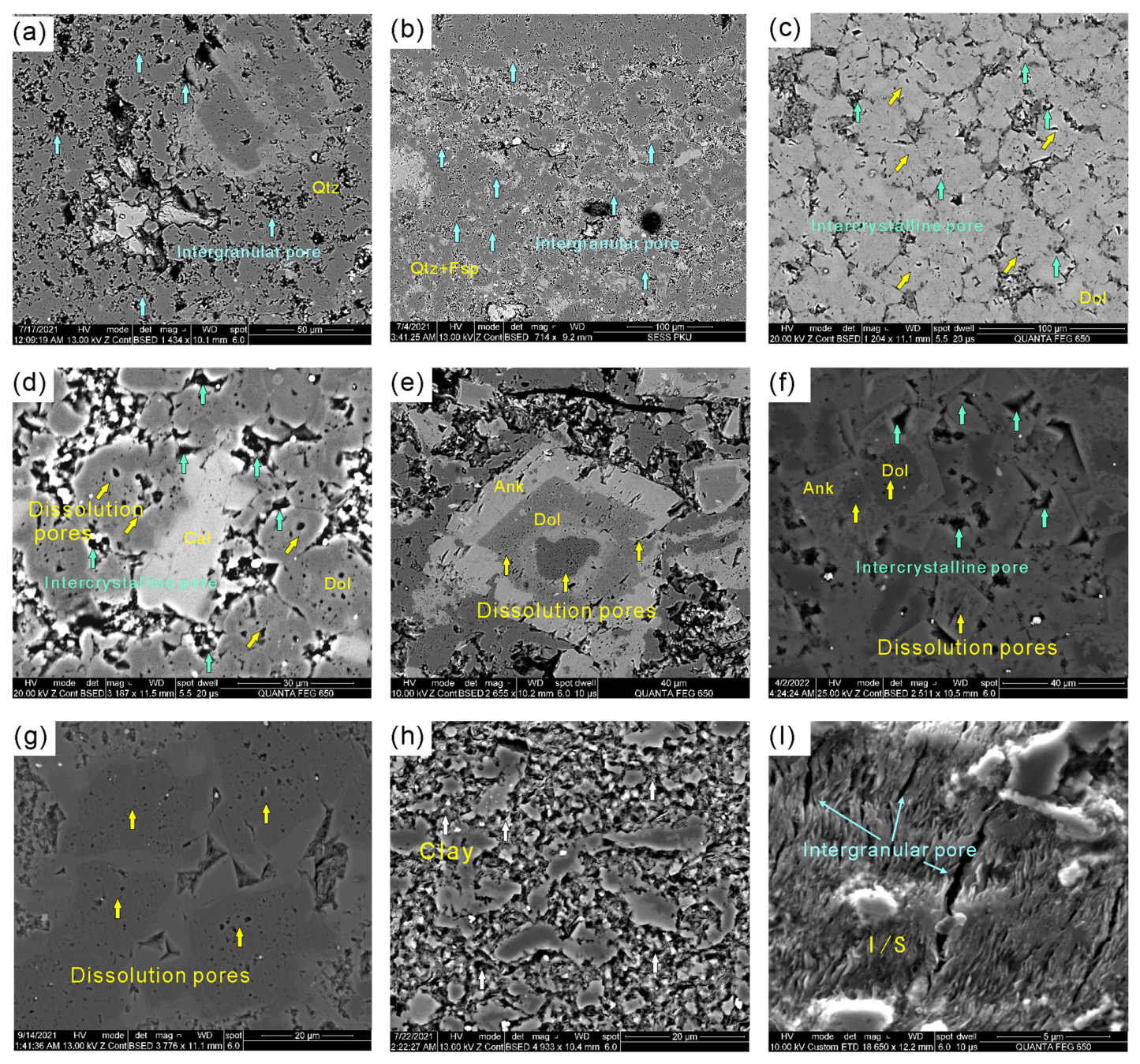
In the SDF, macropores (>200 nm) are preferentially preserved in quartz- and feldspar-rich intervals, where rigid framework grains help resist compaction. Higher quartz contents are associated with larger macropore fractions, and SEM images (Figure 11a,b) show these pores occurring between grain contacts and along grain margins. Dolomite appears to contribute mainly to the intermediate pore fraction (50–200 nm) through intercrystalline and dissolution pores, supplementing the coarse pore network without substantially modifying the largest pores (Figure 10c,d,g). Together, these features are consistent with better preservation of accessible pore–throat pathways and relatively higher permeability in the SDF.
The MSCF reflects the combined influence of framework grains, partial carbonate cementation, and clay-rich matrix. Mesopores (10–50 nm) contribute significantly to pore volume, but increased tortuosity and limited throat connectivity tend to moderate fluid transport (Figure 10a,b,e,f; Figure 11e–g). Micrographs show irregular pores and mixed support textures, consistent with a heterogeneous pore system in which pore volume is present but throat accessibility varies strongly from the lamina scale to the thin-section scale.
The CDF is dominated by carbonate-rich fabrics and commonly shows restricted throat connectivity despite the retention of some larger pores (Figure 10c–f). SEM images (Figure 11c,d) show that carbonate cement narrows or fills pore spaces, reducing network efficiency. As a result, effective throat connectivity and permeability remain limited even where some pore space is retained, indicating that preserved pore volume does not necessarily correspond to effective flow capacity in the CDF.
Across the non-AMF lithofacies, higher clay contents are generally associated with larger fractions of micropores (10–50 nm) and higher pore–throat tortuosity, but not with improved permeability (Figure 10a,b and Figure 11h,i). In this dataset, clay appears to contribute mainly to fine-scale storage rather than to enhanced fluid mobility.
These observations suggest that pore–throat development in the main hybrid-lithology system is governed by the balance between framework preservation, carbonate cementation, and clay-rich matrix development. Where rigid grains help preserve intergranular volume, accessible pore–throat pathways are more likely to be retained; where carbonate cementation and clay-rich matrix dominate, pore space may still be present but effective connectivity is more easily reduced.

5.2.2. Controls on AMF Reservoir Differentiation

The contrast between the two AMF subtypes reflects different ways in which alkaline mineral assemblages modify pore-body–throat configuration.
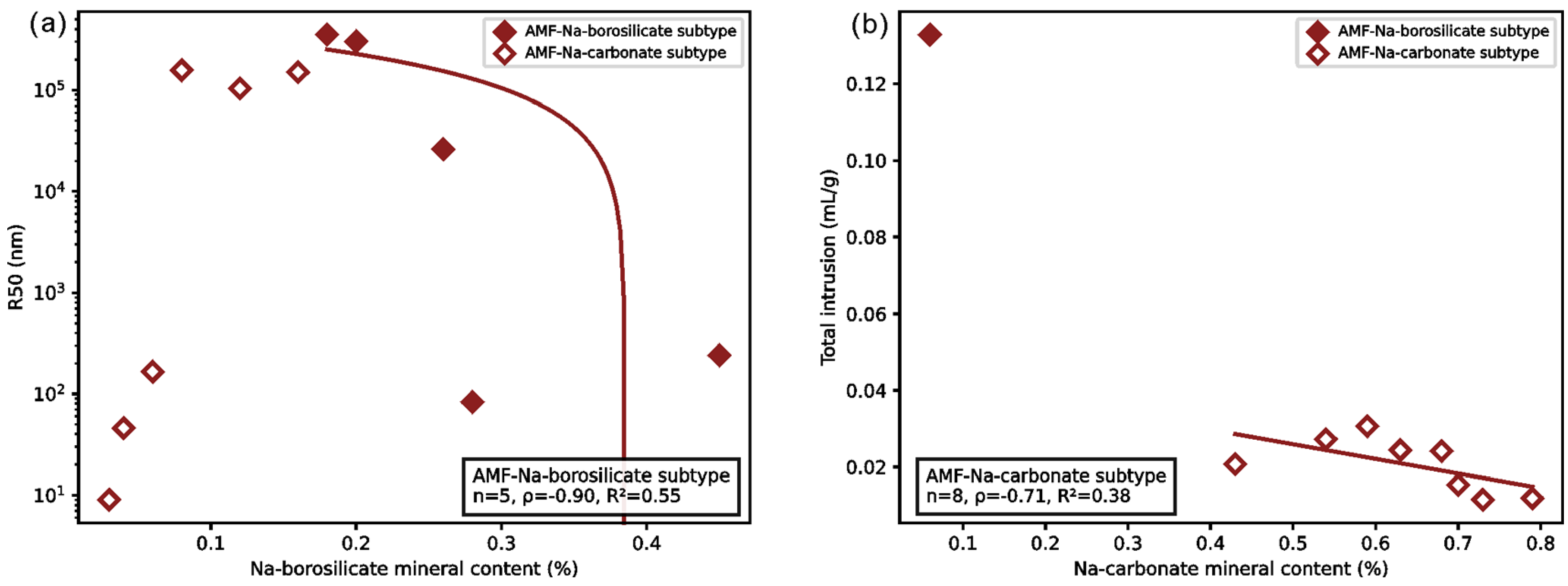
The Na-borosilicate subtype is characterized by dominance of the >200 nm pore domain, high total intrusion volume, and high tortuosity (Figure 5 and Figure 6), together with decreasing R50 as Na-borosilicate mineral content increases (Figure 12a). This combination indicates preservation of relatively large pore bodies within a rigid, non-plastic mineral framework, whereas effective throats become progressively finer. Its main limitation is therefore not insufficient storage space, but poor pore-body–throat matching.
The Na-carbonate subtype is expressed differently. It is characterized by co-development of the 10–50 nm and >200 nm domains (Figure 5), together with lower threshold pressure and lower tortuosity than the Na-borosilicate subtype (Figure 6). The reservoir advantage of this subtype does not lie in exceptional development of a single pore-volume parameter, but in a more coordinated pore-size configuration and better effective throat accessibility. Geologically, this subtype is more closely associated with carbonate-related precipitation, replacement, and local dissolution, which tend to reorganize the pore system rather than simply enlarge pore volume; the absence of a simple positive relation between Na-carbonate mineral content and total intrusion volume is consistent with this interpretation (Figure 12b).
Accordingly, reservoir differentiation within the AMF is controlled mainly by how different alkaline mineral assemblages influence the relationship between preserved pore bodies and effective throats. The Na-borosilicate subtype is limited primarily by throat reduction and network complexity, whereas the Na-carbonate subtype shows better pore-body–throat matching and comparatively more favorable reservoir behavior.

5.3. Implications for Reservoir Screening: Lithofacies Constraints on Effective Reservoir Distribution

The present results show that pore volume alone is insufficient for identifying effective reservoirs in the Fengcheng Formation. Intervals with relatively large pore volume may still show poor seepage capacity when pore–throat accessibility is weak. Rather than serving as a direct exploration model, the present results provide a set of interval-scale screening criteria for recognizing reservoirs in which storage space and pore–throat efficiency remain mutually consistent.
At the lithofacies scale, favorable reservoirs are more likely to occur where pore-size distribution, pore–throat accessibility, and movable-fluid response remain compatible. In the main hybrid lithofacies, effective intervals are not simply those with the largest >200 nm pore contribution, but those in which coarse or intermediate pore domains are supported by accessible throats, moderate entry pressure, and measurable movable-fluid response. In other words, reservoir effectiveness is controlled more by pore-body–throat matching than by pore volume magnitude alone.
Among the non-AMF lithofacies, the SDF commonly shows a favorable combination of preserved coarse pores and effective throats, especially where quartz-supported residual pores are retained and dolomite-related secondary pores supplement the 50–200 nm domain. The CDF may also contain relatively large pores, but their contribution to effective flow is often limited because carbonate-related pore space is commonly accompanied by cementation and throat restriction. The MSCF should be regarded as a heterogeneous target interval rather than a uniformly favorable facies. Its screening value lies in intervals where fine pore development is accompanied by acceptable throat accessibility rather than isolated within a poorly connected matrix.
The AMF must be screened at the subtype level. The Na-borosilicate subtype is characterized by dominant >200 nm pore space, high total intrusion volume, and high tortuosity, showing that large pore bodies alone do not ensure effective reservoir quality. By contrast, the Na-carbonate subtype shows co-development of the 10–50 nm and >200 nm domains, together with lower threshold pressure and lower tortuosity, indicating better pore-body–throat matching and comparatively more favorable reservoir behavior.
Accordingly, favorable intervals in the Fengcheng Formation should be screened where the following features occur together: (1) appropriate development of the 10–50 nm, 50–200 nm, and/or >200 nm pore domains; (2) relatively low to moderate threshold pressure; (3) relatively low tortuosity or sufficiently large effective throat size; and (4) measurable movable-fluid response. By contrast, intervals with high apparent pore volume but weak throat accessibility or weak movable-fluid response should not be regarded as favorable on pore volume alone. This screening logic provides a more reliable basis for identifying effective reservoir intervals in the Fengcheng Formation.

6. Conclusions

Based on the integration of lithofacies analysis, multiscale pore characterization, and diagenetic evolution reconstruction, the following conclusions are drawn regarding the reservoir quality of the Fengcheng Formation:
  • Different lithofacies in the Fengcheng Formation show distinct pore-size distribution patterns. The SDF and CDF are both dominated by the >200 nm domain, but the SDF preserves a more favorable coarse pore–throat framework. The MSCF is characterized by a stronger contribution from the 10–50 nm domain and a more tortuous pore–throat network, whereas the VTF is distinguished by enrichment of the 50–200 nm domain.
  • In the main hybrid lithofacies, different pore domains are associated with different mineral controls. In the SDF, quartz is mainly associated with the >200 nm domain, suggesting preservation of coarse residual pores by siliciclastic grain support, whereas dolomite is mainly associated with the 50–200 nm domain, indicating an important contribution from dolomite-related intercrystalline and dissolution pores. In the CDF and MSCF, pore–throat differentiation is more strongly influenced by carbonate cementation, mixed mineral fabrics, and clay-related throat modification.
  • The alkaline mineral-rich facies should be subdivided into two reservoir subtypes. The Na-borosilicate subtype is characterized by dominant >200 nm pore space, high total intrusion volume, and high tortuosity, whereas the Na-carbonate subtype shows co-development of the 10–50 nm and >200 nm domains, together with lower threshold pressure and lower tortuosity, indicating better pore-body–throat matching and comparatively more favorable reservoir behavior.

Supplementary Materials

The following supporting information can be downloaded at: https://www.mdpi.com/article/10.3390/min16050493/s1.

Author Contributions

Conceptualization, writing—original draft, investigation, J.L.; writing—reviewing and editing, Y.Z. (Yuanyuan Zhang).; methodology, X.Y.; supervision, X.Y. and W.H.; data curation, W.H.; investigation, Y.Z. (Yang Zou). All authors have read and agreed to the published version of the manuscript.

Funding

This research was funded by the National Natural Science Foundation of China (NSFC), Grant/Award Number: 42090021.

Data Availability Statement

All data generated and analyzed during this study are included in this published article.

Conflicts of Interest

Authors Xincai You, Wenjun He and Yang Zou were employed by the Xinjiang Oilfield Company. The remaining authors declare that the research was conducted in the absence of any commercial or financial relationships that could be construed as a potential conflict of interest.

Abbreviations

The following abbreviations are used in this manuscript:
HPMIHigh-Pressure Mercury Intrusion
LPNALow-Pressure Nitrogen Gas Adsorption
SEMScanning Electron Microscopy
T2Transverse Relaxation Time
XRDX-ray Diffraction

References

  1. Law, B.E.; Curtis, J.B. Introduction to Unconventional Petroleum Systems. AAPG Bull. 2002, 86, 1851–1852. [Google Scholar] [CrossRef]
  2. Tissot, B.; Demaison, G.; Masson, P.; Delteil, J.R.; Combaz, A. Paleoenvironment and Petroleum Potential of Middle Cretaceous Black Shales in Atlantic Basins. In Petroleum Geochemistry and Basin Evaluation; Demaison, G., Murris, R.J., Eds.; American Association of Petroleum Geologists: Tulsa, OK, USA, 1984; Volume 35, pp. 2036–2051. [Google Scholar]
  3. Loucks, R.G.; Reed, R.M.; Ruppel, S.C.; Jarvie, D.M. Morphology, Genesis, and Distribution of Nanometer-Scale Pores in Siliceous Mudstones of the Mississippian Barnett Shale. J. Sediment. Res. 2009, 79, 848–861. [Google Scholar] [CrossRef]
  4. Curtis, M.E.; Sondergeld, C.H.; Ambrose, R.J.; Rai, C.S. Microstructural investigation of gas shales in two and three dimensions using nanometer-scale resolution imaging. AAPG Bull. 2012, 96, 665–677. [Google Scholar] [CrossRef]
  5. Cao, J.; Xia, L.; Wang, T.; Zhi, D.; Tang, Y.; Li, W. An alkaline lake in the Late Paleozoic Ice Age (LPIA): A review and new insights into paleoenvironment and petroleum geology. Earth-Sci. Rev. 2020, 202, 103091. [Google Scholar] [CrossRef]
  6. Cao, J.; Lei, D.; Li, Y.; Tang, Y. Ancient high-quality alkaline lacustrine source rocks discovered in the Lower Permian Fengcheng Formation, Junggar Basin. ACTA Pet. Sin. 2015, 36, 781–790. [Google Scholar] [CrossRef]
  7. Tang, Y.; He, W.; Jiang, Y.; Fei, L.; Shan, X.; Zhao, Y.; Zheng, M.; Cao, J.; Qin, Z.; Ynag, S.; et al. Enrichment conditions and exploration direction of Permian saline lacustrine shale oil and gas in Junggar Basin. ACTA Pet. Sin. 2023, 44, 125–143. [Google Scholar] [CrossRef]
  8. Bjørlykke, K. Relationships between depositional environments, burial history and rock properties. Some principal aspects of diagenetic process in sedimentary basins. Sediment. Geol. 2014, 301, 1–14. [Google Scholar] [CrossRef]
  9. Wei, W.; Azmy, K.; Zhu, X. Impact of diagenesis on reservoir quality of the lacustrine mixed carbonate-siliciclastic-volcaniclastic rocks in China. J. Asian Earth Sci. 2022, 233, 105265. [Google Scholar] [CrossRef]
  10. Wang, C.; Zhang, B.; Hu, Q.; Shu, Z.; Sun, M.; Bao, H. Laminae characteristics and influence on shale gas reservoir quality of lower Silurian Longmaxi Formation in the Jiaoshiba area of the Sichuan Basin, China. Mar. Pet. Geol. 2019, 109, 839–851. [Google Scholar] [CrossRef]
  11. Lei, J.; Pan, B.; Guo, Y.; Fan, Y.; Xue, L.; Deng, S.; Zhang, L.; Ruhan, A. A comprehensive analysis of the pyrolysis effects on oil shale pore structures at multiscale using different measurement methods. Energy 2021, 227, 120359. [Google Scholar] [CrossRef]
  12. Kuang, L.-C.; Hou, L.-H.; Wu, S.-T.; Cui, J.-W.; Tian, H.; Zhang, L.-J.; Zhao, Z.-Y.; Luo, X.; Jiang, X.-H. Organic matter occurrence and pore-forming mechanisms in lacustrine shales in China. Pet. Sci. 2022, 19, 1460–1472. [Google Scholar] [CrossRef]
  13. Tang, Y.; He, W.; Zheng, M.; Chang, Q.; Jin, Z.; Li, J.; Zhang, Y. Shale Lithofacies and Its Effect on Reservoir Formation in Lower Permian Alkaline Lacustrine Fengcheng Formation, Junggar Basin, NW China. Front. Earth Sci. 2022, 10, 930890. [Google Scholar] [CrossRef]
  14. Yu, K.; Cao, Y.; Qiu, L.; Sun, P.; Jia, X.; Wan, M. Geochemical characteristics and origin of sodium carbonates in a closed alkaline basin: The Lower Permian Fengcheng Formation in the Mahu Sag, northwestern Junggar Basin, China. Palaeogeogr. Palaeoclimatol. Palaeoecol. 2018, 511, 506–531. [Google Scholar] [CrossRef]
  15. Zhang, G.; Wang, Z.; Guo, X.; Sun, Y.; Sun, L.; Pan, L. Characteristics of lacustrine dolomitic rock reservoir and accumulation of tight oil in the Permian Fengcheng Formation, the western slope of the Mahu Sag, Junggar Basin, NW China. J. Asian Earth Sci. 2019, 178, 64–80. [Google Scholar] [CrossRef]
  16. Zhang, Z.; Yuan, X.; Wang, M.; Zhou, C.; Tang, Y.; Chen, X.; Lin, M.; Cheng, D. Alkaline-lacustrine deposition and paleoenvironmental evolution in Permian Fengcheng Formation at the Mahu sag, Junggar Basin, NW China. Pet. Explor. Dev. 2018, 45, 1036–1049. [Google Scholar] [CrossRef]
  17. Bai, B.; Liang, J.; Dai, C.; He, W.; Bai, Y.; Chang, X.; Zheng, M.; Li, H.; Zong, H. Diagenesis of the Permian Fengcheng Formation in the Mahu Sag, Junggar Basin, China. Appl. Sci. 2023, 13, 13186. [Google Scholar] [CrossRef]
  18. Zhifeng, Y.; Yong, T.; Xuguang, G.; Liliang, H.; Qiusheng, C. Diagenesis and reservoir space types of alkaline lake-type shale in Fengcheng Formation of Mahu Sag, Junggar Basin, China. Arab. J. Geosci. 2021, 14, 2356. [Google Scholar] [CrossRef]
  19. Jiang, S.; Chen, L.; Wu, Y.; Jiang, Z.; McKenna, E. Hybrid plays of Upper Triassic Chang7 lacustrine source rock interval of Yanchang Formation, Ordos Basin, China. J. Pet. Sci. Eng. 2017, 159, 182–196. [Google Scholar] [CrossRef]
  20. Iqbal, M.A.; Rezaee, R.; Smith, G.; Ekundayo, J.M. Shale lithofacies controls on porosity and pore structure: An example from Ordovician Goldwyer Formation, Canning Basin, Western Australia. J. Nat. Gas Sci. Eng. 2021, 89, 103888. [Google Scholar] [CrossRef]
  21. Zhang, G.; Zhou, Z.; Cui, C.; Zhang, J.; Wang, J. Characterization of Pore Structure and Fluid Mobility of Shale Reservoirs. ACS Omega 2024, 9, 37724–37736. [Google Scholar] [CrossRef]
  22. Du, X.; Jin, Z.; Zeng, L.; Liu, G.; He, W.; Ostadhassan, M.; Liang, X.; Yang, S.; Lu, G. Characteristics and controlling factors of natural fractures in deep lacustrine shale oil reservoirs of the Permian Fengcheng Formation in the Mahu Sag, Junggar Basin, China. J. Struct. Geol. 2023, 175, 104923. [Google Scholar] [CrossRef]
  23. Fu, Y.; Luo, J.; Shi, X.; Cao, J.; Mao, Q.; Sheng, W. Implications of lithofacies and diagenetic evolution for reservoir quality: A case study of the Upper Triassic chang 6 tight sandstone, southeastern Ordos Basin, China. J. Pet. Sci. Eng. 2022, 218, 111051. [Google Scholar] [CrossRef]
  24. Luo, L.; Meng, W.; Gluyas, J.; Tan, X.; Gao, X.; Feng, M.; Kong, X.; Shao, H. Diagenetic characteristics, evolution, controlling factors of diagenetic system and their impacts on reservoir quality in tight deltaic sandstones: Typical example from the Xujiahe Formation in Western Sichuan Foreland Basin, SW China. Mar. Pet. Geol. 2019, 103, 231–254. [Google Scholar] [CrossRef]
  25. Xu, L.; Yang, K.; Wei, H.; Liu, L.; Li, X.; Chen, L.; Xu, T.; Wang, X. Diagenetic evolution sequence and pore evolution model of Mesoproterozoic Xiamaling organic-rich shale in Zhangjiakou, Hebei, based on pyrolysis simulation experiments. Mar. Pet. Geol. 2021, 132, 105233. [Google Scholar] [CrossRef]
  26. Yang, Y.; Huang, Z.; Qu, T.; Zhao, J.; Li, Z. Controlling Factors of Diagenetic Evolution on Reservoir Quality in Oligocene Sandstones, Xihu Sag, East China Sea Basin. Minerals 2025, 15, 394. [Google Scholar] [CrossRef]
  27. Wadood, B.; Khan, S.; Wagreich, M.; Vennemann, T.; Li, H.; Ullah, M.; Schöpfer, K. Diagenetic history and porosity evolution of the Middle Permian clastic-carbonate mixed system, Indus Basin, Pakistan: Implications for reservoir development. Energy Geosci. 2024, 5, 100317. [Google Scholar] [CrossRef]
  28. Li, H.; Xu, Z.; Gao, X.; Xie, J.; Qin, Q.; Wang, H.; He, S. Pore structure evolution and geological controls in lacustrine shale systems with implications for marine shale reservoir characterization. Sci. Rep. 2025, 15, 17702. [Google Scholar] [CrossRef]
  29. Dong, T.; He, Z.; Hu, K.; Gao, J.; Li, S.; Wang, C. The Effect of Diagenetic Modifications on Porosity Development in the Upper Ordovician to Lower Silurian Wufeng and Longmaxi Formations, Southeast Sichuan Basin, China. Appl. Sci. 2024, 14, 7661. [Google Scholar] [CrossRef]
  30. Kuang, L.; Tang, Y.; Lei, D.; Chang, Q.; Ouyang, M.; Hou, L.; Deguang, L.I.U. Formation conditions and exploration potential of tight oil in the Permian saline lacustrine dolomitic rock, Junggar Basin, NW China. Pet. Explor. Dev. 2012, 39, 657–667. [Google Scholar] [CrossRef]
  31. Zhi, D.; Tang, Y.; He, W.; Guo, X.; Zheng, M.; Huang, L. Orderly coexistence and accumulation models of conventional and unconventional hydrocarbons in Lower Permian Fengcheng Formation, Mahu sag, Junggar Basin. Pet. Explor. Dev. 2021, 48, 43–59. [Google Scholar] [CrossRef]
  32. Guo, P.; Wen, H.; Gibert, L.; Jin, J.; Wang, J.; Lei, H. Deposition and diagenesis of the Early Permian volcanic-related alkaline playa-lake dolomitic shales, NW Junggar Basin, NW China. Mar. Pet. Geol. 2021, 123, 104780. [Google Scholar] [CrossRef]
  33. Li, M.; Wu, S.; Zhu, R.; Hu, S.; Wang, P.; Cai, Y.; Zhang, S. Heterogeneity and Sedimentary Characteristics of Shale Laminae of Fine-Grained Sediments in Alkaline Lacustrine Strata in the Permian Fengcheng Formation, Mahu Sag, NW China. Energies 2024, 17, 962. [Google Scholar] [CrossRef]
  34. Wang, J.; Zhou, L.; Liu, J.; Zhang, X.; Zhang, F.; Zhang, B. Acid-base alternation diagenesis and its influence on shale reservoirs in the Permian Lucaogou Formation, Jimusar Sag, Junggar Basin, NW China. Pet. Explor. Dev. 2020, 47, 962–976. [Google Scholar] [CrossRef]
  35. Ma, C.-F.; Huang, W.-J.; Zhou, J.; Yu, H.-Z.; Song, M.-Y. The genetic mechanism of salt minerals in Fengcheng Formation in Hashan area, northwestern margin of Junggar Basin. Pet. Sci. 2025, 22, 3991–4014. [Google Scholar] [CrossRef]
  36. Tang, Y.; Cao, J.; He, W.-J.; Guo, X.-G.; Zhao, K.-B.; Li, W.-W. Discovery of shale oil in alkaline lacustrine basins: The Late Paleozoic Fengcheng Formation, Mahu Sag, Junggar Basin, China. Pet. Sci. 2021, 18, 1281–1293. [Google Scholar] [CrossRef]
  37. Li, W.; Zhang, Y.; Ni, M.; Tang, W. Genesis of alkaline lacustrine deosits in the Lower Permain Fengcheng Formation of the Mahu Sag,northwestern Juggar Basin:insights from a comparison with the world alkaline lacustrine deposits. Acta Geol. Sin. 2020, 94, 1839–1852. [Google Scholar] [CrossRef]
  38. Lv, J.; Jiang, F.; Hu, T.; Zhang, C.; Huang, R.; Hu, M.; Xue, J.; Huang, L.; Wu, Y. Control of complex lithofacies on the shale oil potential in ancient alkaline lacustrine basins: The Fengcheng Formation, Mahu Sag, Junggar basin. Geoenergy Sci. Eng. 2023, 224, 211501. [Google Scholar] [CrossRef]
  39. Shifa, Z.; Xiaomin, Z.; Xin, L.; Dong, W.; Dongna, Z. Authigenic minerals and diagenetic evolution in altered volcanic materials and their impacts on hydrocarbon reservoirs: Evidence from the lower Permian in the northwestern margin of Junggar Basin, China. Arab. J. Geosci. 2016, 9, 97. [Google Scholar] [CrossRef]
  40. Tian, X.; Zhang, Y.; Zhuo, Q.; Yu, Z.; Guo, Z. Tight oil charging characteristics of the Lower Permian Fengcheng Formation in Mahu sag, Junggar Basin: Evidence from fluid inclusions in alkaline minerals. ACTA Pet. Sin. 2019, 40, 646–659. [Google Scholar]
  41. Yang, Z.; Wang, X.; Ge, H.; Zhu, J.; Wen, Y. Study on evaluation method of fracture forming ability of shale oil reservoirs in Fengcheng Formation, Mahu sag. J. Pet. Sci. Eng. 2022, 215, 110576. [Google Scholar] [CrossRef]
  42. Li, P.; Ou, Y.; Chen, H.; Li, Q.; Zhao, L.; Yan, J. Pore throat distributions and movable fluid occurrences in different diagenetic facies of tight sandstone reservoirs in the Triassic Chang 6 reservoirs, Wuqi Area, Ordos Basin, China. J. Pet. Explor. Prod. Technol. 2024, 14, 1783–1797. [Google Scholar] [CrossRef]
  43. Qu, Y.; Sun, W.; Wu, H.; Huang, S.; Li, T.; Ren, D.; Chen, B. Impacts of pore-throat spaces on movable fluid: Implications for understanding the tight oil exploitation process. Mar. Pet. Geol. 2022, 137, 105509. [Google Scholar] [CrossRef]
  44. Wang, Z.; Lu, S.; Zhou, N.; Liu, Y.; Lin, L.; Shang, Y.; Xiao, G.; Wang, J. Diagenesis as a control on the tight sandstone reservoir quality of the upper Carboniferous strata in the northeastern Ordos basin, China. Mar. Pet. Geol. 2023, 158, 106565. [Google Scholar] [CrossRef]
  45. Lai, J.; Wang, G.; Wang, S.; Cao, J.; Li, M.; Pang, X.; Zhou, Z.; Fan, X.; Dai, Q.; Yang, L.; et al. Review of diagenetic facies in tight sandstones: Diagenesis, diagenetic minerals, and prediction via well logs. Earth-Sci. Rev. 2018, 185, 234–258. [Google Scholar] [CrossRef]
Figure 1. (a) Regional division map of the Junggar Basin. (b) The geological map of Junggar Basin and the location of the study area. (c) Generalized stratigraphic column of the Permian period in the Junggar Basin.
Minerals 16 00493 g001
Figure 2. Ternary classification diagrams of lithofacies. (a) Main lithofacies. (b) AMF subtypes.
Minerals 16 00493 g002
Figure 3. Representative core photographs and photomicrographs of Fengcheng Formation lithofacies. (ac) SDF: core photograph, thin section (PPL, XPL). (df) MSCF: core photograph, thin section (XPL, PPL). (gi) CDF: core photograph, thin section (PPL, XPL). (jl) VTF: core photograph, thin section (XPL, PPL). (mo) AMF: core photograph, representative thin sections of AMF–Na-borosilicate subtype (n) and AMF–Na-carbonate subtype (o).
Minerals 16 00493 g003
Figure 4. Full-range pore-size distribution curves. (a) Siliciclastic-dominated facies (SDF); (b) mixed siliciclastic–carbonate facies (MSCF); (c) carbonate-dominated facies (CDF); (d) volcaniclastic facies (VTF); (e) alkaline mineral-rich facies with Na-borosilicate minerals (AMF–Na-borosilicate); (f) alkaline mineral-rich facies with Na-carbonate minerals (AMF–Na-carbonate).
Minerals 16 00493 g004
Figure 5. Boxplots of pore-volume fractions in different pore-size intervals for the lithofacies of the Fengcheng Formation. (a) <10 nm; (b) 10–50 nm; (c) 50–200 nm; (d) >200 nm.
Minerals 16 00493 g005
Figure 6. Boxplots of HPMI-derived pore–throat parameters for different lithofacies. (a) Pc10; (b) R50; (c) Tortuosity; (d) Total intrusion volume.
Minerals 16 00493 g006
Figure 7. NMR T2 distributions of different lithofacies under fully saturated and centrifuged conditions. (a) SDF, (b) MSCF, (c) CDF, and (d) VTF.
Minerals 16 00493 g007
Figure 8. Porosity–permeability scatter plot of the Fengcheng Formation lithofacies.
Minerals 16 00493 g008
Figure 9. Relationships between pore-size fractions and reservoir response for different lithofacies in the Fengcheng Formation. (a) Movable fluid saturation (Sm) vs. >200 nm fraction (b) Permeability vs. 10–50 nm fraction (c) Permeability vs. >200 nm fraction. (d) Permeability vs. 50–200 nm fraction. (e) Total mercury intrusion vs. 10–50 nm fraction. (f) R50 vs. >200 nm fraction.
Minerals 16 00493 g009
Figure 10. Mineralogical controls on pore-size partitioning and pore–throat parameters in the main lithofacies of the Fengcheng Formation.
Minerals 16 00493 g010
Figure 11. BSE images of pore types and mineral composition in the Fengcheng Formation. (a,b) SDF; (c,d) CDF; (eg) MSCF; (h,i) clay minerals. Qtz, quartz; Fsp, feldspar; Dol, dolomite; Ank, ankerite; I/S, illite/smectite mixed layer.
Minerals 16 00493 g011
Figure 12. Scatter plots of alkaline mineral content versus key pore–throat parameters in the AMF. (a) Na-borosilicate mineral content versus R50. (b) Na-carbonate mineral content versus total intrusion volume.
Minerals 16 00493 g012
Table 1. Summary of the 55 core samples examined in this study, by well.
WellNo. of SamplesDepth Range (m)Member(s) Sampled
MY1234595.79–4915.44P1f1, P1f2, P1f3
XY1135097.17–5374.09P1f2, P1f3
FN154124.00–4451.00P1f2
AK144064.50–5668.50P1f2
FN534069.10–4073.00P1f2
F523368.30–3374.20P1f2
FN224041.10–4042.70P1f2
FN724595.30–4596.00P1f2
F2613302.00P1f3
Total553302.00–5668.50P1f1, P1f2, P1f3
Note: Detailed information for each individual sample, including sample number, depth, lithology, and assigned lithofacies, is provided in Supplementary Table S1.
Disclaimer/Publisher’s Note: The statements, opinions and data contained in all publications are solely those of the individual author(s) and contributor(s) and not of MDPI and/or the editor(s). MDPI and/or the editor(s) disclaim responsibility for any injury to people or property resulting from any ideas, methods, instructions or products referred to in the content.