Article

Origins of Au Deposits in Mesozoic Clastic-Hosted Ore Formations in the Great Xing’an Range, China: Constraints from the Baoxinggou Au Deposit

1
Harbin Natural Resources Survey, China Geological SurveyCGS, Harbin 150086, China
2
Observation and Research Station of Earth Critical Zone in Black Soil, Ministry of Natural Resources, Harbin 150086, China
3
Northeast Geological S&T Innovation Center, China Geological Survey, Shenyang 110034, China
4
Natural Resources Survey Institute of Heilongjiang Province, Heilongjiang Provincial Bureau of Geology and Mineral Resources, Harbin 150036, China
*
Author to whom correspondence should be addressed.
Minerals 2026, 16(4), 423; https://doi.org/10.3390/min16040423
Submission received: 28 February 2026 / Revised: 4 April 2026 / Accepted: 17 April 2026 / Published: 19 April 2026

Abstract

The northern part of the Great Xing’an Range in China hosts a prominent Au mineralization belt, where Mesozoic clastic rock-hosted Au deposits represent the mineralization type. A study of the Baoxinggou Au deposit in this region might provide new perspectives on the mineralization mechanisms of these Mesozoic clastic-rock-hosted Au deposits. This study investigated the age of mineralization, origins and evolution of the ore-forming fluids, and sources of the ore-forming materials in this deposit. Rubidium–Sr dating of sulfides yielded a mineralization age of 119 ± 2 Ma. Fluid inclusion analyses revealed that the ore precipitated from fluids with temperatures of 105–415 °C and salinities of 4.3–8.8 wt.% NaCl equivalent. Hydrogen and O isotopic data show that the ore-forming fluids were of magmatic origin and, during mineralization, the proportion of meteoric waters increased gradually and eventually dominated the late mineralization stage. Fluid mixing was the primary ore-forming mechanism. Sulfur isotopic data for pyrite and chalcopyrite (δ34SV–CDT = −4.35‰ to −0.91‰) and Pb isotopic ratios (206Pb/204Pb = 18.429–18.477; 207Pb/204Pb = 15.581–15.591) indicate the ore-forming materials were magmatic in origin, with a similar source as an Early Cretaceous diorite and mixed crust–mantle materials. The results indicate the Baoxinggou Au deposit is a magmatic–hydrothermal deposit.

1. Introduction

The northern Great Xing’an Range (NGXR) in northeast China is an important polymetallic mineralization belt [1,2]. Numerous Au deposits in Mesozoic clastic-hosted ore formations have been discovered in the NGXR [3], including the Shabaosi, Baoxinggou, Balifang, and Sanshierzhan deposits. A newly explored large-scale Mesozoic clastic-rock-hosted Au deposit at Baoxinggou contains Au resources of 24.24 t (average grade = 1.43 g/t) and Ag resources of 7.04 t (average grade = 122.59 g/t) [4,5]. The deposit is located between the orogenic Au mineralization belt in the northern NGXR and the epithermal Au belt in the eastern NGXR. It consists of a network of auriferous fine-quartz veins that occur in clastic-rock-hosted ore formations.
Despite extensive previous studies of the Mesozoic clastic-rock-hosted Au deposits in the NGXR, controversies persist regarding the mineralization age, along with the origins and nature of the ore-forming fluids and materials. Previous studies have used zircon U–Pb and quartz 40Ar/39Ar dating to constrain the ages of these deposits to 136–118 Ma [6,7]. However, the lack of direct dating of mineralization-related minerals casts doubt on the reliability of the ages obtained from zircon U–Pb dating of dikes. Studies of the origins and nature of the ore-forming materials in these deposits have relied primarily on single-mineral analyses of pyrite, chalcopyrite, and sphalerite. However, the multi-stage formation of these minerals during Au mineralization has resulted in inconsistent findings. Fluid inclusions in these deposits are predominantly gas–liquid two-phase types, along with minor gas-rich and CO2-bearing inclusions [8,9]. In general, the ore-forming fluids were of (medium) low temperatures and (medium) low salinities [6,10,11,12]. Significant advances have been made in understanding the ore geology, geochronology, and geochemistry of these Mesozoic clastic-rock-hosted Au deposits. However, the controlling factors and formation mechanisms of deposits with distinct metal sources and ore types remain unclear, which hinders our understanding of Mesozoic Au mineralization in northeast China.
In this context, a detailed study of the Baoxinggou Au deposit might improve our understanding of regional Au mineralization and provide new perspectives on the geodynamic setting of this Early Cretaceous Au mineralization. In this paper, we present syn-mineralization sulfide Rb–Sr geochronological, fluid inclusion, and H–O–Pb–S isotopic data that were obtained with in situ analytical techniques. These data are used to constrain the mineralization age and the physicochemical conditions and origins of the ore-forming fluids and materials in the Baoxinggou Au deposit. The results have implications for the mineralization mechanisms of Mesozoic clastic-rock-hosted Au deposits in the Great Xing’an Range.

2. Geological Setting

2.1. Regional Geology
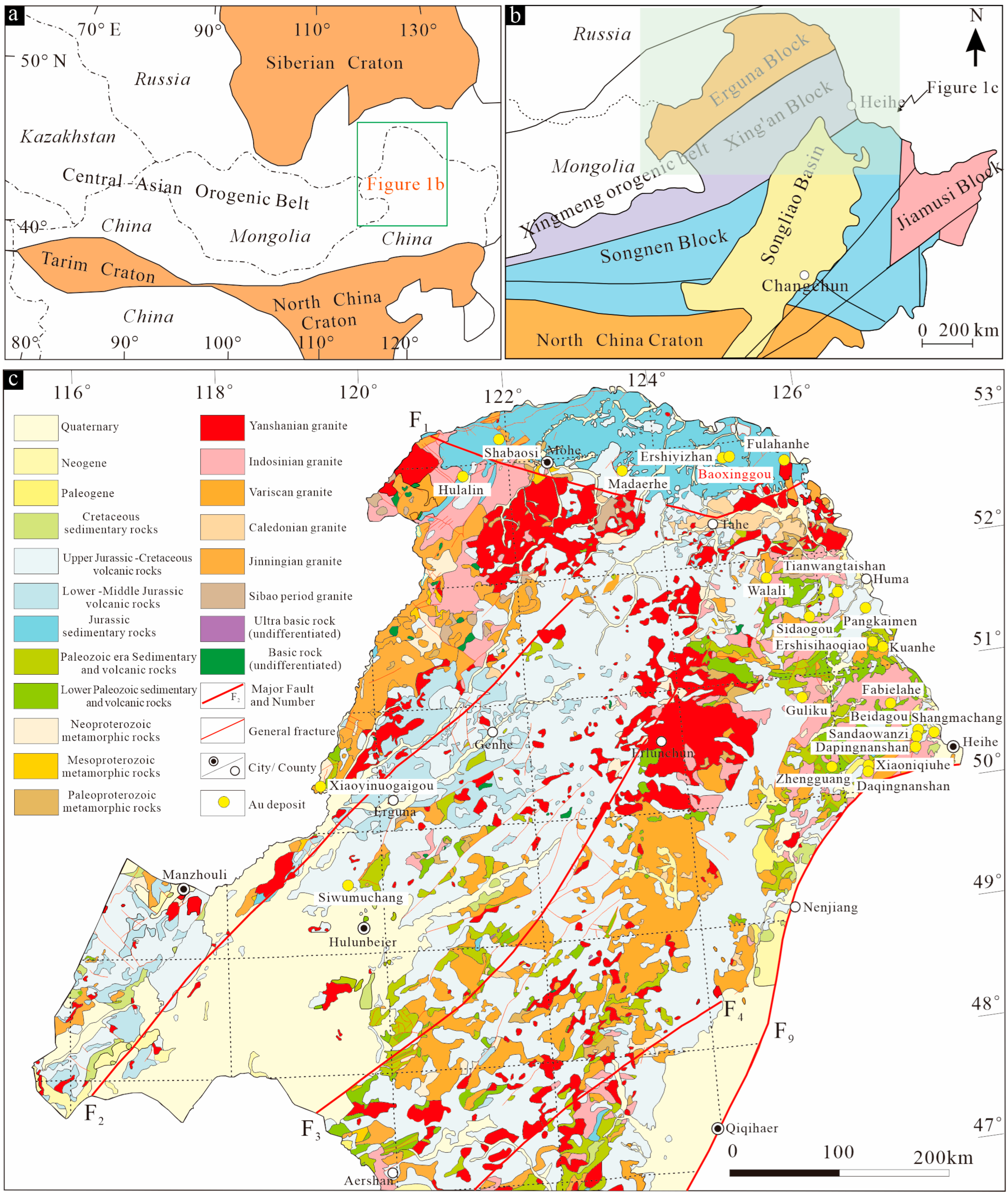
The study area is located in the Erguna Block in the eastern Central Asian Orogenic Belt (CAOB), northeast China (Figure 1a,b). This region has experienced multiple tectonic events, including Rodinia breakup during the Proterozoic, closure of the Paleo-Asian Ocean during the late Paleozoic, closure of the Mongol–Okhotsk Ocean during the late Mesozoic, and Paleo-Pacific Plate subduction during the Jurassic [13,14,15,16]. Intense tectonomagmatic activity caused numerous Au deposits to form in this area, such as the Triassic Mengdehe [17] and Early Cretaceous Shabaosi [7], Baoxinggou [6], Pangkaimen [1], and Sandaowanzi [18] deposits (Figure 1c).
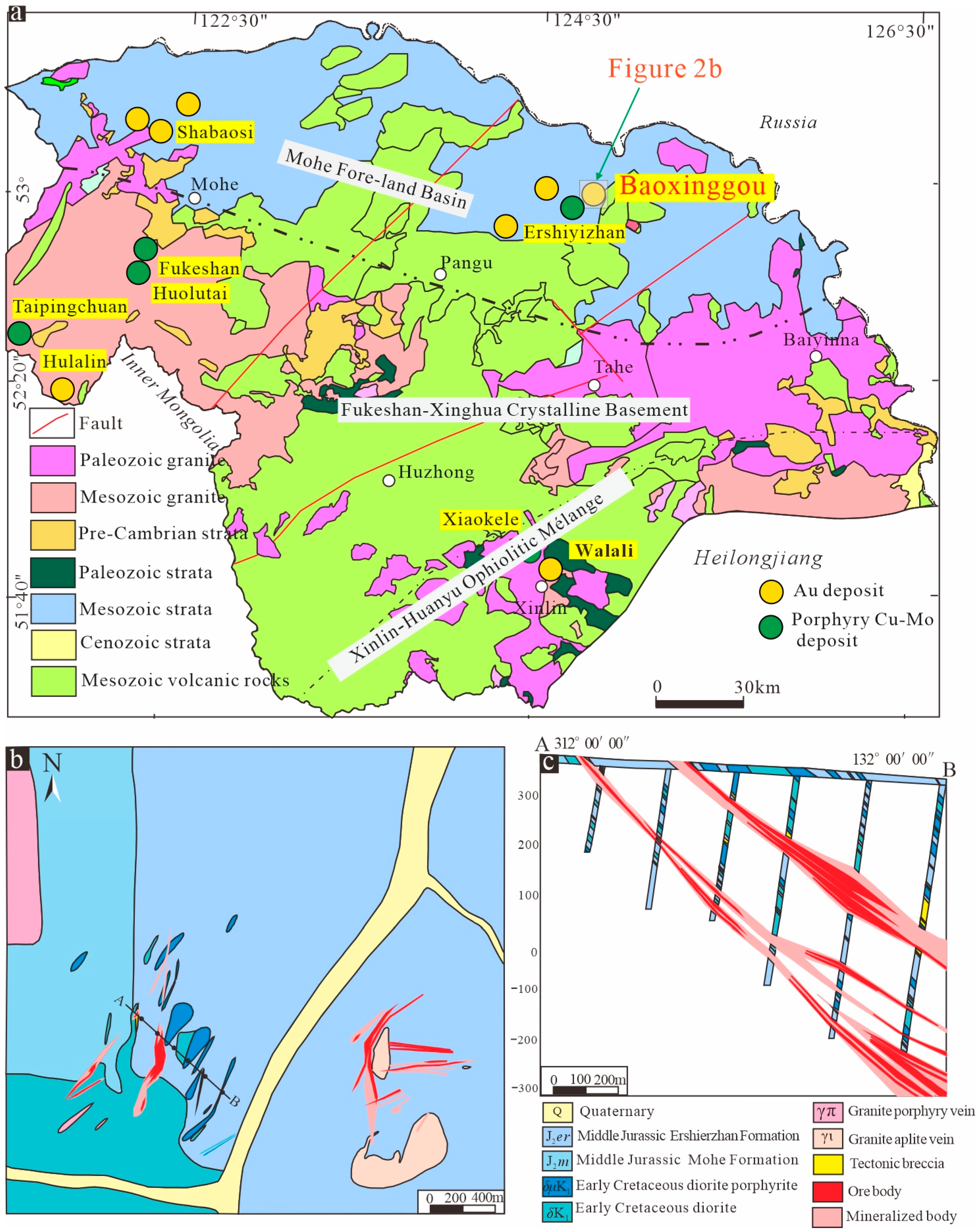
The Baoxinggou Au deposit is located in the Mohe Foreland Basin, which is part of the northeastern margin of the Erguna Block (Figure 2a). The basement rocks of the Mohe Foreland Basin comprise Precambrian and Devonian strata, overlain by large-scale upper Mesozoic sedimentary and volcanic rocks [19]. This mineralization belt has been strongly affected by faults and tectonomagmatic activity, with widely distributed faults trending NW–SE, NE–SW, N–S, and E–W. Intrusive units in the Mohe Foreland Basin are extensive and were emplaced from the Paleoproterozoic to Early Cretaceous [20], with peak magmatism occurring during the Jinningian and Yanshanian orogenies.
Figure 1. (a) Location map of the study area in the Central Asian Orogenic Belt (after [21]). (b) Major tectonic blocks in northeast China (after [22]). (c) Geological map of the northern Great Xing’an Range (after [23]).
Minerals 16 00423 g001
Figure 2. (a) Geological map of the eastern Erguna Block (after [2]). (b) Geological map of the Baoxinggou Au deposit. (c) Geological cross-section along the A–B exploration line.
Minerals 16 00423 g002

2.2. Ore Deposit Geology

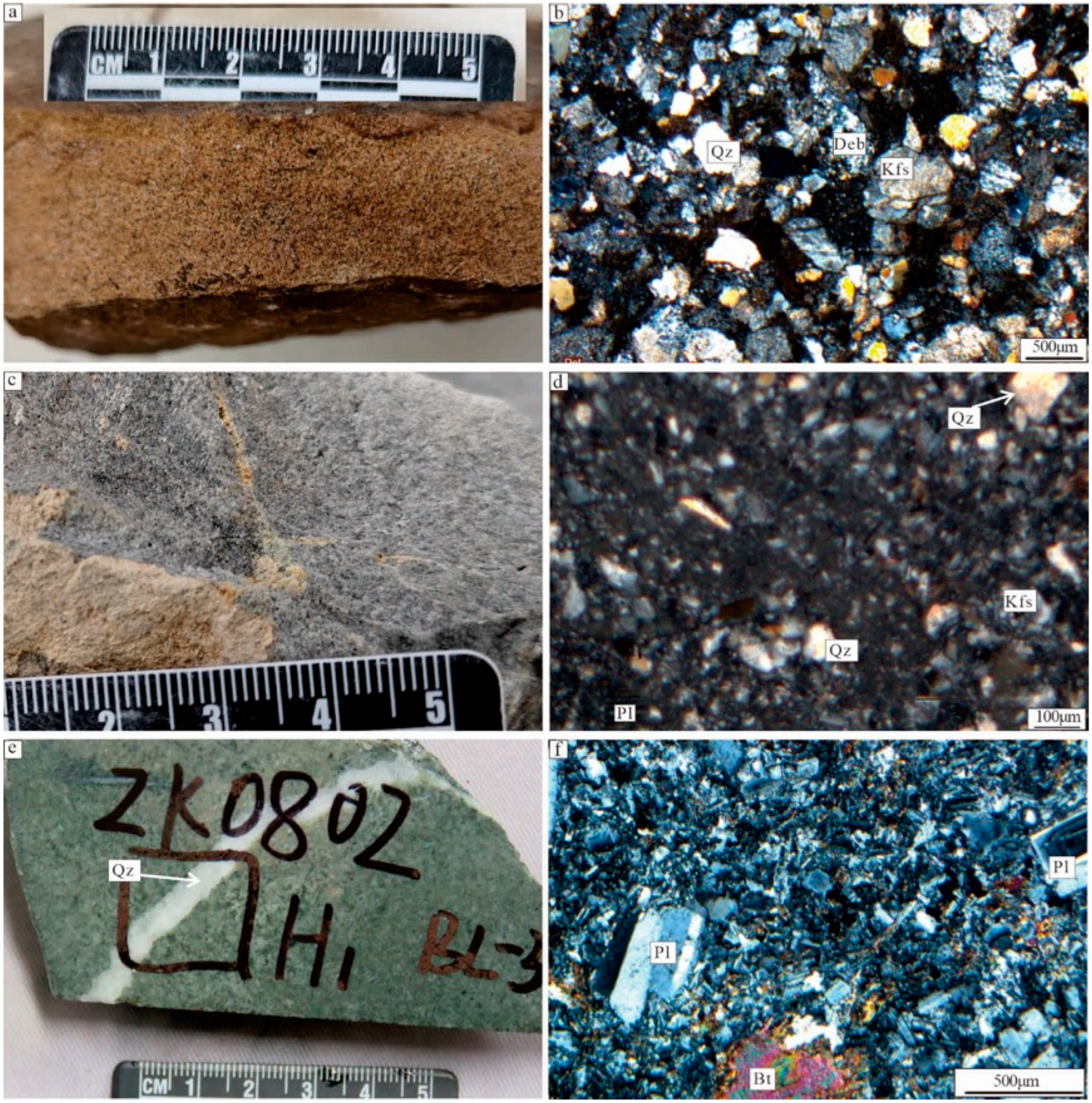
The rocks in the Baoxinggou region include the Middle Jurassic Ershierzhan Formation (J2er) and Mohe Formation (J2m) (Figure 2b,c). The Ershierzhan Formation is the main ore-bearing unit and is widely exposed in the mining area. It consists of coarse-to fine-grained sandstone (Figure 3a,b) and silty mudstone (Figure 3c,d). The Mohe Formation crops out in the western part of the mining area and is in conformable contact with the Ershierzhan Formation. The Mohe Formation consists mainly of conglomerate, coarse-grained sandstone, silty mudstone, and coal seams.
Intrusive rocks in the mining area are scarce and occur mainly in the southern area, including granodiorite, dioritic porphyry (Figure 3e,f), diorite, and granitic aplite and porphyry veins. These intrusions were emplaced into Mesozoic strata and extend along faults (Figure 2b,c). The diorite and granodiorite were formed in an extensional tectonic setting during the Early Cretaceous (125–118 Ma), with the magmas being mantle-derived and then undergoing crustal contamination [6].
Both NW–SE- and NE–SW-trending faults occur in the mining area (Figure 2b,c). The Au ore bodies occur as stockworks and quartz veinlets that were controlled by NE–SW-trending faults. The NW–SE-trending faults represent post-ore structures and generally cut the ore bodies.
To date, 5 ore belts and 75 ore bodies have been identified at Baoxinggou. Fifty-three ore bodies are located in the No. I ore belt, 21 in the No. II belt, 3 in the No. III, 2 in the No. IV, and 2 in the No. V (Figure 2b,c). The I-1-1 ore body is the main ore body and is located in the western part of the I-1 ore belt. It has a length of 1115 m and is inclined, extending to depths of 168–1660 m. The ore bodies have a lenticular form (Figure 2b,c), dip at 40–50° towards 130–160° (Figure 2b,c), and are hosted in detrital sandstones of the Ershierzhan Formation. The Au grade is 1.00–5.98 g/t, with a maximum grade = 12.50 g/t and an average of 1.59 g/t. The ore body is discontinuous in all directions.
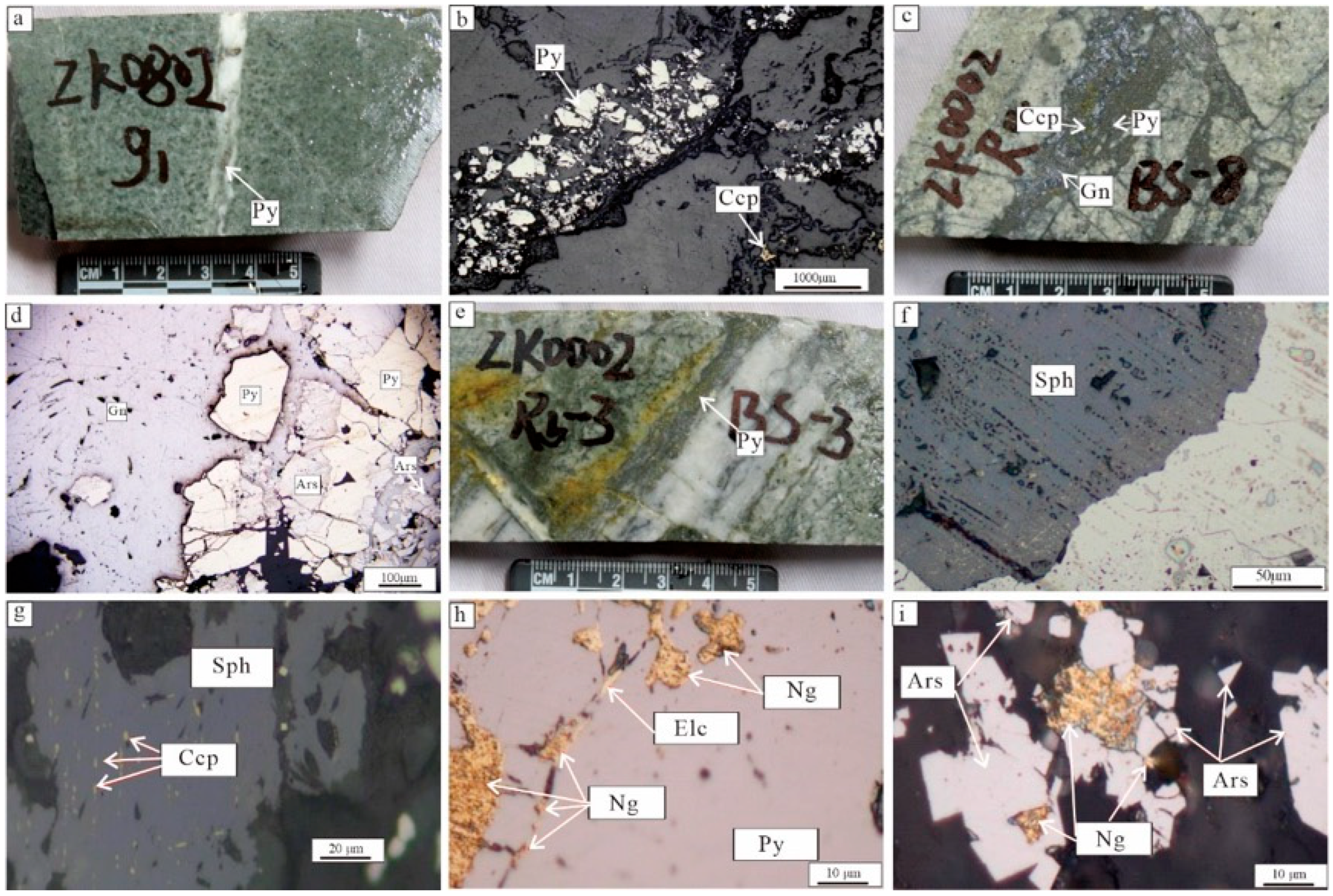
Mineralization in the Baoxinggou Au deposit is characterized by disseminated sulfides in a fine network of veins (Figure 4). Sulfides are abundant, accounting for 5–10 vol.% of the ore, and consist mainly of pyrite (Figure 4a–e) and arsenopyrite (Figure 4d,i), followed by galena (Figure 4c,d) and minor sphalerite (Figure 4d,f) and chalcopyrite (Figure 4c,d). The ore minerals are predominantly native Au (Figure 4h,i), with minor electrum (Figure 4h). The Au is mainly micron-sized but includes some fine- and medium-grained Au. The gangue minerals are mainly quartz and feldspar (Figure 5).
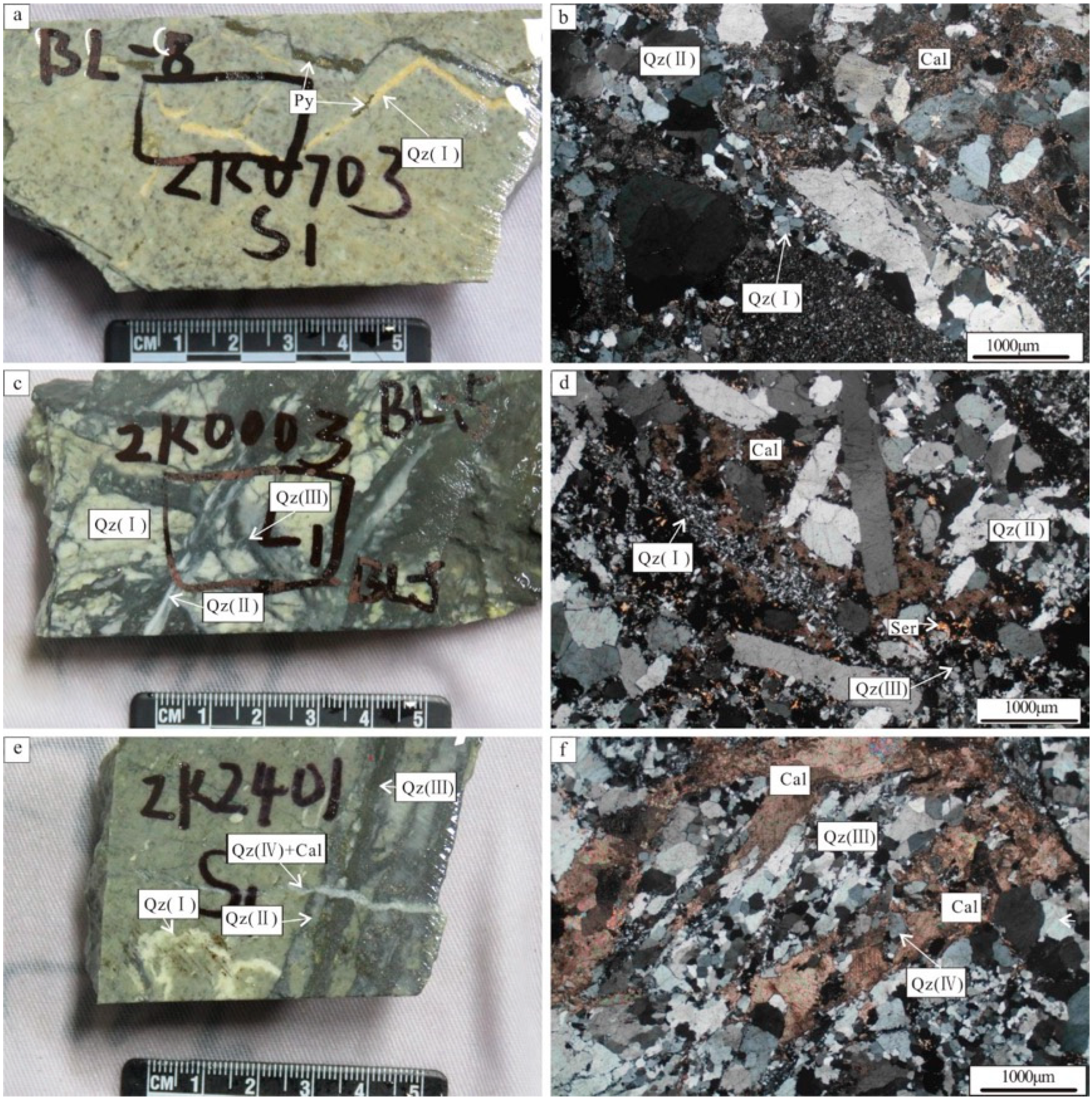
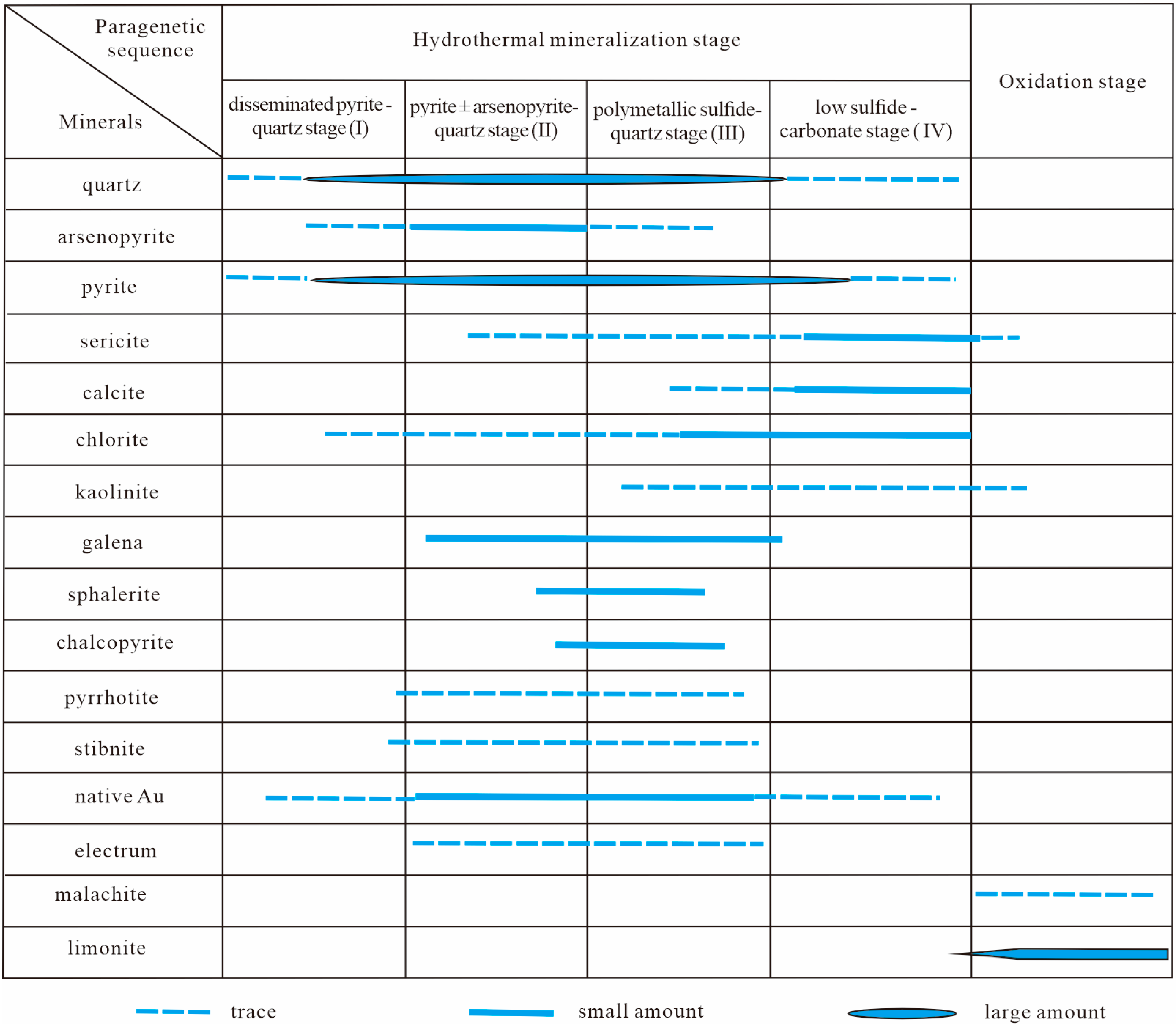
Wall-rock alteration is well developed at the contact between the detrital sandstone (Ershierzhan Formation) and Au-bearing quartz veins (Figure 4). It is characterized by silicification (Figure 5a–f), calcitization (Figure 5b,d–f), sericitization (Figure 5d), chloritization, and limonitization. Silicification occurred during hydrothermal activity in four stages: stage I quartz occurs commonly as fine milky white and short veinlets (Figure 5a–e); stage II quartz is typically grayish white in color and occurs as aggregates of cryptocrystalline crystals (Figure 5b–e); stage III quartz is dark gray and forms veinlets or fine net-like veins (Figure 5c–f); and stage IV quartz is white and occurs as fine (network) veins of fine-grained anhedral crystals (Figure 5e,f). Calcite developed during stage IV, forming grayish white veinlets or fine reticular veins (Figure 5d–f). Sericitization (Figure 5d) and chloritization occurred during the ore-forming and post-ore stages, while limonitization occurred during the post-ore stage.
Given the mineral assemblages and crosscutting relationships, the mineralization at Baoxinggou is inferred to have occurred in four stages (Figure 6): (1) the disseminated pyrite–quartz stage (I); (2) the pyrite ± arsenopyrite–quartz stage (II); (3) the polymetallic sulfide–quartz stage (III); and (4) the low-sulfide–carbonate stage (IV). Stage I is characterized by disseminated and euhedral pyrite and short milky white veinlets of fine quartz (Figure 5a,b). Stage II is represented by subhedral–anhedral pyrite and arsenopyrite (occurring as veinlets) and grayish white quartz veins (Figure 5c–e). Stage III was the main Au mineralization stage and formed disseminated sulfides in quartz veins. The ore consists of pyrite, chalcopyrite, sphalerite, galena, native Au, and electrum (Figure 5c–f). Stage IV formed fine (network) quartz and carbonate veins that mostly crosscut earlier quartz veins and contain minor euhedral pyrite (Figure 5e,f).

3. Sampling and Analytical Methods

3.1. Sampling

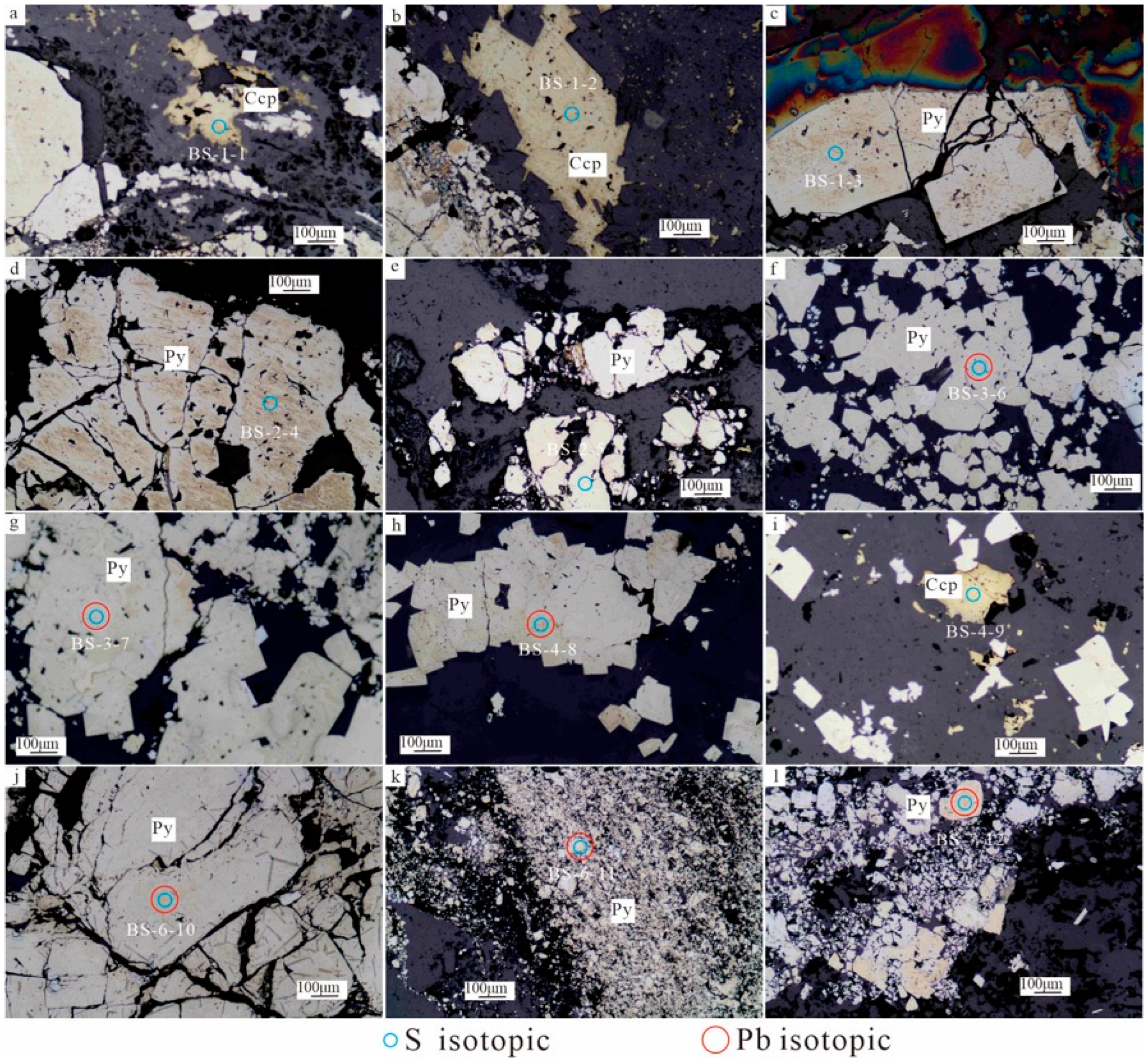
Eight samples of stage III sulfide minerals were used for Rb–Sr dating. Seven samples of quartz veins from stages I–IV were used for fluid inclusion analyses. Five quartz samples and one calcite sample from each of the four stages were used for H–O isotopic analyses. Nine pyrite samples and three chalcopyrite samples from stages I–III were used for in situ S isotopic analyses, and six pyrite samples from stages II–III were subjected to in situ Pb isotopic analysis (Table 1).

3.2. Analytical Methods

3.2.1. Sulfide Rb–Sr Dating

The Rb–Sr dating was conducted at the Isotope Laboratory of the Nanjing Nantai Institute of Geological Testing, Nanjing, China, with a VG354 thermal ionization mass spectrometer. The mean 143Nd/144Nd ratio of the La Jolla standard was 0.511860 ± 8 (2σ; n = 8). A 146Nd/144Nd ratio of 0.7219 was used to correct the Nd isotopic data for instrumental mass fractionation [24]. The 87Sr/86Sr ratio obtained for the SRM 987 Sr standard was 0.710236 ± 7 (normalized to 86Sr/88Sr = 0.1194). The detailed methods for the Sr–Nd isotopic analyses were described by [25,26].

3.2.2. Fluid Inclusions

The fluid inclusion studies were undertaken at the Key Laboratory of Metallogenic Processes and Resource Evaluation, Ministry of Land and Resources, Institute of Mineral Resources, Chinese Academy of Geological Sciences, Beijing, China. The petrographic and microthermometric analyses used a LINKAM THMS-600 heating–freezing stage (temperature = –180 to +500 °C).

3.2.3. Hydrogen and Oxygen Isotopes

The O isotopic compositions of quartz were determined using the BrF5 method [27]. The H isotopic compositions were measured after decrepitation of fluid inclusions in five quartz samples from three different stages (one from stage I, three from stage II, and one from stage III). A MAT253-EM mass spectrometer was used for the isotopic analyses. The analyses were undertaken at the Wuhan Sample Solution Analytical Technology Company Limited, Wuhan, China. The O–H isotope data are reported relative to the V-SMOW standard, with precisions of ±0.2‰ for δ18O and ±2‰ for δD.

3.2.4. Lead Isotopes

In situ Pb isotopic analyses of sulfides were conducted with a Neptune Plus multi-collector–inductively coupled plasma–mass spectrometer (MC–ICP–MS; Thermo Fisher Scientific; Bremen, Germany) coupled to a Geolas HD excimer ArF laser ablation system (Coherent; Göttingen, Germany) at the Wuhan Sample Solution Analytical Technology Company Limited, Wuhan, China. Helium was used as a carrier gas in the ablation cell and mixed with Ar downstream of the ablation cell. The detailed analytical procedures for the in situ Pb isotopic ratios were described by [28]. Data reduction was performed using Iso-Compass software (ver. 1.0) [29].

3.2.5. Sulfur Isotopes

In situ S isotopic analysis of sulfides was undertaken with a Neptune Plus MC–ICP–MS (Thermo Fisher Scientific, Bremen, Germany) coupled to a Geolas HD excimer ArF laser ablation system (Coherent; Göttingen, Germany) at the Wuhan Sample Solution Analytical Technology Company Limited, Wuhan, China. Helium was used as a carrier gas in the ablation cell and then mixed with Ar. The analytical procedures for the in situ S isotopic data are described by [30]. Data reduction was conducted using Iso-Compass software (ver. 1.0) [29].

4. Results

4.1. Sulfide Rb–Sr Dating

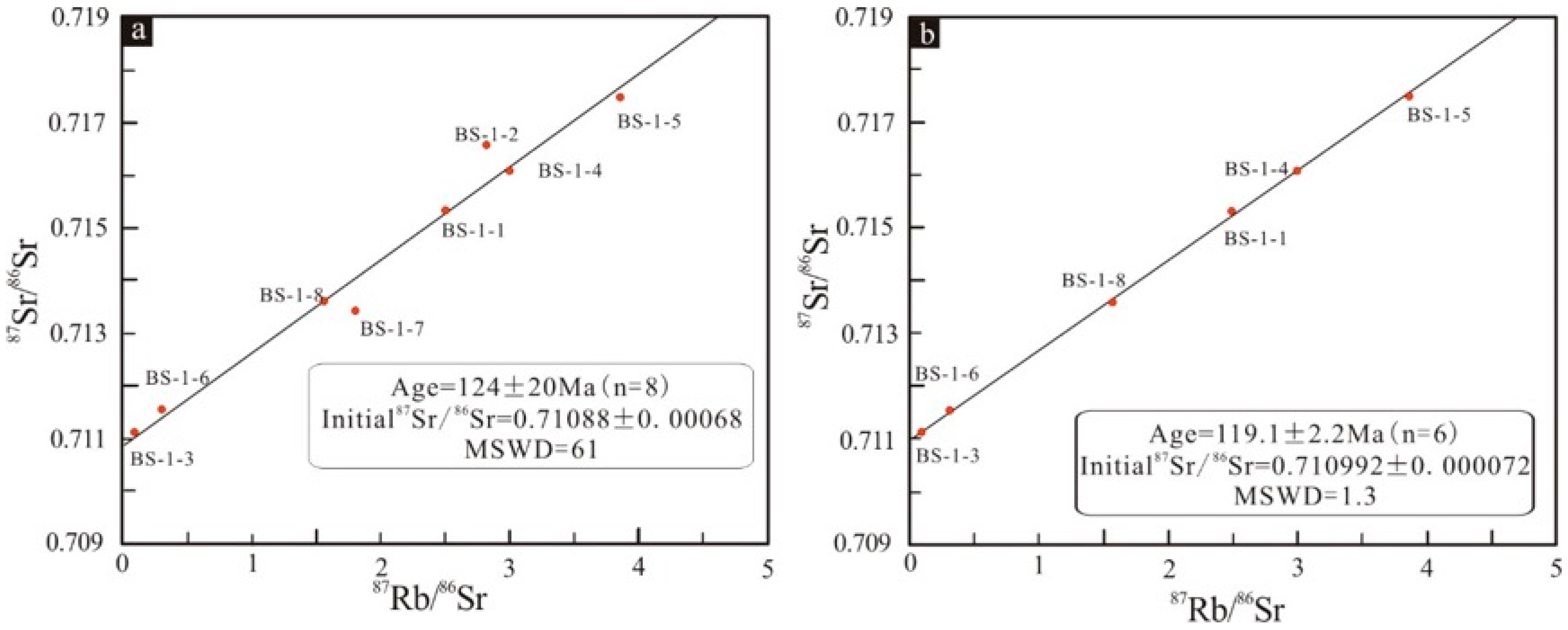
The Rb–Sr isotopic data are listed in Table 2. The sulfides have Rb–Sr contents of 0.513–4.354 and 2.961–17.06 ppm, respectively, with 87Rb/86Sr and 87Sr/86Sr ratios of 0.0882–3.862 and 0.711102–0.717476, respectively. The Rb–Sr isochron age for all eight samples is 124 ± 20 Ma (Sri = 0.71088 ± 0.00068; MSWD = 61). Excluding samples BS-1-2 and BS-1-7, the isochron age for the remaining six samples is 119 ± 2 Ma (Sri = 0.710992 ± 0.000072; MSWD = 1.3; Figure 7).

4.2. Fluid Inclusions

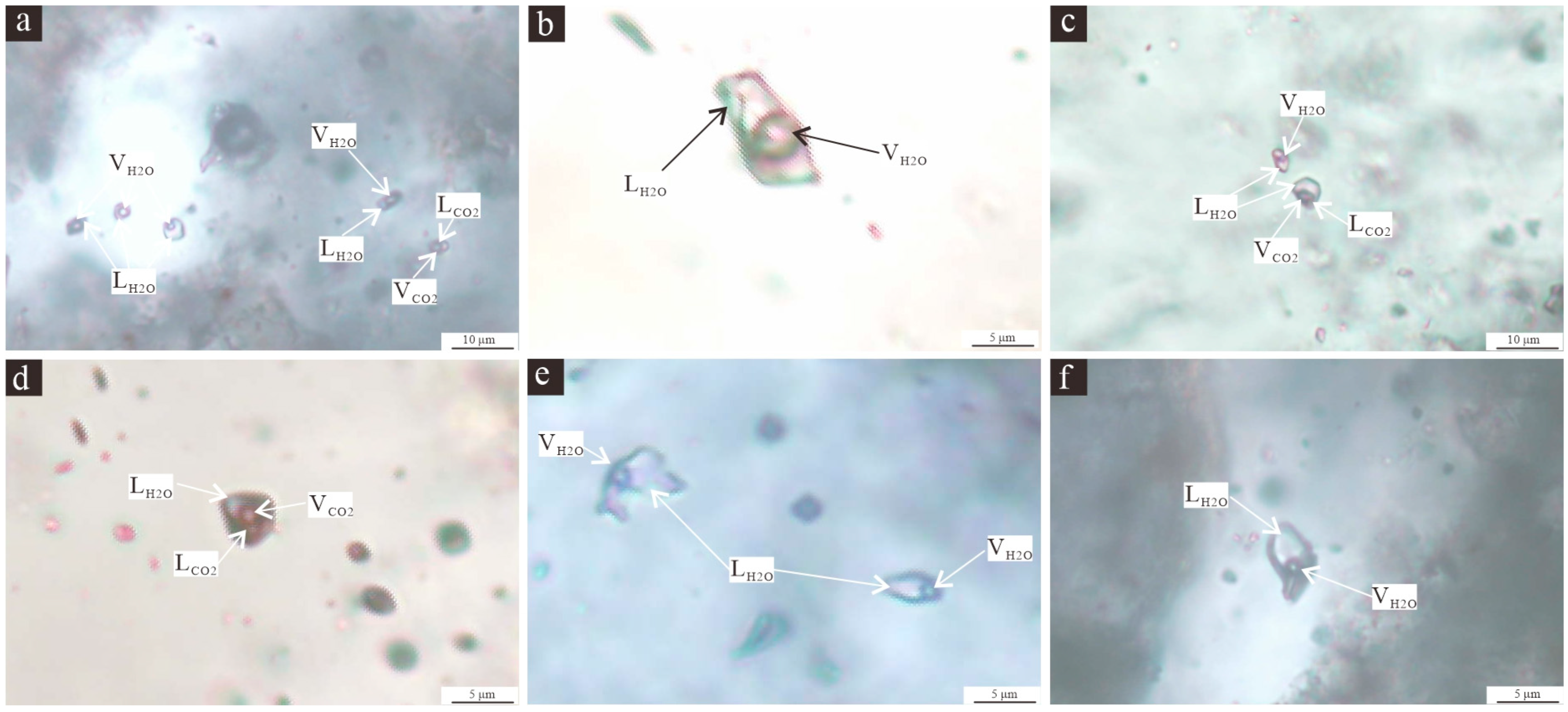
The primary fluid inclusions in the Baoxinggou Au deposit include three types (Figure 8). (1) Vapor-rich fluid inclusions (V-type) consist of vapor and liquid water, with VH2O/(VH2O + LH2O) = 50–65 vol.%. These inclusions are round or oval in shape and generally 5–8 μm in size (Table 3). They occur in gray quartz of stage I, are isolated or coexist with W-type and CO2-bearing fluid inclusions, and are homogenized to vapor during heating (Figure 8a,b). (2) CO2-bearing fluid inclusions (C-type) consist of CO2 vapor and liquid, and H2O. They are ellipsoidal or irregular in shape, with sizes of 6–10 μm (Figure 8a,c,d). (3) Liquid-rich fluid inclusions (W-type) comprise vapor and liquid water, and contain bubbles (5–25 vol.%). They have oval or irregular shapes, are generally 3–25 μm in size (Table 3), formed during stages I–IV, occur in groups or isolated clusters, and are homogenized to liquid during heating (Figure 8a,c,e,f).
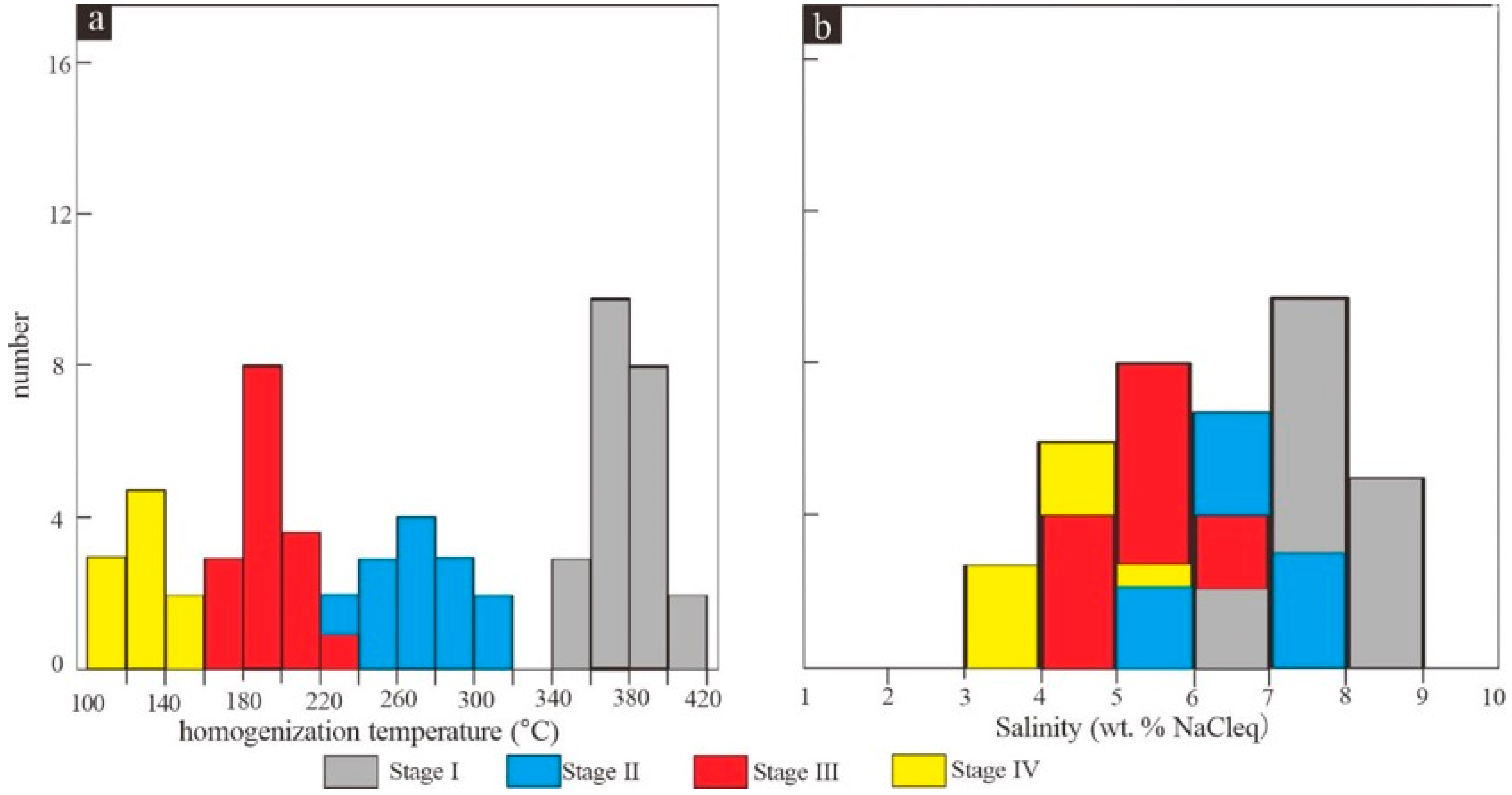
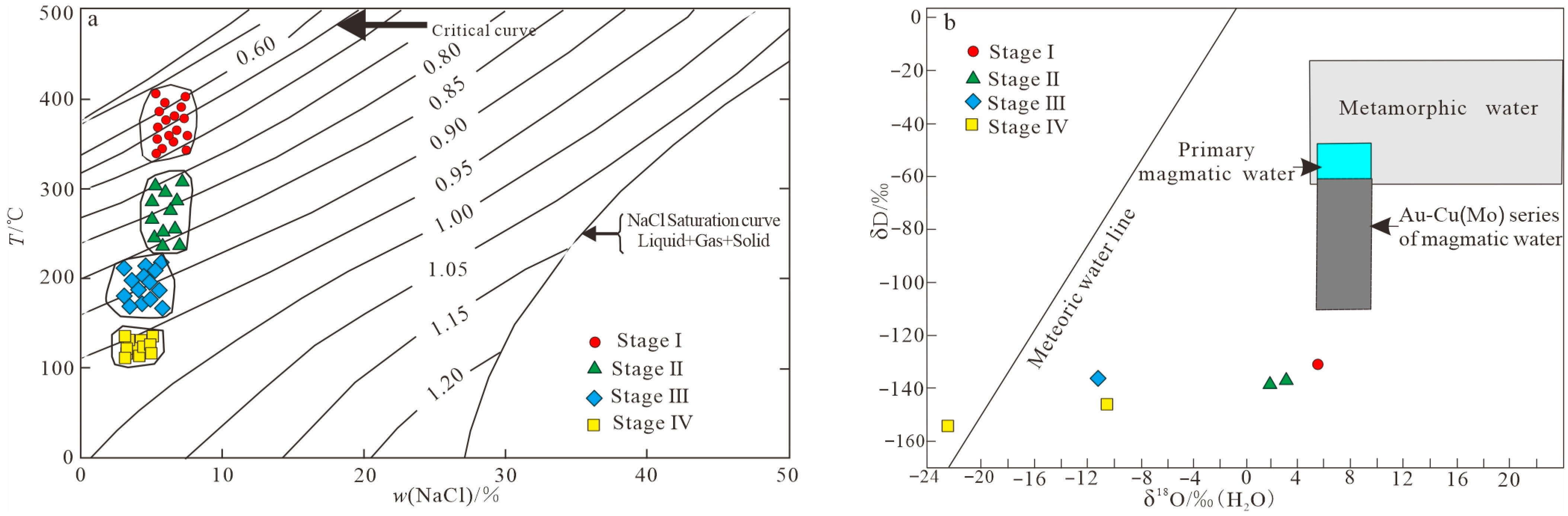
Different fluid inclusion types occur in quartz crystals of stages I–IV (Table 3; Figure 9). The stage I quartz contains V-, C-, and W-type primary fluid inclusions. V-type fluid inclusions have ice melting temperatures of −4.5 to −3.5 °C (i.e., salinities of 5.7–7.2 wt.% NaCl equivalent) and homogenization temperatures of 395–415 °C. C-type fluid inclusions have melting temperatures of −57.5 to −59.5 °C, clathrate melting temperatures of 6.3−8.0 °C, and homogenization temperatures of 340–380 °C. The W-type fluid inclusions have ice melting temperatures of −5.7 to −4.3 °C (i.e., salinities of 6.9–8.8 wt.% NaCl equivalent) and homogenization temperatures of 360−405 °C. Stage II quartz contains W- and C-type primary fluid inclusions. The C-type fluid inclusions have melting temperatures of −56.8 to −58.5 °C, clathrate melting temperatures of 7.2−8.2 °C, and homogenization temperatures of 270–310 °C. The W-type fluid inclusions have ice melting temperatures of −5.1 to −3.2 °C (i.e., salinities of 5.3–8.0 wt.% NaCl equivalent) and homogenization temperatures of 230−280 °C. The stage III quartz only contains W-type primary FIs, which have ice melting temperatures of −4.3 to −2.6 °C (i.e., salinities of 4.3–6.9 wt.% NaCl equivalent) and homogenization temperatures of 170–225 °C. The stage IV quartz contains W-type primary FIs, with ice melting temperatures of −3.9 to −2.9 °C (i.e., salinities of 4.8–6.3 wt.% NaCl equivalent) and homogenization temperatures of 105–140 °C.

4.3. Isotopes

4.3.1. Hydrogen–O Isotopes

δD and δ18O values of the stage I fluid inclusions are –130.5‰ and 5.7‰, respectively. For the stage II fluids, the δD values vary from −138.9‰ to −136.5‰, and δ18O values are 2.0‰–3.2‰. Stage III fluid inclusions have δD and δ18O values of –136.4‰ and –11.6‰, respectively. In contrast, the stage IV fluid inclusions have lower δD and δ18O values, ranging from −154.3‰ to −145.0‰ and –23.3‰ to –10.5‰, respectively (Table 4; Figure 10).

4.3.2. Sulfur Isotopes

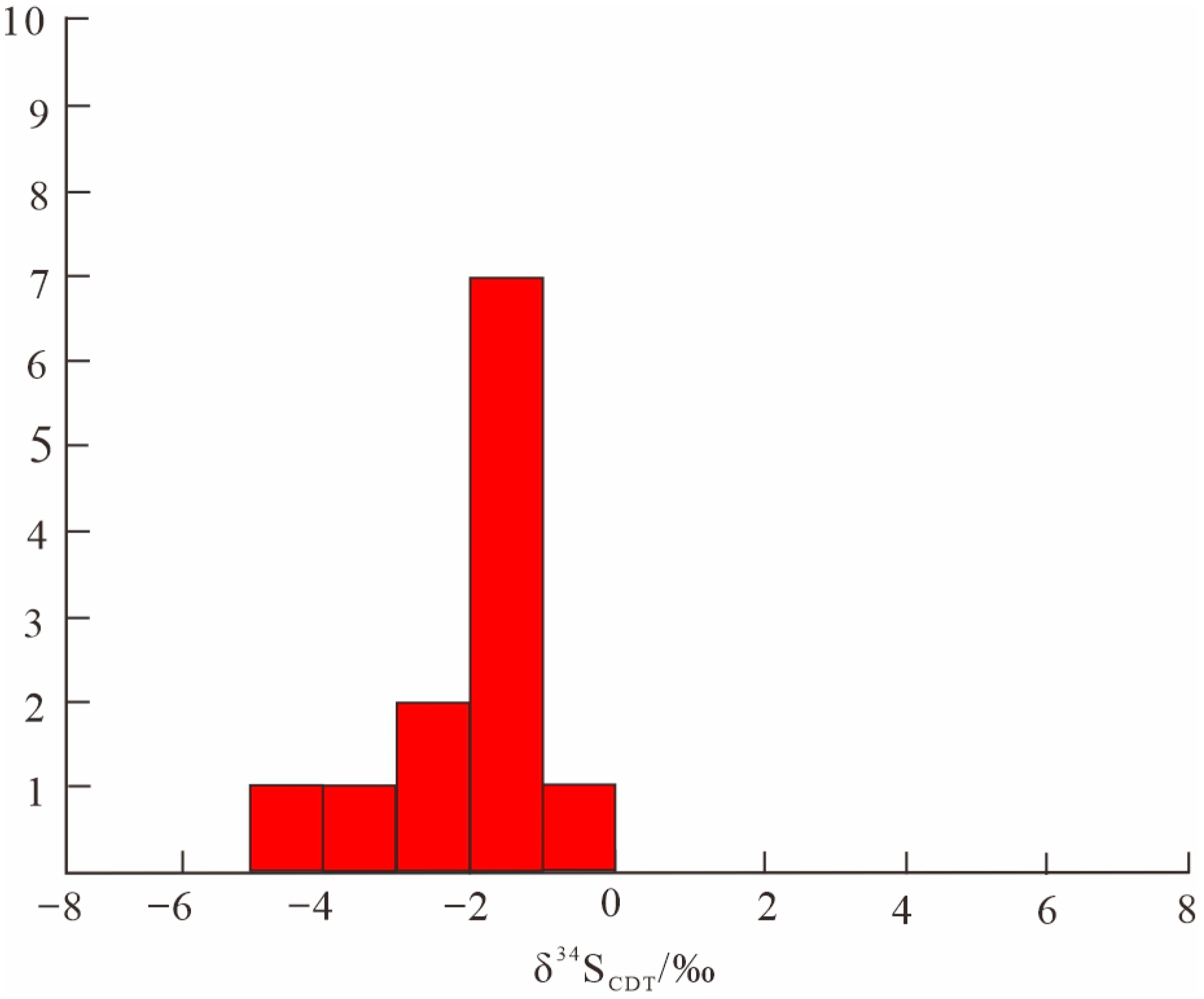
The S isotopic compositions are listed in Table 5 and presented in Figure 11. δ34S values of the sulfide minerals vary from –4.35‰ to –0.91‰, with a weighted mean of –1.99‰ ± 1.58‰. Most of the isotopic data cluster within the range from –3‰ to –1‰ (Figure 12).

4.3.3. Lead Isotopes

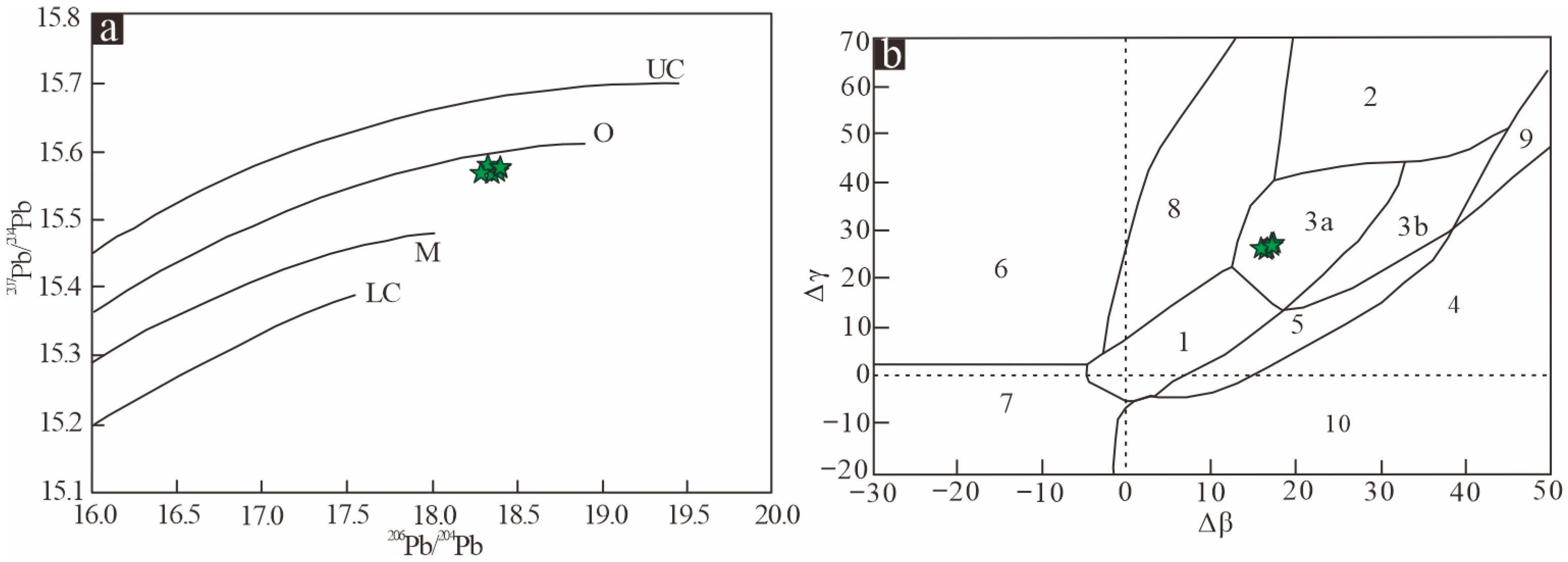
The Pb isotopic data are listed in Table 5 and shown in Figure 13. 206Pb/204Pb, 207Pb/204Pb, and 208Pb/204Pb ratios of the analyzed samples are 18.429–18.477, 15.581–15.591, and 38.318–38.363, respectively. In 207Pb/204Pb–206Pb/204Pb and Δβ–Δγ diagrams (Figure 13a,b), the Au-bearing sulfides plot between the evolutionary lines for the continental crust and orogenic belts.

5. Discussion

5.1. Timing of Gold Mineralization

The timing of mineralization can constrain the ore-forming processes in Au deposits. In this study, sulfide Rb–Sr dating was used to date the mineralization in the Baoxinggou Au deposit. The lack of feldspar and/or sericite inclusions in the pyrite indicates that both Rb and Sr occur in the pyrite crystal lattice or fluid inclusions [2] (Figure 11). The temperatures decrease from stage I (340–445 °C) to stage II (230–310 °C), stage III (170–225 °C), and finally stage IV (105–140 °C), indicating that isotopic re-equilibration of the pyrite crystals is unlikely (Table 3; Figure 9). Based on the crystal characteristics of the sulfides and trend in mineralization temperatures, the Rb–Sr isotopic data for sulfides from stages II–III date the Au mineralization. These sulfides formed in a closed system that was characterized by highly variable Rb/Sr ratios (0.0882–3.862) and uniform initial 87Sr/86Sr ratios (average = 0.714385 ± 0.00005). The sulfide isochron age shows the Baoxinggou Au deposit formed at 119 ± 2 Ma, during the Early Cretaceous.
Zircon U–Pb geochronological data indicate the quartz diorite and granodiorite in the Baoxinggou area were emplaced during 125–118 Ma [6], and they occur in association with the ore bodies and were intruded into the Middle Jurassic Ershierzhan Formation (Figure 2b,c). This indicates a genetic relationship between the mineralization and this phase of magmatism. Our geochronological data reveal that the Au mineralization at Baoxinggou was coeval with the Early Cretaceous Au mineralization in the wider region, such as the Shabaosi [6,7], Pangkaimen [1], and Tianwangtaishan [33] deposits. This indicates that large-scale Au mineralization in the NGXR occurred mainly during the Early Cretaceous.

5.2. Origin and Evolution of the Ore-Forming Fluids

The ore-forming fluids in the Baoxinggou Au deposit differ among the various mineralization stages. The stage I fluids belonged to a CO2–H2O–NaCl system, and had medium–high temperatures (340–415 °C) and low salinities (5.7–8.8 wt.% NaCl). The stage II fluids were also part of a CO2–H2O–NaCl system, but had medium temperatures (230–310 °C) and low salinities (5.3–8.0 wt.% NaCl). In contrast, the stage III fluids belonged to a H2O–NaCl system and had medium–low temperatures (170–225 °C) and low salinities (4.3–6.9 wt.% NaCl). The stage IV fluids belonged to a H2O–NaCl system and had low temperatures (105–140 °C) and low salinities (4.8–6.3 wt.% NaCl equivalent) (Figure 9a,b). The hydrothermal system underwent progressive cooling, probably due to heat dissipation during the ascent of magmatic–hydrothermal fluids or mixing with meteoric waters.
Quartz in the Baoxinggou Au deposit has a wide range of δ18O (–23.3‰ to 5.7‰) and δD (–154.3‰ to –130.5‰) values. On a δD–δ18O diagram (Figure 10a,b) and compared with data for other Au deposits in the NGXR, the isotopic compositions of the Baoxinggou deposit plot between the primary magmatic fluid field and meteoric water line. This implies the ore-forming fluids were initially of magmatic origin, but the contribution from meteoric waters increased during the later stages of mineralization. The widespread occurrence of Early Cretaceous diorites in the Baoxinggou area further indicates that magmatic fluids had an important role in the formation of the Baoxinggou Au deposit.
The ore-forming processes in magmatic–hydrothermal Au deposits include fluid mixing, boiling, and cooling (water–rock interactions) [34,35]. The ore-forming fluids in the Baoxinggou Au deposit are dominantly represented by liquid-rich (W-type) fluid inclusions, but also include minor gas-rich (V-type) and CO2-bearing (C-type) inclusions. These fluid inclusions suggest that fluid boiling did not contribute to ore formation. In the Baoxinggou Au deposit, the salinity of the ore-forming fluids changed significantly with decreasing temperature, and the fluids were a mixture of magmatic fluids and meteoric waters. As such, we proposed that the Baoxinggou Au deposit formed as a result of fluid mixing and/or cooling.

5.3. Ore Sources

Sulfide minerals are well developed in the Baoxinggou Au deposit, comprising mainly pyrite and arsenopyrite, followed by galena and minor sphalerite and chalcopyrite. δ34S values of sulfides can record the S isotopic composition of the ore-forming fluid [2]. The uniform δ34S values of the Baoxinggou Au deposit suggest the S was derived from a single source (Figure 12).
Lead isotopic data for sulfides can constrain the Pb source in hydrothermal ore deposits [2]. The limited variations in Pb isotopic compositions of sulfides from stages I–III in the Baoxinggou Au deposit indicate a homogeneous Pb source in the hydrothermal system. In a 207Pb/204Pb–206Pb/204Pb diagram (Figure 13a), the sulfides plot between the mantle and orogenic belt evolution lines. In a Δβ–Δγ diagram (Figure 13b), the data plot in the field associated with subduction-zone-related magmatism, indicating a mixed source of Pb from the mantle and upper crust, in an orogenic setting.
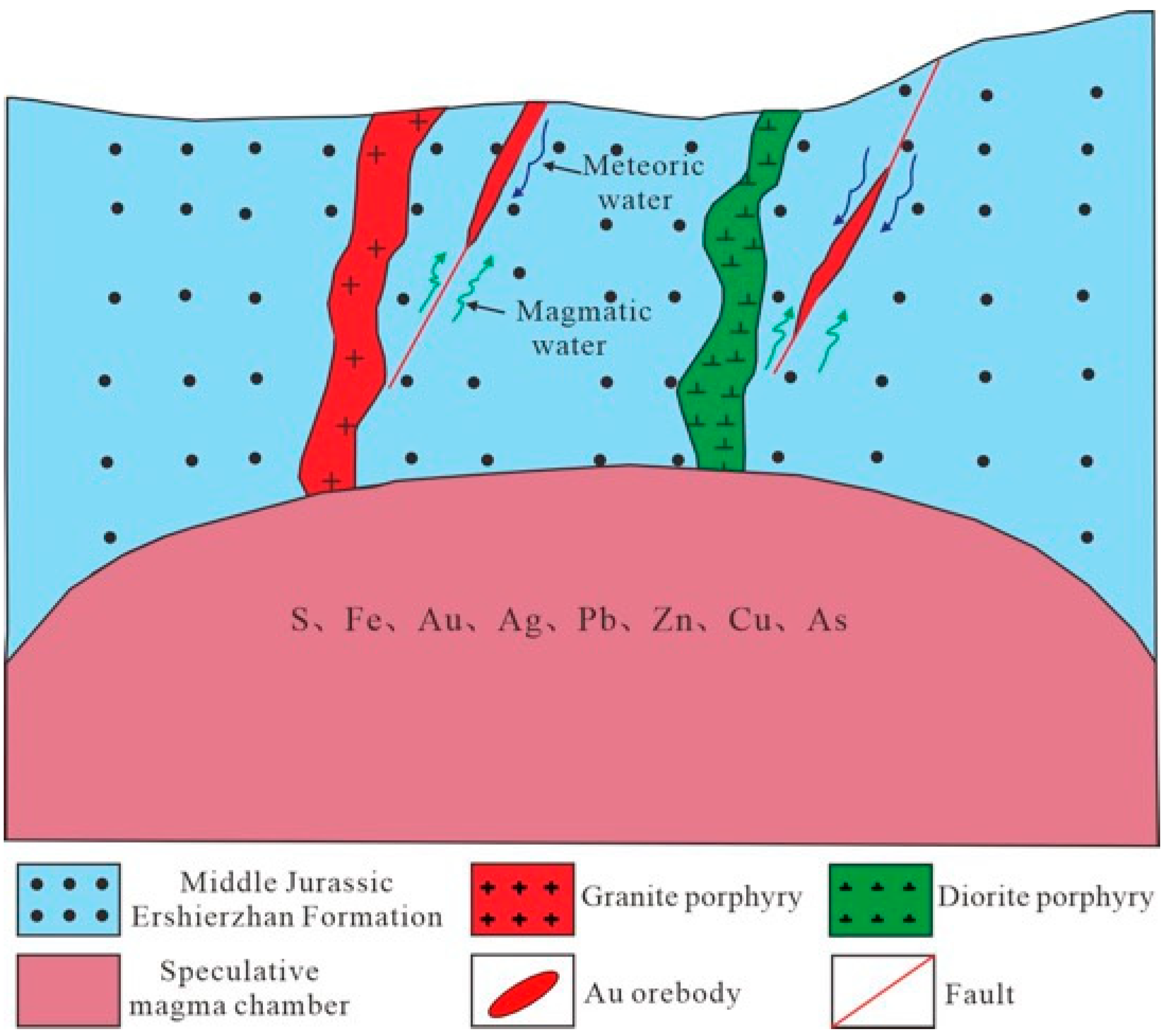
Based on the S–Pb isotopic data for the ore minerals, we propose that the Baoxinggou Au deposit is genetically related to Early Cretaceous magmatism and that the ore-forming materials were derived mainly from the Early Cretaceous diorites (Figure 14). As such, the Baoxinggou Au deposit is a magmatic–hydrothermal deposit.

6. Conclusions

A geochronological, fluid inclusion, and H–O–S–Pb isotopic study of the newly discovered Baoxinggou Au deposit in the NGXR yielded the following conclusions: (1) Rubidium–Sr dating of sulfides indicates that the Au mineralization formed at ca. 119 Ma. (2) Fluid inclusion data show the ores formed under medium–low-temperature and low-salinity conditions. (3) The H–O isotopic data require the involvement of both magmatic fluids and meteoric waters. (4) The S–Pb isotopic data show the ore-forming materials were primarily of magmatic origin (i.e., from the Early Cretaceous diorite) and represent a mixture of crust–mantle materials. (5) The Baoxinggou Au deposit is a magmatic–hydrothermal deposit.

Author Contributions

Methodology, S.L., T.L. (Tao Liu) and T.L. (Tiesheng Li); software, S.L., T.L. (Tao Liu) and T.L. (Tiesheng Li); writing—original draft preparation, S.L., T.L. (Tao Liu) and H.C.; writing—review and editing, S.L., T.L. (Tao Liu), Q.S. and W.L.; supervision, T.L. (Tiesheng Li) and W.L.; funding acquisition, S.L., T.L. (Tiesheng Li) and Z.Z. All authors have read and agreed to the published version of the manuscript.

Funding

This research was supported by the China Geological Survey (Grant DD20242939), Liaoning Provincial Natural Science Foundation of China (Grant 2024-MSLH-495), and Heilongjiang Provincial Natural Science Foundation of China (Grant LH2023D027).

Data Availability Statement

All data and materials are available on request from the corresponding author.

Acknowledgments

The authors thank the anonymous reviewers and the journal editors.

Conflicts of Interest

The authors declare no conflict of interest.

References

  1. Lu, S.; Chen, H.P.; Li, C.L.; Wang, Y.; Li, T.S.; Wu, R.G.; Li, Z.T.; Song, Z.C.; Zhu, X.N. Origins of the Pangkaimen Au Deposit in the Northern Great Xing’an Range, China: Evidence From Geochronological, Geochemical, Fluid Inclusion, and H–O–S–Pb Isotope Data. Geol. J. 2025. Online ahead of print. [Google Scholar] [CrossRef] [Scilit]
  2. Lu, S.; Deng, C.Z.; Wang, K.Y.; Feng, Y.Z.; Li, C.L.; Chen, J.Y.; Liu, Y. Crustal contribution for the formation of the Walali Au deposit and implications on the Early Cretaceous Au mineralization in the northern Great Xing’an Range. Ore Geol. Rev. 2022, 147, 105000. [Google Scholar] [CrossRef] [Scilit]
  3. Li, X.W.; Deng, C.Z.; Sun, D.; Liang, S.S.; Zhang, L.D.; Liu, W.P.; Yang, B.Z.; Zhang, X.M.; Ni, X.R. Genesis of the sediment-hosted Sanshierzhan Au deposit, NE China: Evidences from the pyrite geochemistry and S-Hg isotopes. Ore Geol. Rev. 2025, 184, 106719. [Google Scholar] [CrossRef] [Scilit]
  4. Du, H.S.; Chen, H.P.; Wang, M.Q.; Zhou, C.F.; Zhang, T.E.; Wan, J.C. Response Characteristics and Prospecting Signs of Geophysical Well Logging in the Baoxinggou Gold Deposit. Acta Geosci. Sin. 2025. [Google Scholar] [CrossRef]
  5. Li, X.W.; Liu, Z.J.; Yue, H.J.; Sun, T.; Du, H.S.; Huang, J.M. Gological and geophysical characteristics and prospecting model of Baoxinggou gold deposit in northern part of Great Xing’an Mountains. J. Heilongjiang Univ. Sci. Technol. 2024, 34, 864–869. [Google Scholar]
  6. Li, X.W. Metallogenic Regularities of Gold Deposits in Upper Heilongjiang Metallogenic Belt and Its Prospecting. Ph.D. Dissertation, Jilin University, Changchun, China, 2015. [Google Scholar]
  7. Liu, J.; Wu, G.; Qiu, H.N.; Li, Y. 40Ar/39Ar dating, fluid inclusions and S–Pb isotope systematics of the Shabaosi gold deposit, Heilongjiang Province, China. Geol. J. 2015, 50, 592–606. [Google Scholar] [CrossRef] [Scilit]
  8. Gao, R.Z.; Xue, C.J.; Lü, X.B.; Zhao, X.B.; Yang, Y.S.; Li, C.C. Genesis of the Zhengguang gold deposit in the Duobaoshan ore field, Heilongjiang Province, NE China: Constraints from geology, geochronology and S-Pb isotopic compositions. Ore Geol. Rev. 2017, 84, 202–217. [Google Scholar] [CrossRef] [Scilit]
  9. Zhao, Z.H.; Zhao, X.; Yin, Y.C.; Liang, S.S.; Chen, J.; Li, C.L.; Zhou, J.Z. Genesis of the Yidonglinchang gold deposit, Lesser Xing’an Range, China: Insights from fluid inclusions, H-O-S-Pb isotopes, and Sm-Nd and U-Pb geochronology. Ore Geol. Rev. 2023, 163, 105803. [Google Scholar] [CrossRef] [Scilit]
  10. Li, X.W.; Zhang, Z.G.; Wang, K.Y.; Sun, J.P.; Yang, J.B.; Yang, H. Characteristics of Ore-Forming Fluid and Genesis of Baoxinggou Gold Deposit in North of Great Xing’an Range. J. Jilin Univ. (Earth Sci. Ed.) 2018, 48, 1071–1084. [Google Scholar]
  11. Wang, Y.C.; Zhao, Y.Y.; Cheng, X.D. Geology, fluid inclusion, 40Ar-39Ar geochronology, and isotope constraints on the ore genesis of the Ershiyizhan Cu-Au deposit, Heilongjiang Province, China. Ore Geol. Rev. 2024, 168, 106058. [Google Scholar] [CrossRef] [Scilit]
  12. Xiao, T.T.; Sun, D.Y.; Lehmann, B.; Tian, Z.D.; Gao, L.J.; Zhang, D.; Deng, C.Z.; Luo, A.B.; Xu, Y.; Yin, R.S. Paleo-Pacific plate subduction and basement mobilization triggered large-scale formation of Mesozoic gold deposits in the Northern margin of the North China Craton. Geochem. Geophys. Geosyst. 2023, 24, 2022GC010769. [Google Scholar] [CrossRef] [Scilit]
  13. Lu, S.; Li, C.L.; Alame, M.; Song, Z.C.; Zhu, X.N.; Fu, A.Z.; Yang, W.P. Geochronology and geochemistry of the Neoproterozoic-Mesozoic intrusive rocks in the Xinlin area, northeastern China: New constraints on the tectonic evolution of the Erguna block. Front. Earth Sci. 2025, 12, 1514658. [Google Scholar] [CrossRef] [Scilit]
  14. Lu, S.; Wang, K.Y.; Zhao, H.L.; Deng, C.Z. Geochronology and geochemistry of late Mesozoic volcanic rocks in the Wenkutu area, Great Xing’an Range, China. Geol. J. 2019, 54, 1343–1360. [Google Scholar] [CrossRef] [Scilit]
  15. Lu, S.; Wang, K.Y.; Liu, Y.; Deng, C.Z.; Jing, B.Y. Geochronological and geochemical data for Late Palaeozoic–Mesozoic intrusive rocks in the Wenkutu area, northeastern China: New constraints on the tectonic evolution of the Great Xing’an Range. Geol. J. 2020, 55, 1357–1379. [Google Scholar] [CrossRef] [Scilit]
  16. Zhao, Z.H.; Zhao, X.; Yin, Y.C.; Li, C.L.; Yang, Y.J.; Wang, Y.P. Identification of Geochemical Anomalies Based on RPCA and Multifractal Theory: A Case Study of the Sidaowanzi Area, Chifeng, Inner Mongolia. ACS Omega 2024, 9, 24998–25013. [Google Scholar] [CrossRef] [Scilit]
  17. Li, C.L.; Deng, C.Z.; Li, S.R.; Yuan, M.W.; Masroor, A.; Liu, B.S.; Zhao, Z.H.; Li, W.L.; Yang, Y.J. Geochronology and genesis of the newly discovered Mengdehe orogenic-type Au deposit in the Xing’an-Mongolia orogenic Belt, NE China. Ore Geol. Rev. 2021, 133, 104083. [Google Scholar] [CrossRef] [Scilit]
  18. Liu, J.L.; Bai, X.D.; Zhao, S.J.; MyDung, T.; Zhang, Z.C.; Zhao, Z.D.; Zhao, H.B.; Lu, J. Geology of the Sandaowanzi telluride gold deposit of the northern Great Xing’an Range, NE China: Geochronology and tectonic controls. J. Asian Earth Sci. 2011, 41, 107–118. [Google Scholar] [CrossRef] [Scilit]
  19. Chen, L.; Liang, C.Y.; Neubauer, F.; Liu, Y.J.; Zhang, Q.; Song, Z.W. Sedimentary processes and deformation styles of the Mesozoic sedimentary succession in the northern margin of the Mohe basin, NE China: Constraints on the final closure of the Mongol-Okhotsk Ocean. J. Asian Earth Sci. 2022, 232, 105052. [Google Scholar] [CrossRef] [Scilit]
  20. Wu, F.Y.; Sun, D.Y.; Ge, W.C.; Zhang, Y.B.; Grant, M.L.; Wilde, S.A.; Jahn, B.M. Geochronology of the Phanerozoic granitoids in northeastern China. J. Asian Earth Sci. 2011, 41, 1–30. [Google Scholar] [CrossRef] [Scilit]
  21. Jahn, B.M. The Central Asian Orogenic Belt and growth of the continental crust in the Phanerozoic. Geol. Soc. Lond. Spec. Publ. 2004, 226, 73–100. [Google Scholar] [CrossRef] [Scilit]
  22. Xu, W.L.; Pei, F.P.; Wang, F.; Meng, E.; Ji, W.Q.; Yang, D.B.; Wang, W. Spatial-temporal relationships of Mesozoic volcanic rocks in NE China: Constraints on tectonic overprinting and transformations between multiple tectonic regimes. J. Asian Earth Sci. 2013, 74, 167–193. [Google Scholar]
  23. Wu, G.; Zhang, T.; Wang, Z.; Chen, Y.C. Division of Metallogenic Units and Metallogenic Series of Metallic Deposits in the Great Xing’an Range Metallogenic Province. West. Resour. 2024, 6, 001–016. [Google Scholar]
  24. Laureijs, C.T.; Coogan, L.A.; Spence, J. Regionally variable timing and duration of celadonite formation in the Troodos lavas (Cyprus) from Rb-Sr age distributions. Chem. Geol. 2021, 560, 119995. [Google Scholar] [CrossRef] [Scilit]
  25. Wang, Y.X.; Yang, J.D.; Chen, J.; Zhang, K.J.; Rao, W.B. The Sr and Nd isotopic variations of the Chinese Loess Plateau during the past 7 Ma: Implications for the East Asian winter monsoon and source areas of loess. Palaeogeogr. Palaeoclim. Palaeoecol. 2007, 249, 351–361. [Google Scholar] [CrossRef] [Scilit]
  26. Laureijs, C.T.; Coogan, L.A.; Spence, J. A high throughput Rb-Sr dating method using solution tandem ICP-MS/MS (87Sr/86Sr) and standard addition calibration ICP-MS (Rb/Sr). MethodsX 2021, 8, 101309. [Google Scholar] [CrossRef] [Scilit] [PubMed]
  27. Clayton, R.N.; Mayeda, T.K. The use of bromine pentafluoride in the extraction of oxygen from oxides and silicates for isotopic analysis. Geochim. Cosmochim. Acta 1963, 27, 43–52. [Google Scholar] [CrossRef] [Scilit]
  28. Zhang, W.; Hu, Z.C.; Gunther, D.; Liu, Y.S.; Ling, W.L.; Zong, K.Q.; Chen, H.H.; Gao, S.; Xu, L. Direct lead isotope analysis in Hg-rich sulfides by LA-MC-ICP-MS with a gas exchange device and matrix-matched calibration. Anal. Chim. Acta 2016, 948, 9–18. [Google Scholar] [CrossRef] [Scilit] [PubMed]
  29. Zhang, W.; Hu, Z.C.; Liu, Y.S. Iso-Compass: New freeware software for isotopic data reduction of LA-MC-ICP-MS. J. Anal. At. Spectrom. 2020, 35, 1087–1096. [Google Scholar] [CrossRef] [Scilit]
  30. Fu, J.; Hu, Z.C.; Zhang, W.; Yang, L.; Liu, Y.; Li, M.; Zong, K.; Gao, S.; Hu, S. In situ, sulfur isotopes (δ34S and δ33S) analyses in sulfides and elemental sulfur using high sensitivity cones combined with the addition of nitrogen by Laser Ablation MC-ICP-MS. Anal. Chim. Acta 2016, 911, 14–26. [Google Scholar] [CrossRef] [Scilit]
  31. Li, J.; Wang, K.Y.; Cai, W.Y.; Sun, F.Y.; Liu, H.L.; Fu, L.L.; Qian, Y.; Lai, C.K. Triassic gold-silver metallogenesis in Qingchengzi orefield, North China Craton: Perspective from fluid inclusions, REE and H–O–S–Pb isotope systematics. Ore Geol. Rev. 2020, 121, 103567. [Google Scholar] [CrossRef] [Scilit]
  32. Zhang, L.G. Geological Appliance for the Stable Isotope; Shanxi Science and Technology Publishing House: Taiyuan, China, 1985; pp. 54–61. [Google Scholar]
  33. Lu, S.; Wu, G.; Li, C.L.; Ni, F.Q.; Su, H.Y.; Song, Z.C.; Zhang, Z.B.; Liu, G.X. Study on fluid inclusions, trace elements in pyrite, and H-O-S-Pb isotopes of the Tianwangtaishan Au deposit in the northern Great Xing’an Range. Earth Sci. Front. 2026, 33, 211–227. [Google Scholar]
  34. Lecumberri-Sanchez, P.; Steele-MacInnis, M.; Weis, P.; Driesner, T.; Bodnar, R.J. Salt precipitation in magmatic-hydrothermal systems associated with upper crustal plutons. Geology 2015, 43, 1063–1066. [Google Scholar] [CrossRef] [Scilit]
  35. Moncada, D.; Baker, D.; Bodnar, R.J. Mineralogical, petrographic and fluid inclusion evidence for the link between boiling and epithermal Ag-Au mineralization in the La Luz area, Guanajuato mining district, México. Ore Geol. Rev. 2017, 89, 143–170. [Google Scholar] [CrossRef] [Scilit]
Figure 3. Representative photographs of the wall rocks in the Baoxinggou Au deposit. (a,b) Coarse- to medium-grained detrital feldspar sandstone. (c,d) Silty mudstone. (e,f) Dioritic porphyry. Abbreviations: Bt = biotite; Cal = calcite; Deb = detrital; Kfs = K-feldspar; Pl = plagioclase; Qz = quartz.
Minerals 16 00423 g003
Figure 4. Representative photographs and photomicrographs of ore minerals in the Baoxinggou Au deposit. (a,b) Silicification and pyrite of stage I. (ci) Silicification, pyrite, sphalerite, chalcopyrite, galena, arsenopyrite, electrum, and native Au of stage II. Abbreviations: Ars = arsenopyrite; Ccp = chalcopyrite; Elc = electrum; Gn = galena; Py = pyrite; Qz = quartz; Sph = sphalerite; Ng = native Au.
Minerals 16 00423 g004
Figure 5. Major types of wall-rock alteration in the Baoxinggou Au deposit. (a) Silicification and pyrite of stage I. (b) Silicification of stages I and II. (c,d) Silicification of stages I–III. (e,f) Silicification and calcite of stages I–IV. Abbreviations: Cal = calcite; Py = pyrite; Qz = quartz; Ser = sericite.
Minerals 16 00423 g005
Figure 6. Paragenetic sequence of ore and gangue minerals in the Baoxinggou Au deposit.
Minerals 16 00423 g006
Figure 7. Rubidium–Sr isochron for pyrite from the Baoxinggou Au deposit. (a) The Rb–Sr isochron age for all eight samples; (b) The Rb–Sr isochron age for the remaining six samples.
Minerals 16 00423 g007
Figure 8. Photomicrographs of fluid inclusions in quartz from different stages of the Baoxinggou Au deposit. (a,b) Fluid inclusions of stage I. (c,d) Fluid inclusions of stage II. (e) Fluid inclusions of stage III. (f) Fluid inclusions of stage IV.
Minerals 16 00423 g008
Figure 9. (a) Homogenization temperatures and (b) salinities of fluid inclusions in the Baoxinggou Au deposit.
Minerals 16 00423 g009
Figure 10. (a) Plot of homogenization temperatures versus salinity and density for the fluid inclusions (after [31]). (b) Plot of δD versus δ18OH2O values (after [32]) for the Baoxinggou Au deposit.
Minerals 16 00423 g010
Figure 11. Photomicrographs of samples from the Baoxinggou Au deposit showing the locations of the in situ analyses. (a,b,i) Chalcopyrite of stage III. (ce) Pyrite of stage I. (fh) Pyrite of stage II. (jl) Pyrite of stage III. Abbreviations: Ccp = chalcopyrite; Py = pyrite.
Minerals 16 00423 g011
Figure 12. Sulfur isotopic data for the Baoxinggou Au deposit.
Minerals 16 00423 g012
Figure 13. (a) Lead isotopic compositions and (b) Δβ–Δγ classification diagram for sulfides from the Baoxinggou Au deposit. UC = upper crust; O = orogenic belt; M = mantle; LC = lower crust. 1 = mantle-derived Pb; 2 = upper crustal Pb; 3 = mixture of upper crust–mantle Pb in subduction zones (3a = magmatism; 3b = sedimentation); 4 = chemically deposited Pb; 5 = submarine exhalative Pb; 6 = intermediate-depth to deep metamorphic Pb; 7 = deep metamorphic lower-crustal Pb; 8 = orogenic belt Pb; 9 = upper crust (ancient shales) Pb; 10 = degenerative Pb.
Minerals 16 00423 g013
Figure 14. Mineralization model for the Baoxinggou Au deposit.
Minerals 16 00423 g014
Table 1. List of the studied samples from the Baoxinggou Au deposit.
SamplesLocationRock TypeStageMineralTest Type
BS-1-1ZK0002 (257 m)Silicified, pyritized, galenized fine-grained sandstoneIIISphaleriteRb-Sr isotope
BS-1-2ZK0002 (258 m)Sphalerite
BS-1-3ZK0002 (259 m)Galena
BS-1-4ZK0002 (283 m)Arsenopyrite
BS-1-5ZK0002 (284 m)Arsenopyrite
BS-1-6ZK0002 (285 m)Pyrite
BS-1-7ZK0002 (286 m)Pyrite
BS-1-8ZK0002 (287 m)Pyrite
BL-2ZK0802 (342 m)Silicified, pyritized, galenized fine-grained sandstoneIIIQuartzFluid inclusions, H–O isotopic
BL-3ZK0802 (240 m)Silicified and carbonatized sandstoneIVCalciteFluid inclusions, H–O isotopic
BL-9ZK0007 (768 m)Silicified and carbonatized sandstoneIVQuartzFluid inclusions, H–O isotopic
BS-1ZK0007 (980 m)Silicified, pyritized, chalcopyritized sandstoneIQuartz, Pyrite, ChalcopyriteS isotopic
BS-2ZK1506 (126 m)Silicified, pyritized sandstoneIQuartz, PyriteFluid inclusions, S isotopic
BS-3ZK0002 (283 m)Silicified, pyritized sandstoneI, IIQuartz, PyriteFluid inclusions, S-Pb isotopic, H–O isotopic
BS-4ZK0002 (284 m)Silicified, pyritized, chalcopyritized sandstoneIIPyriteS-Pb isotopic
BS-5ZK0002 (285 m)Silicified, pyritized sandstoneIIQuartz, PyriteFluid inclusions, H–O isotopic
BS-6ZK0002 (258 m)Silicified, pyritized, galenized sandstoneII, IIIQuartz, PyriteFluid inclusions, S-Pb isotopic, H–O isotopic
BS-7ZK0002 (73 m)Silicified, pyritized sandstoneIIIPyriteS-Pb isotopic
Table 2. Rubidium–Sr isotopic dating results for sulfide samples from the Baoxinggou Au deposit.
Sample
No.
MineralsRb
(ppm)
Sr
(ppm)
87Rb/86Sr87Sr/86Sr
BS-1-1sphalerite2.9573.4822.5070.715323
BS-1-2sphalerite3.7634.0172.8350.716579
BS-1-3galena0.51317.060.08820.711102
BS-1-4arsenopyrite3.1683.1052.9940.716071
BS-1-5arsenopyrite3.8562.9613.8620.717476
BS-1-6pyrite1.15411.340.30410.711537
BS-1-7pyrite3.8976.4191.8050.713385
BS-1-8pyrite4.3548.3621.5670.713604
Table 3. Temperature data obtained from fluid inclusions in quartz that formed during the different mineralization stages of the Baoxinggou Au deposit.
StageHost
Mineral
TypeNo.Size
(μm)
V
(vol.%)
Initial Melting
Temperature
(°C)
Partial Homogenization
Temperature (°C)
Cage Disappearance Temperature
(°C)
Freezing Point
(°C)
Salinity
(wt.% NaCl eqv.)
Homogenization Temperature
(°C)
Density
(g/cm3)
IQuartzV-type55.0~8.050~65 −4.5~−3.55.7~7.2395~4150.460~0.615
QuartzW-type124.0~11.05~20 −5.7~−4.36.9~8.8360~4050.590~0.707
QuartzC-type66.0~10.035~55−57.5~−59.526.5~28.56.3~8.0 340~3800.613~0.732
IIQuartzW-type143.5~20.010~20 −5.1~−3.25.3~8.0230–2800.795~0.890
QuartzC-type37.0~10.040–60−56.8~−58.527.0~28.57.2~8.2 270~3100.832~0.879
IIIQuartzW-type163.5~25.010~25 −4.3~−2.64.3~6.9170~2250.866~0.948
IVQuartzW-type85.0–10.05~15 −3.1~−2.94.8~5.1110~1400.963~0.989
CalciteW-type43.0–8.05~20 −3.9~−3.04.9~6.3105~1300.972~0.998
Table 4. Hydrogen and O isotopic compositions of the different mineralization stages in the Baoxinggou Au deposit.
Sample No.StageMineralδ18Omineral-SMOW (‰)δDH2O-SMOW (‰)Homogenization Temperature (°C)δ18OH2O-SMOW (‰)
BS-3IQuartz10.69−130.53605.7
BS-6IIQuartz11.72−136.52603.2
BS-5IIQuartz10.49−138.92602.0
BL-2IIIQuartz0.10−136.4200−11.6
BL-3IVCalcite4.16−145.0120−10.5
BL-9IVQuartz−4.85−154.3120−23.3
Table 5. Sulfur–Pb isotopic data for the Baoxinggou Au deposit.
Sample No.StageMineralδ34SV-CDT208Pb/204Pb207Pb/204Pb206Pb/204PbμωκΔαΔβΔγ
BS-1-3IPyrite–1.17
BS-2-4IPyrite–3.88
BS-2-5IPyrite–4.35
BS-3-6IIPyrite–1.4738.32915.58818.4779.4335.613.6573.7017.0328.07
BS-3-7IIPyrite–1.8138.31915.58418.4749.4335.553.6573.5116.7927.79
BS-4-8IIPyrite–2.0738.31815.58318.4719.4235.553.6573.3516.7227.77
BS-6-10IIIPyrite–1.8738.36315.59118.4599.4435.873.6872.6717.2428.96
BS-6-11IIIPyrite–1.3538.32715.58118.4299.4235.793.6870.9116.6028.00
BS-7-12IIIPyrite–1.2338.33315.58818.4779.4335.633.6673.6917.0328.16
BS-1-01IIIChalcopyrite–1.14
BS-1-02IIIChalcopyrite–0.91
BS-4-09IIIChalcopyrite–2.59
Note: μ = 238U/204Pb; ω = 232Th/204Pb; κ = Th/U; Δα = [(206Pb/204Pb)d(t)/(206Pb/204Pb)m(t) − 1] × 1000; Δβ = [(207Pb/204Pb)d(t)/(207Pb/204Pb)m(t) − 1] × 1000; Δγ = [(208Pb/204Pb)d(t)/(208Pb/204Pb)m(t) − 1] × 1000. d—ore; m—mantle.
Disclaimer/Publisher’s Note: The statements, opinions and data contained in all publications are solely those of the individual author(s) and contributor(s) and not of MDPI and/or the editor(s). MDPI and/or the editor(s) disclaim responsibility for any injury to people or property resulting from any ideas, methods, instructions or products referred to in the content.