


Abstract
Seawater flotation is increasingly adopted to reduce freshwater demand; however, its complex ionic environment often deteriorates sulfide mineral floatability and necessitates effective regulation strategies. In this work, seawater magnetization and collector magnetization were evaluated as two independent treatment routes affecting chalcopyrite flotation, and their impacts on flotation performance and interfacial properties were quantified. Pure-mineral flotation tests were conducted at pH 8 using butyl xanthate as the collector and pine oil as the frother, with magnetic field strength and magnetization duration varied in a controlled manner. Both flotation recovery and interfacial responses exhibited a distinct parameter-window behavior, rather than a monotonic enhancement. Under magnetized seawater conditions, chalcopyrite recovery increased from 80.45% to 92.7% at 200 mT and 8 min, while magnetized collector treatment under identical conditions produced a stronger enhancement, yielding a maximum recovery of 96.5%. Contact-angle measurements demonstrated an increase in chalcopyrite surface hydrophobicity within the effective magnetization range, whereas zeta-potential measurements revealed a positive shift toward less negative values, indicating weakened electrostatic repulsion in the seawater system. The consistent trends among flotation recovery, surface wettability, and surface electrical properties suggest that magnetization influences chalcopyrite floatability by modifying the balance between hydrophobic surface stabilization and electrostatic interactions, thereby highlighting an effective operating window for seawater flotation systems.
1. Introduction
Copper plays an essential role in modern industry owing to its favorable mechanical and electrical properties [1,2,3,4], and sulfide copper ores remain the dominant resource type for copper production [5]. Despite sustained production levels, the complex mineralogical characteristics of sulfide copper ores continue to constrain further improvements in beneficiation efficiency. Froth flotation is the most widely applied and cost-effective technique for sulfide copper processing [6]. While water recycling in industrial circuits can lead to the accumulation of deleterious species, saline water per se has also been reported to improve flotation kinetics and reduce frother consumption in coal and some other mineral systems. However, in porphyry Cu–Mo flotation, seawater use is not without challenges, particularly the depression of molybdenite caused by Ca2+ and Mg2+ ions, which may limit its industrial applicability [7,8,9,10,11,12,13]. Given the high water demand of flotation and increasing freshwater scarcity, seawater has been progressively adopted as an alternative process water for sulfide flotation [14,15,16]. Since the early industrial application at the Tocopilla concentrator in Chile, seawater flotation has been implemented in multiple coastal regions worldwide [17,18]. Some mines that directly use seawater for mineral processing are listed in Table 1 [19]. Nevertheless, the complex ionic composition of seawater (dominated by Na+, K+, Ca2+, Mg2+, SO42−, and Cl−) can alter mineral–reagent–bubble interactions through multiple mechanisms, posing persistent challenges to flotation performance and motivating the exploration of effective regulation strategies. High ionic strength compresses the electrical double layer, while Ca2+ and Mg2+ may hydrolyze to form hydroxide precipitates that coat mineral surfaces and inhibit collector adsorption, particularly for chalcopyrite and other sulfides. Such effects reduce flotation recovery and selectivity [20,21,22,23], highlighting the need for targeted regulation strategies.
Table 1.
Mines that directly use seawater for mineral processing [19].
Magnetization-assisted flotation has attracted sustained attention in mineral processing research. Previous studies have shown that magnetization treatment can modify multiple physicochemical properties of flotation systems, including pH, electrical conductivity, surface tension, viscosity, and dissolved oxygen content [18,24,25,26,27]. From an application perspective, Liao and Chen [28] reported that magnetized flotation circuits reduced the number of fluorite cleaning stages and reagent consumption while improving concentrate grade and recovery. Deng [29] further demonstrated that magnetization enhances reagent–mineral interactions by regulating dissolved oxygen levels and mineral surface wettability. In addition to water modification, magnetization of flotation reagents has also been shown to affect flotation performance. For example, magnetized rosin oil exhibits improved frothing behavior, leading to enhanced recovery of galena, pyrite, chalcopyrite, and molybdenum [30], while magnetically treated sodium oleate prolongs bubble stability and promotes hematite flotation [31].
Magnetized seawater, as a specific form of magnetized water, remains at an exploratory stage of research. Existing studies have mainly examined its effects in biological, ecological, and agricultural systems, where magnetized seawater has been reported to promote algal growth, metabolic activity, and aquaculture performance [32,33], as well as to improve crop germination, growth, and yield under saline stress conditions [34]. These findings suggest that magnetization can modify the physicochemical environment of seawater and influence interfacial processes. However, in the context of mineral processing engineering—particularly seawater flotation systems—systematic investigations into how magnetized seawater affects mineral surface properties and flotation behavior remain limited. The underlying interfacial mechanisms and practical applicability of magnetized seawater in flotation circuits therefore require further clarification.
To assess the applicability of magnetization treatment in seawater flotation systems, this study investigates the flotation response of chalcopyrite under magnetized conditions using controlled pure-mineral experiments. Flotation tests were conducted at pH 8 with butyl xanthate as the collector and pine oil as the frother, while both seawater and the collector were subjected to varying magnetic field strengths and magnetization durations. Seawater magnetization and collector magnetization act at different levels of the flotation system, with the former influencing the bulk aqueous environment and the latter altering reagent–mineral interactions; accordingly, they are considered as separate effects in this work. In parallel, contact angle and zeta potential measurements were performed to characterize the corresponding changes in mineral surface wettability and electrical properties. By correlating flotation performance with interfacial property variations, this work provides experimental evidence for the role of magnetization in regulating chalcopyrite flotation behavior in seawater and establishes a basis for evaluating the potential of magnetization-based strategies in seawater flotation systems.
2. Materials and Methods
2.1. Materials
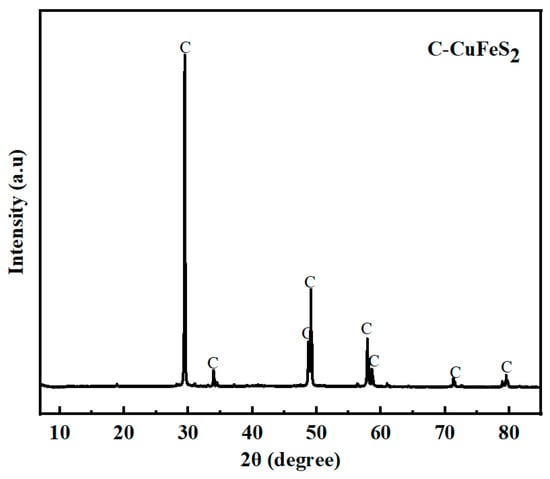
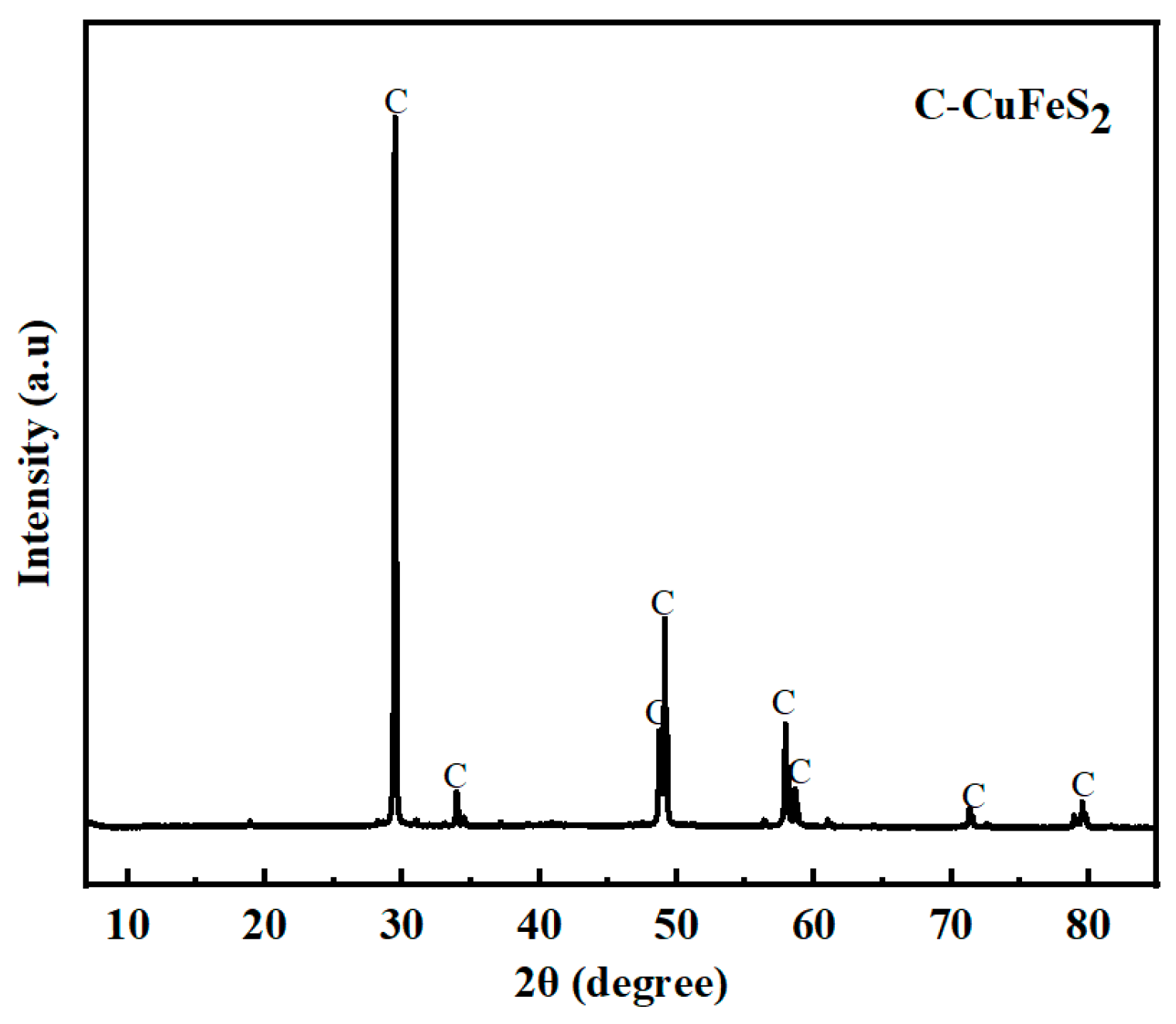
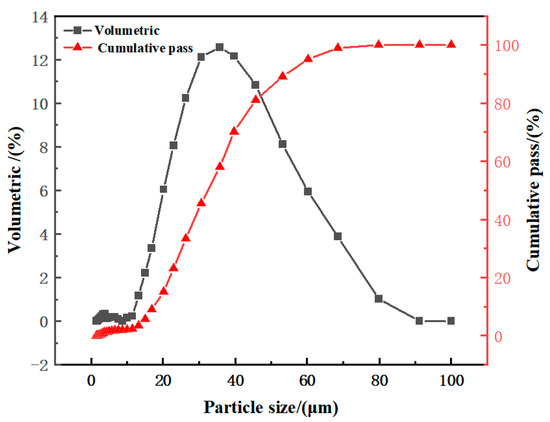
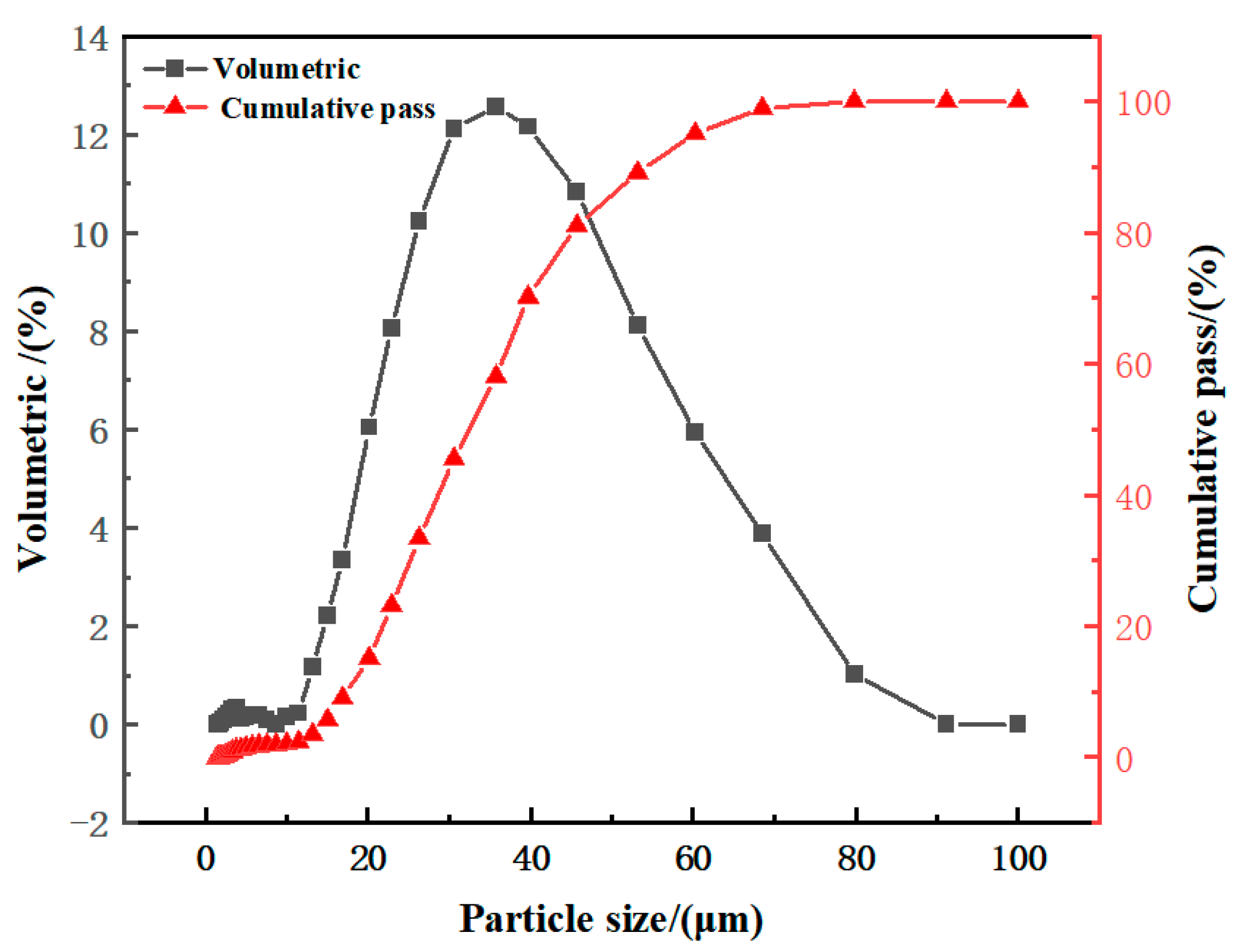
The chalcopyrite sample used in the flotation tests was collected from a mine in Wuhan, Hubei Province, China. After crushing, grinding, and wet sieving, the −75 + 38 μm size fraction was selected for pure mineral flotation experiments. To minimize surface oxidation, the samples were dried at 50 °C, sealed, placed in a vacuum drying oven, and then stored at 4 °C in a refrigerator for subsequent use. The chemical composition of the chalcopyrite sample was determined by multi-element analysis, and the results are summarized in Table 2. Phase identification was conducted using X-ray diffraction (XRD), with the corresponding pattern shown in Figure 1. Particle size distribution of the ground feed sample (prior to wet sieving) was measured using laser particle size analysis (Figure 2), and the D50 value was determined to be 32.67 μm. XRD measurements were performed using a BDX3200 X-ray diffractometer (Peking University Instrument Factory, Dandong, China) with Cu Kα radiation (λ = 1.5406 Å), operated at 40 kV and 40 mA. Diffraction patterns were collected over a 2θ range of 10–80° with a step size of 0.02°. Phase identification was carried out using Jade 6.5 software with reference to the ICDD PDF database (chalcopyrite: PDF #35-0752). Particle size distribution was determined by laser diffraction using an NKT6100-D particle size analyzer (Shandong NKT Analytical Instruments Co., Ltd., Jinan, China), with deionized water as the dispersing medium. The reported values represent the average of three measurements.
Table 2.
Chemical multielement analysis of chalcopyrite pure minerals (%).
Figure 1.
XRD analysis results of chalcopyrite.
Figure 2.
Particle size analysis results of chalcopyrite.
The results in Table 2 indicate that the total content of Cu, Fe, and S in the chalcopyrite sample is 97.37%, with low impurity levels. XRD analysis results (Figure 1) reveal that the sample exhibits only characteristic diffraction peaks of chalcopyrite, with no detectable significant impurity phases. This indicates the sample purity meets the requirements for pure mineral testing.
2.2. Reagents and Instrumentation
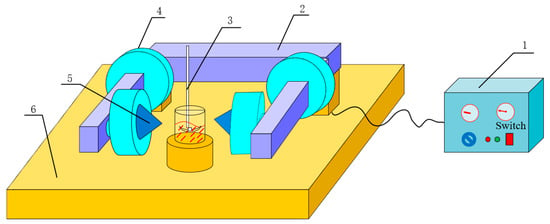
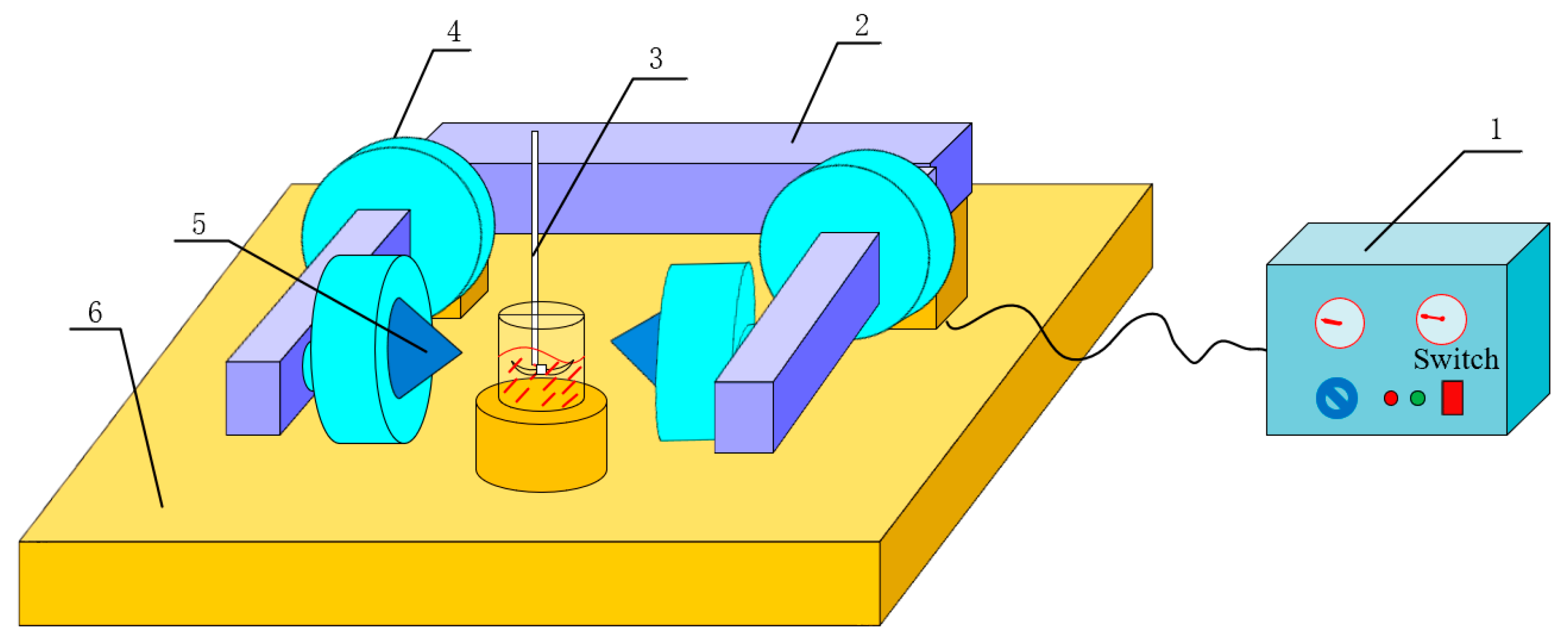
All reagents used in the experiments were of analytical grade. Butyl xanthate was used as the collector, and pine oil was employed as the frother. The main reagents used in the experiments are listed in Table 3. Natural seawater collected from a coastal port in Tangshan City, China, was used as flotation water. The properties of the seawater are presented in Table 4. Ion chromatography and ICP-OES analyses were conducted on both tap water and seawater samples, and the results are shown in Table 5. Flotation experiments were performed using an XFG II–5 hanging-type flotation machine(Wuhan Exploration Machinery Co., Ltd., Wuhan, China.). Magnetization treatment was conducted using a laboratory-built magnetization apparatus, and a schematic diagram of the device is shown in Figure 3. The main instruments and equipment used in the experiments are listed in Table 6.
Table 3.
Reagents used in the test.
Table 4.
Analysis of the properties of seawater.
Table 5.
Analysis of ionic composition of seawater.
Figure 3.
Schematic diagram of the magnetization pretreatment experimental device. 1—controller; 2—magnetic yoke (iron core); 3—agitator; 4—excitation coil; 5—magnetic pole; 6—support surface.
Table 6.
Main instruments and equipment in the test.
2.3. Methods
2.3.1. Magnetization Treatment
Seawater (25 mL) and xanthate solution (1 mL) were selected as the magnetization media. The solutions were placed within the effective magnetic field region of the magnetization device and stirred at 600 r/min during treatment. The magnetic flux density was controlled by adjusting the excitation current. After the preset magnetization time, the treated solutions were immediately used in subsequent flotation and interfacial property measurements. Magnetization is not expected to modify bulk ion concentrations; therefore, the seawater ionic composition reported in Table 4 and Table 5 is applicable to both before and after magnetization under the tested conditions.
2.3.2. Single-Mineral Flotation Experiments
Pure mineral flotation tests were carried out using an XFG II–5 hanging-type flotation machine. The agitation speed was fixed at 1750 r/min, and the air flow rate was maintained at 0.1 L/min. For each test, 2.0 g of chalcopyrite particles (38–75 μm) were placed into a 35 mL flotation cell, followed by the addition of 25 mL of flotation water, either untreated seawater or magnetized seawater. The pulp was pre-agitated for 3 min to ensure uniform dispersion, and the pH was maintained at 8.0 ± 0.1 (adjusted when necessary using dilute NaOH or HCl solutions). Subsequently, 15 mg/L of the collector (either untreated or magnetized butyl xanthate) was added, and the suspension was conditioned for 3 min. Pine oil 5 mg/L was then introduced as the frother, followed by an additional conditioning period of 2 min.
Flotation was conducted for 3 min, during which the froth product was manually scraped and collected, while the tailing product remained in the flotation cell. After completion of flotation, both froth and tailing products were separately filtered, dried, and weighed. The flotation recovery was calculated based on the mass balance of the collected products.
2.3.3. Interfacial Property Measurements
Contact angle measurements were performed using the sessile-drop method. Chalcopyrite plates were prepared by sequential polishing with 3000- and 5000-grit SiC papers, followed by rinsing with deionized water and air drying. Prior to each measurement, the polished plates were conditioned by immersion in the corresponding test solution for 6 min. After conditioning, the plate was removed, gently drained, and immediately used for contact angle measurement. Each condition was measured at least three times on freshly prepared surfaces, and the reported values represent the average of replicate measurements [35].
Zeta potential measurements were conducted using a suspension of fine chalcopyrite particles. For each test, 0.05 g of fine chalcopyrite (approximately 5 μm) was dispersed in 50 mL of the designated solution, which refers to seawater or collector solution subjected to different magnetic field strengths and magnetization durations, and conditioned under stirring for 10 min. After settling for a short period, the supernatant containing dispersed fine particles was transferred to the measurement cell, and the zeta potential was recorded. Each condition was measured in triplicate, and the reported values are averages of the repeated measurements [35].
3. Results and Discussion
3.1. Effect of Magnetization Treatment on the Flotation Behavior of Chalcopyrite
To examine the influence of magnetization treatment on chalcopyrite flotation, flotation experiments were performed under fixed operating conditions. This section focuses on the effects of magnetic field strength and magnetization time—applied to both seawater and the collector—on the flotation response of chalcopyrite.
3.1.1. Variation Characteristics of Flotation Recovery with Magnetic Field Strength
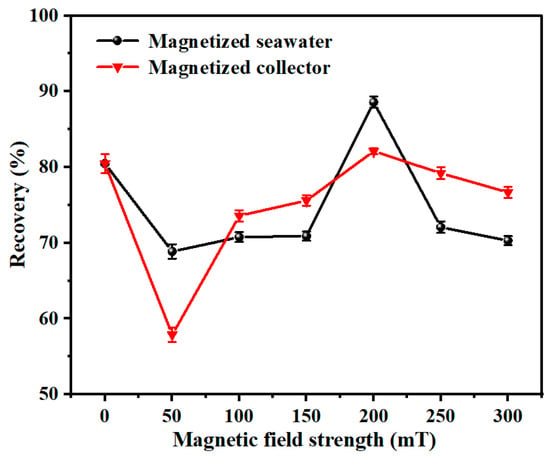
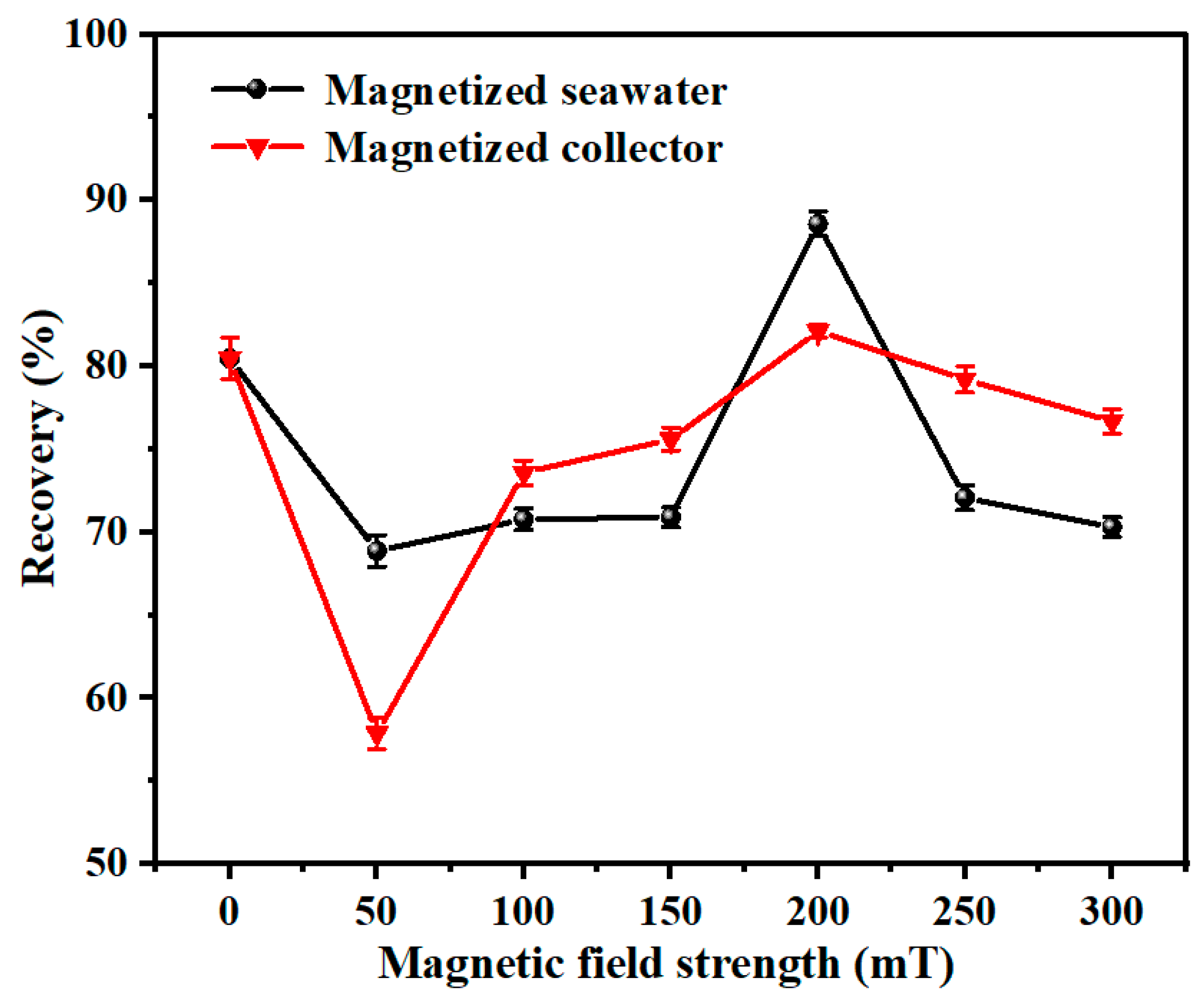
The influence of magnetized seawater and magnetized collector with different magnetic field intensities on the flotation behavior of chalcopyrite is shown in Figure 4. Both magnetized seawater and magnetized collector induced a “decrease–increase–decrease” trend in chalcopyrite flotation recovery, but their response magnitude, variation range, and key characteristics exhibited distinct differences.
Figure 4.
Effect of magnetic field strength on flotation.
For magnetized seawater (black curve), the recovery started at approximately 80% under non-magnetized conditions (0 mT), then dropped significantly to ~69% at 50 mT, indicating a notable inhibitory effect of weak magnetic fields on flotation. As the magnetic field strength increased from 50 mT to 200 mT, recovery gradually rose, reaching a peak of 88.55% at 200 mT—an 8.10% improvement over the non-magnetized case. However, further increasing the field strength to 300 mT caused recovery to decline sharply to 70.3%, demonstrating that excessively high magnetic intensities undermine the beneficial effect of magnetization.
In contrast, the magnetized collector (red curve) displayed a more pronounced initial inhibition: recovery plummeted to ~58% at 50 mT, which was a greater reduction than that observed with magnetized seawater. In contrast, the magnetized collector (red curve) showed a stronger enhancement under the optimal field-strength range. After the initial inhibition at 50 mT, recovery increased steadily with field strength and reached a maximum of 82.1% at 200 mT under the same magnetization duration used for the field-strength series—an 1.65% improvement over the non-magnetized case. Further increasing the field strength led to a decline in recovery, indicating that excessive magnetic intensity does not sustain the beneficial collector-related interfacial state.
Overall, both treatments exhibited an optimal flotation response at 200 mT, confirming a distinct parameter window rather than monotonic enhancement. Magnetized seawater showed a relatively moderate response amplitude, whereas magnetized collector treatment produced a higher peak recovery under the same optimal field range, suggesting that magnetization of the reagent may yield a more sensitive interfacial response.
3.1.2. Variation Characteristics of Flotation Recovery with Magnetization Time
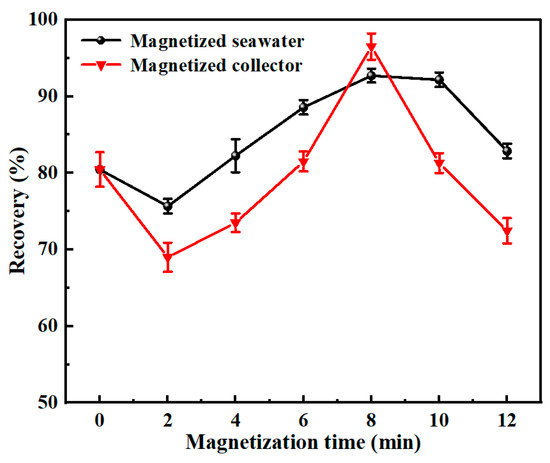
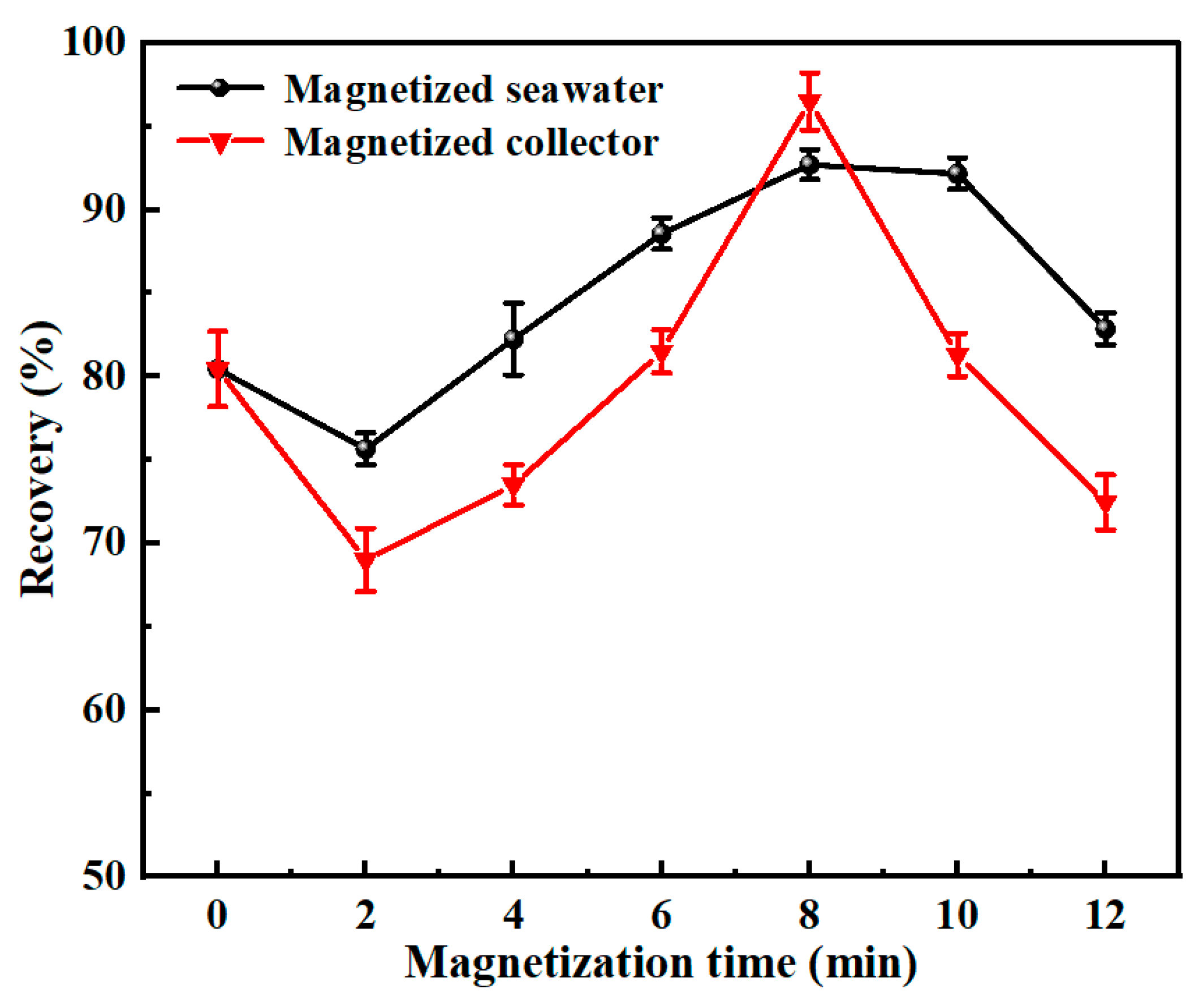
The effect of magnetization time of magnetized seawater and magnetized collector on the flotation behavior of chalcopyrite was investigated at a magnetization intensity of 200 mT, with the results shown in Figure 5. Both magnetized seawater and magnetized collector led to a “decrease–increase–decrease” trend in chalcopyrite flotation recovery as magnetization time increased.
Figure 5.
Effect of magnetization time on flotation.
For magnetized seawater (black curve), the recovery started at approximately 80% under non-magnetized conditions (0 min), then decreased to ~76% at 2 min, revealing an adverse effect of short-duration magnetization. As magnetization time was extended from 2 min to 8 min, recovery gradually rose, reaching a peak of 92.7% at 8 min—an improvement of 12.25% over the non-magnetized baseline. However, further prolonging magnetization time to 12 min caused recovery to decline to ~83%, showing that excessively long magnetization times erode the beneficial effect.
In contrast, the magnetized collector (red curve) exhibited a more pronounced initial inhibition: recovery dropped to ~69% at 2 min, a larger reduction than that of magnetized seawater. Recovery then rebounded steadily, and at 8 min it reached a maximum of 96.5%, representing a substantial 16.05% increase over the non-magnetized case. After 8 min, recovery gradually declined to ~72% by 12 min, which was a steeper late-stage drop compared to magnetized seawater.
Overall, both treatments achieved optimal flotation performance at 8 min of magnetization. However, the magnetized collector delivered a larger peak recovery improvement and a more dramatic initial inhibition, while magnetized seawater showed a milder response across the entire time range. These differences imply that the two magnetization treatments operate through distinct mechanisms, with the collector exhibiting a stronger but more time-sensitive influence on chalcopyrite flotation.
Both treatments showed a non-monotonic recovery response, with the highest recovery obtained at 200 mT and 8 min under the present conditions. The magnetized collector produced a larger recovery improvement than magnetized seawater over the tested range.
4. Interfacial Response of Chalcopyrite Under Magnetization Conditions
4.1. Evolution of Surface Wettability Under Magnetization
In this work, the magnetic field was applied to seawater or to the xanthate solution, and the chalcopyrite itself was not magnetized. Surface wettability plays a decisive role in determining the flotation response of sulfide minerals, as it directly governs the probability of particle–bubble attachment and the stability of the formed aggregates. In magnetization-assisted flotation systems, changes in wettability do not solely arise from collector adsorption intensity, but also reflect the coupled modification of the aqueous environment, interfacial hydration structure, and collector–mineral interaction state. Therefore, contact angle measurements provide an effective macroscopic indicator for evaluating the integrated response of mineral surface hydrophobicity to magnetization treatment, rather than a direct probe of specific adsorption configurations. Here, “hydrophobicity” refers to the mineral surface hydrophobic state quantified by contact angle, which integrates the combined effects of collector action and interfacial water structure, rather than the intrinsic hydrophobicity of the collector molecule alone.
This section reports contact-angle results obtained under magnetized seawater and magnetized collector conditions. The discussion focuses on how the wettability response varies with magnetic field strength and magnetization time.
4.1.1. Response of the Surface Contact Angle of Chalcopyrite to Magnetic Field Strength
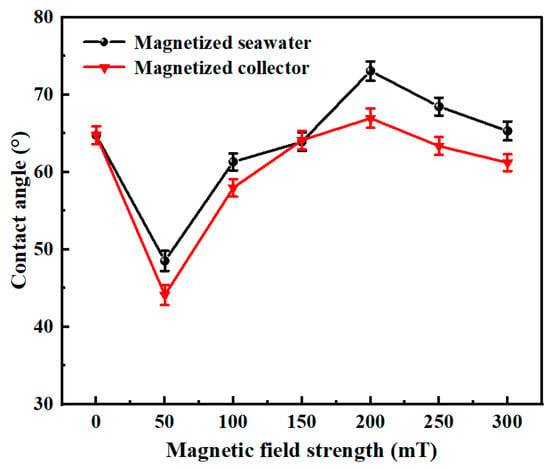
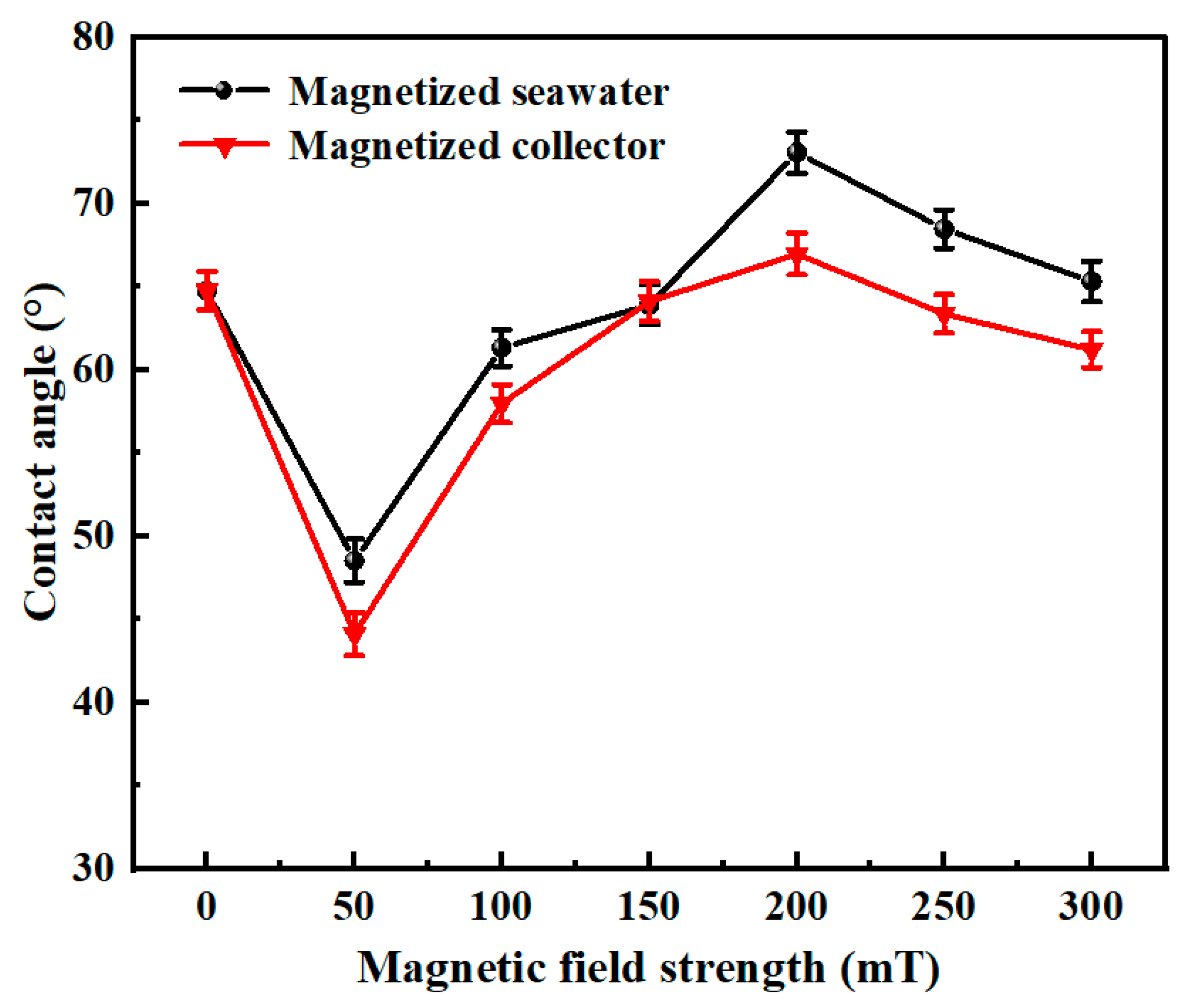
As the magnetic field strength varies, both magnetized seawater and collector agents cause significant changes in the contact angle on the surface of chalcopyrite, with the results shown in Figure 6.
Figure 6.
Contact angles on the surface of chalcopyrite under magnetization treatment with different field strengths.
The variation in contact angle with magnetic field strength exhibits a clear non-monotonic pattern, indicating that magnetization does not continuously enhance the surface hydrophobicity of chalcopyrite. Similar response trends are observed for both magnetized seawater and magnetized collector systems, suggesting that magnetic field strength primarily influences wettability through its regulation of interfacial conditions rather than through a single, direct enhancement mechanism.
At low magnetic field strengths, the contact angle decreases relative to the unmagnetized state, reflecting an increase in surface wettability. This behavior implies that weak magnetization promotes interfacial hydration effects that outweigh the hydrophobic contribution induced by collector adsorption. Under such conditions, enhanced water–surface interactions may hinder the effective expression of collector-induced hydrophobicity, resulting in a reduced contact angle despite the presence of flotation reagents.
With increasing magnetic field strength, the contact angle gradually increases and reaches a maximum at 200 mT. In this range, collector–mineral interactions are strengthened, and the balance between surface hydration and hydrophobic modification shifts toward more favorable hydrophobic conditions.
Further increasing the magnetic field strength leads to a decline in contact angle, indicating that excessively strong magnetization does not sustain the enhanced hydrophobic state. This response suggests that over-magnetization may disrupt the stability of the interfacial structure or the effective action state of the collector on the mineral surface, thereby weakening the maintenance of surface hydrophobicity.
These observations demonstrate that the influence of magnetic field strength on chalcopyrite wettability reflects a competitive interplay between interfacial hydration effects and collector-induced hydrophobic modification. Overall, the contact-angle response reflects competing hydration-related effects and collector-induced hydrophobicity [36], while additional contributions such as oxygen-related processes are discussed in the integrated synthesis in Section 4.3.
4.1.2. Response of the Surface Contact Angle of Chalcopyrite to Magnetization Time
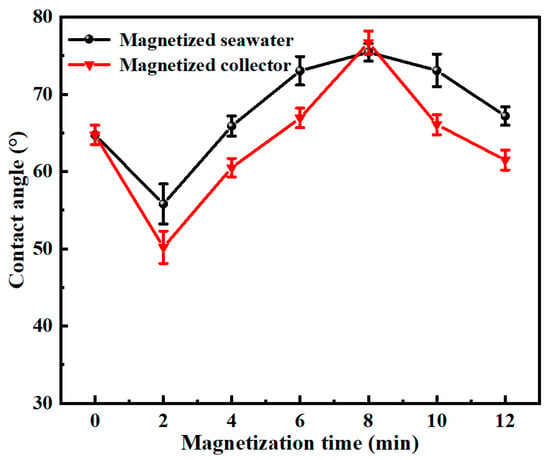
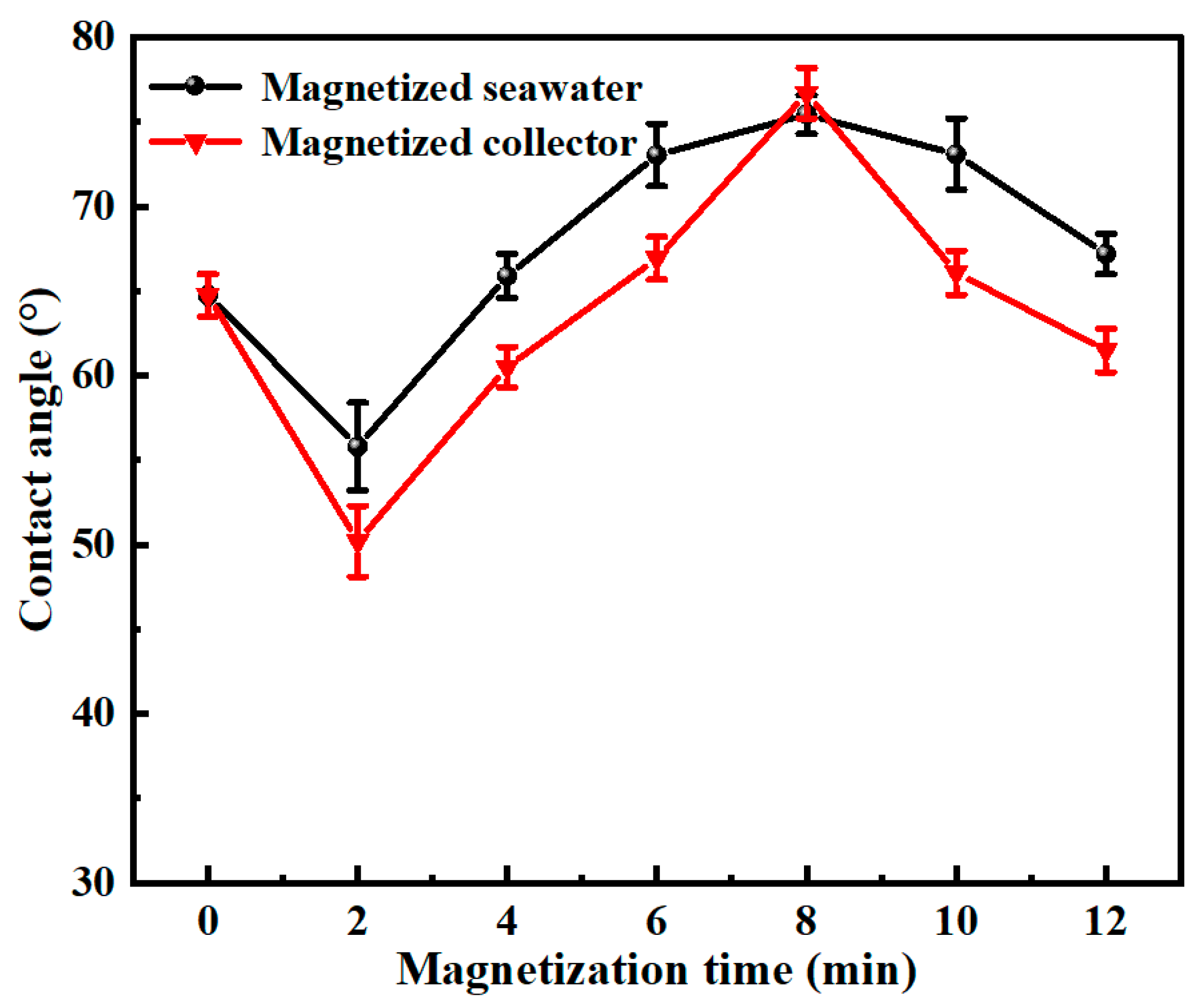
At a magnetic field strength of 200 mT, the response of the contact angle to magnetization time reflects the temporal evolution of the interfacial state induced by magnetic treatment, rather than a simple cumulative enhancement of surface hydrophobicity. Under both magnetized seawater and magnetized collector conditions, the contact angle exhibits a time-dependent window behavior, indicating that the wettability state established by magnetization is transient and requires an appropriate exposure duration to be effectively expressed, with the results shown in Figure 7.
Figure 7.
Contact angles on the surface of chalcopyrite under magnetization treatment with different magnetization times.
At short magnetization times, the contact angle decreases relative to the unmagnetized condition, suggesting that the initial stage of magnetic treatment primarily modifies the interfacial water structure. During this stage, hydration-related effects appear to dominate the mineral–solution interface, limiting the effective manifestation of collector-induced hydrophobicity on the chalcopyrite surface. As a result, the wettability response remains unfavorable for flotation despite the presence of reagents.
With increasing magnetization time, the contact angle gradually increases and reaches a maximum at 8 min. This behavior indicates that sufficient magnetization duration allows the interfacial state to evolve toward a more stable configuration, in which the hydrophobic contribution associated with collector–mineral interactions becomes fully developed. The establishment of this wettability state coincides with the optimal flotation response, highlighting the importance of temporal regulation in magnetization-assisted flotation systems.
This response implies that prolonged exposure to magnetization might have a subtle weakening effect on the stability of the surface hydrophobic state, which could be related to possible perturbations in the interfacial structure or a reduction in the effective action of the collector. Such inferences are drawn from the observed variations in contact angle, flotation recovery, and adsorption behavior under different magnetization conditions, and are broadly consistent with mechanisms suggested in previous studies [37,38].
These results demonstrate that magnetization time governs not only the extent but also the stability of wettability modification on chalcopyrite surfaces. The existence of an optimal time window indicates that magnetization-induced interfacial states are dynamically established and relaxed, providing a temporal basis for the non-monotonic flotation behavior observed under magnetized conditions.
4.2. Electrical Properties of Chalcopyrite Surfaces Under Magnetization Conditions
The wettability response discussed in Section 4.1 indicates that enhanced flotation performance under magnetization cannot be attributed to a single interfacial factor. In this context, changes in surface electrical properties are expected to influence flotation behavior by modifying the electrostatic environment in which collector adsorption and particle–bubble attachment occur. Zeta potential measurements therefore provide insight into how magnetization alters electrostatic interaction strength, rather than serving as a direct predictor of flotation performance.
Accordingly, the following analysis examines the evolution of chalcopyrite surface zeta potential under varying magnetic field strengths and magnetization durations, and evaluates its role in constraining the effective expression of surface hydrophobicity established under magnetized conditions.
4.2.1. Response of Zeta Potential on the Surface of Chalcopyrite to Magnetic Field Strength
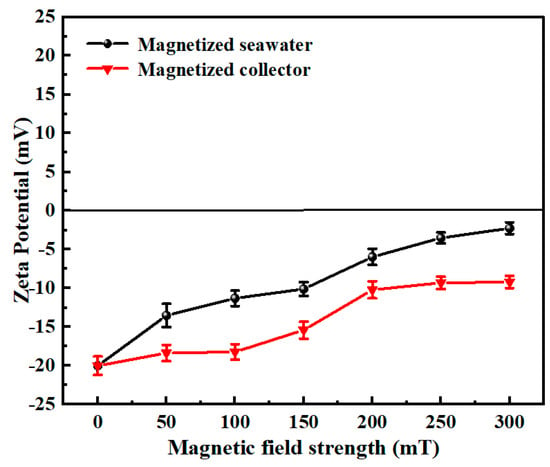
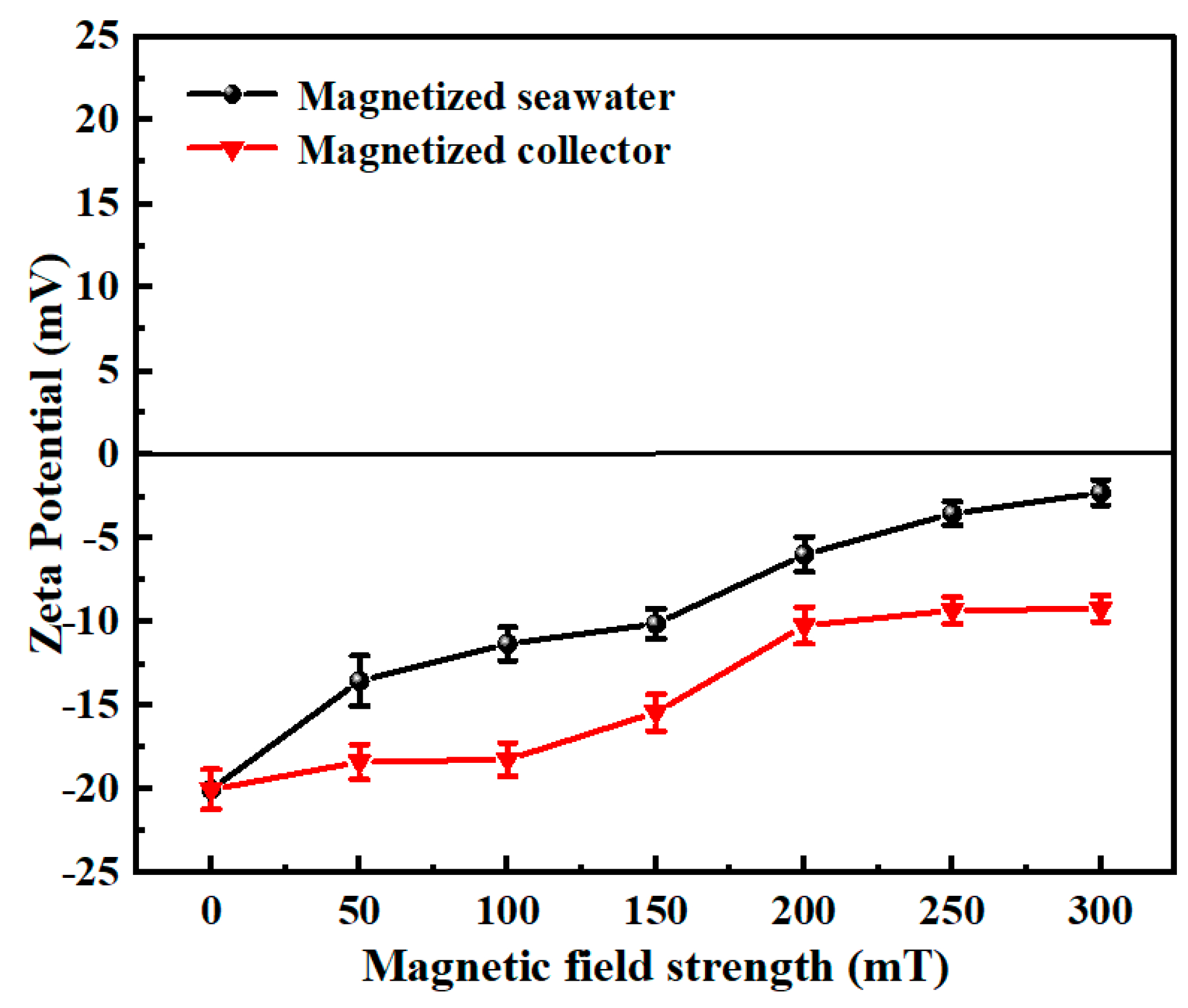
The variation in zeta potential with magnetic field strength is shown in Figure 8. The improved flotation of chalcopyrite under magnetization is primarily attributed to increased surface hydrophobicity, as reflected by the higher contact angle. While zeta potential measurements suggest some reduction in electrostatic repulsion, we acknowledge that electrostatic effects alone do not determine flotation behavior. Thus, the enhanced flotation is likely the result of combined effects, including increased hydrophobicity and possible changes in reagent adsorption.
Figure 8.
Zeta potential on the surface of chalcopyrite under magnetization treatment with different field strengths.
At relatively low magnetic field strengths, the zeta potential becomes less negative, indicating a partial relaxation of electrostatic repulsion at the mineral–solution interface. This relaxation may reduce the energy barrier for particle–bubble approach. However, as discussed in Section 4.1, such electrostatic changes alone are insufficient to promote effective flotation when surface hydrophobicity is concurrently suppressed by hydration-dominated interfacial effects.
With increasing magnetic field strength, the zeta potential continues to shift in a favorable direction, reflecting a further attenuation of electrostatic constraints on particle–bubble interaction. In the intermediate magnetic field range, this electrostatic relaxation coincides with the establishment of enhanced surface hydrophobicity, creating conditions under which particle attachment becomes both energetically accessible and kinetically stable. The overlap of these two interfacial conditions corresponds to the optimal flotation response observed under magnetization. This overlap provides a mechanistic explanation for why the maximum recovery is observed at an intermediate field strength (200 mT) in Figure 4. At lower field strengths, hydration-dominated interfacial effects suppress the effective expression of collector-induced hydrophobicity despite partial electrostatic relaxation, whereas at higher field strengths, further changes in electrostatic conditions cannot compensate for the deterioration of surface wettability. Therefore, 200 mT represents the regime in which hydrophobic stabilization is maximized while electrostatic constraints are not limiting, leading to the peak flotation response.
At higher magnetic field strengths, the zeta potential remains relatively stable or continues to shift slightly, indicating that electrostatic interactions are not the limiting factor in this regime. Nevertheless, flotation performance deteriorates as surface wettability declines, demonstrating that further reduction in electrostatic repulsion cannot compensate for the loss of a stable hydrophobic interface. This divergence highlights the role of zeta potential as a permissive, rather than governing, factor in magnetization-assisted flotation.
These results indicate that magnetic field strength primarily regulates the electrostatic boundary conditions of the flotation system, while effective flotation enhancement emerges only when such conditions coincide with favorable wettability states. The distinction between electrostatic constraint relaxation and hydrophobic state formation provides a mechanistic basis for the non-monotonic flotation behavior observed under increasing magnetic field strength.
4.2.2. Response of Zeta Potential on the Surface of Chalcopyrite to Magnetization Time
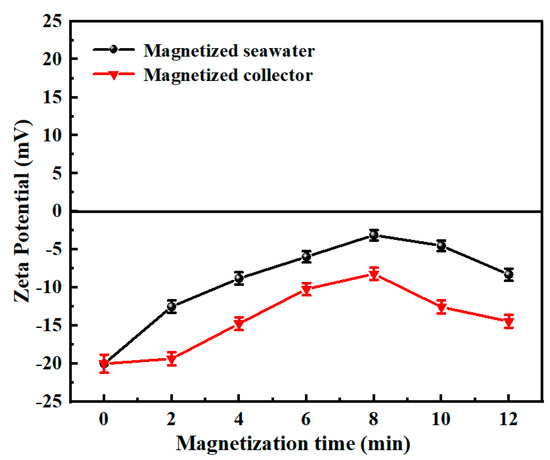
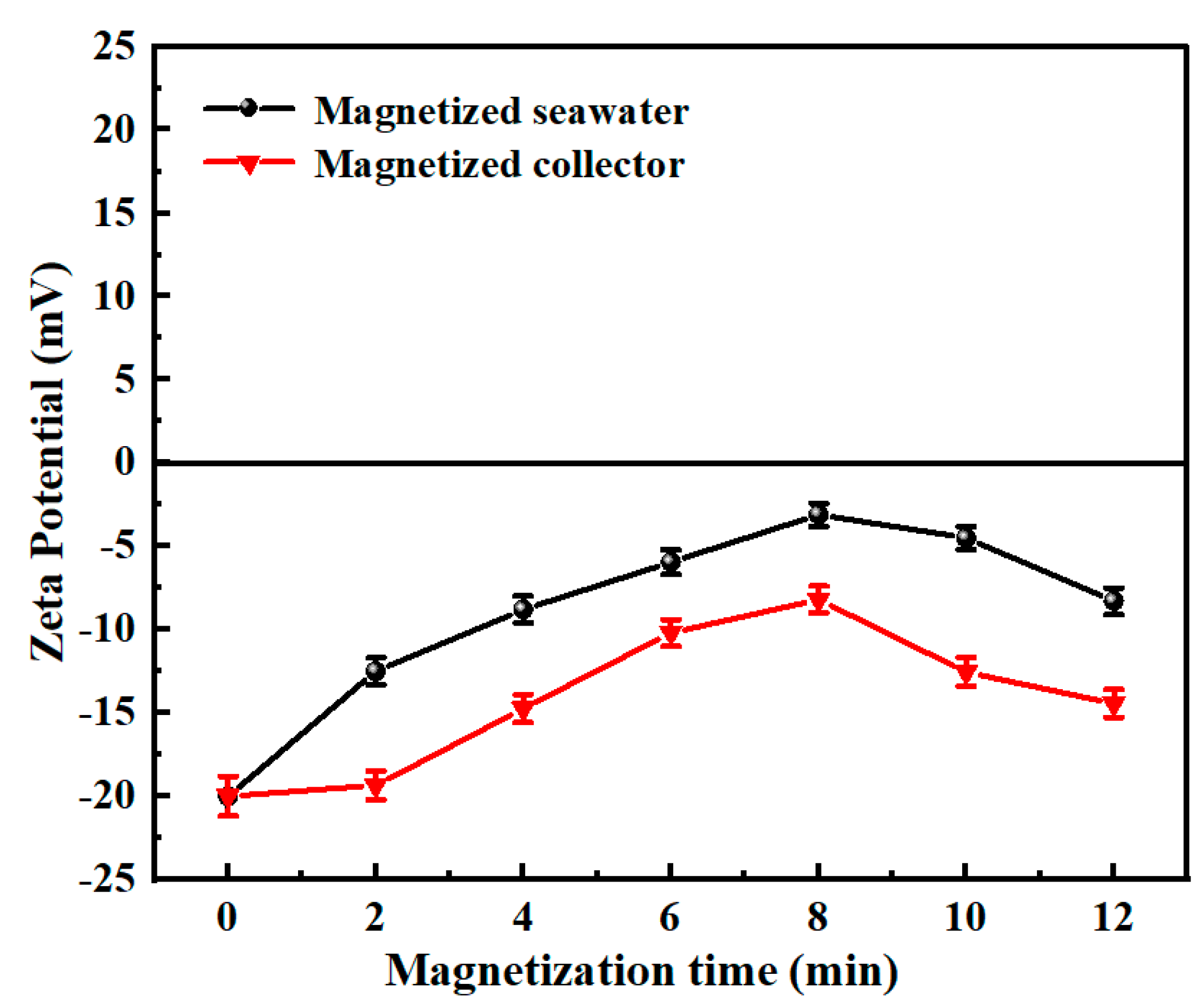
At a magnetic field strength of 200 mT, the evolution of zeta potential with magnetization time shows a relatively gradual response compared with the pronounced time-dependent changes observed for surface wettability. This contrast indicates that electrostatic regulation induced by magnetization is less sensitive to exposure duration and exhibits greater persistence once established, with the results shown in Figure 9.
Figure 9.
Zeta potential on the surface of chalcopyrite under magnetization treatment with different magnetization times.
At short magnetization times, the zeta potential shifts toward less negative values, reflecting an initial relaxation of electrostatic repulsion at the mineral–solution interface. As magnetization time increases, further changes in zeta potential become limited, suggesting that the surface charge state approaches a quasi-stable condition over a broad time range. This behavior differs from the transient wettability response, which displays a distinct optimal time window.
The disparity in temporal response between surface electrical properties and wettability implies that the decay of flotation performance at prolonged magnetization times is not governed by electrostatic constraints. Instead, it is more closely associated with the loss of a stable hydrophobic interfacial state. Accordingly, zeta potential acts as a background constraint that facilitates particle–bubble approach, while the effective flotation window is ultimately bounded by the temporal stability of surface hydrophobicity.
4.3. Conclusion Evolution of Surface Wettability Under Magnetization
Magnetization does not act on chalcopyrite directly because the mineral is non-magnetic under the tested conditions. The magnetic field acts on the liquid and the reagent first, and the interface responds accordingly. Under a moderate field strength and exposure time, magnetized seawater or magnetized xanthate strengthens the hydrophobic state, consistent with the higher contact angle. The effect is not monotonic with field strength or treatment time, so a stable interfacial state is only obtained within a limited range. Too weak a treatment does little, while excessive treatment weakens the hydrophobic response. Zeta potential shifts mainly reflect changes in the electrostatic background in seawater. Electrostatics is therefore permissive rather than controlling: it matters for approach, but it does not set recovery once wettability becomes favorable. The recovery window follows from competing interfacial effects, not from a direct magnetic effect on chalcopyrite.
5. Conclusions
This work systematically investigated the effects of magnetized seawater and magnetized collectors on the flotation behavior of chalcopyrite in seawater, with particular emphasis on the coupled evolution of flotation performance, surface wettability, and surface electrical properties under varying magnetic field strengths and magnetization durations. Based on the experimental results and interfacial analyses, the following conclusions can be drawn:
- (1)
- Magnetization treatment significantly improves the flotation recovery of chalcopyrite in seawater within a finite parameter range by indirectly modifying the flotation environment. Under the investigated conditions, both magnetized seawater and magnetized collectors exhibit a distinct non-monotonic flotation response, with a 200 mT magnetic field strength and an 8 min magnetization duration, producing the most favorable flotation performance. Compared with seawater magnetization, collector magnetization leads to a larger enhancement amplitude, indicating a stronger sensitivity of flotation response to the magnetization state of flotation reagents.
- (2)
- The surface wettability of chalcopyrite exhibits pronounced parameter-window behavior under magnetization treatment of the aqueous system. Contact angle measurements reveal that neither increasing magnetic field strength nor prolonging magnetization time continuously improves surface hydrophobicity. Instead, effective hydrophobic modification is achieved only within an intermediate magnetization range, reflecting a competitive interplay between hydration-related interfacial effects and collector-induced hydrophobicity. The stability of the hydrophobic interfacial state is therefore identified as a key factor governing the observed flotation window.
- (3)
- Magnetization treatment alters the electrostatic environment at the chalcopyrite–solution interface, as reflected by shifts in zeta potential toward less negative values, thereby reducing electrostatic repulsion and facilitating the particle–bubble approach. However, the evolution of zeta potential exhibits a more gradual and persistent response compared with surface wettability. This indicates that electrostatic regulation functions primarily as a permissive boundary condition for flotation, while the effective flotation window is ultimately constrained by the temporal stability of surface hydrophobicity rather than by electrostatic effects alone.
These results indicate that the benefit of magnetization treatment in seawater flotation arises from indirect regulation of interfacial conditions, rather than from any continuous or direct enhancement of mineral surface activity, and is realized only within a finite operating range.
Author Contributions
T.Z.: writing—specific experiment and original draft preparation; Q.J.: data analysis and extensive editing of the manuscript; F.L., and W.W.: writing—review and editing. All authors have read and agreed to the published version of the manuscript.
Funding
This review was supported by grants from the Yanzhao Iron and Steel Laboratory Project in Tangshan City, Hebei Province (Project no: YZISL2024051).
Data Availability Statement
Data are contained within the article.
Acknowledgments
The authors gratefully acknowledge the Laboratory of Mineral Engineering of North China University of Science and Technology for providing the experimental conditions.
Conflicts of Interest
The authors declare no conflicts of interest.
References
- Chen, M.; Bi, Y.; Ding, Z.; Yuan, J.; Yu, A.; Chen, L.; Mao, Y. Application of calcium hypochlorite and carboxymethyl chitosan as combined depressants for selective flotation separation of chalcopyrite from pyrite at low alkalinity. Adv. Powder Technol. 2024, 35, 104649. [Google Scholar] [CrossRef] [Scilit]
- Chen, W.; Chen, T.; Bu, X.; Chen, F.; Ding, Y.; Zhang, C.; Song, Y. The selective flotation of chalcopyrite against galena using alginate as a depressant. Miner. Eng. 2019, 141, 105848. [Google Scholar] [CrossRef] [Scilit]
- Li, W.; Li, Y.; Wang, Z.; Yang, X.; Chen, W. Selective flotation of chalcopyrite from pyrite via seawater oxidation pretreatment. Int. J. Min. Sci. Technol. 2023, 33, 1289–1300. [Google Scholar] [CrossRef] [Scilit]
- Luo, Q.; Shi, Q.; Liu, D.; Li, B.; Jin, S. Effect of deep oxidation of chalcopyrite on surface properties and flotation performance. Int. J. Min. Sci. Technol. 2022, 32, 907–914. [Google Scholar] [CrossRef] [Scilit]
- Dong, S.; He, H.; Qiu, Z.; Peng, L.; Qin, S.; Fang, J.; Shen, P. An eco-friendly depressant derived from grape seed extract (GSE) as depressant for flotation separation of pyrite from chalcopyrite under low-alkalinity conditions. Miner. Eng. 2024, 213, 108758. [Google Scholar] [CrossRef] [Scilit]
- Kwasi, A.S.; Kwaku, D.F. Eco-Friendly and biodegradable depressants in chalcopyrite flotation: A review. Miner. Process. Extr. Metall. Rev. 2023, 44, 492–510. [Google Scholar] [CrossRef] [Scilit]
- Abdolreza, B.G.; Ahmad, H.; Abbas, S.; Ali, E.Z. The effect of residual flocculants in the circulating water on dewatering of gol-e-gohar iron ore. Miner. Eng. 2022, 179, 107440. [Google Scholar] [CrossRef] [Scilit]
- Acros, F.; Jimenez, G.; Gutierrez, L. Impact of a residual anionic polyacrylamide and its mechanical degradation level on chalcopyrite flotation in the presence of xanthate. Miner. Eng. 2025, 233, 109666. [Google Scholar] [CrossRef] [Scilit]
- Echeverry, L.; Estrada, D.; Toledo, P.G.; Gutierrez, L. The depressing effect of an anionic polyacrylamide on molybdenite flotation and the importance of polymer anionicity. Colloids Surf. A Physicochem. Eng. Asp. 2021, 629, 127506. [Google Scholar] [CrossRef] [Scilit]
- Darwin, E.; Luver, E.; Andres, R.; Leopoldo, G. Molybdenite flotation in the presence of a polyacrylamide of low anionicity subjected to different conditions of mechanical shearing. Minerals 2020, 10, 895. [Google Scholar] [CrossRef] [Scilit]
- Jimenez, G.; Cabrera, P.; Rodriguez, A.; Cuervo, C.; Gutierrez, L. The effect of an anionic polyacrylamide on the flotation of chalcopyrite, enargite, and bornite. Minerals 2024, 14, 634. [Google Scholar] [CrossRef] [Scilit]
- Liang, G.; Zhao, Q.; Liu, B.; Du, Z.; Xia, X. Treatment and reuse of process water with high suspended solids in low-grade iron ore dressing. J. Clean. Prod. 2021, 278, 123493. [Google Scholar] [CrossRef] [Scilit]
- Muzinda, I.; Schreithofer, N. Water quality effects on flotation: Impacts and control of residual xanthates. Miner. Eng. 2018, 125, 34–41. [Google Scholar] [CrossRef] [Scilit]
- Qiu, Z.; Liu, G.; Liu, Q.; Zhong, H. Understanding the roles of high salinity in inhibiting the molybdenite flotation. Colloids Surf. A Physicochem. Eng. Asp. 2016, 509, 123–129. [Google Scholar] [CrossRef] [Scilit]
- Song, N.; Yin, W.; Yao, J. New insights on the role of seawater in sulfide ore flotation-a review. Powder Technol. 2024, 431, 119128. [Google Scholar] [CrossRef] [Scilit]
- Xu, Y.; Li, Y.; Fan, R.; Duan, W.; Huang, L.; Xiao, Q. Separation mechanism of chalcopyrite and pyrite due to H2O2 treatment in low-alkaline seawater flotation system. Mine. Eng. 2022, 176, 107356. [Google Scholar] [CrossRef] [Scilit]
- Wang, B.; Peng, Y. The effect of saline water on mineral flotation-a critical review. Mine. Eng. 2014, 66–68, 13–24. [Google Scholar] [CrossRef] [Scilit]
- Chibowski, E.; Szcześ, A. Magnetic water treatment–a review of the latest approaches. Chemosphere 2018, 203, 54–67. [Google Scholar] [CrossRef] [Scilit]
- Song, N.B.; Sun, C.Y.; Yin, W.Z.; Yao, J.; Yang, B. Genetic characteristic analysis of the influence of seawater on mineral flotation. Metal Mine 2020, 2–8. [Google Scholar]
- Castro, S. Physico-chemical factors in flotation of Cu-Mo-Fe ores with seawater: A critical review. Physicochem. Probl. Miner. Process. 2018, 54, 1223–1236. Available online: https://www.journalssystem.com/ppmp/pdf-94461-30094?filename=Physico_chemical+factors.pdf (accessed on 10 December 2025).
- Rao, F.; Lázaro, I.; Ibarra, A.L. Solution chemistry of sulphide mineral flotation in recycled water and sea water: A review. Miner. Process. Extr. Metall. 2017, 126, 139–145. [Google Scholar] [CrossRef] [Scilit]
- Tsuyoshi, H.; Suyantara, G.P.W.; Osamu, I.; Ahmed, M.E.; Hajime, M.; Keiko, S. Effect of Mg2+ and Ca2+ as divalent seawater cations on the floatability of molybdenite and chalcopyrite. Miner. Eng. 2016, 96–97, 83–93. [Google Scholar] [CrossRef] [Scilit]
- Nikolaev, A.A. Flotation Recovery of Sphalerite in Sea Water: A Feasibility Study. Resources 2023, 12, 51. [Google Scholar] [CrossRef] [Scilit]
- Hu, H.; Hou, H.; Wang, B. Molecular dynamics simulations of Ice growth from supercooled water when both electric and magnetic fields are applied. J. Phys. Chem. C 2012, 116, 19773–19780. [Google Scholar] [CrossRef] [Scilit]
- Vincent, R.; Jean-michel, S.; Valérie, C.; Agnès, B. Removal of organic dyes by magnetic alginate beads. Water Res. 2007, 42, 1290–1298. [Google Scholar] [CrossRef] [Scilit]
- Judit, D. From mystery to reality: Magnetized water to tackle the challenges of climate change and for cleaner agricultural production. J. Clean. Prod. 2023, 425, 139007. [Google Scholar] [CrossRef] [Scilit]
- Hosseini, H.; Hosseini, H.; Jalili, M.; Apourvari, S.; Schaffie, M.; Ranjbar, M. Static adsorption and interfacial tension of sodium dodecyl sulfate via magnetic field application. J. Pet. Sci. Eng. 2019, 178, 205–215. [Google Scholar] [CrossRef] [Scilit]
- Liao, D.; Chen, X. Magnetization flotation test of fluorite from a tungsten ore tailings. Nonferrous Met. Miner. Process. Sect. 2017, 40–44. [Google Scholar]
- Deng, X.; Liao, D. Magnetization flotation process of a refractory scheelite. Min. Res. Dev. 2015, 35, 55–59. [Google Scholar]
- Peng, X.; Zhang, Y.; Gou, J.; Li, L.; Lei, D.; Wang, Y. External magnetic field assisted foaming properties of terpineol during flotation process: Insights from experimental and theoretical models. Miner. Eng. 2025, 227, 109283. [Google Scholar] [CrossRef] [Scilit]
- Li, F.; Wang, H.; Jia, Q.; Zhu, L.; Yang, Y. Mechanism of the effect of magnetization treatment of sodium oleate solution on the nature of bubbles and the recovery of hematite flotation. ACS 2025, 10, 46165–46175. [Google Scholar] [CrossRef] [Scilit] [PubMed]
- Zhao, H.; Dong, X.; Wang, X.; Wan, W.J. Preliminary experiment on culture of unicellular algae with magnetized seawater. Fish. Sci. 1984, 22–26. [Google Scholar]
- Wang, Q.; Qiu, S.; Zhu, X.; Liang, P.; Han, R.; Sun, Y.; Zhang, L. Application research on magnetized seawater in prawn seedling rearing. J. Shenyang Agric. Univ. 1987, 01, 13–19. [Google Scholar]
- Selim, D.A.F.H.; Zayed, M.; Ali, M.M.E.; Eldesouky, H.S.; Bonfill, M.; El-tahan, A.M.; Eiokkiah, S. Germination, physio-anatomical behavior, and productivity of wheat plants irrigated with magnetically treated seawater. Front. Plant Sci. 2022, 13, 923872. [Google Scholar] [CrossRef] [Scilit]
- Jia, Q.; Yang, Y.; Lai, Y.; Li, F.; Zhao, L. Influence and mechanism of ions in seawater on chalcopyrite flotation. Nonferrous Met. (Chin. Engl. Ed.) 2025, 15, 651–659. [Google Scholar]
- Nessipbay, T.; Dulatbek, T.; Sabira, N.; Larissa, S.; Nazira, S. Study of the colloidal-chemical and depressing characteristics of a micro- and nanosized depressant based on magnetite. Miner. Eng. 2025, 229, 109358. [Google Scholar] [CrossRef] [Scilit]
- Qiu, T.; Yang, L.; Yan, H.; Zhang, H.; Cui, L.; Liu, X. The Mechanism of the Effect of Pre-Magnetized Butyl Xanthate on Chalcopyrite Flotation. Minerals 2022, 12, 209. [Google Scholar] [CrossRef] [Scilit]
- Sun, Y.; Qaisar, M.; Wang, K.; Chen, B.; Cai, J. Validation of effective role of substrate concentrations on elemental sulfur generation in simultaneous sulfide and nitrate removal process. Sep. Purif. Technol. 2021, 268, 118698. [Google Scholar] [CrossRef] [Scilit]

Disclaimer/Publisher’s Note: The statements, opinions and data contained in all publications are solely those of the individual author(s) and contributor(s) and not of MDPI and/or the editor(s). MDPI and/or the editor(s) disclaim responsibility for any injury to people or property resulting from any ideas, methods, instructions or products referred to in the content. |
© 2026 by the authors. Licensee MDPI, Basel, Switzerland. This article is an open access article distributed under the terms and conditions of the Creative Commons Attribution (CC BY) license.