1. Introduction
Frothers are surfactants commonly used in flotation to preserve small bubbles and stabilize the froth [
1,
2]. Frother chemistry can be classified into two main families: alcohols and glycols [
3,
4]. Frother molecules adsorb at the liquid–air interface, forming a liquid film that retards bubble coalescence and thus preserves the small bubbles generated by the flotation machine [
5,
6]. An adequate frother dosage is required to obtain these benefits in terms of bubble size preservation [
6]; however, excessive dosage must be avoided, as it increases water recovery and consequently the non-selective recovery of fine gangue particles by entrainment [
7,
8,
9,
10]. A frother concentration slightly above the critical coalescence concentration (CCC) has therefore been recommended [
4]. In industrial practice, frother is primarily added to the rougher feed, typically implemented as a ratio control based on throughput, although additional frother may also be added downstream along the flotation bank or at other points of interest in the circuit.
Frother partitioning—the increase in frother concentration in the concentrate streams relative to the feed [
11]—hinders gangue rejection in the cleaner stages and therefore imposes constraints on both frother chemistry selection and dosage in the rougher stage. To improve selectivity in cleaner flotation, alternative air distribution strategies have been proposed [
12,
13,
14]; however, separation can still become difficult to achieve when glycol-type frothers are used at excessively high concentrations [
15].
More recently, a new type of frother chemistry has been developed with the aim of achieving the benefits of strong frothing in the rougher stage while reducing selectivity losses associated with high frother concentrations in the cleaner stages [
16]. This chemistry behaves as a strong frother under rougher-stage pH conditions and subsequently “switches” to a weaker frother as pH increases in the cleaning stages. Based on this behavior, this frother technology is commercialized by Syensqo under the name Transfoamer
TM.
This article presents an assessment of TransfoamerTM frother chemistry in terms of gas dispersion properties in two-phase systems, batch flotation tests, and industrial-scale operation at the Caserones concentrator (Lundin Mining), Atacama Region, Chile.
2. Materials and Methods
2.1. Two-Phase System Characterization
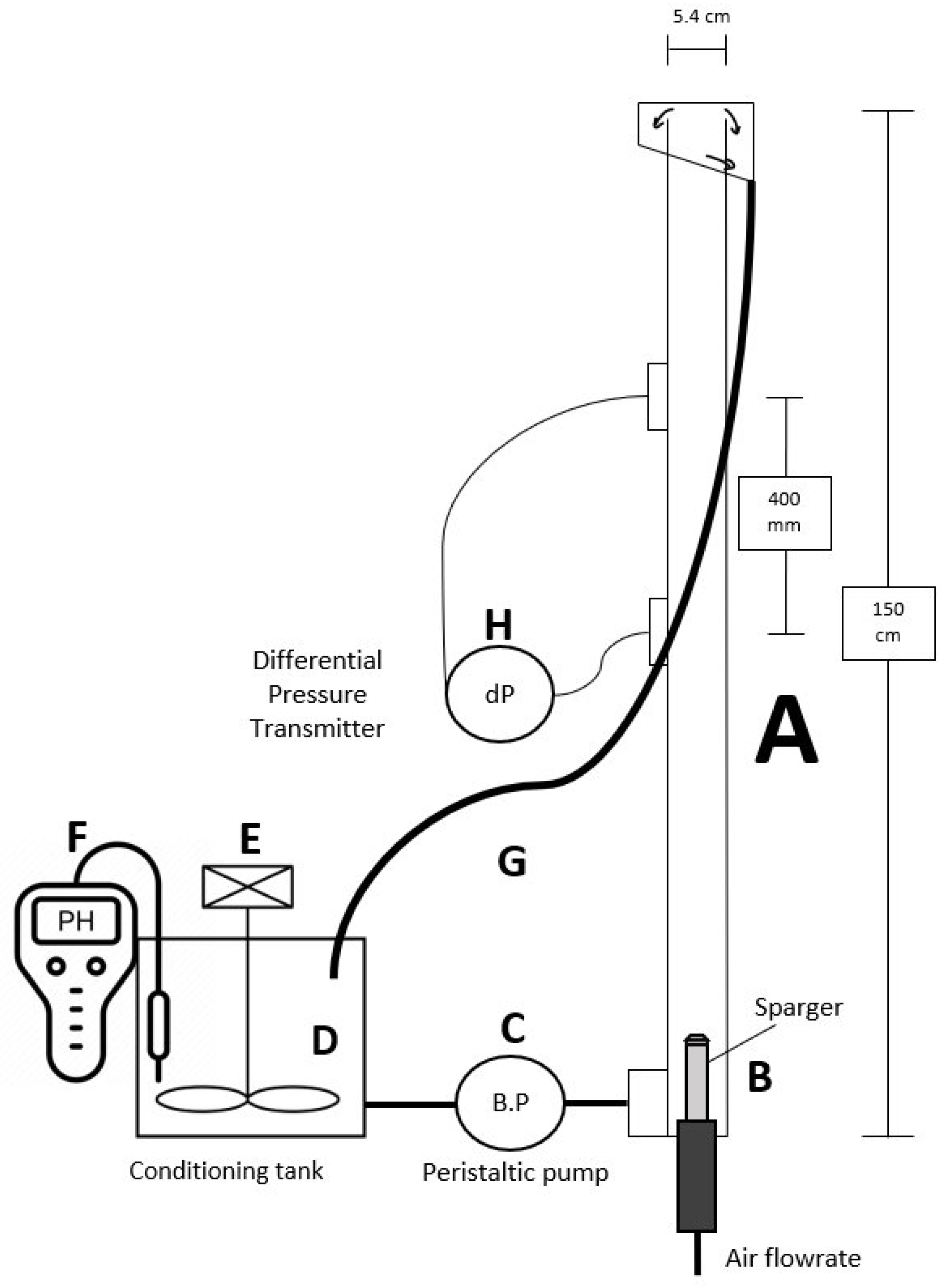
The experimental setup (
Figure 1) comprised an acrylic laboratory flotation column with an internal diameter of 5.4 cm and a total height of 150 cm (A). Air was injected through a stainless-steel porous sparger (B) with an average pore size of 5 µm and regulated using a mass flow controller (MKS, model MFC GE30, Andover, MA, USA). A peristaltic pump (Masterflex
® L/S
® Easy Load
®, Farmingdale, NY, USA) (C) was used to feed the column from the bottom section, where the sparger was located. The overflowing liquid was recirculated (G) back into the feed tank (D) to maintain the frother concentration at the sparger constant. A homogenizing stirrer (E) and a pH meter (F) were installed in the feed tank. A differential pressure transmitter (ABB, model 266DSH, Zurich, Switzerland) (H) connected to the column by tubings filled with liquid measured the hydrostatic pressure difference between two pressure taps separated by a distance of 400 mm that allows accurate pressure measurements.
2.1.1. Gas Holdup
Gas holdup was estimated using the following equation [
17]:
where
is the pressure difference measured by the differential pressure transmitter, expressed in mmH
2O, and
is the vertical distance between the pressure taps (400 mm).
2.1.2. Water Carrying Rate
Water recovery was measured following the methodology described by Moyo et al. [
8]. The water carrying rate (
) was used as an indicator of water recovery and was calculated as the ratio between the volumetric water overflow rate (
) and the cross-sectional area of the column (
):
2.2. Reagents
Table 1 summarizes the surfactants used in this study. The main objective was to characterize novel switchable frothers (T-100 and T-200) under alkaline conditions. For comparison purposes, conventional frothers were also evaluated, including two aliphatic alcohols (MIBC and 1-Pentanol) and two polyglycols (DF-250 and DF-1012). Depending on the specific test conditions, DF-250 was preferred over DF-1012, as the latter resulted in excessive foaming. Similarly, MIBC was preferred over 1-Pentanol due to its higher foamability.
All frothers were prepared and dosed as 2% (w/w) aqueous solutions to ensure greater accuracy and reproducibility in frother addition. Sodium hydroxide (NaOH, Sigma Aldrich, Darmstadt, Germany, 99.99%) was selected as the pH modifier and was added using a 50% (w/w) NaOH solution. All experiments were conducted at room temperature, approximately 20 ± 3 °C.
2.3. Procedure
All experiments began with 7 L of tap water (530 µS/cm) placed in the conditioning tank (D). A NaOH solution was added to adjust the solution to the required pH, which was continuously monitored using a pH meter (F) throughout the experiment. Subsequently, the frother was added to attain the target concentration. After 10 min of intense agitation to ensure solution homogeneity, the solution prepared in the conditioning tank was introduced to the column (A) by using a peristaltic pump (C) and measurements of gas dispersion variables and froth properties were conducted.
Maximum foam height measurements were taken after allowing 1–3 min for the formation of a stable foam. Superficial gas velocities () ranging from 0.6 to 1.8 cm/s were applied, depending on the frother evaluated, as the operating window for foam growth without overflow was limited by the column height.
2.3.1. Water Recovery Tests
Following the methodology proposed by Moyo et al. [
8], the column was initially filled with liquid and, under a given superficial gas velocity, a target foam height of 7 cm was established by adjusting the feed flow rate of the peristaltic pump. Once a steady-state foam height of 7 cm was achieved, the time required to overflow 50, 100, or 200 mL of liquid was measured using a graduated test tube and a stopwatch.
2.3.2. Frother Persistence Tests
For persistence tests, the column was filled with the corresponding solution, and a superficial gas velocity of 1 cm/s was applied while maintaining a feed flow rate of 5 mL/s. A data logger continuously recorded the gas holdup signal from the differential pressure transmitter over several hours, registering one data point per minute.
2.4. Batch Flotation Tests
Laboratory flotation tests were conducted under standard Caserones operating conditions using a Denver D-6 flotation cell. The tests were performed at a grind size of P80 = 200 µm, a solids concentration of 38 wt.%, and pH 9. Reagent dosages included 14 g/t of primary collector, 6 g/t of MIBC frother (ca. 3.7 ppm referred to the liquid), and 20 g/t of diesel. Flotation kinetics were evaluated at cumulative flotation times of 1, 7, and 15 min.
Ore from Phase 5 geological unit of the Caserones deposit was evaluated.
Table 2 and
Table 3 present the chemical and mineralogical characterization of the tested ore, respectively.
2.5. Caserones Plant Trial
Caserones is located in Chile’s Atacama Region approximately 125 km southeast of Copiapó, and approximately 100 km from Lundin Mining’s Candelaria Copper Mining Complex in Chile. The mine and mine infrastructure are situated at an elevation ranging between 3200 m and 5500 m above sea level. The industrial evaluation was conducted by analyzing and comparing operational results obtained during July and August 2023, using MIBC only, and after the combination of MIBC and T-100 application. During the plant trial, an effective SAG mill throughput greater than 4000 t/h was maintained. Reagent dosages included 14 g/t of AERO
® MX-8522 Promoter (thiophosphate/thiocarbamate) primary collector, 20 g/t of diesel as secondary collector, 3 g/t of MIBC, and 3 g/t of T-100, which was added at point DI-001 feeding both rougher flotation lines. In addition, rougher and cleaner pH values were maintained at standard setpoints of 9 and 11, respectively, to promote the transformation of T-100 into a weaker frother in the cleaning stage.
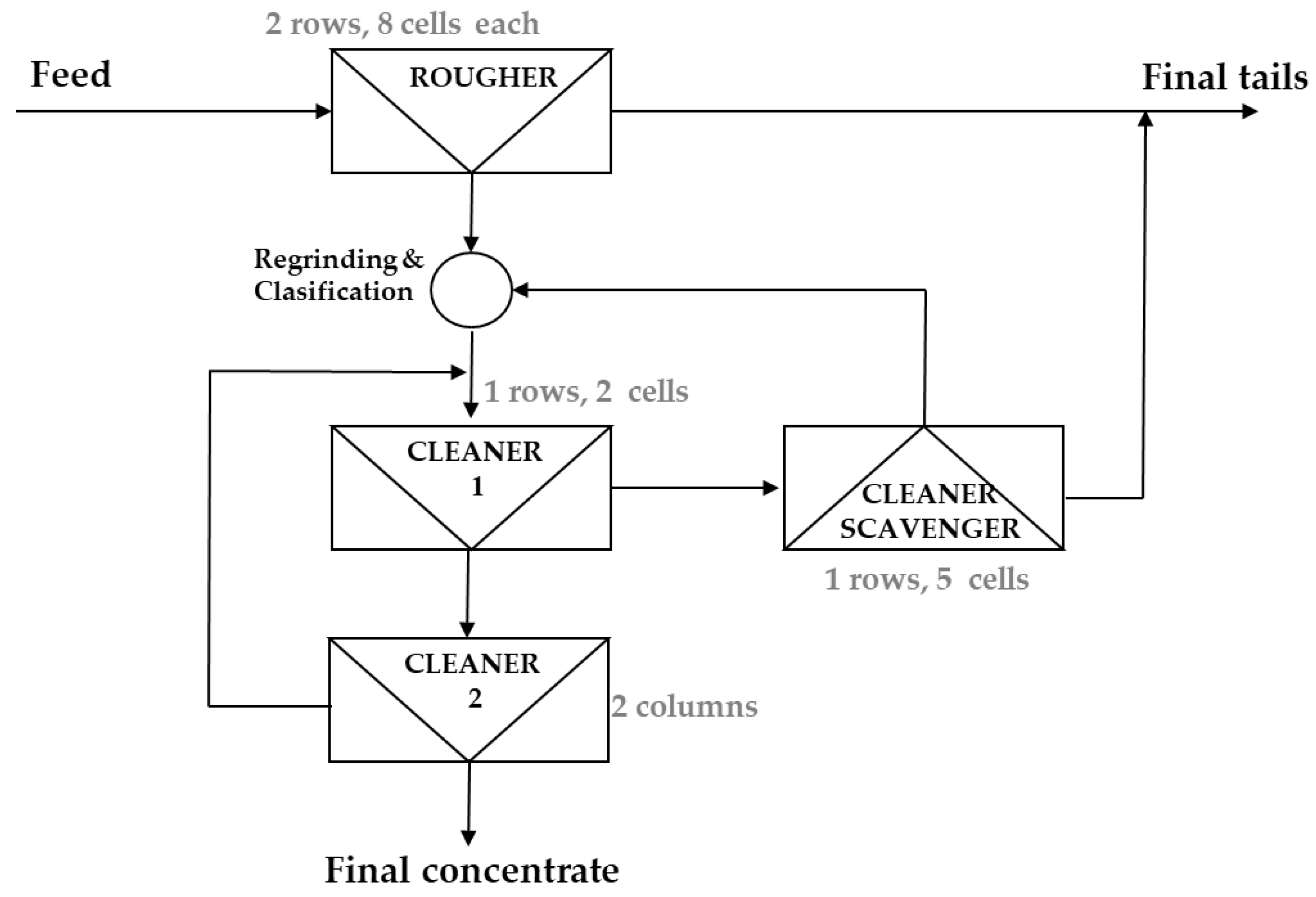
Figure 2 shows the flotation circuit configuration at Caserones Lundin Mining.
During the evaluation period, mineral grade variables were monitored online using the Courier® system. Hourly averaged data of feed, tailings, and rougher concentrate grades were used to calculate metallurgical recovery. The TransfoamerTM reagent was dosed using Prominent peristaltic pumps (model Gamma X, 4 bar, 50 L/min capacity) from two 1 m3 storage tanks located at the rougher flotation feed.
3. Results
3.1. Two-Phase Laboratory Characterization
3.1.1. Gas Holdup Characterization
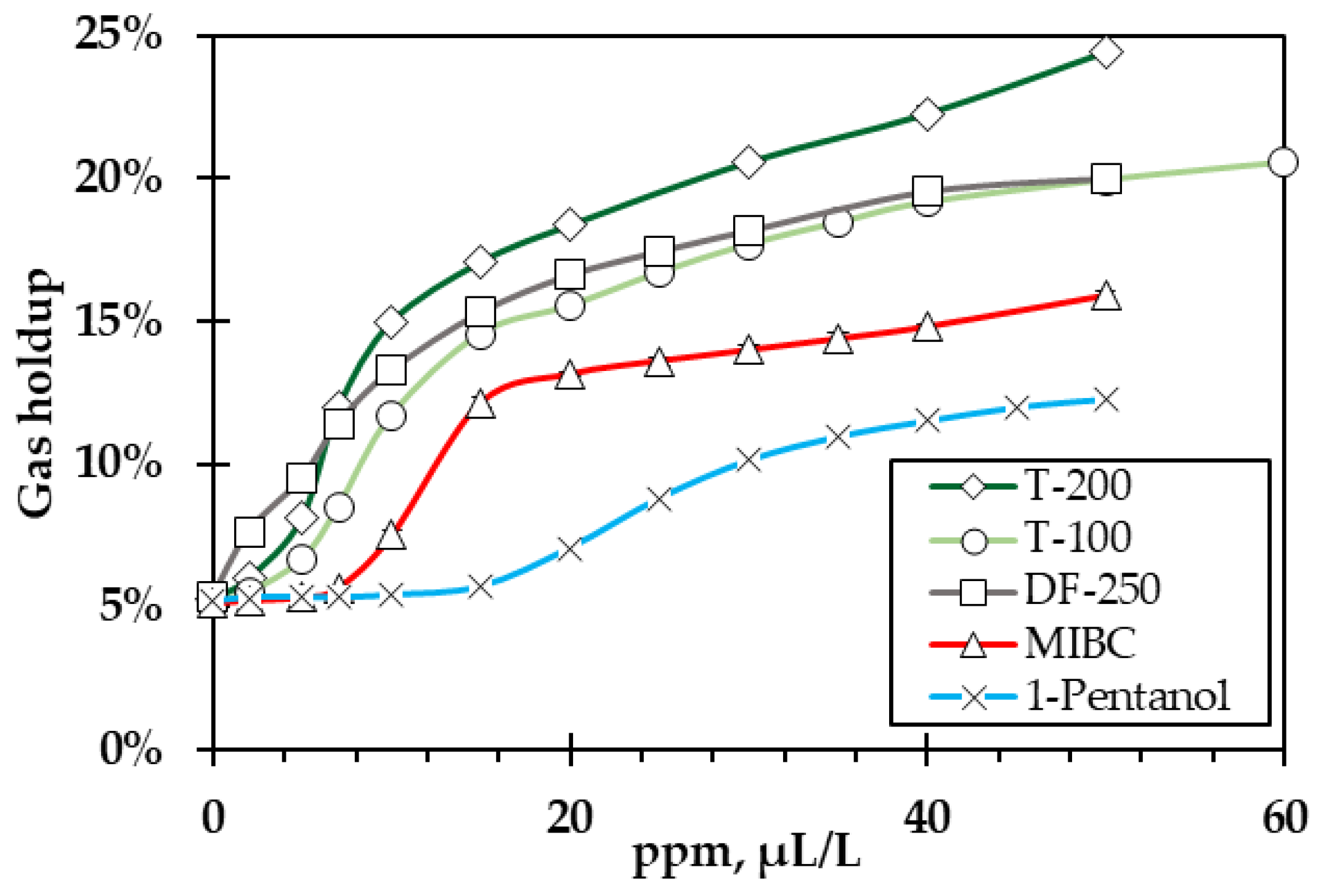
Figure 3 illustrates the impact of frother chemistry and dosage on gas holdup, showing trends that were consistent with those reported in the literature [
18]. The T-100 and T-200 Transfoamer
TM frothers exhibited strong frothing capability, comparable to DF-250, although DF-250 was weaker than T-200. These results demonstrated the effectiveness of the new Transfoamer
TM surfactant chemistry in delaying bubble coalescence and reducing bubble size, as the effect on gas holdup was closely related to the influence of the frother type on bubble rise velocity [
19]. Thus, under neutral pH conditions, Transfoamer
TM frothers behaved as strong frothers.
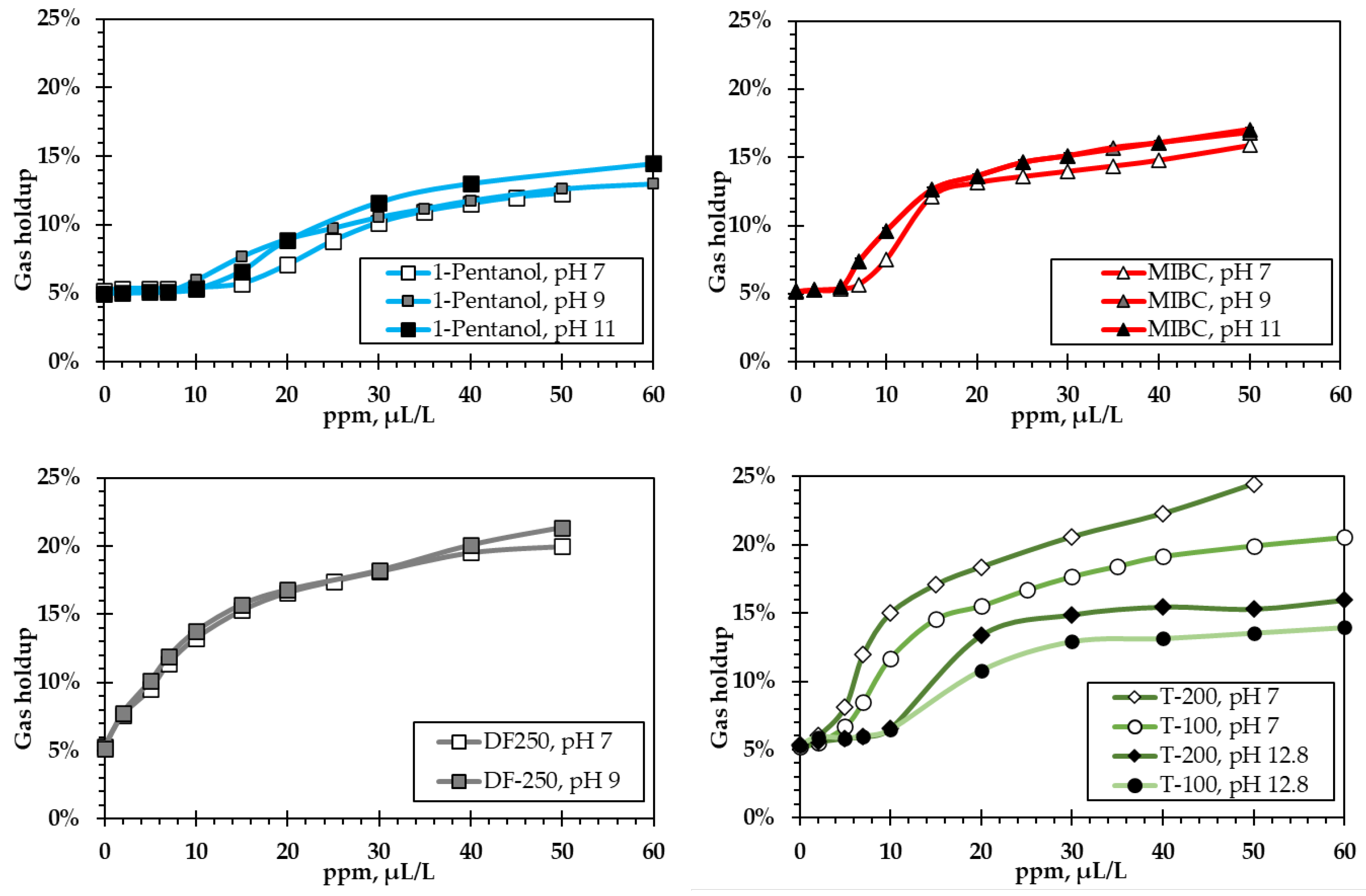
Figure 4 shows the effect of frother chemistry and concentration on the measured gas holdup at different pH values. It was observed that, for 1-Pentanol, MIBC, and DF-250, the effect of increasing pH on gas holdup at a given frother concentration was negligible. In contrast, the gas holdup–frother concentration curves for T-100 and T-200 exhibited a significant reduction with increasing pH. This behavior was attributed to the switching action of the Transfoamer
TM frother chemistry.
3.1.2. Maximum Foam Height
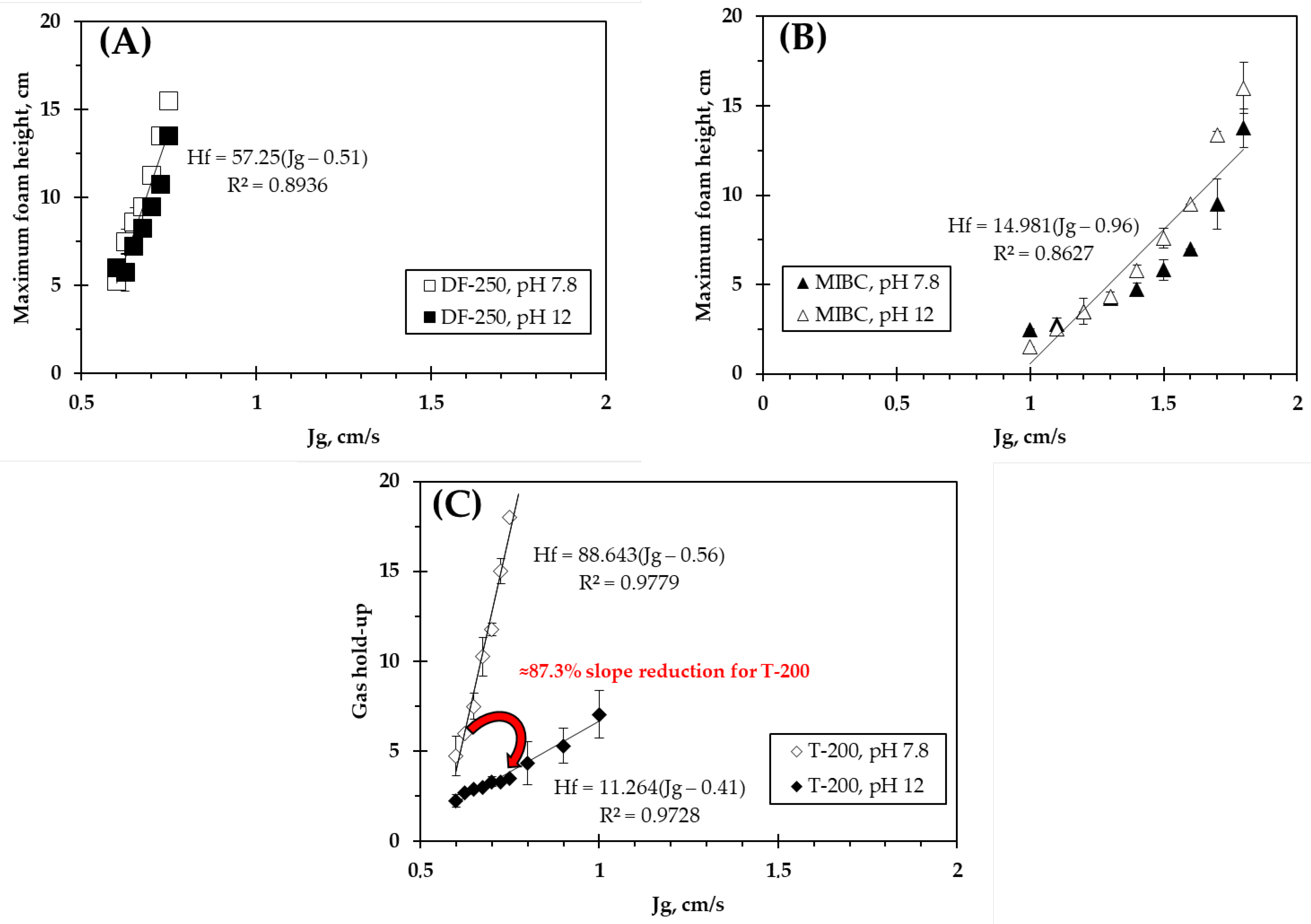
The relationship between maximum foam height and superficial gas velocity is illustrated in
Figure 5. It was observed that the trend was linear for all frothers evaluated. Polyglycol DF-250 (
Figure 5A) and alcohol frother MIBC (
Figure 5B) showed minimal changes in foam height over the range of superficial gas velocities tested. In contrast, the T-200 frother (
Figure 5C) exhibited a significant decrease in slope, reaching a reduction of 86.5%. The T-100 frother showed a similar trend, although the reduction in slope was less pronounced than that observed for T-200 (ca. slope reduction 28%).
3.1.3. Water Carrying Rate Measurement
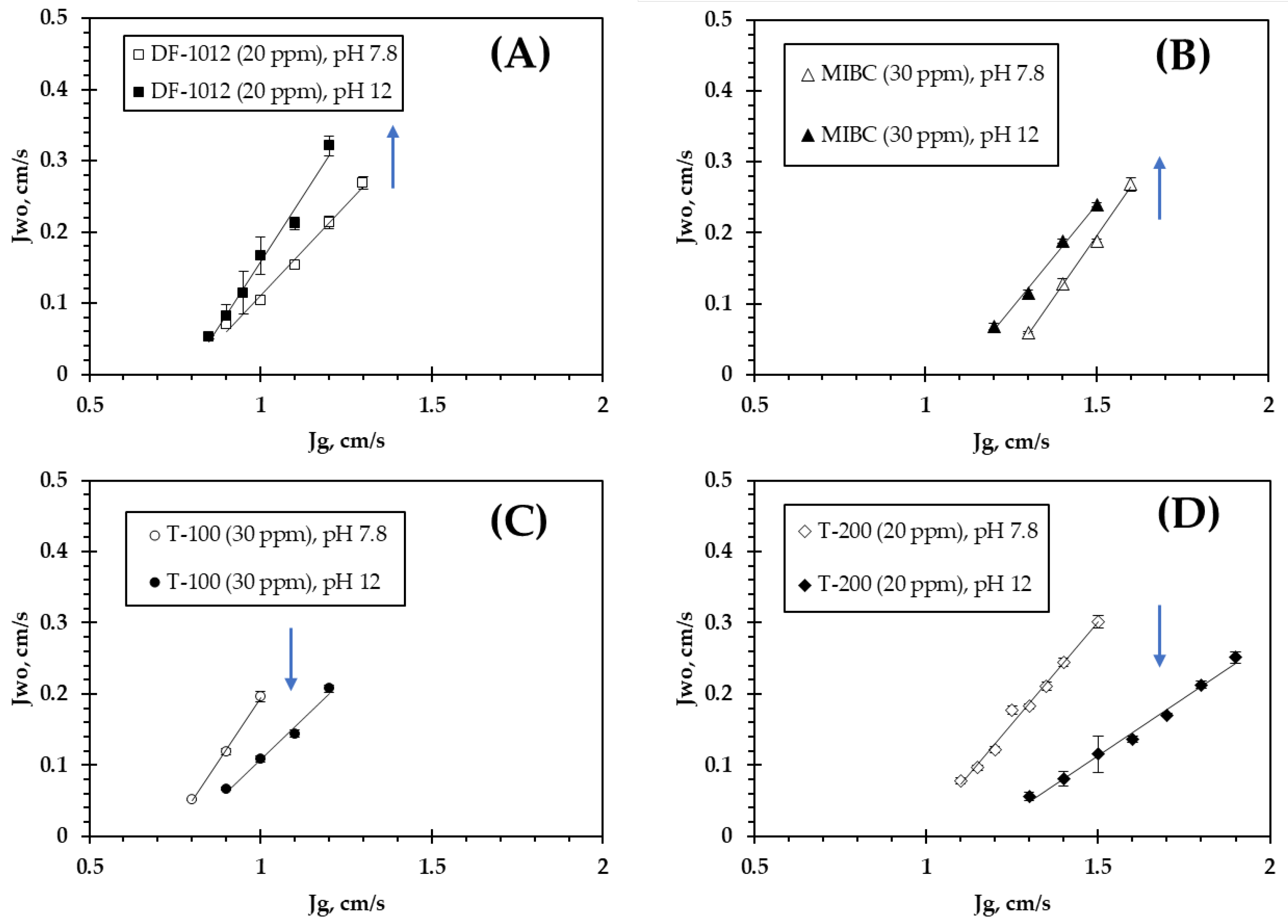
Figure 6 illustrates the water carrying rate as a function of superficial gas velocity. The results indicated that, for (A) DF-1012 and (B) MIBC, an increase in pH led to a higher water carrying rate at a given airflow. Further investigations were initiated to explain this behavior. In contrast, for the Transfoamer
TM frother chemistry, the water carrying rate decreased as pH increased, as anticipated, particularly for T-200.
3.1.4. Frother Persistence
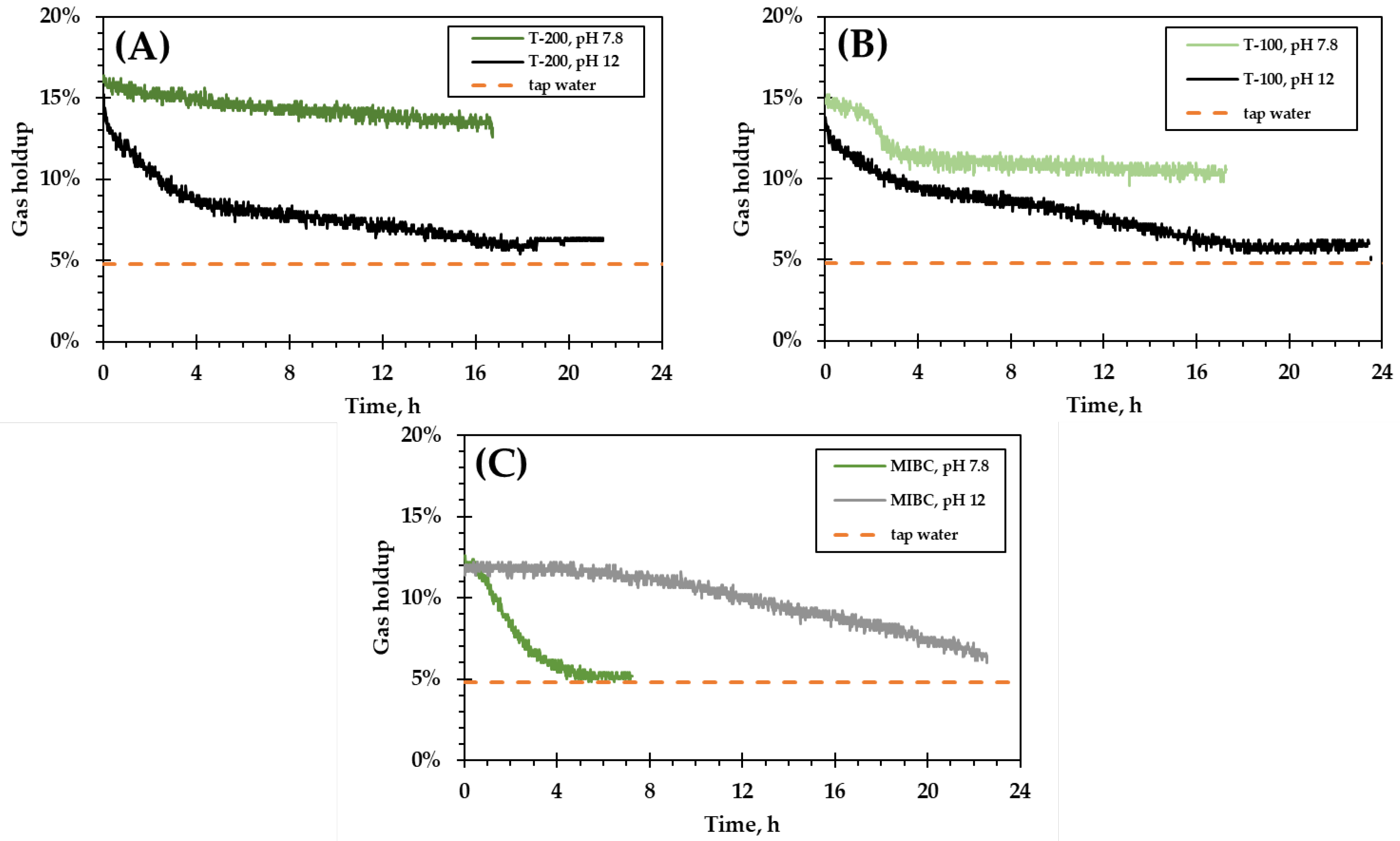
Figure 7 shows the persistence behavior of the traditional MIBC frother, as well as the new T-100 and T-200 frothers. The results showed that the persistence of an MIBC solution at nearly neutral pH (7.8) decreased rapidly over time, in agreement with results reported by Azgomi et al. [
21]. Interestingly, when pH increased to 12, the persistence of MIBC increased significantly. In contrast, the opposite behavior was observed for the novel Transfoamer
TM frothers, whose persistence decreased markedly as pH increased.
3.2. Laboratory Assessment
Kinetic Tests
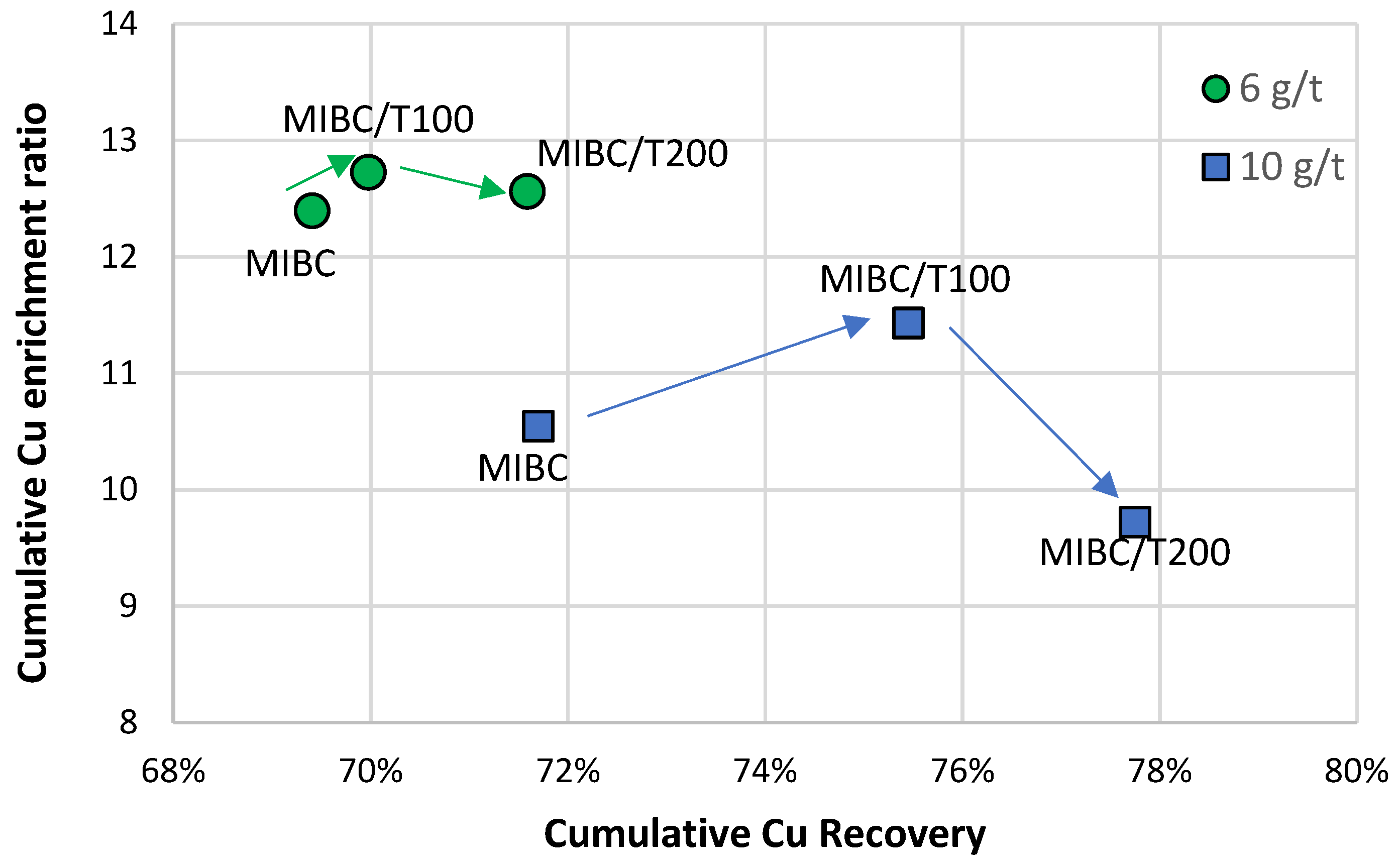
Figure 8 shows the cumulative copper enrichment ratio as a function of cumulative recovery obtained after 15 min batch flotation tests for three frother preparations: MIBC only, a 50:50 MIBC/T-100 mixture, and a 50:50 MIBC/T200 mixture. Two overall frother dosages were evaluated: 6 g/t and 10 g/t. The results showed that the combination of MIBC and T-100 outperformed MIBC alone, as evidenced by increases in both the enrichment ratio and copper recovery. Based on these results, together with those associated with the gas dispersion characterization described in
Section 3.1, the Caserones operation was motivated to initiate the assessment of T-100 at plant scale instead of T-200, even though the latter provided higher copper recovery.
3.3. Metallurgical Performance at Plant Scale
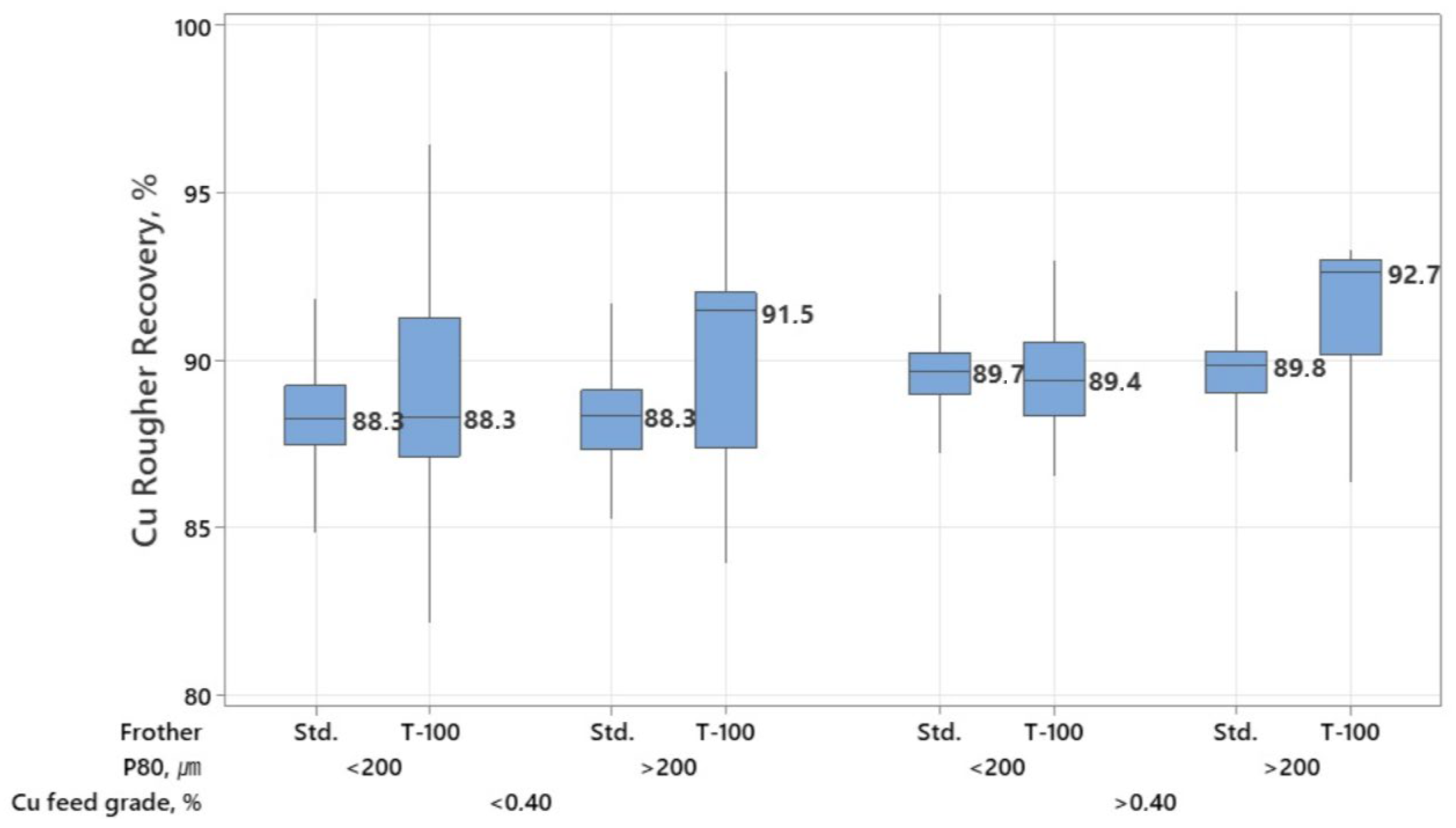
Figure 9 shows the rougher copper recovery obtained using MIBC under standard conditions (STD) and when a 50:50 mixture of MIBC and T-100 was applied (T-100). The operating conditions were grouped into two feed grade categories: low copper feed grade (0–0.4%) and higher copper feed grade (>0.4%). In addition, copper recovery was evaluated by particle size for two size fractions: <200 µm, and >200 µm.
The results showed that copper recovery increased significantly for coarser particle size fractions (>200 µm), which could be attributed to improved froth stability. Improvements in selectivity, particularly in the cleane banks, could not be assessed at the time of the evaluation; however, the overall circuit enrichment ratio remained unchanged with the change in frother chemistry.
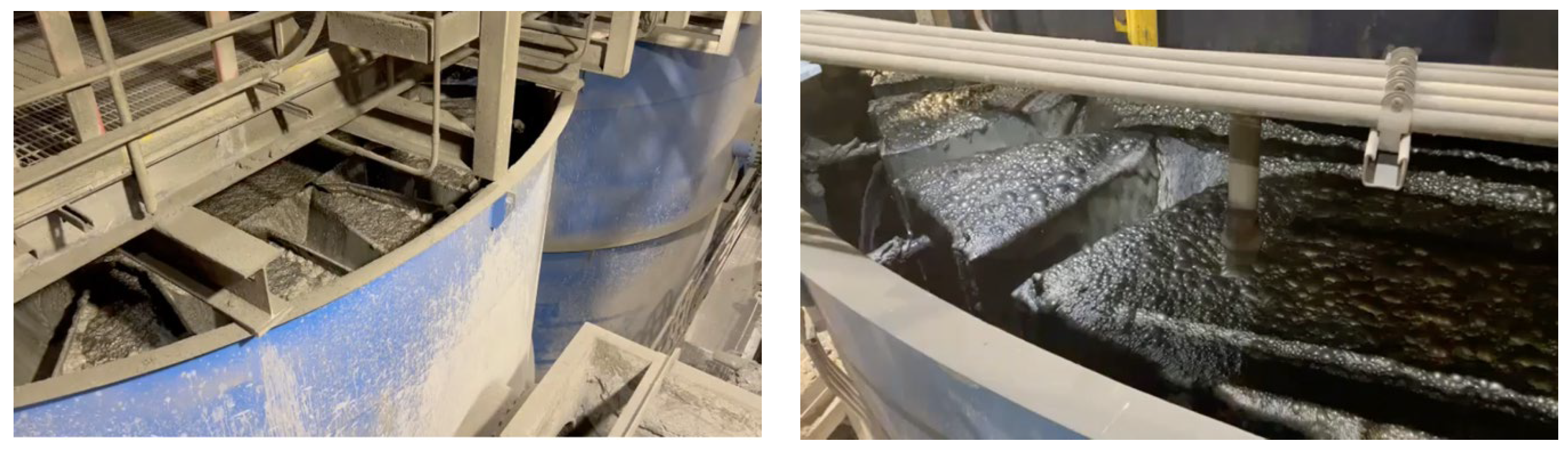
Another relevant point when processing complex minerals is the loss of frothing that occurs in rougher flotation, as seen in
Figure 10, which was substantially improved when applying the T-100 reagent. This change not only improved copper recovery but also improved the froth and overflow stability of the rougher flotation circuit cells. This observation deserves further investigation.
4. Conclusions
This study assessed the performance of a novel switchable frother chemistry (TransfoamerTM) in comparison with conventional alcohol- and polyglycol-type frothers, focusing on gas dispersion, foam stability, water recovery, and frother persistence under varying pH conditions. Laboratory experiments, batch flotation tests, and an industrial evaluation were combined to characterize frother behavior across different flotation environments.
The results showed that TransfoamerTM frothers behaved as strong frothers under mildly alkaline conditions, providing gas holdup and foam characteristics comparable to those of conventional strong frothers. As pH increased, TransfoamerTM frothers exhibited a clear switching behavior, characterized by reduced gas holdup, foam height, water carrying rate, and frother persistence. This behavior contrasted with that of traditional frothers, which maintained higher persistence or water recovery at elevated pH. Batch flotation tests using Caserones ores showed that the combination of MIBC and T-100 improved both the copper enrichment ratio and the recovery. Industrial trial results further demonstrated that TransfoamerTM frothers could be implemented at plant scale, leading to increased rougher copper recovery while preserving overall circuit selectivity.
Future work will focus on elucidating the frother switching mechanism and its impact on cleaner-stage selectivity via entrainment measurements.
Author Contributions
Conceptualization, M.M.S., N.M. and R.R.; Methodology: M.M.S., N.M. and J.P.V.-M.; Investigation, M.M.S. and J.P.V.-M.; Writing—original draft preparation, J.P.V.-M. and M.M.S.; Writing—review and editing, M.M.S., N.M. and J.P.V.-M.; Project administration, F.A. and N.M. All authors have read and agreed to the published version of the manuscript.
Funding
This research received no external funding.
Data Availability Statement
The data that support the findings of this study are subject to confidentiality restrictions and are therefore not publicly available.
Conflicts of Interest
Nicolas Miranda and Freddy Alcorta are employees of Caserones Lundin Mining. Ricardo Rubio is an employee of Technology Solution Syensqo. The authors declare that they have no known competing financial interests or personal relationships that could have appeared to influence the work reported in this paper.
References
- Cho, Y.S.; Laskowski, J.S. Effect of flotation frothers on bubble size and foam stability. Int. J. Miner. Process. 2002, 64, 69–80. [Google Scholar] [CrossRef] [Scilit]
- Drzymala, D.; Kowalczuk, P.B. Classification of Flotation Frothers. Minerals 2018, 8, 53. [Google Scholar] [CrossRef] [Scilit]
- Laskowski, J.S. Frothers and Flotation Froth. Miner. Process. Extr. Metall. Rev. 1993, 12, 61–89. [Google Scholar] [CrossRef] [Scilit]
- Wills, B.A.; Finch, J.A. Wills’ Mineral Processing Technology; Elsevier: Amsterdam, The Netherlands, 2015. [Google Scholar]
- Grau, R.A.; Laskowski, J.S.; Heiskanen, K. Effect of frothers on bubble size. Int. J. Miner. Process. 2005, 76, 225–233. [Google Scholar] [CrossRef] [Scilit]
- Finch, J.A.; Gelinas, S.; Moyo, P. Frother-related research at McGill University. Miner. Eng. 2006, 19, 726–733. [Google Scholar] [CrossRef] [Scilit]
- Zheng, X.; Johnson, N.W.; Franzidis, J.-P. Modelling of entrainment in industrial flotation cells: Water recovery and degree of entrainment. Miner. Eng. 2006, 19, 1191–1203. [Google Scholar] [CrossRef] [Scilit]
- Moyo, P.; Gomez, C.O.; Finch, J.A. Characterizing frothers using water carrying rate. Can. Metall. Q. 2007, 46, 215–220. [Google Scholar] [CrossRef]
- Martinez, J.; Maldonado, M.; Gutierrez, L. A method to predict water recovery rate in the collection and froth zone of flotation systems. Minerals 2020, 10, 630. [Google Scholar] [CrossRef] [Scilit]
- Smith, P.G.; Warren, L.J. Entrainment of Particles into Flotation Froths. Miner. Process. Extr. Metall. Rev. 1989, 5, 123–145. [Google Scholar] [CrossRef] [Scilit]
- Zangooi, A.; Gomez, C.O.; Finch, J.A. Mapping frother distribution in industrial flotation circuits. Miner. Eng. 2017, 113, 36–40. [Google Scholar] [CrossRef] [Scilit]
- Cooper, M.; Scott, D.; Dahlke, R.; Finch, J.A.; Gomez, C.O. Impact of air distribution on banks in a Zn cleaning circuit. C. Bull. 2004, 97, 1–6. [Google Scholar]
- Supomo, A.; Yap, E.; Zheng, X.; Banini, G.; Mosher, J.; Partanen, A. PT Freeport Indonesia’s masspull control strategy for rougher flotation. Miner. Eng. 2008, 21, 808–816. [Google Scholar] [CrossRef] [Scilit]
- Aslan, A.; Boz, H. Effect of air distribution profile on selectivity at zinc cleaner circuit. Miner. Eng. 2010, 23, 885–887. [Google Scholar] [CrossRef] [Scilit]
- Maldonado, M.; Ramos, I.; Pinto, A.; Gomez, C.O. Effect of air profiling and frother concentration on a flotation bank performance. Physicochem. Probl. Miner. Process. 2023, 59, 186274. [Google Scholar] [CrossRef] [Scilit]
- Bhambhani, T.; Zeng, F.; Arinaitwe, E.; Alanis, G.; Santana, A. Switchable frother technology for improving cleaner circuit performance. In Proceedings of the Flotation 23, Cape Town, South Africa, 6–9 November 2023. [Google Scholar]
- Finch, J.A.; Dobby, G.S. Column Flotation, 1st ed.; Pergamon Press: Oxford, UK, 1990. [Google Scholar]
- Azgomi, F.; Gomez, C.O.; Finch, J.A. Correspondence of gas holdup and bubble size in presence of different frothers. Int. J. Miner. Process. 2007, 83, 1–11. [Google Scholar] [CrossRef] [Scilit]
- Tan, Y.; Rafiei, A.; Elmahdy, A.; Finch, J. Bubble size, gas holdup and bubble velocity profile of some alcohols and commercial frothers. Int. J. Miner. Process. 2013, 119, 1–5. [Google Scholar] [CrossRef] [Scilit]
- Vergara-Meruane, J.P.; Maldonado, M.; Ramos, I.; Martinez, J.; Miranda, N.; Rubio, R. Assessment of a Novel Frother Chemistry for Industrial Flotation Processes. In Proceedings of the Procemin-Geomet 2024, Santiago, Chile, 7–9 August 2024. [Google Scholar]
- Azgomi, F.; Gomez, C.; Finch, J. Frother persistence: A measure using gas holdup. Miner. Eng. 2009, 22, 874–878. [Google Scholar] [CrossRef] [Scilit]
| Disclaimer/Publisher’s Note: The statements, opinions and data contained in all publications are solely those of the individual author(s) and contributor(s) and not of MDPI and/or the editor(s). MDPI and/or the editor(s) disclaim responsibility for any injury to people or property resulting from any ideas, methods, instructions or products referred to in the content. |




 and
and