Article

Enhanced Rougher Recovery of Ultrafine Molybdenum Tailings Using a Novel Pilot-Scale Turbulent Micro-Vortex Mineralizer

1
School of Chemical Engineering and Technology, China University of Mining and Technology, Xuzhou 221116, China
2
Luanchuan Longyu Molybdenum Mining Co., Ltd., Luoyang 471500, China
3
National Engineering Research Center of Coal Preparation & Purification, China University of Mining & Technology, Xuzhou 221116, China
4
State Key Laboratory of Coking Coal Resources Green Exploitation, China University of Mining and Technology, Xuzhou 221116, China
5
Luoyang Kaituozhe Mining Co., Ltd., Luoyang 471500, China
*
Authors to whom correspondence should be addressed.
Minerals 2026, 16(2), 201; https://doi.org/10.3390/min16020201
Submission received: 14 January 2026 / Revised: 12 February 2026 / Accepted: 13 February 2026 / Published: 14 February 2026
(This article belongs to the Special Issue Kinetic Characterization and Its Applications in Mineral Processing)

Abstract

Constrained by the low grade and poor floatability of the run-of-mine ore, the beneficiation of porphyry-type copper–molybdenum sulfide ores generates large quantities of molybdenum tailings, leading to significant environmental risks and resource losses and necessitating urgent recovery and reutilization. In this study, a representative sample of molybdenum tailings with a Mo grade of 0.354% was investigated to analyze its process mineralogy. The results show that molybdenite predominantly exists as fine, flaky particles intimately intergrown with quartz, pyrite, and aluminosilicate minerals, exhibiting an extremely low degree of liberation and an overall ultrafine particle size. Laboratory flotation tests show that the flotation kinetics conform to a first-order model; however, a considerable amount of molybdenum remains in the tailings, indicating that the mineralization process needs to be intensified. Through structural optimization and confined-space design, a vortex-based mineralization reactor was developed. Computational fluid dynamics simulations demonstrate that the mineralizer can generate flow fields with high turbulence intensity and dissipation rates and can induce high-energy, small-scale micro-vortices. On this basis, a semi-industrial rougher flotation system was established by coupling the developed mineralizer with a flotation column. Under optimized operating conditions, namely a feed pressure of 0.06 MPa and an impeller frequency of 20 Hz, single-stage treatment of the tailings produced molybdenum concentrates with a grade of 1.90% and a recovery of 81.29%, while the Mo grade of the tailings was reduced to 0.08%. The results are markedly superior to those obtained using a conventional laboratory flotation cell, demonstrating a substantial enhancement in mineralization efficiency and molybdenum recovery. The proposed approach, therefore, provides a practical reference for the flotation recovery of molybdenum tailings as well as other micro-fine, low-grade metal tailings.

1. Introduction

Molybdenum is an essential strategic metal that, owing to its excellent high-temperature strength, corrosion resistance, and catalytic activity [1,2], is widely used in iron and steel metallurgy, petrochemical engineering, aerospace, and new energy industries [3,4,5,6]. It is a critical material supporting the development of advanced manufacturing and strategic emerging industries. At present, molybdenum resources are mainly derived from the mining and beneficiation of primary molybdenum ores and associated ores, among which porphyry-type copper–molybdenum deposits (characterized by the association of molybdenite and chalcopyrite) constitute one of the significant sources of molybdenum metal [7,8], accounting for approximately 55%–60% of total molybdenum concentrate production [9]. However, with the continuous depletion of high-quality, and easily beneficiated resources, the molybdenum industry is increasingly confronted with challenges such as declining ore grades and more complex mineral intergrowths [10]. Flotation is the core method for the separation and recovery of low-grade molybdenum and associated ores [11], primarily relying on differences in mineral hydrophobicity [12]. Nevertheless, the widespread occurrence of low-grade and refractory feed materials inevitably leads to the generation of large quantities of tailings during flotation, which are mainly stored in tailings impoundments. This practice not only occupies substantial land resources but also poses potential ecological and environmental risks [13,14,15]. Meanwhile, the deterioration of ore properties significantly reduces flotation recovery efficiency, resulting in increasing molybdenum losses to tailings; in some scavenger and cleaner–scavenger tailings, the molybdenum grade may even exceed that of the run-of-mine ore [16], leading to severe resource wastage. Against this background, systematic research on the efficient recovery and reuse of molybdenum resources from flotation tailings is of great practical significance, as it not only enhances the comprehensive utilization of high-value metal resources but also helps alleviate resource constraints, reduce environmental risks, and promote the sustainable development of the molybdenum industry.
Constrained jointly by ultrafine particle size and low-grade characteristics, the recovery of molybdenum from tailings by chemical beneficiation routes is associated with high costs [17]. Consequently, flotation methods that exploit the natural hydrophobicity of molybdenite [18,19] remain the most reliable technical pathway for achieving efficient molybdenum recovery. However, as tailings are secondary products after beneficiation, most of the easily floatable particles have already been recovered, leaving predominantly refractory and interlocked particles. In addition, primary beneficiation processes typically involve intensive grinding and reagent addition during flotation [20], which further exacerbate particle fineness and complicate interfacial properties, severely limiting the flotation recovery performance [21]. Studies have investigated the flotation recovery of molybdenum from copper–molybdenum tailings. Fu et al. [16] enhanced the apparent particle size of a micro-fine tailings with a Mo grade of 1.04% by oil agglomeration, achieving the molybdenum recovery of 95% with a concentrate grade of 22.62%. Dai et al. [22] recovered a molybdenum concentrate with a grade of 24.87% from tailings containing 0.0063% Mo by adopting a process flowsheet involving roughing flotation followed by regrinding and reflotation. Boostan and Sam [23] realized the bulk flotation of copper and molybdenum from low-grade sulfide ore beneficiation tailings using mixed collectors. Nevertheless, these studies were conducted primarily under laboratory conditions; the recovery of molybdenum from tailings at pilot- and industrial scales still requires further investigation and validation.
The ultrafine particle size and complex surface properties of molybdenum tailings hinder effective particle–bubble attachment, thereby limiting flotation mineralization efficiency and molybdenum recovery. Hydrodynamic intensification is an effective method of enhancing mineralization efficiency [24,25]. By increasing energy input, the induction of higher-intensity turbulent flow fields can significantly improve the probability of particle–bubble collision and attachment [26,27]. For example, Xu et al. [28] enhanced turbulent dissipation in flotation equipment by employing a multilayer impeller–stator structure, thereby improving the selectivity of fine particle flotation. Moreover, studies have shown that when the turbulent eddy scale matches the particle size, the particle–bubble collision probability and flotation mineralization efficiency reach their maximum; accordingly, controllable induction of micro-scale turbulence can also effectively intensify the mineralization [29]. Extensive research has been conducted on the hydrodynamic enhancement of flotation mineralization. For instance, Wang et al. [30] employed vortex generators (VGs) to induce small-scale micro-vortices using triangular wing structures in circular pipes, thereby significantly increasing turbulent kinetic energy and dissipation; when they are introduced as the mineralization section of a flotation column, optimized performance was achieved. Shi et al. [31] optimized the stator–rotor configurations of flotation machines and demonstrated that different structural designs exert distinct effects on the mineralization process. However, for ultrafine and refractory molybdenum tailings, even smaller turbulent eddy scales and higher energy inputs are required. At present, reliable and targeted methods for intensifying mineralization remain lacking. Constructing suitable flow-field environments through specific physical structures to induce high-energy and small-scale turbulent eddies matched to particle size, thereby strengthening energy transfer during ultrafine particle–bubble mineralization and overcoming interfacial repulsive energy barriers, represents an effective strategy for improving the mineralization and recovery efficiency of valuable ultrafine components.
In summary, this study aims to provide a feasible technological pathway for the flotation recovery of fine-grained refractory molybdenum tailings through hydrodynamic intensification and semi-industrial experimental validation. Based on a comprehensive characterization of material properties and floatability, the flotation mineralization process was independently separated and selectively enhanced, and a pilot-scale turbulent micro-vortex mineralizer was innovatively developed. Through structural and a confined-space design, the mineralizer can effectively induce turbulent micro-vortices and generate a high energy-dissipation flow field. Verification experiments conducted using pilot-scale equipment demonstrate that, compared to conventional mechanical stirring flotation equipment, the proposed system can significantly enhance rougher flotation recovery of the tailings while maintaining concentrate enrichment ratio and recovery, and simultaneously reducing tailings grade to avoid secondary resource losses. As a result, efficient recovery of molybdenum from tailings can be achieved. This study is expected to provide an operational technical pathway for the efficient recovery of valuable resources from molybdenum tailings, with potential applicability to the comprehensive utilization of other types of tailings.

2. Properties and Floatability of Molybdenum Tailings

2.1. Experimental Sample

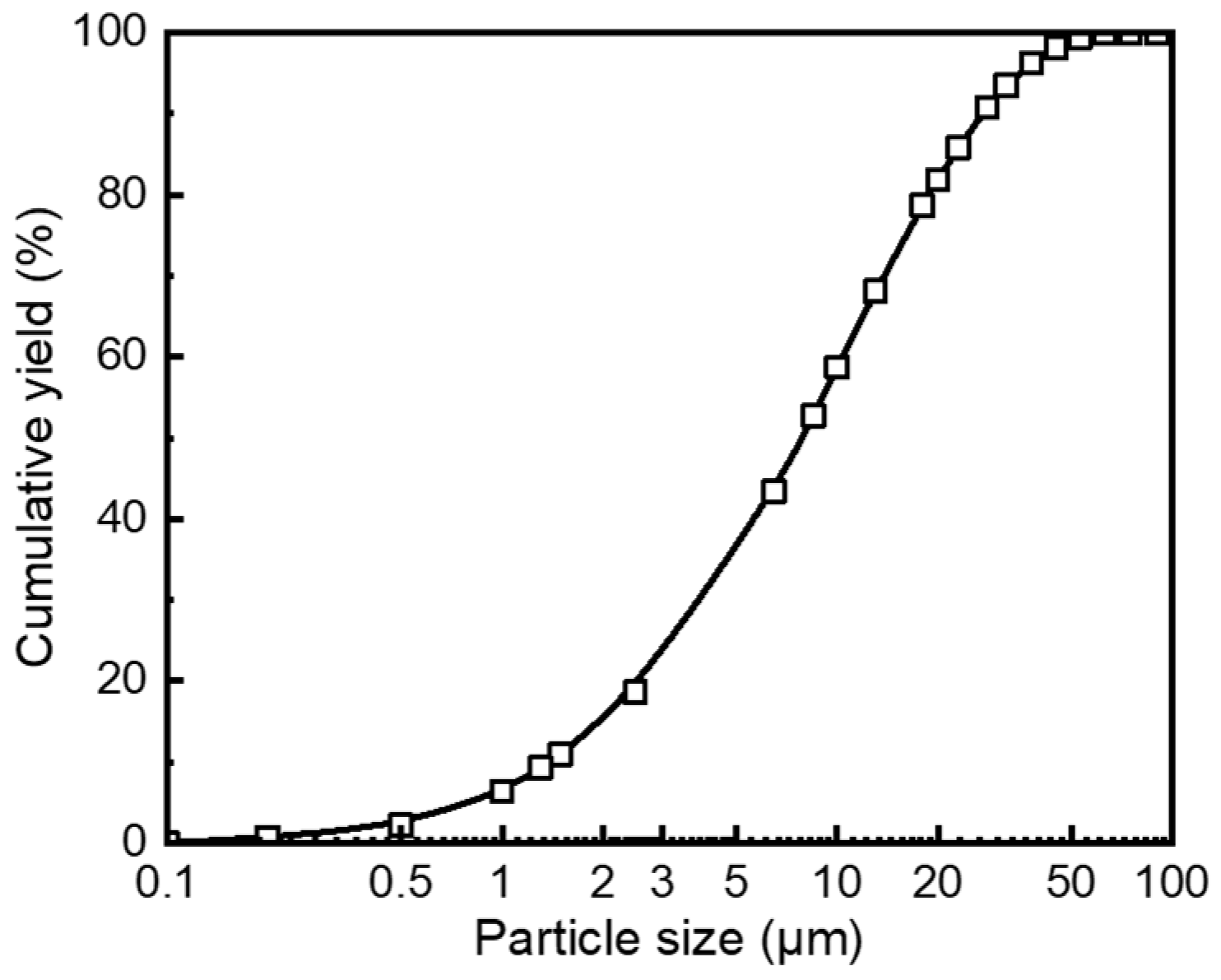
The molybdenum tailings used in this study were collected from a copper–molybdenum mineral processing plant located in Luanchuan, Henan Province, China. In this plant, the run-of-mine ore is subjected to grinding followed by bulk flotation, after which molybdenum is preferentially floated from bulk concentrates. The sample investigated is the tailings generated by the molybdenum cleaner–scavenger circuit. The particle size distribution of the sample is shown in Figure 1. It is obvious that the sample is generally fine-grained. The dominant size fraction is 5–10 μm, accounting for 23.45%. The median particle size (d50) is 7.87 μm. Furthermore, the d90 is as low as 26.99 μm, with virtually all particles finer than 60 μm. These results confirm that the sample is predominantly composed of fine particles. This particle-size characteristic is significantly below the practical lower size limit of conventional flotation processes. It is primarily attributable to the intensive grinding employed during primary beneficiation to achieve mineral liberation, which markedly increases the difficulty of subsequent recovery and utilization.

2.2. Process Mineralogy of Molybdenum Tailings

To characterize the molybdenum tailings, the chemical composition was first analyzed using X-ray fluorescence spectrometry (XRF; Malvern Panalytical Zetium, Malvern Panalytical, London, UK), and the results are summarized in Table 1. As shown, the primary chemical components of the sample are Si, Fe, and Al, with mass fractions of 43.96%, 15.42%, and 12.44%, respectively, indicating that silicate gangue minerals and iron-bearing phases dominate the tailings. The sulfur content is relatively high (7.20%), suggesting that a considerable amount of sulfide minerals remains in the tailings. In addition, the molybdenum content is 0.35%, indicating substantial recovery potential. The tailings also contain 1.22% Cu and 0.65% Ti, while the contents of other associated metallic elements are relatively low.
To further elucidate the mineral composition and textural characteristics of the molybdenum tailings, analyses were conducted using an Advanced Mineral Identification and Characterization System (AMICS). This system integrates a scanning electron microscope (SEM; Zeiss Gemini 300, ZEISS, Oberkochen, Germany) with an energy-dispersive X-ray spectrometer (EDS; Bruker XFlash, Bruker, Karlsruhe, Germany) and uses automated analysis software to identify mineral species. The major mineral phases and their abundances in the molybdenum tailings, as determined by AMICS, are listed in Table 2. The results indicate that the tailings are primarily composed of silicate gangue minerals such as quartz, andesine, and orthoclase, which is consistent with the high Si and Al contents obtained from XRF analysis. The content of molybdenite is 0.68%, in good agreement with the elemental molybdenum content determined by XRF. In addition, iron-bearing minerals such as pyrite are present in relatively high proportions, accounting for the elevated Fe and S contents observed in the chemical analysis.
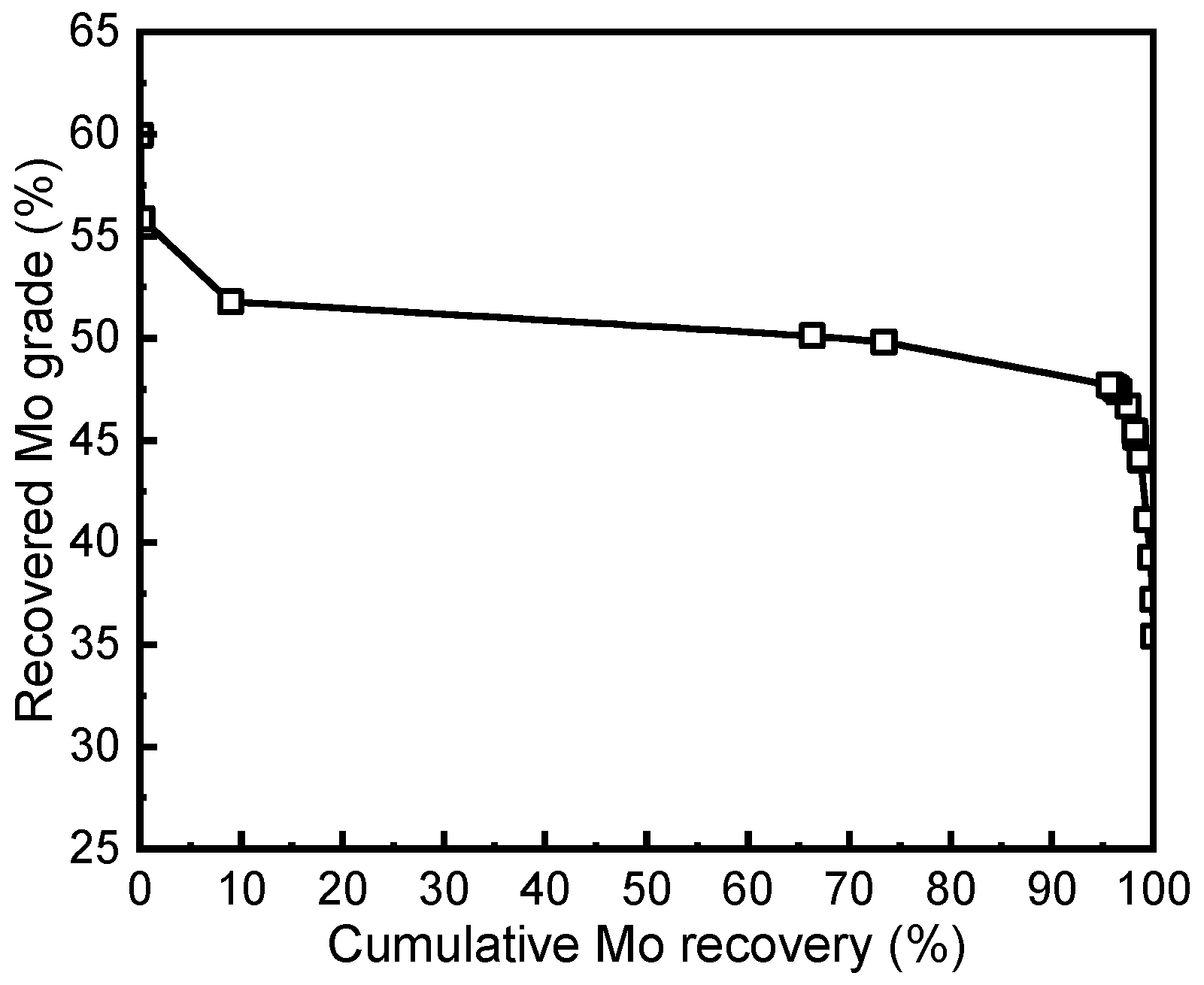
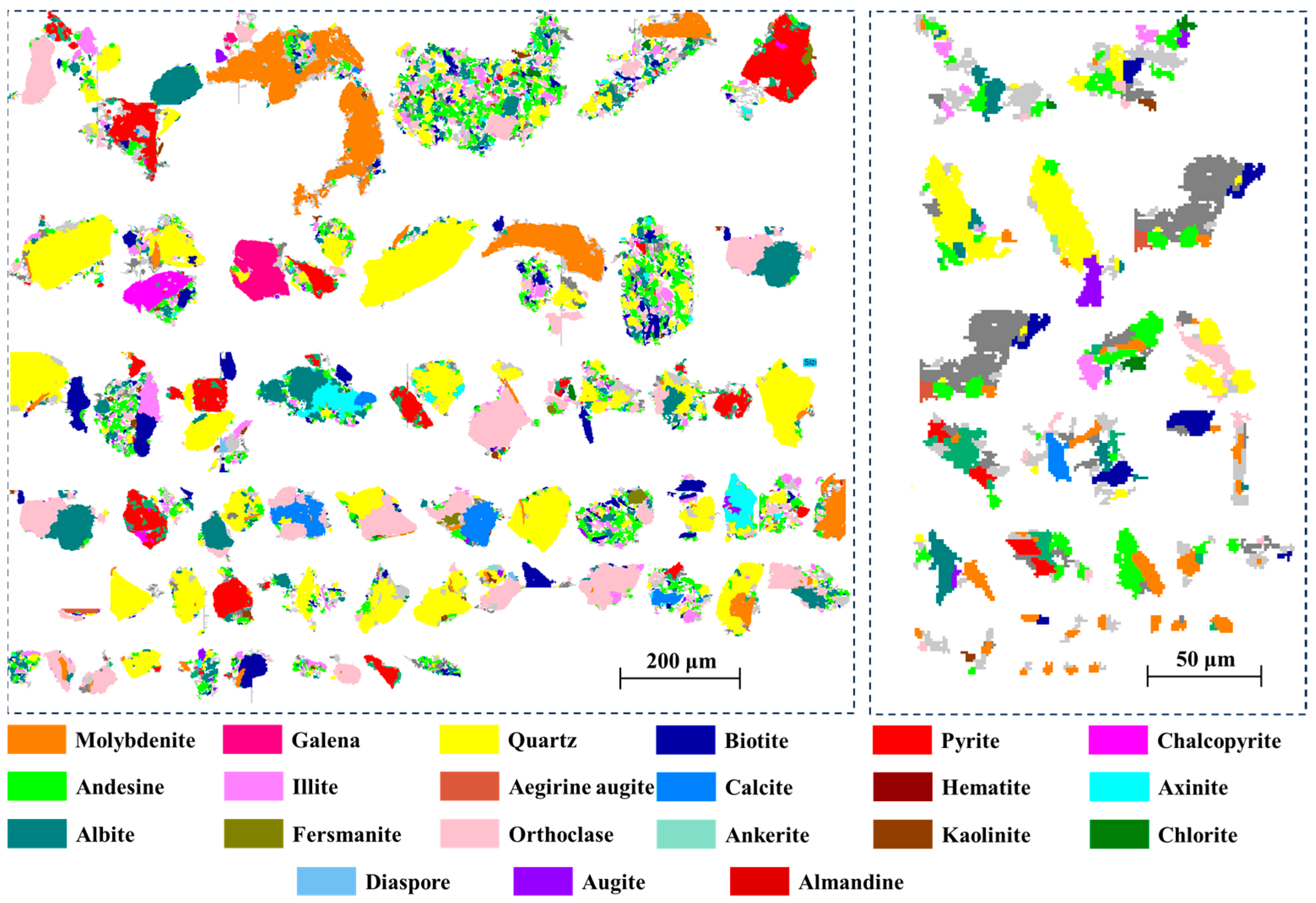
Further interpretation of the AMICS data provides an insight into the types of minerals associated with molybdenite and the corresponding textural relationships, as summarized in Table 3 and illustrated in Figure 2. The results reveal that molybdenite is almost entirely associated with other gangue minerals, with less than 0.10% of ultrafine particles (<10 μm) occurring as liberated grains. Within composite particles, molybdenite exhibits typical platy and lamellar crystal habits. Except for a few particles, molybdenite grains are generally fine and are essentially encapsulated by gangue minerals, with only limited surface exposure; some molybdenite grains are distributed along the edges of gangue particles. This textural feature significantly reduces the exposed hydrophobic surface area of molybdenite relative to its theoretical value, thereby diminishing the efficiency of bubble–particle attachment. In addition, a grade recovery curve for molybdenum was plotted, as shown in Figure 3. It can be observed that, while maintaining molybdenum recovery, the theoretically achievable concentrate grade is relatively limited, indicating that molybdenum recovery is difficult.
As shown in Table 3, quartz is the most prevalent gangue mineral associated with molybdenite, whereas pyrite is also frequently intergrown with molybdenite. As a sulfide mineral, pyrite may adversely affect flotation selectivity. In addition, aluminosilicate minerals such as orthoclase, andesine, and albite are commonly present within the composite particles and may form slime coatings that cover effective hydrophobic sites, further deteriorating flotation performance. Although molybdenite is strongly associated with quartz, quartz is also widely intergrown with other gangue minerals. Consequently, this ore cannot achieve improved separation by recovering associated minerals and must rely solely on molybdenite as the target mineral for flotation. Overall, the molybdenum tailings are characterized by ultrafine dissemination, complex textural relationships, limited liberation, and severe gangue interference. Effective strengthening of the flotation process is therefore essential to realize efficient separation and recovery of valuable molybdenum resources.

2.3. Floatability of Molybdenum Tailings

To systematically elucidate the recovery behavior of molybdenite particles in molybdenum tailings during flotation and the mechanisms constraining their recovery, flotation kinetics experiments were conducted. The experiments were conducted in a 1 L laboratory mechanical flotation cell (Rock XFD II, Wuhan Rock Powder Grinding Equipment Manufacturing Co., Ltd., Wuhan, China) using the conventional reagent scheme consistent with that of the plant from which the samples were obtained, with kerosene as the collector and pine oil as the frother, both at 50 g/t, and sodium mercaptoacetate was added as a copper depressant at 1000 g/t. The pulp density was maintained at 300 g/L, with an impeller speed of 2000 rpm and an air flow rate of 0.25 m3/(m2·min). The flotation kinetic experiments were conducted in triplicate, and the deviations in the final concentrate Mo grade and recovery were both within 3%, indicating good experimental repeatability and data reliability. The experimental results are summarized in Table 4. Analysis of the flotation kinetics indicates that, under the specified operating conditions, a flotation time of 7 min yielded a molybdenum concentrate with a grade of 1.06% and a recovery of 74.50%. With increasing flotation time, the molybdenum grade of the concentrate exhibited a decreasing trend, indicating that easily floatable molybdenite particles were recovered preferentially at the initial stage, while the probability of gangue entrainment increased progressively at later stages.
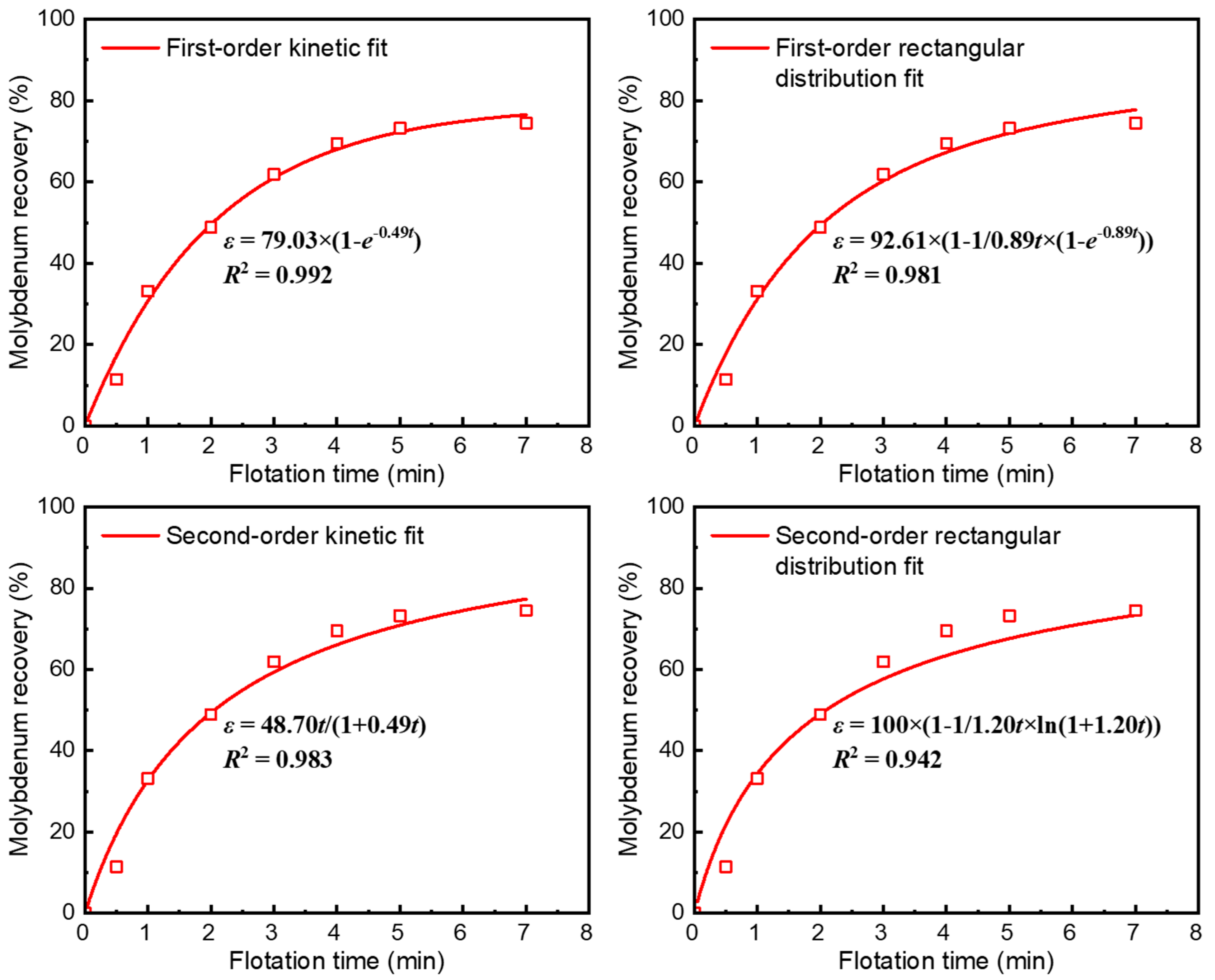
Furthermore, four commonly used flotation kinetics models were applied to fit the experimental data to characterize the flotation rate behavior of the molybdenum tailings [32]. The fitting results are shown in Figure 4. The flotation kinetics models employed include the classical first-order model:
ε = ε 1 e k 1 t
first-order model with rectangular distribution:
ε = ε 1 1 k 2 t 1 e k 2 t
second order model:
ε = ε 2 k 3 t 1 + ε k 3 t
second-order model with rectangular distribution:
ε = ε 1 ln ( 1 + k 4 t ) k 4 t
where ε is the molybdenum recovery (%) at time t; ε represents the maximum theoretical recovery (%) attainable at infinite flotation time; and k (k1, k2, k3, k4 for different models) denotes the flotation rate constant. During model fitting, the constraint 0 ≤ ε ≤ 100 was imposed.
The results show that all four models can describe the flotation kinetics of the molybdenum tailings to some extent; however, comparison of the fitting performance indicates that the classical first-order model provides a markedly superior fit, with the highest coefficient of determination (R2 = 0.992). In contrast, the infinite recovery parameters obtained from the other models approach or reach the imposed upper constraint, suggesting that their model parameters are non-identifiable and therefore unsuitable for quantitative kinetic characterization of this system. Overall, the flotation behavior of the molybdenum tailings conforms well to a first-order kinetic model, with ε = 79.03% and a flotation rate constant k1 = 0.49 s−1. Meanwhile, the flotation rate constant k1 falls within the range generally regarded as a moderate flotation rate, indicating a certain recovery potential. In addition, the limitation imposed by the maximum theoretical recovery indicates that satisfactory flotation performance for this molybdenum tailings cannot be achieved solely by extending the flotation time. Therefore, the flotation process must be intensified through approaches such as hydrodynamic regulation.
Comprehensive analysis of the flotation results further reveals that the molybdenum grade of the final tailings remains as high as 0.12%, which is considerably elevated, demonstrating that the rougher flotation performance of the laboratory flotation cell is insufficient for effective recovery of molybdenum resources from the tailings and has a limited effect on mitigating resource losses. In addition, by comparing the flotation kinetic data with the grade–recovery curve shown in Figure 3, it can be observed that, at the same molybdenum recovery level, the concentrate molybdenum grade achieved by flotation is significantly lower than the theoretical value. This indicates a relatively poor flotation recovery selectivity for the concentrate, accompanied by substantial entrainment of gangue minerals during flotation, which deteriorates the overall flotation performance. In general, molybdenum recovery increases rapidly during the initial stage of flotation and then gradually approaches a stable trend; however, a complete plateau is not achieved over the entire experimental time range. This behavior is characteristic of low-grade, poorly liberated flotation systems with complex flotation responses, for which simply extending the flotation time is ineffective at improving the ultimate recovery. Therefore, targeted intensification strategies are required to enhance the flotation recovery performance of molybdenum tailings.

3. Turbulent Micro-Vortex-Based Enhanced Mineralizer

3.1. Development of the Pilot-Scale Mineralizer

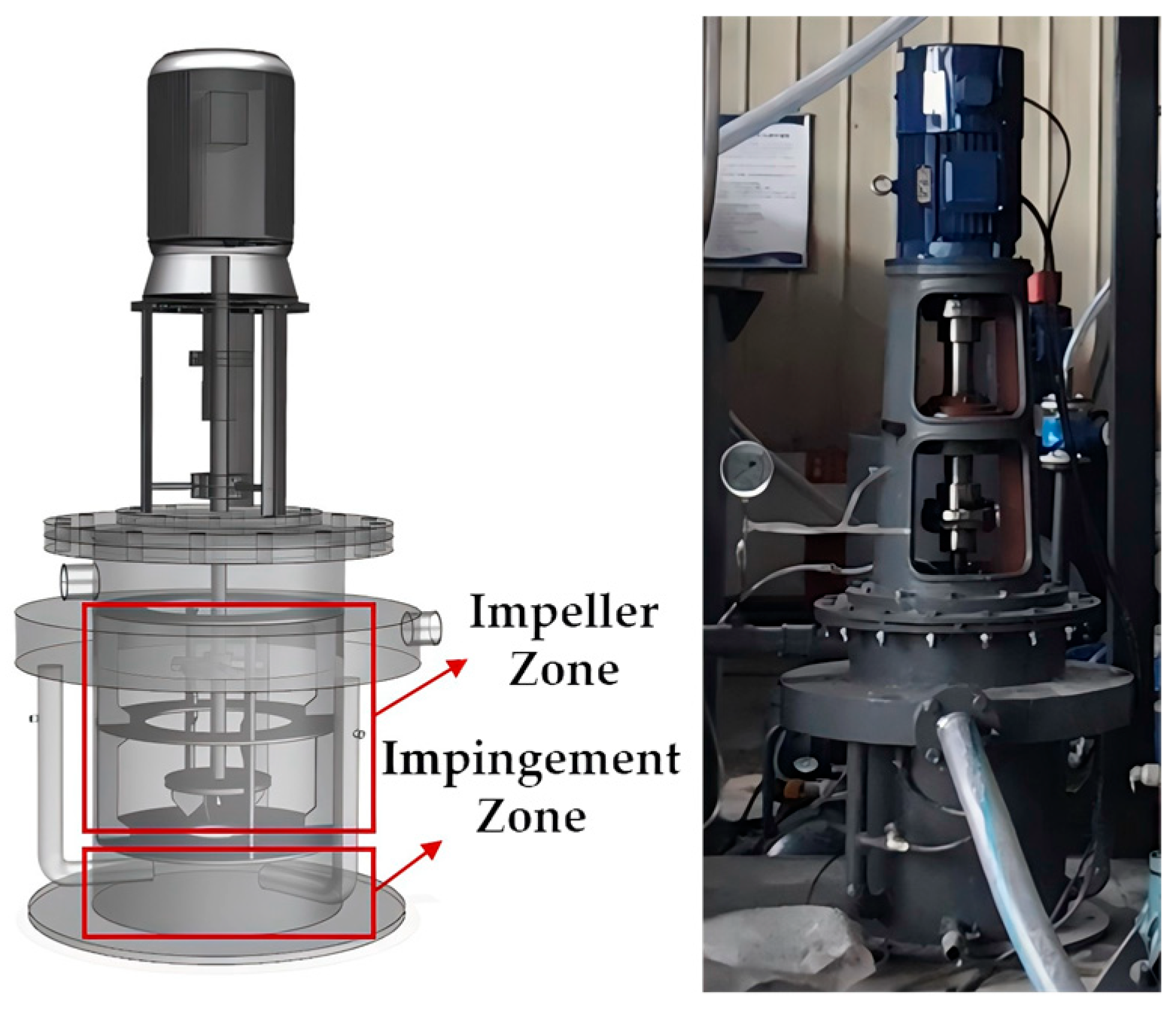
Owing to the ultrafine particle size and low grade of molybdenum tailings, the collision and adhesion efficiency between particles and bubbles are low, resulting in poor flotation recovery. To address this limitation, this study decouples the flotation mineralization process from conventional flotation equipment and intensifies it independently. Through structural design, high-energy, small-scale micro-vortices can be induced, and a pilot-scale turbulent mineralizer was developed by integrating a confined space. Particle size analysis and mineralogical characterization of the molybdenum tailings indicate that the tailings are extremely fine, and that molybdenite can only be effectively liberated when the particle size is reduced to approximately below 50 μm. Accordingly, the equipment was structurally designed to induce a high energy-dissipation flow field, with particular emphasis on promoting the generation of turbulent micro-vortices at scales comparable to the particle size. These vortices act directly on the particle–bubble attachment process, thereby enhancing adhesion efficiency and strengthening flotation recovery. The structure and physical prototype of the pilot-scale mineralizer is shown in Figure 5, which has a diameter of 400 mm and a cylinder height of 600 mm (excluding the motor). The structure of the mineralizer was previously designed and optimized at the laboratory scale, where its operational performance was experimentally validated. Subsequently, a semi-industrial scale-up was carried out based on the principles of maintaining consistent slurry residence time as well as similarity in energy density and turbulent eddy scale. The mineralizer primarily comprises a feed distribution ring, impinging-flow pipes, a forced impeller, a circulation impeller, annular baffle plates, and vertical baffles. These components enable the formation of multiple flow regimes within the vessel, including impinging jets, axial-stirring flow, and radial-circulation flow. Combined with high-intensity agitation and baffle-assisted structural design, micro-vortex generation is further intensified. Meanwhile, the mineralizer adopts a confined structure, and the internal environment operates under pressurized conditions, which promotes gas dissolution and bubble dispersion, thereby improving the mineralization efficiency. To address the challenging characteristics of ultrafine molybdenum tailings, the mineralizer was specifically designed with impeller configurations, baffle additions, and a confined-space system, all of which serve to substantially enhance internal turbulence intensity and promote the formation of turbulent micro-eddies, thereby directly intensifying the mineralization process of the tailings.
When slurry enters the mineralizer, it is uniformly distributed by the distribution ring and fed into the vessel through three symmetrically arranged inlet pipes at the bottom. Gas is injected through the impinging pipes, generating intensive collisions at the central region before rising into the impeller zone. The lower impeller effectively disperses bubbles and particles while providing substantial energy input to intensify mineralization, thereby serving as the primary region for particle–bubble attachment. As the slurry rises into the upper impeller zone, axial circulation is induced, promoting downward recirculation of unmineralized particles to the lower impeller region and thereby significantly increasing the probability of molybdenite mineralization. Finally, the mineralized slurry is discharged from the upper outlet and fed into the subsequent flotation separation unit. By decoupling and targeting the mineralization process, the developed mineralizer can enhance molybdenum recovery from tailings.

3.2. Internal Flow Field Characteristics of the Pilot-Scale Mineralizer

For the developed pilot-scale mineralizer, computational fluid dynamics (CFD) simulations were first conducted to elucidate the internal flow field characteristics and turbulence parameters of the mineralizer, thereby providing a preliminary verification of the effectiveness of the structural design prior to flotation testing. Simulations performed under different feed pressures (Pc) and energy input levels (represented by motor frequency f) enabled a detailed analysis of the internal flow field characteristics of the mineralizer under various flotation operating conditions. These results were used to assess whether the mineralizer could generate the targeted hydrodynamic features—such as turbulence intensity distribution and micro-vortex formation—under typical operating conditions, thereby providing a reliable basis for subsequent pilot-scale flotation experiments. A three-dimensional physical model of the mineralizer was first established in UG, followed by mesh generation in ICEM and numerical solution in ANSYS Fluent 19.2. During the simulation, water was used as the fluid medium and was assumed to be incompressible. The governing equations employed in the numerical simulation include: (1) Continuity equation:
u x + v y + w z = 0
where u′, v′, and w′ denote the velocity components in the x, y, and z directions, respectively.
(2) Momentum conservation equation:
ρ v t + p v v = p + τ + ρ g + F
where ρ is the fluid density; t is time; v is the velocity vector; p represents the pressure acting on the fluid element (static pressure); τ is the viscous stress tensor; g denotes the body force per unit mass acting on the fluid element; and F represents other external body forces acting on the fluid element.
In the simulations, gravitational effects were considered, and water was selected as the continuous liquid phase. Pressure boundary conditions were applied at both the inlet and outlet, while no-slip boundary conditions were imposed on the walls. The flow field was solved using the Euler–Euler multiphase model, and the turbulence behavior was modeled using the standard k–ε model. For the numerical solution strategy, the SIMPLE algorithm was employed for pressure–velocity coupling, and second-order upwind discretization schemes were adopted for the convective terms of all governing equations. Transient simulations were performed accordingly [33,34]. The convergence criteria were set with residuals in the range of 10−6–10−4, and the time step size was chosen between 10−4 and 10−3 s. Fluid velocity and the turbulent energy dissipation rate were monitored in real time, and a time-averaged analysis was conducted once the flow field had reached a statistically steady state. Grid independence verification demonstrated that when the mesh number exceeded 1,487,010 cells, the volume-averaged turbulent dissipation rate within the device became essentially stable. Therefore, this mesh resolution was adopted for subsequent simulations.

3.2.1. Velocity Distribution Characteristics

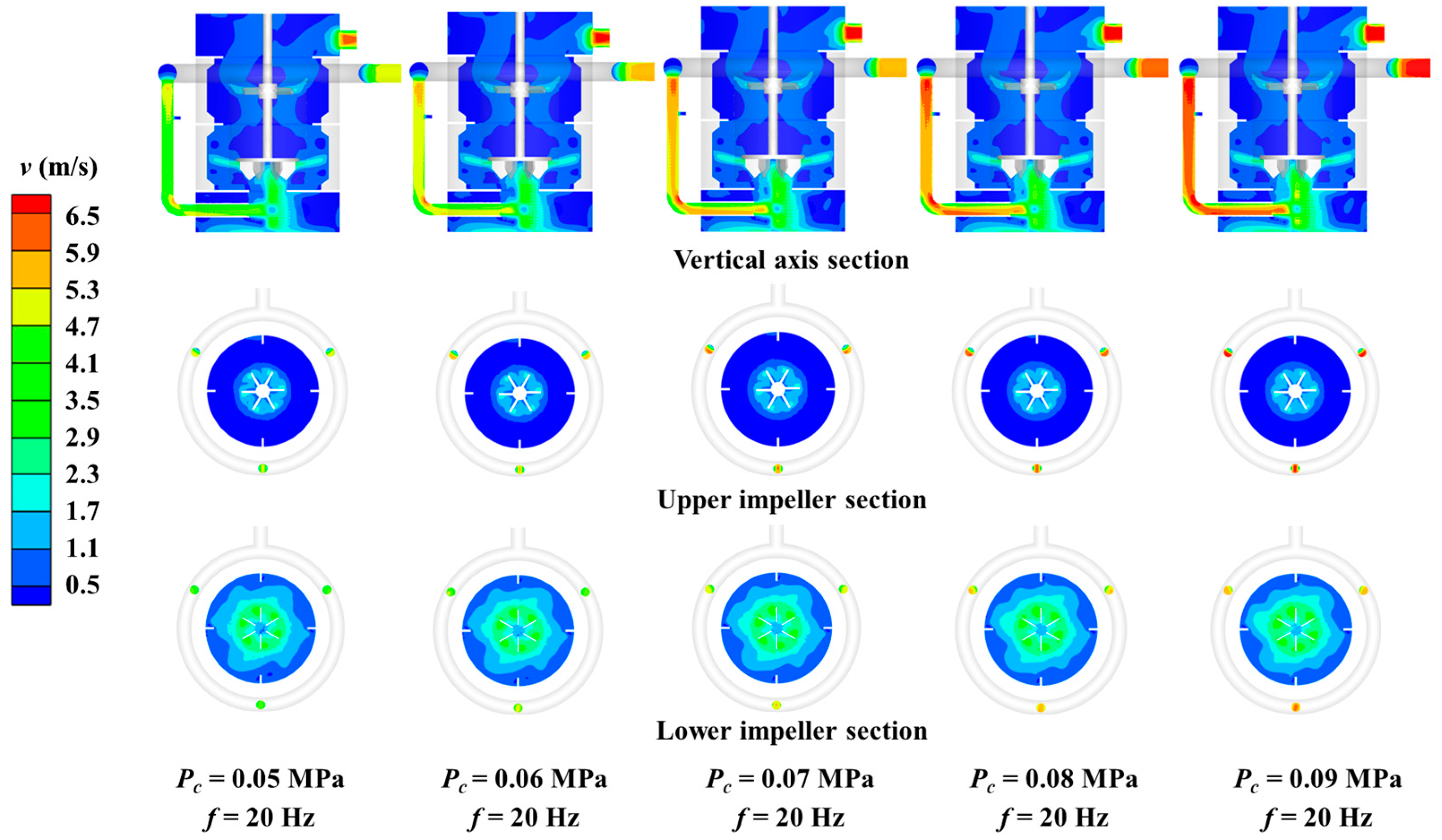
Figure 6 presents the velocity distributions inside the turbulent mineralizer under different feed pressures (0.05, 0.06, 0.07, 0.08, and 0.09 MPa). The results indicate that a flow field with relatively high velocities and a favorable spatial distribution can be established within the mineralizer. After passing through the distribution ring and entering the feed pipes, the slurry first undergoes intense impingement in the lower region of the mineralizer. Feed pressure significantly influences the impingement process: increasing the feed pressure markedly enhances slurry velocity within the distribution ring and feed pipes, intensifies impingement strength at the bottom of the mineralizer, increases local fluid velocity in the impingement zone, and expands the extent of high-velocity regions. This effectively increases the probability of collision-induced mineralization for ultrafine particles. As the slurry flows upward into the impeller zone, the lower impeller induces high-velocity areas around and beneath it, with a relatively wide spatial coverage that nearly spans the entire cross-section of the vessel. This flow pattern enables uniform dispersion of particles and bubbles and promotes efficient interfacial interactions, establishing this zone as the primary region for mineralization. After being thrown toward the vessel wall by the lower impeller, the slurry is reflected and continues to rise. Upon convergence at the central annular baffle plate, the slurry enters the upper impeller zone, where a high-velocity region forms from the vessel wall toward the center above the lower impeller. The upper impeller also generates localized high-velocity areas in its vicinity; however, compared with the lower impeller, these regions are significantly smaller and exhibit lower velocities. This is attributed to the structural design of the upper impeller, which primarily enhances slurry circulation rather than directly promoting mineralization. By inducing swirling motion, the upper impeller increases slurry residence time and facilitates the return of unmineralized particles to the high-velocity region of the lower impeller for further mineralization. Finally, the mineralized slurry is discharged through the upper outlet. Due to the reduced cross-sectional area of the discharge pipe, relatively high flow velocities are formed, which are beneficial for feeding and integration with the subsequent flotation separation equipment. The feed pressure has little influence on the magnitude and distribution of velocity outside the impingement zone within the vessel; increasing the feed pressure primarily elevates the velocity beneath the lower impeller, shown as a consequence of intensified impinging flow.
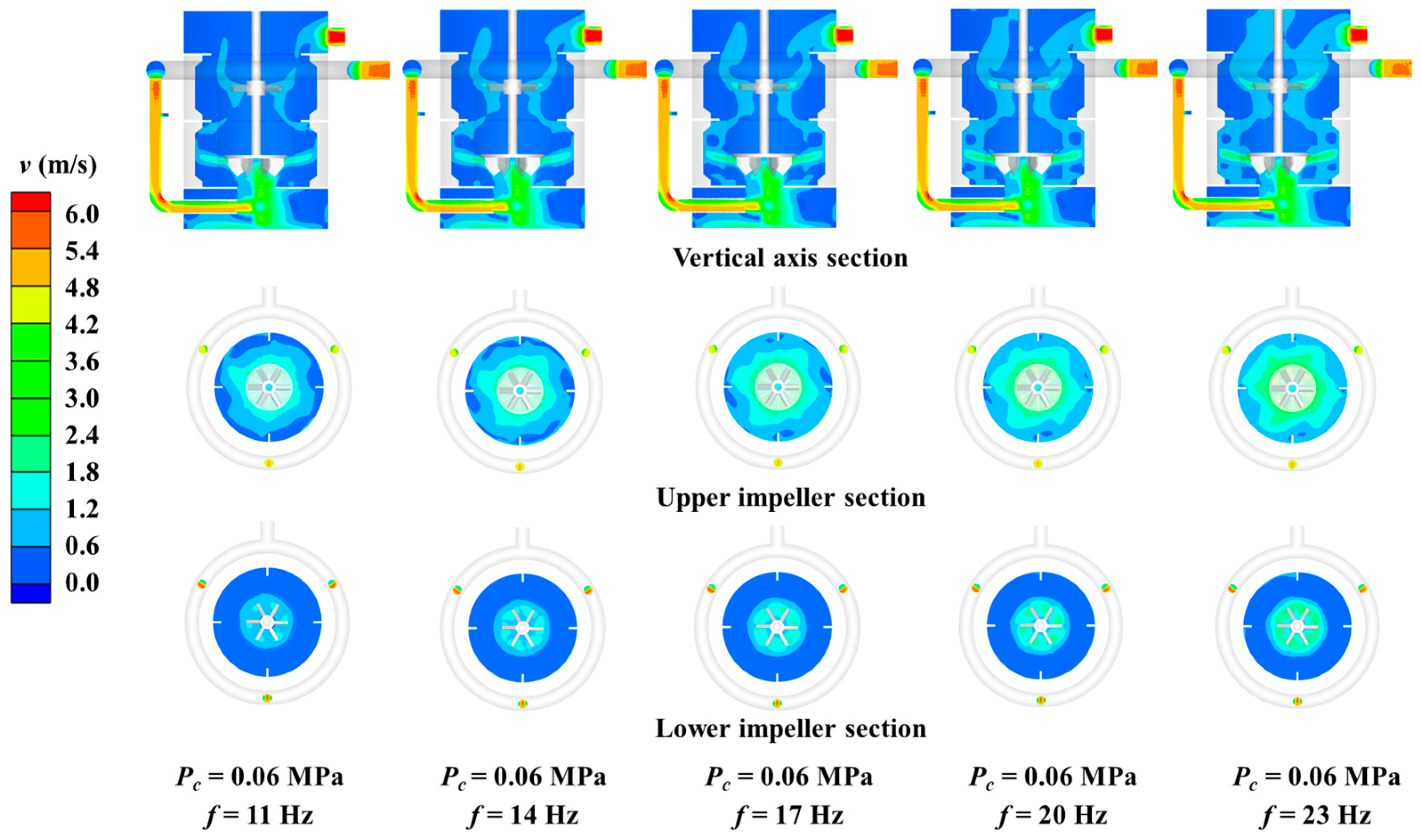
The velocity distributions within the turbulent mineralizer at different energy input levels are shown in Figure 7. The energy input was controlled by the motor frequency, which was set to 11, 14, 17, 20, and 23 Hz. According to on-site measurements, these frequencies correspond to impeller rotational speeds of 205, 248, 289, 335, and 388 rpm, respectively. The results indicate that, at a constant feed pressure, energy input has a limited influence on the fluid velocity in the lower impingement zone of the mineralizer. The magnitude and distribution of velocity in the feed pipes and at the vessel bottom remain essentially unchanged. In contrast, the fluid motion within the confined cylindrical space exhibits pronounced differences. At the lowest motor frequency of 11 Hz, the overall velocity inside the mineralizer is relatively low, and the influence range of the impellers is limited. Most regions within the vessel exhibit velocities below 1.2 m/s, and the high-velocity zone induced by the lower impeller does not cover the entire cross-section of the cylinder. With increasing energy input, the slurry velocity throughout the vessel rises significantly. Both the lower and upper impellers can induce flow fields with higher velocities, and their influence ranges expand markedly, resulting in substantially larger high-velocity regions. Moreover, the circulation effect of the upper impeller is enhanced, thereby intensifying mineralization. In contrast, the velocity within the discharge pipe is primarily governed by the geometry; therefore, it remains nearly constant across different energy input conditions.

3.2.2. Pressure Field Distribution Characteristics

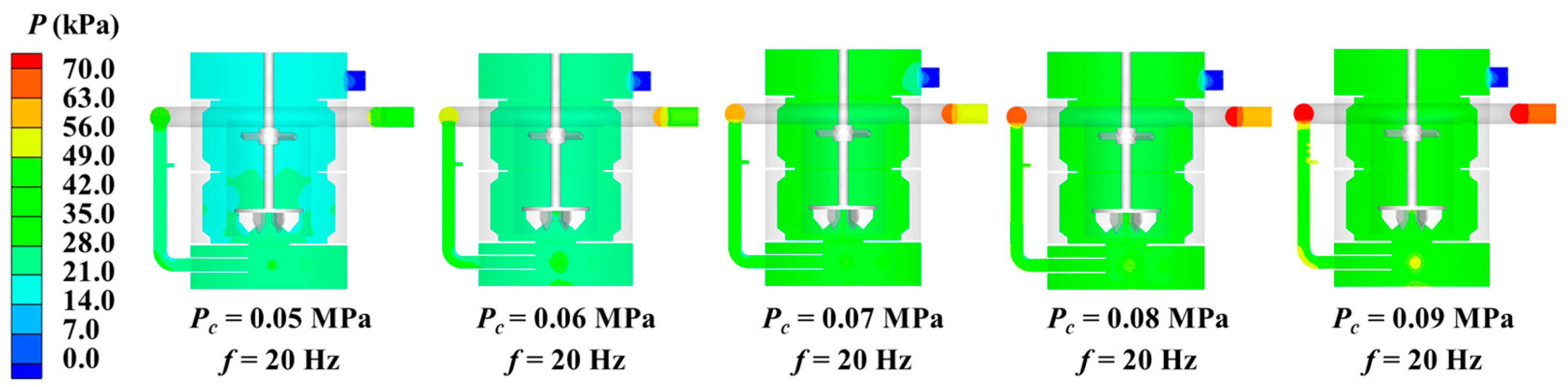
The pressure field distributions inside the turbulent mineralizer under different feed pressures are presented in Figure 8. The results show that, owing to the confined-space structural design, the interior of the mineralizer is generally maintained under pressurized conditions. Continuous slurry injection and the resulting impingement at the vessel bottom lead to significantly elevated pressures in the feed pipes and the bottom impingement zone, with the high-pressure region extending upward and influencing the lower impeller zone. As the upper impeller zone is farther from the high-pressure impingement region, the corresponding pressure is relatively lower; nevertheless, the entire vessel remains under positive pressure. Once the slurry is discharged through the upper outlet and exits the confined cylindrical space, the pressure decreases sharply. Feed pressure has a pronounced effect on the pressure magnitude within the mineralizer. Increasing the feed pressure substantially raises the pressure in the feed pipes and the bottom impingement zone and expands the influence range of the high-pressure region, thereby further increasing the overall pressure inside the vessel. At a feed pressure of 0.05 MPa, the pressure in the impingement zone is approximately 35 kPa, whereas the pressure near the upper region of the vessel is about 14 kPa. In contrast, when the feed pressure is increased to 0.09 MPa, the impingement-zone pressure rises to approximately 56 kPa, and the pressure throughout the confined vessel exceeds 42 kPa. This pressure enhancement promotes gas dissolution and dispersion, induces microbubble generation [35], and effectively intensifies the mineralization of ultrafine molybdenum tailings.
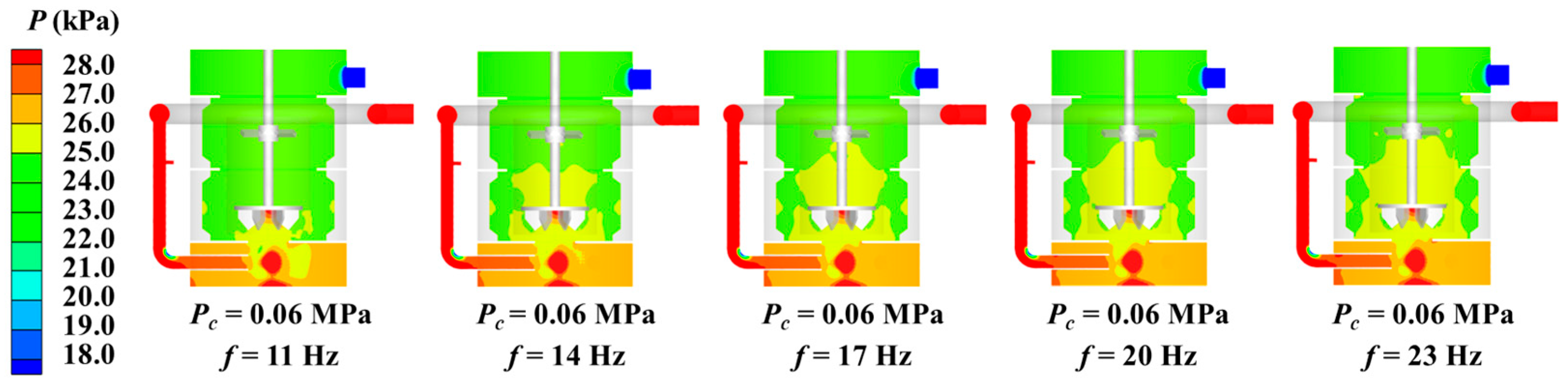
The pressure field distributions within the turbulent mineralizer at different energy input levels are shown in Figure 9. The results indicate that energy input primarily affects the pressure distribution in the impeller zones. As the impeller rotational speed increases, the pressure behind the impeller blades decreases; however, the intensified agitation induces more vigorous fluid motion in the peripheral regions, thereby forming relatively high-pressure zones outside the impeller region. Notably, in the middle section of the vessel, the combined dispersion effect of the lower impeller and the circulation induced by the upper impeller leads to local fluid accumulation and pressure enhancement. As the energy input increases, the pressure in this region gradually rises. At the highest energy input, the high-pressure zone can cover the entire cross-section of the vessel, effectively strengthening mineralization through confined-space pressurization.

3.2.3. Turbulent Kinetic Energy and Dissipation Characteristics

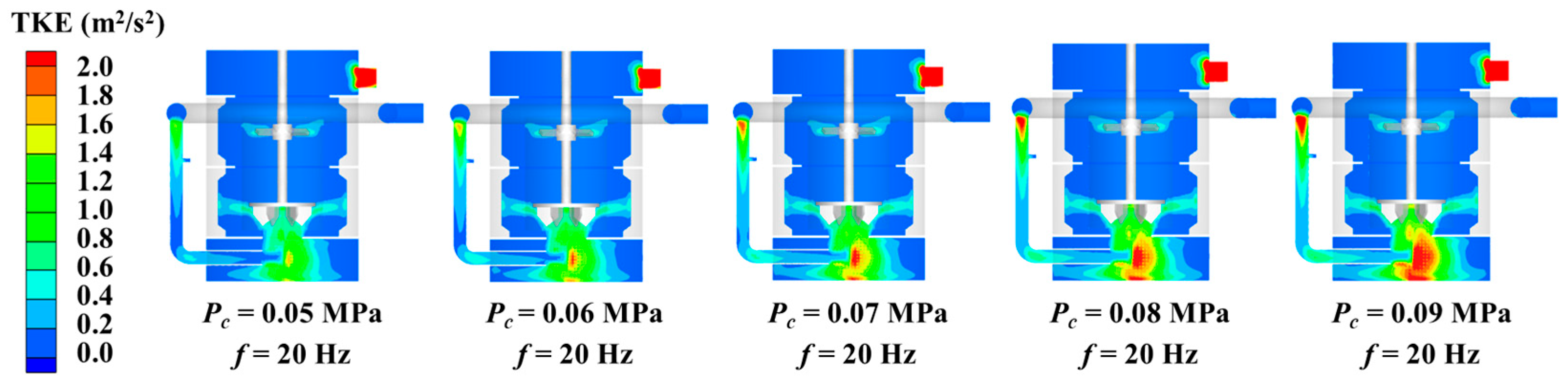
The distributions of turbulent kinetic energy inside the turbulent mineralizer under different feed pressures are shown in Figure 10. The results demonstrate that the spatial distribution of turbulent kinetic energy is similar to that of the velocity field, with notably high values in the feed pipes, the bottom impingement zone, and the regions surrounding the impellers. This behavior is primarily attributed to intense fluid collisions and vigorous motion in the impingement zone, which generate high turbulent kinetic energy, as well as to turbulence generated by impeller agitation. Among these regions, the high–turbulent kinetic energy zone induced by the lower impeller is significantly larger and exhibits higher values than that of the upper impeller. This is primarily due to the larger effective frontal area of the lower impeller, which enables stronger turbulence generation. Feed pressure primarily affects turbulent kinetic energy in the feed pipes and the bottom impingement zone, whereas its influence on the impeller regions is relatively limited. With increasing feed pressure, turbulent kinetic energy in the bottom impingement zone increases markedly, resulting in a broader region of high turbulent kinetic energy. At a feed pressure of 0.09 MPa, the maximum turbulent kinetic energy within the device can reach approximately 2.0 m2/s2, providing sufficient kinetic energy for particles and bubbles to complete the mineralization process.
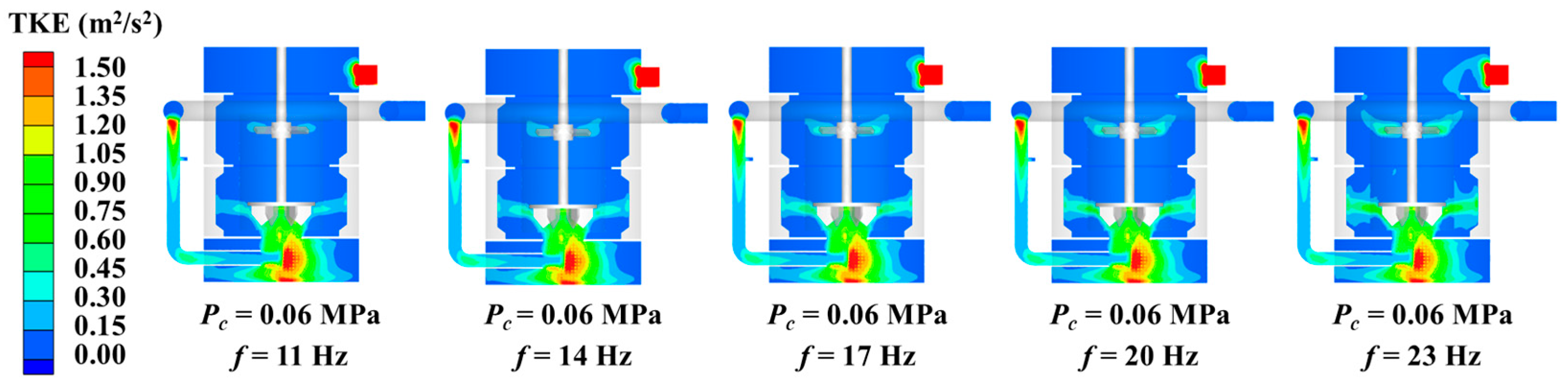
The turbulent kinetic energy distributions under different energy input levels are presented in Figure 11. As with the velocity field, energy input primarily affects the distribution of turbulent kinetic energy in the impeller zones, whereas the turbulent kinetic energy in the bottom impingement zone remains nearly unchanged. At low energy input, the bottom of the mineralizer is the primary region with relatively high turbulent kinetic energy, whereas the upper region of the vessel exhibits generally low values, mostly below 0.45 m2/s2. With increasing energy input, turbulent kinetic energy in the impeller regions increases significantly, and the high–turbulent–kinetic–energy zones expand accordingly. When the motor frequency reaches 23 Hz, the lower impeller induces a markedly enlarged region of high turbulent kinetic energy that extends vertically, with turbulent kinetic energy exceeding 0.90 m2/s2 across nearly the entire cross-section of the vessel, indicating intense turbulent fluctuations.
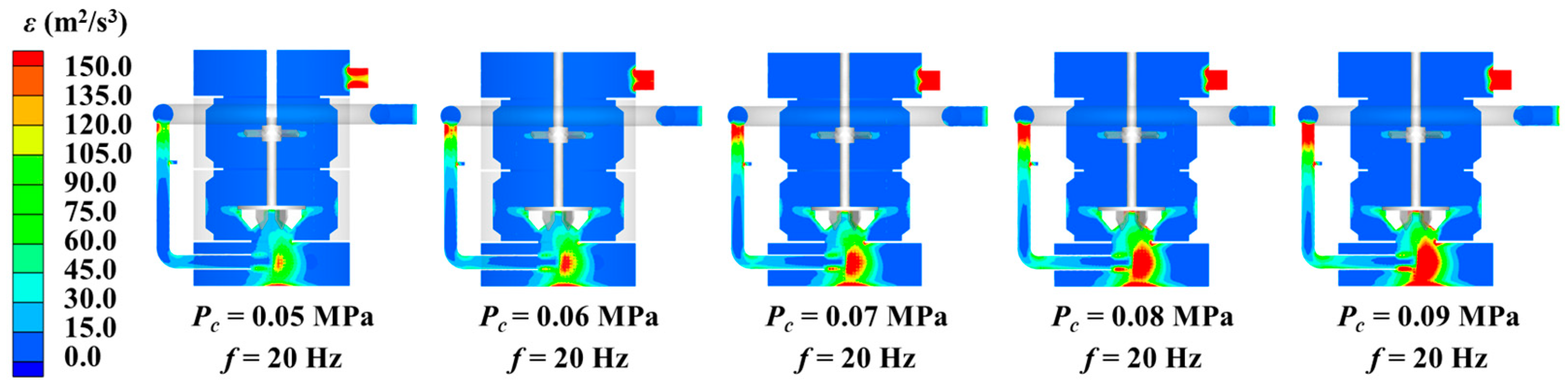
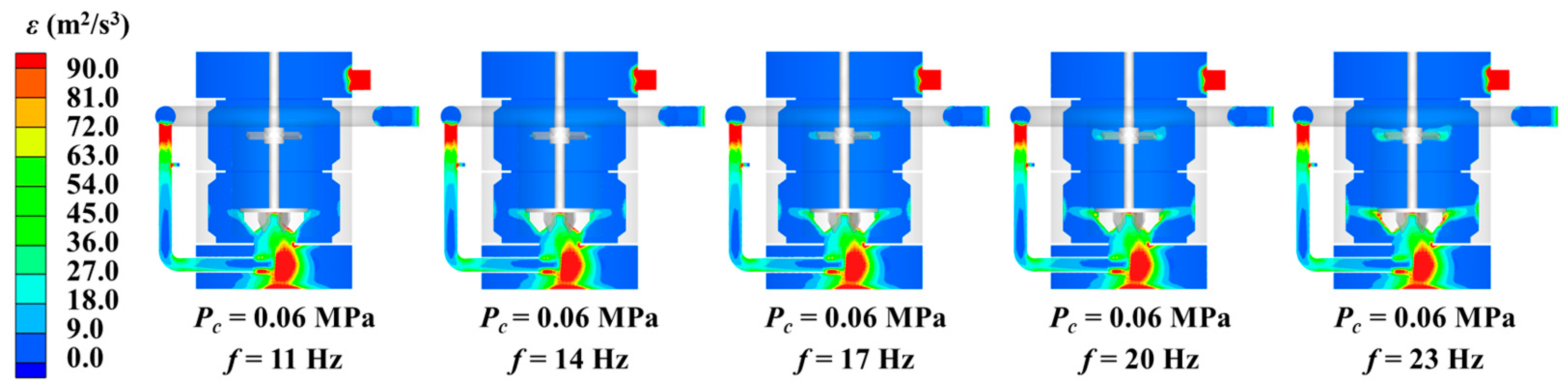
The turbulent dissipation rate distributions under different feed pressures are shown in Figure 12. Similarly to the turbulent kinetic energy distribution, turbulent dissipation is mainly concentrated in the feed pipes, the impingement zone, and the regions surrounding the impellers, with notably high dissipation also observed near the discharge pipe. In the feed pipes, continuous slurry supply by the middling circulation pump forces the slurry into the mineralizer, leading to impingement at the bottom and resulting in localized high-intensity turbulent dissipation. In the impeller regions, impeller rotation induces strong shear and intense fluid disturbance, significantly enhancing momentum and energy exchange and giving rise to pronounced turbulent fluctuations, thereby increasing the turbulent dissipation rate. Near the discharge pipe, abrupt changes in flow structure caused by slurry discharge generate localized regions of high turbulent dissipation. As with turbulent kinetic energy, feed pressure primarily affects the turbulent dissipation rate in the bottom-impingement zone. When the feed pressure reaches 0.09 MPa, the maximum turbulent dissipation rate exceeds 150 m2/s3, facilitating energy transfer to particles and bubbles and enabling them to overcome interfacial energy barriers during mineralization.
The turbulent dissipation rate distributions at different energy input levels are shown in Figure 13. Consistent with the turbulent kinetic energy distribution, increasing energy input primarily enhances the turbulent dissipation rate in the impeller regions and expands its influence range. Relatively high dissipation rates are observed around and downstream of the impeller blades, and the region of strong turbulent dissipation induced by the lower impeller is significantly larger than that of the upper impeller. Under high energy input conditions, the turbulent dissipation rate in the impeller regions can be comparable to that of the impingement zone.

3.2.4. Turbulent Eddy Characteristics

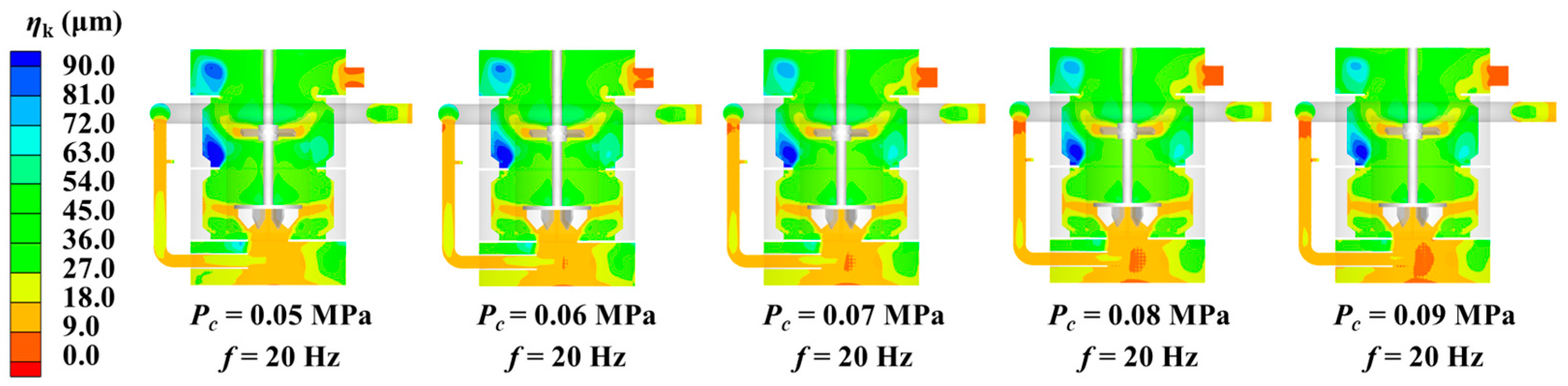
The distributions of the Kolmogorov eddy scale (ηk) inside the turbulent mineralizer under different feed pressures are shown in Figure 14. The results indicate that microscale turbulent eddies, on the order of micrometers, can be generated throughout the mineralizer. Particularly in the bottom impingement zone and the impeller regions, the eddy scale is especially small, reaching 18 μm or less. This demonstrates that the impinging flow pattern can effectively induce turbulent micro-eddies while generating strong turbulence, thereby enhancing the collision and attachment between ultrafine particles and bubbles. The small turbulent eddies formed in the impeller regions mainly result from velocity gradients between the rotating impeller blades and the surrounding fluid and evolve through continuous fragmentation under strong turbulent dissipation. Owing to its design emphasis on dispersion and mineralization, the lower impeller generates smaller eddy scales and a broader low-eddy-scale region than the upper impeller. Feed pressure mainly affects the eddy scale in the bottom impingement zone. With increasing feed pressure, the eddy scale in this region continuously decreases, from approximately 18 μm to below 9 μm, while also extending upward to influence the impeller regions and enlarge the low-eddy-scale zone.
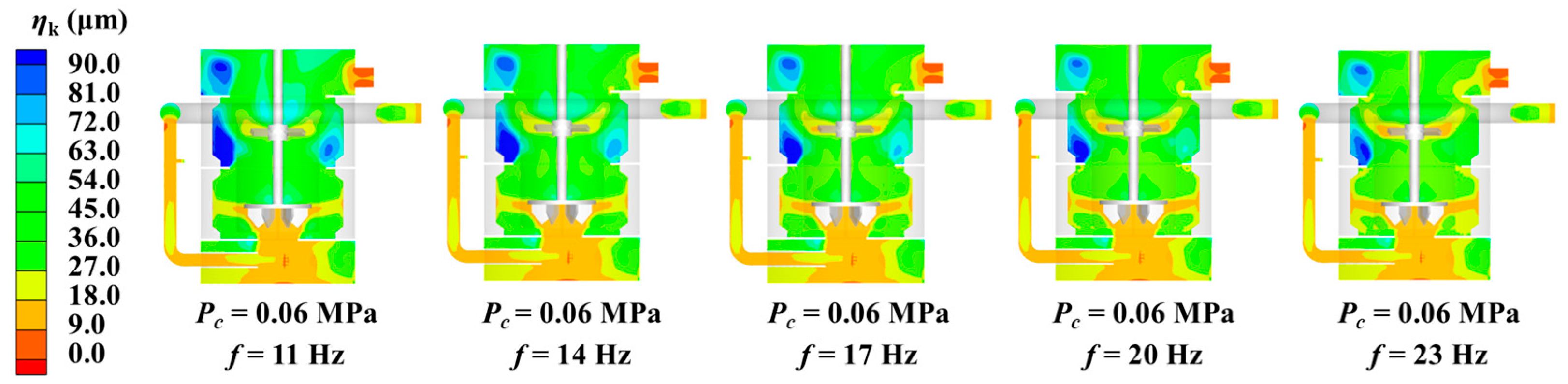
The Kolmogorov eddy scale distributions under different energy input levels are shown in Figure 15. The results indicate that energy input primarily affects the eddy scale distribution in the impeller regions. With increasing motor frequency, the eddy scale decreases significantly, and the impellers induce a broader low-eddy-scale region. When the motor frequency reaches 23 Hz, the lower impeller generates a low-eddy-scale zone that spans the entire vessel cross-section, while the circulation effect of the upper impeller becomes more pronounced, effectively intensifying the mineralization process.

3.2.5. Turbulence Characteristic Parameters

The volume-averaged turbulence characteristic parameters within the mineralizer under different feed pressures and energy input conditions, including turbulence intensity, turbulent dissipation rate, and eddy scale, were statistically analyzed, as summarized in Table 5. The results demonstrate that the mineralizer generates a flow field characterized by high turbulence intensity and dissipation, while inducing small-scale turbulent micro-eddies. Consistent with the flow-field contour results, increasing either the feed pressure or the energy input enhances turbulence intensity and dissipation while reducing the eddy scale. A comparative analysis shows that increasing energy input has a more pronounced effect on turbulence intensity. As the motor frequency increases from 11 to 23 Hz, the turbulence intensity inside the mineralizer rises from 19.69% to 25.69%. In contrast, feed pressure exerts a stronger influence on the turbulent dissipation rate and eddy scale. As the feed pressure increases from 0.05 to 0.09 MPa, the turbulent dissipation rate rises from 4.08 to 8.30 m2/s3, while the eddy scale decreases from 22.39 to 18.74 μm. The changes can be attributed to the fact that increasing feed pressure directly induces small-scale eddies and enhances dissipation through intense impinging flow, whereas impeller energy input primarily modifies flow organization and increases turbulence intensity over a larger volume of the bulk flow field.
In summary, the CFD simulation results demonstrate that each structural component of the mineralizer effectively performs its intended functions, collectively establishing a complex internal flow field characterized by elevated turbulence intensity, high local energy dissipation rates, and the continuous generation of small-scale turbulent micro-eddies. These hydrodynamic features are particularly favorable for promoting particle–bubble collision frequency and enhancing attachment probability, thereby directly strengthening the mineralization efficiency of ultrafine molybdenum tailings. Furthermore, the simulations reveal that both feed pressure and energy input play critical yet distinct regulatory roles in shaping the internal flow characteristics of the mineralizer. Variations in feed pressure predominantly modify the hydrodynamic conditions within the impingement zone, influencing jet velocity, collision intensity, and the initial dispersion of bubbles and particles. In contrast, changes in energy input mainly affect the impeller zone, where rotational shear, vortex strength, and micro-eddy distribution are governed, ultimately determining the scale of turbulent structures. The synergistic optimization of these two operational parameters leads to a more uniform energy distribution, improved bubble dispersion and enhanced suspension stability of fine particles, which together contribute to a substantial improvement in overall mineralization performance.

4. Rougher Flotation of Molybdenum Tailings Based on the Pilot-Scale Turbulent Mineralizer

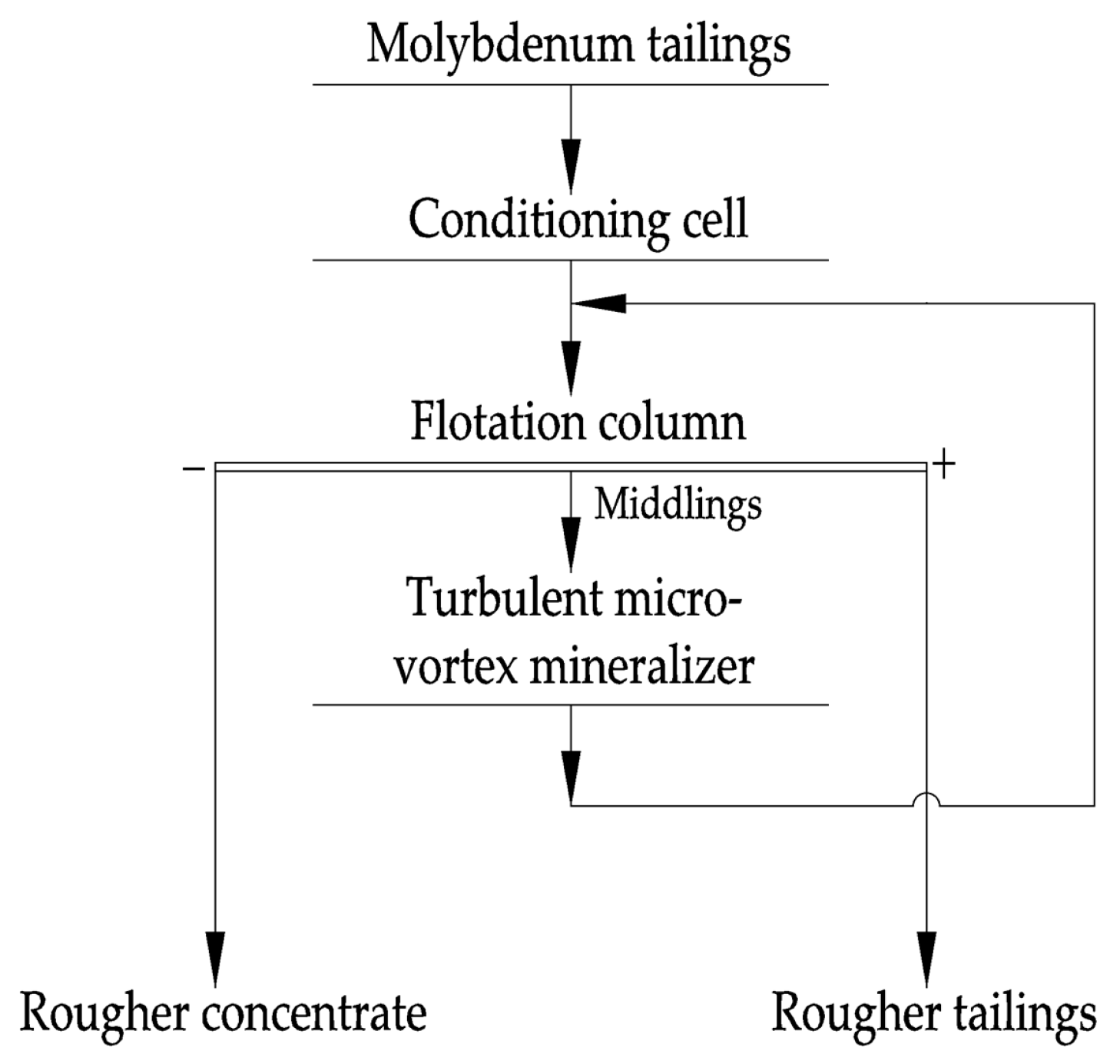
Based on the newly developed turbulent mineralizer, a pilot-scale rougher flotation recovery system for ultrafine molybdenum tailings was constructed by integrating the mineralizer with a flotation column and a conditioning tank. The process flow of the system is shown in Figure 16. After conditioning, the molybdenum tailings slurry was first fed into the flotation column to recover readily floatable particles. A middlings collection cone was installed inside the flotation column, and the collected middlings were pumped into the turbulent mineralizer by a circulation pump. Under the combined effects of strong turbulence and microscale eddies, the mineralization of ultrafine and poorly floatable particles was completed. Subsequently, the mineralized slurry was tangentially returned to the flotation column, where a cyclonic flow region formed to further intensify separation, thereby achieving efficient overall molybdenum recovery. The flotation column used in this study had a diameter of 300 mm and a height of 4000 mm. All experiments were performed on-site at a copper–molybdenum concentrator. The flotation feed was directly withdrawn from the underflow of the molybdenum flotation column, thickened to a mass concentration of 20% using a thickener, and then fed into the rougher recovery system. After separation, the products were discharged into on-site collection tanks. The flotation throughput was 1.5 m3/h, and the aeration rate was 2.0 m3/h. The flotation reagent regime was kept consistent with both laboratory and industrial system, with kerosene dosed at 50 g/t and pine oil at 30 g/t. All operating parameters were determined through prior optimization tests. In the pilot-scale industrial tests, all samples were collected only after the system had operated under steady-state conditions for 30 min, and three parallel samplings were conducted for each operating condition to ensure data representativeness and repeatability.
To evaluate the effectiveness of the newly developed mineralizer, flotation experiments were first conducted prior to its application for comparison. It should be noted that, in order to highlight the effect of the mineralizer on the flotation recovery and to minimize the introduction of additional interfering factors, the flotation column matched with the mineralizer was structurally designed as a simplified separation column with separation functionality only. This column did not include aeration or mineralization units, and its role was limited to separating the slurry that had already undergone aeration and mineralization. Therefore, a typical external Venturi-type bubble generator was employed as the aeration unit for the separation column in the experiments. As the Venturi tube is one of the most commonly used microbubble generators in flotation columns, the results obtained based on this configuration have representative comparative value. Under the above operating conditions, direct treatment of molybdenum tailings with a Mo grade of 0.35% using the separation column yielded a concentrate with a Mo grade of 0.63% and a recovery of 52.11%. These performance indices were clearly unsatisfactory, and the tailings Mo grade remained as high as 0.24%, indicating that the mineralization and recovery achieved by the separation column alone were severely inadequate. On this basis, pilot-scale experiments incorporating the mineralizer were further carried out under different operating parameters to optimize and compare the performance of the mineralizer.

4.1. Effect of Mineralizer Feed Pressure on Rougher Recovery Performance

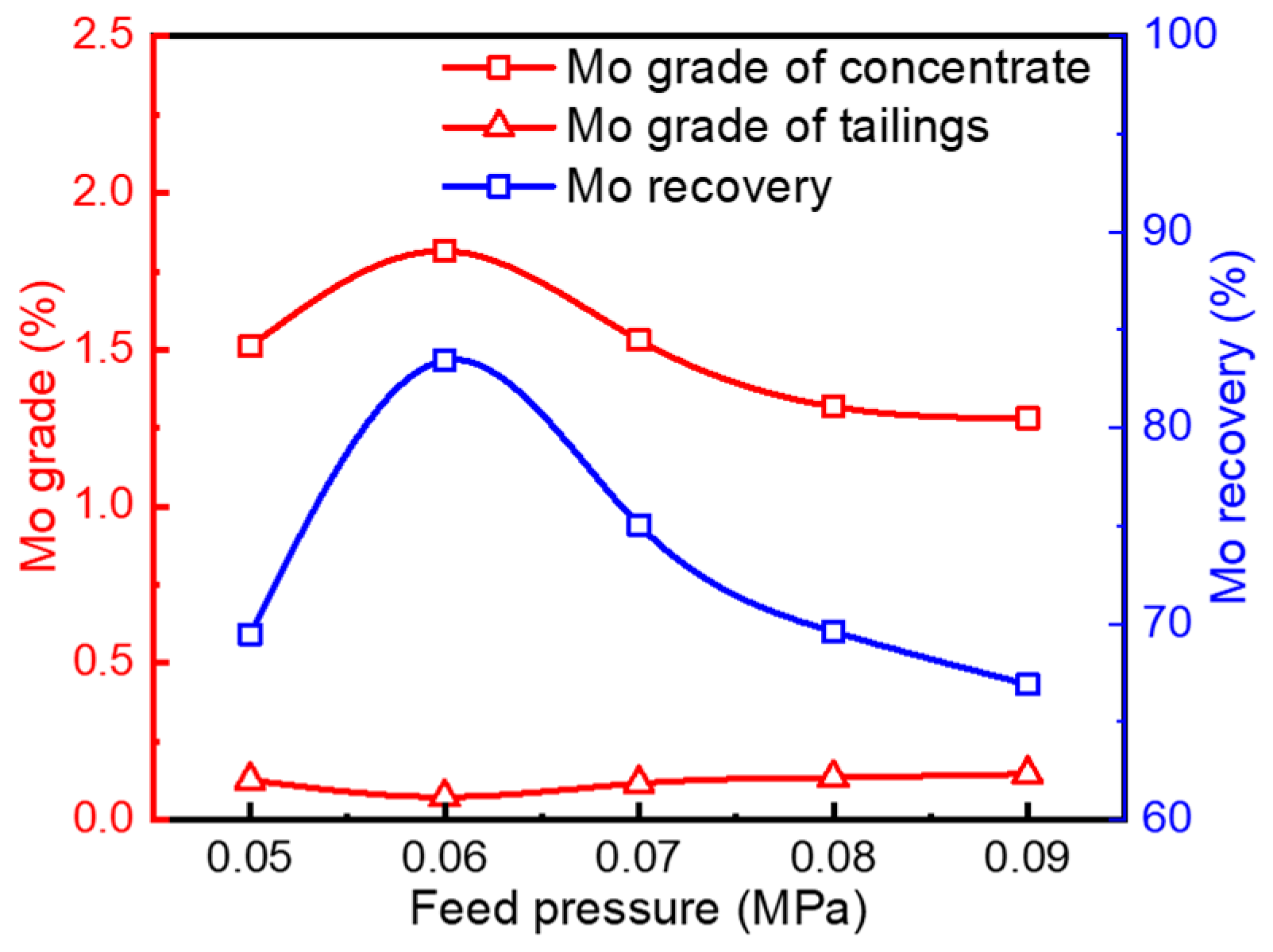
The middlings circulation pump controlled the feed pressure of the mineralizer. This pressure directly affects the feed rate, internal confined-space pressure, and other key parameters of the mineralizer, thereby influencing mineralization efficiency and recovery performance. Accordingly, flotation recovery experiments were conducted under different mineralizer feed pressures (middlings circulation pressures, consistent with the CFD simulation conditions). The molybdenum grades and recoveries of the flotation concentrate and tailings are shown in Figure 17. The results indicate that, with increasing mineralizer feed pressure, both the concentrate molybdenum grade and recovery initially increase and then decrease, reaching their maximum values at a feed pressure of 0.06 MPa, with a concentrate grade of 1.81% and a recovery of 83.46%, respectively. In contrast, the molybdenum grade of the tailings exhibits the opposite trend, reaching a minimum of 0.072% under the same condition. Overall, within the investigated ranges, the pilot-scale system achieves effective rougher recovery of molybdenum tailings, characterized by low tailings grades and favorable recovery performance. Based on the CFD results, the mineralizer feed pressure significantly influences the internal flow field of the mineralizer and the performance of the cyclonic flow region in the flotation column. When the feed pressure is too low, the mineralization capacity of the bottom impingement flow region in the mineralizer is weakened, and a stable centrifugal force field cannot be established in the flotation column. As a result, the probability of particle mineralization is reduced, the cyclone-enhanced separation effect deteriorates, and substantial losses of concentrate particles occur. Conversely, when the feed rate is excessively high, the residence time of particles in the mineralizer may be insufficient, and the turbulence intensity in the cyclonic region of the flotation column may become excessive, promoting detachment of mineralized particles and thereby reducing overall recovery performance. In summary, the flotation test results correspond well with the CFD numerical simulations, jointly confirming the effectiveness of the structural design of the mineralizer.

4.2. Effect of Mineralizer Energy Input on Rougher Recovery Performance

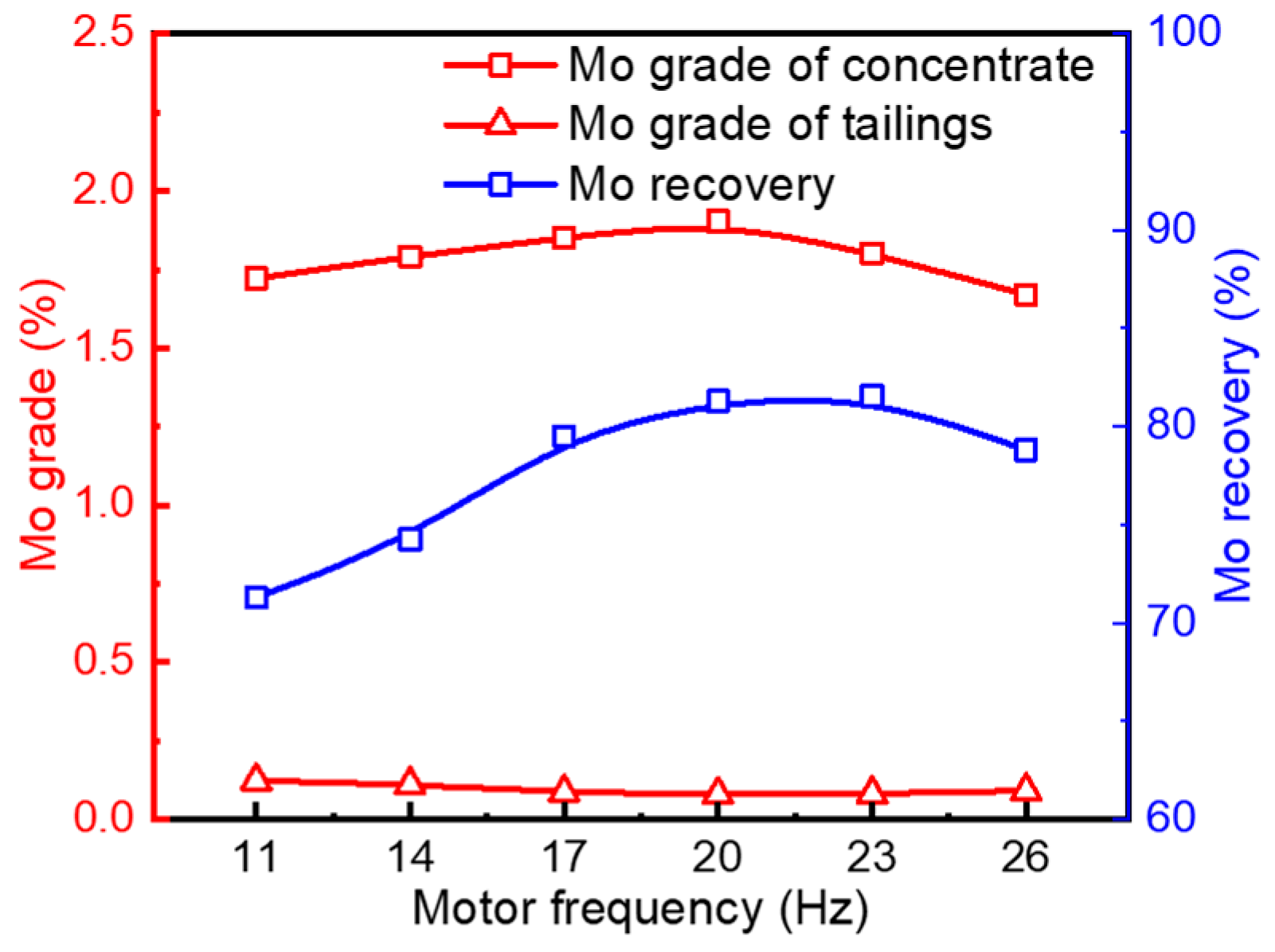
Energy input directly determines the internal flow field environment of the mineralizer and governs the particle–bubble mineralization process. Therefore, based on the optimized feed pressure (0.06 MPa), further experiments were conducted to optimize the mineralizer’s energy input. CFD simulations confirmed that increasing energy input effectively enhances internal turbulence intensity and dissipation. To improve experimental reliability, the motor frequency was further increased to 26 Hz (438 rpm) in addition to the energy input conditions investigated in the CFD simulations. The molybdenum grades and recoveries of the flotation concentrate and tailings under different energy input conditions are shown in Figure 18. The results reveal that, with increasing energy input, both the molybdenum grade and recovery of concentrates initially increase and then decrease. In contrast, the tailings molybdenum grade exhibits an opposite trend. Optimal performance is achieved at a motor frequency of 20 Hz, yielding a concentrate with a molybdenum grade of 1.90% and a recovery of 81.29%, while the molybdenum grade of tailings is reduced to 0.078%, indicating excellent separation performance.
Overall, increasing the energy input effectively enhances the mineralizer performance. Compared with the 11 Hz condition, recovery at the optimal 20 Hz condition rises by approximately 10%. This improvement is primarily attributed to the enhanced turbulent kinetic energy and dissipation within the mineralizer, which induce small-scale micro-eddies and significantly increase the collision frequency and adhesion probability between concentrate particles and bubbles. However, excessively high energy input intensifies turbulent detachment, reducing recovery performance under high-energy conditions.
In summary, after optimization of operating parameters, the pilot-scale rougher recovery system based on the turbulent mineralizer developed here is capable of processing ultrafine and poorly floatable molybdenum tailings with a molybdenum grade of 0.35%. Through a single-stage separation, concentrates with a molybdenum grade of 1.90% can be obtained at a recovery of 81.29%, while the tailings molybdenum grade is reduced to 0.08%. Compared with the data obtained prior to mineralizer application, the concentrate Mo grade increased by 1.27% and the recovery improved by nearly 30%, demonstrating the significant enhancing effect of the mineralizer. Moreover, in comparison with the separation performance of the laboratory flotation cell, the present rougher recovery system also exhibited a marked improvement. Specifically, the grade of concentrates increases by 0.84%, the tailings grade decreases by 0.04%, and molybdenum losses in the tailings are effectively reduced. Meanwhile, the variation trends of flotation performance under different operating parameters of the mineralizer were consistent with the CFD simulation results. Increased feed pressure and energy input generated stronger turbulence and smaller-scale micro-vortices, which corresponded to improved flotation performance; however, excessively intense turbulence could lead to particle detachment. These observations further verify both the validity of the numerical simulations and the effectiveness of the equipment’s structural design.
Moreover, the molybdenum recovery achieved by the pilot-scale system is increased by 6.79%, as compared to that obtained with the laboratory flotation cell, indicating a substantial enhancement in particle mineralization efficiency and overall recovery. Notably, the flotation recovery achieved by the pilot-scale system even exceeds the theoretical maximum recovery of the laboratory flotation cell (79.03%), demonstrating that the turbulent mineralizer realizes substantive intensification of the mineralization process. It effectively recovers concentrate components that are constrained in conventional flotation systems, thereby providing a solid foundation for subsequent cleaning and scavenging operations to produce qualified molybdenum concentrates.

5. Conclusions

In response to the challenges associated with large volumes of molybdenum tailings discharge, severe molybdenum resource losses, complex tailings characteristics, and low flotation recovery efficiency of valuable components during the beneficiation of porphyry copper–molybdenum ores, this study decoupled and selectively intensified the flotation mineralization process based on a systematic analysis of the process mineralogy and floatability of a representative ultrafine molybdenum tailings sample. In particular, a turbulent micro-vortex mineralization process was innovatively designed to address the poor floatability of ultrafine particles in molybdenum tailings, and a confined-space configuration was introduced to further enhance microbubble generation and mineralization efficiency. A pilot-scale mineralization equipment was developed and applied to the rougher recovery of molybdenum tailings, achieving favorable separation performance. The main conclusions are summarized as follows:
(1)
The investigated molybdenum tailings contain a molybdenum grade of 0.354%, indicating potential for recovery and utilization. The tailings exhibit typical ultrafine-grained and complex intergrowth characteristics, with a d90 of only 26.99 μm. Process mineralogical analysis shows that the tailings are dominated by silicate gangue and iron-bearing minerals. Molybdenite mainly exists as fine flaky particles tightly intergrown with quartz, pyrite, and various aluminosilicate minerals, resulting in extremely low liberation. Flotation kinetics experiments indicate that the tailings follow a first-order kinetic model with a flotation rate constant of 0.49 s−1, indicating that effective recovery requires targeted process intensification.
(2)
To address the low recovery efficiency caused by the ultrafine particle size and low grade of the molybdenum tailings, a turbulent mineralizer was developed through targeted structural design combined with confined-space pressurization to intensify the flotation mineralization process. CFD simulations confirm that the device structure effectively fulfills its intended functions by forming a pressurized space within the vessel, inducing high-intensity turbulence and dissipation, and generating high-energy, small-scale turbulent micro-eddies. The volume-averaged turbulent dissipation rate can reach 8.30 m2/s3, with an eddy scale as low as 18.74 μm, significantly enhancing the mineralization of ultrafine molybdenum tailings.
(3)
A pilot-scale rougher recovery system was constructed by integrating the newly developed turbulent mineralizer with a flotation column. After optimization of operating parameters, under optimal mineralizer feed pressure and energy input conditions (0.06 MPa and an impeller frequency of 20 Hz), the system achieved, through a single-stage separation, concentrates with a molybdenum grade of 1.90% at a recovery of 81.29% from ultrafine, poorly floatable tailings with a molybdenum grade of 0.35%, while reducing the tailings molybdenum grade to 0.08%. Both the molybdenum grade and recovery of concentrates are markedly superior to those obtained using a laboratory flotation cell, and molybdenum losses in the tailings are significantly reduced. These results demonstrate a substantial improvement in particle mineralization efficiency and recovery capability, providing a robust basis for subsequent cleaning and scavenging operations.

Author Contributions

Conceptualization, Y.C., B.Z. and H.Z.; Methodology, Y.C., Z.L. and J.C.; Validation, J.C., H.X. and J.Y.; Investigation, Y.C., Z.L. and H.X.; Data Curation, J.C., B.L. and J.Y.; Writing—Original Draft Preparation, Y.C., B.L. and B.Z.; Writing—Review & Editing, H.Z., H.W. and Z.L.; Visualization B.Z. and H.X.; Supervision, H.W. and H.Z.; Funding Acquisition, H.Z. All authors have read and agreed to the published version of the manuscript.

Funding

This research was funded by the National Natural Science Foundation of China (No. 52225405).

Data Availability Statement

Data will be made available on request.

Conflicts of Interest

Authors Yande Chao, Juntao Chen and Hao Xue were employed by the Luanchuan Longyu Molybdenum Mining Co., Ltd.; author Jianguo Yang was employed by the Luoyang Kaituozhe Mining Co., Ltd. The remaining authors declare that the research was conducted in the absence of any commercial or financial relationships that could be construed as a potential conflict of interest.

References

  1. Seikh, A.H.; Halfa, H.; Soliman, M.S. Effect of Molybdenum Content on the Corrosion and Microstructure of Low-Ni, Co-Free Maraging Steels. Metals 2021, 11, 852. [Google Scholar] [CrossRef]
  2. Figueras, M.; Gutiérrez, R.A.; Viñes, F.; Ramírez, P.J.; Rodriguez, J.A.; Illas, F. Supported Molybdenum Carbide Nanoparticles as an Excellent Catalyst for CO2 Hydrogenation. ACS Catal. 2021, 11, 9679–9687. [Google Scholar] [CrossRef]
  3. Uranga, P.; Shang, C.-J.; Senuma, T.; Yang, J.-R.; Guo, A.-M.; Mohrbacher, H. Molybdenum alloying in high-performance flat-rolled steel grades. Adv. Manuf. 2020, 8, 15–34. [Google Scholar] [CrossRef]
  4. Kuang, Z. Molybdenum and its alloys in advanced engine applications: From material selection to surface optimization. E3S Web Conf. 2024, 560, 02016. [Google Scholar] [CrossRef]
  5. Wei, Y.; Yang, H.-L.; Tao, L.-Z.; Gui, K.-X.; Luo, L.-M. Research progress and development of strengthening-toughening methods for molybdenum alloys prepared by powder metallurgy. J. Alloys Compd. 2025, 1010, 177099. [Google Scholar] [CrossRef]
  6. Yang, H.; Zhou, L.; Hu, C.; Garcia, H. Catalytic applications of bimetallic molybdenum nitrides in biomass conversion: Recent advances, challenges and opportunities. Renew. Sustain. Energy Rev. 2025, 223, 116042. [Google Scholar] [CrossRef]
  7. Williamson, B.J.; Herrington, R.J.; Morris, A. Porphyry copper enrichment linked to excess aluminium in plagioclase. Nat. Geosci. 2016, 9, 237–241. [Google Scholar] [CrossRef]
  8. Hou, Z.; Zhang, H.; Pan, X.; Yang, Z. Porphyry Cu (–Mo–Au) deposits related to melting of thickened mafic lower crust: Examples from the eastern Tethyan metallogenic domain. Ore Geol. Rev. 2011, 39, 21–45. [Google Scholar] [CrossRef]
  9. Henckens, M.L.C.M.; Driessen, P.P.J.; Worrell, E. Molybdenum resources: Their depletion and safeguarding for future generations. Resour. Conserv. Recycl. 2018, 134, 61–69. [Google Scholar] [CrossRef]
  10. Du, S.; Luo, Z. Flotation technology of refractory low-grade molybdenum ore. Int. J. Min. Sci. Technol. 2013, 23, 255–260. [Google Scholar] [CrossRef]
  11. Castro, S.; Lopez-Valdivieso, A.; Laskowski, J.S. Review of the flotation of molybdenite. Part I: Surface properties and floatability. Int. J. Miner. Process. 2016, 148, 48–58. [Google Scholar] [CrossRef]
  12. Nguyen, A.V.; Schulze, A. Colloidal Science of Flotation; Marcel Dekker Inc.: New York, NY, USA, 2004. [Google Scholar]
  13. Zhang, F.; Li, C.; Shi, Y.; Meng, L.; Zan, F.; Wu, X.; Wang, L.; Sheng, A.; Crittenden, J.C.; Chen, J. Evaluation on leachability of heavy metals from tailings: Risk factor identification and cumulative influence. Environ. Sci. Pollut. Res. 2023, 30, 64565–64575. [Google Scholar] [CrossRef]
  14. Shi, P.; Huang, J.; Wu, Z.; Chen, A.; Zhang, G. Differences between total amount of heavy metals and their occurrence form contents in the wastelands of a molybdenum mine area. Int. J. Coal Sci. Technol. 2023, 10, 19. [Google Scholar] [CrossRef]
  15. Deepika; Tyagi, A.; Haritash, A.K. Environmental impacts of mine tailings and phytoremediation as a sustainable management strategy: A review. Acta Geochim. 2025, 44, 1142–1165. [Google Scholar] [CrossRef]
  16. Fu, J.; Chen, K.; Wang, H.; Guo, C.; Liang, W. Recovering molybdenite from ultrafine waste tailings by oil agglomerate flotation. Miner. Eng. 2012, 39, 133–139. [Google Scholar] [CrossRef]
  17. Kang, J.; Tong, L.; Zhang, Q.; Zhao, H.; Wang, X.; Xiong, B.; Yang, H. Synergistic Leaching of Low-Grade Tungsten–Molybdenum Ore via a Novel KMnO4-Na2CO3-NaHCO3 Composite System Guided by Process Mineralogy. Minerals 2025, 15, 712. [Google Scholar] [CrossRef]
  18. Han, R.; Zhou, A.; Zhang, N.; Li, Z.; Cheng, M.; Chen, X.; Nan, T. Effective separation of coal gasification fine slag: Role of classification and ultrasonication in enhancing flotation. Int. J. Min. Sci. Technol. 2024, 34, 867–880. [Google Scholar] [CrossRef]
  19. Zhang, N.; Zhang, S.; Yu, Z.; Li, Z.; Zhou, A.; Yu, W.; Han, R. Interfacial adsorption mechanism of nonionic surfactant-assisted n-dodecane in coal gasification fine slag flotation: Experiment and molecular simulation. Appl. Surf. Sci. 2026, 723, 165648. [Google Scholar] [CrossRef]
  20. Yi, G.; Macha, E.; Van Dyke, J.; Ed Macha, R.; McKay, T.; Free, M.L. Recent progress on research of molybdenite flotation: A review. Adv. Colloid Interface Sci. 2021, 295, 102466. [Google Scholar] [CrossRef]
  21. Kursunoglu, S. A Review on the Recovery of Critical Metals from Mine and Mineral Processing Tailings: Recent Advances. J. Sustain. Metall. 2025, 11, 2023–2050. [Google Scholar] [CrossRef]
  22. Dai, H.X.; Wang, P.R.; Zhao, W. Experimental Study on Recovering Molybdenum from One Processed Tailing in Bai Shi Zhang Plant. Adv. Mater. Res. 2012, 588–589, 1689–1693. [Google Scholar] [CrossRef]
  23. Boostan, H.; Sam, A. Reprocessing of copper and molybdenum by flotation method from final fresh low-grade sulfide tailings (case study: Sarcheshmeh copper complex). J. Environ. Chem. Eng. 2025, 13, 115496. [Google Scholar] [CrossRef]
  24. Tabosa, E.; Runge, K.; Holtham, P. The effect of cell hydrodynamics on flotation performance. Int. J. Miner. Process. 2016, 156, 99–107. [Google Scholar] [CrossRef]
  25. Wang, D.; Liu, Q. Hydrodynamics of froth flotation and its effects on fine and ultrafine mineral particle flotation: A literature review. Miner. Eng. 2021, 173, 107220. [Google Scholar] [CrossRef]
  26. Safari, M.; Deglon, D. An attachment-detachment kinetic model for the effect of energy input on flotation. Miner. Eng. 2018, 117, 8–13. [Google Scholar] [CrossRef]
  27. Yao, N.; Liu, J.; Sun, X.; Liu, Y.; Chen, S.; Wang, G. A Rational Interpretation of the Role of Turbulence in Particle-Bubble Interactions. Minerals 2021, 11, 1006. [Google Scholar] [CrossRef]
  28. Xu, Q.; Hu, W.; Zhang, M. High-turbulence fine particle flotation cell optimization and verification. Sci. Rep. 2024, 14, 23124. [Google Scholar] [CrossRef]
  29. Li, X.; Sun, Z.; Wang, H.; Wang, L.; Yan, X.; Zhang, H.; Ran, J.; Liu, J. Particle motion under turbulent eddies: Inspiration for fine minerals flotation. Chem. Eng. Sci. 2025, 301, 120754. [Google Scholar] [CrossRef]
  30. Wang, L.; Wang, Y.; Yan, X.; Wang, A.; Cao, Y. A numerical study on efficient recovery of fine-grained minerals with vortex generators in pipe flow unit of a cyclonic-static micro bubble flotation column. Chem. Eng. Sci. 2017, 158, 304–313. [Google Scholar] [CrossRef]
  31. Shi, S.; Zhang, M.; Fan, X.; Chen, D. Experimental and computational analysis of the impeller angle in a flotation cell by PIV and CFD. Int. J. Miner. Process. 2015, 142, 2–9. [Google Scholar] [CrossRef]
  32. Bayat, O.; Ucurum, M.; Poole, C. Effects of size distribution on flotation kinetics of Turkish sphalerite. Miner. Process. Extr. Metall. 2004, 113, 53–59. [Google Scholar] [CrossRef]
  33. Mansour, M.; Landage, A.; Khot, P.; Nigam, K.D.P.; Janiga, G.; Thévenin, D.; Zähringer, K. Numerical Study of Gas–Liquid Two-Phase Flow Regimes for Upward Flow in a Helical Pipe. Ind. Eng. Chem. Res. 2020, 59, 3873–3886. [Google Scholar] [CrossRef]
  34. Kerdouss, F.; Bannari, A.; Proulx, P. CFD modeling of gas dispersion and bubble size in a double turbine stirred tank. Chem. Eng. Sci. 2006, 61, 3313–3322. [Google Scholar] [CrossRef]
  35. Mach, J.; Wiens, J.; Adjaye, J.; Donaldson, A.A.; Macchi, A. Effect of pressure on the drag coefficient of individual bubbles in a contaminated polydisperse swarm. Chem. Eng. Sci. 2020, 223, 115728. [Google Scholar] [CrossRef]
Figure 1. Particle size distribution of the molybdenum tailings.
Minerals 16 00201 g001
Figure 2. Morphology and mineral species of composite particles containing molybdenite in tailings.
Minerals 16 00201 g002
Figure 3. Grade recovery curve of the molybdenum.
Minerals 16 00201 g003
Figure 4. Fitting results of different flotation kinetic models for molybdenum tailings (the boxes represent data obtained from the actual flotation kinetic experiments).
Minerals 16 00201 g004
Figure 5. Structure and physical prototype of the turbulent micro-vortex-based enhanced mineralizer.
Minerals 16 00201 g005
Figure 6. Velocity distribution inside the turbulent mineralizer under different feed pressures.
Minerals 16 00201 g006
Figure 7. Velocity distribution inside the turbulent mineralizer under different energy input levels.
Minerals 16 00201 g007
Figure 8. Pressure field distribution inside the turbulent mineralizer under different feed pressures.
Minerals 16 00201 g008
Figure 9. Pressure field distribution inside the turbulent mineralizer under different energy input levels.
Minerals 16 00201 g009
Figure 10. Turbulent kinetic energy distribution inside the turbulent mineralizer under different feed pressures.
Minerals 16 00201 g010
Figure 11. Turbulent kinetic energy distribution inside the turbulent mineralizer under different energy input levels.
Minerals 16 00201 g011
Figure 12. Turbulent dissipation rate distribution inside the turbulent mineralizer under different feed pressures.
Minerals 16 00201 g012
Figure 13. Turbulent dissipation rate distribution inside the turbulent mineralizer under different energy input levels.
Minerals 16 00201 g013
Figure 14. Kolmogorov eddy scale distribution inside the turbulent mineralizer under different feed pressures.
Minerals 16 00201 g014
Figure 15. Kolmogorov eddy-scale distribution within the turbulent mineralizer at different energy input levels.
Minerals 16 00201 g015
Figure 16. The process flow of the pilot-scale rougher flotation recovery system for ultrafine molybdenum tailings.
Minerals 16 00201 g016
Figure 17. Rougher flotation performance of molybdenum tailings under different mineralizer feed pressures.
Minerals 16 00201 g017
Figure 18. Rougher flotation performance of molybdenum tailings under different mineralizer impeller frequencies.
Minerals 16 00201 g018
Table 1. Chemical composition analysis of molybdenum tailings based on XRF.
Element SpeciesSiFeAlSKCaMgFNaCuPMoTiOthers
Mass Fraction (%)43.9615.4212.447.206.424.153.091.401.381.221.070.350.651.25
Table 2. Primary mineral composition and contents of molybdenum tailings.
Mineral SpeciesQuartzPyriteAndesineOrthoclaseAlbiteBiotiteIlliteAugiteMolybdeniteOthers
Mass Fraction (%)15.2113.9313.4210.588.907.325.092.020.6822.85
Table 3. Major mineral species associated with molybdenite in tailings and their contents.
Mineral SpeciesQuartzPyriteOrthoclaseAndesineAlbiteBiotiteIlliteGalenaAxiniteOthers
Mass Fraction(%)23.0812.6712.1510.828.595.693.953.582.0017.47
Table 4. Results of flotation kinetic experiments for molybdenum tailings.
Flotation
Time (min)
Yield
(%)
Mo
Grade (%)
Mo
Recovery (%)
Cumulative
Concentrate Yield (%)
Cumulative
Mo Grade (%)
Cumulative
Mo Recovery (%)
0.53.591.1311.443.591.1311.44
16.961.1121.7110.561.1233.15
25.231.0715.7115.791.1048.86
34.521.0313.0320.301.0861.89
42.720.997.5623.021.0769.45
51.370.973.7524.391.0773.21
70.570.801.2924.961.0674.50
Tailings75.040.1225.50100.000.36100.00
Total100.000.36100.00
Table 5. Turbulence characteristic parameters and eddy scale of the turbulent mineralizer.
Feed Pressure (MPa)Motor Frequency (Hz)Turbulence Intensity (%)Turbulence Dissipation Rate (m2/s3)Kolmogorov Eddy Scale (μm)
0.052022.824.0822.39
0.0623.935.0321.24
0.0724.986.0620.27
0.0825.997.1619.45
0.0926.928.3018.74
0.061119.694.0622.41
1421.174.3422.05
1722.584.6621.65
2023.935.0321.24
2325.695.6120.67
Disclaimer/Publisher’s Note: The statements, opinions and data contained in all publications are solely those of the individual author(s) and contributor(s) and not of MDPI and/or the editor(s). MDPI and/or the editor(s) disclaim responsibility for any injury to people or property resulting from any ideas, methods, instructions or products referred to in the content.