Article

Genesis of the Sartohay Podiform Chromitite Based on Microinclusions in Chromite
The Key Laboratory of Orogenic Belts and Crustal Evolution, School of Earth and Space Sciences, Peking University, Beijing 100871, China
*
Author to whom correspondence should be addressed.
Minerals 2024, 14(6), 530; https://doi.org/10.3390/min14060530
Submission received: 3 April 2024 / Revised: 12 May 2024 / Accepted: 16 May 2024 / Published: 21 May 2024

Abstract

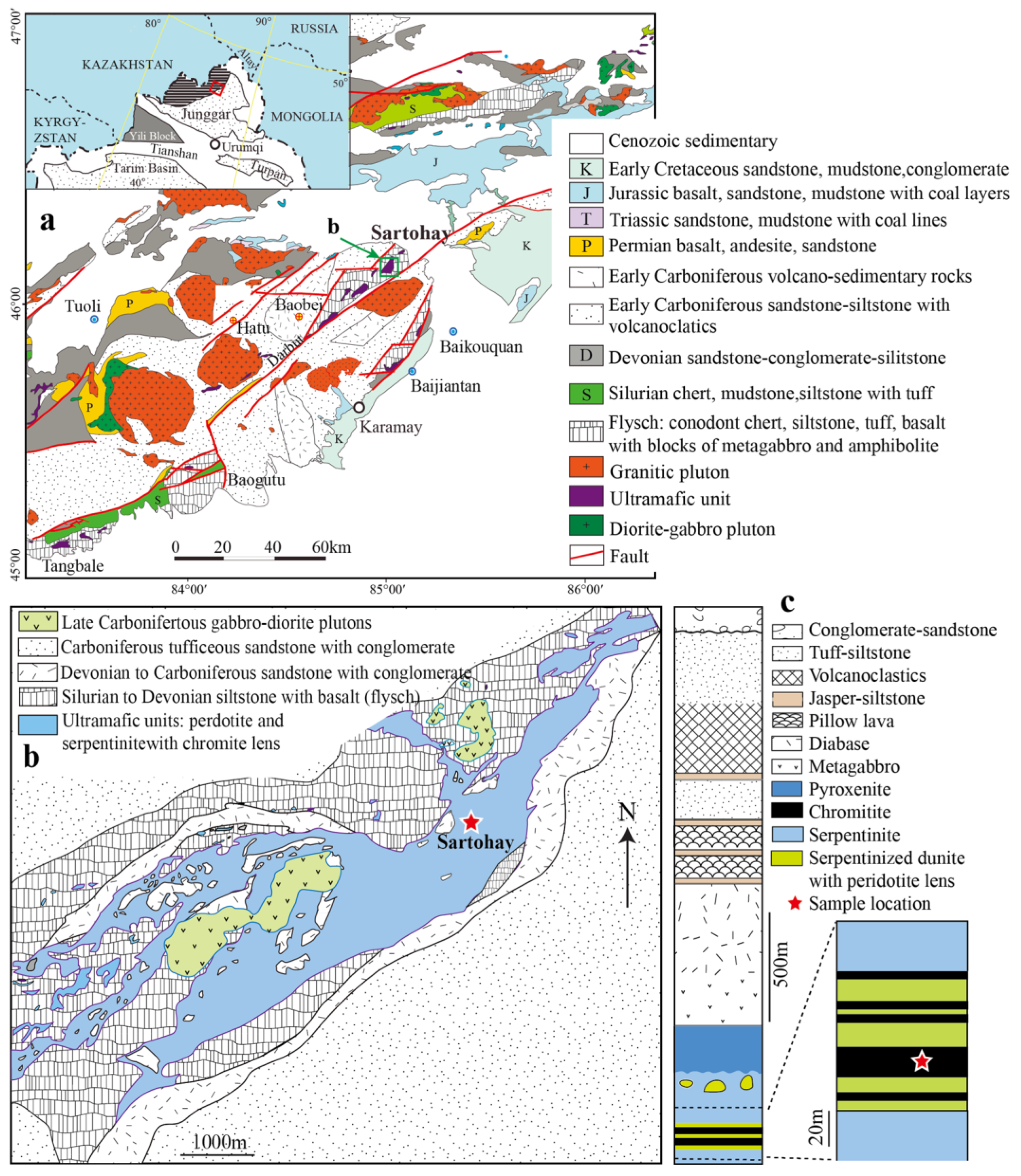
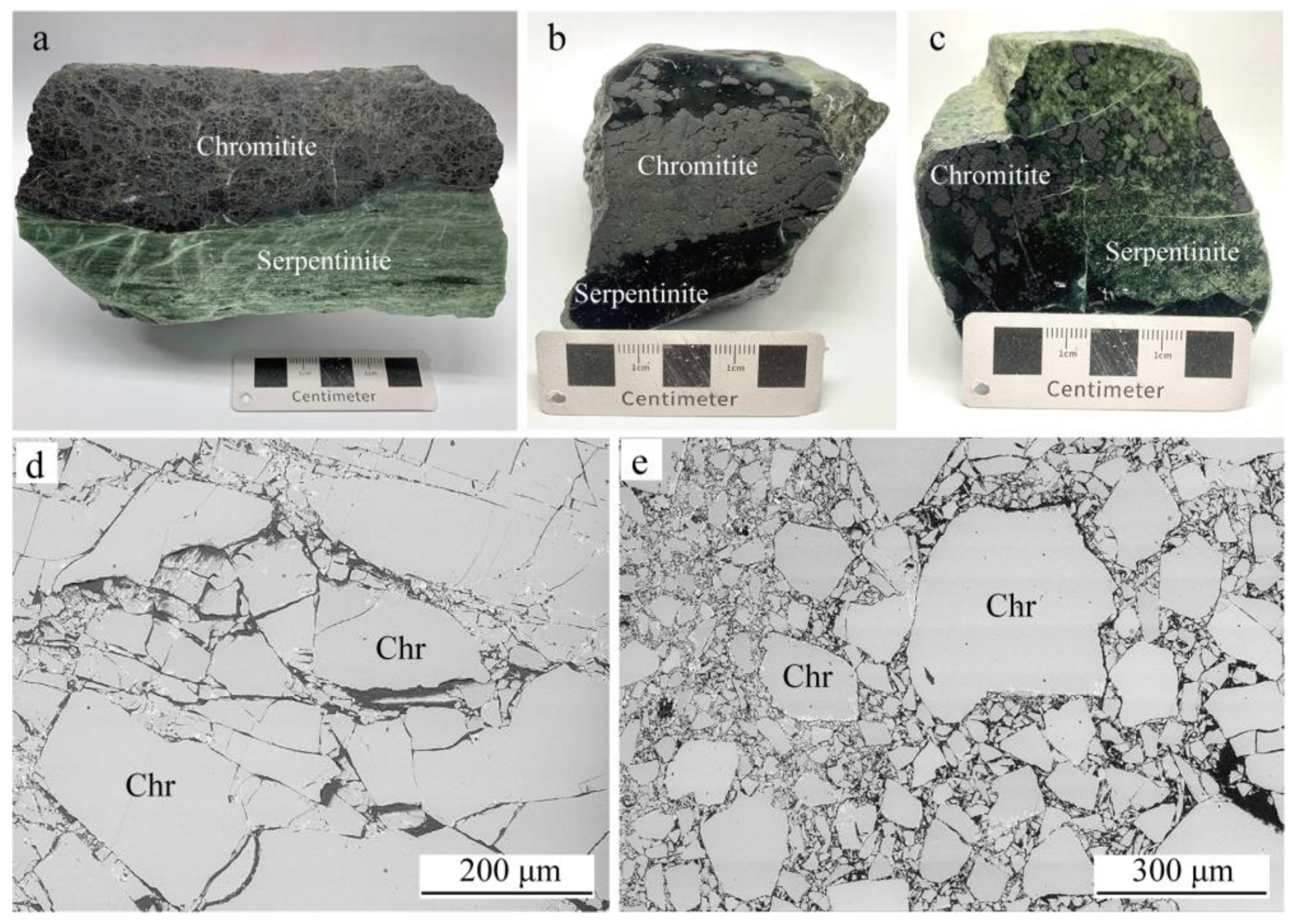
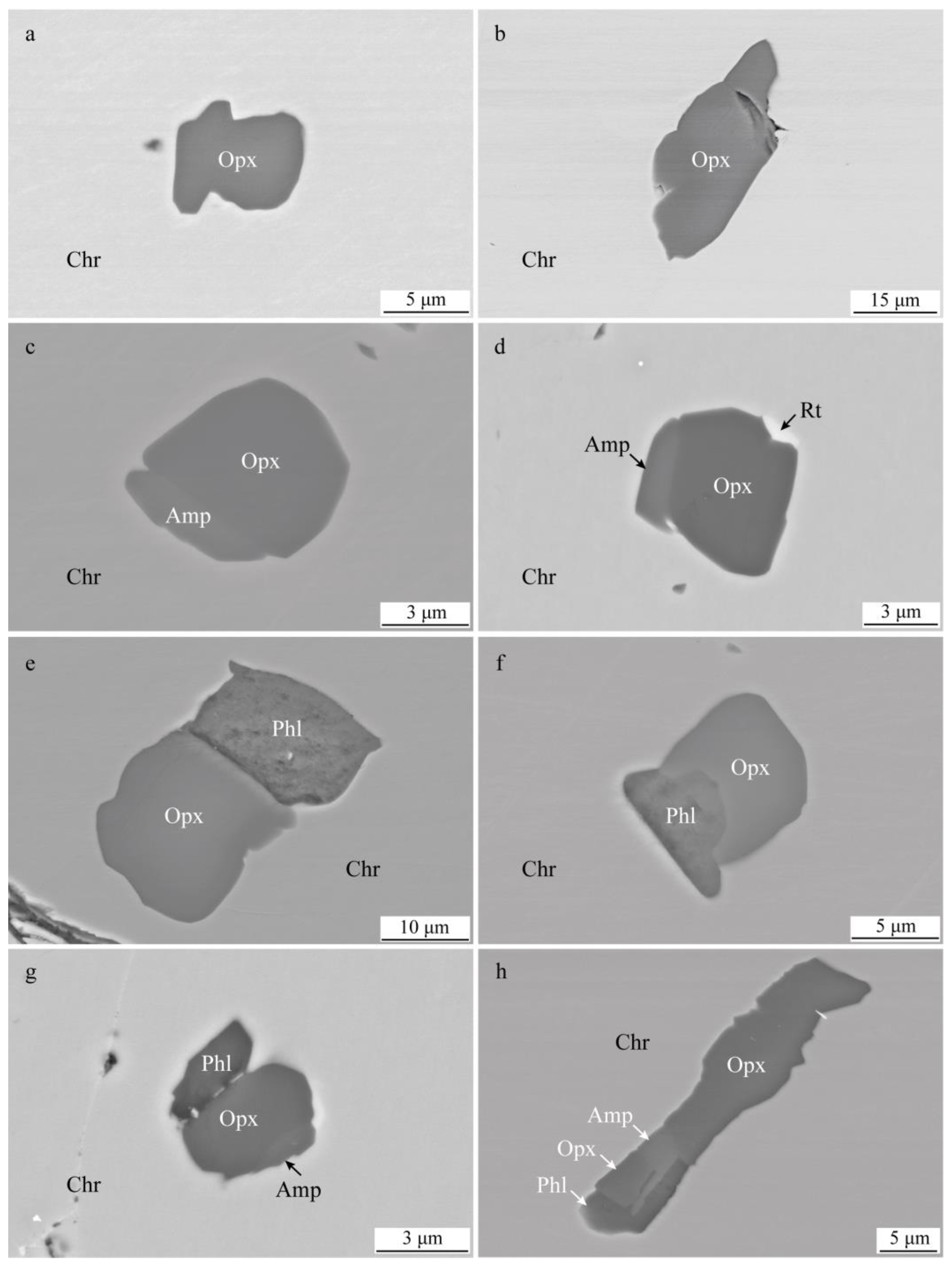
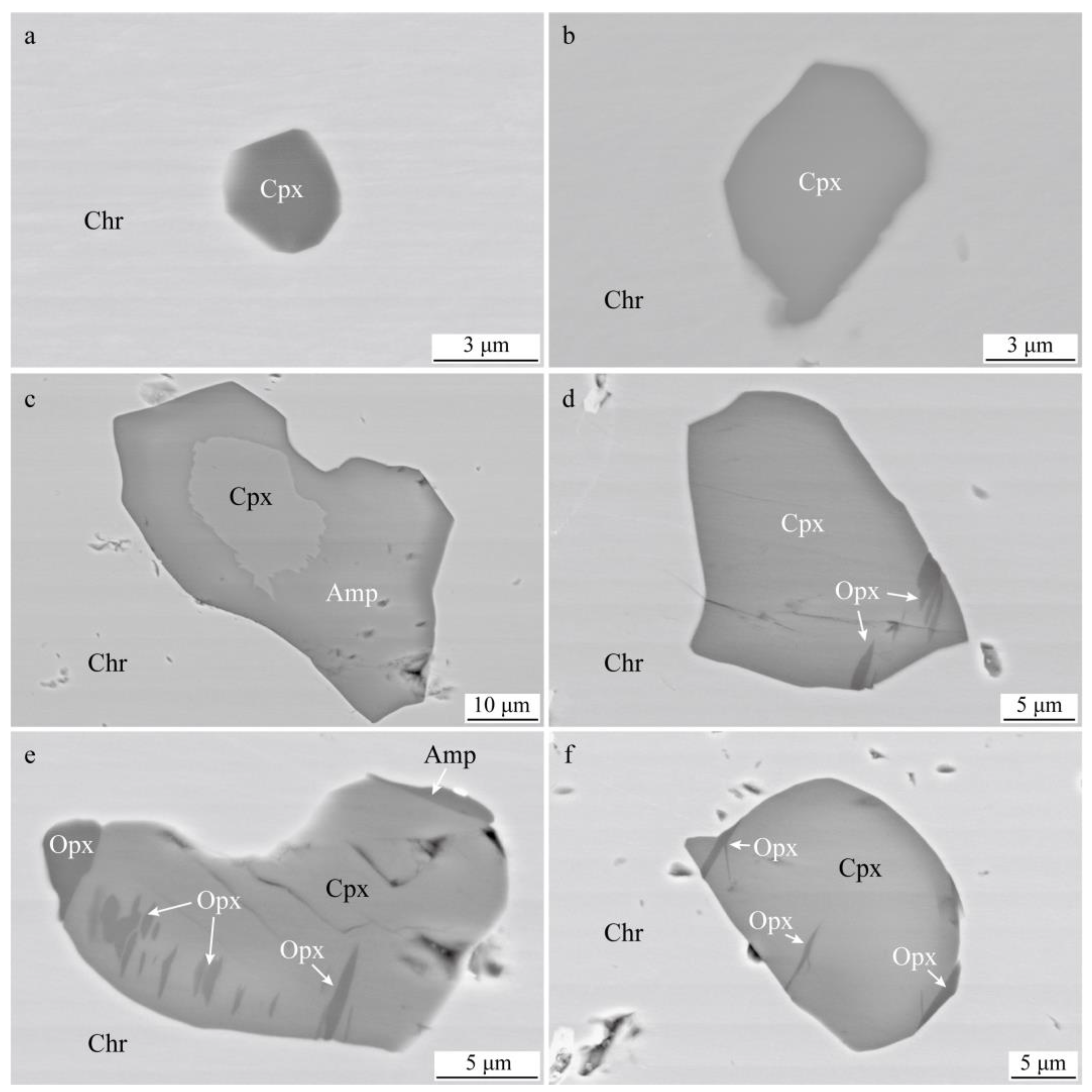
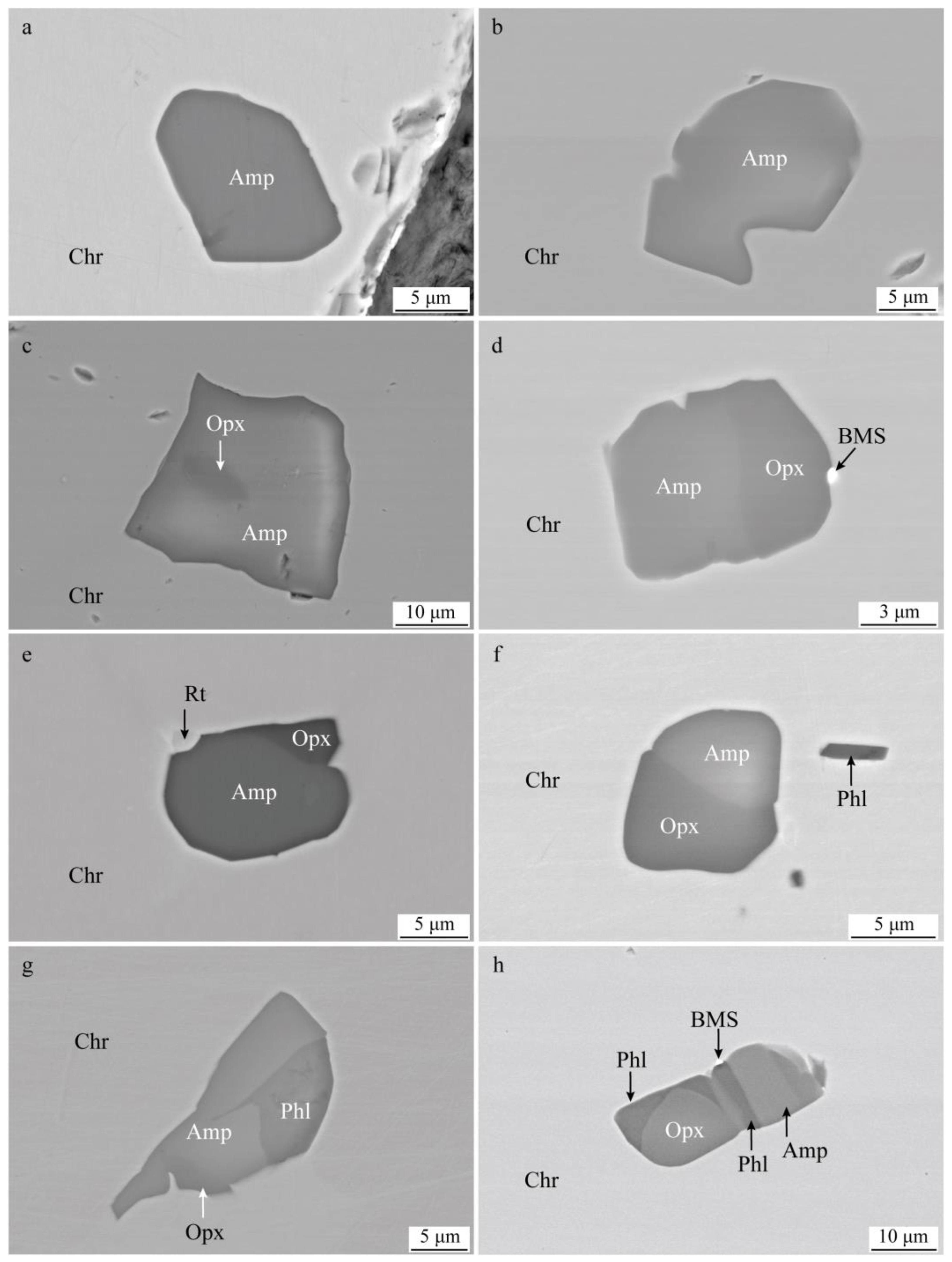
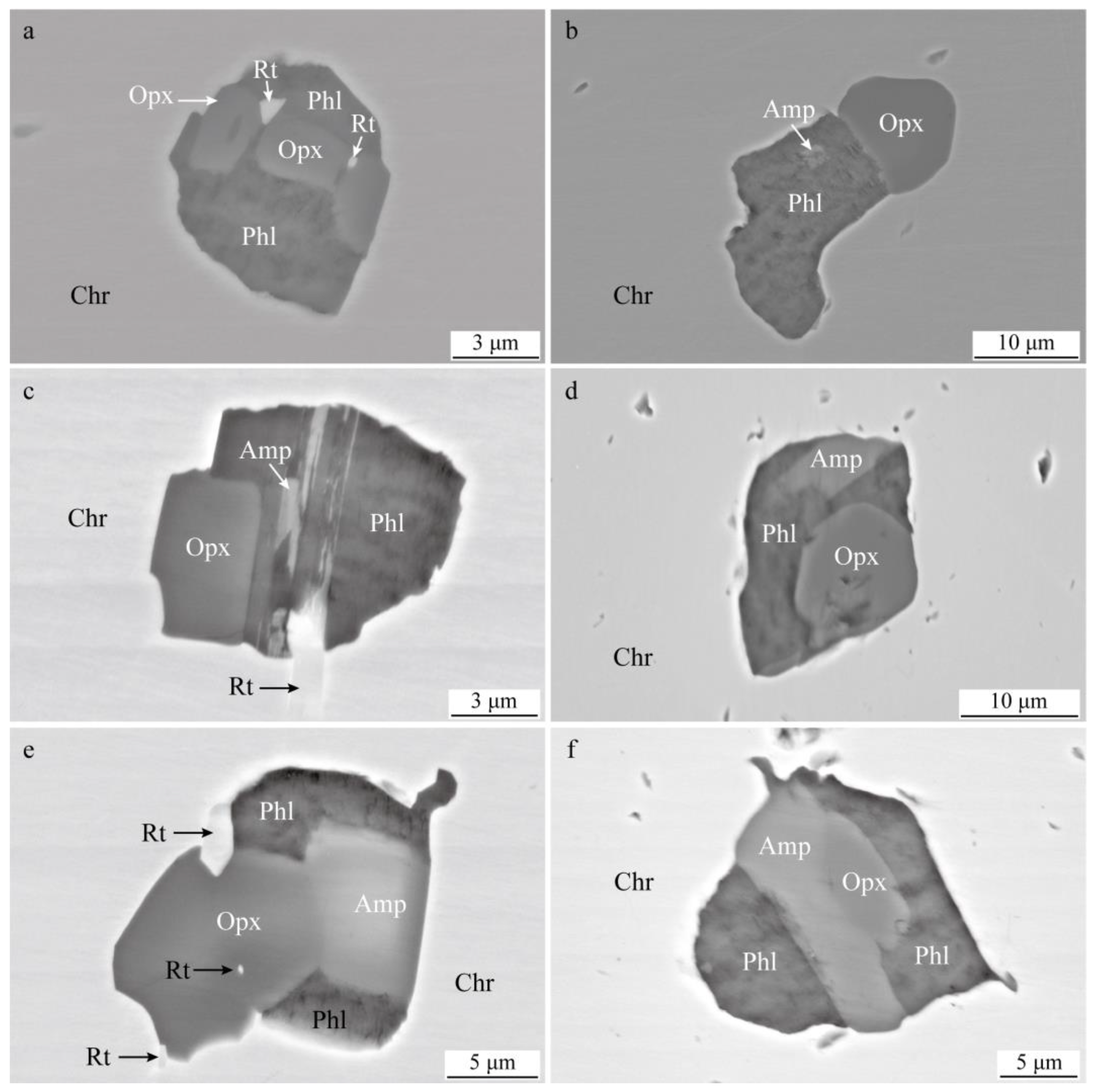
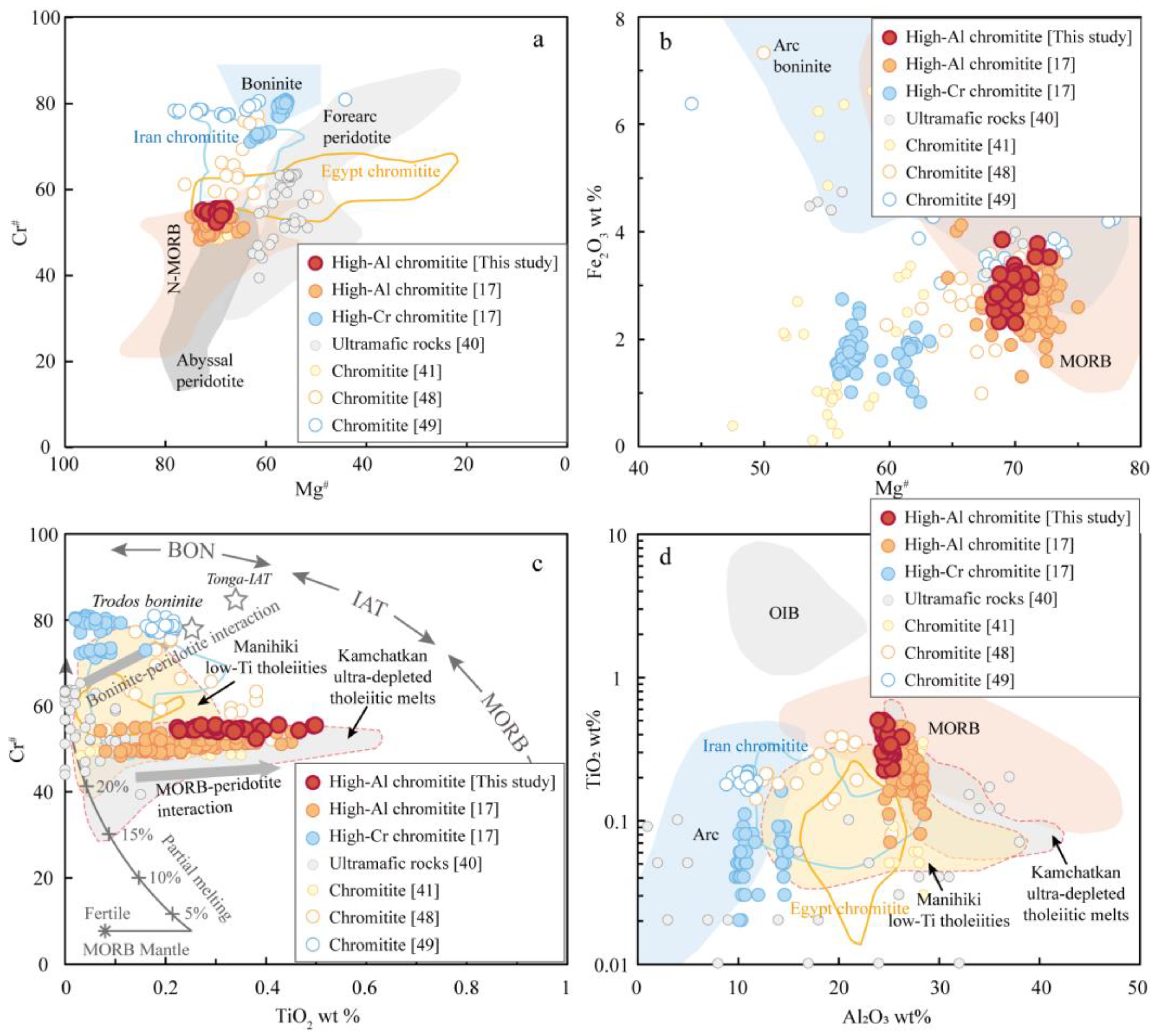
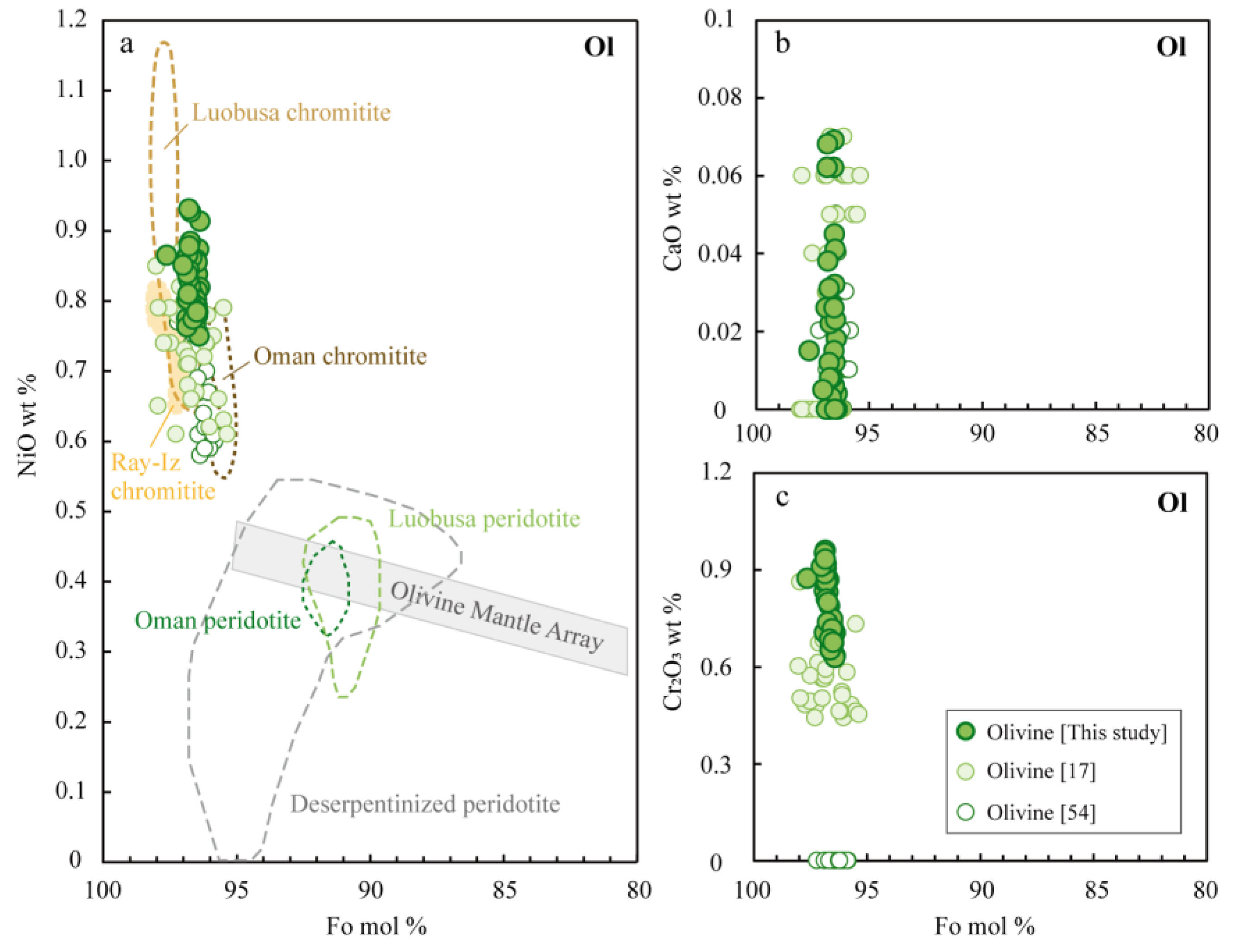
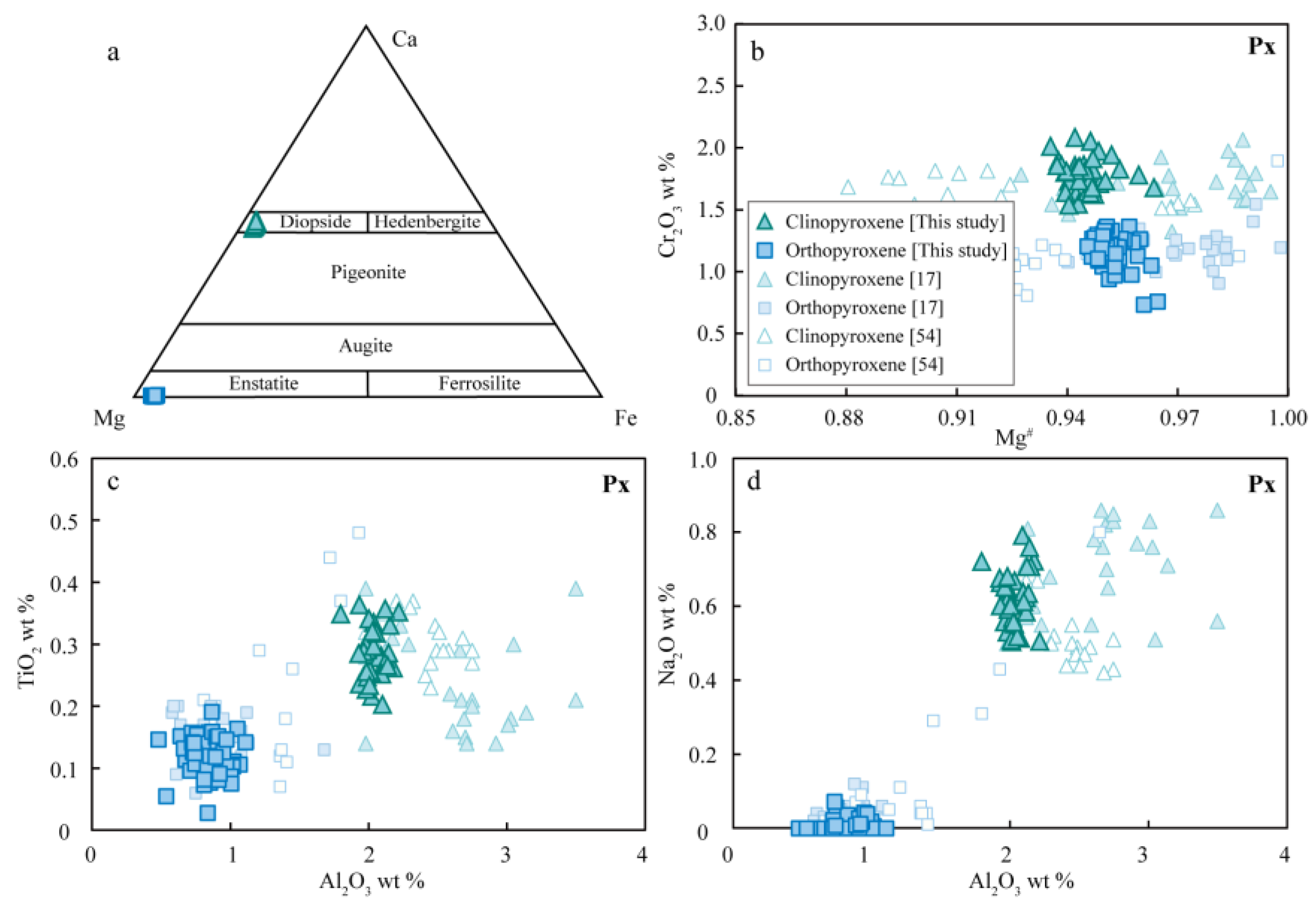
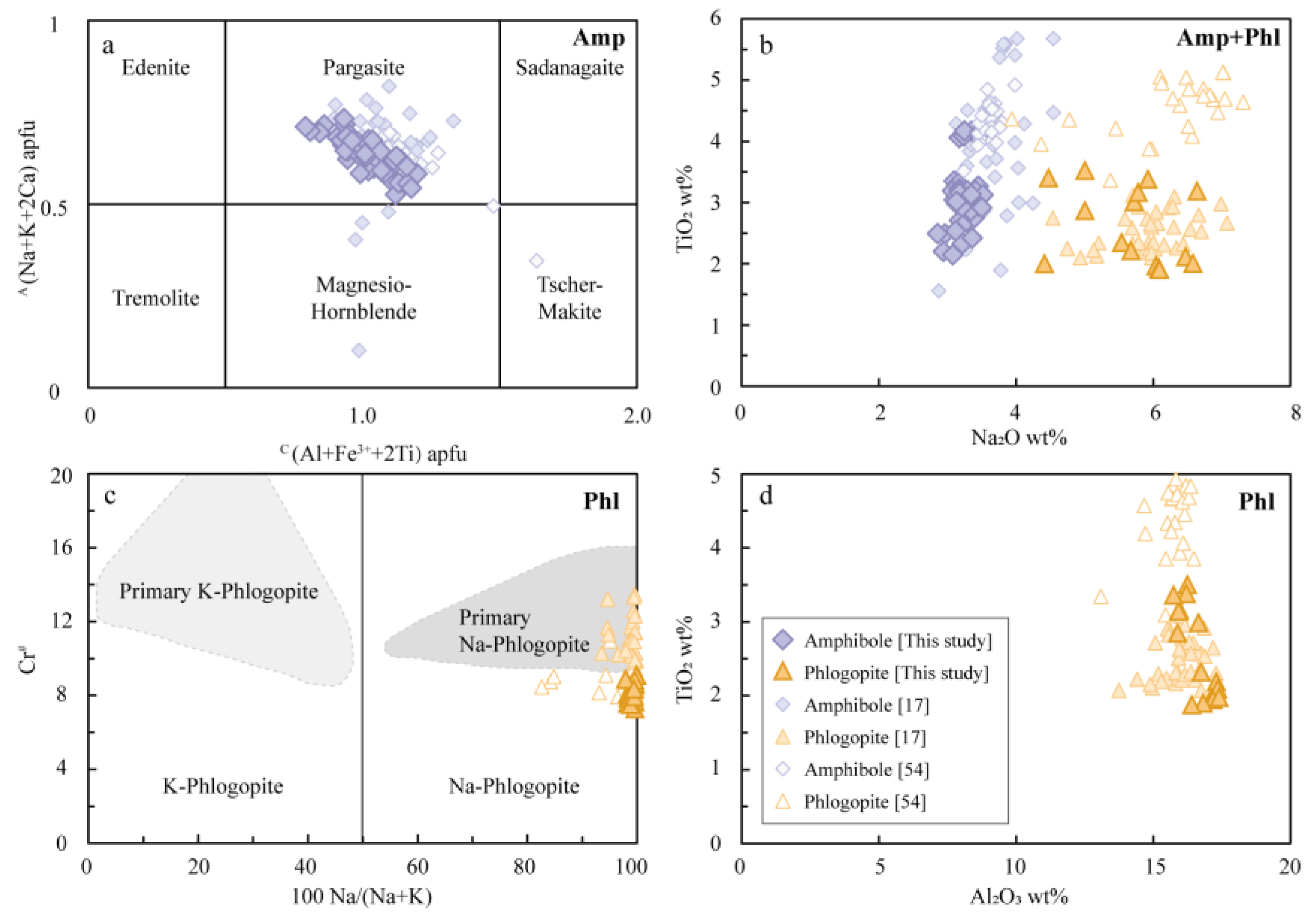
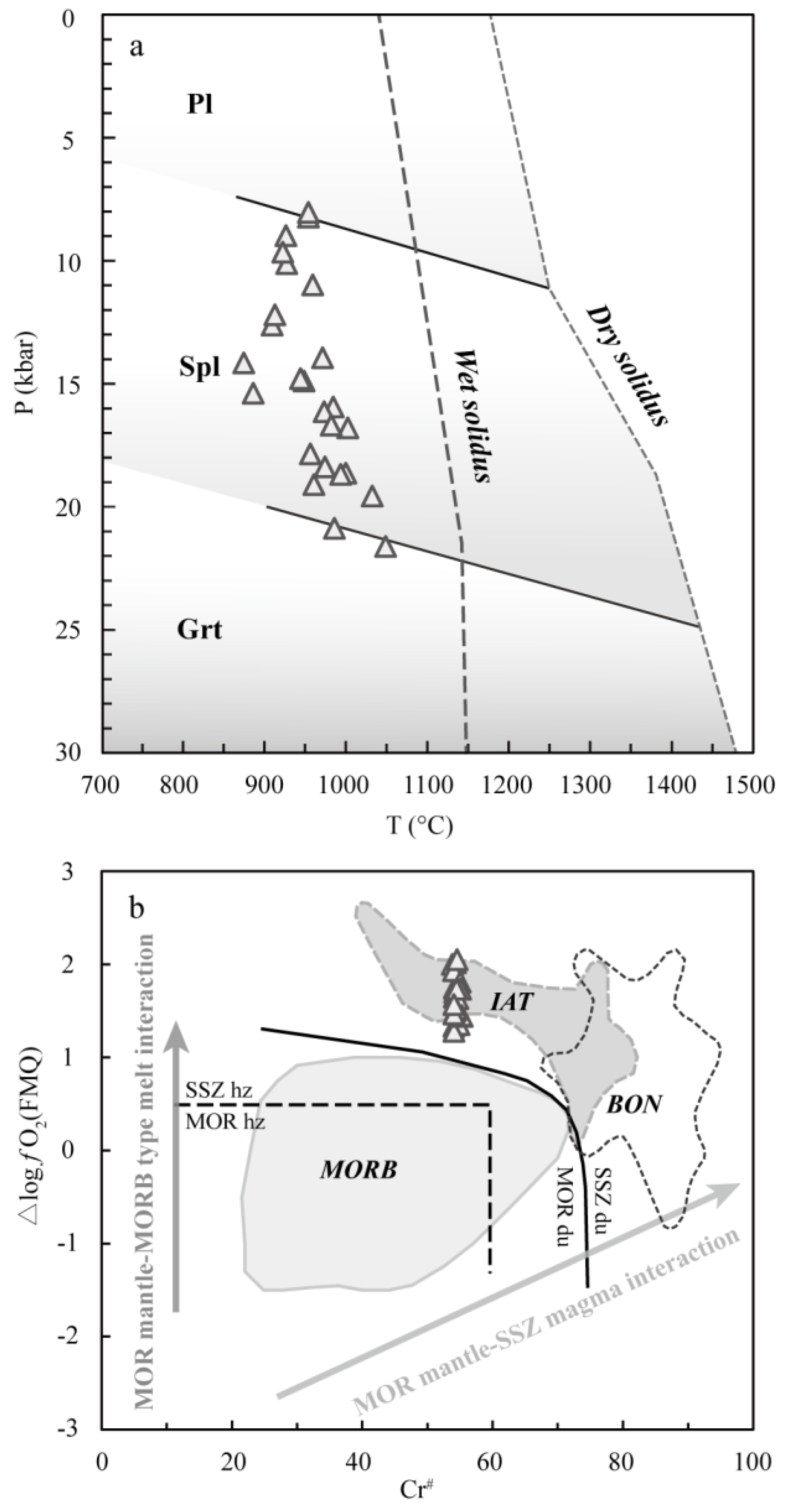
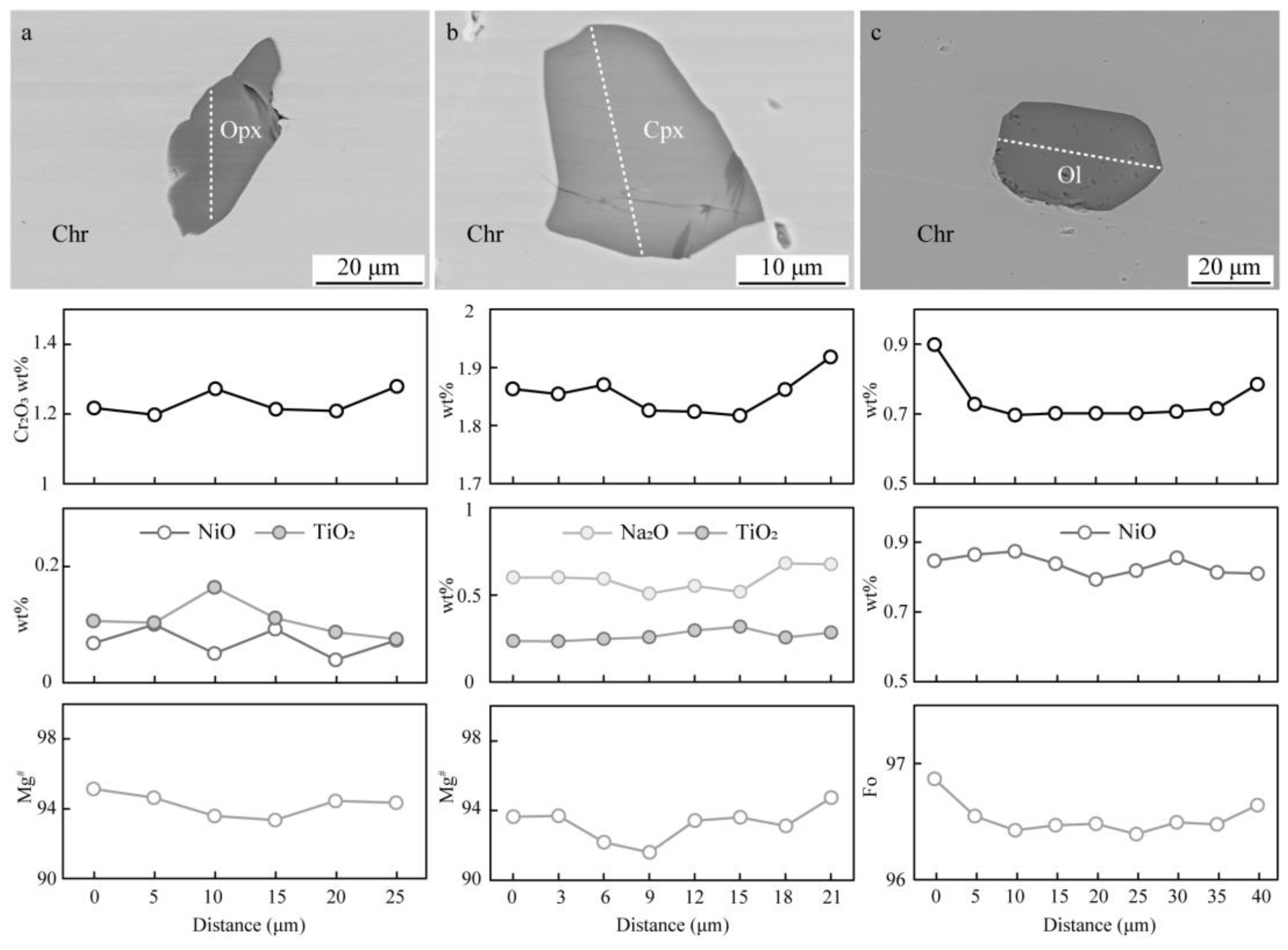
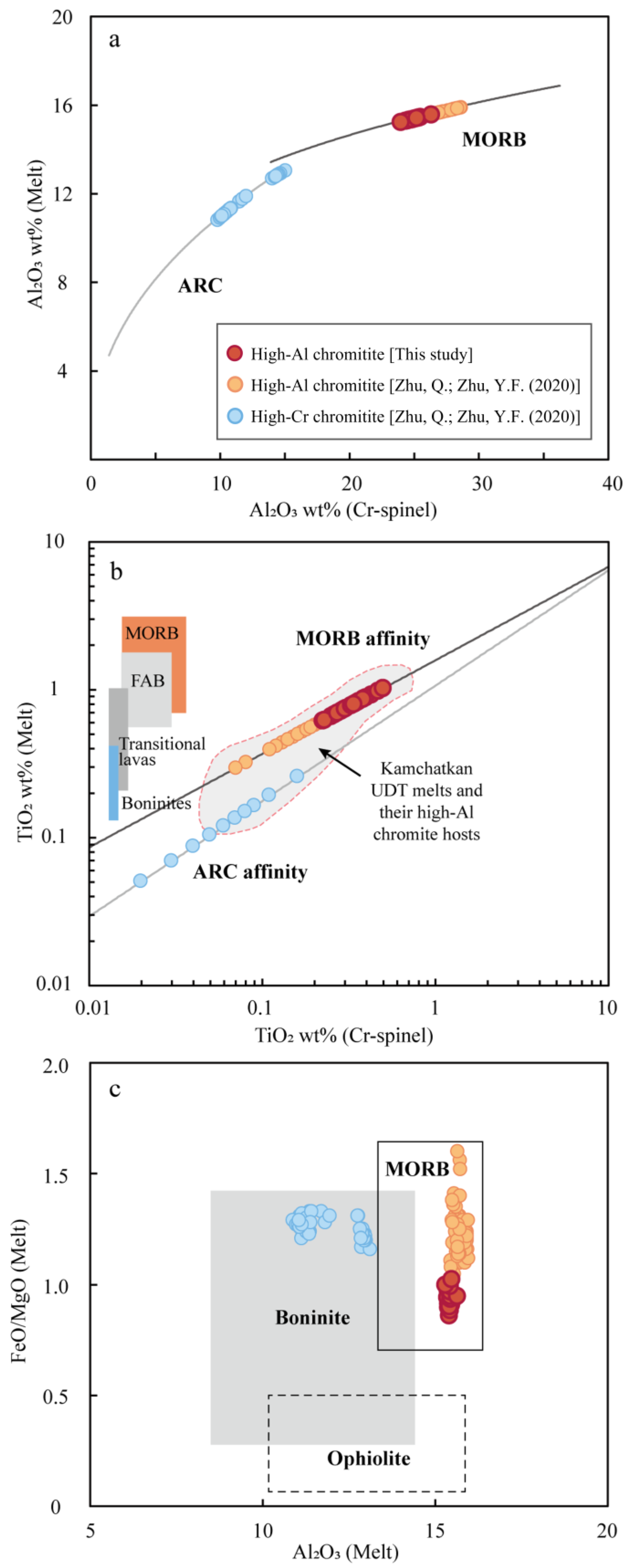
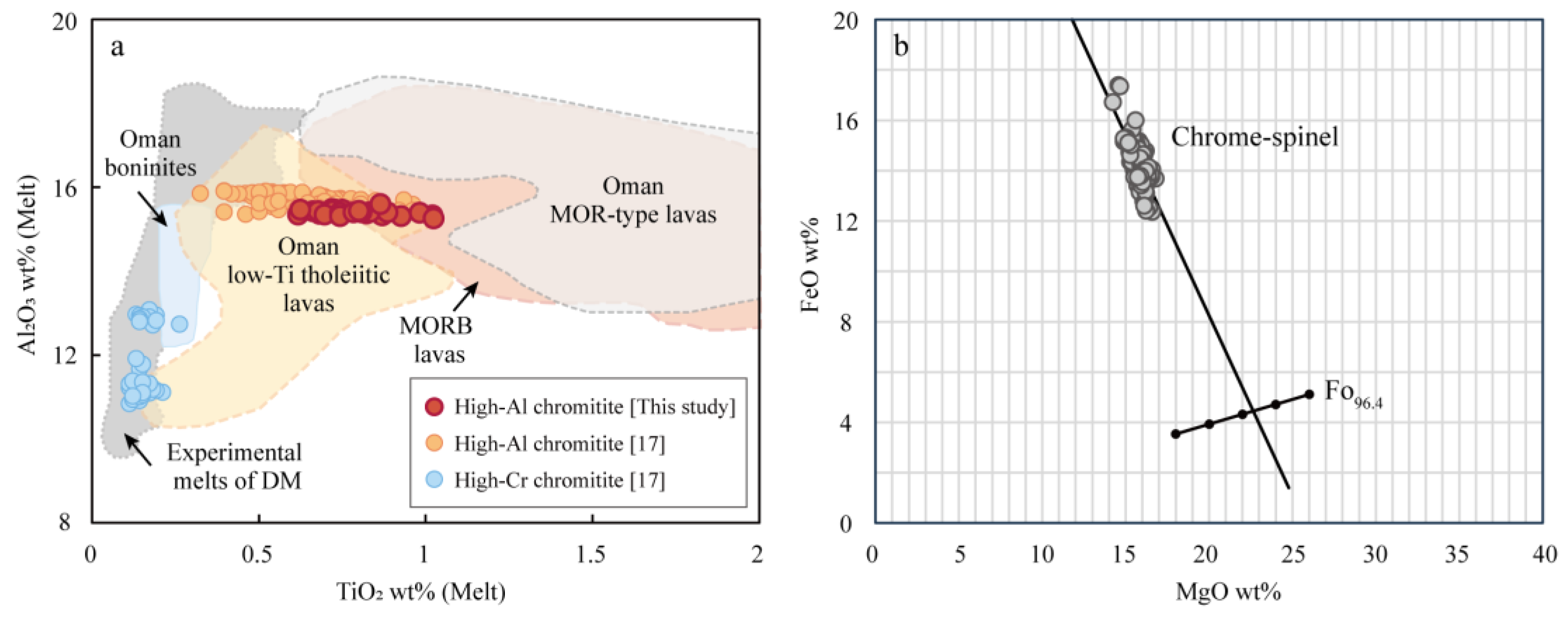
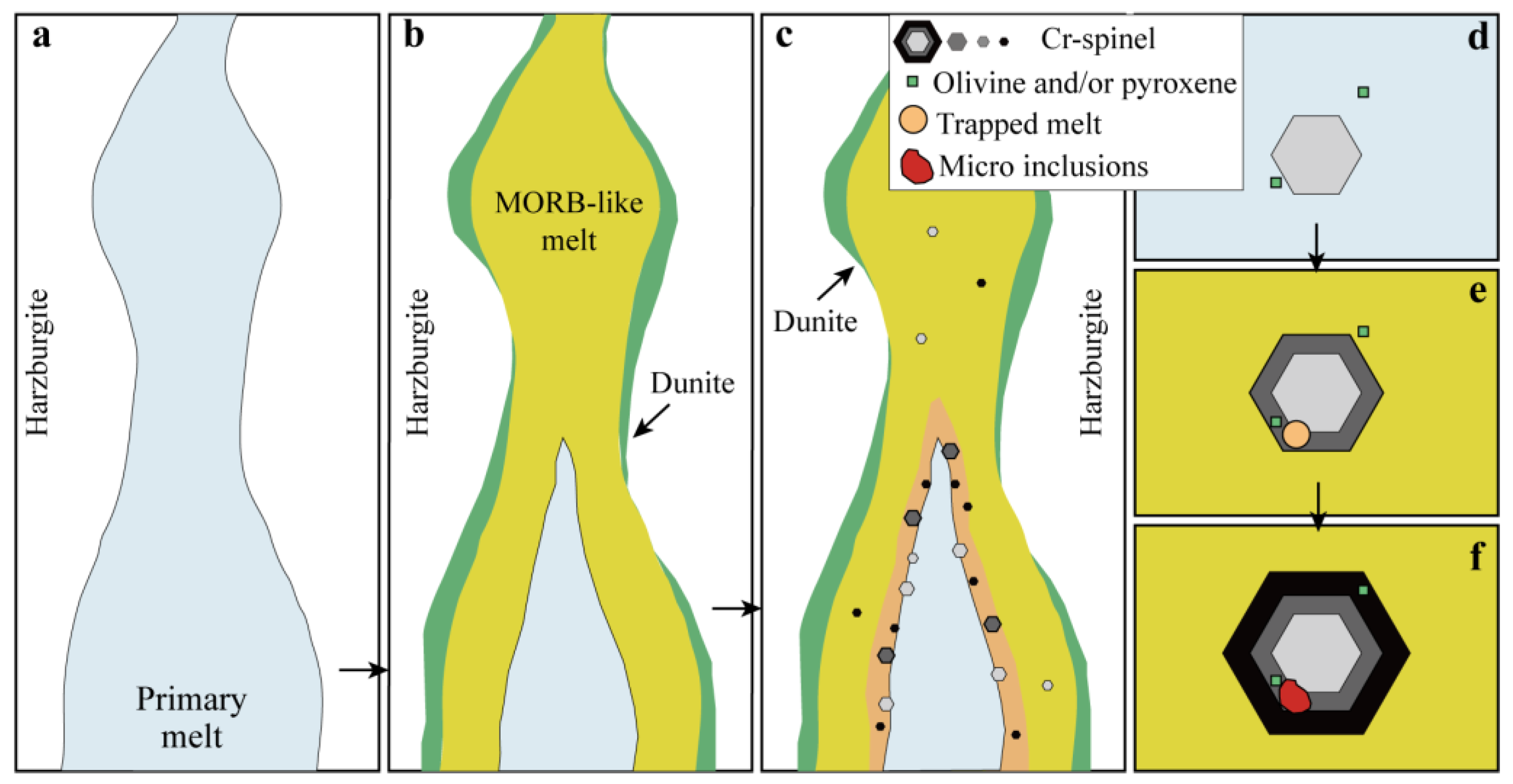
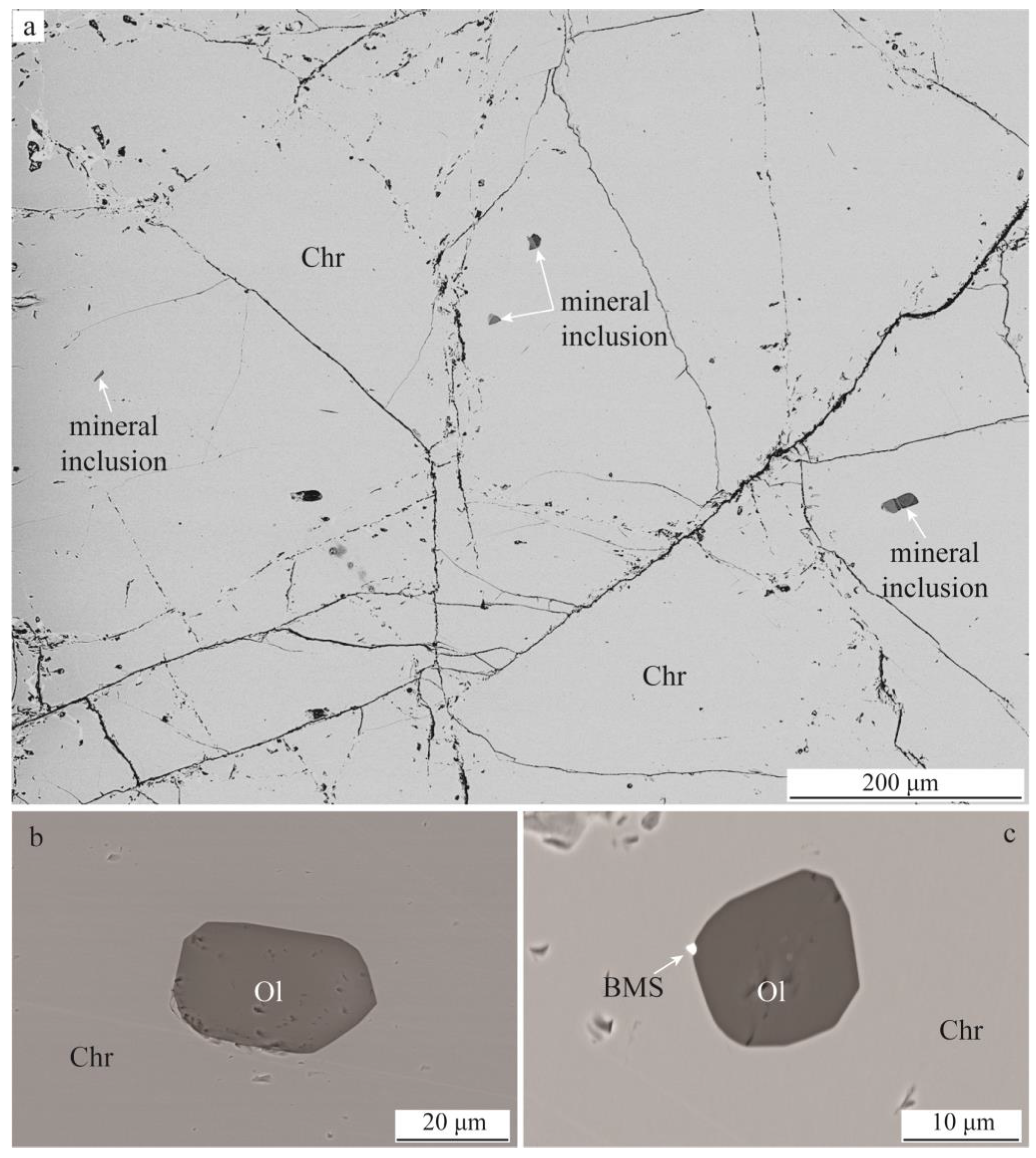
Here, we present a petrographic and microanalytical study of microinclusions in chromite from podiform chromitites hosted by the Sartohay ophiolitic mélange in west Junggar, northwestern China, to investigate the parental magma evolution and chromitite genesis. These silicate inclusions comprise olivine, enstatite, diopside, amphibole, and Na-phlogopite. Their morphological characteristics suggest that most inclusions crystallized directly from the captured melt, with a few anhydrous inclusions (olivines and pyroxenes) as solid silicates trapped during the chromite crystallization. Equilibrium pressure–temperature conditions of coexisting enstatite–diopside inclusions are 8.0–21.6 kbar, and 874–1048 °C. The high Na2O and TiO2 contents of hydrous minerals indicate that the parental magma of chromitites was hydrous and enriched in Mg, Na, Ca, and Ti. The calculated Al2O3 content and FeO/MgO ratio of the parental melts in equilibrium with chromite showed MORB affinity. However, the TiO2 values of parental melts, TiO2 contents of chromite, and estimated fO2 values for chromitites (1.3–2.0 log units above the FMQ buffer) evoked parental MORB-like tholeiitic melts. The composition of olivine inclusion was determined, and it was revealed that the primary melts of the Sartohay podiform chromitites had MgO contents of ~22.7 wt %. This aligns with the observed high magnesian signature in mineral inclusions (Fo = 96–98 in olivine, Mg# = 0.91–0.97 in diopside, and Mg# = 0.92–0.97 in enstatite). We propose that Sartohay podiform chromitites initially formed through the mixing/mingling of primary hydrous Mg-rich melt and the evolved MORB-like melt derived from the melt–peridotite reaction in the upper mantle. In this process, the continuous crystallization of chromite captured micro-silicate mineral inclusions, finally leading to the formation of the Sartohay podiform chromitites.
Keywords: podiform chromitites; silicate mineral inclusion; chromite; olivine; enstatite; diopside; amphibole; Sartohay podiform chromitites; silicate mineral inclusion; chromite; olivine; enstatite; diopside; amphibole; Sartohay