Article

Enhanced Stability of Scorodite in Oxic and Anoxic Systems via Surface Coating with Hydroxyapatite and Fluorapatite


by
Sônia D. F. Rocha
1,*,
Lydia Katsarou
2 and
George P. Demopoulos
2,*
1
Department of Mining Engineering, Universidade Federal de Minas Gerais (UFMG), Belo Horizonte 31270-901, Brazil
2
Department of Mining & Materials Engineering, McGill University, Montreal, QC H3A 0E9, Canada
*
Authors to whom correspondence should be addressed.
Minerals 2022, 12(8), 1014; https://doi.org/10.3390/min12081014
Submission received: 12 July 2022 / Revised: 9 August 2022 / Accepted: 10 August 2022 / Published: 12 August 2022

Abstract

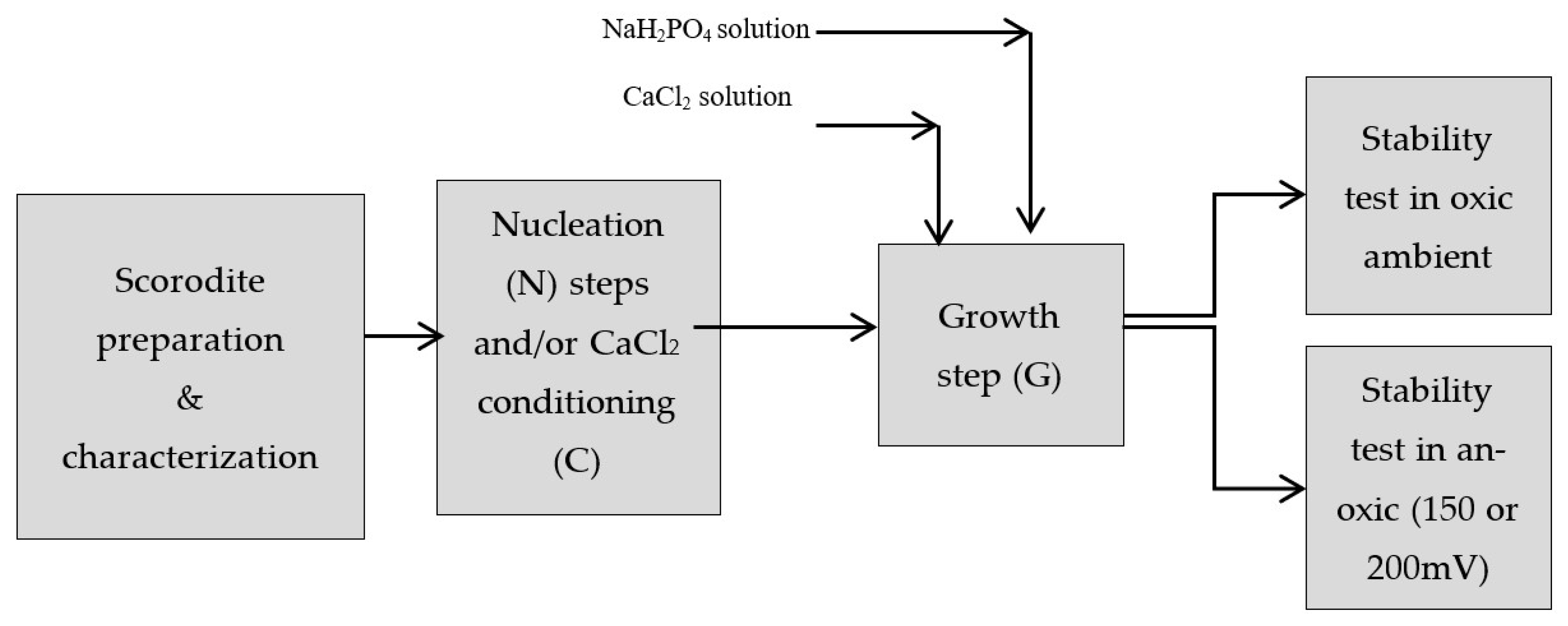
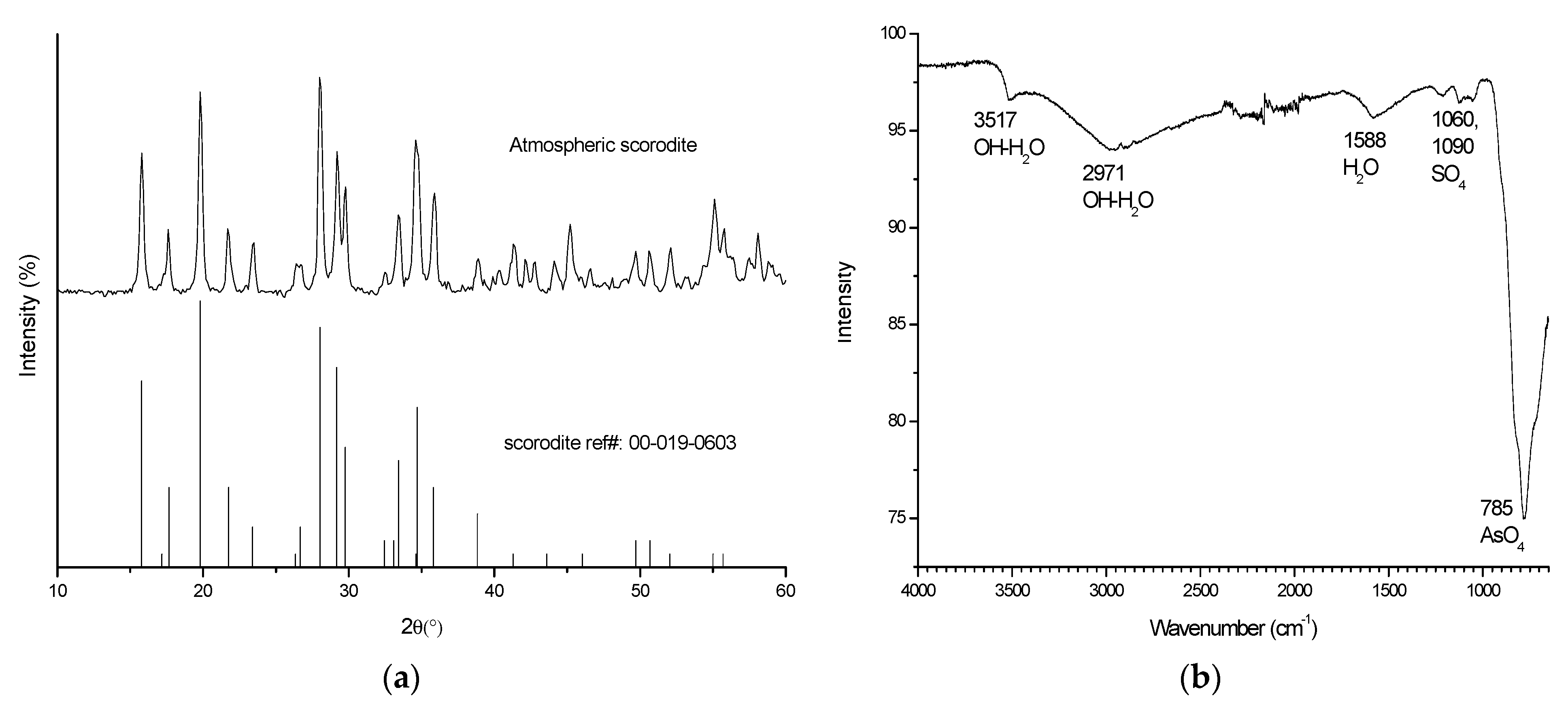
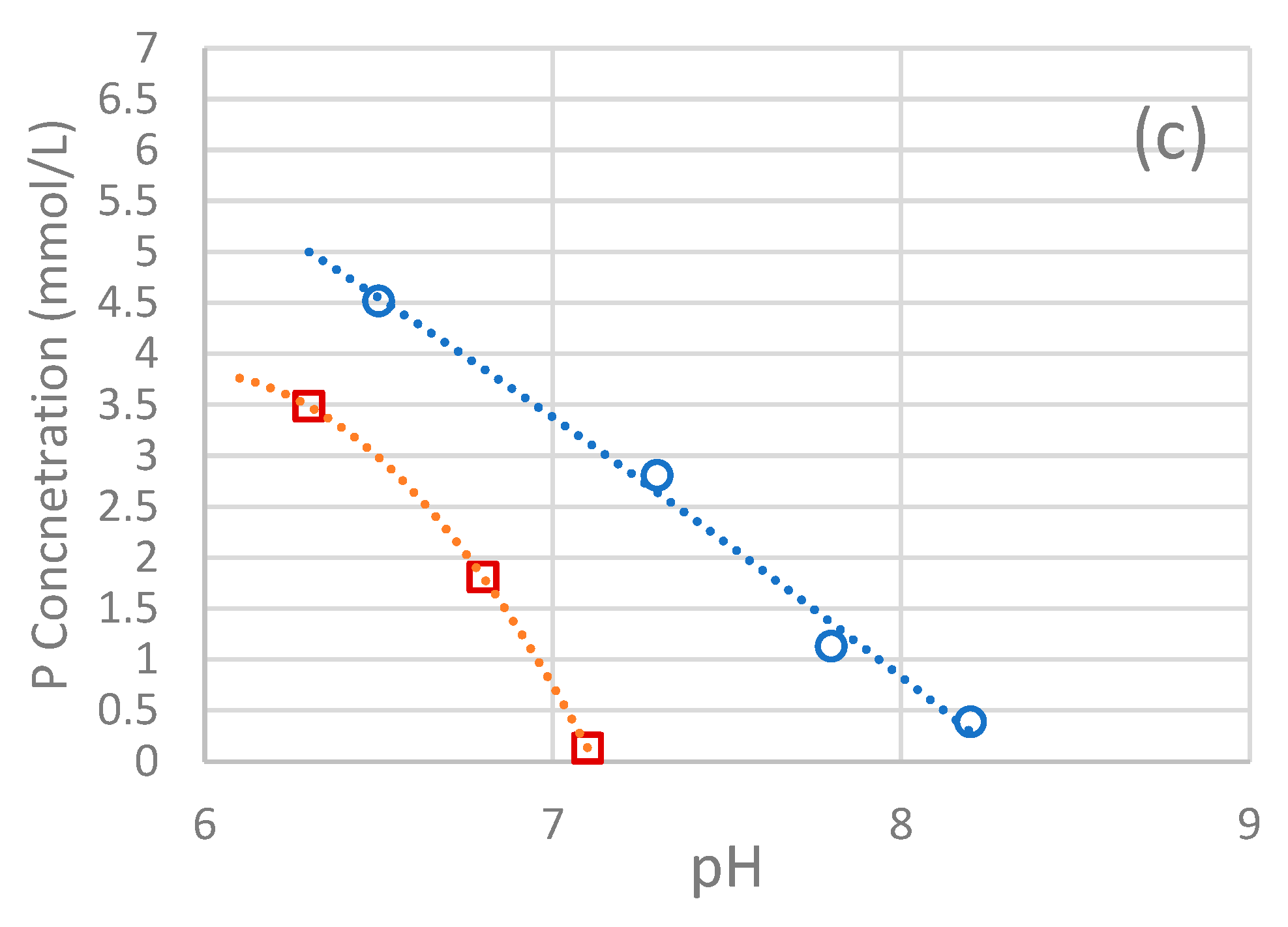
With the objective of enhancing the stability of scorodite, its encapsulation with hydroxyapatite (Ca5(PO4)3OH) (HAP) and fluorapatite (Ca5(PO4)3F) (FAP) surface coatings, the two most stable of the calcium phosphates, inert to pH and redox potential variations, are presented in this work. The experimental work includes: (1) determination of the metastable zone for HAP and FAP precipitation, (2) the synthesis of crystalline scorodite under atmospheric conditions using hydrothermal scorodite seed and its characterization, (3) the coating of scorodite with hydroxyapatite and fluorapatite with supersaturation-controlled heterogeneous crystallization, and (4) the long-term stability of the encapsulated scorodite solids. Hydroxyapatite and fluorapatite were prepared with homogeneous precipitation from a metastable solution to which reagents were added at a controlled flow rate. Crystalline scorodite was produced with seeding precipitation and encapsulated with a direct apatite (HAP or FAP) deposition that was controlled by adjusting the pH and reagent addition. The stability tests in oxic and anoxic environments over the pH range of 5–9 showed the release of arsenic from the apatite-coated scorodite to be much lower than from naked scorodite, thereby demonstrating that apatite-based encapsulation of hazardous materials is technically feasible and merits further consideration for development into an arsenic stabilizing technology.
Keywords: arsenic wastes; scorodite; encapsulation; hydroxyapatite; fluorapatite; crystallization arsenic wastes; scorodite; encapsulation; hydroxyapatite; fluorapatite; crystallization