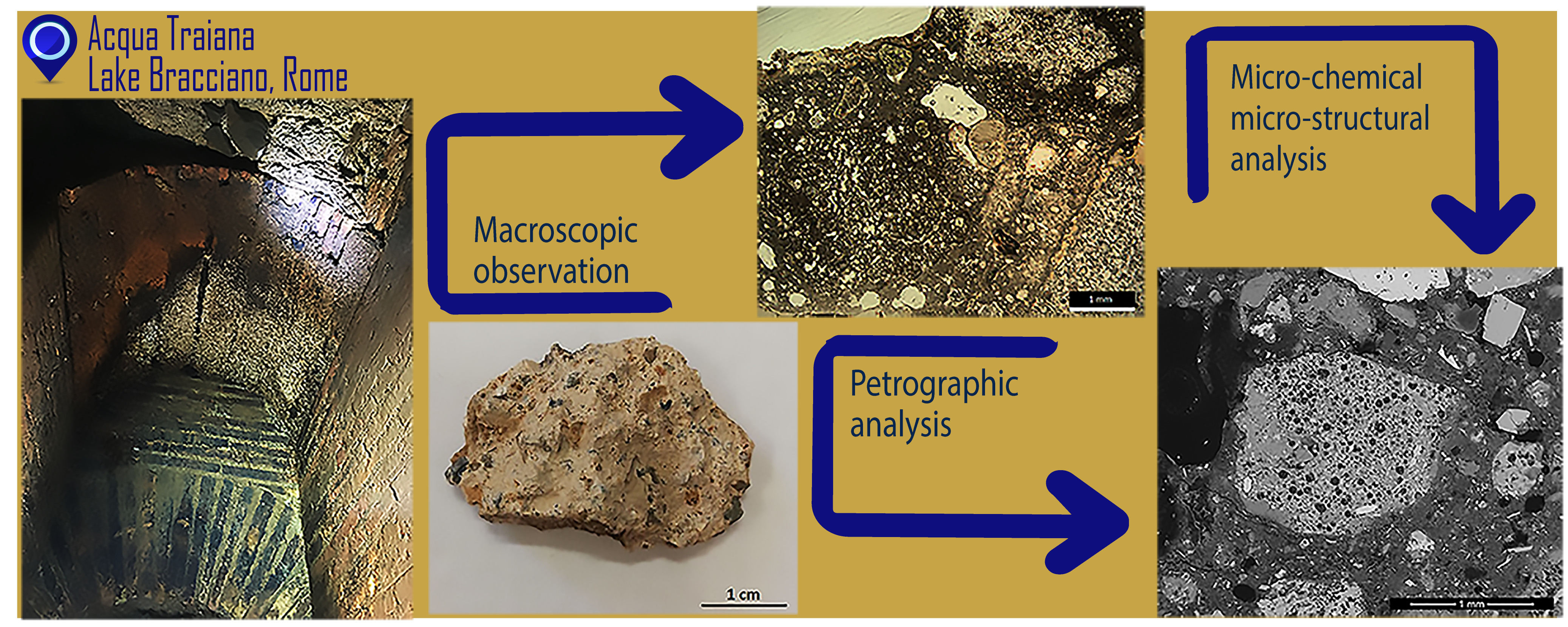
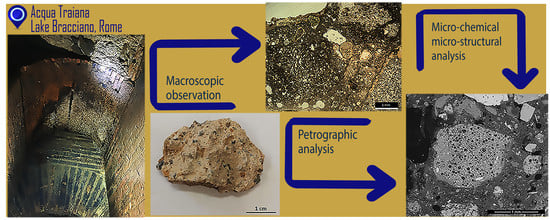
Aqua Traiana, a Roman Infrastructure Embedded in the Present: The Mineralogical Perspective



Abstract
Share and Cite
Botticelli, M.; Calzolari, L.; De Vito, C.; Mignardi, S.; Medeghini, L. Aqua Traiana, a Roman Infrastructure Embedded in the Present: The Mineralogical Perspective. Minerals 2021, 11, 703. https://doi.org/10.3390/min11070703
Botticelli M, Calzolari L, De Vito C, Mignardi S, Medeghini L. Aqua Traiana, a Roman Infrastructure Embedded in the Present: The Mineralogical Perspective. Minerals. 2021; 11(7):703. https://doi.org/10.3390/min11070703
Chicago/Turabian StyleBotticelli, Michela, Laura Calzolari, Caterina De Vito, Silvano Mignardi, and Laura Medeghini. 2021. "Aqua Traiana, a Roman Infrastructure Embedded in the Present: The Mineralogical Perspective" Minerals 11, no. 7: 703. https://doi.org/10.3390/min11070703
APA StyleBotticelli, M., Calzolari, L., De Vito, C., Mignardi, S., & Medeghini, L. (2021). Aqua Traiana, a Roman Infrastructure Embedded in the Present: The Mineralogical Perspective. Minerals, 11(7), 703. https://doi.org/10.3390/min11070703