Geotechnical Assessment of Differential Settlements Under Asymmetric Loading: Implications for Pipeline Performance


Abstract
1. Introduction
2. Site Description and Characteristics of the Biological Basin
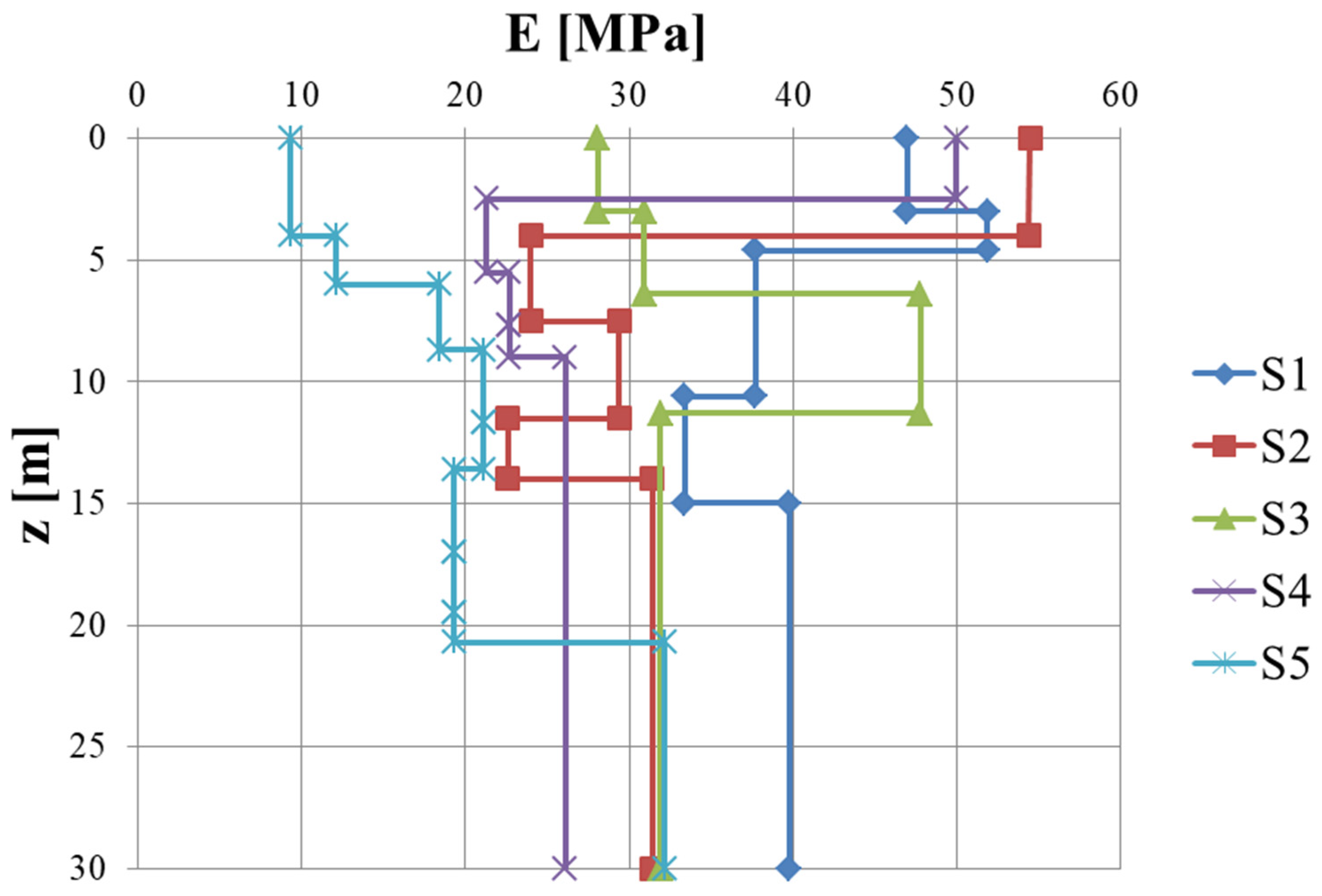
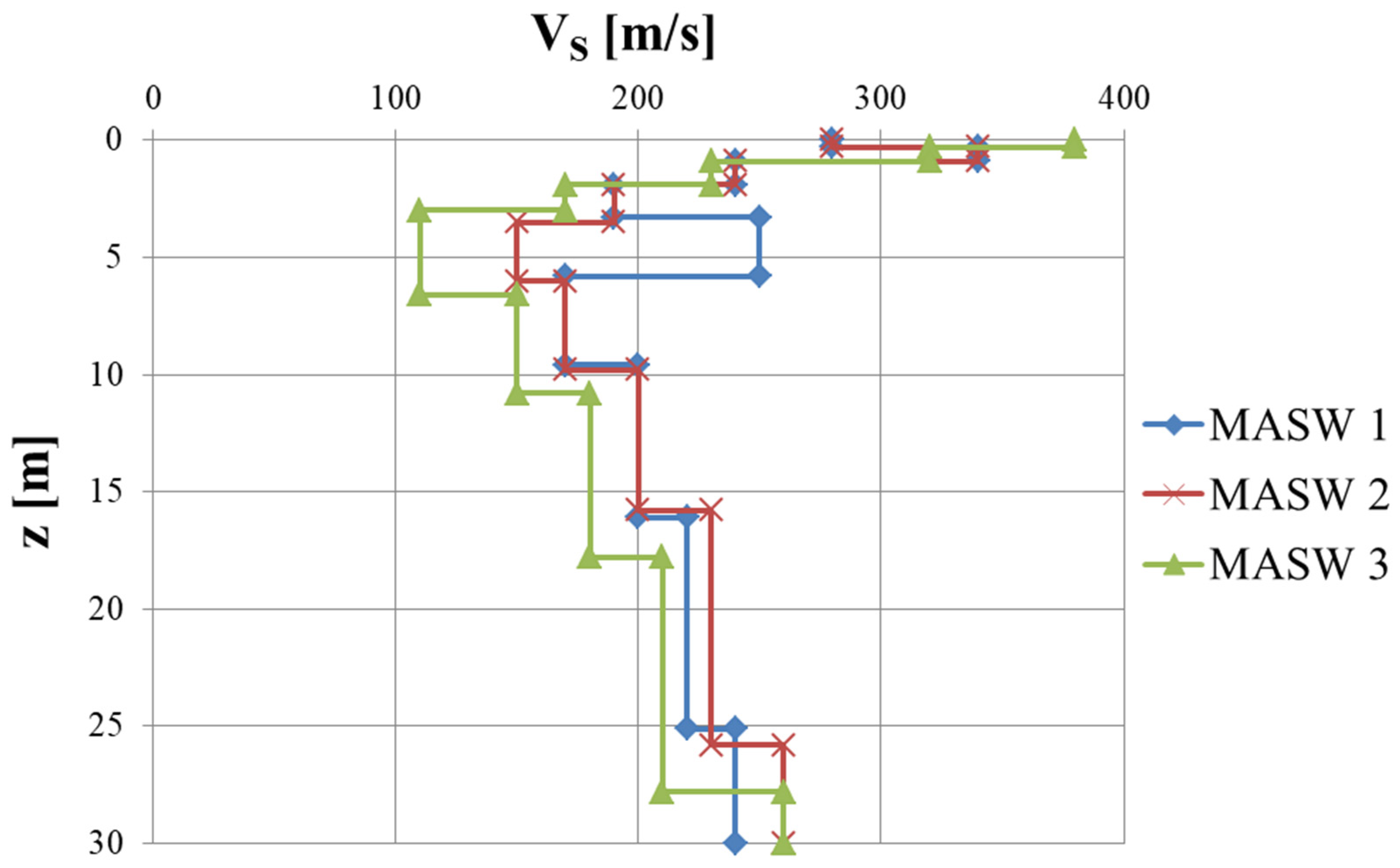
3. Investigation Campaign and Geotechnical Characterization
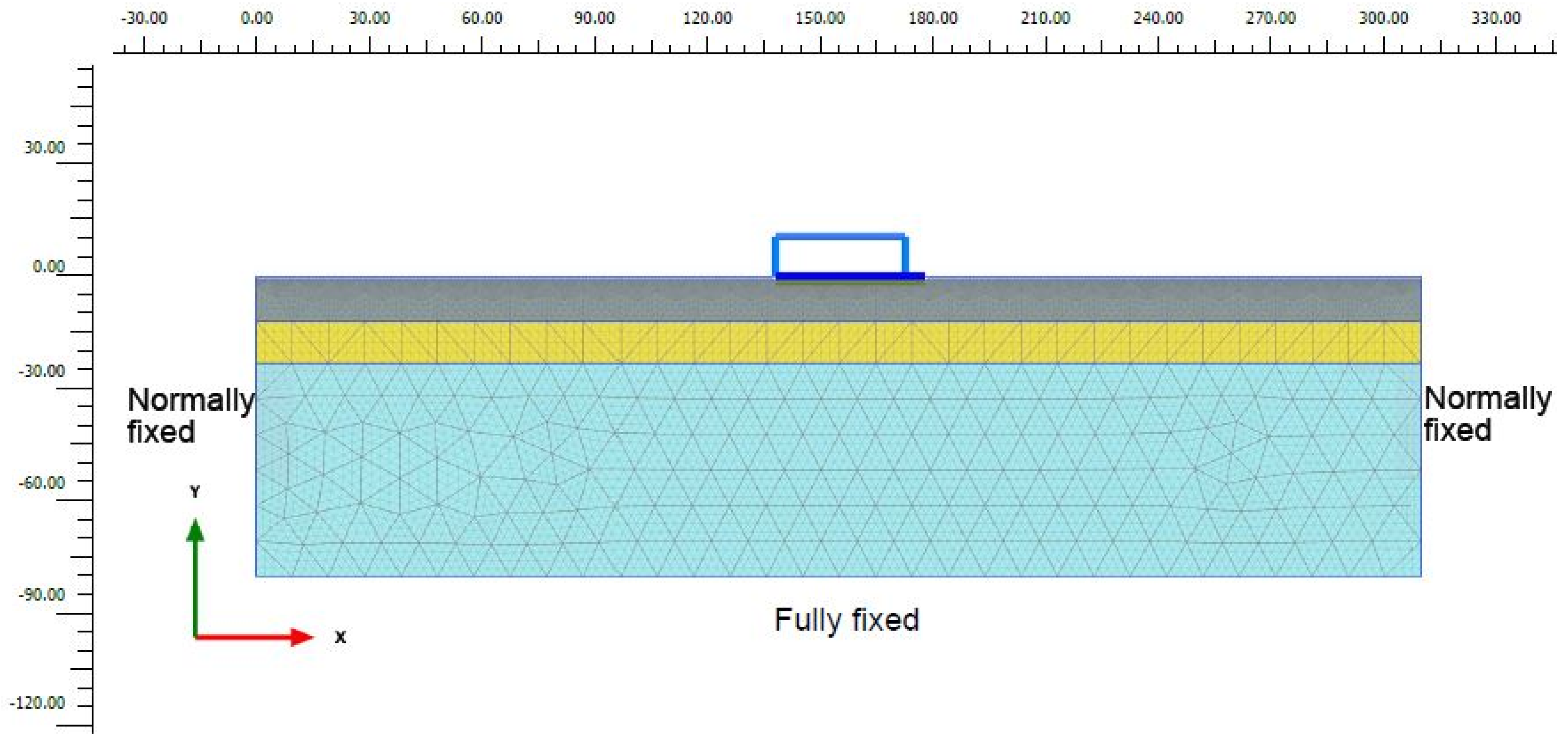
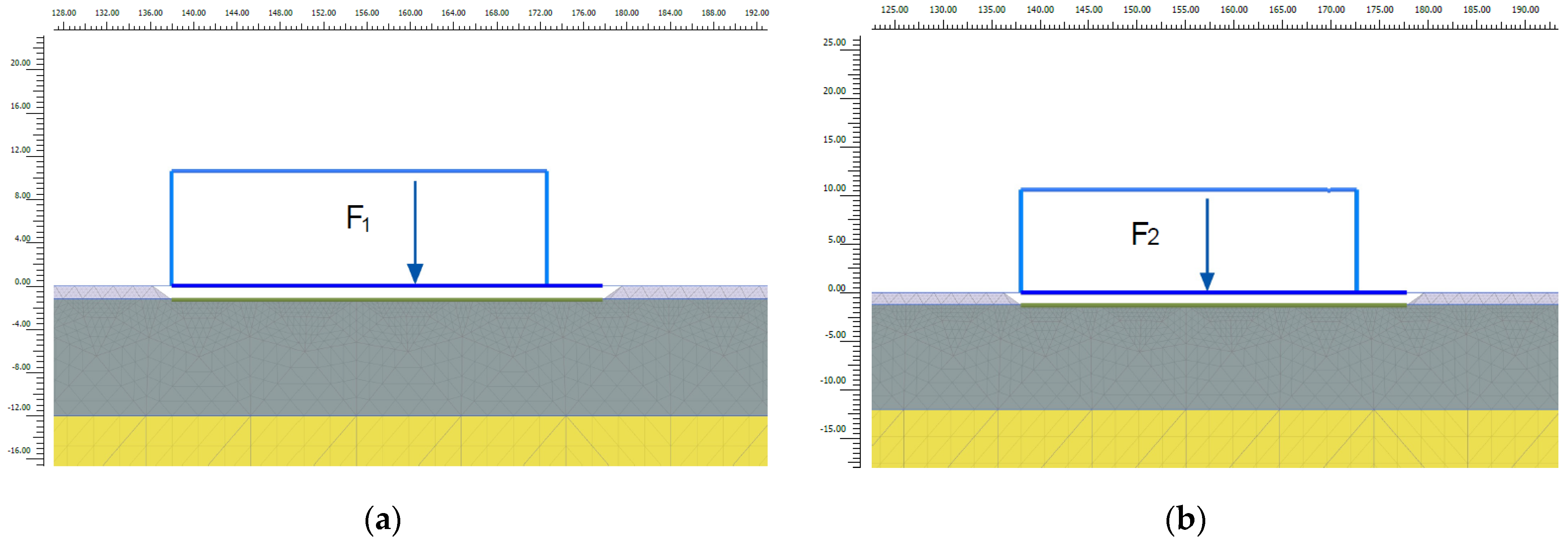
4. Definition of the FEM Numerical Model and Boundary Conditions
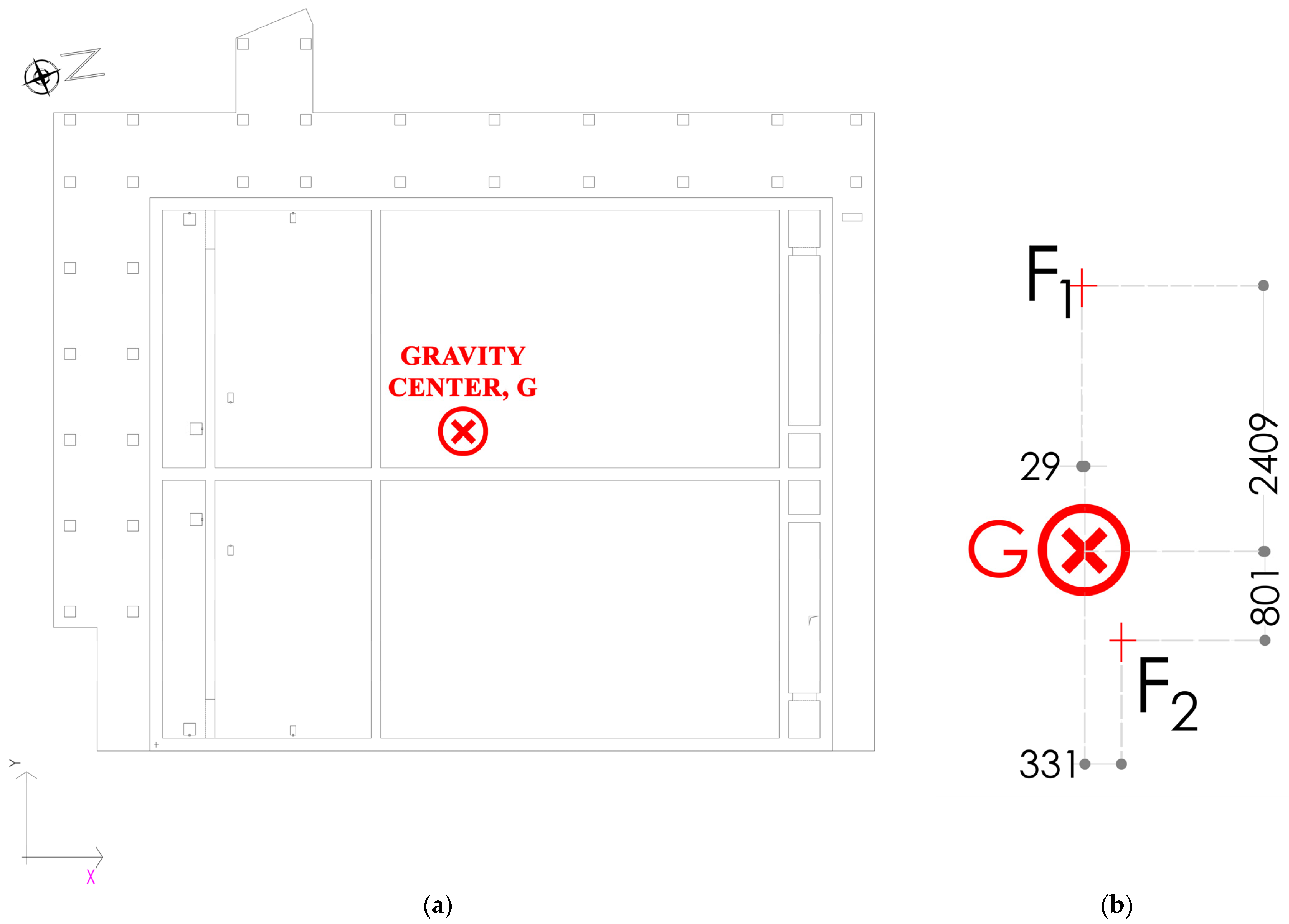
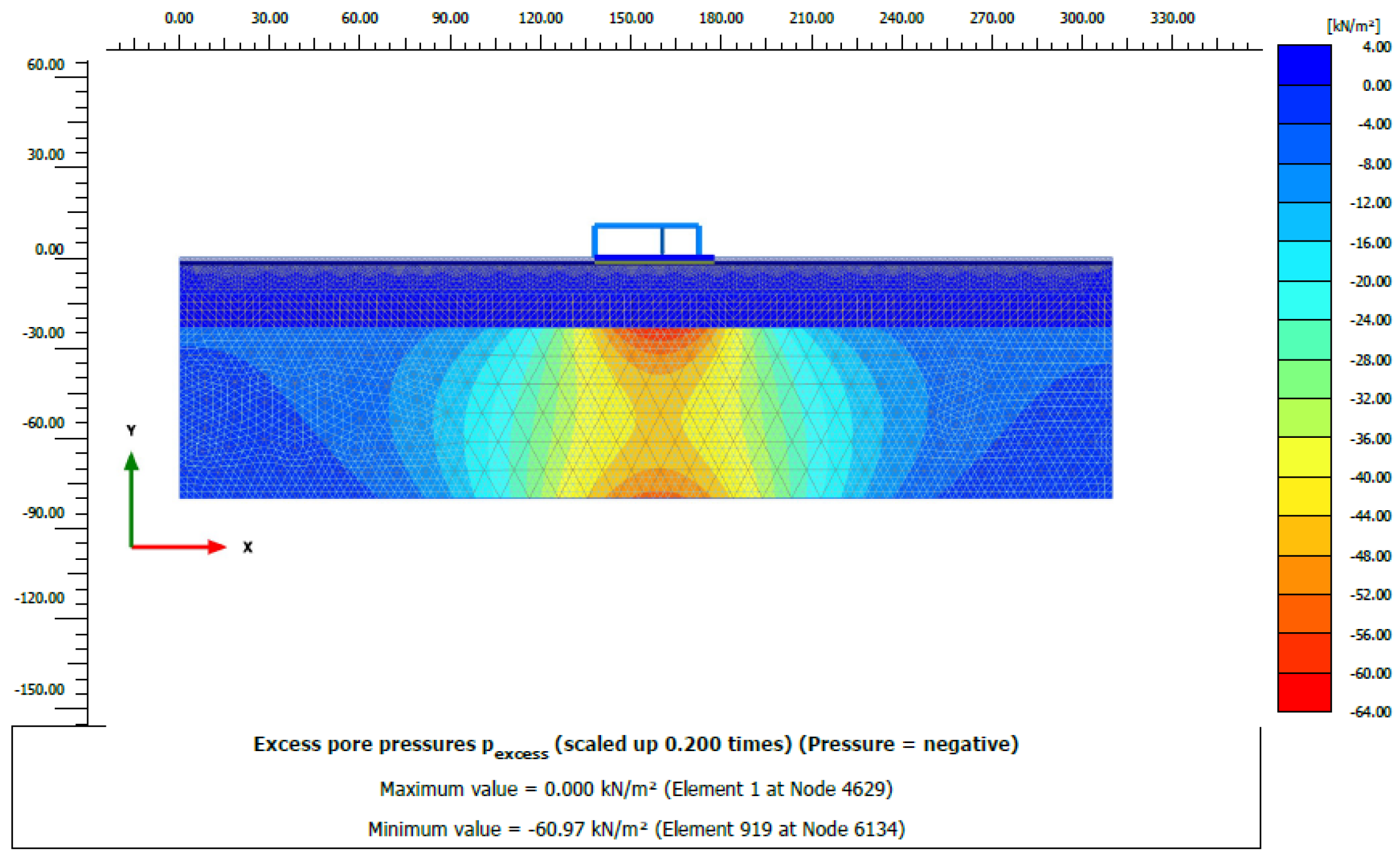
5. Consolidation Analysis and Asymmetric Loading Conditions
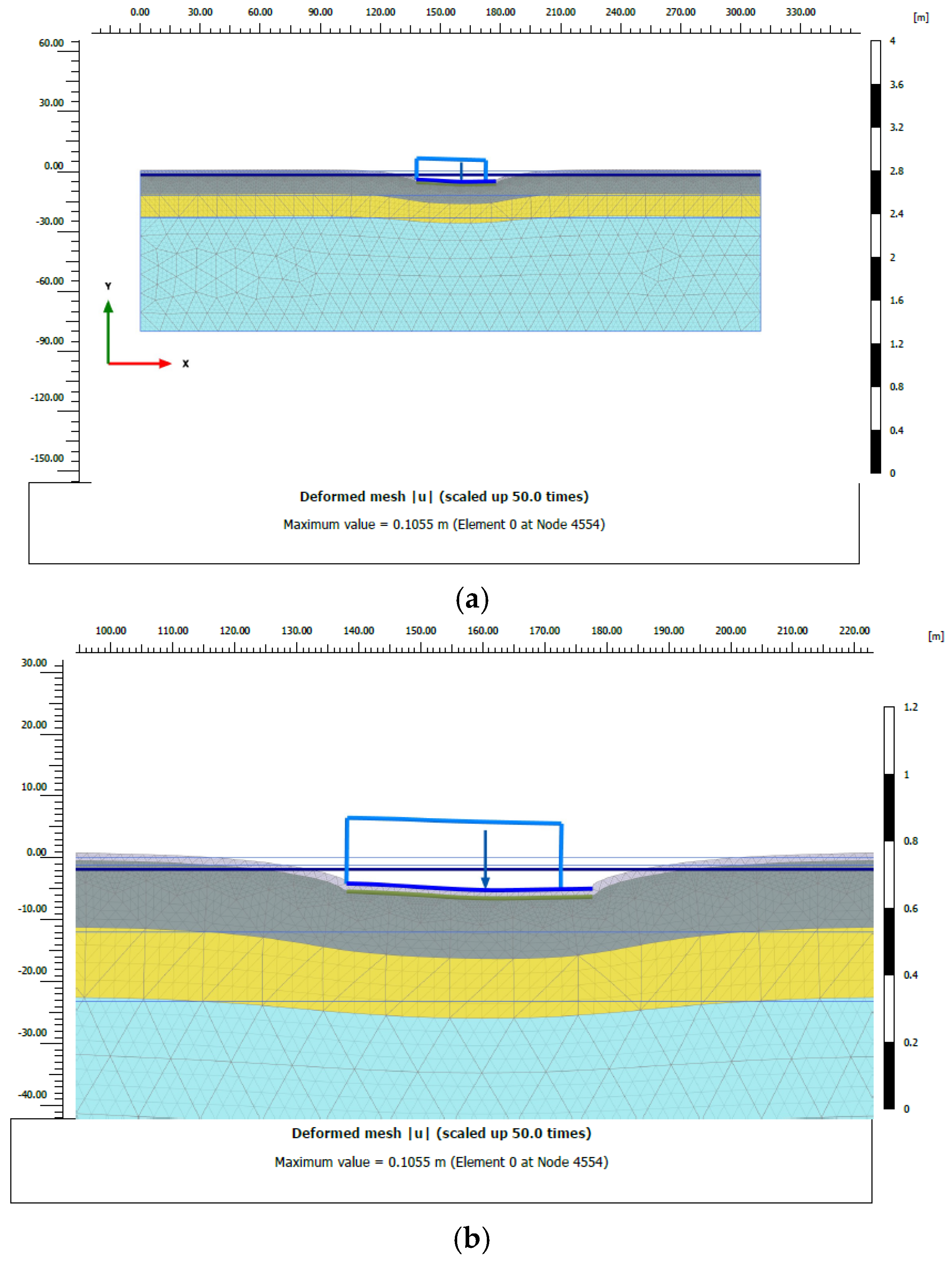
6. Analyses of the Results
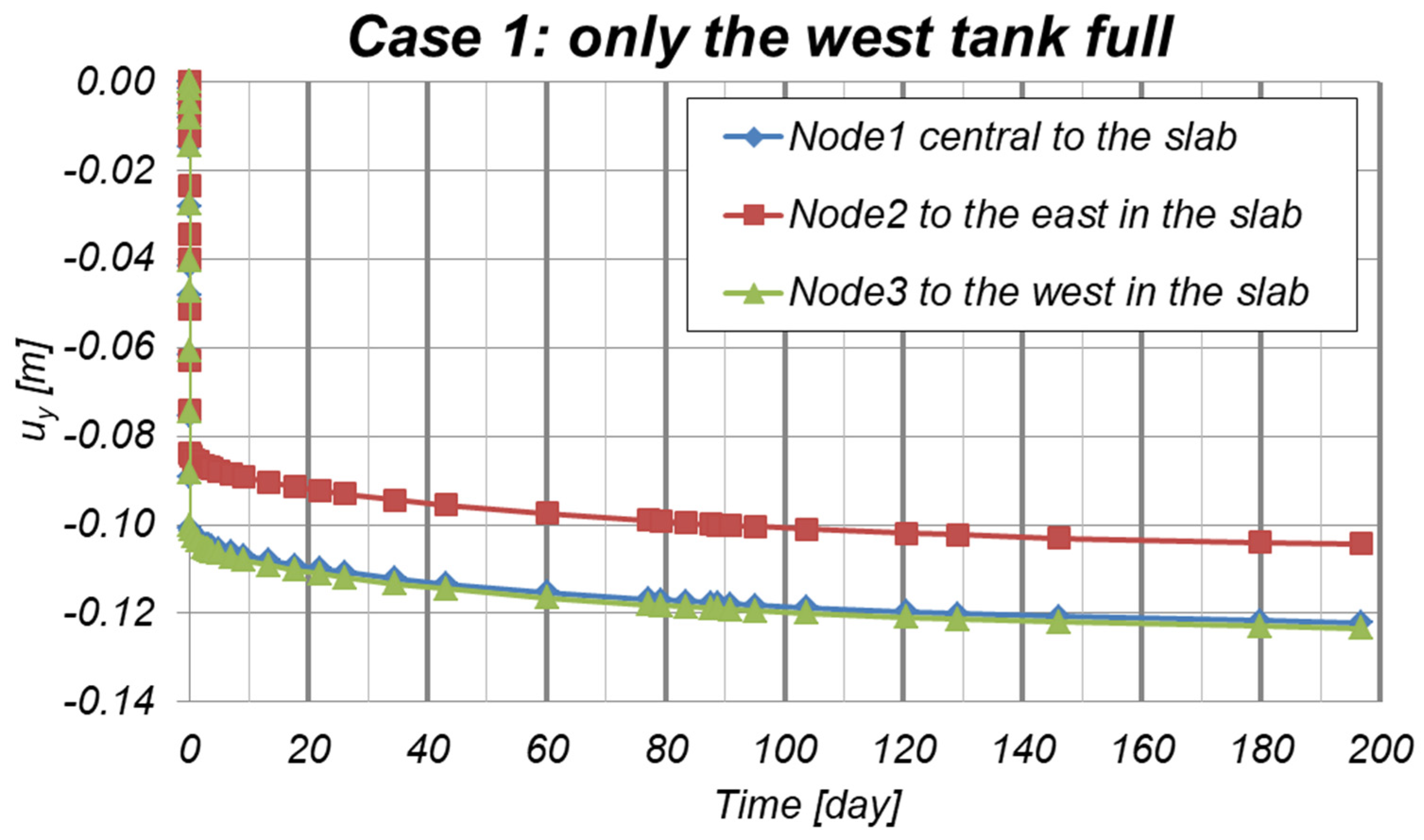
6.1. Case 1: Only the West Tank Full
6.2. Case 2: Both Tanks Full
7. Conclusions
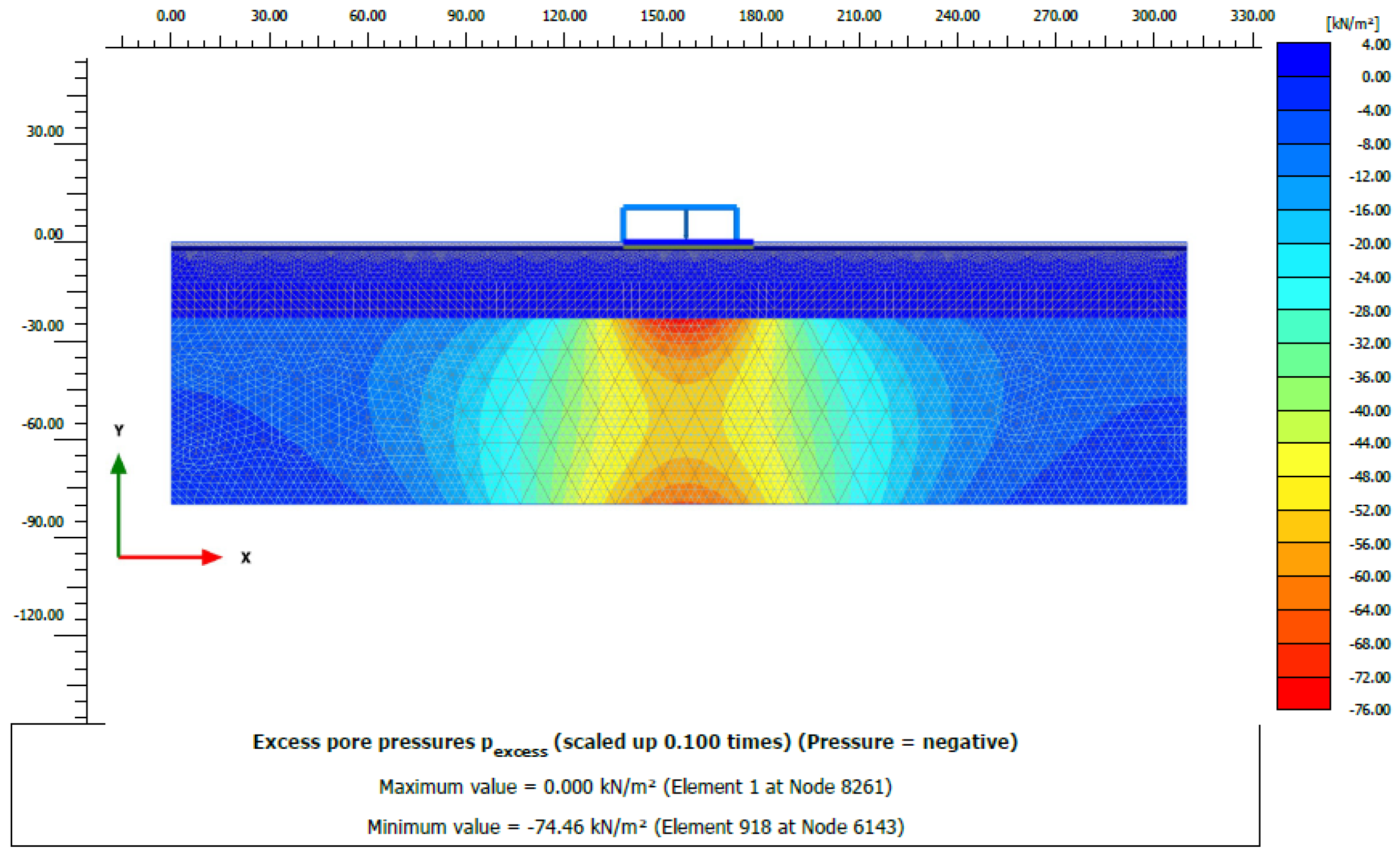
- The pore pressures developed at the end of the consolidation phase are about 22% higher when both tanks are full, with a peak value of 74.46 kN/m2 in the clay layer.
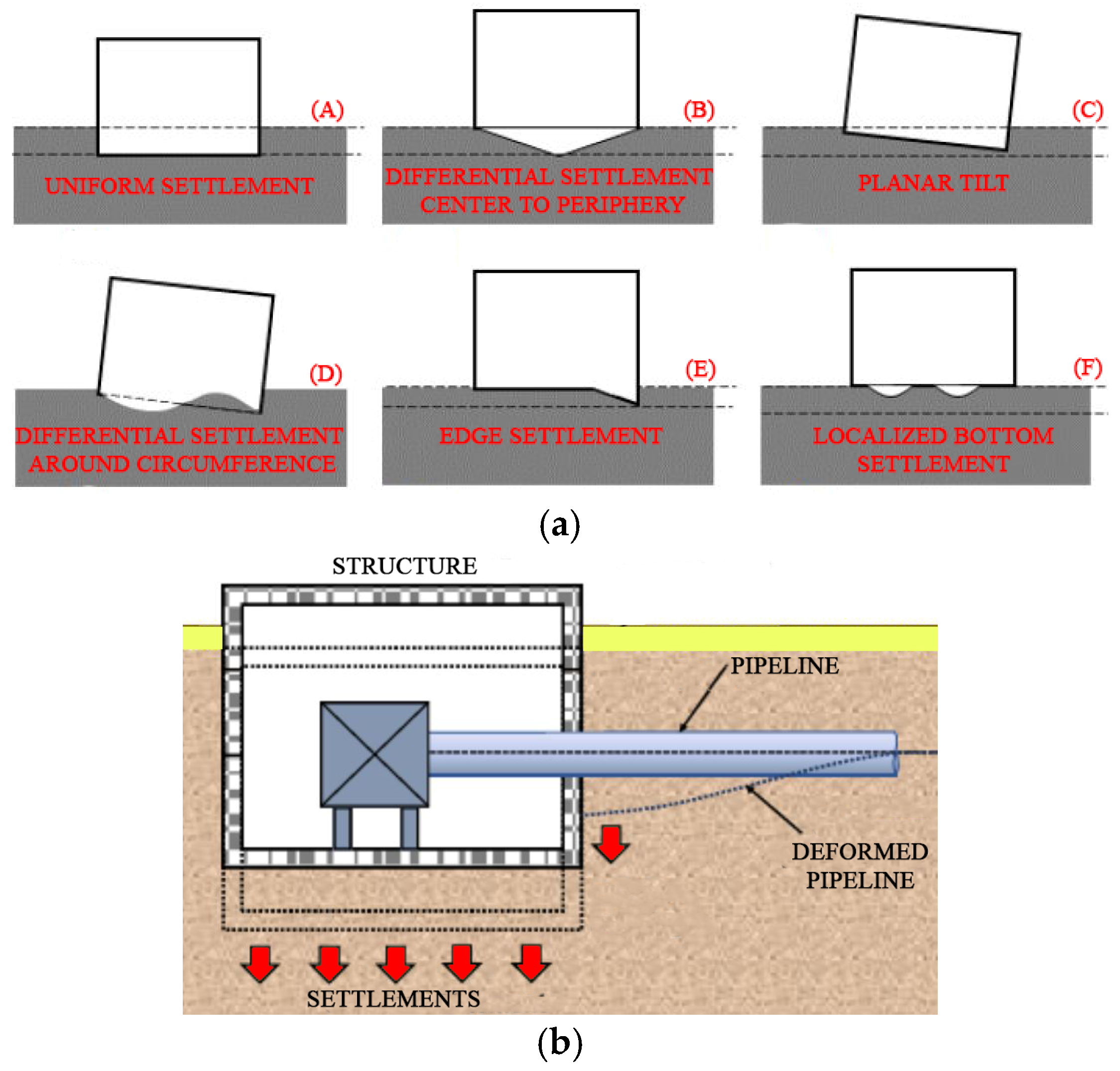
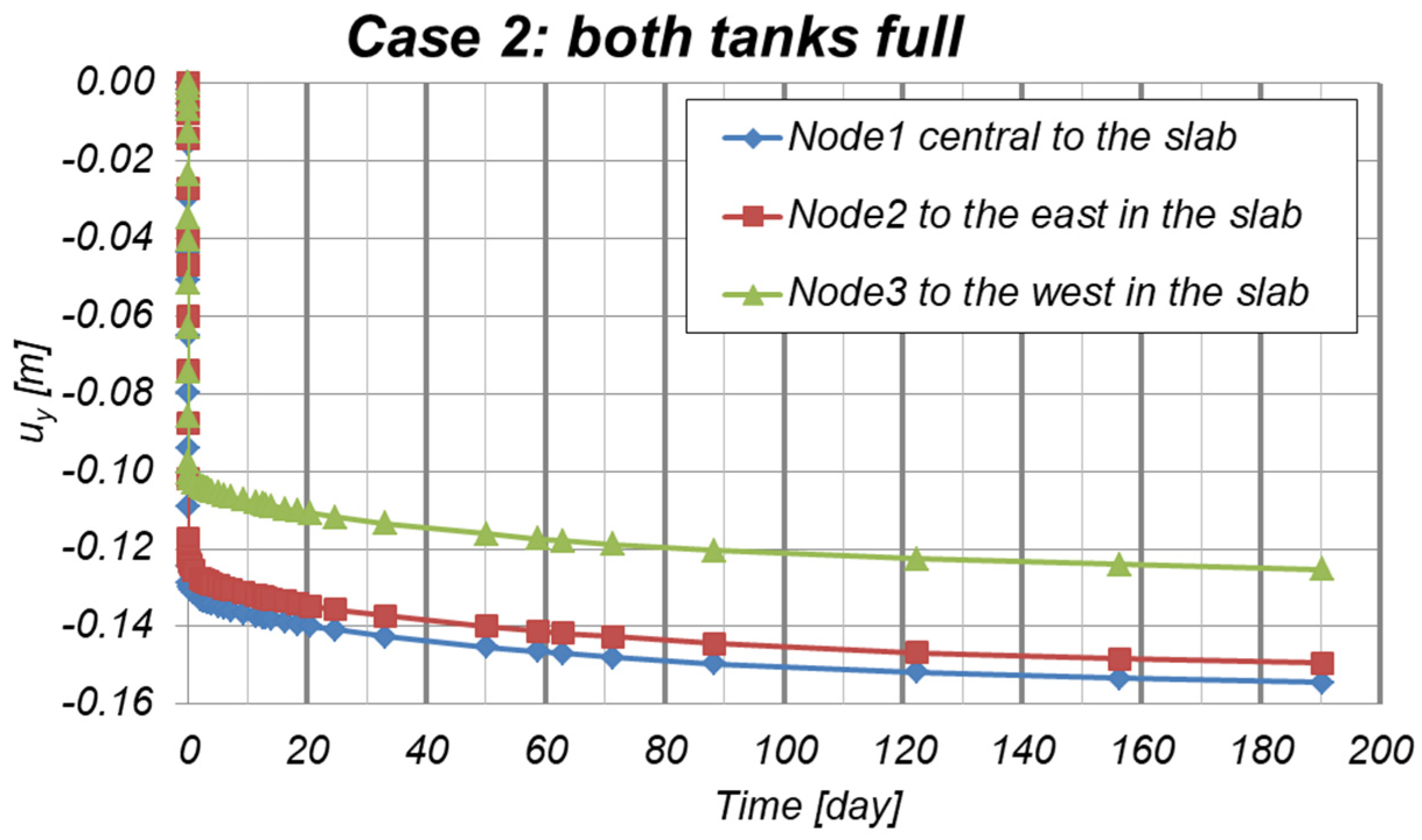
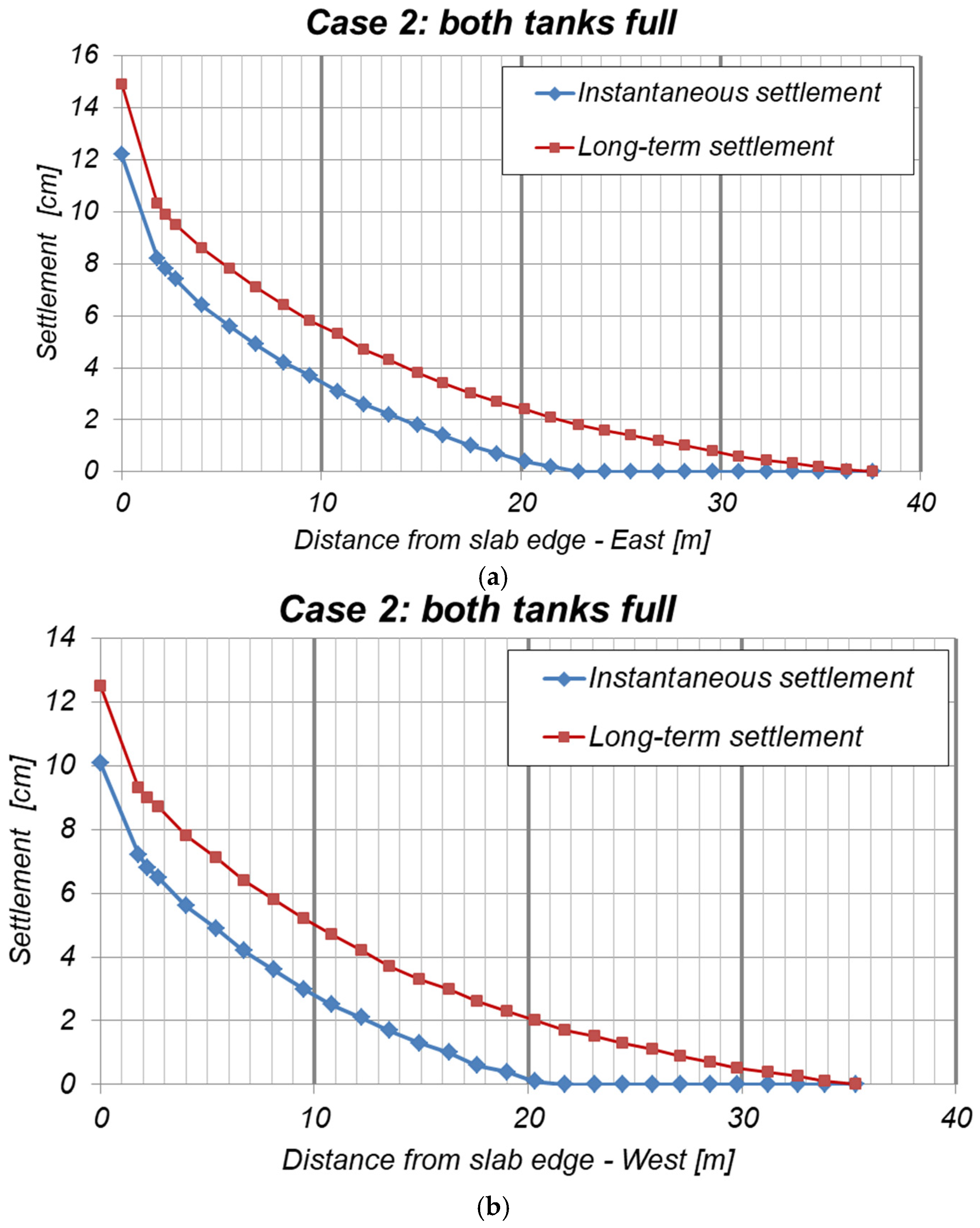
- A comparison between the two loading conditions highlights that settlement values are higher when both tanks are full, as expected. The maximum value of 15.5 cm corresponds to a 90% degree of consolidation, achieved at 6.3 months. The obtained settlement values are significant and may affect the pipeline integrity. However, current codes and design guidelines do not define allowable settlement thresholds for similar structures. Consequently, as a precautionary measure, the foundation of the biological basin will be constructed at a higher elevation to compensate for the expected initial settlements.
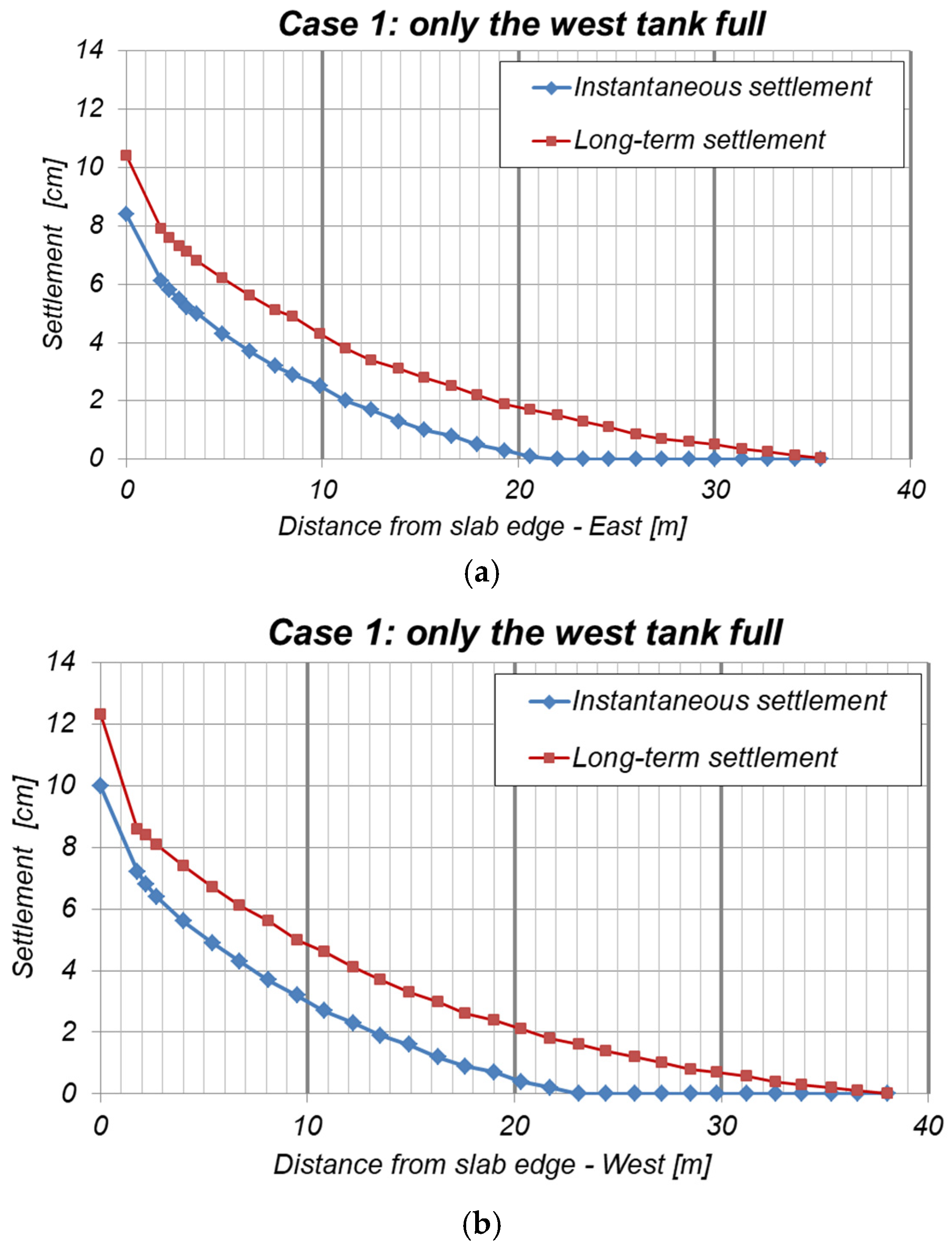
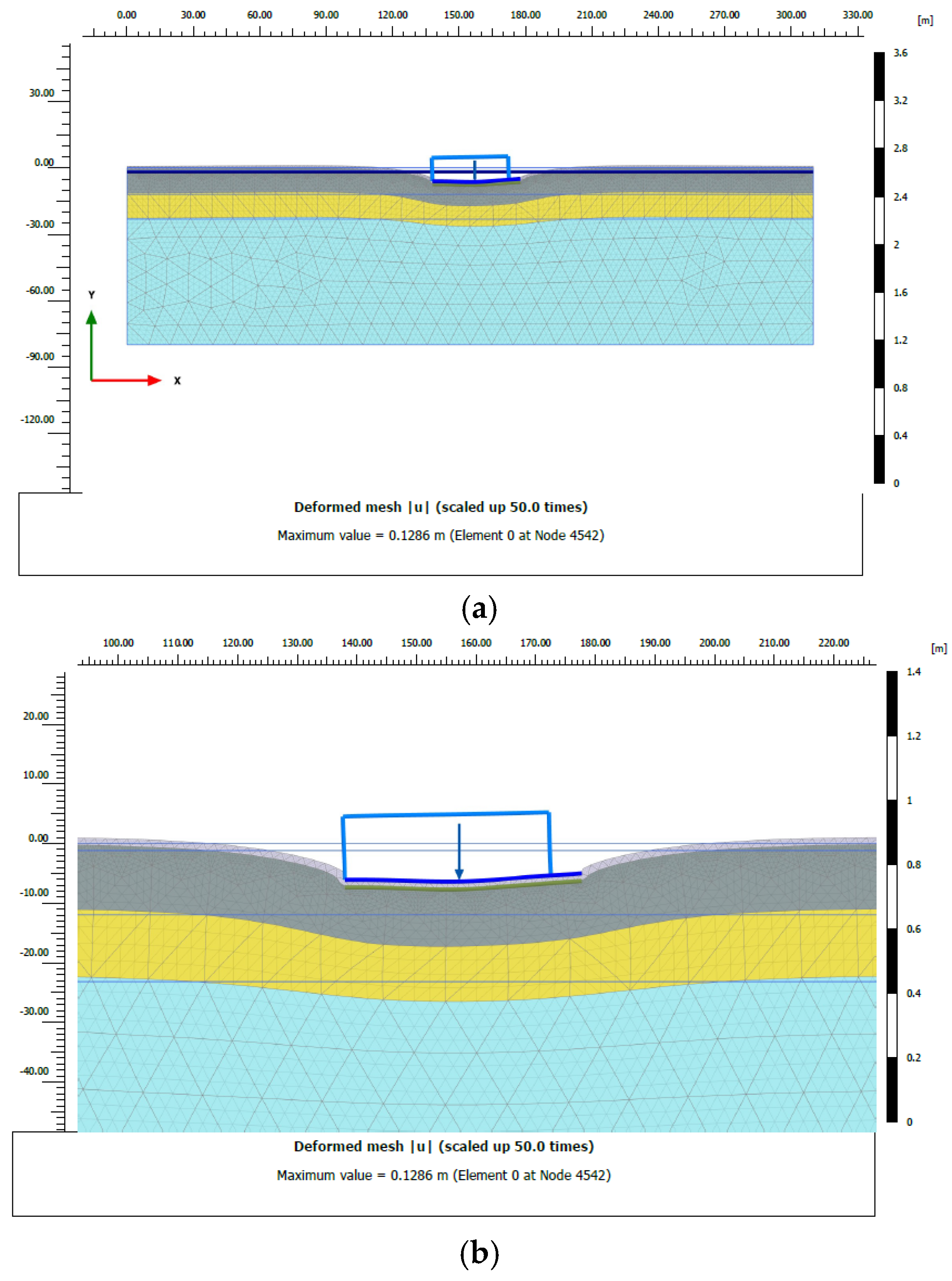
- Considering only the west tank filled, the location of maximum settlement is on the western side of the slab, with differential settlement of approximately 2 cm between the west and the east sides. In contrast, considering both tanks filled, the location of maximum settlement is on the central part of the slab, with differential settlement of approximately 3 cm between the central part and the east side. This shows that the eccentricity of the resultant force affects the location of maximum settlement and the development of differential settlements.
- Maximum differential settlements of 2–3 cm were obtained in this work. This result is relevant given that differential settlements can produce considerable deformation in the pipelines because of bending and axial strain.
- In both cases, the settlements are maximum beneath the biological basin and decrease with distance. However, the soil volume indirectly affected by the construction is greater when only the west tank is full, even if the magnitude of the load is lower, achieving 38.0 m in the west direction. This result shows the importance of considering the load eccentricity.
8. Limitations and Future Developments
Author Contributions
Funding
Data Availability Statement
Acknowledgments
Conflicts of Interest
Abbreviations
| FEM | Finite Element Method |
| MASW | Multichannel Analysis of Surface Waves |
| SPT | Standard Penetration Tests |
References
- Lanzano, G.; Salzano, E.; Santucci De Magistris, F.; Fabbrocino, G. Vulnerability of Pipelines Subjected to Permanent Deformation Due to Geotechnical Co-seismic Effects. Chem. Eng. Trans. 2013, 32, 415–420. [Google Scholar] [CrossRef] [Scilit]
- Castelli, F.; Grasso, S.; Lentini, V.; Sammito, M.S.V. Effects of Soil-Foundation-Interaction on the Seismic Response of a Cooling Tower by 3D-FEM Analysis. Geosciences 2021, 11, 200. [Google Scholar] [CrossRef] [Scilit]
- Pan, J.; Liang, S. A study on the buckling behavior of in-service large open-topped oil-storage tanks. Structures 2021, 29, 211–224. [Google Scholar] [CrossRef] [Scilit]
- Shi, L.; Wang, X.; Shai, J.; Xu, K.; Li, M. Oil storage tank settlement assessment based on standard and finite element analyses. In Proceedings of the ASME 2017 Pressure Vessels and Piping Conference, Waikoloa, HI, USA, 16–20 July 2017. [Google Scholar] [CrossRef] [Scilit]
- Thusyanthan, I.; Enriquez, H. Design Guidance for Evaluating Storage Tank Settlements and Acceptable Tank Settlement Criteria. In Proceedings of the 20th Internacional Conference on Soil Mechanics and Geotechnical Engineering, Sydney, Australia, 1–5 May 2022; pp. 2317–2322. [Google Scholar]
- Fappas, D.; Gregory, C.S.; Karamanos, S.A.; Keil, B.D.; Mielke, R.D.; Card, R.J. Safeguarding the Integrity of Large-Diameter Steel Pipelines Subjected to Differential Ground Settlements. In Pipelines; American Society of Civil Engineers: Reston, VA, USA, 2021. [Google Scholar]
- Huang, Z.; Yu, X.; Lv, Z.; Chen, C.; Shuai, J.; Li, Y.; Liu, Q. Mechanical response analysis of pipeline under settlement based on pipe-soil interaction model. Appl. Ocean Res. 2024, 151, 104162. [Google Scholar] [CrossRef] [Scilit]
- Huo, Y.; Hassan Gomaa, S.M.M.; Zayed, T.; Meguid, M. Review of analytical methods for stress and deformation analysis of buried water pipes considering pipe-soil interaction. Undergr. Space 2023, 13, 205–227. [Google Scholar] [CrossRef] [Scilit]
- Zhang, H.; Feng, Q.; Yan, B.; Zheng, X.; Yang, Y.; Chen, J.; Zhang, H.; Liu, X. State of the Art of Oil and Gas Pipeline Vulnerability Assessments. Energies 2023, 16, 3439. [Google Scholar] [CrossRef] [Scilit]
- Ayinde, O.; Hu, Q.; Wang, F.; Bao, Y.; An, G. Stress prediction equation for buried pipelines subjected to internal loading and cold wave-induced soil temperature. Tunn. Undergr. Space Technol. 2026, 172, 107543. [Google Scholar] [CrossRef] [Scilit]
- Sheil, B.B.; Martin, C.M.; Byrne, B.W. Simulation of overburden pressure during laboratory investigations of axial pipe–soil interaction. Gèotechnique 2021, 71, 272–278. [Google Scholar] [CrossRef] [Scilit]
- Cocchetti, G.; di Prisco, C.; Galli, A.; Nova, R. Soil–pipeline interaction along unstable slopes: A coupled three-dimensional approach. part 1: Theoretical formulation. Can. Geotech. J. 2009, 46, 1289–1304. [Google Scholar] [CrossRef] [Scilit]
- Ni, P.; Moore, I.D.; Take, W.A. Numerical modeling of normal fault-pipeline interaction and comparison with centrifuge tests. Soil Dyn. Earthq. Eng. 2018, 105, 127–138. [Google Scholar] [CrossRef] [Scilit]
- Qin, X.; Ni, P. Kinematics of bell-spigot joints in vitrified clay pipelines under differential ground movement. Tunn. Undergr. Space Technol. 2019, 91, 103005. [Google Scholar] [CrossRef] [Scilit]
- Qin, X.; Wang, Y.; Fu, C. Joint kinematics and sealing capacity assessment of ductile iron pipes under abrupt transverse ground movements. Can. Geotech. J. 2022, 59, 342–358. [Google Scholar] [CrossRef] [Scilit]
- Zhai, K.; Wang, F.; Fang, H.; Ni, P.; Ji, X.; Guo, C.; Hu, S. Serviceability assessment of prestressed concrete cylinder pipes with broken wires: Analytical solution and numerical simulation. Tunn. Undergr. Space Technol. 2022, 126, 104551. [Google Scholar] [CrossRef] [Scilit]
- Qin, X.; Ni, P.; Wang, Y.; Yan-Jun Du, Y.J. Mechanical response estimation of jointed rigid pipes under normal fault rupture. Soil Dyn. Earthq. Eng. 2021, 146, 106754. [Google Scholar] [CrossRef] [Scilit]
- Jiao, Y.; Wang, Y.; Li, J.; Liu, X. Finite Element Analysis and Improved Evaluation of Mechanical Response in Large Oil Storage Tanks Subjected to Non-Uniform Foundation Settlement. Processes 2024, 12, 2838. [Google Scholar] [CrossRef] [Scilit]
- Zhou, P.; Wang, J.; Song, Z.; Tian, X.; Zhang, Y.; Xiao, W.; Yagiz, S. Theoretical prediction method for settlement of existing tunnel induced by undercrossing. Transp. Geotech. 2026, 62, 102111. [Google Scholar] [CrossRef] [Scilit]
- Zhou, P.; Song, Z.; Wang, J.; Zhang, Y.; Tian, X. Prediction method for ground surface settlement induced by bias tunnel based on stochastic medium theory. Chin. J. Geotech. Eng. 2025, 47, 589–598. [Google Scholar] [CrossRef] [Scilit]
- Wang, J.; Zhou, P.; Song, Z.; Li, S.; Zhang, Q. A New Calculation Method for Tunneling-Caused Stratum Settlement. KSCE J. Civ. Eng. 2022, 26, 2624–2640. [Google Scholar] [CrossRef] [Scilit]
- Huo, R.; Zhou, P.; Song, Z.; Wang, J.; Li, S.; Zhang, Y. Study on the settlement of large-span metro station’s baseplate caused by the tunnels newly built beneath it. Adv. Mech. Eng. 2019, 11, 1687814018825161. [Google Scholar] [CrossRef] [Scilit]
- Zhou, P.; Wang, J.; Song, Z.; Cao, Z.L.; Pei, Z.M. Construction Method Optimization for Transfer Section Between Cross Passage and Main Tunnel of Metro Station. Front. Earth Sci. 2022, 10, 770888. [Google Scholar] [CrossRef] [Scilit]
- Chandrawanshi, S.; Garg, V. Effect of adjacent structures on footing settlement for different multi-building arrangements. Open Eng. 2024, 14, 20240092. [Google Scholar] [CrossRef] [Scilit]
- Moghadasi, H.; Eslami, A.; Akbarimehr, D.; Asgari, S. Assessment of adjacent foundations consequences and solutions for remediation via physical modeling. Soil Dyn. Earthq. Eng. 2024, 180, 108613. [Google Scholar] [CrossRef] [Scilit]
- Shumakov, I.; Basanskyi, V.; Fursov, Y.; Bratishko, S.; Savchenko, O. Determination of the impact zone of enabling works of a new construction on the surrounding buildings. Sci. Bull. Build. 2023, 1, 17–22. [Google Scholar] [CrossRef] [Scilit]
- PLAXIS 2D. Reference Manual. 2018. Available online: https://communities.bentley.com/products/geotech-analysis/w/plaxis-soilvision-wiki/50826/manuals-archive-plaxis (accessed on 1 January 2026).
- Castelli, F.; Grasso, S.; Lentini, V.; Sammito, M.S.V. Calibration of the UBC3D-PLM soil model from dilatometer Marchetti test (DMT) for the liquefaction behaviour and cyclic resistance ratio (CRR) of sandy soils. Soil Dyn. Earthq. Eng. 2024, 187, 109002. [Google Scholar] [CrossRef] [Scilit]
- Grasso, S.; Sammito, M.S.V. Assessment of 2D site effects for seismic microzonation studies: Application to Eastern Sicily (Italy). Bull. Earthq. Eng. 2025, 23, 3889–3922. [Google Scholar] [CrossRef] [Scilit]
- Castelli, F.; Grasso, S.; Lentini, V.; Sammito, M.S.V. Assessment of liquefaction effects on dynamic soil-structure interaction for the 1908 Messina and Reggio Calabria scenario earthquake. Soil Dyn. Earthq. Eng. 2024, 178, 108445. [Google Scholar] [CrossRef] [Scilit]
- PLAXIS 2D. Scientific Manual. 2018. Available online: https://communities.bentley.com/products/geotech-analysis/w/plaxis-soilvision-wiki/50826/manuals-archive-plaxis (accessed on 1 January 2026).
- Bowles, J.E. Foundation Analysis and Design; McGraw-Hill Companies: New York, NY, USA, 1996; p. 154. [Google Scholar]
- Stroud, M.A. The standard penetration test in insensitive clays and soft rock. In Proceedings of the 1st European Symposium on Penetration Testing, Stockholm, Sweden, 5–7 June 1974; Volume 2, pp. 367–375. [Google Scholar]
- PLAXIS 2D. Material Models Manual. 2018. Available online: https://communities.bentley.com/products/geotech-analysis/w/plaxis-soilvision-wiki/50826/manuals-archive-plaxis (accessed on 1 January 2026).
- Castelli, F.; Grasso, S.; Lentini, V.; Sammito, M.S.V. Liquefaction Resistance of Sandy Soil in South-Eastern Sicily from Cyclic Direct Simple Shear Testing. Geotech. Geol. Eng. 2025, 43, 488. [Google Scholar] [CrossRef] [Scilit]
- Grasso, S.; Sammito, M. Assessment of liquefaction potential in the framework of seismic microzonation using different approaches. Bull. Earthq. Eng. 2025, 23, 6013–6046. [Google Scholar] [CrossRef] [Scilit]
- Lentini, V.; Castelli, F. Liquefaction Resistance of Sandy Soils from Undrained Cyclic Triaxial Tests. Geotech. Geol. Eng. 2019, 37, 201–216. [Google Scholar] [CrossRef] [Scilit]
- Castelli, F.; Grasso, S.; Lentini, V.; Sammito, M.S.V. Nonlinear 3D Finite Element Analysis of a Coupled Soil–Structure System by a Deterministic Approach. Geosciences 2024, 14, 100. [Google Scholar] [CrossRef] [Scilit]



| Layer | γ [kN/m3] | γs [kN/m3] | c’ [kPa] | cu [kPa] | φ’ [°] | φu [°] | E [kPa] | ν [-] | VS [m/s] |
|---|---|---|---|---|---|---|---|---|---|
| Fill | 19.50 | 20.5 | 58.84 | 78.45 | 30.0 | - | 635,846 | 0.33 | 320 |
| Silty sand | 18.50 | 25.4 | 39.23 | 88.26 | 25.0 | 15.0 | 47,160 | 0.38 | 140 |
| Sandy silt | 17.50 | 25.4 | 39.23 | 117.68 | 22.0 | 11.0 | 26,000 | 0.40 | 180 |
| Silty clay | 17.80 | 26.7 | 78.45 | 166.71 | 20.0 | 13.0 | 37,000 | 0.40 | 220 |
| Layer | γ [kN/m3] | c’ [kPa] | φ’ [°] | E [kPa] | ν [-] | From [m] | To [m] |
|---|---|---|---|---|---|---|---|
| Fill | 19.50 | 58.84 | 30.0 | 635,846 | 0.33 | 0 | 1.20 |
| Silty sand | 18.50 | 39.23 | 25.0 | 47,160 | 0.38 | 1.20 | 12.0 |
| Sandy silt | 17.50 | 39.23 | 22.0 | 26,000 | 0.40 | 12.0 | 23.2 |
| Silty clay | 17.80 | 78.45 | 20.0 | 37,000 | 0.40 | 23.2 | 80 |
| Case | F [kN/m] | Ey [m] |
|---|---|---|
| 1 | 3744 | 2.41 |
| 2 | 4886 | −0.80 |
Disclaimer/Publisher’s Note: The statements, opinions and data contained in all publications are solely those of the individual author(s) and contributor(s) and not of MDPI and/or the editor(s). MDPI and/or the editor(s) disclaim responsibility for any injury to people or property resulting from any ideas, methods, instructions or products referred to in the content. |
© 2026 by the authors. Licensee MDPI, Basel, Switzerland. This article is an open access article distributed under the terms and conditions of the Creative Commons Attribution (CC BY) license.
Share and Cite
Castelli, F.; Lentini, V.; Sammito, M.S.V. Geotechnical Assessment of Differential Settlements Under Asymmetric Loading: Implications for Pipeline Performance. Symmetry 2026, 18, 1427. https://doi.org/10.3390/sym18091427
Castelli F, Lentini V, Sammito MSV. Geotechnical Assessment of Differential Settlements Under Asymmetric Loading: Implications for Pipeline Performance. Symmetry. 2026; 18(9):1427. https://doi.org/10.3390/sym18091427
Chicago/Turabian StyleCastelli, Francesco, Valentina Lentini, and Maria Stella Vanessa Sammito. 2026. "Geotechnical Assessment of Differential Settlements Under Asymmetric Loading: Implications for Pipeline Performance" Symmetry 18, no. 9: 1427. https://doi.org/10.3390/sym18091427
APA StyleCastelli, F., Lentini, V., & Sammito, M. S. V. (2026). Geotechnical Assessment of Differential Settlements Under Asymmetric Loading: Implications for Pipeline Performance. Symmetry, 18(9), 1427. https://doi.org/10.3390/sym18091427