Adaptive Bi-Level Planning of Photovoltaic Hosting Capacity for Hydro-Dominant Distribution Grids Considering Hydraulic Safety Constraints

 , and
, and
Abstract
1. Introduction
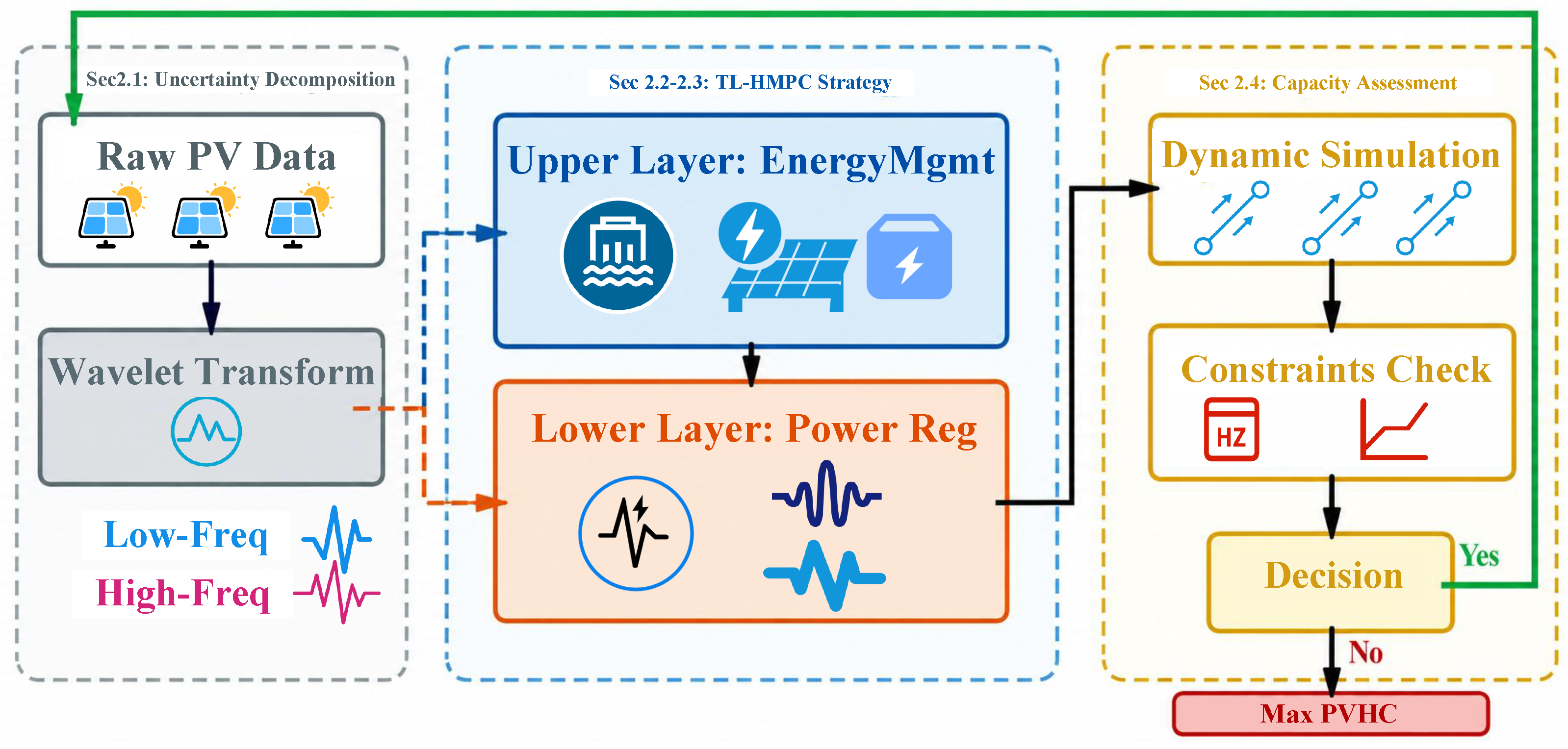
- A spectral-decoupled bi-level dispatch framework is proposed to coordinate long-term reservoir energy scheduling and short-term photovoltaic fluctuation smoothing.
- A vibration-zone avoidance constraint is embedded into the lower-layer control model to reduce operation within predefined disjoint unsafe power regions.
- An iterative PVHC assessment method is developed by integrating hydropower ramping limits, curtailment constraints, frequency-proxy limits, and distribution-network security constraints.
2. Materials and Methods
2.1. PV Uncertainty Decomposition Model
2.2. Energy-Power Decoupled Hydropower Model
2.2.1. Reservoir Energy Balance
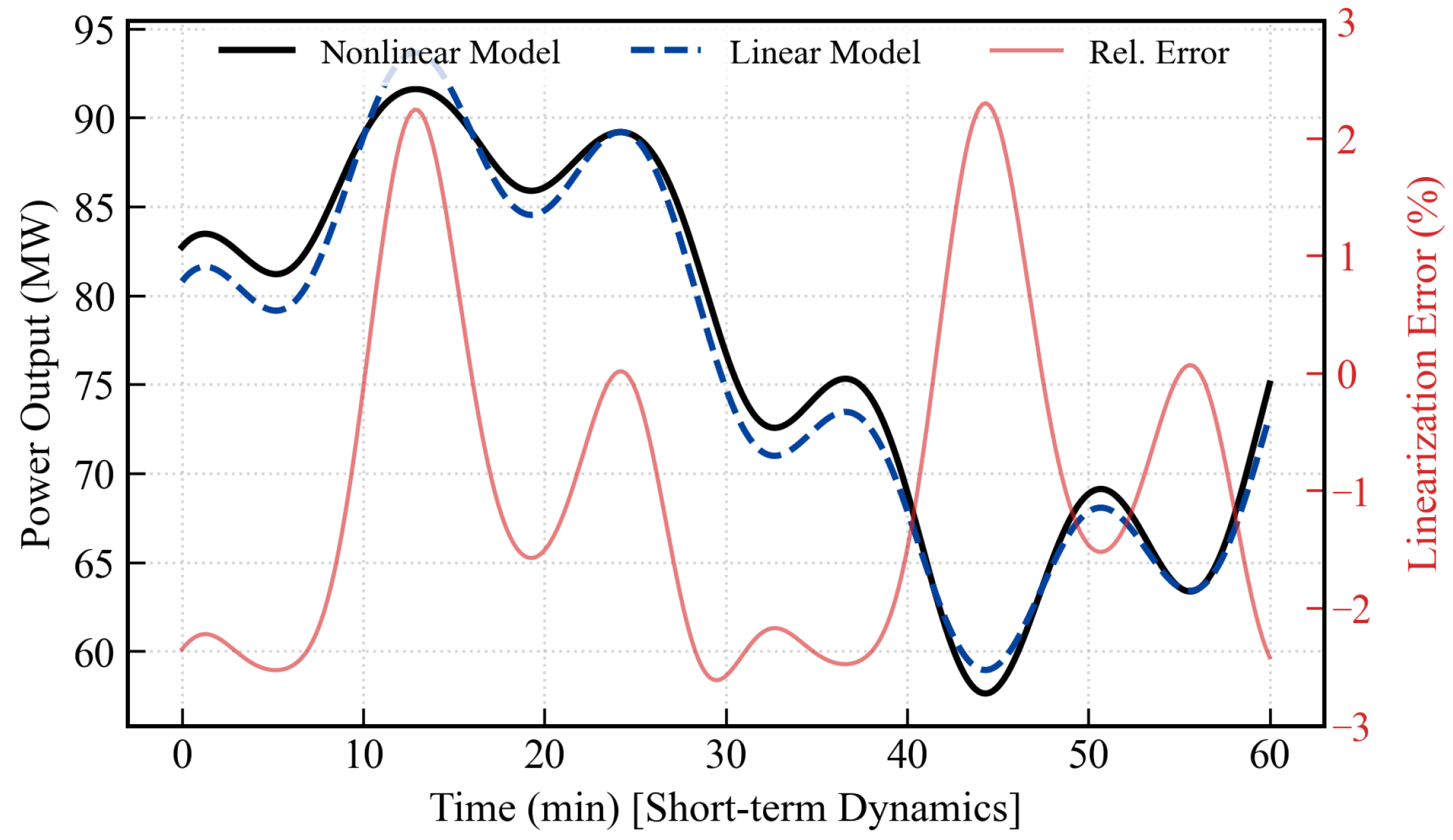
2.2.2. Hydro-Turbine Power Regulation
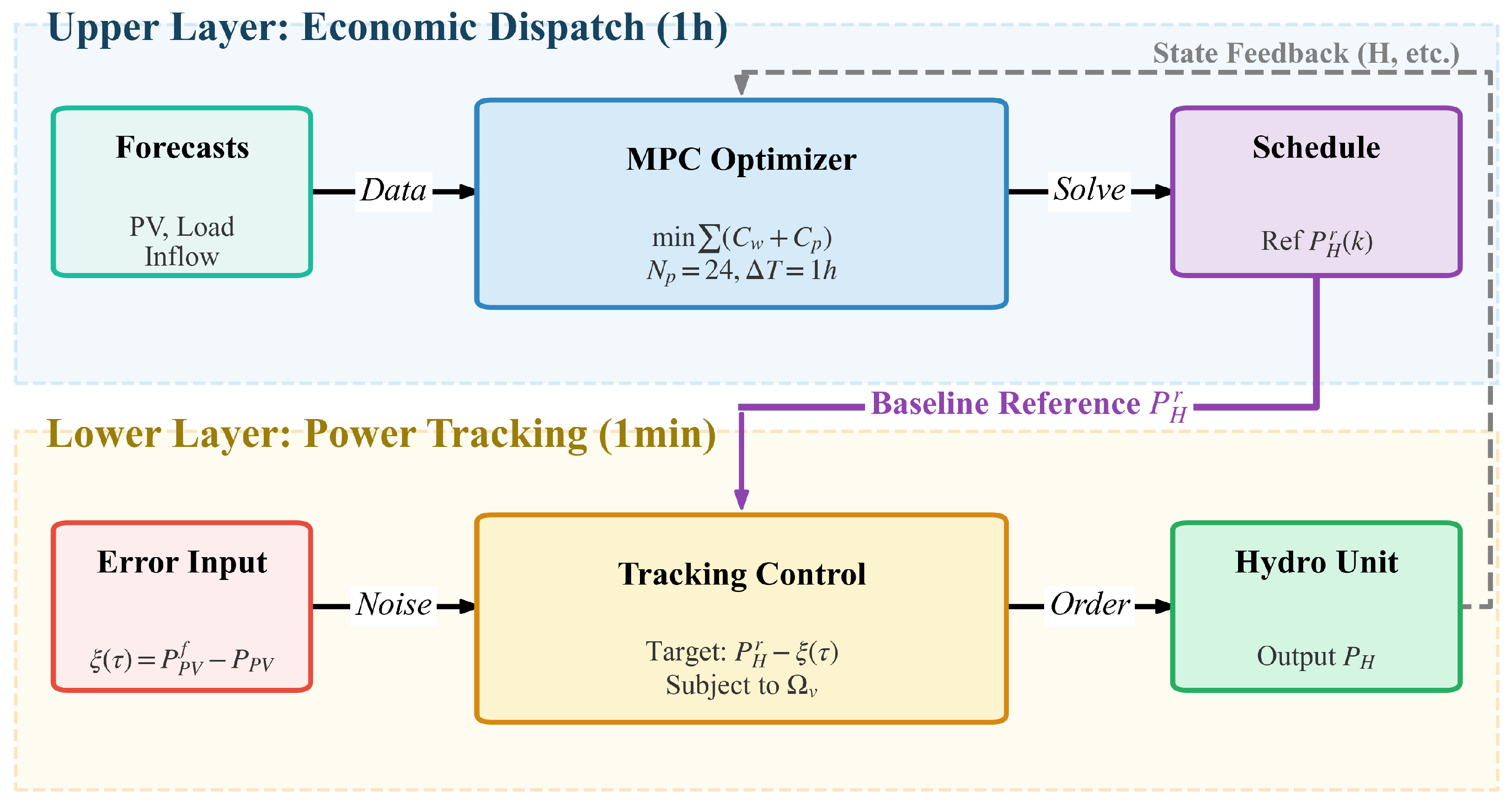
2.3. Proposed Two-Layer Coupled Control Strategy
2.3.1. MPC-Based Upper-Layer Economic Dispatch
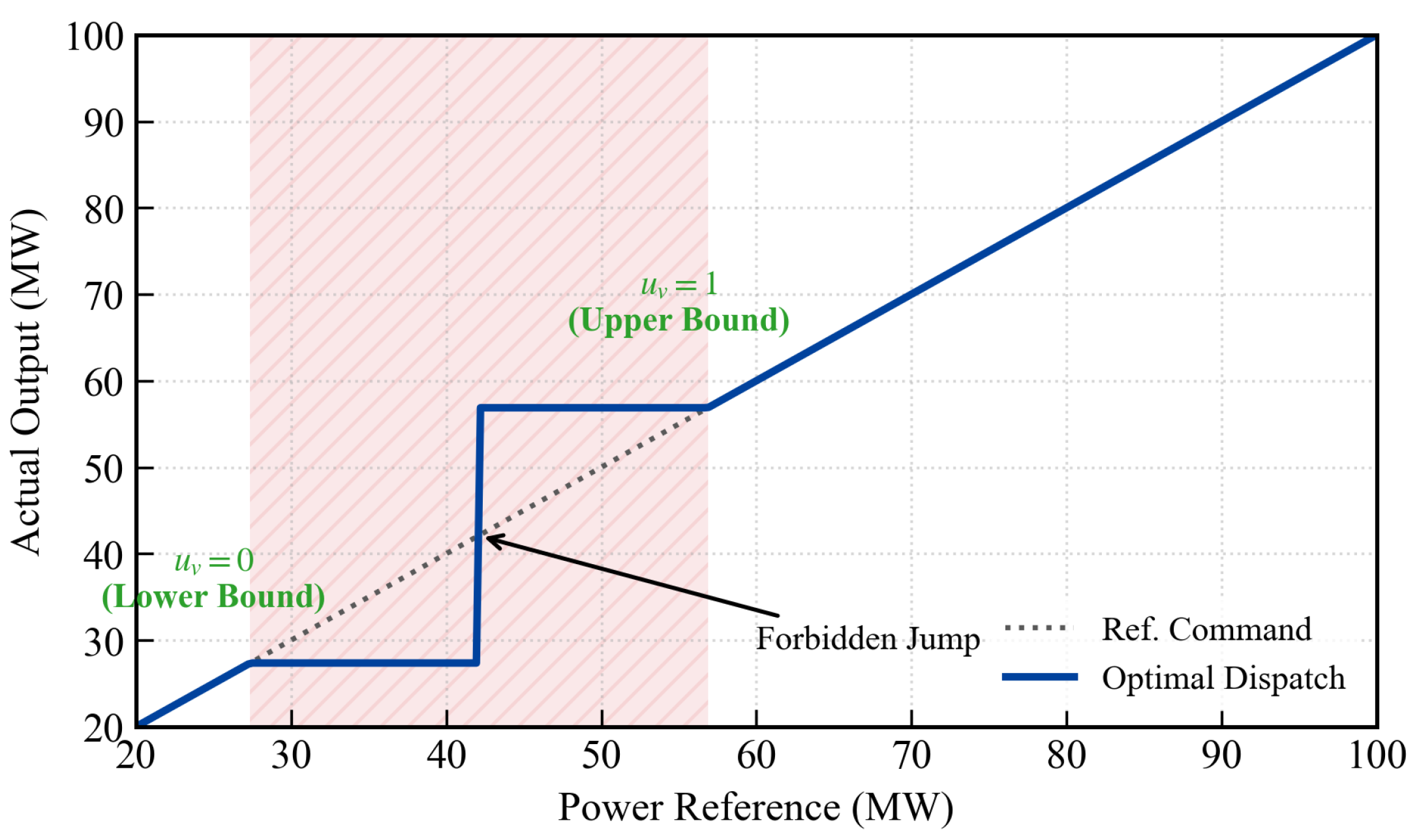
2.3.2. Lower-Layer Control: Real-Time Fluctuation Smoothing and Turbine Regulation
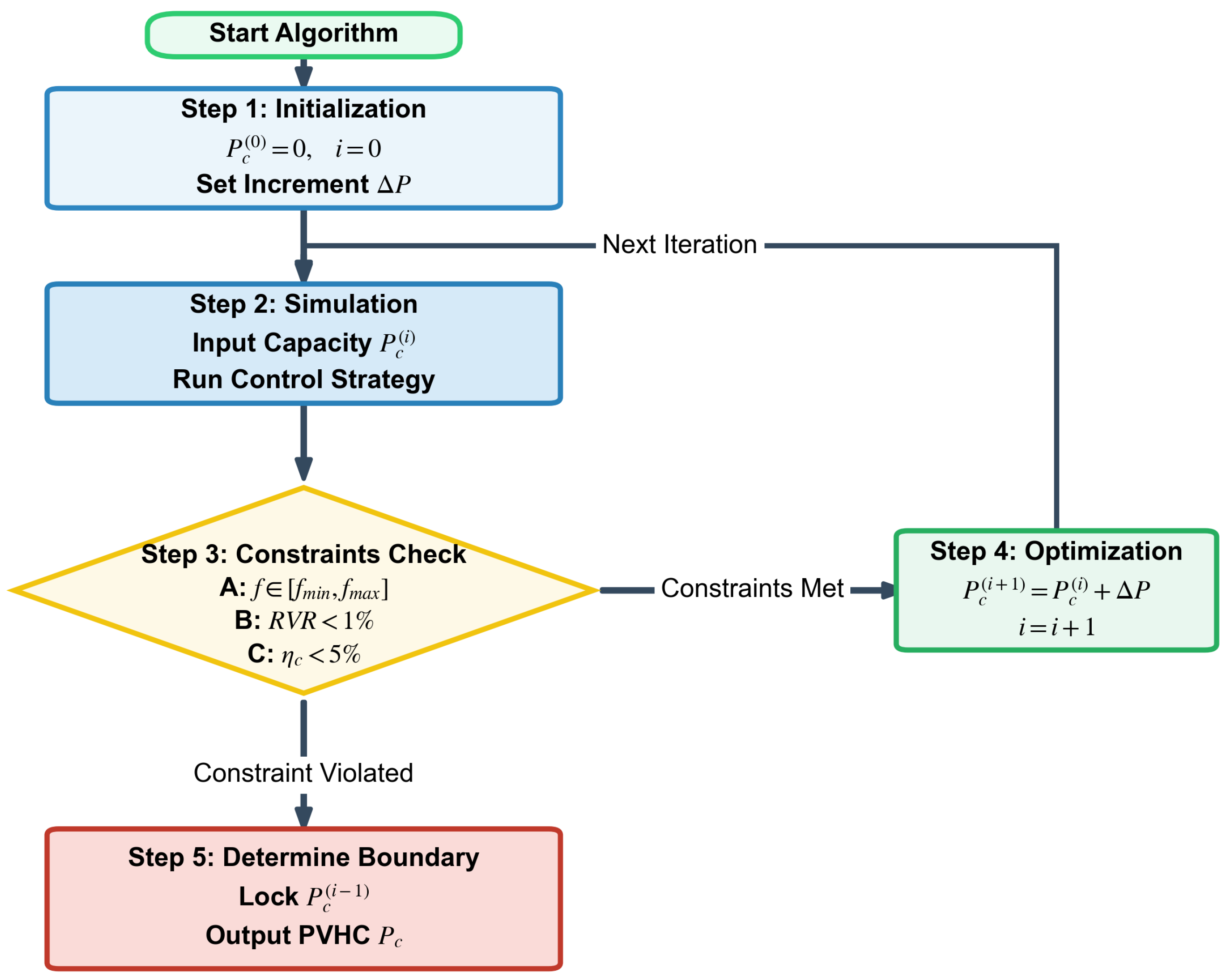
2.4. PVHC Boundary-Search Algorithm
3. Results
3.1. Seasonal Interplay of Hydro and PV Resources
3.2. Efficacy of Multi-Scale Spectral Decomposition
3.3. Dynamic Power Balance and Grid Safety Verification
3.4. Vibration-Zone Avoidance and Mechanical Safety
4. Discussion
5. Conclusions
Author Contributions
Funding
Data Availability Statement
Conflicts of Interest
References
- Song, D.; Yousaf, A.; Noor, J.; Cao, Y.; Dong, M.; Yang, J.; Rizk-Allah, R.M.; Elkholy, M.H.; Talaat, M. ANN-Based Model Predictive Control for Hybrid Energy Storage Systems in DC Microgrid. Prot. Control Mod. Power Syst. 2025, 10, 1–15. [Google Scholar] [CrossRef]
- Wang, C.; Liu, C.; Zhou, X.; Zhang, G. Flexibility-based expansion planning of active distribution networks considering optimal operation of multi-community integrated energy systems. Energy 2024, 307, 132601. [Google Scholar] [CrossRef]
- Yang, Y.; Lee, S.-H.; Choi, Y.-S.; Lee, K.-M. LightGBM Medium-Term Photovoltaic Power Prediction Integrating Meteorological Features and Historical Data. Energies 2025, 18, 5526. [Google Scholar] [CrossRef]
- Ma, R.; Wang, H.; Xia, J. Static Voltage Stability Analysis and Control Strategy of Distribution Network with High Proportion Distributed PV Generation During Fault. In Proceedings of the 2025 International Conference on New Power System Technology (PowerCon), Hefei, China, 24–25 September 2025; pp. 1–5. [Google Scholar] [CrossRef]
- Liao, J.; Yu, R.; Ye, R.; Xiong, J.; Xia, J. Coordinated Control Method for Low-Voltage Distribution Networks with High-Penetration Residential Photovoltaic. Electr. Power 2025, 58, 110–120. [Google Scholar] [CrossRef]
- Yan, Y.; Wang, B.; Xu, W.; Liu, J.; Gong, R. Small-signal stability analysis of power systems with high renewable penetration based on dynamic equivalent model. Int. J. Electr. Power Energy Syst. 2025, 170, 110835. [Google Scholar] [CrossRef]
- Chen, P.; Liu, S.; Wang, X.; Kamwa, I. Physics-Guided Multi-Agent Deep Reinforcement Learning for Robust Active Voltage Control in Electrical Distribution Systems. IEEE Trans. Circuits Syst. I Regul. Pap. 2024, 71, 922–933. [Google Scholar] [CrossRef]
- Song, G.; Wu, Q.; Jiao, W.; Lu, L. Distributed coordinated control for voltage regulation in active distribution networks based on robust model predictive control. Int. J. Electr. Power Energy Syst. 2025, 166, 110529. [Google Scholar] [CrossRef]
- Chen, J.; Wang, Y.; Du, L.; Xu, Q.; Li, M.; Zhang, H. Hosting Capacity Assessment of Distributed Renewable Energy Resources Integrated into Distribution Networks Via Microgrids. In Proceedings of the 2025 International Conference on New Power System Technology (PowerCon), Hefei, China, 24–25 September 2025; pp. 1–6. [Google Scholar] [CrossRef]
- Siddique, M.N.I.; Pota, H.; Mekhilef, S. Hosting Capacity Prediction using Spatial-temporal Correlations of Distribution Networks. In Proceedings of the 2024 Energy Conversion Congress & Expo Europe (ECCE Europe), Darmstadt, Germany, 2–6 September 2024; pp. 1–7. [Google Scholar] [CrossRef]
- Kumar, G.B.; Palanisamy, K.; Sanjeevikumar, P.; Muyeen, S.M. Analysis of control strategies for smoothing of solar PV fluctuations with storage devices. Energy Rep. 2023, 9, 163–177. [Google Scholar] [CrossRef]
- Ramkumar, M.S.; Subramani, J.; Sivaramkrishnan, M.; Munimathan, A.; Michael, G.K.O.; Alam, M.M. Optimal energy management for multi-energy microgrids using hybrid solutions to address renewable energy source uncertainty. Sci. Rep. 2025, 15, 7755. [Google Scholar] [CrossRef] [PubMed]
- Yang, X.; Ye, X.; Li, Z.; Wang, X.; Song, X.; Liao, M.; Liu, X.; Guo, Q. Hybrid energy storage configuration method for wind power microgrid based on EMD decomposition and two-stage robust approach. Sci. Rep. 2024, 14, 2733. [Google Scholar] [CrossRef] [PubMed]
- Liao, Y.; Zhang, X.; Chen, L.; Li, F.; Wang, C.; Cao, Y.; Hu, Y. Shared-Receiver Battery Equalizer Based on Inductive Power Transfer and Bidirectional DC–DC Converter. IEEE Trans. Power Electron. 2026, 41, 3879–3893. [Google Scholar] [CrossRef]
- Wang, C.; Cao, M.; Cao, Y. Battery aging estimation algorithm with active balancing control in battery system. J. Energy Storage 2025, 108, 115055. [Google Scholar] [CrossRef]
- Tefera, W.M.; Kasiviswanathan, K. A global-scale hydropower potential assessment and feasibility evaluations. Water Resour. Econ. 2022, 38, 100198. [Google Scholar] [CrossRef]
- Maroufpoor, S.; Qin, X. Present and Future Energy Potential of Run-of-River Hydropower in Mainland Southeast Asia: Balancing Climate Change and Environmental Sustainability. Water 2025, 17, 2256. [Google Scholar] [CrossRef]
- Tsuanyo, D.; Amougou, B.; Aziz, A.; Nka Nnomo, B.; Fioriti, D.; Kenfack, J. Design models for small run-of-river hydropower plants: A review. Sustain. Energy Res. 2023, 10, 3. [Google Scholar] [CrossRef]
- Zhang, H.; Liao, K.; Yang, J.; Yin, Z.; He, Z. Long-Term and Short-Term Coordinated Scheduling for Wind-PV-Hydro-Storage Hybrid Energy System Based on Deep Reinforcement Learning. IEEE Trans. Sustain. Energy 2025, 16, 1697–1710. [Google Scholar] [CrossRef]
- Tang, H.; Li, R.; Song, T.; Ju, S. Short-term optimal scheduling and comprehensive assessment of hydro-photovoltaic-wind systems augmented with hybrid pumped storage hydropower plants and diversified energy storage configurations. Appl. Energy 2025, 389, 125787. [Google Scholar] [CrossRef]
- Wang, F.; Xu, J.; Wang, Q. Complementary operation based sizing and scheduling strategy for hybrid hydro-PV-wind generation systems connected to long-distance transmission lines. Appl. Energy 2024, 364, 123082. [Google Scholar] [CrossRef]
- Bai, Y.; Sui, Y.; Deng, X.; Wang, X. Quantum-inspired robust optimization for coordinated scheduling of PV-hydrogen microgrids under multi-dimensional uncertainties. Sci. Rep. 2025, 15, 29589. [Google Scholar] [CrossRef] [PubMed]
- Yang, L.; Liu, T.; Hill, D.J. Distributed MPC-based frequency control for multi-area power systems with energy storage. Electr. Power Syst. Res. 2021, 190, 106642. [Google Scholar] [CrossRef]
- Luo, W.; Wang, C.; Zhang, Y.; Zhao, J.; Huang, Z.; Wang, J.; Zhang, C. A deep reinforcement learning approach for joint scheduling of cascade reservoir system. J. Hydrol. 2025, 651, 132515. [Google Scholar] [CrossRef]
- Xu, C.; Inuiguchi, M.; Hayashi, N.; Jee Keen Raymond, W.; Mokhlis, H.; Azil Illias, H. Enhancing Reinforcement Learning-Based Energy Management Through Transfer Learning with Load and PV Forecasting. IEEE Access 2025, 13, 43956–43972. [Google Scholar] [CrossRef]
- Su, Y.; Teh, J.; Fang, S.; Dai, Z.; Wang, P. Two-stage optimal dispatch framework of active distribution networks with hybrid energy storage systems via deep reinforcement learning and real-time feedback dispatch. J. Energy Storage 2025, 108, 115169. [Google Scholar] [CrossRef]
- Li, S.; Zhu, J.; Dong, H.; Zhu, H.; Luo, F.; Borghetti, A. Multi-time-scale energy management of renewable microgrids considering grid-friendly interaction. Appl. Energy 2024, 367, 123428. [Google Scholar] [CrossRef]
- Gao, J.; Wang, L.; Yan, J.; Wang, J.; Wang, Y.; Yin, T. A Two-Stage Optimization Strategy for Hybrid Power Systems with Dominated-Hydropower. In Proceedings of the 2025 2nd International Conference on Smart Grid and Artificial Intelligence (SGAI), Changsha, China, 21–23 March 2025; pp. 291–295. [Google Scholar] [CrossRef]
- Zhu, Z.; Wang, H.; Lu, X.; Xu, R.; Tan, X.; Li, C. Precise quantification analysis: Power regulation and equipment wear and tear characteristics of hydropower units under multi-energy complementary mode. Energy Convers. Manag. 2025, 336, 119860. [Google Scholar] [CrossRef]
- Feng, C.; Sun, N.; Zheng, C.; Zhu, Y.; Zhang, N.; Shan, Y.; Shi, L.; Xue, X. Stability analysis of grid-connected hydropower plant considering turbine nonlinearity and parameter-varying penstock model. Sci. Rep. 2025, 15, 14532. [Google Scholar] [CrossRef] [PubMed]



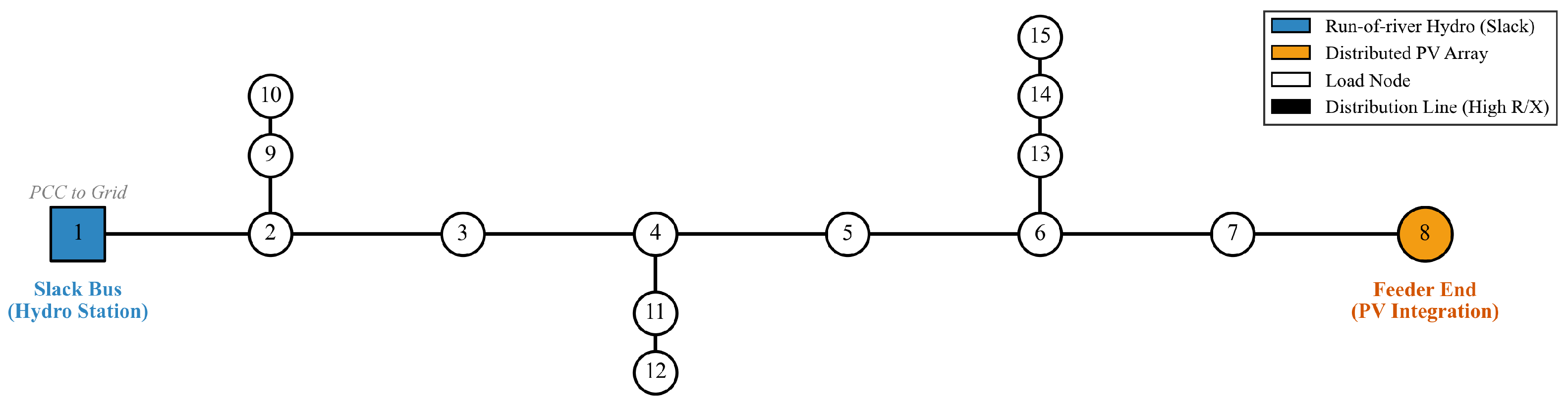
| Parameter | Value | Purpose or Interpretation |
|---|---|---|
| Rated capacity of the measured PV station | 30 MW nominal | Used to build normalized PV profiles; PVHC is a scalable planning boundary, not the present installed capacity. |
| Rated capacity of the simulated hydropower unit | 50 MW | Rated active-power capacity of the representative hydropower unit. |
| Basic dispatchable hydropower range | 5–50 MW | Steady-state output range before applying the forced minimum-output adjustment and excluding the vibration-prone interval. |
| Forced minimum hydro output | 9.2–17.6 MW | Monthly value mapped from the desensitized inflow proxy. |
| Generation-flow limit | 70 m3/s | Maximum turbine discharge used in the production model. |
| Head range | 60–100 m | Desensitized operating-head range used for dispatch-level calculation. |
| Reservoir storage range | 500–3000 Mm3 | Upper-layer energy-storage state constraint. |
| Turbine efficiency | 0.88 | Steady-state production coefficient in Equation (4). |
| Ramp-up/ramp-down rate | 2.0 MW/min | Lower-layer turbine response limit. |
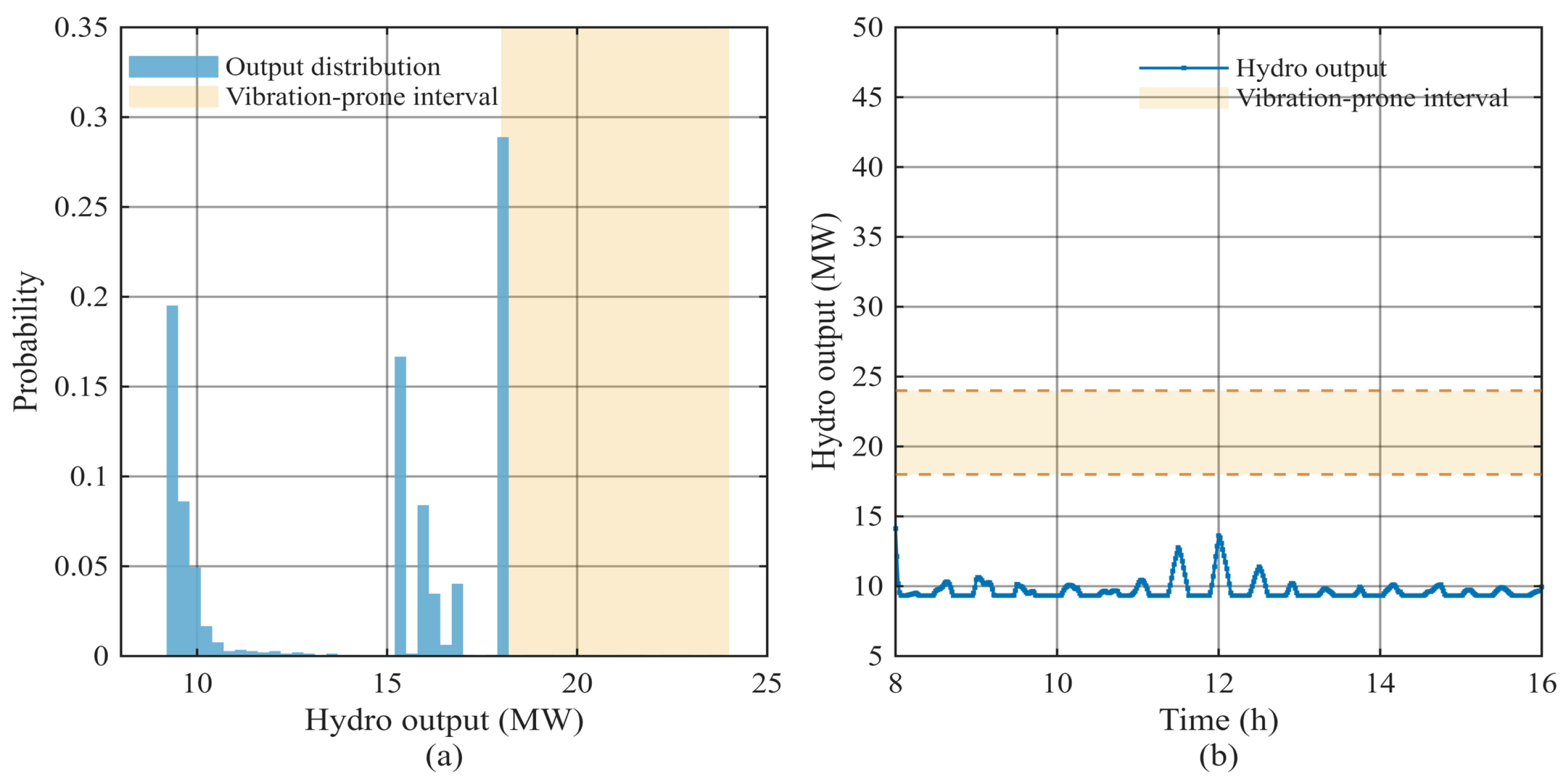
| Vibration-prone interval | 18–24 MW | Predefined prohibited partial-load region for the simulated unit. |
| Upper/lower time steps | 1 h/1 min | Hourly reservoir dispatch linked to minute-level power tracking; . |
| Frequency-proxy model | Hz, s, , base = 100 MVA | Dispatch-level screening proxy; not an electromechanical transient model. |
| PCC limits | +35 MW export/−45 MW import | External-grid exchange corridor. |
| Month | Hydrological Proxy (m3/s) | Proposed PVHC (MW) | |
|---|---|---|---|
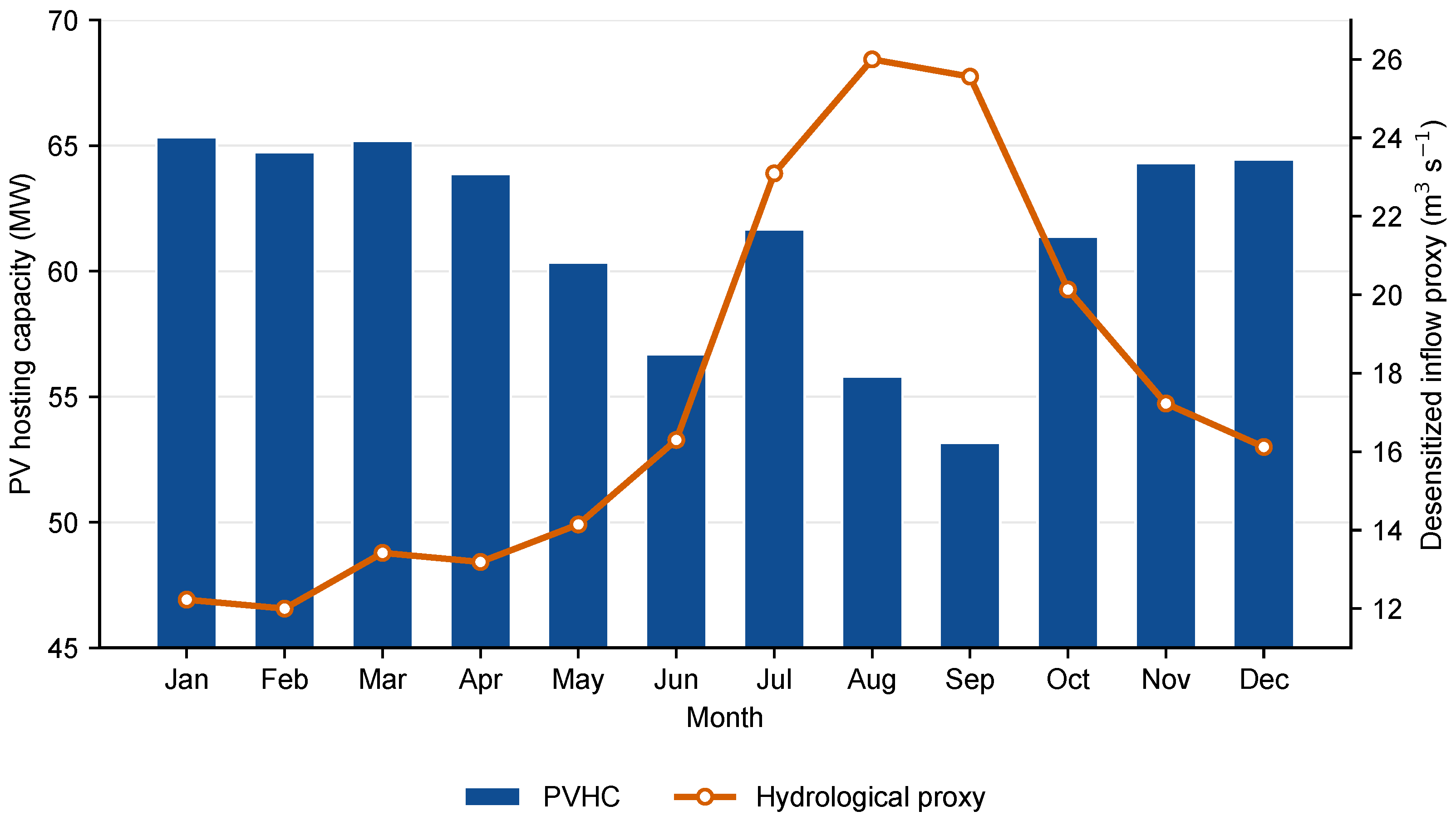
| Jan | 12.23 | 0.19 | 65.33 |
| Feb | 12.00 | 0.18 | 64.75 |
| Mar | 13.42 | 0.20 | 65.19 |
| Apr | 13.19 | 0.20 | 63.87 |
| May | 14.14 | 0.21 | 60.35 |
| Jun | 16.30 | 0.24 | 56.69 |
| Jul | 23.09 | 0.32 | 61.67 |
| Aug | 26.00 | 0.35 | 55.81 |
| Sep | 25.56 | 0.35 | 53.17 |
| Oct | 20.13 | 0.28 | 61.38 |
| Nov | 17.23 | 0.25 | 64.31 |
| Dec | 16.12 | 0.23 | 64.45 |
| Indicator | Value | Limit | Status |
|---|---|---|---|
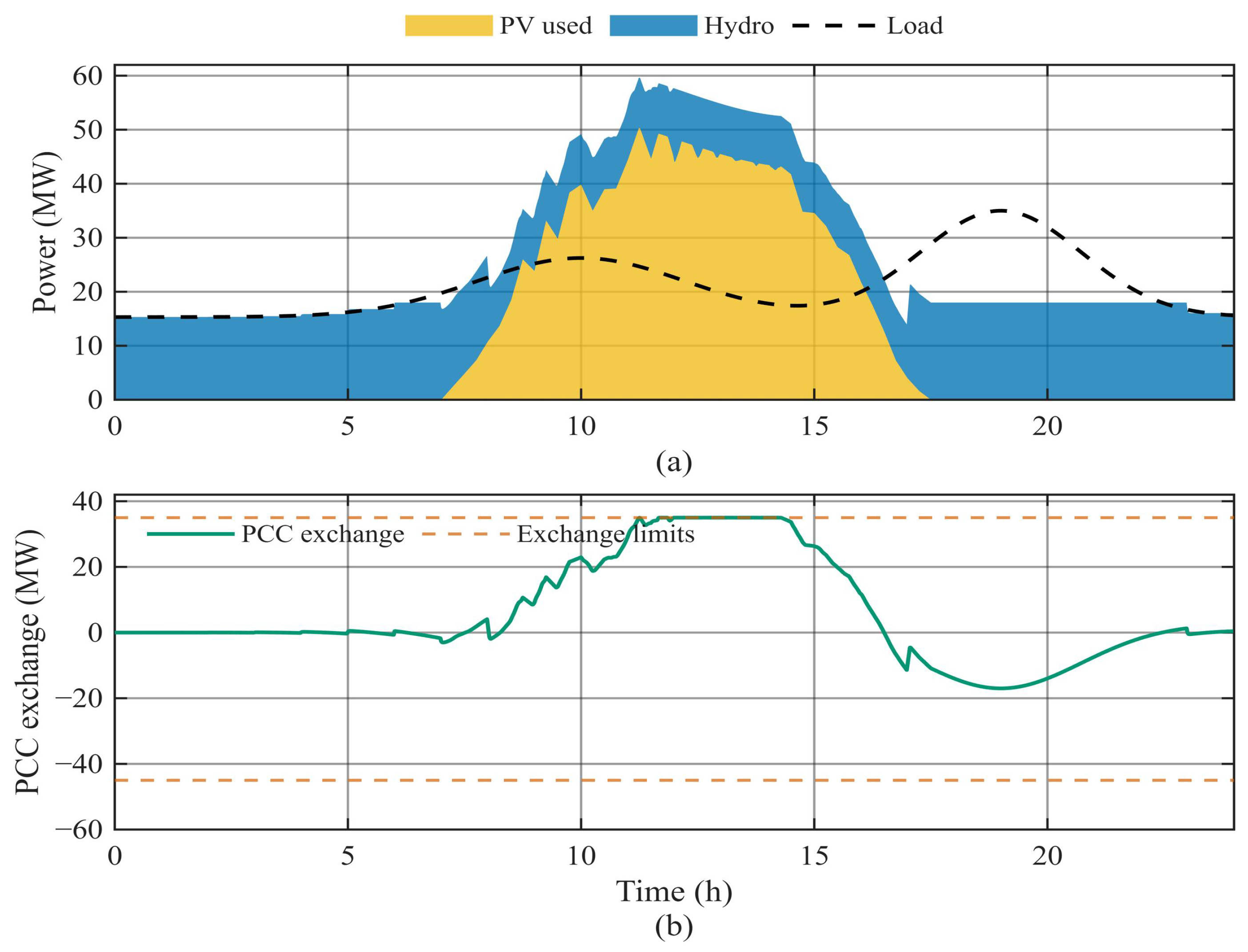
| Max PCC export | 35.00 MW | 35 MW | Satisfied |
| Max PCC import | 17.00 MW | 45 MW | Satisfied |
| Max voltage | 1.039 p.u. | 1.05 p.u. | Satisfied |
| Min voltage | 0.981 p.u. | 0.95 p.u. | Satisfied |
| Max line loading | 83.33% | 100% | Satisfied |
| PV curtailment | 4.93% | 5% | Satisfied |
| Max frequency-proxy deviation | 0.143 Hz | 0.20 Hz | Satisfied |
| Ramping violation | 0.00% | 1% | Satisfied |
| Vibration-zone residence | 0 min | 2% of steps | Satisfied |
| Runtime | 0.033 s | Reported | Reported |
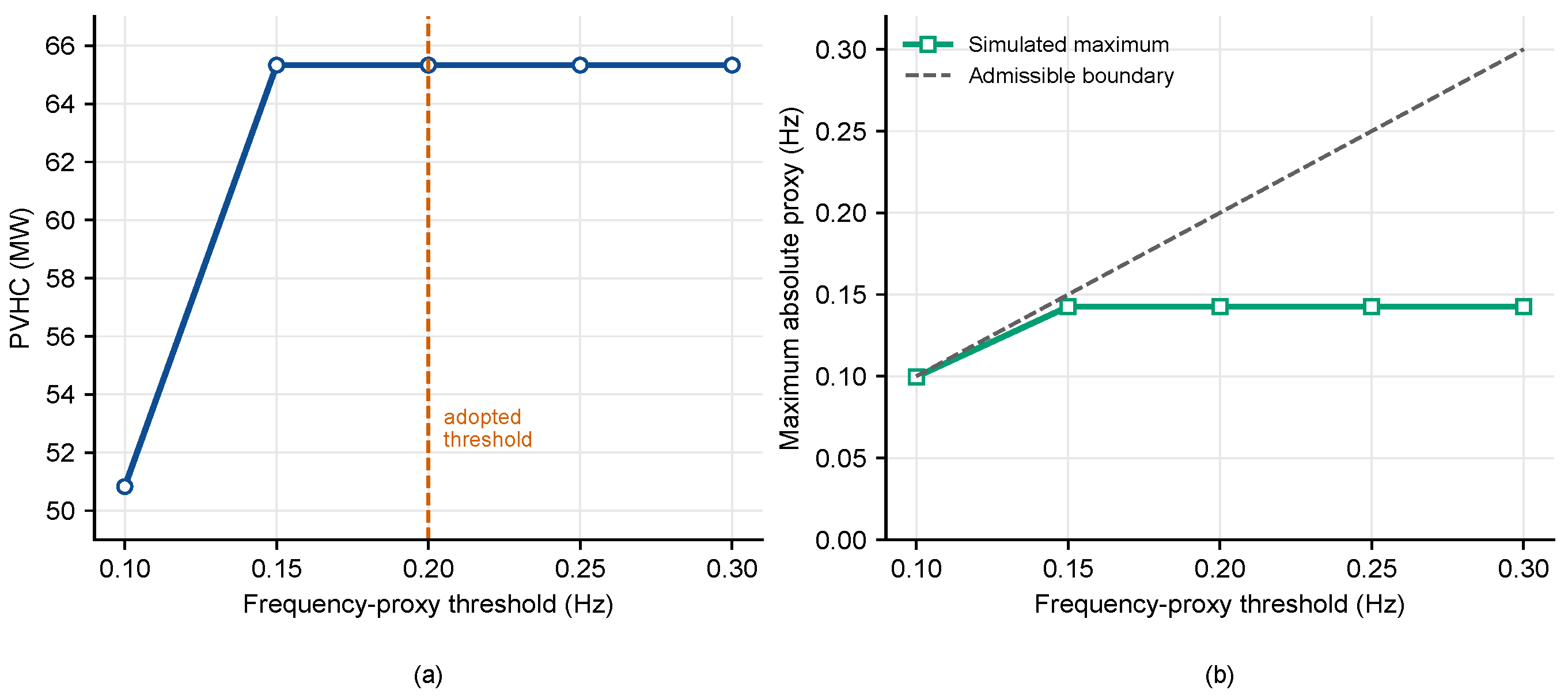
| Frequency-Proxy Limit (Hz) | PVHC (MW) | Max (Hz) | Curtailment (%) | Max Import (MW) |
|---|---|---|---|---|
| 0.10 | 50.83 | 0.100 | 0.00 | 17.0 |
| 0.15 | 65.33 | 0.143 | 4.93 | 17.0 |
| 0.20 | 65.33 | 0.143 | 4.93 | 17.0 |
| 0.25 | 65.33 | 0.143 | 4.93 | 17.0 |
| 0.30 | 65.33 | 0.143 | 4.93 | 17.0 |
| (a) Capacity and Feeder-Security Indicators | ||||
| Case | PVHC (MW) | Curt. (%) | Voltage Range (p.u.) | Line Loading (%) |
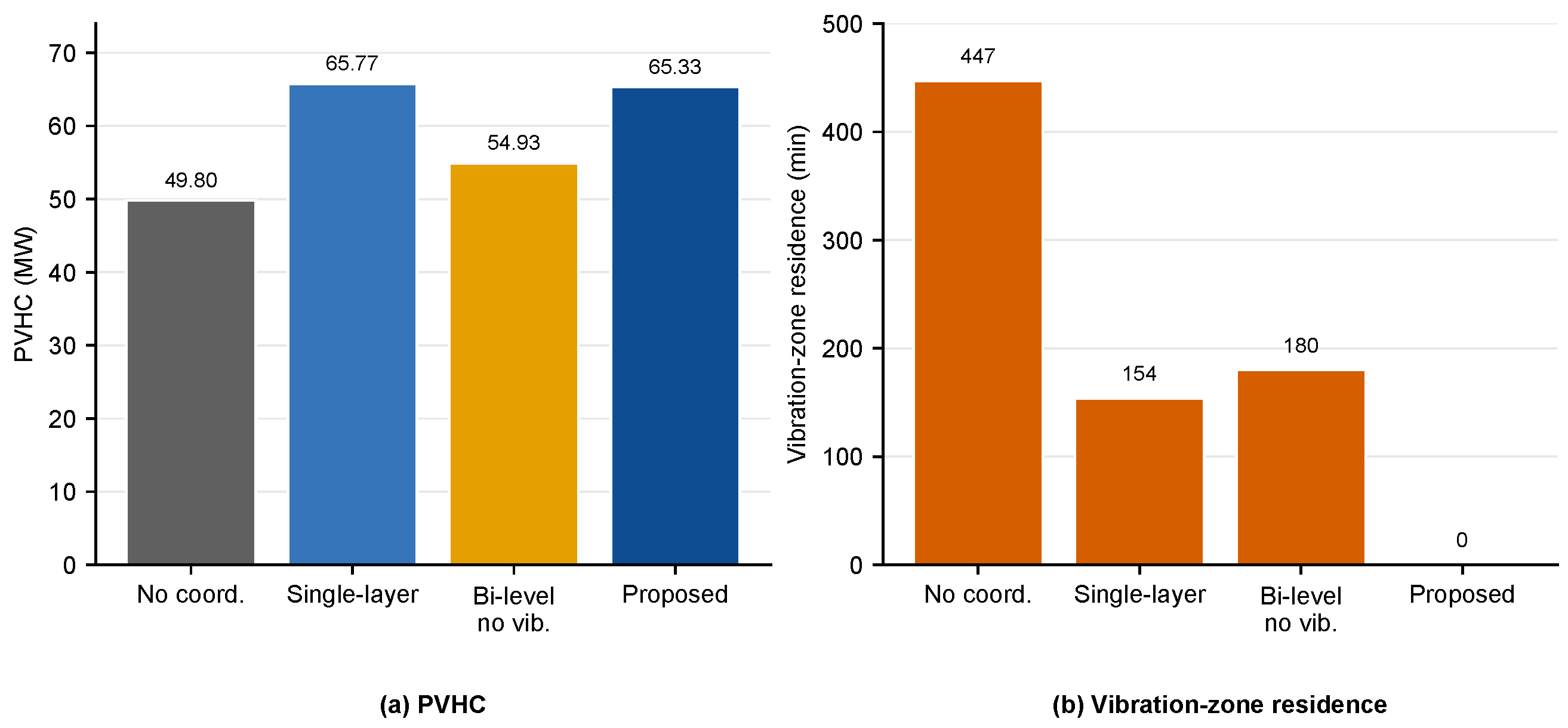
| No coordination | 49.80 | 4.93 | 0.996–1.036 | 83.33 |
| Single-layer MPC | 65.77 | 4.92 | 0.995–1.039 | 83.33 |
| Bi-level tracking w/o guidance | 54.93 | 0.40 | 0.989–1.039 | 83.33 |
| Proposed | 65.33 | 4.93 | 0.981–1.039 | 83.33 |
| (b) Dynamic and Hydraulic-Security Indicators | ||||
| Case | Max (Hz) | PCC Export/Import (MW) | Ramp Viol. (%) | Vib. (min) |
| No coordination | 0.072 | 35.0/0.3 | 0.00 | 447 |
| Single-layer MPC | 0.088 | 35.0/0.2 | 0.00 | 154 |
| Bi-level tracking w/o guidance | 0.200 | 35.0/10.1 | 0.00 | 180 |
| Proposed | 0.143 | 35.0/17.0 | 0.00 | 0 |
Disclaimer/Publisher’s Note: The statements, opinions and data contained in all publications are solely those of the individual author(s) and contributor(s) and not of MDPI and/or the editor(s). MDPI and/or the editor(s) disclaim responsibility for any injury to people or property resulting from any ideas, methods, instructions or products referred to in the content. |
© 2026 by the authors. Licensee MDPI, Basel, Switzerland. This article is an open access article distributed under the terms and conditions of the Creative Commons Attribution (CC BY) license.
Share and Cite
Guo, R.; Peng, R.; Zhu, Z.; Wang, W.; Liu, H.; Du, C.; Zhang, X.; Cui, Y.; Zi, J.; He, L.; et al. Adaptive Bi-Level Planning of Photovoltaic Hosting Capacity for Hydro-Dominant Distribution Grids Considering Hydraulic Safety Constraints. Symmetry 2026, 18, 1079. https://doi.org/10.3390/sym18071079
Guo R, Peng R, Zhu Z, Wang W, Liu H, Du C, Zhang X, Cui Y, Zi J, He L, et al. Adaptive Bi-Level Planning of Photovoltaic Hosting Capacity for Hydro-Dominant Distribution Grids Considering Hydraulic Safety Constraints. Symmetry. 2026; 18(7):1079. https://doi.org/10.3390/sym18071079
Chicago/Turabian StyleGuo, Ruizhu, Rongwei Peng, Zhenlong Zhu, Wenfeng Wang, Hongyin Liu, Chong Du, Xi Zhang, Yansong Cui, Jing Zi, Lv He, and et al. 2026. "Adaptive Bi-Level Planning of Photovoltaic Hosting Capacity for Hydro-Dominant Distribution Grids Considering Hydraulic Safety Constraints" Symmetry 18, no. 7: 1079. https://doi.org/10.3390/sym18071079
APA StyleGuo, R., Peng, R., Zhu, Z., Wang, W., Liu, H., Du, C., Zhang, X., Cui, Y., Zi, J., He, L., Deng, S., Cao, Y., & Chen, Z. (2026). Adaptive Bi-Level Planning of Photovoltaic Hosting Capacity for Hydro-Dominant Distribution Grids Considering Hydraulic Safety Constraints. Symmetry, 18(7), 1079. https://doi.org/10.3390/sym18071079