Article

Degradation of the Mechanical Properties of Prestressed Anchor Cable in an Alternating Wet–Dry Condition

1
College of Water Conservancy, Yunnan Agricultural University, Kunming 650201, China
2
The Key Laboratory of Construction and Safety of Water Engineering of the Ministry of Water Resources, China Institute of Water Resources and Hydropower Research, Beijing 100044, China
*
Authors to whom correspondence should be addressed.
Symmetry 2026, 18(6), 948; https://doi.org/10.3390/sym18060948 (registering DOI)
Submission received: 29 April 2026 / Revised: 27 May 2026 / Accepted: 30 May 2026 / Published: 1 June 2026

Abstract

As an active reinforcement technology, prestressed anchor cables are susceptible to environmental corrosion during long-term service. Corrosion occurs and progresses more rapidly, especially in an alternating wet–dry environment, which can degrade the mechanical properties of prestressed anchor cables and may ultimately lead to failure. Current methods typically evaluate the mechanical properties of anchor cables based on cross-sectional loss calculated from the average weight loss ratio. However, this uniform-corrosion assumption may underestimate the effect of corrosion on mechanical performance. In this study, a testing apparatus for corroding prestressed anchor cables under alternating wet–dry conditions was developed. The apparatus enabled accurate loading and nondestructive sampling. Using this apparatus, alternating wet–dry corrosion tests and mechanical tensile tests were conducted on anchor cables under different stress levels. The relationship between weight loss ratio and mechanical properties was then analyzed. Based on this relationship, an equation was derived to calculate the breaking strength of corroded anchor cables in alternating wet–dry environments. The service life estimated using this equation was closer to that observed in actual anchor cable failure cases. This indicates that the proposed equation provides more accurate predictions than methods based on the uniform-corrosion assumption.

1. Introduction

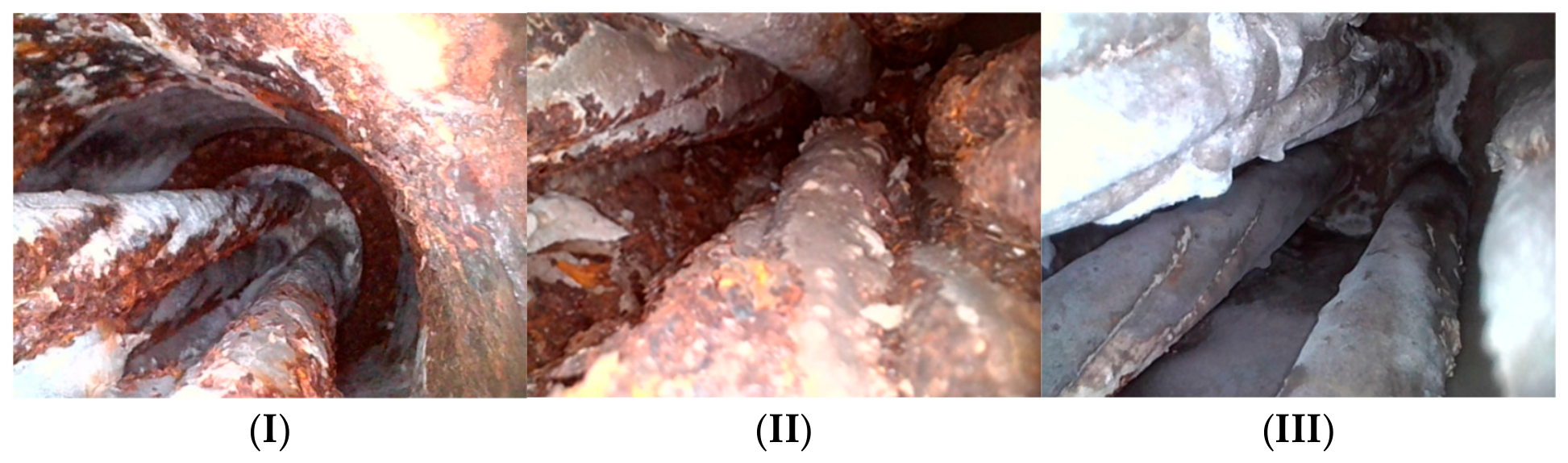
Prestressed anchor cables, as an active reinforcement method that effectively enhances structural stability, are widely used in slopes, underground caverns, concrete dams, and other engineering applications [1]. Their long-term safety and durability directly affect the service life of the entire structure. Grease coating and cement mortar encapsulation are commonly used to protect anchor cables from corrosion [2]. Their protective mechanisms mainly rely on physical isolation and the formation of an alkaline passive film [3,4]. However, complex geological conditions and variable grouting quality can compromise the integrity of mortar encapsulation in the external anchorage zone, specifically, the transition section between the free length and the anchor head. Consequently, discontinuous mortar coverage or local voids may form, creating alternating wet–dry regions that are connected to the external environment. In such service environments rich in water, oxygen, and aggressive ions, the anchor cables are prone to corrosion [5,6]. Direct evidence has been provided by endoscopic inspections of slope anchor cables at a hydropower station in Southwest China; significant corrosion was observed on anchor cables near the external anchor head where grouting defects existed (Figure 1) [7,8].
The accelerating effect of an alternating wet–dry environment on metal corrosion has been elucidated by electrochemical theory, which shows that the formation of a thin liquid film on the metal surface and the adequate supply of oxygen accelerate the electrochemical corrosion process [6,9]. Corrosion degrades the mechanical properties of anchor cables [10,11,12], posing a risk of fracture under high-stress conditions and seriously threatening engineering safety. There are precedents for engineering accidents caused by alternating wet–dry corrosion. For example, in 2010, a catastrophic inclined slope failure suddenly occurred at the Qidu section of Taiwan’s No. 3 Expressway. The cause of this accident was severe corrosion and the loss of bearing capacity of the anchor cables resulting from grouting defects in the external anchorage zone [13,14]. Furthermore, the cause of anchor cable fracture in the box girder of the Shenzhen Bay Bridge has also been confirmed to be closely related to an alternating wet–dry corrosion [15]. These cases have already demonstrated that an alternating wet–dry environment is among the unfavorable service conditions for anchor cables. Therefore, establishing a model for the degradation of the mechanical properties of corroded anchor cables in such an environment is essential for predicting their service life.
Current research and practice have fully recognized the hazards of anchor cable corrosion. However, current estimates of the degradation of mechanical properties caused by anchor cable corrosion are often based on cross sectional loss derived from weight loss [16,17,18,19]. For example, based on extensive laboratory and field tests, Li et al. [17] proposed a model to calculate the weight loss ratio of anchor cables. They further developed a service life prediction model for prestressed anchor cables, in which tensile yield strength was used as the threshold. Similarly, Li et al. [19] conducted steel strand corrosion tests simulating the environment of the internal anchorage zone and the effects of chloride attack, established a corrosion rate calculation model for steel strands, and derived a tensile strength degradation model for steel strands. The common logic underlying these studies was to directly convert the weight loss ratio into a uniform cross sectional loss ratio and then deduce a linear reduction in mechanical properties. However, non-uniform corrosion (e.g., pitting and localized corrosion) often occurs under an alternating wet–dry environment. In this case, the maximum local cross sectional loss ratio is generally greater than the average loss ratio, and the fracture of the anchor cable is governed by the weakest cross section rather than the average cross section. Therefore, models based on the uniform corrosion assumption can severely overestimate residual strength, leading to dangerously optimistic predictions. To address this issue, the most direct approach is to establish an empirical relationship between the weight loss ratio and the residual breaking strength through experimentation.
To realistically reflect the service condition of anchor cables, it is necessary to simulate the corrosive environment and apply tensile loading to the specimens during testing to impose working stresses. In conventional testing procedures, the sampling operation after corrosion requires over-tensioning the specimen to remove it from the grips. This procedure may introduce additional deformation or even damage. It can directly disturb the original corroded state of the specimen. As a result, the weight loss ratio and the true mechanical properties cannot be accurately determined. Owing to this technical bottleneck, most existing studies have avoided corrosion testing under stressed conditions and instead adopted stress-free specimens [19], leading to deviations from actual engineering conditions. Although some researchers have attempted to characterize the changes in mechanical properties of corroded anchor cables under stressed conditions, limited by the aforementioned bottleneck, they have only established models of corrosion time versus performance degradation [20] and have failed to develop a quantitative model relating the degree of corrosion to mechanical properties under real stress states. In summary, existing studies can determine whether corrosion occurs and provide a rough estimate of the corrosion rate. However, they still cannot quantify the residual load-bearing capacity of anchor cables under actual stress conditions once corrosion has developed to a certain level.
Specifically, references [16,17,18] relied on the uniform corrosion assumption to convert weight loss into cross-sectional loss, overestimating residual strength under non-uniform corrosion; reference [19] conducted corrosion tests under stress-free conditions, deviating from actual service states. Reference [20] only correlated corrosion time with performance degradation without quantifying the relationship between corrosion degree and residual mechanical properties. The present study simultaneously overcomes these three limitations by directly establishing an empirical relationship between weight loss ratio and breaking strength under realistic stressed and alternating wet–dry conditions without invoking the uniform corrosion assumption.
This study addresses the issue from two aspects: the development of a testing apparatus and the design of the experimental procedure. First, an alternating wet–dry corrosion testing apparatus was independently designed and constructed, allowing specimens to be corroded while maintaining a predetermined tensile stress throughout the process and enabling non-destructive specimen removal after corrosion. Meanwhile, a parallel twin specimen testing scheme was adopted to address the incompatibility between measuring the weight loss ratio and tensile testing on the same specimen. Specifically, for each corrosion condition, two parallel specimens with identical specifications, stress state, and corrosion history were prepared simultaneously: one was used for weight loss ratio measurement, and the other for uniaxial tensile breaking tests. It was assumed that the corrosion degrees of the two specimens under the same corrosion condition were not significantly different. Based on the above testing apparatus and scheme, corrosion tests of prestressed anchor cables under alternating wet–dry environments were conducted, and the weight loss ratio and breaking strength of the anchor cables were measured. Finally, an estimation equation for the breaking strength of anchor cables based on the weight loss ratio was established, providing a mechanical basis for durability evaluation and life prediction in alternating wet–dry environments.

2. Experiment

2.1. Alternating Wet–Dry Corrosion Testing Apparatus

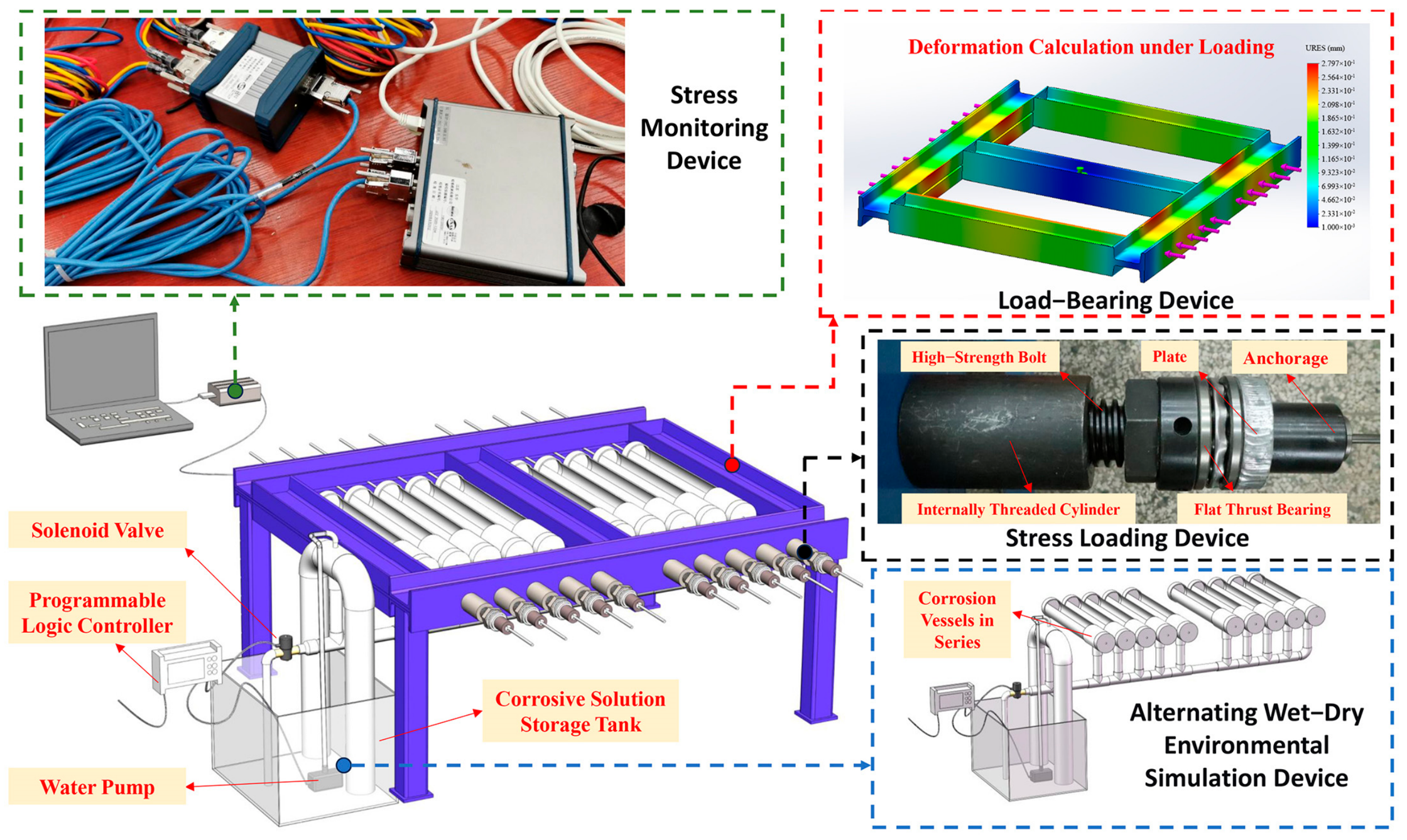
A test apparatus capable of simultaneously applying stress loading and simulating a corrosion environment was developed (Figure 2). The test system consisted of four primary components: a load-bearing device (self–manufactured), an alternating wet–dry environment simulation device (PLC 220V–12, Quanzhou, Fujian and self–manufactured), a stress–loading device (HRB51411, Harbin, Heilongjiang and self–manufactured structure), and a stress-monitoring device (DH3820N, Taizhou, Jiangsu).
The frame of the load-bearing device was welded from I-beams, which were assembled by splicing two No. 14 channel steels. Under the condition that 10 specimens (the steel wires of the anchor cable) were each loaded to 80% of their tensile strength, the calculated maximum deformation of the load-bearing structure was only 0.2797 mm, which is less than 0.3 mm, meeting the requirement for small deformation in the test.
The alternating wet–dry environment simulation device for prestressed anchor cables mainly consisted of a series of connected corrosion cells, a water level control tube, an inlet pipe, a solenoid valve, a solenoid valve drain pipe, a water pump, a PLC controller, and a corrosion solution tank. Considering the design of the load-bearing apparatus, the spacing between adjacent specimens was 110 mm. Therefore, ϕ 90-m PVC pipes and associated fittings were used to fabricate the corrosion containers in the series-connected setup. The individual corrosion containers were interconnected at the bottom using ϕ 40-mm PVC pipes. The top cap of each ϕ 90-mm corrosion container was provided with holes to allow the specimen to pass through.
The working procedure of the alternating wet–dry environment simulation was as follows:
(1)
According to the experimental design, the on/off times of the water pump and the solenoid valve were set in the PLC controller, and the prepared corrosive solution was injected into the corrosion solution tank.
(2)
Wetting stage simulation: The solenoid valve was de-energized (closed), and the PLC controller supplied power to the water pump. The pump operated and delivered the corrosive solution through the inlet pipe into the water level control tube and the series-connected corrosion cells. Under the principle of communicating vessels, the corrosive solution was uniformly injected into the series-connected corrosion cells until the predetermined liquid level was reached. Upon further injection, any excess corrosive solution returned to the corrosion solution tank via the water level control tube. After the set energizing duration of the water pump elapsed, the PLC controller cut off power to the pump. At this point, the interior of the series-connected corrosion cells was immersed in a corrosive solution.
(3)
Drying stage simulation: After the predetermined immersion duration was reached, the PLC controller energized the solenoid valve, which opened. The corrosive solution in the series-connected corrosion cells was then discharged back into the corrosion solution tank through the solenoid valve and the solenoid valve drain pipe. Once the corrosive solution in the series-connected corrosion cells was completely drained, the solenoid valve was de-energized and closed, leaving the series-connected corrosion cells in a dry state.
(4)
By controlling the water pump and the solenoid valve through the PLC controller, steps (2) and (3) were repeated, thereby achieving the simulation of alternating wet–dry environments.
The loading device mainly consisted of a high-strength bolt, a plane thrust bearing, a backing plate, and a single-hole anchorage device. Its working principle was to achieve tensioning of the steel wire by adjusting the bolt’s elongation. A plane thrust bearing was installed between the bolt and the anchorage device to avoid torque caused by friction between the bolt and the anchorage device during rotation. Holes were drilled in the center of both the high-strength bolt and the backing plate to allow the specimen to pass through smoothly. Compared with weight loading, this loading equipment offers higher loading capacity; compared with hydraulic jack loading, it provides higher precision. More importantly, during sampling, unloading can be achieved simply by rotating the bolt without increasing the stress on the specimen, thereby enabling non-destructive sampling.
The stress monitoring device was primarily intended for the real-time monitoring of the specimen’s stress state during loading. Therefore, the monitoring system had to have high precision and a fast response. Following a survey, the DH3820N distributed signal testing and analysis system was selected for stress–strain acquisition, which, together with a load cell and a mobile computer, constituted the monitoring equipment for this experiment.

2.2. Test Materials and Scheme

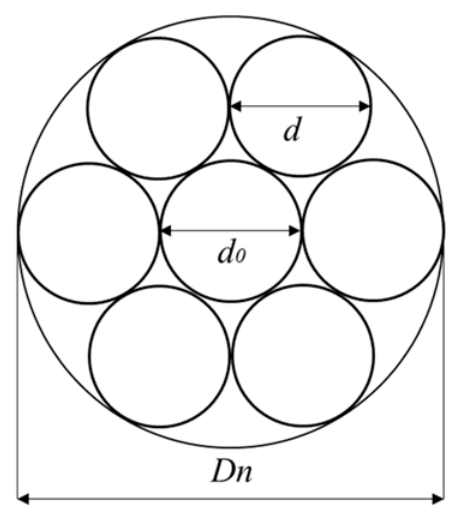
According to the standard (GB/T 5224-2023) [21], a 1 × 7-15.2-1860-type steel strand was selected. This steel strand is composed of one center wire with a diameter of 5.2 mm and six side wires with a diameter of 5 mm twisted together (Figure 3). The detailed dimensions and mechanical properties are presented in Table 1.
This study focused on the degradation of the mechanical properties of anchor cables under alternating wet–dry environments. Therefore, the center wire of the 1 × 7-15.2-1860 type steel strand was selected as the test specimen. This choice not only reflects the anchor cable’s material performance characteristics but also facilitates specimen loading and sampling during testing.
In this experiment, the main factors included the corrosion solution concentration, the wet–dry ratio, the cycle period, and the stress level. A controlled variable method was adopted. The corrosion solution concentration and the wet–dry ratio remained constant throughout the experiment: a 1% sodium chloride solution was used as the corrosive medium, and the wet-to-dry time ratio was set to 1:5 with a cycle period of 2 h. To investigate the influence of different stress levels, four stress levels were applied to the specimens: 0% (stress-free), 25%, 50%, and 75% of the tensile strength. Ten specimens were assigned to each stress level. Sampling was conducted every 20 days, with two specimens taken each time. Specimen “a” was used to determine the weight loss ratio using the weight loss method [8], and specimen “b” was used for mechanical property testing. The total test duration was 100 days. The experimental scheme is presented in Table 2.

2.3. Test Procedure

The specimen was passed through the steel frame and the corrosion container. The monitoring system and loading device were installed at the two ends of the specimen, respectively. After loading was completed, the corrosion solution was injected. The corrosion solution was prepared with 1% NaCl in distilled water. To prevent any loss of the corrosion solution during the test, the gap between the specimen and the corrosion container was sealed using rubber tubing and silicone sealant.
The specific test procedure is as follows:
(1)
The corrosion solution was prepared according to the test requirements and injected into the corrosion solution tank.
(2)
The computer was turned on, and the working status of the stress acquisition instrument and the load cell was checked. After confirming normal operation, the stress acquisition data were reset to zero, and data acquisition was officially started.
(3)
The high-strength bolt was rotated counterclockwise to pretension the steel wire specimen. The stress data acquired by the computer were monitored in real time. The bolt was further rotated counterclockwise to load the steel wire specimen. Loading was stopped when the target value was reached. If the load exceeded the target value, the bolt was rotated clockwise to unload.
(4)
All steel wire specimens were loaded sequentially following the loading procedure described in step (3).
(5)
After loading all center wire specimens, the stress state data collected in real time by the computer were observed, and the high-strength bolts were adjusted according to the target values to achieve precise loading of the specimen stresses.
(6)
Step (5) was repeated two or three times until the stress level of all steel wire specimens met the test design requirements.
(7)
The power supply of the PLC controller was turned on, and the on/off times of the water pump and the solenoid valve were set according to the test requirements.
(8)
The PLC controller was started, and the alternating wet–dry environment simulation device began to operate.
(9)
After the corrosion time reached the designed duration, the PLC controller was turned off. The high-strength bolts were rotated clockwise to reduce the stress level of the steel wires to zero, leaving the steel wire specimens in a relaxed state. The anchorages at the fixed end and the tensioning end were removed, respectively. The specimens were taken out and numbered.
(10)
Specimen “a” was derusted, and its weight loss ratio was calculated using the weight loss method.
(11)
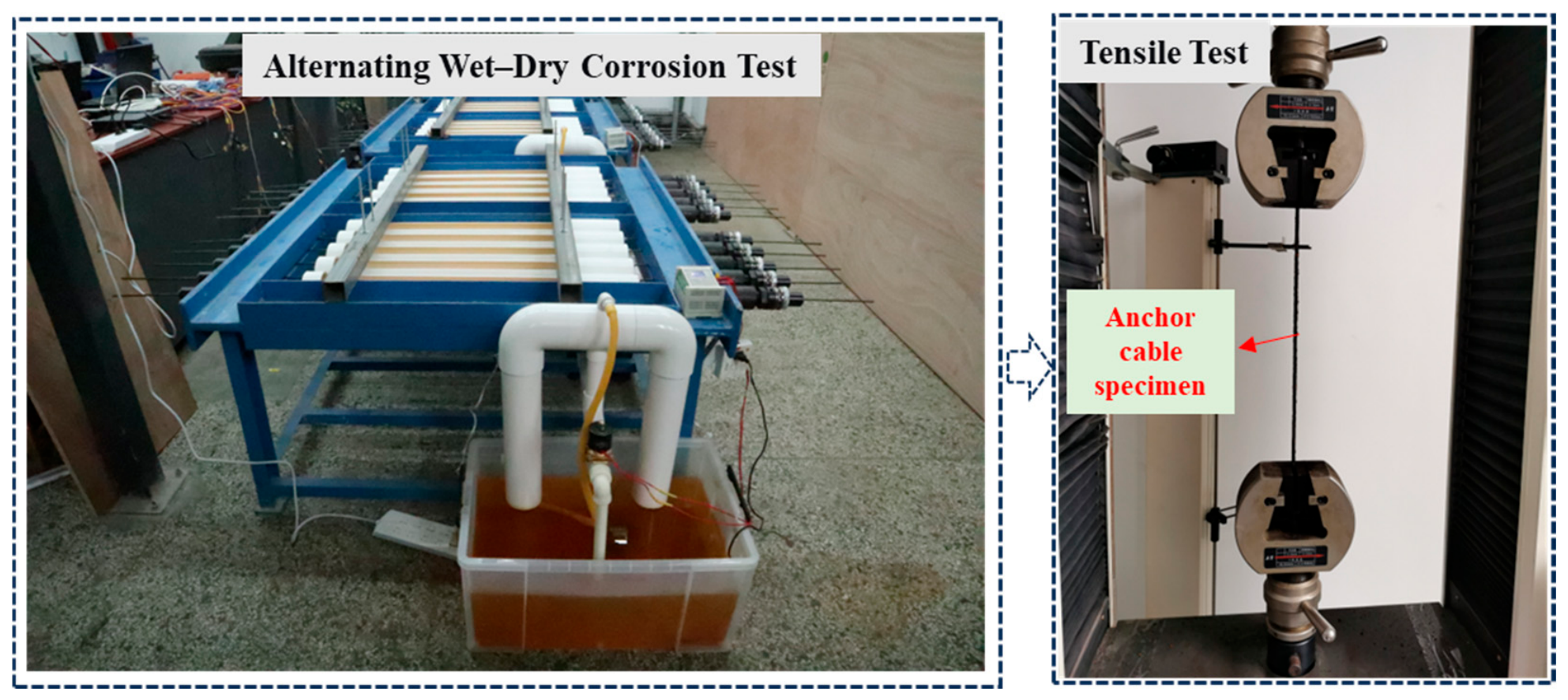
The mechanical properties of specimen “b” were tested using a universal testing machine (Figure 4), and its breaking strength was obtained.

3. Results

3.1. Weight Loss Ratio and Breaking Strength

The statistical results for the weight loss ratio and breaking strength of each specimen are presented in Table 3.
As shown in Table 3, the breaking strength of each specimen showed a negative correlation with the weight loss ratio. That is, the higher the weight loss ratio of the specimen, the lower its breaking strength.
According to GB/T 5224-2023, the breaking strength of the 1 × 7-15.2-1860 type steel strand (nominal area 140 mm2) should be in the range of 260 kN to 288 kN. Based on area conversion, the corresponding breaking strength range for the center wire was 39.48 kN to 43.66 kN. In this study, two uncorroded center wire specimens of the anchor cable were tested, yielding breaking strengths of 41.37 kN and 41.46 kN, respectively, which met the specification requirements. The average of these two values, 41.42 kN, was taken as the baseline value for subsequent analysis.

3.2. Fracture Morphology

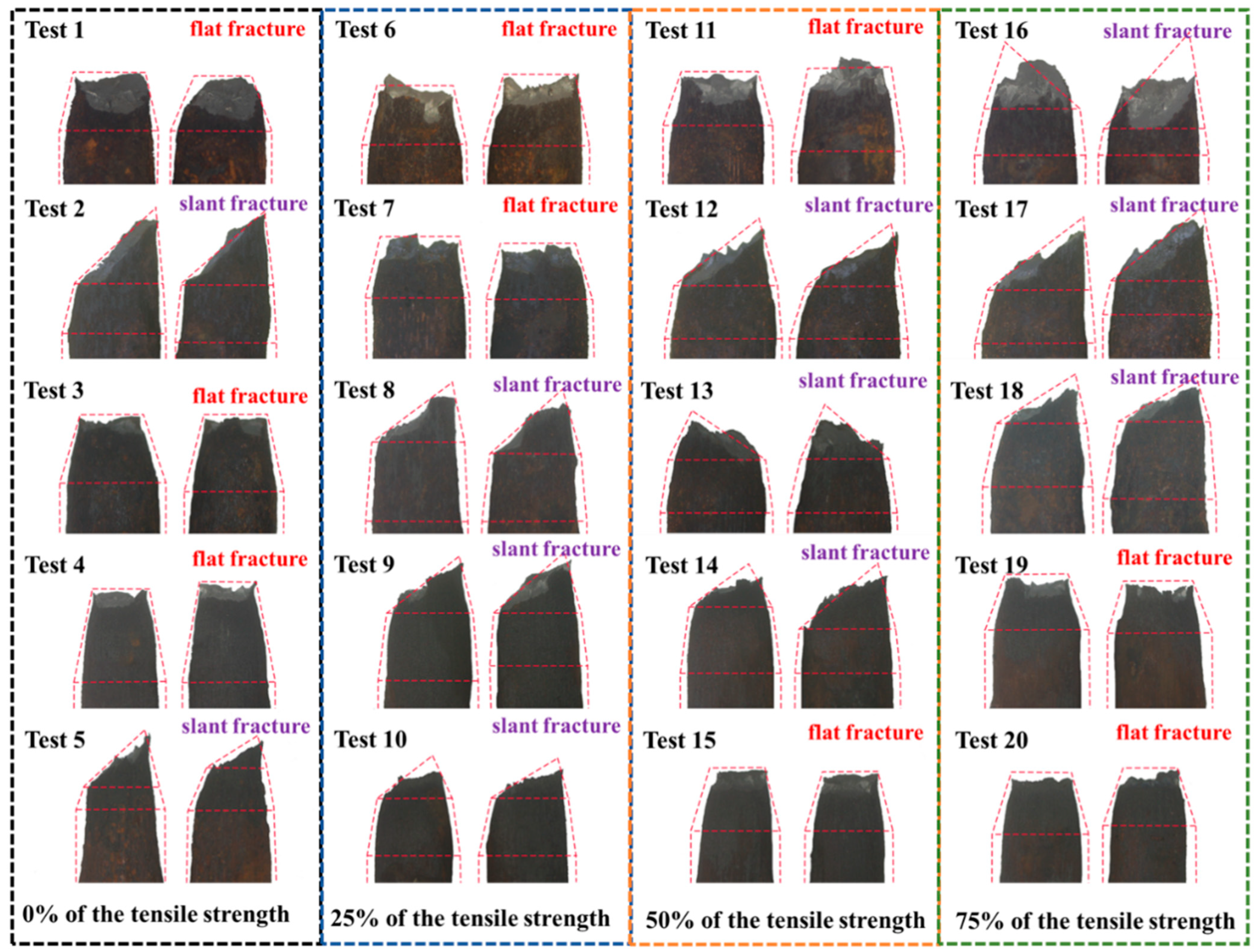
The fracture morphology of the corroded specimens after tensile failure was observed, as shown in Figure 5.
Based on the amount of deformation prior to fracture, metal fracture failure can be classified as ductile or brittle. From the perspective of micromechanisms, it can also be categorized into shear fracture, fatigue fracture, cleavage fracture, quasi-cleavage fracture, and intergranular fracture [22,23,24]. Correspondingly, the macroscopic fracture morpholgies of metals can be broadly divided into ductile and brittle types. With respect to the orientation between the fracture surface and the principal stress direction, ductile fractures can be classified as flat fractures (with the fracture surface perpendicular to the principal stress direction) and slant fractures (with the fracture surface at a 45° angle to the principal stress direction) [22]. For tensile fractures in metals, based on the fracture shape, they mainly include cup-cone fractures, shear-slip fractures, and other shapes [23,24]. In contrast, brittle fracture is relatively simpler, characterized primarily by very little deformation before fracture, with a reduction in cross-sectional area near the fracture surface not exceeding 3%, i.e., no significant necking. The fracture surface is perpendicular to the principal stress, smooth, and the original grains remain undistorted, with their size and shape unchanged [24]. Therefore, at the macroscopic level, the fracture type can be determined by the presence of obvious necking and the roughness of the fracture surface.
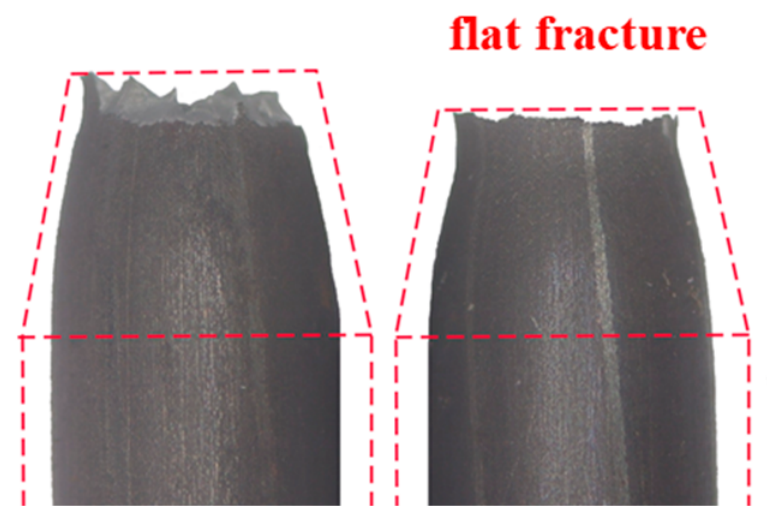
As shown in Figure 5, all specimens exhibited obvious necking deformation and high fracture surface roughness, which can be identified as ductile fractures. In terms of fracture shapes, Specimens 1, 3, 4, 6, 7, 11, 15, 19, and 20 mainly showed flat fracture surfaces, characterized by cup-cone, semi-cup-cone, or serrated features. The remaining specimens exhibit slant fracture surfaces belonging to the shear-slip type, accounting for 55% of the total. For the original steel wire specimens, the surfaces were smooth, and the fractures were typical cup-cone fractures, as shown in Figure 6.

4. Analysis

4.1. Fracture Morphology Under Corrosion Influence

The uncorroded steel wire specimens exhibited typical step-like (flat) fractures. In contrast, 55% of the corroded specimens showed shear slip fractures. The shear slip type fracture indicates the presence of defects near the fracture surface. This is attributed to corrosion pits formed on the metal surface, which create surface defects and, consequently, lead to shear-slip type fractures.
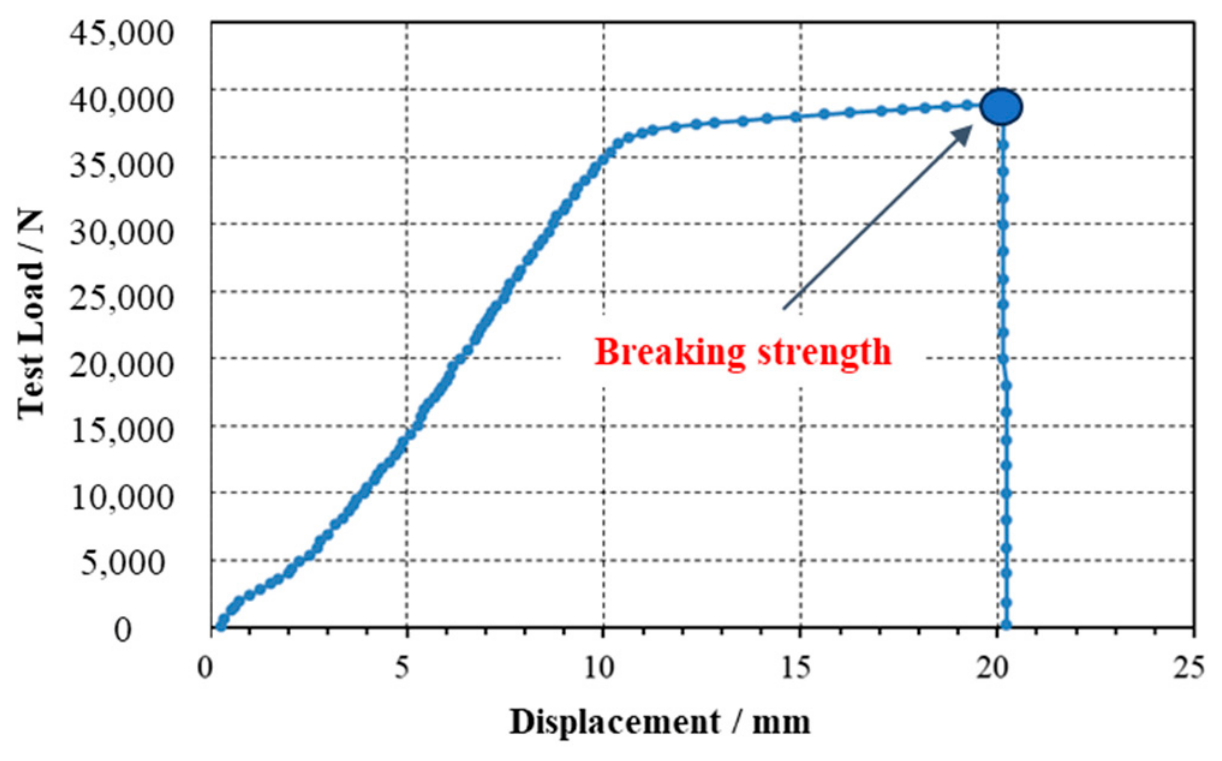
The typical load-deformation curve of a low-carbon steel metal in a tensile test consists of four stages: elastic deformation, yield deformation, uniform plastic deformation, and localized concentrated plastic deformation due to necking [22]. From the tensile test results of the specimens (Figure 7), the load displacement curves are generally consistent with the characteristics described above. Combined with fracture morphology analysis, all specimens exhibited ductile fractures, indicating that, under the synergistic effect of tensile stress and corrosion, the material showed no tendency to transition from ductile to brittle behavior, i.e., no tendency for stress corrosion cracking (SCC).

4.2. Degradation of Mechanical Properties

The mechanical property test results from tensile tests show that the breaking strength of the specimens decreases with increasing weight loss ratio. To quantitatively characterize the relationship between the breaking strength loss ratio and the weight loss ratio, the maximum force of the original specimen was taken as the reference value, and the breaking strength loss ratio was calculated using Equation (1). The relevant calculation results are shown in Table 4.
Δ F max L o s s = F max F max c o r r o F max × 100 %
where Δ F max L o s s is the breaking strength loss ratio; F max is the breaking strength of the uncorroded specimen, 41.42 kN; and F max c o r r o is the breaking strength of the corroded specimen, kN.
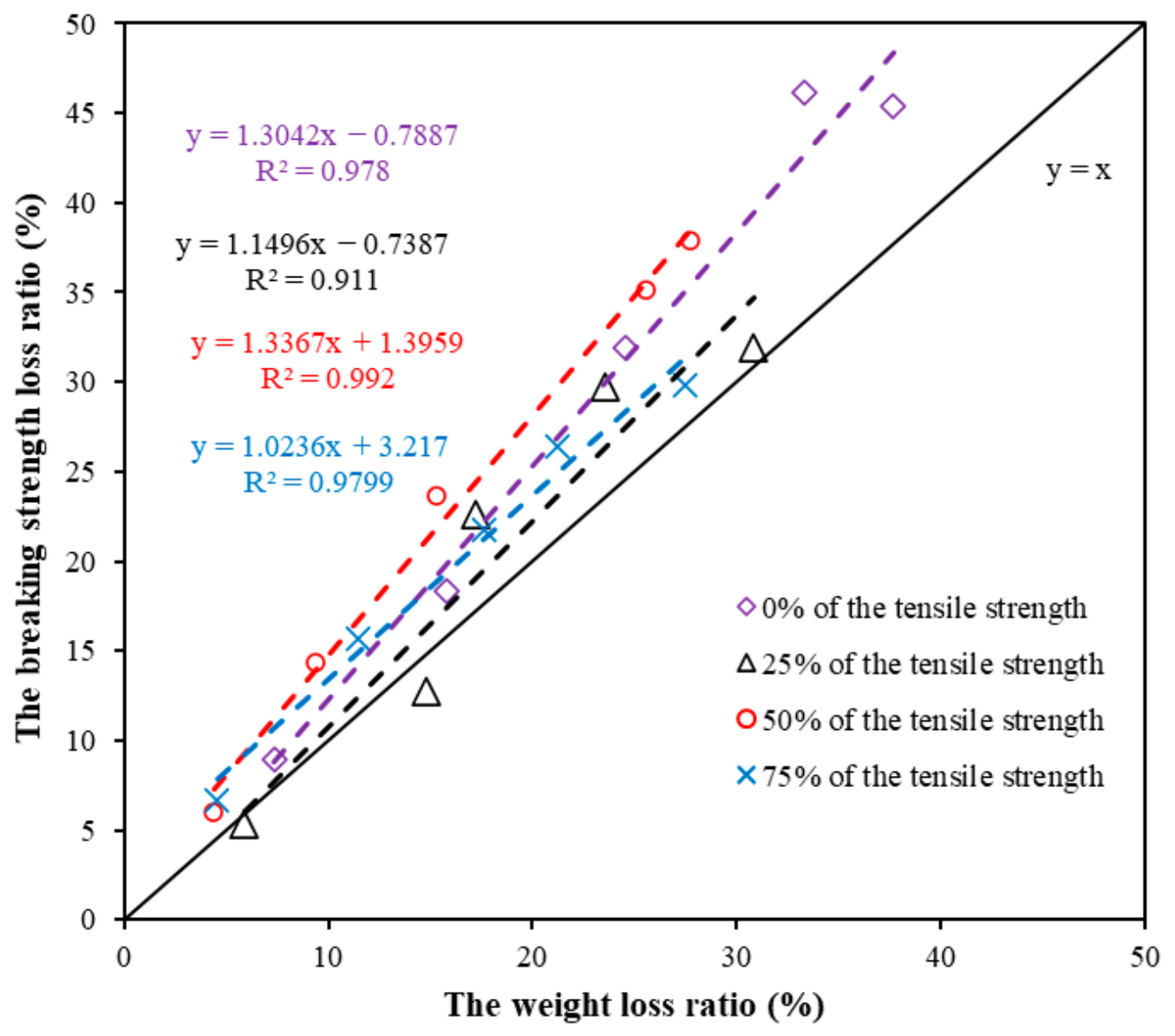
Table 4 shows that the breaking strength loss ratio was generally higher than the weight loss ratio, except for Test 6 and Test 7. The number by which the breaking strength loss ratio deviated from the weight loss ratio ranges from 1.04% to 12.85%, indicating that directly using the weight loss ratio to represent the breaking strength loss leads to an underestimation. Moreover, as shown in Figure 8, the increase in the breaking strength loss ratio of the anchor cable accelerated with an increasing weight loss ratio.
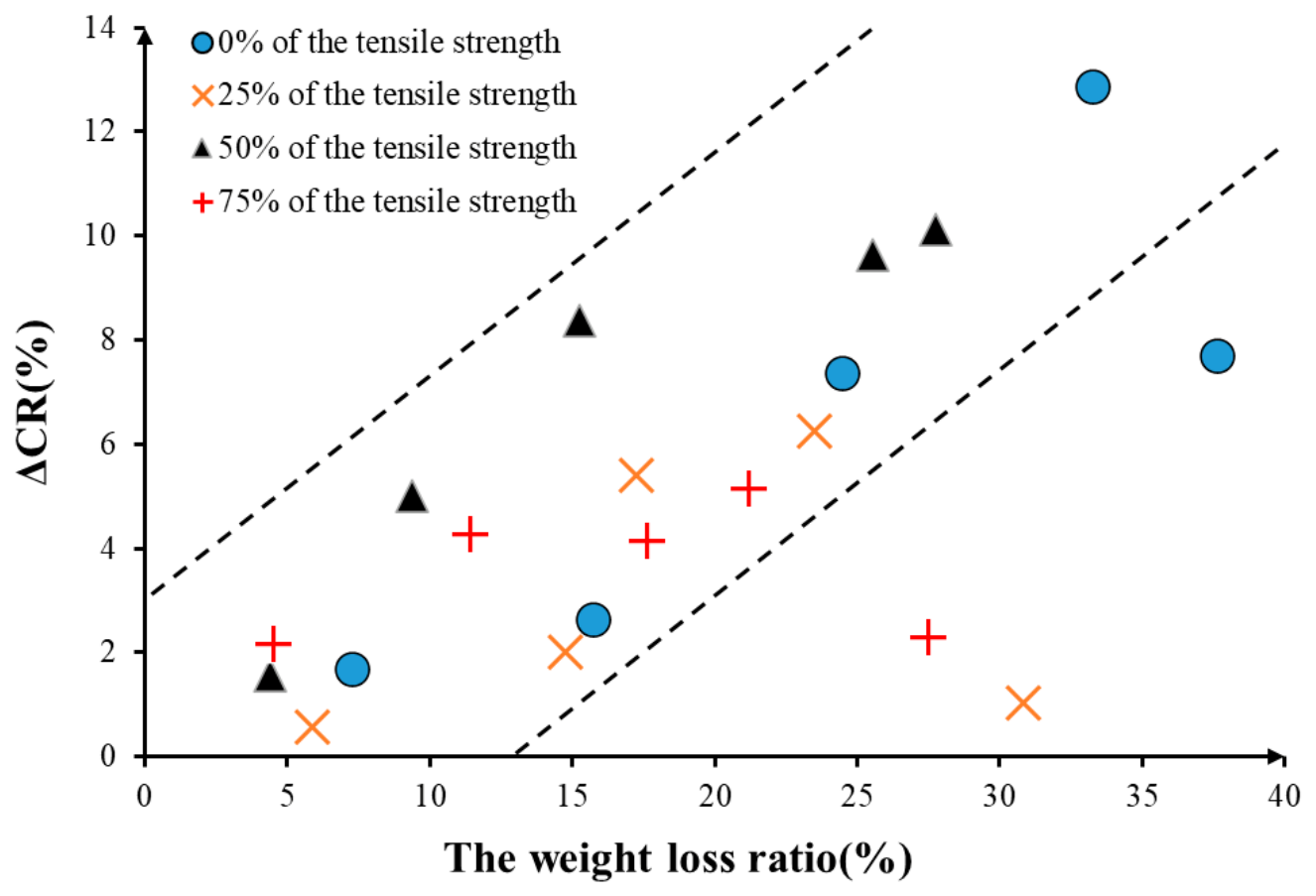
To further analyze the difference between the breaking strength loss ratio and the weight loss ratio, the difference was taken and denoted as ∆CR, calculated as in Equation (2).
Δ C R = Δ F max L o s s R c o r r o
where R c o r r o is the weight loss ratio of each anchor cable specimen.
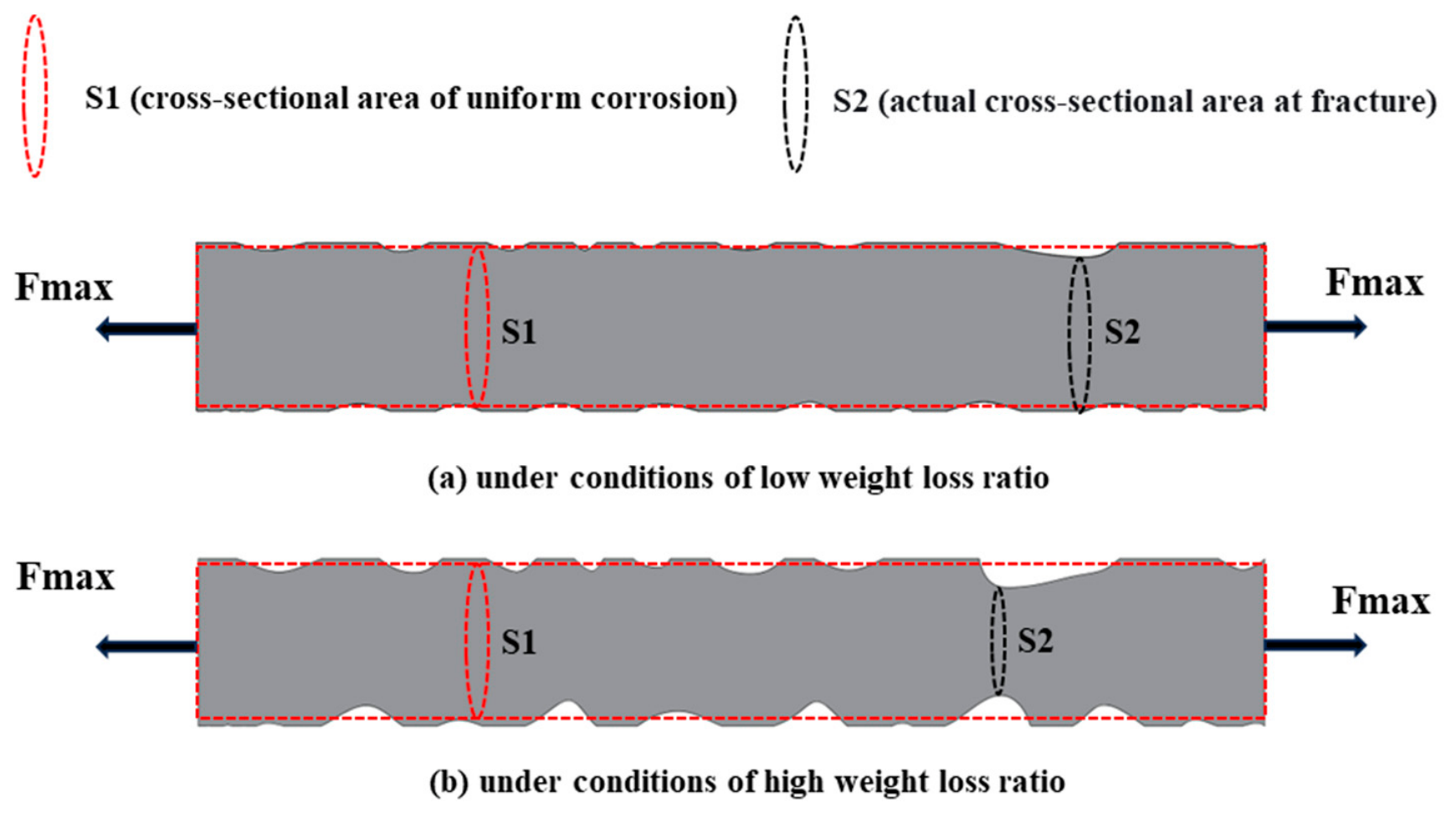
In Figure 9, ΔCR increases with increasing weight loss ratio. In uniform corrosion, the breaking strength loss ratio should be consistent with the weight loss ratio, and ΔCR should equal zero. However, specimens exposed to alternating wet–dry conditions underwent non-uniform corrosion, which resulted in corrosion pits of varying severity on their surfaces. As shown in Figure 10a, when the corrosion rate was low, the depth or width of the corrosion pits was small, and the overall corrosion was uniform. The cross-sectional area S2 at the fracture location was close to the uniform corrosion cross-sectional area S1; therefore, the breaking strength loss ratio was close to the weight loss ratio. However, as the weight loss ratio increased, the degree of non-uniform corrosion intensified. At a high weight loss ratio, as shown in Figure 10b, the tensile failure of the specimen tended to occur at locations with larger corrosion pits. The cross-sectional area S2 at such locations was significantly smaller than the uniform corrosion cross-sectional area S1, resulting in a breaking strength loss ratio greater than the weight loss ratio. Consequently, it is reasonable to state that ΔCR increases with an increasing the weight loss ratio.

4.3. Fitting Analysis of Breaking Strength

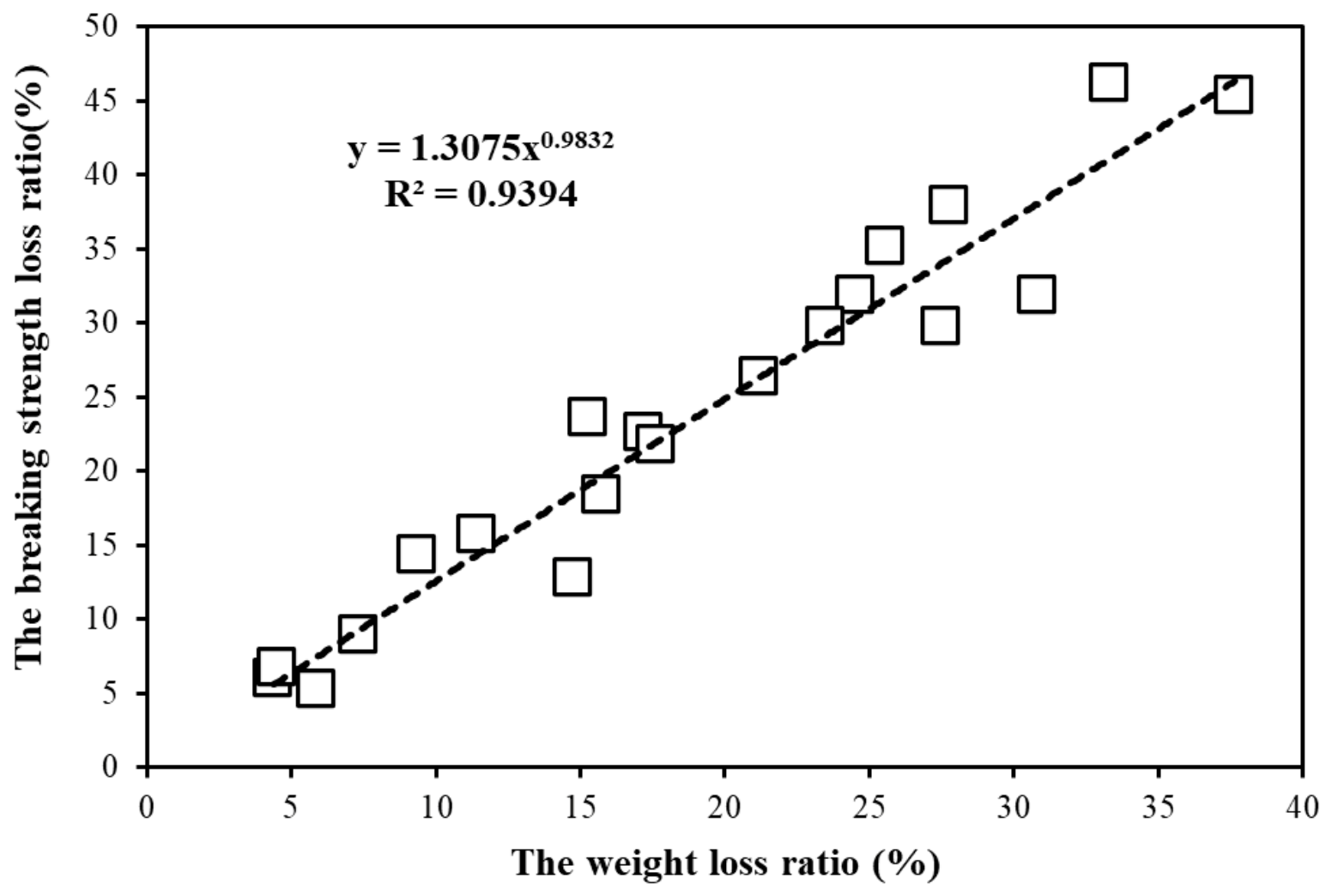
Because the effects of stress on corrosion pit morphology are difficult to distinguish and quantify separately from environmental effects, the results from specimens under different stress levels were pooled for analysis. This approach was used to evaluate the overall influence of corrosion on mechanical property degradation. On this basis, the relationship between the weight loss ratio and the breaking strength loss ratio was established. Considering that when the corrosion rate is 0%, the corresponding breaking strength loss ratio should theoretically also be 0%, a power function was used to fit the relationship between the weight loss ratio and the breaking strength loss ratio.
As shown in Figure 11, the fitting equation for the breaking strength loss ratio is:
Δ F max L o s s = 1.3075 100 R c o r r o 0.9832 100 × 100 % = 1.2097 R c o r r o 0.9832 × 100 %
Based on the fitted estimation equation for the breaking strength loss ratio (Equation (3)), the estimation equation for the residual breaking strength can be obtained by further transformation:
F max c o r r o = F max × 1 1.2097 R c o r r o 0.9832
Based on the weight loss ratios obtained from the test results, the breaking strengths of the corroded specimens were estimated using Equation (4). A comparison of the estimated and measured results is presented in Table 5.
According to the results in Table 5, the maximum relative error between the estimated maximum force based on Equation (4) and the measured value was 13.55%, and the minimum relative error was 0.1%. Among the 20 specimens, only four showed relatively high estimation errors, ranging from 8.24% to 13.55%, while the remaining 16 had estimation errors below 5%. This indicates that estimating the ultimate breaking strength of the specimen based on the weight loss ratio is feasible.

5. Discussion

(1) To assess the applicability of the breaking strength calculation equation obtained in this study, the landslide event on Taiwan’s No. 3 Expressway was used as a case study.
In this case, the breaking strength of the anchor cable, Fmax, was 184 kN, and the working load, F, was 84.09 kN. The accident occurred in Keelung City, Taiwan Province. To determine the annual average number of alternating wet–dry cycles in this region, meteorological and hydrological observation data from Taiwan and its surrounding islands [25] were analyzed, and historical rainfall data for Keelung City from 2010 to 2018 were obtained (Table 6). Based on these data, the average annual number of rainy days in Keelung City was estimated to be 200.67. Assuming that one rainfall event corresponds to one alternating wet–dry cycle, the annual average number of such cycles in this region, aj, was taken as 200.
Based on the author’s previous research findings [9], Equation (5) is used to calculate the average annual corrosion rate of anchor cables ( R c o r r o n ) under alternating wet–dry environments. Assuming a service life of N years, the cumulative corrosion rate during the service period can be calculated using Equation (6).
R c o r r o n = 0.1678 e 0.0149 a j 100 × 100 %
R c o r r o = R c o r r o n × N
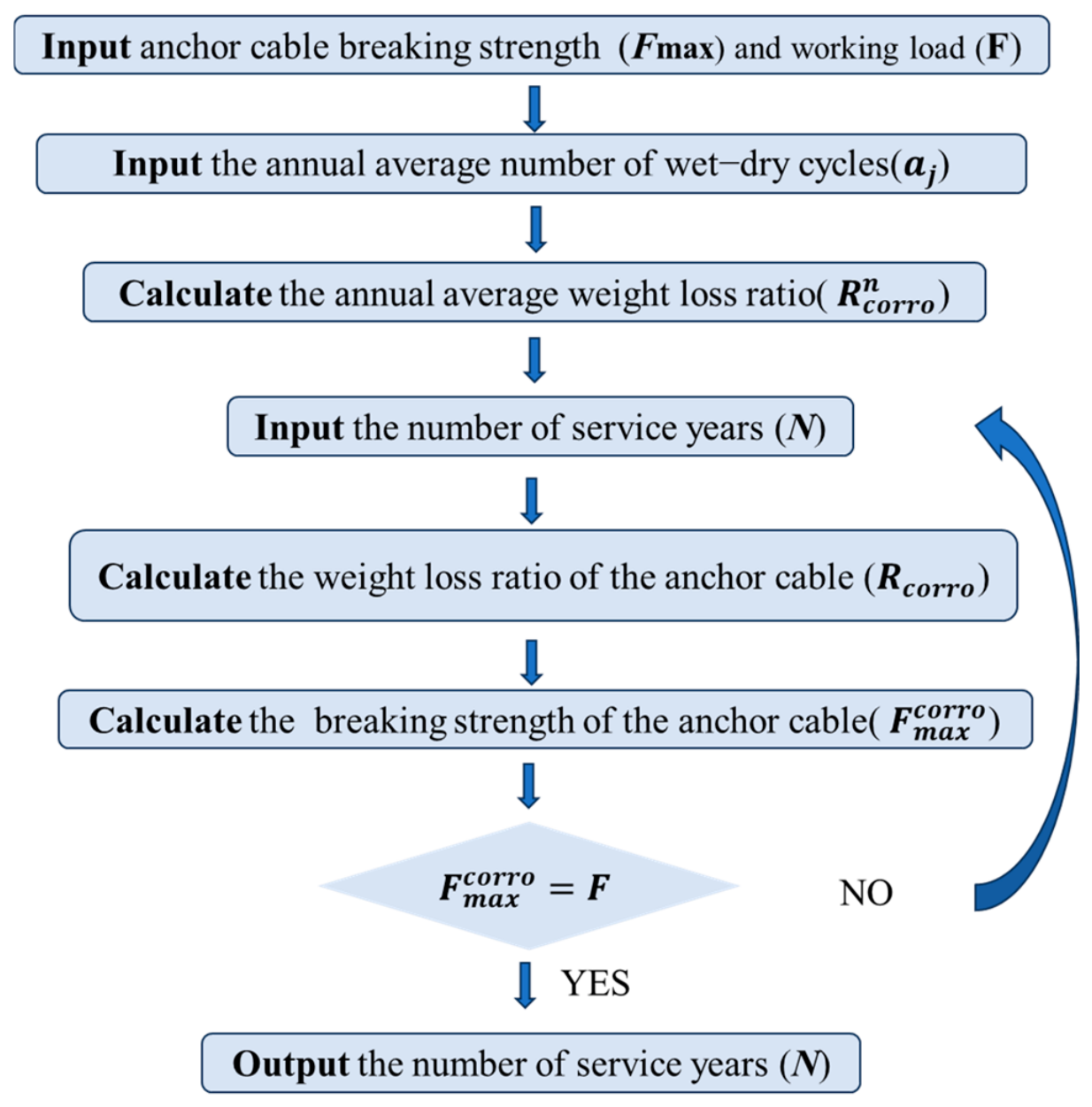
The breaking strength of the anchor cable after corrosion ( F max c o r r o ) is calculated, and it is determined whether it equals F. If so, the anchor cable is considered to have just fractured, and the assumed service life N is taken as the time at which the anchor cable fails by fracture. The detailed calculation procedure is shown in Figure 12.
Using the breaking strength estimation Equation (4) established in this paper to calculate F max c o r r o , the calculated fracture time of the anchor cable was 13.4 years. Based on the investigations of the landslide accident [13,14], the failure time of the anchor cables in this slope reinforcement project was approximately 12–13 years, which is close to the calculated result.
If the uniform corrosion assumption is adopted, and the weight loss ratio is directly used as a substitute for the breaking strength loss ratio, then:
F max c o r r o = F max × 1 R c o r r o
If the uniform corrosion assumption is used in Equation (7), the estimated fracture time of the anchor cable was 16.4 years, which overestimates the actual service life (approximately 12–13 years) by about four years. In contrast, the proposed method (Equation (4)) yielded an estimated service life of 13.4 years, deviating by less than one year from the actual failure time. This demonstrates that directly using the uniform corrosion assumption as a substitute for the mechanical property loss ratio is unreliable and unsafe for engineering management.
(2) In the present study, due to the limitations of experimental conditions, only one tensile specimen was tested under each corrosion condition. Therefore, the current dataset is insufficient to support rigorous statistical inference, which is a limitation of this work. The primary purpose of this study was to reveal the potential association between weight loss ratio and the degradation of mechanical properties. The relatively high correlation observed in this study only indicates a noticeable correspondence between these two variables under the present sample conditions.
Despite the above limitations, the validation case presented above suggests that the correlation established in this study may still provide useful reference value for interpreting engineering phenomena. Future works should incorporate replicate testing and statistical analysis to more comprehensively evaluate the stability, reliability, and applicability of the proposed relationship. This will help refine the current equation and make it more statistically robust and representative.
(3) In addition, two parallel specimens exposed to the same corrosion condition exhibiting identical corrosion behavior is an idealization. In reality, localized corrosion and pitting are inherently stochastic processes whose spatial distribution and severity may vary even among specimens subjected to nominally identical environmental conditions. Therefore, this assumption may indeed introduce uncertainty into the derived relationship. The proposed relationship should be interpreted as a preliminary correlation established under the current experimental framework, and its accuracy may be affected by the stochastic nature of localized corrosion.

6. Conclusions

To investigate the degradation of the mechanical properties of prestressed anchor cables during corrosion in an alternating wet–dry environment, this paper developed an apparatus for alternating wet–dry corrosion testing. Corrosion tests of prestressed anchor cables under alternating wet–dry conditions were carried out. The fracture morphology, weight loss ratio, and breaking strength of the corroded specimens were then obtained. The degradation of the mechanical properties of anchor cables in an alternating wet–dry environment was analyzed, and a final calculation equation for estimating the maximum force based on the weight loss ratio of the specimen was derived. The main conclusions are as follows:
(1)
The developed alternating wet–dry corrosion test system for prestressed anchor cables can simultaneously simulate the working stress state and the alternating wet–dry corrosion environment of anchor cables, providing a reference for similar corrosion tests of prestressed bar systems.
(2)
The fracture surface of uncorroded specimens was a typical cup-cone flat fracture. After corrosion, 55% of the specimens exhibited a transition to a slant fracture surface, indicating that the corrosion was non-uniform and that defects were formed near the fracture surface.
(3)
When the stress level of the anchor cables ranged from 0% to 75% of the tensile strength, all specimens exhibited ductile fractures under the alternating wet–dry corrosion environment simulated in this study, showing no tendency for stress corrosion cracking.
(4)
The breaking strength loss ratio of corroded specimens was generally higher than the weight loss ratio. Meanwhile, the increase in breaking strength loss ratio accelerated with increasing weight loss ratio. This indicates that using the weight loss ratio directly as a substitute for the breaking strength loss ratio led to an underestimation, which was detrimental to engineering operations.
(5)
Using the proposed breaking strength estimation equation, the mechanical properties of corroded anchor cables were calculated. These calculated values were then used as the failure criterion for anchor cable fracture. In the case study, the estimated service life differed from the actual service life by less than one year. This result is more accurate than that obtained using the uniform corrosion assumption.

Author Contributions

Conceptualization, T.Y. and Y.W.; methodology, X.S.; software, L.L.; validation, L.L., M.S. and X.S.; formal analysis, T.Y.; investigation, T.Y. and X.S.; resources, Y.W. and L.L.; data curation, Y.Q.; writing-original draft preparation, T.Y.; writing-review and editing, M.S., Y.Q. and X.S.; visualization, L.L.; supervision, X.S.; project administration, Y.W.; funding acquisition, T.Y. and X.S. All authors have read and agreed to the published version of the manuscript.

Funding

This research was funded by Yunnan Fundamental Research Projects (Grant No. 202401CF070067), the Open Research Fund of the Key Laboratory of Construction and Safety of Water Engineering of the Ministry of Water Resources (Grant No. IWHR-ENGI-202205), and the National Key R&D Program of China (Grant No. 2023YFC3007005).

Data Availability Statement

All of the research data can be obtained from this manuscript.

Acknowledgments

The authors would like to thank Xiaohan Mei, Xi Huang and Pu Wang for polishing the language of this paper.

Conflicts of Interest

The authors declare no conflicts of interest.

References

  1. Du, Y.; Li, H.; Chicas, S.D.; Huo, L. Progress and perspectives of geotechnical anchor bolts on slope engineering in China. Front. Environ. Sci. 2022, 10, 928064. [Google Scholar] [CrossRef]
  2. SL/T 212-2010; Technical Specification for Hydraulic Prestressed Anchorage. MWR: Beijing, China, 2020; pp. 28–29.
  3. Chen, Y.; Gu, Z.; Cao, R.; Wang, H.; Saydam, S.; Zhang, J. Investigation into Effects of Coating on Stress Corrosion of Cable Bolts in Deep Underground Environments. Materials 2024, 17, 3563. [Google Scholar] [CrossRef] [PubMed]
  4. Saha, S.K.; Takano, T.; Fushimi, K.; Sakairi, M.; Saito, R. Passivity of iron surface in curing cement paste environment investigated by electrochemical impedance spectroscopy and surface characterization techniques. Corros. Sci. 2023, 220, 111307. [Google Scholar] [CrossRef]
  5. Wu, S.S.; Zhu, M.S.; Zhang, Z.Z.; Yao, Y.L.; Li, Y.X.; Li, D.S. Prediction and risk assessment of stress corrosion failures of prestressed anchors in underground mines. Int. J. Min. Reclam. Environ. 2026, 40, 381–395. [Google Scholar] [CrossRef]
  6. Yin, T.; Shi, M.; Wang, Y.J.; Sun, X.S. Experimental study on the corrosion characteristics of anchor cable in alternating wet-dry environment. Case Stud. Constr. Mater. 2026, 24, e06086. [Google Scholar] [CrossRef]
  7. Yin, T.; Sun, X.S.; Wang, Y.J.; Zhao, Y.F. Corrosion Investigation of Rock Anchors Served over 10 Years in Underground Powerhouse of a Hydropower Station. Adv. Mater. Sci. Eng. 2022, 2022, 4905010. [Google Scholar] [CrossRef]
  8. Wang, X.G. Study on mechanical effect of shear resistance and technology of life extension of prestressed anchor cables in slopes. Chin. J. Rock Mech. Eng. 2023, 42, 2341–2357. [Google Scholar] [CrossRef]
  9. Yin, T. Study on Corrosion Mechanism and Life Prediction of Prestressed Anchor Cables in Dry-Wet Alternating Environments. Ph.D. Thesis, Hohai University, Nanjing, China, 2022. [Google Scholar]
  10. Liu, H.; Zhou, G.; Han, Z.; Ji, Y.; Zhang, Y.Q.; Zhang, C.L.; Luo, H.G.; Lu, Y.X.; Cao, C.X.; Xu, Z.Z.; et al. Research on the influence of major ions in weakly alkaline mine water on anchor cable corrosion and protection technique. Case Stud. Constr. Mater. 2024, 21, e03584. [Google Scholar] [CrossRef]
  11. Liu, H.; Zhou, G.; Ji, Y.; Rong, X.P. Research on the corrosion behavior of underground cables influenced by different ions. J. Constr. Steel Res. 2025, 226, 109194. [Google Scholar] [CrossRef]
  12. Liu, S.W.; Niu, S.; He, D.Y.; Li, X.Z.; Zhang, W.Y. The influence of corrosion degree on mechanical properties of mine rock cables: Numerical simulation investigation. J. Min. Strat. Control Eng. 2024, 6, 80–93. [Google Scholar] [CrossRef]
  13. Liao, H.J.; Wang, C.W.; Wei, F.L. A tale of twin cut slopes in Taiwan. Proc. ICE Forensic Eng. 2013, 166, 72–80. [Google Scholar] [CrossRef]
  14. Liao, H.J.; Cheng, S.H.; Chen, C.C.; Chen, H.R. Cement grouting to seal off voids below anchor head. In Proceedings of the Grouting 2017: Case Histories, Honolulu, HI, USA, 9–12 July 2017. [Google Scholar]
  15. Ma, H.; Au, F.; Mickleborough, N.; Lim, E.; Chan, K.; Yung, K.; Chung, H. Investigation Report on Prestressing Tendon Failure Incident at Concrete Viaduct of Shenzhen Bay Bridge—Hong Kong Section; Highways Department: Hong Kong, China, 2019. Available online: https://www.hyd.gov.hk/en/our_services/structures/doc/SBB_HK_Investigation_2019.pdf (accessed on 21 May 2026).
  16. Franceschini, L.; Vecchi, F.; Tondolo, F.; Belletti, B.; Sanchez Montero, J. Mechanical behaviour of corroded strands under chloride attack: A new constitutive law. Constr. Build. Mater. 2022, 316, 125872. [Google Scholar] [CrossRef]
  17. Li, Y.Y.; Zhang, S.F.; Wang, S.G.; Song, X.G. Experimental study on durability of prestressed anchorage structures under corrosive media. Chin. J. Rock Mech. Eng. 2008, 27, 1626–1633. Available online: https://rockmech.whrsm.ac.cn/CN/article/downloadArticleFile.do?attachType=PDF&id=24406 (accessed on 21 May 2026).
  18. Yao, G.W.; Yu, X.R.; Gu, L.F.; Jiang, Y.X. Experiment on Corrosion Fatigue Life of Steel Strands under the Coupling Effects of Chloride Environment and Alternating Loads. Adv. Civ. Eng. 2021, 2021, 2439503. [Google Scholar] [CrossRef]
  19. Li, F.M.; Liu, Z.; Yu, Z.; Qu, Y.; Rong, L. Experimental study on corrosion progress of interior bond section of anchor cables under chloride attack. Constr. Build. Mater. 2014, 71, 344–353. [Google Scholar] [CrossRef]
  20. Zhang, Z.M.; Tan, G.J.; Wang, H.; Yang, T. Mechanical properties of severely corroded high-strength steel wire under the high-strain low-cycle fatigue loading. Steel Compos. Struct. 2026, 58, 95–117. [Google Scholar] [CrossRef]
  21. GB/T 5224-2023; Steel Strands for Prestressed Concrete. China Standards Press: Beijing, China, 2023. Available online: https://std.samr.gov.cn/gb/search/gbDetailed?id=027A6096AF04643EE06397BE0A0A0867 (accessed on 21 May 2026).
  22. Xiao, J.Y.; Dong, Y.; Yang, Y.M.; Zhang, J.R.; Peng, J.X. Long-term experimental study and prediction of the mechanical performance on corroded prestressing steel strands subjected to marine salt spray environment. Constr. Build. Mater. 2024, 438, 137203. [Google Scholar] [CrossRef]
  23. El Ouazani Tuhami, A.; Feld-Payet, S.; Quilici, S.; Osipov, N.; Besson, J. A two characteristic length nonlocal GTN model: Application to cup–cone and slant fracture. Mech. Mater. 2022, 171, 104350. [Google Scholar] [CrossRef]
  24. Liao, J.Y. Failure Analysis of Metal Components; Chemical Industry Press: Beijing, China, 2022; ISBN 978-7-122-42070-1. [Google Scholar]
  25. Han, Y.K.; Zhao, Y.L.; Guan, J.P.; Shen, X.Y.; Chen, F. A meteorological and hydrological observation dataset of Taiwan and its surrounding islands. China Sci. Data 2020, 5, 152–158. [Google Scholar] [CrossRef]
Figure 1. Inspection of the external anchorage zone of the anchor cable at a hydropower station in Southwest China. (I) General corrosion of the PE tube and steel strand due to the absence of grouting; (II) Corrosion of the PE tube due to the absence of grouting; (III) Cracking of the PE tube due to the absence of grouting.
Symmetry 18 00948 g001
Figure 2. Schematic diagram of the alternating wet–dry corrosion test apparatus for prestressed anchor cable.
Symmetry 18 00948 g002
Figure 3. Schematic diagram of 1 × 7 steel strand.
Symmetry 18 00948 g003
Figure 4. Corrosion test and tensile test of anchor cable.
Symmetry 18 00948 g004
Figure 5. The fracture morphology of the specimens after corrosion.
Symmetry 18 00948 g005
Figure 6. The fracture morphology of the uncorroded steel wire.
Symmetry 18 00948 g006
Figure 7. Tensile test results of Test 16.
Symmetry 18 00948 g007
Figure 8. The relationship between the breaking strength loss ratio and the weight loss ratio.
Symmetry 18 00948 g008
Figure 9. The relationship between ∆CR and the weight loss ratio.
Symmetry 18 00948 g009
Figure 10. The force analysis diagram of the corroded specimen.
Symmetry 18 00948 g010
Figure 11. Fitting of the weight loss ratio and the breaking strength loss ratio.
Symmetry 18 00948 g011
Figure 12. Flowchart for service life calculation of anchor cable.
Symmetry 18 00948 g012
Table 1. Parameters of 1 × 7-15.2 strand.
Strand TypeNominal Diameter of Strand, mmTensile Strength of Strand, MPaBreaking Strength of Strand, kNSteel Area of Strand, mm2Weight [Mass] of Strand, (g/m)
1 × 715.21860273.721401109.7
Table 2. Corrosion test plan for prestressed anchor cable.
Specimen NumberPrestress Level (%)NaCl Concentration (%)Wet–Dry Period RatioAlternating PeriodDuration
Test 1a0% of the tensile strength1%1:52 h20 d
Test 1b20 d
Test 2a40 d
Test 2b40 d
Test 3a60 d
Test 3b60 d
Test 4a80 d
Test 4b80 d
Test 5a100 d
Test 5b100 d
Test 6a25% of the tensile strength1%1:52 h20 d
Test 6b20 d
Test 7a40 d
Test 7b40 d
Test 8a60 d
Test 8b60 d
Test 9a80 d
Test 9b80 d
Test 10a100 d
Test 10b100 d
Test 11a50% of the tensile strength1%1:52 h20 d
Test 11b20 d
Test 12a40 d
Test 12b40 d
Test 13a60 d
Test 13b60 d
Test 14a80 d
Test 14b80 d
Test 15a100 d
Test 15b100 d
Test 16a75% of the tensile strength1%1:52 h20 d
Test 16b20 d
Test 17a40 d
Test 17b40 d
Test 18a60 d
Test 18b60 d
Test 19a80 d
Test 19b80 d
Test 20a100 d
Test 20b100 d
Table 3. Test results of the weight loss ratio and the breaking strength of the anchor cable.
Specimen NumberPrestress LevelWeight Loss Ratio (%)Breaking Strength (kN)
Test 10%7.3337.70
Test 20%15.7633.81
Test 30%24.5228.22
Test 40%33.3122.30
Test 50%37.6722.64
Test 625%5.8839.22
Test 725%14.7736.14
Test 825%17.2332.05
Test 925%23.5129.09
Test 1025%30.8328.22
Test 1150%4.4038.95
Test 1250%9.3635.47
Test 1350%15.2631.63
Test 1450%25.5526.85
Test 1550%27.7625.73
Test 1675%4.5338.65
Test 1775%11.4434.91
Test 1875%17.6332.40
Test 1975%21.2230.50
Test 2075%27.4929.08
Table 4. Calculation of the breaking strength loss ratio of the specimens.
Specimen NumberPrestress LevelWeight Loss Ratio (%)Breaking Strength Loss Ratio (%)Breaking Strength Loss Ratio Deviates from the Weight Loss Ratio (%)
Test 10%7.338.981.65
Test 20%15.7618.372.61
Test 30%24.5231.877.35
Test 40%33.3146.1612.85
Test 50%37.6745.347.67
Test 625%5.885.31−0.57
Test 725%14.7712.75−2.02
Test 825%17.2322.625.39
Test 925%23.5129.776.26
Test 1025%30.8331.871.04
Test 1150%4.405.961.56
Test 1250%9.3614.375.01
Test 1350%15.2623.648.38
Test 1450%25.5535.189.63
Test 1550%27.7637.8810.12
Test 1675%4.536.692.16
Test 1775%11.4415.724.28
Test 1875%17.6321.784.15
Test 1975%21.2226.365.14
Test 2075%27.4929.792.30
Table 5. Comparison of the breaking strength estimates with measured values.
Specimen NumberPrestress LevelWeight Loss Ratio (%)Measured Breaking Strength
(%)
Estimated Breaking Strength (%)Relative Error (%)
Test 10%7.3337.7037.27 1.13
Test 20%15.7633.8132.62 3.52
Test 30%24.5228.2227.83 1.39
Test 40%33.3122.3023.05 3.37
Test 50%37.6722.6420.69 8.61
Test 625%5.8839.2238.08 2.90
Test 725%14.7736.1433.16 8.24
Test 825%17.2332.0531.81 0.74
Test 925%23.5129.0928.38 2.44
Test 1025%30.8328.2224.40 13.55
Test 1150%4.4038.9538.91 0.10
Test 1250%9.3635.4736.15 1.91
Test 1350%15.2631.6332.89 4.00
Test 1450%25.5526.8527.27 1.56
Test 1550%27.7625.7326.06 1.30
Test 1675%4.5338.6538.84 0.48
Test 1775%11.4434.9135.00 0.25
Test 1875%17.6332.4031.59 2.49
Test 1975%21.2230.5029.632.85
Test 2075%27.4929.0826.219.86
Table 6. Rainfall statistics in Keelung City, Taiwan Province from 2010 to 2018 [6,25].
Station NameStation LongitudeStation LatitudeYearAnnual Number of Rainy Days
Keelung121.7325.132010181
2011216
2012229
2013200
2014181
2015191
2016224
2017197
2018187
Average 200.67
Disclaimer/Publisher’s Note: The statements, opinions and data contained in all publications are solely those of the individual author(s) and contributor(s) and not of MDPI and/or the editor(s). MDPI and/or the editor(s) disclaim responsibility for any injury to people or property resulting from any ideas, methods, instructions or products referred to in the content.