This is an early access version, the complete PDF, HTML, and XML versions will be available soon.
Open AccessArticle
Accountability-Aware Fractional Control for Embodied Intelligent Systems: Mittag-Leffler Stability and Conditional Proxemic Safety
by
Slim Dhahri
Slim Dhahri 1
,
Essia Ben Alaia
Essia Ben Alaia 1,
Sahar Almashaan
Sahar Almashaan 2,*,
Hatem Alwardi
Hatem Alwardi 2 and
Omar Naifar
Omar Naifar 3,4
1
Department of Computer Engineering and Networks, College of Computer and Information Sciences, Jouf University, Sakaka 72388, Saudi Arabia
2
Mathematics Department, College of Science, Jouf University, Sakaka 72388, Saudi Arabia
3
Control and Energy Management Laboratory, National School of Engineering of Sfax, University of Sfax, Sfax 3038, Tunisia
4
Higher Institute of Applied Sciences and Technology of Kairouan, University of Kairouan, Kairouan 3100, Tunisia
*
Author to whom correspondence should be addressed.
Symmetry 2026, 18(6), 889; https://doi.org/10.3390/sym18060889 (registering DOI)
Submission received: 30 April 2026
/
Revised: 16 May 2026
/
Accepted: 21 May 2026
/
Published: 24 May 2026
Abstract
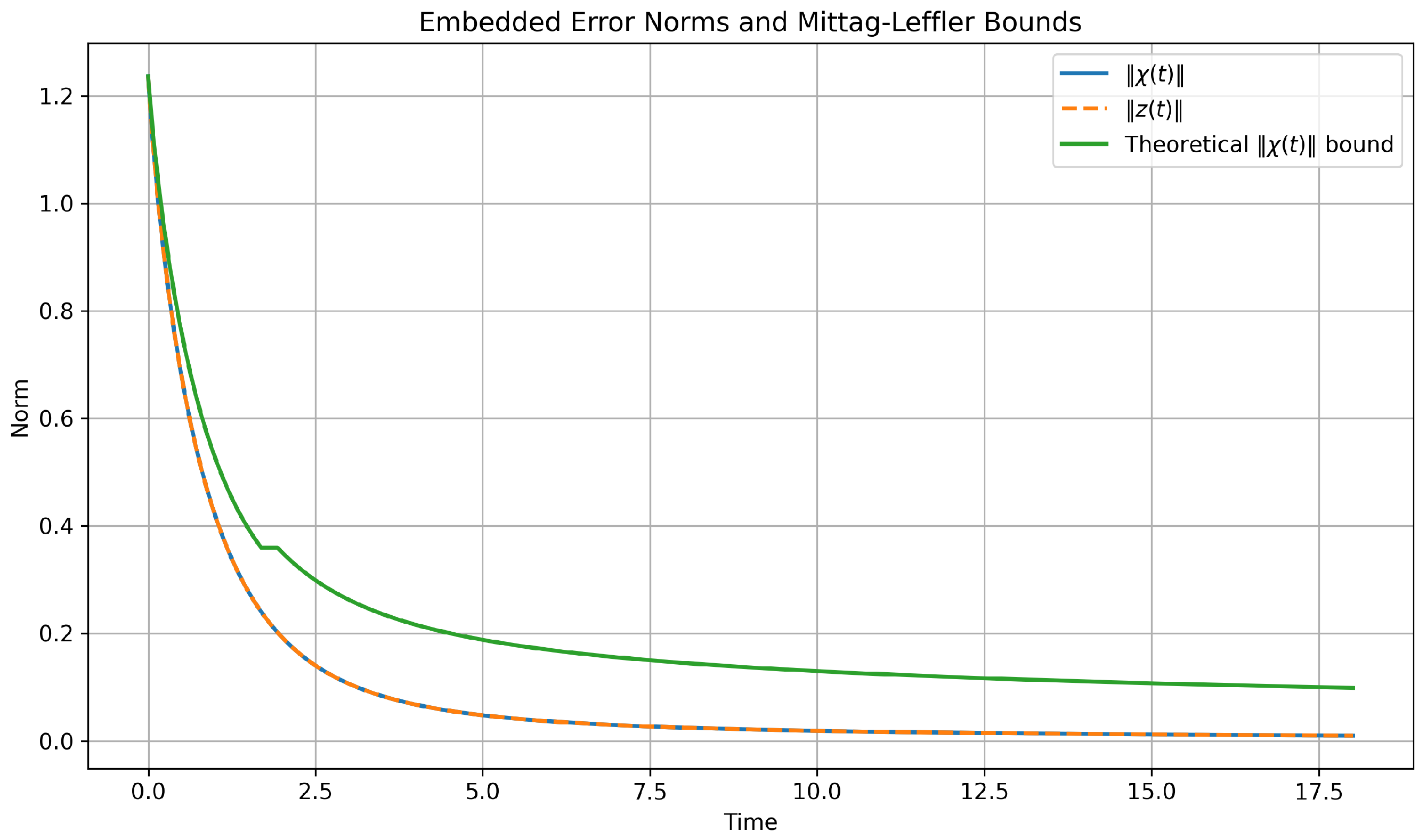
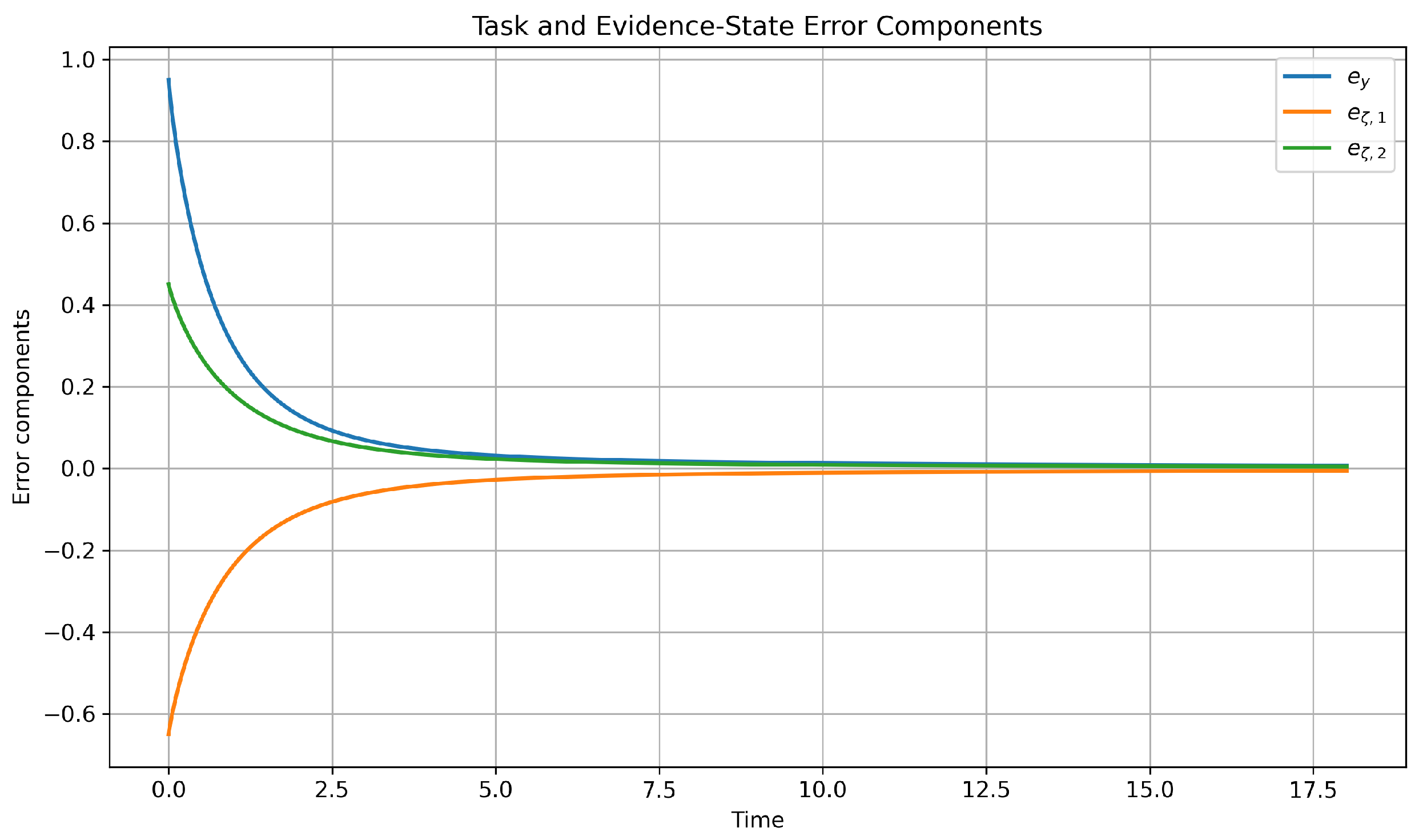
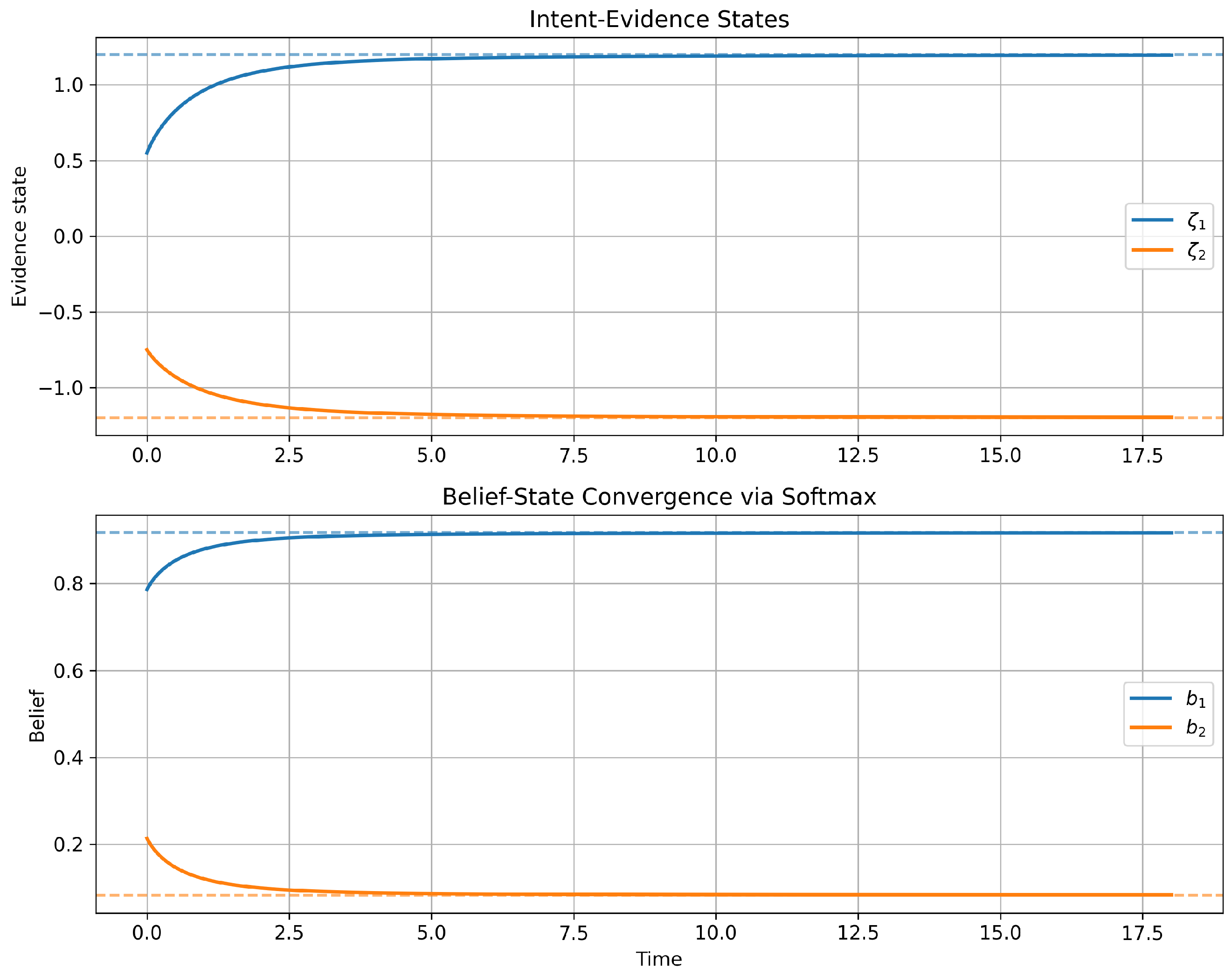
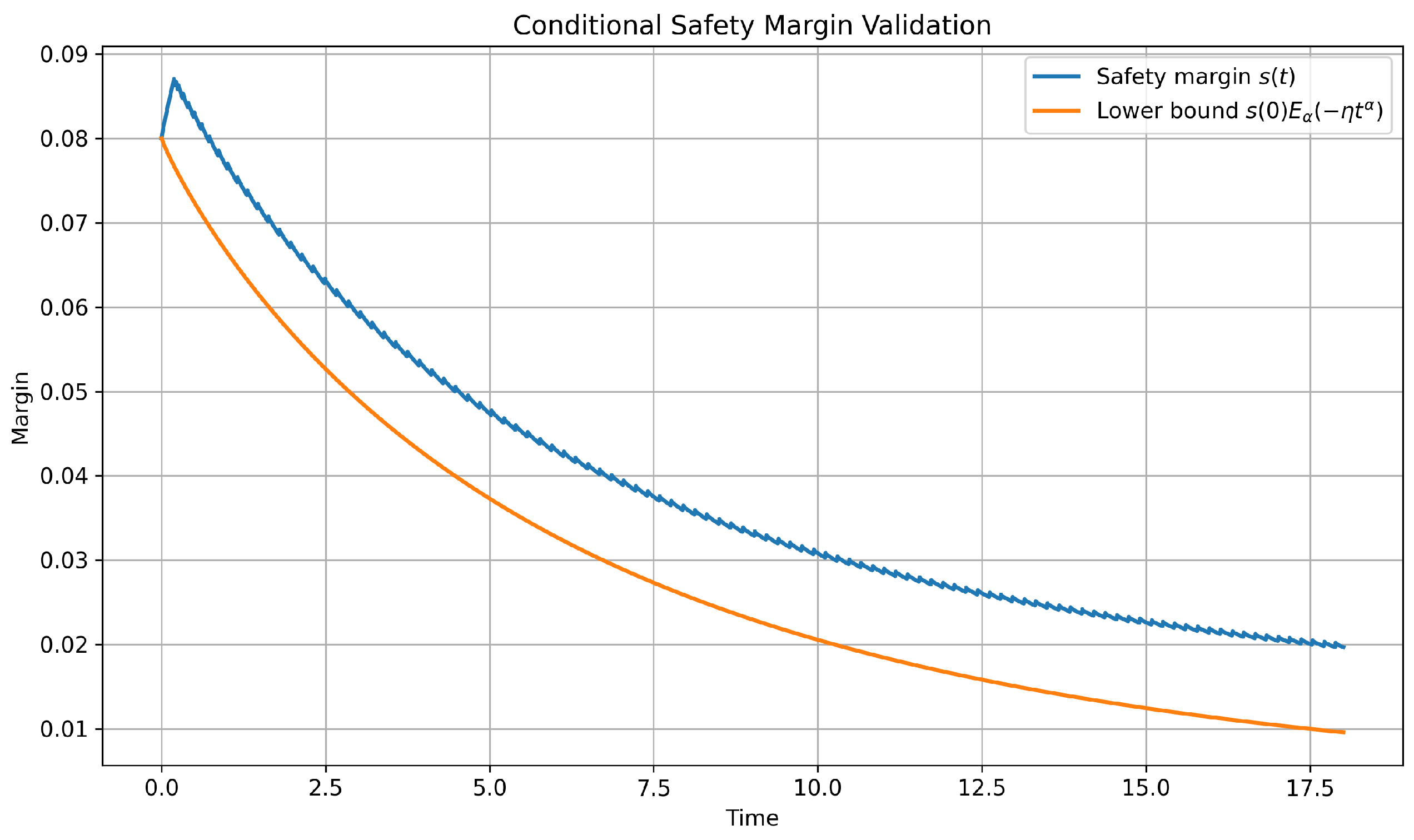
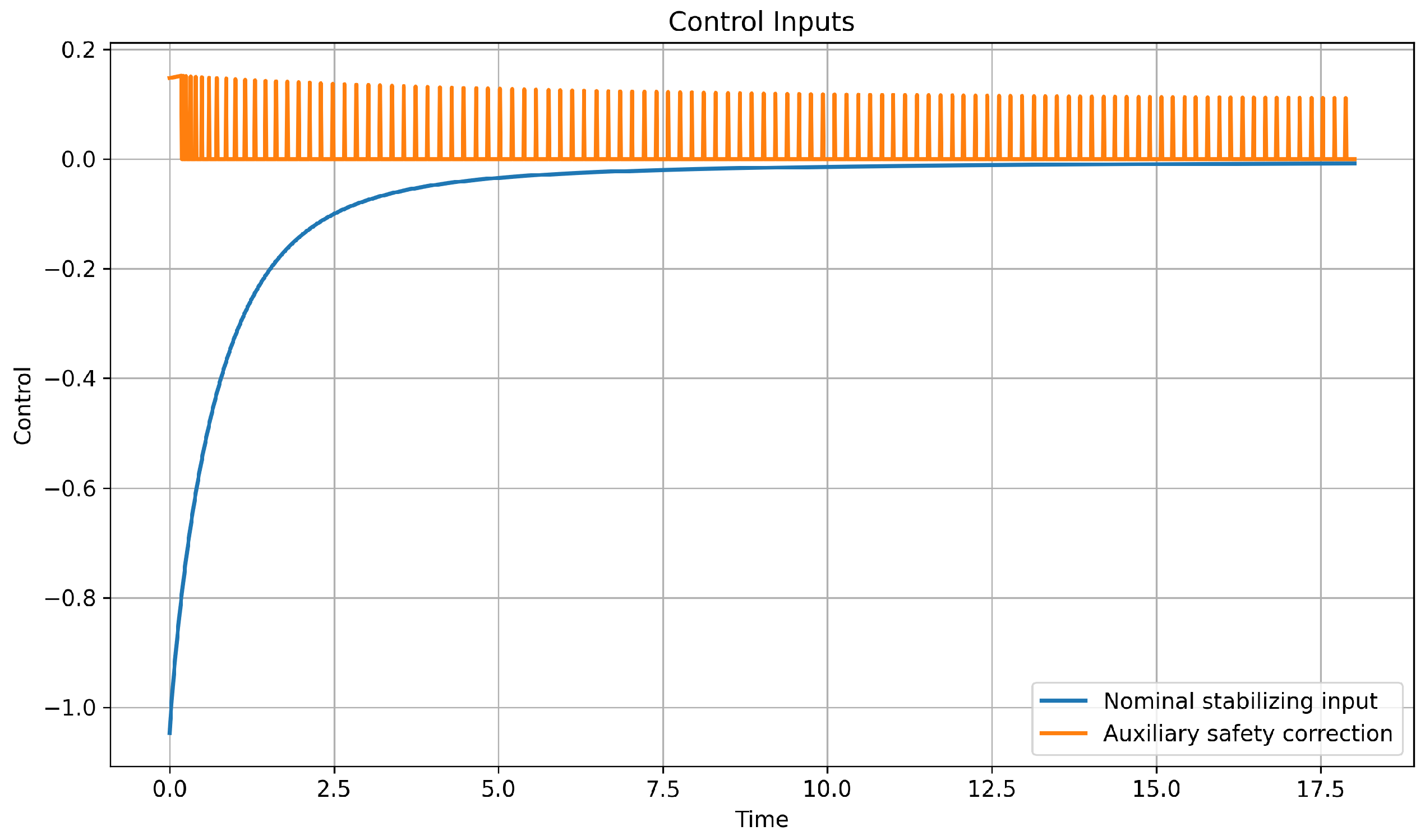
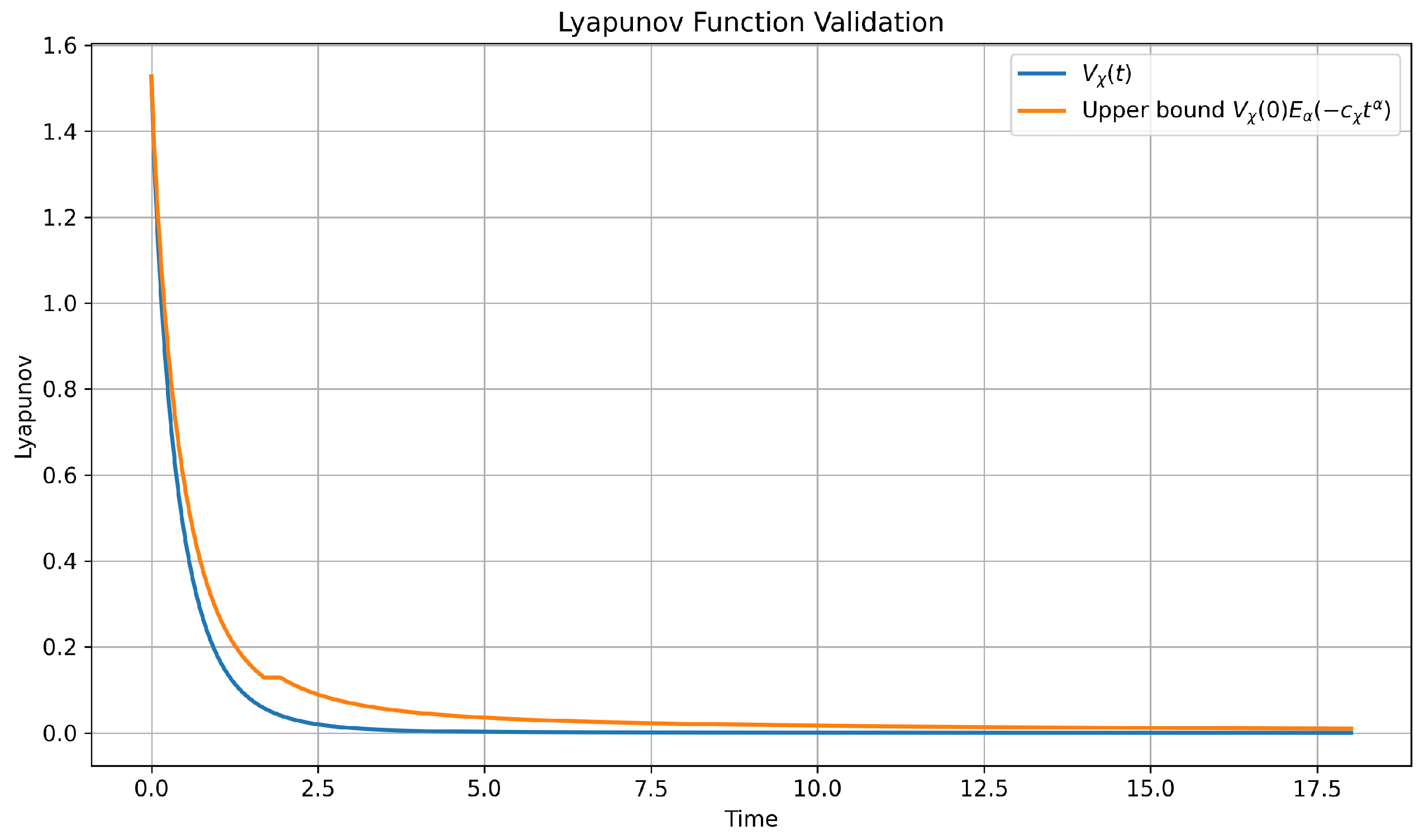
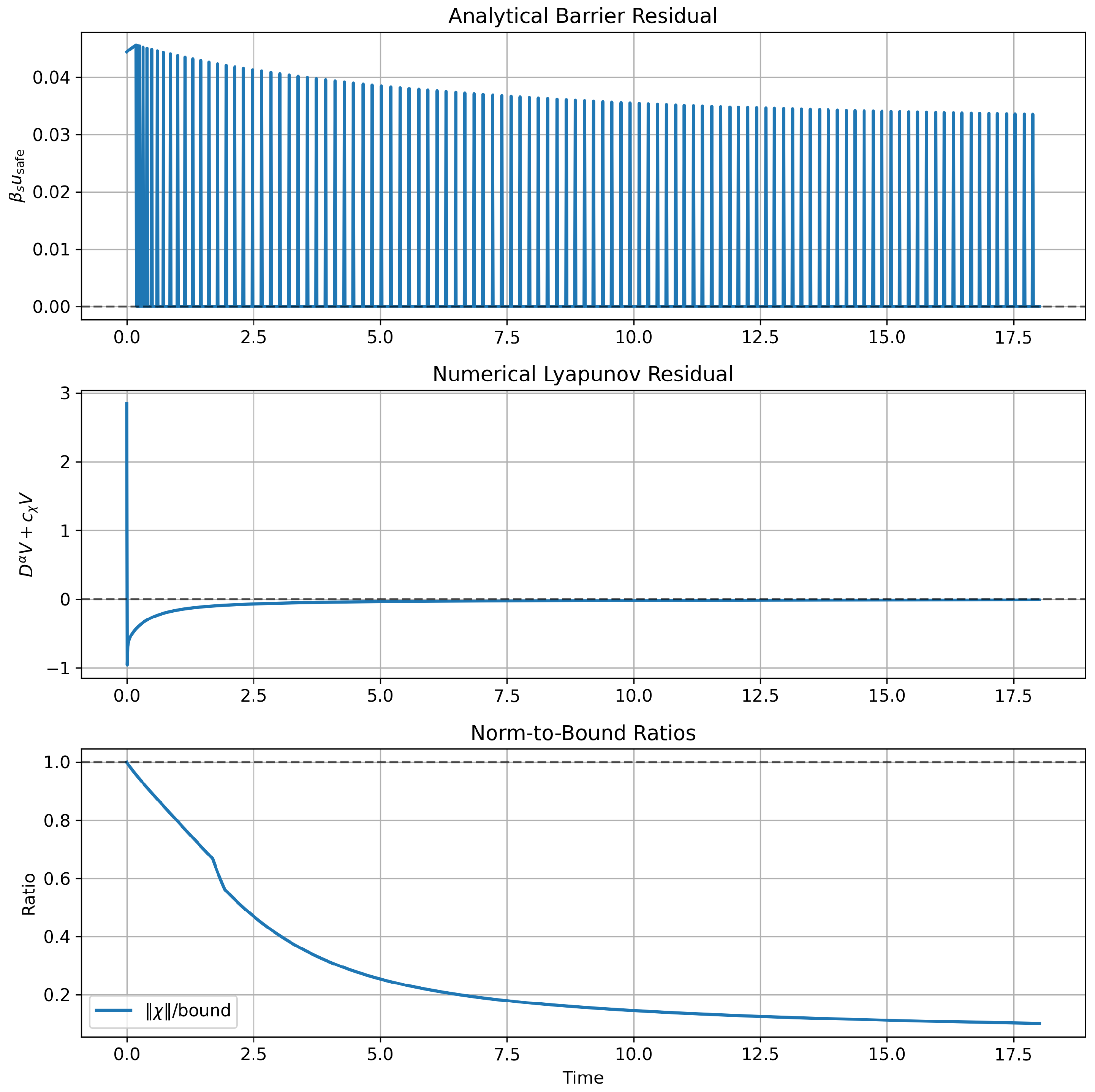
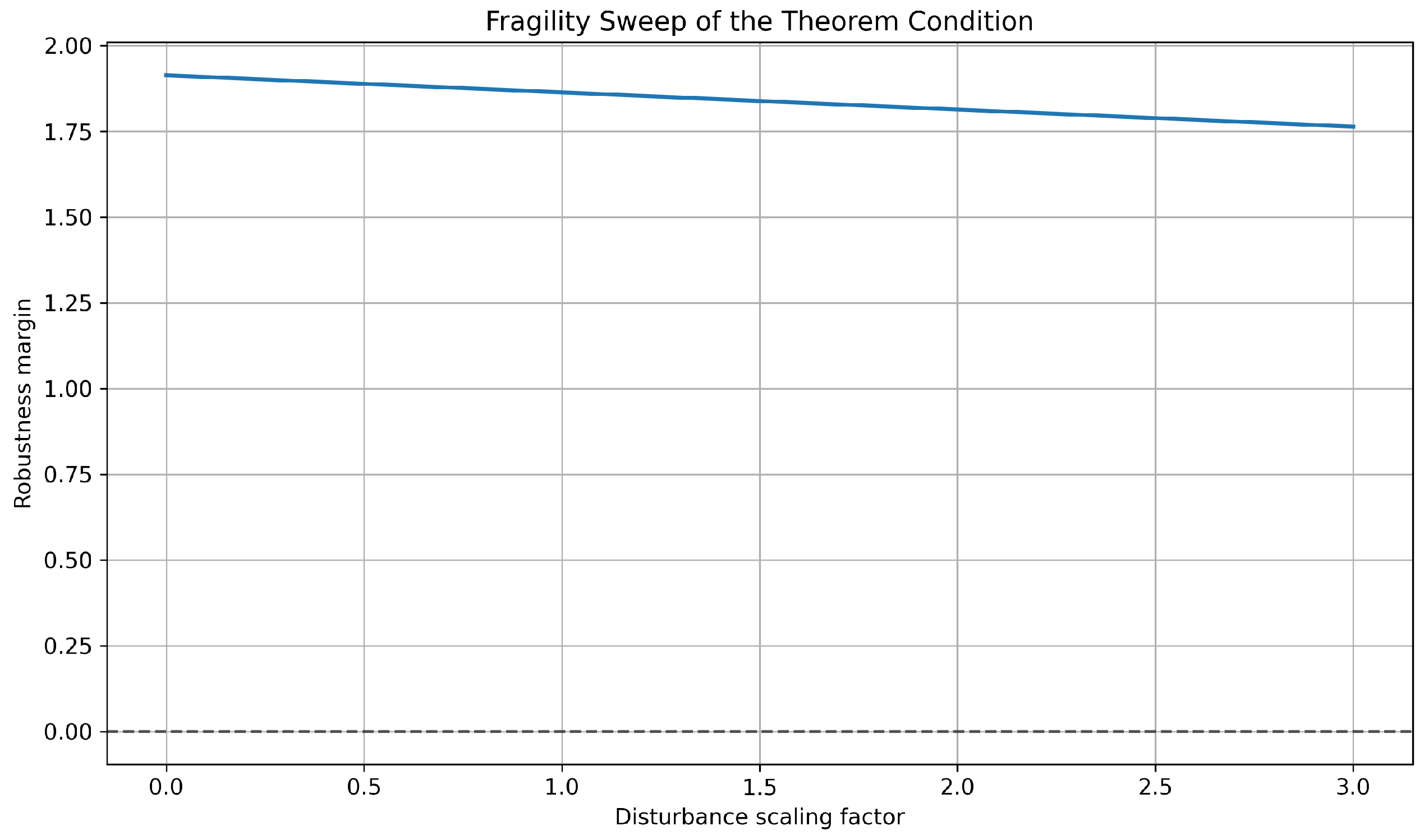
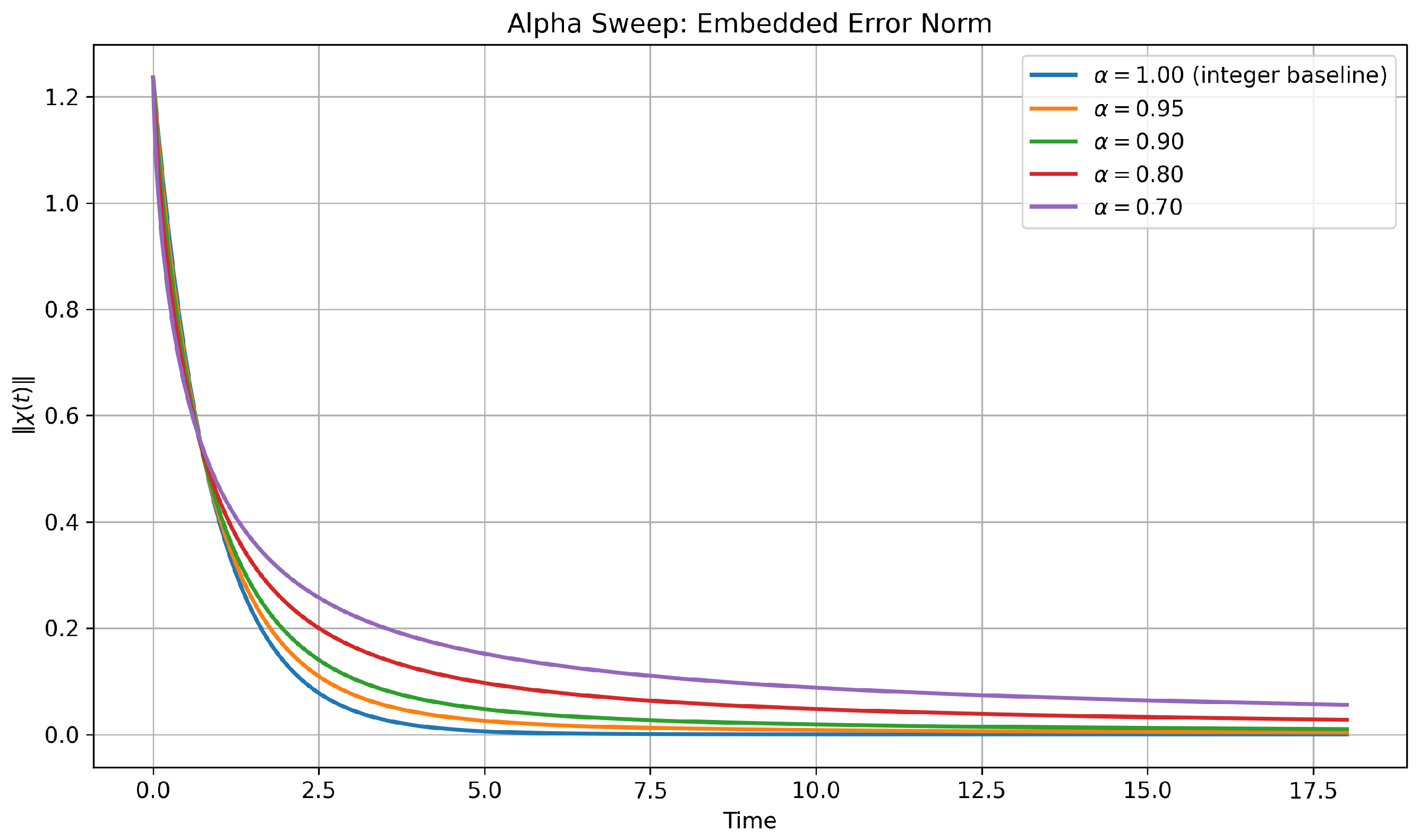
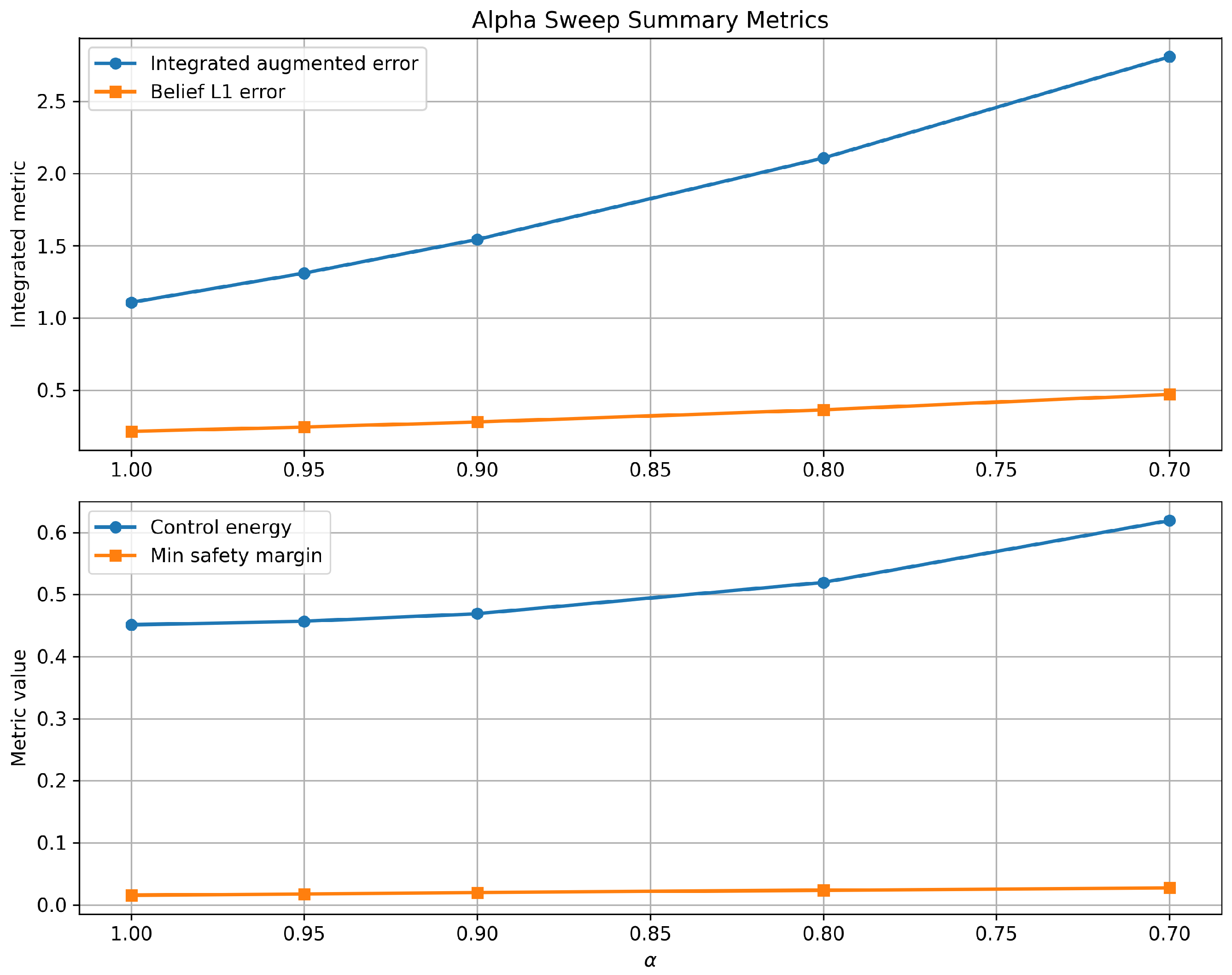
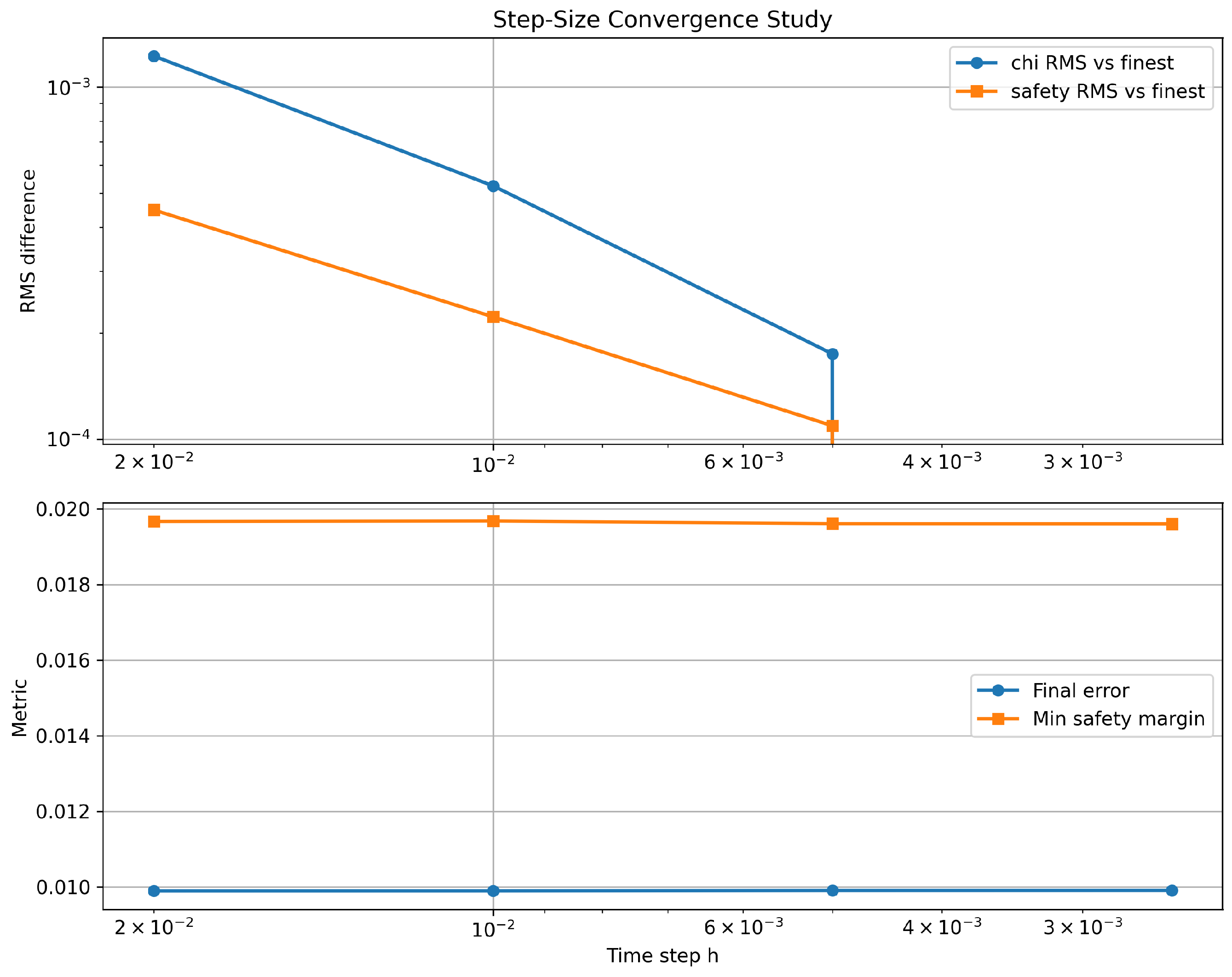
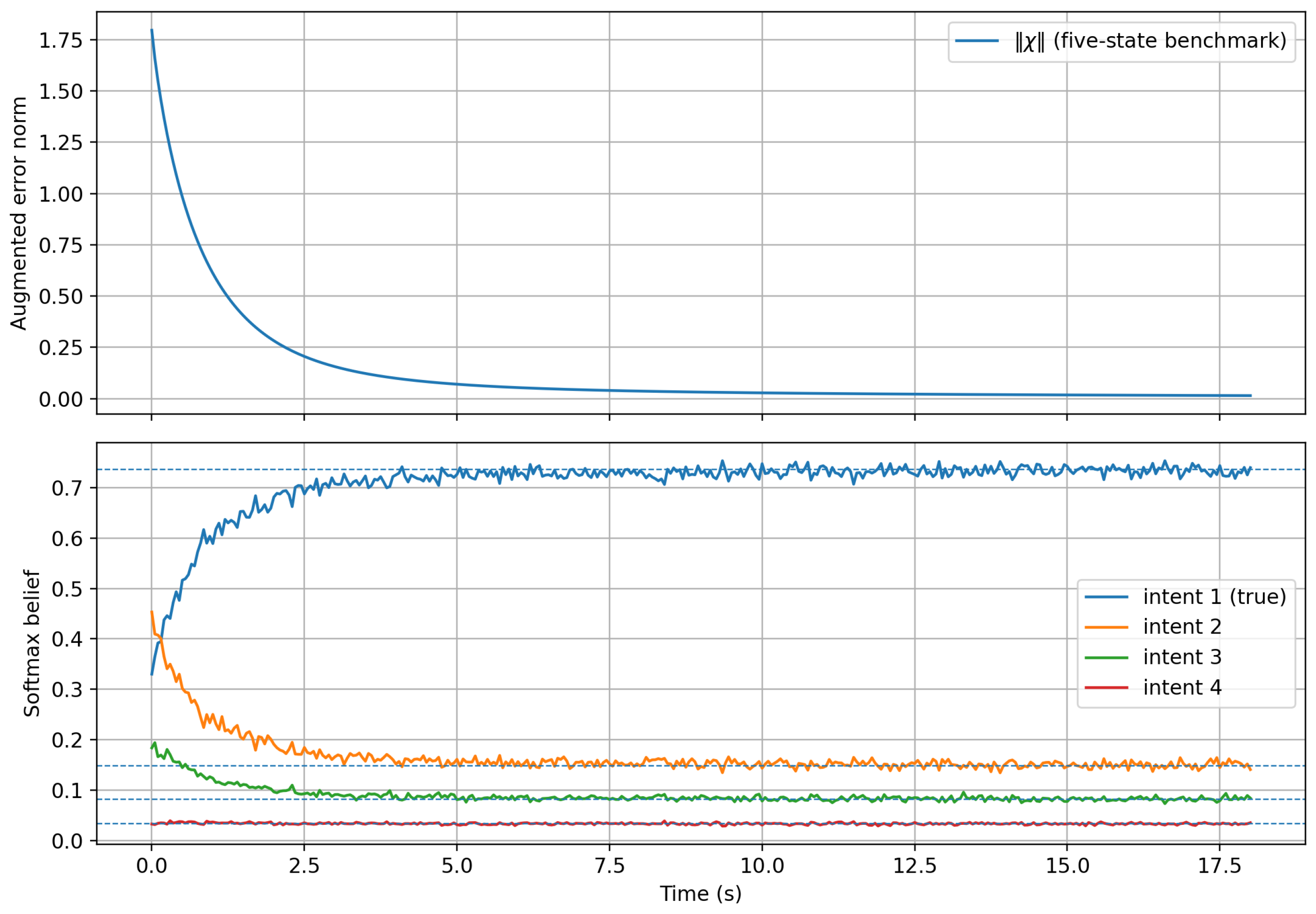
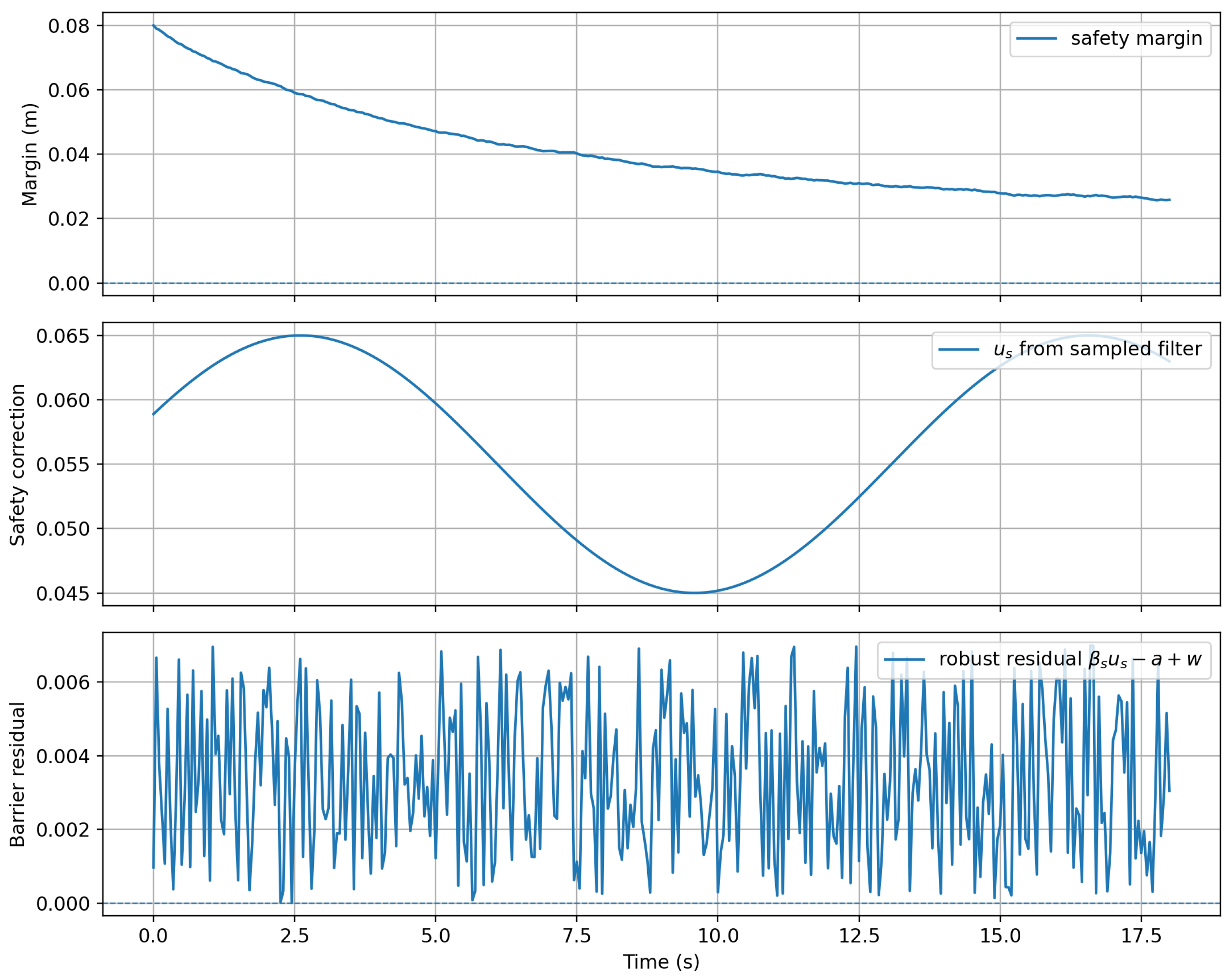
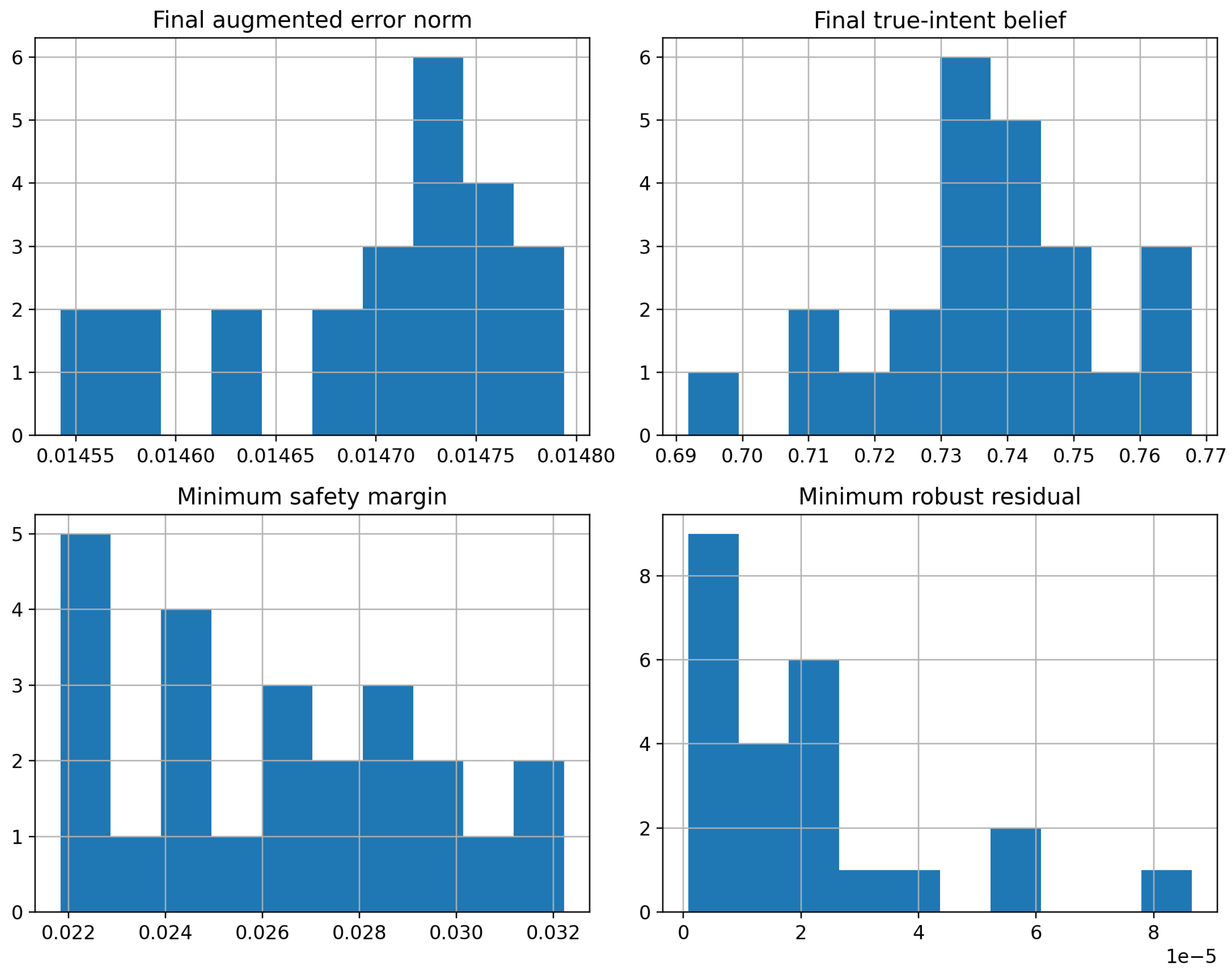
This paper develops an accountability-aware fractional control framework for embodied intelligent systems in shared human environments. The approach combines a Caputo fractional-order stabilizing law, an intent-evidence realization with softmax belief reconstruction, and a conditional proxemic safety layer. Sufficient conditions are established for local Mittag-Leffler stability of the augmented error dynamics and forward invariance of the safe set. Numerical results are presented as a theorem-validation benchmark. For the base case with , the augmented error norm decays from to while the safety margin remains strictly positive, and the robustness condition is satisfied with a margin of . An -sweep and a step-size convergence study further show that the fractional order induces a systematic safety–performance trade-off and that the reported behaviors are numerically stable. Additional simulations with four intent classes, bounded observation noise, and Monte Carlo uncertainty stress tests are included to strengthen the numerical evidence beyond the two-intent theorem-validation case. The manuscript also clarifies the quantitative interpretation of the accountability index, the conditional nature of the safety theorem, and an implementable sampled safety-filter realization for concrete robotic platforms. The results support the proposed framework as a mathematically consistent tool for shaping the balance between regulation and proxemic safety.
Share and Cite
MDPI and ACS Style
Dhahri, S.; Ben Alaia, E.; Almashaan, S.; Alwardi, H.; Naifar, O.
Accountability-Aware Fractional Control for Embodied Intelligent Systems: Mittag-Leffler Stability and Conditional Proxemic Safety. Symmetry 2026, 18, 889.
https://doi.org/10.3390/sym18060889
AMA Style
Dhahri S, Ben Alaia E, Almashaan S, Alwardi H, Naifar O.
Accountability-Aware Fractional Control for Embodied Intelligent Systems: Mittag-Leffler Stability and Conditional Proxemic Safety. Symmetry. 2026; 18(6):889.
https://doi.org/10.3390/sym18060889
Chicago/Turabian Style
Dhahri, Slim, Essia Ben Alaia, Sahar Almashaan, Hatem Alwardi, and Omar Naifar.
2026. "Accountability-Aware Fractional Control for Embodied Intelligent Systems: Mittag-Leffler Stability and Conditional Proxemic Safety" Symmetry 18, no. 6: 889.
https://doi.org/10.3390/sym18060889
APA Style
Dhahri, S., Ben Alaia, E., Almashaan, S., Alwardi, H., & Naifar, O.
(2026). Accountability-Aware Fractional Control for Embodied Intelligent Systems: Mittag-Leffler Stability and Conditional Proxemic Safety. Symmetry, 18(6), 889.
https://doi.org/10.3390/sym18060889

Note that from the first issue of 2016, this journal uses article numbers instead of page numbers. See further details
here.
Article Metrics
Article Access Statistics
For more information on the journal statistics, click
here.
Multiple requests from the same IP address are counted as one view.