Article

Orbit Determination of Impulsively Maneuvering Spacecraft Using Adaptive State Noise Compensation


1
School of Aerospace Engineering, Beijing Institute of Technology, Beijing 100081, China
2
School of Mechanical Engineering, Harbin Institute of Technology, Harbin 150001, China
*
Author to whom correspondence should be addressed.
Symmetry 2025, 17(4), 540; https://doi.org/10.3390/sym17040540
Submission received: 25 February 2025 / Revised: 24 March 2025 / Accepted: 29 March 2025 / Published: 1 April 2025
(This article belongs to the Section F: Engineering and Materials)

Abstract

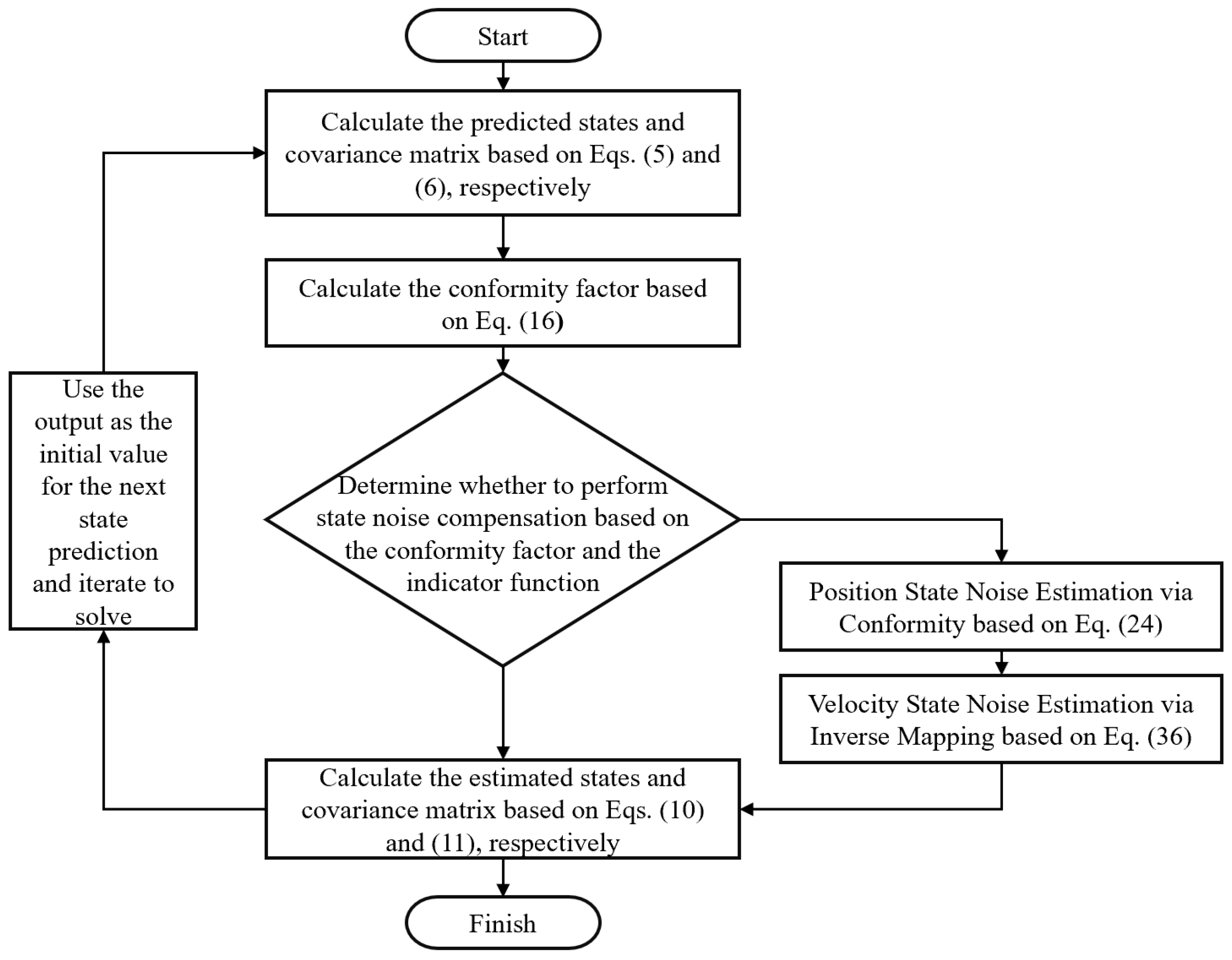
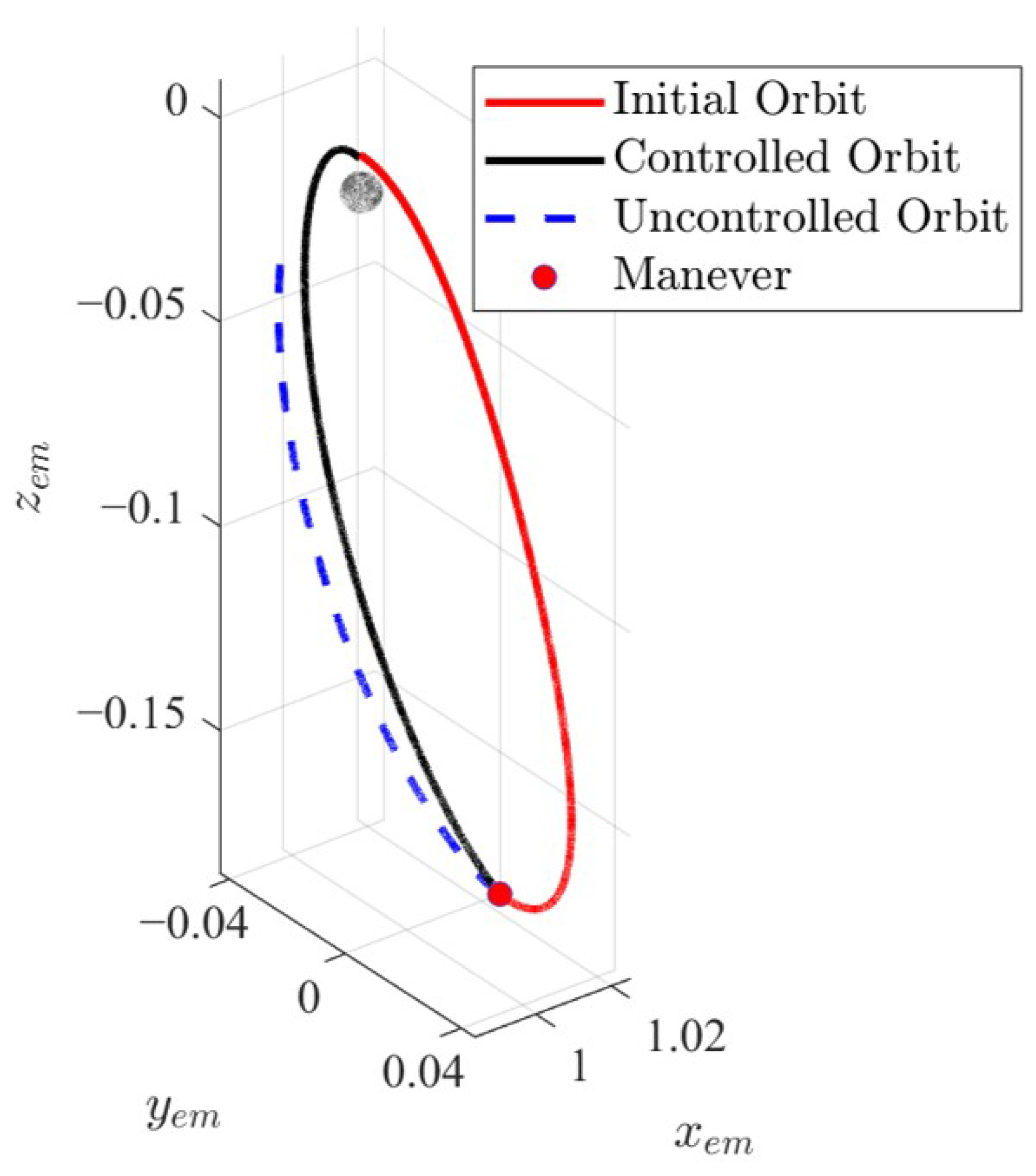
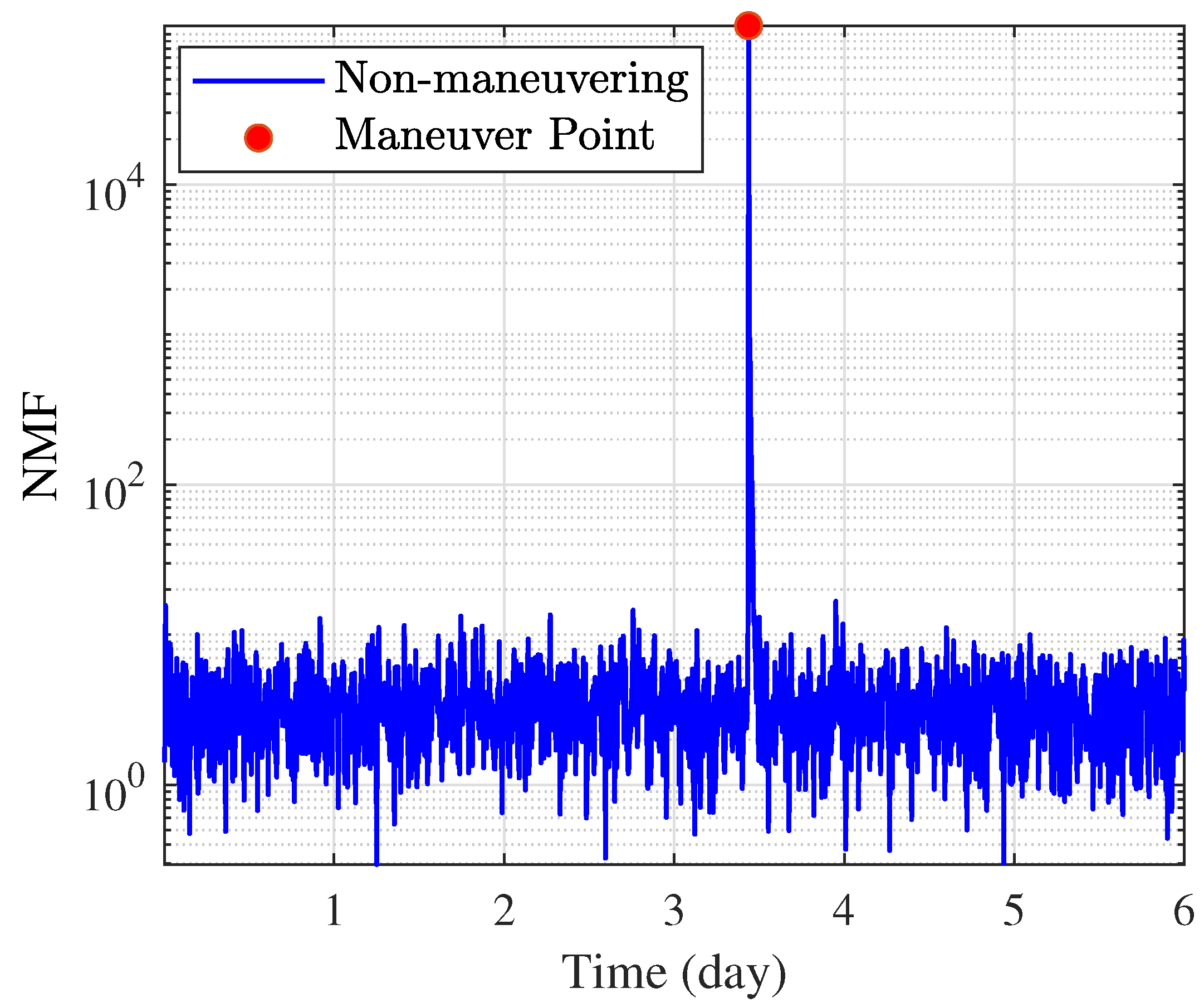
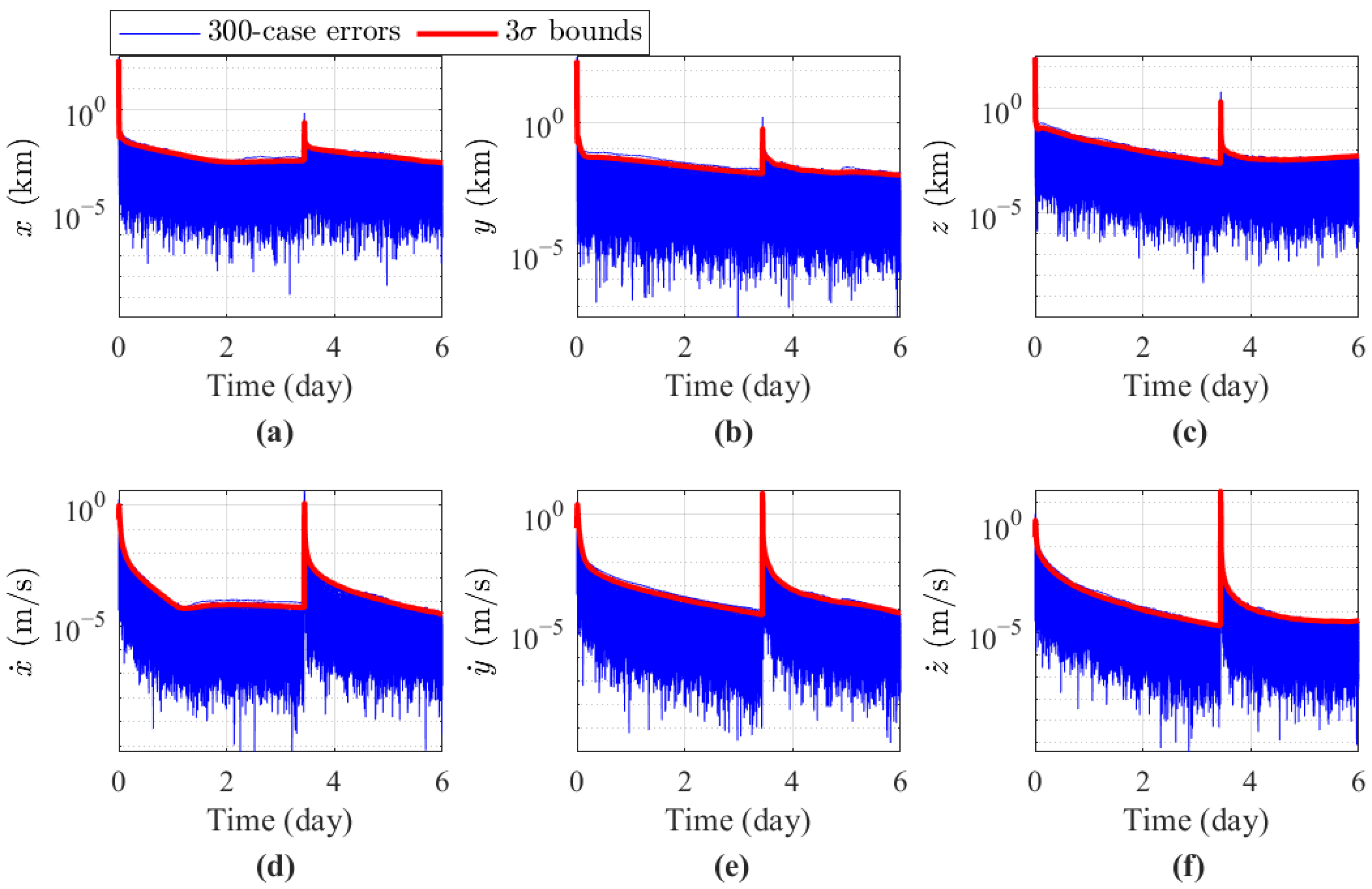
Accurate orbit determination (OD) for spacecraft with impulsive maneuvers in a multi-body system is a challenging task, because the unknown magnitudes and epochs of the maneuvers make dynamic modeling difficult, disrupting the symmetry of state deviations before and after the maneuvers. This paper proposes an Adaptive State Noise Compensation (ASNC) algorithm for the OD of spacecraft with impulsive maneuvering in a three-body dynamics frame, which does not rely on maneuver parameters and can adaptively estimate state noise. Firstly, a decoupled matching factor is developed, which can be used to identify the maneuvering and non-maneuvering epochs of the target spacecraft. Next, based on the matching factor, a position state noise estimation method is presented. Moreover, a method for estimating velocity state noise through inverse mapping of the state transition matrix is formulated, and the compensated state noise is incorporated into the Kalman framework to achieve precise OD of maneuvering spacecraft. Finally, the proposed method is applied to solve the OD problem of a Near Rectilinear Halo Orbit (NRHO) near the Earth–Moon L2 point. Simulation results demonstrated that the proposed method improved accuracy by at least an order of magnitude compared to competitive methods, while effectively restoring the symmetry of the OD system.
Keywords: orbit determination; maneuvering spacecraft; state noise; adaptive compensation; Kalman framework orbit determination; maneuvering spacecraft; state noise; adaptive compensation; Kalman framework