Article

Evaluating the Symmetry in Plantar Pressure Distribution under the Toes during Standing in a Postural Pedobarographic Examination

by
Karolina Gawronska
1,* and
Jacek Lorkowski
2,3,*
1
Rehabilitation Centre of the Central Clinical Hospital of the Ministry of the Internal Affairs and Administration, 137 Woloska Street, 02-507 Warsaw, Poland
2
Clinical Department of Orthopaedics, Traumatology and Sports of the Central Clinical Hospital of the Ministry of the Internal Affairs and Administration, 137 Woloska Street, 02-507 Warsaw, Poland
3
Faculty of Health Sciences, Medical University of Mazovia, 8 Rydygiera Street, 01-793 Warsaw, Poland
*
Authors to whom correspondence should be addressed.
Symmetry 2021, 13(8), 1476; https://doi.org/10.3390/sym13081476
Submission received: 2 July 2021 / Revised: 6 August 2021 / Accepted: 9 August 2021 / Published: 12 August 2021
(This article belongs to the Special Issue Symmetry Applied in Biomechanics and Mechanical Engineering)

Abstract

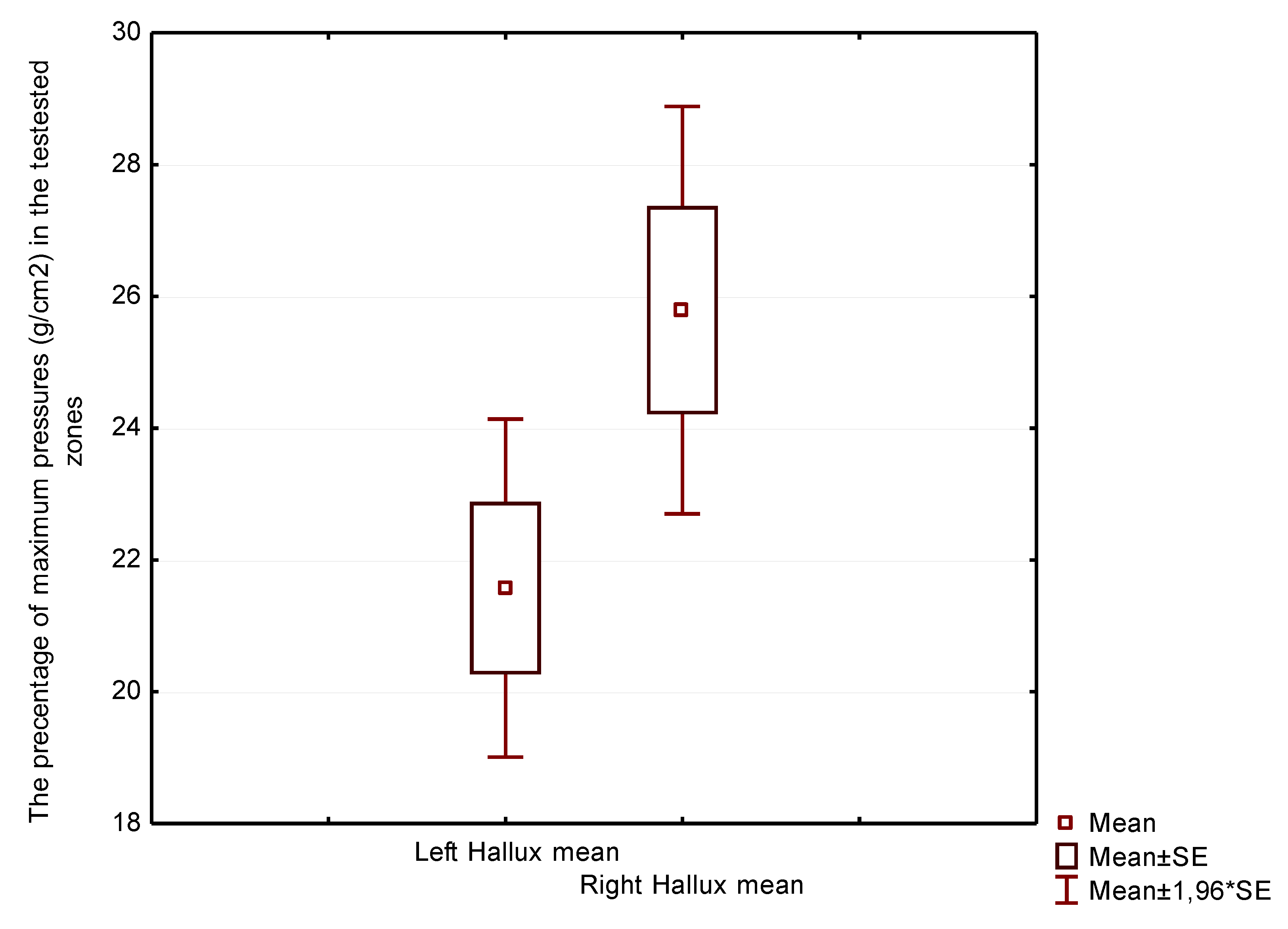
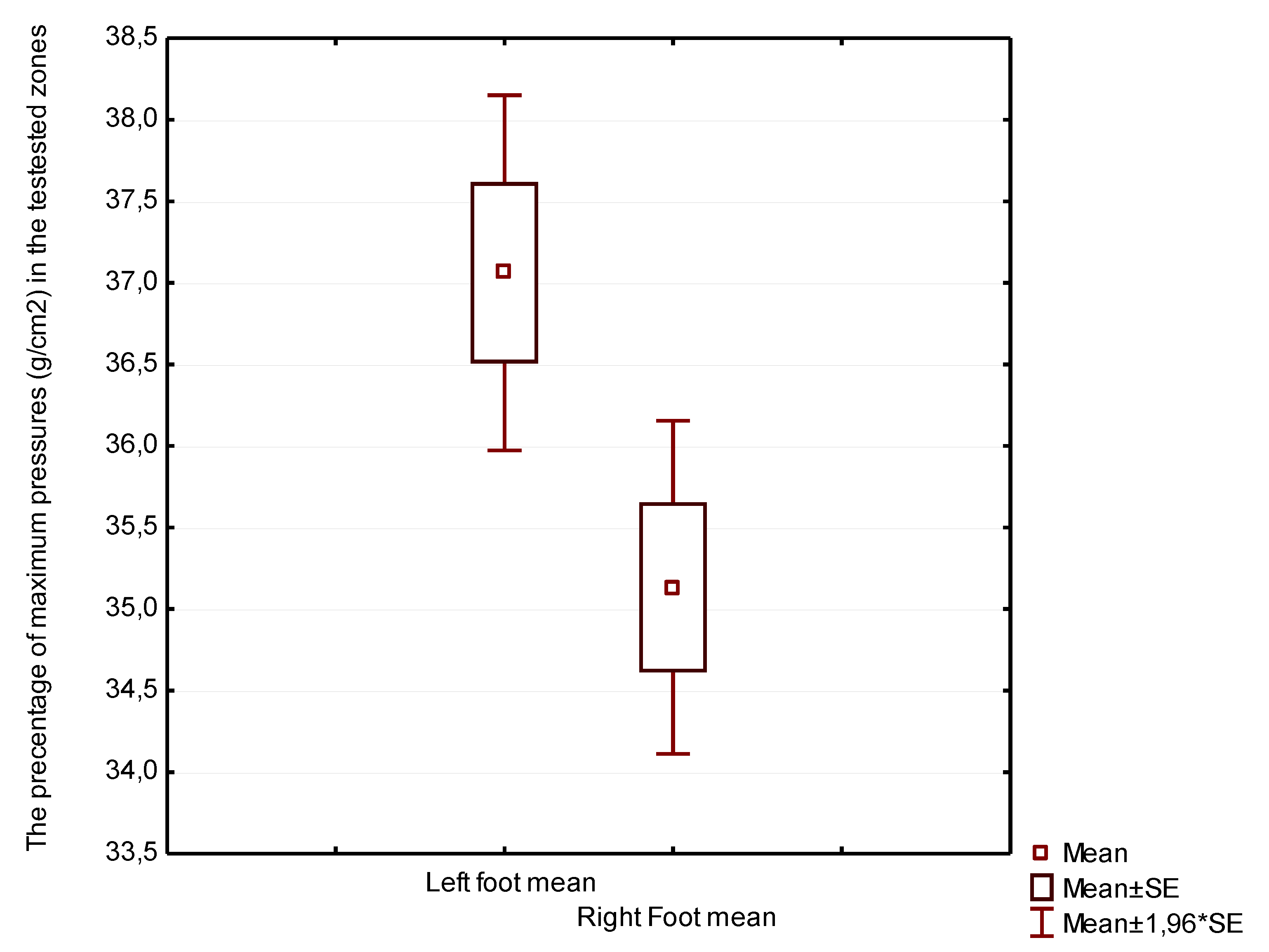
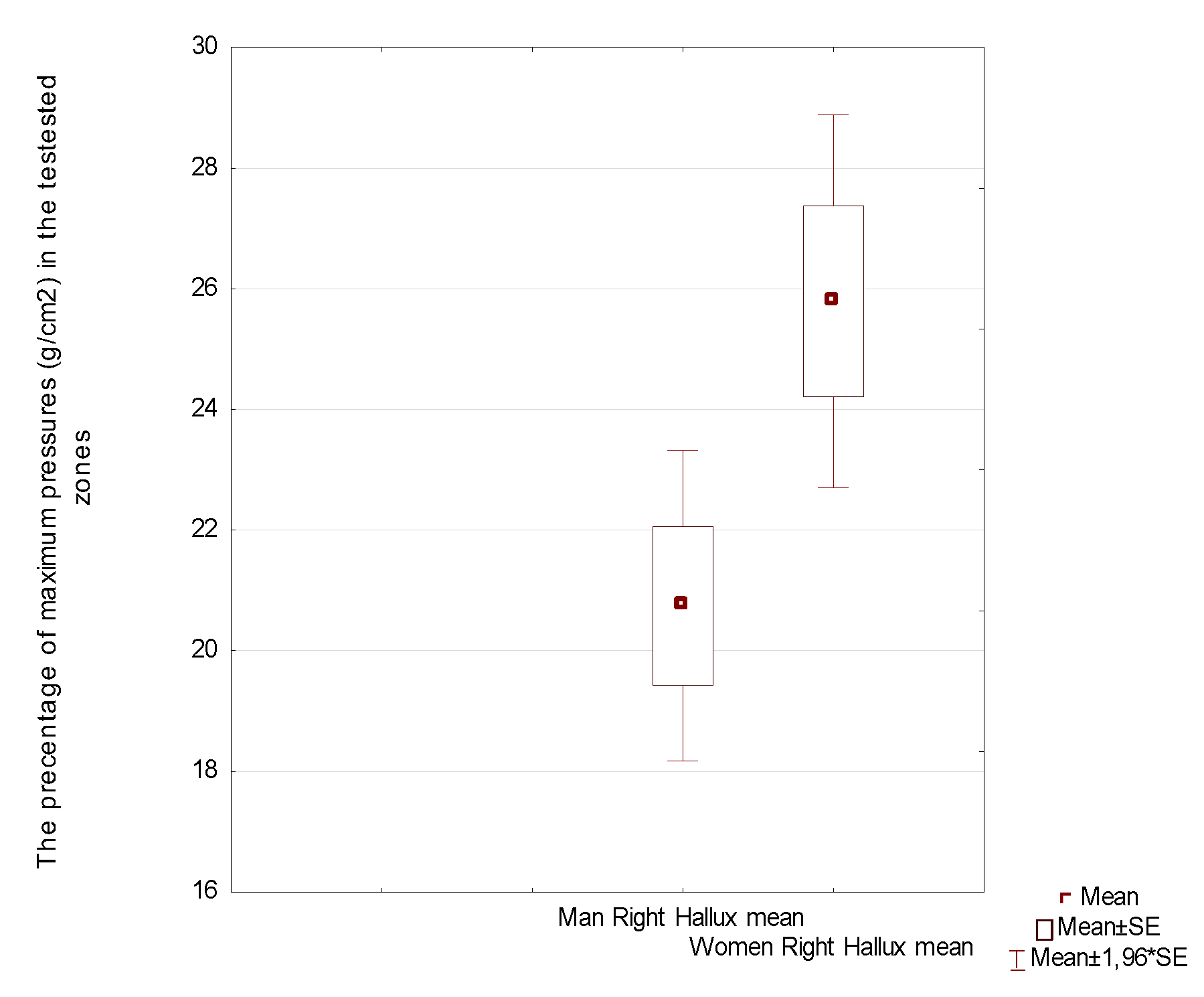
Pedobarography is a safe, non-invasive diagnostic method that enables estimation of plantar pressure distribution. This article aims to describe the symmetry between right and left toes in the Polish adult population using data obtained during postural pedobarographic examinations. Eighty-two patients, both sexes, with a mean age of 42.12 (range 19–70), without significant pathologies, participated in the study. Plantar pressure was evaluated using a PEL38 pressure plate. The study applies the elements of Cavanagh’s classification to identify the foot sole regions: Hallux, Second Toe and Lateral Toe areas and the entire foot surface. The parameters measured included maximal and average pressures, total support area for each foot, and contact area of the foot with the ground at individual moments of standing. The results showed significantly greater loading under the right Hallux in women. As regards men, higher values in the whole foot pressure distribution were noted on the left side. Plantar pressure distribution does not increase along with the global factors such as age and body mass. The findings suggest that the asymmetry in the morphological structure of the foot does not determine the asymmetry in the plantar pressure distribution. None of the feet studied had full symmetry on the entire surface.
Keywords: foot; pedobarography; plantar pressure distribution; toe symmetry foot; pedobarography; plantar pressure distribution; toe symmetry