Article

Engine Vibration Data Increases Prognosis Accuracy on Emission Loads: A Novel Statistical Regressions Algorithm Approach for Vibration Analysis in Time Domain

by
Tadas Žvirblis
1,
Darius Vainorius
2,
Jonas Matijošius
2,*,
Kristina Kilikevičienė
2,
Alfredas Rimkus
3,
Ákos Bereczky
4,
Kristóf Lukács
4 and
Artūras Kilikevičius
2
1
Department of Mechanical and Material Engineering, Vilnius Gediminas Technical University, LT-03224 Vilnius, Lithuania
2
Institute of Mechanical Science, Vilnius Gediminas Technical University, LT-03224 Vilnius, Lithuania
3
Department of Automobile Engineering, Vilnius Gediminas Technical University, LT-03224 Vilnius, Lithuania
4
Department of Energy Engineering, Budapest University of Technology and Economics, H-1111 Budapest, Hungary
*
Author to whom correspondence should be addressed.
Symmetry 2021, 13(7), 1234; https://doi.org/10.3390/sym13071234
Submission received: 8 May 2021 / Revised: 20 June 2021 / Accepted: 2 July 2021 / Published: 9 July 2021
(This article belongs to the Special Issue Mechanics and Filtering Technology of Waste Particles)

Abstract

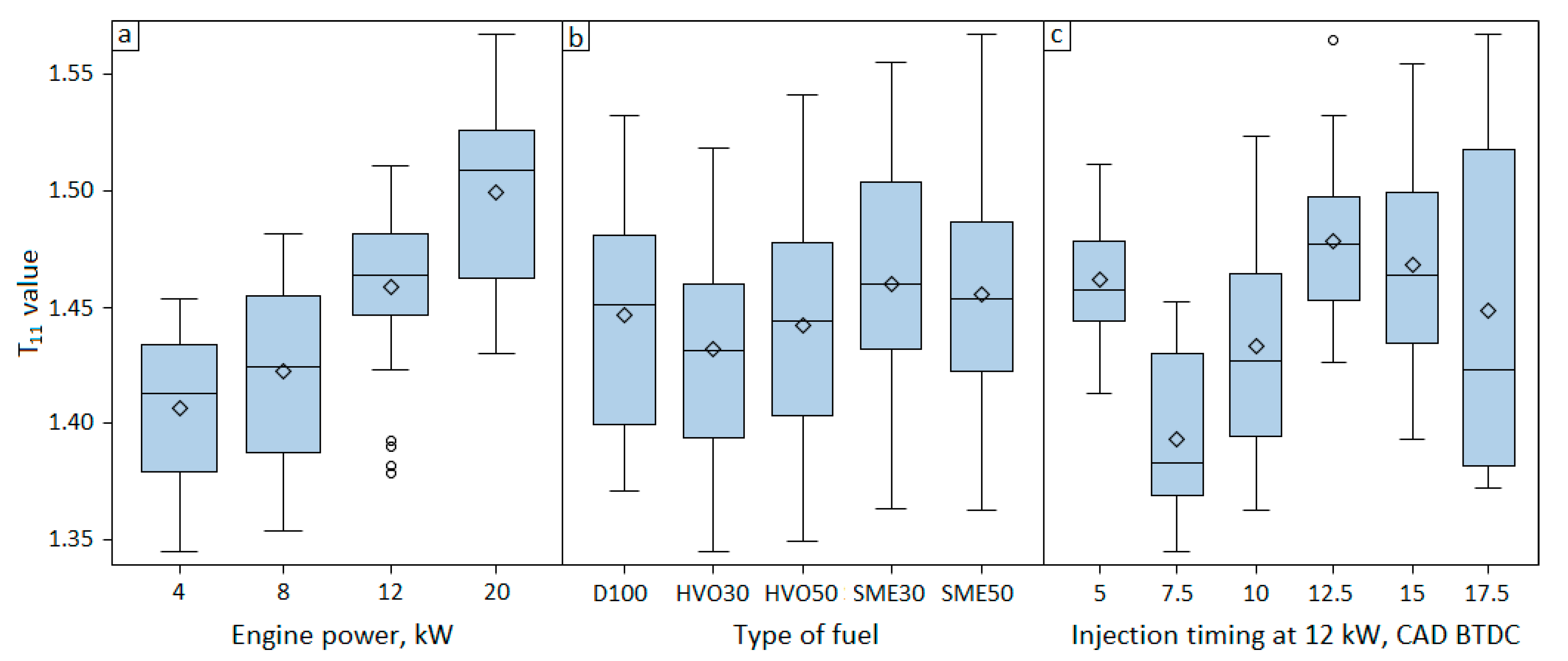
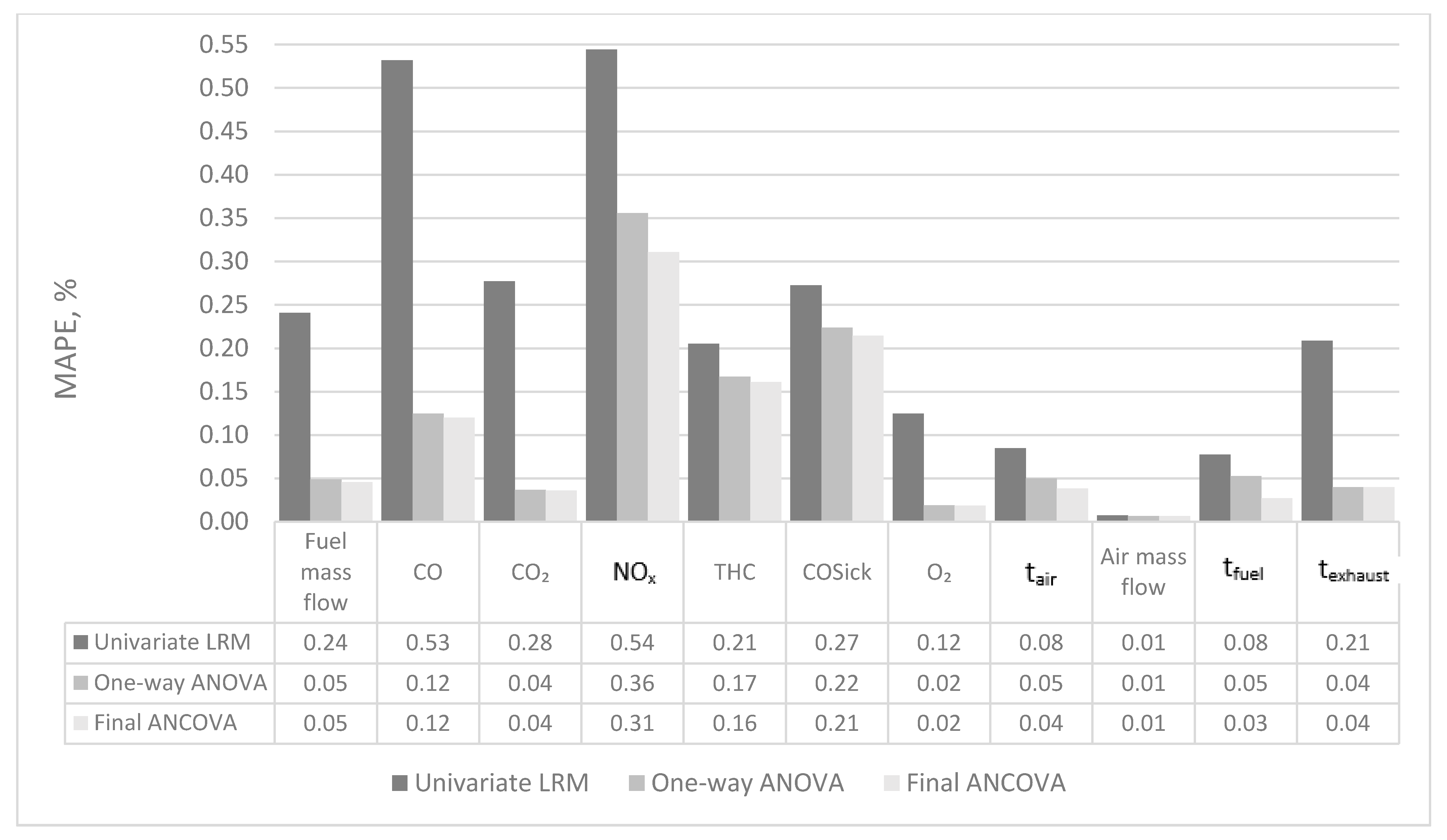
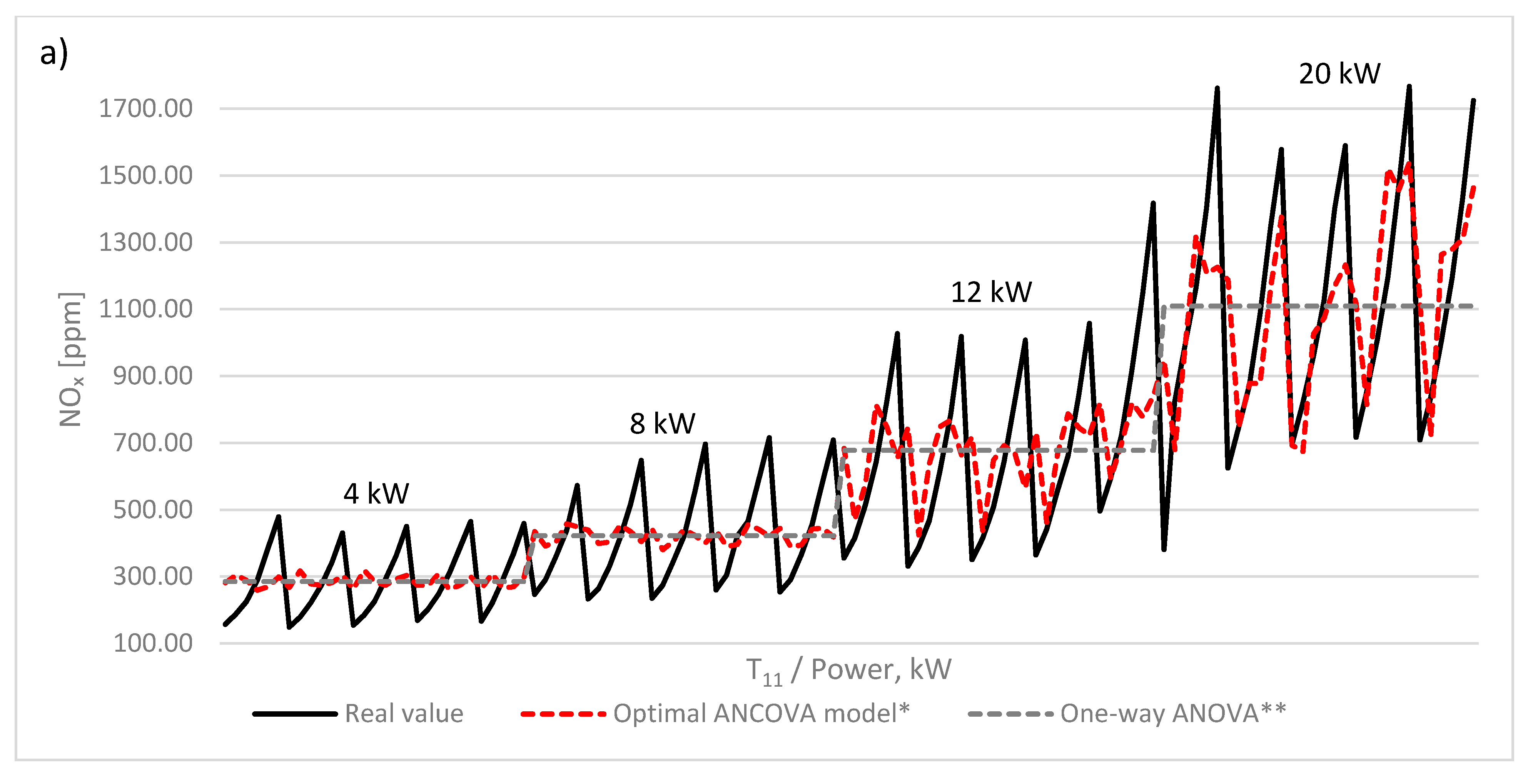
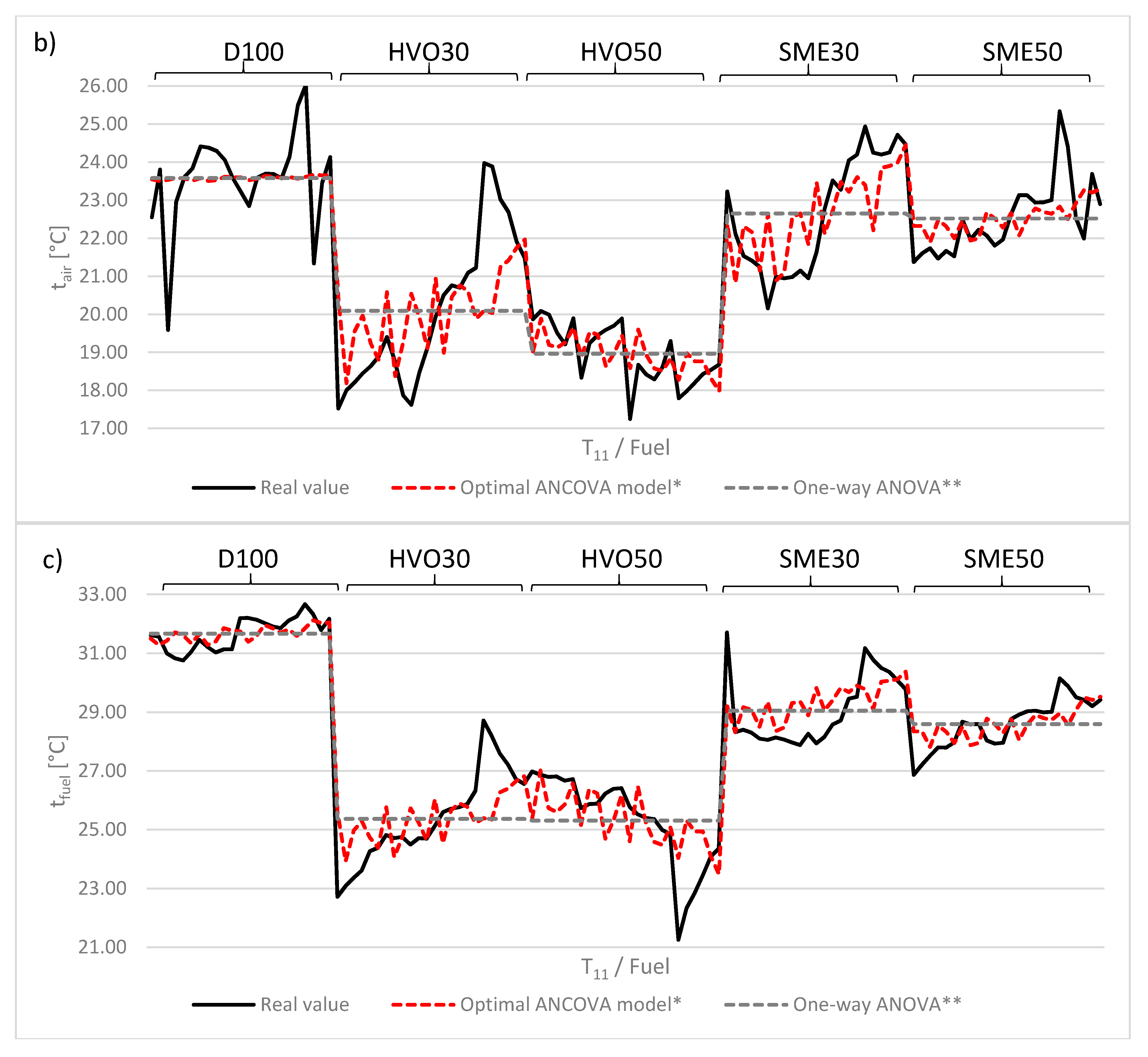
Statistical regression models have rarely been used for engine exhaust emission parameters. This paper presents a three-step statistical analysis algorithm, which shows increased prediction accuracy when using vibration and sound pressure data as a covariate variable in the exhaust emission prediction model. The first step evaluates the best time domain statistic and the point of collection of engine data. The univariate linear regression model revealed that non-negative time domain statistics are the best predictors. Also, only one statistic evaluated in this study was a statistically significant predictor for all 11 exhaust parameters. The ecological and energy parameters of the engine were analyzed by statistical analysis. The symmetry of the methods was applied in the analysis both in terms of fuel type and in terms of adjustable engine parameters. A three-step statistical analysis algorithm with symmetric statistical regression analysis was used. Fixed engine parameters were evaluated in the second algorithm step. ANOVA revealed that engine power was a strong predictor for fuel mass flow, CO, CO2, NOx, THC, COSick, O2, air mass flow, texhaust, whereas type of fuel was only a predictor of tair and tfuel. Injection timing did not allow predicting any exhaust parameters. In the third step, the best fixed engine parameter and the best time domain statistic was used as a model covariate in ANCOVA model. ANCOVA model showed increased prediction accuracy in all 11 exhausted emission parameters. Moreover, vibration covariate was found to increase model accuracy under higher engine power (12 kW and 20 kW) and using several types of fuels (HVO30, HVO50, SME30, and SME50). Vibration characteristics of diesel engines running on alternative fuels show reliable relationships with engine performance characteristics, including amounts and characteristics of exhaust emissions. Thus, the results received can be used to develop a reliable and inexpensive method to evaluate the impact of various alternative fuel blends on important parameters of diesel engines.
Keywords: biodiesel; exhausted emission; statistical regression analysis; linear regression models biodiesel; exhausted emission; statistical regression analysis; linear regression models