Article

Probing Time-Dependent Fundamental Constants with Nucleosynthesis in Population III Stars

1
Department of Astronomy, Graduate School of Science, The University of Tokyo, 7-3-1 Hongo, Bunkyo-ku, Tokyo 113-0033, Japan
2
Division of Science, National Astronomical Observatory of Japan, 2-21-1 Osawa, Mitaka, Tokyo 181-8588, Japan
3
Kavli Institute for the Physics and Mathematics of the Universe (WPI), The University of Tokyo, 5-1-5 Kashiwanoha, Kashiwa, Chiba 277-8583, Japan
*
Author to whom correspondence should be addressed.
Research Fellow of Japan Society for the Promotion of Science.
Symmetry 2020, 12(3), 404; https://doi.org/10.3390/sym12030404
Submission received: 29 January 2020 / Revised: 25 February 2020 / Accepted: 1 March 2020 / Published: 4 March 2020
(This article belongs to the Special Issue Nucleosynthesis in the Era of Multi-Messenger Astronomy)

Abstract

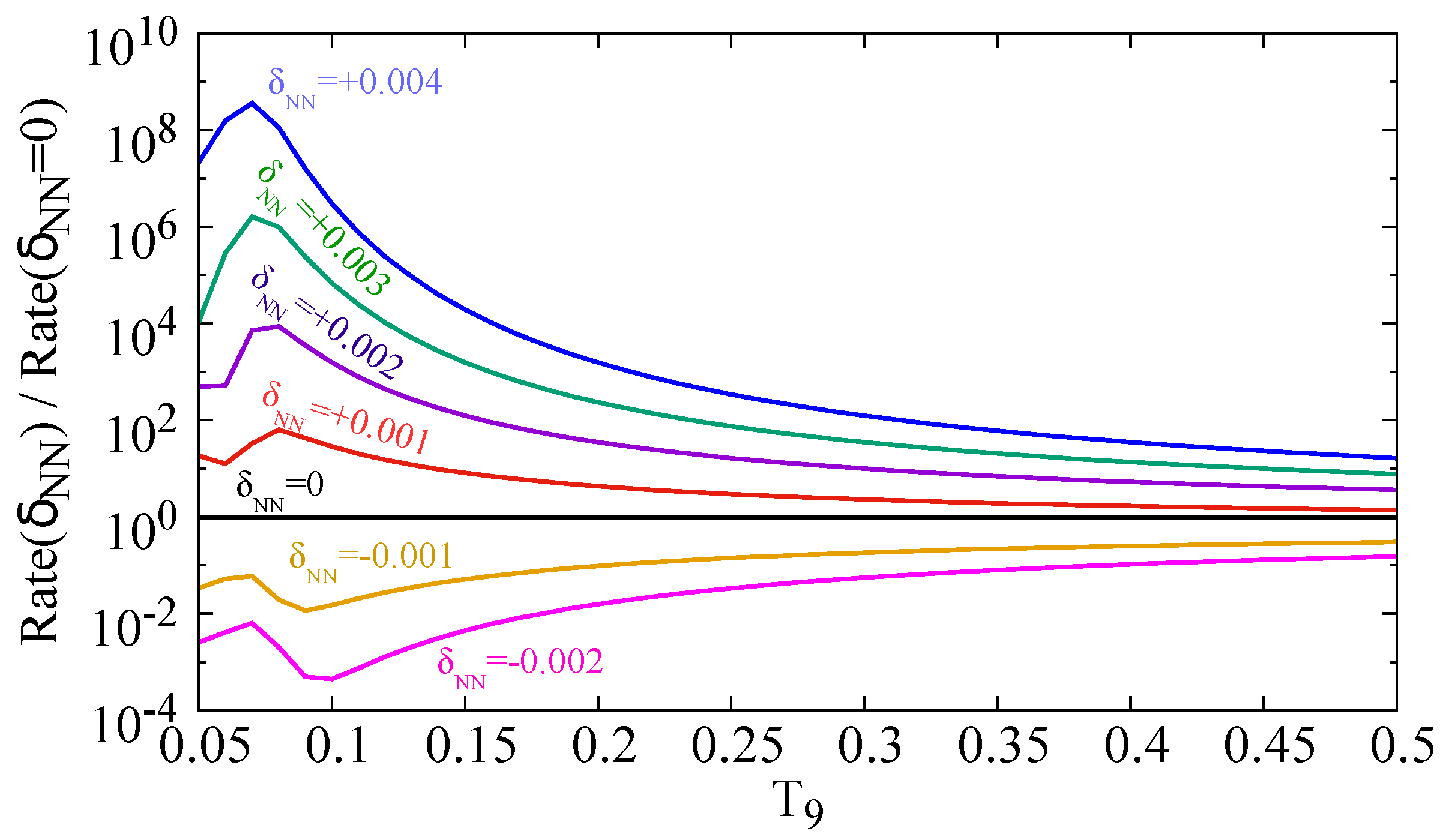
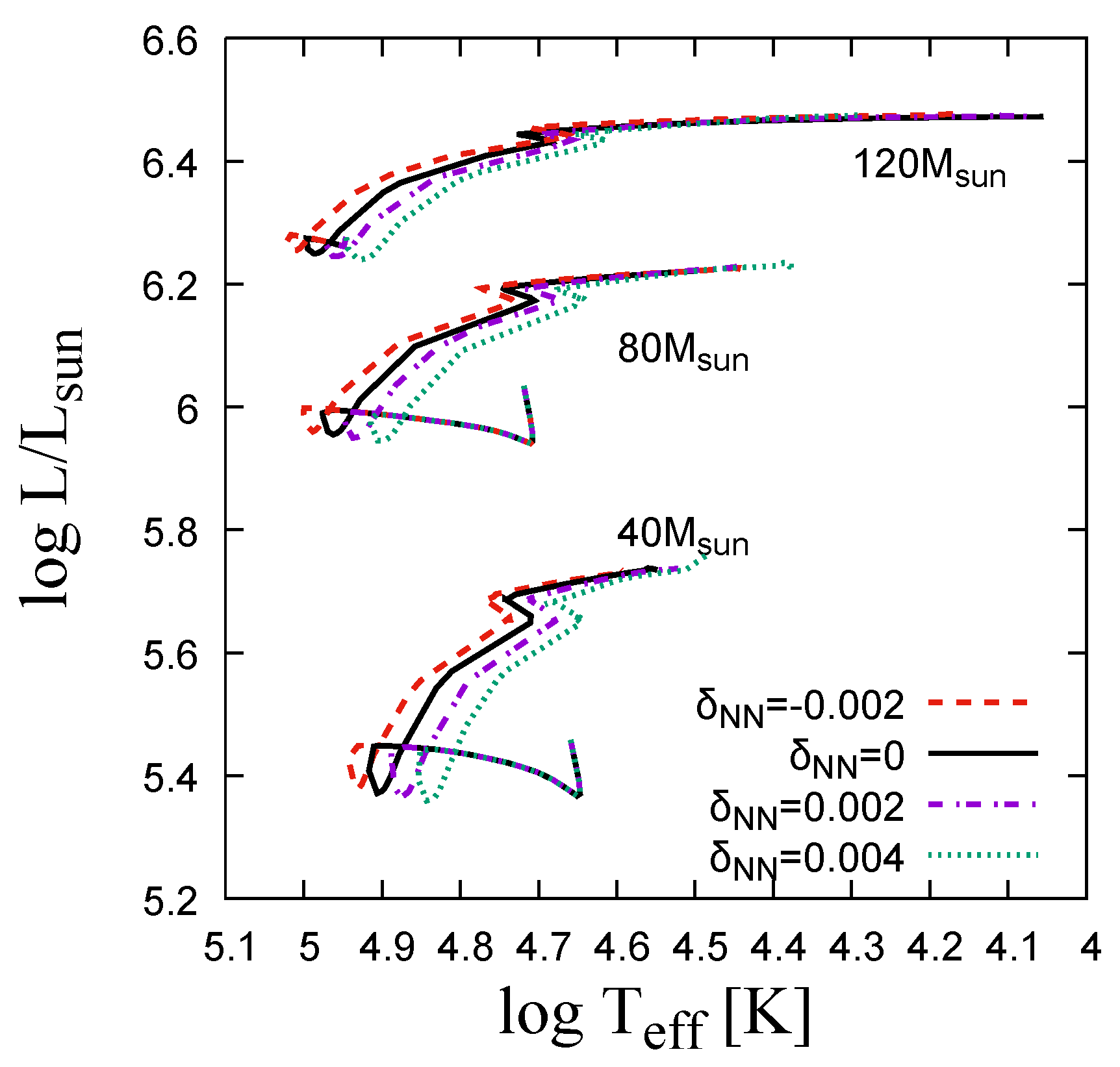
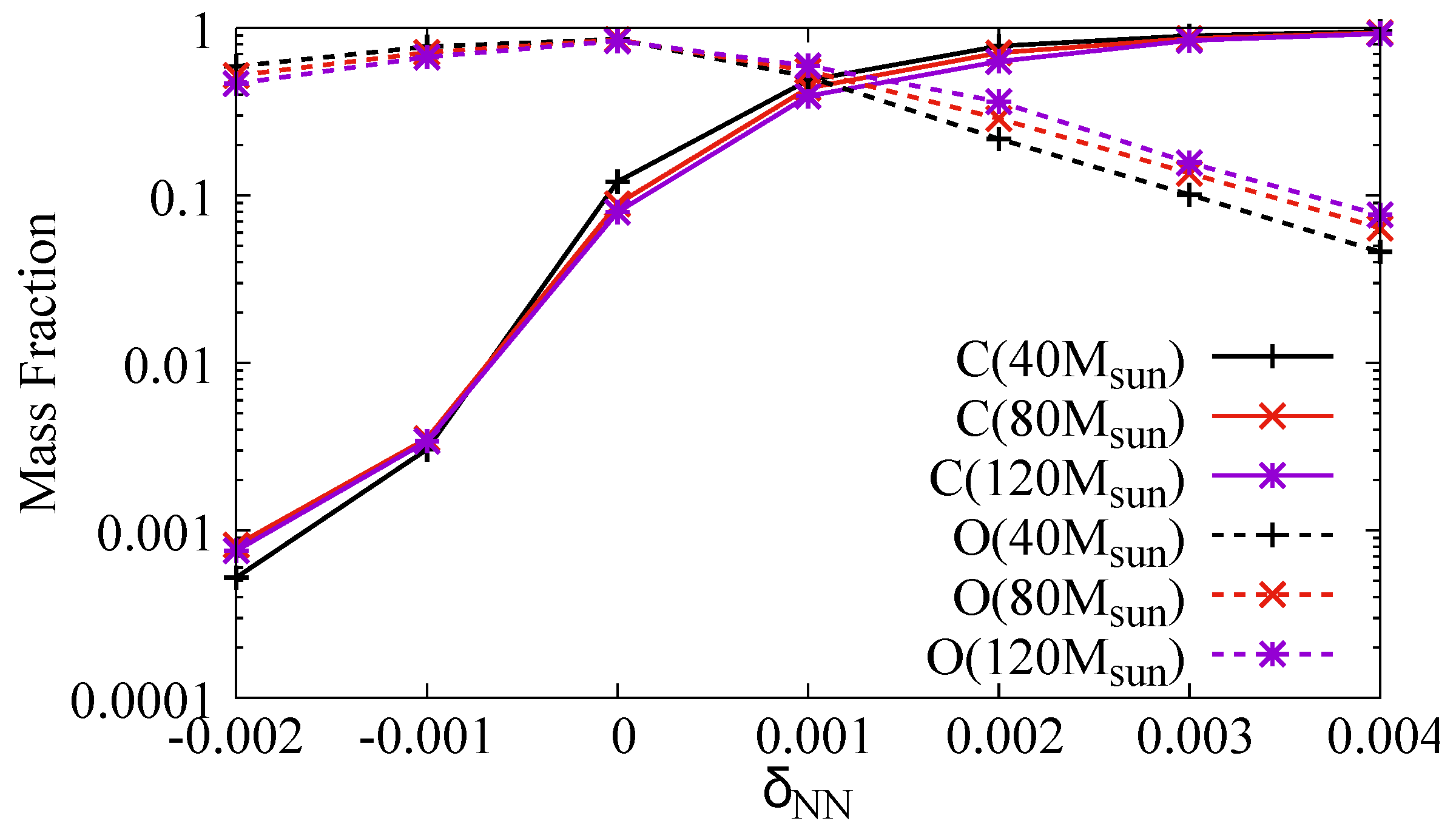
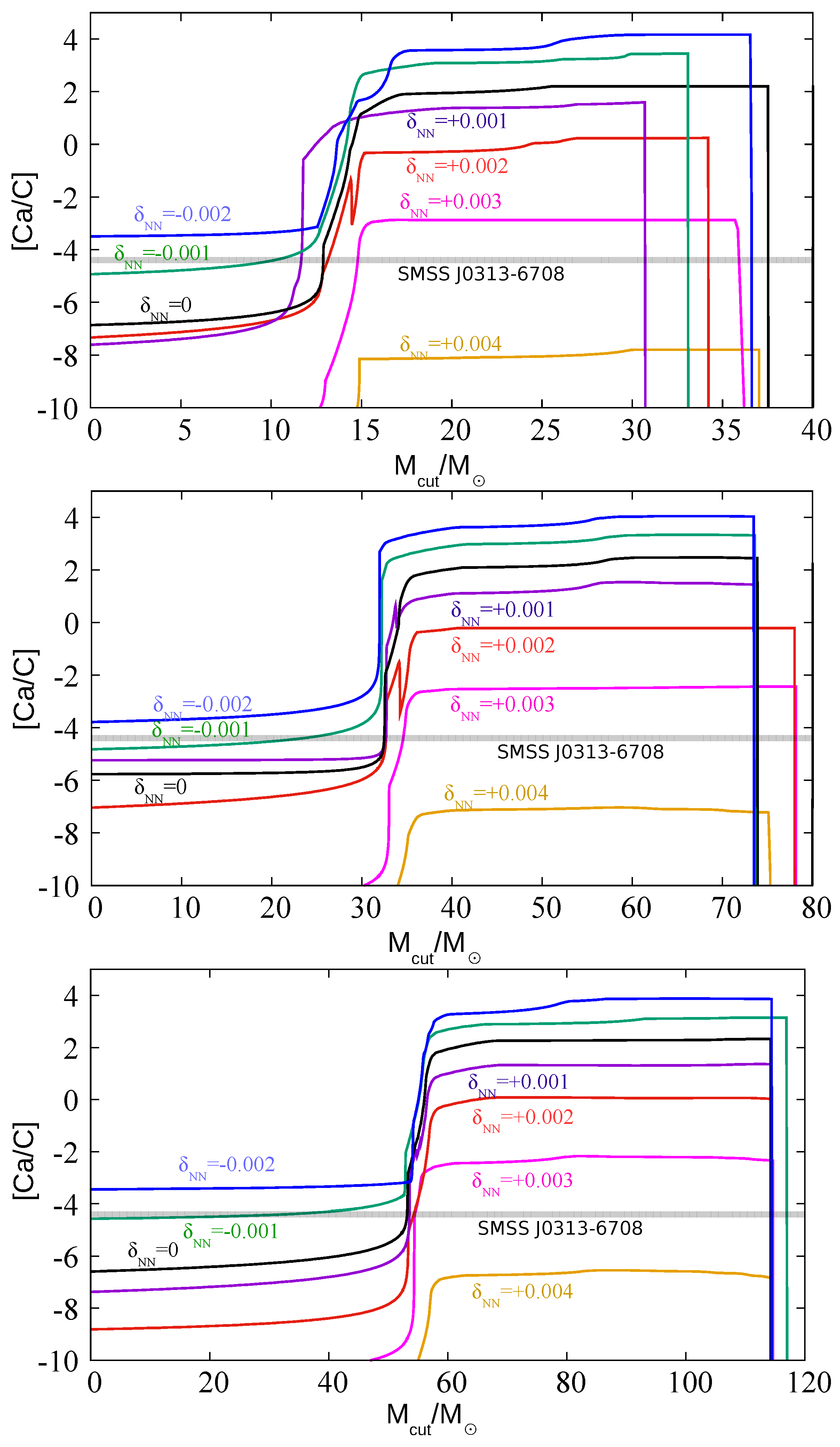
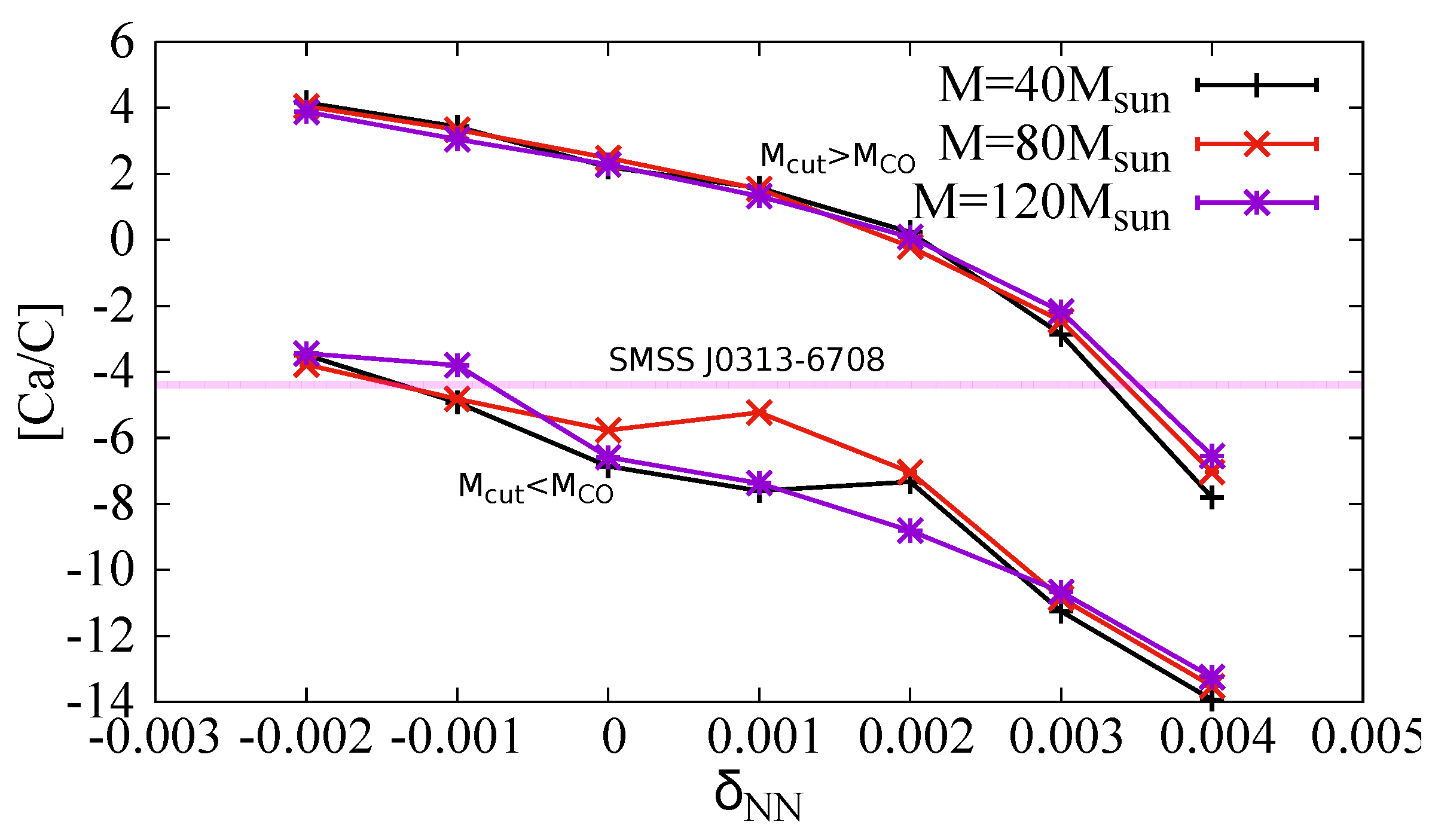
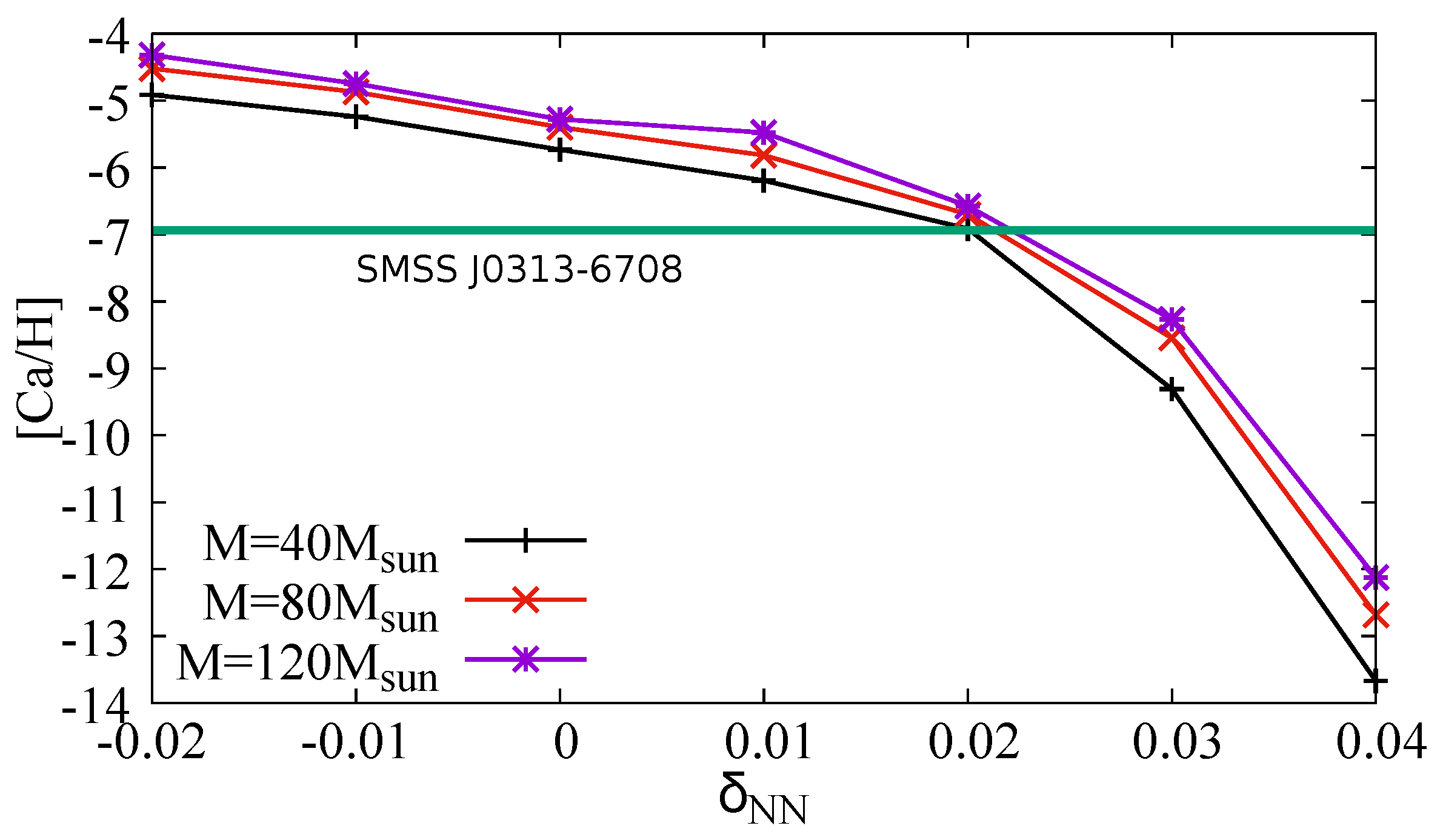
Variations of fundamental physical constants have been sought for many years using various astronomical objects because their discovery can be key to developing beyond-standard physics. In particular, nuclear reaction rates are sensitive to fundamental constants, so nucleosynthetic processes can be used as a probe. We calculate the evolution and nucleosynthesis of massive Population III stars with the time-dependent nucleon–nucleon interaction δ NN , which may have left traces in elemental abundances in extremely metal-poor stars. The results are compared with the abundances in the most iron-poor star that has ever been discovered, namely, SMSS J031300.36-670839.3. It is found that calcium production in Population III stars is very sensitive to variations of the triple- α reaction rate and hence δ NN . We conclude that variations of the nucleon–nucleon interaction are constrained as 0.002 < δ NN < 0.002 at the redshift z 20 , assuming that calcium in SMSS J031300.36-670839.3 originates from hydrogen burning in a massive Population III star.
Keywords: Population III star; supernova; metal-poor star; nucleosynthesis; triple-α reaction Population III star; supernova; metal-poor star; nucleosynthesis; triple-α reaction