Spatial Differentiation of Thermal–Ecological Environmental Responses in High-Density Central Subway-Hub Blocks and Their Associations with Built-Environment Characteristics


Abstract
1. Introduction
2. Theoretical Framework and Research Methods
2.1. Analytical Framework: “Pressure–Carrier–Response–Context” (PCRC) Framework
- (1)
- Pressure: Refers to the concentration of intense human activity and developmental requirement at the block scale, including the intensity of population activity, changes in population during commuting periods, and the degree of facility clustering.
- (2)
- Carrier: Refers to the built-environment characteristics that carry and organise the above pressures, encompassing development intensity, variances in architectural form, road infrastructure, and the integration of land use and function combination.
- (3)
- Response: Refers to the observable environmental-state characteristics at the block scale, mainly reflected in the thermal environment and ecologically related indicators, such as surface temperature and vegetation indices.
- (4)
- Context: Pertains to the external variables influencing the co-occurrence of the aforementioned factors, including socio-economic level, locational accessibility, and macro policy. Contextualised by specific policy directives (e.g., “Chengdu Park Urban Green Space System Planning (2023–2035)”), mandatory spatial development constraints (such as maximum plot ratio limits) and ecological response objectives (including cooling and greening mandates) are established, thereby regulating the “pressure–carrier–response” coupling process at a fundamental level.
- (1)
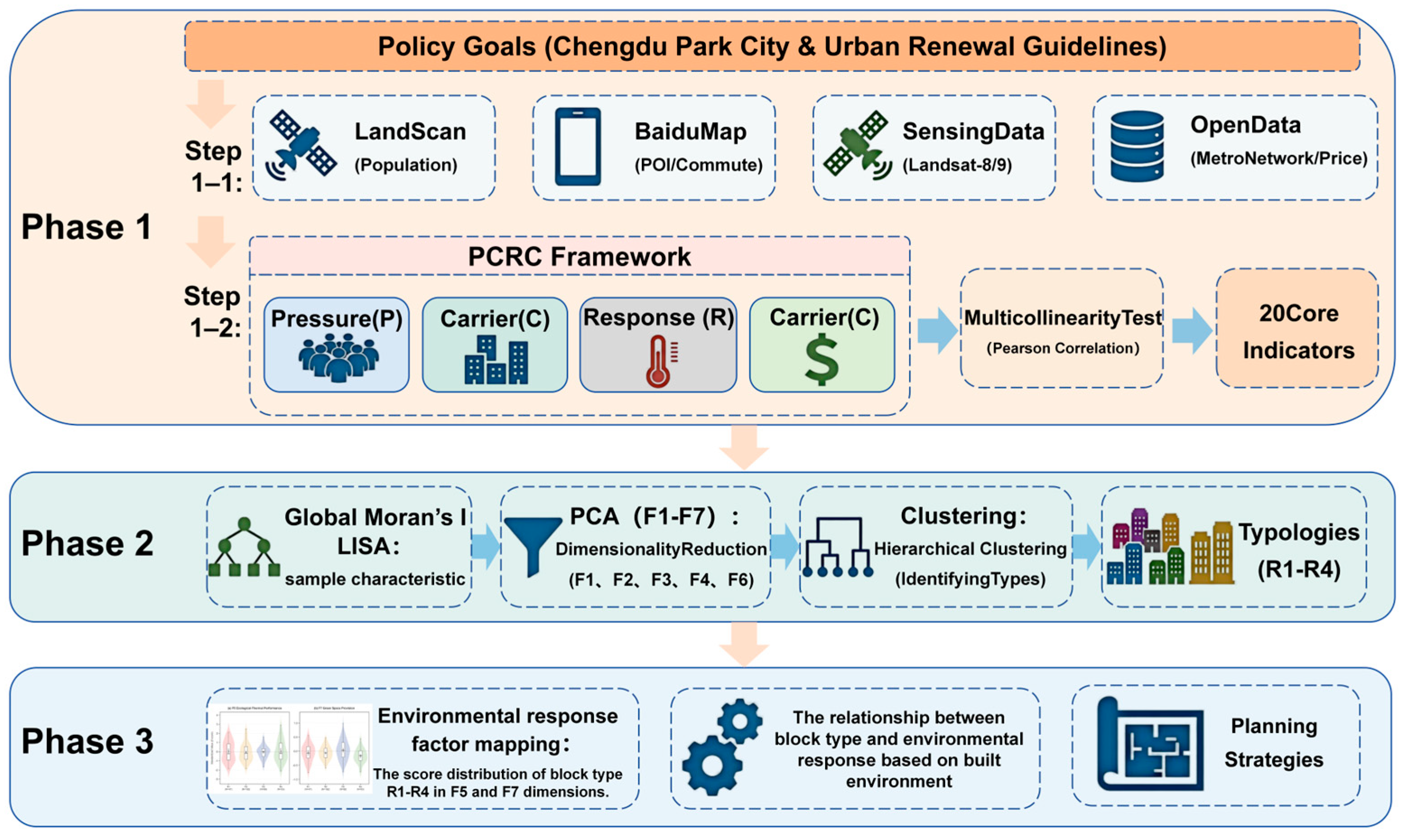
- Phase 1: Data collection and establishment of an indicator system. During this phase, we initially gathered multi-source data, encompassing population distribution (LandScan), points of interest (POI), commuting data (BaiduMap), and remote sensing images (SensingData), in accordance with pertinent policy objectives (Step 1-1). Utilising these many data sources, the study developed a PCRC analytical framework encompassing four dimensions: pressure, carrier, response, and context. To mitigate multicollinearity across variables, the study employed the Pearson correlation coefficient to evaluate the basic framework, eliminating superfluous indications and eventually identifying 20 essential indicators (Step 1-2). In the process of selecting indicators, this study integrates the ecological performance requirements outlined in the “Chengdu Park Urban Green Space System Planning (2023–2035)” with the technical focus on microform optimisation specified in the “Chengdu Zhongyou Regional Urban Remaining Space Renewal Planning and Design Guidelines”. This logical congruence ensures that empirical variables (such as NDVI and LST) can accurately reflect the fundamental aims of policy issues (such as enhancing green spaces and lowering temperatures), thereby providing a scientific foundation for the meticulous implementation of policies.
- (2)
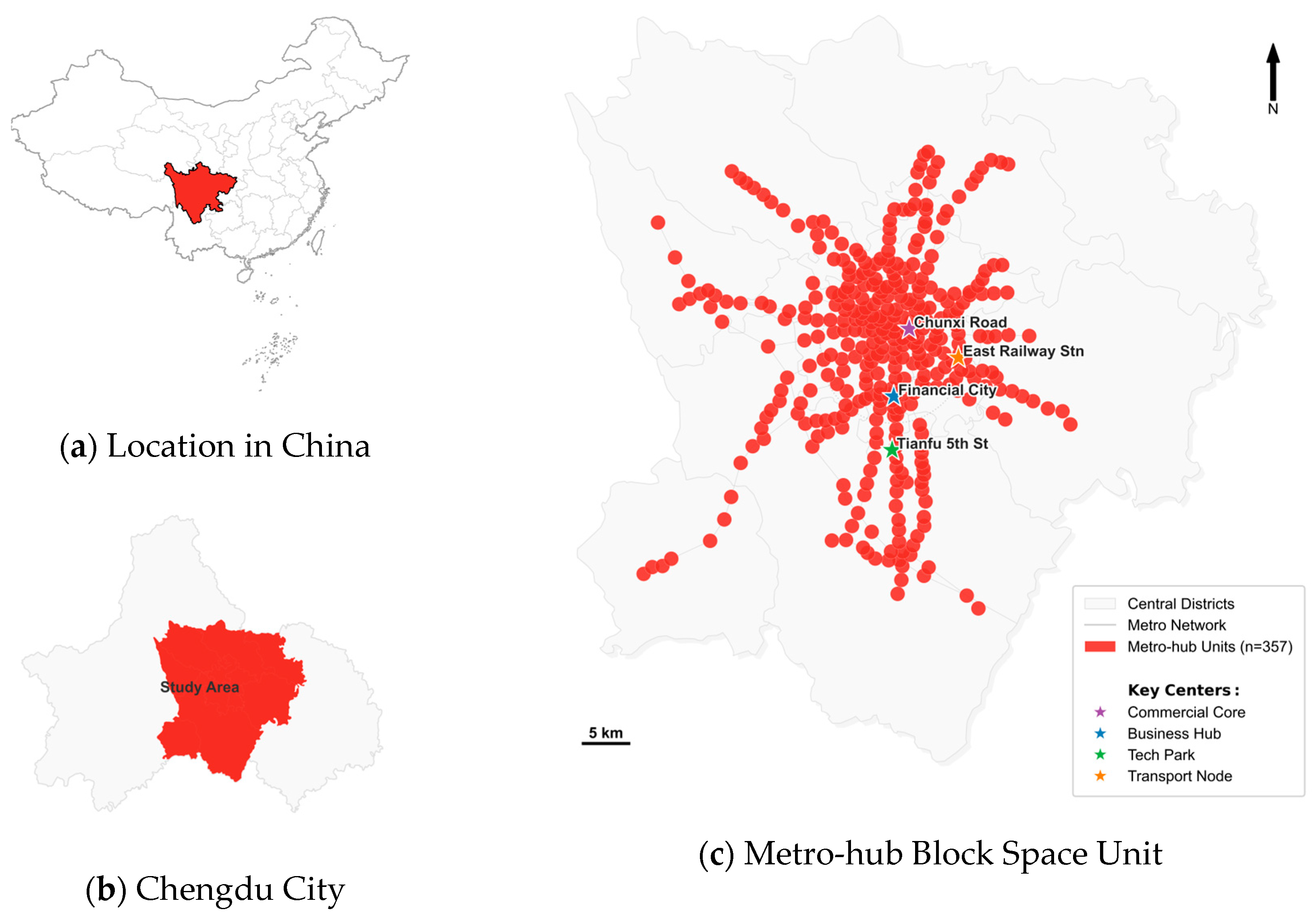
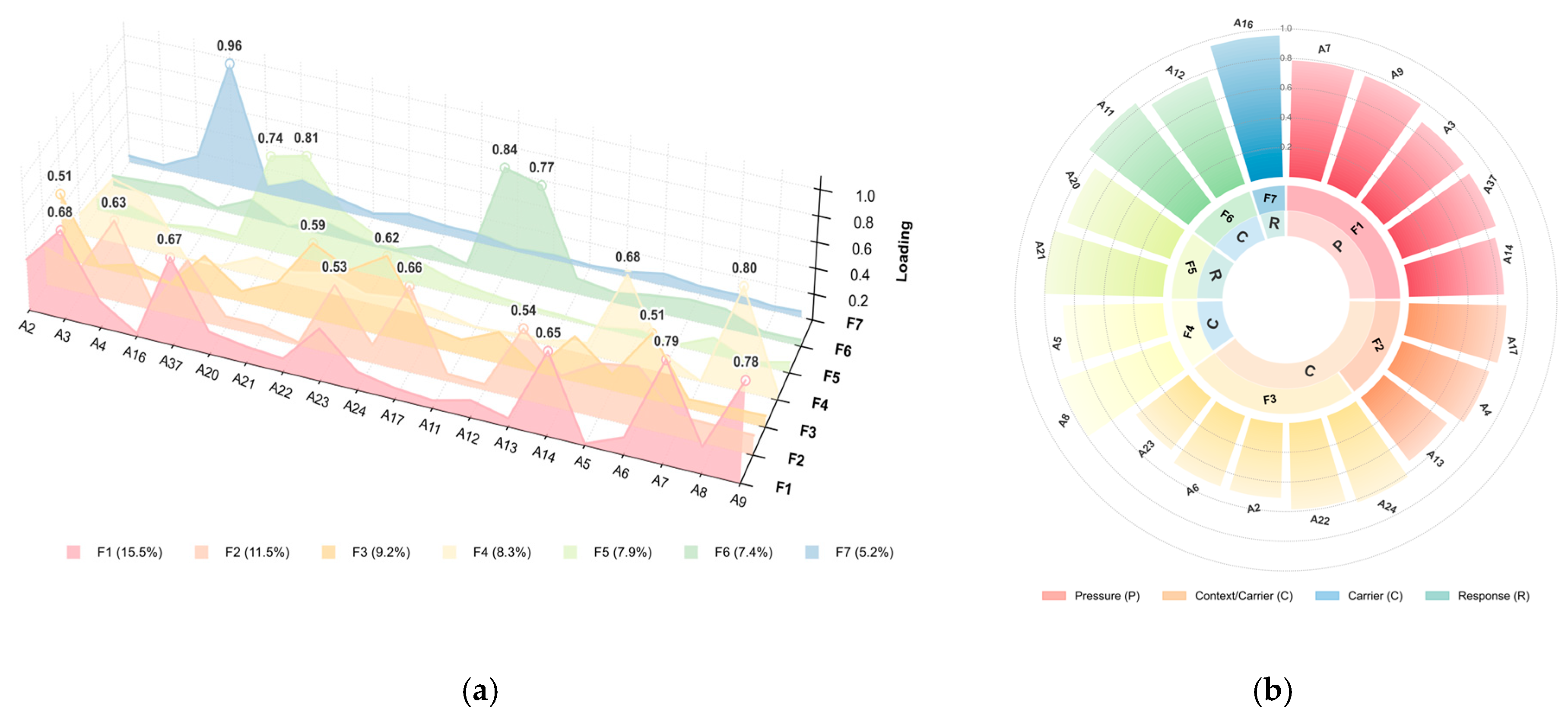
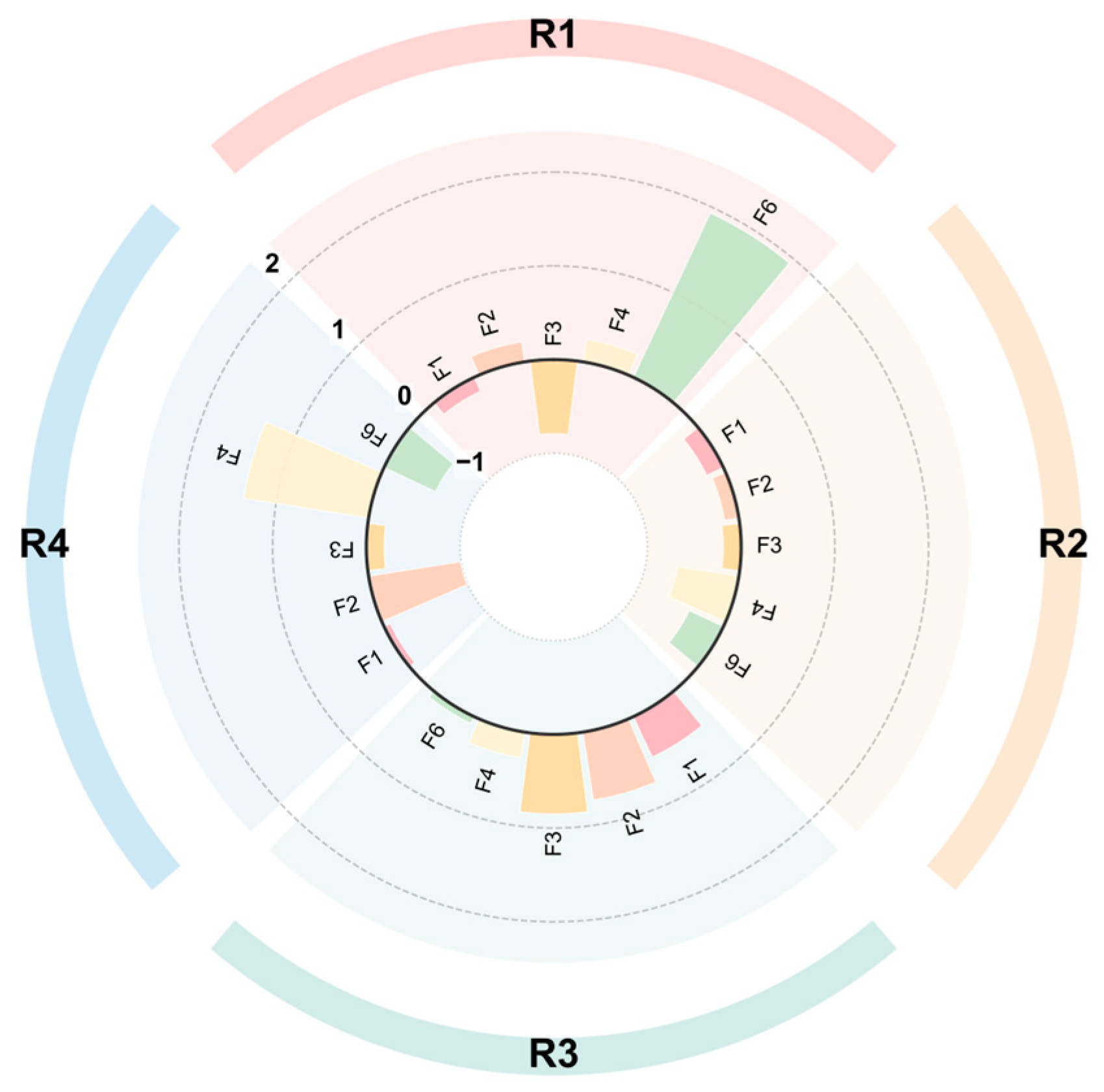
- Phase 2: Identification of subway-hub block types based on built-environment variables. Utilising the matrix of 20 key indicators developed in Phase 1, the study applied principal component analysis (PCA) for feature extraction and dimensionality reduction, revealing seven mutually independent latent factors (F1–F7). Consequently, utilising the scores of these criteria, hierarchical clustering was employed to categorise the 357 blocks into four distinct built-environment types: R1–R4. Simultaneously, Global Moran’s I and LISA spatial statistical analyses were utilised to clarify patterns of the heterogeneous distribution of the sample concerning attribute characteristics and geospatial distribution, thus establishing the classification basis for subsequent environmental response evaluations.
- (3)
- Phase 3: Assessment of environmental response status and policy recommendations. The study identified an association between plot types (R1–R4) and environmental response factors (F5 and F7) through spatial overlay analysis. The study clarifies the actual performance and reaction characteristics of ecological resources within several spatial designs under high-density situations, highlighting the substantial disparities in environmental performance scores among different types of subway-hub blocks. The study establishes the correlation between green-space distribution and thermal–ecological performance across various block types, offering evidence-based support for the iterative revision of the “Guidelines for Refined Governance of Urban Renewal in Chengdu”, thus enabling a shift in planning from “macro-level indicator control” to “micro-level morphological intervention”.
2.2. Research Method
3. Research Area and Data Samples
3.1. Research Area
3.2. Data Source and Processing
3.3. Construction of Index System
3.4. Sample Characteristics and Spatial Distribution
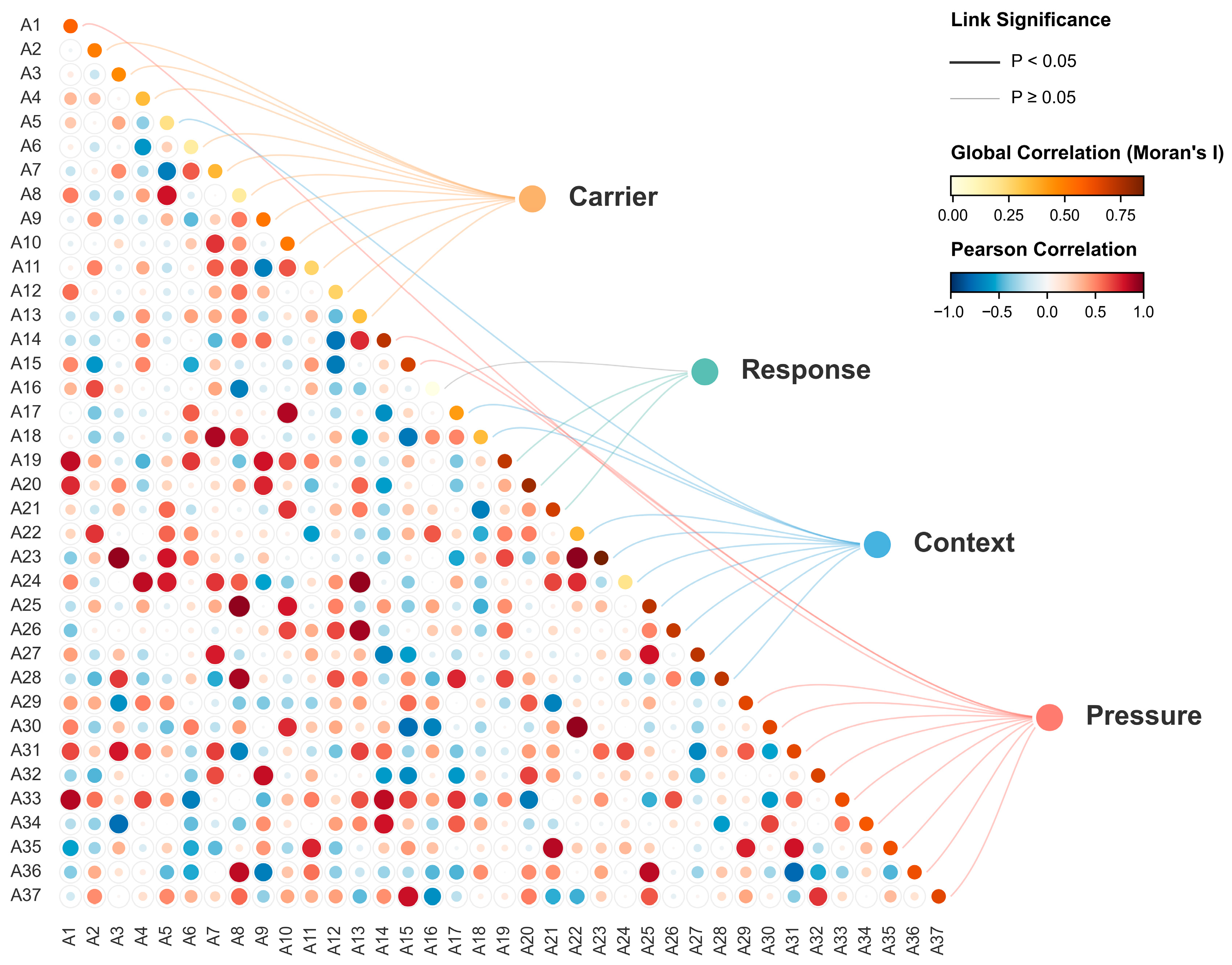
3.4.1. Global Spatial Autocorrelation, Global Moran’s I
- (1)
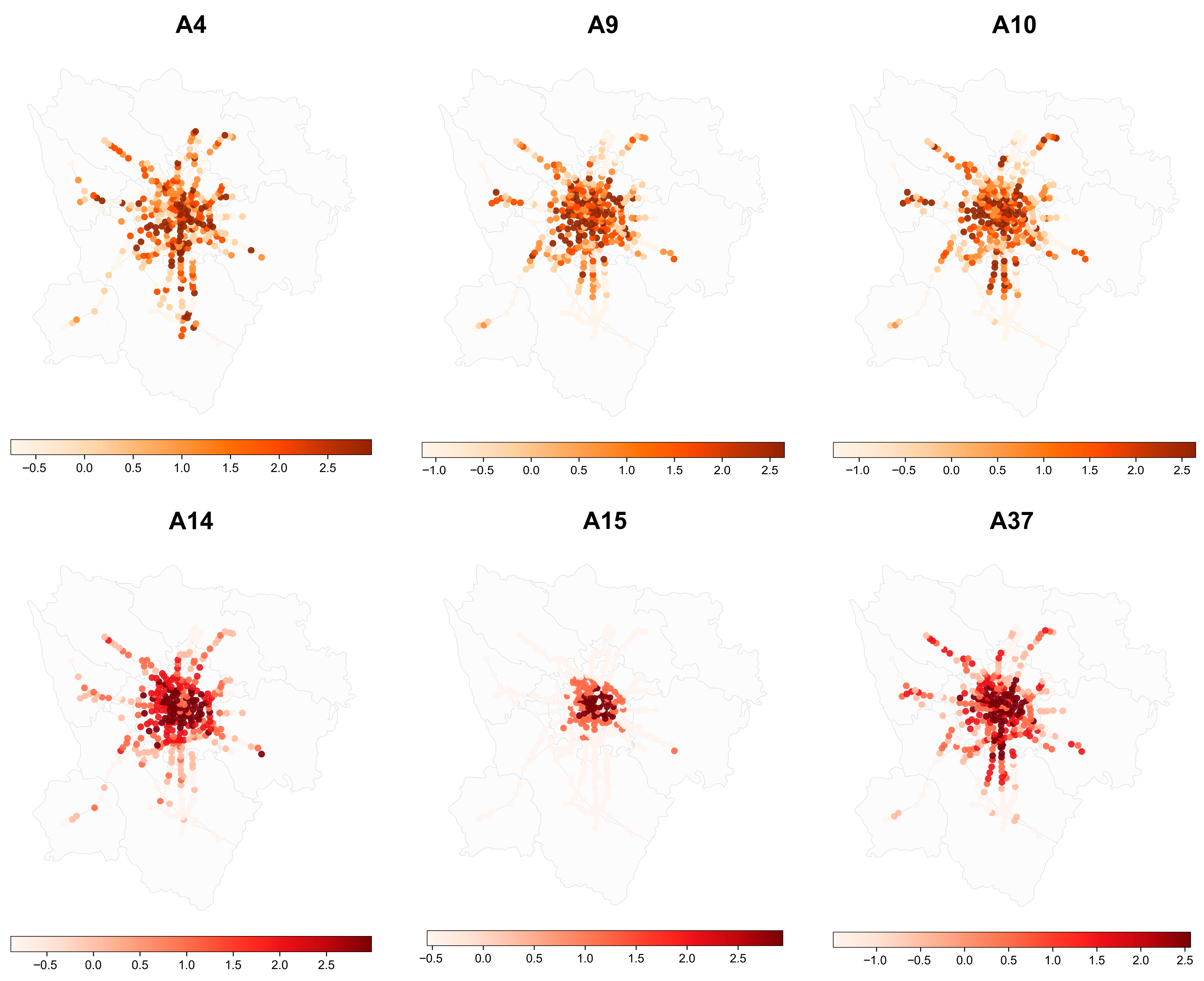
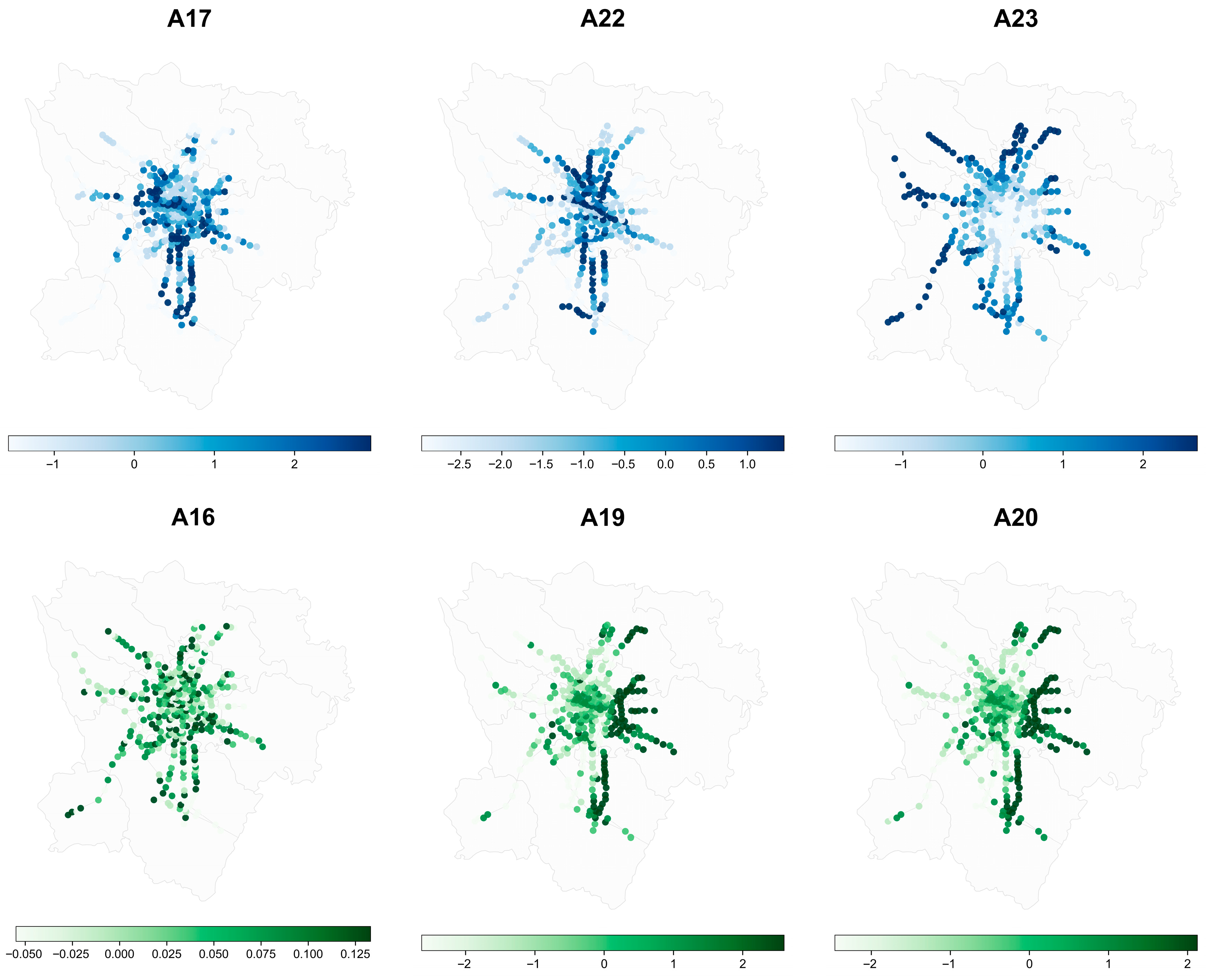
- Macro-level context and stress indicators demonstrated robust spatial aggregation. The Moran’s I index for average arrival time (A23) attained 0.853, the highest among all measures, succeeded by heat island intensity (A20, I = 0.77) and population density (A14, I = 0.731). These data demonstrate that the indicators exhibit significant spatial continuity across the research region, suggesting a high degree of similarity between neighbouring hub blocks.
- (2)
- In contrast, the spatial autocorrelation of indicators associated with the built environment was generally low. Moran’s I values for functional diversity (A8) and road land share (A6) were 0.165 and 0.160, respectively. Although still statistically significant (p < 0.01), their spatial clustering was considerably lower than that of macro-level contextual and pressure indicators, suggesting that spatial form characteristics at the neighbourhood scale exhibited higher local differences within the research area.
- (3)
- Moran’s I index for the greening rate (A16) was −0.009 and was not statistically significant (p > 0.05), suggesting that its spatial distribution was nearly random. This outcome indicates, at the statistical level, that the distribution of green spaces in high-density central district regions lacks unique spatial continuity characteristics.
3.4.2. Local Spatial Autocorrelation Analysis, LISA
- (1)
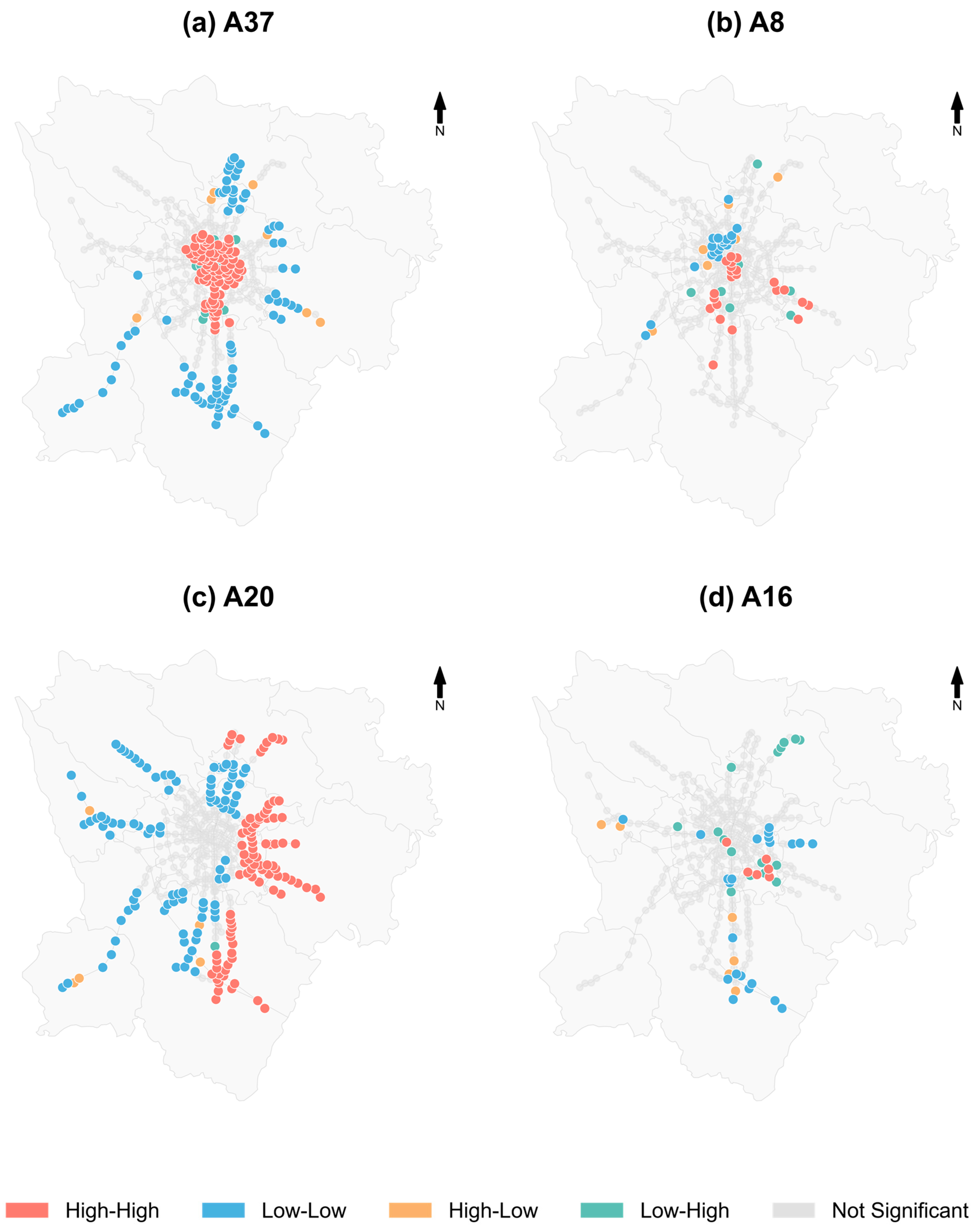
- LISA clustering results reveal that indices associated with population activity intensity (Figure 6a) generally display a distribution pattern along rail transit corridors, characterised by several discrete “high–high” agglomeration nodes. This spatial arrangement illustrates the concentration of population activity around subway hubs rather than a continuous spread.
- (2)
- The functional mix indicator (Figure 6b) displays a clear spatial pattern of “core–periphery” divergence. Urban centre areas mostly exhibit “high–high” agglomerations, while peripheral zones exhibit “low–low” agglomerations, indicating substantial spatial variation in functional layouts across blocks.
- (3)
- The LISA results for thermal environment indicators (Figure 6c) demonstrate a pattern of consistently high-value clusters, with “high–high” zones widely scattered throughout the centre urban area, indicating the spatial continuity of thermal environmental conditions.
- (4)
- The local spatial autocorrelation findings for the green-space rate index (Figure 6d) predominantly indicate statistically inconsequential regions, exhibiting relatively little agglomeration in select areas. This suggests that the distribution of green space is relatively dispersed at the block level.
3.4.3. Exploratory Data Analysis: Description of Nonlinear Characteristics
4. Results
4.1. Analysing Spatial Dimensions: PCRC Factor Extraction and Semantic Designation
4.2. Block-Type Identification of Subway Hub Based on Built-Environment Factors
- (1)
- R1 High-Form–Low-Accessibility Type: It is characterised by an extremely high vertical form (F6: 1.94) but poor accessibility (F3: −0.80). These are often high-density housing areas at the city’s edge with few roads and low spatial connectivity.
- (2)
- R2 Low-Intensity–Low-Mixed Type: All categories exhibit low scores, mainly distributed in immature development zones or single functional groups on the edge of the city.
- (3)
- R3 High-Density–High-Value–High-Accessibility Type: It achieved exceptionally high scores across pressure, value, and accessibility. The usual representative is the city’s central hub, distinguished by a significant concentration of capital, pedestrian traffic, and vehicular activity.
- (4)
- R4 High-Hybrid Renewal Type: Defined by significant functional hybrid characteristics (F4: 1.35) but comparatively diminished economic value (F2: −0.99). Denotes brownfield redevelopment areas in transition, signifying potential growth hubs for urban vibrancy.
4.3. Asymmetric Differentiation Characteristics of Green-Space Resource Allocation and Environmental Response
4.3.1. Type-Homogeneity Characteristics of Thermal–Ecological Environment Response (F5)
4.3.2. Type-Heterogeneity Characteristics of Green-Space Resource Allocation (F7)
5. Discussion
5.1. Theoretical Logic of PCRC Framework
5.2. Asymmetric Differentiation Characteristics of Built-Environment Types and Environmental Responses
- (1)
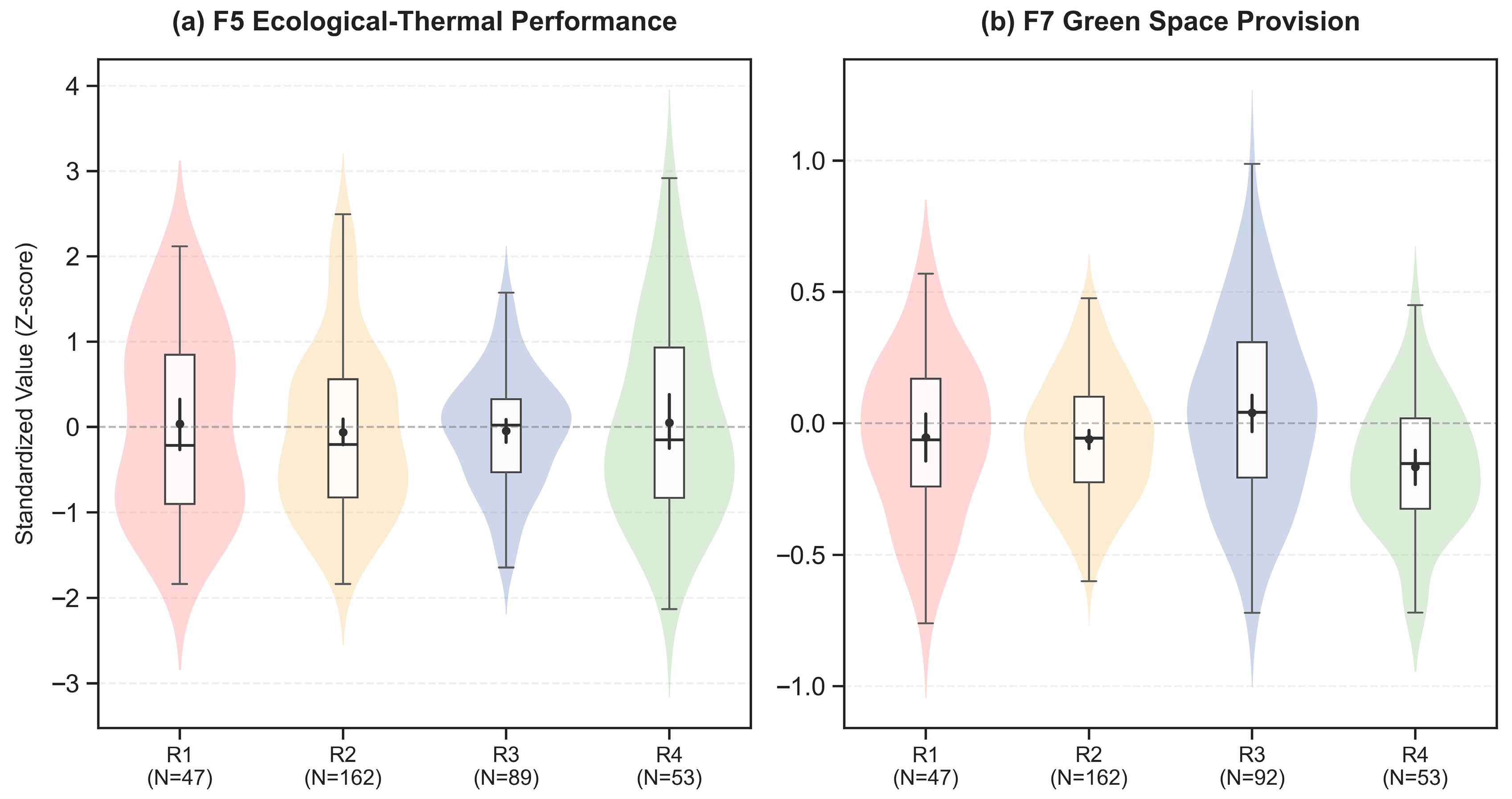
- Rigid Mapping of Resource Allocation: The green-space supply factor (F7) demonstrates considerable variation among different categories (p < 0.01), suggesting that built-environment characteristics (land-use type, development intensity) have a substantial explanatory impact on the spatial distribution of green-space resources. It demonstrates the significant constraint that planning involvement imposes on resource allocation.
- (2)
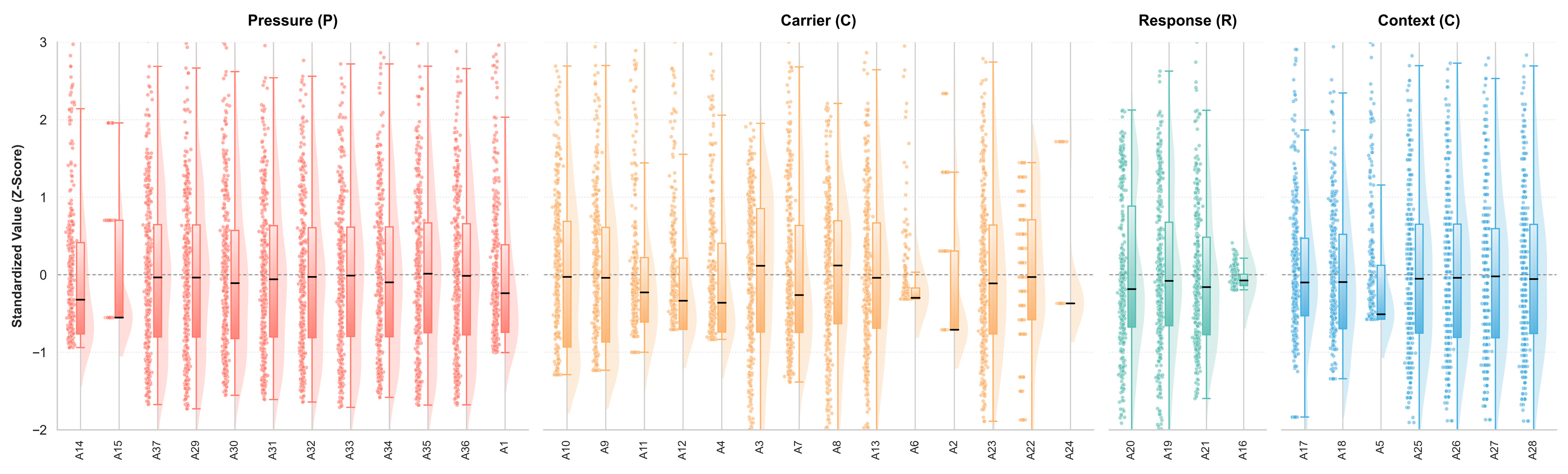
- Statistical Convergence in Environmental Responses: The thermal–ecological response factor (F5) exhibited no significant differences among categories (p = 0.8940 > 0.05); this statistical outcome indicates the inadequacy of macro-level classifications to account for micro-level performances. An investigation of global spatial autocorrelation (Global Moran’s I = 0) suggests that the random geographical distribution of green-space resources may be a fundamental mechanism driving this occurrence. This differentiation characteristics indicate that enhancements in environmental performance are shaped by micro-scale spatial configurations rather than a mere linear accumulation of physical inputs [37]. This phenomenon aligns with existing research findings on the non-monotonic nature of thermal responses in high-density urban areas [38], suggesting that macro-level typological classifications have inherent limitations in elucidating variations in the urban thermal environment.
5.3. Potential Mechanism: Spatial Randomness and Nonlinear Correlation Trend
- (1)
- The randomness of green-space distribution: The LISA clustering map (Figure 6d) offers direct empirical evidence that the green rate (A16) does not constitute a continuous, spatially cohesive network. Notable ”high–high” clusters are present only in a limited number of isolated cases in the city centre, whereas the remainder of the research area (grey regions) is categorised as “not significant”, exhibiting widespread “low–low” distributions on the periphery. Current studies validate that this spatial randomisation considerably restricts the synergistic impact of green patches on microclimate regulation [41].
- (2)
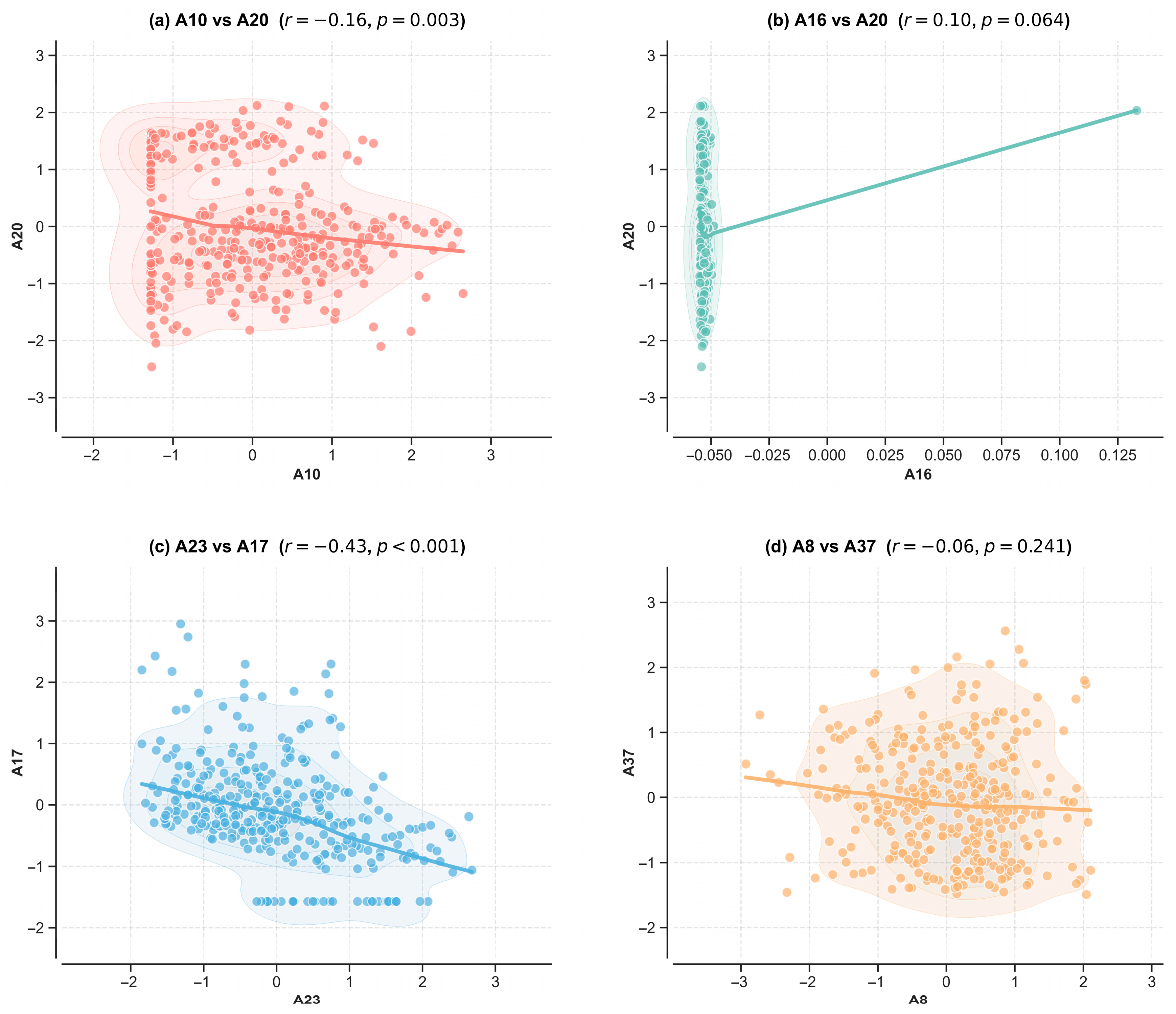
- Nonlinear correlation characteristics of environmental responses: The LOWESS fitting trajectories reveal a clear nonlinear relationship between built-environment variables and thermal–environmental responses. Specifically, in high-density TOD blocks, the increase in local green spaces demonstrates significant declining marginal effects. This indicates that enhancements in environmental performance show nonlinear responsiveness to physical interventions. This adequately elucidates why the ultimate total thermal–ecological response of R1-R4 tends to converge gently, despite the fact that the allocation of green-space resources is different. Consistent with the conclusion that the influence of the built environment on temperature exhibits “non-monotonicity” and “spatial heterogeneity” in current research [25], it underscores the intricate nature of the environmental response mechanisms in high-density urban areas, rather than a straightforward linear aggregation.
5.4. Strategic Shifts in Planning Practice: From Macro-Control to Micro-Intervention
6. Conclusions
6.1. Main Conclusions
- (1)
- Identification of multi-dimensional built-environment features: Seven principal components were extracted by PCA, categorising four typical built-environment types (R1–R4) and demonstrating the efficiency of the PCRC framework in assessing high-density, complex-block structures.
- (2)
- Spatial heterogeneity across varying scales: Global spatial autocorrelation analysis indicates that macro-level contexts and stress indicators display significant spatial clustering, while micro-level morphology and green-space ratios reveal pronounced fragmentations and random distributions, illustrating intricate spatial heterogeneity at the block scale.
- (3)
- Asymmetric differentiation between resources and performances: The built-environment type strongly affects green-space resource allocation (F7) (p < 0.01) but does not significantly influence thermal–ecological response factors (F5) (p > 0.05). This modifies the linear presumption that “form dictates performance”, suggesting that many nonlinear regulating systems influence environmental performance in high-density blocks.
6.2. Policy Implications
- (1)
- Transitioning from scale growth to performance enhancement: Chengdu’s present policies have shifted from volume regulation to quality enhancement. Enforce access criteria for “building-integrated shading” and “vertical greening” for type R3. By optimising the characteristics of the “carrier”, enhance passive cooling efficacy. This fosters climatic resilience in high-density development.
- (2)
- Enhancing the spatial connection of ecological areas: For type R4, it must be combined with the “micro-green-spaces” plan. Through the execution of strategic planning initiatives, rectify the disorganised allocation of green spaces, mitigate heat retention in densely populated areas, and guarantee that the advantages of these policies are fairly distributed to vulnerable communities.
- (3)
- Resource integration and spatial aggregation: For R1/R2 classifications, consolidate underutilised land using “urban renewal” initiatives. Convert fragmented idle land parcels into cohesive green infrastructure to improve environmental response stability.
6.3. Research Limitations and Prospects
- (1)
- The dynamics of the time dimension: Contemporary studies predominantly utilise section data. Future research may utilise multi-period sensing imagery and long-period population data to explore the dynamic trajectories of block types across seasonal changes and urban evolution.
- (2)
- This study used statistical methods to examine asymmetric divergence and nonlinear correlation trends among environmental indicators. However, the constraints of satellite remote sensing limit these indicators to reflecting mainly regional-scale surface energy balance patterns. They do not adequately represent three-dimensional thermal conditions at the pedestrian level in subway-hub blocks. In complex transit-oriented developments, building shadows, street canyon effects, and micro-scale surface features significantly affect pedestrian thermal comfort, such as PET or UTCI. Remote-sensing metrics with a 30 m resolution cannot capture these micro-scale phenomena. Thus, the statistical connections remain physically opaque. To improve this, future studies should integrate micro-scale numerical simulations like CFD or ENVI-met and ground-based field measurements. These methods enable a comprehensive analysis of how block morphology shapes the wind–heat environment. This approach will strengthen the link between the statistical findings and their physical causes and better connect regional thermal indicators with individual comfort.
- (3)
- The expansion of social dimension: Present definitions of “context” predominantly depend on real estate values and traffic. Future research may incorporate crowd portrait data derived from mobile phone signals to further investigate social equity concerns related to environmental exposure.
Author Contributions
Funding
Data Availability Statement
Conflicts of Interest
References
- Calthorpe, P. The Next American Metropolis: Ecology, Community, and the American Dream; Princeton Architectural Press: New York, NY, USA, 1993. [Google Scholar]
- Gu, X.; Wang, C.; Lin, S. Integrated impact of urban mixed land use on TOD ridership: A multi-radius comparative analysis. J. Transp. Land Use 2024, 17, 457–481. [Google Scholar] [CrossRef]
- Chi, B.; Lee, J. TOD effects on travel behavior: A synthesis of evidence from cross-sectional and longitudinal studies. J. Transp. Land Use 2024, 17, 269–297. [Google Scholar] [CrossRef]
- Gao, Y.; Cui, X.; Sun, X.; Feng, H.; Liang, P.; Yu, B. Exploring Transit-Oriented Development (TOD) frameworks for commercial agglomeration around rail stations: A case study of Chengdu, China. J. Asian Archit. Build. Eng. 2025, 1–20. [Google Scholar] [CrossRef]
- Zhan, C.; Xie, M.; Lu, H.; Liu, B.; Wu, Z.; Wang, T.; Zhuang, B.; Li, M.; Li, S. Impacts of urbanization on air quality and the related health risks in a city with complex terrain. Atmos. Chem. Phys. 2023, 23, 771–788. [Google Scholar] [CrossRef]
- Elmarakby, E.; Elkadi, H. Impact of urban morphology on Urban Heat Island in Manchester’s transit-oriented development. J. Clean. Prod. 2024, 434, 140009. [Google Scholar] [CrossRef]
- Mukhamedjanov, A.; Kidokoro, T.; Seta, F.; Yang, Y. Reshaping the concept of transit-oriented development in response to public space overheating near the transit nodes of Tokyo. Cities 2021, 116, 103240. [Google Scholar] [CrossRef]
- Jiang, S.; Feng, F.; Zhang, X.; Xu, C.; Jia, B.; Lafortezza, R. Driving factors of fragmentation in urban landscapes: Local contributions, spatial relationships, and causal effects. Ecol. Indic. 2025, 174, 113454. [Google Scholar] [CrossRef]
- Tong, X.; Wang, Y.; Chan, E.H.W.; Zhou, Q. Correlation between Transit-Oriented Development (TOD), Land Use Catchment Areas, and Local Environmental Transformation. Sustainability 2018, 10, 4622. [Google Scholar] [CrossRef]
- Wen, Z.; Tian, D.; Zhu, Y. Research on spatial and temporal patterns of heat island variability and influencing factors in urban center areas: A case study of Beijing’s central area. Buildings 2023, 13, 1887. [Google Scholar] [CrossRef]
- Chen, X.; Zhang, S.; Tian, Z.; Luo, Y.; Deng, J.; Fan, J. Differences in urban heat island and its driving factors between central and new urban areas of Wuhan, China. Environ. Sci. Pollut. Res. 2023, 30, 58362–58377. [Google Scholar] [CrossRef]
- Ding, L.; Xiao, X.; Wang, H. Temporal and spatial variations of urban surface temperature and correlation study of influencing factors. Sci. Rep. 2025, 15, 914. [Google Scholar] [CrossRef]
- Zhang, L.; Shi, X.; Chang, Q. Exploring Adaptive UHI Mitigation Solutions by Spatial Heterogeneity of Land Surface Temperature and Its Relationship to Urban Morphology in Historical Downtown Blocks, Beijing. Land 2022, 11, 544. [Google Scholar] [CrossRef]
- Zhang, A.; Li, W.; Xia, C.; Guo, H. The impact of urban landscape patterns on land surface temperature at the street block level: Evidence from 38 big Chinese cities. Environ. Impact Assess. Rev. 2025, 110, 107673. [Google Scholar] [CrossRef]
- Zhan, Q.; Jia, Y.; Zheng, Z.; Zhang, Q.; Luo, L. Associations of land use around rail transit stations with jobs-housing distribution of rail commuters from smart-card data. Geo-Spat. Inf. Sci. 2023, 26, 346–361. [Google Scholar] [CrossRef]
- Padeiro, M.; Louro, A.; da Costa, N.M. Transit-oriented development and gentrification: A systematic review. Transp. Rev. 2019, 39, 733–754. [Google Scholar] [CrossRef]
- Balany, F.; Muttil, N.; Muthukumaran, S.; Wong, M.S.; Ng, A.W.M. Studying the Effect of Blue-Green Infrastructure on Microclimate and Human Thermal Comfort in Melbourne’s Central Business District. Sustainability 2022, 14, 9057. [Google Scholar] [CrossRef]
- Ming, T.; Hu, Y.; Shi, T.; Li, Y.; Hu, S.; Yang, D.; Lv, B.; Peng, C.; Chen, Y. Effect of Blue-Green Infrastructure in Mitigating Microenvironmental Heat Islands: Field- and Simulation-Based Insights. Atmosphere 2025, 16, 134. [Google Scholar] [CrossRef]
- Organisation for Economic Co-operation and Development. OECD Core Set of Indicators for Environmental Performance Reviews, Environment Monographs; Organisation for Economic Co-operation and Development: Paris, France, 1993. [Google Scholar]
- Smeets, E.; Weterings, R.; Bosch, P. Environmental Indicators: Typology and Overview; European Environment Agency: Copenhagen, Denmark, 1999. [Google Scholar]
- Li, Y.; Wang, D.; Li, S.; Gao, W. Impact Analysis of Urban Morphology on Residential District Heat Energy Demand and Microclimate Based on Field Measurement Data. Sustainability 2021, 13, 2070. [Google Scholar] [CrossRef]
- Yang, L.; Yu, K.; Ai, J.; Liu, Y.; Yang, W.; Liu, J. Dominant Factors and Spatial Heterogeneity of Land Surface Temperatures in Urban Areas: A Case Study in Fuzhou, China. Remote Sens. 2022, 14, 1266. [Google Scholar] [CrossRef]
- Fan, J.; Chen, X.; Xie, S.; Zhang, Y. Study on the Response of the Summer Land Surface Temperature to Urban Morphology in Urumqi, China. Sustainability 2023, 15, 15255. [Google Scholar] [CrossRef]
- Eshetie, S.M. Exploring urban land surface temperature using spatial modelling techniques: A case study of Addis Ababa city, Ethiopia. Sci. Rep. 2024, 14, 6323. [Google Scholar] [CrossRef]
- Gao, Y.; Zhao, J.; Han, L. Quantifying the nonlinear relationship between block morphology and the surrounding thermal environment using random forest method. Sustain. Cities Soc. 2023, 91, 104443. [Google Scholar] [CrossRef]
- Guo, A.; Yue, W.; Yang, J.; He, T.; Zhang, M.; Li, M. Divergent impact of urban 2D/3D morphology on thermal environment along urban gradients. Urban Clim. 2022, 45, 101278. [Google Scholar] [CrossRef]
- Xu, Z.; Zhao, S. Scale dependence of urban green space cooling efficiency: A case study in Beijing metropolitan area. Sci. Total Environ. 2023, 898, 165563. [Google Scholar] [CrossRef] [PubMed]
- Wang, M.; Song, H.; Zhu, W.; Wang, Y. The Cooling Effects of Landscape Configurations of Green-Blue Spaces in Urban Waterfront Community. Atmosphere 2023, 14, 833. [Google Scholar] [CrossRef]
- Shui, T.; Cao, L.; Xiao, T.; Zhang, S. Influence of Building-Height Variability on Urban Ventilation and Pollutant Dispersion Characteristics. Atmosphere 2025, 16, 614. [Google Scholar] [CrossRef]
- Yin, J.; Zhan, Q.; Tayyab, M.; Zahra, A. The Ventilation Efficiency of Urban Built Intensity and Ventilation Path Identification: A Case Study of Wuhan. Int. J. Environ. Res. Public Health 2021, 18, 11684. [Google Scholar] [CrossRef]
- Chen, C.; Wang, J.; Li, D.; Sun, X.; Zhang, J.; Yang, C.; Zhang, B. Unraveling nonlinear effects of environment features on green view index using multiple data sources and explainable machine learning. Sci. Rep. 2024, 14, 30189. [Google Scholar] [CrossRef]
- Li, Z.; Chen, B.; Huang, Y.; Wang, H.; Wang, Y.; Yuan, Y.; Li, X.; Chen, J.M.; Xu, B.; Gong, P. Enhanced mapping of essential urban land use categories in China (EULUC-China 2.0): Integrating multimodal deep learning with multisource geospatial data. Sci. Bull. 2023, 68, 2382–2387. [Google Scholar] [CrossRef]
- Shi, Q.; Liu, M.; Marinoni, A.; Liu, X. UGS-1m: Fine-grained urban green space mapping of 31 major cities in China based on the deep learning framework. Earth Syst. Sci. Data 2023, 15, 555–577. [Google Scholar] [CrossRef]
- Tukey, J.W. Exploratory Data Analysis; Addison-Wesley: Boston, MA, USA, 1977. [Google Scholar]
- Sun, J.; Li, H.; Xiao, R.; Yao, G.; Zou, F. Dynamics of heat island intensity in a rapidly urbanizing area and the cooling effect of ecological land: A case study in Suzhou, Yangtze River Delta. Sustainability 2024, 16, 4422. [Google Scholar] [CrossRef]
- Zhao, Z.; Ye, R.; Wang, Y.; Tao, Y. How Plot Spatial Morphology Drives Surface Thermal Environment: A Spatial and Temporal Analysis of Nanjing Main City. Sustainability 2023, 15, 383. [Google Scholar] [CrossRef]
- Liu, H.; Qian, Y. Multi-Scale Analysis of Green Space Patterns in Thermal Regulation Using Boosted Regression Tree Model: A Case Study in Central Urban Area of Shijiazhuang, China. Sustainability 2025, 17, 4874. [Google Scholar] [CrossRef]
- Fang, Q.; Liu, C.; Ren, Z.; Fu, Y.; Fan, H.; Wang, Y.; Yu, Z. Spatiotemporal analysis of surface urban heat island dynamics in Central Yunnan City Cluster. Sustainability 2024, 16, 4819. [Google Scholar] [CrossRef]
- Chen, X.; Wang, Z.; Yang, H.; Ford, A.C.; Dawson, R.J. Impacts of urban densification and vertical growth on urban heat environment: A case study in the 4th Ring Road Area, Zhengzhou, China. J. Clean. Prod. 2023, 410, 137247. [Google Scholar] [CrossRef]
- Gao, Y.; Zhao, J.; Yu, K. Effects of block morphology on the surface thermal environment and the corresponding planning strategy using the geographically weighted regression model. Build. Environ. 2022, 216, 109037. [Google Scholar] [CrossRef]
- Jiang, X.; Ma, T.; Liang, J.; Wang, Y. The greener the cooler? Nonlinear thresholds in the cooling effects of urban blue-green spaces and implications for sustainable planning in the Yangtze River Delta. Urban Clim. 2025, 64, 102679. [Google Scholar] [CrossRef]
- Kang, S.; Lee, D.; Park, J.; Jung, J. Exploring Urban Forms Vulnerable to Urban Heat Islands: A Multiscale Analysis. Sustainability 2022, 14, 3603. [Google Scholar] [CrossRef]
- Wu, K.; Shan, L. Make Way for the Wind-Promoting Urban Wind Corridor Planning by Integrating RS, GIS, and CFD in Urban Planning and Design to Mitigate the Heat Island Effect. Atmosphere 2024, 15, 257. [Google Scholar] [CrossRef]
- Jenks, M.; Burton, E.; Williams, K. (Eds.) The Compact City: A Sustainable Urban Form; E & FN Spon: London, UK, 1996. [Google Scholar]
- Burton, E. The compact city: Just or sustainable? A theoretical analysis. Urban Stud. 2000, 37, 1969–2001. [Google Scholar] [CrossRef]





| Dimensions | Subclass | Indexes | Name | Unit | Data Sources |
|---|---|---|---|---|---|
| I. Anthropogenic Pressures Dimension | Population Activity Intensity | A14 | Population Density | People/km2 | Oak Ridge National Laboratory (ORNL): LandScan 2024 Global Population Distribution Dataset (1 km resolution) |
| A15 | Population Density Reclassification | Grade (1–5) | |||
| A37 | Overall Average Relative Population Value | Dimensionless | Baidu Huiyan location big data (19 August 2024, 21 August 2024, 24 August 2024, 25 August 2024, 24 h gridded population big data, accuracy 200 m) | ||
| Commuting Tidal Pressure | A29 | The Average Relative Population Value of the Morning Peak on Weekdays | Dimensionless | ||
| A30 | The Average Relative Population Value of the Peak in the Evening of the Weekdays | Dimensionless | |||
| A31 | The Average Relative Population Value for the Rest of the Weekdays | Dimensionless | |||
| A32 | Average Relative Population Value of Weekdays | Dimensionless | |||
| Business Leisure Pressure | A33 | The Average Relative Population Value of the Morning Peak on Weekend | Dimensionless | ||
| A34 | The Average Relative Population Value of the Peak in the Evening of the Weekend | Dimensionless | |||
| A35 | The Average Relative Population Value for the Rest of the Weekend | Dimensionless | |||
| A36 | Average Relative Population Value of Weekend | Dimensionless | |||
| Facilities Agglomeration Pressure | A1 | POI Density | Number/km2 | Gaode Maps Open Platform 2024 POI Data | |
| II. Space Form Carrier Dimension | Development Intensity | A2 | Bus Station Density | Number/km2 | Baidu Maps open platform API 2024 |
| A9 | Building Density | % | |||
| A10 | Volume Ratio | Dimensionless | |||
| A11 | Average Building Height | m | |||
| A12 | Standard Deviation of Building Average Height | m | |||
| A13 | Road Network Density | % | Urban Road Network Vector Data in 2024 | ||
| Land Use and Function | A3 | Proportion of Residential Land | % | EULUC-China 2.0 database [32] | |
| A4 | Proportion of Commercial Land | % | |||
| A5 | Proportion of Industrial Land | % | |||
| A6 | Proportion of Road and Traffic Land | % | |||
| A7 | Proportion of Public Service Land | % | |||
| A8 | Function Mix | Dimensionless | |||
| III. Environmental Response State Dimension | Thermal Environment | A19 | Average Surface Temperature | °C | GEE (Landsat-8/9 TIRS & MODIS) |
| A20 | Heat Island Intensity | °C | |||
| Ecological Quality | A16 | Greening Rate | % | UGS-1m Fine Green Space Dataset of Major Cities in China [33] | |
| A21 | NDVI | Dimensionless | GEE (Landsat-8/9 TIRS & MODIS) | ||
| IV. Socio-economic and Location Environment Dimension | Economic Value | A17 | Average Housing Price | yuan/m2 | Shell Housing Platform 2024 Second-hand Housing Transaction Data |
| A18 | Average House Price Standard Deviation | yuan/m2 | |||
| Macro Location | A22 | Number of Sites Reached in 30 Minutes | Number | Gaode Map API (Path Planning) | |
| A23 | Arriving—Average Time | Minute | |||
| A24 | Number of Functional Areas in 30 Minutes | Number | |||
| A25 | Time to Chunxi Road | Minute | |||
| A26 | Time to Jinrong City | Minute | |||
| A27 | Time to Tianfu Fifth Street | Minute | |||
| A28 | Time to Chengdu East Railway Station | Minute |
| Type | N | F5 Factor Performance Interval | F7 Factor Performance Interval | Morphological and Response Characteristics |
|---|---|---|---|---|
| R1 | 47 | [−1.84, +2.12] Dispersion is extremely high. | [−0.76, +0.57] Fluctuations are significant. | Unstable shadow effect: Exceptionally high vertical intensity (F6: 1.94) induces considerable shadow cooling; yet, the canyon effect results in heat accumulation, significantly influenced by local topography. |
| R2 | 164 | Concentrated on the negative interval (the mean is about − 1.0). | Concentrated near 0. | Subpar ecological edges: The majority are underdeveloped zones (F2, F3, F4 < 0), characterised by low construction intensity and minimal functional diversity. Despite the limited number of structures, there is a lack of structured, high-quality green landscape design. |
| R3 | 93 | Best performance (the highest positive frequency). | [−1.11, +0.99] Fluctuation is large and the upper limit is high. | High-quality ecological: The substantial concentration of capital and transportation (F1, F2, F3 > 0) is coupled with the investment in superior micro-green spaces or landscape engineering, resulting in enhanced thermal regulation within a high-density context. |
| R4 | 53 | Two-polarisation (scattered distribution). | Overall low, mostly negative values. | Ecological support lag: typical transitional plots exhibit significant functional mixing (F4: 1.35) but possess poor economic value (F2: −0.99). Numerous rigid surfaces exist, and ecological amenities have not been maintained. |
Disclaimer/Publisher’s Note: The statements, opinions and data contained in all publications are solely those of the individual author(s) and contributor(s) and not of MDPI and/or the editor(s). MDPI and/or the editor(s) disclaim responsibility for any injury to people or property resulting from any ideas, methods, instructions or products referred to in the content. |
© 2026 by the authors. Licensee MDPI, Basel, Switzerland. This article is an open access article distributed under the terms and conditions of the Creative Commons Attribution (CC BY) license.
Share and Cite
Wang, G.; Cui, X.; Xu, Y.; Song, W. Spatial Differentiation of Thermal–Ecological Environmental Responses in High-Density Central Subway-Hub Blocks and Their Associations with Built-Environment Characteristics. Land 2026, 15, 658. https://doi.org/10.3390/land15040658
Wang G, Cui X, Xu Y, Song W. Spatial Differentiation of Thermal–Ecological Environmental Responses in High-Density Central Subway-Hub Blocks and Their Associations with Built-Environment Characteristics. Land. 2026; 15(4):658. https://doi.org/10.3390/land15040658
Chicago/Turabian StyleWang, Guohua, Xu Cui, Yao Xu, and Wen Song. 2026. "Spatial Differentiation of Thermal–Ecological Environmental Responses in High-Density Central Subway-Hub Blocks and Their Associations with Built-Environment Characteristics" Land 15, no. 4: 658. https://doi.org/10.3390/land15040658
APA StyleWang, G., Cui, X., Xu, Y., & Song, W. (2026). Spatial Differentiation of Thermal–Ecological Environmental Responses in High-Density Central Subway-Hub Blocks and Their Associations with Built-Environment Characteristics. Land, 15(4), 658. https://doi.org/10.3390/land15040658