Article

Historical Park Restoration: Enhancing Ecosystem Services Through Sustainable Design

1
Department of Agricultural and Environmental Sciences—Production, Landscape, Agroenergy, University of Milan, Via Celoria, 2, 20133 Milan, Italy
2
Department of Cultural Heritage and Environment, University of Milan, Via Noto, 6, 20142 Milan, Italy
3
Laboratorio di Simulazione Urbana Fausto Curti, Department of Architecture and Urban Studies, Politecnico di Milano, Piazza da Vinci, 26, 20133 Milan, Italy
*
Author to whom correspondence should be addressed.
Land 2026, 15(4), 627; https://doi.org/10.3390/land15040627
Submission received: 27 February 2026 / Revised: 31 March 2026 / Accepted: 8 April 2026 / Published: 11 April 2026

Abstract

Ecosystem services (ESs) support human well-being, but their integrated assessment in urban green spaces remains challenging, particularly at the project scale, where finer spatial resolution (tens of meters) is required. Historical parks are complex socio-ecological systems with non-linear ES interactions. This study develops a design-oriented framework to assess how restoration interventions influence regulation, maintenance, and cultural ES potential provision. Indicators derived from field surveys and established models were selected according to CICES V5.2 and adapted to ecological and cultural features of historical parks. Survey units were defined for each ES section to enable a spatially explicit comparison between current and design scenarios. A normalized scoring system was applied to evaluate category-level changes and overall interaction patterns. The framework was tested on the restoration project of Monza Park (northern Italy). Results show a marked increase in cultural and regulation services (+28% and +17%, respectively), while maintenance services exhibited a slight decrease (−3%). These trends are reflected in the Cumulative Indicator Score (CIS), indicating an overall positive balance of ES provision in the design scenario. The Design Effectiveness Score (DES) showed consistently non-negative values (DES ≥ 0), reaching maximum effectiveness in transitions to woody vegetation (DES ≈ 1). The Synergy–Trade-off Score (STS) confirmed a general increase in ES supply across all categories, with a clear prevalence of synergies over trade-offs. The proposed framework supports the data-driven, spatially explicit evaluation of design alternatives and can guide decision-making in historical park restoration.

1. Introduction

Urban parks are key components of urban green infrastructure, providing vegetated areas that support multiple ecosystem services. Their structural complexity, including tree, shrub and herbaceous layers, enables environmental functions such as air and soil purification [1,2,3], microclimate amelioration [4], and biodiversity conservation [5]. In addition, urban parks provide important social and psychological benefits for urban populations [6,7].
Ecosystem services (ESs) are defined as the benefits that humans obtain from ecosystems contributing, through a series of complex interconnections, to their well-being and health [8,9]. The European Environment Agency (EEA) developed and proposed a universally recognized classification system, known as CICES (Common International Classification of Ecosystem Services). CICES is built on a hierarchical structure of five levels with progressively more detail that provides a standardized and continuously updated system of classification, nomenclature, and description of ESs. ESs are divided into three sections: provisioning, regulation and maintenance, and cultural [10]. At the local scale (tens of meters), most studies have focused on a single ES, few on a limited set of services within the same section, while integrated assessments covering multiple ESs across sections are generally restricted to broader spatial scales [11]. However, ESs often depend on each other in non-linear ways, and relatively few studies have explored these interactions (i.e., trade-offs and synergies) and their effects on human well-being at the scale of a single green area [12,13,14]. For example, at Xingqing Palace Park (Xi’an, China), areas considered aesthetically attractive by visitors did not necessarily overlap with those most suitable for birds [15]. Similarly, in an urban park in Almada (Portugal), greater tree density enhanced carbon sequestration but could reduce seed dispersal and did not necessarily increase habitat quality [13].
Consistent with the growing interest in ESs, an increasing number of methods and tools have been developed for their quantification and assessment [16]. However, directly measuring ESs remains challenging from both methodological and technical perspectives and often requires significant time and financial resources [17,18,19]. Additionally, many ESs lack standardized techniques and instruments for objective evaluation and comparison [8]. To address these challenges, some works propose the use of indicators as proxies. Indicators are tangible ecosystem components that can be quantified with minimal effort using established tools and are generally easy to communicate to stakeholders [20]. This approach is particularly suitable in design analyses, where the direct measurement of ESs is often not feasible because design scenarios refer to conditions that are not yet realized. In such cases, indicators allow the potential provision of ESs to be assessed based on measurable characteristics of the proposed vegetation structure and spatial configuration, as commonly adopted in ES assessments relying on model-based or indicator-based approaches [21,22]. Although models and indicators offer practical tools for estimating ESs and their proxies, they often fit large-scale green infrastructure mostly relying on land use/land cover (LULC) data [23,24]. However, the applicability of LULC-based approaches is limited at small-scale green spaces. They typically group urban green spaces into large categories (e.g., “green urban areas” in the CORINE Land Cover classification), assigning ESs at the class level. This generalization prevents a more detailed assessment of the contribution of each individual green element and its spatial arrangement within the green area, even though ESs may also vary according to the type of vegetation present in these spaces [25,26]. However, the development, adaptation, and combined use of specific indicators with models could optimize the analysis process, enabling the assessment of multiple ESs even at smaller, localized scales.
Despite the growing number of ES assessment tools, integrated evaluations at the scale of individual urban green spaces remain limited, reflecting the fragmented nature of existing approaches and the lack of standardized and transferable methodologies [20,26,27]. This challenge is particularly relevant for specific green spaces, such as historical urban parks, where restoration interventions are subject to heritage conservation constraints and regulatory requirements that limit the range of possible actions. Moreover, existing vegetation configurations and historical layouts were not originally designed to maximize ESs. As a result, design choices must balance heritage conservation with ecological performance. In this context, historical urban parks represent a particularly relevant case study. Their landscape elements, including vegetation configurations and architectural features, result from a stratification of past eras and reflect the artistic, cultural, and horticultural practices of their time [28].
The aim of this study was to develop a framework for the preliminary assessment of the impacts of design choices on the potential multi-category provision of ESs in the restoration of historical parks. Specifically, the study addresses the following research questions:
(1)
How can multiple ESs be assessed at the scale of individual historical urban parks using indicators as proxies?
(2)
How do different design choices in the restoration of historical parks (e.g., vegetation configurations and spatial arrangements) influence the provision of ESs across different sections?
(3)
How can this approach inform design decision-making in the restoration of historical parks?
The proposed approach supports a socio-ecological design process by enabling the simultaneous consideration of multiple ESs in constrained contexts such as historical urban parks. This approach is tested through a pilot case study in a historical urban park in northern Italy with a comparative analysis between the current state and the design proposal.

2. Materials and Methods

2.1. Conceptual Framework

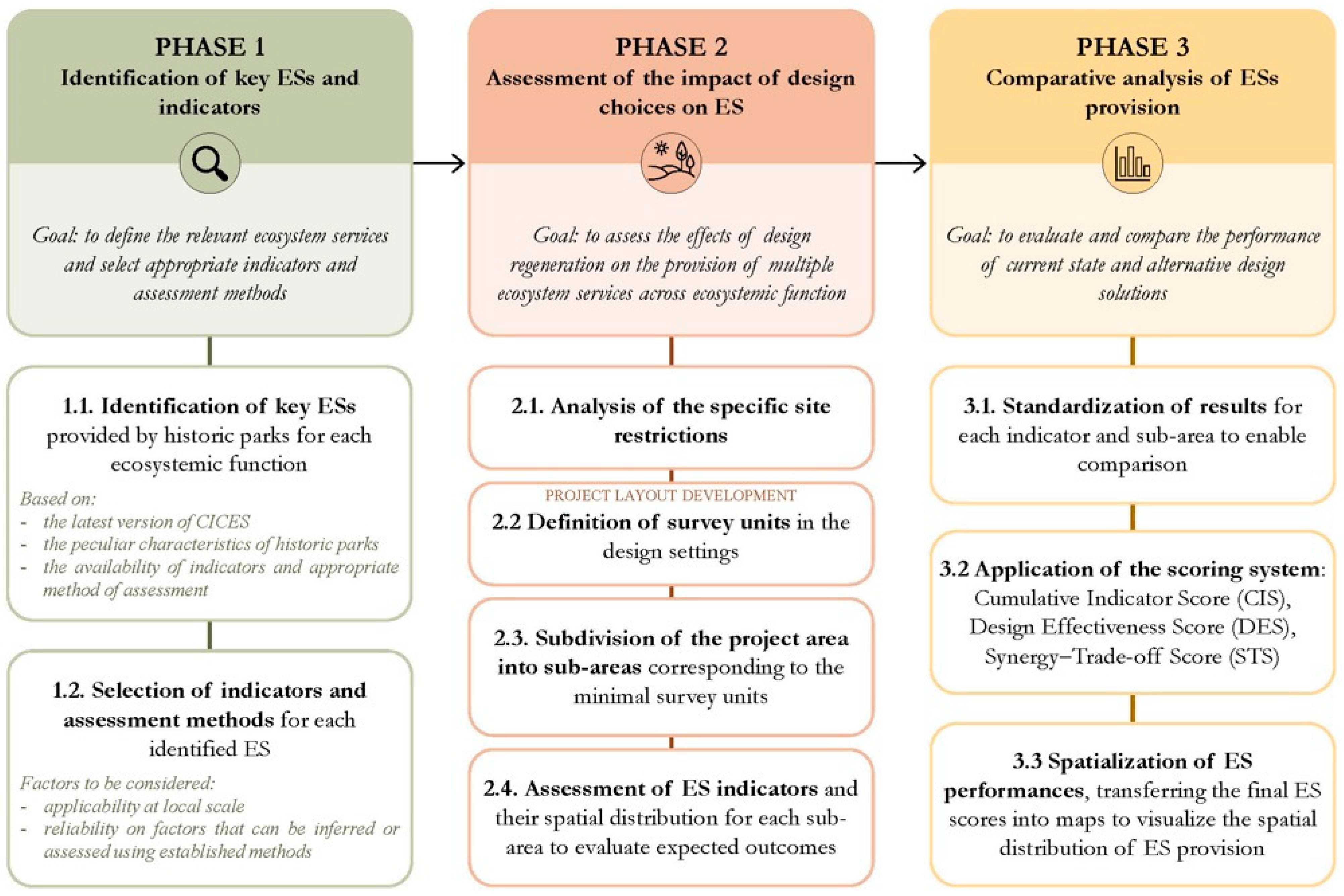
The conceptual framework shown in Figure 1 provides an overview of the proposed design approach.
  • PHASE 1—Identification of key ESs, indicators, and assessment methods. To ensure a comprehensive evaluation, the identification of key ESs was based on the latest version of the Common International Classification of Ecosystem Services (CICES version 5.2) [29]. The selection accounts for the distinctive characteristics of historical urban parks compared to other urban green spaces. Parks are intrinsically multifunctional systems; however, distinct categories of parks tend to prioritize specific functions. Historical and cultural parks are predominantly oriented toward educational, cultural, and recreational purposes. Nevertheless, functional classifications are not mutually exclusive: a single park may concurrently encompass historical, cultural, recreational, and ecological dimensions, reflecting the overlapping and interdependent nature of park functions [30].
The framework focuses on key regulation, maintenance, and cultural ESs, which do not represent the full spectrum of services that such systems may provide; rather, they correspond to the most distinctive and influential ones, whose combined occurrence is seldom found in other types of urban green infrastructure [31]. Provisioning services (e.g., food, fiber, or freshwater supply) are excluded, as historical urban parks only play a marginal role in delivering them [30]. The selection of key ESs is linked to: (i) the typically large extent of urban parks, which host diverse vegetation types and species, fostering varied user interactions; (ii) the distinctive natural and built environment of historical parks, valued for their historical and cultural significance; and (iii) the availability of suitable indicators and assessment methods.
For each selected ES, indicators were identified from the scientific literature based on their applicability at the local scale and their suitability for ex-ante assessment. Indicators must rely on variables that can be inferred or estimated using established methods such as field surveys [32], models [33,34], or allometric equations [35]. The assessment of the existing conditions provides the baseline for both analysis and design activities and is a prerequisite for applying the proposed methodology. This is essential, as indicators must be applicable not only to the current state, but also to the design phase, when the project is not yet implemented, and direct measurements are therefore not feasible.
The selected key regulation ESs include air quality amelioration, global climate regulation, and physical air quality regulation. Restoration interventions in historical parks are generally conservative and rarely involve substantial changes in spatial layout or infrastructure (e.g., soil permeability). Therefore, the framework focuses on services primarily influenced by vegetation composition and structure, as these are the main variables affected by conservation-oriented interventions. Historical urban parks are typically located in densely built environments, where air pollution levels and the urban heat island effect are more pronounced than in peri-urban areas [36,37,38]. Air quality amelioration is assessed through the removal of particulate matter (PM10, PM2.5) and gaseous pollutants (NO2, O3), which are among the most representative urban pollutants [39]. Global climate regulation is assessed through CO2 storage and sequestration, as CO2 is a major greenhouse gas contributing to climate change [40]. Physical air quality regulation is represented by the leaf area index (LAI), used as a proxy for canopy density and vegetation potential for microclimatic regulation potential. LAI reflects the canopy structure and influences both radiation interception (shading) and transpiration, key processes controlling vegetation–atmosphere energy exchange [41] and near-surface air temperature [42]. Regulating indicators are assessed using i-Tree Eco application (Table 1), which enables the quantification of urban forest structure and ecosystem functions [43]. It is widely used to assess ESs due to its adaptability to different contexts and free accessibility, without requiring any programming skills compared with more complex models (e.g., ENVI-met or Computational Fluid Dynamics software) [44,45,46]. The “full inventory” option is particularly suitable for intensively managed green areas, such as historical urban parks, where tree populations are regularly monitored. This approach eliminates sampling errors by considering the entire tree population, ensuring reliable estimates [47] for project-scale assessments. During the design phase, biometric data from nursery stock of selected species provide a reliable baseline for forecasting and ES estimation.
Diversity measures are widely employed as indicators of ecosystem health [33]. Over time, ecologists have developed numerous indices and models to quantify diversity, which remains a complex concept encompassing both species richness and relative abundance [48]. Diversity can be assessed by counting the number of species, examining their distribution, or applying indices that integrate both components. In the proposed methodology, plant species diversity—quantified using standard biodiversity indices—is used as a proxy for ESs associated with the maintenance and conservation of nursery populations, breeding sites, refugees, and feeding habitats (Table 2). This approach assumes that higher plant species diversity corresponds to a broader range of ecological functions and habitat types, indirectly capturing aspects of functional diversity, particularly where native species dominate, as often occurs in historical urban parks. For each vegetation type (woody and herbaceous species), species diversity is quantified using the Shannon–Wiener [49] and Simpson [50] indices, thanks to the survey of the existing conditions and the assessment of the plant species included in the design proposal.
As previously stated, ES indicators within the proposed framework refer to potential provision (i.e., supply). Accordingly, for cultural ESs, indicators related to use and demand (e.g., number of visitors or activities) are not considered as they require post-implementation assessment through post-occupancy evaluation (POE) [51]. In this study, four psychological constructs were used to operationalize key cultural ES classes related to health promotion, restoration, and enjoyment (Table 3): restorative potential, environmental preference, emotions (covering the emotional and cognitive aspects of the experience), and the behavioral component. Restorative potential [52,53] refers to the capacity of an environment to support recovery from mental fatigue through being-away, fascination, coherence, and compatibility. Environmental preference reflects the perceived attractiveness of a setting based on its informational qualities. Emotions are described through the circumplex model of affect, referring to pleasure and arousal [54]. Finally, the behavioral component represents the potential activities associated with the area [55]. The degree of recovery to the historical design of the park can be assessed as a complementary indicator (Table 3). This involves a comparative analysis of archival maps, drawings, and aerial photographs against recent imagery and the project plan, allowing for the attribution of an objective score (categorized as complete, partial, or absent) reflecting the extent of alignment with the original design.
  • PHASE 2—Assessment of the impact of design choices on ESs. Historical parks, while primarily valued for their cultural and heritage significance, also provide important ecological functions [28]. In this context, restoration interventions should aim to remain as adherent as possible to the original design; therefore, they are generally conservative and guided by site-specific constraints (including regulatory, historical, and environmental factors). These constraints influence design decisions, particularly regarding the vegetation composition and spatial configuration. Within this context, the proposed framework focuses on assessing how design choices affect the potential provision of ESs.
Following the analysis of site-specific constraints, the project area was structured into survey units defined according to each ES section. For regulation ESs, survey units corresponded to different vegetation configurations, which differed in their planting density, structural complexity, growth patterns, and spatial arrangement. For maintenance-related ESs, survey units were defined by vegetation types (e.g., herbaceous and woody layers), reflecting their distinct ecological roles. For cultural ESs, the survey unit encompassed the entire site, corresponding to a place scale [56]. This scale is often investigated through psychological constructs, as they primarily reflect the holistic perception and socio-cultural valuation of the landscape as a whole, rather than its individual components. To enable a comparison of ES provision (e.g., before and after design interventions or between alternative design solutions), the project area was subdivided into distinct homogeneous sub-areas. This fractioning was based on the minimum survey units identified.
  • PHASE 3—Comparative analysis of ESs provision. For each sub-area previously identified, ES indicators are assessed to evaluate the expected outcomes of design scenarios compared to the current conditions. The absolute values of each indicator estimated across all survey units and ES sections constitute the baseline for this comparative analysis.
Three indices were used: (i) Cumulative Indicator Score (CIS), which summarizes the overall effect of the project on the potential provision of ESs; (ii) Design Effectiveness Score (DES), which expresses the relative magnitude of changes introduced by design choices across survey units, enabling their spatial representation; (iii) Synergy–Trade-off Score (STS), which captures synergistic and antagonistic interactions among regulation, maintenance, and cultural ESs within a single comparable metric. To ensure equal weighting and comparability, all indicators were normalized according to their nature and scale. The resulting standardized scores were used to: (i) objectively assess the ecosystem performance of the study area; (ii) spatially represent the ES supply across the project area, identifying zones with greater or lower improvement potential; and (iii) evaluate possible interactions (trade-offs or synergies) among different ESs.

2.2. Application of the Method: Case Study

2.2.1. Experimental Area

The experimental area chosen as the case study for the application of the proposed method is a part of the Monza Park (45°35′45.2″ N 9°17′30.7″ E), a large historical urban park located in Monza (Northern Italy, IT). Monza is a city that extends for about 33 km2 with a population of over 123,000 people, located at 162 m above sea level. In Monza, the climate is warm-temperate (Cfa, according to Köppen–Geiger classification), with significant rain distribution throughout the year. Over the last 30 years, the average minimum and maximum temperatures were 8.0 °C and 17.0 °C, respectively, and the average rainfall was 1162 mm per year. The city of Monza falls within USDA Winter Hardiness Zone 9a (−6.7 °C to −3.9 °C). From a bioclimatic point of view, according to the Rivas–Martinez classification [57,58,59], the area belongs to the temperate continental bioclimate, with an upper-mesotemperate thermotype and lower humid ombrotype. A detailed description of the potential natural vegetation and its successional stages is provided in Appendix A.1.
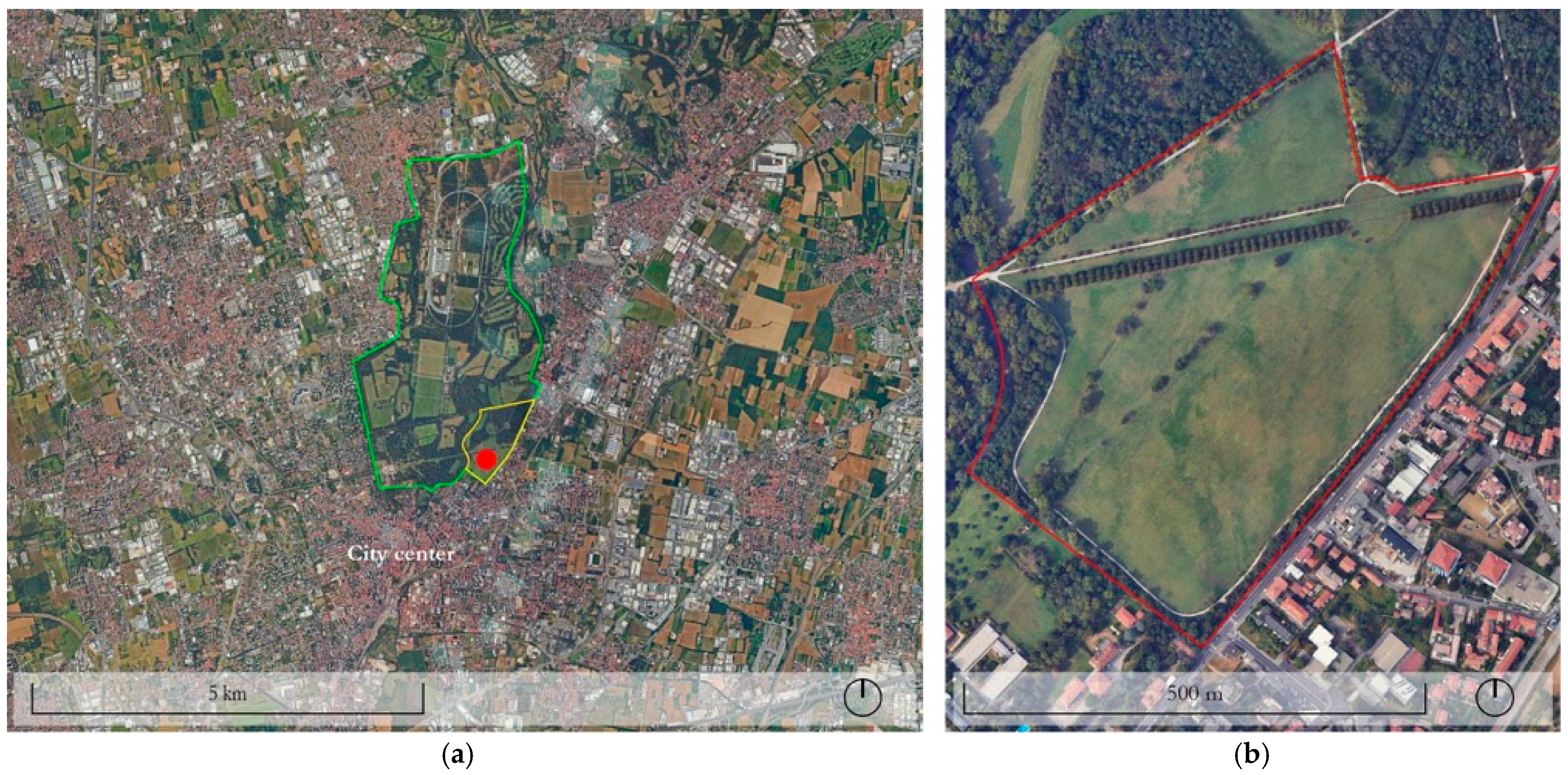
In the southeastern part of Monza Park lies the UniMi area. This 50-hectare portion of the park (whose total area exceeds 720 hectares), historically and functionally connected to the Villa and the Royal Park, was granted by the State to the University of Milan in 1921 and its access is public. The UniMi area was selected as a case study due to its experimental role, allowing the application of the proposed framework in a controlled, real-world design context. Moreover, it is currently subject to an ongoing restoration process, providing a unique opportunity to apply the framework in an ex-ante design phase. The selected portion (approximately 17 ha; Figure 2), comparable in size to many historical urban parks in Europe (e.g., Giardini Pubblici Indro Montanelli in Milan; Hofgarten in Munich), is representative of the entire Monza Park and of typical historical urban park scales. Other parts of the park have been irreversibly modified over time and no longer reflect the original historical layout.

2.2.2. Historical Outline of the Experimental Area and Project Restrictions

Over the Napoleonic domain in 1805, Monza Park was established as a model of agricultural and recreational estate [60]. Its current layout largely reflects the design by architect Luigi Canonica (1815), who integrated the formal gardens with agricultural and wooded areas, creating a network of avenues and rondò that provided structure to the landscape and enhanced visibility for hunting activities [61,62]. Although the original structure provided a strong spatial and functional identity, today, only traces of the original historical design remain due to subsequent transformations and restoration efforts.
The UniMi area, as well as the entire Monza Park, is subject to multiple regulatory constraints. The entire area is protected under Legislative Decree No. 42/2004 as a historical and monumental site. Additionally, it is included within the Parco Regionale della Valle del Lambro, which regulates land use and management. Any intervention requires authorization from the relevant authorities. Additional constraints concern vegetation selection. The historical document Catalogus Plantarum Existentium In Hortis Regiae Villae [63] lists the species present within the park, and whenever possible, this reference has been followed. However, some native species (e.g., Carpinus betulus L.) are experiencing decline in this area due to climate change and pathogen attacks, requiring adaptive strategies.
Based on these restrictions, a preliminary design aimed at restoring, where possible, the original historical layout was developed and assessed using the proposed framework.

2.2.3. Data Collection and Modeling

The following section describes the data collection and modeling procedures used to assess ES indicators, ensuring consistency between the current and design scenarios. The subsequent section presents the normalization and aggregation procedures used for comparative analysis.
Field data used to assess regulating and maintenance ES indicators were collected through a vegetation census of the experimental area. Woody vegetation (trees and shrubs) was surveyed during the leaf-on season of 2022 and updated in 2023 to ensure accurate identification and measurement [45]. Data collection followed the i-Tree Eco protocol [64] and was recorded and georeferenced in real-time using the GREENSPACES management software (GreenSpaces R3GIS, Bolzano, Italy, web-based platform, continuously updated). Recorded attributes for each tree and shrub included species, total height, diameter at breast height (DBH), crown size (height to live top and crown base, north–south and east–west crown width, percent crown missing), crown dieback, and crown light exposure (CLE). The dataset was exported and uploaded to i-Tree Eco app, where a pre-stratification into sub-areas was defined [65] based on homogeneous and contiguous vegetation configurations considering vegetation type and planting arrangement (e.g., isolated trees, rows, groups). These strata were used as input categories to support spatially explicit analysis. Hourly air pollution (NO2, O3, PM10, PM2.5) data were obtained from the ARPA Lombardia modeling system, which provides spatially resolved estimates of air pollutant concentrations [66]. Meteorological data were derived from the ARPA monitoring station located in Via Monte Generoso, Monza (approximately 5 km from the study area). Data were processed using the i-Tree Database tool [67] and used as model inputs. Although not collected directly within the study area, these data were considered representative of local conditions due to station proximity and the spatial coverage of the modeling system. This level of approximation is consistent with the predictive nature of the framework proposed, which focuses on relative differences in ES provision rather than absolute values.
The required inputs for regulating indicator assessment included species and DBH (mandatory) as well as land use, total tree height, crown size, crown health, crown light exposure (highly recommended), and finally, strata and street/non street trees specification (optional). These variables were selected following the i-Tree Eco framework, as they directly influence ES calculations. When not provided, they are estimated by the model, increasing uncertainty [68]. Therefore, all available field data were included to improve result reliability (Supplementary Dataset S1). For the design scenario, tree and shrub parameters were defined based on nursery stock characteristics and typical planting conditions. Height to live top was set equal to total height, while height to crown base was assigned according to typical training forms (0.1 m for hedges; 0.5–1.0 m for shrubs and grouped trees; 2.5–3.0 m for standard trees; 0.5 m for low-branched trees). Percent crown missing and crown dieback were set at 10% and 15%, respectively, representing the average conditions of nursery-grown vegetation with minor structural imperfections. Crown light exposure was assigned according to planting configurations (grouped: CLE = 1; rows/hedges: CLE = 3; open-grown: CLE = 5), reflecting expected light availability under the proposed design layout. As the extent of herbaceous vegetation remained unchanged between scenarios, its contribution was assumed constant and excluded from the comparative analysis. This is consistent with typical restoration practices in historical parks and with the generally lower influence of herbaceous vegetation on regulating ESs compared to woody components [69,70,71].
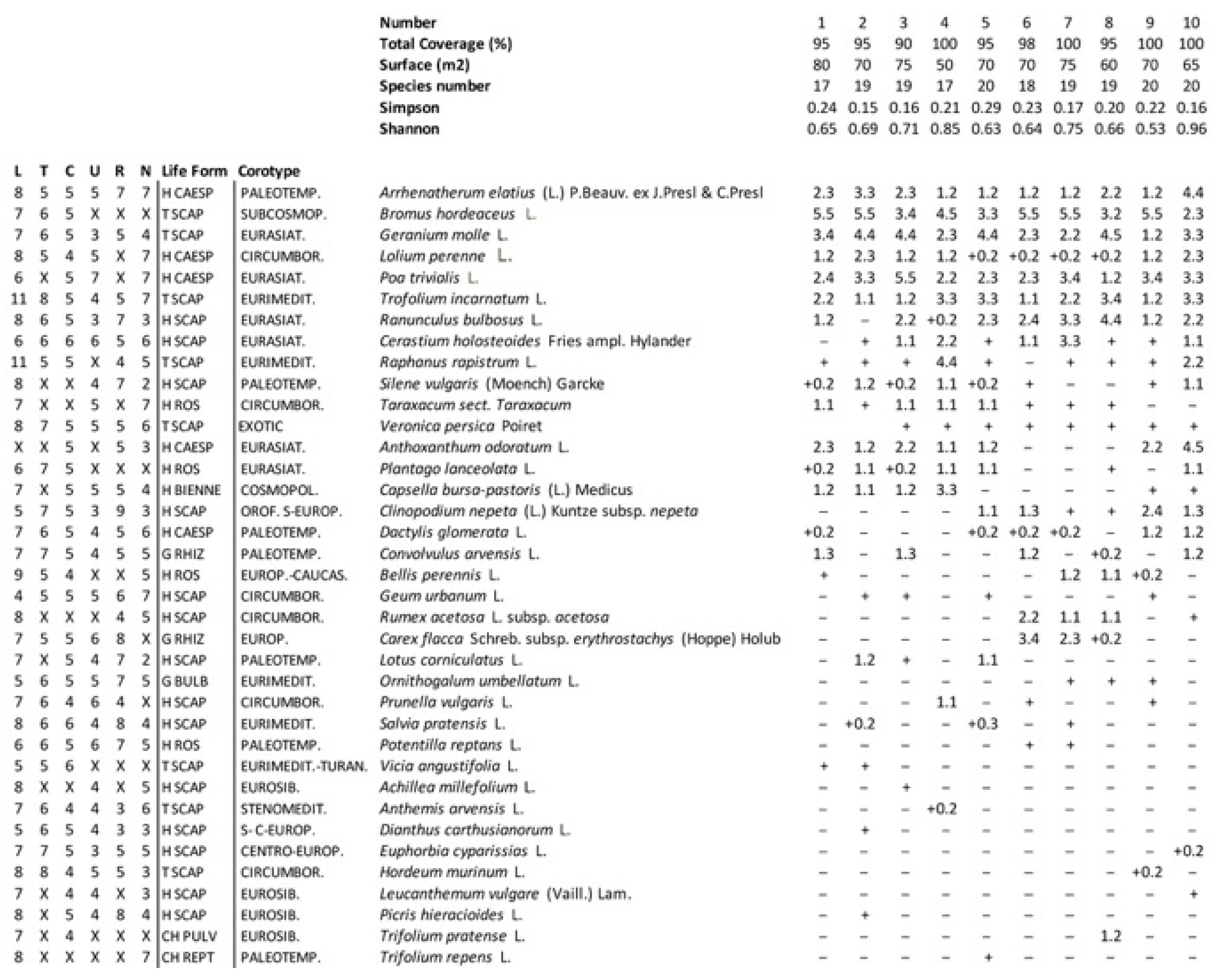
For both woody and herbaceous vegetation survey units, biodiversity was quantified using evenness-based indices J-Shannon [49] and E-Simpson [50], which normalize diversity values (0–1) and allow for comparisons independent of species richness. For woody vegetation, biodiversity indices were calculated based on the census of existing trees and shrubs and on the list of species included in the design project (Supplementary Dataset S2). For herbaceous vegetation, floristic data were collected using the phytosociological method as commonly adopted in vegetation ecology studies [57,72,73,74,75], which enables the identification of vegetation communities based on species composition, vegetation structure, and ecological and environmental conditions of the site [76,77]. In 2023, ten phytosociological relevés of mown grasslands were carried out and classified into homogeneous vegetation units. Additional methodological details and the full dataset are provided in Appendix A.2. For the design scenario, biodiversity was estimated by integrating the floristic composition of existing lawns with that of the planned stable flowery meadows established through the seed-rich hay transfer technique (fiorume) [78]. To operationally account for this integration, the two relevés collected in the areas designated for meadows restoration were combined with the species composition of the donor meadow. Given the lack of species-specific information on seeding rates, cover, and germination, diversity was estimated assuming moderate grass dominance (80% grasses, 20% forbs), reflecting early successional dynamics after sowing. Final J-Shannon and E-Simpson values were calculated as the median of the ten relevés under current and modified conditions.
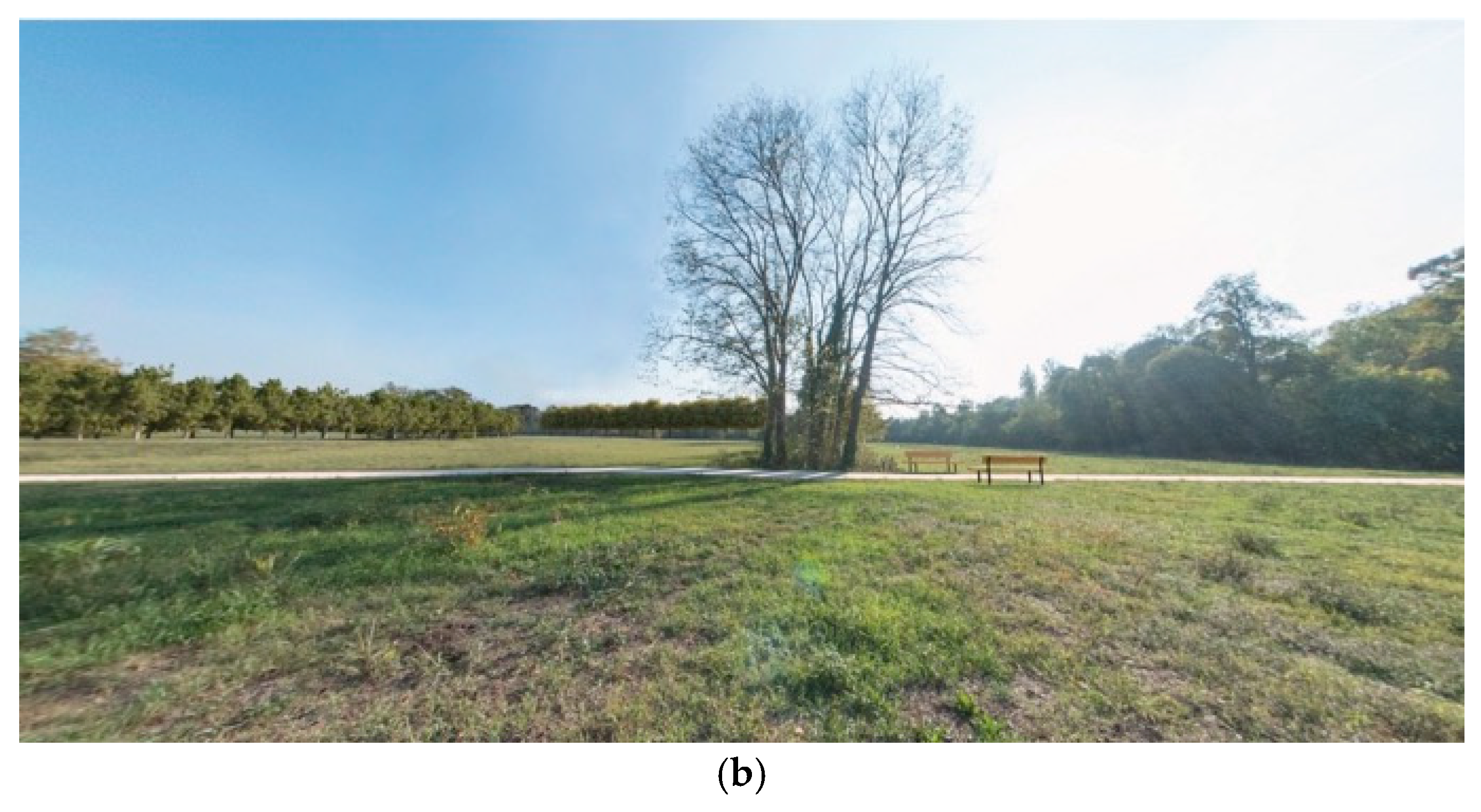
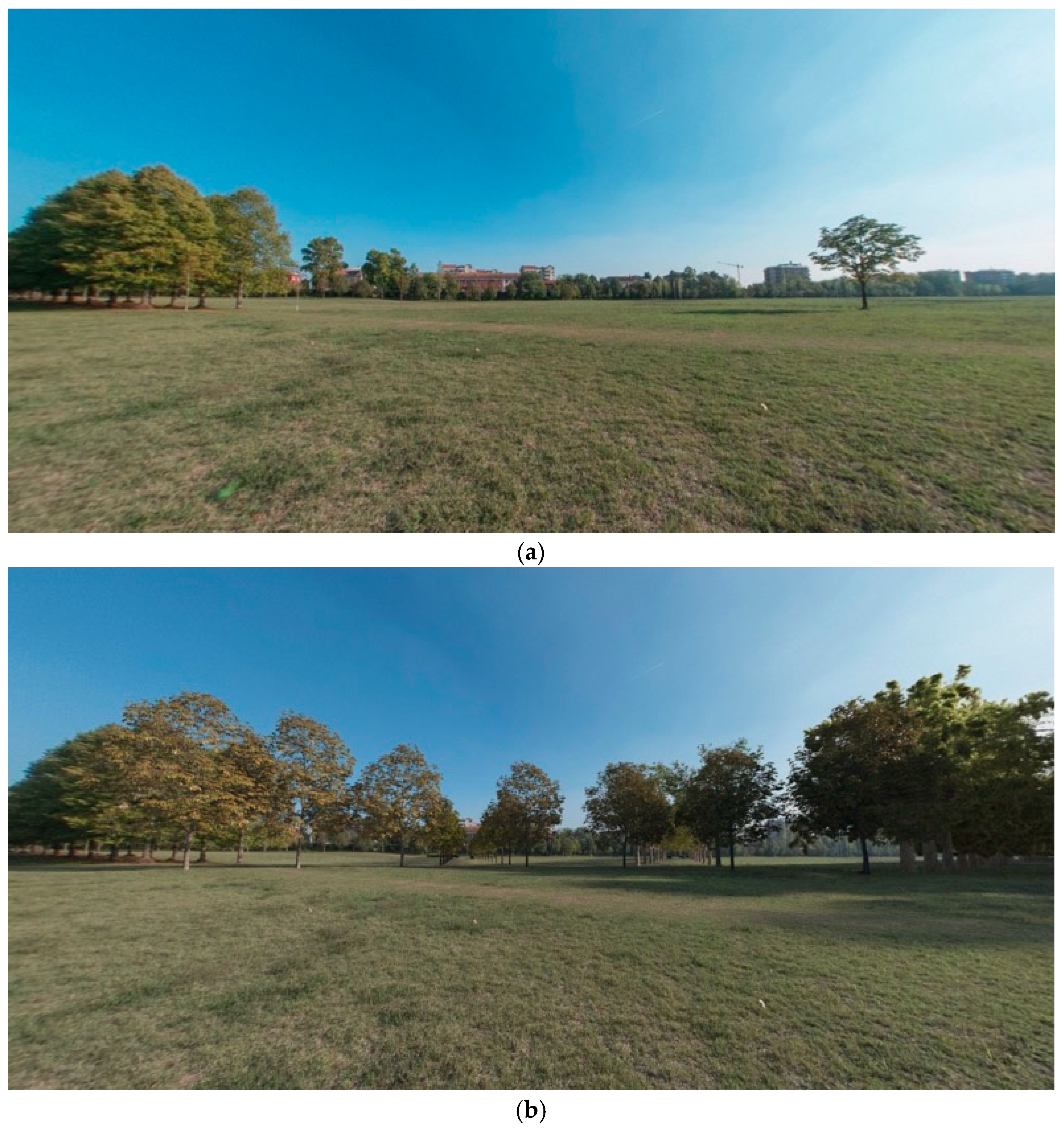
Cultural psychological indices were assessed using a single survey unit encompassing the entire experimental area, based on the four psychological constructs defined in the framework. Data were collected through a guided experiential walk [79], during which the participants evaluated key locations along a predefined route using the City Sense version 1.3.2 (Artefacto SAS, France) mobile application. Two locations were selected as representative of the study area: a roundabout (“Rondò”) and a mown lawn (“Lawn”). Participants were recruited within a broader participatory process conducted during the regeneration project (see [80] for a full description of the process) through direct email invitations. The sample included two categories of prospective users: representatives of local stakeholders (associations connected to the park) and students from the University of Milan, who were divided into two small groups. The order of location visits was randomized to control for order effects. At each location, the participants provided on-site psychological evaluations for both the existing condition and the design scenario, visualized through high-resolution 360° spherical images in the app. The workflow adopted to generate the simulations and to ensure visual fidelity and perceptual comparability between conditions is described in Appendix B.2. The experimental design followed a 2 × 2 within-subjects structure, with Scenario (existing vs. project) and Location (Rondò vs. Lawn) as factors (N = 32). Additional information on the participants is reported in Appendix B.1. The assessment was based on the Experiential Environmental Impact Assessment (exp-EIA) method included in the mobile app, which integrates spatial behavior data with subjective evaluations of environmental perception [81]. For each evaluation, emotional, cognitive, and behavioral aspects were collected through the app. Emotions were measured through the constructs of arousal and pleasure, based on a digital adaptation of the Self-Assessment Manikin (SAM) [82,83]. Restoration and environmental preference were assessed using a 5-point Likert scale with four items each, adapted for urban green spaces from validated instruments [84,85]. Activities associated with the environment (behavioral component) were recorded using a checklist derived from the Eurostat Activity Coding List for Harmonized European Time Use Surveys [55]. Reported activities were classified into two functional groups according to their contribution to physical and experiential interactions with nature. Restorative activities (e.g., sport, socializing, hobbies) included both active/immersive and passive/observational interactions with the park and were considered to provide a positive contribution to this ES. In contrast, non-restorative activities (e.g., work, study) do not primarily rely on nature-based interactions and were considered to have a negative or null contribution. Although some non-restorative activities may benefit indirectly from a green setting, classification was based on their primary purpose. Statistical analysis was conducted using repeated-measures ANOVA, with Scenario and Location as within-subject factors. The complete dataset is reported in Supplementary Dataset S3.
Historical design recovery was assessed by comparing the current condition and the design proposal with a historical map showing the arrangement of the area in 1845 (Giovanni Brenna–Topografia della Reale Villa di Monza coll’attiguo Parco e coll’annessa Città di Monza e rispettivi dintorni, scale 1:10,000–Milan, Civica Raccolta Stampe Bertarelli, 1845). Spatial correspondence between the current conditions and design proposal was evaluated in ArcGIS Pro 3.6 (Esri, Redlands, CA, USA), and classified into three categories: none (areas lacking elements corresponding to those documented in historical map, assigned a value of 0), partial (areas showing partial correspondence between existing or designed landscape elements and those reported in the Brenna map, assigned a value of 0.5), and complete (areas exhibiting full correspondence, assigned a value of 1).

2.2.4. Integrated ESs Scores and Normalization Procedures

Once absolute values of the selected ES indicators were assessed at the sub-area scale, a Cumulative Indicator Score (CIS) was calculated. For the regulating section, indicators were first calculated at the individual-tree/shrub level and then aggregated. Additive indicators (i.e., CO2 storage, CO2 sequestration, pollutant removal) were aggregated by summation. In contrast, an LAI-based indicator of microclimatic regulation, as non-additive, was aggregated using an area-based approach, weighting individual values by crown projection area (CPA) and normalizing by total sub-area surface. For each ES, the project value was divided by the corresponding current-state value (CISi = Xi,project/Xi,current), obtaining a dimensionless response ratio. These ratios were then summed across all ESs (CIS = Σi CISi). The CIS of the current state equals the number of ESs considered (n). Values greater than 1 indicate an overall increase in the provision of a given ES, while values lower than 1 indicate a reduction relative to the baseline. All indicators were equally weighted. Therefore, CIS values are not directly comparable across studies with different ES sets (since it depends on the number of key ESs estimated). For air quality amelioration, pollutant-specific ratios were averaged. For cultural ESs, only positively oriented indicators (restorative potential, environmental preference and the pleasure dimension of emotions) were included in the CIS. In contrast, the arousal dimension was excluded from aggregation due to its non-directional meaning within the circumplex model of affect. Both high-arousal (e.g., excitement, happiness) and low-arousal (e.g., relaxation, calmness) states may contribute positively to environmental experience, making it unsuitable for unidirectional interpretation. Nevertheless, within the circumplex view of affect, the combined use of pleasure- and arousal-related constructs is considered a robust approach for assessing emotional reactions to environments [86]. For this reason, arousal was retained in the overall analysis as complementary information to support the interpretation of the quantitative assessment of environmental experience.
A comparative ES index, the Design Effectiveness Score (DES), was calculated to assess spatial variations in ES changes. Absolute differences between project and current values were computed (ΔX = Xproject − Xcurrent) and normalized to a symmetrical range (from −1 to +1), with procedures varying across ES sections. For regulating services (characterized by continuous values), positive and negative changes in deltas were rescaled separately based on the maximum observed increase and decrease across sub-areas: ΔX* = ΔX/ΔX+max, if ΔX > 0; ΔX* = 0, if ΔX = 0; ΔX* = ΔX/|ΔXmin|, if ΔX < 0. This transformation allows for a comparison across indicators with different units. For air pollution removal, normalized deltas of individual pollutants were aggregated and then rescaled into a single composite indicator. Regarding maintenance ESs, assessed through evenness-based indices (0–1), normalized values were directly computed as ΔX* = ΔX = Xproject − Xcurrent, where X represents J-Shannon and E-Simpson values. Positive values indicate an equi-distribution of species within the community, while negative values indicate increased dominance, with 0 representing no change. For cultural ES indicators, ordinal scores were first normalized to their theoretical ranges (e.g., rating scales ranging from 1 to 5, from −5 to +5, from 0 to 100): X′ = (X − Xscale,min)/(Xscale,max − Xscale,min). Changes were then calculated as ΔX* = X′project − X′current, resulting in delta values between −1 and +1, with 0 indicating no change.
For each ES section, normalized delta values were aggregated into a Delta Synergy–Trade-off Score (ΔSTS). Positive values indicate prevailing synergies, while negative values indicate trade-offs among indicators. To support interpretation, current and project STS were also computed using normalized absolute values of each indicator and rescaled to a 0–1 range. Their comparison allows distinguishing between low baseline conditions and effective design improvements. Maintenance Ess were assumed to be spatially homogeneous, since indicators were calculated at the scale of the entire study area. For cultural ESs, spatial differences among sub-areas were exclusively attributable to the historical design recovery indicator, which was the only cultural ES indicator spatially explicit. The complete scoring dataset is provided in Supplementary Dataset S4.

3. Results

3.1. Vegetation Configurations and Landscape Complexity

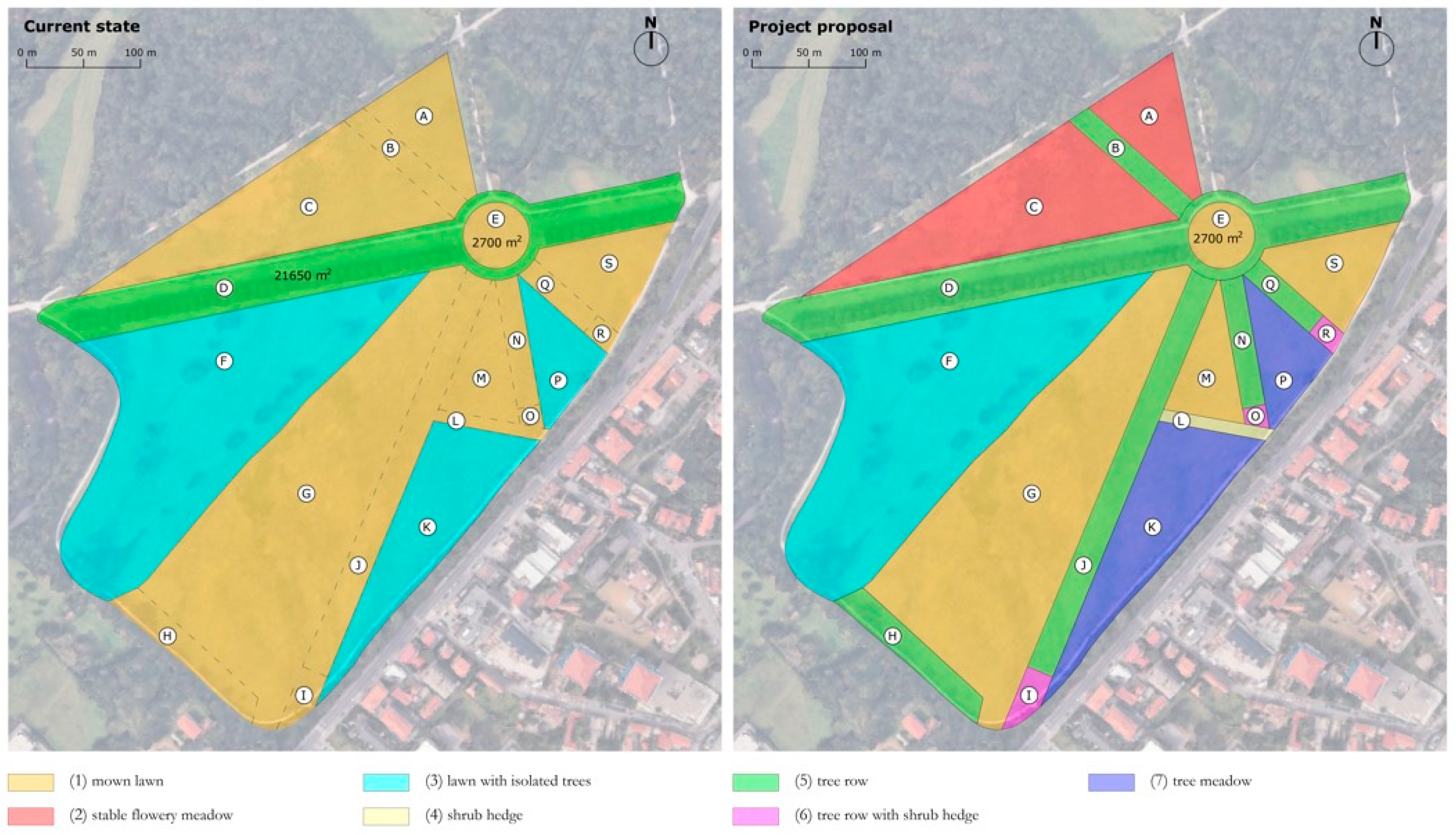
The experimental area was divided into 19 sub-areas corresponding to the minimum survey unit, defined based on the vegetation clusters proposed in the project layout (Figure 3). This subdivision was applied consistently to both the current and the project conditions, ensuring that ex-ante and ex-post comparisons refer to identical surface units. Table 4 summarizes the main characteristics of each sub-area, including their spatial extent and vegetation configuration in both the existing and design scenarios. Vegetation configurations were defined according to specific structural and dimensional criteria, as follows: (1) mown lawn, characterized by the absence of woody vegetation and a surface of at least 1000 m2; (2) stable flowery meadow, defined by a reduced mowing regime limited to post-flowering; (3) lawn with isolated trees, with the area perimeter delineated by a 20-m offset from border woody vegetation and a tree/shrub density between 1 and 5 individuals per 1000 m2; (4) shrub hedge, with the area perimeter defined by a 1.5-m offset from the hedge line; (5) tree row and (6) tree row with shrub hedge, with the area perimeter defined by a 5-m offset from the tree line and a density between 6 and 12 trees per 1000 m2; and (7) tree meadow, with the area perimeter defined by a 10-m offset from border trees or shrubs and a density between 12 and 50 trees per 1000 m2.
In the current state, the area comprises 98,205 m2 of mown lawns, 55,667 m2 of lawn with isolated trees, and 21,656 m2 of tree rows. In the project scenario, the extent of mown lawns is nearly halved (52,647 m2), while 23,642 m2 of stable flowery meadow are introduced in sub-areas A and C. The surface covered by lawns with isolated trees is also reduced, remaining only in sub-area F (38,009 m2). The 17,658 m2 of lawn with isolated trees currently found in sub-areas K and P are converted into tree meadows in the project configuration. In addition, new shrub hedges (1067 m2, sub-area L) and tree rows with shrub hedges (1511 m2, sub-areas I, O, and R) are introduced. The surface covered by simple tree rows increased by 19,338 m2 from the current state to the project configuration. Finally, the proposed layout exhibits greater landscape and structural complexity, encompassing seven distinct vegetation configurations compared to only three in the current condition.

3.2. Cumulative Indicator Score

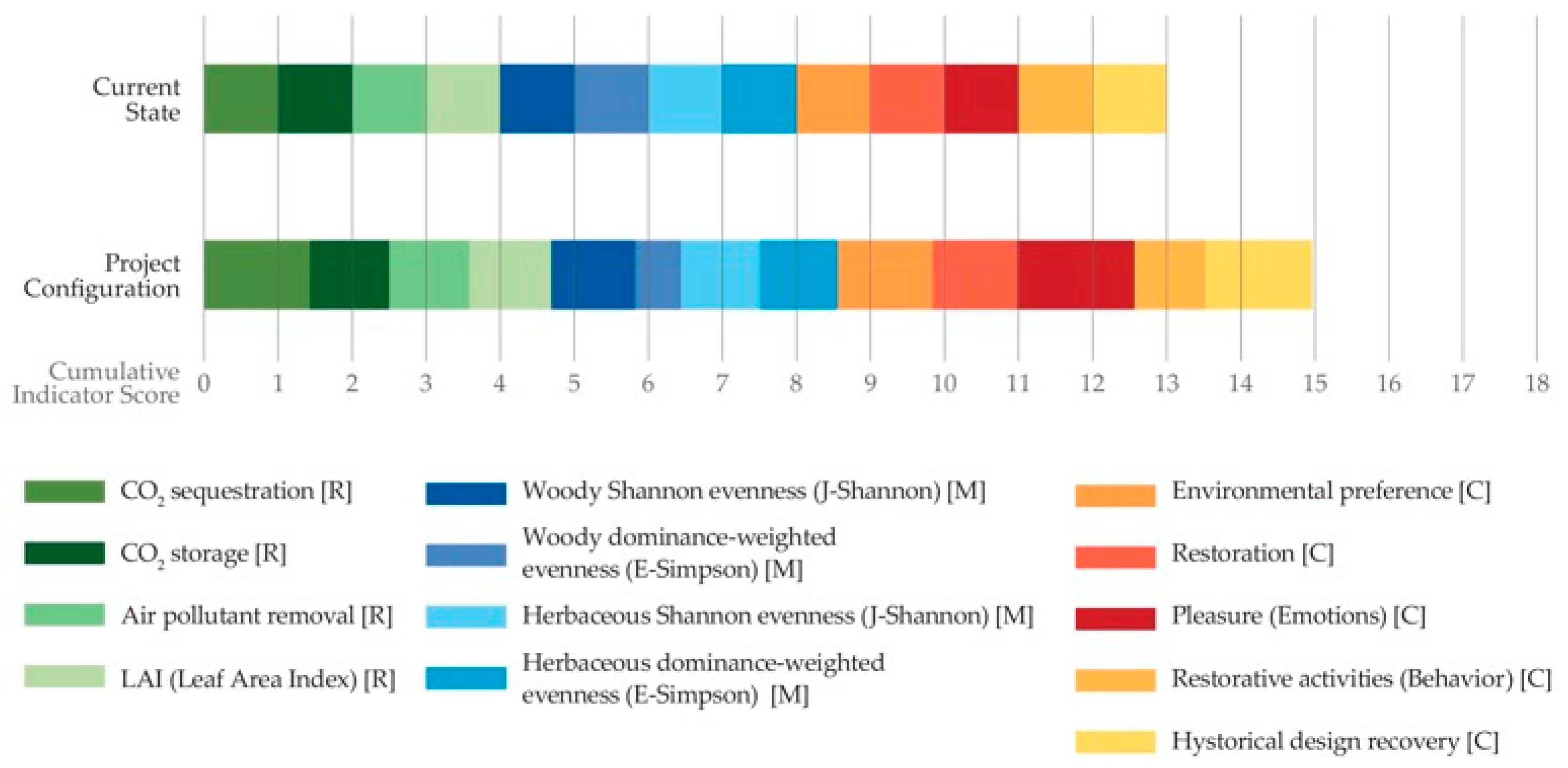
To quantify variations in ES provision between current conditions and the project configuration, a Cumulative Indicator Score (CIS) was first computed (Figure 4). Based on CIS (Figure 4), the results show that the project configuration (CISproject = 15) provides 15% more ESs than the current state (CIScurrent = 13).
Greater improvement was observed in the cultural section (+28%, CISC,current = 5, CISC,project = 6.4), followed by regulation (+17%, CISR,current = 4, CISR,project = 4.7). Maintenance was the only section that showed a decrease in ES provision (−3%, CISM,current = 4, CISM,project = 3.9), as herbaceous dominance and both herbaceous and woody vegetation diversity slightly increased (CISproject of 1.05, 1.07, 1.13, respectively), whereas woody dominance markedly decreased (CISproject = 0.62). The largest increase was observed in CO2 sequestration (CISproject = 1.43) for regulation services, woody vegetation diversity (CISproject = 1.13) for maintenance services, and pleasure (CISproject = 1.59) for cultural services. Among all of the indicators analyzed, besides woody species dominance, restorative activities also exhibited a reduction from the current to the project state, as reflected by a CISproject value of 0.96.

3.3. Design Effectiveness Score

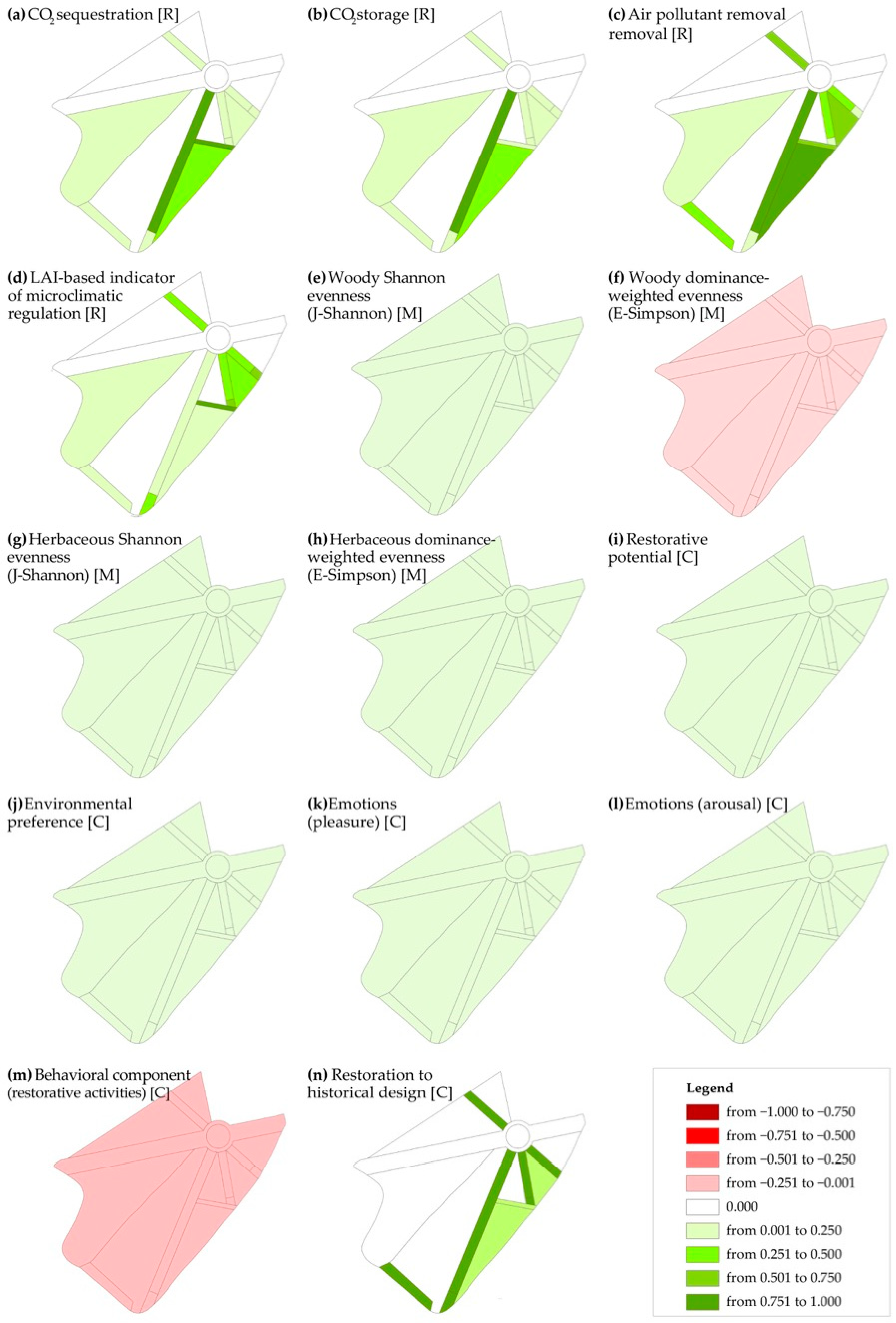
All regulation ESs showed non-negative Design Effectiveness Score values (DES ≥ 0), indicating that design interventions either maintained or improved ES provision compared to the current state (Figure 5a–d). Across all regulating services, DES values consistently reflected the magnitude of structural change in vegetation configurations. The highest DES values were systematically observed in sub-areas undergoing greater structural transformations, especially where mown lawn or lawn with isolated trees are converted into systems dominated by woody vegetation (see Figure 3 for transitions in vegetation configuration). Transitions to tree rows, tree meadows, and hedges produced the strongest and most consistent improvements across most of the sub-areas in CO2 sequestration, CO2 storage, air pollutant removal, and LAI. Within this group, sub-area J (mown lawn to tree row), sub-area K (lawn with isolated trees to tree meadow), and sub-area L (mown lawn to hedge) represented the most effective interventions, reaching maximum or near-maximum DES values (up to DES = 1) across multiple regulating services. Intermediate DES values characterized transitions toward linear woody configurations, such as the conversion of mown lawn to tree row with hedge and to tree row in some sub-areas. These configurations consistently enhanced regulation services, particularly CO2 sequestration and air pollutant removal, although to a lesser extent than in sub-areas dominated by trees. Configurations involving shrub hedges showed the highest effects on microclimate regulation, with higher values of LAI, even if the effect was limited to this indicator. An exception is sub-area L, which also showed a strong positive response for CO2 sequestration and air pollutant removal, despite more moderate gains in CO2 storage.
More moderate positive DES values were associated with transitions involving limited increases in woody vegetation cover, such as the conversion of lawns with isolated trees to tree meadows, which resulted in balanced improvements across all regulation services without reaching the highest DES levels observed in linear or more dense woody configurations. Finally, sub-areas without changes in vegetation configuration showed only marginal improvements. Sub-area F, which remained structurally unchanged, consistently exhibited null or low positive DES values across all regulating services.
Regarding maintenance ESs, DES values showed overall limited changes in biodiversity. Equi-distribution, expressed through the J-Shannon index, showed only marginal improvements in both survey units, with slightly higher values in woody vegetation (DES = 0.07; Figure 5e) than in herbaceous vegetation (DES = 0.04; Figure 5g). In contrast, DES values based on the E-Simpson index revealed divergent responses between survey units. Woody vegetation exhibited a slight decrease in dominance-weighted evenness (DES = −0.05; Figure 5f), while herbaceous vegetation showed an almost negligible increase (DES = 0.01; Figure 5h).
Concerning cultural ESs, DES values highlighted an overall enhancement of cultural benefits under the project scenario. For psychological indicators, which were assessed at the scale of the entire study area, DES consistently indicated values more positive from current to project conditions, ranging between 0.12 and 0.21 (Figure 5i–l). The only exception was restorative activities within the behavioral component, which showed a slight reduction following design implementation (DEI = −0.04; Figure 5m). Detailed statistical outcomes for psychological indicators are reported in Appendix B.3. The degree of correspondence with historical design, estimated for each sub-area, exhibited a marked spatial differentiation among sub-areas (Figure 5n). Eight out of nineteen sub-areas achieved full recovery (DES = 1), all of which were characterized in the current state by a mown lawn configuration. Partial correspondence (DES = 0.5) was observed in three sub-areas, associated with transitions from mown lawn to hedge and from lawn with isolated trees to tree meadow, where historical sources documented the ancient presence of woodland configurations. The remaining eight sub-areas, in which the project involved limited or no modifications in configuration, showed no change in historical design recovery (DES = 0).

3.4. Synergy–Trade-Off Score

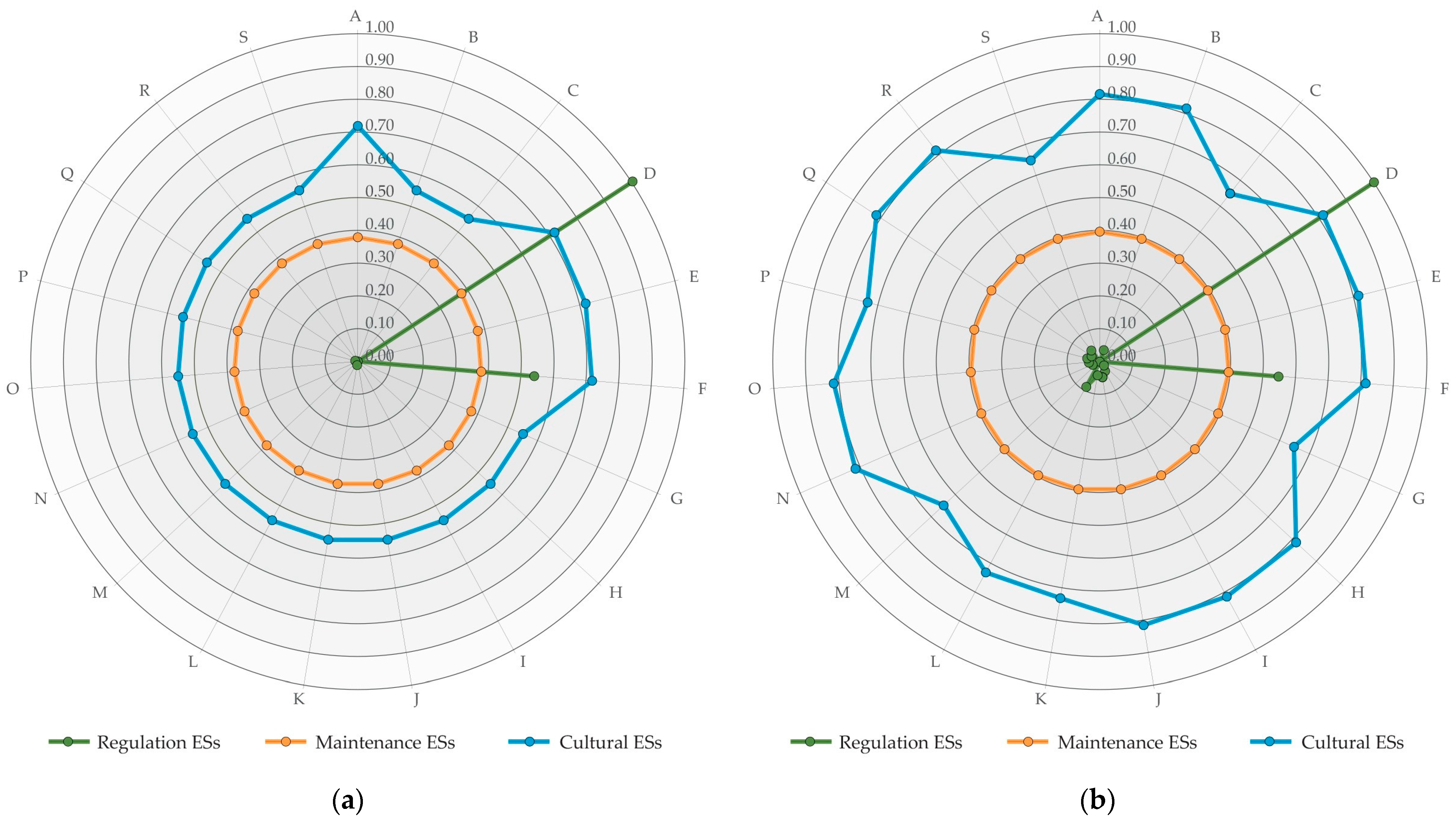
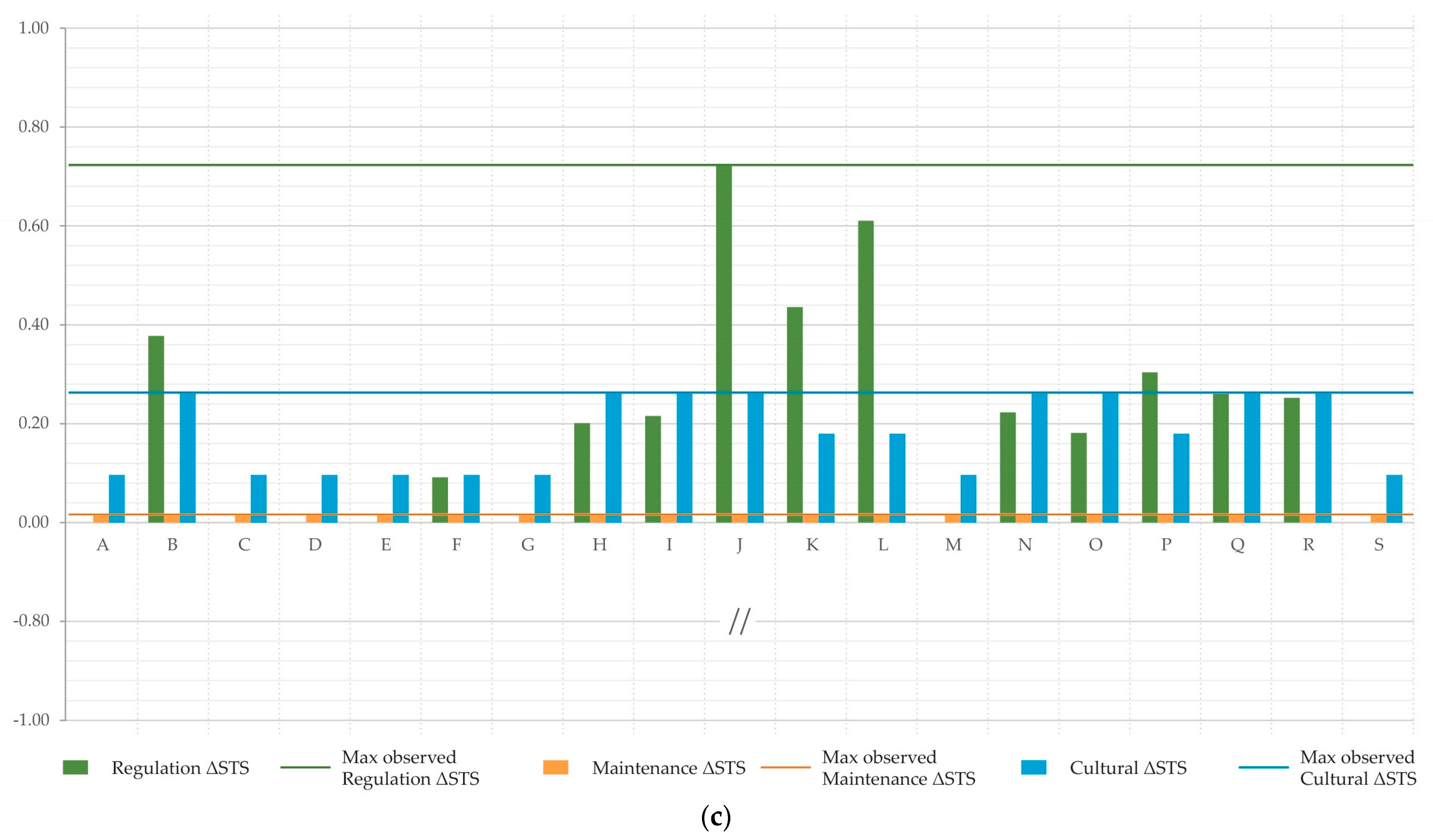
By comparing the current and project Synergy–Trade-off Score (STS) across all sub-areas of the study area (Figure 6a,b), an overall increase in ES provision was observed involving all three ES sections (regulation, maintenance and cultural). ΔSTS identified sub-area J as the area exhibiting the highest overall increase across all three ES sections simultaneously, corresponding to the conversion from a mown lawn to a tree row configuration (Figure 6c). Sub-areas B, H, I, N, O, Q, and R showed the highest relative gains in cultural and maintenance services, coupled with an intermediate increase in regulation services. Sub-areas K, L, and P, together with sub-area B, exhibited among the highest relative increases in regulation services, while cultural services showed intermediate increases and maintenance services remained constant, as observed in all other sub-areas. Sub-area F showed only a slight increase in both cultural and regulation services. Sub-areas A, C, D, E, G, M, and S exhibited slight relative increases in cultural services, with no changes in regulation services. When considering normalized absolute values, several sub-areas (A, D, E and F) already display high cultural ES scores under the current conditions. For regulation services, sub-area D exhibited substantially higher absolute values than all other sub-areas, followed by sub-area F.

4. Discussion

4.1. Main Findings and Interpretation of Results

Overall, the Cumulative Indicator Score (CIS) indicates that the proposed project configuration enhances the provision of ecosystem services (ESs) while reshaping their relative composition. Gains in cultural and regulating services outweigh the more limited or contrasting responses observed within the maintenance section, suggesting that the project promotes a multifunctional rather than a uniform enhancement of ES provision across all categories.

4.1.1. Regulation Ecosystem Services

The regulation section of the project is globally enhanced, with improvements strongly associated with changes in vegetation structure. Increases in woody cover, greater spatial continuity and transitions from simplified herbaceous configurations to structurally more complex vegetation layouts emerge as key drivers. The scoring system of the proposed framework consistently supports this interpretation: beyond the cumulative increase highlighted by the CIS in the project scenario, the Design Effectiveness Score (DES) emphasizes the local efficacy of specific transitions between vegetation types, while the Synergy–Trade-off Score (STS) reveals a clear prevalence of synergies over trade-offs across all considered regulating services. DES patterns indicate that they primarily respond to tree-based and multilayered configurations, which consistently outperform herbaceous-dominated or weakly structured systems. When narrowing the analysis to sub-areas characterized by the same vegetation configuration, species-specific differences become more evident as well as planting schemes. Overall, this evidence is coherent with a large body of literature demonstrating that woody vegetation represents the main structural and functional driver of urban regulation services at the green area scale.
For microclimate regulation, vegetation effects are driven by the combined role of radiation interception (shading) and evapotranspiration (i.e., the combined process of plant transpiration and evaporation from soil and water bodies), both contributing to the mitigation of the urban heat island effect [87,88]. In this study, leaf area index (LAI) was adopted as a structural proxy of canopy density and vegetation potential for microclimatic regulation, as it reflects both the capacity to intercept solar radiation and the potential for transpiration. Higher LAI values are generally associated with reduced solar radiation penetration and lower near-surface temperatures under tree canopies, even under water-limited conditions [89,90]. While the LAI does not directly capture short-term variability in evapotranspiration rates, it provides a robust proxy of the overall cooling potential of vegetation, integrating both shading and transpiration-related processes [91,92]. Consistent with this interpretation, the higher performance observed in tree-based and multilayered configurations is primarily associated with increased canopy density and spatial continuity, which amplify local cooling effects. However, species-specific traits (e.g., canopy architecture and leaf properties) and environmental conditions (e.g., soil moisture, vapor pressure deficit, wind speed) still influence the effectiveness of microclimatic regulation [93,94,95]. Consequently, planting design and spatial configuration remain crucial: multilayered assemblages combining trees, shrubs, and ground vegetation, as well as spatially contiguous green patches, enhance cumulative cooling effects [87,88]. A more localized effect was observed in configurations dominated by shrub hedges, which, despite reaching high LAI values, primarily enhance microclimatic regulation at the sub-area scale, with limited effects beyond the immediate surroundings. This is consistent with studies showing that shrubs and lower vegetation layers can significantly reduce surface and near-ground temperatures, although their cooling effect is typically limited in spatial extent compared to tree canopies [96,97]. This suggests that dense but spatially confined vegetation structures provide effective cooling in the immediate surroundings but contribute less to cooling at a broader scale (sub-area) than more extensive tree-based systems.
A comparable structural pattern emerges for air pollutant removal. Vegetation complexity and canopy density, beyond species-specific functional traits, consistently act as primary determinants of the mitigation efficiency of particulate and gaseous pollutants. Multilayered tree–shrub–herb systems outperform single-layered configurations due to higher deposition capacity and greater structural resilience [98,99]. Trees and shrubs generally exhibit higher removal performance than herbaceous vegetation due to a larger leaf area, leaf longevity, canopy density, greater transpiration rates, and longer in-leaf periods [100,101,102]. Field-based modeling studies further confirm the importance of woody cover and spatial configuration. Forested areas followed by parks remove higher pollutant loads than other land-use types, primarily as a function of tree abundance [103].
Carbon storage and sequestration are guided by similar structural principles. Woody biomass represents the primary driver of carbon storage in urban ecosystems [104], with mature trees accounting for the largest share of long-term stocks, far exceeding the contribution of herbaceous layers [69,105]. Evidence from forest ecology shows that mixed-species stands can further enhance productivity and carbon sequestration through functional complementarity and resource partitioning [106], reinforcing the role of structural and compositional diversity. This explains why, in the present case study, structurally complex and multilayered woody configurations yielded higher sequestration and storage values, and why sub-areas already characterized by mature trees continued to exhibit disproportionately high contributions compared to newly established plantings of the project assessment.
Taken together, these findings support the higher performance of tree-based and multilayered configurations observed in this study. They suggest that minor design adjustments that do not substantially modify vegetation structure tend to produce only limited gains in regulating services, underscoring the importance of structural transformation rather than vegetation presence per se. In this context, the proposed design methodology proves capable of distinguishing between qualitatively different types of interventions, moving beyond the simplistic assumption that “more green” automatically translates into greater ecosystem service provision.

4.1.2. Cultural Ecosystem Services

Cultural services exhibited improvements driven by both spatial design coherence and experiential quality. Cultural services showed a clear and consistent improvement under the project scenario, comparable in magnitude to that observed for regulation. Within the case-study application of the proposed methodology, this enhancement emerges from the combined reading of aggregated psychological indicators and the spatially explicit historical design recovery indicator. Psychological constructs generally increased, despite the slight reduction in restorative activities.
The historical design recovery indicator displayed a strong positive response, emphasizing the importance of coherence between design interventions and the historical identity. Spatial differentiation reflects the degree of alignment with documented layouts. Full correspondence was primarily achieved through the reintroduction of structurally complex linear woody elements, such as tree rows and tree row–hedge systems. In contrast, interventions involving limited structural modifications or alternative vegetation types (e.g., flowery or tree meadows) proved insufficient to recover historical configurations, despite their ecological or aesthetic value. These findings underscore the central role of spatial structure, rather than vegetation type alone, in mediating cultural ESs linked to heritage and landscape identity.
The pattern emerging from the four psychological constructs and the behavioral component indicators suggests that the project enhances the experiential quality without substantially altering functional use. In line with the study hypotheses, perceived restoration increased at both locations, with slightly larger gains at the Rondò site. These effects are consistent with attention restoration theory (ART) [107], suggesting that improved spatial organization and more rich natural features enhance perceived psychological recovery potential. Environmental preference showed a parallel pattern, with project scenarios consistently preferred. This echoes the literature on the preference matrix, where coherence, complexity, legibility, and mystery reliably predict higher scenic beauty and preference [52,85]. Pleasure and arousal followed the same trend, indicating environments perceived as both calming but also lively and energizing [86]. This aligns with recent evidence that urban forests, and to a lesser extent, parks, are linked to highly positive, high-arousal emotional states, such as joy, rather than exclusively low-activation calmness [108]. Together, these results support the view of urban green spaces as places that combine attentional recovery with “positive activation” connected to movement and social life. In contrast, the behavioral component revealed a stable distribution of uses across scenarios. This suggests that, at least in this sample and within a prospective, scenario-based evaluation, participants interpreted the redesign as enhancing the emotional, aesthetic, and restorative qualities of the places without radically changing how they would use them in everyday life. This pattern is also consistent with the design constraints typical of historical parks, where interventions must remain aligned with pre-existing layouts and species composition, often limiting the range of possible transformations. Within this context, even relatively simple interventions (e.g., tree rows, hedges, tree meadows) represent the extent of feasible design action. Despite these constraints, measurable improvements in perceived quality were observed. This can be considered a strength of the design, although the results should be interpreted cautiously given the limited sample size and the hypothetical nature of activity reports. In addition, even though the list of activities was adapted from international standards, it remains not specifically designed for parks or natural settings; a set of items better reflecting context-specific uses of the park might improve the quality of the analysis.
Overall, these results highlight the complementarity between aggregated psychological indicators and the spatially explicit historical design recovery metric. While psychological constructs assessed through surveys at the scale of the entire project area provide an integrated and subjective evaluation of the overall park experience as perceived by users, historical design recovery represents an objective, document-based indicator sensitive to local design differences and is capable of identifying where and to what extent cultural and identity values are restored. The interaction between these two dimensions allows cultural quality to be assessed without redundancy, capturing both lived experience and spatially differentiated heritage values.

4.1.3. Maintenance Ecosystem Services

In contrast to the clear positive trends observed for regulation and cultural services, maintenance-related indicators showed more moderate, and in some cases, contrasting responses. At the aggregated level, the CIS confirmed this moderate response: while herbaceous dominance-weighted evenness, as well as herbaceous and woody Shannon evenness, slightly increased, the decline in woody dominance-weighted evenness only marginally affected the overall CIS of the maintenance section. The generally low DES values suggest that the proposed design interventions produced only modest effects on biodiversity structure at the scale considered. While slight improvements in species equi-distribution were detected through evenness-based formulations of the Shannon index for both herbaceous and woody vegetation, dominance-weighted evenness (E-Simpson) exhibited divergent responses, with a decline in woody vegetation and only marginal changes in herbaceous communities, reflecting the higher sensitivity of Simpson-based metrics to dominant species [109,110]. These patterns can be interpreted considering both ecological dynamics and design constraints. In herbaceous systems, biodiversity responses are known to vary over time as species sorting processes progressively occur [111], particularly in highly frequented urban grasslands subject to trampling by visitors and domestic animals [112]. The limited magnitude of the observed changes is therefore consistent with the short temporal horizon captured by the present assessment and is further linked to the conservative grass-dominance scenario (80% grasses, 20% forbs) adopted for estimating herbaceous cover–abundance under project conditions. In this context, the results suggest that allocating a larger surface to the renewal or diversification of existing mown lawns could enhance maintenance ESs more effectively for the herbaceous layer. The analysis of current grassland conditions further supports this interpretation. The studied meadows are archetypal managed grasslands, regularly mown for hay production and simultaneously used for recreational purposes. Their species composition is characterized by a predominance of therophytes and hemicryptophytes, partially discontinuous vegetation cover, and the presence of non-invasive exotic species, all of which point to a certain degree of anthropization and structural instability, consistent with patterns observed in intensively managed grasslands [113]. At the same time, the limited occurrence of invasive exotic species within mown grasslands, compared to forest edges and degraded forest formations, suggests that appropriate grassland management may play a key role in mitigating biological invasions [114]. From this perspective, the scheduled long-term management interventions, including the cultivation of indigenous grassland species, are expected to progressively improve both the qualitative and quantitative characteristics of these communities beyond the short temporal window captured by the present assessment. Conversely, the reduction in dominance-weighted evenness observed in woody vegetation indicates that, despite a clear increase in species richness, the project scenario is characterized by a non-proportional increase in individuals belonging to a limited subset of species. This contrasting response between Shannon-based evenness and dominance-weighted evenness highlights that increasing planting density, even when associated with a higher number of species, does not necessarily translate into an improved community structure unless accompanied by a more even distribution of abundances among species.

4.1.4. Synergies and Trade-Offs

The overall increase in STS values across the study area reflects the transition from simplified vegetation configurations, primarily mown lawns, to structurally more complex layouts such as stable flowery meadows, tree rows, shrub hedges, or their combinations. Sub-areas exhibiting the highest gains across multiple ES sections were consistently associated with the introduction of linear or spatially continuous woody elements, which simultaneously enhanced cultural perception, ecological support functions, and regulating processes. Conversions from mown lawns to tree rows or tree–hedge systems proved especially effective in generating synergies among cultural, maintenance, and regulating services. Conversely, sub-areas characterized by limited or no structural modifications between the current and project states showed only marginal improvements in STS values, particularly for regulation services. Moreover, areas already displaying high absolute ES values under current conditions exhibited a reduced margin for further enhancement, suggesting a saturation effect in zones with pre-existing structurally complex vegetation. From an integrative perspective, the STS analysis highlights that ecosystem service gains are not uniformly distributed across categories but depend on the structural intensity and spatial coherence of design interventions. The prevalence of synergies over trade-offs confirms that increasing vegetation complexity can simultaneously support multiple ESs; however, the moderate and internally differentiated response of maintenance indicators reveals ecological inertia and temporal constraints in biodiversity dynamics.
Considering these findings, the research questions can be addressed. First, the use of indicators as proxies proved effective for assessing multiple ESs at the scale of a single historical urban park. The identification of key ESs and the selection of appropriate indicators enable a structured and comparative evaluation prior to project implementation. Second, in the constrained context of historical urban parks, design choices related to vegetation structure, compositional complexity, and spatial continuity strongly influence the magnitude and balance of ES provision across categories. Third, the framework demonstrates its applicability as a decision-support tool, enabling designers, decision-makers, and stakeholders to anticipate the ES implications of alternative scenarios and to guide restoration toward more multifunctional and synergistic outcomes within site-specific constraints.

4.2. Methodological Contributions and Innovation

The scoring system developed within the framework, comprising the Cumulative Indicator Score (CIS), the Design Effectiveness Score (DES), and the Synergy–Trade-off Score (STS), provides complementary levels of interpretation. The CIS does not represent absolute service magnitude but rather synthesizes the contribution of multiple ESs, offering a first comparative assessment of whether a proposed scenario results in a more balanced distribution of services across the study area. DES shifts the focus from service provision per se to the relative efficacy of the project, addressing the questions: “Where did the project perform best?” and “Where did design interventions generate the most significant changes?”. In this sense, DES measures the impact of design choices rather than the intrinsic performance of the area. Finally, the STS identifies zones of multi-service synergy and highlights potential antagonistic effects, a crucial aspect in urban regeneration projects where ecological, social and cultural objectives coexist and may conflict.

4.3. Transferability and Practical Implications

Building on these methodological contributions, the framework operates not only as an assessment tool but also as a planning instrument. It identifies the most effective interventions, signals those with limited benefits, and supports iterative design refinement. It can therefore be applied during the conceptual phase, within participatory processes, and as a monitoring tool over time, providing operational support for adaptive decision-making. In the specific case study presented, the methodological application directly informed the drafting of the final executive project. The insights derived from the framework were used to refine design choices and optimize ecosystem service provision within existing constraints, demonstrating its practical relevance beyond academic evaluation.

4.4. Limitations and Future Research

Despite these strengths and practical applications, some limitations should be acknowledged. With specific reference to the psychological indicators within the cultural ESs assessment, despite the repeated-measures design, which reduces inter-individual variability, the relatively small sample size requires caution in interpreting the findings, particularly null results and more nuanced interaction effects [115]. In this respect, the study appears sufficiently sensitive to detect relatively robust experiential differences between scenarios. In contrast, the absence of significant changes in the activity data should be interpreted more cautiously, as the modest sample size, the binary coding of single activities, and the low frequency of some categories may have reduced the sensitivity of behavioral analyses. Similarly, the sample size may have limited the possibility of detecting smaller location-specific interaction effects. At the same time, the repetition of assessments across two distinct locations supported the identification of recurring patterns while reducing dependence on a single site-specific observation. Future studies with larger and more diverse samples are needed to test the stability and generalizability of these patterns. A final consideration concerns the participatory nature of the procedure. The inclusion of participants who were already ecologically situated within, and actively engaged with, the park through a participatory process enhanced the contextual relevance of the data and is consistent with the strengths commonly attributed to community-based research approaches [116]. These features should not be taken as offsetting the limitations of a small sample size, but rather as methodological elements to consider in future replications.
Beyond these case-specific aspects, additional methodological limitations should also be considered. From a methodological perspective, the estimation of regulating ESs relies on the i-Tree Eco model, which is not calibrated for the local context. As a result, the outputs may be affected by uncertainties related to input parameters, default assumptions, and the transferability of species- or site-specific functions, especially for processes that depend on environmental conditions. However, in this study, i-Tree Eco was mainly used to compare current and project scenarios, rather than to provide absolute estimates. In this sense, possible modeling errors are expected to have a limited effect on the interpretation of results, as any systematic bias is likely to influence both scenarios in a similar way.
Another limitation concerns the fact that the contribution of herbaceous vegetation to regulating ESs was not explicitly quantified. While herbaceous layers can contribute to regulation processes, their effects are generally lower than those of woody vegetation and strongly dependent on management practices (e.g., mowing frequency) [117]. In the context of historical park restoration, where herbaceous surfaces are typically maintained, their contribution can be reasonably assumed to remain constant across scenarios. Therefore, the proposed framework focuses on vegetation components that are most responsive to design choices (i.e., tree and shrub layers), which represent the main drivers of variation in the considered ES potential provision at the project scale.
Finally, this study was based on a single case study, which may limit the generalizability of the results. However, the proposed framework is intended as a pilot application to demonstrate its feasibility at the scale of individual urban green spaces. In this perspective, the ongoing restoration process offers the opportunity for future ex-post validation through direct measurements once the proposed design interventions are implemented. Future research will extend the approach to additional case studies to test its robustness across different contexts.

5. Conclusions

Taken together, the results and methodological considerations discussed above highlight that beyond the specific case study presented, the design approach contributes to the scientific literature by proposing a structured and replicable framework tailored to historical urban parks. It begins with the identification of key ESs relevant to the specific component of green infrastructure considered, followed by the selection of appropriate indicators and assessment methods for both current and project scenarios. Through an integrated reading of baseline conditions, the framework ensures that all selected ESs are considered with equal weight, reducing the risk of bias toward pre-existing high-performing areas. The proposed methodology was conceived to foster an interdisciplinary approach to the regeneration of historical urban parks by integrating multiple ecosystem service (ES) categories within a single, evidence-based and data-driven design process. By evaluating how variations in vegetation configuration, structure, and spatial arrangement affect ES provision through quantifiable proxy indicators, the framework enables objective comparison between existing and proposed scenarios. Heterogeneous indicators are translated into comparable metrics, allowing transparent ex-ante and ex-post assessments that move beyond single-service analyses. Assigning performance scores to vegetation types further enables the spatial mapping of services, clarifying their distribution and highlighting areas of potential improvement. Overall, the results of the case study underline the capacity of the framework to make internal trade-offs and structural limitations visible rather than forcing uniformly positive outcomes. By distinguishing between significant structural transformations and mere vegetation addition, the methodology offers realistic guidance for improving project performance. At the same time, the case study highlights that even relatively limited and conservation-driven interventions can produce measurable improvements in ES provision, particularly in terms of perceived environmental quality. This is especially relevant in historical park contexts, where design flexibility is inherently constrained by heritage regulations. However, the framework has so far been applied to a single case study and remains sensitive to the selection and balance of indicators within each ES category. Future research should include validation through direct field measurements, integration with long-term monitoring data, and testing under alternative design scenarios. Further developments could extend the framework to additional supporting services, socio-economic indicators, and design-related factors such as equipment, furnishings, and paving surfaces. Application to different urban contexts and other categories of green infrastructure would also help assess its broader transferability and robustness.

6. Patents

The exp-EIA© (experiential-Environmental Impact Assessment) was developed by B.E.A.P., M.B., N.R., and G.S. at Politecnico di Milano and Università degli Studi di Milano and is a patented method nationally and internationally [PATENT 1: Italian Publication Number 102021000017168-30/06/2021; International Publication Number WO 2023/275679 A1-5.1.2023; PATENT 2: Italian Patent Publication Number 102024000011161-16.5.2024\COPYRIGHT 1: N. D000020125-16.06.2023; COPYRIGHT 2 N. 130516-25.02.2021; COPYRIGHT 3 N. 123453-06.05.2020].

Supplementary Materials

The following supporting information can be downloaded at: https://www.mdpi.com/article/10.3390/land15040627/s1, Dataset S1: Regulation services; Dataset S2: Maintenance services; Dataset S3: Cultural services; Dataset S4: Scoring system.

Author Contributions

Conceptualization, D.C. and N.F.; Methodology, D.C., N.F., M.B., B.E.A.P., I.V. and G.S. (Giulio Senes); Validation, N.F., M.B. and I.V.; Formal analysis, D.C., N.R., G.S. (Gabriele Stancato) and I.V.; Investigation, D.C., N.R., B.E.A.P. and G.S. (Gabriele Stancato); Resources, D.C., N.F., M.B., N.R., B.E.A.P., G.S. (Gabriele Stancato) and I.V.; Data curation, All authors; Writing—original draft preparation, D.C.; Writing—review and editing, N.F., M.B., B.E.A.P. and G.L.; Visualization, D.C. and A.P.; Supervision, N.F., M.B. and G.S. (Giulio Senes); Project administration, N.F.; Funding acquisition, N.F. All authors have read and agreed to the published version of the manuscript.

Funding

This research was funded by European Union—NextGenerationEU, under the National Recovery and Resilience Plan (NRRP) Mission 1—Digitalizzazione, innovazione, competitività e cultura, Component 3—Cultura 4.0 (M1C3), Misura 2 “Rigenerazione di piccoli siti culturali, patrimonio culturale, religioso e rurale”, Investimento 2.3: “Programmi per valorizzare l’identità dei luoghi: parchi e giardini storici”. The exp-EIA method has been further implemented within the MUSA—Multilayered Urban Sustainability Action—project, funded by the European Union—NextGenerationEU, under the National Recovery and Resilience Plan (NRRP) Mission 4 Component 2 Investment Line 1.5: Strengthening of research structures and creation of R&D “innovation ecosystems”, set up of “territorial leaders in R&D”.

Data Availability Statement

The original contributions presented in this study are included in the article/Supplementary Material. Further inquiries can be directed to the corresponding author.

Acknowledgments

The authors gratefully acknowledge Matteo Bragotto (Forester), Ambrogio Cantù (Agronomist), and Elisabetta Fermani (Agronomist) for providing access to the project documentation, design materials, and vegetation census data. Their collaboration and willingness to share essential information significantly contributed to the development of this study.

Conflicts of Interest

The authors declare no conflicts of interest.

Abbreviations

The following abbreviations are used in this manuscript:
UniMiUniversity of Milan
ESEcosystem service
CISCumulative Indicator Score
DESDesign Effectiveness Score
STSSynergy−Trade-off Score

Appendix A. Vegetation Framework and Phytosociological Data Processing

Appendix A.1. Potential Natural Vegetation and Successional Stages of the Study Area

This appendix provides a synthetic phytosociological description of the potential natural vegetation of the study area. In line with the local bioclimatic and pedological conditions, the vegetational context belongs to the neutral–acidic upper western Po Valley series of English Oak and Hornbeam (Carpinion betuli Isler 1931 alliance). The main successional stages associated with this alliance are described below. The mature stage of the real potential series is represented by a forest of Quercus robur L., Carpinus betulus L., Fraxinus excelsior L., Acer campestre L., Acer pseudoplatanus L., and Prunus avium (L.). The pre-forest stage is represented by associations with Corylus avellana L. and Prunus avium (L.) L. as characteristic species and companion Fraxinus excelsior L. and Carpinus betulus L. The shrub stage is represented by mesophilic associations belonging to Prunetalia-spinosae Tuxen 1952 order, Rhamno catharticaePrunetea spinosae Rivas Goday & Borja Ex Tuxen 1962 class, with Crataegus monogyna Jacq., Euonymus europaeus L., Prunus spinosa L., Cornus mas L., Rosa canina L., and Ligustrum vulgare L. Initial stages with natural grasslands is currently absent in the Po Plain context due to the secular anthropic disturbance conditions: the theoretical herbaceous stage belongs to the Festuco valesiacaeBrometea erecti Br.-Bl. & Tuxen Ex Br.-Bl. 1949 class [118,119].

Appendix A.2. Phytosociological Data Processing

Relevés were tabulated, ordered, and interpreted according to the phytosociological approach, allowing for the identification of vegetation communities with homogeneous floristic composition and ecology, which were then assigned to coherent syntaxonomic categories (associations and higher-level syntaxa). Cover–abundance phytosociological values recorded using the Braun–Blanquet alpha–numerical scale were transformed into quantitative values according to the approach proposed by [120], based on the conversion to central values. This transformation allowed for calculation of the specific coverage index (SCI) [72,73], which was subsequently used for quantitative biodiversity analyses. Vegetation units identified through the phytosociological analysis were classified within coherent syntaxonomic categories (associations and higher-level syntaxa) according to the Prodromo della Vegetazione d’Italia [121,122,123,124,125]. For each phytosociological relevé, recorded taxa were associated with their respective Raunkiær life forms and chorotypes [126,127,128,129,130]; as well as with ecological indicator values, which were assigned following the updated Ellenberg–Pignatti system commonly adopted for Italian flora [131,132,133]; and observation site. Life forms were classified using the following abbreviations: P = phanerophyte; Ch = chamaephyte; H = hemicryptophyte; G = geophyte; He/I = hydrophyte/helophyte; T = therophyte. Chorotypes of native species were grouped into seven biogeographical autochthonous regions (Boreal, Cosmopolitan, Euro-Asiatic, South European orophyte, Mediterranean, Atlantic, and Endemic), while non-native taxa were classified as alien species. Scientific nomenclature follows the Italian floristic system. A synthetic overview of the phytosociological relevés dataset, including species composition and associated floristic attributes, is provided in Figure A1.
Figure A1. Synthetic overview of the phytosociological relevés dataset, showing species composition and associated floristic attributes (life forms, chorotypes and ecological indicator values) used for biodiversity analyses.
Land 15 00627 g0a1

Appendix B. Participants, Visual Simulation Workflow, and Statistical Results for Subjective Variables

Appendix B.1. Participant Sample

Two participant groups were involved in the study. The first group consisted of 19 members of local associations engaged in the protection and cultural promotion of Monza Park (mean age = 62.13 years, SD = 15.27; 33.3% women). The second group included 19 university students in Agricultural Sciences (mean age = 23.65 years, SD = 2.00; 58.8% women), who are expected to use the study area as a future educational facility. The inclusion of these two groups allowed the collection of evaluative responses from both long-term park users with strong place attachment and younger users representing potential future users of the area.

Appendix B.2. Visual Simulation Workflow and Photo-Based Virtual Reality
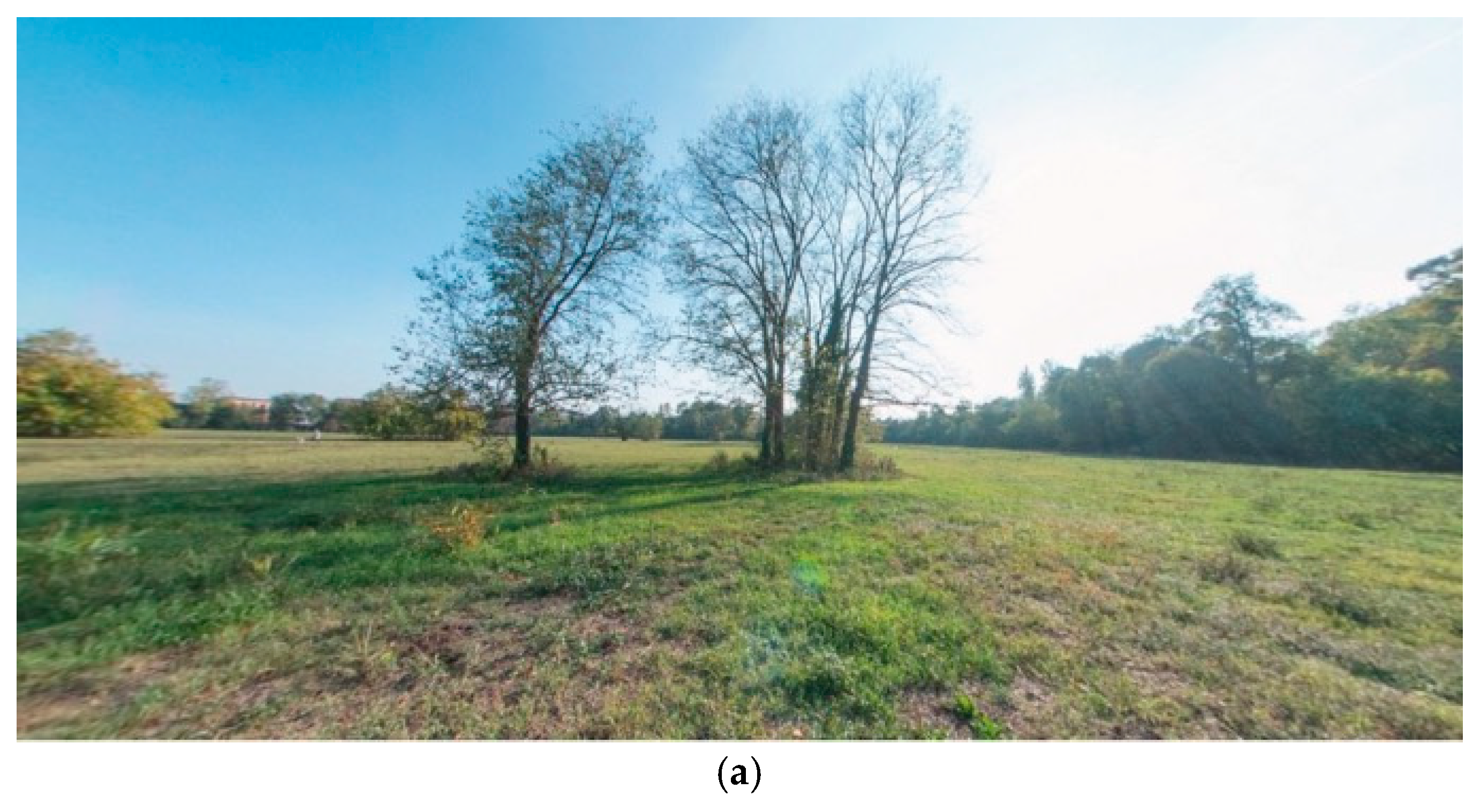
The original spherical photographs were used as baseline stimuli to elicit participants’ reactions to the current state of the locations, preserving real-world visual cues related to spatial configuration, vegetation, light conditions, and materiality. The design scenarios were generated by accurately overlaying project elements onto the same 360° images, maintaining identical camera position, height, orientation, and field of view. This ensured full visual and spatial correspondence between the current and simulated conditions, and by using the original 360° photographs as a common visual substrate for both stimuli, minimized perceptual bias while guaranteeing a high degree of comparability between conditions [134,135,136]. To ensure geometric coherence and to avoid any perceptual bias introduced by image warping or post-processing distortions, the simulation workflow was grounded in the construction of a site-specific 3D digital model corresponding to the portions of the park visible from the selected viewpoints. The model included a digital terrain model (DTM) as well as the trees and built elements present within the visible field of view, providing a reliable spatial and metric reference for the simulation process. Based on this 3D reconstruction, a virtual camera was configured to replicate the characteristics of the on-site photographic acquisition, matching viewpoint location, eye height, and spherical projection parameters. This camera-matching procedure enabled the accurate placement, without scaling, of the proposed design elements directly within the scene, consistently with the same visual geometry as the original 360° images. By relying on a coherent 3D spatial framework and an equivalent virtual viewpoint, the superimposition of project components could be achieved without distorting the original imagery, thus preserving the perceptual structure of the existing environment. This approach provided a high level of visual fidelity of the resulting simulations, which is particularly relevant given that the primary aim of the simulation was to elicit naturalistic perceptual, emotional, and evaluative responses to the future scenario, rather than analytical recognition of individual design interventions. Although the visual stimuli consisted of static 360° images, their use was dynamic. Once loaded into the mobile application, the spherical panoramas were displayed in an orientation-consistent manner with respect to the real environment, allowing participants to explore the scene by physically rotating their body and the smartphone. The images responded in real-time, through the device’s gyroscope, enabling an embodied and spatially coherent exploration of the visual environment based on sensorimotor contingencies related to a fixed point of view and a variable viewing direction, as experienced by a stationary observer looking around. For this reason, the experience can be considered a simple form of photo-based virtual reality, grounded in panoramic imagery rather than fully synthetic environments. This type of interaction, based on head and body rotation without locomotion, has been shown to be sufficient to elicit a sense of spatial presence [17,137,138]. The resulting simulations retained the photographic realism of the existing environment while clearly integrating the proposed transformations, supporting reliable perception-based evaluations grounded in high ecological validity. Importantly, in this perspective, the simulated scenarios were not conceived to explicitly highlight or visually isolate the design intervention as a distinct or contrasted element, nor to facilitate an analytical identification of “before” and “after” conditions. Instead, the simulations were intentionally developed to convey a plausible future scenario with an appropriate degree of perceptual realism, in which the proposed transformation is embedded as an integral part of the environment. This aspect enabled participants to react to the transformed environment as a coherent and credible whole. By avoiding overt visual cues that clearly distinguish the project from the existing condition, the simulations supported more naturalistic perceptual and psychological responses, aligning with the goal of anticipating how people are likely to experience and evaluate the transformed place once implemented. Figure A2 and Figure A3 present the visual stimuli used in the experiential evaluation, showing the comparison between the existing condition and the corresponding design scenario for the selected locations.
Figure A2. Comparison between the current condition (a) and the design scenario (b) for the Lawn location, based on views extracted from the high-resolution 360° visual stimuli. The design simulation was derived directly from the original spherical photograph and shares the same viewpoint and visual geometry, enabling a controlled comparison between existing and future conditions.
Land 15 00627 g0a2aLand 15 00627 g0a2b
Figure A3. Comparison between the current condition (a) and the design scenario (b) for the Rondò location, based on views extracted from the high-resolution 360° visual stimuli. The design simulation was derived directly from the original spherical photograph and shares the same viewpoint and visual geometry, enabling a controlled comparison between existing and future conditions.
Land 15 00627 g0a3

Appendix B.3. Statistical Results

Considering emotions, for pleasure, there was a robust main effect of Scenario, F(1,31) = 38.93, p < 0.001, ηp2 = 0.56, with higher pleasure in the project condition (M = 3.32) than in the existing one (M = 2.09). The main effect of Location was not significant, F(1,31) = 2.84, p = 0.102, ηp2 = 0.08. Crucially, the interaction between Scenario and Location was significant, F(1,31) = 12.37, p = 0.001, ηp2 = 0.29. Pleasure increased from existing to project at both sites, but the gain was larger at Rondò (from M = 1.40 to M = 3.48) than at Lawn (from M = 2.78 to M = 3.17). For arousal, the analysis again revealed a strong main effect of Scenario, F(1,31) = 33.54, p < 0.001, ηp2 = 0.52, indicating higher arousal in the project scenario (M = 2.47) than in the existing one (M = 0.86). Neither the main effect of Location, F(1,31) = 0.59, p = 0.447, ηp2 = 0.02, nor the interaction between Scenario and Location, F(1,31) = 0.62, p = 0.437, ηp2 = 0.02, reached significance, suggesting a comparable arousal increase at both sites.
For environmental preference, there was a large main effect of Scenario, F(1,31) = 63.40, p < 0.001, ηp2 = 0.67, with higher preference for the project scenario (M = 3.79) compared to the existing one (M = 2.96). No significant main effect of Location emerged, F(1,31) = 0.21, p = 0.647, ηp2 = 0.01. The interaction between Scenario and Location showed a trend, although not significant, F(1,31) = 3.41, p = 0.074, ηp2 = 0.10, indicating a slightly stronger increase in preference at Rondò (from M = 2.88 to M = 3.84) than at Lawn (from M = 3.05 to M = 3.75).
A similar pattern emerged for restoration. The main effect of Scenario was significant and large, F(1,31) = 38.74, p < 0.001, ηp2 = 0.56, with higher perceived restoration in the project condition (M = 3.91) than in the existing one (M = 3.42). The main effect of Location was not significant, F(1,31) = 0.22, p = 0.639, ηp2 = 0.01. The interaction between Scenario and Location again showed a non-significant trend, F(1,31) = 3.70, p = 0.064, ηp2 = 0.11: restoration increased at both sites, with a somewhat larger gain at Rondò (from M = 3.38 to M = 3.99) than at Lawn (from M = 3.46 to M = 3.82).
Across both locations, the activity profiles analyzed within the behavioral component indicator were broadly similar and dominated by leisure-oriented uses (Table A1). At Rondò in the existing scenario, sport (36.7% of responses), hobby (21.5%), and social activities (17.7%) were most frequently associated with the place, followed by entertainment (8.9%) and eat (7.6%). Work- and civically oriented uses (work, civic) were rarely mentioned (0–5.1%). In the project scenario, the pattern at Rondò remained very similar: sport (29.1%), hobby (23.3%), and social (20.9%) still accounted for the majority of responses, with small decreases or increases in single categories (e.g., a slight increase in study from 5.1% to 10.5% and a decrease in eat from 7.6% to 3.5%). A comparable profile emerged at Lawn. In the existing scenario, sport (28.4%), social (19.8%), and hobby (17.3%) were the most frequent activities, followed by entertainment (12.3%) and eat (9.9%), while work, civic, shopping, and mobility were very rarely or never selected. The project scenario at Roggia produced only minor shifts in these percentages (e.g., study from 8.6% to 12.0%, eat from 9.9% to 10.8%), with the overall distribution of activities remaining largely stable. Because participants could select multiple activities per location and were exposed to all scenarios, activity data were analyzed using a paired McNemar test in order to respect the within-subjects structure of the design. Mcnemar tests comparing existing versus project scenarios for each activity within each location confirmed that none of these differences reached statistical significance (all exact p-values > 0.05).
Table A1. Distribution (%) of activities associated with each location (Rondò, Lawn) in the existing and project scenarios. Values represent the percentage of responses (activities selected) within each location–scenario condition. Explanatory note: CS = Current state; PC = Project conditions.
ActivityTypeRondò (CS)Rondò (PC)Lawn (CS)Lawn (PC)
WorkNon-restorative0.02.31.21.2
StudyNon-restorative5.110.58.612.0
ShoppingNon-restorative0.00.00.00.0
MobilityNon-restorative0.00.00.00.0
NothingNon-restorative2.50.01.20.0
EatRestorative7.63.59.910.8
SocialRestorative17.720.919.820.5
CivicRestorative0.01.21.21.2
SportRestorative36.729.128.428.9
HobbyRestorative21.523.317.315.7
EntertainmentRestorative8.99.312.39.6
Overall, across all psychological measures, the simulated scenarios were consistently associated with higher pleasure, arousal, environmental preference, and perceived restoration, with no systematic overall differences between Rondò and Lawn. There is some indication that the intervention benefits Rondò more for hedonic evaluations, with a non-significant trend for cognitive measures as environmental preference and restoration. In the re-design scenarios, no statistically significant changes were detected in activity patterns in either location.

References

  1. Setälä, H.; Francini, G.; Allen, J.A.; Jumpponen, A.; Hui, N.; Kotze, D.J. Urban Parks Provide Ecosystem Services by Retaining Metals and Nutrients in Soils. Environ. Pollut. 2017, 231, 451–461. [Google Scholar] [CrossRef]
  2. Vigevani, I.; Corsini, D.; Mori, J.; Pasquinelli, A.; Gibin, M.; Comin, S.; Szwałko, P.; Cagnolati, E.; Ferrini, F.; Fini, A.; et al. Particulate Pollution Capture by Seventeen Woody Species Growing in Parks or Along Roads in Two European Cities. Sustainability 2022, 14, 1113. [Google Scholar] [CrossRef]
  3. Fini, A.; Vigevani, I.; Corsini, D.; Wężyk, P.; Bajorek-Zydroń, K.; Failla, O.; Cagnolati, E.; Mielczarek, L.; Comin, S.; Gibin, M.; et al. CO2-Assimilation, Sequestration, and Storage by Urban Woody Species Growing in Parks and Along Streets in Two Climatic Zones. Sci. Total Environ. 2023, 903, 166198. [Google Scholar] [CrossRef]
  4. Cao, X.; Onishi, A.; Chen, J.; Imura, H. Quantifying the Cool Island Intensity of Urban Parks Using ASTER and IKONOS Data. Landsc. Urban Plan. 2010, 96, 224–231. [Google Scholar] [CrossRef]
  5. Nielsen, A.B.; van den Bosch, M.; Maruthaveeran, S.; van den Bosch, C.K. Species Richness in Urban Parks and Its Drivers: A Review of Empirical Evidence. Urban Ecosyst. 2014, 17, 305–327. [Google Scholar] [CrossRef]
  6. Chiesura, A. The Role of Urban Parks for the Sustainable City. Landsc. Urban Plan. 2004, 68, 129–138. [Google Scholar] [CrossRef]
  7. Felappi, J.F.; Sommer, J.H.; Falkenberg, T.; Terlau, W.; Kötter, T. Urban Park Qualities Driving Visitors Mental Well-Being and Wildlife Conservation in a Neotropical Megacity. Sci. Rep. 2024, 14, 4856. [Google Scholar] [CrossRef] [PubMed]
  8. de Groot, R.S.; Alkemade, R.; Braat, L.; Hein, L.; Willemen, L. Challenges in Integrating the Concept of Ecosystem Services and Values in Landscape Planning, Management and Decision Making. Ecol. Complex. 2010, 7, 260–272. [Google Scholar] [CrossRef]
  9. Haines-Young, R.; Potschin, M. The Links Between Biodiversity, Ecosystem Services and Human Well-Being. In Ecosystem Ecology: A New Synthesis; Frid, C.L.J., Raffaelli, D.G., Eds.; Ecological Reviews; Cambridge University Press: Cambridge, UK, 2010; pp. 110–139. [Google Scholar]
  10. Haines-Young, R.; Potschin-Young, M.B. Revision of the Common International Classification for Ecosystem Services (CICES V5.1): A Policy Brief. One Ecosyst. 2018, 3, e27108. [Google Scholar] [CrossRef]
  11. Jato-Espino, D.; Capra-Ribeiro, F.; Moscardó, V.; Bartolomé del Pino, L.E.; Mayor-Vitoria, F.; Gallardo, L.O.; Carracedo, P.; Dietrich, K. A Systematic Review on the Ecosystem Services Provided by Green Infrastructure. Urban For. Urban Green. 2023, 86, 127998. [Google Scholar] [CrossRef]
  12. Howe, C.; Suich, H.; Vira, B.; Mace, G.M. Creating Win-Wins from Trade-Offs? Ecosystem Services for Human Well-Being: A Meta-Analysis of Ecosystem Service Trade-Offs and Synergies in the Real World. Glob. Environ. Change 2014, 28, 263–275. [Google Scholar] [CrossRef]
  13. Mexia, T.; Vieira, J.; Príncipe, A.; Anjos, A.; Silva, P.; Lopes, N.; Freitas, C.; Santos-Reis, M.; Correia, O.; Branquinho, C.; et al. Ecosystem Services: Urban Parks under a Magnifying Glass. Environ. Res. 2018, 160, 469–478. [Google Scholar] [CrossRef] [PubMed]
  14. Schröter, M.; Bonn, A.; Klotz, S.; Seppelt, R.; Baessler, C. Atlas of Ecosystem Services: Drivers, Risks, and Societal Responses; Springer: Berlin/Heidelberg, Germany, 2019. [Google Scholar]
  15. Chen, Y.; Zhang, L.; Zhang, Z.; Chen, S.; Yu, B.; Wang, Y. Park Visitors and Birds Connected by Trade-Offs and Synergies of Ecosystem Services. Animals 2025, 15, 2619. [Google Scholar] [CrossRef]
  16. Ma, Y.; Yang, J. A Review of Methods for Quantifying Urban Ecosystem Services. Landsc. Urban Plan. 2025, 253, 105215. [Google Scholar] [CrossRef]
  17. Boffi, M.; Pola, L.G.; Fermani, E.; Senes, G.; Inghilleri, P.; Piga, B.E.A.; Stancato, G.; Fumagalli, N. Visual Post-Occupancy Evaluation of a Restorative Garden Using Virtual Reality Photography: Restoration, Emotions, and Behavior in Older and Younger People. Front. Psychol. 2022, 13, 927688. [Google Scholar] [CrossRef] [PubMed]
  18. Bray, I.; Reece, R.; Sinnett, D.; Martin, F.; Hayward, R. Exploring the Role of Exposure to Green and Blue Spaces in Preventing Anxiety and Depression among Young People Aged 14–24 Years Living in Urban Settings: A Systematic Review and Conceptual Framework. Environ. Res. 2022, 214, 114081. [Google Scholar] [CrossRef]
  19. Vigevani, I.; Corsini, D.; Comin, S.; Fini, A.; Ferrini, F. Methods to Quantify Particle Air Pollution Removal by Urban Vegetation: A Review. Atmos. Environ. X 2024, 21, 100233. [Google Scholar] [CrossRef]
  20. Grima, N.; Jutras-Perreault, M.-C.; Gobakken, T.; Ole Ørka, H.; Vacik, H. Systematic Review for a Set of Indicators Supporting the Common International Classification of Ecosystem Services. Ecol. Indic. 2023, 147, 109978. [Google Scholar] [CrossRef]
  21. Burkhard, B.; Kroll, F.; Nedkov, S.; Müller, F. Mapping Ecosystem Service Supply, Demand and Budgets. Ecol. Indic. 2012, 21, 17–29. [Google Scholar] [CrossRef]
  22. Liquete, C.; Kleeschulte, S.; Dige, G.; Maes, J.; Grizzetti, B.; Olah, B.; Zulian, G. Mapping Green Infrastructure Based on Ecosystem Services and Ecological Networks: A Pan-European Case Study. Environ. Sci. Policy 2015, 54, 268–280. [Google Scholar] [CrossRef]
  23. Senes, G.; Fumagalli, N.; Ferrario, P.S.; Rovelli, R.; Riva, F.; Sacchi, G.; Gamba, P.; Ruffini, G.; Redondi, G. Assessment of the Ecosystem Services given by Rural and Urban Green Areas to Preserve High Quality Territories from Land Take: The Case of the Province of Monza Brianza (Italy). J. Agric. Eng. 2023, 54, 1526. [Google Scholar] [CrossRef]
  24. Fumagalli, N.; Senes, G.; Ferrario, P.S.; Corsini, D.; Brenna, L. Assessing Ecosystem Services Provided by Rural and Urban Green Areas at Territorial Scale. The Case of the Local Park GruBrìa (Monza and Milan Provinces, Italy). In Proceedings of the Biosystems Engineering Promoting Resilience to Climate Change—AIIA 2024—Mid-Term Conference; Sartori, L., Tarolli, P., Guerrini, L., Zuecco, G., Pezzuolo, A., Eds.; Springer Nature: Cham, Switzerland, 2025; pp. 1121–1130. [Google Scholar]
  25. Eigenbrod, F.; Armsworth, P.R.; Anderson, B.J.; Heinemeyer, A.; Gillings, S.; Roy, D.B.; Thomas, C.D.; Gaston, K.J. The Impact of Proxy-Based Methods on Mapping the Distribution of Ecosystem Services. J. Appl. Ecol. 2010, 47, 377–385. [Google Scholar] [CrossRef]
  26. Haase, D.; Larondelle, N.; Andersson, E.; Artmann, M.; Borgström, S.; Breuste, J.; Gomez-Baggethun, E.; Gren, Å.; Hamstead, Z.; Hansen, R.; et al. A Quantitative Review of Urban Ecosystem Service Assessments: Concepts, Models, and Implementation. Ambio 2014, 43, 413–433. [Google Scholar] [CrossRef]
  27. Seppelt, R.; Dormann, C.F.; Eppink, F.V.; Lautenbach, S.; Schmidt, S. A Quantitative Review of Ecosystem Service Studies: Approaches, Shortcomings and the Road Ahead. J. Appl. Ecol. 2011, 48, 630–636. [Google Scholar] [CrossRef]
  28. Kümmerling, M.; Müller, N. The Relationship Between Landscape Design Style and the Conservation Value of Parks: A Case Study of a Historical Park in Weimar, Germany. Landsc. Urban Plan. 2012, 107, 111–117. [Google Scholar] [CrossRef]
  29. Common International Classification of Ecosystem Services (CICES). Available online: https://cices.eu/ (accessed on 22 May 2025).
  30. Liu, H.; Hu, Y.; Li, F.; Yuan, L. Associations of Multiple Ecosystem Services and Disservices of Urban Park Ecological Infrastructure and the Linkages with Socioeconomic Factors. J. Clean. Prod. 2018, 174, 868–879. [Google Scholar] [CrossRef]
  31. Giedych, R.; Maksymiuk, G. Specific Features of Parks and Their Impact on Regulation and Cultural Ecosystem Services Provision in Warsaw, Poland. Sustainability 2017, 9, 792. [Google Scholar] [CrossRef]
  32. Fumagalli, N.; Maccarini, M.; Rovelli, R.; Berto, R.; Senes, G. An Exploratory Study of Users’ Preference for Different Planting Combinations Along Rural Greenways. Sustainability 2020, 12, 2120. [Google Scholar] [CrossRef]
  33. Magurran, A.E. Ecological Diversity and Its Measurement; Springer Science & Business Media: Berlin/Heidelberg, Germany, 2013. [Google Scholar]
  34. Manzini, J.; Hoshika, Y.; Carrari, E.; Sicard, P.; Watanabe, M.; Tanaka, R.; Badea, O.; Nicese, F.P.; Ferrini, F.; Paoletti, E. FlorTree: A Unifying Modelling Framework for Estimating the Species-Specific Pollution Removal by Individual Trees and Shrubs. Urban For. Urban Green. 2023, 85, 127967. [Google Scholar] [CrossRef]
  35. McPherson, E.G.; Doorn, N.S.; van Peper, P.J. Urban Tree Database and Allometric Equations. In USDA Forest Service General Technical Report; PSW-GTR-253; U.S. Department of Agriculture, Forest Service, Pacific Southwest Research Station: Albany, CA, USA, 2016; Volume 253, 86p. [Google Scholar] [CrossRef]
  36. Gao, Y.; Wang, Z.; Liu, C.; Peng, Z.-R. Assessing Neighborhood Air Pollution Exposure and Its Relationship with the Urban Form. Build. Environ. 2019, 155, 15–24. [Google Scholar] [CrossRef]
  37. Iungman, T.; Khomenko, S.; Barboza, E.P.; Cirach, M.; Gonçalves, K.; Petrone, P.; Erbertseder, T.; Taubenböck, H.; Chakraborty, T.; Nieuwenhuijsen, M. The Impact of Urban Configuration Types on Urban Heat Islands, Air Pollution, CO2 Emissions, and Mortality in Europe: A Data Science Approach. Lancet Planet. Health 2024, 8, e489–e505. [Google Scholar] [CrossRef]
  38. Rahmani, N.; Sharifi, A. Urban Heat Dynamics in Local Climate Zones (LCZs): A Systematic Review. Build. Environ. 2025, 267, 112225. [Google Scholar] [CrossRef]
  39. Orellano, P.; Reynoso, J.; Quaranta, N.; Bardach, A.; Ciapponi, A. Short-Term Exposure to Particulate Matter (PM10 and PM2.5), Nitrogen Dioxide (NO2), and Ozone (O3) and All-Cause and Cause-Specific Mortality: Systematic Review and Meta-Analysis. Environ. Int. 2020, 142, 105876. [Google Scholar] [CrossRef]
  40. Lacis, A.A.; Schmidt, G.A.; Rind, D.; Ruedy, R.A. Atmospheric CO2: Principal Control Knob Governing Earth’s Temperature. Science 2010, 330, 356–359. [Google Scholar] [CrossRef]
  41. Parker, G.G. Tamm Review: Leaf Area Index (LAI) Is Both a Determinant and a Consequence of Important Processes in Vegetation Canopies. For. Ecol. Manag. 2020, 477, 118496. [Google Scholar] [CrossRef]
  42. Pace, R.; De Fino, F.; Rahman, M.A.; Pauleit, S.; Nowak, D.J.; Grote, R. A Single Tree Model to Consistently Simulate Cooling, Shading, and Pollution Uptake of Urban Trees. Int. J. Biometeorol. 2021, 65, 277–289. [Google Scholar] [CrossRef]
  43. i-Tree Tools. Available online: https://www.itreetools.org/ (accessed on 29 September 2025).
  44. Lin, J.; Kroll, C.N.; Nowak, D.J.; Greenfield, E.J. A Review of Urban Forest Modeling: Implications for Management and Future Research. Urban For. Urban Green. 2019, 43, 126366. [Google Scholar] [CrossRef]
  45. Song, P.; Kim, G.; Mayer, A.; He, R.; Tian, G.; Song, P.; Kim, G.; Mayer, A.; He, R.; Tian, G. Assessing the Ecosystem Services of Various Types of Urban Green Spaces Based on I-Tree Eco. Sustainability 2020, 12, 1630. [Google Scholar] [CrossRef]
  46. Alpaidze, L.; Pace, R.; Alpaidze, L.; Pace, R. Ecosystem Services Provided by Urban Forests in the Southern Caucasus Region: A Modeling Study in Tbilisi, Georgia. Climate 2021, 9, 157. [Google Scholar] [CrossRef]
  47. Nowak, D.J. Understanding I-Tree: 2023 Summary of Programs and Methods. In General Technical Report; NRS-200-2023; plus 14 appendixes; U.S. Department of Agriculture, Forest Service, Northern Research Station: Madison, WI, USA, 2024; 103p. [Google Scholar] [CrossRef]
  48. Fedor, P.; Zvaríková, M. Biodiversity Indices. In Encyclopedia of Ecology; Elsevier: Amsterdam, The Netherlands, 2019; Volume 2, pp. 237–346. [Google Scholar]
  49. Shannon, C.E.; Weaver, W. The Mathematical Theory of Communication; The University of Illinois Press: Urbana, IL, USA, 1949. [Google Scholar]
  50. Simpson, E.H. Measurement of Diversity. Nature 1949, 163, 688. [Google Scholar] [CrossRef]
  51. Zimring, C.M.; Reizenstein, J.E. Post-Occupancy Evaluation. Environ. Behav. 1980, 12, 429–450. [Google Scholar] [CrossRef]
  52. Kaplan, R.; Kaplan, S. The Experience of Nature: A Psychological Perspective; CUP Archive: Cambridge, UK, 1989. [Google Scholar]
  53. Hartig, T.; Kaiser, F.; Bowler, P. Further Development of a Measure of Perceived Environmental Restorativeness; Working Paper #5; Institute for Housing Research: Gävle, Sweden, 1997. [Google Scholar]
  54. Russell, J.A.; Lanius, U.F. Adaptation Level and the Affective Appraisal of Environments. J. Environ. Psychol. 1984, 4, 119–135. [Google Scholar] [CrossRef]
  55. European Commission; Eurostat. Harmonised European Time Use Surveys (HETUS) 2018 Guidelines; Publications Office of the European Union: Luxembourg, 2020. [Google Scholar]
  56. Lewicka, M. Place Attachment: How Far Have We Come in the Last 40 Years? J. Environ. Psychol. 2011, 31, 207–230. [Google Scholar] [CrossRef]
  57. Rivas-Martínez, S. Nociones sobre Fitosociología, Biogeografía e Bioclimatología. In La Vegetation de España; Universidad de Alcalá de Henares: Madrid, Spain, 1987; pp. 19–45. [Google Scholar]
  58. Pesaresi, S.; Galdenzi, D.; Biondi, E.; Casavecchia, S. Bioclimate of Italy: Application of the Worldwide Bioclimatic Classification System. J. Maps 2014, 10, 538–553. [Google Scholar] [CrossRef]
  59. Pesaresi, S.; Biondi, E.; Casavecchia, S. Bioclimates of Italy. J. Maps 2017, 13, 955–960. [Google Scholar] [CrossRef]
  60. Malgioglio, A. Le Cacce e La Seta Nel Parco. In Il Parco Reale di Monza; Associazione Pro Monza: Monza, Italy, 1989. [Google Scholar]
  61. Rosa, M. Percorsi di Conoscenza; Consorzio Villa Reale di Monza: Monza, Italy, 2016. [Google Scholar]
  62. Fumagalli, N.; Toccolini, A. Recupero del viale di ingresso della Facoltà di Agraria. In Villa Reale di Monza; Beta Gamma Editrice: Viterbo, Italy, 2003. [Google Scholar]
  63. Villoresi, L. Catalogus Plantarum Existentium in Hortis Regiae Villae Prope Modoetiam; L. Corbetta: Monza, Italy, 1813. [Google Scholar]
  64. USDA Forest Service. I-Tree Eco Field Manual; USDA Forest Service: Washington, DC, USA, 2016.
  65. USDA Forest Service. Eco Guide to Stratifying a Complete Inventory; USDA Forest Service: Washington, DC, USA, 2013.
  66. ARPA Lombardia form Richiesta Dati. Available online: https://www.arpalombardia.it/temi-ambientali/meteo-e-clima/form-richiesta-dati/ (accessed on 31 March 2025).
  67. i-Tree Database. Available online: https://database.itreetools.org/ (accessed on 1 April 2025).
  68. USDA Forest Service. Eco Guide to Data Limitations; USDA Forest Service: Washington, DC, USA, 2020.
  69. Edmondson, J.L.; O’Sullivan, O.S.; Inger, R.; Potter, J.; McHugh, N.; Gaston, K.J.; Leake, J.R. Urban Tree Effects on Soil Organic Carbon. PLoS ONE 2014, 9, e101872. [Google Scholar] [CrossRef]
  70. Livesley, S.J.; McPherson, E.G.; Calfapietra, C. The Urban Forest and Ecosystem Services: Impacts on Urban Water, Heat, and Pollution Cycles at the Tree, Street, and City Scale. J. Environ. Qual. 2016, 45, 119–124. [Google Scholar] [CrossRef]
  71. Abhijith, K.V.; Kumar, P.; Gallagher, J.; McNabola, A.; Baldauf, R.; Pilla, F.; Broderick, B.; Di Sabatino, S.; Pulvirenti, B. Air Pollution Abatement Performances of Green Infrastructure in Open Road and Built-up Street Canyon Environments—A Review. Atmos. Environ. 2017, 162, 71–86. [Google Scholar] [CrossRef]
  72. Braun-Blanquet, J. Pflanzensoziologie: Grundzüge der Vegetationskunde; Springer: Berlin/Heidelberg, Germany, 1928. [Google Scholar]
  73. Pirola, A. Elementi di Fitosociologia; CLUEB: Bologna, Italy, 1970. [Google Scholar]
  74. Géhu, J.-M.; Rivas-Martínez, S. Notions fondamentales de phytosociologie. In Berichte des Internationalen Symposiums der Internationalen Vereinigung für Vegetationskunde; Gramer: Vaduz, Liechtenstein, 1981; pp. 5–33. [Google Scholar]
  75. Géhu, J.-M. L’analyse symphytosociologique et géosymphytosociologique de l’espace, théorie et méthodologie. In Colloques Phytosociologiques; Schweizerbart Science: Stuttgart, Germany, 1988; pp. 11–46. [Google Scholar]
  76. Biondi, E. Phytosociology Today: Methodological and Conceptual Evolution. Plant Biosyst. Int. J. Deal. All Asp. Plant Biol. 2011, 145, 19–29. [Google Scholar] [CrossRef]
  77. Mucina, L.; Bültmann, H.; Dierßen, K.; Theurillat, J.-P.; Raus, T.; Čarni, A.; Šumberová, K.; Willner, W.; Dengler, J.; García, R.G.; et al. Vegetation of Europe: Hierarchical Floristic Classification System of Vascular Plant, Bryophyte, Lichen, and Algal Communities. Appl. Veg. Sci. 2016, 19, 3–264. [Google Scholar] [CrossRef]
  78. Ferrario, A.; Bottinelli, A.; Ceriani, R.M.; Battilana, D.; Falanga, V.; Cerabolini, B.; Pierce, S.; Villa, M. La filiera del fiorume: Dalla raccolta alla commercializzazione. In Proceedings of the X Convegno Nazionale sulla Biodiversità, Rome and Viterbo, Italy, 2–5 September 2014. [Google Scholar]
  79. Piga, B.E.A. Experiential-Walk: Experiencing and Representing the City for Urban Design Purposes. In Experiential Walks for Urban Design: Revealing, Representing, and Activating the Sensory Environment; Piga, B.E.A., Siret, D., Thibaud, J.-P., Eds.; Springer International Publishing: Cham, Switzerland, 2021; pp. 187–206. [Google Scholar]
  80. Rainisio, N.; Boffi, M.; Piga, B.; Stancato, G.; Fumagalli, N. Community-Based Participatory Research for Urban Regeneration: Bridging the Dichotomies through the Exp-EIA Method. J. Community Appl. Soc. Psychol. 2024, 34, e2877. [Google Scholar] [CrossRef]
  81. Piga, B.E.A.; Rainisio, N.; Stancato, G.; Boffi, M. Mapping the In-Motion Emotional Urban Experiences: An Evidence-Based Method. Sustainability 2023, 15, 7963. [Google Scholar] [CrossRef]
  82. Bradley, M.M.; Lang, P.J. Measuring Emotion: The Self-Assessment Manikin and the Semantic Differential. J. Behav. Ther. Exp. Psychiatry 1994, 25, 49–59. [Google Scholar] [CrossRef]
  83. Betella, A.; Verschure, P.F.M.J. The Affective Slider: A Digital Self-Assessment Scale for the Measurement of Human Emotions. PLoS ONE 2016, 11, e0148037. [Google Scholar] [CrossRef]
  84. Pasini, M.; Berto, R.; Brondino, M.; Hall, R.; Ortner, C. How to Measure the Restorative Quality of Environments: The PRS-11. Procedia Soc. Behav. Sci. 2014, 159, 293–297. [Google Scholar] [CrossRef]
  85. van der Jagt, A.P.N.; Craig, T.; Anable, J.; Brewer, M.J.; Pearson, D.G. Unearthing the Picturesque: The Validity of the Preference Matrix as a Measure of Landscape Aesthetics. Landsc. Urban Plan. 2014, 124, 1–13. [Google Scholar] [CrossRef]
  86. Russell, J.A.; Barrett, L.F. Core Affect, Prototypical Emotional Episodes, and Other Things Called Emotion: Dissecting the Elephant. J. Personal. Soc. Psychol. 1999, 76, 805–819. [Google Scholar] [CrossRef]
  87. Soltanifard, H.; Amani-Beni, M. The Cooling Effect of Urban Green Spaces as Nature-Based Solutions for Mitigating Urban Heat: Insights from a Decade-Long Systematic Review. Clim. Risk Manag. 2025, 49, 100731. [Google Scholar] [CrossRef]
  88. Alonzo, M.; Ibsen, P.C.; Locke, D.H. Urban Trees and Cooling: A Review of the Recent Literature (2018 to 2024). Arboric. Urban For. 2025, 51, 420–444. [Google Scholar] [CrossRef]
  89. Bowler, D.E.; Buyung-Ali, L.; Knight, T.M.; Pullin, A.S. Urban Greening to Cool Towns and Cities: A Systematic Review of the Empirical Evidence. Landsc. Urban Plan. 2010, 97, 147–155. [Google Scholar] [CrossRef]
  90. Zölch, T.; Maderspacher, J.; Wamsler, C.; Pauleit, S. Using Green Infrastructure for Urban Climate-Proofing: An Evaluation of Heat Mitigation Measures at the Micro-Scale. Urban For. Urban Green. 2016, 20, 305–316. [Google Scholar] [CrossRef]
  91. Rahman, M.A.; Stratopoulos, L.M.F.; Moser-Reischl, A.; Zölch, T.; Häberle, K.-H.; Rötzer, T.; Pretzsch, H.; Pauleit, S. Traits of Trees for Cooling Urban Heat Islands: A Meta-Analysis. Build. Environ. 2020, 170, 106606. [Google Scholar] [CrossRef]
  92. Lin, B.-S.; Lin, Y.-J. Cooling Effect of Shade Trees with Different Characteristics in a Subtropical Urban Park. HortScience 2010, 45, 83–86. [Google Scholar] [CrossRef]
  93. Guo, Z.; Esperon-Rodriguez, M.; Davin, E.; Huang, H.; Chen, B.; Hejazi, M.; Wu, J.; Wang, J.; Ge, Y.; Song, G.; et al. Global Urban Vegetation Exhibits Divergent Thermal Effects: From Cooling to Warming as Aridity Increases. Sci. Adv. 2026, 12, eaea9165. [Google Scholar] [CrossRef]
  94. Ke, X.; Men, H.; Zhou, T.; Li, Z.; Zhu, F. Variance of the Impact of Urban Green Space on the Urban Heat Island Effect among Different Urban Functional Zones: A Case Study in Wuhan. Urban For. Urban Green. 2021, 62, 127159. [Google Scholar] [CrossRef]
  95. Ding, N.; Zhang, Y.; Wang, Y.; Chen, L.; Qin, K.; Yang, X. Effect of Landscape Pattern of Urban Surface Evapotranspiration on Land Surface Temperature. Urban Clim. 2023, 49, 101540. [Google Scholar] [CrossRef]
  96. Shashua-Bar, L.; Pearlmutter, D.; Erell, E. The Cooling Efficiency of Urban Landscape Strategies in a Hot Dry Climate. Landsc. Urban Plan. 2009, 92, 179–186. [Google Scholar] [CrossRef]
  97. Ng, E.; Chen, L.; Wang, Y.; Yuan, C. A Study on the Cooling Effects of Greening in a High-Density City: An Experience from Hong Kong. Build. Environ. 2012, 47, 256–271. [Google Scholar] [CrossRef]
  98. Barwise, Y.; Kumar, P. Designing Vegetation Barriers for Urban Air Pollution Abatement: A Practical Review for Appropriate Plant Species Selection. npj Clim. Atmos. Sci. 2020, 3, 12. [Google Scholar] [CrossRef]
  99. Zhang, X.; Chen, Y.; Sheng, Q.; Song, S.; Liang, Y.; Zhu, Z. The Advantage of Tree–Shrub–Grass Vegetation Structures in Urban Green Spaces for Mitigating Atmospheric Pollutant NO2. Agronomy 2026, 16, 64. [Google Scholar] [CrossRef]
  100. Chen, L.; Liu, C.; Zou, R.; Yang, M.; Zhang, Z. Experimental Examination of Effectiveness of Vegetation as Bio-Filter of Particulate Matters in the Urban Environment. Environ. Pollut. 2016, 208, 198–208. [Google Scholar] [CrossRef]
  101. Grote, R.; Samson, R.; Alonso, R.; Amorim, J.H.; Cariñanos, P.; Churkina, G.; Fares, S.; Thiec, D.L.; Niinemets, Ü.; Mikkelsen, T.N.; et al. Functional Traits of Urban Trees: Air Pollution Mitigation Potential. Front. Ecol. Environ. 2016, 14, 543–550. [Google Scholar] [CrossRef]
  102. Hewitt, C.N.; Ashworth, K.; MacKenzie, A.R. Using Green Infrastructure to Improve Urban Air Quality (GI4AQ). Ambio 2020, 49, 62–73. [Google Scholar] [CrossRef]
  103. Selmi, W.; Weber, C.; Rivière, E.; Blond, N.; Mehdi, L.; Nowak, D. Air Pollution Removal by Trees in Public Green Spaces in Strasbourg City, France. Urban For. Urban Green. 2016, 17, 192–201. [Google Scholar] [CrossRef]
  104. Davies, Z.G.; Edmondson, J.L.; Heinemeyer, A.; Leake, J.R.; Gaston, K.J. Mapping an Urban Ecosystem Service: Quantifying above-Ground Carbon Storage at a City-Wide Scale. J. Appl. Ecol. 2011, 48, 1125–1134. [Google Scholar] [CrossRef]
  105. Jo, H.-K.; McPherson, G.E. Carbon Storage and Flux in Urban Residential Greenspace. J. Environ. Manag. 1995, 45, 109–133. [Google Scholar] [CrossRef]
  106. Pretzsch, H.; Zenner, E.K. Toward Managing Mixed-Species Stands: From Parametrization to Prescription. For. Ecosyst. 2017, 4, 19. [Google Scholar] [CrossRef]
  107. Kaplan, S. The Restorative Benefits of Nature: Toward an Integrative Framework. J. Environ. Psychol. 1995, 15, 169–182. [Google Scholar] [CrossRef]
  108. Bornioli, A.; Vermeulen, S.; Ratcliffe, E.; Anderson, T.; Pasanen, T.; Subiza-Pérez, M. Where do Urban Residents Go to Restore? A Comparative Mixed-Methods Study on Psychological Experiences in Everyday Favourite Urban Indoor and Outdoor Places. J. Environ. Psychol. 2025, 102, 102551. [Google Scholar] [CrossRef]
  109. Hill, M.O. Diversity and Evenness: A Unifying Notation and Its Consequences. Ecology 1973, 54, 427–432. [Google Scholar] [CrossRef]
  110. Magurran, A.E. Measuring Biological Diversity; John Wiley & Sons: Hoboken, NJ, USA, 2003. [Google Scholar]
  111. Fukami, T. Historical Contingency in Community Assembly: Integrating Niches, Species Pools, and Priority Effects. Annu. Rev. Ecol. Evol. Syst. 2015, 46, 1–23. [Google Scholar] [CrossRef]
  112. Pickering, C.M.; Hill, W. Impacts of Recreation and Tourism on Plant Biodiversity and Vegetation in Protected Areas in Australia. J. Environ. Manag. 2007, 85, 791–800. [Google Scholar] [CrossRef]
  113. Tälle, M.; Deák, B.; Poschlod, P.; Valkó, O.; Westerberg, L.; Milberg, P. Similar Effects of Different Mowing Frequencies on the Conservation Value of Semi-Natural Grasslands in Europe. Biodivers. Conserv. 2018, 27, 2451–2475. [Google Scholar] [CrossRef]
  114. Pyšek, P.; Richardson, D.M. Invasive Species, Environmental Change and Management, and Health. Annu. Rev. Environ. Resour. 2010, 35, 25–55. [Google Scholar] [CrossRef]
  115. Brysbaert, M. How Many Participants do We Have to Include in Properly Powered Experiments? A Tutorial of Power Analysis with Reference Tables. J. Cogn. 2019, 2, 16. [Google Scholar] [CrossRef] [PubMed]
  116. Israel, B.A.; Schulz, A.J.; Parker, E.A.; Becker, A.B. Review of Community-Based Research: Assessing Partnership Approaches to Improve Public Health. Annu. Rev. Public Health 1998, 19, 173–202. [Google Scholar] [CrossRef]
  117. Schirpke, U.; González-García, A.; Rome, S.; Palomo, I. Differing Potential of Nature-Based Solutions for Heat Mitigation across European Urban Areas. Nat. Based Solut. 2026, 9, 100321. [Google Scholar] [CrossRef]
  118. Blasi, C. (Ed.) La Vegetazione d’Italia con Carta Delle Serie di Vegetazione in Scala 1:500,000; Palombi Editori: Rome, Italy, 2010. [Google Scholar]
  119. Prodromo Della Vegetazione d’Italia Prodromo Della Vegetazione Italiana. Available online: https://www.prodromo-vegetazione-italia.org/ (accessed on 10 December 2025).
  120. van der Maabel, E. Transformation of Cover-Abundance Values in Phytosociology and Its Effects on Community Similarity. Vegetatio 1979, 39, 97–114. [Google Scholar] [CrossRef]
  121. Biondi, E.; Allegrezza, M.; Casavecchia, S.; Galdenzi, D.; Gasparri, R.; Pesaresi, S.; Vagge, I.; Blasi, C. New and Validated Syntaxa for the Checklist of Italian Vegetation. Plant Biosyst. Int. J. Deal. All Asp. Plant Biol. 2014, 148, 318–332. [Google Scholar] [CrossRef]
  122. Biondi, E.; Allegrezza, M.; Casavecchia, S.; Galdenzi, D.; Gasparri, R.; Pesaresi, S.; Soriano, P.; Tesei, G.; Blasi, C. New Insight on Mediterranean and Sub-Mediterranean Syntaxa Included in the Vegetation Prodrome of Italy. Flora Mediterr. 2015, 25, 77–102. [Google Scholar] [CrossRef]
  123. Biondi, E.; Casavecchia, S.; Pesaresi, S.; Gangale, C.; Uzunov, D. New Syntaxa for the Prodrome of Italian Vegetation. Plant Biosyst. Int. J. Deal. All Asp. Plant Biol. 2014, 148, 723–727. [Google Scholar] [CrossRef]
  124. Biondi, E.; Allegrezza, M.; Casavecchia, S.; Galdenzi, D.; Gasparri, R.; Pesaresi, S.; Poldini, L.; Sburlino, G.; Vagge, I.; Venanzoni, R. New Syntaxonomic Contribution to the Vegetation Prodrome of Italy. Plant Biosyst. Int. J. Deal. All Asp. Plant Biol. 2015, 149, 603–615. [Google Scholar] [CrossRef]
  125. Biondi, E.; Blasi, C.; Allegrezza, M.; Anzellotti, I.; Azzella, M.M.; Carli, E.; Casavecchia, S.; Copiz, R.; Del Vico, E.; Facioni, L.; et al. Plant Communities of Italy: The Vegetation Prodrome. Plant Biosyst. Int. J. Deal. All Asp. Plant Biol. 2014, 148, 728–814. [Google Scholar] [CrossRef]
  126. Raunkiaer, C. The Life Forms of Plants and Statistical Plant Geography; Clarendon Press: Oxford, UK, 1934. [Google Scholar]
  127. Pignatti, S. Flora d’Italia; Edagricole: Bologna, Italy, 1982. [Google Scholar]
  128. Pignatti, S.; Guarino, R.; La Rosa, L. Flora d’Italia, 2nd ed.; Edagricole: Bologna, Italy, 2017. [Google Scholar]
  129. Dryades Dryades. Available online: https://dryades.units.it/cercapiante/index.php (accessed on 14 December 2025).
  130. Flora Italiae ActaPlantarum Flora Italiae ActaPlantarum. Available online: https://www.actaplantarum.org/ (accessed on 14 December 2025).
  131. Pignatti, S.; Menegoni, P.; Pietrosanti, S. Valori di bioindicazione delle piante vascolari della flora d’Italia, Bioindicator values of vascular plants of the flora of Italy. Braun-Blanquetia Rev. Geobot. Monogr. 2005, 39, 1–97. [Google Scholar]
  132. Guarino, R.; Domina, G.; Pignatti, S. Ellenberg’s Indicator Values for the Flora of Italy—First Update: Pteridophyta, Gymnospermae and Monocotyledoneae. Flora Mediterr. 2012, 22, 197–209. [Google Scholar] [CrossRef]
  133. Domina, G.; Galasso, G.; Bartolucci, F.; Guarino, R. Ellenberg Indicator Values for the Vascular Flora Alien to Italy. Flora Mediterr. 2018, 28, 53–61. [Google Scholar] [CrossRef]
  134. Bosselmann, P. Dynamic Simulations of Urban Environments. In Environmental Simulation: Research and Policy Issues; Marans, R.W., Stokols, D., Eds.; Springer: Boston, MA, USA, 1993; pp. 279–302. [Google Scholar]
  135. Sheppard, S.R.J. Validity, Reliability and Ethics in Visualization. In Visualization in Landscape and Environmental Planning; Taylor & Francis: Abingdon, UK, 2005; pp. 79–97. [Google Scholar]
  136. Piga, B.; Morello, E. Environmental Design Studies on Perception and Simulation: An Urban Design Approach. Ambiances 2015, 1. [Google Scholar] [CrossRef]
  137. Slater, M.; Sanchez-Vives, M.V. Enhancing Our Lives with Immersive Virtual Reality. Front. Robot. AI 2016, 3, art 74. [Google Scholar] [CrossRef]
  138. Higuera-Trujillo, J.L.; López-Tarruella Maldonado, J.; Llinares Millán, C. Psychological and Physiological Human Responses to Simulated and Real Environments: A Comparison Between Photographs, 360° Panoramas, and Virtual Reality. Appl. Ergon. 2017, 65, 398–409. [Google Scholar] [CrossRef]
Figure 1. Schematic conceptual framework of the design methodology developed.
Land 15 00627 g001
Figure 2. Aerial images of the experimental area (source: Google Earth Pro, modified). Panel (a) shows the location of the study area (red) within the UniMi area (yellow), in Monza Park (green); panel (b) shows the boundary of the study area (red).
Land 15 00627 g002
Figure 3. Subdivision of the experimental area into 19 different sub-areas and indication of transitions in vegetation configuration per each sub-area (source: Google Earth Pro, 7.3 Google LLC, Mountain View, CA, USA, modified). The letters on the map are listed in Table 4.
Land 15 00627 g003
Figure 4. Cumulative Indicator Score (CIS) for key ecosystem services assessed in the current state conditions and project layout. Explanatory note: [R] = Regulation ES section; [M] = Maintenance ES section; [C] = Cultural ES section.
Land 15 00627 g004
Figure 5. Impact maps for each key ecosystem service assessed across the experimental area. Explanatory note: [R] = Regulation ES section; [M] = Maintenance ES section; [C] = Cultural ES section.
Land 15 00627 g005
Figure 6. Synergistic and antagonistic effects among regulation, maintenance, and cultural ESs provided by different sub-areas of the experimental site. Panel (a) shows the current Synergy–Trade-off Score; panel (b) shows the project Synergy–Trade-off Score; panel (c) reports the Δ Synergy–Trade-off Score. Explanatory note: letters represent the name of each sub-area listed in Table 4.
Land 15 00627 g006aLand 15 00627 g006b
Table 1. Key regulating ecosystem services provided by historical urban parks, with corresponding CICES section and class, and relative descriptor and proxy indicator used for the assessment.
SectionClass (Code)DescriptorIndicator
RegulationFiltration/sequestration/storage/accumulation by micro-organisms, algae, plants, and animals (2.1.1.2)Air quality ameliorationPM10, PM2.5 NO2, O3 removal [43]
Regulation of chemical composition of atmosphere and oceans (2.3.6.1)Global climate regulationCO2 storage and sequestration [43]
Regulation of temperature and humidity, including ventilation and transpiration (2.3.6.2)Physical air quality regulationLAI (leaf area index) [43]
Table 2. Key maintenance ecosystem services provided by historical urban parks, with corresponding CICES section and class, and relative descriptor and proxy indicator used for the assessment.
SectionClass (Code)DescriptorIndicator
MaintenanceMaintaining or regulating nursery populations and habitats or breeding grounds (2.3.2.3)Providing habitats for wild plants and animals that can be useful to usWoody and herbaceous plant diversity [49,50]
Maintaining or regulating refugees (2.3.2.4)
Maintaining or regulating feeding grounds (2.3.2.5)
Table 3. Key cultural ecosystem services provided by historical urban parks, with corresponding CICES section and class, and relative descriptor and proxy indicator used for the assessment.
SectionClass (Code)DescriptorIndicator
CulturalElements of living systems that enable activities promoting health, recuperation or enjoyment through active or immersive interactions (3.1.1.1)Using nature to help stay fitRestorative potential [52,53],
environmental preference and emotions [54],
behavioral component [55]
[…] passive or observational interactions (3.1.1.2)Using nature to destress
Elements of living systems that enable scientific investigation or the creation of traditional ecological knowledge (3.2.1.1)Researching natureHistorical design recovery
Elements of living systems that enable education and training (3.2.1.2)Studying nature
Elements of living systems that are resonant in terms of culture or heritage (3.2.1.3)Natural elements that embody local history and culture
Table 4. Main characteristics of each experimental sub-area.
Sub-Area IDExtension (m2)Current Vegetation ConfigurationDesigned Vegetation Configuration
A5831(1) mown lawn(2) stable flowery meadow
B2478(1) mown lawn(5) tree row
C17,812(1) mown lawn(2) stable flowery meadow
D21,656(5) tree row(5) tree row
E2679(1) mown lawn(1) mown lawn
F38,009(3) lawn with isolated trees(3) lawn with isolated trees
G39,532(1) mown lawn(1) mown lawn
H3590(1) mown lawn(5) tree row
I635(1) mown lawn(6) tree row with shrub hedge
J9462(1) mown lawn(5) tree row
K12,905(3) lawn with isolated trees(7) tree meadow
L1067(1) mown lawn(4) shrub hedge
M4554(1) mown lawn(1) mown lawn
N2327(1) mown lawn(5) tree row
O358(1) mown lawn(6) tree row with shrub hedge
P4754(3) lawn with isolated trees(7) tree meadow
Q1482(1) mown lawn(5) tree row
R518(1) mown lawn(6) tree row with shrub hedge
S5882(1) mown lawn(1) mown lawn
Disclaimer/Publisher’s Note: The statements, opinions and data contained in all publications are solely those of the individual author(s) and contributor(s) and not of MDPI and/or the editor(s). MDPI and/or the editor(s) disclaim responsibility for any injury to people or property resulting from any ideas, methods, instructions or products referred to in the content.