1. Introduction
Tourism has become a significant driver of change in contemporary land systems. Across metropolitan regions, coastal zones, rural hinterlands and heritage cities, tourism development influences patterns of land allocation, urban expansion, environmental management and housing dynamics [
1,
2,
3,
4,
5]. In rural regions, sustained tourism growth has been associated with long-term land-use restructuring and measurable spatial transformation [
1,
6]. In coastal areas, resort development frequently generates land-use conflicts and governance challenges linked to environmental regulation and territorial management [
5,
7]. In urban contexts, tourism-oriented investment and short-term rental expansion have been connected to housing pressures, regulatory reform and processes of tourism gentrification [
3,
4,
8].
Although the sustainability dimension of tourism has received significant scholarly attention [
9,
10,
11], the institutional and regulatory mechanisms that mediate tourism-related land transformation remain less systematically synthesized. Spatial planning research has long examined land-use regulation, governance coordination and planning effectiveness [
12,
13], yet tourism is often treated as one development variable within broader planning and land-use frameworks, rather than being explicitly conceptualized as a structural driver of land-system change. As a result, research on tourism dynamics and land governance frameworks remains fragmented across disciplinary boundaries.
Planning systems play a decisive role in structuring tourism-related development trajectories. Zoning instruments, development control mechanisms and regulatory frameworks influence how and where tourism activities are accommodated [
14]. Policy responses to short-term rentals illustrate how planning institutions attempt to balance tourism growth with housing affordability and neighborhood stability [
4,
8]. Similarly, second-home development reshapes regional land markets and long-term spatial planning priorities [
2,
15]. These processes demonstrate that tourism-related land transformation is embedded within regulatory approaches and governance arrangements rather than being solely market-driven.
Differences in governance capacity, as well as decision-making processes and institutional practices, further condition spatial outcomes. Multi-level coordination between local and regional authorities shapes the implementation of planning instruments and the consistency of regulatory responses [
16]. Fragmented governance systems may struggle to respond to rapidly evolving tourism markets [
8], whereas more integrated frameworks may mitigate uncontrolled expansion but introduce trade-offs between economic development and territorial protection, including environmental sustainability objectives and broader socio-spatial considerations [
13,
17].
The concept of land governance provides an analytical lens through which these dynamics can be examined. It refers to the set of institutional frameworks, regulatory instruments, and administrative systems that structure the allocation, management, and regulation of land and land-use decisions. This perspective encompasses statutory planning mechanisms as well as the broader institutional and informational infrastructures through which land rights, restrictions, and responsibilities are defined, recorded, and enforced. In this sense, governance extends beyond formal zoning tools to include the coordination capacities and administrative foundations that shape spatial development outcomes. Yet systematic efforts to synthesize tourism scholarship through this lens remain limited.
Within broader governance literature, land governance constitutes a more specific analytical perspective compared to related concepts such as territorial governance [
12,
16]. While territorial governance generally refers to the coordination of actors, policies and institutions across spatial scales in pursuit of place-based development, land governance focuses more explicitly on the regulatory, institutional and administrative frameworks through which land rights, land-use decisions and spatial development are structured and implemented [
18,
19,
20,
21]. In this sense, land governance emphasizes the operational dimension of spatial regulation, including the definition, allocation and enforcement of land-use rights and restrictions, whereas territorial governance adopts a wider perspective on strategic coordination and multi-actor interaction.
In addition, governance processes are not limited to formal regulatory instruments and institutional arrangements but also involve decision-making dynamics, stakeholder participation and negotiation among public and private actors. These dimensions are particularly relevant in tourism development contexts, where competing land-use interests, local community concerns and economic pressures interact, influencing both planning processes and spatial outcomes [
12,
16]. Taken together, these perspectives provide a conceptual framework for the analysis, positioning tourism as a driver of land-use change that interacts with regulatory instruments, institutional capacities and governance processes across multiple spatial scales.
Accordingly, this study examines how land governance is conceptualized within tourism-related spatial planning research (Research Question 1—RQ1), which regulatory approaches are most frequently examined in managing tourism-related land-use change (Research Question 2—RQ2), and how governance arrangements are linked to spatial outcomes across different territorial and planning system contexts (Research Question 3—RQ3). By answering these questions through a systematic review of peer-reviewed journal literature (2000–2025), this study aims to provide a coherent analytical foundation for understanding land governance in tourism contexts.
2. Materials and Methods
This study employs a systematic literature review to examine how land governance and spatial planning frameworks are addressed within tourism-related research and how regulatory approaches are linked to land-use transformation processes. The review covers peer-reviewed journal articles published between 2000 and 2025, a period during which tourism has intensified as a driver of spatial change and planning systems have increasingly incorporated sustainability-oriented governance frameworks. The search was conducted in January–February 2026 to ensure comprehensive coverage of studies within this period, and publications after 2025 were not included in the review dataset but are cited only where relevant for contextual discussion. The objective is interpretive and analytical rather than meta-analytical: the aim is to synthesize conceptualizations, regulatory mechanisms and institutional configurations rather than to statistically aggregate empirical findings.
The review process followed the PRISMA 2020 (Preferred Reporting Items for Systematic Reviews and Meta-Analyses) reporting guidelines in order to ensure transparency and methodological rigor in study identification, screening and inclusion [
22]. The review protocol was not registered in a public database, as the study adopts an interpretive and analytical approach (
Supplementary Materials).
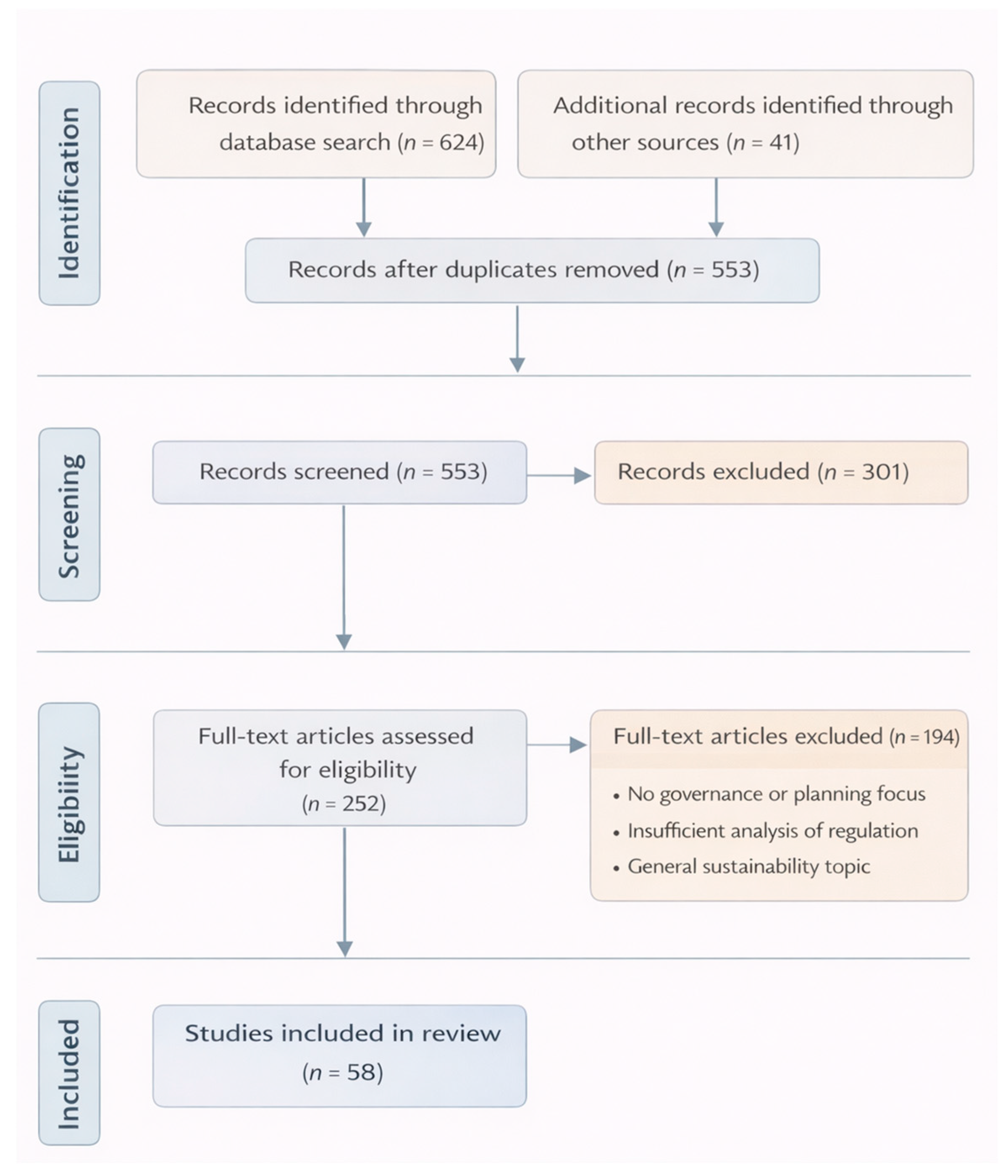
Figure 1 summarizes the progression of records through the different stages of the review.
As illustrated in
Figure 1, the identification stage combined structured database searches and complementary manual procedures. A primary search conducted in Scopus and Web of Science yielded 624 records. Search queries were applied to title, abstract, and keyword fields using combinations of the terms “land governance”, “spatial planning”, “land-use”, “regulation”, and “tourism”. These terms were combined using Boolean operators (AND/OR) to capture intersections between governance, planning and tourism-related concepts. The search strategy was adapted to the syntax and query structures of each database. Only peer-reviewed journal articles published in English were included, while conference papers, book chapters, editorials, and non-peer-reviewed materials were excluded. To strengthen disciplinary coverage and capture planning and tourism journals not fully indexed in the primary databases, additional targeted searches were carried out in ScienceDirect, Taylor & Francis Online and MDPI, alongside backward citation tracking of key publications. These procedures identified 41 additional records. In total, 665 records were retrieved.
Following identification, duplicate records were removed. The deduplication process resulted in the removal of 112 entries, leaving 553 unique records for screening. At the screening stage, titles and abstracts were examined to determine whether articles addressed spatial planning, land-use change or governance mechanisms in relation to tourism development. Studies focusing exclusively on tourism marketing, hospitality management, visitor behavior or general sustainability discourse without a spatial or regulatory dimension were excluded. This stage led to the exclusion of 301 records, while 252 articles were retained for full-text assessment.
The eligibility stage involved a detailed review of the full text of these 252 articles. At this stage, the assessment focused on whether the study provided substantive empirical or conceptual engagement with land governance frameworks, spatial planning systems, or regulatory instruments relevant to tourism-related land transformation. Articles were excluded if they lacked explicit treatment of planning mechanisms, did not analyze governance arrangements, or failed to link tourism development to land-use implications. In particular, studies focusing solely on general sustainability discourse, technical land administration systems without a governance or planning dimension, or tourism development without spatial or regulatory analysis were excluded. These criteria were applied consistently to distinguish between studies addressing land governance in relation to tourism and those focusing on adjacent but analytically distinct domains. A total of 194 articles were excluded at this stage. The final dataset comprised 58 peer-reviewed journal articles included in the systematic review. Although no formal quantitative quality scoring tool was applied, methodological quality was assessed during the eligibility stage. Only studies demonstrating clear empirical or conceptual engagement with land governance, spatial planning systems, or regulatory mechanisms were retained. Articles lacking analytical depth, explicit governance focus, or demonstrable links between tourism development and land-use implications were excluded to ensure analytical robustness of the final dataset.
The screening and full-text eligibility assessment were conducted through an iterative and interpretive review process based on the predefined inclusion criteria. While no formal inter-rater agreement metric was applied, decisions were cross-checked among the authors to support consistency in study selection.
All included studies were subsequently analyzed using a structured coding framework developed specifically for this research. For each article, bibliographic characteristics (publication year and journal), geographical focus and spatial scale were recorded in order to map the distribution of research across territorial contexts. These spatial attributes were subsequently used to support cross-case comparison across territorial contexts and scales, and to examine how governance configurations are associated with different spatial outcomes in the
Section 3. Governance level was identified (municipal, regional, national or multi-level), and the regulatory instruments discussed in each study were categorized, including zoning mechanisms, licensing schemes, land-use restrictions, development control tools and strategic planning instruments.
In addition, the type of tourism-related development pressure addressed in each article was coded, such as short-term rental expansion, second-home development, coastal resort growth or overtourism dynamics. Reported spatial outcomes were analyzed in terms of land-use change, land consumption patterns, housing-market effects, environmental pressures or territorial conflicts. Coding was conducted iteratively, allowing categories to be refined as recurrent patterns emerged across cases. For the purposes of quantitative summary, each study was assigned to a primary regulatory focus based on its dominant analytical emphasis. While several studies addressed multiple dimensions of regulation, classification was guided by the central governance or planning mechanism examined in each case. This approach was adopted to ensure comparability across the dataset, while acknowledging that some studies span multiple categories. These coding dimensions were applied consistently across all included studies and structured around a set of analytical categories capturing governance level, regulatory instruments, tourism-related development pressures and reported spatial outcomes. The coding framework enabled the systematic comparison of cases across different territorial contexts and supported the identification of recurring patterns in how governance arrangements relate to spatial outcomes. This approach provided the analytical basis for the classification of conceptual strands, regulatory approaches and territorial patterns presented in
Section 3.
Rather than relying solely on frequency counts, the analytical approach emphasized cross-case comparison and thematic synthesis. Particular attention was given to how land governance is conceptualized, how regulatory instruments are operationalized within planning systems, and how these are reflected in substantive spatial outcomes, including patterns of land-use change, land consumption, housing dynamics and environmental pressures. This structured synthesis forms the foundation for the thematic analysis presented in the following section.
This methodological approach is subject to certain limitations. The review is restricted to peer-reviewed journal articles published in English, potentially excluding relevant insights from grey literature and non-English sources. In addition, the interpretive nature of the analysis and the heterogeneity of the reviewed studies limit direct comparability across cases. These considerations are acknowledged in the interpretation of the results.
3. Results
The full characteristics of the 58 studies included in the review are presented in
Appendix A Table A1. To enhance the analytical integration of this dataset, key dimensions of the appendix are synthesized in the main text through
Table 1,
Table 2,
Table 3 and
Table 4 and the thematic analysis presented in this section. The appendix provides detailed information on authorship, publication year, territorial context, governance level and principal regulatory focus for each article. Building on this structured coding, the analysis below synthesizes patterns across the dataset in direct correspondence with the three research questions. First, the review examines how land governance is conceptualized within tourism-related spatial planning research (RQ1). It then analyses the regulatory instruments most frequently addressed in managing tourism-related land-use change (RQ2). Finally, it evaluates how different governance arrangements are associated with spatial outcomes across territorial contexts and administrative scales (RQ3). Rather than describing individual studies sequentially, the following sections present a thematic and cross-case synthesis grounded in the coded characteristics of the full dataset. The presentation of results is structured around three analytical dimensions, allowing for a systematic comparison of how land governance is conceptualized, operationalized and linked to spatial outcomes across the reviewed studies.
3.1. Conceptualization of Land Governance in Tourism-Related Research
The reviewed literature does not present land governance as a single coherent theory within tourism-related spatial planning research. Rather, it emerges through distinct analytical lenses that reflect different scales of intervention and disciplinary traditions. Five dominant conceptual strands can be identified.
A first strand conceptualizes land governance as regulatory control over land-use conversion. This perspective is particularly visible in studies addressing short-term rental expansion, second-home densification and tourism-driven urban restructuring published after 2015 [
23,
24,
25,
26,
27]. In these studies, governance refers primarily to the statutory capacity of planning systems to allocate development rights, regulate land-use intensity and control functional change. Land governance is thus equated with zoning instruments, development control mechanisms and licensing schemes embedded within municipal or regional planning frameworks.
A second strand conceptualizes land governance as the coordination of development regimes and land-market dynamics. Research focusing on rural restructuring, metropolitan fringe transformation and second-home siting decisions emphasizes how tourism reshapes land allocation patterns and settlement systems [
28,
29,
30,
31]. Within this perspective, governance refers to the structuring of regional land trajectories through planning instruments, growth management tools and inter-jurisdictional coordination.
A third strand frames land governance as institutional capacity and planning conformance. Rather than concentrating on specific instruments, these studies examine how governance systems align strategic objectives with implementation outcomes and how coordination across administrative levels influences regulatory consistency [
18,
19]. Governance is understood here as the coherence, stability and effectiveness of planning institutions in translating policy intent into spatial outcomes. This perspective also encompasses different dimensions of institutional capacity, including relational capacities between actors and procedural aspects of governance, which complement planning conformance and influence how policies are coordinated and implemented in practice.
A fourth and quantitatively dominant strand conceptualizes land governance as land administration infrastructure. This body of work examines three-dimensional (3D) land administration approaches and cadastral systems, land registration reforms, decentralized land administration and tenure security frameworks as the institutional foundation of land regulation [
20,
21,
32,
33,
34,
35,
36,
37,
38]. In this perspective, governance is defined by the ability of institutions to formally record land rights, document restrictions and manage legally recognized property relationships. The Land Administration Domain Model (LADM) further formalizes this conceptualization by integrating legal, spatial and administrative components of land into structured information architectures [
39,
40,
41].
A fifth strand extends this infrastructural perspective into digital and model-based land governance. Studies in this group analyze how vertically complex property relations, public law restrictions and valuation information can be embedded within interoperable cadastral models [
42,
43,
44,
45,
46,
47,
48,
49]. More recent contributions explore domain-driven system design, blockchain-based land governance and advanced cadastral modelling approaches as mechanisms for enhancing transparency, interoperability and institutional trust in land administration systems [
50,
51,
52,
53,
54,
55,
56,
57,
58]. Governance in this strand is conceptualized as informational interoperability and system integration, rather than solely as statutory regulation. A limited number of studies also implicitly address participatory and decision-making dimensions of land governance, highlighting the role of stakeholder involvement and governance processes in shaping planning outcomes, although this perspective remains less systematically developed in the literature [
9,
16].
In addition to these infrastructural and digital approaches, recent research highlights how short-term rental expansion may extend regulatory challenges into rural territories, where land-use conversion and settlement restructuring generate new spatial planning pressures beyond dense urban cores [
59]. These challenges include increased pressure on local housing availability, shifts in land-use patterns from residential to tourism functions, and growing demands on infrastructure and environmental resources in areas with limited planning capacity.
These five conceptual lenses are summarized in
Table 1.
Table 1.
Conceptualizations of land governance in the reviewed literature.
Table 1.
Conceptualizations of land governance in the reviewed literature.
| Conceptual Lens | Core Understanding of Land Governance | Typical Contexts | Representative References |
|---|
| Regulatory control | Statutory regulation of land-use conversion and development intensity | Urban/Regional tourism growth | [23,24,25,26,27,59] |
| Development regime coordination | Structuring of land markets and regional development trajectories | Rural/Metropolitan fringe/Second homes | [28,29,30,31] |
| Institutional capacity | Planning conformance, coordination and governance coherence | Regional/National | [12,16] |
| Land administration infrastructure | Formal recording and enforcement of land rights and public law restrictions | National/System-level | [18,19,20,21,32,33,34,35,36,37,38,39,40,41] |
| Digital & 3D land governance | Interoperable, model-based and vertically integrated land information systems | National/Technical | [20,42,43,44,45,46,47,48,49,50,51,52,53,54,55,56,57,58] |
Table 1 demonstrates that tourism-related land governance research operates across regulatory, institutional and administrative–informational dimensions. Urban and regional tourism studies emphasize visible planning instruments, whereas land administration research focuses on systemic and informational foundations of land regulation. Although both strands address land-use governance, they rarely intersect conceptually within the same analytical framework.
This fragmentation suggests that land governance in tourism contexts functions simultaneously at two interconnected levels: the policy-instrument level, where zoning, licensing and strategic planning shape development trajectories, and the infrastructural level, where cadastral systems, land information models and tenure frameworks determine the enforceability and operational precision of those instruments. Digital and 3D extensions of land administration further mediate this relationship by shaping how regulatory decisions are technically implemented and spatially represented. The limited integration of these levels within the literature highlights a conceptual gap that informs the subsequent analysis of regulatory approaches (RQ2) and governance–outcome relationships (RQ3).
3.2. Regulatory Approaches Managing Tourism-Related Land-Use Change
Building on the conceptual distinctions identified above, the reviewed studies examine a range of regulatory approaches through which tourism-related land transformation is structured and mediated.
The most visible regulatory strand concerns zoning and statutory land-use control. In urban contexts, zoning amendments and development control mechanisms are analyzed as instruments for regulating short-term rental concentration, limiting residential-to-tourism conversion and managing overtourism pressures [
3,
4,
8,
11,
14,
31]. These studies conceptualize regulation primarily as spatial allocation: defining permissible uses, controlling density and delimiting functional change within municipal boundaries.
In rural and second-home contexts, regulatory approaches focus on land designation, siting decisions and growth management frameworks [
2,
15,
23,
30]. Here, planning systems attempt to channel tourism-related demand through spatial planning instruments that influence land consumption patterns and settlement structure. The effectiveness of these approaches depends on coordination across regional authorities and on the integration of development control with land-market dynamics [
13,
28].
Strategic spatial planning represents a higher-order regulatory framework examined in several studies [
12,
16,
18,
19,
20]. Rather than targeting individual parcels, these approaches aim to align long-term territorial objectives with implementation instruments. However, empirical evidence suggests that formal strategic plans do not automatically translate into spatial outcomes unless institutional capacity and enforcement mechanisms are robust, and unless governance processes enable coordination and consensus among planning actors, supported by adequate financial and administrative resources [
13,
16].
A substantial share of the literature shifts attention from statutory instruments to the infrastructural foundations of regulation. Land administration systems, cadastral reforms and tenure documentation frameworks are analyzed as preconditions for effective land-use governance [
21,
32,
33,
34,
35,
36,
37,
38]. Without reliable land-right recording and clearly defined public law restrictions, planning instruments may lack enforceability or generate legal ambiguity.
This infrastructural dimension is further developed in research on the Land Administration Domain Model (LADM) and 3D cadastral systems [
39,
40,
41,
42,
43,
44,
45,
46]. These studies demonstrate how land-use restrictions, development rights and valuation components can be embedded within interoperable land information architectures. By formalizing legal and spatial relationships, such systems enhance regulatory clarity and administrative coherence.
Recent contributions extend this perspective to digital governance innovations, including domain-driven system design and blockchain-based land administration [
50,
51,
52,
53,
54,
55,
56,
57,
58]. Although not tourism-specific, these studies underscore that regulatory effectiveness increasingly depends on data integration, transparency and system interoperability.
The distribution of regulatory approaches across the dataset is summarized in
Table 2.
Table 2.
Regulatory approaches examined in the literature.
Table 2.
Regulatory approaches examined in the literature.
| Regulatory Focus | Frequency | % of Studies |
|---|
| Zoning/land-use regulation | 14 | 24.1 |
| STR licensing & permitting | 5 | 8.6 |
| Second-home planning & land markets | 7 | 12.1 |
| Strategic spatial planning | 6 | 10.3 |
| Land administration systems (general) | 9 | 15.5 |
| 3D cadastre & public law restrictions | 9 | 15.5 |
| Fit-for-purpose/tenure security | 4 | 6.9 |
| Digital/blockchain land governance | 4 | 6.9 |
| Total | 58 | 100 |
The table illustrates that while zoning remains the most frequently examined visible regulatory instrument, a considerable proportion of the literature focuses on systemic land governance infrastructures. Tourism-related land transformation is therefore mediated not only through planning regulations but also through the institutional architectures that render those regulations operational.
3.3. Governance Arrangements and Spatial Outcomes Across Territorial Contexts
This dimension corresponds to the substantive aspect of land governance, referring to the observable spatial outcomes of regulatory approaches, including patterns of land-use change, land consumption, housing dynamics and environmental pressures. The reviewed studies demonstrate that spatial outcomes associated with tourism development vary significantly according to governance configuration and territorial scale.
In urban contexts, particularly in metropolitan areas and historic or tourism-intensive cities, tourism-driven land conversion is closely associated with housing-market pressures, neighborhood restructuring and gentrification processes [
3,
4,
8,
10,
31]. For instance, studies examining short-term rental expansion in cities such as those discussed by Gurran and Phibbs [
4] and Wegmann and Jiao [
8] show how regulatory responses seek to manage the concentration of tourism uses within residential areas. Where municipal governance relies primarily on reactive regulatory measures, spatial outcomes tend to involve rapid residential-to-tourism conversion and functional concentration. In contrast, integrated zoning reforms and licensing frameworks may channel tourism activity into designated zones, although displacement effects across municipal boundaries remain possible [
4,
8]. These findings are primarily derived from studies situated in specific planning contexts, where the structure and capacity of planning systems influence both the design and effectiveness of regulatory responses.
Rural and mountain regions exhibit different dynamics. Second-home development and tourism-induced restructuring reshape land markets, settlement density and land consumption trajectories [
2,
15,
23,
29]. For example, studies on second-home development in alpine and rural regions highlight how planning systems attempt to regulate dispersed tourism growth and its impact on land consumption patterns [
15,
23]. Regional governance capacity plays a decisive role in moderating speculative expansion and aligning tourism development with territorial planning objectives [
13,
28]. In fragmented governance systems, land-use change tends to be more dispersed and less coordinated. In these cases, spatial outcomes are shaped not only by regulatory instruments but also by the broader planning system context and the degree of coordination across governance levels
Coastal tourism contexts, although fewer in number, highlight governance challenges linked to environmental protection and land-use conflict [
5,
7]. These studies demonstrate that tourism expansion interacts with conservation mandates, requiring cross-sectoral coordination and governance innovation to reconcile economic and ecological objectives.
At national scale, land administration and cadastral governance studies clarify the structural conditions under which planning decisions can be implemented effectively [
21,
32,
33,
34,
35,
36,
37,
38,
39,
40,
41]. Secure land-right documentation clearly defined public law restrictions and interoperable land information systems enhance regulatory enforceability and reduce institutional ambiguity [
42,
43,
44,
45,
46]. Conversely, weak land administration infrastructures may undermine the operational capacity of planning instruments.
The territorial distribution of the dataset is summarized in
Table 3.
Table 3.
Distribution of studies by territorial context.
Table 3.
Distribution of studies by territorial context.
| Territorial Context | Frequency | % of Studies |
|---|
| Urban | 6 | 10.3 |
| Coastal | 2 | 3.4 |
| Rural/Mountain | 4 | 6.9 |
| Metropolitan/Regional restructuring | 14 | 24.1 |
| National/Land administration systems | 30 | 51.7 |
| Conceptual/Multi-scalar governance | 2 | 3.4 |
| Total | 58 | 100 |
Table 3 highlights a clear territorial imbalance in the reviewed literature. A substantial proportion of studies focus on national-level land administration systems, while urban and rural case studies account for a smaller share of the dataset. This distribution suggests that tourism-related land transformation is increasingly examined through structural governance frameworks rather than solely through localized development pressures.
Across contexts, spatial outcomes appear closely linked to governance configuration, as well as to the institutional and geographical context within which planning systems operate. Urban cases, particularly in cities with high tourism intensity and strong short-term rental activity, show that the concentration or dispersion of tourism-related land conversion depends on the coherence of municipal regulatory frameworks. In rural and mountain regions, regional coordination influences whether tourism growth aligns with broader land-use strategies or produces incremental and fragmented expansion.
At national scale, institutional capacity and the robustness of land administration systems condition the enforceability of planning instruments. Overall, the findings indicate that tourism demand interacts with governance arrangements at multiple scales, shaping the form and intensity of land-use change across different territorial contexts. This multi-scalar conditioning of spatial outcomes directly addresses RQ3. The territorial distribution of the reviewed studies further contextualizes these findings. As shown in the dataset (
Table 3 and
Appendix A), national-level studies, particularly those focusing on land administration systems, are more strongly represented, while urban, rural and coastal case studies are comparatively fewer. This distribution contributes to a stronger emphasis on systemic governance conditions, with more limited representation of context-specific spatial dynamics. At the same time, the review identifies recurring patterns linking governance configurations to spatial outcomes, where more integrated and coordinated governance arrangements are associated with more controlled and spatially balanced development, while fragmented or weakly coordinated systems tend to correspond with more dispersed and less regulated land-use change.
To further clarify the spatial embeddedness of the reviewed evidence, the geographical coverage of the dataset was re-examined based on the territorial identifiers reported in
Appendix A Table A1. As shown in
Table 4, the reviewed studies span multiple geographical contexts, including European, Asian, African and American cases, alongside a substantial number of international or multi-country studies. In addition, a number of studies do not explicitly specify geographical context, as territorial descriptors are limited to generic categories such as “urban”, “rural” or “conceptual”.
Table 4.
Geographical coverage of the reviewed studies.
Table 4.
Geographical coverage of the reviewed studies.
| Territorial Context | Frequency | % of Studies |
|---|
| Europe | 15 | 25.9 |
| Africa | 10 | 17.2 |
| Asia | 5 | 8.6 |
| Americas | 2 | 3.4 |
| International/multi-country | 11 | 19.0 |
| Not geographically specified | 15 | 25.9 |
| Total | 58 | 100 |
This distribution indicates that while the dataset reflects a geographically diverse body of literature, it does not provide a consistent basis for systematic comparison of planning systems across regions. Instead, geographical context is embedded within individual case studies and analytical traditions, rather than being treated as a comparative dimension across the reviewed literature.
Overall, the findings indicate that tourism-related land-use change is addressed through three interrelated dimensions: regulatory instruments, institutional capacity and land administration systems. Across the reviewed studies, more coordinated governance arrangements tend to be associated with more controlled spatial outcomes, while fragmented or weakly enforced systems are linked to more dispersed and less regulated land-use change. These patterns provide the basis for the interpretive synthesis developed in the Discussion.
4. Discussion
This systematic review examined how land governance is conceptualized within tourism-related spatial planning research and how governance arrangements shape spatial outcomes across territorial contexts. The findings indicate that the literature is structured around partially overlapping but analytically distinct domains: statutory land-use regulation, institutional planning capacity and land administration infrastructures. Although these domains all address the regulation of land, they are rarely examined within an integrated framework. At the same time, the review suggests that these dimensions are not independent but interact dynamically, as tourism-driven land-use change generates regulatory responses, which in turn reshape governance arrangements and influence subsequent spatial development trajectories. In many tourism-focused studies, governance is discussed in sectoral or regulatory terms without explicitly situating these mechanisms within broader land governance architectures.
Tourism-oriented planning research primarily conceptualizes governance as regulatory intervention. Zoning amendments, development control mechanisms and short-term rental licensing schemes are analyzed as tools for managing residential conversion, overtourism pressures and functional change in urban environments [
3,
4,
8,
11,
14,
31]. In rural and mountain regions, governance is associated with second-home planning, land designation and growth management frameworks that influence settlement structure and land-consumption patterns [
2,
15,
23,
29,
30]. Coastal case studies further emphasize the role of regulatory instruments in mediating conflicts between tourism expansion and environmental protection mandates [
5,
7]. Across these contexts, governance is largely understood in terms of visible planning instruments.
In contrast, land administration scholarship approaches land governance from an infrastructural perspective. Research on cadastral systems, tenure security, land registration reforms and public law restriction modelling examines how land rights are formally documented and enforced [
18,
19,
20,
21,
32,
33,
34,
35,
36,
37,
38]. Developments in 3D cadastre and the Land Administration Domain Model (LADM) extend this perspective by integrating legal, spatial and administrative components of land into interoperable information architectures [
19,
39,
40,
41,
42,
43,
44,
45,
46]. More recent contributions emphasize digital interoperability and blockchain-based land administration as mechanisms for enhancing transparency and institutional trust [
41,
51,
52,
53]. Recent work conceptualizing cartographic frameworks as planning infrastructures further reinforces this infrastructural view, arguing that the limited institutional embedding of cartography constrains coordination and implementation capacity within multi-level planning systems [
60]. Within this strand, governance is conceptualized less as policy choice and more as institutional architecture, although in planning theory governance is more broadly understood as encompassing both institutional arrangements and decision-making processes, including interaction, learning and coordination among actors. From this perspective, governance arrangements may also function as arenas for knowledge exchange, network formation and resource mobilization, even if such dimensions are not systematically captured within the reviewed studies.
The coexistence of these strands reveals a clear gap in the literature. The composition of the reviewed dataset also reflects a strong presence of studies focusing on land administration systems, including cadastral frameworks, land information infrastructures and related technical approaches. While these studies are not always explicitly tourism-focused, they are included in the analysis as they provide the institutional and administrative foundations through which tourism-related land-use changes are regulated and implemented. At the same time, this distribution indicates that the review draws significantly on broader land governance literature, which may limit the depth of direct empirical engagement with tourism-specific dynamics. Planning studies frequently evaluate the effectiveness of regulatory instruments without considering the administrative conditions that enable or constrain enforcement. Conversely, land administration research often advances technical and institutional innovations without explicitly situating them within sector-specific land-use pressures such as tourism. This separation obscures the fact that tourism-driven land transformation is mediated simultaneously by statutory regulation, institutional capacity and administrative precision.
The geographical distribution of the reviewed studies further qualifies the interpretation of the findings. Although European cases constitute the largest explicitly identifiable regional group, a substantial proportion of the dataset consists of international or multi-country studies, as well as studies that do not explicitly specify geographical context. This indicates that the review captures a wide range of planning and governance settings, but does not provide a sufficiently consistent empirical basis for a formal comparison between different planning systems (e.g., across European regions or between Global North and Global South contexts).
Consequently, geographical contextualization in this study is interpreted descriptively, reflecting the distribution of available evidence rather than a systematic typology of planning systems. This limitation highlights an important direction for future research, namely the need for more explicitly comparative analyses of planning systems and governance arrangements in tourism-related land-use change.
The review further demonstrates that tourism acts as a key driver of land-system change across different spatial scales, alongside other economic development drivers and policy priorities that also shape land-use dynamics. Although national-level land administration studies numerically dominate the dataset, sub-national case studies provide important insight into how tourism-related pressures materialize in specific territorial settings. In urban contexts, tourism-related residential conversion is linked to housing-market pressures, socio-spatial restructuring and regulatory experimentation [
3,
4,
8,
10,
31]. For example, studies on short-term rental regulation illustrate how cities introduce zoning restrictions, licensing schemes and caps on rental activity to manage the concentration of tourism uses and mitigate displacement effects, within multi-level governance frameworks where municipal regulations interact with regional and national planning systems [
4,
8]. In rural and metropolitan fringe regions, tourism contributes to spatial restructuring and land-market reconfiguration [
24,
25,
29]. Second-home development reshapes regional land trajectories and introduces long-term planning challenges [
2,
15,
23,
30]. For instance, planning responses in rural and alpine regions often involve land-use restrictions, zoning controls and growth management measures aimed at limiting dispersed development and managing pressure on land consumption, typically implemented through regional planning frameworks and coordinated governance arrangements across administrative levels [
15,
23]. These dynamics indicate that tourism is not merely an economic activity accommodated within existing land systems; rather, it actively reconfigures those systems.
Multi-scalar governance coordination emerges as a critical conditioning factor. Municipal authorities often serve as frontline regulators of short-term rentals and urban tourism growth [
4,
8,
11], yet their effectiveness depends on alignment with regional planning frameworks and national land administration systems [
12,
16]. Studies on governance capacity and planning conformance suggest that institutional coherence and inter-level coordination significantly influence regulatory outcomes [
12,
16,
28]. Fragmented governance systems tend to generate reactive and uneven responses to tourism expansion, whereas more integrated arrangements may moderate land consumption and improve policy consistency [
13,
28]. Spatial outcomes are therefore shaped not only by regulatory instruments but by the configuration of governance across scales. Moreover, the findings suggest that governance effectiveness is also shaped by decision-making processes and the degree of stakeholder participation, which influence how regulatory instruments are interpreted, contested and implemented in practice. In this sense, governance arrangements also involve the interaction of multiple actors and collaborative processes through which planning objectives are negotiated, although these dimensions are less systematically addressed in the reviewed literature. In practical terms, this suggests that planning reforms addressing short-term rentals or second-home development cannot be evaluated independently from the cadastral and administrative systems that support implementation and enforcement.
The prominence of national-level land administration research within the dataset [
18,
19,
20,
21,
32,
33,
34,
35,
36,
37,
38,
42,
43,
44,
45,
46,
50,
51,
52,
53,
54,
55,
56,
57,
58] further underscores the importance of institutional foundations. Reliable land-right documentation, clear modelling of public law restrictions and interoperable cadastral systems enhance the enforceability of planning decisions. Particularly in contexts involving vertically complex property relations or high land-value competition, 3D cadastral modelling and digital integration become increasingly relevant [
39,
40,
41,
42,
43,
44,
45,
46]. However, the limited empirical linkage between these infrastructures and tourism-specific regulatory challenges suggests that an important analytical bridge remains underdeveloped.
In this context, the contribution of this study lies in synthesizing tourism planning and land administration scholarship within a common land governance perspective. This integrative approach distinguishes the analysis from prior tourism planning syntheses that focus primarily on regulatory instruments without systematically linking them to land administration and institutional infrastructures. Rather than proposing a new theoretical construct, the study clarifies how statutory instruments, institutional coordination, and administrative infrastructures interact in shaping tourism-related land transformation. By mapping these relationships across territorial contexts and governance levels, it advances a more integrated understanding of tourism-driven spatial change.
Future research could build on this synthesis by examining how cadastral precision and digital interoperability influence the implementation of tourism-related regulatory reforms [
21,
32,
33,
34,
35,
36,
37,
38,
42,
43,
44,
45,
46]. Comparative analyses across governance systems would further clarify how variations in institutional capacity affect the spatial distribution of tourism-induced land conversion [
12,
16,
28]. In addition, expanding empirical attention to rural and peripheral regions—where touristification increasingly extends beyond metropolitan cores [
2,
23,
29,
59]—would contribute to a more balanced understanding of land governance in tourism contexts.
Overall, the review indicates that effective management of tourism-driven land transformation requires coherence across governance layers. Recognizing the interdependence between planning regulation, institutional capacity and administrative infrastructure provides a more comprehensive foundation for analyzing and responding to spatial change in tourism-intensive regions.
In addition, the geographical distribution of the reviewed studies in this dataset reveals a predominance of European and Global North contexts, while contributions from the Global South remain more limited. This distribution constrains the extent to which variations in legal frameworks, institutional capacities and governance practices across different regions can be systematically compared and interpreted within the scope of this review.
This study has several limitations. Although multiple databases were used, the review includes only peer-reviewed journal articles and does not cover policy reports, government documents, or other non-journal sources that may also address land governance in tourism contexts. In addition, only English-language publications were considered. The thematic and interpretive nature of the analysis does not allow for statistical generalization, and differences in methods across the included studies limit direct comparability of findings. Furthermore, while the review focuses on regulatory, institutional and administrative dimensions of land governance, it does not systematically engage with political economy perspectives, including issues of power asymmetries, equity and distributional impacts. These dimensions are particularly relevant in tourism contexts, where processes such as displacement and uneven access to land resources may occur, and represent an important direction for future research.
These considerations frame the boundaries of the review and clarify the context within which the findings should be interpreted. In addition, no formal inter-rater agreement metric was applied during screening and eligibility assessment, which may introduce a degree of subjectivity in study selection despite the use of predefined inclusion criteria and author cross-checking. Furthermore, tourism-specific spatial outcomes, such as short-term rental regulation, second-home development, overtourism dynamics and coastal land-use conflicts, are derived from a more limited subset of studies within the dataset, which is otherwise dominated by system-level land administration research. This imbalance constrains the extent to which conclusions related to tourism contexts can be generalized.
In addition, while the search strategy is described in
Section 2, the absence of fully detailed and reproducible database-specific search strings may limit the transparency of the search process. Furthermore, no formal quantitative quality appraisal tool was applied, as the review adopts an interpretive and thematic approach, which may affect the assessment of methodological rigor across included studies.
Finally, the assignment of a single dominant category in the quantitative summaries may also simplify the multidimensional nature of some studies, although this was necessary to enable comparative synthesis.




 ,
,