Article

Drivers of Shrinkage in Daihai Lake Based on Influence of Climate Change, Vegetation Variation and Agricultural Water Saving on ET


State Key Laboratory of Environmental Criteria and Risk Assessment, Chinese Research Academy of Environmental Sciences (CRAES), Beijing 100012, China
*
Author to whom correspondence should be addressed.
Land 2026, 15(4), 532; https://doi.org/10.3390/land15040532
Submission received: 26 February 2026 / Revised: 16 March 2026 / Accepted: 19 March 2026 / Published: 25 March 2026
(This article belongs to the Section Land Use, Impact Assessment and Sustainability)

Abstract

Vegetation restoration in water-limited regions typically increases evapotranspiration (ET) while reducing runoff. Over the past four decades, Daihai Lake in China’s northwest inland river basin has experienced significant shrinkage. Previous studies attribute this primarily to climate change and water resource exploitation, yet the impact of vegetation dynamics remains insufficiently examined. This study analyzed changes in the water budget across different vegetation types in the Daihai Lake Basin, based on remote sensing-derived precipitation and ET data, and employed correlation analysis to examine the relationships between environmental factors (such as climate change, afforestation projects, and water-saving irrigation) and lake shrinkage. Our findings revealed that afforestation has expanded forest cover by 69.42 km2 since 2000, accounting for 73.95% of the total forest area. Notably, forest ET demonstrated the strongest negative correlation (r = −0.89, p < 0.001) with lake area among all vegetation types. Grasslands emerged as the primary water-surplus vegetation, contributing 81.34% to the basin’s total water surplus. The synergistic effects of precipitation reduction, temperature increase, and enhanced ET from forest expansion drove the shrinkage of the lake. These results highlight the need for science-based vegetation management in arid and semi-arid regions, where we recommend adopting shrub-grass combined restoration approaches to enhance the sustainability of ecological restoration.

1. Introduction

Under the context of global warming, the relationship between vegetation dynamics and hydrological processes has emerged as a critical research focus in contemporary environmental science [1,2]. The water balance of the basin is regulated not only by climatic variables, including temperature and precipitation, but also by anthropogenic activities through land cover modification and water resource utilization [3,4]. In arid regions, anthropogenically induced land surface changes exert a more significant influence on runoff reduction than precipitation decrease [5]. The majority of China’s “Three-North” region (Northwest, North, and Northeast) falls within arid and semi-arid areas with annual precipitation below 400 mm, where desert shrubs and grasslands constitute the dominant zonal vegetation. Over the past four decades, China has implemented large-scale ecological projects such as the Three-North Shelterbelt Forest Program, with approximately 50% of arboreal afforested areas occurring in these arid and semi-arid zones [6]. The TNSFP has led to measurable improvements in vegetation coverage and net primary productivity (NPP), enhancing ecosystem services including carbon sequestration and soil–water conservation [7]. Satellite observations from 2000 to 2017 reveal that approximately 25% of the global greening increment originated from China [8], with the Three-North region contributing 7.39% of this global increase [9]. However, the NPP of natural vegetation is constrained by regional precipitation. When ET from the soil–vegetation system exceeds precipitation, runoff reduction inevitably occurs. Given that ET represents the ultimate pathway of water resource depletion, sustainable water resource management can only be achieved through effective ET reduction [10].
Extensive research has been conducted on the relationship between vegetation and hydrological processes. Trade-off relationships exist among forest functionalities such as soil–water conservation and runoff regulation [11,12]. Uncontrolled afforestation in arid regions may lead to significant increases in NPP and ET, concurrently reducing river runoff and depleting soil water along with groundwater reserves [13,14,15]. These changes intensify water competition between ecosystems and human societies, ultimately triggering water security risks [16]. Condon et al. (2020) employed hydrological modeling to analyze the interactions between temperature, vegetation, and groundwater in arid regions of the western United States, demonstrating that increased ET may reduce surface runoff, subsequently affecting soil moisture and groundwater levels [17]. Similarly, Bass et al. (2023) found that reduced forest cover in small watersheds of the southeastern United States plains led to increased river discharge [18]. Azarnivand et al. (2020) used a hydrological model to simulate the effects of pasture-to-plantation conversion on the streamflow generation in intermittent streams; they found that planting in the prone-saturation areas has the largest effects on streamflow [19]. On China’s Loess Plateau, a water-deficient region, afforestation has significantly enhanced vegetation NPP, which is now approaching the estimated water-constrained NPP threshold of 400 ± 5 g C m−2 [20]. In the semi-humid to semi-arid mountainous areas of the Haihe River Basin, surface runoff significantly decreased after 18 years of afforestation, accompanied by a notable decline in downstream groundwater levels [21]. Remote sensing-based ET inversion provides an effective tool for assessing water balance across different land cover types [22]. China has integrated this approach into water resource management initiatives, including the World Bank’s GEF Haihe River Project [23] and Yellow River Basin Project [24].
Daihai Lake, one of the three major closed-basin lakes in Inner Mongolia Autonomous Region, is located in a transitional zone between semi-arid and semi-humid climates, characterized by a typical agro-pastoral ecotone [25]. The Daihai Lake Basin (DLB) occupies a critical position in China’s ecological security framework as part of the Northern Sand Prevention Belt, with its mountainous areas serving as key implementation zones for the TNSFP [26]. Since 1980, afforestation efforts have substantially increased forest coverage in the DLB. However, concurrent anthropogenic interventions, including reservoir construction for irrigation purposes [27] and the utilization of lake water as coolant by lakeside coal-fired power plants [28], have triggered dramatic reductions in surface runoff and groundwater depletion. By 2018, the lake area had shrunk to 51.41 km2, representing merely 29.48% of its 1970 extent (174.40 km2). This ecological crisis prompted central government intervention in 2018, prompting local authorities to initiate integrated river basin management featuring agricultural water-saving irrigation [29] and industrial water conservation measures [30]. The completion of the emergency Yellow River-to-Daihai Water Diversion Project in September 2022 aims to maintain a minimum lake area of approximately 50 km2.
Multiple studies have preliminarily investigated the drivers of Daihai Lake’s shrinkage. Cheng et al. (2017) identified significant correlations between lake area reduction (1959–2015) and three key factors: climatic warming, decreased precipitation, and increased agricultural/industrial water consumption through linear regression analysis [28]. Since 1979, agricultural irrigation and reservoir interception have been identified as predominant contributors, accounting for 82% of the observed shrinkage [28,31]. Niu et al. (2022) employed a water balance approach, integrating trend analyses of climatic variables and land-use changes with comprehensive surveys of inflow tributaries, to demonstrate that precipitation interception by vegetation in the DLB was the primary driver of lake shrinkage during 1955–2020 [32]. Through hydrological modeling of the 1959–2018 period, Liu et al. (2022) quantitatively established that coupled climate change and land-water resource exploitation (including intensified water withdrawals and afforestation activities) represented the most significant determinants of water level variations [33]. Other studies had revealed that socioeconomic parameters (crop cultivation area, population density) serve as principal modulators of lake area fluctuations [31], with secondary influences from natural variables including sunshine duration [34] and evaporation rates [35]. Current studies exhibited several methodological constraints: predominant reliance on linear relationships between water level/area of Daihai Lake and climate change/land use, inconsistent temporal frameworks, absence of runoff data, and insufficient incorporation of impact indicators (e.g., GDP, total population). These limitations currently preclude definitive, systematic conclusions regarding the shrinkage mechanisms.
This study systematically analyzes the contributions of natural vegetation (forests, grasslands) and cultivated crops to ET and water budgets in the DLB, based on observed changes in climate, land use, NPP, and ET patterns. By investigating the interrelationships among climate change, vegetation restoration, agricultural irrigation, and lake shrinkage, this work provides critical insights for sustainable vegetation management and water resource utilization in water-scarce regions.

2. Materials and Methods

2.1. Study Area

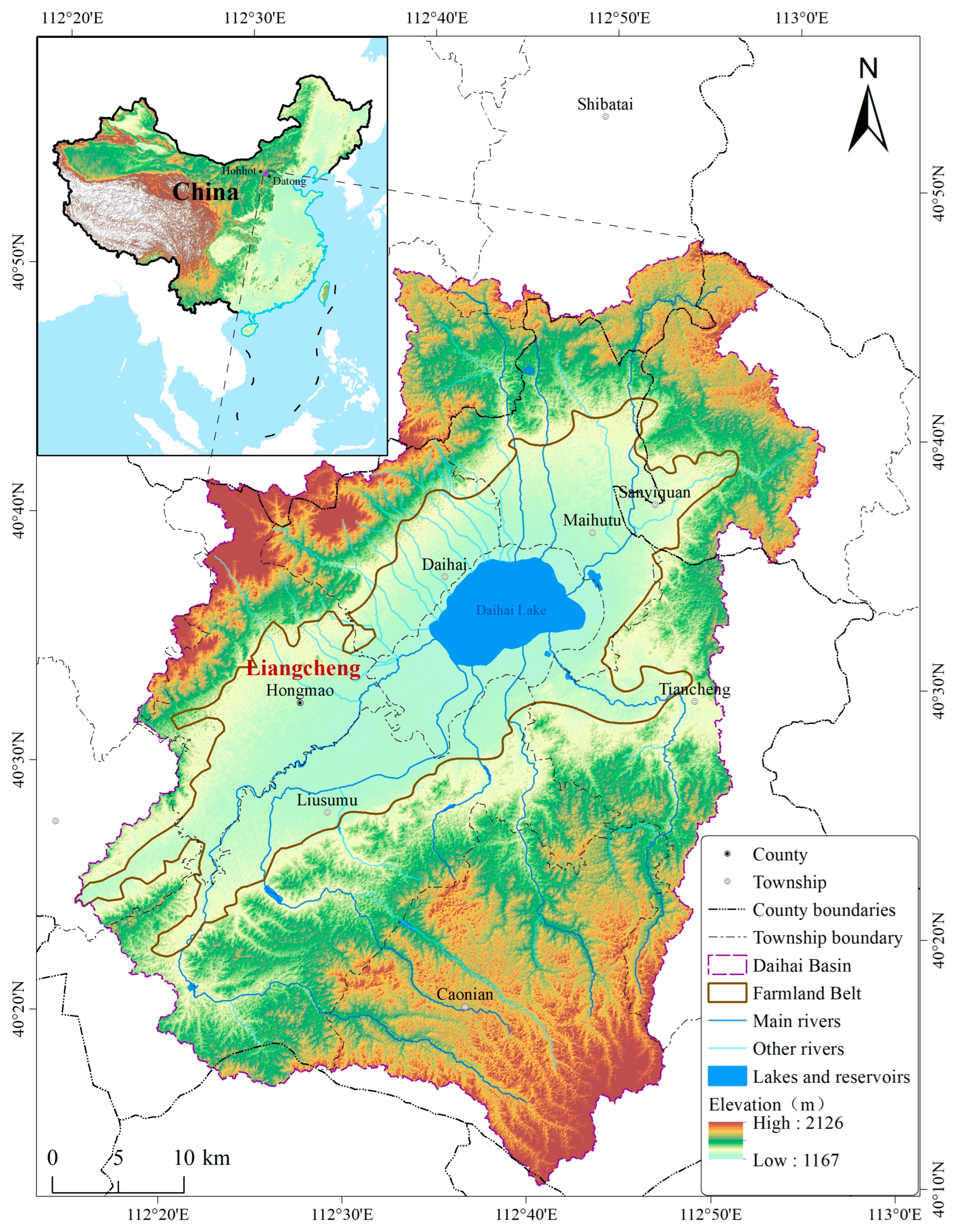
The DLB (40°11′–40°49′ N, 112°16′–112°59′ E) is situated at the southeastern margin of the Inner Mongolia Plateau and the northeastern periphery of the Loess Plateau. The basin is surrounded by mountains on all sides, with an elevation range of 1167–2126 m and a total area of 2312.75 km2 [36]. Administratively, the basin spans 10 townships across three counties of Ulanqab City, with Liangcheng County containing 85.10% of the catchment area (1967.15 km2), followed by Fengzhen County and Zhuozi County (Figure 1).
The DLB is located in a transitional zone between semi-arid and semi-humid climates, as well as between continental and monsoon-influenced regions. The area has an annual mean temperature of 6.3 °C and precipitation of 403.5 mm, with most rainfall concentrated from May to September [37]. Prevailing winds originate from the southwest with an average speed of 1.98 m/s. Vegetation in this warm-temperate steppe region varies by topography: mountainous areas support deciduous species including Betula platyphylla, Populus davidiana, Ulmus macrocarpa, and Quercus liaotungensis; hilly terrain features drought-resistant shrubs such as Tamarix chinensis and Hippophae rhamnoides; grasslands are dominated by Stipa krylovii, Leymus chinensis, Carex myosuroides, and Elymus dahuricus; while wetlands around Daihai Lake are dominated by Cyperus rotundus, Achnatherum splendens, Agrostis alba, and Phragmites australis [38].
The DLB receives inflow from 22 tributaries, including 8 major rivers. However, upstream reservoir construction, agricultural irrigation, and domestic water consumption have resulted in flow cessation in these watercourses during the dry season. The basin’s mean annual water resources (surface water plus groundwater minus overlap) amount to 90.14 × 10⁶ m3, of which Liangcheng County accounts for 88.86%. In 2022, Liangcheng’s total water consumption reached 32.86 × 10⁶ m3, of which agricultural use constituted 23.50 × 10⁶ m3 (71.51%) [39]. Significant agricultural infrastructure development occurred from the 1950s to the 1980s, featuring extensive construction of reservoirs and mechanized wells for irrigation purposes. Since 2016, sustainable agricultural practices, including organic dryland farming and water-saving irrigation, have been continuously implemented within the DLB. In 2019, the implementation of industrial water-saving retrofitting measures successfully terminated the withdrawal and discharge of lake water by the Daihai Power Plant, which had previously utilized the lake as its cooling water source [40].

2.2. Data Sources

The study utilized multi-source data, including land use, meteorological (precipitation, temperature, actual ET), NPP, and hydrological datasets. The hydrological and water resources data were obtained from local government agencies or research institutions, while all other datasets were sourced from publicly available repositories on domestic or international websites (Table 1).
Land use data (Data 1) were extracted by applying a mask of the Daihai Lake Basin boundary in ArcGIS 10.8. After spatial projection transformation, the area of each land use type was summarized annually. The data from 2000 and 2022 were further combined to quantify changes in the area of Daihai Lake and afforestation projects over this period. A chord diagram illustrating the proportional transformation of land use areas was plotted using OriginPro 2025.
Meteorological data (Data 2), including annual mean temperature, annual mean wind speed, and annual precipitation, were represented by averaging observations from Datong station (40.10° N, 113.33° E) and Hohhot station (40.82° N, 111.68° E). These data were used for climate abrupt change detection and period division, with station locations shown in Figure 1.
After harmonizing data format, spatial projection, spatial resolution, and spatiotemporal coverage, ET and precipitation data were used for water budget analysis. Initially, annual ET (Data 5; excluding pixels classified as built-up areas and water bodies) and annual NPP (Data 6) were reprojected to WGS_1984_Albers and converted to TIFF format using the MRT tool to support analysis of vegetation quality changes across the basin. Subsequently, monthly precipitation data (Data 3) were aggregated into annual precipitation rasters, which were batch-reprojected to WGS_1984_Albers in ArcGIS 10.8 and resampled to a 500 m × 500 m resolution. These annual precipitation and corresponding ET data were then applied to assess the water budget across the entire basin and for different vegetation types. Finally, monthly precipitation (Data 3) and monthly ET data (Data 4) from their overlapping period (2000–2018) were selected to examine seasonal variations in the water budget over farmland within the basin.
Data on lake water level, surface area (Data 7), and total water resources (Data 8) were primarily used for correlation heatmap analysis with environmental factors. Agricultural water use data (Data 9) were employed to assess the effectiveness of water-saving practices in the basin.

2.3. Research Methods

2.3.1. Climatic Mutation Testing

The identification of change points in meteorological data (annual precipitation and annual mean temperature) from 1954 to 2022 was performed using Regime Detection V3.2 software (available at https://www.pmel.noaa.gov/arctic-zone/bering-sea-indicators/regimes/Regime_detection3_2.zip (accessed on 11 July 2025)). By selecting and adjusting parameters such as the significance level, interval distance, and weighting, the model provided real-time signals of regime shifts in the time series based on a moving t-test.

2.3.2. Water Budget

As the DLB is a closed inland watershed with no surface outflow, this study employs a simplified water budget equation that accounts for precipitation (water input) and ET (water output) to reflect the vertical water balance within the land–atmosphere system across different land use patches [42,43]. The calculation formula is as follows:
W B = P E T
where positive values indicate water surplus, while negative values represent water deficit. Through spatial analysis in ArcGIS 10.8, the raster calculator was utilized to derive both mean and total values of precipitation and ET across various vegetation types (forest, grassland, cropland), geographical regions (mountainous areas, plains), and the entire basin.
It should be noted that the gridded ET datasets used in this study do not include ET estimates for lake surfaces or built-up areas. ET is influenced by climate variability, land-use change, and vegetation biomass dynamics, and it comprises both transpiration and evaporation components. In contrast, ET from the lake surface is primarily controlled by climatic factors and exhibits relatively stable values compared to the more variable ET over terrestrial surfaces.
As the terminal recipient of surplus water from its catchment, changes in the lake area are fundamentally governed by surface and subsurface runoff (i.e., the surplus of precipitation over ET) generated within the entire basin. In other words, there exists a direct driving–response relationship between the WB of the catchment and the dynamics of the lake area. Although the absence of ET data for the Daihai Lake surface precludes synchronous quantification of lake evaporation’s contribution to the lake’s changes, this does not undermine our fundamental understanding of the water balance relationship between the catchment area and the lake body itself.

2.3.3. Correlation Analysis

To examine environmental influences on Daihai Lake’s hydrology, correlation heatmaps were generated using annual records during 1954–2022. These analyses incorporated climatic factors (annual mean temperature, annual precipitation and wind speed), vegetation parameters (ET and NPP by vegetation type), and hydrological indicators (water resource availability) to assess their relationships with lake water level and surface area. The mapping was generated in Origin software via the “Correlation Plot” plugin. Missing data were systematically excluded, and the strength of correlations between variables was expressed using the Pearson correlation coefficient (r) at different significance levels (p < 0.05, p < 0.01, p < 0.005, and p < 0.001).

3. Results

3.1. Ecological Background of the Basin

3.1.1. Climate Change Trend

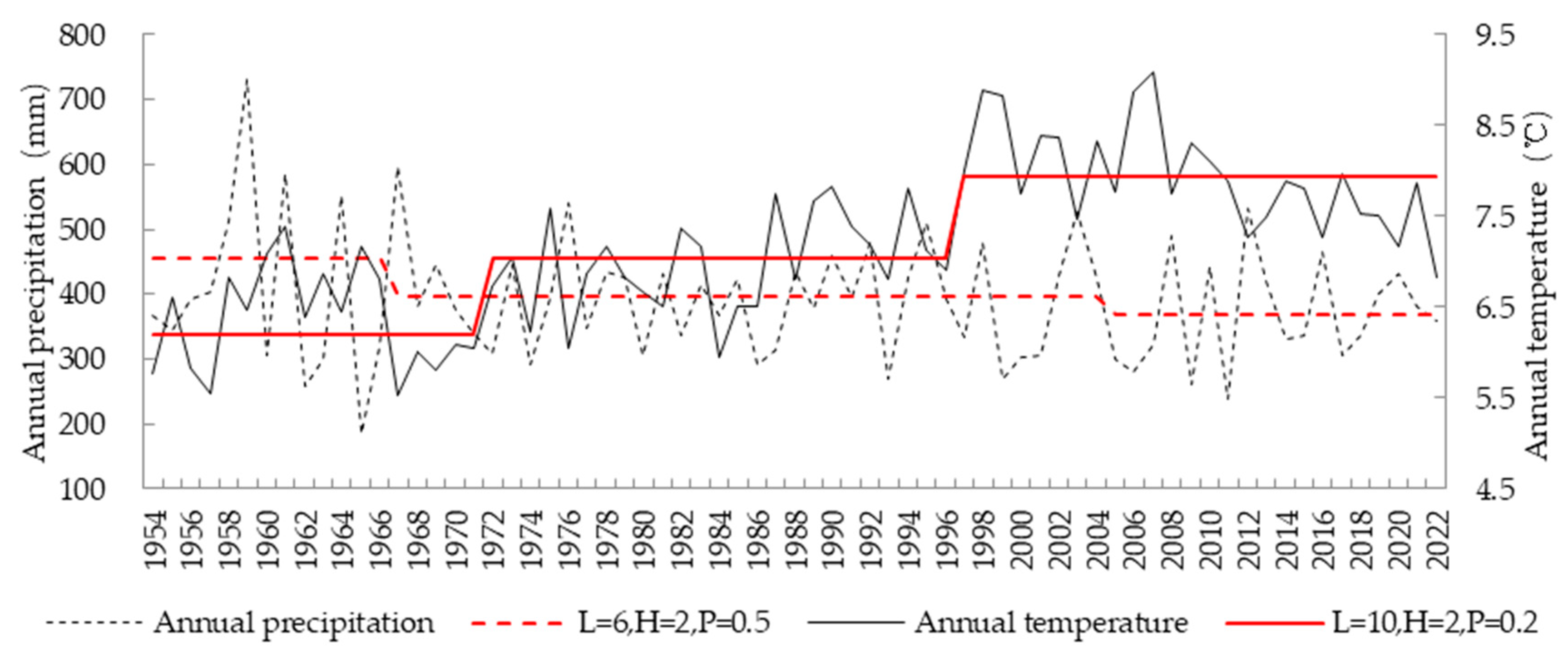
The DLB exhibited a stepwise decrease in annual precipitation, coupled with a stepwise increase in annual mean temperature during 1954–2022 (Figure 2), indicating a distinct warming-drying climatic trend. Distinct climatic phases emerged throughout this period, beginning with cool and wet conditions during 1954–1966, transitioning to moderate temperature and precipitation levels during 1972–1996, and culminating in significantly warmer and drier conditions during 2006–2022.

3.1.2. Land Use Changes

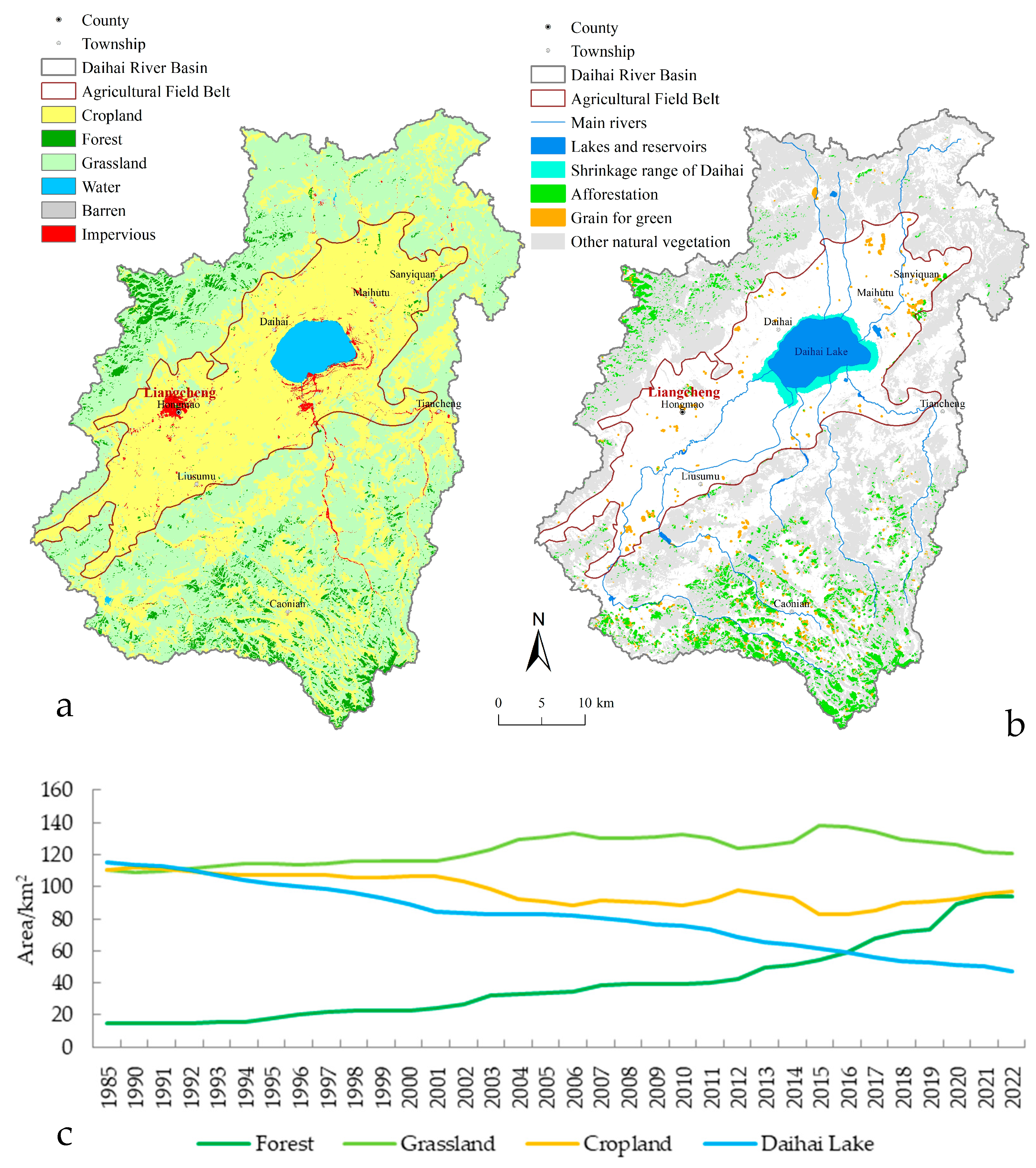
The land use composition of the DLB in 2022 was predominantly characterized by grasslands and croplands, with other types representing minor proportions (Figure 3a). Specifically, croplands (971.65 km2, 41.39%) were primarily concentrated in the peri-lacustrine zone, while grasslands (1206.73 km2, 51.41%) predominantly occupied the transitional belt between agricultural and mountainous areas. Forests (93.88 km2, 4.00%) were mainly distributed in mountainous areas, with wetlands (48.13 km2, 2.05%) consisting primarily of Daihai Lake and scattered upstream reservoirs. Built-up areas (26.64 km2, 1.13%) were principally represented by county and township settlements.
Figure 3c illustrates the temporal trends of land use changes during 1985–2022. The two dominant land cover types—cropland and grassland—exhibited inverse variation patterns, with grassland coverage peaking (and cropland reaching its minimum) in both 2006 and 2015. Forest and built-up areas demonstrated consistent expansion, increasing by 79.33 km2 and 18.13 km2, respectively, while Daihai Lake experienced rapid shrinkage from 115.00 km2 to 47.24 km2 during this period.
Figure 3b illustrates the detailed land use conversions occurring between 2000 and 2022. Afforestation efforts converted 61.07 km2 of grassland to forest, primarily in the northwestern and southeastern mountainous areas, while cropland-to-forest transitions (8.35 km2) were concentrated in the peri-lacustrine agricultural belt. During this period, afforestation projects contributed 73.95% of the total increase in forest area. The lake’s shrinkage predominantly occurred in its southwestern and eastern low-lying areas, with 36.54 km2 converted to cropland, 0.74 km2 to grassland, and 4.83 km2 to built-up areas.

3.1.3. Variations in Vegetation NPP and ET

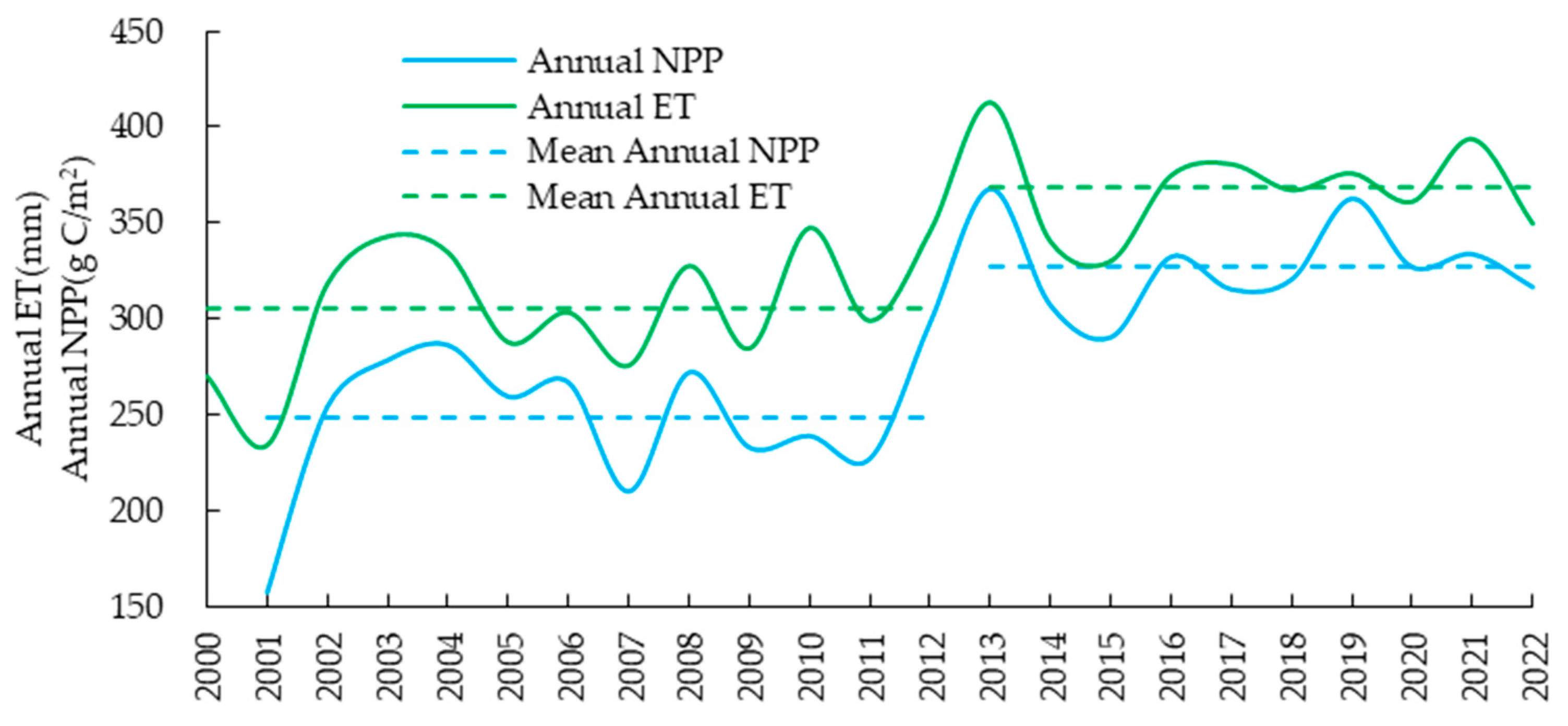
From 2000 to 2022, the DLB exhibited a fluctuating but increasing trend in both annual mean NPP and ET, reaching peak values in 2013 and subsequently maintaining relatively high levels (Figure 4). Comparative analysis revealed distinct differences between the two periods: the annual NPP increased from 248.716 g C m−2 (2000–2012) to 327.46 g C m−2 (2013–2022), while the corresponding annual ET rose from 305.64 mm to 368.70 mm during the same intervals.

3.2. Water Budget of the Basin

3.2.1. Spatio-Temporal Variation in Water Budget

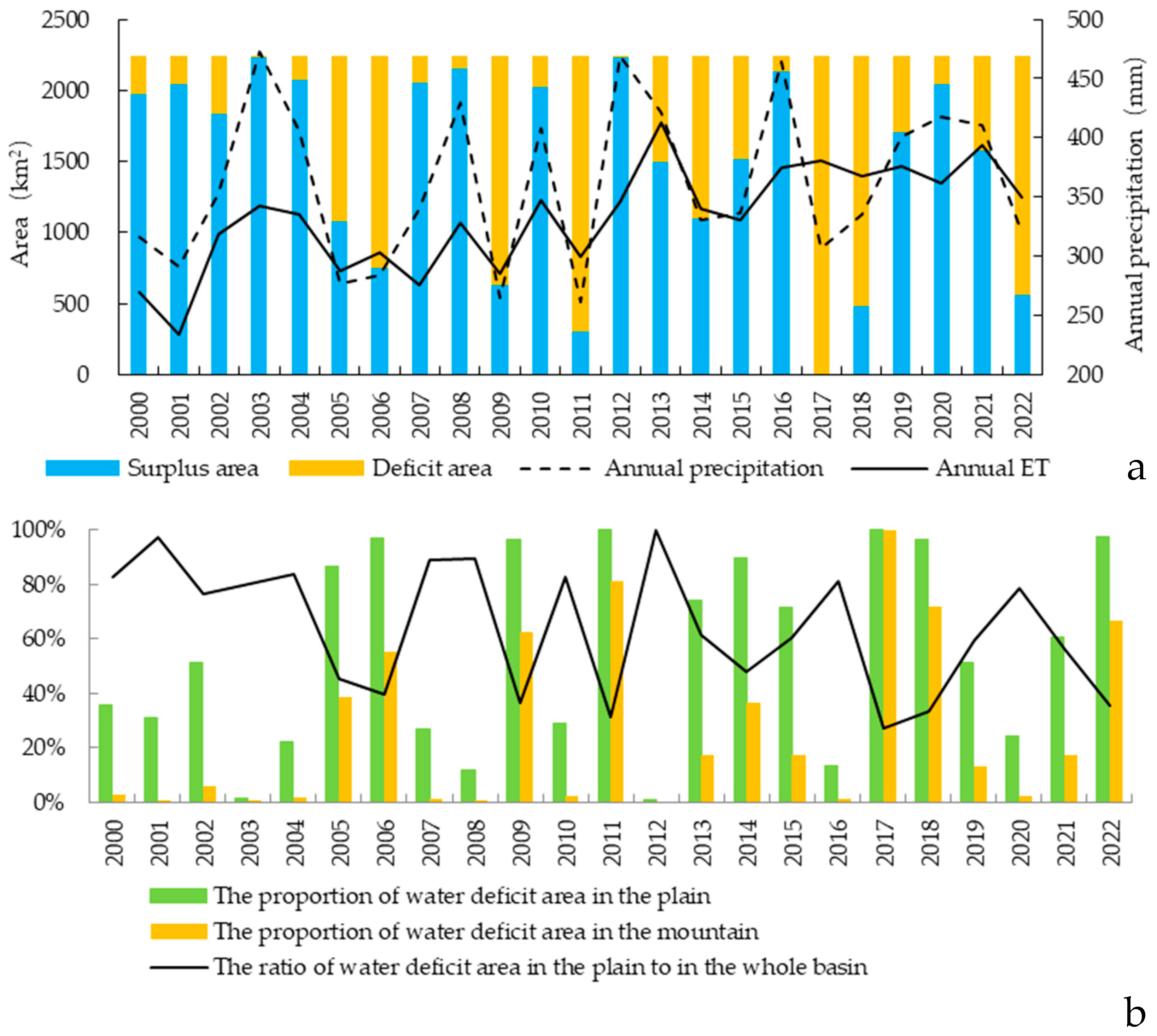
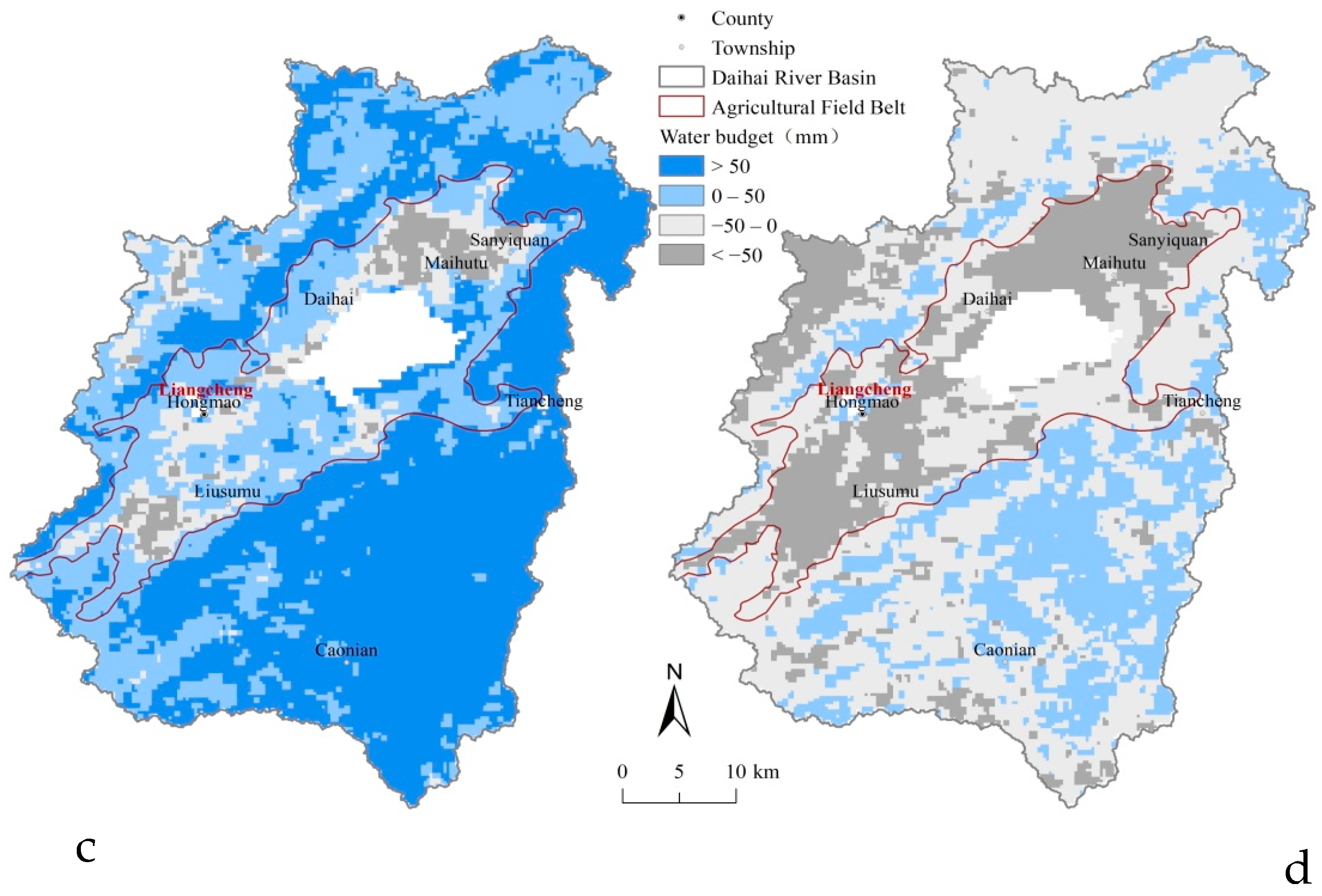
The Water budget in the DLB exhibited synchronous variations with precipitation from 2000 to 2022 (Figure 5a, Table 2). The annual mean precipitation (808.99 × 10⁶ m3) slightly exceeded the corresponding ET (751.30 × 10⁶ m3), resulting in an average annual water surplus of 64.15 × 10⁶ m3. During years with annual precipitation below the long-term average, water deficit zones predominated within the basin (e.g., 2006, 2009, 2011, and 2017). Conversely, water surplus zones became dominant during years with above-average precipitation (e.g., 2003, 2008, 2012, 2016, and 2020). Notably, despite a 126.31 mm precipitation increase between 2001 (291.70 mm) and 2020 (418.01 mm), the basin maintained similar percentages of water surplus and deficit areas, while equivalent precipitation amounts in 2000 and 2022 produced contrasting water budgets—shifting from 88.17% areal surplus to 74.94% areal deficit.
The DLB exhibited contrasting hydrological patterns between its plain and mountainous areas during 2000–2022, with annual water deficits of 5.2 × 10⁶ m3 and 69.28 × 10⁶ m3, respectively. Notably, water deficit conditions covered more than 50% of the plain areas in 13 years, compared to only 6 years in mountainous areas (Figure 5b). Despite comparable annual precipitation (315.86 mm in 2000 and 320.25 mm in 2022), the two years exhibited opposite water budget anomalies. In 2000, the mountainous and plain areas had surpluses of 97.55 and 4.33 × 10⁶ m3, respectively. By 2022, however, these regions registered deficits of 23.68 and 42.11 × 10⁶ m3. A comparative analysis reveals that the deterioration in water balance was more pronounced in the plain area (Figure 5c,d).

3.2.2. Water Budget Comparison Across Vegetation Types

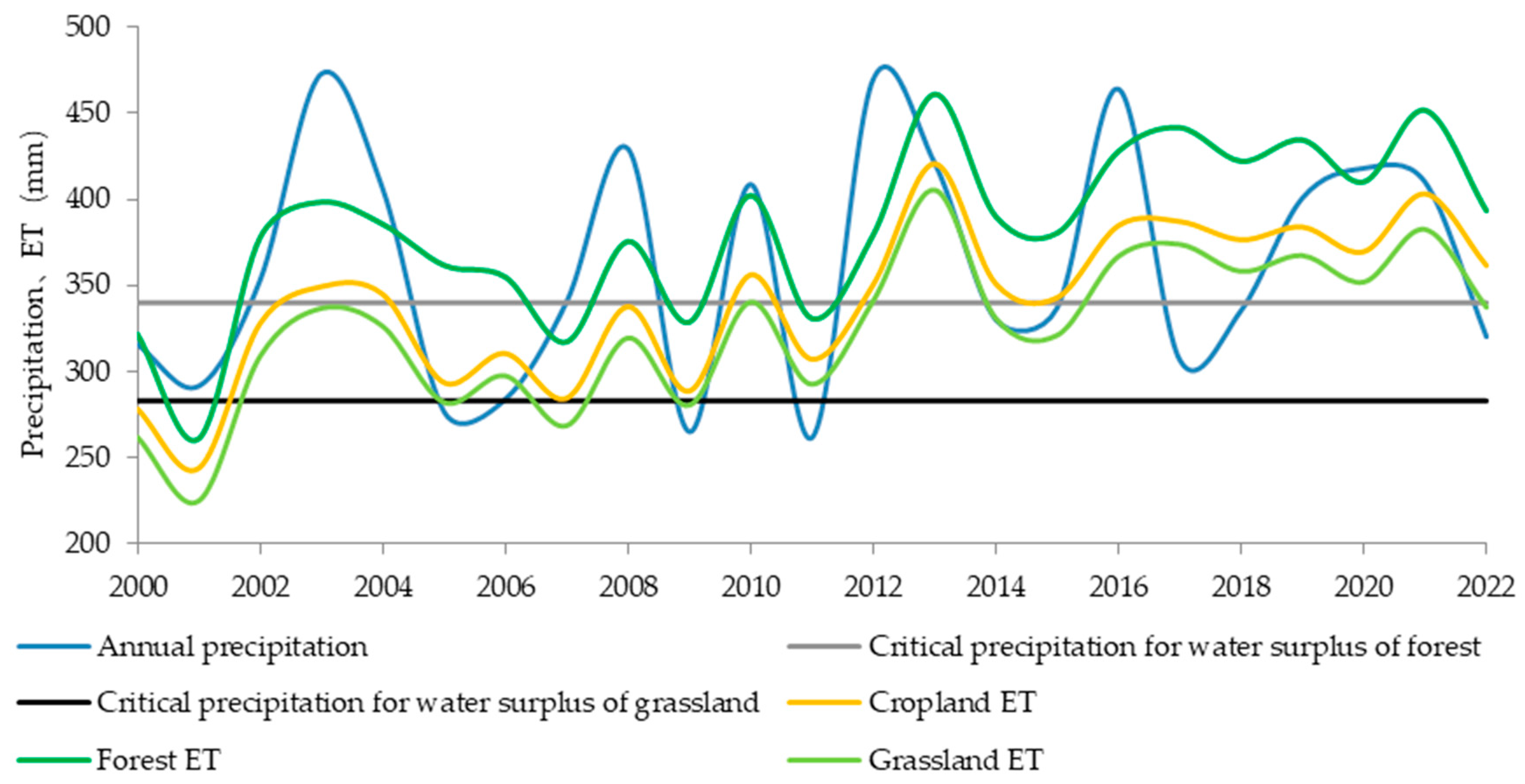
Vegetation-specific analysis of the DLB (2000–2022) revealed synchronous variations in ET and precipitation across forest, grassland, and cropland (Figure 6). The annual mean ET followed the order: forest (382.94 mm) > cropland (341.52 mm) > grassland (325.11 mm). We determined critical precipitation thresholds for water surplus as 340 mm for forests and 285 mm for grasslands, corresponding to the minimum precipitation required to yield positive WB values. No threshold was established for croplands due to predominant irrigation influences on ET.
From 2000 to 2022, the DLB exhibited distinct hydrological patterns across different land cover types. Grasslands and croplands maintained water surpluses in general, with mean annual values reaching 52.18 × 10⁶ m3 and 11.65 × 10⁶ m3, respectively. In contrast, forests showed a water deficit averaging 0.36 × 10⁶ m3 annually (Table 2). Although the precipitation levels in 2000 and 2022 were comparable, the water budget, calculated from raster cells for the periods before and after afforestation, changed from an initial surplus of 3.54 × 10⁶ m3 to a final deficit of 2.89 × 10⁶ m3, representing a total increase in the water deficit of 6.43 × 10⁶ m3.

3.2.3. Impact of Farming Practices on Agricultural Water Budget and ET

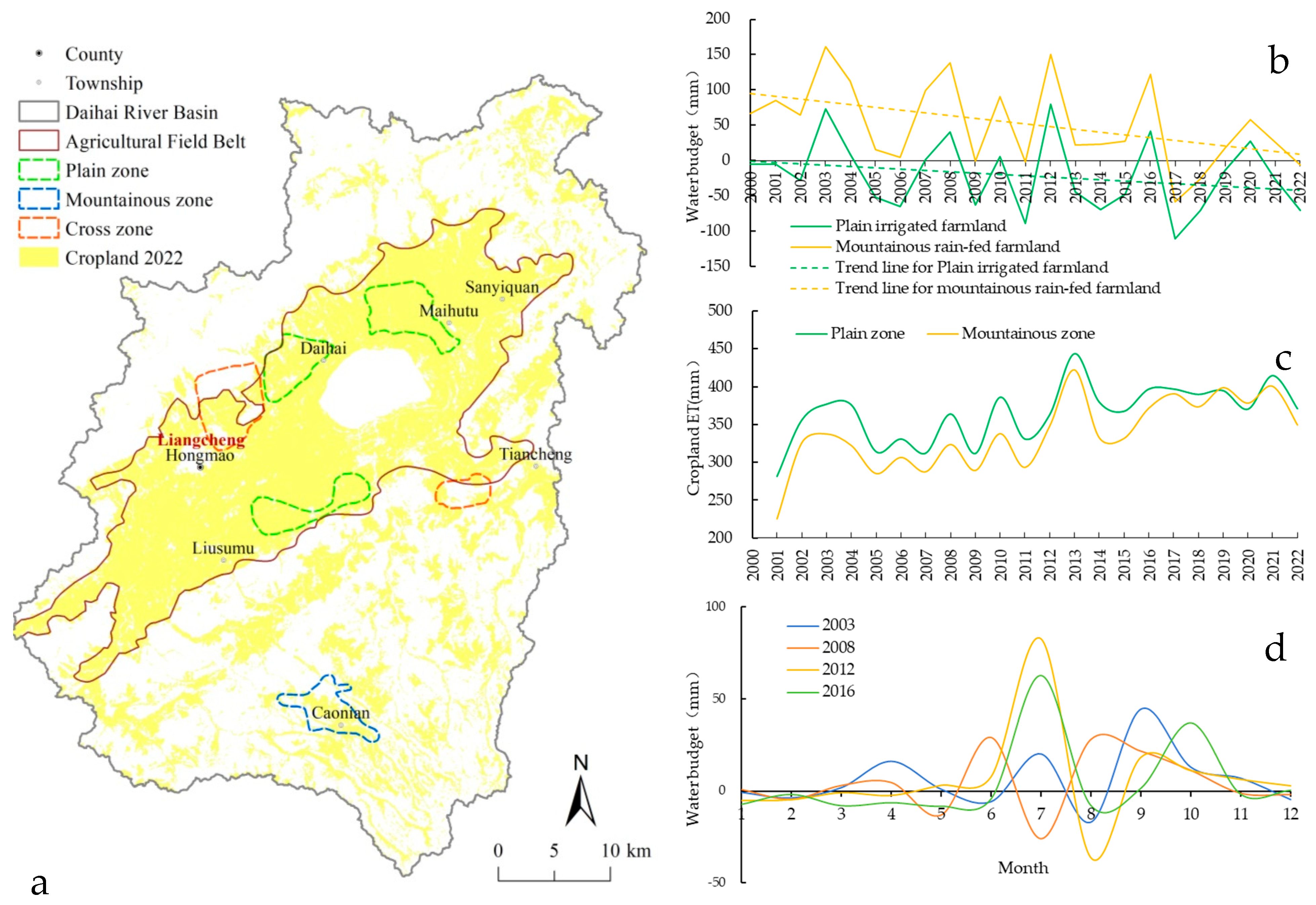
To systematically evaluate the effectiveness of agricultural water-saving practices, we analyzed the water budget and ET trends in the designated organic dryland agriculture demonstration zone, comparing mountain rainfed and plain irrigated croplands (Figure 7a). During 2000–2022, both agricultural systems exhibited fluctuating but declining water surplus trends (Figure 7b). The mountain rainfed croplands maintained a net annual water surplus of 51.72 × 10⁶ m3, while the plain irrigated croplands showed an opposite pattern with an average annual water deficit of 21.24 × 10⁶ m3. Compared to the period before 2016, when agricultural water conservation was implemented, the ET of irrigated plains shifted from being significantly higher to becoming comparable to that of rainfed mountainous areas (Figure 7c). The substantial decrease in ET on the irrigated plains verifies the effectiveness of the water-saving measures.
Notably, during major water surplus years in the DLB (e.g., 2003, 2008, 2012, and 2016), all croplands demonstrated positive water budgets (Table 2). Seasonal analysis revealed that water surpluses primarily occurred during three distinct periods: early spring, the flood season, and early autumn (Figure 7d).

3.2.4. Correlation Between Daihai Lake Level, Surface Area and Environmental Factors

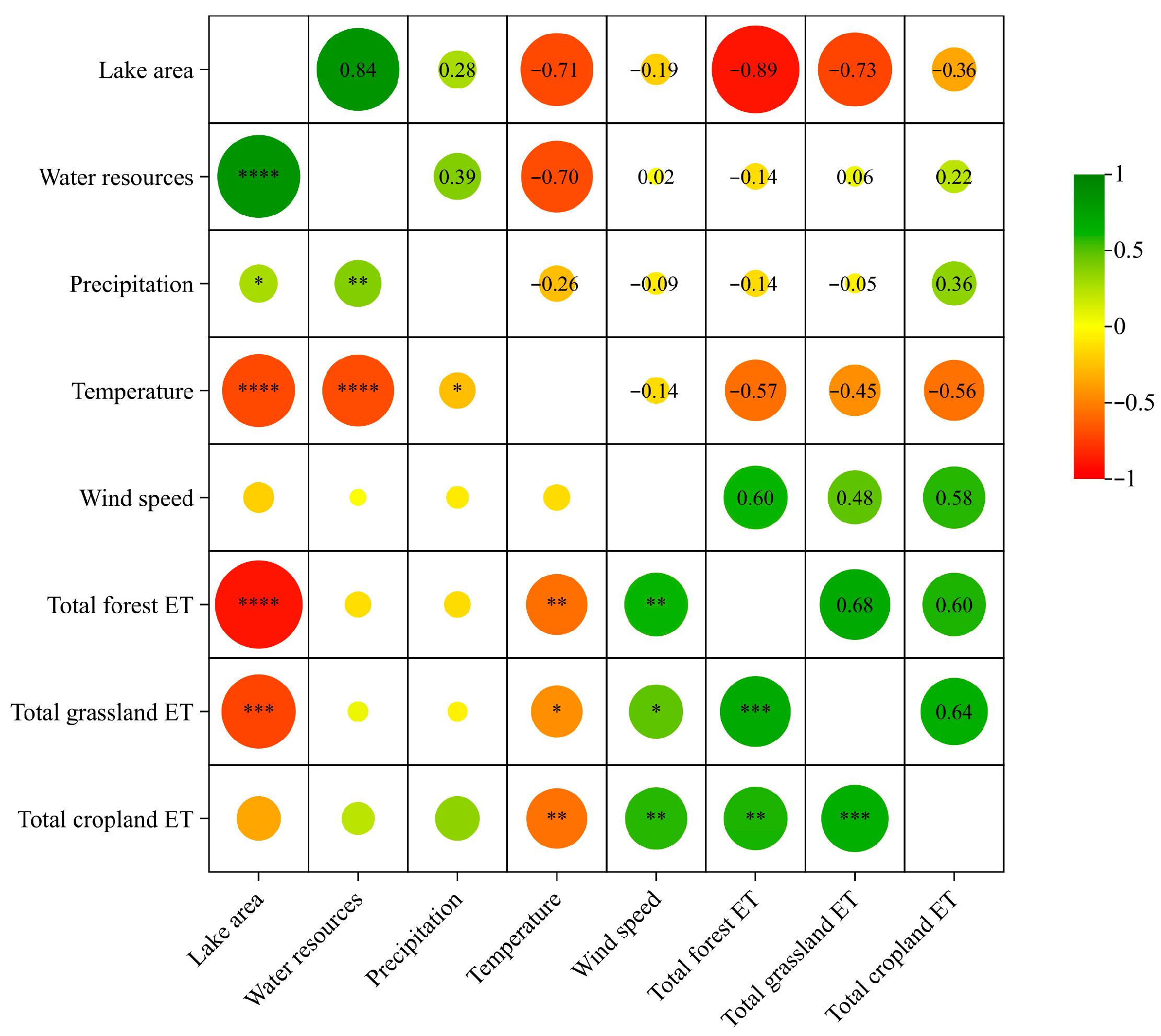
The correlation analysis focused exclusively on Daihai Lake’s surface area and ET due to the exceptionally strong relationships between water level and area (r = 0.97) and between NPP and ET (0.90 < r < 0.99). The lake area exhibited statistically significant positive correlations with both the water resources of its basin (r = 0.84, p < 0.001) and annual precipitation (r = 0.28, p < 0.05), while revealing strong negative correlations with annual mean temperature (r = −0.71, p < 0.001), forest ET (r = −0.89, p < 0.001), and grassland ET (r = −0.73, p < 0.005). Notably, no significant correlation emerged with cropland ET (Figure 8). Furthermore, vegetation-specific analysis showed that ET across vegetation types (forest, grassland, and cropland) correlated negatively with annual mean temperature but positively with annual mean wind speed. These findings collectively identified water resources within the basin, temperature, and natural vegetation ET (particularly from forests) as primary determinants of Daihai Lake’s surface area dynamics, that is, the synergistic effects of reduced precipitation, rising temperatures, and increased forest ET following afforestation programs jointly drove the lake’s progressive shrinkage.

4. Discussions

4.1. Combined Effects of Climate Change and Human Activities on Daihai Lake Shrinkage

The DLB has exhibited a persistent warming and drying trend since 1954, characterized by rising temperatures and declining precipitation. While climate change has gradually contributed to lake shrinkage through long-term processes, anthropogenic impacts have manifested more rapidly and substantially [44]. Their synergistic effects have accelerated the dramatic reduction of Daihai Lake [45].
Since the 1950s, extensive development of reservoirs and mechanized wells for agricultural irrigation has transformed the DLB. By the late 1970s, irrigated areas had expanded to 184 km2. Although partial cropland conversion to forest and grassland was implemented from the 1980s onward, maintaining irrigated areas around 133 km2 [27], the consequent reduction in inflow led to progressive lake shrinkage. Through water balance modeling, a significant decreasing trend in inflow volume from 1959 to 2018 was demonstrated, with an abrupt decline in lake water level occurring in 1982 [33].
Since 2000, the influence of human activities on the inflow into Daihai Lake has become significantly stronger than in previous periods. During 2000–2022, the afforested area expanded by 69.42 km2, which corresponded to an additional water deficit of 6.43 × 10⁶ m3 calculated using land use raster data. The operational period of Daihai Power Plant (2006–2019) exacerbated water losses through annual withdrawals of 12.06 × 10⁶ m3 from the lake and adjacent groundwater, while its use of the lake as a cooling reservoir elevated water temperatures and evaporation rates [28,40]. In the Huang–Huai–Hai River Basin, a 10% increase in the NDVI corresponds to an average reduction in runoff of 8.3%, thereby decreasing the ultimately obtainable water resources [46]. Vegetation greening in the middle and lower reaches of the Yellow River Basin contributes up to 19% of the observed runoff reduction [47]. The strong negative correlation between forest ET and lake area (r = −0.89) suggests a direct linkage. During 2004–2017, annual forest expansion averaged 2.67 km2 with localized water budget ranging from −112.41 to 121.95 mm, while the lake itself, according to monitoring data (precipitation, ET, and lake inflow) [41], experienced more severe water deficits (231.42–439.30 mm) and shrank at an average rate of 1.68 km2 annually. Forest ET shows a strong negative correlation with the area of Daihai Lake (Section 3.2.4), suggesting a direct relationship between them, with a forest expansion to lake shrinkage ratio of 1.6. The expansion of forests in the upstream mountainous regions has increased ET while reducing the proportion of precipitation that becomes runoff. Concurrently, rising temperatures have further elevated ET, while decreased precipitation has weakened the replenishment of water sources. These factors collectively contribute to an intensified loss of water resources, resulting in reduced inflow into Daihai Lake. Model estimates indicated that inter-basin water transfers of 18.21–25.18 × 10⁶ m3 (annual mean is 22.36 × 10⁶ m3) would be required during low precipitation and inflow years to maintain stable lake levels.

4.2. Grassland Is Primary Contributor to Water Surplus of Basin

The croplands, predominantly located in the plain areas, rely on irrigation for water supply, making their water budget fundamentally incomparable to that of natural vegetation. Unlike forests and other woody plants whose biomass accumulates with age, grasslands maintain relatively stable annual aboveground biomass. As the zonal vegetation type occupying 41.39% of the DLB’s area, grasslands are primarily distributed in transitional zones between mountainous and plain areas, exerting a significant influence on the basin’s overall water budget.
Compared to forests, grasslands demonstrate a substantially lower precipitation threshold for achieving water surplus. During 2000–2022, grasslands showed an annual mean water surplus of 42.13 mm per unit area (total 52.19 × 10⁶ m3), while forests exhibited a slight water deficit of −0.18 mm (total 0.37 × 10⁶ m3). This hydrological behavior positions grasslands as the basin’s dominant water-surplus vegetation, with their ET patterns serving as more sensitive indicators of climatic influences on the water cycle. Remarkably, grasslands contributed 81.34% (multi-year average) to the basin’s water budget, highlighting their crucial role in maintaining regional water balance.

4.3. Unplanned Forest Expansion Exacerbates Water Scarcity

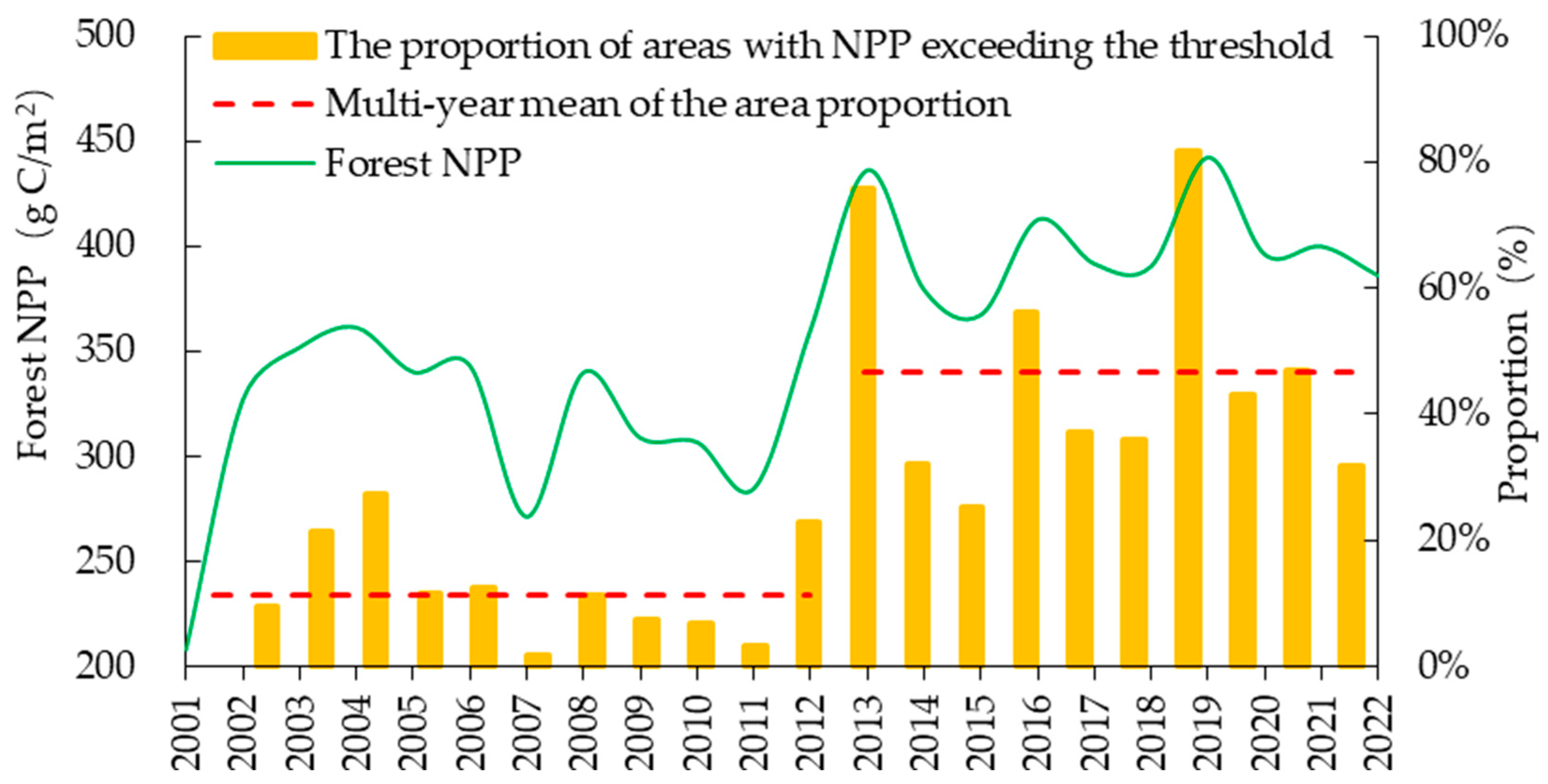
As a sub-basin of the Loess Plateau, the DLB exhibits a water-limited ecosystem with a theoretical water-determined NPP capacity of 400 ± 5 g C/m2 (excluding socioeconomic water consumption) [6]. Our analysis of 2000–2022 data revealed distinct temporal patterns in forest NPP: following a marked increase in 2013, forest NPP stabilized at elevated levels. Comparative assessment showed the proportion of forested areas exceeding the water-determined NPP threshold rose significantly from 11.35% (2001–2012) to 46.57% (2013–2022) (Figure 9). Artificial forests demonstrated age-dependent NPP increases during their first decade [48], with both ET and NPP peaking at maturity before stabilizing [49].
From 2000 to 2022, the forest area in the DLB increased from 22.87 km2 to 93.88 km2 (Figure 3). In 2022, the forest area and ET accounted for only 4.00% and 4.43% of the entire basin, respectively. According to the correlation heatmap analysis results, the correlation between the area of Daihai Lake and forest ET is significantly higher than that of grassland ET. The increase in area and ET of forests strengthened the shrinking trend of Daihai Lake. Since the ET of forests per unit area is 1.11 to 1.28 times that of grasslands, we considered a simplified scenario in which all afforested areas were replaced by grassland. Under the assumption of constant precipitation and a reduction in ET to grassland levels, the annual water surplus per unit area would increase by 36.14–79.52 mm (equivalent to the difference in ET between forest and grassland per unit area). By multiplying the multi-year average difference in ET between forest and grassland (57.74 mm) by the total afforested area (69.42 km2), it is estimated that the water surplus in the afforested regions would rise by 4.01 × 10⁶ m3. Among the 13 years with water deficits in forests listed in Table 2, 5 years (e.g., 2002, 2013, 2015, 2019, and 2021) would transition from deficit to surplus under this scenario.

4.4. Post-Water-Conservation Agricultural ET Was Similar Between Plains and Mountainous Areas

In the DLB, plain-area croplands require artificial irrigation, and mountainous regions predominantly practice rainfed agriculture. Since 2016, comprehensive water-saving measures have been implemented in the plain area, including: (1) decommissioning 1001 irrigation wells and converting 173 km2 of irrigated land to rainfed cultivation; (2) restructuring plant types by by replacing water-intensive crops such as corn and sugar beets with low-water-consumption crops like soybeans, millet, sorghum, proso millet, and quinoa; and (3) adopting plastic mulching with subsurface drip irrigation across 44 km2, particularly during maize seedling stages (spring) and in vegetable greenhouses (spring/autumn).
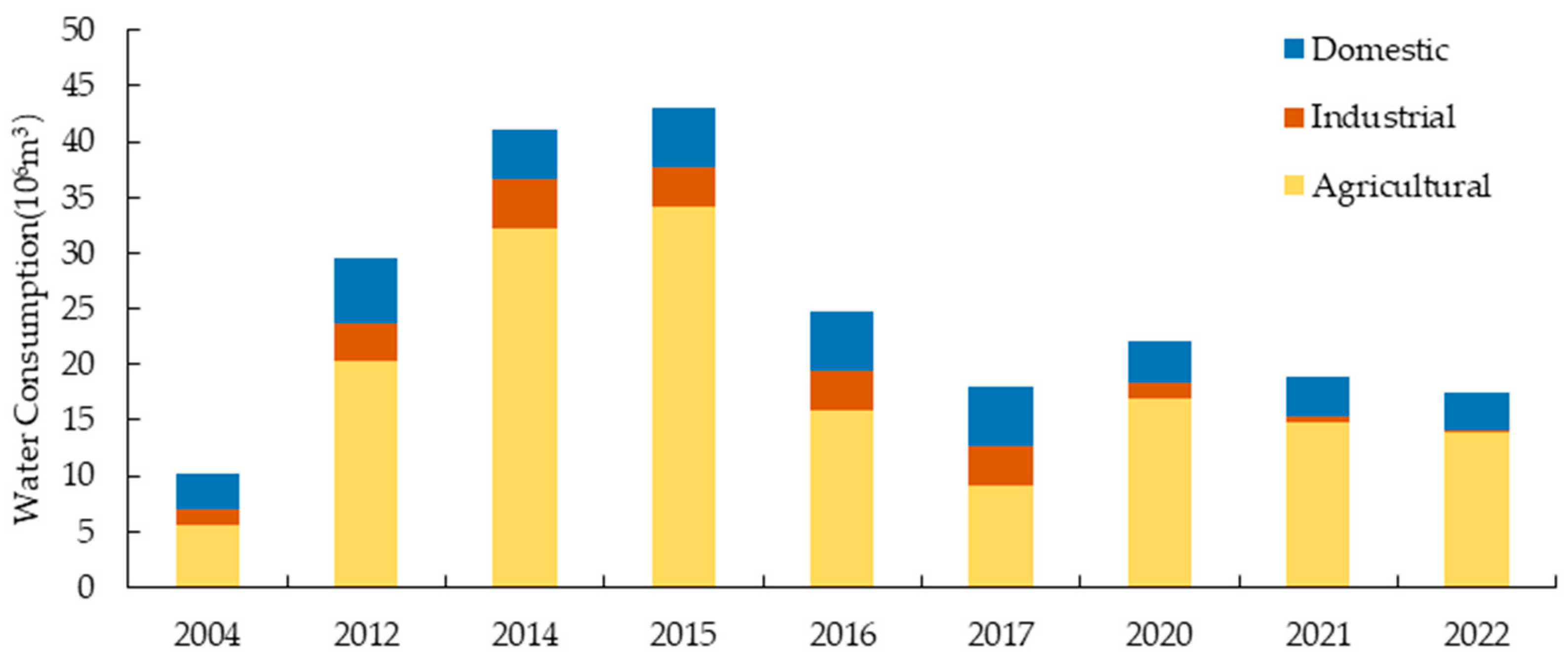
Comparative analysis revealed a 38.7% reduction in mean agricultural water use from 23.07 × 10⁶ m3/yr (2004–2015) to 14.14 × 10⁶ m3/yr (2016–2022) (Figure 10), with plain-area ET approaching that of mountainous rainfed areas (see Section 3.2.3). The irrigation schemes in Zimbabwe achieved an average annual reduction in agricultural ET of 13.5% through technical interventions during 2013–2021 [50]. Similarly, agricultural productivity has been successfully decoupled from high water consumption following the implementation of water-saving irrigation in the DLB. The conserved water resources have returned to the natural hydrological cycle, contributing to the mitigation of the terminal lake’s shrinkage.

4.5. Limitations

The simplified water balance equation represents only the climatic equilibrium and does not reflect the actual water balance within the basin. Although remotely sensed ET data offer advantages in terms of accessibility and spatiotemporal continuity for interpreting basin-scale water deficits and surpluses, such datasets typically exclude open water surfaces and thus do not simultaneously capture the contribution of lake ET to the overall basin water budget. Due to the lack of monitoring data for surface runoff and lake water levels, it is difficult to establish a complete hydrological cycle; this part of the analysis draws upon existing research. Additionally, irrigated croplands are influenced by external water inputs, making their water budget incomparable with that of natural vegetation areas.
Furthermore, inconsistencies in the temporal coverage of multi-source remote sensing data (e.g., monthly ET products are only available up to 2018) and their coarse spatial resolution (e.g., annual ET products at 500 m) introduce inevitable uncertainties into the gridded estimates of water deficit and surplus.

5. Conclusions

This study systematically examines the shrinkage of Daihai Lake by analyzing climatic factors, land use patterns, vegetation NPP, and ET dynamics within the basin. We conducted a comprehensive assessment of water budget variations across different vegetation types, evaluated the impacts of afforestation projects and agricultural water-saving measures on ET, and investigated their collective influence on lake shrinkage. Key findings include:
Climate change and anthropogenic activities have jointly accelerated the shrinkage of Daihai Lake. Since 1954, the DLB has experienced significant warming and reduced precipitation. Concurrently, increased ET from expanded agricultural irrigation and afforestation projects has exacerbated water losses. Statistical analyses reveal that lake area shows positive correlations with total water resources (r = 0.84, p < 0.001) and annual precipitation (r = 0.28, p < 0.05), but negative correlations with annual mean temperature (r = −0.71, p < 0.05) and forest ET (r = −0.89, p < 0.001).
Grasslands emerge as the primary contributor to basin water surplus, accounting for 81.34% of the multi-year average positive water budget. Afforestation activities (covering 73.95% of the total forest area during 2000–2022) have increased ET, causing an additional 6.43 × 10⁶ m3 water deficit. Notably, forest ET demonstrates a stronger negative correlation with lake area than other vegetation types. The prediction suggests that had the afforested areas been restored to grassland instead, the basin’s water surplus could potentially have increased by approximately 4.01 × 10⁶ m3. The agricultural water-saving initiative since 2016 has effectively reduced plain-area cropland ET to near rainfed mountain-field levels, potentially mitigating the shrinkage of Daihai Lake. In non-humid regions, vegetation restoration must be guided by the water availability, and adopting water-saving irrigation practices is critical to sustainable water resource utilization.

Author Contributions

D.W., Conceptualization, Methodology, Software, Investigation, Formal Analysis, Writing—Original Draft. P.H., Conceptualization, Funding Acquisition, Resources, Supervision, Writing—Review and Editing. J.X., Visualization, Writing—Review and Editing. L.H., Formal analysis, Data Curation. All authors have read and agreed to the published version of the manuscript.

Funding

This research was funded by Planning for the National Ecological Civilization Demonstration County in Liangcheng County, grant number WSZCS-C-F-230067.

Data Availability Statement

The data presented in this study are available in the article.

Conflicts of Interest

The authors declare no conflicts of interest.

References

  1. Scordo, F.; Bohn, V.; Piccolo, M.; Perillo, G. Mapping and monitoring lakes intra-annual variability in semi-arid regions: A case of study in Patagonian plains (Argentina). Water 2018, 10, 889. [Google Scholar] [CrossRef]
  2. Abbasian, M.; Najafi, M.; Abrishachi, A. Increasing risk of meteorological drought in the Lake Urmia basin under climate change: Introducing the precipitation–temperature deciles index. J. Hydrol. 2021, 592, 125586. [Google Scholar] [CrossRef]
  3. Sterling, S.; Ducharne, A.; Polcher, J. The impact of global land-cover change on the terrestrial water cycle. Nat. Clim. Change 2013, 3, 385–390. [Google Scholar] [CrossRef]
  4. Wang, S.; Fu, B.; Piao, S.; Lü, Y.; Ciais, P.; Feng, X.; Wang, Y. Reduced sediment transport in the Yellow River due to anthropogenic changes. Nat. Geosci. 2016, 9, 38–41. [Google Scholar] [CrossRef]
  5. Zhang, S.; Yang, D.; Yang, H.; Lei, H. Analysis of the dominant causes for runoff reduction in five major basins over China during 1960–2010. Adv. Water Sci. 2015, 26, 605–613. [Google Scholar] [CrossRef]
  6. Fu, B. Ecological and environmental effects of land-use changes in the Loess Plateau of China. Sci. China Earth Sci. 2022, 67, 3768–3779. [Google Scholar] [CrossRef]
  7. Zhang, X. The construction effect and development of the Three-North Afforestation Program. Prot. For. Sci. Technol. 2020, 2, 52–54. [Google Scholar] [CrossRef]
  8. Chen, C.; Park, T.; Wang, X.; Piao, S.; Xu, B.; Chaturvedi, R.; Fuchs, R.; Brovkin, V.; Ciais, P.; Fensholt, R.; et al. China and India lead in greening of the world through land-use management. Nat. Sustain. 2019, 2, 122–129. [Google Scholar] [CrossRef]
  9. Zhu, J.; Zheng, X. The prospects of development of the Three-North Afforestation Program (TNAP): On the basis of the results of the 40-year construction general assessment of the TNAP. Chin. J. Ecol. 2019, 38, 1600–1610. [Google Scholar] [CrossRef]
  10. Ma, H.; Gao, J.; Song, Q.; Lei, H.; Li, Y.; Mei, C. Inter-annual variety of water resources of last 15 years in Haihe Basin and water-saving measures recommendations based on consumption. China Water Resour. 2019, 7, 21–25. [Google Scholar] [CrossRef]
  11. Sun, G.; Zhang, L.; Wang, Y. On accurately defining and quantifying the water retention services of forests. Acta Ecol. Sin. 2023, 43, 9–25. [Google Scholar] [CrossRef]
  12. Johnen, G.; Sapač, K.; Rusjan, S.; Zupanc, V.; Vidmar, A.; Bezak, N. Modelling and evaluation of the effect of afforestation on the runoff generation within the Glinščica River catchment (Central Slovenia). Water 2021, 13, 2792. [Google Scholar] [CrossRef]
  13. François, M.; de Aguiar, T.R., Jr.; Mielke, M.S.; Rousseau, A.N.; Faria, D.; Mariano-Neto, E. Interactions between forest cover and watershed hydrology: A conceptual meta-analysis. Water 2024, 16, 3350. [Google Scholar] [CrossRef]
  14. Chen, Y.; Cui, Y.; Zhang, C.; Cui, Y.; Wang, Y.; Bai, L.; Guo, J.; Liu, T.; Lu, J.; Xu, Y.; et al. Spatio-temporal co-evolution of vegetation and hydrological elements under a changing environment in the Inner Mongolia section of the Yellow River Basin. Water Resour. Prot. 2024, 40, 141–149. [Google Scholar] [CrossRef]
  15. Li, Y.; Piao, S.; Li, L.; Chen, A.; Wang, X.; Ciais, P.; Huang, L.; Lian, X.; Peng, S.; Zeng, Z.; et al. Divergent hydrological response to large-scale afforestation and vegetation greening in China. Sci. Adv. 2018, 4, eaar4182. [Google Scholar] [CrossRef]
  16. Schwärzel, K.; Zhang, L.; Montanarella, L.; Wang, Y.; Sun, G. How afforestation affects the water cycle in drylands: A process-based comparative analysis. Glob. Change Biol. 2020, 26, 944–959. [Google Scholar] [CrossRef]
  17. Condon, L.; Atchley, A.; Maxwell, R. Evapotranspiration depletes groundwater under warming over the contiguous United States. Nat. Commun. 2020, 11, 873. [Google Scholar] [CrossRef]
  18. Bass, B.; Goldenson, N.; Rahimi, S.; Hall, A. Aridification of Colorado River Basin’s snowpack regions has driven water losses despite ameliorating effects of vegetation. Water Resour. Res. 2023, 59, e2022WR033454. [Google Scholar] [CrossRef]
  19. Azarnivand, A.; Camporese, M.; Alaghmand, S.; Daly, E. Modelling hydrological impacts of afforestation on intermittent streams. Sci. Total Environ. 2020, 728, 138748. [Google Scholar] [CrossRef] [PubMed]
  20. Feng, X.; Fu, B.; Piao, S.; Wang, S.; Ciais, P.; Zeng, Z.; Lü, Y.; Zeng, Y.; Li, Y.; Jiang, X.; et al. Revegetation in China’s Loess Plateau is approaching sustainable water resource limits. Nat. Clim. Change 2016, 6, 1019–1022. [Google Scholar] [CrossRef]
  21. Li, R.; Zheng, H.; O’Connor, P.; Xu, H.; Li, Y.; Lu, F.; Robinson, B.; Ouyang, Z.; Polasky, S.; Daily, G. Time and space catch up with restoration programs that ignore ecosystem service trade-offs. Sci. Adv. 2021, 7, eabf8650. [Google Scholar] [CrossRef]
  22. Xing, B.; Jin, A.F.; Yin, Z.Q.; Yin, X.L.; Zhu, W.W.; Wang, R.F. Research of basin water balance and water conservation variation based on multi-source data: A case study of Xiaoluan River Basin in Bashang plateau. Geol. Bull. China 2022, 41, 2114–2124. [Google Scholar] [CrossRef]
  23. Sun, S.; Chen, Y.; Wang, C.; Hu, Q.; Zhang, X. Water resource effectiveness of vegetation conservation and restoration in North China. Engineering 2022, 24, 97–106. [Google Scholar] [CrossRef]
  24. Feng, F.; Dong, G.T.; Zhang, W.G. Calculation of Area Target Evapotranspiration in Yellow River Basin and Evaluation of Water Resource Allocation. Trans. Chin. Soc. Agric. Eng. 2014, 30, 101–111. [Google Scholar] [CrossRef]
  25. Liang, X.; Liu, H.M.; Ji, M.C.; Chang, M.; Wen, L.; Yu, R.H.; Zhuo, Y.; Wang, L.X. Effects of land use/cover change on lake water quality in the semi-arid region of northern China: A case study in Lake Daihai Basin (2000–2018). J. Lake Sci. 2021, 33, 727–736. [Google Scholar] [CrossRef]
  26. State Council of China. Notice of the State Council General Office on Printing and Distributing the Three-North Shelterbelt System Program Master Plan; State Council of China: Beijing, China, 2025.
  27. Huang, Q.; Jiang, J. Analysis of level descent in Daihai Lake. J. Lake Sci. 1999, 11, 304–310. [Google Scholar] [CrossRef]
  28. Cheng, Y.; Zheng, L.; Fu, Z. Analysis of cause of Daihai lake shrinkage and water conservation recommendations. Meteorol. J. Inn. Mong. 2017, 5, 24–26. [Google Scholar] [CrossRef]
  29. Liangcheng County Agriculture and Animal Husbandry Bureau. Investigation and Analysis of Planting Structure Adjustment and ‘Four Control’ Action Effect in ‘Returning Irrigation to Water’ Area; Liangcheng County Agriculture and Animal Husbandry Bureau: Ulanqab, China, 2018.
  30. Ulanqab Municipal Government. Daihai Lake Water Ecological Protection Plan (Revision); Ulanqab Municipal Government: Ulanqab, China, 2019.
  31. Liang, W.; Chun, X.; Liu, J.; Bai, X.; Biligee, S.; Wu, Z.; Song, J. Research on the area change processes in the past 40a of Daihai Lake. J. Arid. Land Resour. Environ. 2017, 31, 93–98. [Google Scholar] [CrossRef]
  32. Niu, R.; Li, Q.; Fan, R.; Su, H. A preliminary study on the reasons for the shrinkage of the water area of Daihai Lake. Environ. Dev. 2022, 34, 85–93. [Google Scholar] [CrossRef]
  33. Liu, B.; Xia, J.; Huang, S.; Zhu, F. Responses of Daihai Lake water level to climatic factors and land use. Water Resour. Prot. 2022, 38, 64–70. [Google Scholar] [CrossRef]
  34. Pang, X.; Liu, H.; Liu, X.; Kou, H. Analysis of lake area and water level dynamic and its driving forces of Daihai Lake in recent 30 years. J. Inn. Mong. Univ. (Nat. Sci. Ed.) 2022, 52, 311–321. [Google Scholar] [CrossRef]
  35. Wang, J. Coupled Simulation of Climate and Hydrological Processes in the Daihai Basin in Recent 40 Years; Inner Mongolia University: Hohhot, China, 2021. [Google Scholar]
  36. Chen, J.; Lv, J.; Li, N.; Wang, Q.; Wang, J. External groundwater alleviates the degradation of closed lakes in semi-arid regions of China. Remote Sens. 2020, 12, 45. [Google Scholar] [CrossRef]
  37. Liu, X. Dynamic Change of Area and Water Level of Daihai Lake and Its Driving Force Analysis; Inner Mongolia University: Hohhot, China, 2019. [Google Scholar]
  38. Kou, X. Study on the Maintenance Mechanism of the Ecosystem Multifunctionality in Littoral Zone Wetlands of the Daihai Lake; Inner Mongolia University: Hohhot, China, 2022. [Google Scholar]
  39. Liangcheng County Water Affairs Bureau. Water Resources Bulletin of Liangcheng County in 2022; Liangcheng County Water Affairs Bureau: Ulanqab, China, 2022.
  40. Hu, L.; Lu, W. Analysis of the current water environment status of the Daihai Lake Basin in Liangcheng County and the necessity of replenishment. Inn. Mong. Water Resour. 2014, 1, 109–110. [Google Scholar]
  41. Pastoral Water Conservancy Science Research Institute of the Ministry of Water Resources. Analysis and Research Report on the Impact of Returning Irrigation Water to Daihai Lake in Daihai Lake Basin; Pastoral Water Conservancy Science Research Institute of the Ministry of Water Resources: Beijing, China, 2018. [Google Scholar]
  42. Wang, Z.; Huang, Y.; Liu, T.; Zhong, R.; Jiu, C.; Wang, X. Analyzing the water balance of Lake Balkhash and its influencing factors. Arid. Zone Res. 2022, 39, 400–409. [Google Scholar] [CrossRef]
  43. Gao, G.; Xu, C. Characteristics of water surplus and deficit change in 10 major river basins in China during 1961–2010. Acta Geogr. Sin. 2015, 70, 380–391. [Google Scholar] [CrossRef]
  44. Wang, J.; Liu, D.; Tian, S.; Ma, J.; Wang, L. Coupling reconstruction of atmospheric hydrological profile and dry-up risk prediction in a typical lake basin in arid area of China. Sci. Rep. 2022, 12, 6524. [Google Scholar] [CrossRef] [PubMed]
  45. Huang, Y. Analysis of changes in the water surface area of Daihai Lake from 2015 to 2018 and its climatic impact. Mod. Agric. 2019, 12, 108–109. [Google Scholar] [CrossRef]
  46. Zhang, J.Y.; Zhang, C.F.; Bao, Z.X. Analysis of the effects of vegetation changes on runoff in the Huang-Huai-Hai River Basin under global change. Adv. Water Sci. 2021, 32, 813–823. [Google Scholar] [CrossRef]
  47. Lv, M.; Ma, Z.; Lü, M. Effects of climate/land surface changes on streamflow with consideration of precipitation intensity and catchment characteristics in the Yellow River Basin. J. Geophys. Res. Atmos. 2018, 123, 1942–1958. [Google Scholar] [CrossRef]
  48. Aguilos, M.; Sun, G.; Noormets, A.; Domec, J.; McNulty, S. Effects of land-use change and drought on decadal evapotranspiration and water balance of natural and managed forested wetlands along the southeastern US lower coastal plain. Agric. For. Meteorol. 2021, 303, 108372. [Google Scholar] [CrossRef]
  49. Amantai, N.; Meng, Y.; Tang, Z. Impacts of plantation and its growth on carbon sequestration and hydrological regulation functions on the Loess Plateau based on remote sensing time series analysis. Acta Ecol. Sin. 2024, 44, 7322–7333. [Google Scholar] [CrossRef]
  50. Wellington, M.; Lawes, R.; Renzullo, L.; Pittock, J.; Ramshaw, P.; Moyo, M.; Kimaro, E.; Tafula, M.; Rooyen, A. Decoupling Crop Production from Water Consumption at Some Irrigation Schemes in Southern Africa. Agric. Water Manag. 2023, 284, 108358. [Google Scholar] [CrossRef]
Figure 1. Geographical location, hydrography, and elevation of the DLB.
Land 15 00532 g001
Figure 2. Climate change trend and turning point in the DLB.
Land 15 00532 g002
Figure 3. Spatial distribution and change in land use across the DLB: (a) spatial distribution of land use types in 2022; (b) interannual variation of land use during 1985–2022 (The area of cropland and grassland in the map is 0.1 times the actual values, and the rest are the actual areas.); (c) spatial transformation of land use during 2000–2022.
Land 15 00532 g003
Figure 4. Interannual variation of vegetation NPP and ET in the DLB (2000–2022).
Land 15 00532 g004
Figure 5. Water budget in the DLB: (a) relationship between water deficit/surplus area and precipitation; (b) proportion of water deficit area in mountainous versus plain areas; (c) spatial distribution of water budget in 2000; (d) spatial distribution of water deficit in 2022.
Land 15 00532 g005aLand 15 00532 g005b
Figure 6. Trends in precipitation and ET across vegetation types in the DLB.
Land 15 00532 g006
Figure 7. Water budget in organic dryland agricultural demonstration zones in the DLB: (a) spatial distribution of organic dryland farming demonstration zones; (b) temporal changes in water budget during 2000–2022; (c) comparison of cropland ET in mountainous and plain areas before and after water-saving irrigation; (d) seasonal variation in water budget for cropland during major surplus years.
Land 15 00532 g007
Figure 8. Correlation heat map (In the figure, ****, ***, ** and * indicate significant correlation at 0.001, 0.005, 0.01 and 0.05 levels, respectively).
Land 15 00532 g008
Figure 9. Trends in forest NPP (2000–2022) and the proportion of areas exceeding the water-determined NPP threshold.
Land 15 00532 g009
Figure 10. Water consumption by sector in the DLB.
Land 15 00532 g010
Table 1. Data types and sources.
Data TypeNumberRangeFormatNameOriginal ResolutionData Source
Land use dataData 11985–2022TIFFChina’s 30 m annual land cover dataset and its dynamic changes30 mNational Cryosphere Desert Data Center (https://www.ncdc.ac.cn/portal/ (accessed on 7 April 2025))
Meteoro-logical dataAnnual mean temperature, annual precipitation and wind speedData 21954–2022CSVGlobal Summary of the Year/NOAA (https://www.ncei.noaa.gov/ (accessed on 20 June 2025))
Monthly precipitation dataData 31901–2022TIFF1 km monthly precipitation dataset for China1 kmNational Tibetan Plateau/Third Pole Environment Data Center (https://data.tpdc.ac.cn/ (accessed on 22 September 2025))
Monthly ET dataData 42000–2018TIFFChina’s 1 km annual actual ET dataset1 kmNational Ecosystem Science Data Center (https://www.nesdc.org.cn/ (accessed on 22 September 2025))
Annual ET dataData 52000–2022HDFMOD16A3GF v061500 mNASA (https://ladsweb.modaps.eosdis.nasa.gov/ (accessed on 25 June 2025))
Annual NPP dataData 62001–2022HDFMOD17A3HGF V061500 m
Hydrology and water resource dataData 71955–2018EXCELWater level and surface area/Impact Analysis of Irrigation Reduction on Daihai Lake in the DLB [41]
Data 81955–2014EXCELWater resource/Daihai Lake Water Ecological Protection Plan (Revision) [30]
Data 92004–2022EXCELAgricultural water consumption/Water Resources Bulletin of Liangcheng County 2004–2022 [39]
Table 2. Water budget across vegetation types in the DLB.
YearThe Whole Basin (Excluding Water Surface)ForestCroplandGrassland
PRE/mmET/mmWater Budget per Unit Area/mmTotal Water Budget/106 m3Water Budget per Unit Area/mmTotal Water Budget/106 m3Water Budget per Unit Area/mmTotal Water Budget/106 m3Water Budget per Unit Area/mmTotal Water Budget/106 m3
2000315.86270.2745.64102.077.230.1631.2832.9859.6167.80
2001291.65234.3557.26128.0748.111.1542.4644.8471.2781.00
2002353.10318.4534.7077.62−4.03−0.1117.8718.2050.1458.75
2003472.84343.10129.81290.35102.573.24114.75111.78142.60172.86
2004406.14334.8171.38159.7339.981.3152.3147.8785.86109.12
2005276.81287.95−11.05−24.72−73.19−2.43−23.47−20.98−0.97−1.25
2006283.98303.50−19.47−43.54−53.49−1.83−34.03−29.61−8.99−11.81
2007340.41275.8964.53144.3345.751.7245.9941.4078.13100.05
2008429.31327.82101.54227.1275.832.9180.5272.08116.94150.22
2009265.14284.65−19.44−43.51−50.59−1.96−30.82−27.39−10.66−13.78
2010408.63347.6061.09136.6424.030.9343.3037.7673.9996.70
2011261.65299.19−37.47−83.87−51.68−2.03−53.65−48.12−25.78−33.09
2012469.57345.76123.86277.04121.955.06107.93103.18136.39166.45
2013421.20412.958.3318.65−17.70−0.87−9.28−8.6722.5627.86
2014330.09340.31−10.17−22.74−37.96−1.90−29.03−26.414.495.64
2015336.98330.326.7315.04−20.94−1.12−15.10−12.1120.5627.95
2016463.94374.8589.17199.4465.533.7866.8753.78103.32139.68
2017306.73380.72−73.88−165.25−112.41−7.50−89.63−73.76−62.37−82.53
2018335.48367.22−31.67−70.81−68.31−4.81−48.47−42.18−18.40−23.40
2019400.83375.9424.9755.84−9.36−0.677.286.4039.0249.27
2020418.00361.1756.93127.3133.952.9739.2034.6970.9788.04
2021410.06393.8216.3536.57−18.88−1.74−2.60−2.4033.3239.98
2022320.25349.73−29.44−65.84−50.55−4.67−48.66−45.33−12.92−15.36
Mean361.68333.0628.6864.15−0.18−0.3611.5211.6542.1352.18
Disclaimer/Publisher’s Note: The statements, opinions and data contained in all publications are solely those of the individual author(s) and contributor(s) and not of MDPI and/or the editor(s). MDPI and/or the editor(s) disclaim responsibility for any injury to people or property resulting from any ideas, methods, instructions or products referred to in the content.