Article

Urban Sprawl Inside and Outside Natura 2000 Sites (SPAs) in Mediterranean EU States: The Case of Cyprus

1
Game & Fauna Service, Ministry of Interior, 1453 Nicosia, Cyprus
2
School of Engineering, Frederick University, 1036 Nicosia, Cyprus
3
School of Business and Law, Frederick University, 1036 Nicosia, Cyprus
*
Author to whom correspondence should be addressed.
Land 2026, 15(3), 481; https://doi.org/10.3390/land15030481
Submission received: 16 February 2026 / Revised: 9 March 2026 / Accepted: 10 March 2026 / Published: 17 March 2026
(This article belongs to the Special Issue Urban Land Use Planning in Europe: A Comparative Perspective)

Abstract

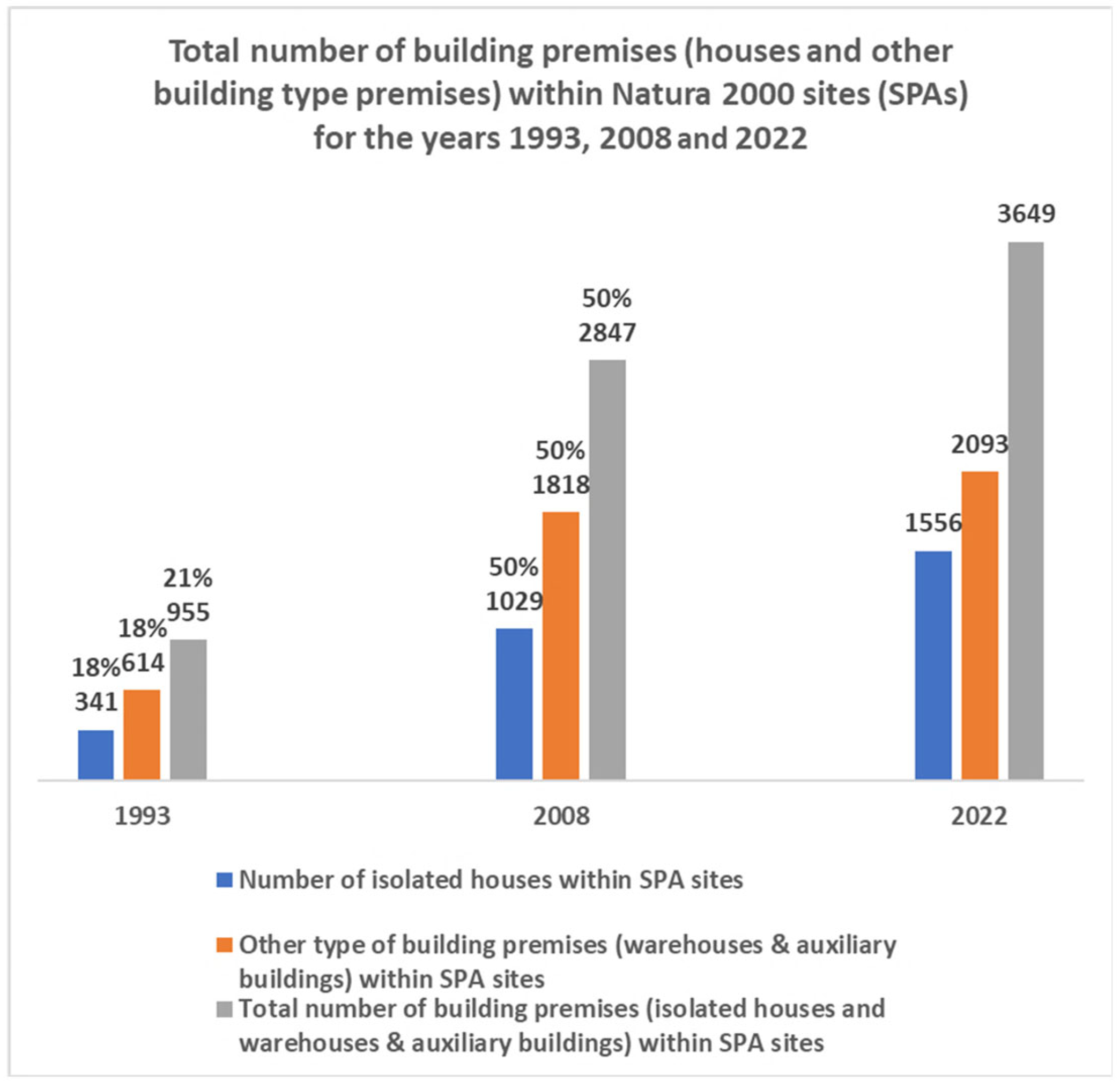
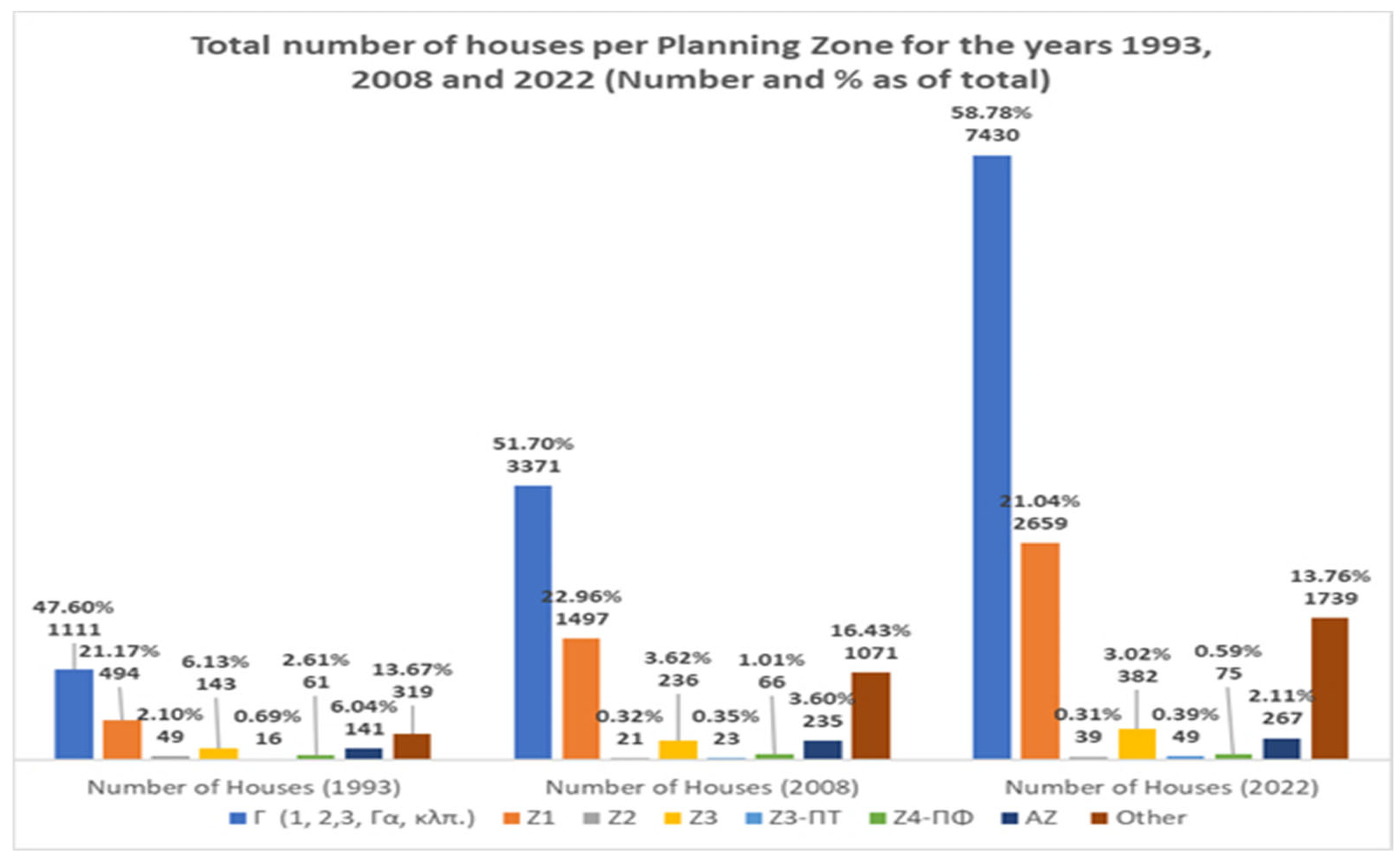
Land-use change associated with scattered (isolated) housing in the countryside remains largely underestimated in conventional European land-use datasets due to spatial resolution and minimum mapping unit constraints. This study quantifies low-density urban sprawl at the building level in Cyprus for the period 1993–2022, both within and outside Special Protection Areas (SPAs) of the Natura 2000 network. Situating the analysis within a broader Mediterranean EU planning context, the paper examines how local spatial patterns reflect wider development trajectories, including tourism-driven growth and second-home demand. Results reveal a fivefold increase in isolated housing outside development planning zones, from 2440 units in 1993 to 12,640 in 2022 (+418%). Significant increases occurred within agricultural zones (Γ: +568%) and even in protection zones (Z1: +438%). Within SPAs, isolated houses rose from 341 to 1556 (+356%), while total building premises within these areas increased from 955 to 3649 (+282%), indicating statistically significant encroachment. Although Natura 2000 designation appears to have moderated development rates compared to the broader countryside, it has not prevented sprawl. The findings demonstrate substantial cumulative impacts on landscapes, ecosystems, and land-use planning objectives, highlighting the urgent need for stricter regulation of dispersed houses and auxiliary buildings both within protected and non-protected rural areas.
Keywords: urban sprawl; scattered housing; land-use change; Natura 2000; Special Protection Areas (SPAs); spatial planning; Mediterranean Europe; rural development; low-density development; Cyprus urban sprawl; scattered housing; land-use change; Natura 2000; Special Protection Areas (SPAs); spatial planning; Mediterranean Europe; rural development; low-density development; Cyprus