Technical Note

Lessons Learned for Using Camera Traps to Understand Human Recreation: A Case Study from the Northern Rocky Mountains of Alberta, Canada


1
Forestry and Parks, Government of Alberta, 10320 99 St., Grande Prairie, AB T8V 6J4, Canada
2
Forestry and Parks, Government of Alberta, 131 Civic Centre Road, Hinton, AB T7V 2E5, Canada
3
Services for Environmental Sensor Research, University of Alberta, Edmonton, AB T6G 2E3, Canada
4
Alberta Biodiversity Monitoring Institute, University of Alberta, 10055 106 Street NW, Suite 700, Edmonton, AB T5J 2Y2, Canada
5
Forestry and Parks, Government of Alberta, 9915 108 Street, Edmonton, AB T5K 2G8, Canada
*
Author to whom correspondence should be addressed.
Land 2026, 15(1), 120; https://doi.org/10.3390/land15010120
Submission received: 22 August 2025 / Revised: 19 December 2025 / Accepted: 30 December 2025 / Published: 7 January 2026

Abstract

Human recreation is an increasingly popular activity; however, an increase in recreational pressure in wilderness areas can contribute to issues such as human–wildlife conflict, introduction of invasive species, vegetation and soil degradation, riparian area impacts, and anthropogenic waste. While remote camera studies are frequently used to assess the response of wildlife species (i.e., grizzly bears) or ecosites (i.e., coastal sand dunes) to human recreational disturbance, classifying and quantifying human recreational behavior, including differences in spatial, temporal, and recreation types, is less common and presents unique design challenges. Here, we present our practical design considerations and lessons learned from a study quantifying human recreation along trails in the northern Rocky Mountains of Alberta, Canada. We describe our standardized protocol to deploy our camera array, and image classification and analysis of recreation use by type and group size. Finally, we provide practical recommendations for future work attempting to evaluate human recreation in wilderness settings relative to landscape management outcomes.

1. Introduction

Outdoor recreation is experiencing continued growth across various landscapes in Canada and is viewed as being an important contributor for human health and wellbeing, as well as having economic potential for local communities [1]. While outdoor recreation may appear to have minimal negative impacts when compared to industrial developments (i.e., extractive petroleum or mining industries), the cumulative effects of recreational use on ecosystems and wildlife can be profound [2,3,4]. Examples include the disturbance and displacement of wildlife from critical habitats, including noise, and alteration of movement patterns—particularly during sensitive periods like breeding season or migration [5]; human–wildlife conflict, including wildlife habituation from anthropogenic waste [6]; increasing anthropogenic disturbances, such as parking lots, campgrounds, roads, and trails that contribute to habitat fragmentation; and the dispersal and proliferation of invasive species that can outcompete native flora and fauna [7,8]. These impacts are often attributed to unmanaged human recreation that is difficult to monitor, particularly in rugged and remote landscapes [9,10].
Thoughtful design and related management strategies are therefore essential to balance recreationists’ enjoyment of ecosystems and the negative impacts they could potentially have on ecosystem health. A fundamental need, then, is to have standardized design protocols to monitor the recreational use and its impacts [11]. Most commonly, remote cameras have been used for wildlife studies to assess behavioral responses, for example, to recreationists, including understanding occupancy in response to increased recreational pressures [12], or temporal shifts or avoidance behaviors in key wildlife areas during times of increased recreational use [13]. However, there is a growing interest in using remote cameras to measure patterns of human recreational use, including spatial and temporal trends as well as recreation modality or conveyance type [14]. That said, monitoring human recreation is difficult, with challenges including the ethics of capturing images that provide information on human users while ensuring peoples’ protection of privacy [15,16]; differences in study design and data analysis considerations for human movement and distribution patterns compared to more commonly used methods for wildlife [13]; difficulties in standardizing the classification of recreation types, group sizes, or events, particularly if there are vastly different human movement patterns [17]; and accurately accounting for time spent on the trail system versus off the trail. While visitor use studies have provided some information to help managers account for human recreational use, this is usually completed through quantitative surveys which are subject to response bias, cost issues, and timing/frequency of data collection [18]. Given that camera trapping is relatively passive and low cost, it can be an effective tool to use in large and remote landscapes over a longer time frame, in combination with other methods or as a standalone tool [19,20].
Here, we present the study design and methods we used for a remote camera project in the northern Rocky Mountains of Alberta, Canada, to assess human recreation across various trails. We provide considerations and practical lessons learned from our project, including the processing of imagery data, to help provide insight for other future projects. We close with suggestions on the utility of camera trapping to help develop and direct the management of human recreational use and behavior [21,22,23,24].

2. Materials and Methods

2.1. Study Area

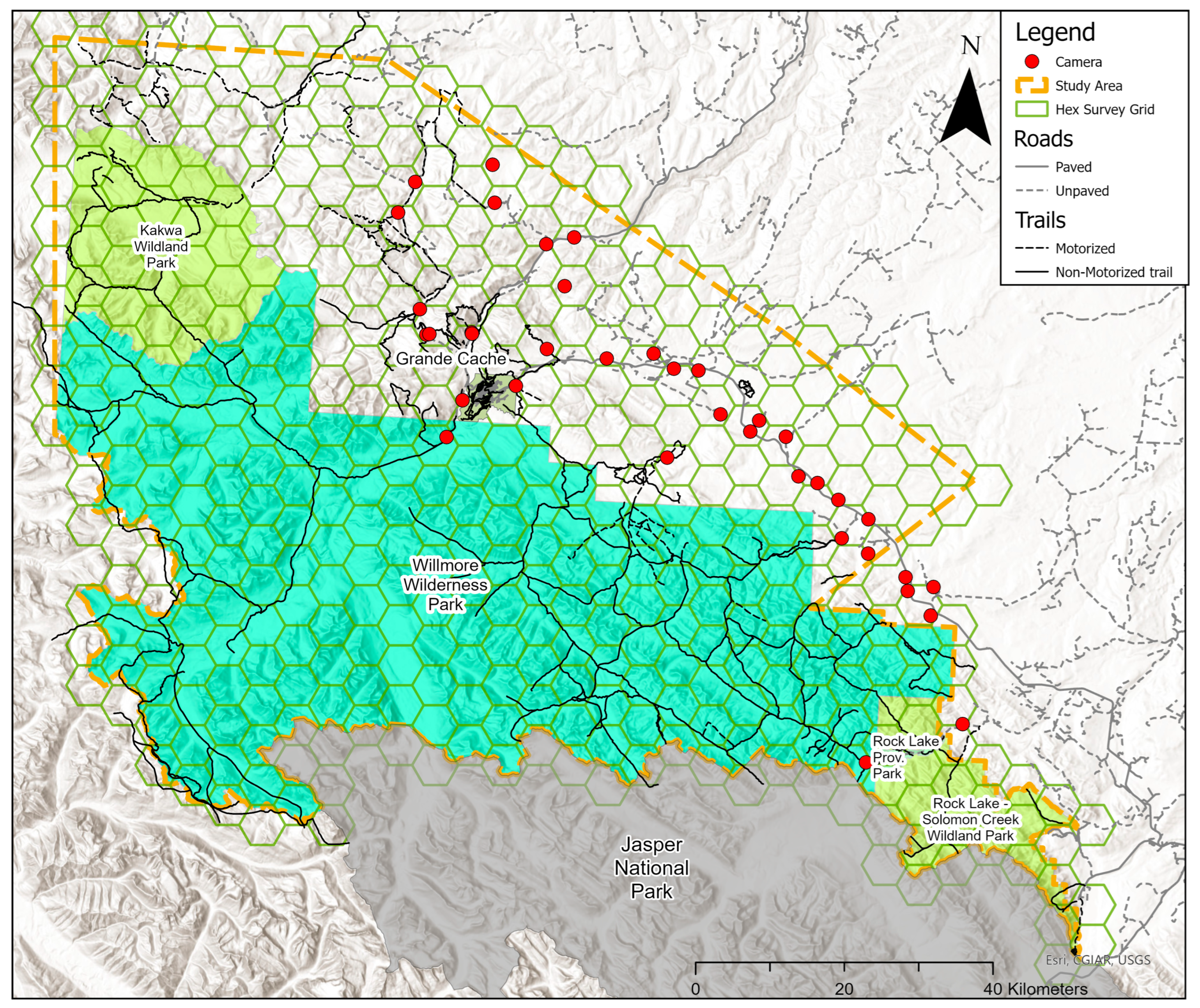
Our study area encompasses approximately 2184 km of trails occurring over approximately 5600 square kilometers in the north-eastern portion of the Rocky Mountains of Alberta, including trails adjacent to the hamlet of Grande Cache, Willmore Wilderness Park, and Rock Lake Provincial Park and Wildland Park (Figure 1). Approximately 3000 people reside in Grande Cache, and the hamlet is relatively isolated from other major centers. However, the trails in the area are a destination for various recreational uses from the nearby city of Grande Prairie, with a population of roughly 70,000 [25]. The protected areas in this study are found within the Rocky Mountains range, with management objectives to conserve the environment, provide for recreational use, and limit industrial development [26]. The public lands and protected areas are managed by the Government of Alberta’s Forestry and Parks ministry, which includes such activities as scientific research, management planning and policy making, and education and enforcement.
At the time of this study, the provincial government did not have the regulatory framework or legislation in place to designate trails officially. As such, ‘trails’ were considered any historic linear route that was predominantly developed through past industrial activity, be that petroleum or mineral exploration or forestry harvest; existing new linear footprint was also included, whether new ‘trails’ cut randomly into forested paths by local users or other industrial activities that resulted in linear footprint now used by people [27,28,29,30,31]. This is often the case in Alberta, particularly in the north, and is itself worthy of documentation given the perception that recreational ‘trails’ are a purposefully built feature on the landscape.
With this in mind, our focus on recreationists across this landscape included hikers, horseback riders, mountain bikers, off-highway motorized vehicle users (i.e., four wheel all-terrain vehicles [ATV], dirt bikes, and snowmobiles), and on-highway vehicle users (i.e., 4 × 4 trucks, Jeeps) [25,30]. While oftentimes considered a recreational activity, trappers and hunters under provincial government legislation are considered a commercial and subsistence land use; while we did include all human images in our analysis, we identify the limitation that ascertaining the impact of human recreational use on the landscape is challenged when hikers may also be hinting, for example [32]. Thus, this requires future consideration in future studies, where recreation trails are synonymous with culturally important and traditional Indigenous landscapes.

2.2. Study Design

Recreation trails within the study area were identified by mapping linear features known to be used by humans for recreational purposes. Given that ‘trails’ in northern Alberta were not formally designated or protected under any regulatory framework at the time of our study, we adopted an operational definition of ‘trails’ as any linear feature used for recreation, including legacy industrial footprints such as old roads and seismic exploration lines. Trail features were compiled and verified using multiple sources, including open government geospatial datasets, user-generated data (e.g., AllTrails, Passport to the Peaks program), expert input, and principal investigator ground-truthing (Figure 1) [30,33,34,35,36]. We also included other geospatial data in our assessment of the landscape (hydrology, terrain ruggedness, and vegetation cover). Practical considerations were incorporated into the design as well, to ensure effective deployment of cameras across the large, rugged, and remote landscape. These included accessibility constraints, staff safety considerations, and logistical limitations related to time and cost required for deployment, maintenance, and retrieval.
Next, we defined recreation, following provincial government policy guidelines, as ‘the experiences derived from freely chosen activities that enhance individual and community well-being whether physical, spiritual, or creative, including hunting and trapping’ [37,38]. An important point to note is that Indigenous Peoples’ traditional and cultural practices are foundational to their way of life and constitutionally protected rights; therefore, ‘recreation’ does not encompass Indigenous use of the landscape and was thus outside the scope of our study. We then defined the categories of recreational use by activity type to aid in measuring the frequency, timing, and group size of human recreational presence. We used common categories of recreational use by activity type as per government policy, including hiking, horseback riding, mountain biking, off-highway (ATVs, snowmobiles), and on-highway vehicles (4 × 4 trucks).
To design our grid, we used design parameters common to wildlife camera trapping and informed by other similar studies [22,24,39]. We overlaid a 5 km by 5 km hexagonal grid across the 5600 square kilometer study area within the Willmore Wilderness Park and the Grande Cache area (Figure 1). Within each hexagon, where access was possible on foot or by vehicle and where there was an obvious trail feature being utilized by people, we deployed a Reconyx Hyperfire PC900 wildlife camera (Reconyx Inc., Holmen, WI, USA) nearest to the center of the hexagon along a trail.
Cameras were first tested, using the ‘walk test’ built-in feature to Reconyx units, to ensure proper functioning. After turning on ‘walk test’ we placed the camera in the lock box and walked in front of the camera; the red indicator light on the camera would flash to signal that the camera sensor was detecting a person in front of the camera field of view. Once the ‘walk test’ confirmed the proper functioning of the unit, we enabled the ‘arm camera’ and after pressing ok the red indicator light began flashing slowly as a ten second timing countdown, which subsequently armed the camera.
Cameras were set to take five photos when the motion sensor was activated to collect images of human use on the trail and to take a photo once per day at 11:00 am to monitor daily environmental conditions (i.e., temperature, snow, rain, and sun). This was also used to ensure the proper functioning of the camera and verify that any absence of motion sensor-activated photos was not due to camera malfunction. Cameras were placed at 1 m height, with the camera pointing perpendicular to the trail, unobstructed by vegetation/trees, at a 90 degree angle to the trail and having a field of view of at least 5 m from the center point of the trail, set in a northerly direction where possible to avoid direct sunlight/overexposure [40]. The decision to place cameras in this arrangement was made due to heavy tree/vegetation cover and limited field of view on the trails we were assessing (i.e., many were very narrow or overgrown with limited space/visibility).
Cameras were secured in lock boxes mounted to trees or trail signposts, with cable locks. Each camera also included a public sign with a statement indicating cameras were in the area and included key contact information for the research project. This followed ethical considerations for collecting identifiable human data in Alberta, citing Freedom of Information and Protection of Privacy legislation [41]. Further, we notified the public of this study through information sessions and online social media and blog posts [41].
We developed a data collection and deployment form in ArcGIS 22.3.1 Field Maps (ESRI, Redlands, CA, USA), including descriptive and biogeographical information at each site. This included the following: camera GPS location and common site name; cardinal direction of camera mounting and general site description; generalized vegetation structure and tree species for mounting camera; slope and terrain; and primary and where evident secondary recreational use of the trail feature (i.e., hiking, equestrian, off-highway vehicle, or wildlife).
Cameras remained in the grid continuously throughout the year, in an attempt to account for all possible recreational uses in the study area between 2021 and 2023, with intermittent servicing of batteries and SD cards. Practically, this meant that servicing cameras was dependent on where the camera was located relative to the hamlet, given limited budget for staff field time, and our assumption that trails in close proximity to the hamlet (i.e., less driving time away from home) would result in an increased frequency of human recreational use on that trail. In other words, more recreational use would trigger the camera more frequently, therefore drawing down on the batteries and filling the SD cards faster, hence requiring more frequent servicing (i.e., replace batteries/SD card).
Our assumption was supported by reviewing online user-generated data (AllTrails, social media posts) indicating that trails within 10 km to the hamlet boundary were utilized in all seasons; cameras deployed on trails within this distance would be serviced every 3 months, whereas cameras outside this distance would be serviced every 6 months to one year, depending on access. This meant we also necessarily accounted for seasonal effects and terrain when planning camera servicing needs, including spring runoff and impassable rivers, the extreme cold in winter, and heavy snowpack making access difficult, costly, and dangerous. Taken together, this aided us in practically prioritizing our deployment and maintenance schedule for cameras.
We note these practical field considerations in order to transparently report on our study design and ensure our methods are reproducible. Additionally, this can enable other researchers and practitioners with an understanding of why certain sites were chosen in our study, and what and how limitations and constraints shaped our data collection, including those beyond our control (i.e., unexpected resourcing constraints faced by government). Not only does clear documentation improve the replicability of field studies but there is also a practical component necessary for all researchers to consider. We hope our transparent reporting helps support logical and safe field planning and justify resource allocation for future projects—areas that are often overlooked in academic reporting.

2.3. Photo Tagging Protocol

All cameras were retrieved between October and December of 2023 and SD card images were uploaded to WildTrax [42], an online platform that assists with the organization and management of data from environmental sensors such as remote cameras. WildTrax has the capacity to support large datasets, is easy to use, and cost effective; it also has the tools necessary to manage a team of decentralized tagging technicians, making it a logical choice for our study.
In terms of image classification, Megadetector v5, an open-source AI model that processes camera images, is available in WildTrax and was used to automatically tag photos using the generalized categories (e.g., person, animal, or vehicle) in WildTrax. This allows for technicians to confirm auto-tagging or manually tag images using a drop-down preset option that includes choices for species, number of individuals, age, and sex. Tagging technicians were independent of this study, which helped address ethical aspects including maintaining anonymity of recreationists in our dataset and reducing the likelihood of confidentiality breaches [41]. The WildTrax platform also automatically blurs the peoples’ faces in images, which also assisted with maintaining anonymity of human subjects in the study. No one but this research team had access to the original photos, and images were not used for punitive purposes [41].
To aid technicians, we also developed a tagging protocol that described how to classify recreation images, including documenting recreation conveyance (activity) type, group size, and addressing extraneous considerations such as dogs with recreationists (on leash or off leash). We described recreational conveyance in the comments field and the first image of a series of images was tagged based on this typology; human subjects were further categorized into day trip or multi-day trips using the time of occurrence (Table 1). Images were also classified according to total duration at the camera location and distance from trailhead or staging area.

3. Results

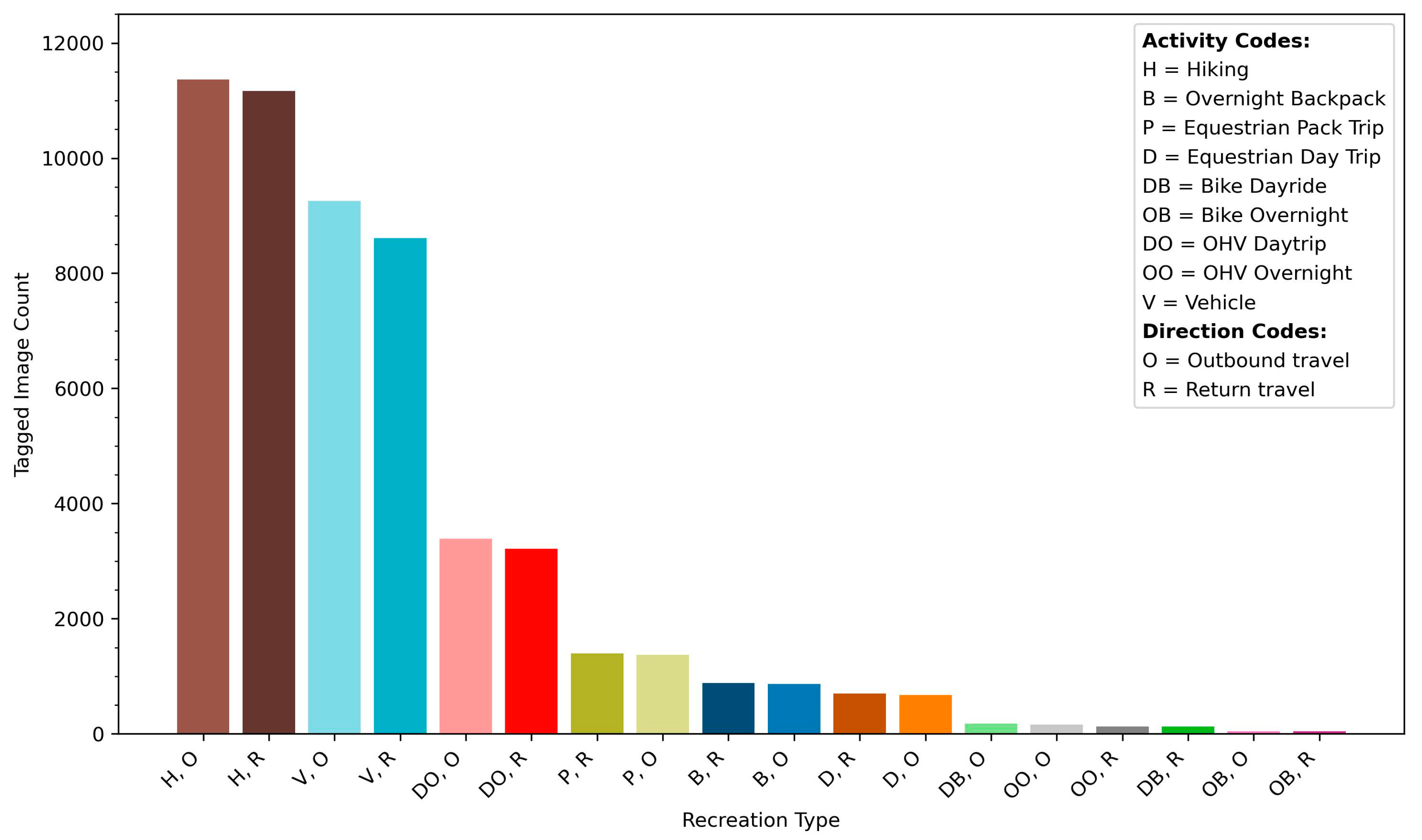
A total of 652,343 photos were taken from 60 cameras deployed between 2021 and 2023. Of these, 72,656 were manually tagged and of these, 53,577 images were recorded as being recreationists; the remaining photos consisted of wildlife and recreationists that could not be identified (i.e., motorized users moving too fast to accurately classify). The most observed form of recreation type was hiking, accounting for approximately 42% of all tagged photos, followed by vehicular use, accounting for 33% of all tagged photos. Daytrips using off-highway vehicles accounted for 12% of all tagged photos (Figure 2), and the remaining 13% of tagged photos included a mix of horseback riders, mountain bikers, backpackers (i.e., overnight), and off-highway vehicle users.
Interestingly, we found that for our three most observed recreation groups, we identified more outbound travelers than inbound travelers. Of the 72,656 tagged images, we also identified over 5000 records of dogs traveling with recreationists. This includes dogs traveling in the back of trucks, running alongside off-highway vehicles, and traveling both on- and off leash with hikers.
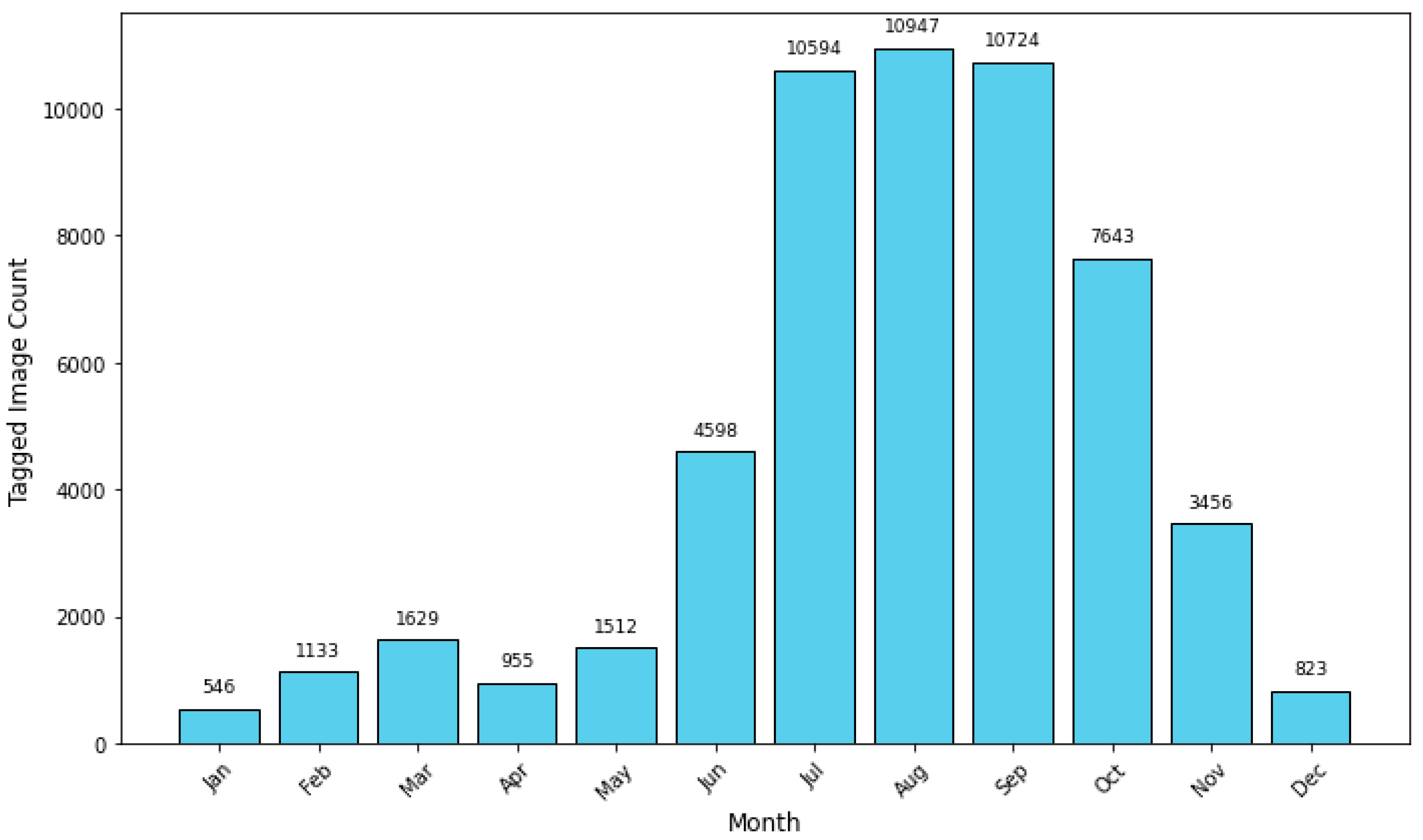
We found that the greatest number of tagged photos were taken between July, August, and September, followed closely by October (Figure 3). Our findings are consistent with expected patterns for recreation in the area, given the increasing popularity of a locally advertised hiking program called ‘Passport to the Peaks’ [32], as well as seasonal preferences for recreation (i.e., weather, snowpack, and high water can limit access to trails outside of this timeframe) [32], and big-game hunting season in fall [43]. For this study, we did not analyze wildlife images; wildlife images, together with human recreation images, will be analyzed in another paper.

4. Discussion

Studying human recreational land use presents key fundamental differences from wildlife studies, which currently have more established literature to draw from. However, there is increasing interest in studying human recreational behavior across various landscapes [11,23], where practical outputs from data analysis can yield important insights into recreation management, particularly in sensitive wilderness areas [4,10]. As we demonstrate here, there are still hurdles to overcome in studying human recreational behavior and hope that by sharing our lessons learned can assist other similar projects in the future [1].

Lessons Learned

Directionality of recreationists was important to better understand recreationist movement and behavior. To determine directionality, cameras were always placed on the same side of trail (left/north side of the trail) so that we could ascertain that recreationists moving to the right in the image frame were outbound, while left indicated inbound (i.e., returning from their trip). However, we suggest that improving assessments of recreationists’ direction of travel, trailhead signs, parking areas, and even geophysical landmarks should be marked in camera deployment datasheets if and where possible, as these visual references can enhance directional tagging accuracy.
We additionally found inconsistent numbers of inbound and outbound images tagged. This means some recreationists likely have routes that are unknown to us and therefore not monitored with a camera; that they were traveling too fast (i.e., on a mountain bike, by horse, or in a vehicle) to be detected by the camera; or purposefully avoided detection by the camera [22]. Additional studies could, for example, be conducted to evaluate the efficacy of cameras to capture different types of recreationists traveling at various speeds [20]. There is also a possibility of technician discrepancies in the imagery tagging process despite efforts to standardize and verify tagging. We also note the importance of ensuring quality control of datasets, to help mitigate and reduce errors [20].
We encountered several instances where photos caught multiple groups traveling in the same photo. This led to some challenges in tagging groups and directionality, and as a result could skew interpretations of trail use. As such, we separated groups by adding individual tags for each group in the photo, tagging only the first image of each new group within the series. This minimizes subjectivity and ensures each activity is time-stamped properly for later analysis.
We also added consistency to tagging any individual or group ‘idling’ or having a break in the camera view field. This helps distinguish stationary human presence from active travel and would support more nuanced interpretation of human use patterns on recreational trails. We do acknowledge, however, that some people may have unknowingly stopped in front of the camera or had done so purposefully, given that signs were present.
In cases where human activity was ambiguous, and while occurring on a recreation ‘trail’ may not have been recreation by our definition (i.e., hunting), we used the same ‘human’ code and included a simple descriptor of the activity in the comment field for the image. This helps keep the tagging taxonomy consistent while providing meaningful context for downstream interpretation.
We found that recreationists, especially those on four wheels, can travel across the detection window of the wildlife camera much faster than an animal could, which may have resulted in false negatives (missed events), where no photos were taken despite a vehicle being there. Some practical strategies for minimizing potential false negatives include using cameras with a higher trigger speed (below 0.3 s), placing cameras between 1 and 2 m from the trail, and using two cameras on one trail to increase detection probability [20]. We suggest that if there is credible visual evidence, such as snow kick-up or dust swirls, or even blurred taillights, that indicates a vehicle’s recent presence, then a vehicle tag from a technician should be applied (unless the image is a duplicate or otherwise already represented in the series).
We also encountered images where an off-highway vehicle (OHV) was visible in the bed of an on-highway vehicle (i.e., a 4 × 4 truck), resulting in uncertainty about whether the OHV should receive its own tag separate from the truck. We determined that we would not apply a tag to the OHV and instead only tagged the primary vehicle (truck) and added a note in the image comments indicating the OHV was present (ATV in back of truck). Additionally, if a truck was towing a camping unit, we added a comment to the image and reviewed the sequence of images to determine if the vehicle and camping unit returned the same day or stayed overnight (or a longer period of time, subsequently applying the overnight tag).
Relative to vehicles, we also found heavy equipment, such as graders or plows, that were unexpected. We subsequently used the same vehicle code to classify any type of on-highway or heavy equipment vehicle and added a note indicating the type in the image comment field. Overall, using a standardized protocol for tagging off-highway and on-highway vehicles will help to avoid duplicate or misleading tags while preserving important context for downstream interpretation (e.g., potential impacts of vehicles as associated with recreation/trails). We also suggest it may be helpful if Megadetector v5 could be trained to distinguish and auto-tag different vehicle types, particularly if more and more users submit these types of images.
Another challenge includes the lack of classification for different types of recreational activities using Megadetector v5 on the Wildtrax platform. This includes hiking, horseback riding, mountain biking, and off-highway or on-highway vehicles. It would be helpful for Megadetector to be trained to distinguish between and auto-tag these images.
For image series in which no wildlife, humans, or vehicles were present, there was confusion about whether a ‘none’ tag should be applied or if the series should remain entirely untagged. We suggest that the ‘NONE’ tag should be applied to the first image in a series of images with no humans or wildlife, to maintain consistency in data structure and simplify post-tagging analysis by clearly identifying empty series.
We encountered some tampering of camera equipment throughout the study. This included attempts to remove cameras as well as vandalism. Of the 85 cameras we deployed, we had 5 cameras that were lost to incidents. We found that cameras that were located near staging areas and primarily off-highway vehicle trails were more likely to be tampered with. We attempted to limit these risks by using lock boxes with cable locks on the cameras. Additionally, we provided signs at trailheads and in proximity to camera locations that informed users of camera locations for the study; this was also done in hopes of reducing tampering with cameras [44].
We did not explicitly include tagging domestic dogs in our original protocol, though recreation users invariably bring their dogs with them on the trail. This can have important implications for wildlife, including stress and other disturbances or conflicts. We therefore applied count tags to domestic dogs similar to wildlife or people, including dogs inside vehicles (i.e., hanging out of the window, riding in the truck bed, or running alongside). This addition helps ensure the data accurately reflects the presence and diversity of trail use and potential assessment for the impacts of dogs in recreational areas, and more specifically, highly sensitive areas or time periods (i.e., wildlife breeding areas, calving or nesting areas, etc.). We suggest it would be useful for Megadetector to consider dogs as a standalone category for auto-tagging.

5. Conclusions

The study of human recreation and the impacts to the landscape or wildlife is a burgeoning field that requires dedicated and structured methods to produce repeatable, comparable, and meaningful data. Based on the lessons learned, we suggest that remote trail cameras set to wildlife monitoring protocols can effectively be used to help quantify human recreation, and recommend following guidelines outlined in the literature to optimize detection probabilities [19,20,21]. More specifically, we suggest that a mixed-method approach would yield more comprehensive data to support evidence-based recreation management that is a response to recreationists’ pressures, demands, and ecological thresholds [45]. This could include study designs that integrate cameras with trail counters, acoustic recording devices, and structured visitor surveys and/or qualitative focus groups [45,46]. Other complementary initiatives such as visitor education programs and stewardship campaigns could also be integrated into management outcomes, based on data-driven decisions from quantifying human recreation.
Certainly, understanding the types of recreation activities and their associated pressures is critical for effective wilderness landscape management. Different recreation forms—hiking, equestrian use, mountain biking, or motorized vehicle use—can exert distinct ecological impacts ranging from soil compaction and vegetation trampling to wildlife disturbance and human conflict. By identifying these pressures, managers can implement targeted strategies, whether zoning recreation use areas to area closures or regulatory signage, that balance ecological integrity with visitor enjoyment. By improving our understanding of recreation patterns in wilderness areas, we can better respond to both the pressures and stewardship opportunities recreationists present to the spaces and species in which these activities occur.

Author Contributions

Conceptualization, C.H., A.C., B.L., M.B., J.S. and W.C.H. Methodology, C.H., A.C., M.B. and J.S. Resources, C.H. and W.C.H. Data Curation and Formal Analysis, J.S. and A.C. Writing—Original Draft Preparation, C.H., A.C. and B.L. Writing—Review and Editing, C.H., A.C., B.L., J.S. and M.B. Project Administration, C.H. and W.C.H. Funding Acquisition, C.H. and W.C.H. All authors have read and agreed to the published version of the manuscript.

Funding

This research received no external funding.

Data Availability Statement

The datasets presented in this article are not readily available given the potential for public privacy concern related to imagery involving human subjects. Requests to access the dataset should be directed to Courtney Hughes.

Acknowledgments

The authors would like to thank Rolanda Steenweg, Bonnie Hood, Cam McLelland, Steve Bradbury, Kevin Quintilio, and Monica Kohler for their support, guidance, and oversight of this project.

Conflicts of Interest

The authors declare no conflicts of interest.

References

  1. Lloyd-Smith, P. The Economic Benefits of Recreation in Canada. Can. J. Econ. Can. Déconomique 2021, 54, 1684–1715. [Google Scholar] [CrossRef]
  2. Naidoo, R.; Burton, A.C. Relative Effects of Recreational Activities on a Temperate Terrestrial Wildlife Assemblage. Conserv. Sci. Pract. 2020, 2, e271. [Google Scholar] [CrossRef]
  3. Lewis, J.S.; Spaulding, S.; Swanson, H.; Keeley, W.; Gramza, A.R.; VandeWoude, S.; Crooks, K.R. Human Activity Influences Wildlife Populations and Activity Patterns: Implications for Spatial and Temporal Refuges. Ecosphere 2021, 12, e03487. [Google Scholar] [CrossRef]
  4. Wolf, I.D.; Croft, D.B.; Green, R.J. Nature Conservation and Nature-Based Tourism: A Paradox? Environments 2019, 6, 104. [Google Scholar] [CrossRef]
  5. Bötsch, Y.; Tablado, Z.; Jenni, L. Experimental Evidence of Human Recreational Disturbance Effects on Bird-Territory Establishment. Proc. R. Soc. B Biol. Sci. 2017, 284, 20170846. [Google Scholar] [CrossRef] [PubMed]
  6. Morehouse, A.T.; Boyce, M.S. Troublemaking Carnivores: Conflicts with Humans in a Diverse Assemblage of Large Carnivores. Ecol. Soc. 2017, 22, 4. [Google Scholar] [CrossRef]
  7. Anderson, L.G.; Rocliffe, S.; Haddaway, N.R.; Dunn, A.M. The Role of Tourism and Recreation in the Spread of Non-Native Species: A Systematic Review and Meta-Analysis. PLoS ONE 2015, 10, e0140833. [Google Scholar] [CrossRef]
  8. Dertien, J.S.; Larson, C.L.; Reed, S.E. Recreation Effects on Wildlife: A Review of Potential Quantitative Thresholds. Nat. Conserv. 2021, 44, 51–68. [Google Scholar] [CrossRef]
  9. Ballantyne, M.; Pickering, C.M. Differences in the Impacts of Formal and Informal Recreational Trails on Urban Forest Loss and Tree Structure. J. Environ. Manag. 2015, 159, 94–105. [Google Scholar] [CrossRef]
  10. Marion, J.L. Trail Sustainability: A State-of-Knowledge Review of Trail Impacts, Influential Factors, Sustainability Ratings, and Planning and Management Guidance. J. Environ. Manag. 2023, 340, 117868. [Google Scholar] [CrossRef]
  11. Granados, A.; Bierne, C.; Kearney, S.; Sun, C.; Hughes, C.; Marion, S.; Loosen, A.; Hubbs, A.; Farr, D.; Fennell, M.; et al. A Toolbox to Quantify Human Activity in Protected Areas for Park Management. EcoEvoRxiv 2024. [Google Scholar] [CrossRef]
  12. Burton, A.C.; Neilson, E.; Moreira, D.; Ladle, A.; Steenweg, R.; Fisher, J.T.; Bayne, E.; Boutin, S. REVIEW: Wildlife Camera Trapping: A Review and Recommendations for Linking Surveys to Ecological Processes. J. Appl. Ecol. 2015, 52, 675–685. [Google Scholar] [CrossRef]
  13. Baker, A.D.; Leberg, P.L. Impacts of Human Recreation on Carnivores in Protected Areas. PLoS ONE 2018, 13, e0195436. [Google Scholar] [CrossRef] [PubMed]
  14. Cardona, L.M.; Brook, B.W.; Harwood, A.; Buettel, J.C. Measuring the Human-Dimension of Outdoor Recreation and Its Impacts on Terrestrial Wildlife. J. Outdoor Recreat. Tour. 2024, 47, 100808. [Google Scholar] [CrossRef]
  15. Sandbrook, C.; Luque-Lora, R.; Adams, W.M. Human Bycatch: Conservation Surveillance and the Social Implications of Camera Traps. Conserv. Soc. 2018, 16, 493. [Google Scholar] [CrossRef]
  16. Sharma, K.; Fiechter, M.; George, T.; Young, J.; Alexander, J.S.; Bijoor, A.; Suryawanshi, K.; Mishra, C. Conservation and People: Towards an Ethical Code of Conduct for the Use of Camera Traps in Wildlife Research. Ecol. Solut. Evid. 2020, 1, e12033. [Google Scholar] [CrossRef]
  17. Riungu, G.K.; Peterson, B.A.; Beeco, J.A.; Brown, G. Understanding Visitors’ Spatial Behavior: A Review of Spatial Applications in Parks. In Tourism Spaces; Routledge: London, UK, 2021; pp. 65–89. ISBN 978-1-003-15245-3. [Google Scholar]
  18. Begly, A.; Barrie, B.; Le, L.; Hollenhorst, S.J. White Sands National Monument Visitor Study; National Park Service: Fort Collins, CO, USA, 2013.
  19. Steenweg, R.; Hebblewhite, M.; Kays, R.; Ahumada, J.; Fisher, J.T.; Burton, C.; Townsend, S.E.; Carbone, C.; Rowcliffe, J.M.; Whittington, J.; et al. Scaling-up Camera Traps: Monitoring the Planet’s Biodiversity with Networks of Remote Sensors. Front. Ecol. Environ. 2017, 15, 26–34. [Google Scholar] [CrossRef]
  20. Green, S.E.; Rees, J.P.; Stephens, P.A.; Hill, R.A.; Giordano, A.J. Innovations in Camera Trapping Technology and Approaches: The Integration of Citizen Science and Artificial Intelligence. Animals 2020, 10, 132. [Google Scholar] [CrossRef]
  21. Coltrane, J.A.; Sinnott, R. Brown Bear and Human Recreational Use of Trails in Anchorage, Alaska. Hum. Wildl. Interact. 2015, 9, 132–147. [Google Scholar]
  22. Miller, A.B.; Leung, Y.-F.; Kays, R. Coupling Visitor and Wildlife Monitoring in Protected Areas Using Camera Traps. J. Outdoor Recreat. Tour. 2017, 17, 44–53. [Google Scholar] [CrossRef]
  23. Albers, J.L.; Wildhaber, M.L.; Green, N.S.; Struckhoff, M.A.; Hooper, M.J. Visitor Use and Activities Detected Using Trail Cameras at Forest Restoration Sites. Ecol. Restor. 2023, 41, 199–212. [Google Scholar] [CrossRef]
  24. Thompson, P.R.; Paczkowski, J.; Whittington, J.; St. Clair, C.C. Integrating Human Trail Use in Montane Landscapes Reveals Larger Zones of Human Influence for Wary Carnivores. J. Appl. Ecol. 2025, 62, 344–359. [Google Scholar] [CrossRef]
  25. Travel Alberta. Northern Rockies Discovery Report; Travel Alberta: Calgary, AB, Canada, 2023; pp. 1–35. [Google Scholar]
  26. Government of Alberta. Willmore Wilderness Park Act; Government of Alberta: Edmonton, AB, Canada, 2012.
  27. Reid-Hresko, J.; Warren, J.R. “A Lot of What We Ride Is Their Land”: White Settler Canadian Understandings of Mountain Biking, Indigeneity, and Recreational Colonialism. Sociol. Sport J. 2021, 39, 108–117. [Google Scholar] [CrossRef]
  28. Dabros, A.; Pyper, M.; Castilla, G. Seismic Lines in the Boreal and Arctic Ecosystems of North America: Environmental Impacts, Challenges, and Opportunities. Environ. Rev. 2018, 26, 214–229. [Google Scholar] [CrossRef]
  29. Hornseth, M.L.; Pigeon, K.E.; MacNearney, D.; Larsen, T.A.; Stenhouse, G.; Cranston, J.; Finnegan, L. Motorized Activity on Legacy Seismic Lines: A Predictive Modeling Approach to Prioritize Restoration Efforts. Environ. Manag. 2018, 62, 595–607. [Google Scholar] [CrossRef]
  30. RC Strategies. Grande Cache Trail Planning Initiative; Alberta Environment and Parks: Edmonton, AB, Canada, 2022. [Google Scholar]
  31. Van Der Marel, R.C.; Holroyd, P.C.; Duinker, P.N. Managing Human Footprint to Achieve Large-Landscape Conservation Outcomes: Establishing Density Limits on Motorized Route-User Networks in Alberta’s Eastern Slopes. Glob. Ecol. Conserv. 2020, 22, e00901. [Google Scholar] [CrossRef]
  32. RC Strategies; Government of Alberta; Municipal District of Greenview. Grande Cache Trail Planning Initiative: A Vision for Trails on Public Lands; Municipal District of Greenview: Valleyview, AB, Canada, 2022. [Google Scholar]
  33. All Trails: Trail Guides & Maps for Hiking, Camping, and Running. Available online: https://www.alltrails.com/ (accessed on 22 July 2025).
  34. Municipal District of Greenview. Grande Cache Adventure Guide; Municipal District of Greenview: Valleyview, AB, Canada, 2019. [Google Scholar]
  35. Pigeon, K.E.; Anderson, M.; MacNearney, D.; Cranston, J.; Stenhouse, G.; Finnegan, L. Toward the Restoration of Caribou Habitat: Understanding Factors Associated with Human Motorized Use of Legacy Seismic Lines. Environ. Manag. 2016, 58, 821–832. [Google Scholar] [CrossRef] [PubMed]
  36. Alberta’s Public Land Trail Guide—Open Government. Available online: https://open.alberta.ca/publications/albertas-public-land-trail-guide (accessed on 23 July 2025).
  37. Government of Alberta. 2022 Alberta Recreation Survey Report; Government of Alberta: Edmonton, AB, Canada, 2023.
  38. Government of Alberta. Alberta’s Public Land Trail Guide—Summer 2025; Government of Alberta: Edmonton, AB, Canada, 2025.
  39. Ladle, A.; Steenweg, R.; Shepherd, B.; Boyce, M.S. The Role of Human Outdoor Recreation in Shaping Patterns of Grizzly Bear-Black Bear Co-Occurrence. PLoS ONE 2018, 13, e0191730. [Google Scholar] [CrossRef] [PubMed]
  40. Elmeligi, S. Grizzly Bear Habitat Management in Canada’s Rocky Mountain Parks: Balancing Visitor Expectations with Bear Habitat Requirements. Ph.D. Thesis, Central Queensland University, Rockhampton, Australia, 2016. [Google Scholar]
  41. Government of Alberta. Freedom of Information and Protection of Privacy; Government of Alberta: Edmonton, AB, Canada, 2000.
  42. WildTrax 2024. Available online: https://portal.wildtrax.ca (accessed on 15 May 2024).
  43. Government of Alberta. 2024 Alberta Guide to Hunting Regulations; Government of Alberta: Edmonton, AB, Canada, 2024.
  44. Meek, P.D.; Ballard, G.A.; Sparkes, J.; Robinson, M.; Nesbitt, B.; Fleming, P.J.S. Camera Trap Theft and Vandalism: Occurrence, Cost, Prevention and Implications for Wildlife Research and Management. Remote Sens. Ecol. Conserv. 2019, 5, 160–168. [Google Scholar] [CrossRef]
  45. Pettebone, D.; Newman, P.; Lawson, S.R. Estimating Visitor Use at Attraction Sites and Trailheads in Yosemite National Park Using Automated Visitor Counters. Landsc. Urban Plan. 2010, 97, 229–238. [Google Scholar] [CrossRef]
  46. Fu, W.; Ran, C.; Huang, J.; Chen, Z.; Fan, S.; Fang, W.; Ye, M.; Dong, J.; Yao, X.; Chen, Z. Can Acoustic Indices Reflect the Characteristics of Public Recreational Behavioral in Urban Green Spaces? Ecol. Indic. 2023, 154, 110729. [Google Scholar] [CrossRef]
Figure 1. Map of study area including Willmore Wilderness Park, Kakwa Wildland Park, Rock Lake Provincial Park, Rock Lake-Solomon Creek Wildland Park, and the municipality of Grande Cache. The map is intersected by a 5 km by 5 km hexagonal grid that represents deployment locations for remote cameras. Red dots represent deployed remote cameras. Gray lines represent roads and black lines represent trails.
Land 15 00120 g001
Figure 2. Bar chart of tagged images by recreation types, used to demonstrate how we analyzed imagery. Recreation types were grouped by color and the direction of users was represented by the shading of the color. The lighter shading represents outbound (O) travel and the darker color shade represents travelers returning (R) from their trip.
Land 15 00120 g002
Figure 3. Number of tagged images of recreationists by month for the study period.
Land 15 00120 g003
Table 1. Categorized activity type, trip type, and associated abbreviation used by technicians. Activity type represents the type of recreation that people are participating in. Trip type represents the duration of the trip. Direction of trip represents whether travelers are traveling into a location (outbound) or returning from their trip (return). Abbreviation represents a code combination using the trip type and the direction of travel (e.g., a backpacker in the outbound direction will have a code of B, O).
Activity TypeTrip DurationDirection of TravelAbbreviation
HikerOvernight
(e.g., Backpacking)
OutboundB, O
ReturnB, R
Daytrip
(e.g., Day trip)
OutboundH, O
ReturnH, R
EquestrianPack tripOutboundP, O
ReturnP, R
Day tripOutboundD, O
ReturnD, R
BikingOvernightOutboundOB, O
ReturnOB, R
Day tripOutboundDB, O
ReturnDB, R
Off-Highway VehicleOvernightOutboundOO, O
ReturnOO, R
Day tripOutboundDO, O
ReturnDO, R
VehicleUnable to discern trip durationOutboundV, O
ReturnV, R
Disclaimer/Publisher’s Note: The statements, opinions and data contained in all publications are solely those of the individual author(s) and contributor(s) and not of MDPI and/or the editor(s). MDPI and/or the editor(s) disclaim responsibility for any injury to people or property resulting from any ideas, methods, instructions or products referred to in the content.