Next Article in Journal
Lessons Learned for Using Camera Traps to Understand Human Recreation: A Case Study from the Northern Rocky Mountains of Alberta, Canada
Previous Article in Journal
Spatiotemporal Reconstruction of Cropland Cover on the Korean Peninsula over the Past Millennium from Historical Archives and Remote-Sensing-Based Data
error_outline You can access the new MDPI.com website here. Explore and share your feedback with us.
 
 
Article

A Cognition-Driven Framework for Rural Space Gene Extraction and Transmission: Evidence from the Guanzhong Region


1
School of Architecture, Southeast University, Nanjing 210096, China
2
School of Architecture, Xi’an University of Architecture and Technology, Xi’an 710064, China
3
Ageing-Responsive Civilization Think Tank Academic Committee, Nanjing 210096, China
*
Author to whom correspondence should be addressed.
Land 2026, 15(1), 118; https://doi.org/10.3390/land15010118
Submission received: 30 November 2025 / Revised: 1 January 2026 / Accepted: 3 January 2026 / Published: 7 January 2026

Abstract

Understanding the formation logic and spatial organization of vernacular settlements requires analytical approaches that capture both morphological structures and the cognitive rules underlying residents’ interactions with space. However, existing research on rural spatial patterns has paid limited attention to the perceptual and cognitive mechanisms through which spatial genes are recognized, maintained, and reproduced. This gap limits the development of generalizable and bottom-up methods for interpreting and transmitting rural spatial characteristics. To address this gap, this study proposes a cognition-driven analytical framework supported by spatial analysis for rural space gene extraction and transmission. The framework consists of five interrelated components: environmental cognition, spatial element identification, system coupling, space gene extraction, and transmission mechanisms. The Guanzhong Region in Northwest China is selected as a representative case to examine the multi-scale spatial structure of vernacular settlements. The results reveal three major findings. (1) The proposed framework effectively links physical spatial features with local perceptual structures, enabling the identification of key elements constituting rural space gene. (2) Three categories of representative space gene and seven core morphological and functional factors are extracted through the coupled analysis of nature–settlement systems. (3) Three adaptive transmission mechanisms—element replication and reinforcement, recombination of disrupted elements, and controlled adjustment of characteristic elements—are identified to support spatial renewal while maintaining local distinctiveness. This research contributes a structured, scalable, and replicable workflow for rural space gene analysis and enhances the application of cognitive principles in geospatial modeling. The findings provide methodological and practical support for rural revitalization, cultural landscape conservation, and vernacular settlement planning in inland agrarian regions undergoing rapid transformation.

1. Introduction

Under the combined effects of globalization and rapid urbanization, rural spatial patterns in China are undergoing substantial structural transformation. The continuous expansion of modern production modes, infrastructure development, and population mobility has facilitated economic growth and social change in rural areas, but it has also led to the disintegration of traditional spatial forms, increasing landscape homogenization, and weakened place-based identities [1,2,3]. As a result, the distinctiveness and historical continuity of rural settlement landscapes have been progressively eroded [4,5,6].
Recent international studies have emphasized that rural spatial change is not merely a morphological process but a coupled outcome of environmental conditions, socio-cultural practices, and residents’ cognitive interpretation of space [7,8,9,10]. Research in rural cognitive geography and cultural landscape studies after 2020 has increasingly highlighted how local knowledge systems, perceptual structures, and everyday spatial practices mediate the persistence or transformation of vernacular settlement patterns [11,12,13]. These perspectives suggest that understanding rural spatial organization requires analytical frameworks capable of integrating physical form, cognitive perception, and driving mechanisms across multiple scales. Against this backdrop, space gene theory has gained prominence as a framework for understanding how spatial characteristics emerge from long-term interactions among natural, social, and cultural systems [14,15]. Distinct from conventional morphological studies that emphasize observable physical form, space gene theory seeks to uncover stable structural patterns, culturally embedded spatial codes, and regionally specific logics that evolve through historical processes. This orientation parallels broader international inquiries into settlement identity, genius loci, and the relationship between spatial structure and cultural meaning [16,17]. In 2024, the Urban Planning Society of China formally issued the group standard Guidelines for the Inheritance and Planning Control of Characteristic Village and Town Spatial Genes (T/UPSC 0015-2024) [18]. The guideline defines space gene exploration as a two-stage process comprising (i) identification and extraction, and (ii) inheritance and application, providing a standardized operational framework for both academic research and planning practice. According to the guideline, space genes are defined as distinctive and relatively stable spatial assemblage patterns formed through the long-term interaction between settlements (cities, towns, and villages) and their natural environments and historical–cultural contexts. These patterns embody region-specific environmental and cultural information, function as identifiable markers of local character, and play an essential role in maintaining the dynamic equilibrium between space, nature, and culture.
At the international level, although the term space gene is rarely used explicitly, closely related conceptual explorations have long existed in studies of urban and rural morphology, typological persistence, and spatial inheritance. These studies conceptualize spatial form not as a static artifact, but as the cumulative outcome of long-term adaptive processes shaped by environmental constraints, socio-cultural practices, and human agency.
Two major theoretical strands are particularly relevant. One derives from memetics [19,20,21] and cultural gene theory [22,23,24], which employs evolutionary metaphors to explain how cultural patterns are generated, accumulated, and transmitted over time. Within this perspective, cultural forms—including spatial configurations—are understood as carriers of localized information that persist through selective transmission and gradual transformation. Influenced by these ideas, scholars in planning and architectural studies have applied gene-based analogies to the analysis of village morphology, historic landscapes, and spatial layouts, identifying recurrent spatial structures as quasi-genetic units embedded in specific cultural and environmental contexts [25]. The second strand originates from cultural landscape theory and morphological traditions, particularly within the Conzenian and Muratorian schools. Here, spatial continuity is interpreted through the persistence of plan units, building types, and landscape structures that embody historical memory and regional identity. Conzen’s work on historic townscapes, for example, explicitly linked urban form evolution to processes analogous to genetic differentiation, emphasizing how inherited spatial structures are reshaped through successive socio-economic and cultural phases. Subsequent studies on vernacular landscapes and cultural morphology further reinforced the view that spatial form emerges from the long-term interaction between natural settings, cultural practices, and incremental transformation mechanisms. Existing research on rural space genes generally follows two major directions.
(1)
Space gene ontology: identification, characterization, and typological mapping.
Studies have identified spatial-gene structures in traditional villages in Zunyi [26], historic quarters in Harbin [27], vernacular settlements in Suzhou [28], Loess Plateau rural systems [29], characteristic settlements in the Minjiang River Basin [30], and the southwestern foothills of the Lunan Hills [31]. Some scholars further construct space genealogies using encoded spatial-gene variables [32,33,34,35].
(2)
Space gene application: conservation, renewal, and design strategies.
Space gene approaches have been applied to spatial conservation and design practice—for instance, reconstructing local memory in the redevelopment of Nanjing’s former Republican-era airport [36], and guiding regeneration strategies for Chengdu’s Shaocheng Historic District [37]. These studies illustrate the potential of space gene approaches in developing context-sensitive spatial policies and design interventions.
From a theoretical perspective, the formation of rural spatial patterns has long been interpreted through multiple explanatory paradigms. Environmental determinism emphasizes the decisive role of natural conditions—such as topography, hydrology, climate, and arable land—in shaping large-scale settlement patterns and landscape structures. In traditional agricultural regions, natural–ecological constraints often exert a dominant influence on macro spatial configurations, including settlement location, village layout, and overall landscape organization. This perspective provides a clear theoretical foundation for associating natural–ecological factors with macro-level spatial elements in rural settlements, particularly in inland agrarian regions where environmental constraints remain prominent [35,38,39]. In contrast, theories of spatial perception and environmental cognition shift the analytical focus from physical determinism to human–environment interaction. From this perspective, spatial forms are not merely passive outcomes of environmental conditions, but are continuously produced and reproduced through residents’ perceptions, daily practices, symbolic interpretations, and culturally embedded behavioral rules. Built environments are cognitively structured and socially negotiated, reflecting how people understand, use, and assign meaning to space over time [40,41,42]. Cultural ecology further extends this line of reasoning by emphasizing the reciprocal and adaptive relationship between culture and environment. Rather than treating environmental conditions as fixed determinants, cultural ecology argues that socio-cultural systems mediate how natural constraints are interpreted, transformed, and materialized into specific spatial forms. Settlement morphology thus emerges from the long-term coupling between environmental conditions and culturally specific modes of production, social organization, and spatial practice. Taken together, environmental determinism provides a theoretical explanation for the influence of natural–ecological factors on macro-scale spatial structures, while spatial perception theory and cultural ecology offer a robust conceptual basis for understanding how socio-cultural factors shape meso- and micro-scale spatial elements, such as street networks, courtyard organization, and architectural typologies. These complementary perspectives jointly underpin the cognition-driven analytical framework adopted in this study and provide explicit theoretical anchors for examining the differentiated impacts of driving factors across spatial scales.
However, despite these advances, a common limitation lies in the predominance of top-down, form-centered interpretations that privilege expert judgment while underrepresenting residents’ lived experience and cognitive processes. Rural settlements function as cultural fields shaped by everyday practices, environmental perception, and collective memory [39,40,43,44]. Studies in rural cognitive geography and place-based research indicate that residents’ perception of landscape order, environmental affordances, and cultural symbolism plays a decisive role in shaping spatial organization and its long-term reproduction [45,46,47]. Yet existing space gene studies rarely explain how spatial structures are cognitively perceived, how such perceptions guide spatial configuration, or how space genes are transmitted through daily interaction, resulting in a methodological gap in bottom-up, cognition-driven, and quantitatively supported research.
To address this gap, this study proposes a cognition-driven framework for rural space gene extraction and transmission. Instead of treating space genes as purely morphological artifacts, the proposed framework conceptualizes them as cognitive–spatial structures shaped by the interplay between residents’ perceptions and environmental conditions. Using the Guanzhong region as a representative case, the study constructs a five-step analytical process:
(1)
Environmental cognition, examining residents’ interpretations of environmental context, spatial order, and settlement evolution;
(2)
Element identification, documenting spatial elements representing form, structure, and function across macro, meso, and micro levels;
(3)
System coupling, analyzing interaction mechanisms among spatial elements and driving factors through structural equation modeling (SEM);
(4)
Space gene extraction, deriving space genes based on SEM-informed coupling to reveal internal structures and evolutionary logic;
(5)
Gene mapping and transmission, constructing space gene maps to articulate transmission pathways and to support adaptive rural spatial development.
Together, these steps constitute a cognition-driven analytical pathway that links environmental perception with spatial-structural decoding and gene transmission. By integrating cognitive processes, quantitative modeling, and spatial mapping, the study aims to provide a replicable method for rural space gene extraction and transmission. The framework offers analytical support for rural spatial conservation, adaptive renewal, and identity reconstruction in the Guanzhong region and other rural contexts undergoing similar socio-spatial transformation.

2. Materials and Methods

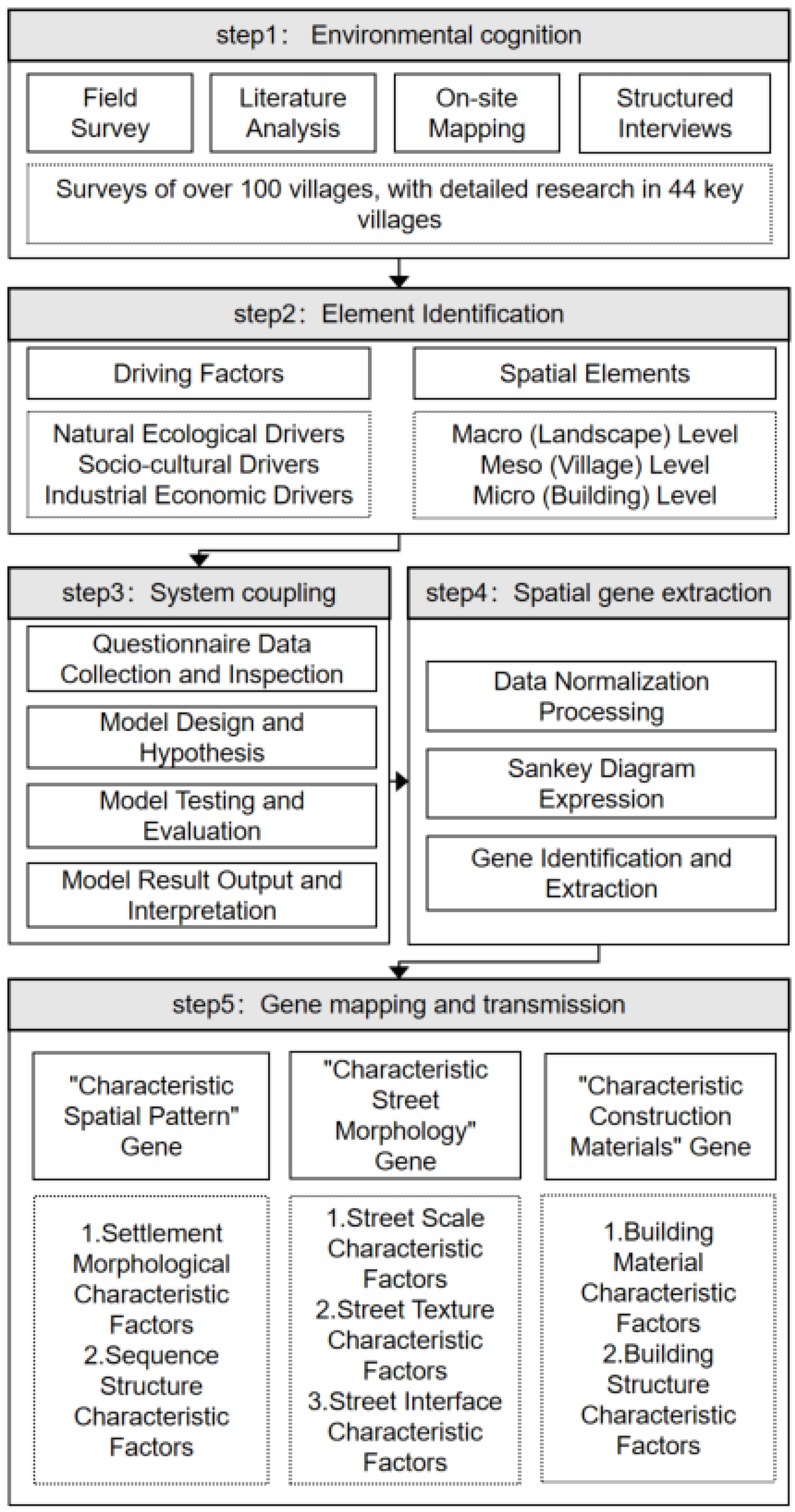
This study employed a cognition-driven, multi-source dataset integrating field surveys, spatial measurements, interviews, questionnaires, and historical archives. Three categories of driving factors: natural–ecological, socio-cultural, and industrial–economic were identified together with spatial elements at macro, meso, and micro levels. A structural equation model (SEM) was developed to analyze how driving factors influence spatial elements and to provide a systematic basis for rural space gene extraction and transmission. In line with the cognition-driven framework (Figure 1), residents’ environmental perception and cognitive evaluations were incorporated throughout element identification, indicator refinement, and model validation.

2.1. Case Study

Since the founding of the People’s Republic of China, scholars from multiple disciplines—including geography, architecture, anthropology, and sociology—have conducted sustained and systematic research on the political, economic, cultural, and social transformations of rural Guanzhong. Early studies predominantly conceptualized Guanzhong villages as “ancient villages” or “traditional settlements,” focusing on their formation mechanisms, historical evolution, and cultural heritage and local cultural phenomena [48,49]. With the comprehensive advancement of agricultural economic system reforms, however, population mobility, adjustments in land institutions, and the continuous involvement of capital and technological factors have rendered the socio-economic structure of rural Guanzhong increasingly complex and diversified. Under these conditions, a singular historical–cultural perspective has become insufficient to explain the mechanisms underlying spatial transformation.
Against this backdrop, research paradigms in rural geography and rural architectural planning have gradually shifted from “single-village studies” toward “rural regional system studies,” with growing attention to processes of rural restructuring, driving mechanisms of transformation, and the differentiation of rural regional functions. In practical terms, the Guanzhong region contains a large number of villages with diverse types, yet many face common challenges of declining development capacity and insufficient endogenous driving forces. These challenges are manifested in the weakening of rural social self-organization structures, the alienation of traditional cultural practices, and the increasing vacancy and underutilization of physical space. This predicament highlights the urgent need for Guanzhong’s characteristic rural regional system to break away from traditional path dependence, making the identification, interpretation, and transmission of its spatial characteristics a matter of pressing practical relevance.
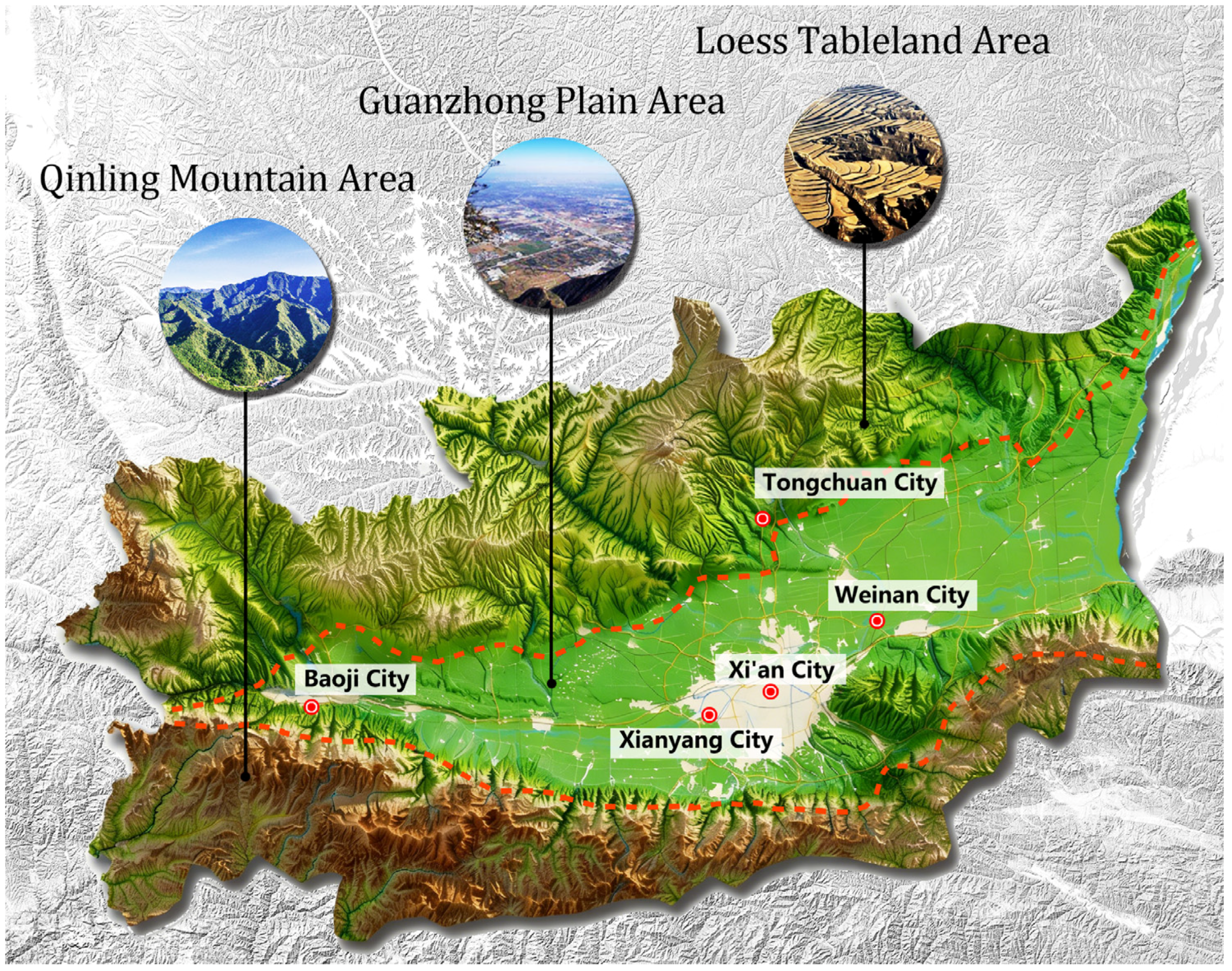
The Guanzhong region is situated in the middle reaches of the Yellow River in western China, forming a transitional zone between the Loess Plateau and the Wei River Plain (Figure 2). Structurally, it is a stepped fault basin shaped by tectonic uplift and fluvial processes. Centered on the Wei River Valley, the landform rises toward the north and south, producing a crescent-shaped pattern consisting of plains, tablelands, and mountainous zones. These geomorphological variations have contributed to diverse settlement forms and spatial configurations [50,51,52]. Historically, Guanzhong served as a political and cultural core during the Zhou, Qin, Han, and Tang dynasties. Dense accumulations of heritage—such as ancestral halls, ancient routes, temples, and courtyard compounds—have exerted long-term influence on village morphology and spatial organization. Settlement patterns traditionally reflected kinship structures, ritual order, and agrarian production systems. In recent decades, industrial transformation and transportation development have reshaped settlement configurations and introduced hybrid spatial patterns combining traditional and modern elements. As a region where agrarian civilization and imperial culture intersect, and where rural revitalization policies have induced rapid restructuring, Guanzhong offers an analytically relevant case for examining the extraction and transmission of inland Chinese rural space genes.

2.2. Data Collection

A mixed-methods approach integrated qualitative and quantitative procedures, including field observation, spatial measurement, semi-structured interviews, and document analysis. Fieldwork involved on-site mapping, UAV photography, and GIS-based analysis to document settlement layouts, courtyard morphology, street–lane networks, and public-space characteristics. To incorporate the cognition-driven dimension, 400 semi-structured interviews were conducted with residents, craftsmen, planners, and local managers to capture spatial perception, environmental cognition, and cultural interpretation. These multi-source data collectively support a cross-scale analysis of rural space gene formation and transmission.

2.2.1. Spatial Data Collection

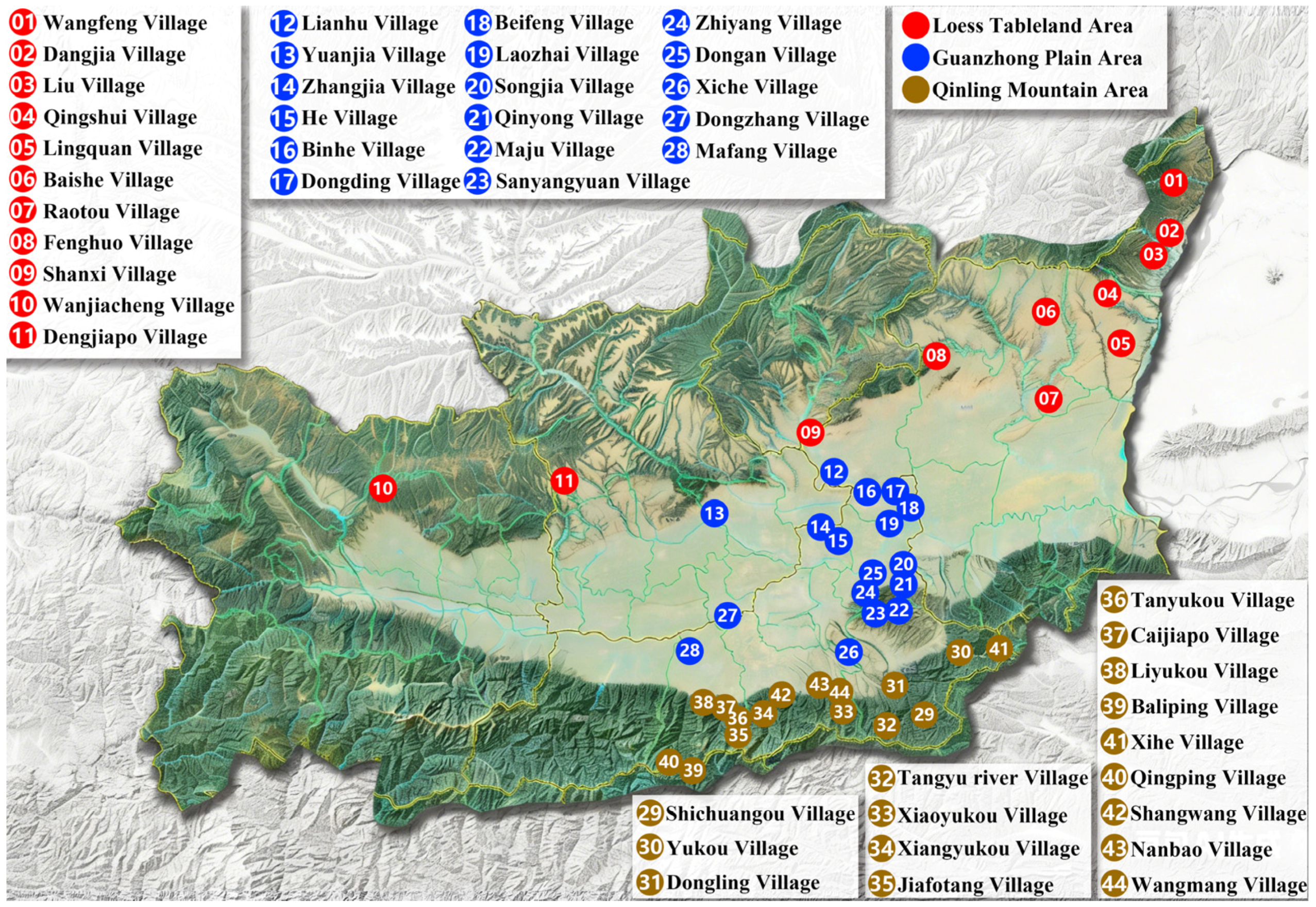
Data collection was conducted between 2022 and 2024. More than 100 rural settlements were surveyed, and 44 villages were selected as representative samples reflecting three geomorphological types (Figure 3): Guanzhong plain area, Loess tableland area, and Qinling mountain area. Sample selection criteria were established through an integrated consideration of national and provincial policy frameworks as well as research objectives. Specifically, candidate villages were required to meet at least one of the following official designations: (1) inclusion in the List of Traditional Chinese Villages; (2) designation as a national- or provincial-level tourism demonstration village; or (3) inclusion in officially recognized rural revitalization demonstration programs. These designations ensure that the selected villages exhibit relatively intact and identifiable spatial structures, cultural landscapes, and developmental trajectories. Additional inclusion criteria were applied to further refine the sample: (a) the village morphology has undergone a continuous evolutionary process since the mid-20th century; (b) traditional spatial patterns and courtyard-centered settlement forms are largely preserved; and (c) relatively complete historical cadastral maps, planning documents, and demographic–land use records are available. Villages that experienced large-scale demolition, collective relocation, or intensive urbanization-oriented reconstruction were excluded to avoid disturbance to the underlying space gene structure.
To enhance representativeness, a stratified sampling strategy was adopted so that the final sample of 44 villages maintains a balanced distribution across the three major geomorphological units of the Guanzhong region (Figure 4). This approach ensures coverage of diverse natural conditions, production modes, and settlement morphologies, effectively reducing sample selection bias and providing a robust basis for cross-type comparative analysis.

2.2.2. Cognitive Data Collection and Sample Characteristics

Cognitive data collection was conducted from December 2023 to January 2025, primarily through semi-structured interviews and formal questionnaires. Semi-structured interviews mainly involved experts and residents, collecting their subjective perceptions of typical rural spaces and their influencing factors. Formal questionnaires primarily targeted residents and tourists, obtaining their evaluations of rural spatial elements and driving factors.
(1)
Semi-structured Interview
The extraction of semi-structured interview cognitive information followed a three-step procedure: transcription, semantic coding, and indicator validation. First, all interview recordings were transcribed verbatim; second, semantic analysis was applied to extract frequently mentioned descriptors related to spatial perception; third, the coded cognitive categories were cross-referenced with spatial elements and driving factors identified in the literature review. Indicators lacking empirical cognitive support were excluded, while cognitively salient factors were retained or refined. This process ensured that the final indicator system reflected both theoretical relevance and lived experience.
This semi-structured interview was conducted from December 2023 to May 2024. The semi-structured interview questions were explicitly derived from the cognition-driven conceptual framework proposed in this study, which links environmental cognition, spatial elements, driving factors, and space gene transmission. The semi-structured interview guide included the following key questions:
① What characteristics do you think a rural village should have, and how important are these characteristics?
(This question corresponds to the environmental cognition component of the framework and draws on theories of spatial perception and place identity, aiming to capture residents’ and visitors’ holistic understanding of village distinctiveness.)
② When living in or visiting a village, which features within the village do you pay attention to, and in what specific aspects?
(This question is grounded in spatial perception theory and directly informs the identification of key spatial elements across the landscape, village, and building scales.)
③ Which factors do you think contribute to the maintenance and development of village characteristics, and which factors are unfavorable?
(This question operationalizes the concept of driving factors in the conceptual model, reflecting the interaction among natural–ecological, socio-cultural, and industrial–economic systems emphasized in the system-coupling stage.)
Through this design, cognitive data collected from interviews serve not as isolated qualitative descriptions but as theoretical inputs that guide indicator selection, refine variable definitions, and validate the causal pathways later tested in the SEM analysis. This ensures consistency between the theoretical framework, the conceptual model, and the empirical application. After semantic analysis and thematic synthesis of the interview texts, spatial elements and perceptual features commonly emphasized by residents and tourists were identified. These results were then used to calibrate and supplement the theoretically identified indicators.
Regarding sample selection, 55% of the respondents were from relevant researchers and practitioners, 40% were residents of rural areas in Guanzhong, supplemented by tourists and other visitors. A “classification-first, then random” sampling strategy was adopted to cover different types of villages, ensuring the diversity and representativeness of the cognitive samples. In total, three rounds of surveys were conducted, distributing 120 questionnaires and recovering 114 valid responses, yielding a response rate of 95%. The respondents included 63 experts, 46 villagers, and 11 other participants, comprising 72 males and 48 females. Among the respondents, the expert group consisted of scholars and practitioners directly engaged in rural spatial research and practice. Specifically, it included researchers specializing in rural geography (n = 10), urban and rural planning (n = 28), and architecture (n = 15), as well as local planning officials (n = 8), heritage conservation professionals (n = 7), and village-level administrative officers (n = 5) with long-term experience in rural development and spatial governance in the Guanzhong region. The majority of experts had more than 5–10 years of professional or research experience related to rural settlements, traditional villages, or spatial planning. Their disciplinary diversity and sustained engagement with rural spatial issues ensured that the expert-based qualitative data reflected both academic perspectives and grounded practical knowledge, thereby enhancing the validity and credibility of the cognition-driven analysis.
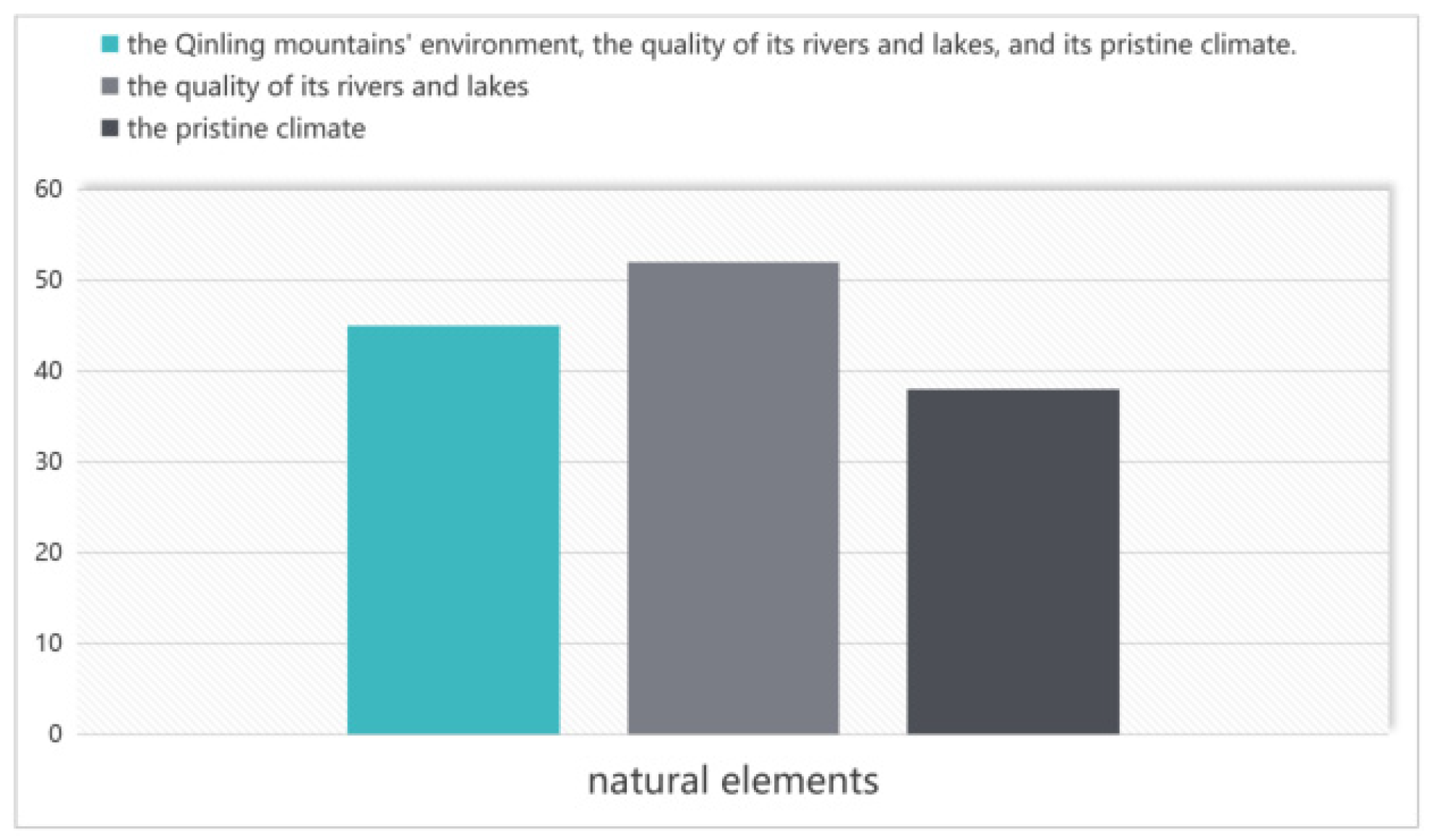
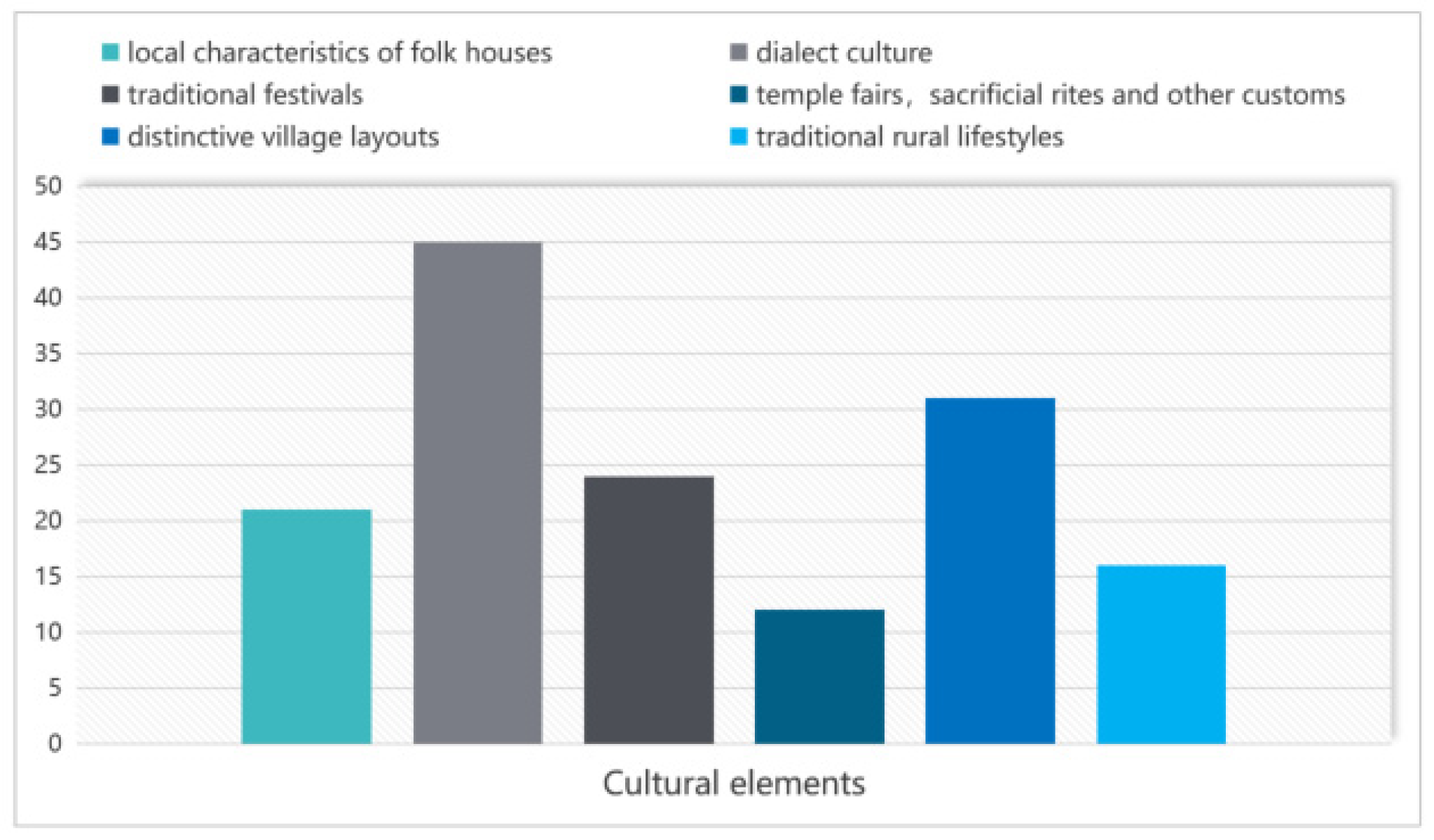
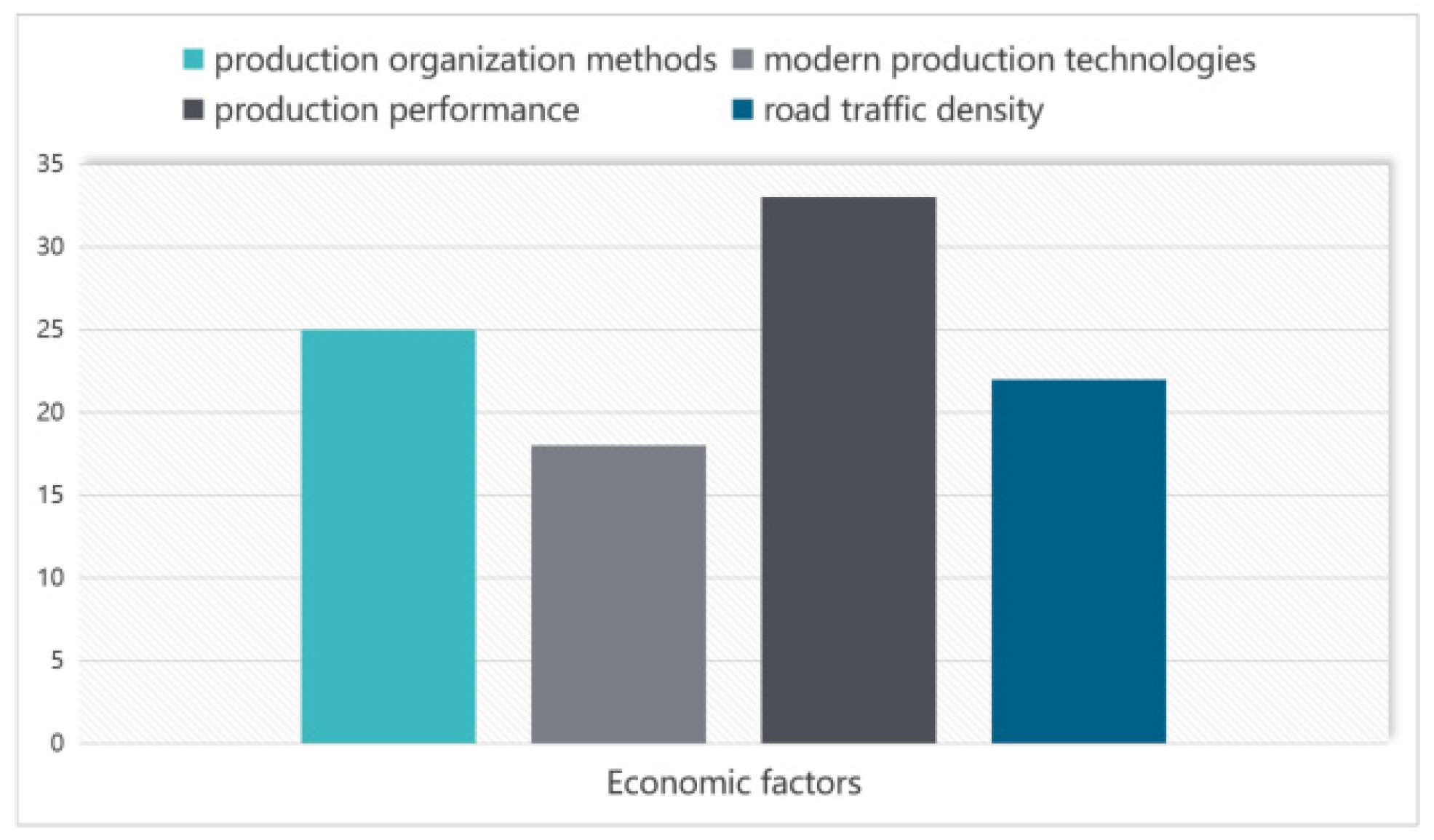
The survey primarily employed dialog-based, non-technical, and open-ended interviews to encourage respondents to express their perceptions freely. Following the interviews, all interview transcripts were systematically organized and synthesized. Similar expressions were grouped through axial coding to identify shared perceptual meanings. For example, expressions such as “fresh air,” “clean air,” and “cooling off” were grouped under the perceptual category of “pristine climatic environment.” Phrases including “close to the mountains” and “spectacular scenery” were classified as “mountain ecological environment.” Expressions such as “playing in the water” and “catching fish” were categorized under “river and lake water quality.” As illustrated in Figure 5, Figure 6 and Figure 7, respondents collectively mentioned 15 key perceptual keywords. The most frequently cited keywords were primarily associated with the following:
Natural elements (Figure 5), such as Qinling mountain ecological environment, river and lake water quality, and pristine climatic environment (3 keywords);
Cultural elements (Figure 6), including vernacular residential environment, local dialect culture, and traditional festivals (6 keywords);
Economic elements (Figure 7), such as production organization modes, production performance, and road and transportation accessibility (4 keywords).
These perceptual keywords provided an empirical cognitive basis for refining the selection of driving factors and spatial elements in the subsequent quantitative analysis.
(2)
Formal Sample Questionnaire
To further analyze the system coupling between spatial elements and driving factors in Guanzhong rural areas and scientifically extract the space gene of Guanzhong’s distinctive rural areas, a questionnaire was used to collect data and obtain the population’s evaluation information on the driving factors of Guanzhong’s distinctive rural areas. SPSS 26.0 statistical software was used to quantitatively analyze the system coupling between spatial elements and driving factors using factor analysis, providing support for the subsequent construction of a structural equation model.
1.
Sample Questionnaire Design
Based on the identification of sub-items of Guanzhong rural spatial elements and characteristic driving factors, a formal questionnaire, “Rural Characteristics Survey Questionnaire,” was formed. The specific content mainly includes four aspects: “Basic Information of Respondents,” “Your Evaluation of Rural Characteristics,” “To What Extent Do You Think the Following Factors Affect Rural Spatial Characteristics,” and “What Spatial Elements Do You Think Best Reflect Rural Characteristics?” In addition, the sample questionnaire was designed mainly from the following two aspects:
① Questionnaire Sub-items. The questionnaire uses a standardized five-point Likert scale as a tool for measuring rural spatial influencing factors. A mapping mechanism of “subjective cognition-quantitative representation” is established to achieve the numerical conversion of qualitative judgments. The scale design strictly adhered to psychometric principles, offering equidistant response options ranging from “1 = no effect” to “5 = decisive effect,” and employing odd-order scales to eliminate respondent selection bias, providing input data that met the requirements of a normal distribution for subsequent structural equation modeling.
② Sample Size Estimation. Generally, SEM requires the ratio of observed variables to the sample size to ensure the validity of the results. For the number of observed variables used in this study, a sample size of 200–300 was appropriate.
2.
Sample Characteristics
To accommodate diverse respondent conditions, a stratified sampling strategy was adopted, with villages categorized into plain, tableland, and mountainous types. Within each stratum, purposive sampling was applied to select key experts, while quota sampling was used for residents and visitors to ensure balanced representation across age, occupation, and educational background. Field investigations were conducted between June 2024 and January 2025, organized into two research teams and six survey rounds. A total of 300 questionnaires were distributed, of which 272 were valid, yielding a response rate of 90%. The final sample included 97 questionnaires from mountainous villages, 88 from plain villages, and 87 from tableland villages.
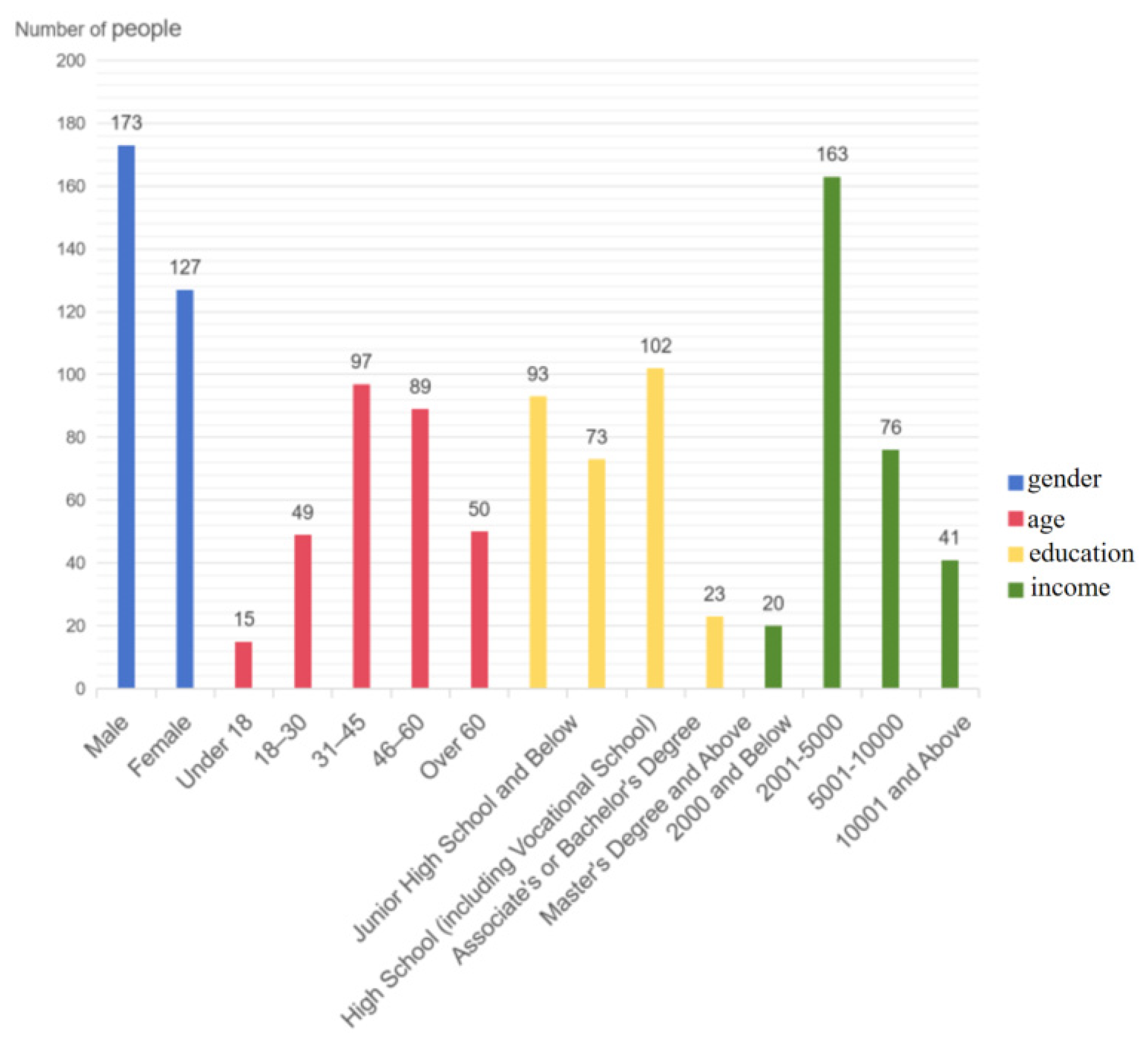
Among the respondents, 61% were male and 39% female. The age structure was concentrated between 31 and 60 years, with middle-aged and elderly individuals accounting for 65.61% of the sample. Educational attainment was generally low to moderate: 55.6% of respondents had completed vocational school or high school, followed by 36.1% with college or undergraduate education. Monthly income levels were predominantly moderate, with 57.3% of respondents earning between CNY 2001 and 5000 per month. The survey covered a broad range of stakeholders in the Guanzhong rural region, including local residents, tourists, government officials, and scholars, with data collection primarily focused on rural residents and visitors (Figure 8).
According to the Main Results of the Seventh National Population Census of Shaanxi Province released by the Shaanxi Provincial Bureau of Statistics [53], rural areas in the Guanzhong region are characterized by population aging, youth out-migration, and increasingly diversified livelihood strategies. Middle-aged and elderly residents constitute the majority of the permanent rural population, while younger cohorts tend to engage in non-agricultural employment in nearby cities. Occupational structures are typically diversified, combining traditional agriculture with non-farm activities such as migrant labor, local services, and emerging rural tourism. Educational attainment in rural areas is generally concentrated at the primary and secondary levels, whereas peri-urban villages and officially designated tourism or rural revitalization demonstration villages tend to exhibit higher education levels.
The interview and questionnaire samples covered a wide range of ages, occupations, and educational backgrounds, broadly reflecting the socio-demographic structure of rural settlements in the Guanzhong region. By deliberately incorporating villages with different geomorphological contexts and multiple social groups, the sampling design ensured that key cognitive differences were adequately represented. This form of cognitive representativeness provides a solid foundation for subsequent structural equation modeling (SEM) and space gene extraction, which aim to identify dominant driving mechanisms rather than to infer population-level statistical parameters.
3.
Sample data processing
Reliability and validity testing were conducted using SPSS 27.0. After removing low-discrimination variables, Cronbach’s α exceeded 0.80 for all constructs. The KMO value was 0.913, and Bartlett’s test was significant (p < 0.001), confirming suitability for factor analysis. Thirty-six observed variables and six latent factors were extracted: three representing spatial elements (macro, meso, micro) and three representing driving systems (natural–ecological, socio-cultural, industrial–economic). Consistency checks were performed with interviews, field observations, and archival materials. Cognitive indicators were cross-validated to ensure alignment between perceptual data and spatial-system attributes.

2.3. Identification of Spatial Elements and Driving Factors

The identification of spatial elements and driving factors links empirical observations with the quantitative decoding of space genes. Spatial elements were defined as endogenous variables representing internal morphological and functional characteristics. Natural–ecological, socio-cultural, and industrial–economic components were defined as exogenous variables representing external forces driving spatial evolution. Cognitive evidence from resident surveys was used to refine indicator definitions and confirm their relevance to lived spatial experience.

2.3.1. Identification of Driving Factors

This study systematically reviews recent research on the formation mechanisms of rural spatial elements, with particular attention to the influences of the natural environment, humanistic thought, and industrial activities on rural spatial structure. Existing studies indicate [31,32,33,34,35] that rural spatial form is not the outcome of a single factor, but rather the result of long-term coupling among multiple forces, including topography, hydrological systems, socio-cultural processes, and industrial development. Based on a synthesis of the literature, the driving mechanisms of rural spatial evolution can be broadly summarized into three stages. In the first stage, natural–ecological factors such as terrain and water systems dominate, determining settlement location and overall spatial patterns. In the second stage, as settlements develop, humanistic ideas and religious culture intervene, shaping the spatial organization of dwellings, public spaces, and road systems. In the third stage, with industrial development and socio-economic transformation, village spatial patterns further differentiate and exhibit diversified characteristics.
In summary, based on the “Guide to inheriting and planning spatial genes in characteristic rural settlements” (T/UPSC 0015-2024) issued by the China Urban Planning Association, and combined with the preceding literature review, field research, spatial analysis, and cognitive interpretation based on semi-structured interviews, this study then systematized the classification of driving factors (DFs). Driving factors (DFs) refer to external forces and internal dynamics shaping rural spatial systems. Twenty-five driving factors were identified across three subsystems:
  • DF1 Natural–ecological factors (Table 1). These constitute the physical foundation influencing settlement location, density, spatial texture, and environmental adaptation. Key variables include landform type, river morphology, and climate conditions, which together shape regional identity through long-term geomorphological–ecological interactions.
  • DF2 socio-cultural factors (Table 2). These include kinship organization, ritual systems, governance structures, historical memory, folk beliefs, and everyday practices. Such factors exert persistent influence on spatial hierarchy, public-space arrangement, and architectural expression. The interview results reveal how residents’ spatial perceptions and cultural interpretations reinforce or alter spatial structures.
  • DF3 Industrial–economic factors (Table 3). These drivers relate to production modes, infrastructure development, labor distribution, and rural–urban linkages. They reshape land use, functional organization, and spatial nodes. Economic transitions in Guanzhong have stimulated tourism, diversified livelihoods, and enabled reconfigured spatial configurations.

2.3.2. Identification of Spatial Elements

Spatial elements represent the internal composition of rural spatial systems. Following the “Guide to inheriting and planning spatial genes in characteristic rural settlements” (T/UPSC 0015-2024) issued by the China Urban Planning Association, spatial elements were categorized into three levels with 18 indicators (Table 4): Macro (Landscape). I1 Settlement Form, Industrial land use pattern, Sequence Structure; Meso (Village). K1 Street–Lane Scale, Street–Lane Texture, Street–Lane Interface, Street–Lane Orientation, Spatial Node Relations, Spatial Node Configuration, Spatial Node Hierarchy; Micro (Building). Architectural Decoration, Courtyard Layout, Building Facade, Building Function, Building Color, Building Materials, Building Structure. These levels are nested and mutually reinforcing. Cognitive insights from residents—such as landmark perception, spatial legibility, and affective attachment—were used to verify indicator relevance and refine classification. This multi-scale structure enabled the translation of complex settlement systems into measurable units for space gene extraction.

2.4. Model Construction and Analysis

2.4.1. Model Design and Hypothesis Construction

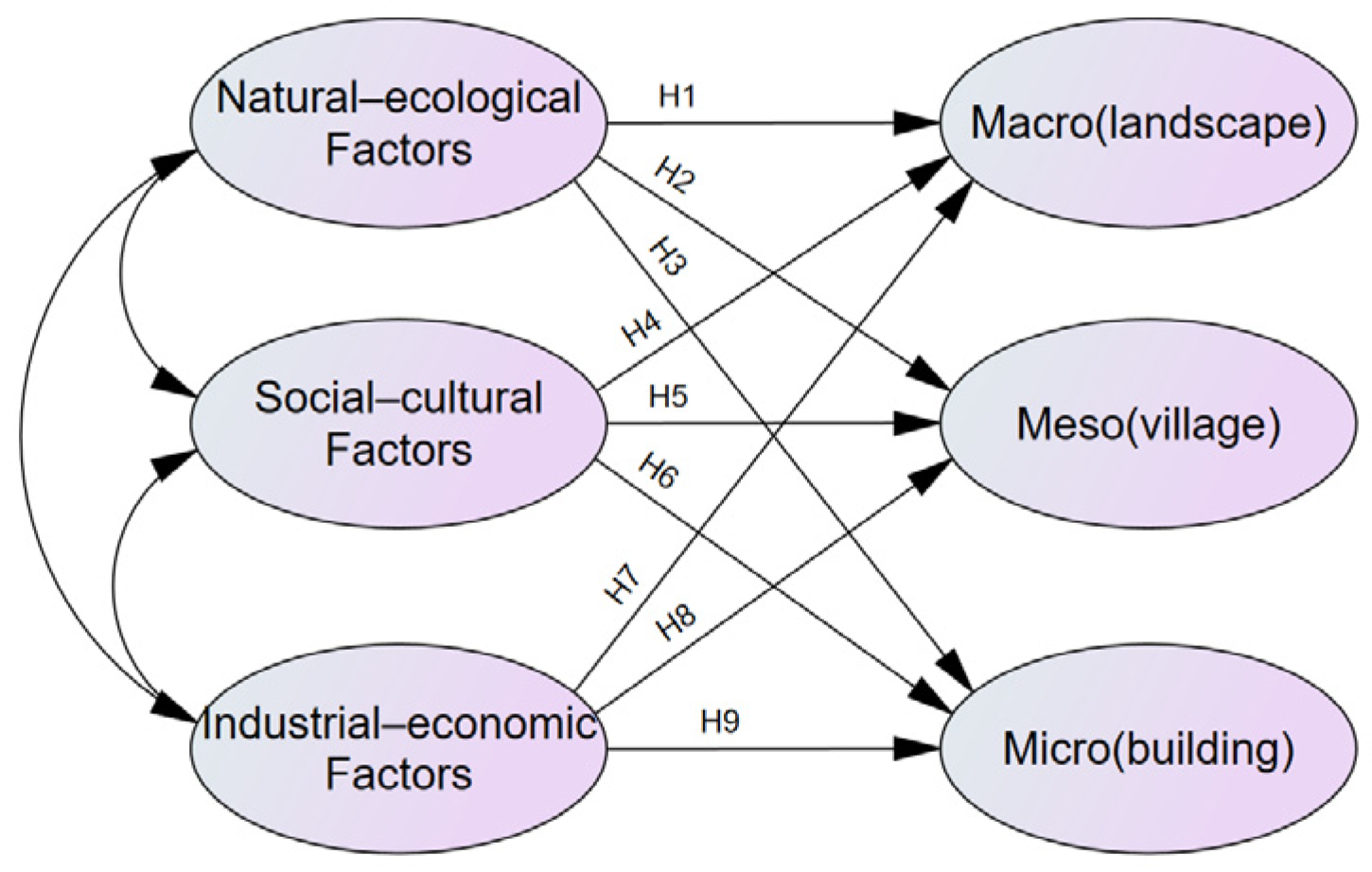
Given that many driving factors are latent and involve multilevel interactions, SEM was chosen to integrate measurement and structural modeling. Using factor analysis results, an SEM was constructed in AMOS 26.0 to examine how natural–ecological, socio-cultural, and industrial–economic drivers influence spatial elements at different levels. The model follows a hierarchical logic: natural–ecological factors provide physical constraints; socio-cultural factors shape behavioral norms and spatial order; industrial–economic factors reorganize functional and spatial structures. Nine hypotheses (H1–H9) were developed to reflect expected positive relationships among these variables (Figure 9). Cognitive interpretations from interviews and questionnaires were used to validate hypothesized pathways and ensure their relevance to lived spatial processes.

2.4.2. Model Testing and Evaluation

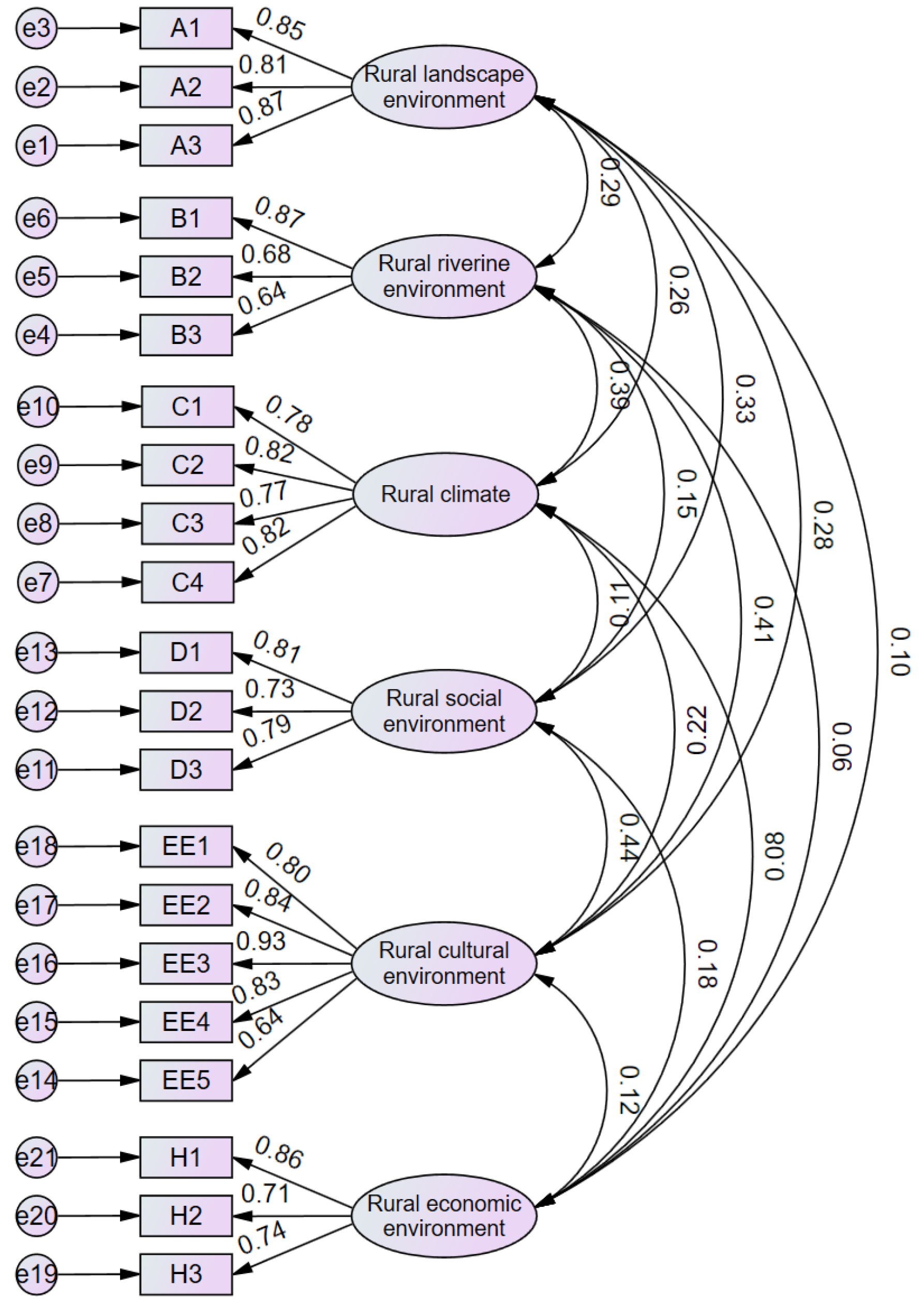
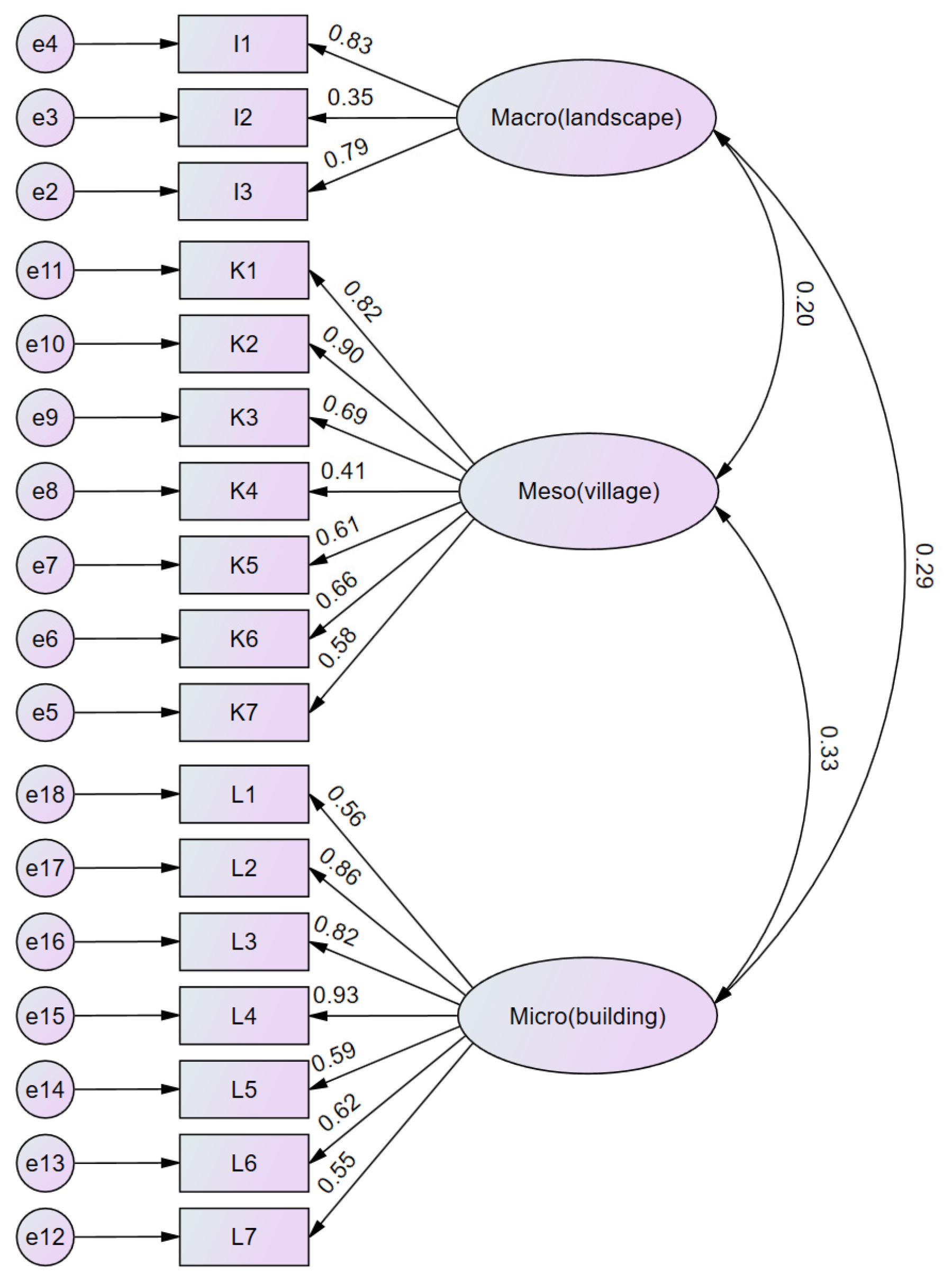
Confirmatory factor analysis (CFA) evaluated the measurement model. After removing low-loading pathways, standardized factor loadings ranged from 0.50 to 0.95, with t-values greater than 1.96. AVE values exceeded 0.50, indicating convergent validity; bootstrapped confidence intervals confirmed discriminant validity [56]. Model fit indices demonstrated strong goodness-of-fit: χ2/df = 1.134, RMSEA = 0.016; NFI = 0.945, IFI = 0.993, CFI = 0.973 (Figure 10 and Figure 11). These results verify that the model sufficiently captures the system coupling among driving factors and spatial elements and provides a reliable basis for subsequent space gene extraction and transmission analysis.

3. Results

3.1. Model Outputs and Interpretation

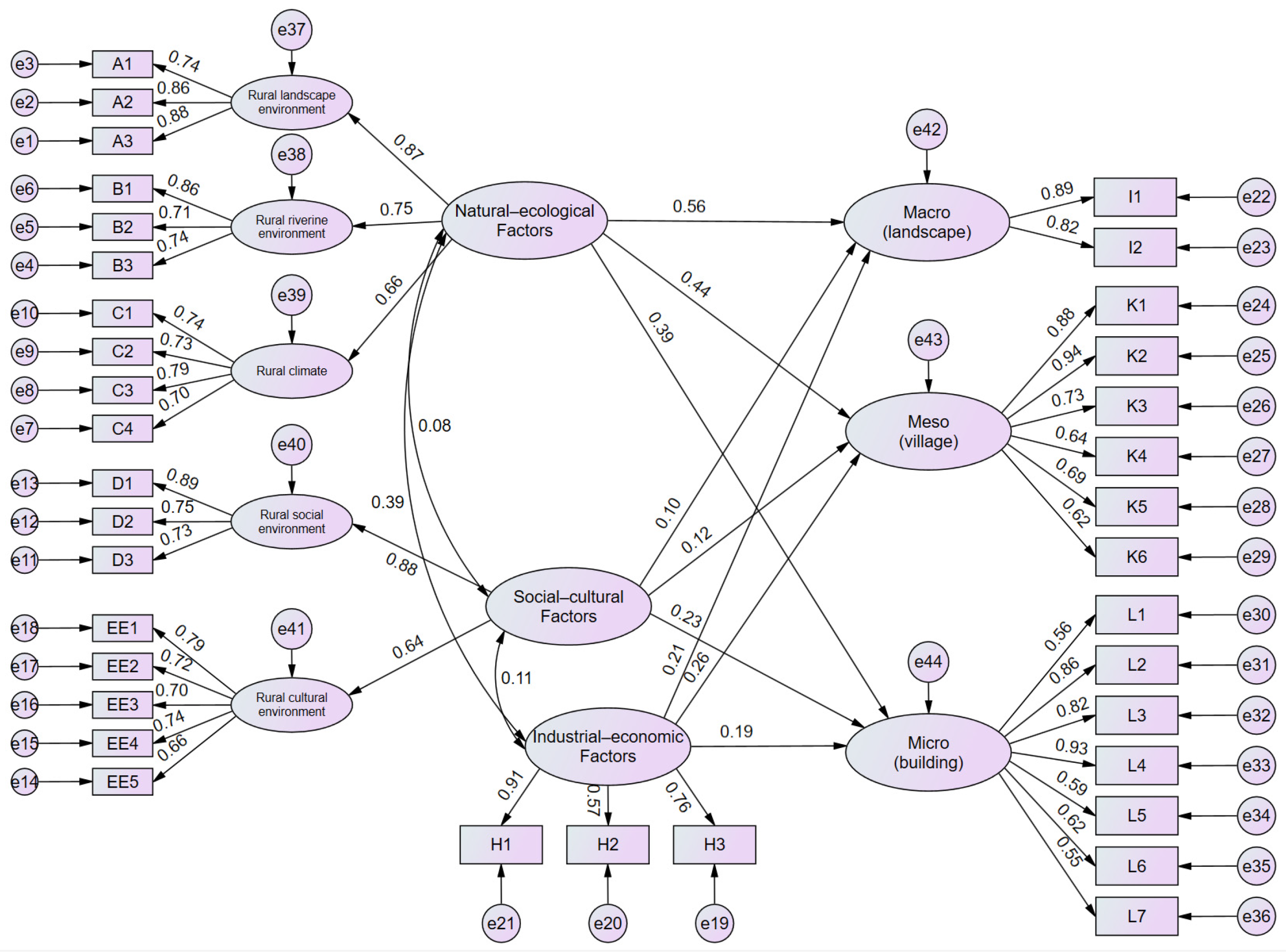
Based on the validated measurement model, a structural equation model (SEM) was constructed in AMOS 26.0 to examine how the three cognition-driven systems: natural–ecological, socio-cultural, and industrial–economic shape spatial elements across multiple scales. The SEM results (Table 5; Figure 12) show that all path coefficients are statistically significant (p ≤ 0.05), confirming the robustness and explanatory capacity of the model. Across the macro (landscape), meso (village), and micro (building) levels, all three driving systems exert positive effects, yet with varying intensities. At the macro (landscape) level, natural–ecological factors demonstrate the strongest impact (β = 0.562), indicating that terrain, hydrology, and ecological structure constitute the primary perceptual and cognitive bases through which residents configure regional spatial patterns. Socio-cultural (β = 0.103) and industrial–economic (β = 0.214) drivers provide supplemental regulation, reinforcing spatial order and functional allocation.
At the meso (village) level, the influence of natural–ecological factors remains substantial (β = 0.441), forming the fundamental environmental framework that shapes village boundaries and clustering patterns. Socio-cultural factors (β = 0.123) affect collective behavior, institutional arrangements, and the internal organization of public spaces, whereas industrial–economic factors (β = 0.262) guide functional diversification and spatial regeneration.
At the micro (building) level, socio-cultural effects become more pronounced (β = 0.231), reflecting the embodiment of daily practices, local customs, and esthetic preferences in architectural space. Natural–ecological factors (β = 0.390) and industrial–economic factors (β = 0.189) influence material selection, construction techniques, and functional programs by framing environmental constraints and practical demands.
Overall, natural–ecological drivers operate as the basic environmental constraints and perceptual anchors across scales; socio-cultural drivers function as endogenous cognitive regulators shaping spatial order and identity; and industrial–economic drivers act as dynamic forces pushing functional transformation. These three dimensions jointly form a cognition-driven pathway: “environmental perception → cultural internalization → functional adaptation”, that structures the spatial evolution of Guanzhong’s vernacular settlements.

3.2. Extraction of Space Gene

3.2.1. Space Gene Extraction Method

Space genes are defined as relatively stable spatial structural schemata formed through residents’ cognitive responses under the long-term influence of environmental conditions and socio-cultural norms. Each type of space gene consists of three components: (1) spatial elements, (2) driving factors, and (3) the relational logic linking the two. Accordingly, to achieve a formalized transformation from SEM results to space gene extraction, this study introduces a “driving intensity–spatial response” analytical logic to systematically examine coupling results across different spatial scales.
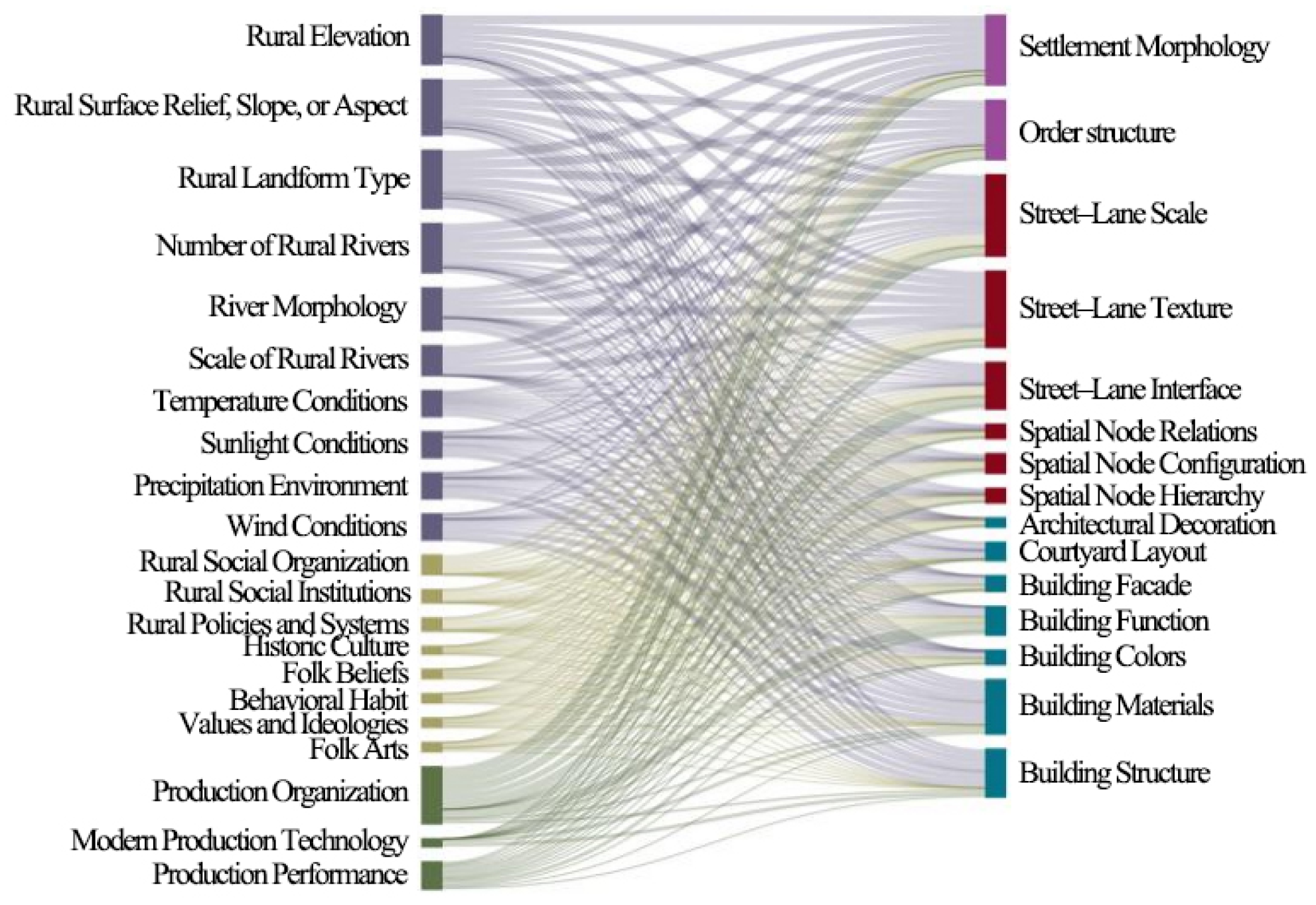
First, normalization. All SEM path coefficients that pass the significance test (p < 0.05) are standardized to eliminate dimensional differences among variables and ensure comparability across parameters. On this basis, the standardized path coefficients between 21 driving factors and 15 spatial elements are ranked, and their coupling intensities are visualized using a Sankey diagram (Figure 13). The width of each link intuitively reflects the relative strength of the “driving factor–spatial element” relationship, providing a quantitative foundation for subsequent space gene identification.
Second, threshold delimitation. To avoid subjective judgment and to highlight the core mechanisms that play a decisive role in shaping spatial structure, this study explicitly adopts a Top 30% threshold method [57,58,59] in the process of space gene identification. Specifically, among all significant paths, standardized path coefficients are ranked in descending order, and only the top 30% of “driving factor–spatial element” coupling relationships are retained as dominant paths, while the remaining paths are treated as secondary or background influences. This threshold is consistently applied across all spatial scales and driving systems analyzed in this chapter, and its robustness has been verified through the sensitivity tests described above.
Finally, following a cross-scale nested logic—settlement genome (macro) → village gene cluster (meso) → building gene unit (micro)—the selected dominant coupling relationships are mapped onto the landscape, village, and building scales, respectively, enabling the identification of space genes.

3.2.2. Coupling Relationships Between Characteristic Spatial Elements and Driving Factors

(1)
Natural–Ecological Factors
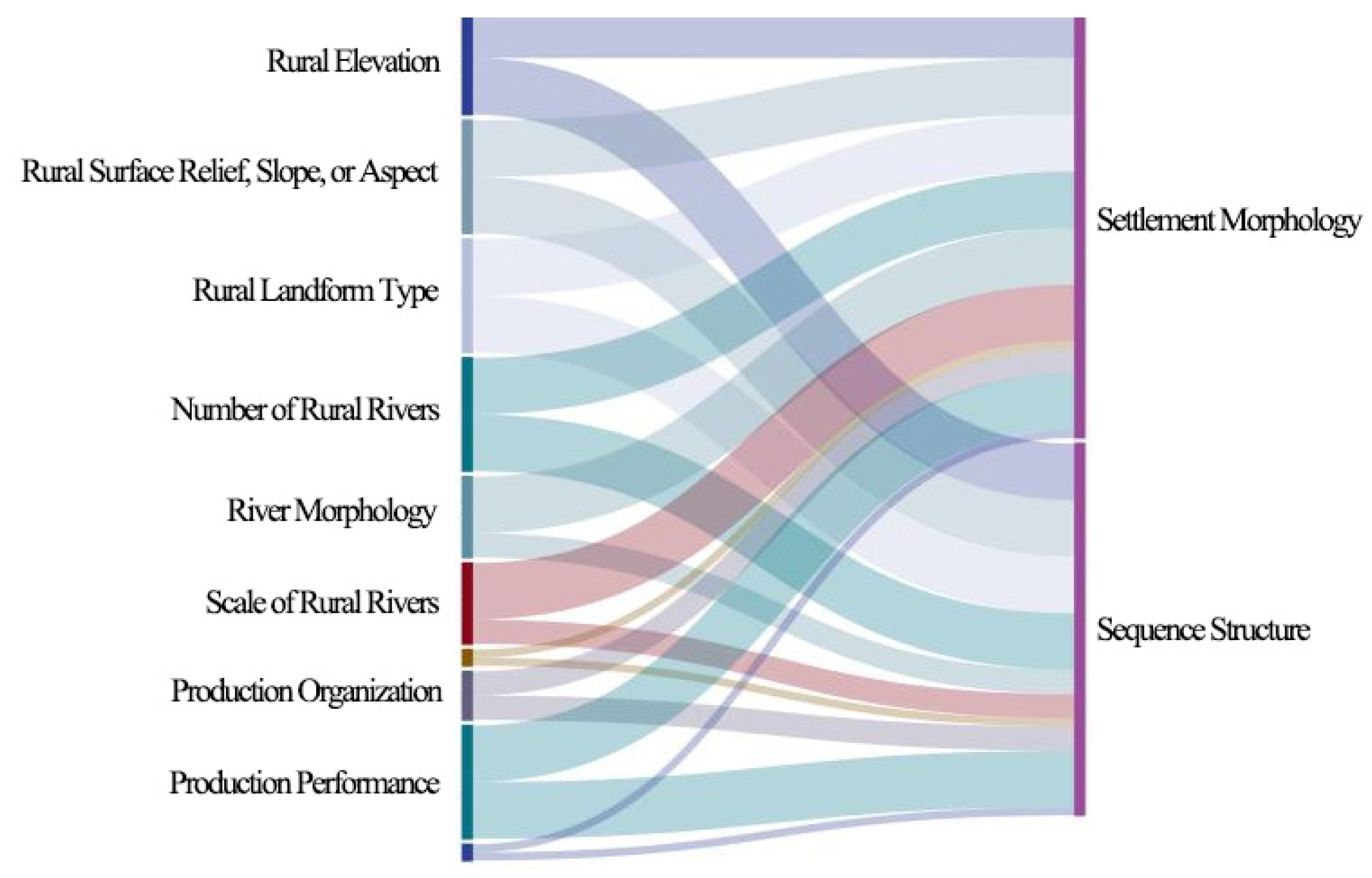
At the macro (landscape) level of characteristic spatial elements (I), the influence coefficients of the natural–ecological driving system indicate that rural landform environment (A), rural river environment (B), and rural climate environment (C) exert effects of 7.38, 6.36, and 5.60, respectively. At the meso (village) level of spatial elements (K), the corresponding influence coefficients decrease to 5.80, 5.00, and 4.40, while at the micro (building) level of spatial elements (L), they further decline to 5.14, 4.43, and 3.90. These results demonstrate that across all three spatial levels (I, K, and L), geomorphological factors consistently exhibit the strongest driving intensity, followed by river system factors, whereas climatic factors play a comparatively weaker role. This pattern indicates that the natural–ecological system exerts a stable and dominant influence on the formation of characteristic rural spatial structures in the Guanzhong region (Figure 14).
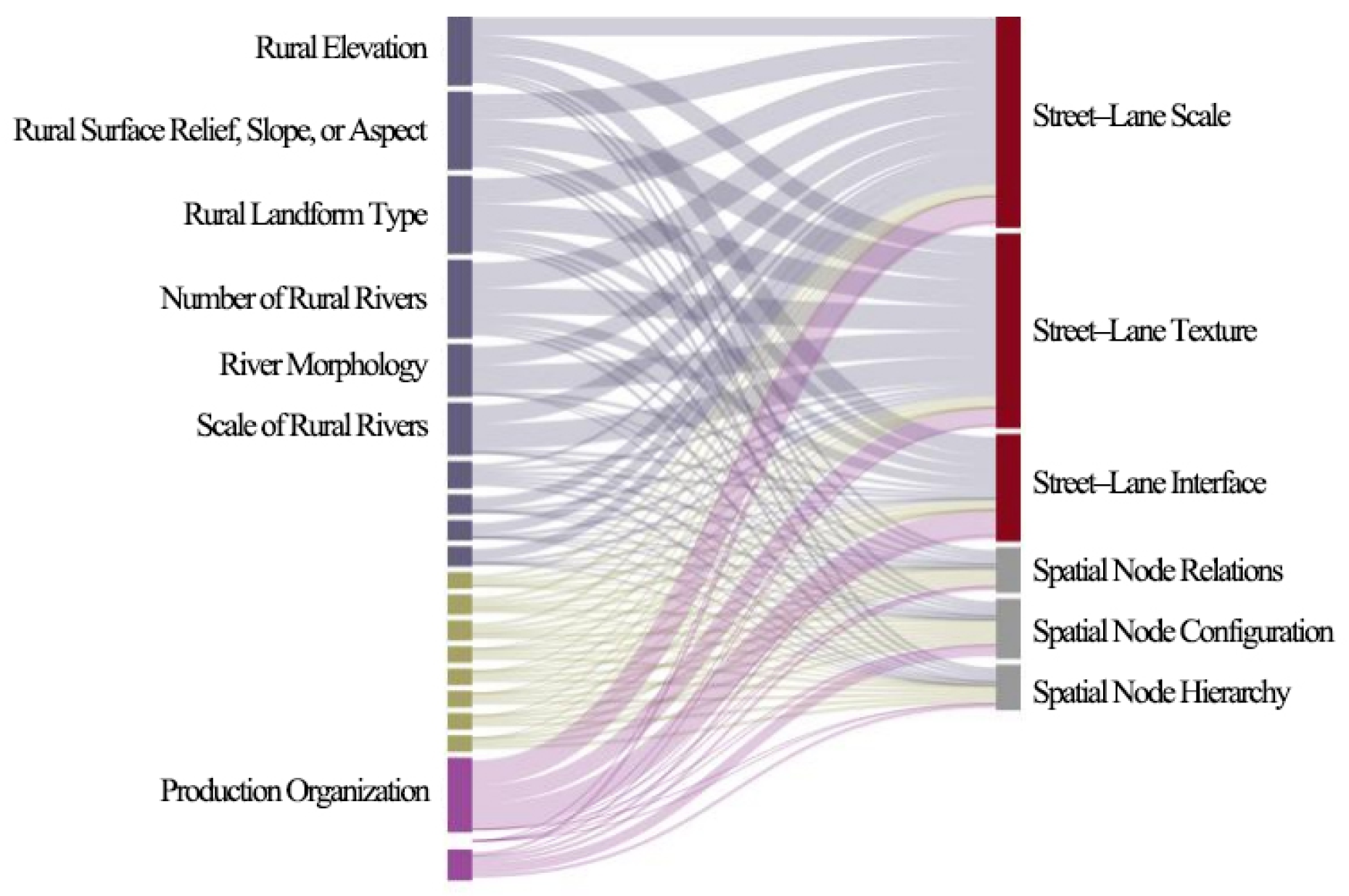
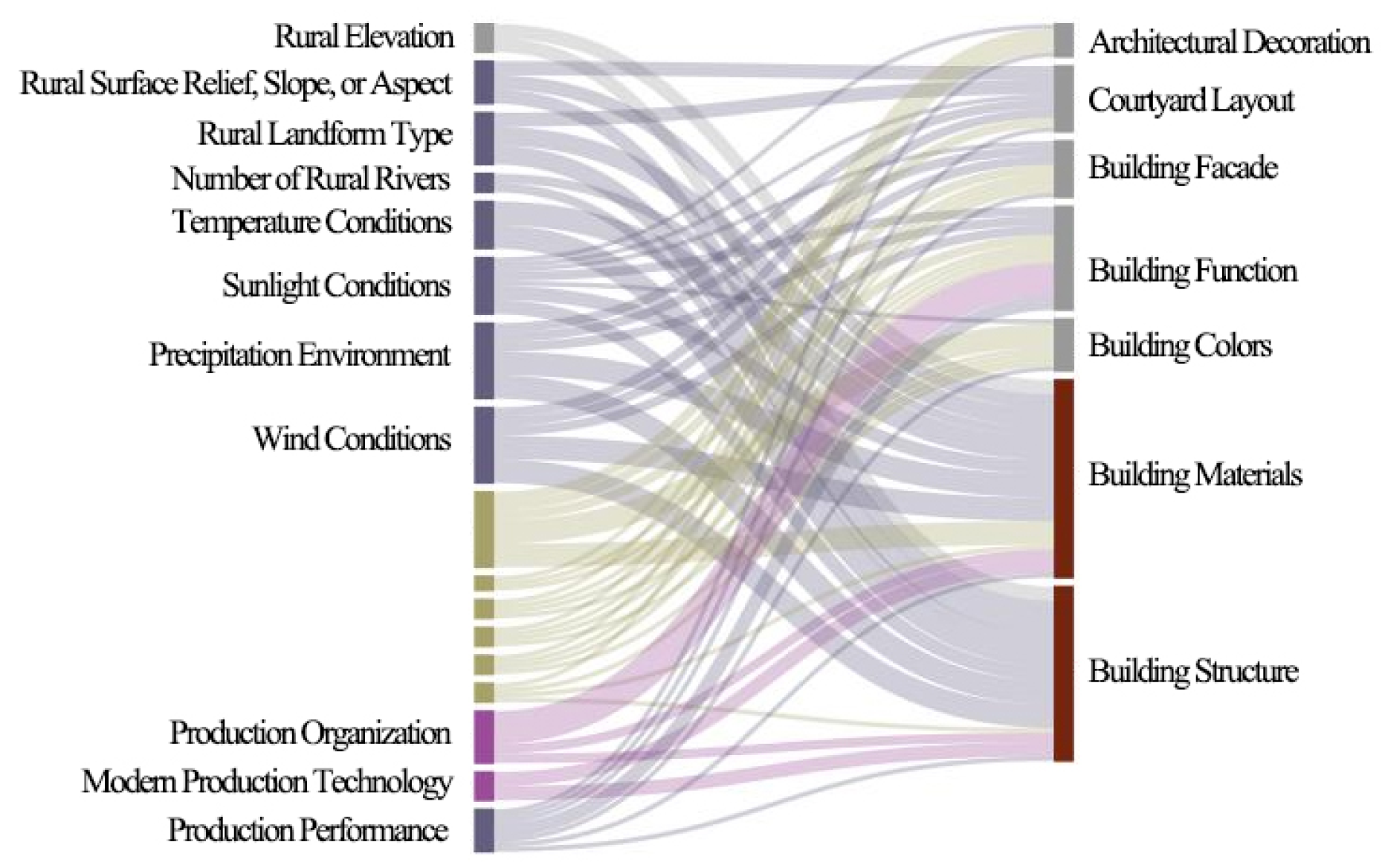
At the level of specific driving sub-factors (Table 6), comparison of coupling coefficients between individual factors and spatial elements allows the identification of dominant controlling factors and subsidiary (attached) factors at different scales. At the macro level, Rural Surface Relief, Slope, or Aspect (A2) show high influence coefficients on Settlement Morphology (I1) and Sequence Structure (I2), reaching 1.51 and 1.62, respectively. These values are significantly higher than those of other factors, identifying A2 as the primary controlling factor shaping landscape-scale spatial structure. Rural Elevation (A1), Rural Landform Type (A3), and Number of Rural Rivers (B1) function as subsidiary factors that further modulate spatial morphology. At the meso level, A2, A3, and B1 exhibit relatively strong coupling intensities with street–lane scale and street–lane texture, jointly forming the dominant driving combination for village-scale spatial organization. At the micro level, A2 and A3 exert the most pronounced influence on Courtyard Layout (L2) and Building Facade (L3), reflecting the high sensitivity of building-scale space genes to topographic conditions.
(2)
Socio-cultural Factors
At the macro (landscape) scale, the influence coefficients of the socio-cultural driving system on the landscape-level spatial elements (I) are 1.38 for rural social environment (D) and 1.00 for rural cultural environment (EE); at the meso (village) scale, their respective coefficients for spatial elements K are 1.66 and 1.20; at the micro (building) scale, the coefficients for elements L are 1.82 and 2.58. These results indicate that the effect of socio-cultural factors on spatial structure exhibits clear scale-dependent patterns: at the macro and meso scales, both rural social environment (D) and cultural environment (EE) jointly contribute, whereas at the micro scale, the cultural environment (EE) exerts significantly stronger influence than the social environment, becoming the dominant driver in shaping building-scale spatial characteristics (Figure 15).
At the sub-factor level (Table 7), comparison of the coupling coefficients between socio-cultural sub-factors and spatial elements allows clear identification of primary and secondary drivers across scales. At the macro scale, Historical Culture (EE1), Values and Ideologies (EE4) have relatively strong influence on the overall spatial image and cultural landscape continuity of settlements, constituting the core socio-cultural drivers at the landscape level; Rural Social Organization (D1), Rural Social Institutions (D2), and Rural Policies and Systems (D3) mainly influence spatial form indirectly through institutional and organizational mechanisms, thus acting as secondary (attached) drivers. At the meso (village) scale, Historical Culture (EE1), Folk Beliefs (EE2), Behavioral Habits (EE3), and Values and Ideologies (EE4) show high coupling strength with Street–Lane Scale (K1), Street–Lane Texture (K2), Street–Lane Interface (K3), and Street–Lane Orientation, Spatial Node Relations, and Spatial Node Configuration (K4–K6), making them the primary drivers of village-scale spatial structure; by contrast, Folk arts (EE5) mainly strengthens street-space imagery and node expression and acts as an attached factor. At the micro (building) scale, socio-cultural driving effects are further amplified: Historical Culture (EE1), Folk Beliefs (EE2), Behavioral Habits (EE3), and Values and Ideologies (EE4) significantly influence Architectural Decoration (L1), Courtyard Layout (L2), Building Facade (L3), Building Function (L4), building color (L5), materials (L6), and structural (L7) elements, serving as the primary drivers of building-scale space genes; Rural Social Organization (D1) and Folk arts (EE5) provide supplementary and attached effects by regulating construction behaviors and decorative expression.
Overall, the coupling characteristics across scales indicate a hierarchical strengthening of socio-cultural influence from “institution–organization” to “culture–cognition.” Cultural environment factors centered on historical culture, folk beliefs, and values constitute the key driving factors that support the continuous generation and stable inheritance of village- and building-scale spatial characteristics, whereas social environment factors mainly provide foundational conditions for spatial form generation through organizational and institutional frameworks.
(3)
Industrial–Economic Factors
The industrial–economic driving system comprises three components: Production Organization (H1), Modern Production Technology (H2), and Production Performance (H3). Based on the structural equation model (SEM) results, all path coefficients passed the significance test (p < 0.05) and were normalized using a unified standardization baseline, ensuring comparability across different driving systems and spatial scales. To enhance the reproducibility of space gene extraction, the Top 30% threshold method was applied to select the primary coupling relationships from the normalized path coefficients.
Overall coupling results indicate that at the macro (landscape) scale for spatial elements I, the influence coefficients of H1, H2, and H3 are 3.35, 2.10, and 2.80, respectively; at the meso (village) scale for elements K, they are 4.15, 2.60, and 3.47; at the micro (building) scale for elements L, they are 3.03, 1.09, and 2.53. These results suggest that within the industrial–economic driving system, Production Organization (H1) exhibits the highest coupling strength in shaping village-scale spatial Street–Lane Orientation (K4), Spatial Node Relations (K5), and Spatial Node Configuration (K6), serving as the primary driver. Modern production technology (H2) and production performance (H3) follow as secondary (attached) factors contributing to the formation of spatial features (Figure 16).
Compared with industrial–economic villages, the influence coefficients of H1–H3 on natural–ecological and socio-cultural villages’ elements I, K, and L are relatively low, indicating that industrial–economic factors play a limited role in shaping spatial characteristics for these types of villages.
Through unified normalization and Top 30% threshold selection, this study achieves a formalized translation from SEM quantitative results to the extraction of industrial–economic-driven space genes and provides a robust basis for cross-scale space gene identification.

3.2.3. Identification and Interpretation of Space Genes

(1)
Macro (Landscape) Level
The natural–ecological driving system exhibits the strongest and most stable influence across all driver types. After normalization and Top 30% threshold selection, the geomorphological factors—specifically “Rural Surface Relief, Slope, or Aspect (A2)” and “Rural Landform Type (A3)”—emerge as the primary drivers shaping settlement morphology (I1) and spatial sequence structure (I2). River-related factors, including river quantity and form, play a synergistic role, while climatic factors mainly serve a regulatory function.
These results indicate that traditional rural settlements in the Guanzhong region strongly depend on topography and hydrological conditions for site selection and overall spatial configuration. Settlements are typically located along river valleys or at the base of loess terraces, forming spatial organizations that closely align with the natural “mountain–water–field” pattern. Accordingly, the spatial sequence shaped jointly by geomorphology, hydrology, and climate is identified as the landscape-scale spatial pattern gene, termed the “Mountain-Water-Field-Garden” spatial pattern gene (Table 8).
(2)
Meso (village) level
After applying the Top 30% threshold, natural–ecological drivers including Rural Surface Relief, Slope, or Aspect (A2), Rural Landform Type (A3), and Number of Rural Rivers (B1) form the primary driver set influencing Street–Lane Scale (K1) and Street–Lane Texture (K2). Simultaneously, within the socio-cultural driving system, cultural environment factors represented by historical culture, folk beliefs, behavioral habits, and values exhibit significant impacts on spatial node relations, configuration, and hierarchy, highlighting the deep influence of institutional frameworks and daily practices on village spatial organization.
Differences in village spatial morphology across geomorphic units further confirm these driving mechanisms. In the Qinling Mountains and loess terrace areas, settlements tend to be dispersed or grouped due to complex terrain and limited arable land, whereas in the Guanzhong Basin, a more compact and orderly street network is observed. Integrating the primary natural and cultural driving paths, the village-scale spatial organization pattern is summarized as the “Clustered-Group Street Pattern Gene” (Table 9).
(3)
Micro (building) level
At the micro (building) level, the top 30% of the main coupling pathways originate primarily from natural–ecological and socio-cultural driving systems. Structural equation modeling (SEM) results indicate that topographically relevant factors (A2, A3) have the greatest impact on building structures, reflecting the high sensitivity of architectural form to topographic constraints. Simultaneously, socio-cultural factors—particularly historical culture, folk beliefs, values and ideologies—play a decisive role in the selection of building materials. Taken together, these multiple primary driving paths converge on two core architectural responses at the building scale: structural systems and material choices. In the context of the Guanzhong region, long-term adaptation to loess terrain conditions, climate, and construction traditions has resulted in a stable architectural assemblage characterized by rammed earth or brick enclosure walls combined with timber-frame systems, predominantly in the Liao-beam (tailiang) and Chuandou structural forms. These construction systems are further complemented by adaptive spatial elements such as sun-shading devices and semi-open corridors, which mediate environmental exposure and daily use.
Accordingly, by synthesizing the dominant influences of terrain constraints and cultural norms on architectural structure and materials, the building-scale space gene is extracted and defined as the “Raising-Beam/Through-Tie—Rammed Earth/Red Brick” Construction Material Gene”. This gene encapsulates the coupled outcomes of environmental adaptation and cultural continuity in Guanzhong’s traditional rural architecture (Table 10).

3.2.4. Results of Space Gene Extraction

Integrating quantitative SEM outputs, spatial clustering, and field verification, three representative space genes (SG1–SG3) and seven core characteristic factors (Table 11) are identified across the macro, meso, and micro levels. These genes capture the multilevel organization of vernacular space—from construction-material logic at the building level, through street–lane structuring at the village level, to spatial patterns at the landscape level.
The extraction results reveal that spatial evolution is governed by a cognitive cycle of “mutation → selection → adaptation → inheritance”. Mutation results from interventions such as industrialization and infrastructure development; selection reflects ecological feasibility and community preferences; adaptation leads to adjustments in spatial form; inheritance enables stable spatial codes to persist across generations through repeated practices and collective memory. This framework clarifies how space genes both reflect historical continuity and provide a basis for modular repair, adaptive renewal, and protected development in rural planning.

3.3. Space Gene Mapping

Space gene mapping translates extracted space genes into explicit spatial representations to demonstrate how they are expressed under differing environmental and cultural contexts. Building on the gene extraction results, this subsection employs space gene structure analysis [60] to systematically analyze and interpret the distribution of space genes and characteristic factors in nature-oriented settlements in Guanzhong.

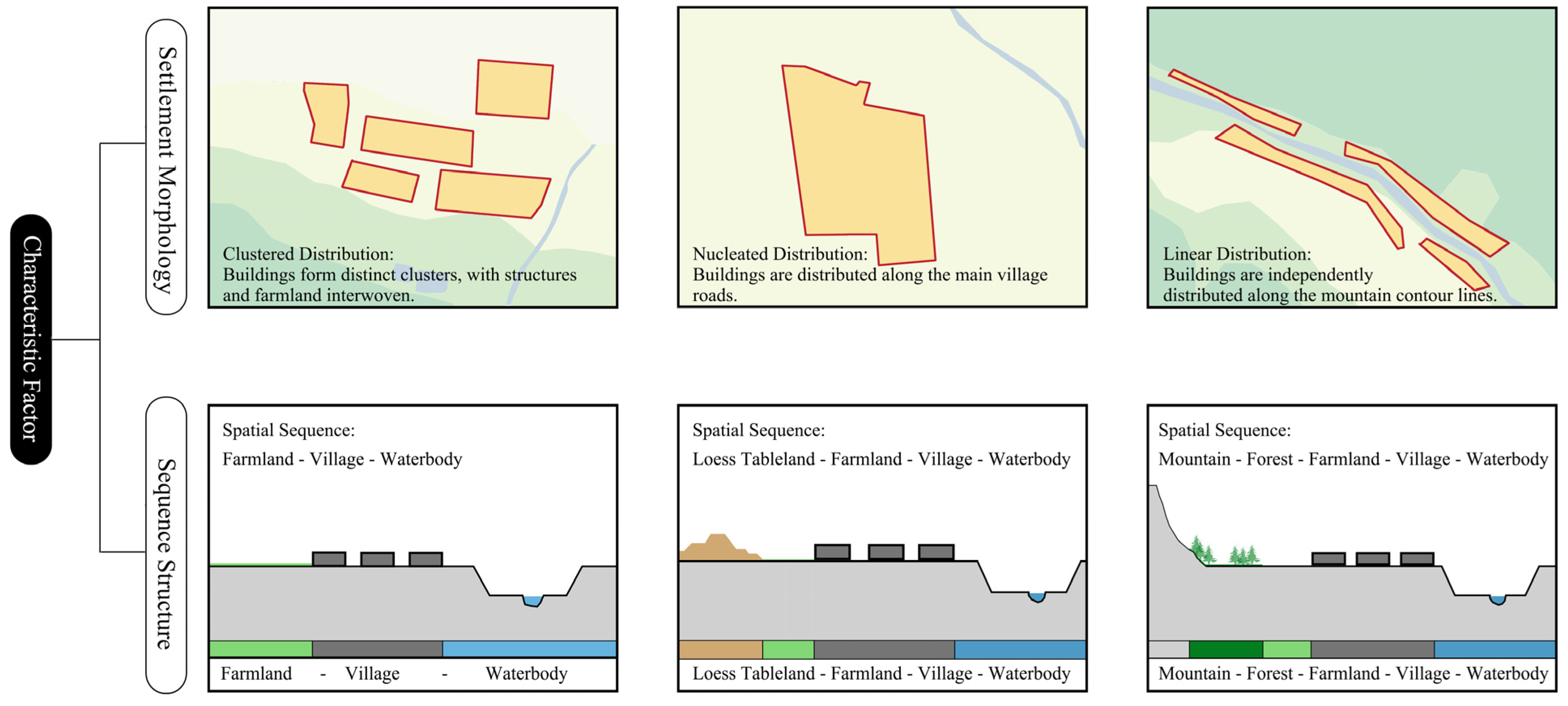
3.3.1. Macro (Landscape) Level: SG1 “Mountain-Water-Field-Garden” Spatial Pattern Gene

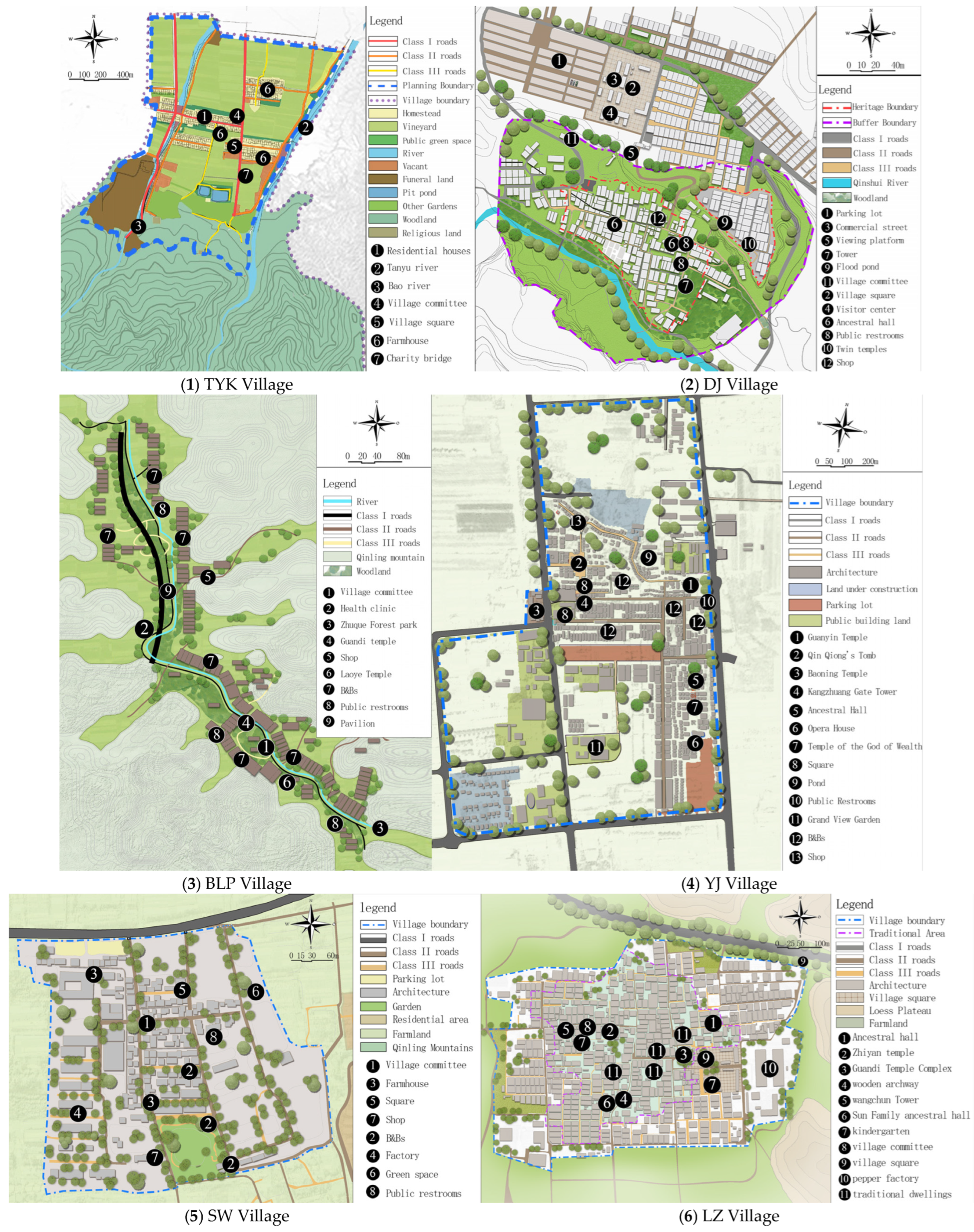
SG1 consists of two core factors—settlement morphology and sequence structure (Figure 17). (1) Settlement morphology form reflects the distributional logic and functional relationships among production, living, and ecological spaces. Influenced by landform, industrial zoning, and buildable conditions, different combinations of road networks, farmland, woodland, and water systems generate diverse settlement patterns. Plains often exhibit grid-like forms, while mountainous regions produce branch-like or river-aligned structures; (2) Sequence structure captures the interactional logic among fields, settlements, and ecological components. Common sequences include “field-village-water”, “tableland-field-village-water”, and “mountain-forest-field-village-water”. These sequences can be decomposed into three analytical dimensions: spatial compactness, geometric order, and interface heterogeneity, which together form a dynamic interpretive framework of morphogenesis-environmental adaptation-boundary evolution.

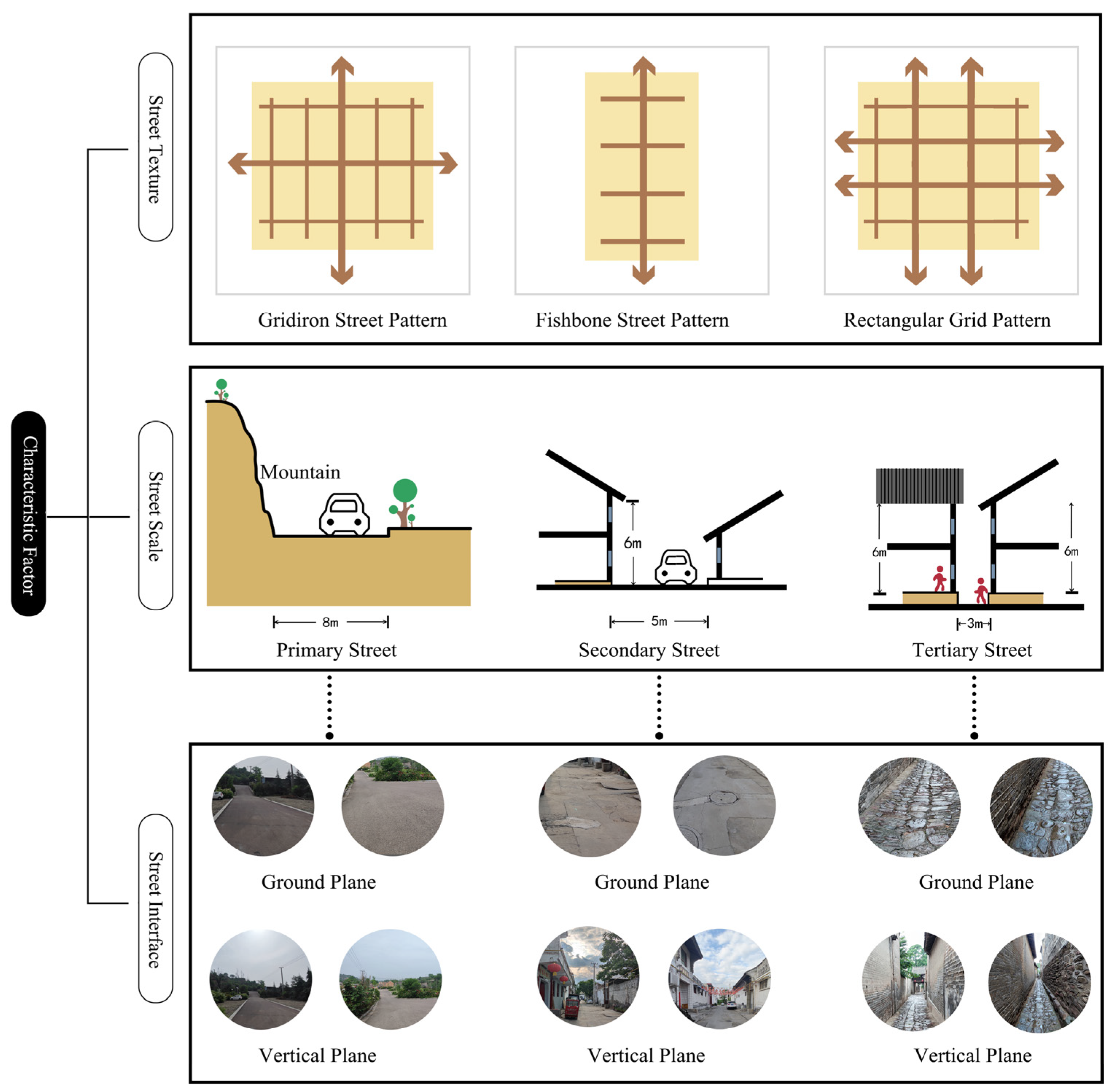
3.3.2. Meso (Village) Level: SG2 Clustered-Group Street Pattern Gene

SG2 describes the multi-layered street–lane network formed through cumulative spatial practices and environmental adaptation (Figure 18). These features together articulate a fractal-like, semi-organized structure characteristic of Guanzhong’s nature-oriented settlements. (1) Street–lane scale varies from wide access roads (level 1) to narrow pedestrian paths (level 4), shaping differentiated capacities and behavioral spaces. (2) Street–lane texture evolves through clustered building groups, creating grid-plus-free, fishbone, or fully free-form configurations adapted to terrain. (3) Street–lane interface includes lateral boundaries such as slopes, cut banks, or dwelling walls, and ground materials ranging from asphalt and concrete to brick and rammed earth.

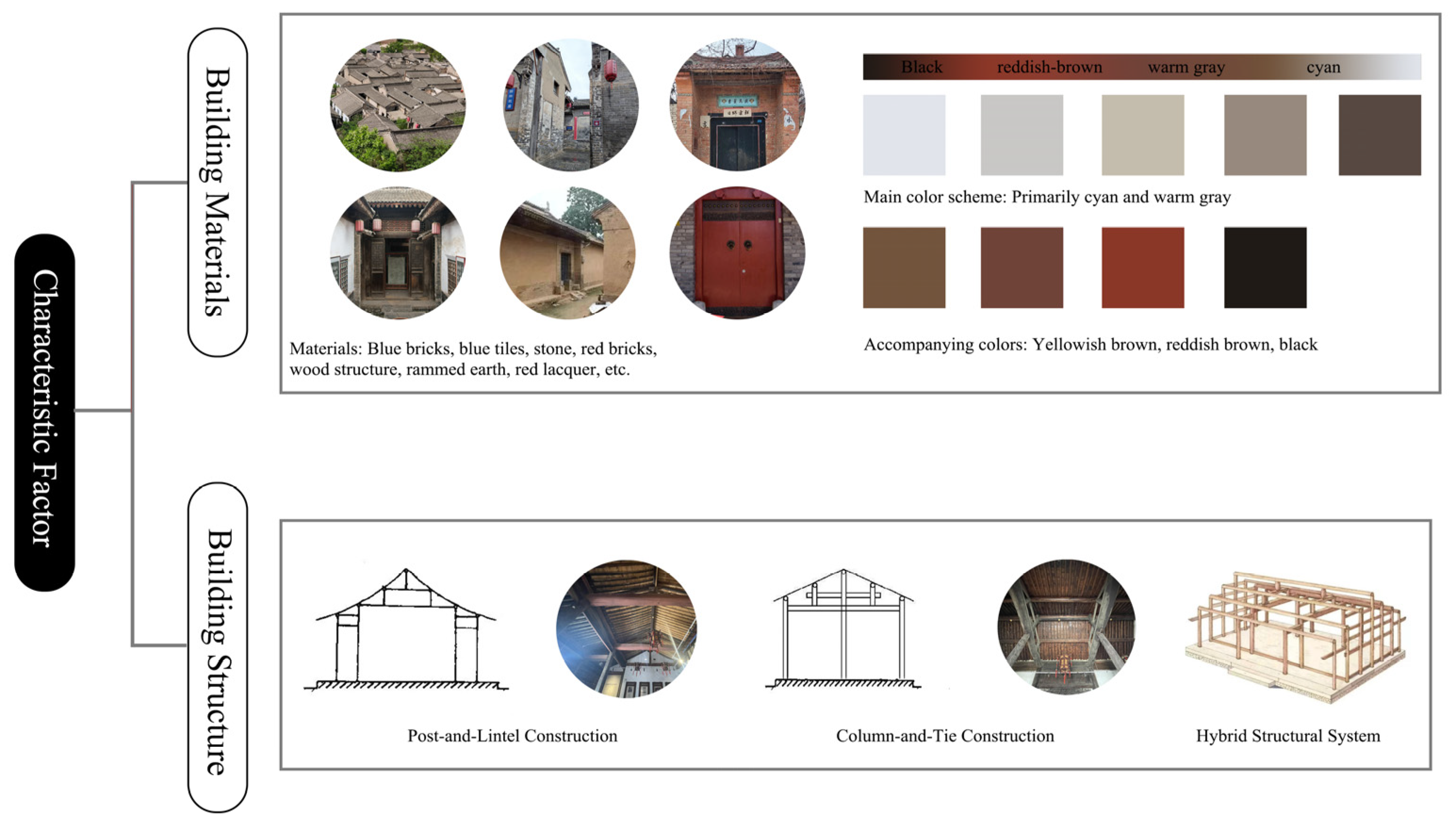
3.3.3. Micro (Building) Level:SG3 “Raising-Beam/Through-Tie—Rammed Earth/Red Brick” Construction Material Gene

SG3 reflects how environmental constraints and socio-cultural cognition are encoded into building materials and structures (Figure 19). These elements form a material–structural system that carries both functional adaptation and cultural inheritance. (1) Building materials include timber, brick, rammed earth, stone, and tiles, with combinations determined by local geology, climate, and construction traditions. (2) Building structure integrates post-and-beam frames, through-type timber systems, mixed timber-earth walls, and rammed earth load-bearing structures, addressing functional needs such as thermal performance, ventilation, and daylighting.

4. Discussion

Building on the preceding analysis of spatial–driving factor interactions and the extraction of space genes, this section focuses on two central questions: (1) how spatial elements can be continuously and orderly updated through gene-based mechanisms; (2) how locally specific space gene information can be effectively transmitted in the context of modernization and socio-environmental change. To address these questions, a set of gene-oriented transmission strategies is proposed. These strategies conceptualize the protection and renewal of vernacular spatial elements as a process of dynamic fine-tuning, in which historical spatial structures are retained while allowing controlled adjustment, recombination, and optimization. The proposed mechanisms operate across three complementary dimensions:
  • Gene Therapy—replication and reinforcement of key spatial elements;
  • Gene Recombination—reconnection and restructuring of fragmented spatial elements; and
  • Gene Modification—controlled adjustment of characteristic spatial elements.
Together, these strategies form an integrated multi-scale framework for vernacular spatial regulation, linking morphological stability, functional adaptability, and the continuity of local spatial identity.

4.1. Gene Therapy: Replication and Reinforcement of Key Elements

In analogy to biological gene therapy—which restores physiological functions by replicating or reconstructing essential genetic material—space gene therapy focuses on stabilizing settlement morphology by reinforcing spatial elements with high structural or cultural centrality.
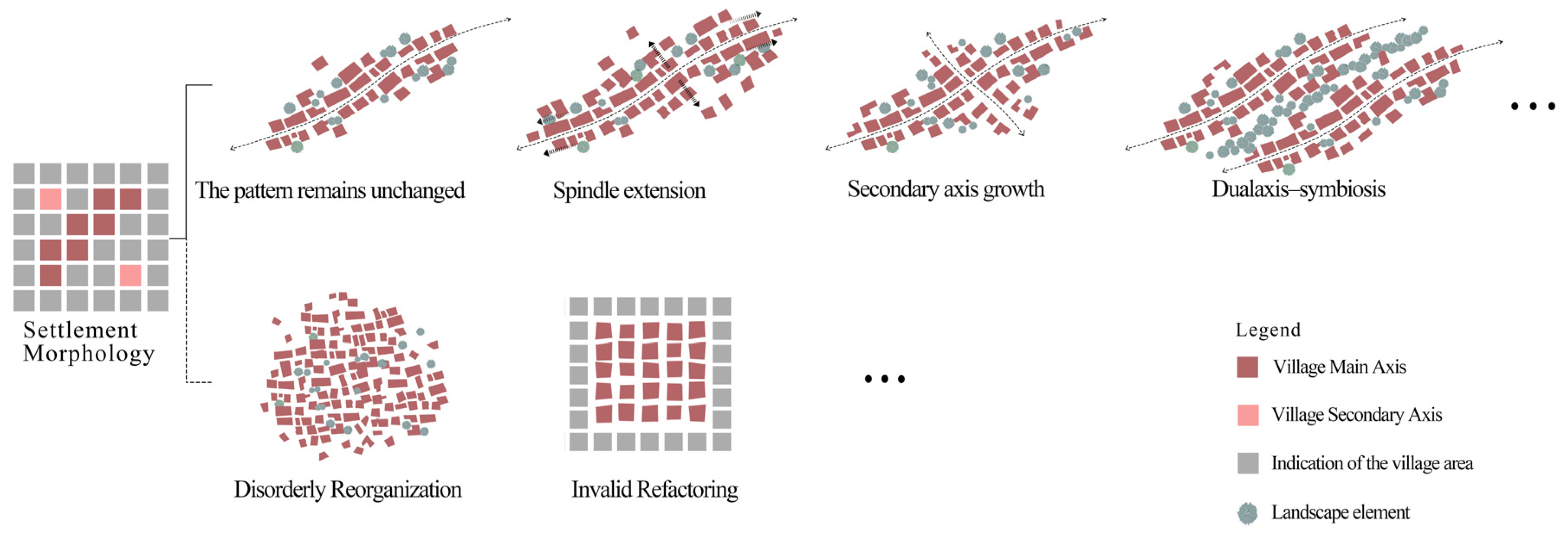
Macro (Landscape) level. At the landscape level, the strategy strengthens historical spatial sequences through axial and topological extension. Cultural gene “anchor points” are used to guide the insertion of new landmark buildings within the extended topological domain of historical axes, ensuring continuity of visual and cultural orientation. View-corridor analysis establishes carriers of cultural memory, enabling new interventions to form coherent diachronic relationships with existing spaces, in line with principles of historical continuity articulated in the Washington Charter. When scale differences between new and traditional structures become significant, a dual-axis coexistence model is applied to maintain integrity, referencing the European Landscape Convention (Figure 20).
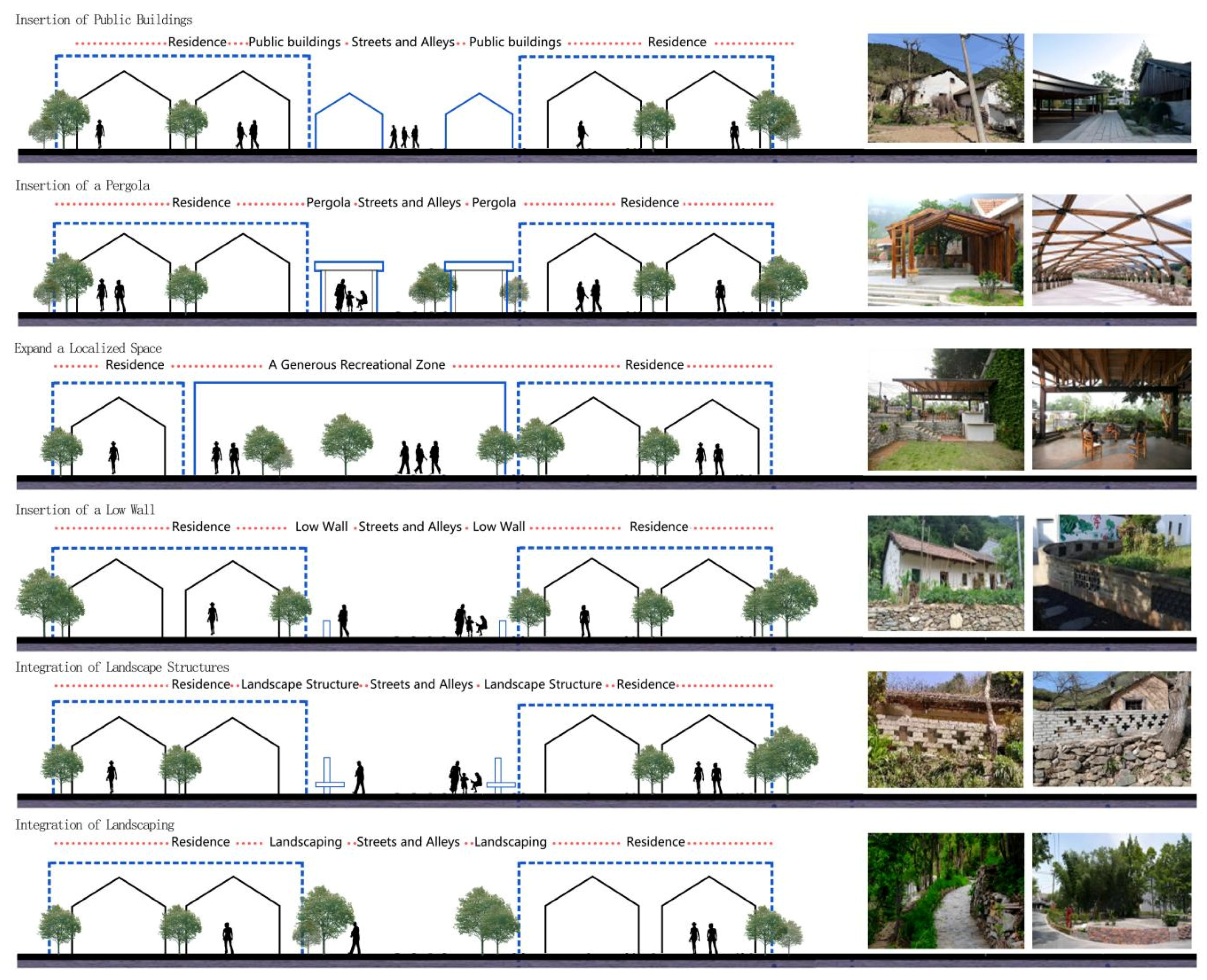
Meso (Village) level. At the village level, the strategy employs core-space proliferation. Traditional public spaces with paradigmatic value—such as squares or ancestral-hall forecourts—are reconstructed using spatial archeological methods to recover their original structural logic (Figure 21). Layered adaptive modules are then added to accommodate contemporary functions while preserving the stability of what Marcel Poëte termed “persistent elements.” Concepts from Conzen’s “edge-zone” theory guide the controlled expansion of these core spaces within evolving settlement patterns.
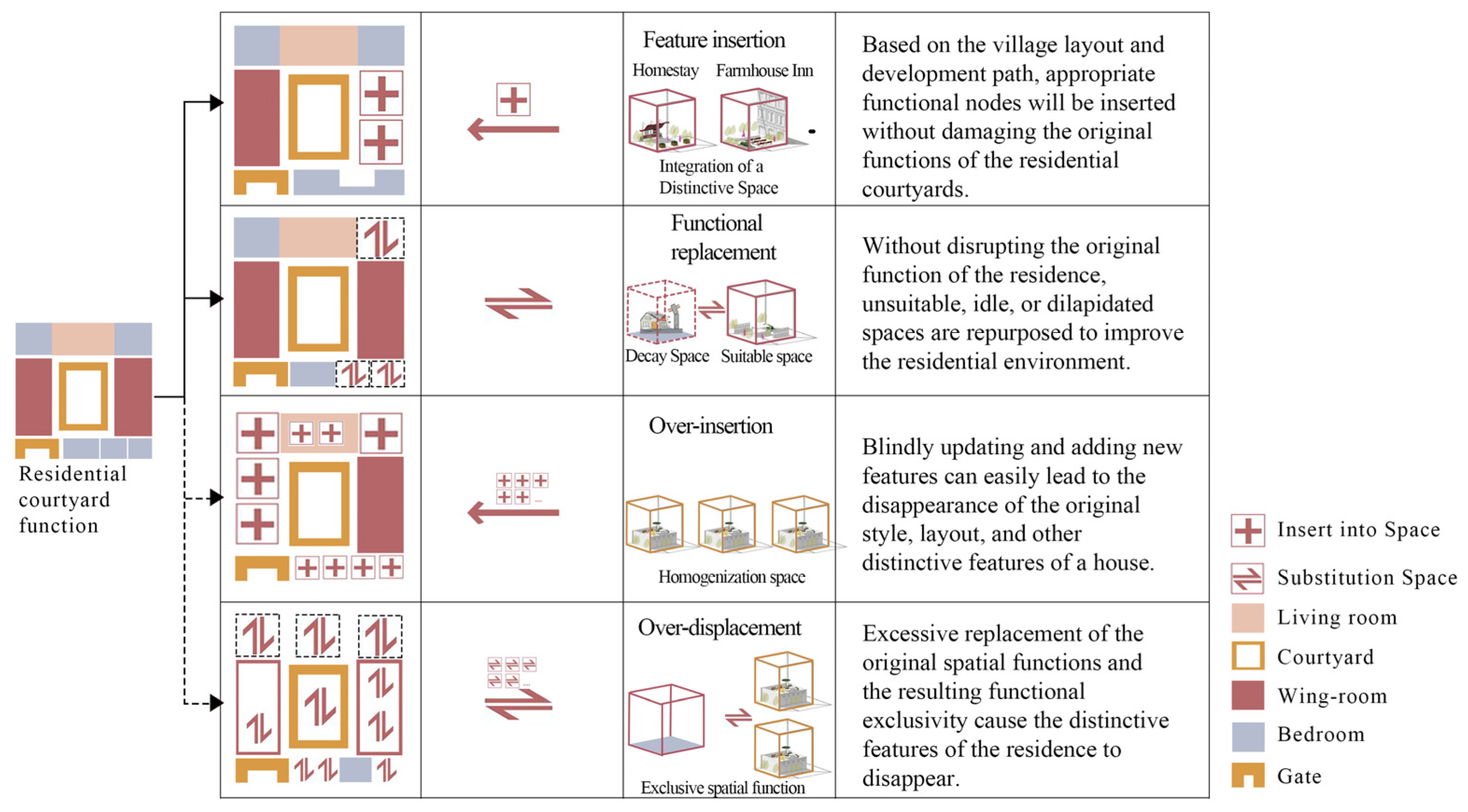
Micro (Building) level. At the building level, pattern-language principles are applied to map functional clusters onto spatial codes. For archetypal building forms (e.g., the Guanzhong hall-wing-courtyard siheyuan), a genealogical updating approach preserves fundamental topological relations while enabling functional replacement through spatial recombination. Construction anthropology provides the methodological basis for integrating modern technical systems without compromising inherited spatial prototypes.

4.2. Gene Recombination: Recombination of Disrupted Elements

Gene recombination—biologically defined as the exchange and reassembly of fragmented DNA—is used here as a metaphor for restoring continuity in vernacular settlement structures that have been disrupted by industrialization, land use change, or modern functional demands.
Macro (Landscape) level. At the landscape level, recombination begins with the deconstruction of existing morphogenetic codes, extracting parameters such as slope adaptation, watershed control, and view-shed structuring. Drawing on Deleuze’s notion of the “fold,” a non-hierarchical network of old and new axes is constructed to enhance Lynchian legibility while maintaining layered historicity consistent with the Florence Charter. Cultural landmarks placed at topological nodes support the diachronic transmission of Norberg-Schulz’s “spirit of place.”
Meso (Village) level. At the village level, a dual-track recombination model integrates material and cultural layers. On the material track, Rossi’s typological principles reinterpret street–lane textures, construction archeology recovers traditional techniques, and “fault-weaving” design methods restore continuity along interfaces between new and historic fabrics. On the cultural track, guided by the Historic Urban Landscape approach, event-space mapping identifies cultural coordinates within which adaptive functions—such as small-scale industry or services—are inserted. This creates spatial conditions for historical and contemporary practices to coexist within a shared morphological framework.
Micro (Building) level. At the building level, a threefold repair mechanism addresses both structural and symbolic fragmentation (Figure 22): (1) Generative-syntax reconstruction extracts the deep structural rules governing courtyard morphology, forming regionally grounded pattern genealogies aligned with principles of critical regionalism. (2) Symbol-system translation, informed by Peircean semiotics, decomposes traditional decorative elements into iconic, indexical, and symbolic codes, enabling their controlled reinterpretation through parametric variation. (3) Spatial-ethics reconstruction, following Heidegger’s concept of dwelling, organizes functional transformations around the ethical order embedded in courtyard-hall-corridor relations, preserving cultural legibility.

4.3. Gene Modification: Controlled Adjustment of Characteristic Elements

Gene modification, defined biologically as the targeted alteration of genetic sequences, is used here to conceptualize the calibrated adjustment of vernacular spatial characteristics in response to contemporary environmental, social, and economic pressures.
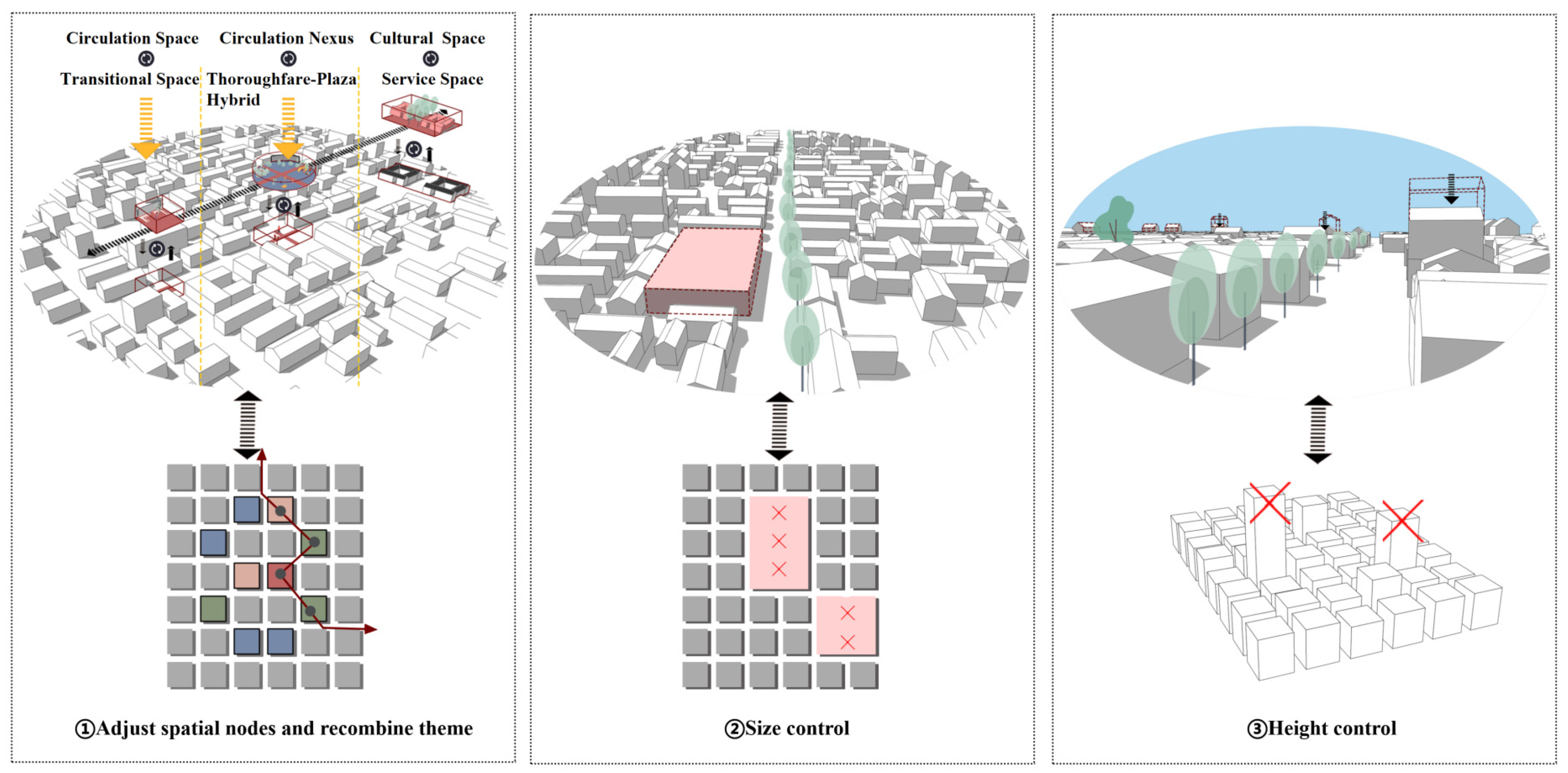
Macro (Landscape) level. At the landscape level, the strategy constructs regulated dialogs between new and historical landmarks. By delineating the topological domain of historical axes and inserting cultural anchor points along key sightlines, sequential vistas are orchestrated to maintain coherent landscape narratives.
Meso (Village) level. At the village level, gradient-based regulation ensures that spatial form adapts without compromising historical identity. Structurally, persistent elements are reinforced, and cross-sections of street–lane profiles are decoded as space genes to preserve traditional scale modules (Figure 23). At the interface level, boundary effects are harnessed to create rhythmic landscape edges along view corridors. A hierarchical control model—“core nodes–secondary units–peripheral transitions”—maintains morphogenetic legibility and regulates incremental development.
Micro (Building) level. At the building level, a three-part control system integrates typological continuity, symbolic translation, and functional adaptation: (1) Topological continuation of façade codes preserves regional motifs through calibrated combinations of material joints, component proportions, and color schemes, consistent with critical regionalism. (2) Scene-based translation of decorative patterns uses multi-scale semiotic mapping to reinterpret traditional motifs. (3) Recombination of functional clusters, based on Habraken’s support theory, couples traditional spatial units with contemporary functional requirements through the interplay of “support” and “infill.”

4.4. Summary

Across macro, meso, and micro levels, the three gene-oriented strategies—therapy, recombination, and modification—form a coherent regulatory framework that integrates historical continuity with adaptive transformation. Historical axes and cultural landmarks ensure sequential landscape expression; restored public spaces and recalibrated street–lane textures maintain structural order and cultural legibility; and updated building materials, structural systems, and symbolic codes accommodate contemporary needs while preserving inherited spatial logics. This multi-scale system establishes a dynamic cycle of environmental adaptation, cultural transmission, and functional optimization, providing an operational pathway for the sustainable protection and renewal of vernacular settlements.

5. Conclusions and Discussion

This study develops a cognition-driven analytical framework for decoding space genes in rural settlements and applies it to traditional villages in the Guanzhong region. By structuring the analysis as a sequential process of environmental cognition–element identification–system coupling–gene extraction–transmission pathways, the research moves beyond conventional approaches that emphasize static morphological description [61,62], typological categorization [63,64], or land use change [65,66]. Instead, it conceptualizes rural settlements as dynamic and adaptive systems [67,68,69] shaped through multi-scale interactions among natural environments, socio-cultural forces, industrial–economic conditions, and residents’ cognitive perceptions.

5.1. Scope of Applicability and Boundary Conditions

The conclusions of this study operate across differentiated spatial and theoretical scopes.
First, several findings are region-specific to Guanzhong and should not be mechanically generalized. These include the dominant coupling of geomorphology and hydrology in settlement siting, the extraction of the “mountain-water-field-garden” landscape space gene at the macro scale, and the prevalence of rammed earth and timber-frame construction systems at the building scale. These characteristics are closely tied to the Loess Plateau landform, the Qinling-Weihe ecological structure, and the long-term continuity of agrarian civilization in Guanzhong. Regions with fundamentally different environmental conditions or historical trajectories may exhibit alternative space gene configurations.
Second, a set of conclusions is transferable to rapidly transforming inland agrarian regions, particularly in East Asia. These include (i) the multi-scale differentiation of spatial drivers, with natural–ecological factors dominating at the landscape scale and socio-cultural drivers becoming increasingly influential at village and building scales; (ii) the mediating role of residents’ cognitive perception between environmental conditions and spatial form; and (iii) the reframing of rural spatial inheritance as an adaptive transmission process rather than static preservation. These findings are likely applicable to regions experiencing similar pressures of urbanization, demographic aging, and industrial restructuring.
Third, at the methodological level, the proposed framework—integrating cognitive surveys, structural equation modeling (SEM), system coupling analysis, and multi-scale space gene extraction—possesses broad applicability beyond the Guanzhong case. Nevertheless, its empirical implementation requires contextual recalibration of indicators, weights, and thresholds to reflect local environmental, cultural, and institutional conditions.

5.2. Verification of Research Hypotheses

The nine research hypotheses proposed in this study were systematically tested through the SEM framework. Overall, the results support the internal logic of the research design.
Hypotheses concerning the dominant role of natural–ecological drivers at the macro (landscape) scale (H1–H3) were strongly supported, confirming that geomorphology, hydrology, and related environmental factors exert stable and decisive influence on settlement location and overall spatial order. Hypotheses addressing the increasing influence of socio-cultural drivers at the village and building scales (H4–H6) were also supported, demonstrating that historical culture, folk beliefs, behavioral norms, and value systems play a central role in shaping street patterns, spatial nodes, and architectural forms.
The hypotheses regarding residents’ cognitive perception as a mediating mechanism in spatial inheritance (H7–H8) were validated by statistically significant paths, highlighting cognition as a key link between driving factors and spatial outcomes. By contrast, the hypothesis assuming the universal dominance of industrial–economic drivers across all village types (H9) received only partial support. Industrial–economic factors were found to be decisive mainly in industry-oriented villages, while their influence remained secondary in ecologically and culturally oriented villages. This result refines the original hypothesis and underscores the importance of village typology in interpreting spatial driving mechanisms.

5.3. Research Innovations and Contributions

This study advances rural spatial research in three major aspects.
First, it introduces a cognition-driven analytical perspective. Unlike previous studies that privilege expert judgment or objective form [65,70,71], this research explicitly incorporates residents’ and visitors’ perceptual responses into the identification and validation of spatial drivers. By operationalizing environmental cognition as the starting point for decoding space genes, the study bridges the gap between objective spatial structures and subjective spatial meaning—an aspect long underexplored in rural studies.
Second, the study proposes a space gene inheritance mechanism that reconceptualizes rural spatial continuity as an adaptive, multi-scale coupling process among environment, culture, economy, and cognition. Rather than treating space genes as static formal codes, the framework explains how they are selectively retained, transformed, or weakened through everyday practices and socio-economic change. This perspective departs from conservation-oriented models focused solely on formal preservation and provides a more realistic explanation for spatial continuity under rapid rural transition.
Third, methodologically, the integration of SEM-based system coupling, Top 30% threshold filtering, and cross-scale gene mapping establishes a replicable operational pathway for translating quantitative results into space gene identification. This approach extends space gene research from conceptual metaphor to analytical tool, enabling cross-regional comparison and supporting evidence-based rural planning and conservation.
Empirically, the study identifies three representative space genes and seven core characteristic factors in nature-oriented settlements in Guanzhong, and further proposes three transmission strategies—gene therapy, gene recombination, and gene modification. These strategies supplement existing approaches that emphasize either formal conservation or functional restructuring, offering a balanced mechanism for continuity and controlled transformation.

5.4. Limitations and Future Research

Several limitations remain. The empirical conclusions derived from the Guanzhong case require further validation across diverse geographical and cultural contexts to test the universality of the space gene framework. In addition, despite the integration of field surveys and qualitative materials, constraints in rural data availability limit the development of fully operational quantitative models for long-term and dynamic monitoring of space gene evolution.
Future research will expand in three directions: (1) Increase comparative studies of other types of villages in the Guanzhong region, including cross-regional comparative testing across the Northwest China and broader national or transregional contexts; (2) integration of multi-source data, including oral histories, agent-based modeling, and historical GIS, to construct multidimensional space gene information maps; and (3) methodological innovation toward a pathway of gene identification–value assessment–adaptive translation, integrating quantitative and qualitative evaluation tools.
Overall, this study provides conceptual foundations, analytical tools, and operational strategies for understanding and guiding the inheritance and adaptive renewal of vernacular rural space. It contributes to broader international discussions on rural conservation, spatial resilience, and cultural landscape sustainability by offering a cognition-driven, multi-scale, and system-oriented perspective.

Author Contributions

Conceptualization, C.L. and Y.W.; methodology, C.L. and Y.W.; software, C.L.; validation, C.L. and Y.Z.; formal analysis, C.L.; investigation, C.L.; resources, C.L. and Y.W.; data curation, C.L.; writing—original draft preparation, C.L.; writing—review and editing, C.L., Y.Z. and Y.W.; visualization, C.L.; supervision, C.L. and Y.Z.; funding acquisition, Y.Z. All authors have read and agreed to the published version of the manuscript.

Funding

This research received no external funding.

Data Availability Statement

The raw data supporting the conclusions of this article will be made available by the authors upon request.

Conflicts of Interest

The authors declare no conflicts of interest.

References

  1. Zhang, X.; Pan, M. Emerging rural spatial restructuring regimes in China: A tale of three transitional villages in the urban fringe. J. Rural Stud. 2022, 93, 287–300. [Google Scholar] [CrossRef]
  2. Li, S.; Yang, R.; Long, H.; Lin, Y.; Ge, Y. Rural spatial restructuring in suburbs under capital intervention: Spatial construction based on nature. Habitat Int. 2024, 150, 103112. [Google Scholar] [CrossRef]
  3. Tu, S.; Long, H. Rural restructuring in China: Theory, approaches and research prospects. J. Geogr. Sci. 2017, 27, 1169–1184. [Google Scholar] [CrossRef]
  4. Liu, R.; Liu, P.; Shen, X.; Zhou, W. Effect of traditional village landscape genes on tourists’ image construction: Case study of Zhangguying Village. J. Resour. Ecol. 2024, 15, 587–600. [Google Scholar] [CrossRef]
  5. Huang, Y.; Xia, J.; Chen, Y.; Hong, J. Global research progress on rural settlement spatial patterns from 2000–2024: A comprehensive review of hotspots, frontiers, and emerging trends. Front. Earth Sci. 2024, 12, 1505570. [Google Scholar] [CrossRef]
  6. Relph, E. Place and Placelessness; Pion: London, UK, 1976. [Google Scholar]
  7. Heley, J.; Jones, L. Relational rurals: Some thoughts on relating things and theory in rural studies. J. Rural Stud. 2012, 28, 208–217. [Google Scholar] [CrossRef]
  8. Antrop, M.; Van Eetvelde, V. Landscape Perspectives: The Holistic Nature of Landscape; Springer: Berlin/Heidelberg, Germany, 2017. [Google Scholar]
  9. Olwig, K.R. Landscape, place, and spatial cognition. Prog. Hum. Geogr. 2021, 45, 1002–1020. [Google Scholar]
  10. Mitchell, C.J.A.; Shannon, S. Vernacular landscapes and spatial continuity. Land Use Policy 2022, 114, 105994. [Google Scholar]
  11. Jones, R.; LeBaron, C. Spatial cognition and everyday landscape practices. Environ. Plan. D 2021, 39, 897–915. [Google Scholar]
  12. Stephenson, J. Cultural values and spatial reproduction in rural landscapes. Land 2022, 11, 1345. [Google Scholar]
  13. Pasqualetti, M.J.; Stremke, S. Cultural landscapes and spatial adaptation. Sustainability 2023, 15, 2874. [Google Scholar]
  14. Cai, T.; Duan, J. Construction and application of characteristic townscape knowledge graph based on space gene theory. Cities 2025, 167, 106289. [Google Scholar] [CrossRef]
  15. Li, B.; Zhao, Y. Rural regional landscape features identification and spatial inheritance. Acta Geogr. Sin. 2020, 75, 261–276. [Google Scholar]
  16. Norberg-Schulz, C. Genius Loci: Towards a Phenomenology of Architecture; Rizzoli: New York, NY, USA, 1980. [Google Scholar]
  17. Seamon, D. Life Takes Place: Phenomenology, Lifeworlds, and Place Making; Routledge: London, UK, 2018. [Google Scholar]
  18. Urban Planning Society of China (UPSC). Guide to Inheriting and Planning Space Genes in Characteristic Rural Settlements. (Group Standard T/UPSC 0015-2024). 2024. Available online: https://www.planning.org.cn/solicity/view?id=2378 (accessed on 20 December 2025).
  19. Blackmore, S. The Meme Machine: The Genetic Model of Cultural Transmission; Gao, S.; Wu, Y., Translators; Jilin People’s Publishing House: Changchun, China, 2001. [Google Scholar]
  20. Cardoso, G.C.; Atwell, J.W. Directional Cultural Change by Modification and Replacement of memes. Evolution 2011, 65, 295–300. [Google Scholar] [CrossRef]
  21. Distin, K. The Selfish Meme: A Critical Reassessment; Cambridge University Press: Cambridge, UK, 2005. [Google Scholar]
  22. Liang, H. Cultural genes. City Plan. Rev. 2011, 35, 78–85. [Google Scholar]
  23. Heath, C.; Bell, C.; Sternberg, E. Emotional Selection in Memes: The Case of Urban Legends. J. Personal. Soc. Psychol. 2001, 81, 1028–1041. [Google Scholar] [CrossRef]
  24. Conzen, M.R.G. Morphogenesis, Morphogenetic Regions, and Secular Human Agency in the Historic Townscape. In Urban Historical Geography; Ludbw, C., Denecke, D., Shaw, G., Eds.; Cambridge University Press: Cambridge, UK, 1988; pp. 253–272. [Google Scholar]
  25. Taylor, G. Environment, Village and City: A Genetic Approach to Urban Geogaphy, with Some Reference to possiblism. Ann. Assoc. Am. Geogr. 1942, 32, 1–67. [Google Scholar] [CrossRef]
  26. Tan, L. Study on the Diversity of Spatial Genetic Heritage in Traditional Villages in Zunyi City and Its Conservation Strategies. Master’s Thesis, Guizhou University, Guiyang, China, 2019. [Google Scholar]
  27. Xie, J. Analysis of Space Gene in the Historic Urban Area of Harbin and Strategies for Their Conservation and Transmission. Master’s Thesis, Harbin Institute of Technology, Harbin, China, 2020. [Google Scholar]
  28. Zhang, Z.; Chen, W.; Shen, M.; Shang, S. Residents’ perception and transmission of space gene in Suzhou traditional villages: A case study of Luxiang Village. Urban Dev. Stud. 2020, 27, 1–6. [Google Scholar]
  29. Su, L. Study on the Space Gene of Production–Living–Ecology Space in the Loess Plateau Gully Region of Northern Shaanxi. Master’s Thesis, Xi’an University of Architecture and Technology, Xi’an, China, 2022. [Google Scholar]
  30. Jiang, H.; Chen, K.; Luo, X. Key techniques for protecting and utilizing space gene in characteristic rural areas: A case study of the middle and lower reaches of the Minjiang River. Small Town Constr. 2022, 40, 94–102. [Google Scholar]
  31. Zhu, X.; Li, H.; Zhao, S.; Hu, X.; Cheng, J. A Preliminary Study on the Inheritance and Planning Control System of Characteristic Village and Town Spatial Genes with Chinese Characteristics: A Case Study of the Southwestern Foothills of the Nishan Hills in Southern Shandong. Small Town Constr. 2023, 41, 58–67. [Google Scholar]
  32. Chen, D.; Yang, J.; Shi, Y. Construction of spatial genealogy of rural settlements based on spatial gene theory. Chin. Landsc. Archit. 2022, 38, 115–120. [Google Scholar]
  33. Fan, J. Study on Rural Spatial Morphology and Genetic Mapping. Ph.D. Dissertation, Southeast University, Nanjing, China, 2021. [Google Scholar]
  34. Wei, J.; Li, N.; Jian, Z. Construction of spatial genealogy of Miao traditional villages in Western Hunan. Archit. Cult. 2022, 4, 65–70. [Google Scholar]
  35. Wang, J.; Fan, J. Identification and protection of landscape genes in traditional villages. Hum. Geogr. 2019, 34, 72–80. [Google Scholar]
  36. Shao, R.; Duan, J.; Qian, Y.; Wang, L.; Jiang, Y. Space gene: A new approach to planning and design rooted in local memory—A case study of the former National Capital Airport in Nanjing. Planners 2020, 36, 40–46. [Google Scholar]
  37. Liu, S.; Yu, Y. Application of spatial gene technology in mesoscale urban design: A case study of Shaocheng urban renewal in Chengdu. Archit. Cult. 2022, 5, 27–35. [Google Scholar]
  38. Tan, L.; Chen, L. Coupling mechanism of rural spatial reconstruction and land-use transition. J. Nat. Resour. 2022, 37, 1829–1847. [Google Scholar]
  39. Zhang, J.; Wang, D. Residents’ spatial perception and settlement form evolution. Habitat Int. 2021, 114, 102389. [Google Scholar]
  40. Wu, Q.; Ma, L.; Roberts, K. Cultural landscape evolution and rural revitalization pathways. Land 2023, 12, 421. [Google Scholar]
  41. Chen, J. Endogenous driving forces of rural revitalization from social networks. J. Henan Inst. Sci. Technol. 2021, 41, 16–21. [Google Scholar]
  42. Cao, L.; Pan, W.; Gong, P.; Jiang, G.; Li, Y. Regional patterns of county-level economic vitality in China. Econ. Geogr. 2021, 41, 30–37. [Google Scholar]
  43. Belanche, D.; Casaló, L.V.; Rubio, M.A. Local place identity: A comparison between residents of rural and urban communities. J. Rural Stud. 2021, 82, 242–252. [Google Scholar] [CrossRef]
  44. Lugo-Espinosa, G.; Acevedo-Ortiz, M.A.; Aquino-Bolaños, T.; Ortiz-Hernández, Y.D.; Ortiz-Hernández, F.E.; Pérez-Pacheco, R.; López-Cruz, J.Y. Cultural heritage, migration, and land-use transformation in San José Chiltepec, Oaxaca. Land 2024, 13, 1658. [Google Scholar] [CrossRef]
  45. Scannell, L.; Gifford, R. Defining place attachment: A tripartite organizing framework. J. Environ. Psychol. 2010, 30, 1–10. [Google Scholar] [CrossRef]
  46. Raymond, C.M.; Giusti, M.; Barthel, S. An embodied perspective on the co-production of cultural ecosystem services: Toward embodied ecosystems. Ecosyst. Serv. 2017, 25, 41–53. [Google Scholar] [CrossRef]
  47. Lewicka, M. Place attachment: How far have we come in the last 40 years? J. Environ. Psychol. 2011, 31, 207–230. [Google Scholar] [CrossRef]
  48. Zhou, R.Q.; Zhang, G. Village Fortifications and Vernacular Dwellings in Hancheng and Dangjia Village; Shaanxi Science and Technology Press: Xi’an, China, 1999. [Google Scholar]
  49. Qi, J.H. Exploring Pathways for the Transformation of Traditional Villages in Shaanxi into New Rural Settlements; Shaanxi Publishing & Media Group: Xi’an, China, 2013. [Google Scholar]
  50. He, J. Research on the Development and Transformation of Rural Areas in the Guanzhong Region. Ph.D. Dissertation, Northwest A&F University, Yangling, China, 2006. [Google Scholar]
  51. Cao, M.; Qiu, H. Geography of Shaanxi Province; Beijing Normal University Press: Beijing, China, 2018. [Google Scholar]
  52. Shaanxi Provincial Local Chronicles Compilation Committee. Gazetteer of Shaanxi Province; Shaanxi People’s Publishing House: Xi’an, China, 2000; pp. 25–26. [Google Scholar]
  53. Shaanxi Provincial Bureau of Statistics. Main Data of the Seventh National Population Census in Shaanxi Province. Published 19 May 2021. Shaanxi Provincial Bureau of Statistics. Available online: https://tjj.shaanxi.gov.cn/zfxxgk/fdzdgknr/xwfbh/202105/t20210519_2175987.html (accessed on 20 March 2025). (In Chinese)
  54. Fang, M.; Zhou, C. Comparison between traditional conveyor-belt production mode and cellular production mode. China Bus. 2010, 7, 164–165. [Google Scholar]
  55. Zhao, C. Current situation and prospects of smart agriculture. China Agric. Abstr.–Agric. Eng. 2021, 33, 4–8. [Google Scholar]
  56. Fornell, C.; Larcker, D.F. Evaluating Structural Equation Models with Unobservable Variables and Measurement Error. J. Mark. Res. 1988, 18, 39–50. [Google Scholar] [CrossRef]
  57. Wu, J. Landscape sustainability science: Ecosystem services and human well-being in changing landscapes. Landsc. Ecol. 2013, 28, 999–1023. [Google Scholar] [CrossRef]
  58. Plieninger, T.; Bieling, C.; Fagerholm, N.; Byg, A.; Hartel, T.; Hurley, P.; A López-Santiago, C.; Nagabhatla, N.; Oteros-Rozas, E.; Raymond, C.M.; et al. The role of cultural ecosystem services in landscape management. Landsc. Ecol. 2015, 30, 941–957. [Google Scholar] [CrossRef]
  59. Grace, J.B.; Schoolmaster, D.R., Jr.; Guntenspergen, G.R.; Little, A.M.; Mitchell, B.R.; Miller, K.M.; Schweiger, E.W. Guidelines for a graph-theoretic implementation of structural equation modeling. Ecosphere 2012, 3, 1–44. [Google Scholar] [CrossRef]
  60. Du, J.; Shao, R.; Lan, W.; Liu, J.; Jiang, Y. Space gene. Urban Plan. 2019, 43, 14–21. [Google Scholar]
  61. Conzen, M.R.G. Alnwick, Northumberland: A Study in Town-Plan Analysis; Institute of British Geographers: London, UK, 1960. [Google Scholar]
  62. Whitehand, J.W.R. British Urban Morphology: The Conzenian Tradition; Urban Morphology Research Group: Birmingham, UK, 2001. [Google Scholar]
  63. Rossi, A. The Architecture of the City; MIT Press: Cambridge, MA, USA, 1982. [Google Scholar]
  64. Caniggia, G.; Maffei, G.L. Architectural Composition and Building Typology: Interpreting Basic Building; Alinea: Florence, Italy, 2001. [Google Scholar]
  65. Gehl, J. Cities for People; Island Press: Washington, DC, USA, 2010. [Google Scholar]
  66. Hillier, B. Space Is the Machine: A Configurational Theory of Architecture; Cambridge University Press: Cambridge, UK, 1996. [Google Scholar]
  67. Seto, K.C.; Sánchez-Rodríguez, R.; Fragkias, M. The new geography of contemporary urbanization and the environment. Annu. Rev. Environ. Resour. 2011, 36, 167–194. [Google Scholar] [CrossRef]
  68. Batty, M. The New Science of Cities; MIT Press: Cambridge, MA, USA, 2013. [Google Scholar]
  69. Wang, Y.; Li, Y. Urban morphology and the theory of adaptive cities. Landsc. Urban Plan. 2015, 138, 45–56. [Google Scholar]
  70. Jiang, Y.; Liu, X. Morphological analysis of rural settlements in the Loess Plateau: A case study of the traditional courtyard layout in Yulin. Land Use Policy 2014, 41, 374–381. [Google Scholar]
  71. Woods, M. Rural Geography: Processes, Responses and Experiences; Sage: London, UK, 2011. [Google Scholar]
Figure 1. Research framework.
Land 15 00118 g001
Figure 2. Topographical distribution in Guanzhong region.
Land 15 00118 g002
Figure 3. Field survey of village distribution.
Land 15 00118 g003
Figure 4. Schematic diagram of the distribution of rural areas in Guanzhong Region.
Land 15 00118 g004
Figure 5. Respondents focused on the frequency of words describing rural characteristics (natural elements).
Land 15 00118 g005
Figure 6. Respondents focused on the frequency of words describing rural characteristics (cultural elements).
Land 15 00118 g006
Figure 7. Respondents focused on the frequency of words describing rural characteristics (economic elements).
Land 15 00118 g007
Figure 8. Basic information of respondents in the formal questionnaire.
Land 15 00118 g008
Figure 9. Initial concept model diagram.
Land 15 00118 g009
Figure 10. Confirmatory factor analysis (CFA) model diagram for driver factors.
Land 15 00118 g010
Figure 11. Confirmatory factor analysis (CFA) model diagram for spatial element.
Land 15 00118 g011
Figure 12. Final structural equation model of spatial factors influencing the natural ecology of rural villages.
Land 15 00118 g012
Figure 13. Sankey diagram of overall spatial elements and driving factors for nature-oriented vernacular villages.
Land 15 00118 g013
Figure 14. Sankey diagram at the macro (landscape) level.
Land 15 00118 g014
Figure 15. Sankey diagram at the meso (village) level.
Land 15 00118 g015
Figure 16. Sankey diagram at the micro (building) level.
Land 15 00118 g016
Figure 17. SG1 “Mountain-Water-Field-Garden” spatial pattern gene.
Land 15 00118 g017
Figure 18. SG2 clustered-group street pattern gene.
Land 15 00118 g018
Figure 19. SG3 “Raising-Beam/Through-Tie—Rammed Earth/Red Brick” construction material gene.
Land 15 00118 g019
Figure 20. Illustration of settlement morphology reinforcement and extension.
Land 15 00118 g020
Figure 21. Schematic diagram of street–alley functional refinement.
Land 15 00118 g021
Figure 22. Schematic diagram of courtyard functional matching and linkage.
Land 15 00118 g022
Figure 23. Diagram of adjustments and controls for existing core features.
Land 15 00118 g023
Table 1. Natural–ecological driving factors’ (DF1) indicators and definitions.
SubdimensionDefinitionMeasurement VariableDefinition
Natural–Ecological Factors
(DF1)
Rural Landform environmentReflecting the natural terrain and landform conditions on which the settlement space relies, and the fundamental constraints these impose on the morphology and distribution of the settlement.A1 Rural ElevationAverage Elevation of Settlement (m), affecting climate and land use patterns
A2 Rural Surface Relief, Slope, or AspectReflecting topographic relief and directional differences, influencing settlement layout and road organization
A3 Rural Landform TypeDetermining settlement types based on landform classification (plain, tableland, mountainous)
Rural river environmentReflecting the spatial relationship between the settlement and the river system, and its impacts on ecology and daily life.B1 Number of Rural RiversNumber of major rivers surrounding the settlement, influencing irrigation and ecological patterns
B2 River MorphologyRiver meander characteristics and flow direction, affecting settlement layout and flood prevention patterns
B3 Scale of Rural RiversRiver width and flow rate, reflecting the availability of water resources
Rural Climate EnvironmentCapturing the adaptive influence of climatic conditions on settlement spatial organization and building morphology.C1 Temperature ConditionsAnnual average temperature and seasonal variation characteristics
C2 Sunlight ConditionsDuration of sunlight and light intensity, influencing building orientation and courtyard design
C3 Precipitation EnvironmentAnnual precipitation and distribution characteristics, determining agricultural types and building protective features
C4 Wind ConditionsDominant wind direction and wind speed, affecting settlement orientation and protective layout
Table 2. Socio-cultural factors’ (DF2) indicators and definitions.
SubdimensionDefinitionMeasurement VariableDefinition
Social–Cultural Factors (DF2)Rural social environmentRefers to the organizational conditions created by humans to achieve social collaboration, order, and development goals, providing an institutional basis for the operation of rural spaceD1 Rural Social OrganizationSocial structure and power systems within settlements, such as clans or village committee forms [41]
D2 Rural Social InstitutionsPresence, distribution, and setting of public institutions within settlements (e.g., schools, ancestral halls, temples).
D3 Rural Policies and SystemsLocal governance and policy support systems that constrain and guide land use and spatial planning in villages [38]
Rural cultural environmentRefers to cultural customs and spiritual structures that influence rural values, beliefs, and behavioral patterns; these are cultural projections in spatial formEE1 Historical CultureSpatial manifestation of village historical memory, heritage, and transmission symbols.
EE2 Folk BeliefsReligious beliefs, ritual ceremonies, and associated spatial organization forms.
EE3 Behavioral HabitsDaily activities, social interaction patterns, and spatial usage habits of villagers.
EE4 Values and IdeologiesVillagers’ value orientation toward land, family, and social relationships.
EE5 Folk artsLocal art and esthetic traditions reflected in architectural decoration, carving, mural, etc.
Table 3. Industrial–economic factors’ (DF3) indicators and definitions.
SubdimensionDefinitionMeasurement VariableDefinition
Industrial–Economic Factors
(DF3)
Rural economic environmentReflects the economic structure, production modes, and industrial development level of villages, which directly drive spatial morphology and functional evolution.H1 Production OrganizationOrganizational forms of production and operation in the village, such as family operation, cooperative or enterprise operation [54]
H2 Modern Production TechnologyApplication level of agricultural mechanization, informatization, and new industrial technologies [55]
H3 Production PerformanceComprehensive performance of village economic output, industrial revenue, and employment structure, reflecting economic vitality and capacity for spatial renewal [42]
Table 4. Spatial element indicators and definitions.
Primary DimensionSecondary DimensionDefinition
Macro (Landscape)I1 Settlement MorphologyReflects the overall spatial layout and morphological characteristics of the village within its topographical environment.
I2 Industrial land use patternRepresents the spatial organization and functional zoning of production and residential land.
I3 Sequence StructureReflects the overall order of internal spatial sequences and functional hierarchies within the village.
Meso (Village)K1 Street–Lane ScaleWidth ratios of village roads and lanes and their capacity to define spatial boundaries.
K2 Street–Lane TextureDensity and connectivity of the street–lane network, reflecting patterns of spatial organization.
K3 Street–Lane InterfaceSpatial interface characteristics formed by buildings and walls along streets and lanes.
K4 Street–Lane OrientationDirectional layout of streets and lanes and the dominant circulation patterns.
K5 Spatial Node RelationsSpatial connectivity characteristics of internal nodes (e.g., ancestral halls, squares, markets).
K6 Spatial Node ConfigurationDistribution and combination of nodes within the overall spatial structure.
K7 Spatial Node HierarchyThe status and weighting of nodes within functional and social activity hierarchies.
Micro (Building)L1 Architectural DecorationDecorative elements on building surfaces and their cultural symbolic meanings.
L2 Courtyard LayoutPlan layout and spatial combination of residential courtyards.
L3 Building FacadeComposition and proportion characteristics of building exterior facades.
L4 Building FunctionBuilding usage types and functional zoning.
L5 Building ColorTone and material color characteristics of buildings, reflecting regional landscape features.
L6 Building MaterialsPrimary construction materials and types of construction techniques.
L7 Building StructureLoad-bearing and structural system forms (timber frame, brick–timber, mixed, etc.).
Table 5. Path relationships of natural–ecological factors in the SEM of vernacular villages in Guanzhong.
Path RelationshipsStandardized Estimate (β)S.E.C.R.p Value
Natural–Ecological Macro (landscape)0.5620.0589.635***
Socio-culturalMacro (landscape)0.1030.0683.2690.001
Industrial–EconomicMacro (landscape)0.2140.0449.435***
Natural–Ecological Meso (village)0.4410.0608.621***
Socio-culturalMeso (village)0.1230.0754.694***
Industrial–EconomicMeso (village)0.2620.0467.820***
Natural–Ecological Micro (building)0.3900.06510.184***
Socio-culturalMicro (building)0.2310.0753.610***
Industrial–EconomicMicro (building)0.1890.0477.613***
Note: Arrows (→) indicate hypothesized causal paths from driving systems to spatial elements at different scales; *** indicates statistical significance at p < 0.001.
Table 6. Coupling coefficient between spatial elements and natural–ecological factors.
Natural–Ecological FactorsIKL
A. Rural Landform EnvironmentA1 Rural Elevation7.385.805.14
A2 Rural Surface Relief, Slope, or Aspect8.566.736.12
A3 Rural Landform Type8.786.905.96
B. Rural River EnvironmentB1 Number of Rural Rivers7.756.095.40
B2 River Morphology6.365.004.43
B3 Scale of Rural Rivers6.665.234.64
C. Rural Climate EnvironmentC1 Temperature Conditions64.714.18
C2 Sunlight Conditions5.94.644.11
C3 Precipitation Environment6.34.954.39
C4 Wind Conditions5.64.403.90
Table 7. Coupling coefficient between spatial elements and socio-cultural factors.
Socio-Cultural FactorsIKL
D. Rural Social EnvironmentD1 Rural Social Organization1.682.013.86
D2 Rural Social Institutions1.411.73.25
D3 Rural Policies and Systems1.381.653.16
EE. Rural Cultural EnvironmentEE1 Historical Culture1.201.442.76
EE2 Folk Beliefs1.091.312.51
EE3 Behavioral Habits1.051.272.43
EE4 Values and Ideologies1.131.352.59
EE5 Folk arts11.202.30
Table 8. Extraction of distinctive spatial pattern gene.
GenotypeGene ExtractionFeature FactorFormation MechanismFeatured Scenes
Distinctive Spatial Pattern Gene“Mountain-Water-Field-Garden” spatial pattern geneSettlement MorphologySite selection along mountains and rivers, roads linking villages with mountain views, combination of high-altitude forested areas“Rural Surface Relief, Slope, or Aspect”, “Rural Landform Type”, “Number of Rural Rivers”, “Rural River Morphology”, and “Scale of Rural Rivers” affect the external road space morphology and settlement site selectionLand 15 00118 i001
Sequence StructureMountain–water–field–garden pattern, segmented and clustered farmland“Rural Surface Relief, Slope, or Aspect”, “Rural Landform Type”, “Number of Rural Rivers”, “Rural River Morphology” affect the pattern of natural landscape and industrial land useLand 15 00118 i002
Table 9. Extraction of morphological gene of characteristic streets and alleyway.
GenotypeGene ExtractionFeature FactorFormation MechanismFeatured Scenes
Characteristic street and alleyway morphology genesClustered-Group Street Pattern GeneStreet–Lane Scale“3–8”m“Rural Surface Relief, Slope, or Aspect”, “Rural Landform Type”, and “Number of Rural Rivers” affect the change in the scale and characteristics of the streetsLand 15 00118 i003
Street–Lane TextureDecentralized clustered group“Rural Surface Relief, Slope, or Aspect”, “Rural Landform Type”, and “Number of Rural Rivers” affect the change in the scale and characteristics of the streetsLand 15 00118 i004
Street–Lane InterfaceLandscape, fence “Rural Surface Relief, Slope, or Aspect”, “Rural Landform Type”, and “Number of Rural Rivers” affect the change in the scale and characteristics of the streetsLand 15 00118 i005
Table 10. Genetic extraction of special construction materials.
GenotypeGene ExtractionFeature FactorFormation MechanismFeatured Scenes
Gene of Special Structure Material“Raising-Beam/Through-Tie—Rammed Earth/Red Brick” Construction Material Gene”Building MaterialsNatural materials such as raw soil, wood, and stone“Historical Culture”, “Folk Beliefs”, “Values and Ideologies” determine the load-bearing methods of building Materials.Land 15 00118 i006
Building StructureRaised beam civil engineering mixed load-bearing“Rural Surface Relief, Slope, or Aspect”, “Rural Landform Type” reflect the technical practices of building construction.Land 15 00118 i007
Mortar-frame construction with mixed load-bearing structureLand 15 00118 i008
Load-bearing Rammed Earth Wall
Table 11. Space genes and their associated characteristic factors.
CodeSpace GeneLevelCore Characteristic FactorsSpatial Significance
SG1“Mountain-Water-Field-Garden” spatial pattern geneMacro (landscape)Settlement Morphology, Sequence StructureEcological Adaptability and Landscape Continuity
SG2Clustered-Group Street Pattern GeneMeso
(village)
Street–Lane Scale, Street–Lane Texture, Street–Lane InterfaceRepresenting the Spatial Order and Accessibility Logic of Streets and Lanes
SG3“Raising-Beam/Through-Tie—Rammed Earth/Red Brick” Construction Material GeneMicro (building)Building Materials, Building StructureTechnical Adaptation of Encoding to Environmental Conditions
Disclaimer/Publisher’s Note: The statements, opinions and data contained in all publications are solely those of the individual author(s) and contributor(s) and not of MDPI and/or the editor(s). MDPI and/or the editor(s) disclaim responsibility for any injury to people or property resulting from any ideas, methods, instructions or products referred to in the content.