1. Introduction
The escalating global climate crisis and rapid urbanization present significant challenges for built environment planning and design. In terms of contemporary city (re)development, on the one hand, there is an urban–rural trend for continual integration and co-transformation, and on the other hand, many cities characterized by energy-intensive mechanical systems and standardized forms frequently exacerbate environmental challenges, such as the increasing urban heat island (UHI) effect, resulting in increased energy consumption, carbon emissions, compromised human comfort, and health risks [
1,
2,
3,
4]. This underscores an urgent need for passive, climate-responsive design strategies that enhance human settlements’ resilience and environmental performance. In stark contrast, globally, traditional settlements—developed over centuries through empirical iteration—embody climate adaptability [
5,
6,
7,
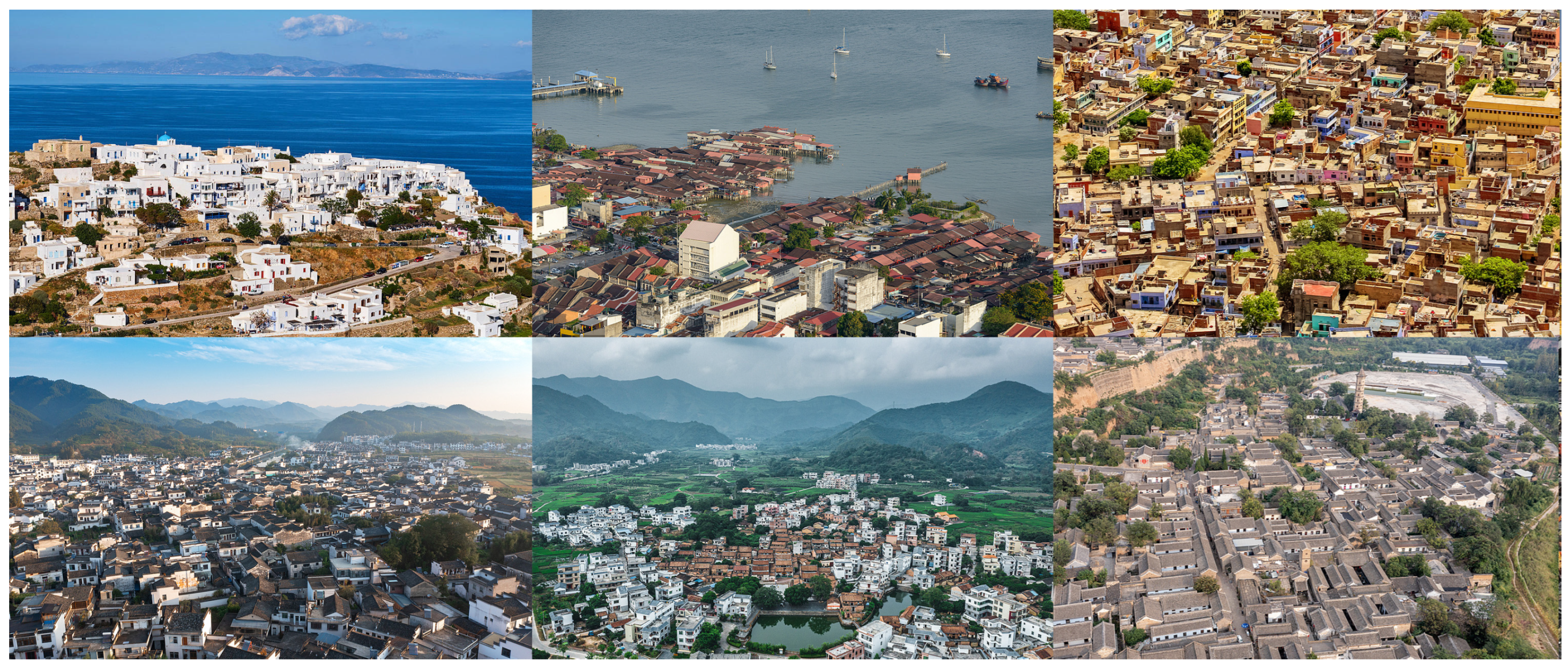
8]. These vernacular forms leverage intelligent configurations of built mass, open spaces, and natural elements to create self-regulating microclimates and optimize environmental performance, particularly thermal comfort adjustment (
Figure 1) [
9,
10,
11].
Despite the extensive research on the environmental performance of traditional settlements, the field lacks a unified framework for describing the underlying logic governing their adaptive forms. In this review, we propose the term “Morphological Intelligence” to describe the capacity of traditional settlements to regulate microclimates through their physical form. Specifically, we define it as a system of empirically optimized morphological strategies—ranging from regional settlement layouts to microscale building details—that passively modulate environmental factors such as solar radiation, wind flow, and heat transfer to maintain thermal comfort. This concept emphasizes that the climate adaptability of vernacular architecture is not accidental but is the result of a cumulative process of trial-and-error adaptation to local climatic constraints [
12,
13,
14,
15].
It is necessary to distinguish this concept from established frameworks to clarify its specific analytical contribution. First, while bioclimatic design typically focuses on the application of technical principles (e.g., shading, ventilation), often at the scale of individual buildings, “Morphological Intelligence” provides a systemic perspective. It examines how these principles are integrated across multiple scales and how the spatial configuration at one scale (e.g., street canyon geometry) influences performance at another (e.g., courtyard ventilation). This highlights the synergistic effects of the entire settlement morphology rather than isolated techniques.
Second, unlike traditional urban morphology, which primarily concerns the classification, historical evolution, and description of urban forms, “Morphological Intelligence” is a performance-based framework. Its primary objective is not to describe the physical characteristics of a settlement per se but to analyze the causal link between these characteristics and their physical environmental performance. By bridging morphological analysis with environmental physics [
16], this framework aims to identify the specific mechanisms that enable traditional settlements to function as effective climate regulators. This approach facilitates the extraction of quantifiable design principles that can be applied to contemporary sustainable urban planning, offering analytical value beyond descriptive morphological studies.
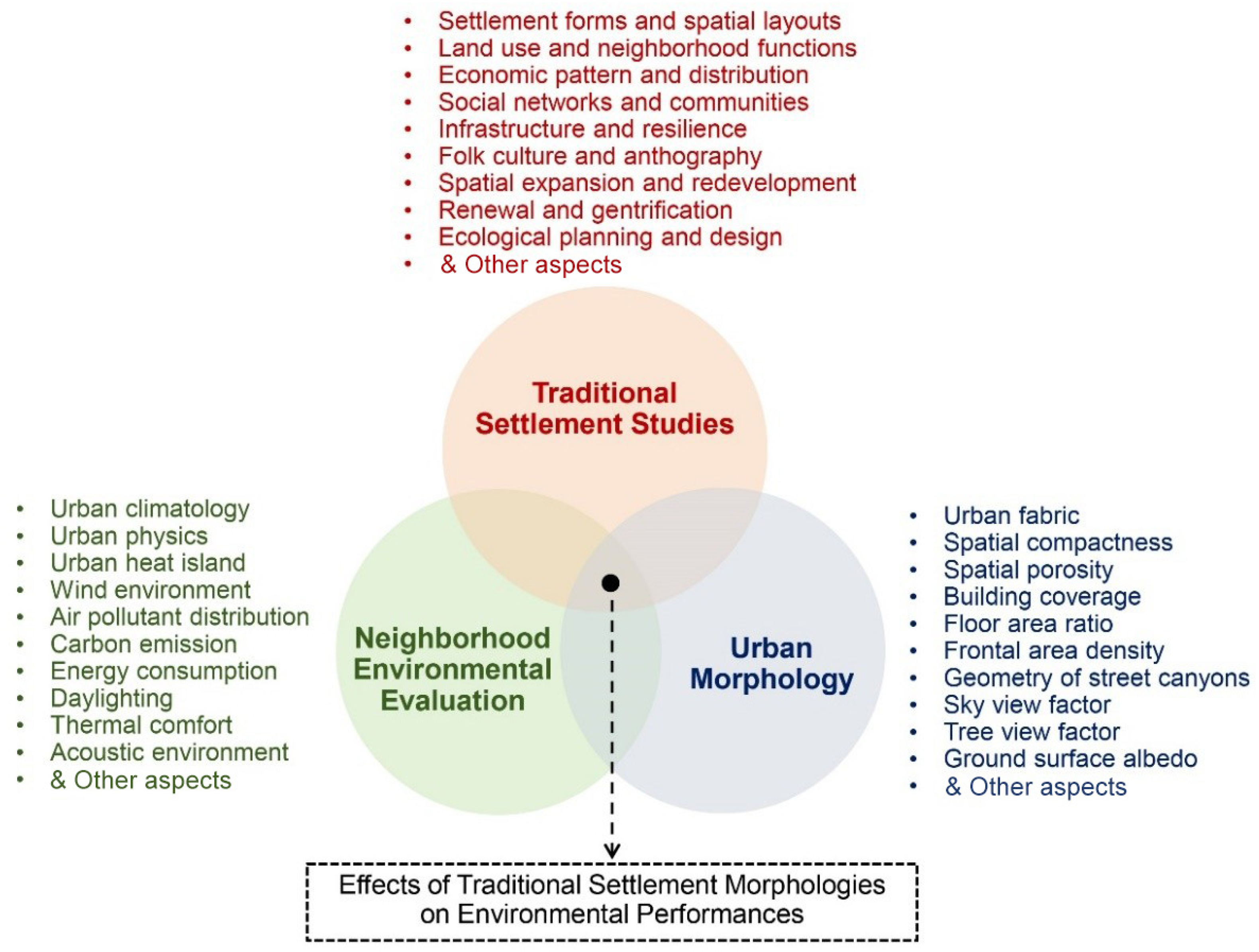
A systematic understanding of the “Morphological Intelligence” in traditional settlements is important. The increasing global recognition of urban–rural integration, as highlighted by initiatives such as the 28th UIA World Congress (UIA2023) and the well-recognized United Nations’ Sustainable Development Goal 11 (SDG11: Sustainable Cities and Communities), further underscores the relevance of studying traditional settlements for effective redevelopment and regenerating climatically resilient and sustainable cities. Scientifically, it offers a framework for decoding the fundamental physical principles and universal mechanisms behind traditional settlements’ climate adaptation, moving beyond mere descriptive analysis to uncover quantifiable insights into form–performance relationships. Practically, it provides a critical reference for contemporary sustainable urban–rural planning and (re)development, enabling the abstraction of scalable, actionable design principles to develop energy-efficient, climate-resilient solutions that minimize reliance on mechanical systems. This approach allows us to critically transcend the dichotomy of traditional styles versus modern technologies (
Figure 2).
Despite the growing recognition of the environmental effectiveness of traditional settlements, a systematic and critical literature review that integrates findings across multiple scales, identifies the underlying Morphological Intelligence, and assesses existing methodologies and analytical gaps is lacking. In particular, thousands of originally rural traditional settlements have been enveloped and integrated into modern urban built-up areas, resulting in greater morphological complexity and environmental performance diversity.
Therefore, a review is needed to synthesize current knowledge, identify core principles, and provide clear directions for future research. This study aims to bridge this gap by systematically reviewing the literature on the effects of traditional settlement “Morphological Intelligence” on environmental performance, with a specific focus on thermal aspects. This review seeks to answer the following research questions:
- (1)
What are the key morphological characteristics and their corresponding quantitative indicators that contribute to the climate-adaptive spatial forms of traditional settlements across different scales, as identified in existing research?
- (2)
What are the prevailing research paradigms, methods, and techniques used by scholars to evaluate the environmental performance of these “Morphological Intelligence”, and what are their limitations?
- (3)
What are the core physical mechanisms and design principles of “Morphological Intelligence” that these morphological characteristics reveal, and how can this knowledge be translated into actionable guidelines for contemporary sustainable design?
To address these questions, this review adopts a multi-scalar analytical framework, systematically organizing findings at the macro- (settlement), meso- (street), and micro scales (building).
2. Methodology
2.1. Retrieval Procedure
This systematic review, as an evidence synthesis methodology, employs predefined criteria for literature screening and critical appraisal. By integrating qualitative and quantitative research approaches, it enables a comprehensive synthesis of research trends, knowledge gaps, and methodological limitations within a defined academic domain as an effective method for compiling previous research and results [
17]. Originally developed in epidemiology and evidence-based medicine, this rigorous approach has been increasingly adopted in built environment performance studies over the past decade [
18].
The literature search and screening processes were systematically documented following the PRISMA (Preferred Reporting Items for Systematic Reviews and Meta-Analyses) framework. PRISMA constitutes a standardized reporting protocol comprising 27 core checklist items that ensure methodological transparency and procedural completeness in systematic reviews and meta-analyses [
19,
20]. The updated PRISMA 2020 guidelines enhance the 2009 version by emphasizing study pre-registration, multi-source literature retrieval, bias risk assessment, and enhanced methodological disclosure—critical improvements that substantially strengthen the reliability and reproducibility of evidence synthesis [
21].
The PRISMA flow diagram constitutes a critical component of the systematic literature review framework, documenting the comprehensive literature selection process, including identification, screening, eligibility assessment, and final inclusion quantification. This study rigorously implemented the PRISMA protocol through sequential phases, including database searching, deduplication, preliminary screening, and full-text evaluation. This systematic approach facilitated the identification of a highly relevant core literature corpus directly aligned with the research objectives for subsequent in-depth scientometric analysis and thematic synthesis.
2.2. Literature Identification
The literature was systematically retrieved from three principal academic databases: Web of Science (Core Collection), Scopus, and China National Knowledge Infrastructure (CNKI) [
22]. The inclusion of CNKI, the largest scholarly database in China, was a strategic choice to overcome the geographical and cultural bias often found in reviews centered on English-language literature, providing a more holistic representation of global research.
The literature search was conducted on 31 December 2024, covering all available records up to that date. A structured search strategy was developed using Boolean operators to combine two keyword categories, as detailed in
Table 1. The asterisk (*) was used to capture lexical variations.
It is important to note that our search strategy was specifically designed to focus on the thermal environment and thermal comfort rather than the broader scope of “microclimate”, which includes wind, humidity, and acoustic environments. This decision was driven by the urgent context of global warming and rapid urbanization, where heat stress has emerged as the most critical environmental risk facing human settlements [
23]. While wind and humidity are integral components of the thermal environment, this review prioritizes studies where thermal performance is the primary outcome variable, ensuring a focused analysis of how traditional morphologies mitigate heat risks.
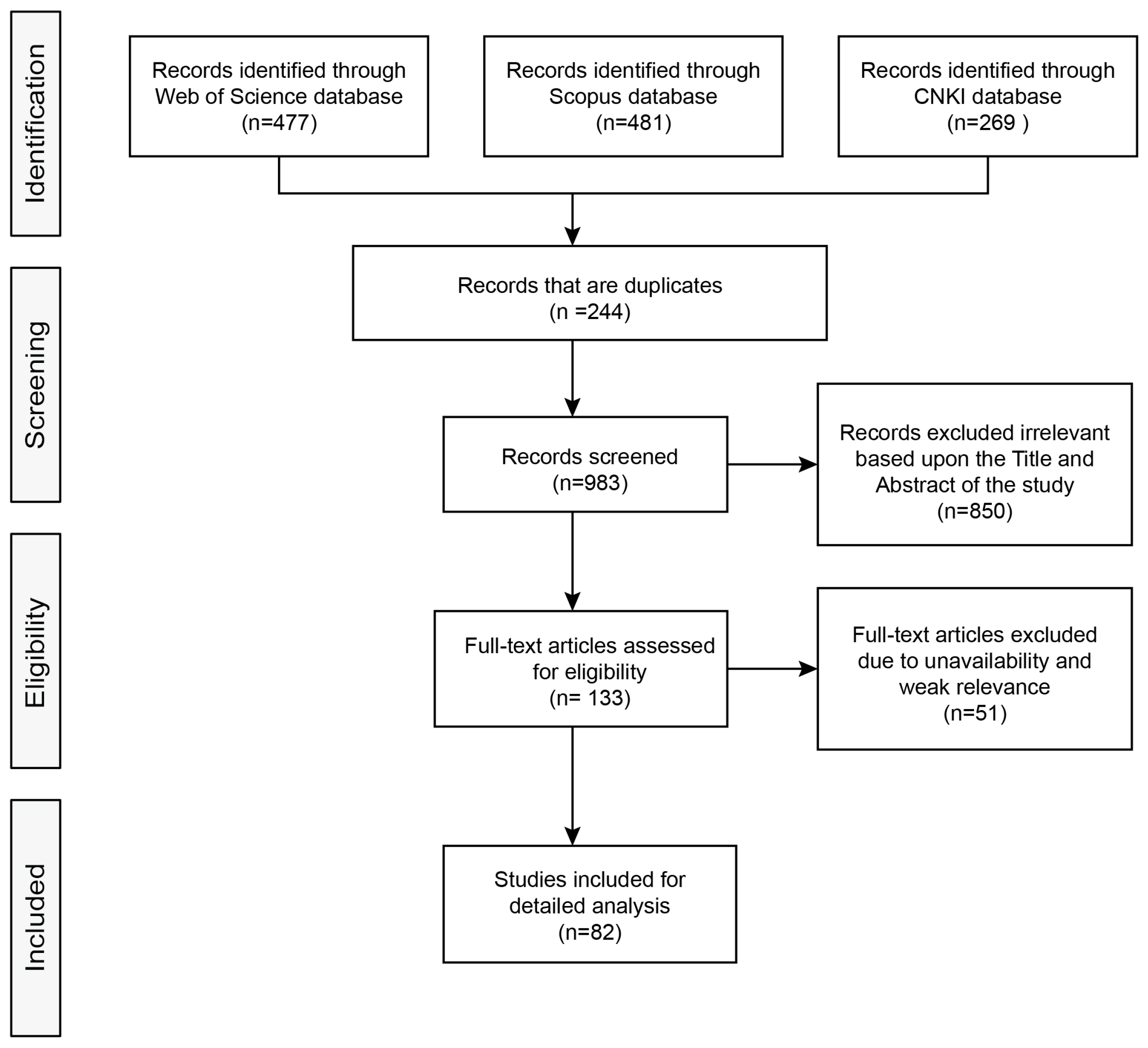
Initially, 1227 records in total were identified across the three databases. The screening process followed the PRISMA protocol and was performed by two authors (X.L. and W.P.) independently. First, 244 duplicate records were removed. The remaining 983 articles then underwent title and abstract screening against three pre-defined eligibility criteria: (1) the primary research subject must be traditional settlement morphology; (2) the central investigation focus must be on outdoor thermal environmental performance; and (3) there must be an explicit discussion of morphology–environment efficacy correlations. Any disagreements during the screening were resolved through discussion with a third author (J.C.). This phase resulted in 133 potentially relevant articles.
To ensure the reliability and consistency of the screening process, a pilot test was conducted prior to formal screening. Two authors (X.L. and W.P.) independently screened a random sample of 50 records using the defined eligibility criteria. Any disagreements or ambiguities regarding the inclusion/exclusion criteria were discussed and resolved to align the reviewers’ understanding. Following this calibration, the full screening was performed independently. Any subsequent discrepancies were resolved through discussion or by consulting a third author (J.C.) to reach a consensus.
Subsequently, the same two authors independently conducted a full-text assessment of these 133 articles using the same eligibility criteria. Articles were excluded if the full text was inaccessible (38 records) or if the content did not sufficiently align with the research focus upon detailed reading (13 records). This rigorous process finalized a core collection of 82 studies for in-depth analysis. The entire screening and selection process is documented in the PRISMA flow diagram (
Figure 3).
2.3. Analytical Framework
To analyze the retrieved literature, this study employed two main analytical strategies. First, descriptive statistical analysis was used to examine the bibliometric characteristics of the selected articles. This included analyzing the temporal evolution of publications; their geospatial distribution across different countries and climatic zones; and the frequency of different research objects, scales, and methods. This quantitative approach helps identify the main patterns and trends within the research field.
Second, a thematic synthesis, a form of qualitative content analysis, was conducted to extract, code, and synthesize information related to the research questions. This involved a systematic reading of the full-text articles to identify key themes concerning climate-adaptive morphological characteristics, the analytical methods and indicators used to assess them, and the underlying physical mechanisms of “Morphological Intelligence”. The extracted information was then organized and synthesized to build a coherent and comprehensive understanding of the current state of knowledge, identify research gaps, and formulate directions for future investigations.
2.4. Data Extraction and Quality Appraisal
Following the final selection of studies, a data extraction form was developed to systematically collect relevant information from each of the 82 articles. Two authors (X.L. and W.P.) independently extracted data related to bibliometric details (author, year, and location), methodological approach (e.g., simulation, field measurement), scale of analysis (macro-, meso-, and microscale), key morphological factors studied, and the environmental performance indices measured. Any discrepancies in the extracted data were resolved by consensus. Detailed information extracted from each study is provided in the
Supplementary Materials.
To assess the methodological quality of the included studies, we employed the Mixed Methods Appraisal Tool (MMAT), version 2018 [
24]. The MMAT was selected because it is specifically designed to appraise systematic reviews that include qualitative, quantitative, and mixed-methods studies, which aligns with the diverse literature in this field (ranging from simulation-based quantitative studies to qualitative morphological analyses).
We adapted the MMAT criteria to focus on three core dimensions relevant to our research questions: (1) Clarity of Objectives: Are the research aims clearly stated? (2) Methodological Rigor: Is the data collection and analysis appropriate? (3) Validity of Findings: Are the findings clearly supported by the data? Two authors independently rated each study as “High”, “Medium”, or “Low” quality. Discrepancies were resolved through consensus. The articles rated as “Low” quality were removed. The detailed quality rating for each study is provided in the
Supplementary Materials.
3. Results
3.1. Overview of Existing Studies
3.1.1. Temporal and Geospatial Distribution
The final analytical corpus comprised 82 peer-reviewed academic publications with available full-texts, including 78 English-language articles and 4 Chinese-language papers. Structured descriptive analytics were applied to extract multidimensional insights from the bibliometric dataset, encompassing the following:
- (1)
Temporal evolution analysis to identify publication trends and developmental trajectories;
- (2)
Geospatial distribution mapping across national/regional contexts and climatic zone classifications;
- (3)
Methodological taxonomy assessment documenting data collection strategies and analytical frameworks employed across the literature.
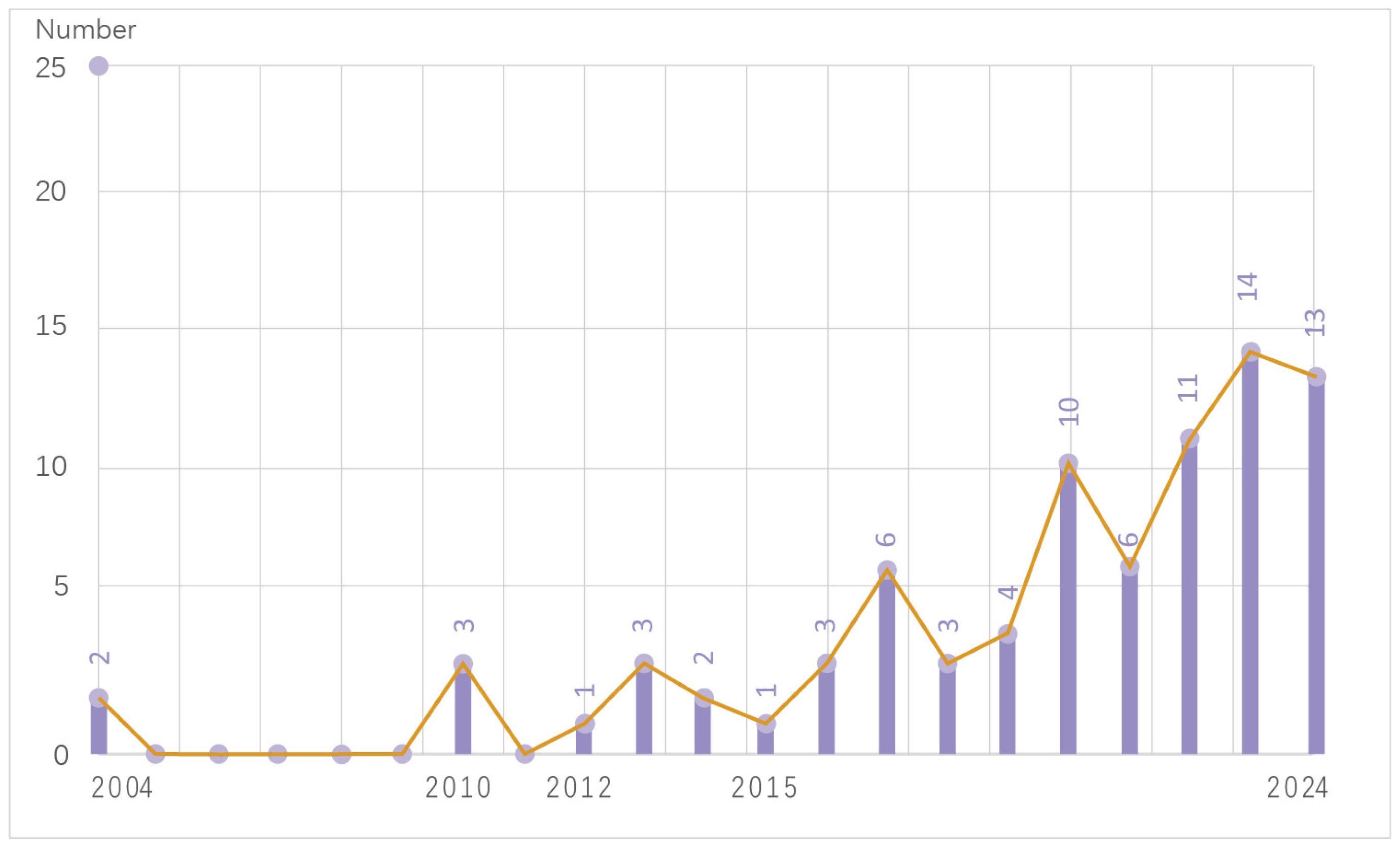
This systematic descriptive approach facilitated a comprehensive understanding of research patterns, geographical concentrations, and methodological preferences within the field. The results indicate that studies related to traditional settlements or informal settlements were published in 2004; however, they did not gradually receive more attention until after 2010. The peak of publication occurred between 2023 and 2024 (
Figure 4), reflecting the sustained interest of researchers in the sustainable development of the built environment in recent years. It is evident that there are discernible disparities in the geographical distribution of research regions (
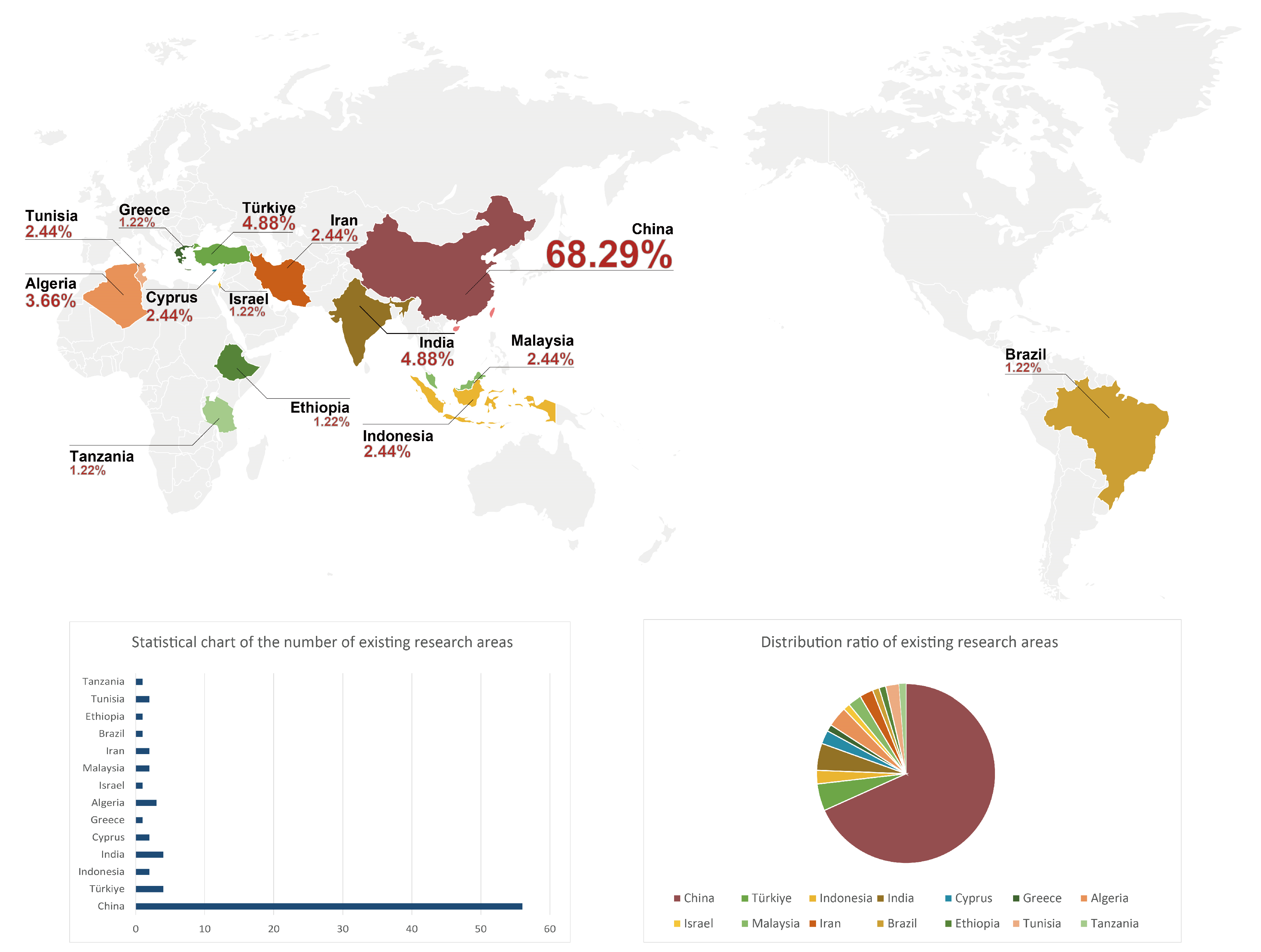
Figure 5). A paucity of studies exists in the southern hemisphere, with the exception of those conducted in Indonesia (n = 2), Tanzania (n = 1), and Brazil (n = 1). These countries are located in the southern hemisphere, while the remainder of the studies are situated in the northern hemisphere. The majority of these studies were conducted in Asia (n = 71), followed by Africa (n = 7), and smaller numbers in Europe (n = 3) and South America (n = 1). Notably, there were no relevant studies found in North America and Oceania. Among the 81 English-language articles, the study regions involved a total of 16 countries and regions, in which there were significantly more relevant studies in mainland China than in other countries and regions, accounting for about 68.3% (n = 56), followed by India (n = 4), Turkey (n = 4), and Algeria (n = 3).
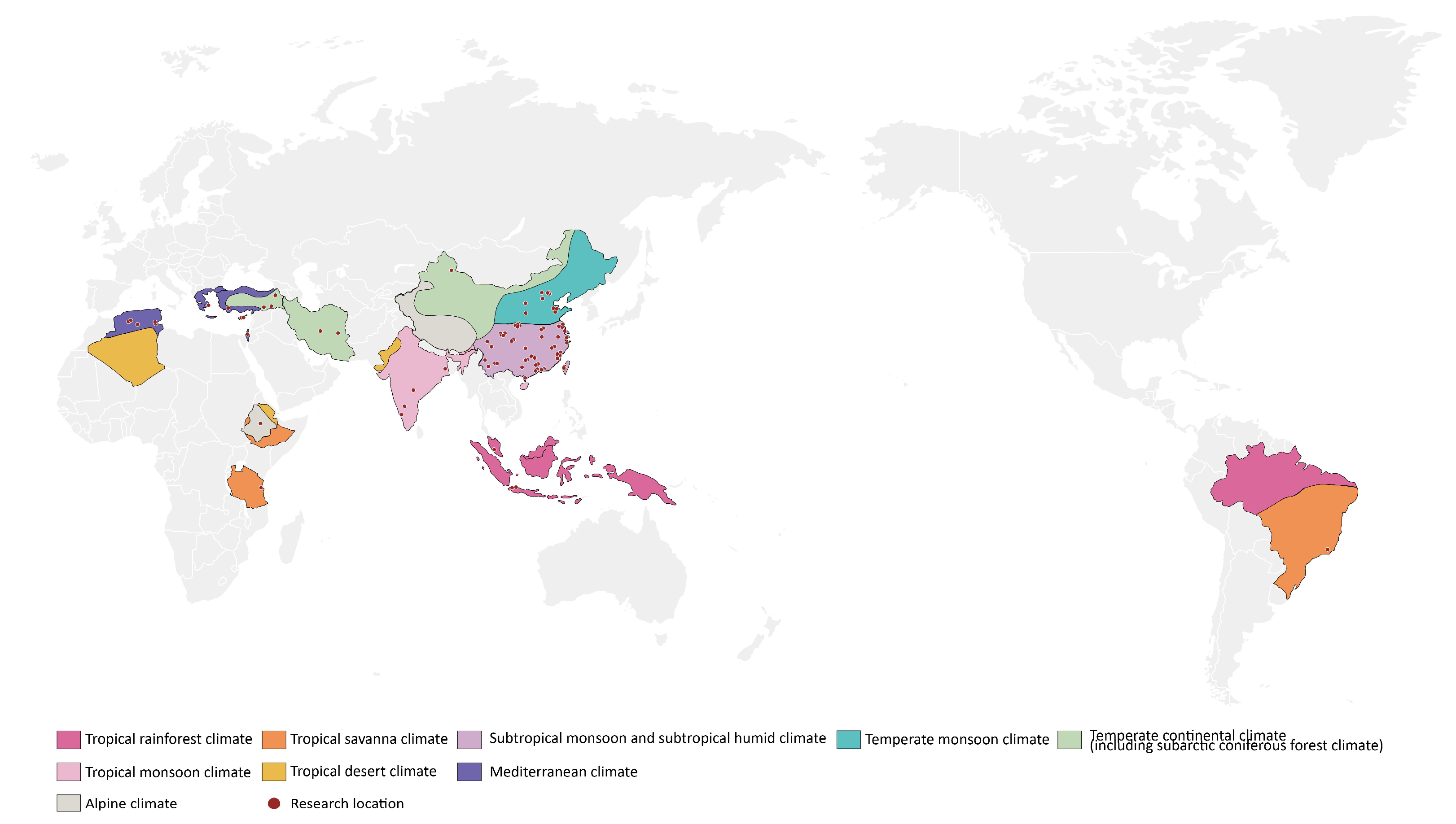
Secondly, the thermal environment is closely related to climate, and the study area is characterized by significant differences in climate zoning. The distribution of climatic zones within the designated study area is predominantly concentrated in coastal regions, encompassing tropical and subtropical climates (
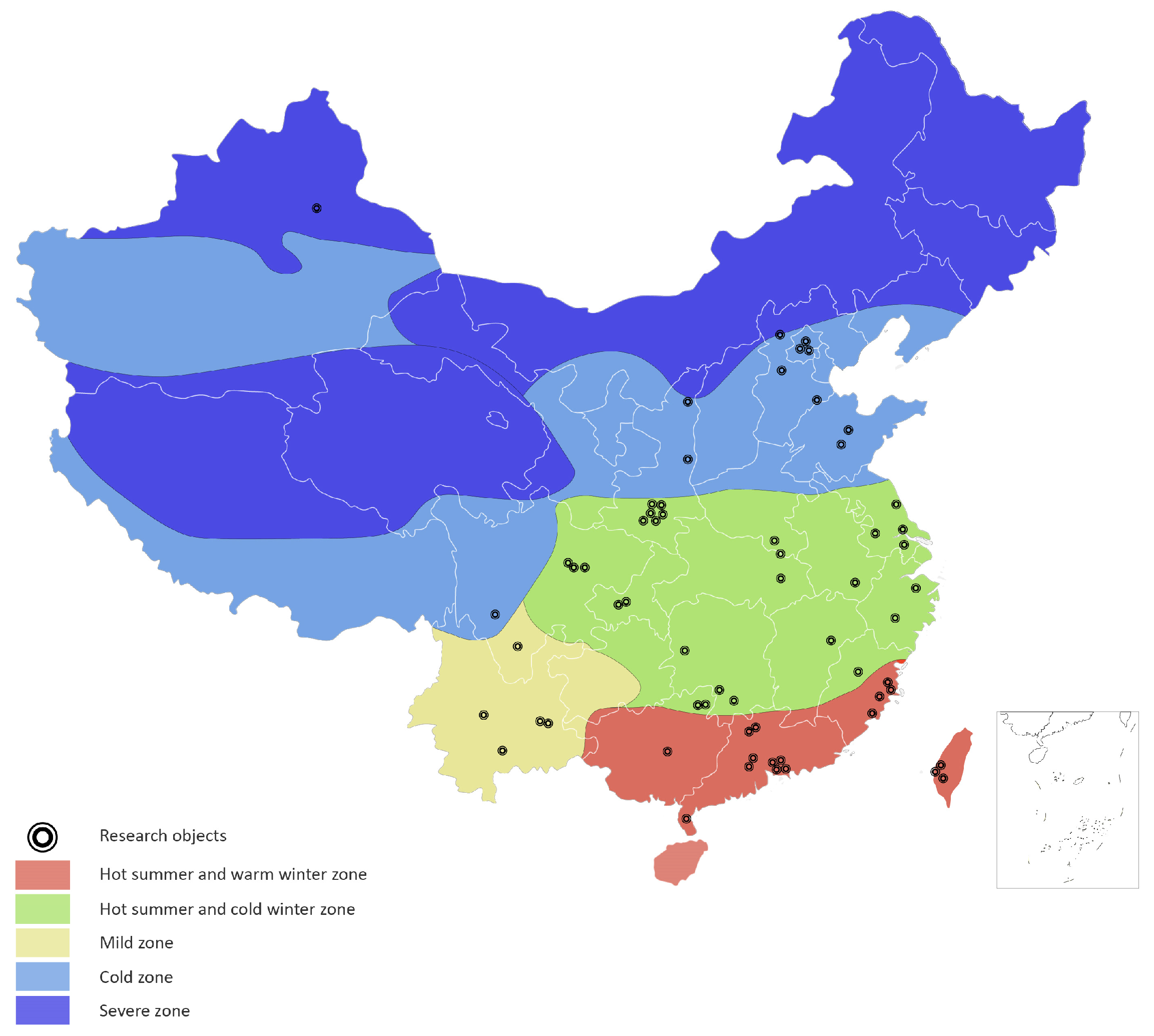
Figure 6). Notably, subtropical monsoon regions, along with monsoon humid climates (n = 47), constitute the predominant zones. Subsequent to the initial categories, the following were identified: Mediterranean climatic zones (n = 10), temperate monsoon zones (n = 9), temperate continental climatic zones (n = 6). In the context of China’s thermodynamic zoning, the distribution of these regions is primarily concentrated in areas characterized by hot summers and cold winters (n = 28) and hot summers and warm winters (n = 16). Research has identified a particular emphasis on the transitional climate zone in the Yangtze River Basin and the subtropical monsoon climate zone in the southeastern coastal region of China (
Figure 7).
The analysis demonstrates that spatial morphological selection and development exhibit strong climatic determinants. Research on outdoor spatial configurations is notably concentrated in thermally stressed regions, with settlement morphological elements varying significantly across different climatic conditions. Consequently, there exists a compelling rationale for investigating microclimate formation in outdoor spaces of settlement through systematic climate zone characterization and associated bioclimatic principles. Of particular significance is the predominance of research examining the functional relationship between outdoor thermal environments and settlement morphology in tropical regions (
Figure 6 and
Figure 7).
3.1.2. Investigation Perspectives and Objects
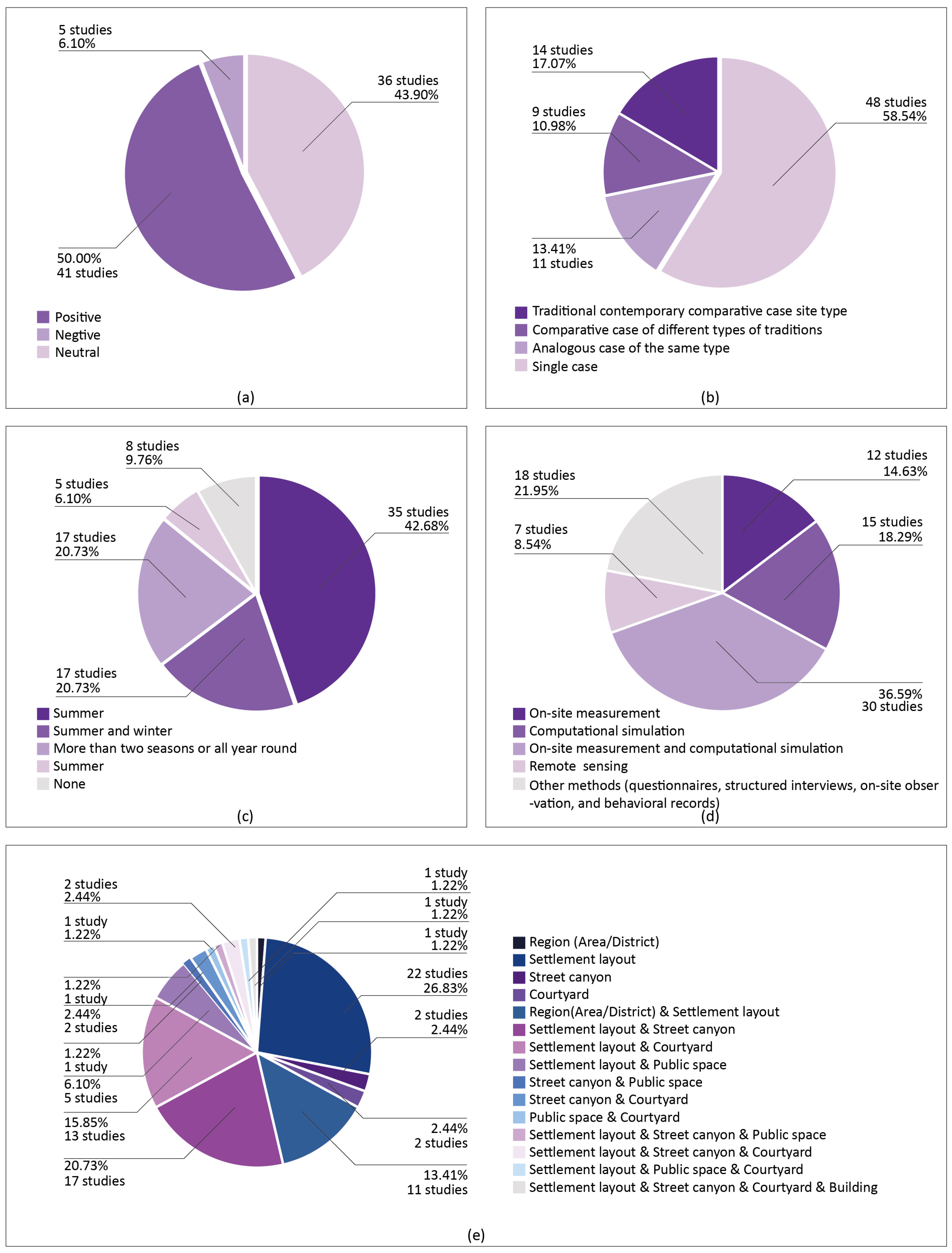
The reviewed literature on the environmental performance of traditional settlements shows two main conceptual perspectives regarding climate adaptation (
Figure 8a). The most common viewpoint treats traditional settlements as valuable examples of climate-adaptive ecological principles. Studies from this perspective often analyze specific morphologies and their performance through monitoring and simulation. Their goal is to identify principles that can inform contemporary sustainable design practices. A smaller group of studies, in contrast, investigates the vulnerability of traditional settlements, especially those undergoing significant physical or functional transformation [
25,
26,
27]. This research shows how factors such as altered spatial usage and integration into urban areas can reduce their inherent adaptive capacities and result in increased thermal risk. Some studies within this context also examine residents’ own adaptive strategies in response to these thermal challenges [
28].
The analysis of research objects reveals that the literature is mainly composed of case-based investigations and comparative studies that focus on traditional settlements (
Figure 8b). Approximately half of the reviewed articles are single-case studies. These studies analyze the relationship between morphology and microclimate within one individual traditional settlement. While they offer in-depth analysis of specific examples, their findings are limited in typological representativeness. The other half of the literature uses comparative methods to address the limitations of single-case studies [
29,
30,
31,
32,
33,
34,
35,
36]. These comparative studies can be categorized based on their approach. A large number of these studies compare multiple traditional settlements within similar typological or geographical contexts to synthesize climate-adaptive morphological patterns. Another significant category of comparative studies contrasts traditional settlements with different built and natural environments. These include comparisons between traditional settlements in different geographical contexts [
37,
38,
39,
40,
41,
42,
43] or comparisons between traditional settlements and contemporary urban environments [
25,
27,
44,
45,
46,
47,
48,
49,
50,
51,
52].
3.1.3. Focused Seasons and Scales
Analyses of the reviewed literature show a strong connection between the selected research periods and the climatic characteristics of the study areas (
Figure 8c). A significant majority of studies concentrated on the hot season, particularly in tropical and subtropical regions, to evaluate the cooling effectiveness of morphological strategies during periods of high thermal stress. In contrast, studies in temperate zones or those aiming for a more complete understanding of year-round performance often included multiple seasons, such as summer and winter, or covered the entire year [
32,
53,
54]. Beyond seasonal analyses, some research selected specific days or periods defined by distinct meteorological conditions, such as particular wind environments [
55], or by the availability of reliable meteorological or remote sensing data [
56].
The analysis also indicates that studies focus on traditional settlement morphology and its environmental performance across four main spatial scales: regional, settlement, street and outdoor public space, and building (
Figure 8d). The settlement scale, which examines the aggregate spatial configuration of a settlement, is the most frequent focus, appearing in approximately two-thirds of the reviewed literature. The regional scale, which analyzes larger areas or settlement clusters, is less frequently investigated [
25,
29,
31,
48]. The street [
28,
49,
57] and outdoor public space scale [
26,
40,
58] targets local areas to study morphological features that influence local microclimates. The building scale investigates morphological features related to individual buildings and their immediate surroundings, including elements such as courtyards, to analyze their contribution to the outdoor microclimate [
59,
60,
61,
62,
63]. While most studies concentrate on a single spatial scale, a portion of the literature undertakes multi-scale analyses by combining two or more levels [
64], indicating a recognition of the multi-scalar adaptive nature of traditional settlements.
3.2. Investigation Methodologies
3.2.1. Methods and Techniques
The technical approaches used in the reviewed literature primarily involve environmental data collection and analyses integrated with morphological analysis (
Figure 8e). The key methods for collecting and analyzing environmental climate data are remote sensing, on-site measurement, and computational simulation.
Remote sensing is used to obtain large-scale land surface temperature data, which often reflects heat island effects at the urban or settlement level [
25,
27,
47,
56]. This method is frequently applied in macroscale and mesoscale analyses. On-site measurement involves the direct collection of detailed local environmental parameters, such as air temperature, wind velocity, relative humidity, and mean radiant temperature, at the pedestrian or building level [
65,
66,
67,
68,
69,
70]. It is commonly used for microscale studies and is often combined with simulations for validation [
71,
72,
73,
74,
75,
76,
77]. Both fixed-point and mobile monitoring modes are used [
52,
78,
79,
80,
81,
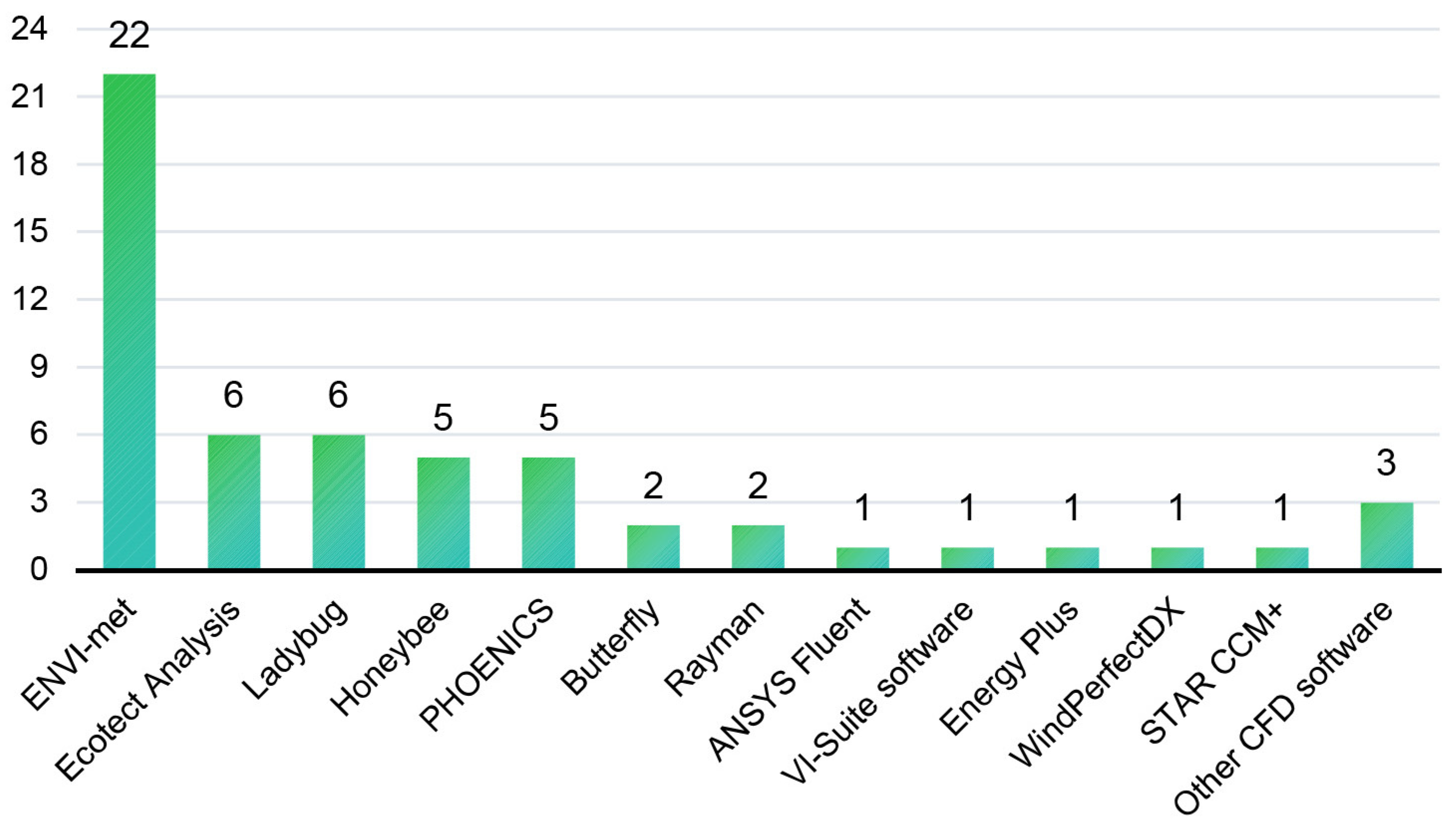
82]. Computational simulations include numerical modeling with platforms such as ENVI-met, ANSYS Fluent, PHOENICS, Rayman, Ecotect Analysis, Energy Plus, or Grasshopper-based plugins (
Figure 9). Simulations are used to explore environmental conditions under different scenarios or to assess long-term performance, sometimes validated using on-site measurements [
83,
84,
85,
86].
In addition to these quantitative methods, a few studies focus on or incorporate qualitative or subjective methods [
28,
65,
87,
88]. These include questionnaires, interviews, on-site observation, and behavioral records to understand residents’ thermal sensation, comfort perception, and adaptive behaviors [
32,
39,
43,
89,
90]. It is also important to note that many studies use a combination of these methods, such as combining on-site measurement with simulation, to gain a more complete understanding.
3.2.2. Key Morphological Factors
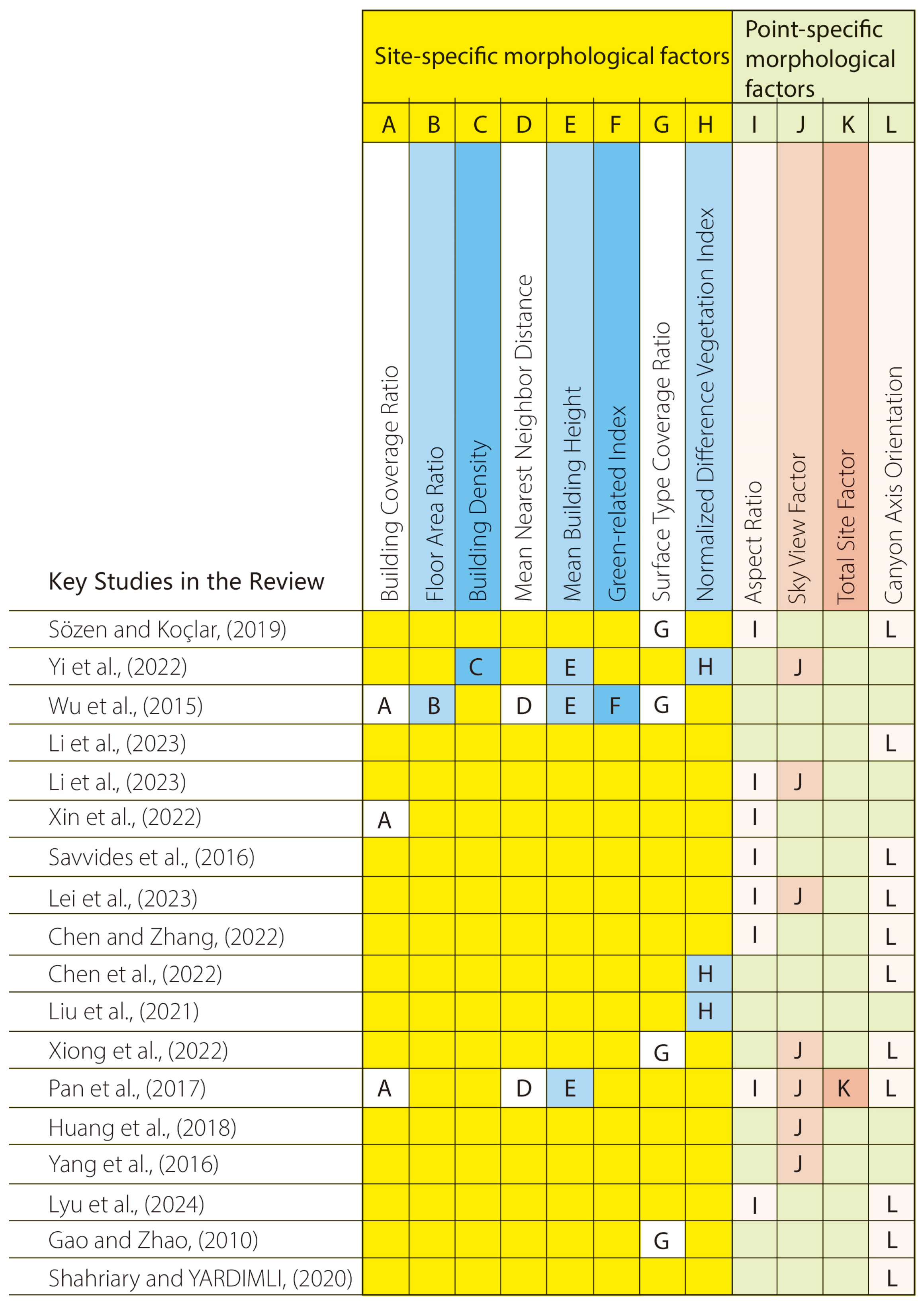
The literature shows different approaches to quantifying and analyzing the “Morphological Intelligence” of traditional settlements. While many studies provide qualitative descriptions, categorizing settlements with terms such as high-density or organic/irregular, detailed quantitative analysis is less common. The studies that do undertake quantitative analysis use a range of specific morphological factors, as shown in
Figure 10. These factors can be generally organized into two categories.
The first category includes site-specific factors, which describe the overall characteristics of a settlement area. These factors measure overall density and coverage (e.g., Building Coverage Ratio, Floor Area Ratio), spatial arrangement (e.g., Mean Nearest Neighbor Distance), vegetation presence (e.g., Green Coverage Ratio, Normalized Difference Vegetation Index), and building height (e.g., Mean Building Height).
The second category consists of point-specific factors. These factors describe spatial characteristics from a particular viewpoint within the settlement. They often relate to sky or sun access and geometry (e.g., Sky View Factor, Aspect Ratio, Tree View Factor), ground surface properties (e.g., Ground Surface Albedo), and orientation (e.g., Canyon Axis Orientation). While these factors are used individually, an analysis that incorporates a wide range of these morphological factors at the same time is not common in the reviewed literature.
3.2.3. Examined Environmental Indices
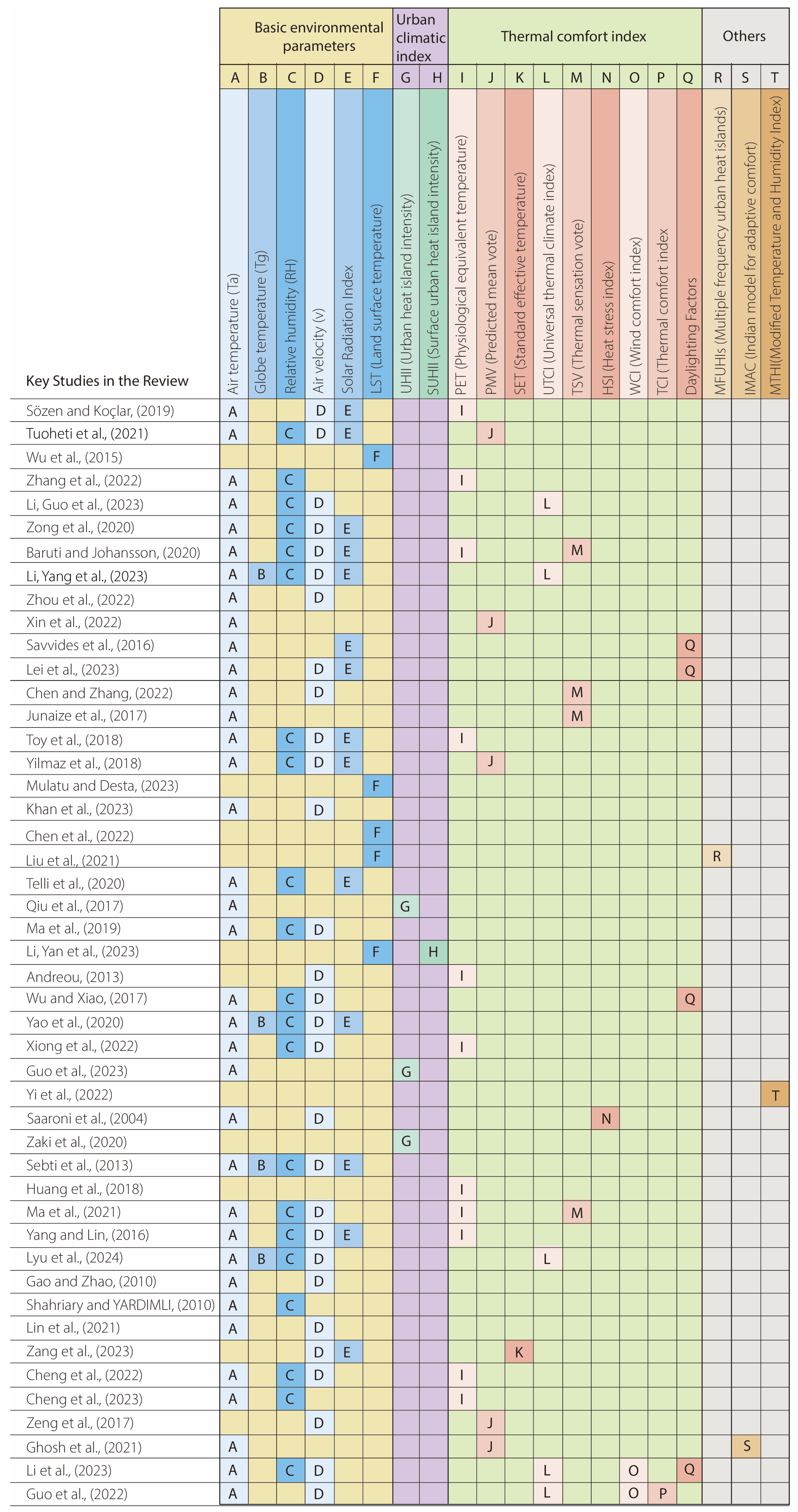
Studies that assess the environmental performance of traditional settlements use different indices, many of which are drawn from indicators used for modern urban environments (
Figure 11). The main focus of these studies is on thermal performance.
The key types of indices examined can be grouped into several categories. The first category includes Basic Wind and Thermal Parameters, which are direct measurements or simulations of variables such as air temperature (Ta), wind speed (v), relative humidity (RH), and mean radiant temperature (MRT). The land surface temperature (LST) is also frequently used and is often derived from remote sensing data. The second category consists of Urban Microclimate Indicators, which are metrics that assess heat island effects, such as Urban Heat Island Intensity (UHII) and Surface Urban Heat Island Intensity (SUHII).
The third category is Thermal Comfort Performance Indicators. These indices are used to evaluate human thermal sensation and comfort in outdoor spaces. They include the widely adopted Physiological Equivalent Temperature (PET), Predicted Mean Vote (PMV), Standard Effective Temperature (SET), Universal Thermal Comfort Index (UTCI), and some regional adaptive models such as the Indian Model for Adaptive Comfort (IMAC) [
91]. A smaller, fourth category includes Daylighting and Other Environmental Indicators, which considers metrics related to the light environment or other aspects such as energy consumption. While most studies rely on basic parameters or one or two key indices, a limited number of studies use multiple environmental indices or assess performance across several environmental aspects.
3.3. Synthesis of Climate-Adaptive Morphological Characteristics
The reviewed literature demonstrates that the unique spatial morphologies of traditional settlements significantly influence their environmental performance across various scales, from the overall settlement layout down to individual building elements. While some studies provide qualitative descriptions, a growing body of research utilizes quantitative methods to evaluate these relationships, focusing on factors such as surface temperature effects [
92], spatial form impacts [
69], and microclimate conditions [
64,
93].
However, the specific morphological factors and evaluated parameters vary across studies. There are studies that evaluate and compare the thermal environment characteristics based on the morphological characteristics of the settlement’s building clusters [
47] and analyze the relationship between the land surface temperature and landscape indicators [
50] and analyze the relationship between the land surface temperature and the thermal environment characteristics. Landscape indicators [
13] quantify the effects of green space on the urban heat island (UHI) [
52] and explore the impacts/effects of tree planting, building greening, albedo adjustment, and expanded tree coverage on outdoor thermal comfort conditions in traditional villages.
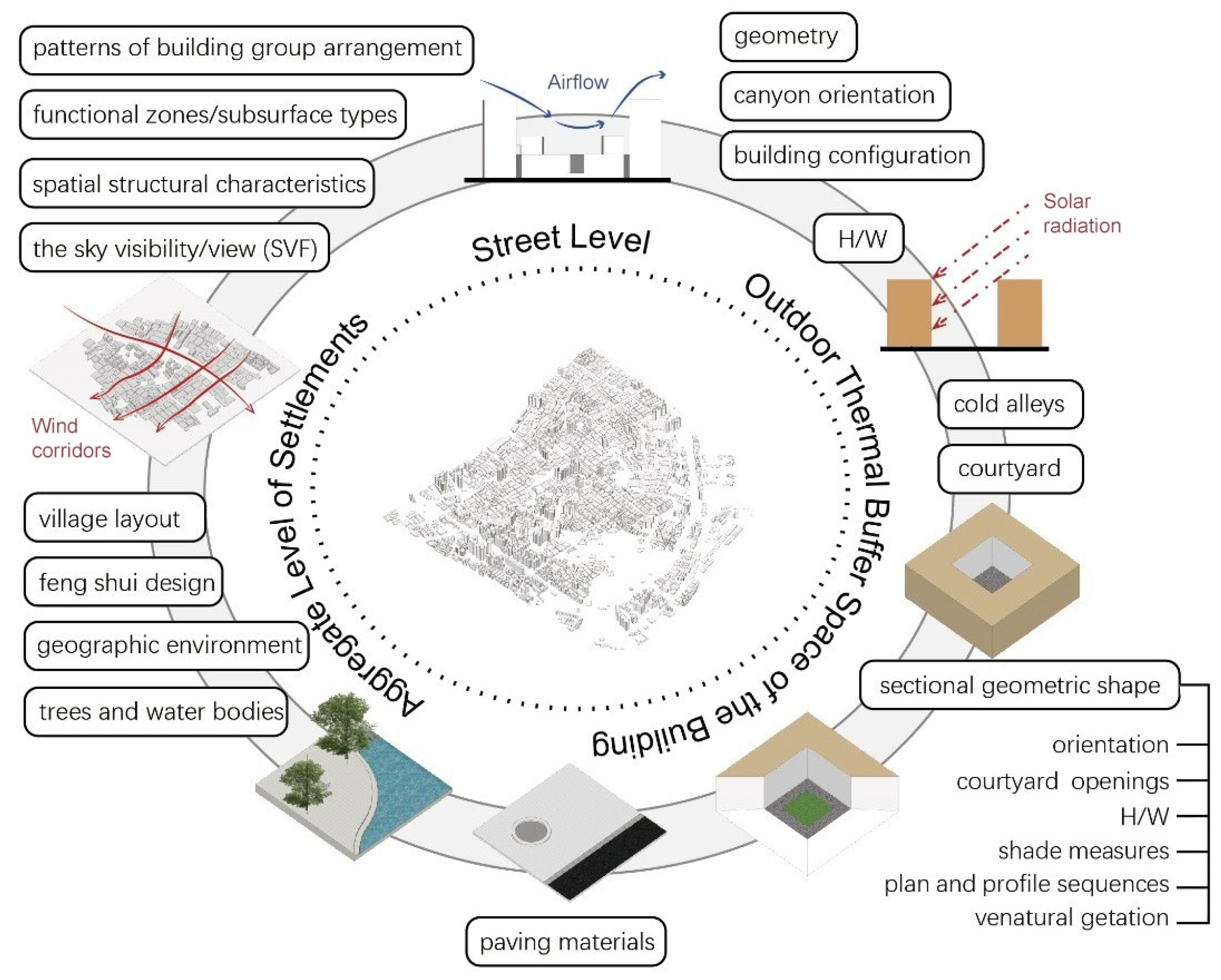
The selection of research parameters is characterized by the absence of uniform, standardized criteria, frequently relying on the purposeful screening of specific research scenarios and resulting in diverse and sometimes less generalizable conclusions, and a systematic exploration of underlying mechanisms remains limited. Nevertheless, by integrating findings from these disparate studies, key patterns emerge regarding the impact of specific morphological features on environmental performance at different scales (
Figure 12).
3.3.1. Macroscale: Settlement Layout and Integration with Nature
At the regional and settlement system level, the overall layout, density, and integration with the natural landscape are important for modulating the climate response. Studies at this scale assess thermal and wind environments. Research has investigated the relationship between traditional settlements and their geographical environment and regional land-use types [
37]. While modern urban areas often show significant urban heat island (UHI) effects linked to high density and impervious surfaces [
27,
52], traditional settlements frequently use strategic spatial distribution and land-use patterns to reduce these effects. For instance, integrating natural elements such as vegetation and water bodies within or around the settlement at a macrolevel creates cooler zones and improves the overall microclimate [
29,
31]. Research also shows the ecological benefits from traditional layouts that are informed by principles such as Feng Shui, demonstrating energy-saving potentials [
35]. Comparative studies of different settlement types, including traditional ones within urban areas, reveal distinct thermal characteristics influenced by macrolevel morphology, such as overall density and land surface cover [
27,
49]. The arrangement of building clusters within the overall settlement plan also influences ventilation patterns and energy efficiency at this scale [
94,
95]. These findings suggest that the macroscale organization of traditional settlements is not arbitrary but incorporates strategies for large-scale environmental adaptation.
3.3.2. Mesoscale: Street Canyon
The street canyon is a critical element influencing microclimate at the mesoscale. The geometry of a street, defined by its orientation, width, aspect ratio (H/W), and sky view factor (SVF), significantly affects solar access, shading, and wind flow, which are key determinants of outdoor thermal comfort [
36,
57,
93].
Street canyon orientation is frequently identified as important for balancing solar shading and wind ventilation. Studies from different regions show that orienting streets with prevailing summer winds can facilitate natural ventilation and reduce heat stress. Conversely, specific orientations can block unfavorable winds, such as cold winter winds in northern regions [
64] or strong seasonal typhoons [
38]. Orientation also determines solar exposure. Aligning streets to minimize direct solar radiation during hot periods while maximizing it in cooler periods is a common strategy [
37,
64,
93,
96].
Street canyon geometry, particularly narrow streets with high H/W and low SVF, is consistently reported to provide better shading and reduce solar radiation. This dense configuration is a primary method for controlling thermal load. High H/W can also interact with wind, sometimes creating a “canyon effect” that may increase wind speed within the street and enhance ventilation [
43,
94,
95]. The optimal H/W varies with climate; for example, values between 3.0 and 4.0 are found to be effective in certain hot–arid climates [
58,
95]. Studies that examine SVF distribution show that areas with high SVF, such as open squares, experience more sun exposure and higher temperatures, while areas with low SVF, such as dense streets, remain cooler [
10,
16,
97].
The Overall Street Network and Intersections also contribute to the microclimate. The organic and irregular street network patterns in many traditional settlements, with varied orientations and widths, create complex microclimates [
57,
78,
81,
98]. Intersections, such as T-shaped or cross-shaped ones, can influence local air flow patterns and promote ventilation [
28,
93]. These findings indicate that mesoscale street morphology is a highly refined element in traditional settlements, shaped to manage solar and wind conditions for thermal comfort.
3.3.3. Microscale: Courtyards and Public Spaces
At the most granular level, the morphology of individual buildings and integrated spaces significantly affects the microenvironment. Key microscale elements studied in the literature include courtyards, cold lanes or alleys, vegetation, and water features.
Courtyards are common in traditional housing across many climates and function as outdoor living spaces and thermal regulators. Their morphology, including orientation, shape, H/W or spatial openness [
30,
61,
94,
98,
99,
100], and surface & building façade materials [
101], influences shading, thermal mass effects, and ventilation. Courtyards (and the patio spaces) can induce a stack effect that draws cooler air from lower levels [
13,
79], and they provide effective shading from surrounding walls. The integration of paving materials [
59] and vegetation or water [
59,
60,
98] can also lower air temperature and increase humidity through evaporation and transpiration [
64,
98,
102].
Cold lanes or alleys, which are narrow alleys between buildings found in some traditional Chinese contexts, act as thermal buffer zones and ventilation channels [
61,
62,
81]. They use pressure differences and wind channeling to facilitate air movement and remove hot air, which contributes to passive cooling [
61,
62].
Vegetation and water features that are integrated within public spaces, courtyards, or along streets are also significant microclimate modifiers. Vegetation provides shading, reducing surface and air temperatures, and contributes to evaporative cooling through transpiration [
64,
95,
103,
104,
105]. Water bodies can cool the surrounding environment through evaporation [
64,
104]. The placement of vegetation and water features in traditional settlements often creates localized cool spots that enhance thermal comfort [
26,
95,
102].
3.3.4. Interaction and Synergy Across Scales
Critically, the environmental performance of traditional settlements is a result of the synergistic interaction between morphological features at different scales, rather than the isolated effect of individual elements [
106]. A systematic summary of these morphological strategies, their underlying physical mechanisms, and their reported environmental effects across macro-, meso-, and microscales is presented in
Table 2. While many studies focus on a single scale, a holistic view shows how a macroscale layout influences mesoscale street patterns, which in turn affect microscale building forms. For example, a compact settlement layout (macroscale) allows for dense, shaded street networks (mesoscale), which then connect to courtyards (microscale) that can act as ventilation chimneys. Together, these elements enhance passive cooling. Similarly, the strategic integration of water bodies and vegetation at the settlement edge can provide cooler air that is channeled through the street network into buildings and courtyards. Some studies touch upon this interaction, such as by discussing how cold lanes connect to courtyards or by comparing different building configurations [
25,
94]. However, a systematic analysis of these multi-scalar interactions and their combined impact is an area that needs more research.
4. Discussion
Building upon the systematic analysis of the literature, this study synthesizes the key findings regarding the relationship between the morphological characteristics of traditional settlements and their environmental performance, particularly focusing on thermal aspects. By integrating insights across different spatial scales and examining the underlying principles, we aim to reveal the inherent “Morphological Intelligence” embedded within these traditional forms and discuss its implications for contemporary sustainable design.
4.1. Decoding “Morphological Intelligence”: Core Principles and Mechanisms
By synthesizing the findings from
Section 3 through the lens of “Morphological Intelligence,” it is possible to identify the core principles and mechanisms that support the climate adaptability of traditional settlement forms. The reviewed literature, despite its different focuses, points toward recurring strategies that show a deep, implicit understanding of environmental physics and human thermal comfort. These include several key principles.
One fundamental principle is strategic shading and solar control [
10,
108,
109]. Supported by high-quality empirical studies using rigorous field measurements, it is evident that, in macroscale orientation, mesoscale narrow streets and high H/W ratios and microscale elements, such as courtyards and roof overhangs, significantly influence thermal comfort [
37,
40]. These features provide consistent shade during hot periods [
57,
93,
103]. This involves optimizing shade patterns for specific times of day and seasons [
93,
96], showing an intelligent use of geometry.
Another principle is facilitating natural ventilation [
109,
110,
111]. Traditional forms are often designed to use natural air movement. This includes aligning street networks with prevailing winds, creating “wind paths” or “canyon effects” in narrow streets [
94,
95], and using thermal pressure differences to induce airflow, such as the courtyard chimney effect or the cold lane stack effect [
61,
62,
79,
94]. These mechanisms show an understanding of fluid dynamics applied through form.
Utilizing thermal mass is also a key strategy. Traditional architecture often uses heavy materials in compact forms, such as high thermal mass walls in hot climates [
94]. These materials store heat during the day and release it slowly at night, which smooths temperature fluctuations and improves thermal comfort. The combination of high thermal mass with effective shading and ventilation is an intelligent strategy for climate adaptation.
Additionally, the principles of integrating natural elements and creating thermal buffer zones are frequently observed. The conscious incorporation of vegetation and water bodies is a recurring strategy where these elements function to provide evaporative cooling and shade and influence local airflow. Spaces such as courtyards and cold lanes act as transitional zones that moderate the climate between the exterior and the interior, providing more comfortable semi-outdoor environments. These interconnected principles, manifested through specific morphological characteristics at different scales, represent the “Morphological Intelligence” of traditional settlements. They reflect generations of empirical learning and optimization based on direct interaction with the environment.
4.2. Gaps and Limitations in the Current Body of the Literature
Despite the valuable insights gained from the reviewed literature, a systematic analysis reveals several critical limitations and research gaps. These gaps hinder a complete understanding of “Morphological Intelligence” and limit the effective translation of this knowledge into contemporary design practice.
First, there is a lack of multi-scalar integrated analysis. Traditional settlements function as complex systems where morphology at regional, settlement, street, and building scales interacts synergistically. However, the majority of existing research tends to focus on a single spatial scale in isolation—studying settlement layouts, street canyons, or courtyards separately—without analyzing how morphology at one scale influences performance at another. While a few studies have begun to explore dual- or multi-scale analyses [
50], they remain rare. This fragmented approach is a significant barrier to understanding “Morphological Intelligence” as a holistic, interconnected system.
Second, quantitative metrics and assessment frameworks often lack specificity for traditional forms. Existing studies frequently rely on metrics developed for standardized modern urban environments, which may not adequately capture the unique, organic, and non-uniform geometries of traditional settlements. Many studies use broad qualitative descriptions (e.g., “high-density,” “low-story”) rather than translating these complex spatial configurations into precise, measurable parameters. Correspondingly, the assessment of environmental performance often relies on mainstream thermal indices (e.g., PET, UTCI) developed for modern contexts. These standardized indices may not accurately reflect the perceived comfort of residents, whose thermal sensation is often influenced by culturally specific adaptive behaviors [
32,
39,
43,
89,
90]. Furthermore, our quality appraisal revealed that some lower-rated simulation studies lacked sufficient validation against field data, introducing uncertainty into their reported cooling effects.
Third, there is a deficiency in systematic mechanism-based exploration. While numerous studies identify correlations between morphological features and environmental outcomes, there is a general lack of in-depth investigation into the underlying physical mechanisms driving these relationships. The specific processes—such as how a particular form geometry alters airflow patterns or radiative heat transfer—are often described qualitatively rather than being the focus of rigorous quantitative analysis. Current methods, including remote sensing and fixed-point measurements, each have limitations regarding spatial resolution or coverage, restricting the ability to fully decode the intricate physical mechanisms encoded in traditional forms.
Fourth, the literature is predominantly static and geographically concentrated. A notable limitation is the predominance of static performance assessments, which evaluate traditional settlements as stable, unchanging entities. There is a paucity of longitudinal studies investigating the temporal evolution of these morphologies under the dynamic pressures of contemporary urbanization, specifically how land-use changes and densification alter their environmental performance.
This limitation is compounded by a significant geographical concentration of research within Asia, particularly in China and regions with hot–humid or hot–arid climates. This distribution is driven by the confluence of climatic urgency in these monsoon regions, rapid urbanization conflicts, and substantial government funding for rural conservation (e.g., the National Natural Science Foundation of China). While this concentration provides rich data for specific typologies, it suggests a potential gap in the international literature regarding vernacular morphologies in other regions with rich traditions, such as Africa and South America. Consequently, the identified “Morphological Intelligence” principles are predominantly oriented towards heat mitigation, while strategies specialized for cold climates or other environmental contexts may be underrepresented.
4.3. Directions for Future Investigations
Based on the identified gaps, we propose five key directions for future research. These directions are essential for deepening the theoretical understanding of “Morphological Intelligence” and for translating this wisdom into resilient contemporary design.
- (1)
Advancing Multi-Scalar Integrated Modeling:
Future studies must move beyond isolated scale analyses to develop methodologies that integrate data across regional, settlement, and building scales. This involves coupling macroscale environmental data (e.g., urban heat island intensity) with microscale building performance simulations. Such an approach will help reveal the hierarchical interactions of the adaptive system—for instance, how a settlement’s overall density layout (macro) preconditions the ventilation potential of individual courtyards (micro).
- (2)
Developing Tailored Quantitative Metrics and Frameworks:
There is a critical need to develop novel quantitative metrics specifically designed to capture the complex, organic, and non-uniform geometries of traditional settlements. Researchers should leverage advanced tools such as GIS, parametric modeling, and graph theory to create descriptors that go beyond simple density ratios. Furthermore, environmental assessment frameworks should be adapted to include adaptive thermal comfort models that account for the specific behavioral and cultural adaptations of residents in these unique settings.
- (3)
Conducting Systematic Mechanism-Based Inquiry:
Research should shift from descriptive correlations to rigorous quantitative investigations of physical mechanisms. Future studies should employ advanced computational fluid dynamics (CFD) simulations, detailed energy modeling, and long-term high-resolution field monitoring to precisely quantify how specific morphological features regulate heat transfer, airflow dynamics, and radiation exchange. This mechanistic understanding is the prerequisite for abstracting “intelligence” from “form.”
- (4)
Assessing Morphological Resilience under Urbanization:
It is crucial to investigate how “Morphological Intelligence” performs not only in its current state but also over the long term under the dual pressures of rapid urbanization and global climate change [
112]. As noted by the authors of [
113], urbanization processes can significantly alter spatial patterns and fragment the macroscale ecological buffers that sustain traditional microclimates. Similarly, the authors of [
114] highlight the complex coupling between environmental vulnerability and socio-economic factors. Drawing on these perspectives, future studies should employ earth observation data and machine learning to monitor the dynamic evolution of traditional morphologies within modern urban fabrics. Furthermore, research should extend beyond historical performance to evaluate the long-term sustainability of these forms under future climate scenarios. This involves using predictive modeling to assess whether traditional passive strategies—such as natural ventilation and thermal mass—will remain effective as extreme heat events become more frequent and intense. Such longitudinal analysis is essential for identifying necessary adaptations to ensure that the “Morphological Intelligence” of the past remains resilient in a changing future.
- (5)
Translating Principles into Contemporary Design Guidelines:
The ultimate goal of decoding this intelligence is application. Researchers should focus on developing methodologies to abstract the identified core principles—such as passive ventilation protocols or thermal buffer zoning—into actionable design guidelines. This involves moving beyond the imitation of traditional styles to develop innovative, scalable, and climate-responsive design strategies that can be applied to contemporary high-density urban planning and green building design.
4.4. Limitations of This Review
This systematic literature review, while aiming for completeness and rigor, has several methodological constraints that should be considered when interpreting its findings.
The methodologies of bibliometric and thematic analysis involve subjective decisions in the search strategy, inclusion and exclusion criteria, and thematic categorization. New relevant articles may have appeared after the defined search and analysis period, which is another temporal limitation. There are also limitations in the selection of databases. The focus on Web of Science, Scopus, and CNKI was a strategic choice to balance international and regional coverage. However, this means that relevant contributions from other databases or disciplines might not be fully captured. Specifically, while the inclusion of CNKI allowed for Chinese-language publications essential to this topic, contributions in other non-English languages from diverse geographical contexts may be underrepresented in the final corpus. This could potentially limit the cross-cultural insights into the full spectrum of traditional settlement adaptations.
Thirdly, regarding the scope of environmental performance, this review intentionally prioritized thermal aspects (e.g., temperature, thermal comfort indices) over other microclimatic factors such as wind environment or acoustics. This focus reflects the pressing global challenge of rising temperatures and the urban heat island effect. Consequently, morphological strategies primarily aimed at wind protection (in cold climates) or purely aesthetic landscape functions may be underrepresented unless they are explicitly linked to thermal regulation. Future reviews could expand this scope to examine the trade-offs between thermal regulation and other environmental performance metrics.
Despite these acknowledged limitations, this systematic review provides a solid foundation for understanding the current state of research on the environmental performance of traditional settlement morphologies. It offers a structured synthesis across multiple dimensions of scholarly inquiry based on a rigorous methodological procedure.
Although the CNKI database was included to broaden the scope, the final selection process resulted in a limited number of Chinese-language articles meeting the specific inclusion criteria for quantitative environmental performance analysis. This suggests that high-quality, quantitative research on this topic is predominantly published in international English-language journals. Consequently, while this review covers a significant volume of research from China, it primarily reflects the portion that has been integrated into the international academic discourse.
5. Conclusions
This systematic review has conceptualized and decoded the “Morphological Intelligence” embedded within traditional settlements, providing a comprehensive synthesis of their morphological characteristics and environmental performance. This study is critical for informing sustainable design strategies in the context of global climate change.
In response to the first research question regarding morphological characteristics, this review confirms that traditional settlements across diverse global climate zones exhibit distinct climate-adaptive spatial forms. The key features identified include the overall settlement layout at the macroscale, street canyon geometry (specifically orientation and aspect ratio) at the mesoscale, and microscale elements such as courtyards, vegetation, and water bodies. These forms are strategically configured to modulate local microclimates, reflecting a cumulative empirical understanding of environmental physics. Research concentration in Asian tropical and subtropical regions further underscores the strong correlation between climatic constraints and morphological evolution.
Addressing the second research question on methodologies, the analysis reveals that the field predominantly employs case-based empirical studies and environmental simulations. Methodologically, there is a trend towards integrating field measurements, remote sensing, and computational simulations. However, this review also highlights significant limitations, including a general lack of sophisticated quantitative morphological metrics tailored specifically to traditional settlements and a reliance on modern environmental assessment frameworks that may not fully evaluate multi-faceted traditional adaptive strategies.
Most importantly, in response to the third research question concerning core principles, this review synthesizes findings to reveal the fundamental physical mechanisms of “Morphological Intelligence.” This intelligence is manifested through strategic design approaches across multiple scales, such as optimizing solar control, facilitating natural ventilation, utilizing thermal inertia, and creating thermal buffer zones. Understanding these principles offers actionable insights for contemporary sustainable design. It allows for the abstraction of fundamental, quantifiable logic to develop energy-efficient and resilient solutions that can transcend the limitations of both purely traditional styles and energy-intensive modern approaches.
While this systematic review provides a robust synthesis, it acknowledges methodological constraints. The identified gaps highlight the need for future research to focus on multi-scalar integrated analysis, systematic mechanism-based inquiry, and the development of dedicated quantitative metrics. Such rigorous, interdisciplinary research will further unlock the potential of Morphological Intelligence, providing essential theoretical and practical support for optimizing human habitats and fostering sustainable built environments globally.
Author Contributions
Conceptualization, X.L.; methodology, X.L., W.P. and H.W.; software, X.L.; validation, X.L. and W.P.; resources, X.L., W.P. and H.W.; data curation, X.L., W.P., J.C. and L.Z.; writing—original draft preparation, X.L. and W.P.; writing—review and editing, X.L. and W.P.; visualization, J.C. and L.Z.; supervision, X.L. and W.P.; project administration, X.L.; funding acquisition, X.L. and W.P. All authors have read and agreed to the published version of the manuscript.
Funding
This work was funded by the National Natural Science Foundation of China (No: 52208018); the Guangdong Basic and Applied Basic Research Foundation (No. 2023A1515011351); Guangdong Philosophy and Social Science Planning Project (2023 Discipline Co-construction Project) (No. GD23XLN29); and Huazhong University of Science and Technology Initial Scientific Research Fund for Youth Faculty (No. 3034220113).
Data Availability Statement
The raw data supporting the conclusions of this article will be made available by the authors upon request. All data generated or analyzed during this study are included in this published article and its
Supplementary Information Files.
Acknowledgments
The authors thank all the anonymous reviewers for their valuable comments and suggestions on this article.
Conflicts of Interest
The authors declare no conflicts of interest.
Abbreviations
The following abbreviations are used in this manuscript:
| BCR | Building coverage ratio (0~100%) |
| BSC | Building Shape Coefficient |
| CAO | Canyon axis orientation |
| CFD | Computational fluid dynamics |
| FAD | Frontal area density |
| FAR | Floor area ratio |
| GCR | Green coverage ratio (0~100%) |
| GSA | Ground surface albedo (0–1) |
| GSHCC | Ground surface heat conductivity coefficient (W/(m·°C)) |
| H/W | Aspect ratio |
| HSI | Heat stress index (°C) |
| IMAC | Indian model for adaptive comfort |
| LST | Land surface temperature (°C) |
| MBH | Mean building height (m) |
| MFUHIs | Multiple frequency urban heat islands |
| MNN | Mean nearest neighbor distance (m) |
| MRT | Mean radiant temperature (°C) |
| MTHI | Modified temperature and humidity index |
| NDVI | Normalized difference vegetation index (−1~1) |
| PBL | Planetary boundary layer |
| PET | Physiological equivalent temperature (°C) |
| PMV | Predicted mean vote |
| RH | Relative humidity (%) |
| SCB | Shape Coefficient of Building |
| SET | Standard effective temperature (°C) |
| SET* | New standard effective temperature (°C) |
| SUHI | Surface urban heat island |
| SUHII | Surface urban heat island Intensity (°C) |
| SVF | Sky view factor (0~100%) |
| Ta | Air temperature (°C) |
| TSF | Total site factor (0~100%) |
| TSV | Thermal sensation vote |
| TVF | Tree view factor (0~100%) |
| UCA | Urban central area |
| UCI | Urban cool island |
| UCL | Urban canopy layer |
| UHI | Urban heat island |
| UHII | Urban heat island intensity (°C) |
| UMD | Urban morphological descriptor |
| USC | Urban street canyon |
| UTCI | Universal thermal climate index (°C) |
| v | Air velocity/wind speed (m/s) |
| VU | Vertical uniformity |
References
- Oke, T.; Mills, G.; Christen, A.; Voogt, J. Urban Climates; Cambridge University Press: Cambridge, UK, 2017. [Google Scholar]
- Lu, S.; Huang, Y.; Wu, X.; Ding, Y. Evaluation, Recognition and Implications of Urban–Rural Integration Development: A Township-Level Analysis of Hanchuan City in Wuhan Metropolitan Area. Land 2023, 12, 14. [Google Scholar] [CrossRef]
- Aqdas, M.; Usmani, T.; Benhizia, R.; Szabó, G. Urban Expansion and Thermal Stress: A Remote Sensing Analysis of LULC and Urban Heat Islands in Ghaziabad, India. Land 2025, 14, 1893. [Google Scholar] [CrossRef]
- Uriarte-Otazua, U.; Azkorra-Larrinaga, Z.; Varela-Alonso, M.; Gomez-Arriaran, I.; Irulegi-Garmendia, O. Impact of Heat Waves on the Well-Being and Risks of Elderly People Living Alone: Case Study in Urban and Peri-Urban Dwellings in the Atlantic Climate of Spain. Buildings 2025, 15, 2274. [Google Scholar] [CrossRef]
- Rapoport, A. House Form and Culture; Prentice Hall: Englewood Cliffs, NJ, USA, 1969. [Google Scholar]
- Konečný, O.; Šerý, O.; Zavadil, T.; Duží, B.; Kozumplíková, A.; Trojan, J.; Martinát, S.; Novák, R.; Kotek, O.; Lehejček, J. Adapting Rural Communities to Climate Change: The Undervalued Potential of Agricultural Land. J. Rural Stud. 2024, 111, 103391. [Google Scholar] [CrossRef]
- Yang, W.; Yu, K.; Xu, J.; Kang, X. Climate-responsive thermal comfort in rural mountain settlements: A dual-pathway adaptation model and A three-stage perception mechanism. Build. Environ. 2025, 282, 113232. [Google Scholar] [CrossRef]
- Jiang, J.; Tang, C.; Wang, Y.; Liang, L. Measurement and Simulation Optimization of the Light Environment of Traditional Residential Houses in the Patio Style: A Case Study of the Architectural Culture of Shanggantang Village, Xiangnan, China. Buildings 2025, 15, 1786. [Google Scholar] [CrossRef]
- Stewart, I.; Oke, T. Local climate zones for urban temperature studies. Bull. Am. Meteorol. Soc. 2012, 93, 1879–1900. [Google Scholar] [CrossRef]
- Emmanuel, R. (Ed.) Urban Climate Challenges in the Tropics: Rethinking Planning and Design Opportunities; Imperial College Press: London, UK, 2016. [Google Scholar]
- Pan, W. Self-adaptive hybrid urban morphologies community (HUMC): Its shared environment and soft intervention for sustainable urban governance. Build. Environ. 2023, 236, 110251. [Google Scholar] [CrossRef]
- Liu, P.; Zeng, C.; Liu, R. Environmental adaptation of traditional Chinese settlement patterns and its landscape gene mapping. Habitat Int. 2023, 135, 102808. [Google Scholar] [CrossRef]
- Pan, W. From “Human-Centered” to “System-Oriented”: Eco-Cultural Legacy of Feng Shui and Scientific Principles for Establishing Modern Resilient Cities. In Blue-Green Infrastructure for Sustainable Urban Settlements: Implications for Developing Countries Under Climate Change; Joshi, P.K., Rao, K.S., Bhadouria, R., Tripathi, S., Singh, R., Eds.; Springer Nature: Cham, Switzerland, 2024; pp. 167–191. [Google Scholar]
- Dong, X.; Jiang, G.; Xing, Y.; Chen, T.; Qu, Y. Integrating global and local goals: Decoding dynamic evolution and influencing factors of rural settlement sustainable development. Habitat Int. 2025, 162, 103435. [Google Scholar] [CrossRef]
- Wan, F.; Li, Z.; Li, H.; Li, L.; Xiao, X. Climate-Adaptive Archetypes of Vernacular Villages and Their Application in Public Building Design: A Case Study of a Visitor Center in Chaoshan, China. Buildings 2025, 15, 2848. [Google Scholar] [CrossRef]
- Jin, Q.; Pan, W. Evaluation of Thermal Environments in Central Urban Areas (CUAs): Analysis of Existing Focuses and Directions for Future Investigation. Int. J. Archit. Eng. Technol. 2024, 11, 100–123. [Google Scholar] [CrossRef]
- Armstrong, R.; Hall, B.; Doyle, J.; Waters, E. Cochrane Update. Scoping the scope of a cochrane review. J. Public Health 2011, 33, 147–150. [Google Scholar] [CrossRef]
- Bilotta, G.S.; Milner, A.M.; Boyd, I. On the use of systematic reviews to inform environmental policies. Environ. Sci. Policy 2014, 42, 67–77. [Google Scholar] [CrossRef]
- Moher, D.; Liberati, A.; Tetzlaff, J.; Altman, D.G. Preferred reporting items for systematic reviews and meta-analyses: The PRISMA statement. Int. J. Surg. 2010, 8, 336–341. [Google Scholar] [CrossRef] [PubMed]
- Liberati, A.; Altman, D.G.; Tetzlaff, J.; Mulrow, C.; Gøtzsche, P.C.; Ioannidis, J.P.; Clarke, M.; Devereaux, P.J.; Kleijnen, J.; Moher, D. The PRISMA Statement for Reporting Systematic Reviews and Meta-Analyses of Studies That Evaluate Health Care Interventions: Explanation and Elaboration. BMJ 2009, 339, b2700. [Google Scholar] [CrossRef]
- Page, M.J.; McKenzie, J.E.; Bossuyt, P.M.; Boutron, I.; Hoffmann, T.C.; Mulrow, C.D.; Shamseer, L.; Tetzlaff, J.M.; Akl, E.A.; Brennan, S.E.; et al. The PRISMA 2020 Statement: An Updated Guideline for Reporting Systematic Reviews. BMJ 2021, 372, n71. [Google Scholar] [CrossRef] [PubMed]
- Zhang, D.; Xu, J.; Zhang, Y.; Wang, J.; He, S.; Zhou, X. Study on sustainable urbanization literature based on Web of Science, scopus, and China national knowledge infrastructure: A scientometric analysis in CiteSpace. J. Clean. Prod. 2020, 264, 121537. [Google Scholar] [CrossRef]
- Wang, S.; Zhan, W.; Zhou, B.; Tong, S.; Chakraborty, T.C.; Wang, Z.; Huang, K.; Du, H.; Middel, A.; Li, J.; et al. Dual Impact of Global Urban Overheating on Mortality. Nat. Clim. Change 2025, 15, 497–504. [Google Scholar] [CrossRef]
- Hong, Q.N.; Pluye, P.; Fabregues, S.; Bartlett, G.; Boardman, F.; Cargo, M.; Dagenais, P.; Gagnon, M.-P.; Griffiths, F.; Nicolau, B.; et al. Mixed Methods Appraisal Tool (MMAT), Version 2018. Available online: http://mixedmethodsappraisaltoolpublic.pbworks.com/ (accessed on 1 August 2018).
- Yi, T.; Wang, H.; Liu, C.; Li, X.; Wu, J. Thermal comfort differences between urban villages and formal settlements in Chinese developing cities: A case study in Shenzhen. Sci. Total Environ. 2022, 853, 158283. [Google Scholar] [CrossRef]
- Tuoheti, A.; Zhu, L.; Wang, W. Simulation Study on Thermal Comfort of Karez Public Spaces in Turpan. J. Xi’an Univ. Archit. Technol. 2021, 53, 617–624. (In Chinese) [Google Scholar] [CrossRef]
- Wu, C.; Xia, L.; Lin, Y.; Wang, Y.; Gong, Y.; Zhang, W. Analysis on characteristics of thermal environments in typical residential districts and its influencing factors in Shenzhen. J. Harbin Inst. Technol. 2015, 47, 59–62. (In Chinese) [Google Scholar]
- Salsabila, S.; Amir, S.; Nastiti, A. Cooling as social practice: Heat mitigation and the making of communal space in Jakarta’s informal settlements. Habitat Int. 2023, 140, 102924. [Google Scholar] [CrossRef]
- Zhang, L.; Liu, H.; Wei, D.; Liu, F.; Li, Y.; Li, H.; Dong, Z.; Cheng, J.; Tian, L.; Zhang, G.; et al. Impacts of Spatial Components on Outdoor Thermal Comfort in Traditional Linpan Settlements. Int. J. Environ. Res. Public Health 2022, 19, 6421. [Google Scholar] [CrossRef]
- Li, N.; Guo, Z.; Geng, W.; Li, L.; Li, Z. Design strategies for renovation of public space in Beijing’s traditional communities based on measured microclimate and thermal comfort. Sustain. Cities Soc. 2023, 99, 104927. [Google Scholar] [CrossRef]
- Zong, H.; Xiong, W.; Liu, M.L.; Wang, Q.; Zhang, L. Seasonal microclimate effect of Linpan settlements on the surrounding area in Chengdu Plain. Theor. Appl. Climatol. 2020, 141, 1559–1572. [Google Scholar] [CrossRef]
- Baruti, M.M.; Johansson, E. Urbanites’ thermal perception in informal settlements of warm-humid Dar es Salaam, Tanzania. Urban Clim. 2020, 31, 100564. [Google Scholar] [CrossRef]
- Li, Y.; Yang, M.; Bai, H.; Li, R.; Liang, J.; Huang, J.; Du, Y. A Novel Outdoor Thermal Comfort Simulation Model for Heritage Environments (OTC-SM-HE): Verify the Effectiveness in Gulangyu, China. Build. Environ. 2023, 242, 110568. [Google Scholar] [CrossRef]
- Ibrahim, I.; Jahn Kassim, S.; Abdullah, A. Historical Intimacy in Malay Urban Core Configurations: A Comparative Analysis. Cult. Hist. Digit. J. 2020, 9, e020. [Google Scholar] [CrossRef]
- Zhou, Z.; Deng, J.; Wang, P.; Zhou, C.; Xu, Y.; Jiang, W.; Ma, K. Physical Environment Study of Traditional Village Patterns in Jinxi County, Jiangxi Province Based on CFD Simulation. Processes 2022, 10, 2453. [Google Scholar] [CrossRef]
- Xin, K.; Zhao, J.; Wang, T.; Gao, W. Supporting Design to Develop Rural Revitalization through Investigating Village Microclimate Environments: A Case Study of Typical Villages in Northwest China. Int. J. Environ. Res. Public Health 2022, 19, 8310. [Google Scholar] [CrossRef]
- Savvides, A.; Michael, A.; Malaktou, E.; Philokyprou, M. Examination and assessment of insolation conditions of streetscapes of traditional settlements in the Eastern Mediterranean area. Habitat Int. 2016, 53, 442–452. [Google Scholar] [CrossRef]
- Lei, Y.; Zhou, H.; Li, Q.; Liu, Y.; Li, J.; Wang, C. Investigation and Evaluation of Insolation and Ventilation Conditions of Streetscapes of Traditional Settlements in Subtropical China. Buildings 2023, 13, 1611. [Google Scholar] [CrossRef]
- Zheng, R.; Zheng, Y.; Cong, L.; Choi, J.; Jung, H. Climate Adaptive Design Improvement Strategies of Traditional Dwellings in Southern Zhejiang for the Plum Rain Season Considering Comfort Conditions. Energies 2020, 13, 1428. [Google Scholar] [CrossRef]
- Savvides, A.; Malaktou, E.; Philokyprou, M.; Michael, A. A Spatial Analysis Methodology for the Examination of Solar, Wind and Sky View Conditions in Traditional Squares of the Eastern Mediterranean Region. In Proceedings of the SBE23-Thessaloniki: Sustainable Built Environments: Paving the Way for Achieving the Targets of 2030 and Beyond, Online, 22–24 March 2023; IOP Publishing: Bristol, UK, 2023; Volume 1196, p. 012079. [Google Scholar] [CrossRef]
- Li, K.; Zhao, L. The Research on the Thermal Environment of Villages in Pearl River Delta Region. South Archit. 2014, 2, 61–65. (In Chinese) [Google Scholar] [CrossRef]
- Chen, H.; Zhang, X. Research and Simulation of Traditional Settlement Wind and Heat Environment Based on Computer Intelligent Computing Technology. Comput. Intell. Neurosci. 2022, 2022, 3715730. [Google Scholar] [CrossRef] [PubMed]
- Junaize, A.; Karve, S.; Dhamankar, N. To evaluate the environmental performance in Vernacular settlements of Kerala. In Proceedings of the PLEA 2017 Conference—Design to Thrive, Edinburgh, UK, 3–5 July 2017; Volume III, pp. 5052–5059. Available online: https://plea2017.net/wp-content/themes/plea2017/docs/PLEA2017_proceedings_volume_III.pdf (accessed on 3 January 2025).
- Toy, S.; Aytaç, A.S.; Kántor, N. Human biometeorological analysis of the thermal conditions of the hot Turkish city of Şanliurfa. Theor. Appl. Climatol. 2018, 131, 611–623. [Google Scholar] [CrossRef]
- Yilmaz, S.; Mutlu, E.; Yilmaz, H. Alternative scenarios for ecological urbanizations using ENVI-met model. Environ. Sci. Pollut. Res. 2018, 25, 26307–26321. [Google Scholar] [CrossRef] [PubMed]
- Zaki, S.A.; Azid, N.S.; Shahidan, M.F.; Hassan, M.Z.; Md Daud, M.Y.; Abu Bakar, N.A.; Mat Ali, M.S.; Yakub, F. Analysis of Urban Morphological Effect on the Microclimate of the Urban Residential Area of Kampung Baru in Kuala Lumpur Using a Geospatial Approach. Sustainability 2020, 12, 7301. [Google Scholar] [CrossRef]
- Mulatu, T.; Desta, H. Surface temperature variation among traditional and modern residential forms in Addis Ababa, Ethiopia: Implications for land use planning. City Environ. Interact. 2023, 20, 100126. [Google Scholar] [CrossRef]
- Khan, H.M.; Al-Saadi, S.; Benkari, N.; Al-Hashim, A. The Impact of Urban Layouts on Indoor Thermal Condition: A Comparative Study between Traditional and Contemporary Urban Blocks in Hot Arid Climate. In Proceedings of the Building Simulation 2023: 18th Conference of IBPSA, Online, 4–6 September 2023; pp. 1586–1593. [Google Scholar] [CrossRef]
- Chen, F.; Shen, X.; Huang, D.; Huang, Y. Thermal environment of residential communities over a coast area in southeastern China. Int. Arch. Photogramm. Remote Sens. Spat. Inf. Sci. 2022, 48, 9–14. [Google Scholar] [CrossRef]
- Liu, Q.; Xie, M.; Wu, R.; Xue, Q.; Chen, B.; Li, Z.; Li, X. From Expanding Areas to Stable Areas: Identification, Classification and Determinants of Multiple Frequency Urban Heat Islands. Ecol. Indic. 2021, 130, 108046. [Google Scholar] [CrossRef]
- Telli, M.Y.; Renganathan, G.; Watkins, R. Thermal Conditions in Urban Settlements in Hot Arid Regions: The Case of Ksar Tafilelt, Ghardaia, Algeria. In Proceedings of the 35th PLEA Conference on Passive and Low Energy Architecture: Planning Post Carbon Cities, A Coruña, Spain, 1–3 September 2020; pp. 612–617. [Google Scholar] [CrossRef]
- Qiu, G.; Zou, Z.; Li, X.; Li, H.; Guo, Q.; Yan, C.; Tan, S. Experimental Studies on the Effects of Green Space and Evapotranspiration on Urban Heat Island in a Subtropical Megacity in China. Habitat Int. 2017, 68, 30–42. [Google Scholar] [CrossRef]
- Gartiwa, M. Preserving vernacular’s micro climate modification in the context sustainability: Case study: Baduy Jero (inner Baduy) house, Kanekes village, Lebak district, Banten Province, Indonesia. In AIP Conference Proceedings; AIP Publishing: Melville, NY, USA, 2024; Volume 2710, p. 020019. [Google Scholar] [CrossRef]
- Benzarti Ep Ghedas, H.; Abdelmajid, J.; Coloma Pico, E. Assessment of residential settlement planning in Medina, based on climate adaptability. In E3S Web of Conferences; Koumétio Tékouabou, S.C., Chenal, J., Diop, E.B., Azmi, R., Eds.; EDP Sciences: Les Ulis, France, 2023; Volume 418, p. 01002. [Google Scholar]
- Ma, K.; Tang, X.; Ren, Y.; Wang, Y. Research on the Spatial Pattern Characteristics of the Taihu Lake “Dock Village” Based on Microclimate: A Case Study of Tangli Village. Sustainability 2019, 11, 368. [Google Scholar] [CrossRef]
- Li, D.; Yan, S.; Chen, G. Effects of Urban Redevelopment on Surface Urban Heat Island. IEEE J. Sel. Top. Appl. Earth Obs. Remote Sens. 2023, 16, 2366–2373. [Google Scholar] [CrossRef]
- Andreou, E. Thermal comfort in outdoor spaces and urban canyon microclimate. Renew. Energy 2013, 55, 182–188. [Google Scholar] [CrossRef]
- Xu, Z.; Li, X.; Sun, B.; Wen, Y.; Tang, P. Evaluation and Optimization of Traditional Mountain Village Spatial Environment Performance Using Genetic and XGBoost Algorithms in the Early Design Stage—A Case Study in the Cold Regions of China. Buildings 2024, 14, 2796. [Google Scholar] [CrossRef]
- Indraganti, M. Understanding the climate sensitive architecture of Marikal, a village in Telangana region in Andhra Pradesh, India. Build. Environ. 2010, 45, 2709–2722. [Google Scholar] [CrossRef]
- Ray, B.; Shaw, R. Changing built form and implications on urban resilience: Loss of climate responsive and socially interactive spaces. Procedia Eng. 2018, 212, 117–124. [Google Scholar] [CrossRef]
- Wu, Z.; Xiao, Y. Field study on thermal environment of traditional residences in east Fujian in summer: A case study of the changle “nine horses” traditional residence. Build. Energy Effic. 2017, 45, 16–20. (In Chinese) [Google Scholar]
- Yao, X.; Dewancker, B.; Guo, Y.; Han, S.; Xu, J. Study on Passive Ventilation and Cooling Strategies for Cold Lanes and Courtyard Houses—A Case Study of Rural Traditional Village in Shaanxi, China. Sustainability 2020, 12, 8687. [Google Scholar] [CrossRef]
- Xi, H.; Liu, R.; Han, W.; Zhang, L.; Sun, L. Research on Sustainable Design of Regeneration for Traditional Settlement Based on Ecotect Software. In Proceedings of the 2019 International Conference on Building Energy Conservation, Thermal Safety and Environmental Pollution Control (ICBTE 2019), Hefei, China, 1–3 November 2019; Volume 136, p. 02024. [Google Scholar] [CrossRef]
- Xiong, Y.; Zhang, J.; Yan, Y.; Sun, S.; Xu, X.; Higueras, E. Effect of the spatial form of Jiangnan traditional villages on microclimate and human comfort. Sustain. Cities Soc. 2022, 87, 104136. [Google Scholar] [CrossRef]
- Xu, J.; He, J. Study on Ecological Design of traditional rural dwellings in Southern Hunan, China. Adv. Mater. Res. 2013, 694–697, 3243–3247. [Google Scholar] [CrossRef]
- Bouchair, A. Decline of urban ecosystem of Mzab valley. Build. Environ. 2004, 39, 719–732. [Google Scholar] [CrossRef]
- Li, J.; Yao, B. Energy Saving Design in Historical Settlements Planning of Northern Guangxi. IOP Conf. Ser. Earth Environ. Sci. 2020, 546, 022020. [Google Scholar] [CrossRef]
- Gao, Y.; Cheng, J. Thermal Environment Analysis of laneway of Traditional Village in Lingnan. In Proceedings of the 2010 International Conference on E-Product E-Service and E-Entertainment, ICEEE2010, Henan, China, 7–9 November 2010. [Google Scholar] [CrossRef]
- Bian, G.; Cheng, Q.; Yan, G.; Sha, S.; Zhen, M. Effects of landform and building layout on outdoor thermal environment: A case study of mountain villages in severely cold regions. J. Asian Archit. Build. Eng. 2024, 24, 3940–3970. [Google Scholar] [CrossRef]
- Timur, B.; Tahsin, B.; Basak, I. On-Site Measurements of Temperature and Humidity Conditions for the Comparison of Urban and Rural Sub-Spaces of Traditional Settlements: Historical City of Mugla, Turkey. Int. J. Archit. Herit. 2024, 18, 830–848. [Google Scholar] [CrossRef]
- Cheng, Y.; Bao, Y.; Liu, S.; Liu, X.; Liu, B.; Zhang, Y.; Pei, Y.; Zeng, Z.; Wang, Z. Thermal Comfort Analysis and Optimization Strategies of Green Spaces in Chinese Traditional Settlements. Forests 2023, 14, 1501. [Google Scholar] [CrossRef]
- Xin, K.; Zhao, J.; Wang, T.; Gao, W.; Zhang, Q. Architectural Simulations on Spatio-Temporal Changes of Settlement Outdoor Thermal Environment in Guanzhong Area, China. Buildings 2022, 12, 345. [Google Scholar] [CrossRef]
- Shen, X.; Wang, Y.; Xu, J.; Huang, T. A Study on Whether a ‘Maze’-like Layout Contributes to the Improvement of Wind Environments in Traditional Coastal Villages-A Validation Study Based on Numerical Simulation. Buildings 2024, 14, 2805. [Google Scholar] [CrossRef]
- Xu, Z.; Huang, X.; Zheng, X.; Deng, J.; Sun, B. A Performance and Data-Driven Method for Optimization of Traditional Courtyards. Sustainability 2024, 16, 5779. [Google Scholar] [CrossRef]
- Lin, L.; Gui, Y. Why does the courtyard spaces of same ethnic group present diverse characteristics in different regions: Evidence based on ENVI-met climate modeling. J. Clean. Prod. 2024, 466, 142703. [Google Scholar] [CrossRef]
- Zhao, W.; Hu, Q.; Bao, A. The Influence of the Spatial Morphology of Township Streets on Summer Microclimate and Thermal Comfort. Buildings 2024, 14, 3616. [Google Scholar] [CrossRef]
- Du, Y.; Zhang, A.; Zhen, Q.; Taleghani, M.; Zheng, C.; Zhu, L.; Zheng, Y.; Zhang, Q. Rural heat island effect of centralized residences in China: Mitigation through localized measures. Sustain. Cities Soc. 2024, 114, 105782. [Google Scholar] [CrossRef]
- Guo, G.; Wu, Z.; Cao, Z.; Li, S.; Chen, Y. Assessment of spatio-temporal intra-rural heat island variability based on IoT monitoring. Urban Clim. 2023, 52, 101695. [Google Scholar] [CrossRef]
- Zhong, J.; Jia, S. Analysis about the Traditional Dwellings Passive Technology Energy Efficiency in Huizhou. Appl. Mech. Mater. 2013, 253–255, 635–640. [Google Scholar] [CrossRef]
- Saaroni, H.; Bitan, A.; Dor, E.B.; Feller, N. The mixed results concerning the ‘oasis effect’ in a rural settlement in the Negev Desert, Israel. J. Arid Environ. 2004, 58, 235–248. [Google Scholar] [CrossRef]
- Sebti, M.; Alkama, D.; Bouchair, A. Assessment of the effect of modern transformation on the traditional settlement ‘Ksar’ of Ouargla in southern Algeria. Front. Archit. Res. 2013, 2, 322–337. [Google Scholar] [CrossRef]
- Pan, W.; Du, J. Density and Environmental Performance: Analysing Diverse Characteristics of Outdoor Thermal Environment in Urban Villages, Shenzhen. In Proceedings of the 33rd Passive Low Energy Architecture International Conference (PLEA 2017), Edinburgh, UK, 2–5 July 2017; Volume II, pp. 1829–1836. Available online: https://plea2017.net/wp-content/themes/plea2017/docs/PLEA2017_proceedings_volume_II.pdf (accessed on 3 January 2025).
- Tang, L.; Nikolopoulou, M.; Zhang, N. Bioclimatic design of historic villages in central-western regions of China. Energy Build. 2014, 70, 271–278. [Google Scholar] [CrossRef]
- Chu, Y.; Hsu, M.; Hsieh, C. The impacts of site selection and planning of a historic settlement on a sustainable residence. Appl. Ecol. Environ. Res. 2017, 15, 145–157. [Google Scholar] [CrossRef]
- Li, R.; Luo, L.; Li, X.; Wu, J.; Jiang, F.; Wang, W. Multi-objective optimization for generative morphological design using energy and comfort models with a practical design of new rural community in China. Energy Build. 2024, 313, 114282. [Google Scholar] [CrossRef]
- Qin, Z.; Zhou, B. The effects of different landscape strategies on outdoor thermal comfort in village squares a case study in Dayuwan village in Wuhan City. Environ. Sci. Pollut. Res. 2024, 31, 28594–28619. [Google Scholar] [CrossRef]
- Hosseini, A. Evaluation of bioclimatic design strategies in Esfahak village using Mahoney method. J. Cult. Herit. Manag. Sustain. Dev. 2022, 15, 343–366. [Google Scholar] [CrossRef]
- Jiang, J.; Li, Z.; Bedra, K.; Xie, L.; An, Y.; Zhong, Q. Assessing outdoor thermal comfort variations between residents and tourists in a hot-humid traditional village setting. Build. Environ. 2025, 269, 112398. [Google Scholar] [CrossRef]
- Huang, K.; Yang, S.; Matzarakis, A.; Lin, T. Identifying outdoor thermal risk areas and evaluation of future thermal comfort concerning shading orientation in a traditional settlement. Sci. Total Environ. 2018, 626, 567–580. [Google Scholar] [CrossRef]
- Ma, X.; Zhang, L.; Zhao, J.; Wang, M.; Cheng, Z. The outdoor pedestrian thermal comfort and behavior in a traditional residential settlement—A case study of the cave dwellings in cold winter of China. Sol. Energy 2021, 220, 130–143. [Google Scholar] [CrossRef]
- Ghosh, S.; Bharadwaj, S.J.; Bharadwaj, S.J.; Gumber, S. Engineered Bioclimatic Responses in Ancient Settlements: A Case Study. Int. J. Biometeorol. 2021, 65, 1967–1982. [Google Scholar] [CrossRef]
- Zhao, J.; Xin, K.; Wang, T.; Gao, W.; Guo, Y.; Zhang, T.; Zhang, J. Supporting Sustainable Rural Development through Numerical Simulation: A Case Study in Northwest China. Environ. Dev. Sustain. 2025, 27, 10995–11022. [Google Scholar] [CrossRef]
- Lyu, Y.; Zhang, L.; Liu, X.; Ma, X. Microclimate-Adaptive Morphological Parametric Design of Streets and Alleys in Traditional Villages. Buildings 2024, 14, 152. [Google Scholar] [CrossRef]
- Rocha, E.; Paiva, A.L.; Drach, P.R.C.; Barbosa, G.S. Microclimatic Strategies for “Vila Residencial da UFRJ”: Mitigating the Effects of High Temperatures. In Proceedings of the SBE19 Temuco: Urban Planning, Global Problems and Local Policies, Temuco, Chile, 16–18 October 2019; IOP Publishing: Bristol, UK, 2020; Volume 503, p. 012043. [Google Scholar] [CrossRef]
- Gao, Y.; Zhao, L. Natural ventilation analysis of traditional comb distribution village in Lingnan. In Proceedings of the 2010 International Conference on Mechanic Automation and Control Engineering, Wuhan, China, 26–28 June 2010; pp. 1253–1255. [Google Scholar] [CrossRef]
- Shahriary, A.; Yardimli, S. Sustainable Street Architecture and Its Effects on Human Comfort Conditions: Yazd, Iran. ITU A|Z 2020, 17, 113–122. [Google Scholar] [CrossRef]
- Yang, S.; Lin, T. An integrated outdoor spaces design procedure to relieve heat stress in hot and humid regions. Build. Environ. 2016, 99, 149–160. [Google Scholar] [CrossRef]
- Sözen, İ.; Koçlar Oral, G. Outdoor thermal comfort in urban canyon and courtyard in hot arid climate: A parametric study based on the vernacular settlement of Mardin. Sustain. Cities Soc. 2019, 48, 101398. [Google Scholar] [CrossRef]
- Li, N.; Zhang, F.; Geng, W.; Li, Z. Research on Performance Improvement Design Strategies for Urban Historic Districts and Suburban Traditional Villages in Multiple Scopes. J. Build. Eng. 2023, 72, 106342. [Google Scholar] [CrossRef]
- Yao, X.; Han, S.; Dewancker, B.J. Study on the Combined Effect of Multiple Passive Energy-Saving Methods for Rural Houses with Cold Alleys. Appl. Sci. 2021, 11, 5636. [Google Scholar] [CrossRef]
- Lin, L.; Du, C.; Yao, Y.; Gui, Y. Dynamic influencing mechanism of traditional settlements experiencing urbanization: A case study of Chengzi Village. J. Clean. Prod. 2021, 320, 128462. [Google Scholar] [CrossRef]
- Zeng, Z.; Li, L.; Pang, Y. Analysis on Climate Adaptability of Traditional Villages in Lingnan, China—World Cultural Heritage Site of Majianglong Villages as Example. Procedia Eng. 2017, 205, 2011–2018. [Google Scholar] [CrossRef]
- Zang, H.; Hsieh, C.; Cang, Y.; Gu, M. Microclimate adaptability analysis of waterfront traditional villages: A case study of Mingyuewan Village in Suzhou. J. Water Clim. Change 2023, 14, 3329–3344. [Google Scholar] [CrossRef]
- Guo, Q.; Liu, X. Evaluation and Optimization Design for Microclimate Comfort of Traditional Village Squares Based on Extension Correlation Function. J. Environ. Public Health 2022, 2022, 6106463. [Google Scholar] [CrossRef] [PubMed]
- Zong, H.; Pu, D.; Liu, M. Seasonal Variation and Characterization of the Micrometeorology in Linpan Settlements in the Chengdu Plain, China: Microclimatic Effects of Linpan Size and Tree Distribution. Adv. Meteorol. 2019, 3272581. [Google Scholar] [CrossRef]
- Roth, M. Chapter 11: Urban Heat Island. In Systems, Pollution, Modeling, and Measurements; Fernando, H., Ed.; CRC Press: Boca Raton, FL, USA, 2012; pp. 143–159. [Google Scholar]
- Cheng, Y.; Liu, X.; Zeng, Z.; Liu, S.; Wang, Z.; Tang, X.; He, B.-J. Impacts of Water Bodies on Microclimates and Outdoor Thermal Comfort: Implications for Sustainable Rural Revitalization. Front. Environ. Sci. 2022, 10, 940482. [Google Scholar] [CrossRef]
- Pan, W.; Du, J. Effects of neighbourhood morphological characteristics on outdoor daylight and insights for sustainable urban design. J. Asian Archit. Build. Eng. 2022, 21, 342–367. [Google Scholar] [CrossRef]
- Wen, Y.; Zhang, P.; Wei, J.; Yu, F.; Huang, C. Sustainable Urban Designs Integrating Aboveground Microclimates and Under-Ground Heat Islands: A Systematic Review and Design Strategies. Renew. Sustain. Energy Rev. 2025, 212, 115445. [Google Scholar] [CrossRef]
- Hong Kong Planning Department. Chapter 11: Guidelines for Urban Design. In Hong Kong Planning Standards and Guidelines. Available online: https://www.pland.gov.hk/file/tech_doc/hkpsg/full/pdf/ch11_sc.pdf (accessed on 10 June 2025).
- Salmond, J.A.; Roth, M.; Oke, T.R.; Christen, A.; Voogt, J.A. Can Surface-Cover Tiles Be Summed to Give Neighborhood Fluxes in Cities? J. Appl. Meteorol. Climatol. 2012, 51, 133–149. [Google Scholar] [CrossRef]
- Yu, K. Climate Design for One Planet. Landsc. Archit. Front. 2024, 12, 4–9. [Google Scholar] [CrossRef]
- Wang, Z.; Jiang, S.; Zhang, J.; Xu, S.; Zhang, M.; Mumtaz, F. Spatial Patterns and Its Influencing Factors on Villages around the Ji-Shape Bend of the Yellow River. Front. Environ. Sci. 2024, 12, 1477693. [Google Scholar] [CrossRef]
- Marcinko, C.L.J.; Samanta, S.; Basu, O.; Harfoot, A.; Hornby, D.D.; Hutton, C.W.; Pal, S.; Watmough, G.R. Earth Observation and Geospatial Data Can Predict the Relative Distribution of Village Level Poverty in the Sundarban Biosphere Reserve, India. J. Environ. Manag. 2022, 313, 114950. [Google Scholar] [CrossRef] [PubMed]
Figure 1.
Examples of diverse traditional settlement morphologies across different climatic regions. These forms exhibit distinct spatial characteristics adapted to their local environments (source: © VCG.COM, with permission granted).
Figure 1.
Examples of diverse traditional settlement morphologies across different climatic regions. These forms exhibit distinct spatial characteristics adapted to their local environments (source: © VCG.COM, with permission granted).
Figure 2.
Conceptual framework illustrating the interdisciplinary domains relevant to this study. The research intersects traditional settlement studies, urban morphology, and neighborhood environmental evaluation (source: drawn by authors).
Figure 2.
Conceptual framework illustrating the interdisciplinary domains relevant to this study. The research intersects traditional settlement studies, urban morphology, and neighborhood environmental evaluation (source: drawn by authors).
Figure 3.
PRISMA flow diagram illustrating the systematic literature search and selection process. The diagram details the number of records identified, screened, and included at each stage, resulting in a final corpus of 82 studies (source: drawn by authors).
Figure 3.
PRISMA flow diagram illustrating the systematic literature search and selection process. The diagram details the number of records identified, screened, and included at each stage, resulting in a final corpus of 82 studies (source: drawn by authors).
Figure 4.
Annual distribution of included journal and conference papers (2004–2024). The trend shows a significant increase in research output related to the environmental performance of traditional settlements in recent years (source: drawn by authors).
Figure 4.
Annual distribution of included journal and conference papers (2004–2024). The trend shows a significant increase in research output related to the environmental performance of traditional settlements in recent years (source: drawn by authors).
Figure 5.
Geographical distribution of the included studies by country and region. The size of the pie charts represents the proportional number of studies, highlighting a concentration of research in Asia, particularly China (source: drawn by authors).
Figure 5.
Geographical distribution of the included studies by country and region. The size of the pie charts represents the proportional number of studies, highlighting a concentration of research in Asia, particularly China (source: drawn by authors).
Figure 6.
Distribution of study sites across global climatic zones (based on Köppen classification). The map highlights the predominance of research in tropical and subtropical climates (source: drawn by authors).
Figure 6.
Distribution of study sites across global climatic zones (based on Köppen classification). The map highlights the predominance of research in tropical and subtropical climates (source: drawn by authors).
Figure 7.
Distribution of study sites within China’s climatic zones. The map illustrates the concentration of research in the hot summer/cold winter and hot summer/warm winter zones (source: drawn by authors).
Figure 7.
Distribution of study sites within China’s climatic zones. The map illustrates the concentration of research in the hot summer/cold winter and hot summer/warm winter zones (source: drawn by authors).
Figure 8.
Categorical analysis of the reviewed literature across five dimensions: (a) research perspective (positive wisdom vs. negative vulnerability); (b) study design (single case vs. comparative); (c) temporal scope (seasonal focus); (d) primary methodological approach; and (e) spatial scale of analysis (regional, settlement, street, or building/courtyard) (source: drawn by authors).
Figure 8.
Categorical analysis of the reviewed literature across five dimensions: (a) research perspective (positive wisdom vs. negative vulnerability); (b) study design (single case vs. comparative); (c) temporal scope (seasonal focus); (d) primary methodological approach; and (e) spatial scale of analysis (regional, settlement, street, or building/courtyard) (source: drawn by authors).
Figure 9.
Frequency of simulation platforms and software used in the reviewed studies (some of the studies conducted integrated analysis by employing multiple simulation software tools). ENVI-met is the most frequently employed tool for microclimate simulation (source: drawn by authors).
Figure 9.
Frequency of simulation platforms and software used in the reviewed studies (some of the studies conducted integrated analysis by employing multiple simulation software tools). ENVI-met is the most frequently employed tool for microclimate simulation (source: drawn by authors).
Figure 10.
Conceptual synthesis of multi-scalar morphological factors influencing environmental performance, based on the representative studies reviewed in this paper. The diagram illustrates the interaction between macroscale settlement layout, mesoscale street canyons, and microscale building elements (e.g., courtyards). (source: drawn by authors).
Figure 10.
Conceptual synthesis of multi-scalar morphological factors influencing environmental performance, based on the representative studies reviewed in this paper. The diagram illustrates the interaction between macroscale settlement layout, mesoscale street canyons, and microscale building elements (e.g., courtyards). (source: drawn by authors).
Figure 11.
Frequency of environmental performance indices used in the key studies reviewed in this paper. The environmental indices are categorized into basic parameters (e.g., Ta—air temperature), urban climatic indices, and thermal comfort indices (e.g., PET—Physiological Equivalent Temperature) (source: drawn by authors).
Figure 11.
Frequency of environmental performance indices used in the key studies reviewed in this paper. The environmental indices are categorized into basic parameters (e.g., Ta—air temperature), urban climatic indices, and thermal comfort indices (e.g., PET—Physiological Equivalent Temperature) (source: drawn by authors).
Figure 12.
Conceptual synthesis of multi-scalar morphological factors influencing environmental performance. The diagram illustrates the interaction between macroscale settlement layout, mesoscale street canyons, and microscale building elements. Abbreviations: SVF (Sky View Factor); H/W (Aspect Ratio) (source: drawn by authors).
Figure 12.
Conceptual synthesis of multi-scalar morphological factors influencing environmental performance. The diagram illustrates the interaction between macroscale settlement layout, mesoscale street canyons, and microscale building elements. Abbreviations: SVF (Sky View Factor); H/W (Aspect Ratio) (source: drawn by authors).
Table 1.
Search strings used for each database.
Table 1.
Search strings used for each database.
| Database | Search String |
|---|
| Web of Science | TS = (“tradition*” OR “rural” OR “vernacular settlement*” OR “village*”) AND TS = (“thermal environment” OR “thermal comfort” OR “urban heat island”) |
| Scopus | TITLE-ABS-KEY((“tradition*” OR “rural” OR “vernacular settlement*” OR “village*”) AND (“thermal environment” OR “thermal comfort” OR “urban heat island”)) |
| CNKI | SU = (“传统聚落” (Traditional Settlement) OR “乡村’” (Rural) OR “乡土聚落” (Vernacular Settlement) OR “村落” (village)) AND SU = (“热环境” (thermal environment) OR “热舒适”(thermal comfort) OR “城市热岛”(urban heat island)) |
Table 2.
Summary of key climate-adaptive morphological strategies, their mechanisms, and reported environmental effects across different spatial scales.
Table 2.
Summary of key climate-adaptive morphological strategies, their mechanisms, and reported environmental effects across different spatial scales.
| Scale | Morphological Parameter/Strategy | Key Mechanism | Reported Environmental Effect | Typical Climatic Context | Key References |
|---|
Macroscale
(Settlement) | Settlement Density (High Density/Compactness) | Mutual Shading: Reducing solar exposure on ground and facades. | Lower daytime LST and air temperature; reduced heat gain. | Hot–arid; hot–humid; Mediterranean | [37,89,98] |
| Integration with Water/Vegetation | Evaporative Cooling: Latent heat loss. | Significant reduction in ambient temperature; formation of “Cool Islands”. | All climates | [29,31,107] |
| Layout Orientation | Wind Channeling: Aligning with prevailing winds. | Enhanced regional ventilation; removal of heat. | Monsoon climates | [41,95] |
Mesoscale
(Street Canyon) | Aspect Ratio (H/W) (High H/W > 2–3) | Deep Shading: Limiting solar access to the street floor. | Improved thermal comfort (PET/UTCI) during peak heat hours. | Hot–arid; Mediterranean | [37,57,98] |
| Street Orientation | Solar and Wind Control: Balancing shade and breeze. | Minimized solar radiation exposure; maximized airflow. | Varied
(climate-dependent) | [37,64] |
| Irregular Network | Wind Buffering/Turbulence: Disrupting strong winds or enhancing local mixing. | Microclimate diversity; protection from sand/dust storms. | Hot–arid | [98] |
| Microscale (Building/Element) | Courtyard Form | Thermal Buffer and Stack Effect: Creating a protected microclimate. | Lower nighttime temperature; induced ventilation via pressure difference. | Hot–arid; hot summer, cold winter | [30,79,94] |
| | Cold Lanes/Alleys | Venturi Effect: Accelerating airflow in narrow spaces. | High wind velocity; rapid heat dissipation. | Subtropical (e.g., Lingnan); | [61,95,102] |
| | Vegetation (Trees) | Shading and Transpiration: Blocking direct sun and cooling air. | Reduced MRT (mean radiant temperature); improved psychological comfort. | All climates | [64,103,105] |
| Disclaimer/Publisher’s Note: The statements, opinions and data contained in all publications are solely those of the individual author(s) and contributor(s) and not of MDPI and/or the editor(s). MDPI and/or the editor(s) disclaim responsibility for any injury to people or property resulting from any ideas, methods, instructions or products referred to in the content. |