1. Introduction
Globally, traditional agricultural and vineyard landscapes are increasingly exposed to transformation driven by globalization, socio-economic restructuring, urbanization, and tourism development. All over the world—particularly in foothill and peri-urban regions—traditional cultivation systems have been affected by land abandonment, agricultural intensification, and conversion to residential or recreational uses, often resulting in the loss of biodiversity, ecosystem services, and cultural landscape character. These processes have been especially pronounced in post-socialist countries, where political and economic transitions accelerated farmland abandonment and land-use change in historically cultivated areas. While shoreline urbanization and suburban expansion have been widely documented in major tourist regions, less attention has been given to the transformation of surrounding rural and hinterland landscapes, where traditional vineyards and horticulture persist but remain highly vulnerable [
1].
A traditional landscape is understood in European policy as an area whose character reflects the long-term interaction of natural processes and human activity, and which carries cultural, ecological, and social significance [
2]. Within this broader category of landscape, a traditional agricultural landscape refers to rural environments shaped over centuries by small-scale, diversified farming practices, such as mixed cultivation, orchards, and vineyards. These landscapes embody both cultural heritage and ecosystem functions, reflecting the sustainable use of land that contributes to local identity and biodiversity.
Agricultural landscapes face significant changes due to globalization, societal change, and post-socialism in Europe and all over the world [
3,
4]. While modern agricultural practices can lead to increased productivity, they often come at the cost of biodiversity and ecosystem health [
5]. Research examining landscape changes in foothill areas across Europe has yielded results similar to those found in Hungarian regions, such as Northern Hungary and the Balaton Uplands [
6,
7,
8,
9]. Studies in Italy, France, and Spain have also shown that traditional rural landscapes and vineyard landscapes are particularly vulnerable to land-use change, urbanization, and tourism pressure [
10,
11,
12]. Farmland abandonment has become widespread in post-socialist countries following profound economic transformations. This process is particularly evident in vineyard regions, where abandonment results in the erosion of distinctive vineyard landscapes and their cultural character [
4,
13]. Traditional vineyard landscapes usually change in two ways, both erasing their original character: gentle, lowland slopes tend toward intensification, while steeper, higher sites are often abandoned or repurposed for recreation [
14]. Due to their transitional nature, foothill areas hold significant potential for protection and development. This includes maintaining biodiversity, preserving the mosaic structure of the landscape and its diverse uses, protecting the character of the landscape with its rich natural and cultural values, and providing a wide range of ecosystem services [
8]. So, the conversion of these rich agricultural lands into urban areas leads to a decline in ecosystem services, which are crucial for human well-being, including the loss of services such as pollination, water regulation, and soil fertility [
9,
15].
Tourism poses not only development pressures but also offers economic and management opportunities for vineyard landscapes. The scenic quality of vineyards attracts visitors and supports local economies through wine tourism, branding, and strengthened local linkages, which can contribute to the preservation of traditional landscape elements [
16,
17]. At the same time, sustainable tourism and careful planning are essential to avoid landscape degradation and ecological imbalance, while effective coordination and integrated territorial governance are needed to manage visitor pressure and infrastructure impacts [
13,
18,
19].
The Balaton region is the most popular recreational destination in Hungary, not only because it is the largest freshwater lake in Central Europe, but also due to its scenic surroundings of traditional vineyards and horticulture. This area boasts a rich history of viticulture and fruit production, particularly apples, plums, cherries, and pears. The mild climate around Lake Balaton, combined with the well-drained soils on the surrounding hills of volcanic origin, has traditionally supported the growth of orchards and vineyards. As Balaton has become one of Hungary’s most sought-after tourist destinations, the increasing demand for real estate and tourism development has led to a decrease in available land for agricultural activities, including fruit cultivation and vineyards.
There is a significant trend of converting fruit plantations, gardens, and vineyards into recreational and residential areas. This shift is especially noticeable in regions historically used for horticulture and viticulture, posing a threat to the traditional/agrarian landscape character.
Various studies [
3,
20,
21] have highlighted the intensive process of suburbanization along the shoreline areas in the Balaton region; however, there is a lack of monitoring regarding these developments in the surrounding settlements. To fill this gap, this research focuses on land-use changes related to traditional cultivation forms, such as vineyards and garden landscapes in the Balaton region.
The protection of traditional vineyards and the development of viticulture are a priority in Hungary, as these areas play a crucial role in preserving not only the traditional methods of vineyard cultivation but also the rural landscape and the sustainability of both culture and economy. Additionally, the contribution of vineyards to the character of the landscape is significant, particularly in regions like Balaton, where viticulture has a rich history dating back centuries. Historical records from the 11th century, such as charters, donation letters, and inventories, indicate a common practice: in serf plots, typically around 50 acres, at least one acre was always designated for vineyards [
22,
23].
However, the transformation of traditional vineyards into residential and recreational areas began after the phylloxera epidemic at the end of the 19th century. This epidemic devastated many vineyards, including those in the Balaton Highlands; for instance, the vineyard in Balatonalmádi was replaced by a villa district [
22,
24]. Similar processes occurred across other historical wine regions of Central Europe, where the collapse of local viticulture led to major landscape changes [
25]. More widespread changes commenced during the socialist era (1945–1990), when steep foothill areas were used for small-scale vineyard cultivation while lower-lying areas were converted into intensive vine plantations managed by agricultural associations [
24]. During the socialist period, private land ownership was largely prohibited, with the exception of allotments—small garden plots typically situated near settlements or on terrain unsuitable for large-scale agricultural cultivation. On these allotments, construction was strictly limited to modest farm buildings not exceeding 30–50 m
2. Following the political and economic transition after 1990, ownership of these plots was transferred to private individuals, resulting in a gradual shift in their function from viticultural to recreational use. This transformation contributed to the partial degradation of the traditional landscape character and the decline of long-established cultivation practices [
25,
26,
27].
Efforts to preserve traditional vineyards align with broader European strategies on cultural landscape conservation, emphasizing the integration of agricultural heritage into sustainable rural development [
2]. In this context, Hungarian vineyard landscapes represent not only economic and environmental assets but also key elements of national identity and intangible cultural heritage [
28]. The vineyards and wineries constitute the cornerstone of this cultural heritage, fostering tourism and giving rise to tourists as notable participants in regional politics [
29].
While vineyard-specific studies in post-socialist contexts are scarce, land-use change in vineyard regions in Hungary has been documented. Jordán et al. (2005) reported increased abandonment of former vineyard areas in Hungary’s Káli Basin following privatization, while Van Dessel et al. (2008) observed extensification and the conversion of arable land and vineyards to grassland and forest in the Lake Balaton catchment (1981–2005) [
30,
31]. These changes were driven by the collapse of collective farming, rural depopulation in the Lake Balaton catchment, and the expansion of tourism around the lake.
For over a century, the Balaton region—initially its shoreline—has been a governmental focus; following railway completion (1861 south, 1909 north) and water level stabilization, it emerged as a prime tourist spot by the late 19th century [
32]. The Royal Hungarian Balaton Management Committee (1931) oversaw a 3 km zone, and a 1946 draft plan prioritized nature protection and regulated resort growth [
33].
By the 1950s, regional planning intensified, with a 1957 Ministry of Construction plan and appointment of a Chief Architect to coordinate tourism, infrastructure, and environmental protection [
7,
20]. Nevertheless, state-driven tourism expansion led to uncontrolled resort and cottage growth, triggering serious eutrophication and water quality issues by the 1980s [
34,
35]. Traditional vineyards, recast after the phylloxera epidemic, underwent further transformation during socialism into small garden plots and collective plantation zones—later shifting post-1990 into recreational uses and altering the landscape [
26,
34].
In response to political changes, urban sprawl and suburbanization intensified after 1990. To combat these negative trends, a stringent regional plan was adopted in 2000 to safeguard the recreational area. This plan is known as the Land-Use Regulations of the Balaton Priority Recreational Area under Law 2000 CXII (commonly referred to as the “Balaton Law”) [
36]. The regulations implemented by this land-use plan aimed to preserve traditional land-use practices and manage urbanization. Among the various regulations, some were specifically designed to protect and maintain traditional vineyards and orchards, stating that construction would only be permitted if at least 80% of the vineyard was actively cultivated.
Research on land-use changes often relies on various methods, including remote sensing, spatio-temporal models, statistical approaches, and machine learning, or a combination of these tools, to generate input data for analysis [
37,
38,
39]. One of the most common methods is the land cover classification of satellite images, which can be either partially or fully automated. There are global datasets available for assessing land use, such as the MODIS Land Cover and the Copernicus Global Land Monitoring Service. In Europe, researchers studying land-use changes in specific regions or countries frequently utilize the CORINE Land Cover (CLC) database. The CLC, available for the EU, is primarily generated through computer-aided visual interpretation of satellite imagery, including Landsat and Sentinel data [
40]. Evaluating changes in various land-use categories is often supported by different landscape metrics, such as shape indexes, fragmentation, homogeneity, and stability [
39,
40,
41,
42]. These metrics provide insights into different facets of land-use change, revealing transformations in the structure and diversity or stability of landscapes.
One of the main objectives of the Balaton Law was to preserve traditional cultivation forms, such as vineyards and gardens, in order to maintain landscape stability and character. While the conservation of natural and semi-natural ecosystems is essential, the stability of traditional agricultural land uses is equally important for safeguarding cultural landscapes [
43]. Land-use policies and regulatory frameworks play a decisive role in shaping land-use dynamics, with far-reaching consequences for economic value, social equity, and environmental sustainability.
This study examines the role of the Balaton Law as a regional-level land-use policy instrument in preserving the cultural landscape of the Balaton region. Previous research has demonstrated that zoning regulations can significantly influence the distribution of agricultural, forest, and urban land uses. For example, county-level zoning in southern Indiana has contributed to the protection of agricultural land, although land rents and population growth also strongly affect land-use change [
44].
The analysis applies established land-use change assessment methods using the popular CORINE database in Europe in combination with spatial regulatory analysis. Land-use changes were projected onto the zoning categories defined by the Balaton Law to evaluate their effectiveness in protecting vineyards and gardens. Changes within regulated zones were compared with regional trends, national averages, and areas outside zoning protection. The novelty of this study lies in its rigorous, spatially explicit comparison of land-use change patterns with the regulatory instruments of the Balaton Law. To address the need for monitoring and evaluating landscape trends and the effectiveness of the Balaton Law, the research objectives were as follows:
To evaluate land-use changes with a focus on the primary cultivation forms, including vineyards and orchards, within the Balaton recreational area;
To assess the impact of Balaton Law on the maintenance of traditional cultivation forms, such as vineyards and gardens.
2. Materials and Methods
2.1. Study Area
The Balaton Recreational Area, located around Lake Balaton in Hungary, is one of the most popular tourist destinations in Central Europe. It is known for its scenic beauty, cultural richness, and outdoor activities. With its 596 km
2 surface area, Lake Balaton is the largest shallow lake in Central Europe. Its mean depth is 3.3 m, and the lake is mesoeutrophic [
45].
The area of the Balaton Priority Recreational Area was 4225 km
2 (including the lake area) until the 2008 expansion, and then increased to 4480 km
2 (2008). Considering the area without the lake surface (3886 km
2) and the 2017 permanent population (271,271 people), the average population density of the resort area is 69.8 persons/km
2 [
46].
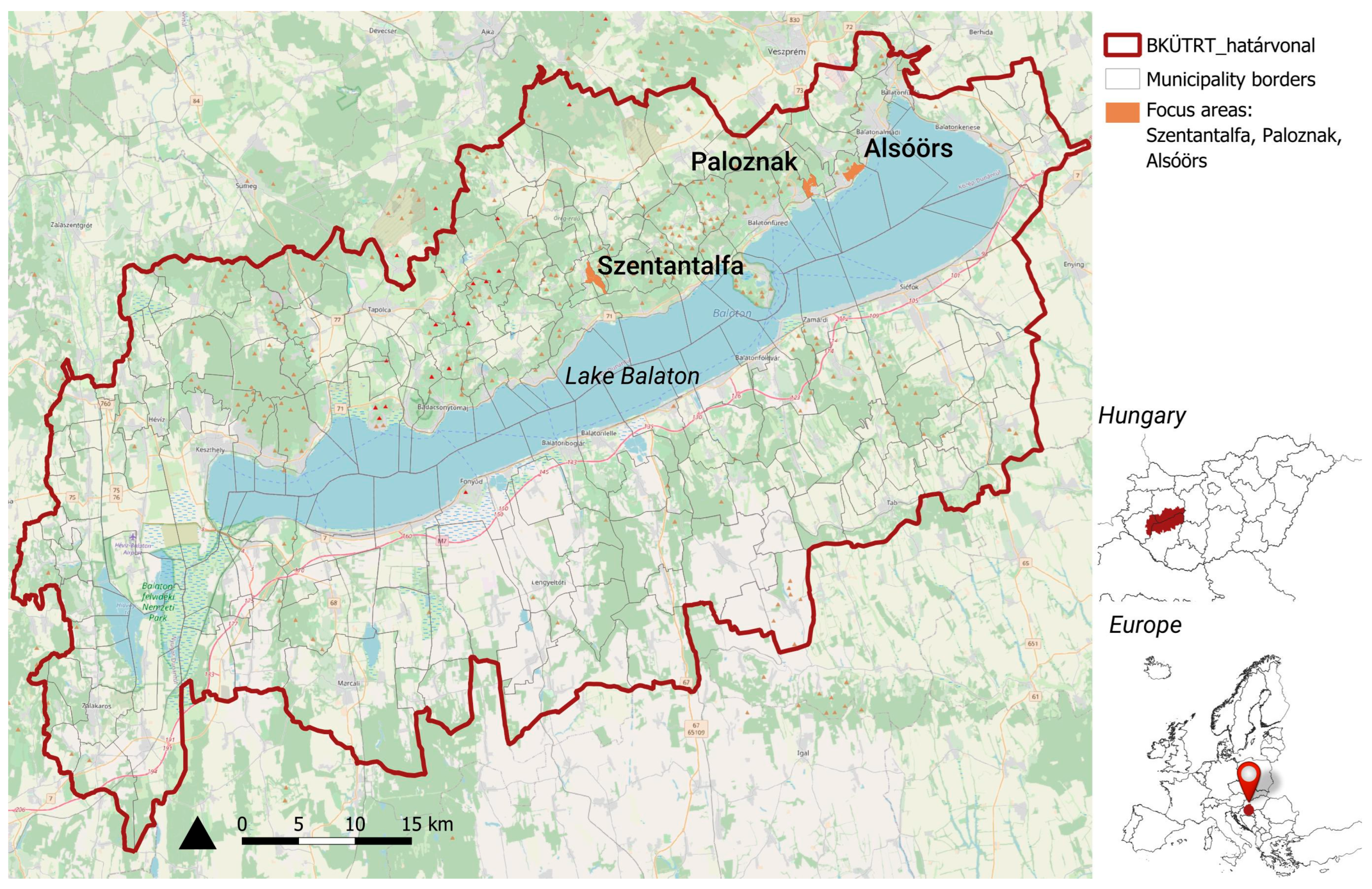
The Balaton Priority Recreational Area (
Figure 1) is located 80 km from the center of the capital, and the farthest point is 183 km away. Considering administrative units, the Balaton Priority Recreational Area is very fragmented as it is located in three counties (Somogy, Veszprém, Zala) and three NUTS-2 regions (Southern, Central, and Western Transdanubia), which are currently only used for EU statistical regional delimitations. The settlements of the recreational area have belonged to 11 districts since 2013 [
45]. In the surroundings of Lake Balaton, one of Hungary’s most diverse and scenic wine areas, the Balaton Wine Region is located [
47].
The economic and social relations of the settlements in the region are significantly influenced by their geographical location and their distance from Lake Balaton. The fundamental territorial specificity of the region is given by the duality of coastal settlements and background settlements. The Act CXII of 2000 (Land-Use Plan of the Balaton Priority Recreational Area), known as the Balaton Law, formulated different regulations for the coastal and background settlements; however, this differentiation does not affect research focusing on zones related to cultivation. Considering tourism, there are extremely large differences between these settlement types. The wave of suburbanization and urban sprawl first hit the coastal settlements and, at a much lower rate, the background villages, although notable changes started in the background areas as well. Recently, considering the lack of building possibilities around the lake, significant attention is now focused on the background areas. Considering vineyards, there is very strong suburbanization in the slopes overlooking the lake in the former small-scale vineyards; meanwhile, in the background regions, the vineyards remained more intact.
2.2. Balaton Law
The Balaton Law of 2000 established a comprehensive system of environmental and landscape protection zones, imposing exceptionally stringent controls over development and land-use decisions within local municipalities. This legislation introduced, for the first time, strict regulations on land utilization—such as construction prohibitions in areas lacking sewage infrastructure—which was unusual and unprecedented in regional and national land-use plans in Hungary, to ensure the protection of ecosystems, foster sustainable, year-round tourism, preserve cultural and historical values, mitigate flood and erosion hazards, and limit urban sprawl. The 2000 framework delineated six main protection zones comprising 16 subzones, alongside 4 functional zones with 15 subzones, and an additional category designated as “other”. This research focused on the traditional cultivation forms related to regulation zones (
Table 1), such as the Horticulture zone (M-2) and zones related to vineyards, namely, C-1 and C-2 (C-1 I. class vineyard cadastral area and C-2 II. class vineyard cadastral areas); furthermore, the General agricultural area (M-1) was included as it is an umbrella zone covering all kinds of agricultural cultivation forms. In 2008, the C-2 zone was eliminated, but in 2018, most of the same areas were brought back and joined to zone C-1.
The Balaton Act of 2000 underwent two major amendments aimed at refining its regulatory framework and integrating it into broader national spatial planning policies. The first revision, implemented in 2008 [
48], primarily sought to harmonize the Balaton planning framework with the National Land-Use Framework Plan (Act XXVI of 2003) [
49] while simultaneously preserving the progress and regulatory achievements established by the original Act.
In 2018, the Balaton Act was incorporated into Act CXXXIX on the National Land-Use Framework Plan [
50], thereby becoming part of Hungary’s overarching spatial policy system. The 2018 framework reaffirmed the commitment to protecting the environmental and cultural values of the Balaton region, with key objectives including the preservation of previous achievements, the enhancement of tourism appeal, and the development of high-quality tourism infrastructure, as well as the conservation of vineyards and gardens and the advancement of viticulture. Owing to the implementation of stringent environmental regulations, previous water quality issues in Lake Balaton were effectively mitigated. Nevertheless, ongoing urban expansion has once again brought environmental challenges to the forefront, including, among others, the state of vineyards.
This paper highlights the regulations related to the main traditional cultivation types. (
Table 2).
The rules governing the vineyard zone (C-1) became significantly stricter during legislative modifications. Chronologically, the 2000 law restricted building use on plots to viticulture, requiring 80% of the plot to be cultivated and limiting buildings to viticulture, grape processing, wine storage, or wine tourism. Residential use was also allowed if there were no other restrictions. In 2018, residential use was no longer mentioned. That year, building size was limited to 3000 m2, and restrictions were imposed on sacred buildings, which had previously been permitted—these were limited to a maximum gross floor area of 30 m2 and a maximum building density of 3%. The 2018 law also introduced a rule for the removal and reclassification of wine grape growing areas from the cadastral area: such changes cannot be proposed unless no other land is available for development within the municipality, the land protection procedure conditions are met, and the removal and reclassification are initiated by the local government. The 2000 law introduced a second grape-growing zone category, requiring 75% cultivation for buildings in the subzone (C-2) of Class II areas, according to the grape cadastre, but imposed no additional restrictions. In 2008, the C-2 zone was abolished. In 2018, much of the previously excluded area was attached to the C-1 zone, resulting in significant changes (exclusion, reclassification) and a tightening of restrictions for this zone.
Within the horticultural zone (M-2), the Balaton Act of 2000 permitted construction on plots of at least 1500 m2, in cases where the local master plan had been adopted prior to the enactment of the law. This provision remained in effect until it was repealed by the 2018 amendment, after which the general minimum plot size for construction was standardized at 2000 m2. The 2000 legislation restricted permissible building functions to commercial purposes, explicitly prohibiting the installation of mobile homes and containers. The 2018 framework further expanded these prohibitions to include livestock farms, estate centers, and ornamental ponds. The 2000 and 2008 versions of the law allowed limited residential construction adjacent to existing residential zones, which facilitated the partial conversion of enclosed gardens into residential areas. However, this provision was abolished in 2018, marking a decisive policy shift. Taken together, the successive amendments regulating horticultural areas reflect a progressive tightening of land-use and construction restrictions, emphasizing the preservation of landscape character and the prevention of uncontrolled development.
The regulation of agricultural areas (M-1) is highly complex, as it encompasses multiple land-use categories, including arable land, vineyards, grasslands, and orchards, with distinct provisions for horticultural areas introduced in the 2018 amendment. The legislation specifies minimum plot sizes as prerequisites for construction: 20 hectares for arable land, 5 hectares for grassland, 2 hectares for vineyards, 3 hectares for orchards, and 2 hectares for gardens.
Notable concessions can be observed in the subsequent amendments. For instance, the maximum permissible building size on arable land was increased from 500 m2 to 1000 m2, reflecting a more flexible approach toward agricultural infrastructure development. In the case of vineyards, plots exceeding 2 hectares may contain built-up areas of up to 2% of the total plot, with an absolute maximum of 800 m2, while residential functions are limited to 10% of the built area. For horticultural plots, the maximum building size is set at 700 m2, with residential use capped at 20%, whereas in orchards, the upper limit for built structures is 1000 m2.
The 2018 revision explicitly sought to limit the proliferation of residential development within agricultural zones by introducing caps on the proportion of residential functions. At the same time, the amendments reflect a policy intention to enhance the competitiveness of agricultural enterprises, as evidenced by the rezoning measures and the relaxation of certain construction thresholds designed to support productive land use.
2.3. Method
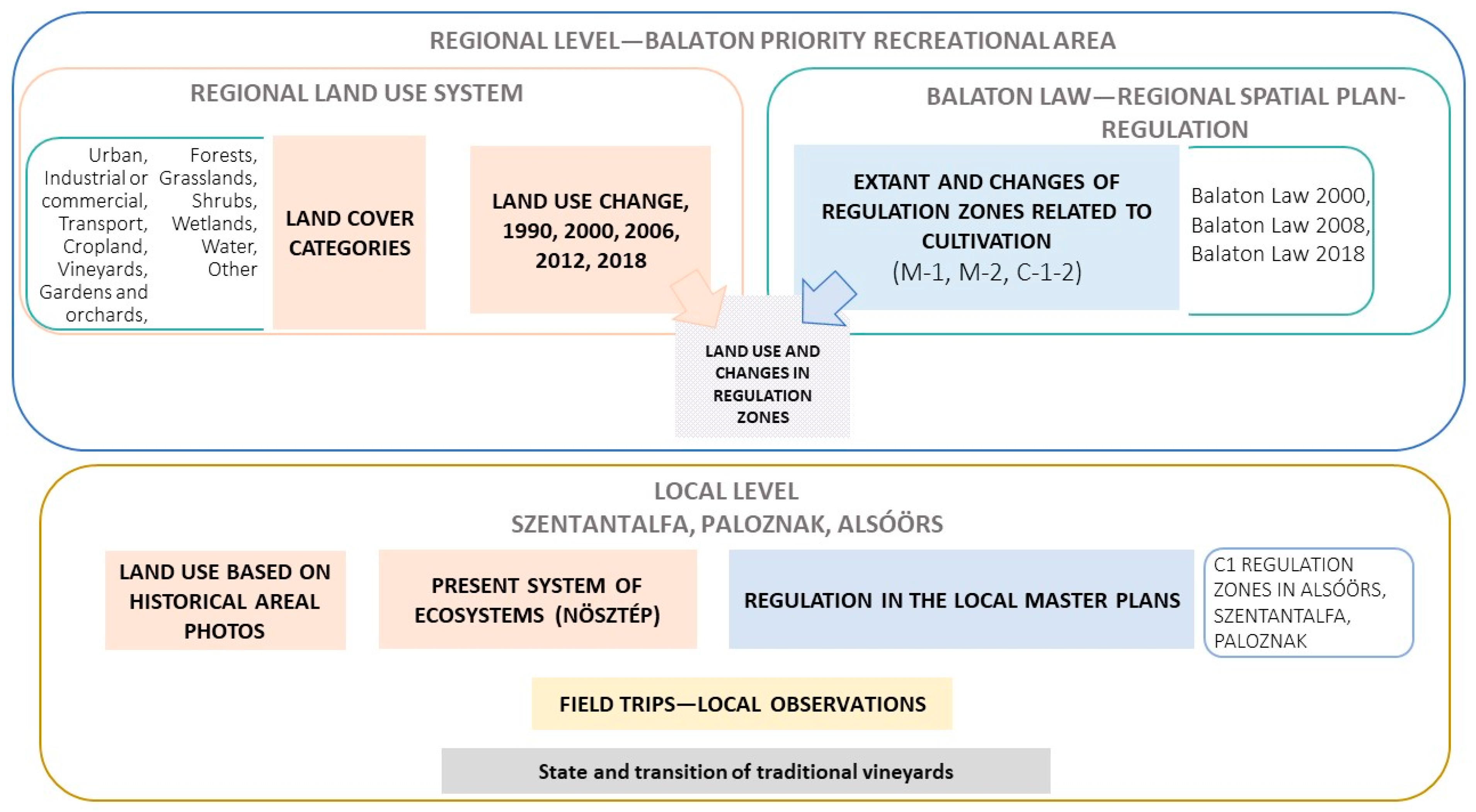
For the spatial–temporal analysis, the land-use data employed in this study were derived from the CORINE Land Cover (CLC) database for the reference years 1990, 2000, 2006, 2012, and 2018 (
Figure 2). It is the only data source for the study area that reaches back to 1990. The corresponding change layers were obtained from the European Environment Agency through the Copernicus Land Monitoring Service [
51]. The geometric accuracy of the dataset was ≤50 m in 1990, progressively improving to ≤25 m in intermediate years, and reaching ≤10 m by 2018. To enhance analytical precision, the CLC land cover and change layers were integrated for each time period, following the methodological recommendations outlined by Büttner and Kosztra (2017) [
52]. The CORINE Land Cover classification is a three-level hierarchical system (5 Level-1 groups, 15 Level-2 classes, and 44 Level-3 classes) developed by the EEA to provide standardized, satellite-based land cover information across Europe. The Level-1 main land cover groups (5 classes) represent the broadest land cover categories: artificial surfaces, agricultural areas, forest and semi-natural areas, wetlands, and water bodies. Considering the focus of this research and the occurrence of CLC forms in Hungary, we aggregated the CLC nomenclature, choosing categories from the 1st and 2nd level types, creating eleven main types of land cover: artificial/urban, transportation, industrial/commercial, vineyards, orchards, cropland, grassland, shrub, forest, wetland, water surfaces, and other.
To examine the relationship between regulatory frameworks and land-use dynamics, we conducted a spatial analysis integrating the land-use layers derived from the CORINE Land Cover (CLC) database with the regulatory zones delineated by the Balaton Law. The total area and proportional representation of each land-use category were calculated for the entire study region as well.
Subsequently, to evaluate the effectiveness of the regulatory measures and their influence on the change in vineyards and horticulture, we analyzed the spatial structure and temporal transformations of land use across the three iterations of the Balaton Law adopted in 2000, 2008, and 2018. Each regulatory zone was spatially overlaid with the corresponding CLC layer to facilitate comparative assessment. All spatial analyses were performed using QGIS software (version 3.32.2, Lima).
In addition, the land-use characteristics of zones modified between planning periods were examined to identify areas that were excluded from or newly incorporated into the regulatory framework. Comparative analysis between the zoning plan of 2000 and the land-use data from CLC2018 was also undertaken to assess the long-term effects of the initial regulatory scheme.
By comparing trends prior to the introduction of the Balaton Law (1990–2000) with subsequent regional trends and national averages, conclusions were drawn regarding the law’s effectiveness in preserving traditional cultivation forms.
To obtain a more detailed perspective and to overcome the limitations of the CORINE Land Cover database—which represents vineyards as relatively homogeneous units despite substantial differences in the density and scale of built structures—a focused analysis was conducted in three C1 vineyard zones of the Balaton Uplands: Alsóörs, Paloznak, and Szentantalfa. These three types of areas represent different stages in the transition process of vineyards. Alsóörs has merged with Balatonalmádi, a major tourist center in the Balaton region and the closest to Budapest, and is therefore subject to strong development pressure that started already during socialism. Paloznak is situated in a similar landscape context on the Balaton Uplands slopes overlooking the lake, although at a slightly greater distance from the shoreline, and has gained recognition for its active efforts to preserve its traditional village character. In contrast, Szentantalfa represents a largely intact and still predominantly traditional vineyard landscape. Field surveys were conducted to assess landscape character, evaluate built structures, examine the transformation of traditional cottages and cellars into residential buildings, and analyze garden functions, with particular attention to the balance between traditional cultivation and recreational use. As databases for the focused research, aerial photos from the 1970s, 1980s, and Google Earth were used to explore the level of transition of the cultural landscape; furthermore, the raster-based Ecosystem Map of Hungary (NÖSZTÉP) [
53] was used to gain a more detailed overview of the present framework of ecosystems. The NÖSZTÉP ecosystem map has three levels, based on the European Union’s six main categories, with the third level dividing ecosystems into 56 categories. The base map shows the distribution of ecosystems in Hungary in the form of a thematic raster file.
3. Results
Following a brief overview of general land-use changes, the results of land-use dynamics within the regulatory zones are presented, alongside an analysis of spatial changes in the zoning framework. As modifications to regulatory boundaries can substantially influence regulatory effectiveness, these changes are examined in parallel. The second part of the analysis presents the results of local-scale investigations, focusing on differences among three vineyard-zone areas in the Balaton Uplands: Szentantalfa, Alsóörs, and Paloznak.
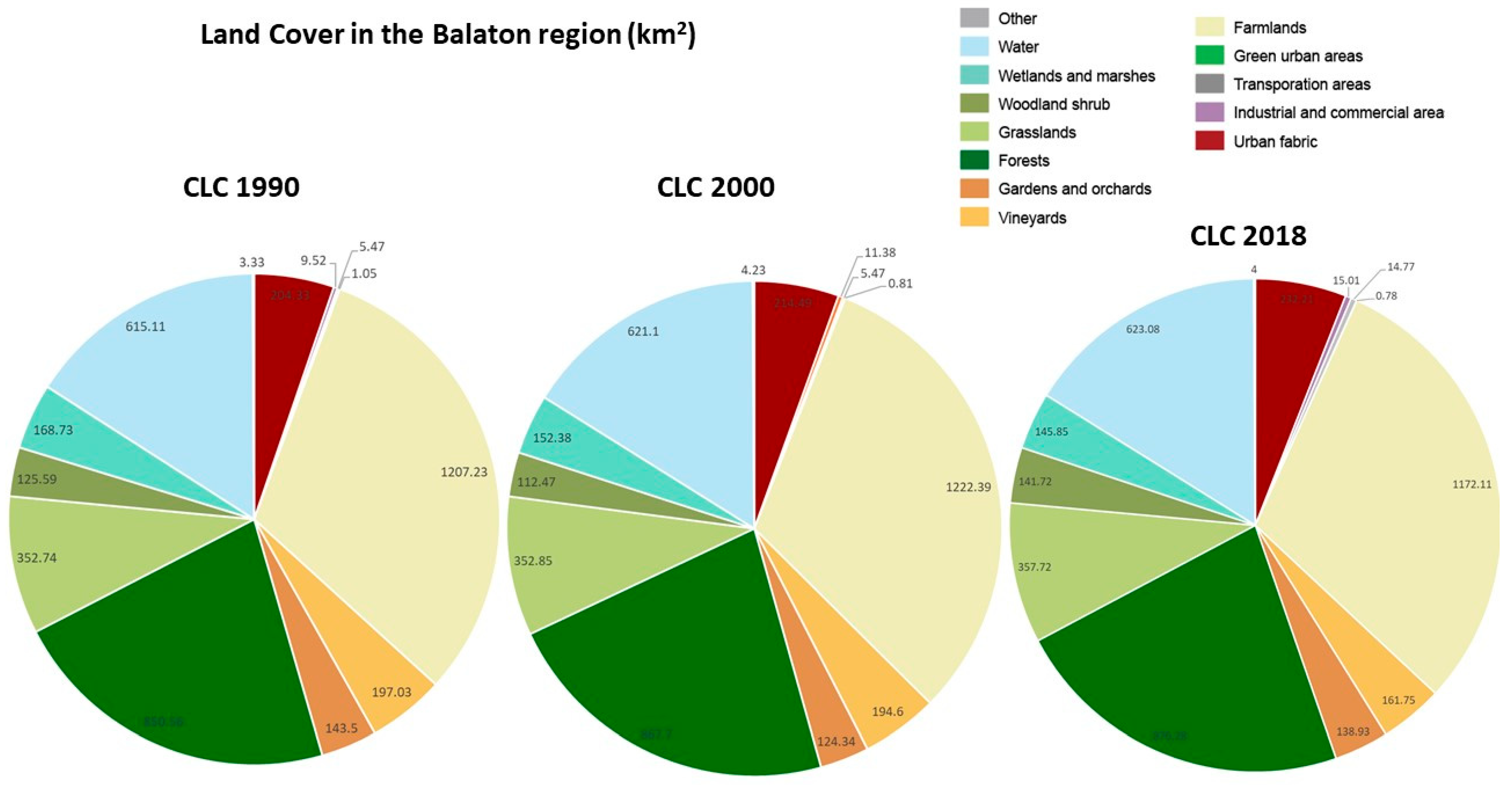
The evaluation of the general land-use changes in the analyzed region revealed a significant 18% drop in vineyards since 1990 (since 2000, the drop has been 16.9%). Compared to the period before 2000, the Balaton law could not notably slow down the rate of vineyard loss in the region. At the regional scale, orchard coverage showed only a modest decline (−3.2%) by 2018; however, the earlier periods revealed notable fluctuations. So, between 2000 and 2018, it resulted in a general increase of 11.7%. There was a decrease of 19.16 km
2 between 1990 and 2000, followed by a 22.5 km
2 increase between 2000 and 2006, and a decrease again of 8.3 km
2, according to the CORINE Land Cover database. The patterns suggest that the implementation of the Balaton Law helped stabilize or reverse previous downward trends. In terms of artificial surfaces, road areas have tripled, industrial zones have doubled, and the urban fabric has expanded by roughly 14% since 1990 (since 2000, the increase was just 8.3%). Forests and grasslands experienced smaller changes, while shrubland showed a more substantial increase (
Figure 3).
3.1. Land-Use Change in the Regulation Zones at the Regional Level
The analysis examines the relationship between regulatory zones and changes in protected land-use types. The area and proportion of vineyards and orchards within the current regulatory framework are assessed, with attention given to both unchanged and modified zones. As one of the most significant land-use types, viticulture plays a central role in shaping the distinctive landscape character of the Balaton region.
The spatial changes in the regulation zones make the comparison difficult. First, let us investigate how the area of vineyards changed in the original C-1 and C-2 zones (Balaton Law 2000). The results show that in the original C-1 zone, the area of vineyards decreased from 129.3 km2 (in 2000, 127.5 km2) to 112.5 km2 by 2018 (a 13% decrease), and in C-2 from 19.68 km2 (in 2000, 19.08 km2) to 15.29 km2 (a 23% decrease). The share of vineyards decreased in both zones (in C-1, the decrease was 48% in 1990 and 45% in 2000, dropping to 42.5% by 2018). The share of vineyards in C-2 was lower even in 1990, at just 31.4% (in 2000, 30.47%), which also dropped to 24.5%. There was an almost 50% growth in built-up areas, gardens, and orchards in the area of C-1 and a 32% growth in shrub or transitional woodland shrub. The area of shrubs doubled, and forests grew by 70% in zone C-2. Considering vineyards and orchards, the process of the C-1 zone reflects a more favorable trend compared to the general regional and national trends.
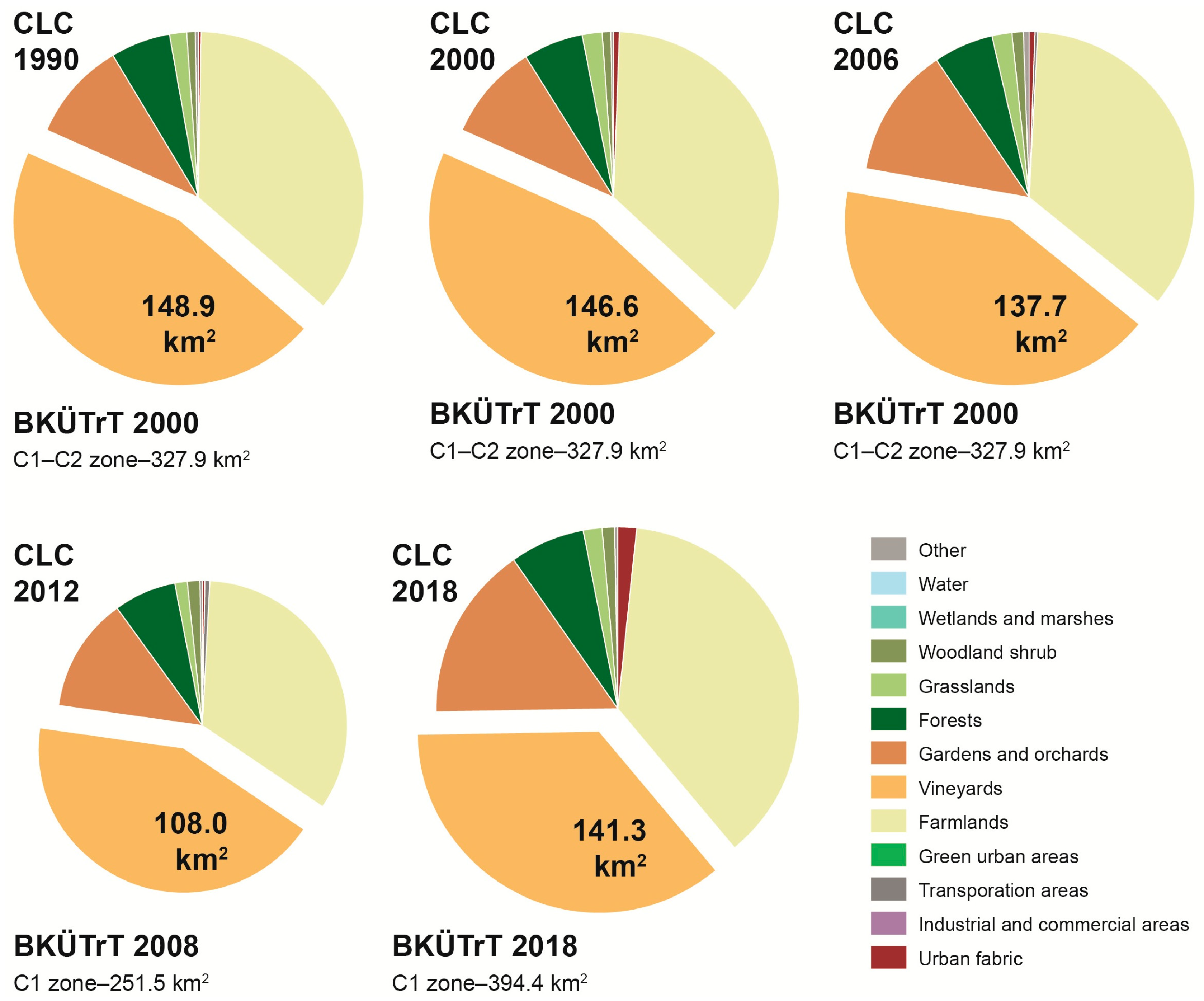
Considering the share of vineyards in the continuously changing C-1 and C-2 regulation zones, there was a decreasing share: from 45%, it dropped to 36% (
Figure 4).
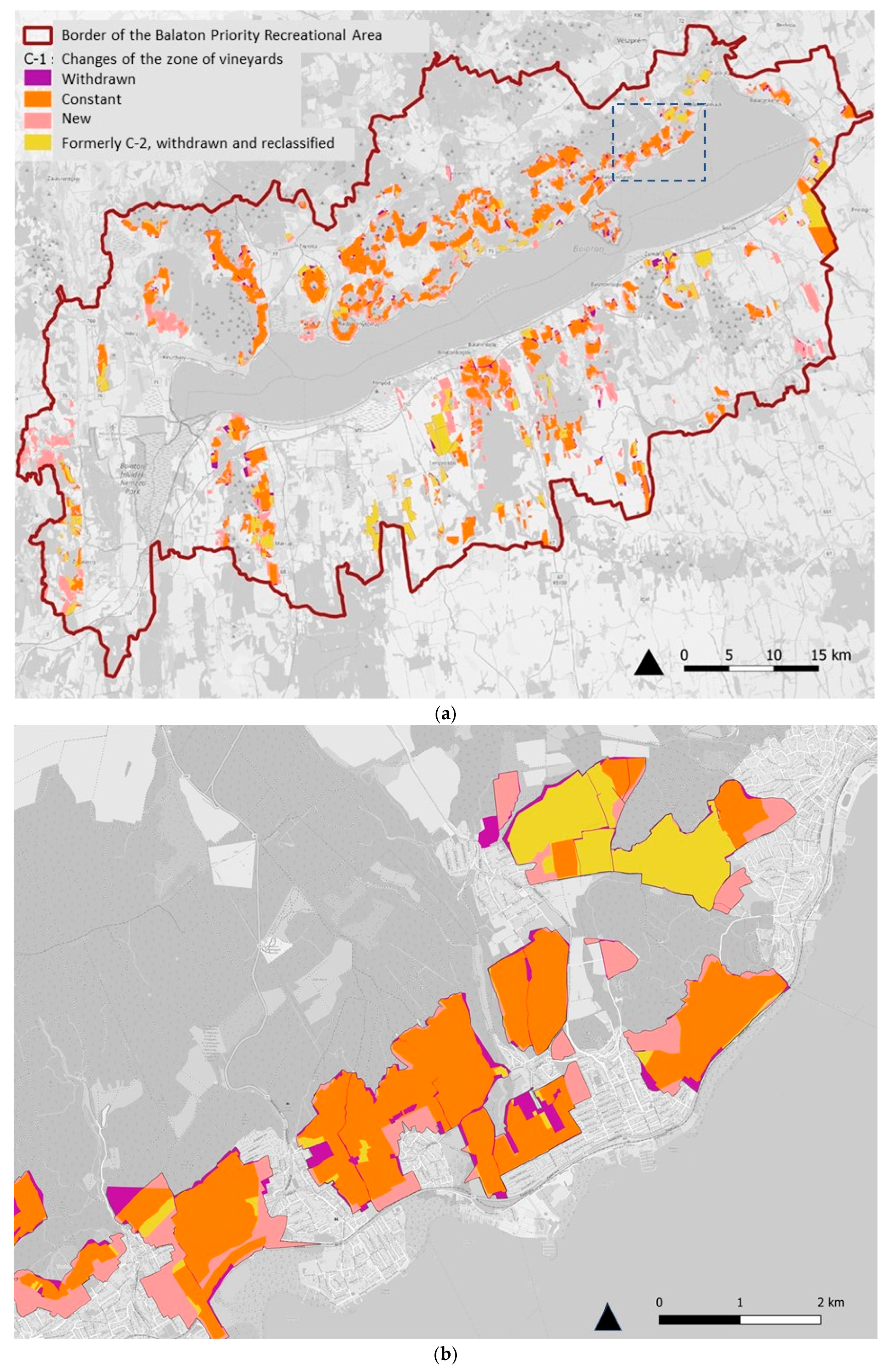
With regard to the regulatory zones, a notable spatial reorganization took place. The C-2 zone was eliminated in 2008, and its territory was subsequently partially reinstated and merged with the C-1 zone (
Figure 5). As a result, only about half of the original zone remained unchanged (permanent area: 215.52 km
2). A considerable portion (83.24 km
2) was reintegrated, while 32.11 km
2 was entirely lost, and an additional 95.68 km
2 was later designated as protected.
Within the constant regulation zone, vineyards constituted a notably high proportion of land use; however, their share declined from 52% to 46% by 2018. In contrast, the reclassified and newly designated zones exhibited only a relatively small proportion of vineyard areas. The majority of vineyards fell under the protection of the C-1 zone, and this proportion showed a slight increase by 2018 compared with the period of the Balaton Law’s adoption (
Table 3). Furthermore, there was a slight decrease in the share of vineyards outside of the regulation zone.
In summary, by 2018, the C1 (vineyard) regulatory zone expanded in spatial extent and continued to encompass the majority of vineyard areas in the region. However, the proportion of vineyards within the zone decreased, suggesting that the regulation became broader in scope but less specifically aligned with viticultural land use. Although the areas removed from the zone indicate an attempt by decision-makers to refine its boundaries—typically by excluding marginal parcels adjacent to settlements, forests, more urbanized areas, or non-viticultural agricultural lands—the overall restructuring did not sufficiently enhance the zone’s precision or effectiveness.
The other landscape characters forming cultivation types are gardens and orchards. The land cover composition of the current M-2 regulation zone shows notable changes between 1990 and 2018, particularly regarding perennial cultivation and artificial surfaces. Artificial areas (urban fabric) increased from 1.04 km
2 (0.66%) in 1990 (1.44 km
2 in 2000) to 1.64 km
2 (0.93%) in 2018. No industrial, commercial, transport, or urban green areas were present in any of the examined years, indicating that the M-2 zone maintained its predominantly agricultural and semi-natural character (
Table 4).
More significant shifts occurred within the permanent crop categories. Vineyards, which represented the dominant land-use type in 1990 (85.36 km2, 54.27%), showed a slight increase by 2000 but declined substantially by 2018, dropping to 68.71 km2 (38.81%). This marks a notable reduction in both absolute area and proportional share, reflecting broader regional trends of vineyard conversion or abandonment.
Conversely, fruit trees and gardens exhibited the opposite trajectory. Their area decreased slightly between 1990 and 2000 (from 29.79 km
2 to 27.85 km
2), but by 2018, they expanded dramatically to 53.95 km
2 (30.47%). This substantial increase suggests a shift within the cultivation structure of the M-2 zone, with gardens gaining importance as vineyard area contracted. Furthermore, this growth can be attributed to the more targeted territorial reorganization of the M-2 regulatory zone (see
Table 5 for details). Overall, while artificial areas remained almost unchanged, the proportional balance between vineyards and gardens underwent a marked transformation.
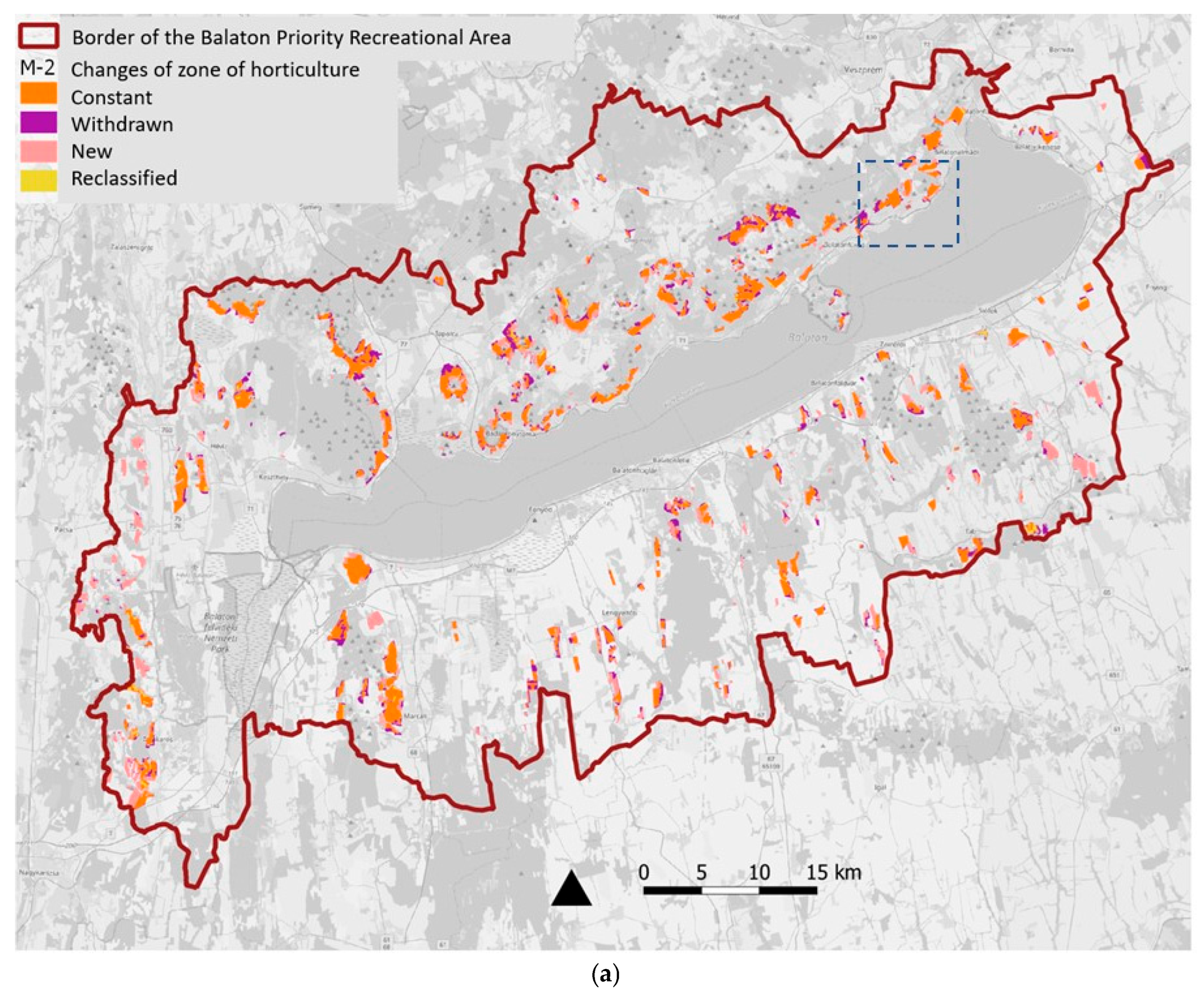
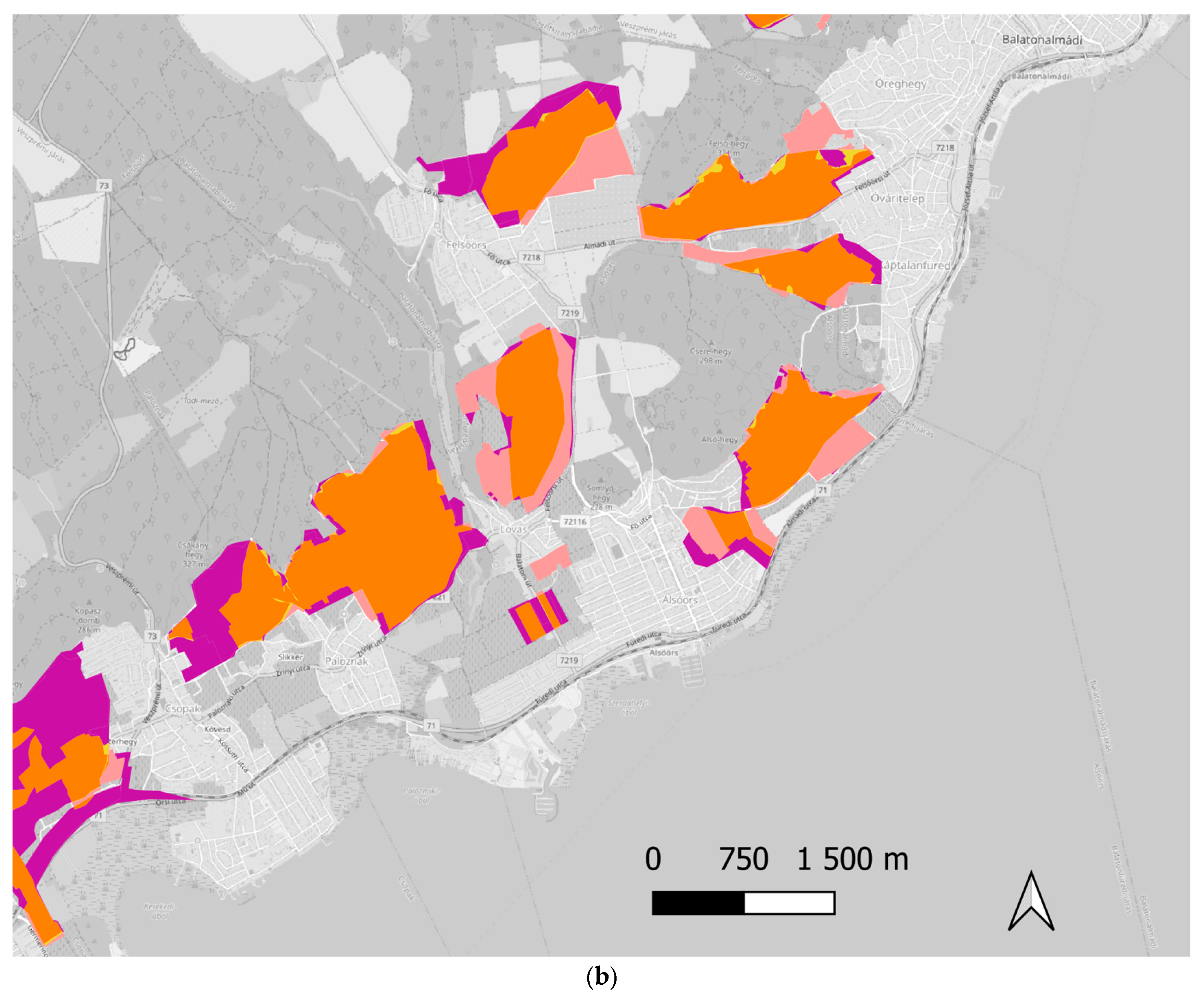
Due to substantial spatial reorganization, only about half of the zone remained unchanged, one-quarter was withdrawn, and another quarter was designated as a new regulatory area (
Figure 6).
Considering the share of the orchards in the changing categories of the M2 regulation zone, it is obvious that the decision-makers expanded the zone for areas with a relatively high share of orchards (38%). Both the reclassified and withdrawn zone areas had a low proportion of orchards (
Table 5). In the constant zone, the proportion of gardens grew. In the Balaton Uplands, large areas of the zone were excluded from regulation, particularly those intended for development, which were subsequently converted into residential land adjacent to existing settlements. The proportion of orchards in the region under the protection of the zone grew slightly from 40.3% to 42.5%. So, overall, the spatial restructuring and land cover changes led to a more concentrated, garden-oriented zoning structure, with orchards and vineyards becoming the predominant land uses in the zones.
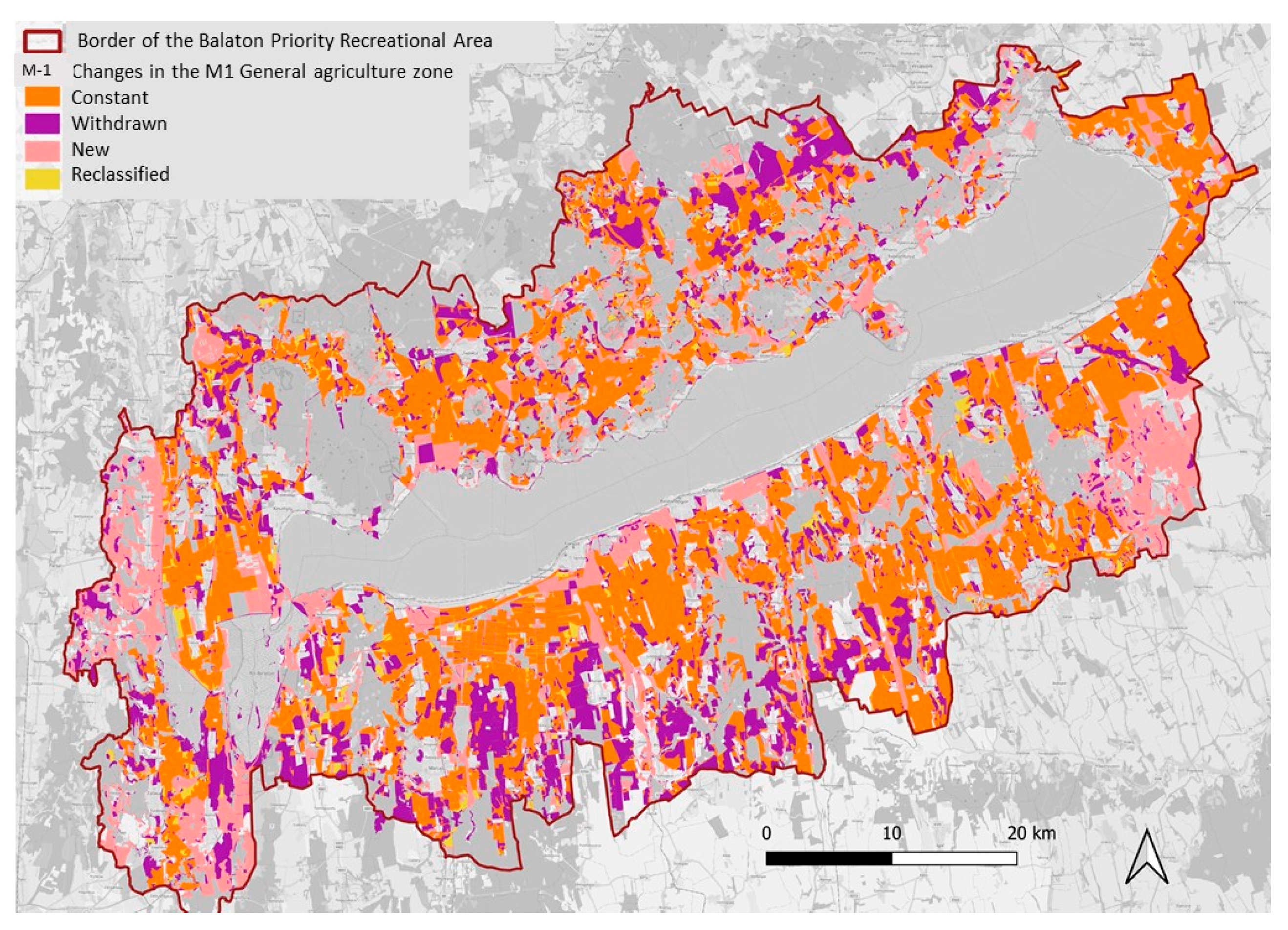
Including the General agricultural (M-1) zone in the analysis was essential, with particular emphasis placed on vineyard cultivation forms. However, assessing protection effectiveness is complicated due to major spatial restructuring within the agricultural zone (
Figure 7). Of the 1380 km
2 total area, over 400 km
2 has been restructured, indicating the effectiveness of earlier regulatory measures—especially in hinterland areas farther from the lake, where stricter rules were once in force. The analysis reveals a strong spatial reorganization of the zone, characterized by a shift from hinterland areas to zones closer to the lake.
In the M-1 zone, the CLC data from 1990 showed 82.4 km2 (80.35 km2 in 2000) of vineyards, which, in the same area, decreased to 76.4 km2 by 2018, representing a slightly similar area as the changed M-1 zone: 77.8 km2. The mosaic landscape complicates distinguishing cultivation types at the regional scale, which is why the decision-makers elaborated considerable spatial overlap between regulatory zones. The M-1 zone, an umbrella category, covers many forms of agricultural use.
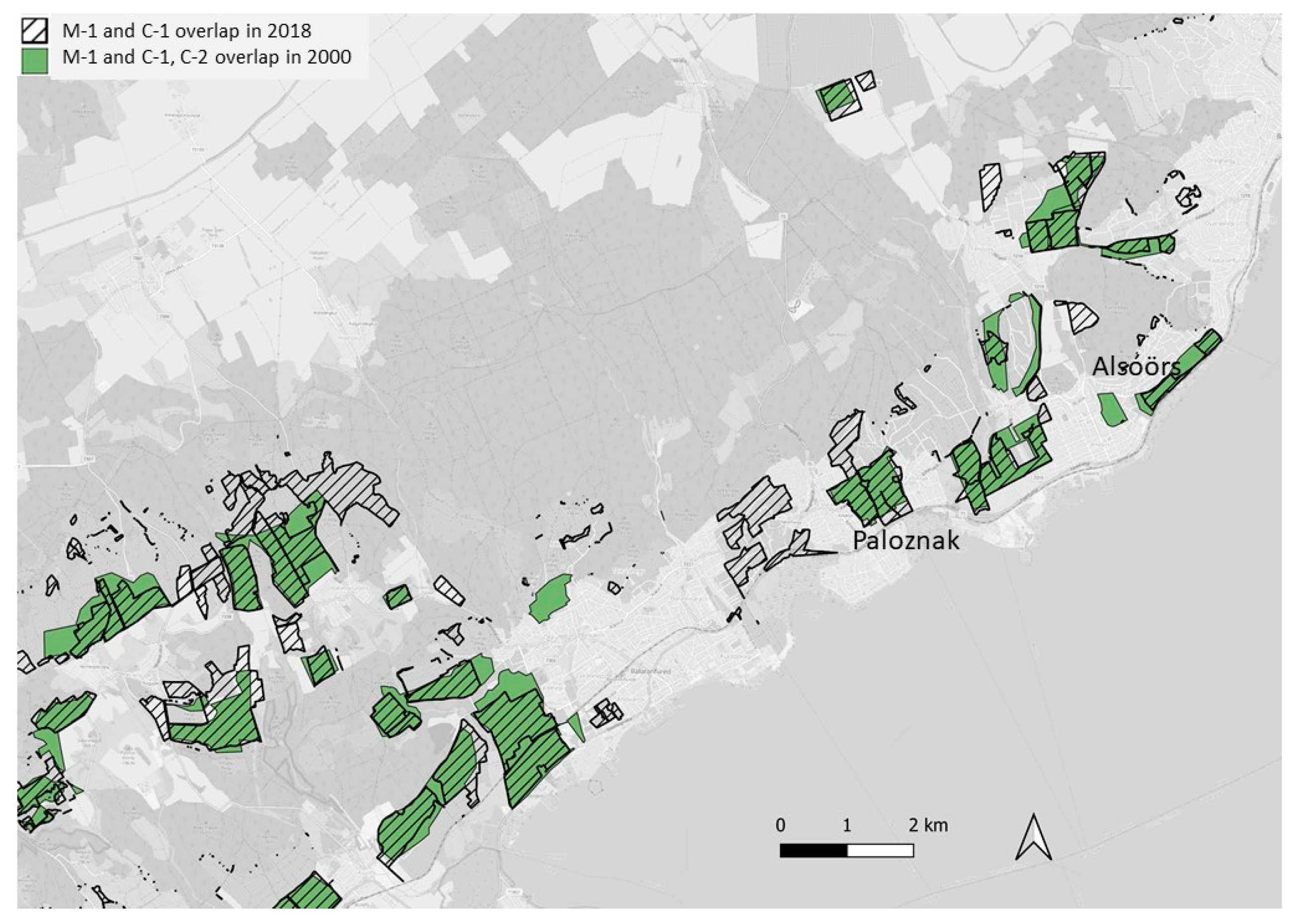
In the areas where the M-1 and C-1 zones overlap with each other, land use consists of 52% cropland, 32% vineyards, and 7% orchards. In regions where the C-1 and M-2 zones intersect, there is a marked increase in the prevalence of vineyards, which account for 47% of the area, along with horticulture, which makes up 28%. Due to the considerable restructuring of the zone, those areas where C-1 overlaps with M-1 also changed considerably (
Figure 8). In 2000, the overlapping area was 189 km
2; in 2018, it was larger at 219 km
2. In these areas, the CLC database shows a significant growth in vineyards (in 2000—65 km
2, in 2018—70.6 km
2); however, just 43 km
2 of the vineyard area remained in the changing zone under constant protection.
3.2. Local-Level Analysis of Vineyard Areas
The regional-scale analysis based on the CORINE Land Cover database was unable to capture fine-grained landscape changes, such as transformations of built structures, shifts in land-use practices, or the transition from cultivation to recreational use. To address these limitations, the local-scale analysis focused on three traditional vineyard landscapes in the Balaton Uplands. Szentantalfa is the farthest village from Lake Balaton, but its Szőlőhegy (Vineyard hill) gives a wide view of the lake. The village is situated in the Nivegy Valley, a historic wine region with winemaking traditions dating back hundreds of years. According to the Municipal Image Manual [
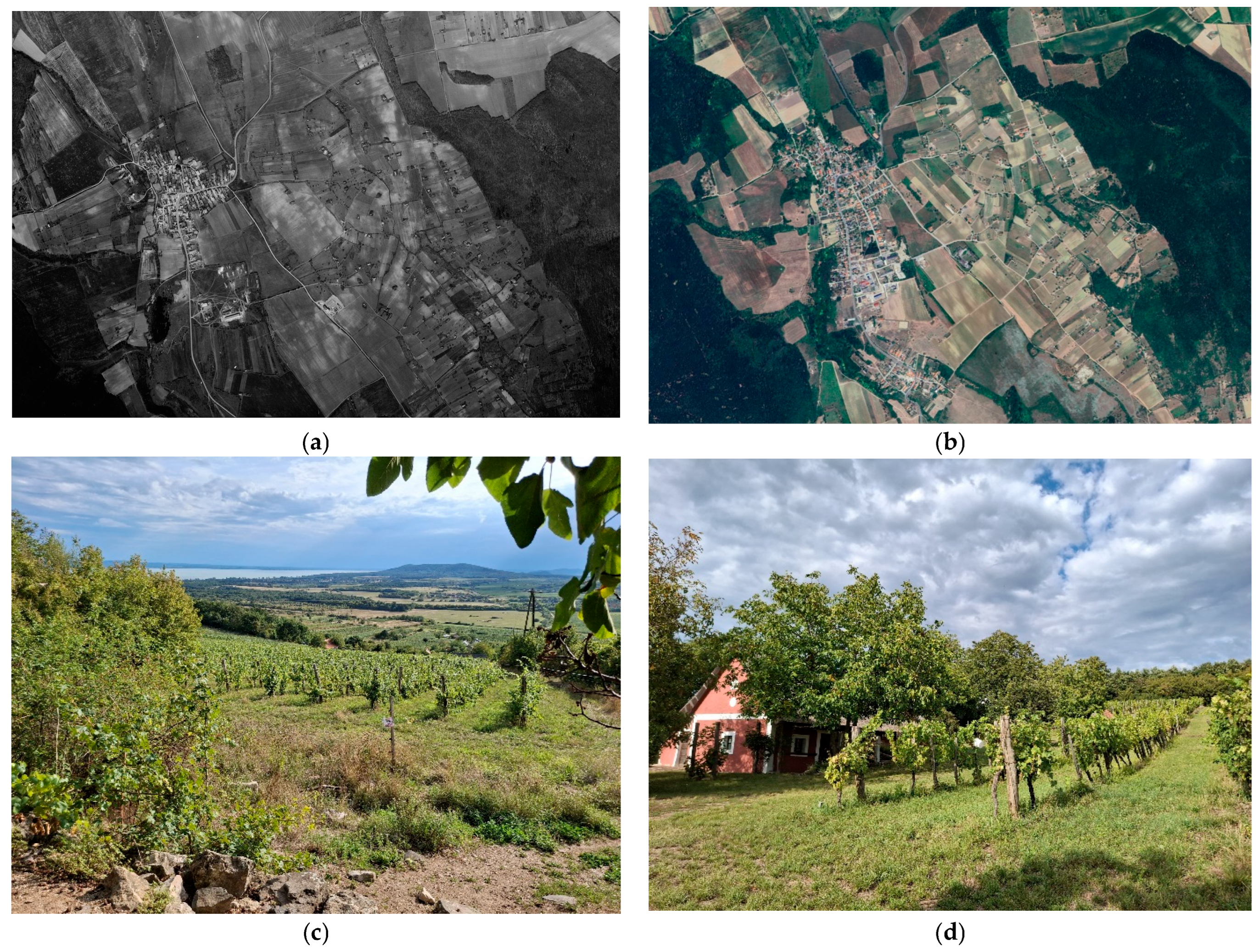
54], most of the vineyard layout—planting vines along the hills—was finished in the 13th and 14th centuries. Aerial photos from the 1970s, recent satellite images (Google Earth), and on-site photos all show that the traditional appearance of the vineyard hill has remained largely unchanged over time (
Figure 9).
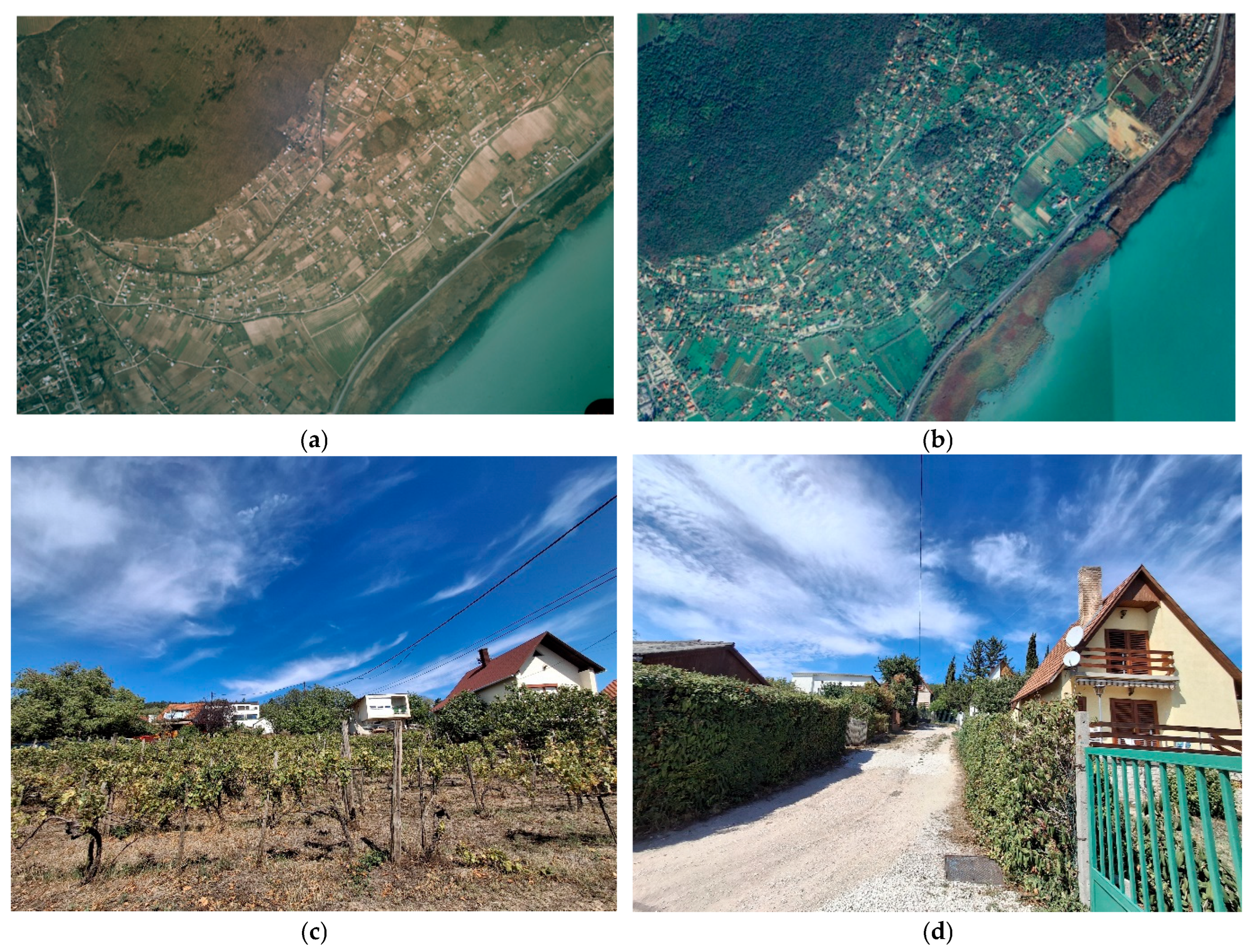
The second case study area is located on the outskirts of Alsóörs, situated in the eastern part of the Balaton Uplands, in relative proximity to Budapest. The transformation of this landscape commenced during the socialist period, and by the 1980s, aerial photographs already revealed a noticeable densification of the built-up area. Following 1990, this process accelerated further (
Figure 10a,b).
Figure 9.
(
a–
d) Maps and photos of Szentantalfa. (
a) Szentantalfa aerial photo, 1971 [
55]. (
b) Present state, Google Earth. Satellite imagery (
https://earth.google.com). (
c,
d) Photo of a hill (Szőlőhegy) in Szentantalfa.
Figure 9.
(
a–
d) Maps and photos of Szentantalfa. (
a) Szentantalfa aerial photo, 1971 [
55]. (
b) Present state, Google Earth. Satellite imagery (
https://earth.google.com). (
c,
d) Photo of a hill (Szőlőhegy) in Szentantalfa.
The Municipal Image Manual (TAK) explicitly draws attention to the negative implications of this transformation, stating that “the Alsóörs vineyard is an area undergoing transformation, where grape production is steadily declining and being replaced by holiday and weekend houses” [
56]. This shift is clearly reflected in the spatial pattern of land use: viticulture has largely retreated to the southern, lower-lying slopes, whereas the upper, panoramic zones have become increasingly dominated by residential and recreational developments. Field observations corroborate these findings, indicating that the area is now characterized primarily by weekend houses, ornamental gardens, and a limited number of declining vineyards. Several buildings are visually prominent within the landscape. The overall transformation is evident in the changing landscape character, marked by increased building density, heterogeneous architectural forms—ranging from modest cottages to large villas—and the intensification of land modification through parceling, terracing, and terrain reshaping (
Figure 10c,d).
Figure 10.
(
a–
d) Maps and photos of Alsóörs. (
a) Alsóörs aerial photo, 1985 [
57]. (
b) Present state, Google Earth. Satellite imagery (
https://earth.google.com). (
c,
d) Photos of Alsóörs.
Figure 10.
(
a–
d) Maps and photos of Alsóörs. (
a) Alsóörs aerial photo, 1985 [
57]. (
b) Present state, Google Earth. Satellite imagery (
https://earth.google.com). (
c,
d) Photos of Alsóörs.
The third study area is situated north of the built-up area of Paloznak, and, similarly to the other sites, it is traditionally a viticulture area. In 1998, the Hungarian Urban Planning Association (MUT) acknowledged the village’s outstanding efforts in preserving its traditional settlement structure by awarding it the János Hild Prize. In the following decades, Paloznak also received the Hungarian Village Renewal Award on four occasions, reflecting its continued commitment to sustainable settlement development and landscape protection [
58]. According to the municipality’s recent planning and regulatory documents—including the new local masterplan, which entered into force in 2024—the community places particular emphasis on environmental protection, the preservation of settlement character, and the conservation of natural values.
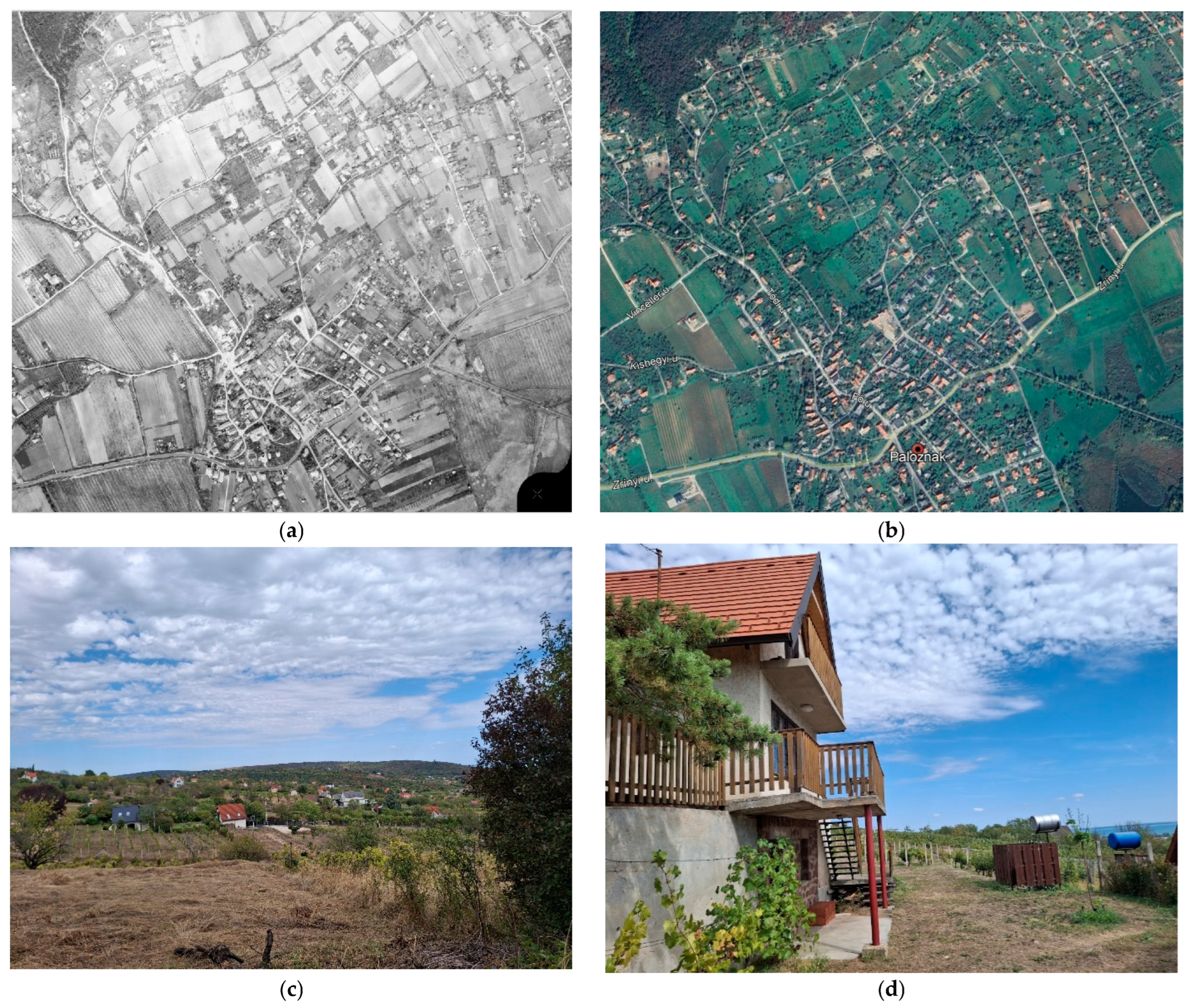
Field observations reveal a transitional landscape state (
Figure 11) in Paloznak. Although signs of transformation are apparent—many vineyards have already disappeared and have been replaced by ornamental and recreational gardens—the area still exhibits fewer large, visually dominant villas compared to other parts of the Balaton Uplands. The presence of strict building regulations appears to support the enforcement of construction limitations, thereby maintaining the visual integrity of the landscape. However, the original viticultural function has been largely lost.
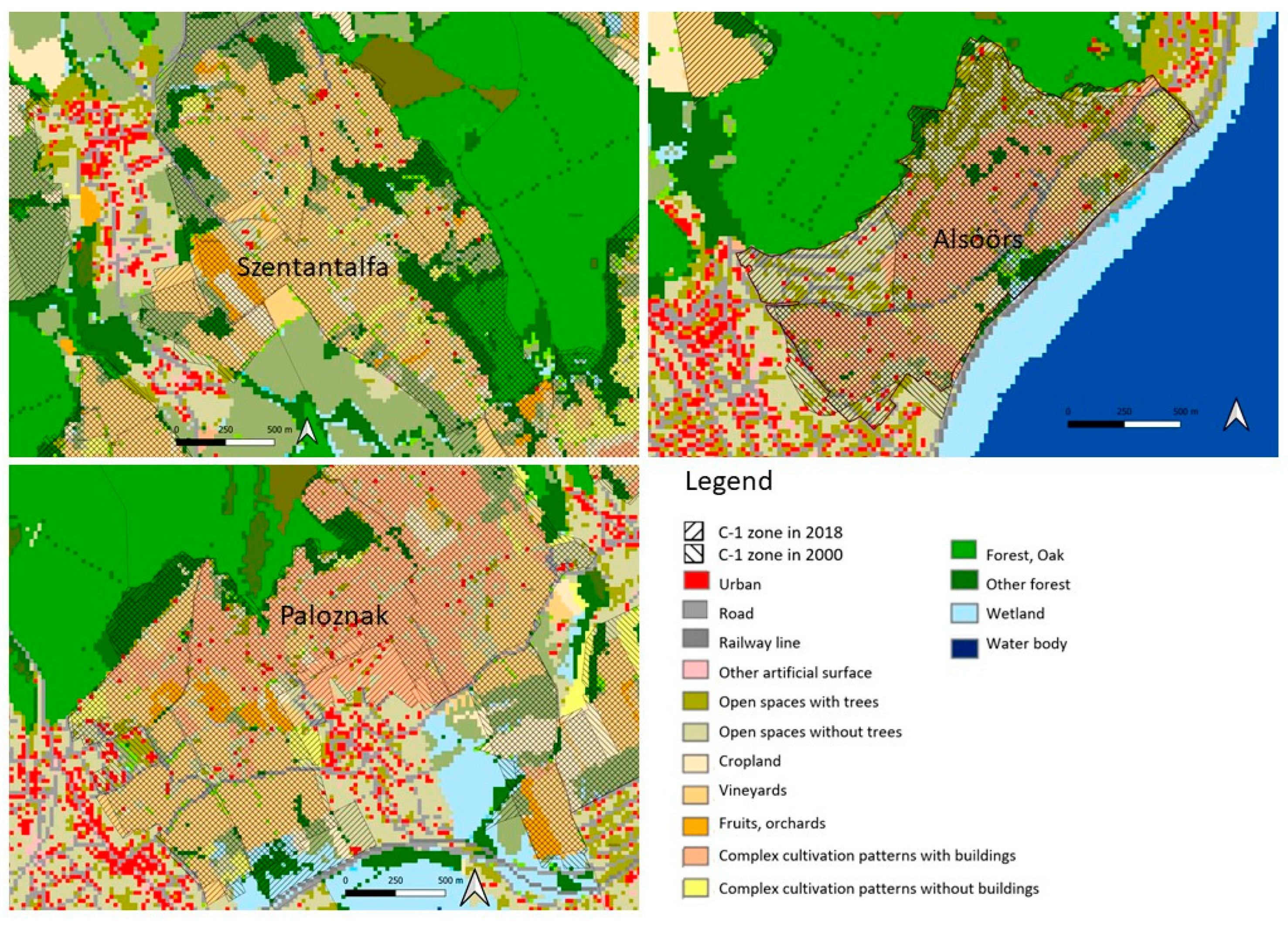
When the Ecosystem Map of Hungary—providing greater thematic detail than the CORINE Land Cover database, albeit in raster format—is applied, spatial differences among the settlements become more clearly discernible. In the case of Szentantalfa, the focus map reflects a mosaic pattern of land use, where vineyards constitute the dominant landscape element, complemented by small patches of forest, orchards, and scattered buildings that contribute to the area’s structural diversity. In contrast, Alsóörs and Paloznak are characterized by a “complex cultivation structure with buildings” (visible as pink patches), becoming the prevailing spatial component. Around Paloznak, extensive vineyards remain west of the settlement, while orchards are primarily found to the northwest. In Alsóörs, vineyards and arable fields have been largely preserved in the southern, more sloping areas, reflecting a differentiated but increasingly transformed land-use pattern (
Figure 12).
The regulatory frameworks of the three settlements—Alsóörs, Paloznak, and Szentantalfa—clearly reflect the shared objective of the Balaton Uplands region. However, the strictness of the rules (
Table 6) depends on the transition state of the traditional vineyards [
60,
61,
62]. In the master plan of the settlements, these C-1 zone areas are mostly marked as General agricultural (Ma), Horticultural (Mk), or Environmentally friendly agriculture with gardens (Mkt) zones.
The comparison of the three settlements reveals a gradient of regulatory strictness. Alsóörs applies the most permissive regulations, allowing 2–3% building coverage and larger structures up to 200 m2, with restrictions tightening near the Balaton Uplands National Park planned buffer zone. Paloznak enforces stricter limits, maintaining a uniform 3% coverage and 100 m2 building cap across agricultural zones to preserve the traditional vineyard landscape; only in the Mk-2* subzone is limited residential use permitted on larger plots. Szentantalfa adopts the most restrictive framework, with coverage between 1–1.5%, prioritizing landscape conservation and allowing only small-scale vineyard buildings or, in designated areas, tightly regulated agricultural facilities. In this framework, recreational and cultivation functions are explicitly distinguished, with more stringent regulatory requirements applied to recreational purposes.
In summary, the three settlements demonstrate a gradient of regulatory intensity reflecting their landscape protection priorities and the state of transition of the traditional vineyards. As in Alsóörs, already during socialism, irreversible processes started, and the local regulation follows the situation; however, it tries to stop or slow down the change in the landscape.
4. Discussion
The discussion follows a problem–analysis–evaluation–policy response logical framework. It begins by outlining the dual trajectory of agricultural land use in the Balaton region, where viticulture has benefited from post-1990 investments and tourism integration, while small-scale vineyards and gardens—especially in scenic, tourist-exposed areas—have undergone decline. It then evaluates these changes empirically by comparing regional land-use trends with national patterns. Later, the limitations of spatial regulation are highlighted. This is complemented by local case evidence, which reveals how development pressure and enforcement gaps undermine traditional cultivation despite formal protection. Finally, the findings are presented within a broader governance context, and policy-oriented conclusions are derived.
The results of this research indicate a continued decline in vineyard areas despite the strict regulatory framework. Compared to the period between 1990 and 2000, the Balaton Law did not significantly slow the rate of vineyard loss after 2000. However, when regional trends are compared with national averages, the Balaton region exhibits a markedly more favorable outcome. To provide a preliminary overview and to compare regional land-use changes with national trends, the same GIS-based analysis using the CORINE Land Cover and land cover change datasets was applied at the national level. Comparing the national trends with those observed in the Balaton region between 2000 and 2018 reveals that the decline in vineyard area is notably smaller in the Balaton region (–18%) than at the national scale (approximately −30%).
Vineyard decline is rarely the result of a single factor; rather, it emerges from the interaction between environmental constraints that raise cultivation costs and human-driven pressures that favor land conversion or abandonment. Behind the results, there are very complex, mostly human-driven factors; sometimes, controversial processes occur, affecting viticulture in the Balaton region. Since 1990, vine growing and wine production have achieved a particularly prominent status within agriculture. Viticulture benefited from targeted investment programs that encouraged new vineyard plantings and modernization. Numerous family-owned estates emerged, and many winemakers successfully integrated wine production with tourism and hospitality services. At the same time, however, a different trend unfolded: negative changes affected the former garden areas, generally on steeper slopes where cultivation is more difficult, especially around popular tourist centers and on the scenic slopes overlooking Lake Balaton.
The protection and preservation of traditional cultivation forms is not a simple regulation issue, as it has significant social and economic aspects. Property prices around Lake Balaton now exceed those in Budapest. As a result, vineyard land has become attractive for investors instead of agricultural users. State-supported developments, new marinas, and the growth of gastronomy tourism have further inflated real estate values. Buyers acquire rural plots, mainly for investment or as second homes, not for viticulture. Even outer agricultural zones permit buildings of large size. This makes the plots appealing for tourism projects or speculation, often at the expense of vineyards. Land once bought by winemakers goes to non-agricultural investors, who may lease out or abandon viticultural use. They prioritize real estate value over production. This market shift causes vineyard areas to shrink. Economic incentives now favor construction and tourism over maintaining agricultural use [
63]. Furthermore, in fragmented areas, viticulture is possible on certain plots, but economical, high-quality commercial production typical of a functioning wine region is impossible.
The delineation of vineyard-related zones presents a somewhat controversial issue. The findings of this research indicate a relatively low proportion of vineyards and orchards within the designated regulation zone (C-1), which encompasses a much larger area than is actually used for viticulture, suggesting potential future land-use conflicts. In the overlapping areas of the M-1 and C-1 zones, the proportion of vineyards is slightly higher than in the C-1 zone alone, yet it still remains relatively low. Both regulation zones have undergone extensive restructuring, significantly constraining the effectiveness of land protection measures. Due to the relatively large spatial restructuring of the zone, it is really difficult to draw a conclusion about the effectiveness of the protection of vineyards. However, compared to the national level, the more favorable processes are clear.
While the total area of orchards and fruit cultivation in the Balaton region has slightly decreased compared to 1990 (−3.2%), it shows a notable increase relative to 2000 (+11.7%). Regarding orchards and horticultural areas, the regional trends also appear more favorable compared to the national trends. In the 1990s, the decline in orchards was often driven by the abandonment, development, or conversion of former garden plots into arable land. Transformation into arable land was most pronounced in the southern shore region, where enclosed gardens, small backyard orchards, and mixed-use garden plots largely lost their original functions after the political transition. These areas were often not taken over by successors following the aging of their owners and were further constrained by fragmented land ownership, declining market opportunities, and labor shortages. This process was particularly pronounced on the southern shore, where flat terrain traditionally supported arable farming and proved less attractive for suburban development. During the 2000s, in the period of EU accession, a combination of domestic and European Union support—most notably plantation subsidies under programs such as SAPARD (pre-accession fund), alongside dedicated funding for agricultural mechanization—facilitated the establishment of numerous new plantations. However, as the database of the Hungarian Statistical Office shows, this positive trend later reversed, leading to a period of decline and subsequent stabilization [
64]. Following a short but intensive expansion in the 2000s, the sector stagnated during the 2010s, partly because horticulture received declining attention and fewer development resources. These challenges were further compounded in Hungary by limited cooperation among small producers, weak integration with the tourism sector, and underdeveloped processing and marketing networks. Interpretation of the results is also complicated by expert observations that orchard cultivation can be superficially maintained through the use of low-maintenance species to satisfy building permit requirements—a practice that is difficult to detect using GIS-based analyses. In the spatial structure of the regulation zone M-2, there was also considerable restructuring, where the Balaton Law allowed the conversion of garden areas into residential land adjacent to existing settlements. In the case of the orchards, the newly designated zone areas had a higher ratio of gardens. Overall, the spatial restructuring and land cover changes led to a more concentrated and viticulture–orchard-oriented zoning structure, with orchards and vineyards becoming the predominant land uses.
When examining the traditional cultivation forms—orchards and vineyards—that shape the characteristic rural landscape, it can be concluded that the Balaton Act has mitigated, though not completely halted, the negative trends prevailing at the national level. Nonetheless, the transformation of the most exposed areas—particularly slopes overlooking the lake and areas in proximity to major tourist centers or Budapest—has continued. However, considering national trends and the exceptionally strong development pressures affecting this unique region, it is likely that, in the absence of the Balaton Law, far more extensive and irreversible landscape transformations would have occurred.
The effectiveness of spatial planning instruments in protecting cultural heritage varies. In the Western Balkans, despite high-ranking preservation policies, practical land development often fails to uphold these values [
65]. This indicates a gap between policy and practice that needs addressing. Furthermore, these results are consistent with previous studies that emphasize how discrepancies between statutory land-use designations and actual land cover undermine the effectiveness of regulatory instruments [
66]. Insufficiently targeted land-use regulations are therefore unlikely to prevent the further loss of vineyards in ecologically and culturally sensitive areas.
To counteract the ongoing negative trends, particularly in areas that still retain elements of traditional land-use systems, it is essential to implement more targeted, stringent, and enforceable regulatory measures. A clear distinction should be made between land designated for cultivation and that used for recreational purposes. Building regulations also require stricter control: land parcels owned for recreational purposes should be subject to a maximum permissible building area of 80 m
2 [
63].
Furthermore, it is crucial to reassess the delineation of vineyard zones in order to accurately identify areas that remain under active viticultural management. Such a review would help to minimize unnecessary land-use conflicts and to ensure the effective management of ecologically and visually sensitive areas. The reason for this conflict is that the delineation of the vineyard (wine-grape growing) cadaster in Hungary is based on a combination of natural, historical, and professional criteria. The designated areas include those locations where environmental conditions—such as climate, slope orientation, elevation, soil type, and geology—are most suitable for high-quality viticulture. Historical wine-growing landscapes and traditionally recognized vineyards are also incorporated. In addition, agronomic assessments, yield potential, and quality indicators from viticultural research institutes support the classification. The cadaster does not only include active vineyards—it also includes areas that may be suitable for grape growing but are not necessarily planted at present [
67,
68].
Alongside the precise delineation of vineyard zones, special attention should be given to the protection of vineyards of outstanding value that remain under significant threat. This concern has prompted calls from practitioners, including József Laposa, lead planner of the 2000 Balaton Law, for stronger action. Laposa highlighted that the 2008 LVII Act authorizes the designation of vineyard sites of outstanding historical, production-related, or tourism value within the national wine-grape cadaster, yet no such areas have been formally designated to date [
69]. He argues that only grassroots cooperation and coordinated action among state, municipal, and civil actors can sustain the region’s viticultural heritage.
Overall, the Balaton Law can be regarded as an important instrument for the preservation of vineyards at the regional level; however, analyses based on the CORINE Land Cover database were unable to capture local-scale changes. The figures (
Figure 9,
Figure 10 and
Figure 11) show that the process of building cottages started already during the socialist period, although the trend became more intensive after 1990. In particular, this negative trend was extremely strong in Alsóörs, in the slopes overlooking the lake, close to tourist centers, and in these areas, the Balaton Law could not reverse the changes. Other studies emphasize that infrastructure accessibility and landscape quality are key drivers of agricultural land conversion [
70]. In parallel, Li et al. (2023) demonstrated that land-use conflicts in Changzhou intensified with proximity to urban cores [
71].
The local case studies demonstrate that vineyard areas in the Balaton Uplands are far from homogeneous and exhibit considerable spatial and functional diversity. Aerial photographs from the 1980s reveal that in Alsóörs, located in the northeastern part of the Balaton Uplands, strong development pressure and a functional shift from cultivation to recreational use had already begun during the socialist period. Compared to traditional cellars and farm buildings, denser and larger structures started to appear early on. Despite the fact that the present local planning regulations formally restrict residential development, villas and residential buildings are widespread in practice. In this context, the Balaton Law has proven unable to halt or reverse these long-standing trends. Due to weak enforcement and limited sanctions, the ongoing transformation remains difficult to control.
In Paloznak, although vineyard cultivation is also in decline, building control appears to be more effective. This may be explained by the later onset of development pressure and by stronger local governance and enforcement capacities. The Balaton Law provides a framework for the protection of traditional cultivation forms; however, enforcement depends on the local authorities. From this point of view, Paloznak stands out in the Balaton Uplands. The village’s strong intention to preserve its traditional rural character was also reflected in the action where the village imposed a full “modification ban” across its entire territory starting from 15 February 2021, during the review of its municipal zoning and building regulations [
72]. The ban prohibited parcel formation, new construction, alterations, expansions, demolitions, and other changes not requiring a building permit, unless the case was already filed or permitted. The main reason was the rapid increase in investment-driven construction and holiday-home development, which threatens the village’s rural character and overloads infrastructure (water, sewage, electricity) built for a much smaller permanent population [
73]. However, the situation of local authorities in controlling their area is made more difficult, as the construction of a building of max. 300 m
2 and minor modifications do not need permission anymore. Furthermore, the issuance of building permits has been transferred to the district government offices [
74].
By contrast to the other study areas, Szentantalfa’s vineyard area, located farther from Lake Balaton, has so far been less exposed to development pressure. Here, local regulations are particularly strict and clearly distinguish between cultivation and recreational use, imposing more stringent rules on the latter. Provided that these regulations can be consistently enforced, the traditional landscape character of Szentantalfa may be preserved over the longer term.
Local-scale analyses demonstrate that, where strict regulatory frameworks have been established and effectively enforced—although in some cases, such as in Alsóörs, possibly too late—the rural, unbuilt character of the landscape can be preserved. However, even in these cases, the functional role of viticulture is often lost, resulting in the conservation of landscape form but not its traditional agricultural function.
Public participation helps residents, landowners, and investors understand the purpose and long-term benefits of the Balaton Law. When stakeholders are aware of why restrictions exist—such as protecting landscape character, water quality, or cultural heritage—they are more likely to comply voluntarily, reducing reliance on weak enforcement mechanisms. Awareness-raising is essential, as large villas are sometimes constructed under the designation of agricultural buildings. In such cases, regulatory enforcement is particularly challenging, and authorities often lack effective sanctioning tools, especially since non-compliant structures are rarely removed. Active local communities can act as an informal monitoring network. Public reporting can help identify illegal or borderline developments at an early stage, when corrective action is still possible. Public engagement can encourage demand for high-quality, landscape-compatible architecture. Municipalities should ensure access to qualified professionals who can assist developers and property owners in designing buildings that respect both the natural landscape and the traditional built environment.
Overall, the findings highlight that regional regulation alone is insufficient to safeguard traditional landscapes without more targeted, locally adapted, and enforceable planning instruments. Key policy recommendations, therefore, include stricter differentiation between cultivation and recreational land use, tighter building controls in recreational zones, and a targeted revision of vineyard zoning to align regulatory protection with actual land-use practices. Furthermore, it is important to highlight that without public participation, awareness raising, and strong integrated strategic planning, the one-sided planning system often fails to fulfil its goals and the long-term, sustainable preservation of rural landscape character. Several international sources emphasize that regulation alone is insufficient; preserving traditional landscape values requires strategic planning, institutional support, and strong inter-institutional partnerships—areas where the Hungarian system remains deficient [
75,
76]. Grassroot initiatives and the bottom-up approach play a crucial role, engaging local communities in the stewardship of agricultural landscapes through collaborative groups, and bottom-up initiatives can enhance sustainable landscape development [
77].
Further research on vineyards could focus on landscape metrics, such as patch size and shape indices, to determine how these patch extents have changed over the analyzed period. Metrics like diversity, hemeroby, and fragmentation can be used to assess changes in landscape structure. Additionally, future studies could explore temporal stability by utilizing historical maps and databases to identify vineyards and orchards with longstanding traditions.




 ,
,