Article

Influence of Climate and Land Use Change on Runoff in Xiying River

1
Jingtai River Electric Lift Irrigation Water Resources Utilization Center of Gansu Province, Baiyin 730900, China
2
College of Geography and Environmental Science, Northwest Normal University, Lanzhou 730070, China
3
Comprehensive Observatory of Ecological Environment in Shiyang River Basin, Northwest Normal University, Lanzhou 730070, China
*
Author to whom correspondence should be addressed.
Land 2025, 14(7), 1381; https://doi.org/10.3390/land14071381
Submission received: 29 April 2025 / Revised: 18 June 2025 / Accepted: 27 June 2025 / Published: 30 June 2025

Abstract

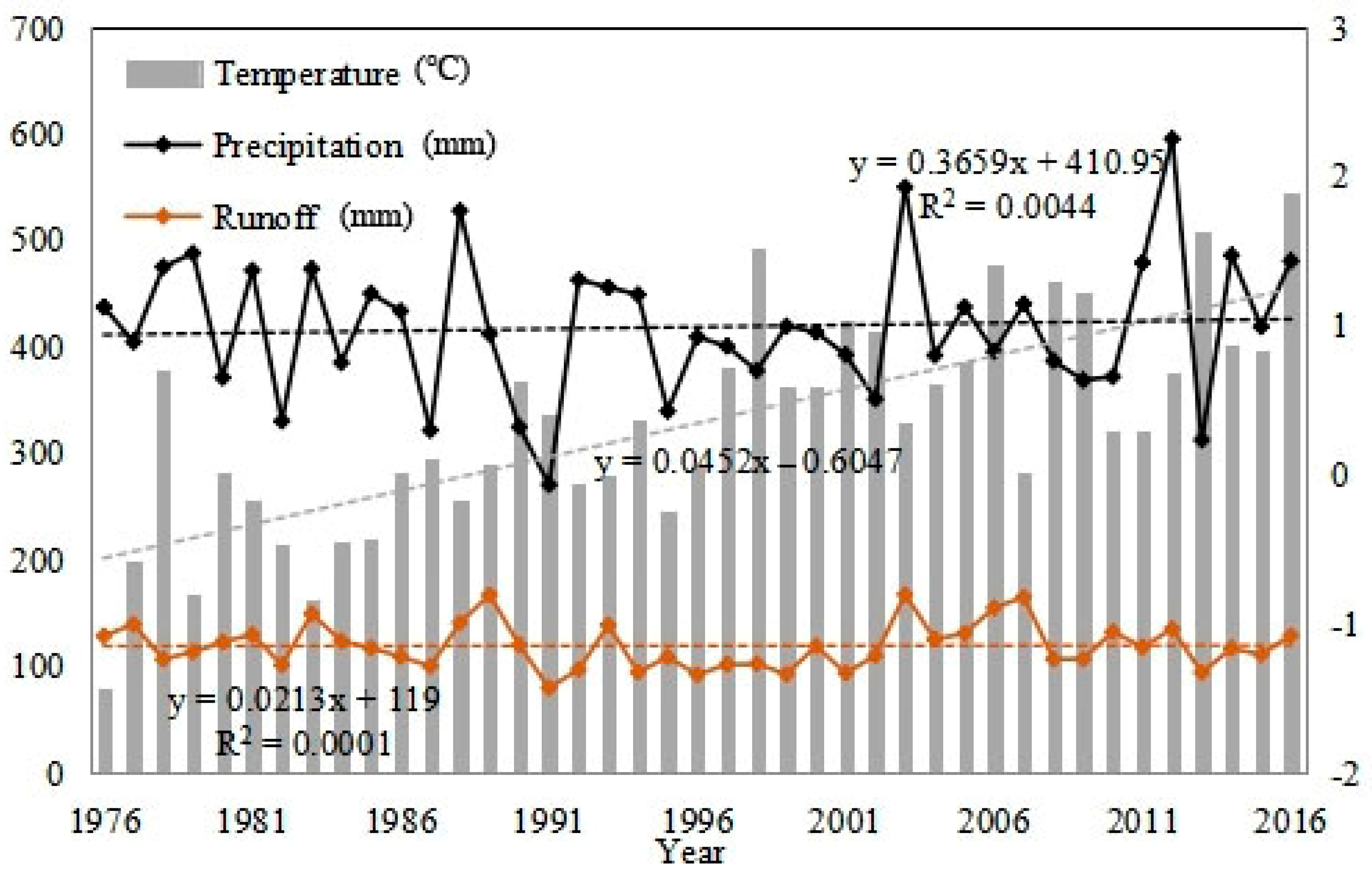
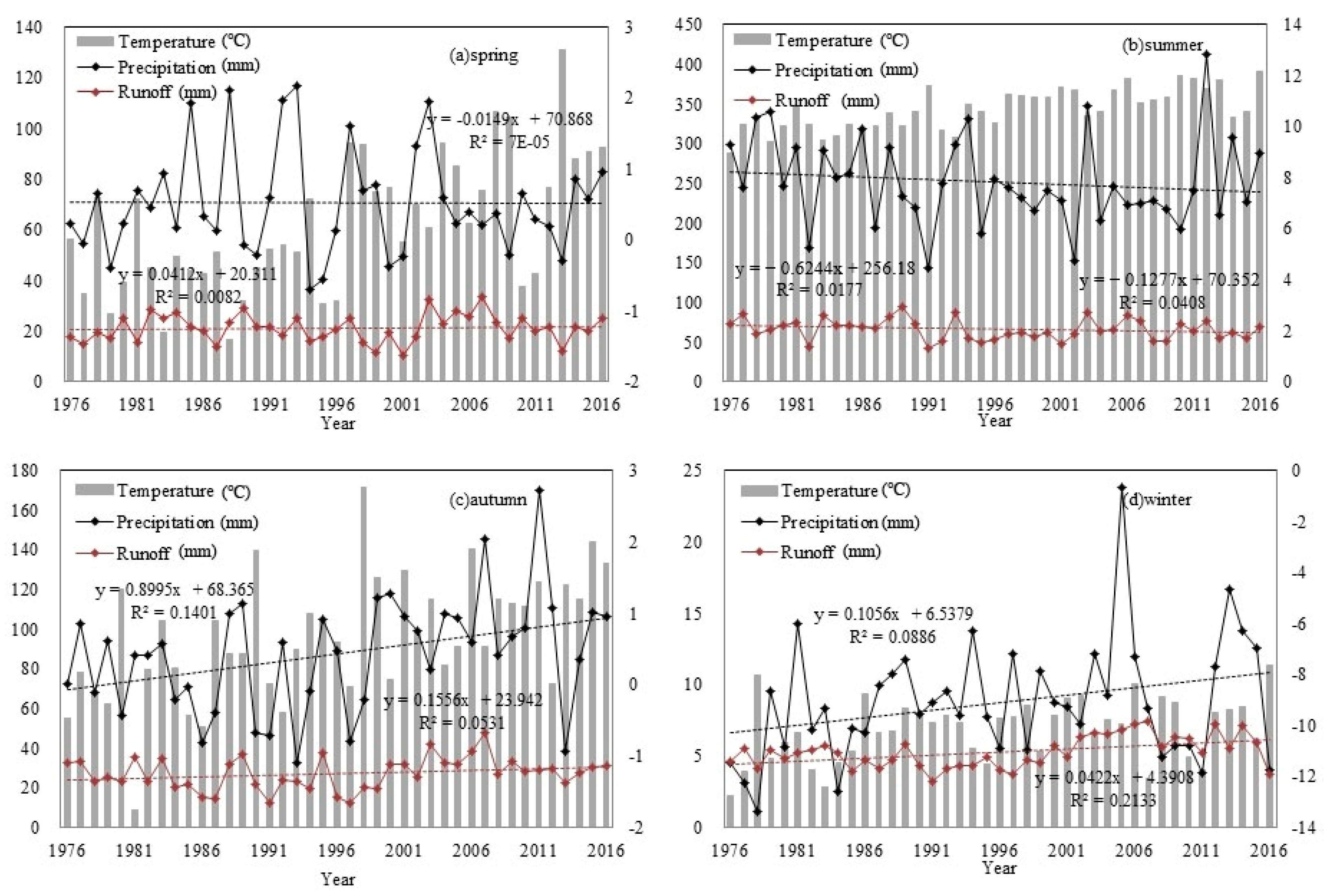
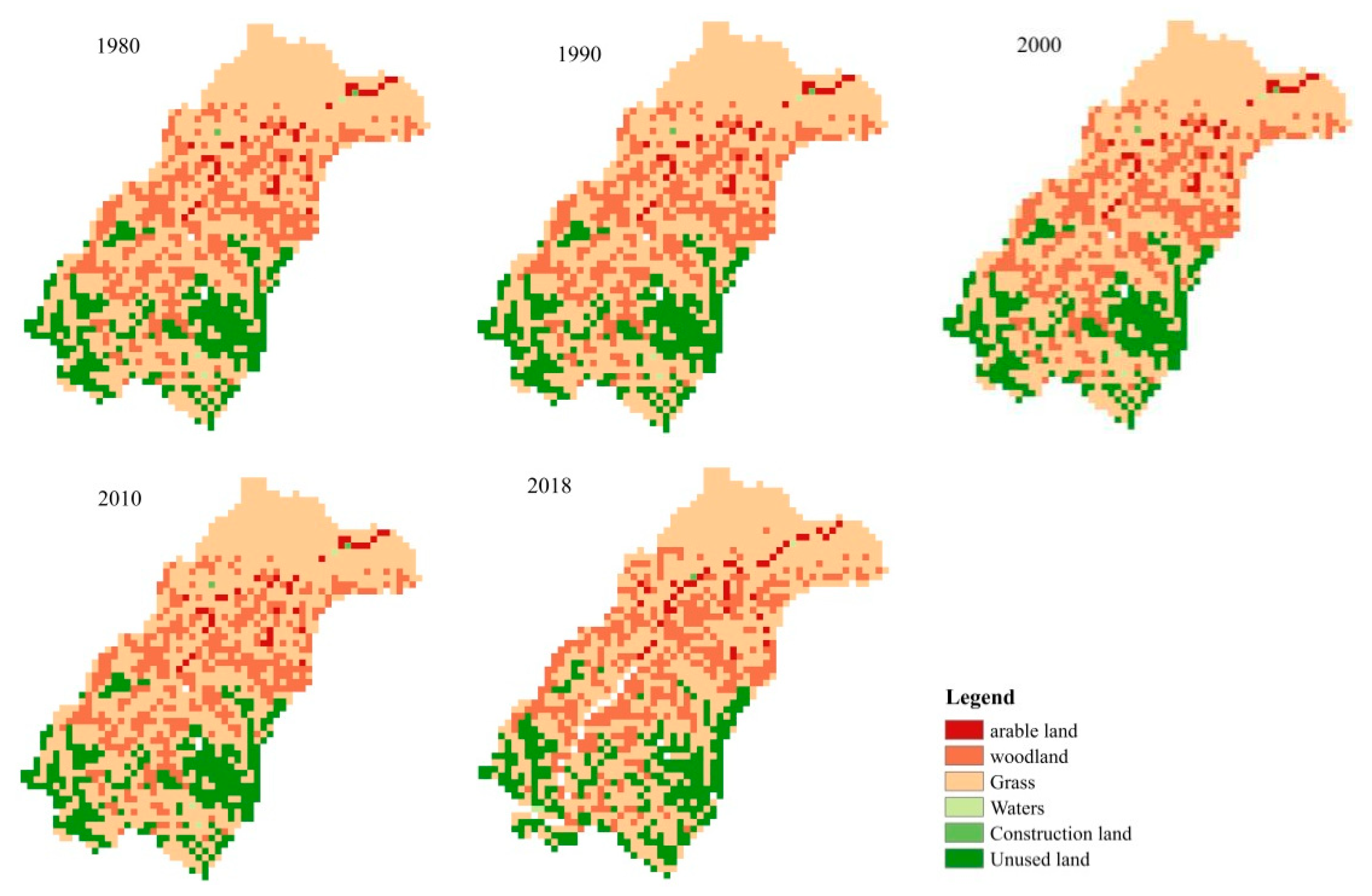
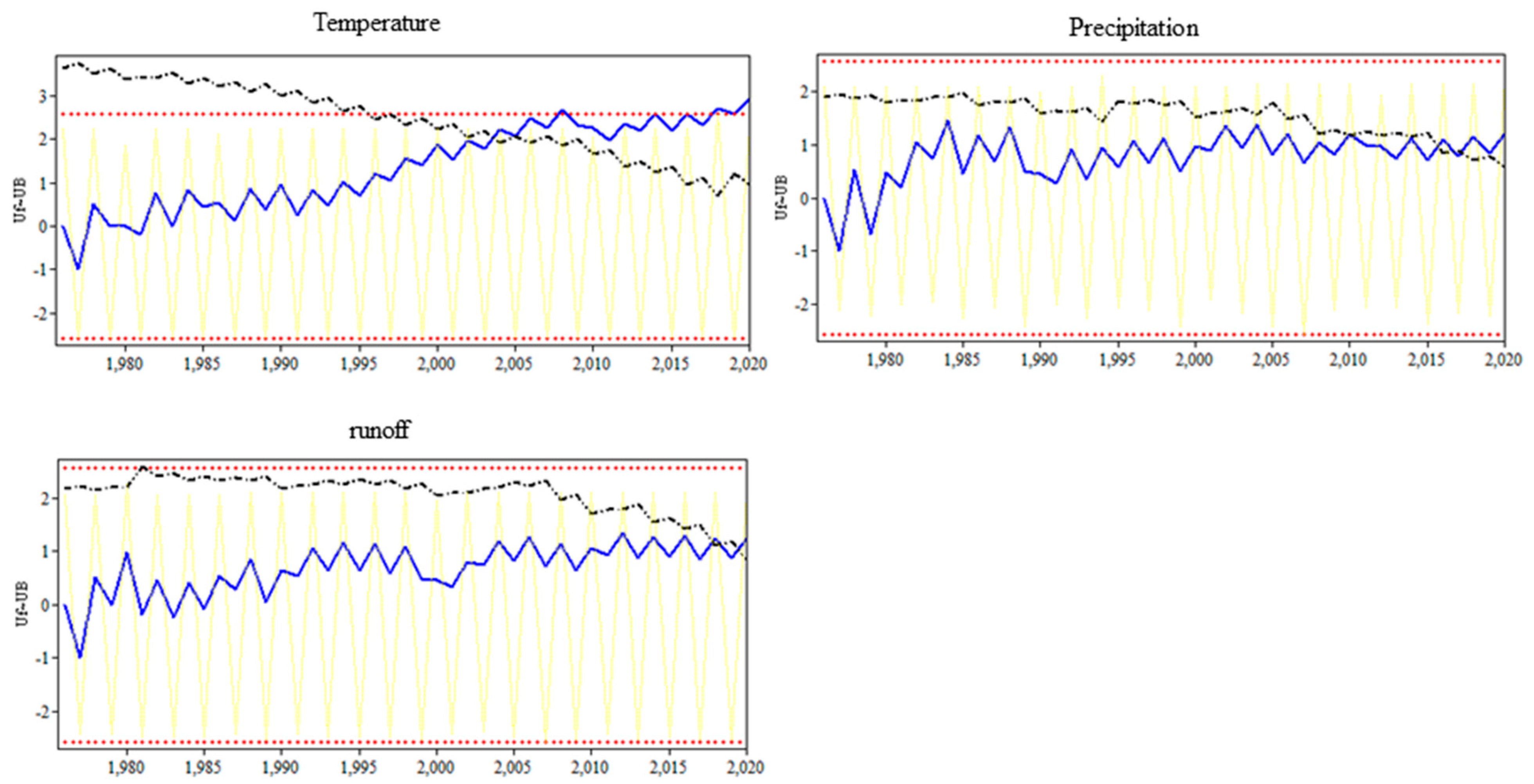
In arid inland river basins, the upstream runoff generation zones contribute the majority of the basin’s water resources. Global warming and land use changes will produce uncertain impacts on runoff variations in the headwaters of inland rivers in arid regions. Deeply understanding the response mechanisms of runoff to climate and land use changes is fundamental for scientifically developing watershed water resource utilization planning and achieving sustainable socio-economic and ecological development. By integrating meteorological data, hydrological data, and multi-source remote sensing data, this study systematically evaluates the factors influencing changes in watershed hydrological processes. The results show: (1) From 1976 to 2016, the Xiying River runoff exhibited a slight increasing trend, with an increment of 0.213 mm per decade. (2) At the interannual scale, runoff is primarily influenced by precipitation changes, with a trend of further weakening ice and snowmelt effects. (3) The land use types in the Xiying River Basin are predominantly forestland, grassland, and unused land. With increasing forestland and cultivated land and decreasing grassland and construction land area, the watershed’s water conservation capacity has significantly improved.
Keywords: temperature; precipitation; land use; runoff; Xiying River temperature; precipitation; land use; runoff; Xiying River