Article

Coastal Dynamics Initiate, Relocate and Terminate Short-Lived Wetlands of Dune Slacks, Manawatū, New Zealand


by
Sylvia P. Villacís Lozada
and
Gillian L. Rapson
*
Ecology Group, School of Natural Sciences, Massey University, Palmerston North 4412, New Zealand
*
Author to whom correspondence should be addressed.
Current address: Ecociencia, Quito 170517, Ecuador.
Land 2022, 11(7), 980; https://doi.org/10.3390/land11070980
Submission received: 11 May 2022 / Revised: 14 June 2022 / Accepted: 15 June 2022 / Published: 28 June 2022
(This article belongs to the Special Issue Protection, Management and Restoration of Coastal Ecosystems)

Abstract

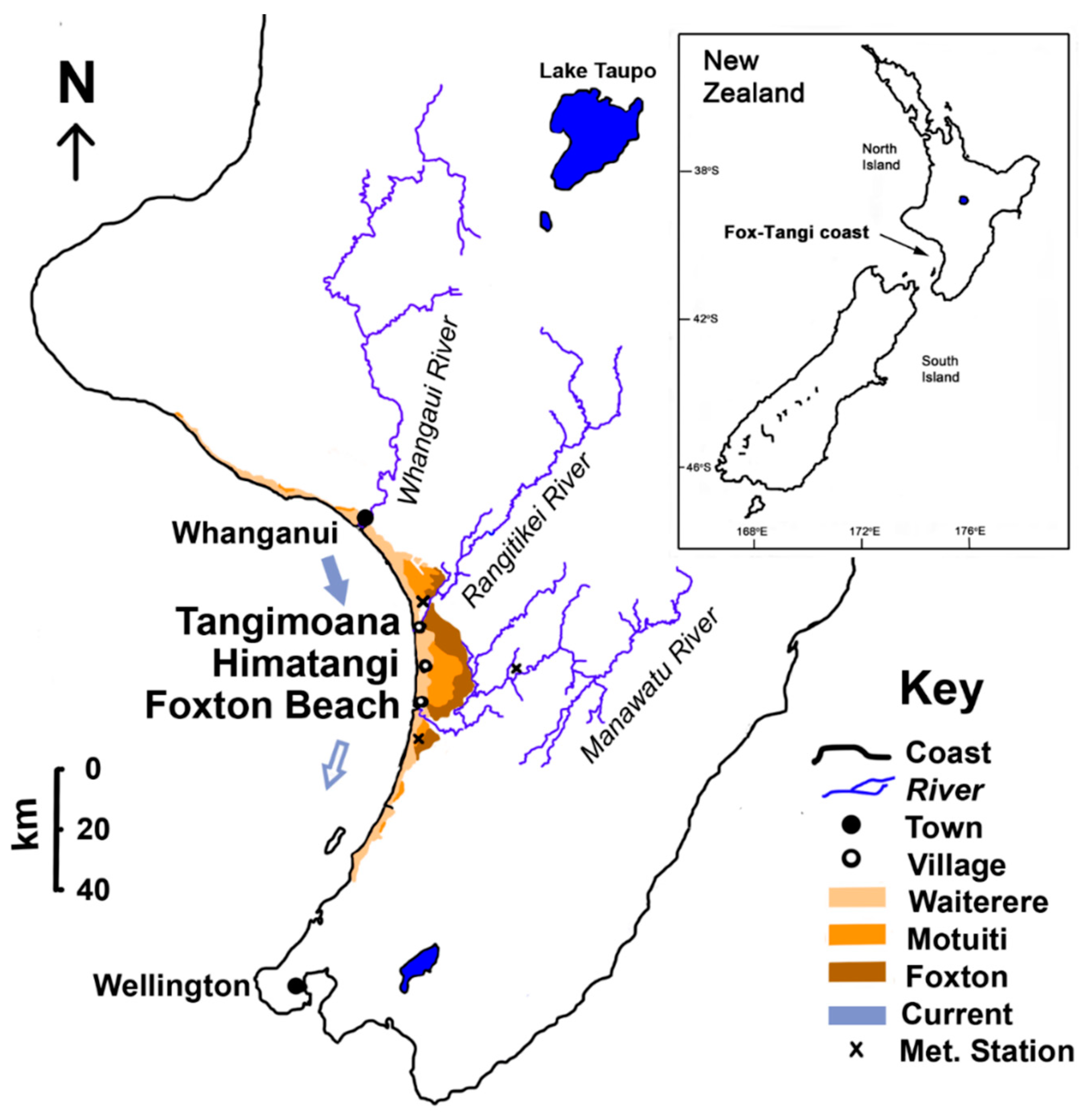
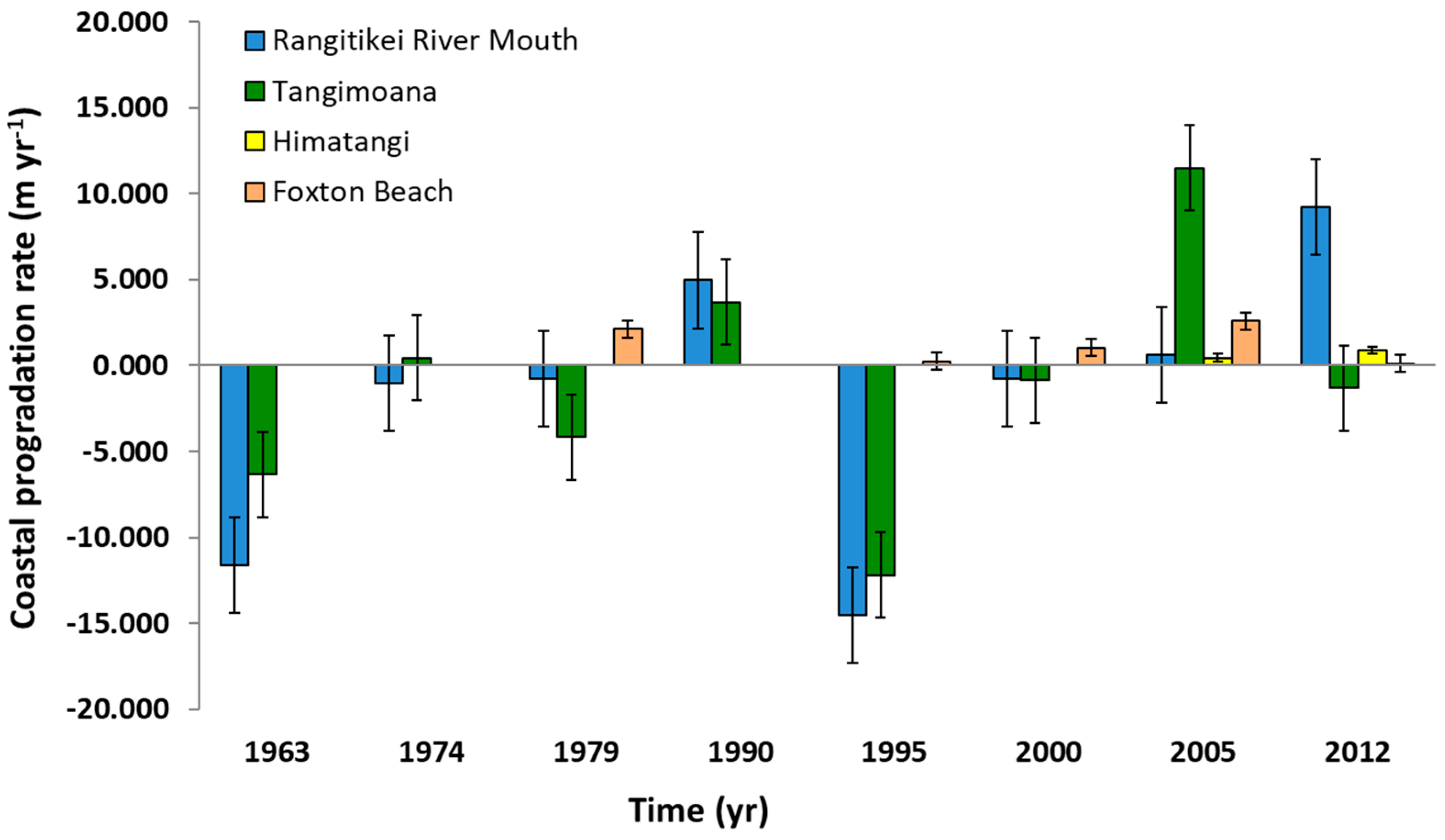
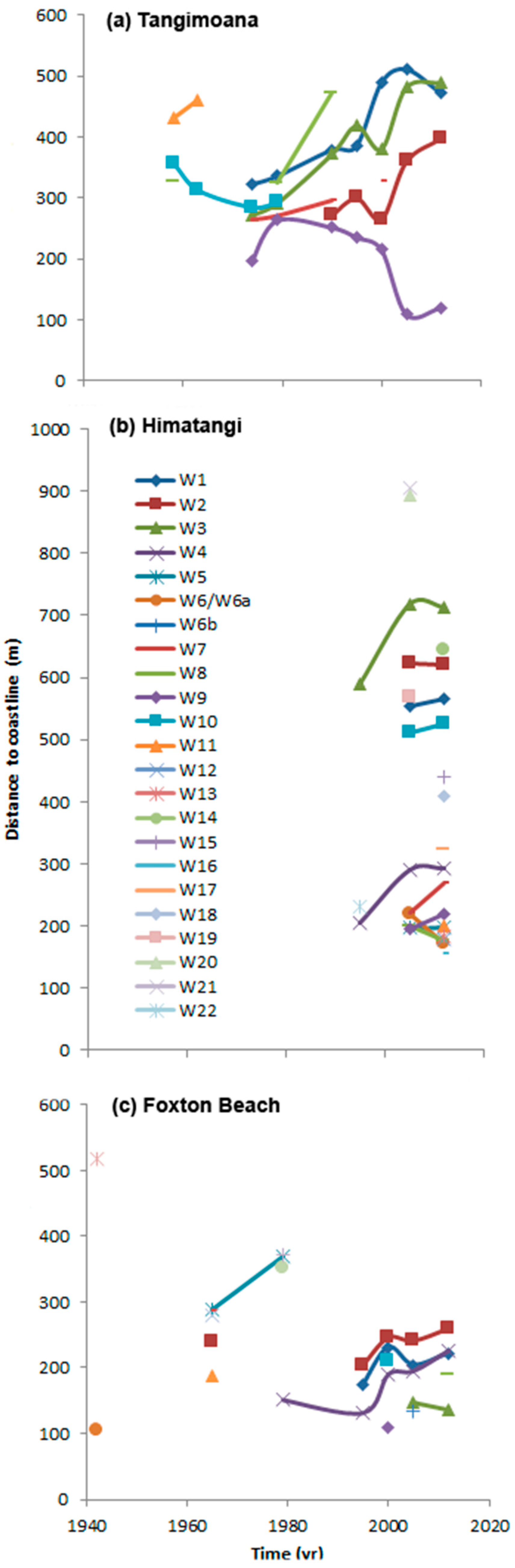
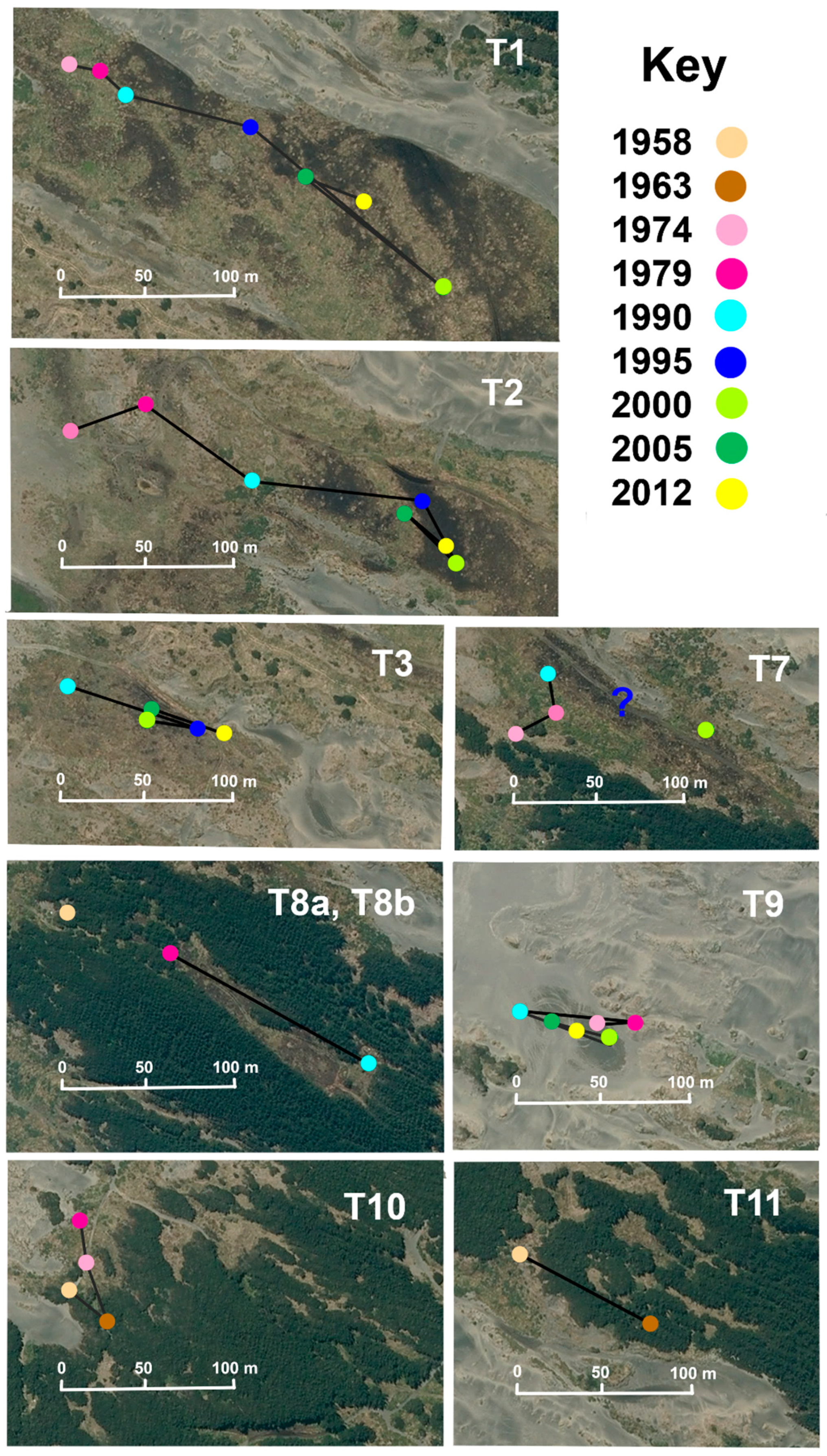
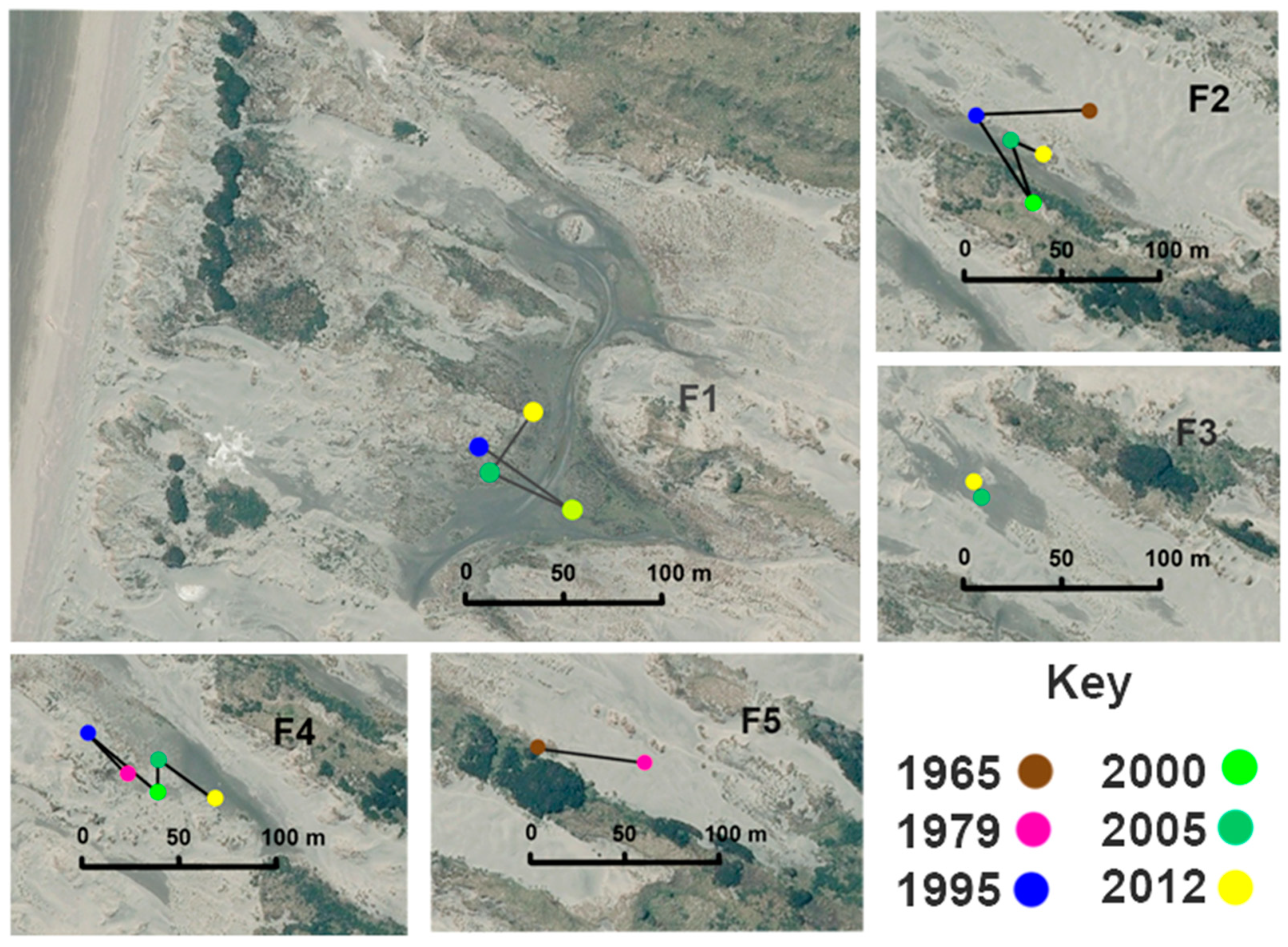
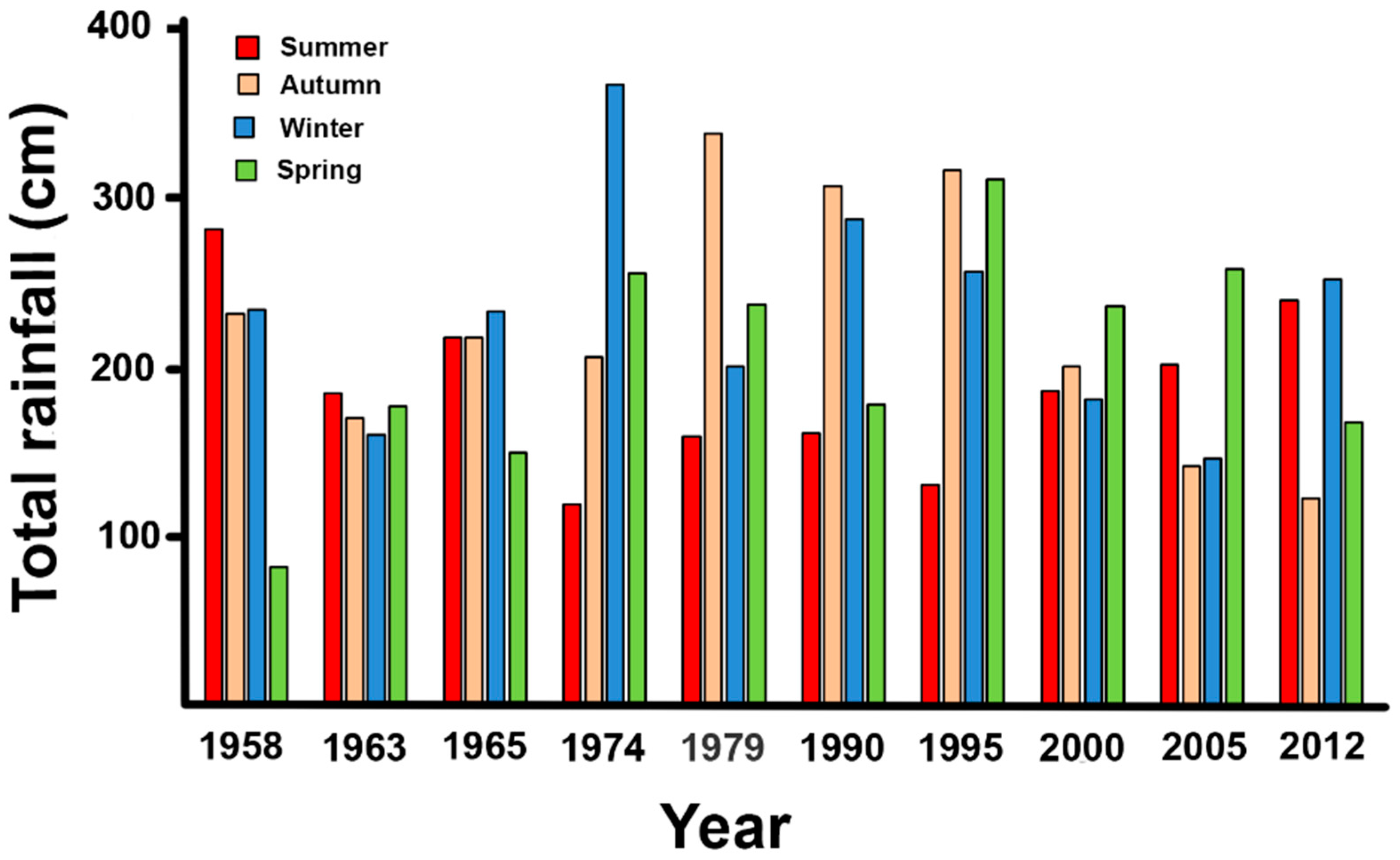
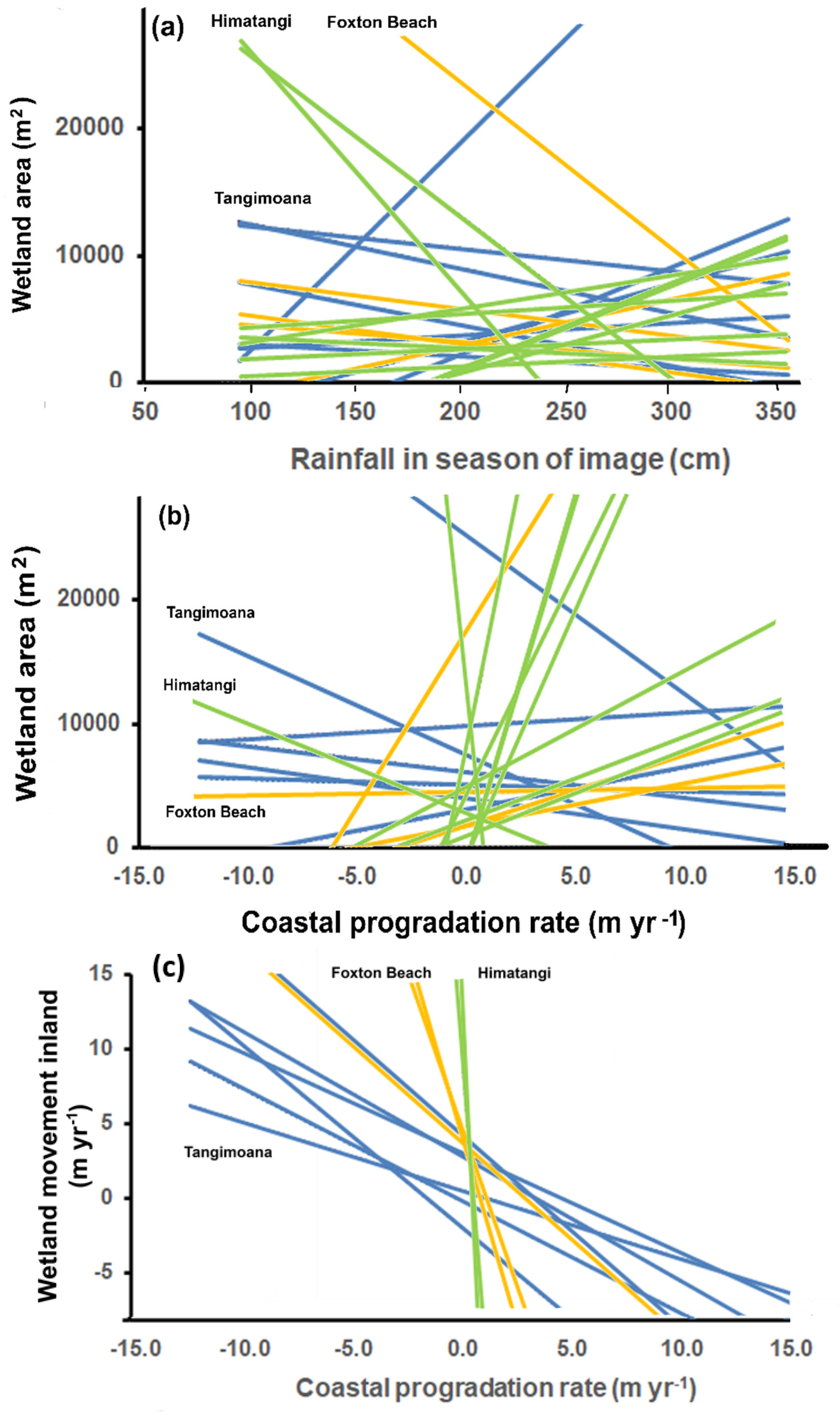
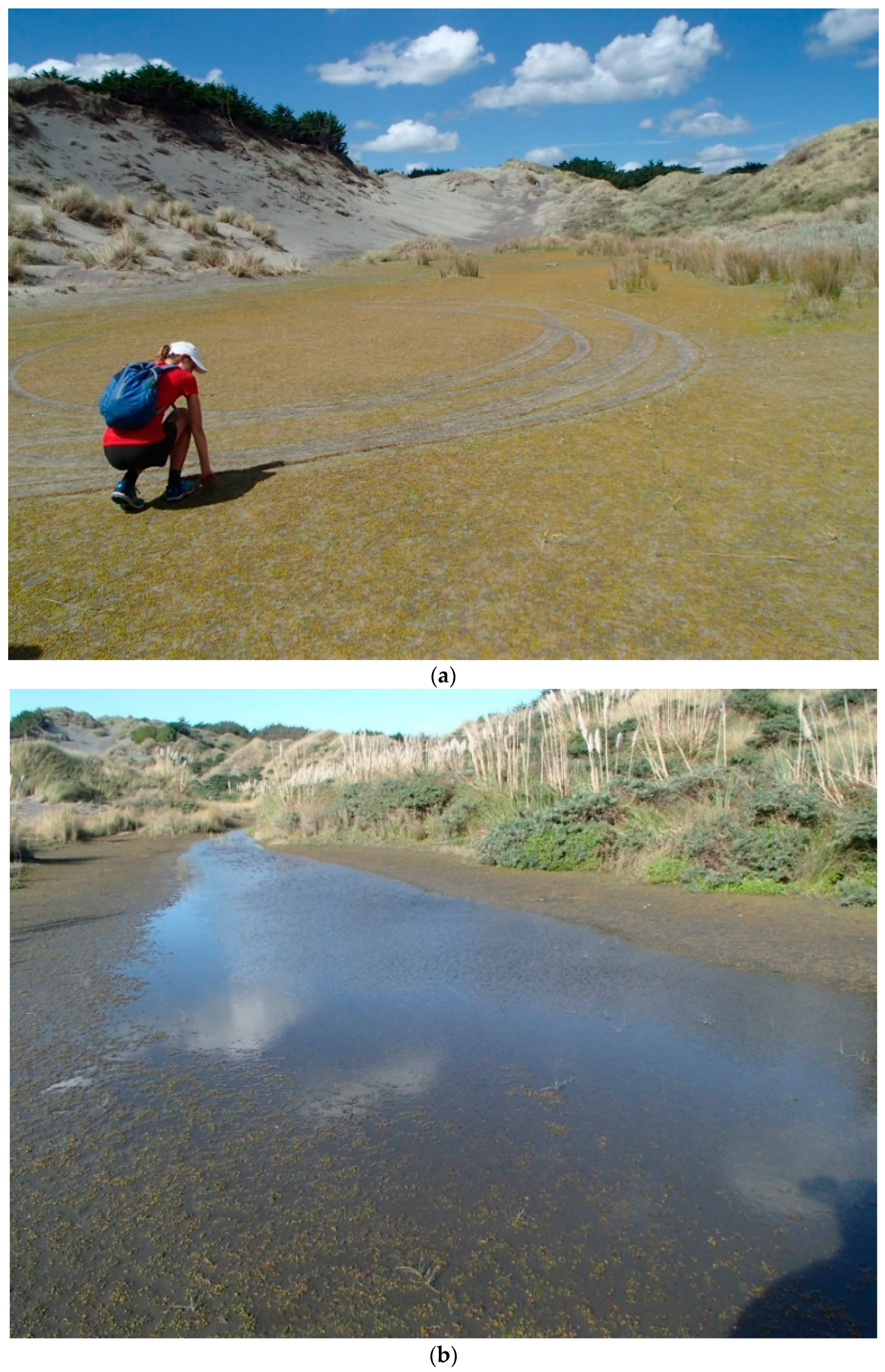
Dunelands are one of the most dynamic environments on Earth, which greatly hinders their conservation and management. In the dune slacks along the Manawatū coast, New Zealand, lies a zone of small, temporary, freshwater wetlands that host early seral communities of rare turf plants. Analysis of historical aerial photos allowed determination of coastline movement, distance of the wetlands from the coast, and wetland movements through time. Study sites were around the coastal settlements of Tangimoana and Foxton Beach, both having major rivers debouching nearby, and Himatangi, amongst stabilising exotic pine plantations. The coastline is prograding (with seaward movement) generally by 0.7–1 m yr−1, but is more variable closer to river mouths, with episodes of movement of up to 15 m yr−1. Wetlands occur 200–400 m behind the strandline, are closer to the coast at Foxton Beach, and furthest away at Himatangi. Wetlands wobble in their position at 5.2 m yr−1 but migrate inland at an average of 2.7 m yr−1. Wetland size appears unrelated to rainfall, but may be related positively to coastal progradation rate, to which wetland movement is negatively related. Near the major rivers, dunes are less stable, and wetlands can be impacted both positively and negatively. Wetland existence and movement is balanced between stability and dynamism on the coast, and management will need to be proactive to maintain environments for early successional turfs.
Keywords: erosion; flooding; longevity; morphodynamics; progradation; rainfall erosion; flooding; longevity; morphodynamics; progradation; rainfall