Article

Mitigated Greenhouse Gas Emissions in Cropping Systems by Organic Fertilizer and Tillage Management

1
Key Laboratory of Ecosystem Network Observation and Modeling, Institute of Geographic Sciences and Natural Resources Research, Chinese Academy of Sciences, Beijing 100101, China
2
Yellow River Delta Modern Agricultural Engineering Laboratory, Institute of Geographic Sciences and Natural Resources Research, Chinese Academy of Sciences, Beijing 100101, China
3
Shandong Dongying Institute of Geographic Sciences, Dongying 257000, China
4
University of Chinese Academy of Sciences, Beijing 100049, China
*
Author to whom correspondence should be addressed.
These authors contributed equally to this work.
Land 2022, 11(7), 1026; https://doi.org/10.3390/land11071026
Submission received: 13 June 2022 / Revised: 1 July 2022 / Accepted: 4 July 2022 / Published: 6 July 2022

Abstract

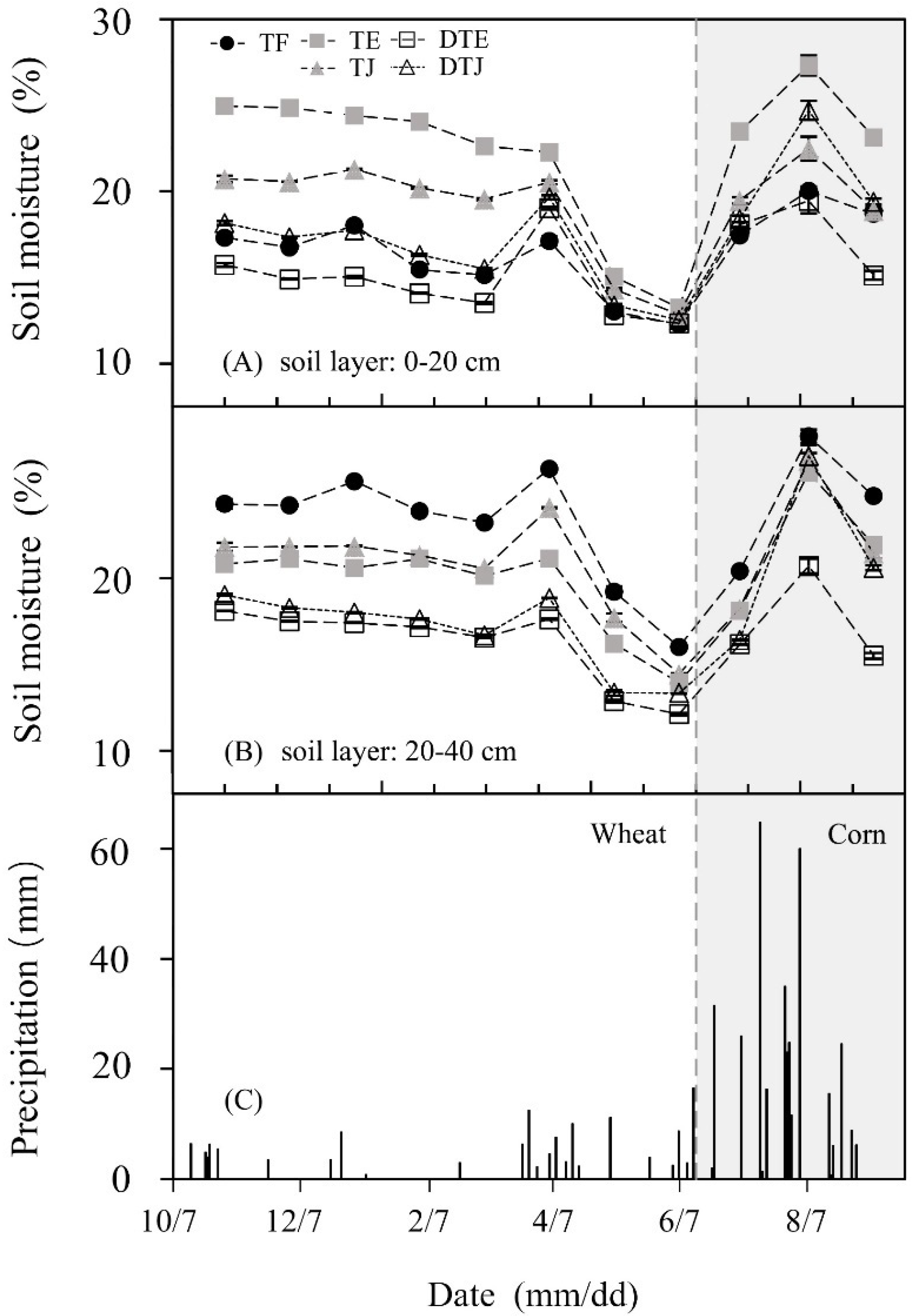
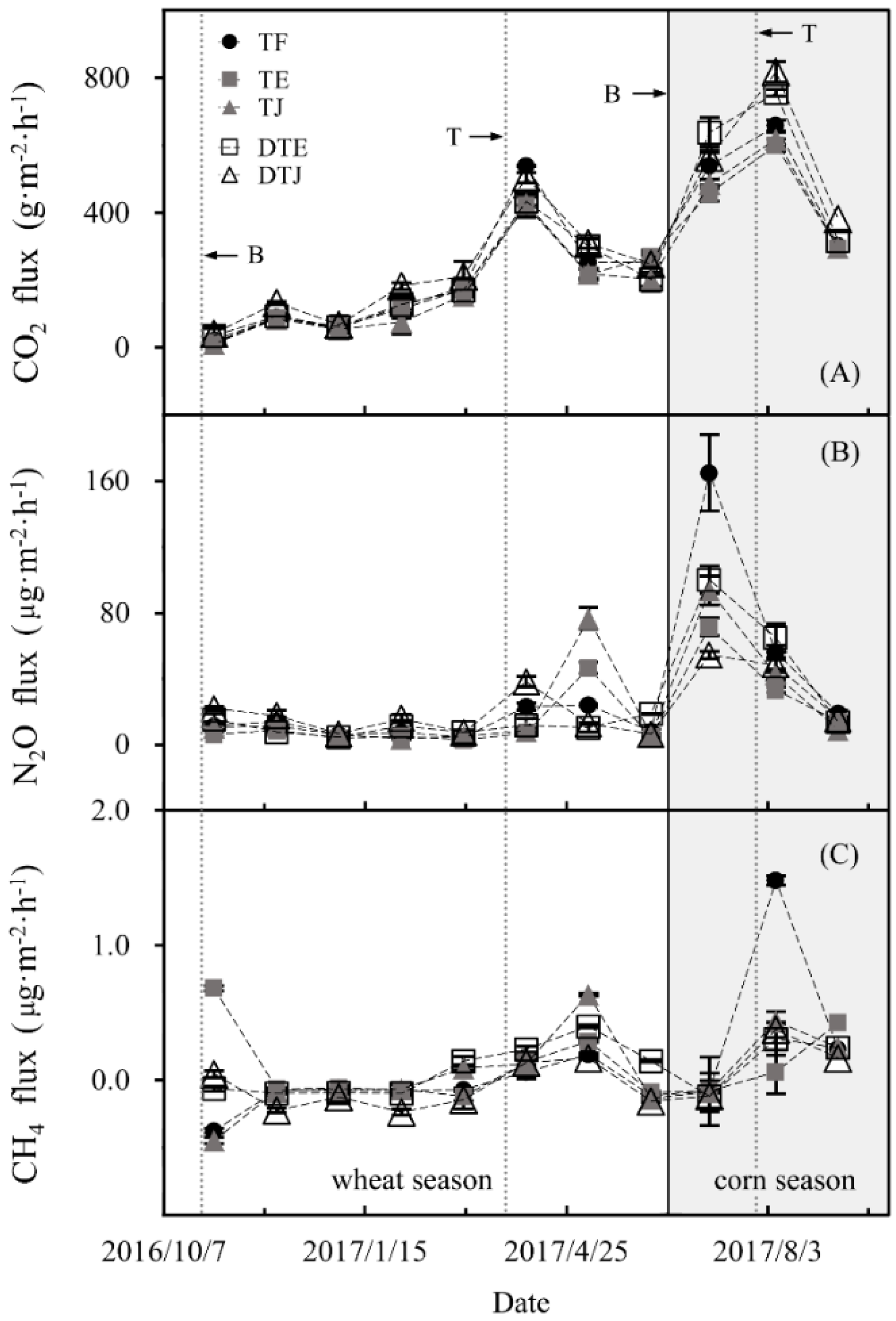
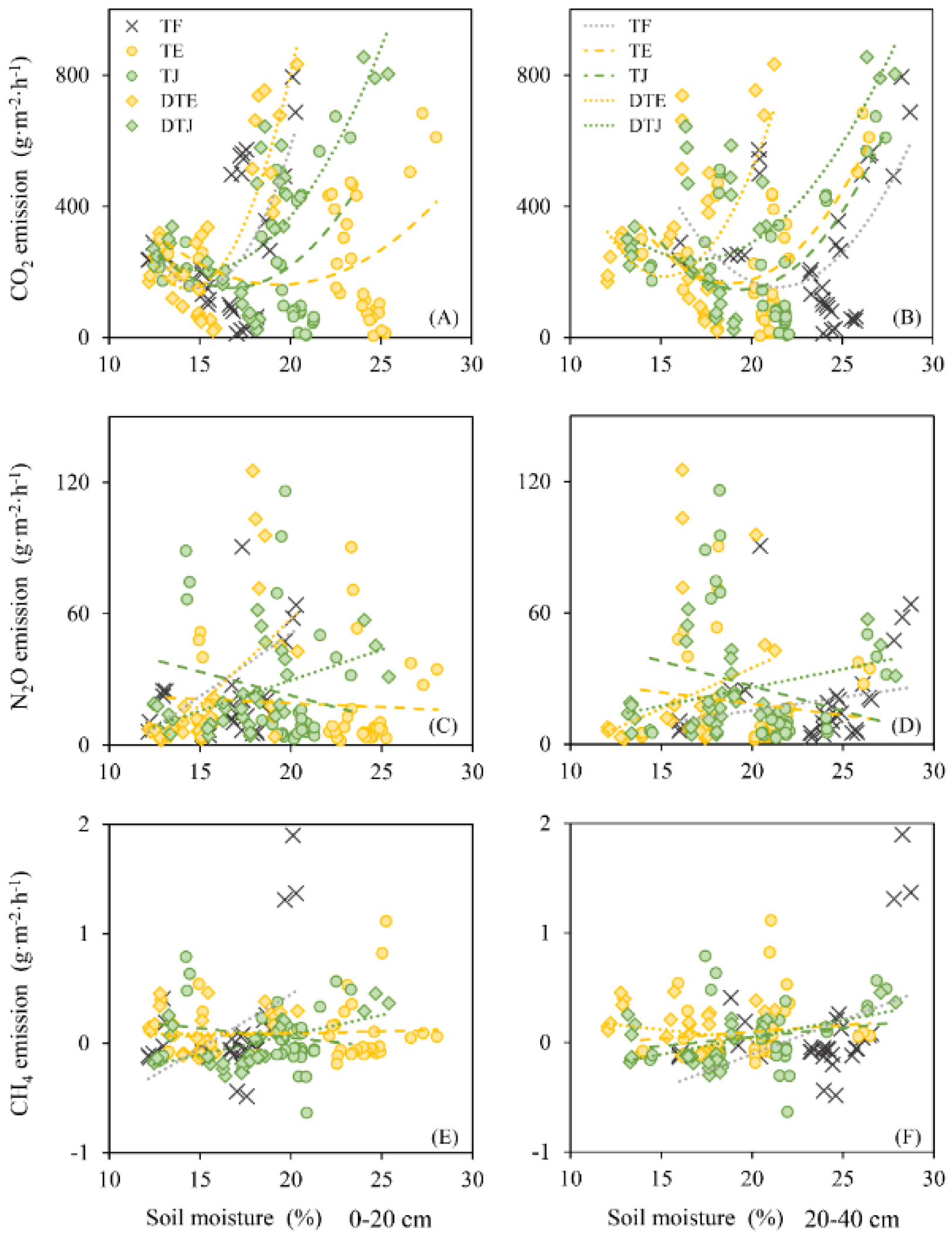
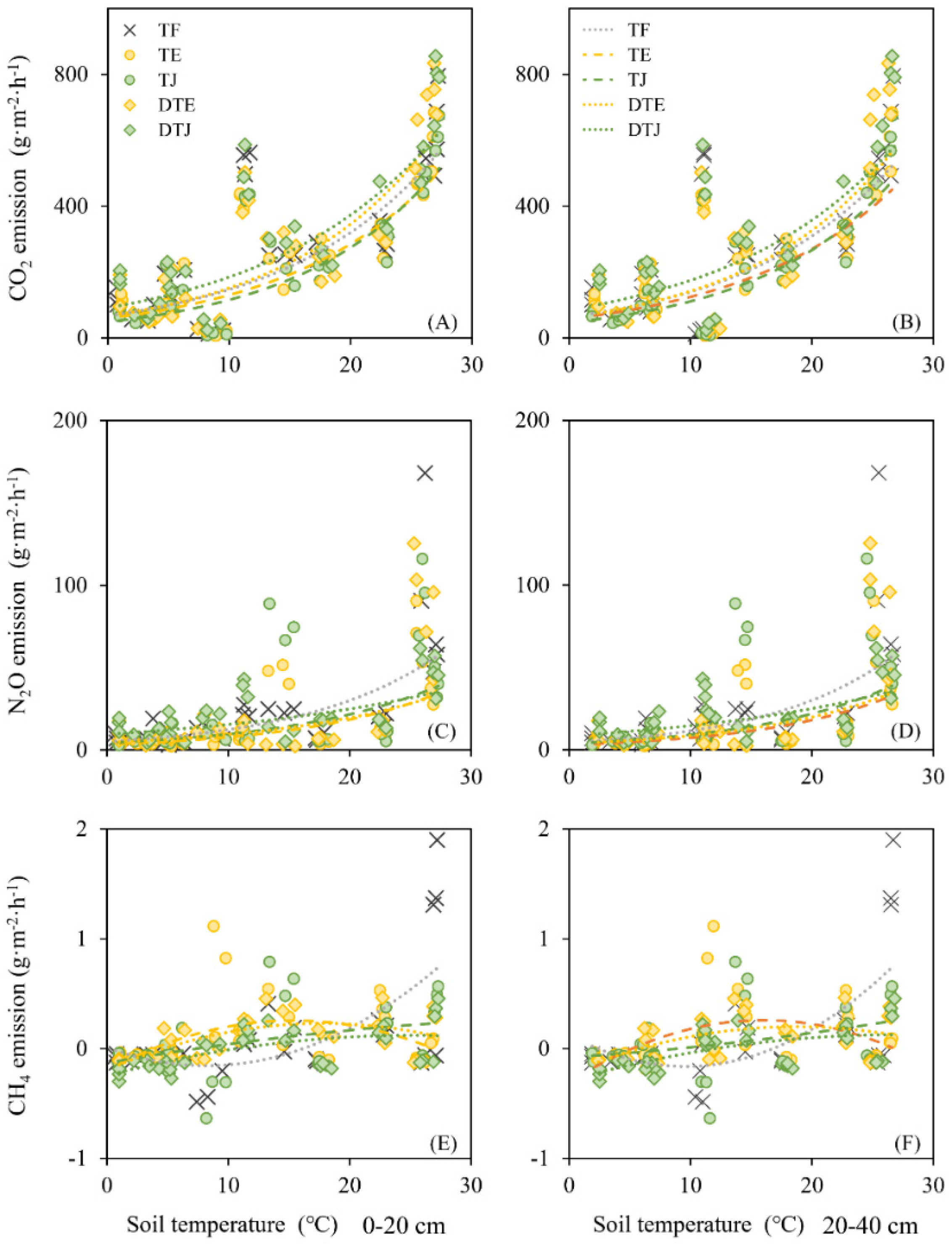
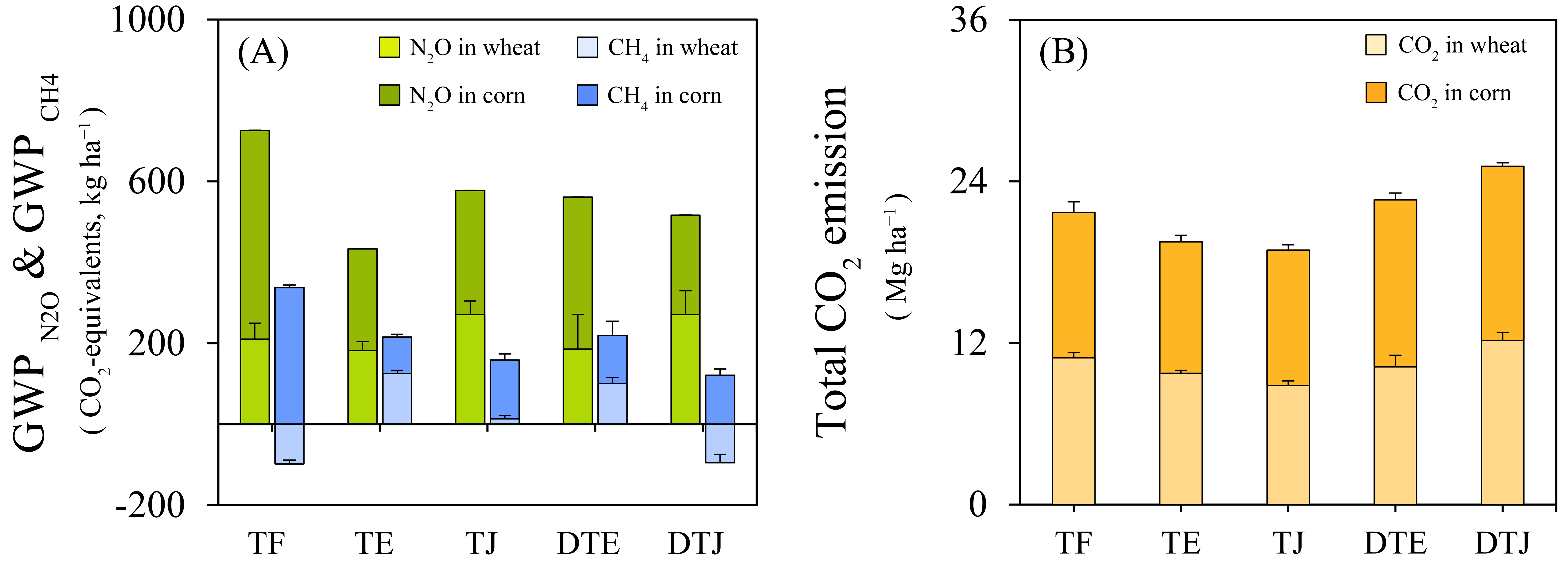
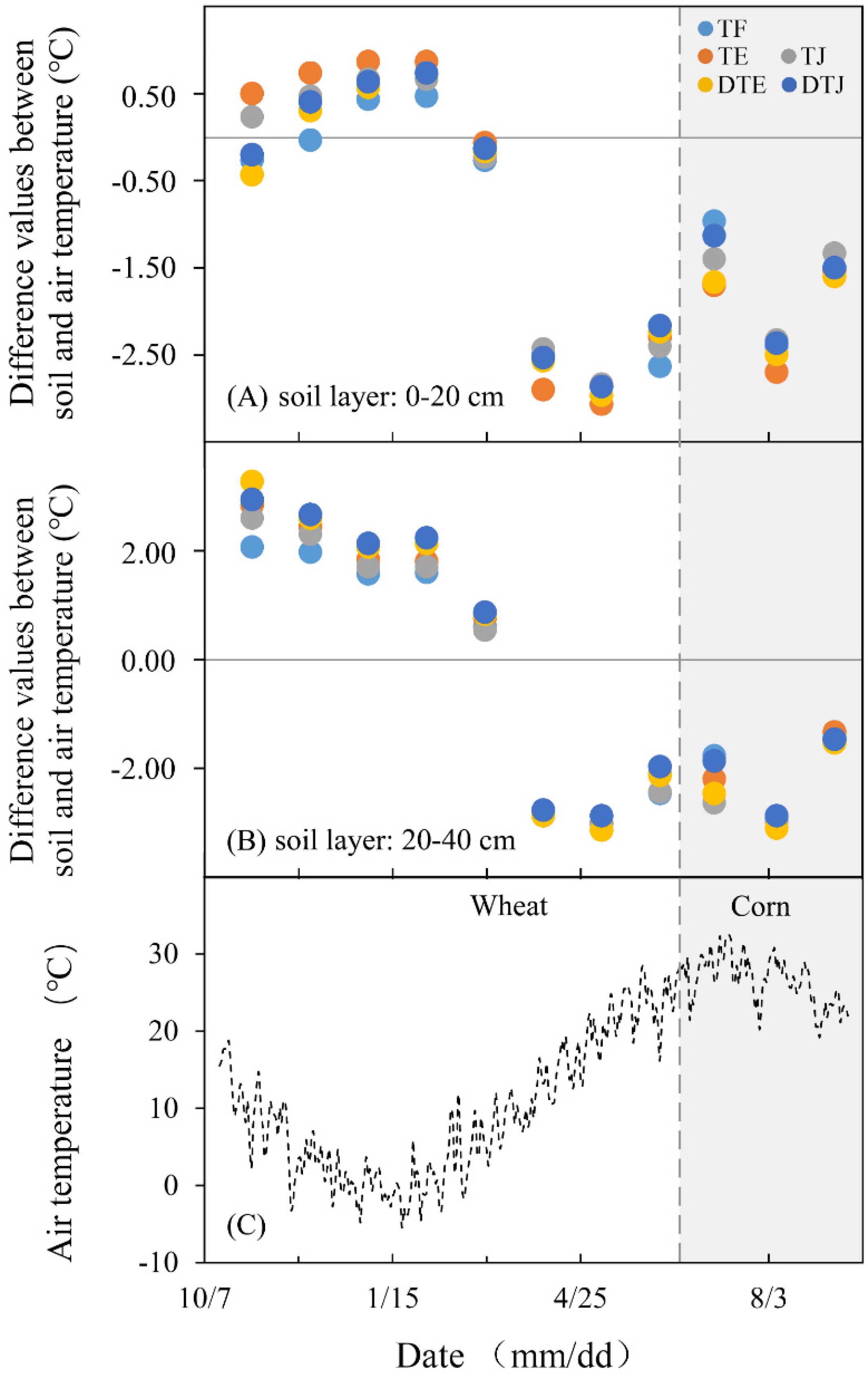
Cultivating ecological benefits in agricultural systems through greenhouse gas emission reduction will offer extra economic benefits for farmers. The reported studies confirmed that organic fertilizer application could promote soil carbon sequestration and mitigate greenhouse gas emissions under suitable tillage practices in a short period of time. Here, a field experiment was conducted using a two-factor randomized block design (organic fertilizers and tillage practices) with five treatments. The results showed that the application of microbial fertilizers conserved soil heat and moisture, thereby significantly reducing CO2 emissions (6.9–18.9%) and those of N2O and CH4 fluxes during corn seasons, compared with chemical fertilizer application. Although deep tillage increased total CO2 emissions by 4.9–37.7%, it had no significant effect on N2O and CH4 emissions. Application of microbial organic fertilizer increased corn yield by 21.5%, but it had little effect on the yield of wheat. Overall, application of microbial fertilizers significantly reduced soil GHG emission and concurrently increased yield under various tillage practices in a short space of time. With this, it was critical that microbial fertilizer be carefully studied for application in wheat–corn cropping systems.
Keywords: microbial fertilizer; tillage practice; wheat–corn cropping system; greenhouse gas; crop yield microbial fertilizer; tillage practice; wheat–corn cropping system; greenhouse gas; crop yield