1. Introduction
In recent years, more frequent and severe floods have been observed worldwide, and they are among the most visible effects of climate change. These phenomena confirm the growing impact of global warming on the Earth’s hydrological cycle. According to the World Meteorological Organization [
1], the year 2024 was the warmest year in recorded history, and extreme weather events—intense rainfall, heat waves, and prolonged droughts—led to the deaths of more than 8000 people, the displacement of approximately 40 million people, and economic losses exceeding
$550 billion [
1]. Extreme hydrometeorological events in recent years pose an increasingly serious challenge to the international community [
2]. In Europe, in September 2024, central and eastern regions were affected by floods caused by Storm Boris, which brought record rainfall to Austria, the Czech Republic, Slovakia, Poland, and Hungary. This event led to the displacement of more than 25,000 people and severe damage to infrastructure [
3]. A few weeks later, Spain experienced severe flooding in Valencia, where more than 500 mm of rain fell in eight hours, killing more than 200 people [
1]. Similar events were reported in other parts of the world: in Brazil and Colombia, heavy rainfall caused landslides and mass evacuations; in Kenya and Somalia, floods affected hundreds of thousands of people; and in the United States, historically unprecedented flooding of the Mississippi River caused widespread damage [
4]. These simultaneous disasters highlight the global dimension of flood risk, which keeps intensifying and is directly linked to climate change [
5,
6]. In response to the growing threat, one of the key tools for mitigating the effects of flooding has been the designation of flood risk zones, i.e., areas with a specified probability of inundation and related risk level. These maps are a fundamental tool in spatial planning, risk management, and public awareness of hazards [
7,
8]. In the European Union, the effectiveness of this approach is confirmed by the Floods Directive [
9], which requires Member States to prepare flood hazard and risk maps and risk management plans based on hydrological and hydraulic modeling [
9] (2007). This directive has significantly improved the quality of spatial planning and raised risk awareness among European states [
10,
11]. In many developing countries, including in Southeast Asia, the implementation of similar frameworks is limited by the lack of reliable topographic and hydrological data and, often, by socioeconomic issues [
12,
13]. For example, in Thailand, despite significant progress in water resource management, the lack of detailed, standardized flood hazard maps across numerous river basins hinders effective risk assessment and preventive planning [
14].
Southeast Asia is among the most vulnerable regions worldwide to natural disasters. The frequent occurrence of typhoons, floods, landslides, earthquakes, and tsunamis is due to both climatic and geographical conditions, as well as population density and rapid urbanization [
15,
16,
17]. Despite a growing number of disaster risk management initiatives, many countries in the region still struggle with inadequate disaster preparedness plans, limited institutional coordination, and underdeveloped early warning systems [
16,
18,
19,
20].
Flooding is a major natural hazard in tropical urban areas, where monsoonal rainfall, rapid urbanization, and climate change significantly increase flood risk. Hence, cities such as Hat Yai and Bangkok are particularly vulnerable due to low-lying topography and insufficient drainage capacity [
21,
22]. Hat Yai has experienced frequent and severe flooding, notably during the 2000 and 2025 events. Supharatid [
21] demonstrated that physically based hydraulic modeling combined with soft computing approaches can effectively simulate flood behavior and support early warning systems. At the same time, structural measures, such as diversion canals, can significantly reduce flood impacts. More recent research highlights the growing influence of climate change on flood damage. Tabucanon et al. [
23] showed that integrated hydrologic–hydraulic modeling and damage assessment under future climate scenarios indicate substantial increases in flood losses, which can be significantly reduced through combined structural and non-structural measures. Advances in real-time flood forecasting have further improved urban flood preparedness. Chitwatkulsiri et al. [
24] demonstrated high accuracy in predicting inundation risk in Bangkok, while long-term land-use changes continue to increase flood exposure despite past catastrophic events [
22]. Recent satellite-based assessments of flooding in Bangladesh also confirm the large-scale impacts of monsoon-driven floods on urban areas and populations [
25]. Overall, existing research emphasizes the importance of integrated and adaptive flood risk management strategies that combine hydrodynamic modeling and early warning systems. Their practical implementation, however, is often constrained by the limited availability and quality of input data, which remains a major challenge in flood modeling. In Europe, particularly under the EU Floods Directive, flood risk assessments benefit from well-developed monitoring networks and high-resolution topographic data [
7,
10]. In contrast, many regions of Southeast Asia face substantial data gaps, including in hydrological observations and in access to detailed topographic and bathymetric datasets. This contrast underscores the need for flexible modeling frameworks based on publicly available data to support flood risk assessments in data-scarce regions.
The primary purpose of the study is to implement the procedures for flood hazard assessment developed for European countries, while accounting for the uncertainty arising from different data availability in Thailand. In this region, such maps have not previously existed, despite the increasing frequency and severity of flood events. The study shows that even under conditions of limited availability of topographic and bathymetric data and reliance on publicly available hydrological datasets, it is still possible to produce flood hazard maps. The proposed approach explicitly implements the methodology set out in the EU Floods Directive [
9], as commonly used in Poland, and adapts it to a non-European context. The main focus is on integrating and systematically using publicly available data sources to address missing information and ensure methodological consistency with established European flood risk assessment standards. Additionally, the investigations focus on a preliminary flood risk assessment based on such data.
2. Description of the Study Object
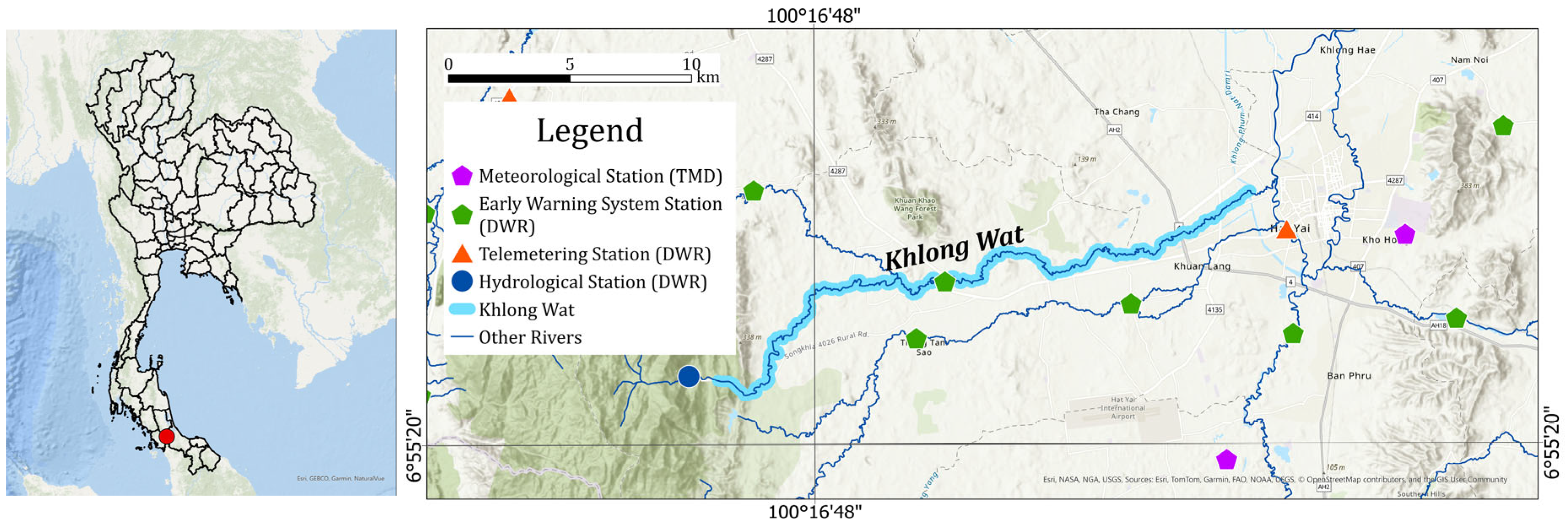
Wat River, also known as Khlong Wat, is located in the Thung Tum Sao Sub-district of Hat Yai District, Songkhla Province, in southern Thailand. The river stretches approximately 40 km, originating in the ecologically significant Ton Nga Chang Wildlife Sanctuary, where a hydrological monitoring station operated by Water Resources Regional Office 8 has been collecting data on water level, discharge, and sedimentation since 1980 (
Figure 1).
The Khlong Wat watershed, a sub-watershed within the Khlong U-Tapao basin (Songkhla Lake watershed), is hydrologically connected to Khlong U-Tapao, the primary water source for agricultural, industrial, and domestic use in Songkhla Province and a major contributor to downstream flooding and soil erosion [
26]. Owing to its influence on flood dynamics in densely populated areas such as Hat Yai, a major commercial hub in southern Thailand [
27]. The watershed represents a strategically important area for flood hazard analysis. The watershed covers approximately 140 km
2 [
28], with discharge values recorded between 1980 and 2022 ranging from 2.46 to 108 m
3/s (Department of Water Resources).
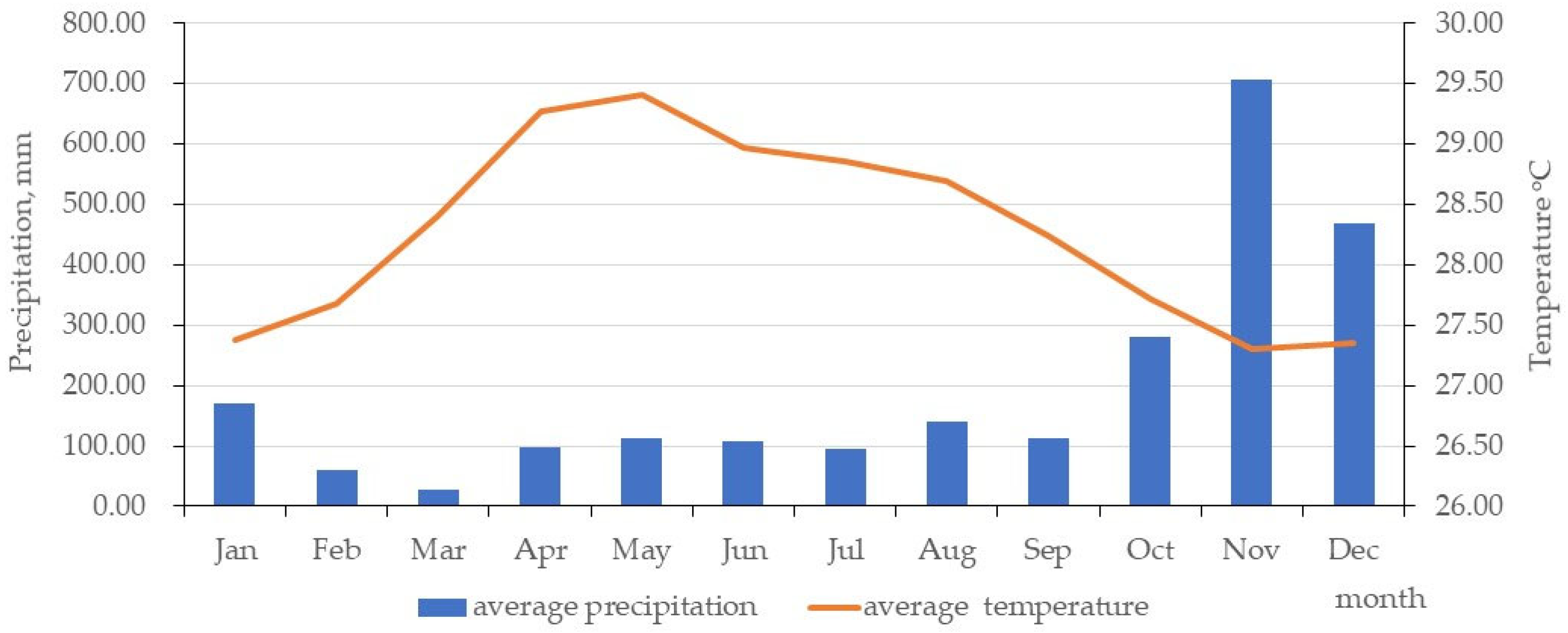
Songkhla Province, located in southeastern Thailand, experiences a monsoon-driven tropical climate, resulting in a distinct annual temperature cycle. As illustrated in
Figure 2, and in line with observations reported by Noppradit et al. [
29] as well as long-term records from the Thai Meteorological Department (2013–2024), mean temperatures rise steadily from January to over 29 °C during the pre-monsoon period (April–May). Following this peak, temperatures gradually decline throughout the southwest monsoon season (May–October) and continue to decrease during the northeast monsoon (October–February), reaching minimum values of slightly above 27 °C in November. According to Suwannarat et al. [
30], rainfall variability in Songkhla can be divided into two periods (
Figure 2). The province experiences rainfall throughout the year, with a shorter, more intense wet period lasting about 5.5 months, from early July to mid-December.
Rainfall variability further complicates flood risk. Recent statistics from the Natural Resources and Environment database indicate that annual rainfall measured at the Hat Yai Airport station was 1597 mm in 2021, rose sharply to 2395.2 mm in 2022, and reached 2063.6 mm in 2023 [
31]. According to Panichkitkosoljul [
32], Songkhla receives its highest average monthly rainfall in November (304.8 mm), while February is typically the driest month, with only 22.9 mm. In addition to seasonal patterns, long-term climate observations indicate a delay in monsoon onset, exemplified by the 2018 monsoon, which did not arrive until 2019 [
29]. Such changes have direct implications for water resource management and flood preparedness.
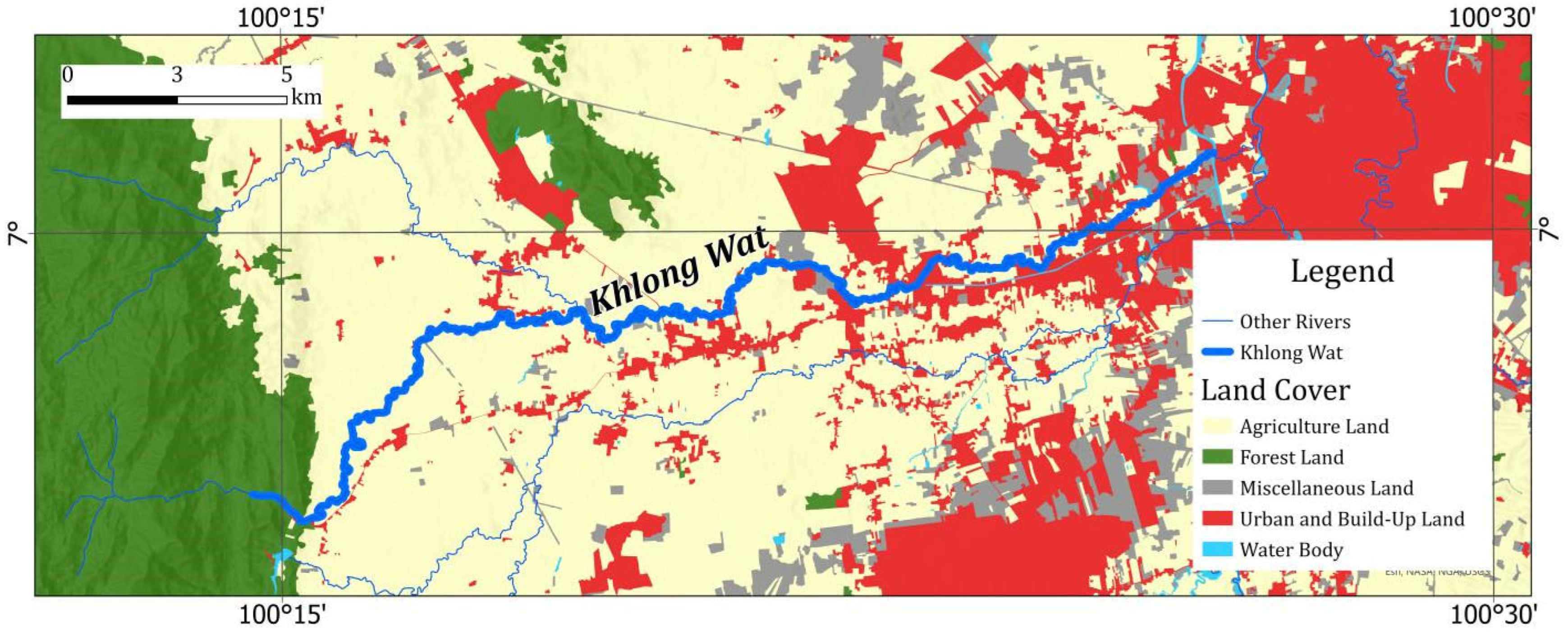
The focus of this study is characterized by mixed land use. More than 50% of the area is agricultural, followed by forested areas within the national park, then residential and built-up areas. Other uses and water bodies account for the smallest proportion (
Figure 3). Notably, downstream areas have experienced increased urbanization over recent decades, making them more vulnerable to flood hazards due to altered land cover and reduced drainage capacity. Hat Yai District, at the heart of the watershed’s downstream zone, is one of southern Thailand’s most important economic centers, with over 400,000 residents out of a provincial population exceeding 1.4 million [
31]. The province’s economy is driven by marine petroleum extraction, fisheries, tourism, and other industries, while agriculture, forestry, and fisheries still employ nearly 250,000 individuals. Given the dense population, economic significance, and climate variability, the Khlong Wat watershed presents a critical and timely case for flood hazard modeling and mitigation planning.
3. Materials and Methods
In the present study, three types of data were used. These are (1) spatial data, e.g., Digital Terrain Models, (2) measurement data like cross-sections of river channel, (3) additional spatial data–OpenBuildings layer [
33], (4) hydrological data related to river flow and water stages in the river. Additionally, general spatial data, such as Google Maps and land cover maps, were used.
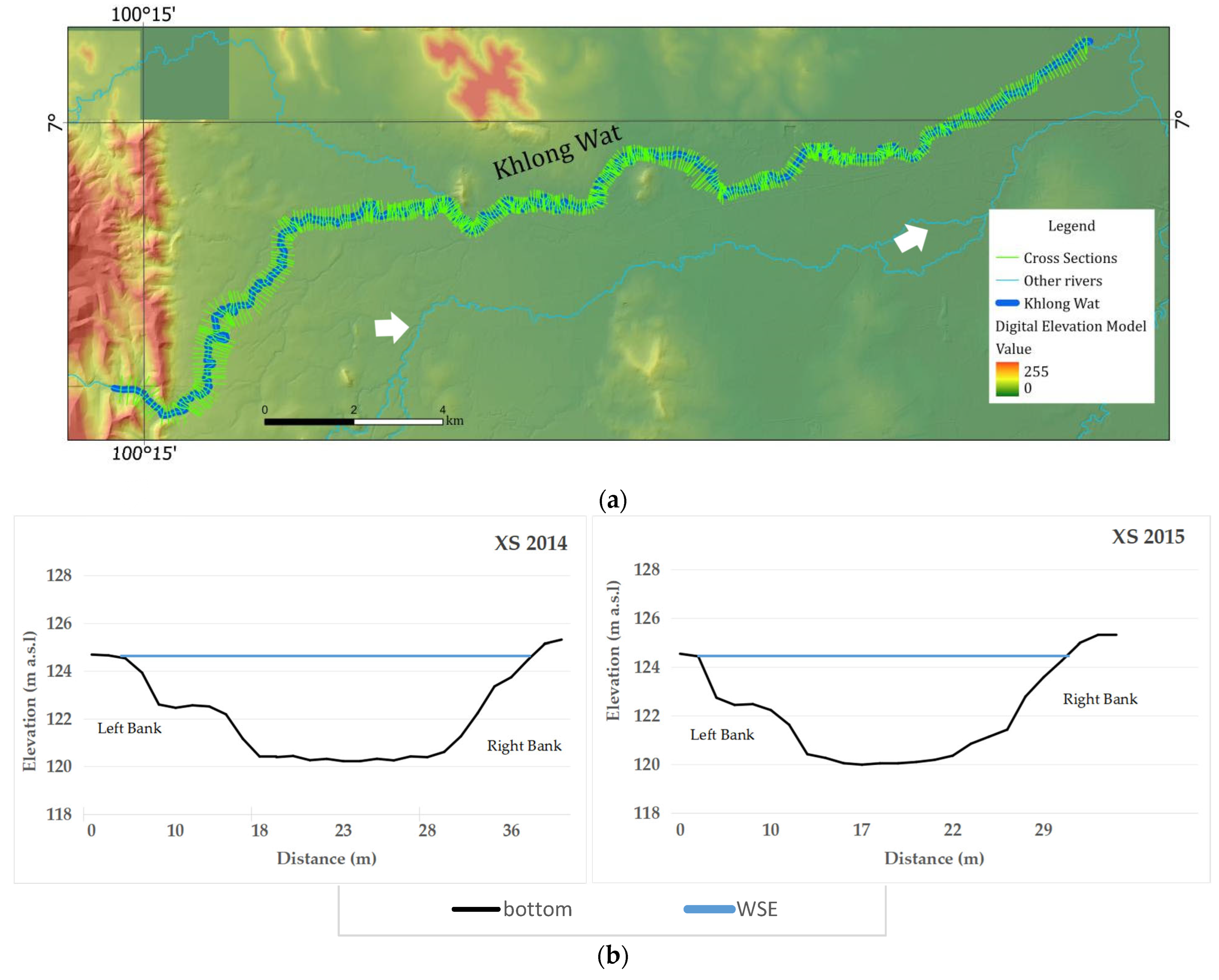
There are several publicly available DEMs for the area of interest, e.g., SRTM or AW3D. However, the resolution of such models, generally 30 m × 30 m, is insufficient for hydrodynamic modeling. Accordingly, the processed DEM was used at a 5 m × 5 m resolution. The data were obtained from the Royal Thai Survey Department (RTSD) and subsequently provided by Prince of Songkla University for this research. The coordinate system employed is WGS 84/UTM zone 47N (EPSG: 32647), covering the entire length of the Khlong Wat watershed. This stretch extends from the Khlong Wat water monitoring station in the upstream area to the downstream point at the Flood Control Channel (Phuminat Damri Canal or Khlong Ror 1), a project initiated by King Rama IX to enhance the capacity of natural water flow in Khlong U-Tapao. In this process, DEM data at a 1:5000 scale and a 5 m resolution are stitched together to cover the entire study area (
Figure 4). To present the study area as a single layer, ArcGIS Pro 3.4.0 was used. All DEM datasets are combined into a single DEM layer using the Mosaic tool in the System Toolboxes. Additionally, a Hillshade layer is created to enhance the visualization of elevation differences, providing a clearer representation of the terrain’s topography. This detailed DEM enables precise modeling of water flow dynamics and supports more accurate flood risk assessments. Additionally, the DEM was processed using the Google orthophotomap to identify the river position accurately. The land cover and land use maps, including buildings, enable identification of channel connections and structures. The DEM data serve as a foundation for simulating water flow dynamics and predicting flood inundation zones in the study area.
The bathymetry of Khlong Wat has been regularly measured by the Hydrology Division 1, Songkhla, Water Resources Regional Office 8, since 1980. Measurements are conducted annually using classical leveling techniques, in which points are recorded relative to a benchmark. These measurements are from a single location only, but this information could be used in model preparation. The examples of available measurements are shown in
Figure 4. The bathymetric data were used to modify the DEM by adding the river channel. The tools available in the HEC-RAS module, RAS Mapper, were implemented. The module enables modifying the terrain with dikes, channels, and other structures. The channel cross-section, created from the measurement, was added in place of the river visible in the pure DEM data.
The OpenBuildings database [
33] is located in Google Research Services. It contains 1.8 billion building detections derived from available satellite imagery and AI-fitting algorithms. The database covers approximately 58 million km
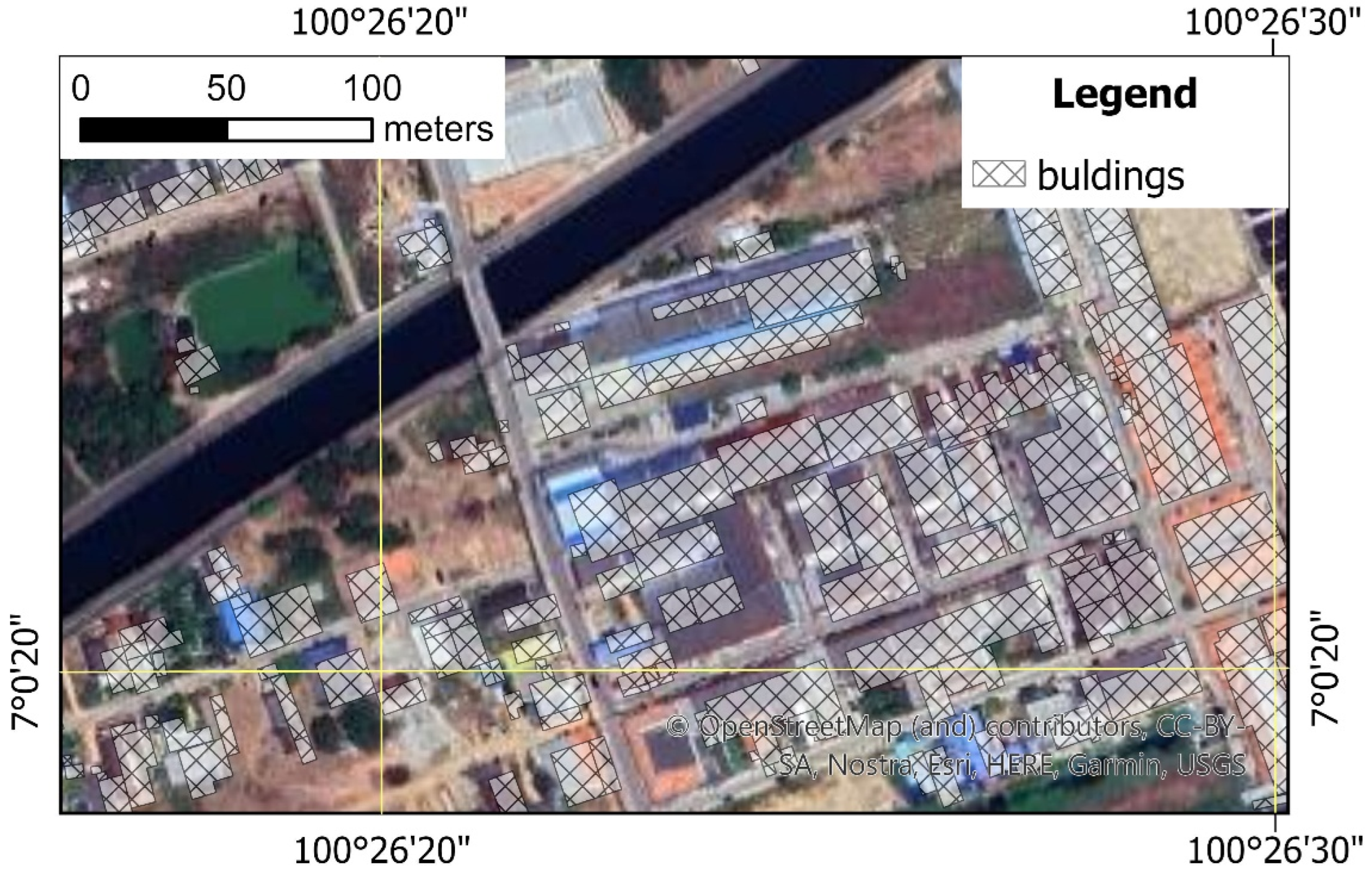
2 across Africa, South Asia, Southeast Asia, Latin America, and the Caribbean. These are regions where detailed land-cover and land-use maps do not exist or are prohibitively expensive to produce. The data can be easily downloaded in CSV format for subsequent processing. In the presented research, dedicated Python 3.14 modules were used to extract data, and GDAL and OGR/OSR libraries were used to produce a shapefile containing building polygons. An example of extracted data is presented in
Figure 5.
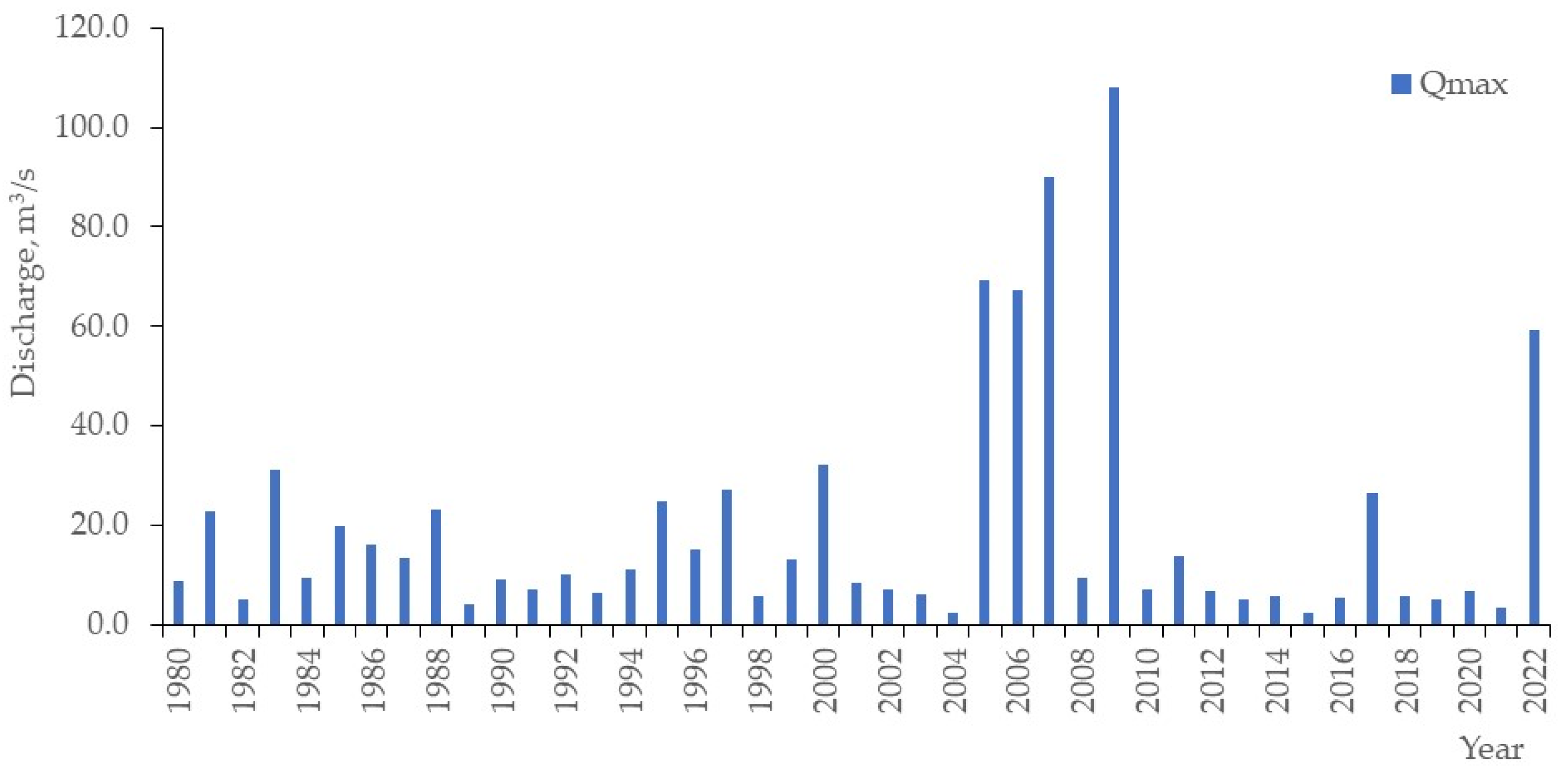
In the broader Songkhla Lake watershed, hydrological monitoring is supported by 22 early warning stations, 4 meteorological stations, 1 hydrological station (primarily for discharge measurement), and 6 telemetering stations. These networks collectively provide essential inputs for hydrological and flood hazard assessments. The data series used in the presented research covers 42 years, from 1980 to 2022. The annual maximum discharges extracted from the collected data are shown in
Figure 6. The collected data serve as the basis for statistical analysis and for determining the maximum flow curve, in which the probability of exceedance is uniquely assigned to flow magnitude. According to the Department of Water Resources survey, annual peak discharge data for the period 1980–2022 were used for flood frequency analysis because of their continuity and reliability. Design discharges for the 10-, 100-, and 500-year return periods were selected to represent low-frequency (commonly occurring), medium-frequency (typical design standard), and high-magnitude (rare and extreme) events, respectively (
Figure 6). Such an approach is consistent with the implementation of the EU Flood Directive in Poland and other EU states. These scenarios are denoted as Q10, Q100, and Q500 in the further analyses.
HEC-RAS is a well-known hydrodynamic model for rivers and reservoirs. The concepts applied in the package are well described by Brunner [
34]. HEC-RAS is used to simulate flow and transport processes in river networks, including floodplains and reservoirs. The modeled flow conditions include steady and unsteady longitudinal flow. The first is based on the simple energy balance equation. The form of this equation implemented in HEC-RAS is shown below:
where
z is the bottom elevation,
h is the depth, and
u is the mean velocity in the channel cross-section.
α is called the St. Venant coefficient and plays the role of a correction factor, including the effect of velocity profile non-uniformity.
g is the well-known acceleration due to gravity. Equation (1) is written for a gradually varying flow, when the assumption of a hydrostatic pressure distribution may be suitable. The subscripts 1 and 2 denote two different cross-sections in the same channel reach. The basic assumption is that the cross-section number 1 is located upstream of the cross-section number 2. The first three terms on both sides represent the potential energy of the stream, the work of pressure forces, and the stream’s kinetic energy. The last element on the right side, he, describes friction losses resulting from the influence of the bed and banks on the flow of water. It also includes the effects of channel contraction and extension. If the depth is known in one cross-section, it may also be determined in the second cross-section on this basis. To calculate the distribution of the depth along the channel, its value must be known in one cross-section a priori. In practical cases, this cross-section is the inlet or outlet boundary of the channel reach. Hence, the condition is frequently called “boundary condition”, but it is rather hydraulic jargon than strict mathematical terms. In the analyzed cases the normal depth condition was imposed in the outlet cross-section. The basis of this condition is Manning’s equations solved for the outlet cross-section with the given discharge. The typical interpretation of this condition is “free outflow from the channel.” The discharge
Q is a key parameter in Equation (1). The kinematic energy terms, as well as friction losses, depend on the flow magnitude. The influence of floodplains is accounted for in the calculation of the St. Venant coefficients and the weighted distance between cross-sections. The last element is important for determining the total losses. The roughness coefficients were assessed based on land cover observations and expert knowledge. The expert was operational hydrologist from the Department of Water Resources, Thailand. The expert had been working in the investigated area for several years. Due to the lack of more detailed data for model calibration, such approach seems to be reasonable and the only method to be applied. A more detailed description of this equation and its implementation can be found in Brunner [
34].
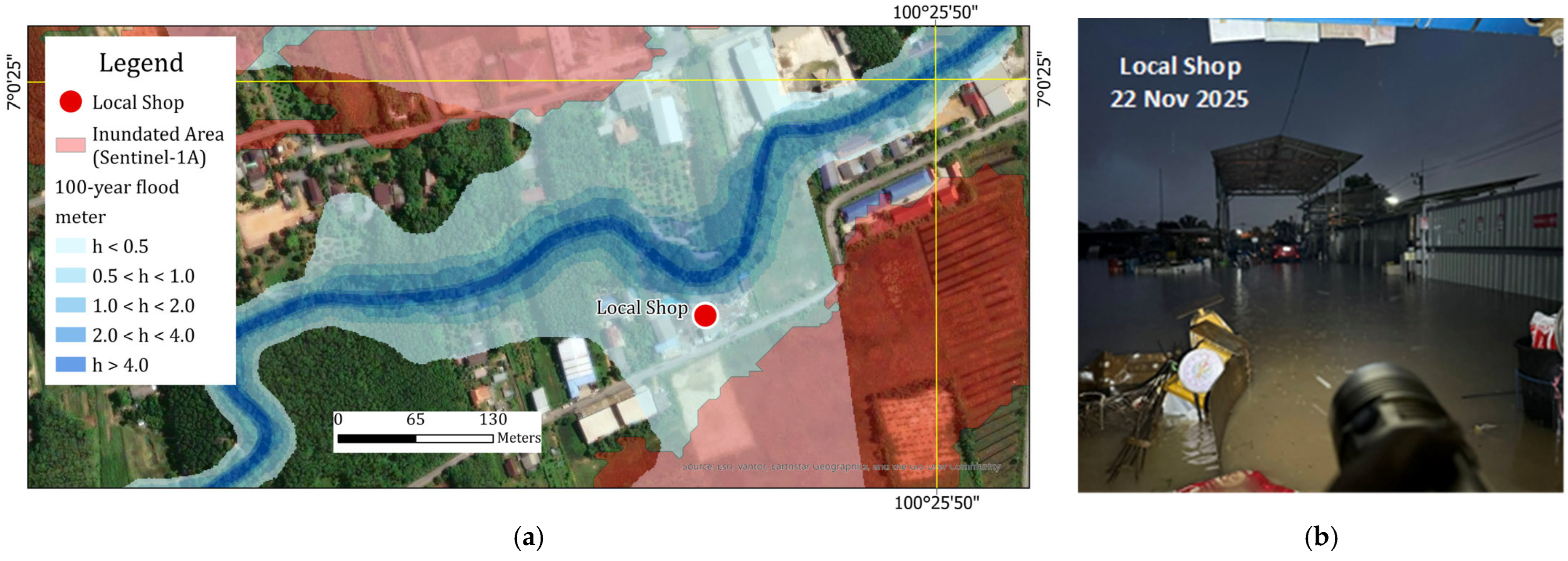
The model was validated using the observed inundation extent from the recent flood event in Hat Yai on 24 November 2025. Two sources of such data were used. The first flood inundation extent was extracted from Sentinel-1A imagery (90 m spatial resolution), analyzed, and interpreted by the Geo-Informatics and Space Technology Development Agency (GISTDA) [
35]. In addition, observed discharge data from Khlong Wat during the same flood event were further incorporated to support model verification [
36]. Because the resolution of the available satellite images is insufficient and may lead to incorrect conclusions, ground observations recorded in the network were used as a second source of data for verification. These data are available as photos taken with mobile phones.
The results of hydrodynamic simulations were finally distributed as flood hazard and flood risk maps. The main results from HEC-RAS were raster layers of inundation depth reflecting three flood scenarios (
Table 1). These layers were processed in ArcGIS Pro to obtain hydraulically consistent maps that preserve connectivity with the river channel. The depth was classified according to the depth levels defined in the EU Flood Directive in Poland and other EU countries. The denotations of classes and the ranges of depth are presented in
Table 1.
The flood risk considerations are based on the analysis of the intersections between the depth classes and the building layer mentioned earlier. There are two main assumptions behind this concept: (1) total flood losses should be proportional to the property located in the inundated area, and (2) the losses depend on the magnitude of the depth. Hence, the base flood hazard results consist of the total inundation area for each depth class (c1–c5) in each of the three scenarios tested: Q10, Q100, and Q500. Flood risk is assessed as the area of inundated buildings within each depth class for each scenario.
In
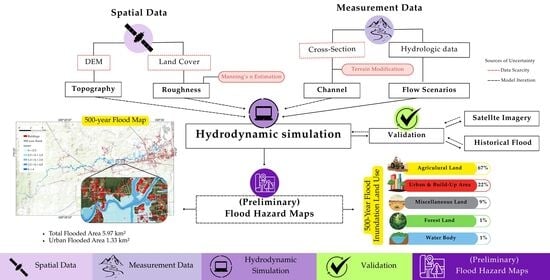
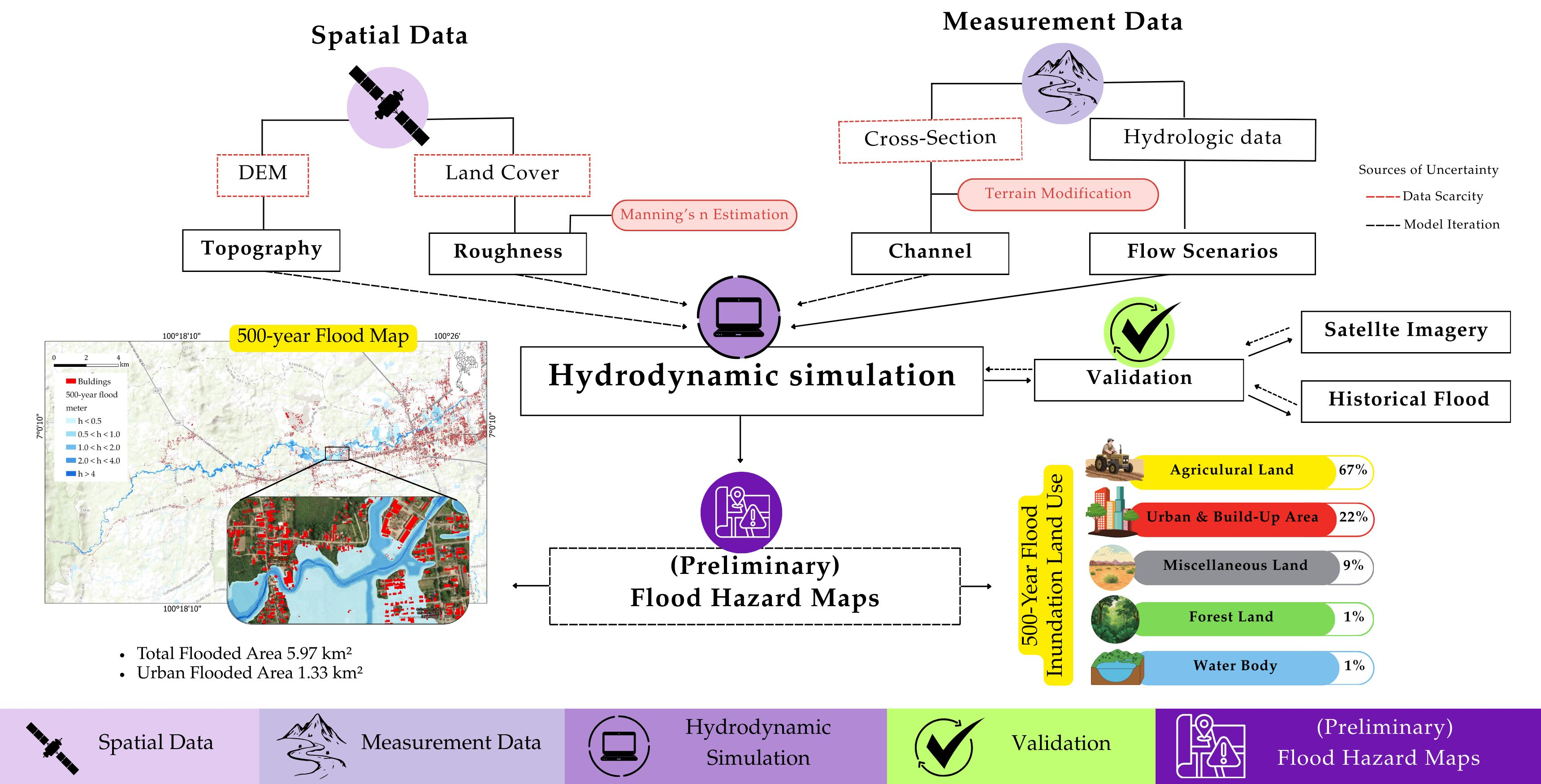
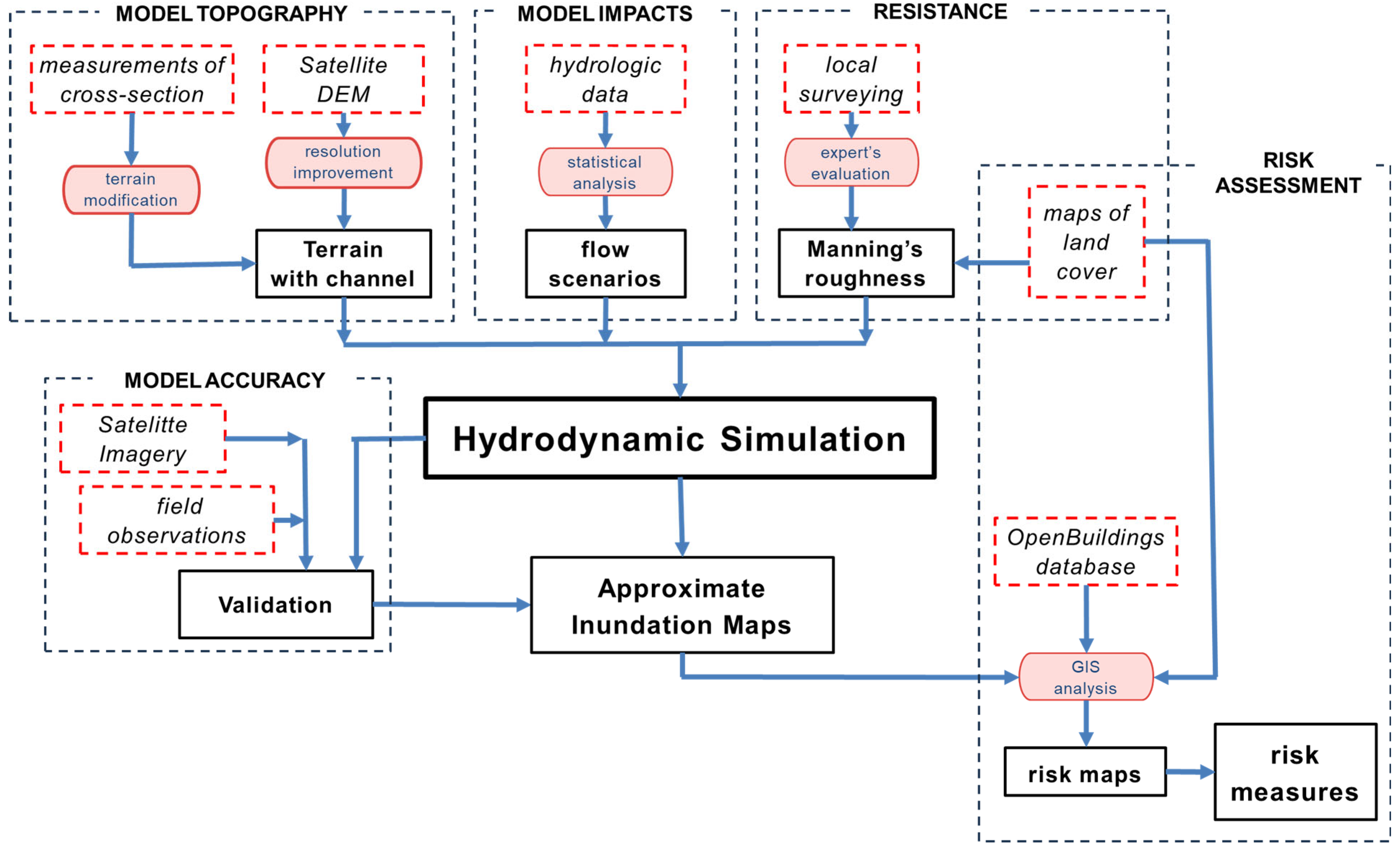
Figure 7, all the elements involved in the analysis are presented. The connections between them are also illustrated. At the top of the scheme, the data preparation processes are presented. The publicly available DEM was processed to improve its resolution. The measurements of the single cross-section along Khlong Wat formed the basis for modifying the terrain. Finally, the terrain with a channel is the core of the topography inserted into the model. The hydrologic observations were processed according to extreme-event analysis procedures, and flood-hazard scenarios were designed. The land cover maps with the additional expert evaluation were the basis for the approximate determination of Manning’s roughness coefficients in the channel and the floodplains. The hydrodynamic model was created and then validated using satellite images and available field observations. The model was implemented to produce approximated inundation maps. The information on possible inundation was compared with data from the OpenBuildings database and land cover maps. The GIS techniques were used to effectively create the risk maps. Finally, the risk was estimated.
4. Results
The maximum flow curve was determined in accordance with the regulations applicable in Thailand. The data collected in the hydrological station during the period 1980–2009. The results were published by the Department of Water Resources and deposited in the specific database available at nishydro.dwr.go.th. The design discharge values derived from these results are presented in
Table 2. In the simulations, the criteria widely adopted under the EU Flood Directive [
9] were also applied here. The evaluation of flood hazard and risk is based on probabilities of exceedance of 10%, 1%, and 0.2%, corresponding to high, moderate, and low hazard, respectively. The return periods for these flows are 10, 100, and 500 years, respectively. In general, these design discharges were subsequently applied as boundary conditions for the hydraulic simulations. Hat Yai, located in the lower reaches of Khlong Wat, is highly flood-prone because the city lies in the central part of the Songkhla Lake watershed, where runoff from upstream catchments converges before discharging into Songkhla Lake and ultimately into the Gulf of Thailand.
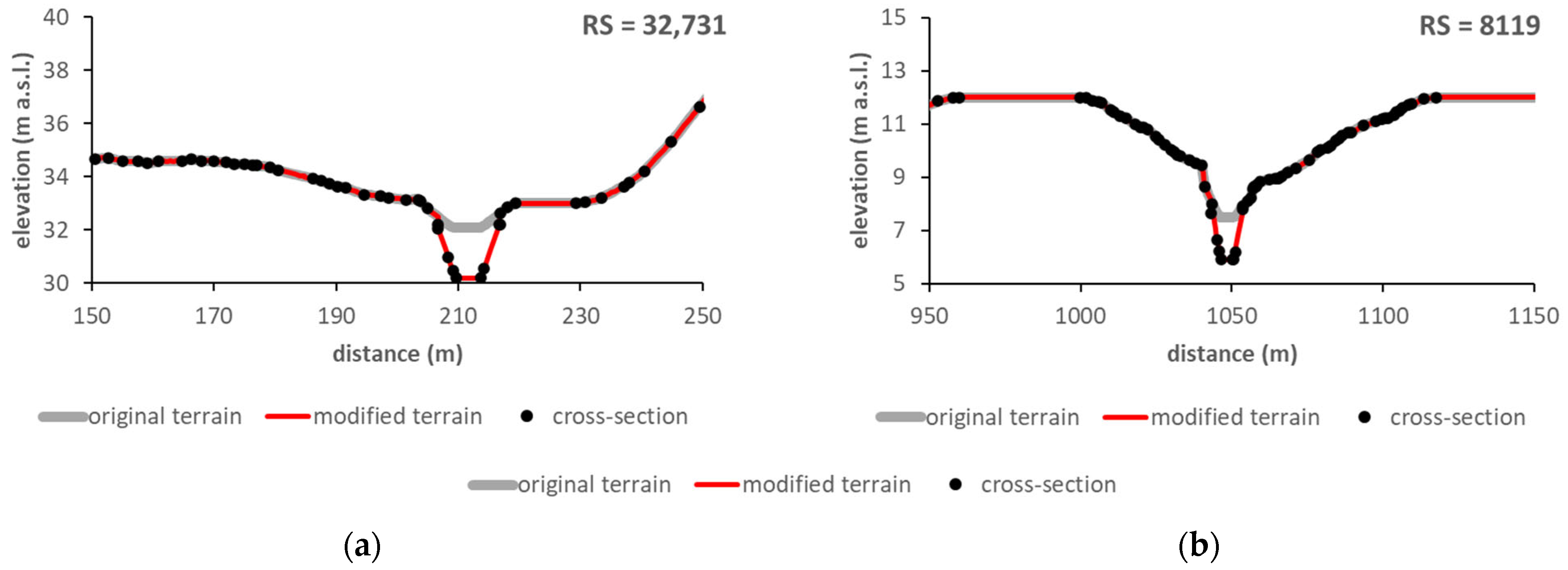
The bathymetric data were implemented to properly reconstruct the river channel in the existing DEM. The DEM was modified by introducing the equivalent trapezoidal channel. The tools available in the RAS Mapper module of HEC-RAS were used for this purpose. These are terrain-cloning and terrain-modification procedures that enable analysis of different channel configurations. The applied channel parameters are as follows: bottom width 4 m, side slopes 1:2, maximum width 10 m. The elevations of the channel bottom were adjusted based on the DEM. Example results from this procedure are presented in
Figure 8.
As shown in
Figure 9, the flood extent interpreted from Sentinel-1A imagery (90 m spatial resolution) partially overlaps with the simulated 100-year return period flood extent. However, due to the relatively coarse spatial resolution, certain localized inundated areas observed in the field were not detected in the satellite-derived map. The ground observation photograph indicates flooding at the site, whereas the satellite product failed to capture this small-scale inundation. In contrast, the simulated flood depth at the observation location was in close agreement with the measured field data, falling within the <50 cm depth class. As illustrated in
Figure 9, the simulated flood depth (a) corresponds well with the ground-based observation (b), demonstrating satisfactory model performance at the local scale.
The inundation areas and depth classes for each flood scenario are presented in
Figure 10,
Figure 11 and
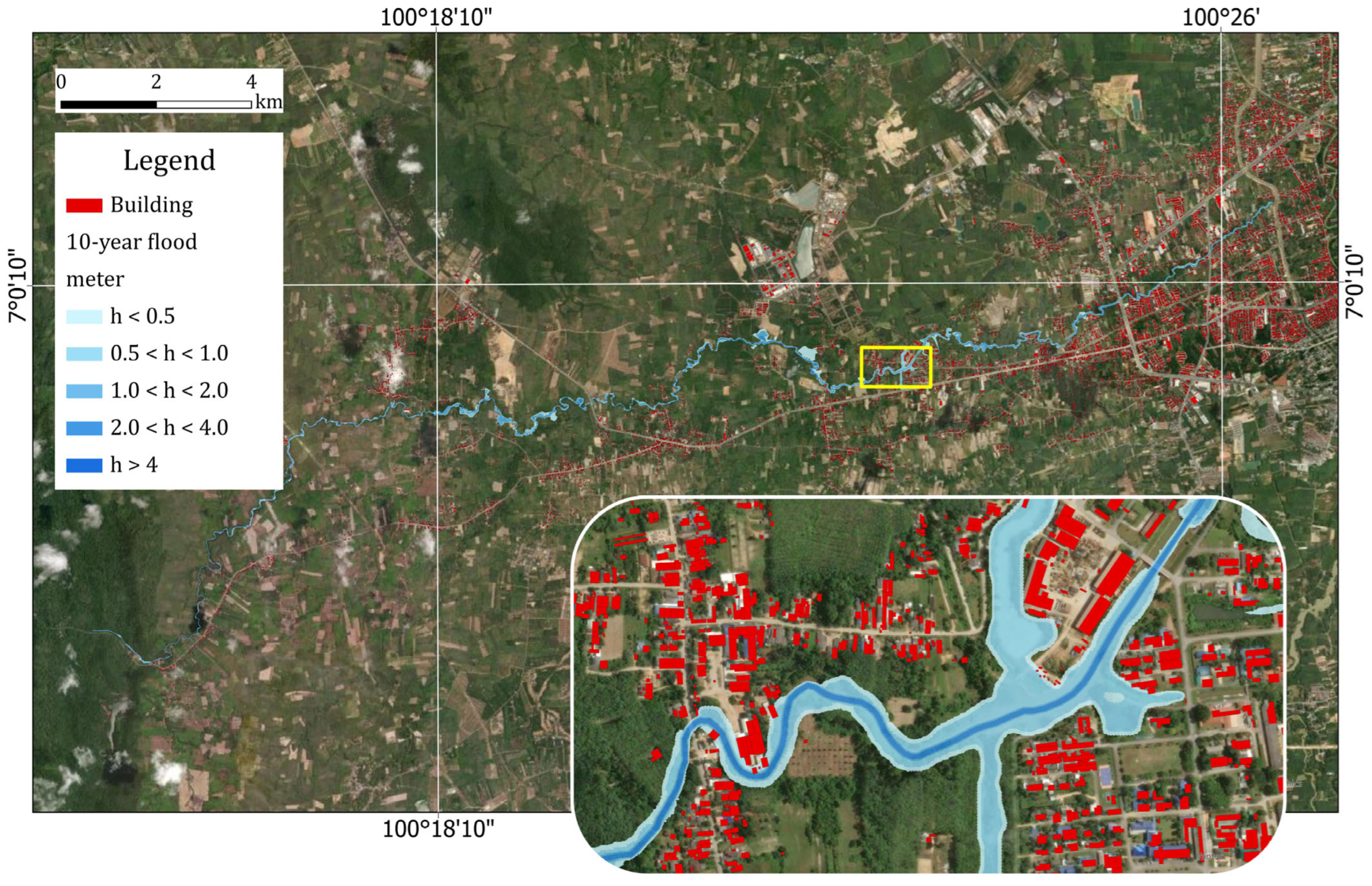
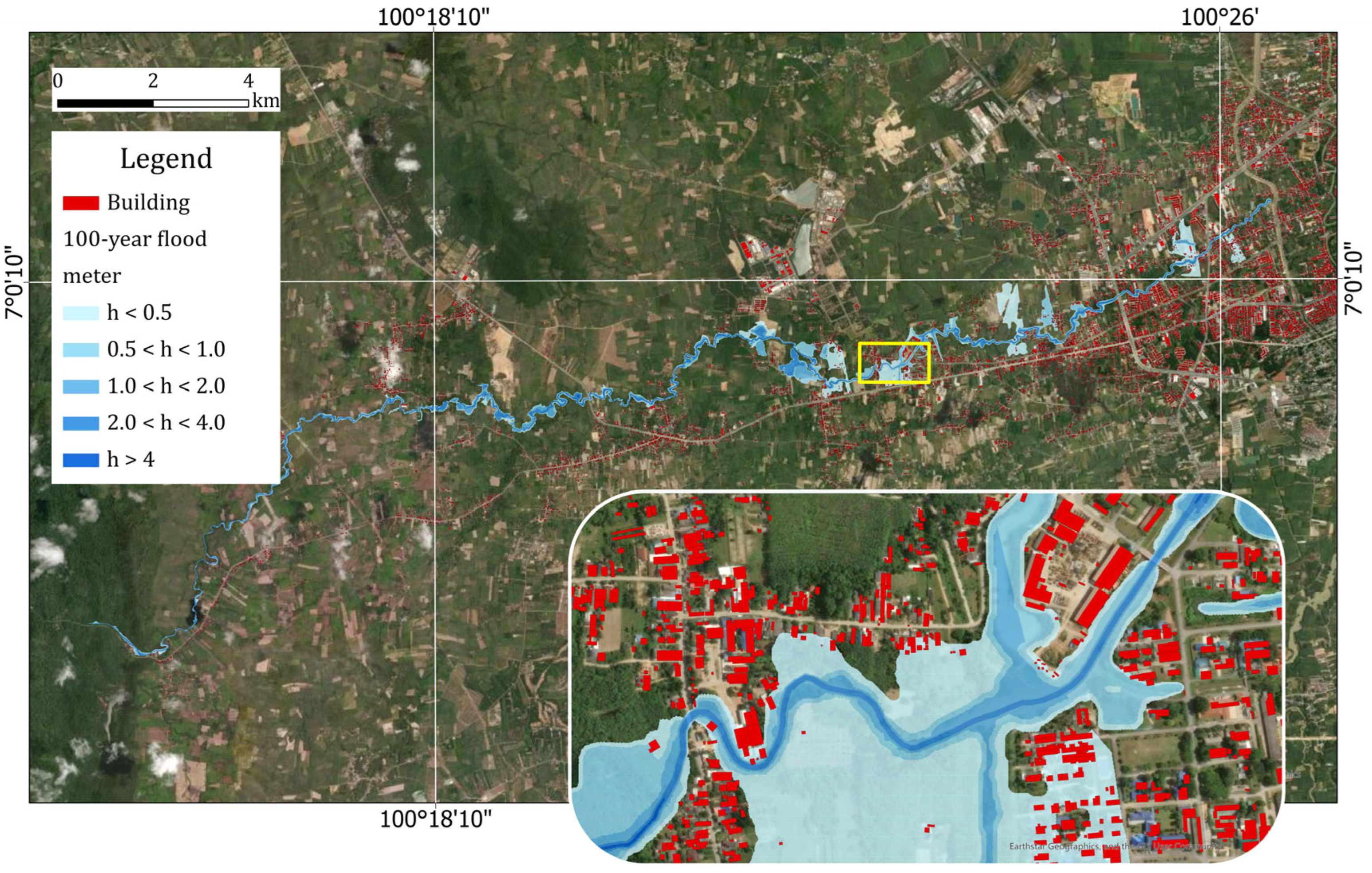
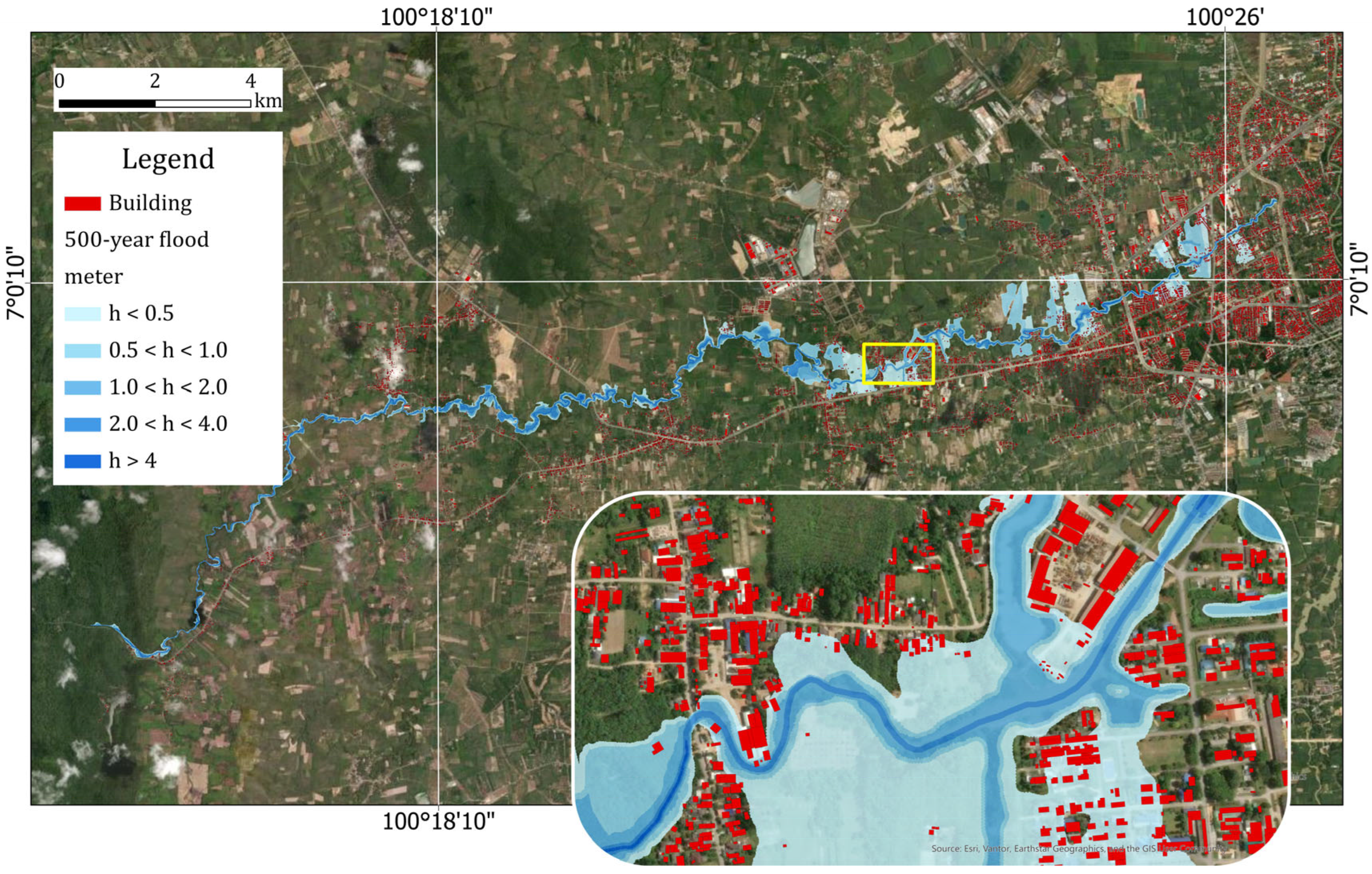
Figure 12. Each of these maps includes a larger example in the entrance to the urban area of Hat Yai city. The buildings are also presented there. Flooding from the upstream Khlong Wat affected four sub-districts in the Hat Yai area: Tha Chang, Khuan Lang, Chalung, and Thung Tam Sao. In all return periods of simulated flood scenarios, inundation predominantly follows the river corridor and expands into the urban area of Hat Yai City as discharge increases. Under the 10-year flood scenario (Q10), flooding remains spatially limited, with shallow water depths and only minor building inundation (
Figure 10). In contrast, the 100-year flood scenario (Q100) shows a substantial increase in inundated area, reaching 4.02 km
2, with the largest proportion occurring in depth class c4 (2.0–4.0 m), covering 1.638 km
2 (
Figure 11). Flooded buildings in this scenario are mainly concentrated in shallow inundation class c1 (depth below 0.5 m), with a maximum affected building area of 0.054 km
2. Under the extreme 500-year flood scenario (Q500), both the spatial extent and depth of inundation increase markedly (
Figure 12), resulting in widespread flooding across urban and low-lying areas. However, building inundation remains minimal in the deepest depth class (class c5, depth above 4.0 m).
Overall, the results demonstrate that although deeper inundation becomes more extensive with increasing flood magnitude, the majority of building exposure remains concentrated in the shallowest depth class across all scenarios. This pattern reflects a spatial separation between zones of extreme water depth and densely built-up areas. At the same time, an inverse relationship emerges between flood magnitude and the dominance of shallow inundation: while the 10-year event is characterized by widespread but predominantly shallow flooding, the 100- and 500-year floods exhibit substantially greater proportions of deep inundation, particularly in areas containing buildings.
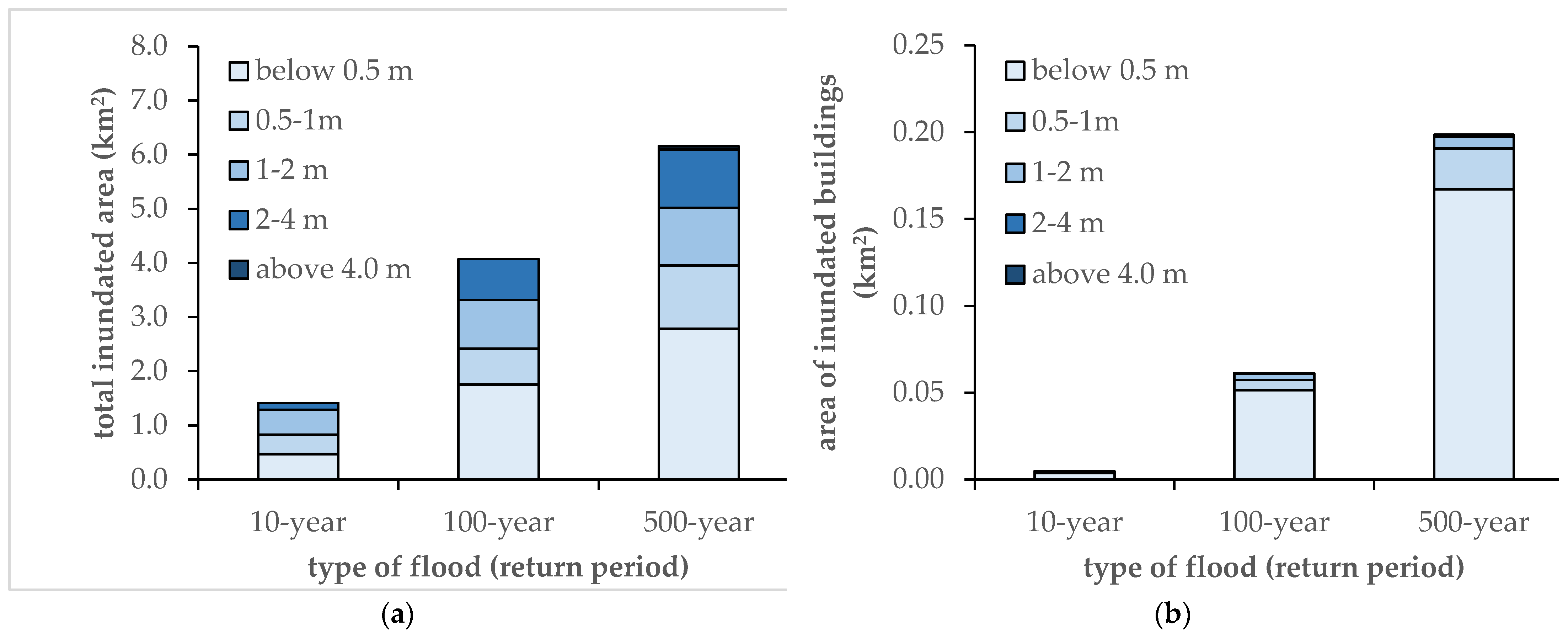
The results are summarized in
Figure 13, which shows the total inundated area (
Figure 13a) and the inundated building areas (
Figure 13b). The classes of depth are also denoted. As it was expected, the inundated area increased with the magnitude of the flow. The class of the greatest depths (c5), above 4.0 m, is absent in the highest-hazard scenario with the lowest flow (Q10), but it appears in mid- and low-hazard scenarios with higher discharges (Q100 and Q500). The inundations of buildings are not observed in the greatest class (c5), but the inundations of the other classes increase smoothly with the magnitude of flow.
The hydrodynamic simulation results for the Khlong Wat catchment reveal a substantial increase in the total inundated area with increasing return period, from 1.43 km
2 in a 10-year flood to 4.02 km
2 in a 100-year flood and to 5.97 km
2 in a 500-year event. According to
Table 3, the analysis reveals a critical concentration of risk within the agricultural sector, which remains the most heavily affected category across all scenarios, accounting for 74.33% (1.06 km
2), 68.99% (2.77 km
2), and 67.07% (4.00 km
2) of the total flooded area, respectively. Within this sector, Para rubber plantations are the dominant affected subtype, accounting for 82.23%, 72.55%, and 69.77% of inundated agricultural land for the 10-, 100-, and 500-year floods, respectively (
Table 3).
The exposure of Urban and Build-Up Land also increases with flood severity, rising from 16.20% (0.23 km2) in a 10-year event to 22.35% (1.33 km2) in a 500-year event. A detailed breakdown shows that villages and institutional land comprise the majority of affected built-up areas; specifically, villages bear the highest exposure burden, accounting for over 58% of the inundated urban area in the extreme 500-year scenario. While Forest Land and Water Bodies represent minor portions of the total affected area in frequent events, a significant spatial shift occurs during the 500-year event, as active paddy fields and forest lands account for a larger share of the total extent.
Miscellaneous Land, which is primarily composed of shrub land, fluctuates between 7.85% and 10.79% of the total inundation. Despite the broad spatial extent across these categories, depth-based hazard analysis confirms a distinct variation in risk levels: urban zones primarily experience very low hazard (class c1) with depths below 0.5 meters, whereas agricultural and shrub lands are consistently exposed to high-depth hazards exceeding 2.0 meters (classes c4 and c5).
5. Discussion
Hydrodynamic simulations showed a systematic increase in the extent and depth of flooding with increasing flood recurrence interval. The total flooded area increases from 1.43 km2 for a ten-year flood to 4.02 km2 for a hundred-year flood and 5.97 km2 in the five-hundred-year scenario. In the Q10 scenario, flooding is local and shallow, while in the Q100 scenario, there is a significant expansion of flooded areas, with a depth of 2.0–4.0 m (1.638 km2) prevailing. In the Q500 scenario, both the extent and depth of flooding increase significantly, resulting in widespread flooding of low-lying and urban areas, with most buildings still experiencing shallow flooding (<0.5 m). Land-use analysis clearly shows that agricultural areas are the most affected category across all scenarios, accounting for 74.33%, 68.99%, and 67.07% of the total flooded area for 10-, 100-, and 500-year floods, respectively, with rubber plantations accounting for the largest share. The share of urban areas increases with flood intensity, reaching 22.35% in the Q500 scenario, with urban areas mainly exposed to very shallow flooding, while agricultural areas regularly experience flooding exceeding 2.0 m in depth. Although the assumptions used have affected the results, the verification shows that a more accurate approach may not be possible. Even satellite images do not provide accurate information about inundation areas due to their coarse resolution.
Thailand is expected to experience more frequent and severe flood events due to the combined effects of climate change, rapid urbanization, and extensive land-use changes, including deforestation and the expansion of rubber plantations [
23]. The recent catastrophic flood in Hat Yai clearly illustrates the consequences of changing rainfall patterns. After a 15-year period of relative protection since the devastating 2010 flood, Hat Yai experienced one of the most severe flood events in its history during 19 to 25 November 2025. Cumulative rainfall reached 1048.2 mm within seven days, far exceeding the 30-year average November rainfall in Songkhla Province (582.7 mm) and accounting for nearly half of the mean annual rainfall of 2245 mm (Thai Meteorological Department). This event occurred during the monsoon season and was further intensified by the La Niña phenomenon.
Khlong Wat, one of the sub-watersheds contributing to flooding in Hat Yai, recorded peak discharges exceeding 145 m
3/s [
36]. Hydrodynamic simulations suggest that these flows correspond to a return period of approximately 160 years, indicating an extreme flood event. The impacts were substantial, resulting in severe economic and human losses. Total damages were estimated at up to 667 million euros if inundation persisted for 1 month, with daily losses ranging from 27 to 40 million euros [
27]. The event also caused 145 fatalities, emphasizing the severity of the disaster.
Given the importance and relatively frequent occurrence of sewer inundation, investigations into flood hazard and flood risk were conducted for Khlong Wat and Hat Yi previously. The extended modeling approach was presented by Tabucanon et al. [
23]. The authors presented a model of the entire municipality developed within the InfoWorks framework. To a large extent, the generated grid was rather coarse. Hence, the application of the 2D hydrodynamic model achieved the level of accuracy of the hydrological simulation. Based on the analyses presented by Di Baldassarre et al. [
8], this approach was considered sufficiently accurate for developing flood hazard maps. The attitude presented here differs. The focus was on fluvial flooding in the Khlong Wat river valley, including the entrance to more densely populated areas and the peripheries of Hat Yai. The hydrodynamic, 1D model created in HEC-RAS serves as the basis for simulating flood-wave propagation. The zones are determined using GIS procedures implemented in ArcGIS.
In the case mentioned above and in the analysis presented, the primary issue was access to the data. The problem was broadly described by Ben-Haim et al. [
37], who even use the term “data scarce regions” in the title. As noticed by Tabucanon et al. [
23], the meteorological and hydrological data are collected professionally, and the monitoring network is of good quality (see also
Figure 1). Hence, the scarcity of data in our case affects modeling elements such as reconstructing topography, reconstructing river bathymetry, determining roughness based on land-cover types, and assessing risk to people, e.g., building locations. In the scientific literature, various approaches may be employed to address each of these issues.
The most severe problem concerns the availability of DEM. The standard approach in developed countries, such as the EU, the United States, and China, is to use LiDAR (Light Detection and Ranging) or UAV (Unmanned Aerial Vehicle), as recommended by Tabucanon et al. [
23]. However, such data are not available everywhere. On the other hand, the globally available data have coarse resolution, ranging from 25 m to 80 m. The finest resolution of this type, which ranges from 25 m to 30 m, is insufficient for hydraulic modeling. Even the application of the hydrological modeling may be difficult. In the literature and on public portals in some countries, interesting approaches to improving satellite data are presented. In Indonesia, a combination of various publicly available datasets enabled the development of the DEMNAS–National Digital Elevation Model covering the entire country [
38]. Other approaches, e.g., Bhushan et al. [
39], rely on specific satellites and data fusion techniques to produce a high-resolution DEM. As with LIDAR data, satellite data are not publicly available for all locations worldwide. On the other hand, the rapid development of Artificial Intelligence methods, particularly Deep Learning algorithms, strengthens research in this area, e.g., Panagiotou et al. [
40] and Kim et al. [
41]. However, the methods of this type are still under development and require specific validation. In our case, the DEM previously developed by the Royal Thai Survey Department and Prince of Songkla University was available. Hence, its application enabled simplification of data collection and processing.
The bathymetry data are most problematic. This information is necessary for accurate hydraulic/hydrodynamic modeling. However, it requires specific field measurement. Given current remote sensing technology, it is difficult to obtain such data without in situ sampling. In EU member states, such data exist, and these are likely publicly available following the implementation of the EU Flood Directive. However, there are many locations worldwide where bathymetry of inland waters is not measured, or measurements are scarce. In the scientific literature, concepts proposed and tested are described that may help overcome the obstacles posed by this issue. For example, Villanueva et al. [
42] proposed a specific classification of LIDAR points to identify and properly extract dry channels. Their approach is a development of the technology presented before by Legleiter [
43]. However, such an approach requires local LIDAR scanning, which is not available in the case presented here. Previously, Chung-Yuan and Merwade [
44] proposed a model for generating synthetic cross-sections from available data. This method definitely requires validation and further tests. Instead, the locally available measurements were utilized. These measurements are insufficient to reconstruct the bathymetry of Khlong Wat using any specific interpolation method. One cross-section was measured 6 times at the same location between 2014 and 2024. However, it enabled specifying the parameters of the synthetic cross-section and applying terrain modification procedures in the RAS Mapper HEC-RAS module for processing GIS data. Additionally, the channel roughness was estimated based on expert knowledge. The same recognition was applied, in conjunction with land-use and land-cover data, to determine the roughness of the surrounding terrain.
The risk evaluation requires additional data. The general land use and land cover data can be used (
Table 3), but determining a more specific impact on inhabitants requires at least information on buildings. In this part, the ML/DL methods were used indirectly. The database used, OpenBuildings, is a product of building identification from satellite imagery, achieved through the training and application of ML/DL. This database is not perfect, as shown in
Figure 5, but it enables flood risk estimation (
Figure 10,
Figure 11 and
Figure 12) and is sufficient for decision-making regarding evacuation or potential losses (
Figure 13).
6. Conclusions
The flood inundation zones for Khlong Wat were derived using the HEC-RAS model, with terrain modification techniques employed to approximate river bathymetry under data-scarce conditions. This approach relied on a single surveyed cross-section, introducing uncertainty in the representation of channel geometry and flow conveyance. In addition, the designed flood scenarios considered only discharge at the Khlong Wat inlet station and did not explicitly account for future climate change impacts; consequently, extreme flood conditions are likely underestimated.
Residential risk zones were visually assessed using an OpenBuildings database, enabling comparison of structural exposure across different flood scenarios and revealing increasing vulnerability under more severe conditions. Encouragingly, most flooded buildings experienced inundation depths of less than 0.5 m. However, areas requiring urgent mitigation planning are predominantly located in agricultural zones, which is particularly critical given that approximately half of the population in Songkhla Province depends on agriculture for their livelihoods.
The study confirms that, even with limited topographic data, preliminary flood inundation maps for the Khlong Wat watershed can be developed by integrating incomplete terrain data with publicly available datasets and simplified hydrodynamic modeling. Despite uncertainties resulting from simplified channel geometry, the approach enabled the identification of areas particularly vulnerable to flooding. The findings highlight the need to include not only urban areas but also agricultural and suburban zones in flood management strategies, especially in the tributary basins of the Khlong U-Tapao (Hat Yai) River.
Although the resulting flood maps remain approximate, this approach represents an important first step toward understanding flood risk in data-deficient regions and highlights critical data gaps that must be addressed to improve reliability. Further work should focus on acquiring high-resolution topographic data, integrating climate projections, and extending analyses to include loss and vulnerability assessments to support more resilient flood risk management strategies.