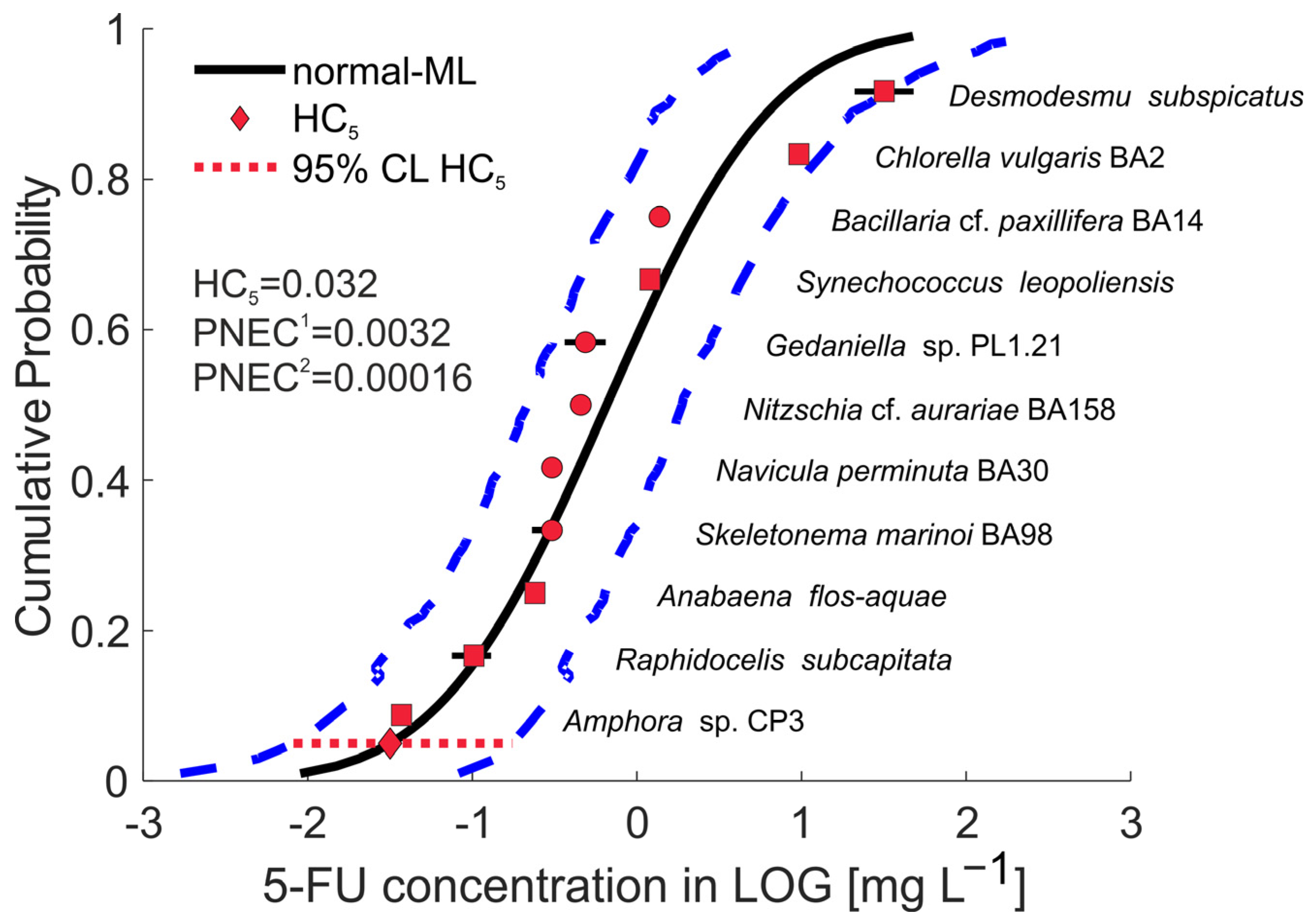
Ecotoxicity of 5-Fluorouracil Towards Diatoms from Brackish Coastal Shallows


Abstract
1. Introduction
2. Materials and Methods
2.1. Tested Chemicals
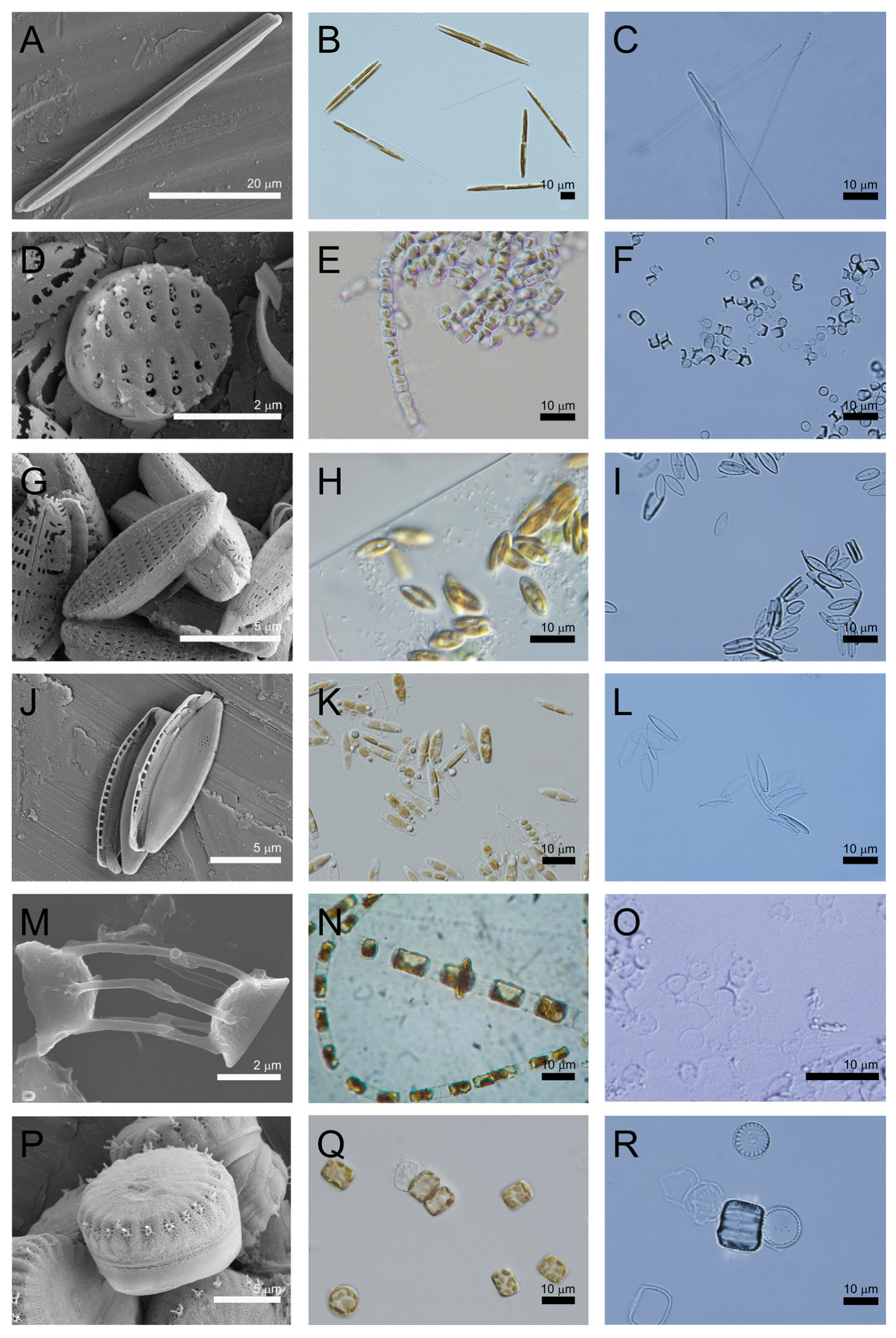
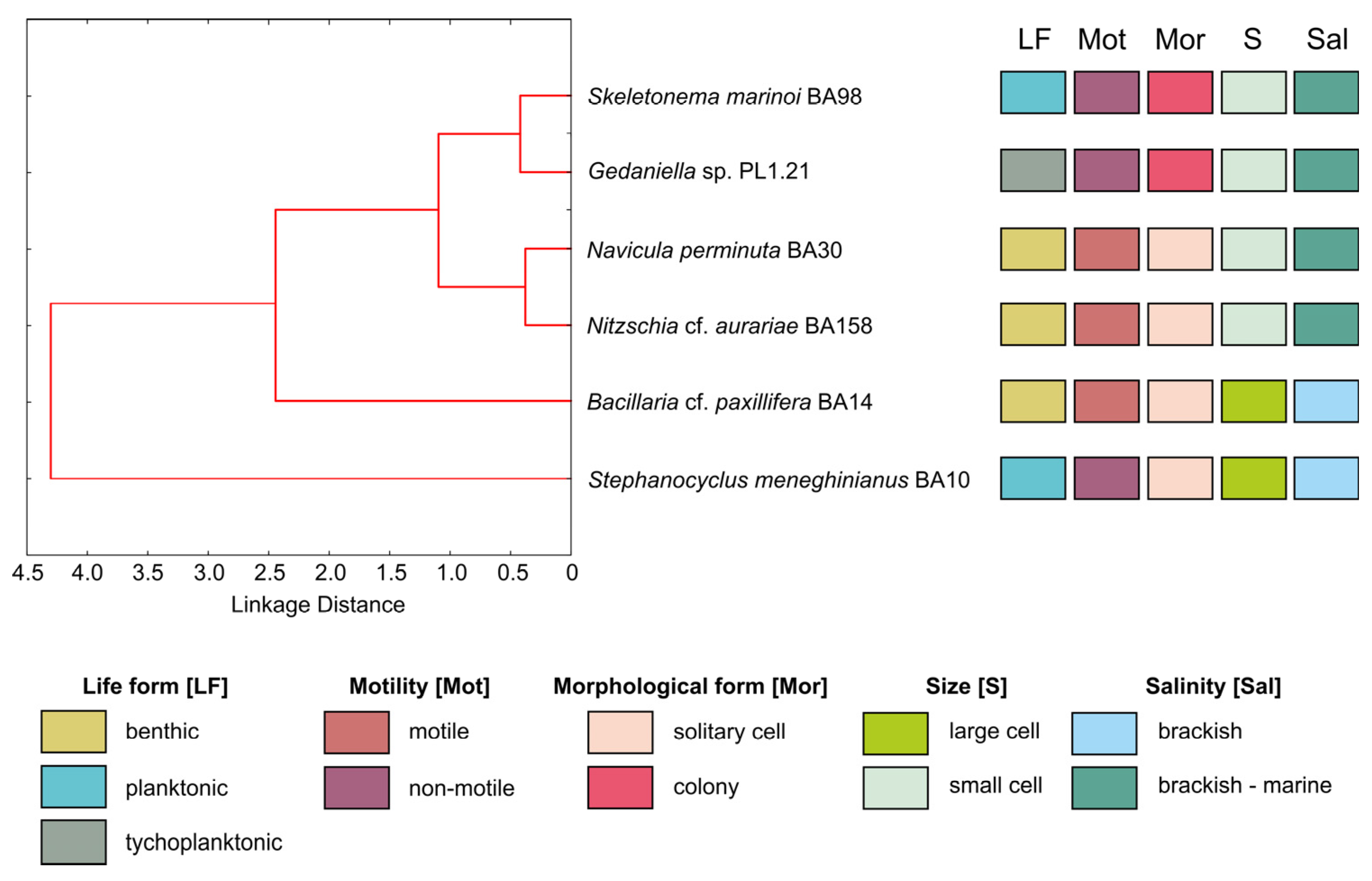
2.2. Test Organisms
2.3. Preparation of Microphytobenthos Suspension
2.4. Growth Inhibition Experiments
2.5. Growth Inhibition Data Analysis
2.6. Microscopic Analysis
2.7. Photosynthetic Pigment Analysis
2.8. Statistics
3. Results
3.1. Response of Diatom Strains to Various Growth Conditions
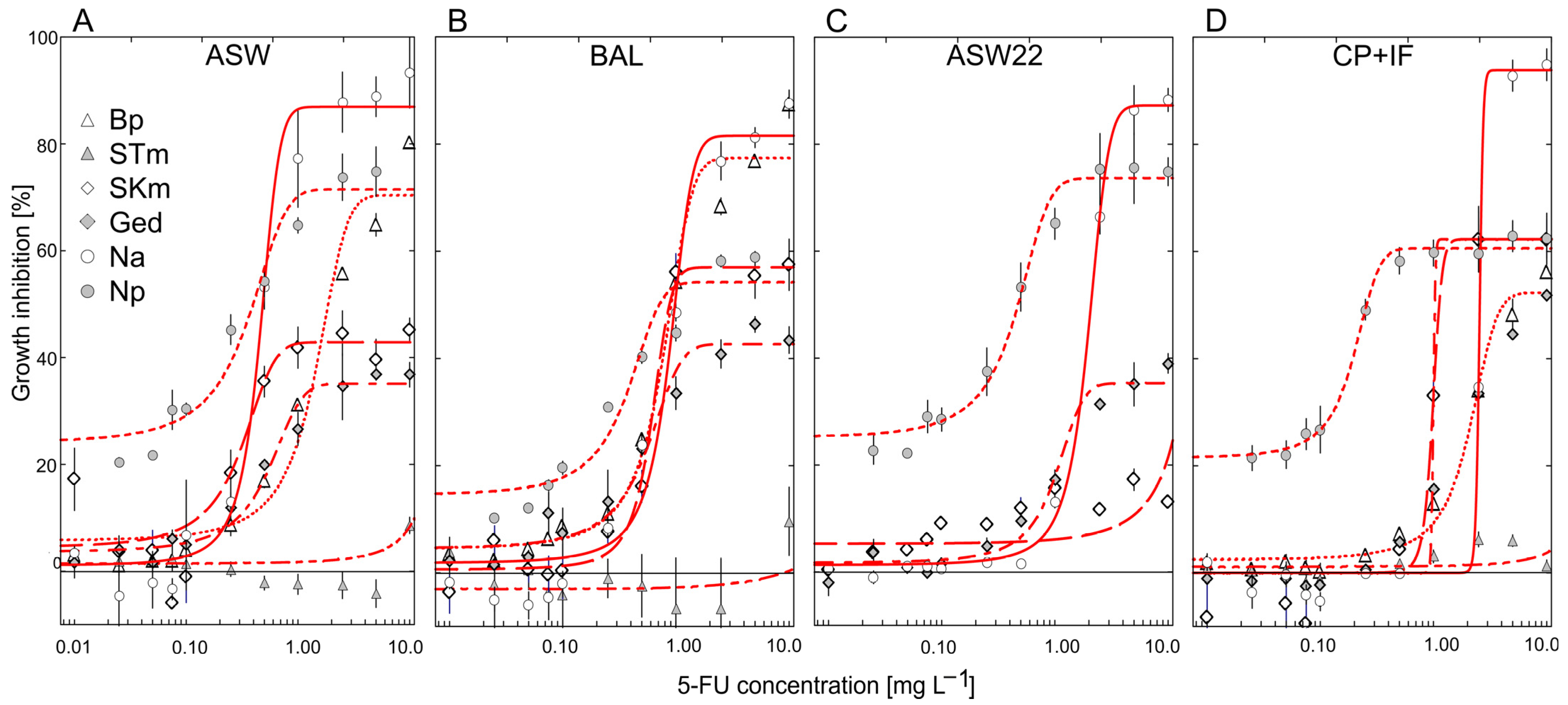
3.2. Response of Single Strains to 5-Fluorouracil
3.3. Response of the Six-Strain Mixed Cultures to 5-Fluorouracil
3.4. 5-Fluorouracil Hazard Assessment
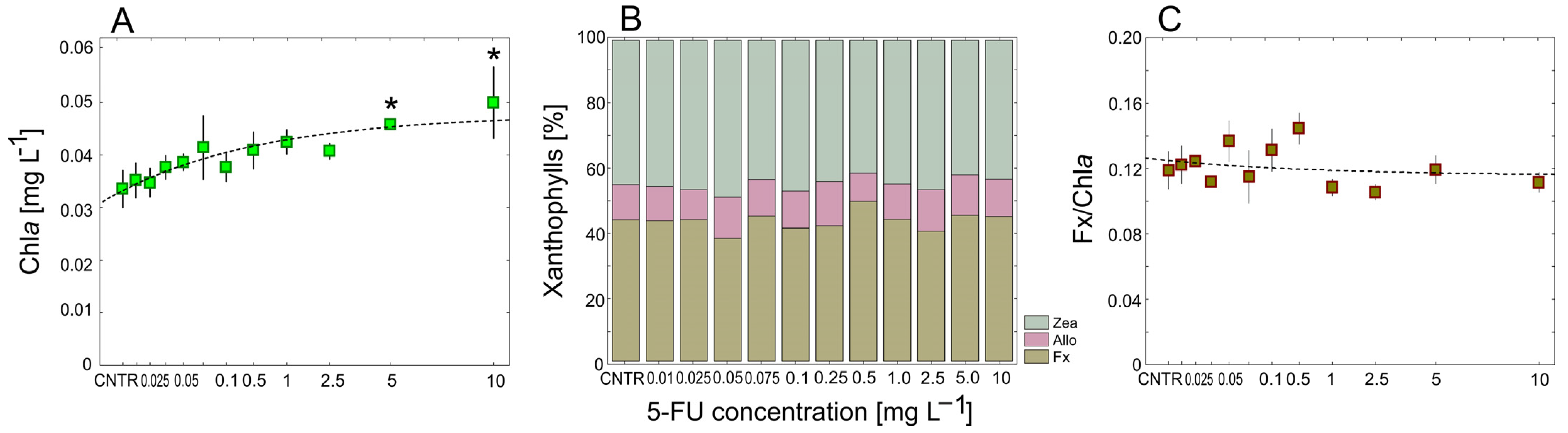
3.5. Response of Microphytobenthos to 5-Fluorouracil
4. Discussion
4.1. Response of Baltic Diatoms to 5-FU
4.2. Response of Microalgal Communities to 5-FU
4.3. Ecological Considerations
5. Conclusions and Future Perspectives
Supplementary Materials
Author Contributions
Funding
Data Availability Statement
Acknowledgments
Conflicts of Interest
References
- Aziz, K.H.H.; Mustafa, F.S.; Hama, S. Pharmaceutical Removal from Aquatic Environments Using Multifunctional Metal-Organic Frameworks (MOFs) Materials for Adsorption and Degradation Processes: A Review. Coord. Chem. Rev. 2025, 542, 216875. [Google Scholar] [CrossRef]
- Formagini, L.; Ramirez, J.Z.R.; Corá, V.R.; Souza, D.M. Psychotropic Pharmaceuticals in Aquatic Environments: Occurrence and Analytical Challenges. Sci. Total Environ. 2025, 998, 180269. [Google Scholar] [CrossRef]
- Kock, A.; Glanville, H.C.; Law, A.C.; Stanton, T.; Carter, L.J.; Taylor, J.C. Emerging Challenges of the Impacts of Pharmaceuticals on Aquatic Ecosystems: A Diatom Perspective. Sci. Total Environ. 2023, 878, 162939. [Google Scholar] [CrossRef] [PubMed]
- Gouveia, T.I.A.; Alves, A.; Santos, M.S.F. New Insights on Cytostatic Drug Risk Assessment in Aquatic Environments Based on Measured Concentrations in Surface Waters. Environ. Int. 2019, 133, 105236. [Google Scholar] [CrossRef] [PubMed]
- Hossein Karami, M.; Abdouss, M. Cutting-Edge Tumor Nanotherapy: Advancements in 5-Fluorouracil Drug-Loaded Chitosan Nanoparticles. Inorg. Chem. Commun. 2024, 164, 112430. [Google Scholar] [CrossRef]
- Hansel, S.; Castegnaro, M.; Sportouch, M.H.; De Méo, M.; Milhavet, J.C.; Laget, M.; Duménil, G. Chemical Degradation of Wastes of Antineoplastic Agents: Cyclophosphamide, Ifosfamide and Melphalan. Int. Arch. Occup. Environ. Health 1997, 69, 109–114. [Google Scholar] [CrossRef]
- Balcerzak, W.; Rezka, P. Occurrence of Anti-Cancer Drugs in the Aquatic Environment and Efficiency of Their Removal—Selected Issues. Czas. Tech. 2014, 20, 11–18. [Google Scholar] [CrossRef]
- Corpa, C.; Balea, A.; Nieto, G.; Chernysh, Y.; Stejskalová, L.; Blanco, A.; Monte, M.C. Bibliometric Analysis of Emerging Contaminants and Cytostatic Compounds: Understanding the Current Challenges. J. Hazard. Mater. Adv. 2025, 17, 100538. [Google Scholar] [CrossRef]
- Janssens, R.; Mandal, M.K.; Dubey, K.K.; Luis, P. Slurry Photocatalytic Membrane Reactor Technology for Removal of Pharmaceutical Compounds from Wastewater: Towards Cytostatic Drug Elimination. Sci. Total Environ. 2017, 599–600, 612–626. [Google Scholar] [CrossRef]
- Zhang, J.; Chang, V.W.C.; Giannis, A.; Wang, J.Y. Removal of Cytostatic Drugs from Aquatic Environment: A Review. Sci. Total Environ. 2013, 445–446, 281–298. [Google Scholar] [CrossRef]
- Ofiarska, A.; Pieczyńska, A.; Fiszka Borzyszkowska, A.; Stepnowski, P.; Siedlecka, E.M. Pt-TiO2-Assisted Photocatalytic Degradation of the Cytostatic Drugs Ifosfamide and Cyclophosphamide under Artificial Sunlight. Chem. Eng. J. 2016, 285, 417–427. [Google Scholar] [CrossRef]
- Brezovšek, P.; Eleršek, T.; Filipič, M. Toxicities of Four Anti-Neoplastic Drugs and Their Binary Mixtures Tested on the Green Alga Pseudokirchneriella Subcapitata and the Cyanobacterium Synechococcus Leopoliensis. Water Res. 2014, 52, 168–177. [Google Scholar] [CrossRef]
- Mišík, M.; Filipic, M.; Nersesyan, A.; Kundi, M.; Isidori, M.; Knasmueller, S. Environmental Risk Assessment of Widely Used Anticancer Drugs (5-Fluorouracil, Cisplatin, Etoposide, Imatinib Mesylate). Water Res. 2019, 164, 114953. [Google Scholar] [CrossRef]
- Santana-Viera, S.; Hernández-Arencibia, P.; Sosa-Ferrera, Z.; Santana-Rodríguez, J.J. Simultaneous and Systematic Analysis of Cytostatic Drugs in Wastewater Samples by Ultra-High Performance Liquid Chromatography Tandem Mass Spectrometry. J. Chromatogr. B 2019, 1110–1111, 124–132. [Google Scholar] [CrossRef]
- Nassour, C.; Barton, S.J.; Nabhani-Gebara, S.; Saab, Y.; Barker, J. Occurrence of Anticancer Drugs in the Aquatic Environment: A Systematic Review. Environ. Sci. Pollut. Res. 2020, 27, 1339–1347. [Google Scholar] [CrossRef] [PubMed]
- Weiss, A.J.; Jackson, L.G.; Carabasi, R. An Evaluation of 5-Fluorouracil in Malignant Disease. Ann. Intern. Med. 1961, 55, 731–741. [Google Scholar] [CrossRef] [PubMed]
- Grem, J.L. 5-Fluorouracil: Forty-Plus and Still Ticking. A Review of Its Preclinical and Clinical Development. Investig. New Drugs 2000, 18, 299–313. [Google Scholar] [CrossRef] [PubMed]
- Laenge, R.; Steger-Hartmann, T.; Schweinfurth, H. The Environmental Risk Assessment of Human Pharmaceuticals in the Overall EU Regulatory Affairs Process. Regul. Toxicol. Pharmacol. 2006, 45, 223–228. [Google Scholar] [CrossRef]
- Mirza, L.A.; Salih, R.O.; Abdullah, N.R. Calcite Nano-Structure as a Novel Drug Carrier for 5-Fluorouracil Chemotherapy Agent: A Computational Study Using DFT and AIMD. Comput. Theor. Chem. 2025, 1248, 115181. [Google Scholar] [CrossRef]
- Zhang, N.; Yin, Y.; Xu, S.J.; Chen, W.S. 5-Fluorouracil: Mechanisms of Resistance and Reversal Strategies. Molecules 2008, 13, 1551–1569. [Google Scholar] [CrossRef]
- Longley, D.B.; Harkin, D.P.; Johnston, P.G. 5-Fluorouracil: Mechanisms of Action and Clinical Strategies. Nat. Rev. Cancer 2003, 3, 330–338. [Google Scholar] [CrossRef] [PubMed]
- Samuelsson, T. Interactions of Transfer RNA Pseudouridine Synthases with RNAs Substituted with Fluorouracil. Nucleic Acids Res. 1991, 19, 6139–6144. [Google Scholar] [CrossRef]
- Bemadou, J.; Armand, J.P.; Lopez, A.; Malet-Martino, M.C.; Martinoo, R. Complete Urinary Excretion Profile of 5-Fluorouracil during a Six-Day Chemotherapeutic Schedule, as Resolved by 19F Nuclear Magnetic Resonance. Biomed. Pharmacother. 1985, 37, 357–359. [Google Scholar]
- Heggie, G.D.; Sommadossi, J.-P.; Cross, D.S.; Huster, W.J.; Diasio, R.B. Clinical Pharmacokinetics of 5-Fluorouracil and Its Metabolites in Plasma, Urine, and Bile. Cancer Res. 1987, 47, 2203–2206. [Google Scholar]
- Hull, W.E.; Port, R.E.; Herrmann, R.; Britsch, B.; Kunz, W. Metabolites of 5-Fluorouracil in Plasma and Urine, as Monitored by 19F Nuclear Magnetic Resonance Spectroscopy, for Patients Receiving Chemotherapy with or without Methotrexate Pretreatment. Cancer Res. 1988, 48, 1680–1688. [Google Scholar]
- Kosjek, T.; Perko, S.; Žigon, D.; Heath, E. Fluorouracil in the Environment: Analysis, Occurrence, Degradation and Transformation. J. Chromatogr. A 2013, 1290, 62–72. [Google Scholar] [CrossRef]
- Mahnik, S.N.; Rizovski, B.; Fuerhacker, M.; Mader, R.M. Determination of 5-Fluorouracil in Hospital Effluents. Anal. Bioanal. Chem. 2004, 380, 31–35. [Google Scholar] [CrossRef]
- Mahnik, S.N.; Lenz, K.; Weissenbacher, N.; Mader, R.M.; Fuerhacker, M. Fate of 5-Fluorouracil, Doxorubicin, Epirubicin, and Daunorubicin in Hospital Wastewater and Their Elimination by Activated Sludge and Treatment in a Membrane-Bio-Reactor System. Chemosphere 2007, 66, 30–37. [Google Scholar] [CrossRef] [PubMed]
- Venâncio, C.; Monteiro, B.; Lopes, I.; Sousa, A.C.A. Assessing the Risks of Capecitabine and Its Active Metabolite 5-Fluorouracil to Freshwater Biota. Environ. Sci. Pollut. Res. 2023, 30, 58841–58854. [Google Scholar] [CrossRef] [PubMed]
- Jureczko, M.; Kalka, J. Cytostatic Pharmaceuticals as Water Contaminants. Eur. J. Pharmacol. 2020, 866, 172816. [Google Scholar] [CrossRef] [PubMed]
- ISO 8692:2004; Water Quality—Fresh Water Algal Growth Inhibition Test with Unicellular Green Algae. ISO International Organization for Standardization: Geneva, Switzerland, 2004.
- ISO 10253:2016; Water Quality—Marine Algal Growth Inhibition Test with Skeletonema Sp. and Phaeodactylum Tricornutum. ISO International Organization for Standardization: Geneva, Switzerland, 2016.
- OECD. OECD Guidelines for the Testing of Chemicals. Freshwater Alga and Cyanobacteria, Growth Inhibition Test; Organisation for Economic Cooperation and Development: Paris, France, 2011. [Google Scholar]
- Janssen, C.R.; Heijerick, D.G. Algal Toxicity Tests for Environmental Risk Assessments of Metals. Rev. Environ. Contam. Toxicol. 2003, 178, 23–52. [Google Scholar] [CrossRef]
- Zounková, R.; Odráška, P.; Doležalová, L.; Hilscherová, K.; Maršálek, B.; Bláha, L. Ecotoxicity and Genotoxicity Assessment of Cytostatic Pharmaceuticals. Environ. Toxicol. Chem. 2007, 26, 2208–2214. [Google Scholar] [CrossRef]
- Białk-Bielińska, A.; Mulkiewicz, E.; Stokowski, M.; Stolte, S.; Stepnowski, P. Acute Aquatic Toxicity Assessment of Six Anti-Cancer Drugs and One Metabolite Using Biotest Battery—Biological Effects and Stability under Test Conditions. Chemosphere 2017, 189, 689–698. [Google Scholar] [CrossRef]
- Grabarczyk, Ł.; Mulkiewicz, E.; Stolte, S.; Puckowski, A.; Pazda, M.; Stepnowski, P.; Białk-Bielińska, A. Ecotoxicity Screening Evaluation of Selected Pharmaceuticals and Their Transformation Products towards Various Organisms. Environ. Sci. Pollut. Res. 2020, 27, 26103–26114. [Google Scholar] [CrossRef] [PubMed]
- Latała, A.; Nędzi, M.; Stepnowski, P. Toxicity of Imidazolium and Pyridinium Based Ionic Liquids towards Algae. Bacillaria Paxillifer and Geitlerinema Amphibium. Green Chem. 2009, 11, 1371–1376. [Google Scholar] [CrossRef]
- Latała, A.; Nędzi, M.; Stepnowski, P. Toxicity of Imidazolium Ionic Liquids towards Algae. Influence of Salinity Variations. Green Chem. 2010, 12, 60–64. [Google Scholar] [CrossRef]
- Pawlak, J.F.; Laamanen, M.; Andersen, J.H. HELCOM 2009 Eutrophication in the Baltic Sea: An Integrated Thematic Assessment of the Effects of Nutrient Enrichment in the Baltic Sea Region: Executive Summary. Balt. Sea Environ. Proc. 2009, 115A, 148. [Google Scholar]
- Riisgård, H.U.; Larsen, P.S.; Turja, R.; Lundgreen, K. Dwarfism of Blue Mussels in the Low Saline Baltic Sea—Growth to the Lower Salinity Limit. Mar. Ecol. Prog. Ser. 2014, 517, 181–192. [Google Scholar] [CrossRef]
- Easty, A.C.; Coakley, N.; Cheng, R.; Cividino, M.; Savage, P.; Tozer, R.; White, R.E. Safe Handling of Cytotoxics: Guideline Recommendations. Curr. Oncol. 2015, 22, e27. [Google Scholar] [CrossRef]
- Guillard, R.R.; Ryther, J.H. Studies of Marine Planktonic Diatoms. I. Cyclotella Nana Hustedt, and Detonula Confervacea (Cleve) Gran. Can. J. Microbiol. 1962, 8, 229–239. [Google Scholar] [CrossRef] [PubMed]
- Dahl, B.; Blanck, H. Use of Sand-Living Microalgal Communities (Epipsammon) in Ecotoxicological Testing. Mar. Ecol. Prog. Ser. 1996, 144, 163–173. [Google Scholar] [CrossRef]
- Pniewski, F.F.; Biskup, P.; Bubak, I.; Richard, P.; Latała, A.; Blanchard, G. Photo-Regulation in Microphytobenthos from Intertidal Mudflats and Non-Tidal Coastal Shallows. Estuar. Coast. Shelf Sci. 2015, 152, 153–161. [Google Scholar] [CrossRef]
- Yuan, M.; Xiao, Y.; Le, V.; Wei, C.; Fu, Y.; Liu, J.; Lang, M. Micelle Controlled Release of 5-Fluorouracil: Follow the Guideline for Good Polymer-Drug Compatibility. Colloids Surf. A Physicochem. Eng. Asp. 2014, 457, 116–124. [Google Scholar] [CrossRef]
- Etterson, M. Technical Manual: SSD Toolbox, Version 1.0; US Environmental Protection Agency: Washington, DC, USA, 2020. [Google Scholar]
- Lee, H.; Nguyen, D.V.; Wu, D.; De Saeger, J.; Park, M.; Lee, S.D.; Yu, Y.; Lee, J.; Lee, C.; Han, T.; et al. A rapid and multi-endpoint ecotoxicological test using Mychonastes afer for efficient screening of metals and herbicides. Ecotoxicol. Environ. Saf. 2024, 281, 116652. [Google Scholar] [CrossRef] [PubMed]
- Okonski, A.I.; MacDonald, D.B.; Potter, K.; Bonnell, M. Deriving Predicted No-Effect Concentrations (PNECs) Using a Novel Assessment Factor Method. Hum. Ecol. Risk Assess. 2021, 27, 1613–1635. [Google Scholar] [CrossRef]
- Savio, S.; Farrotti, S.; Di Giulio, A.; De Santis, S.; Ellwood, N.T.W.; Ceschin, S.; Congestri, R. Functionalization of Frustules of the Diatom Staurosirella Pinnata for Nickel (Ni) Adsorption From Contaminated Aqueous Solutions. Front. Mar. Sci. 2022, 9, 889832. [Google Scholar] [CrossRef]
- Fleming, W.D. Naphrax: A Synthetic Mounting Medium Of High Refractive Index New And Improved Methods Of Preparation. J. R. Microsc. Soc. 1954, 74, 42–44. [Google Scholar] [CrossRef] [PubMed]
- Pniewski, F. HPLC Separation of Cyanobacterial and Algal Photosynthetic Pigments. Biologia 2020, 75, 223–233. [Google Scholar] [CrossRef]
- Strickland, J.D.H.; Parsons, T.R. A Practical Handbook of Seawater Analysis, 2nd ed.; Fisheries Research Board of Canada Bulletin: Ottawa, ON, Canada, 1972. [Google Scholar]
- Mantoura, R.F.C.; Repeta, D.J. Calibration Methods for HPLC. In Phytoplankton Pigments in Oceanography; Jeffrey, S.W., Mantoura, R.F.C., Wright, S.W., Eds.; UNESCO Publishing: Paris, France, 1997; pp. 407–428. [Google Scholar]
- Stanisz, A. Przystępny kurs statystyki z zastosowaniem statistica pl na przykładach z medycyny. Tom 2. In Modele Liniowe i Nieliniowe; StatSoft Polska Sp. z o.o.: Kraków, Poland, 2007. [Google Scholar]
- Lutterbeck, C.A.; Wilde, M.L.; Baginska, E.; Leder, C.; MacHado, Ê.L.; Kümmerer, K. Degradation of Cyclophosphamide and 5-Fluorouracil by UV and Simulated Sunlight Treatments: Assessment of the Enhancement of the Biodegradability and Toxicity. Environ. Pollut. 2016, 208, 467–476. [Google Scholar] [CrossRef]
- Santos, M.S.F.; Franquet-Griell, H.; Lacorte, S.; Madeira, L.M.; Alves, A. Anticancer Drugs in Portuguese Surface Waters—Estimation of Concentrations and Identification of Potentially Priority Drugs. Chemosphere 2017, 184, 1250–1260. [Google Scholar] [CrossRef]
- Wilczewska, P.; Ona, A.E.N.; Bielicka-Giełdoń, A.; Malankowska, A.; Tabaka, K.; Ryl, J.; Pniewski, F.; Siedlecka, E.M. Application of BiOClnBrm Photocatalyst to Cytostatic Drugs Removal from Water; Mechanism and Toxicity Assessment. Sep. Purif. Technol. 2021, 254, 117601. [Google Scholar] [CrossRef]
- Zounkova, R.; Kovalova, L.; Blaha, L.; Dott, W. Ecotoxicity and Genotoxicity Assessment of Cytotoxic Antineoplastic Drugs and Their Metabolites. Chemosphere 2010, 81, 253–260. [Google Scholar] [CrossRef]
- Jia, J.; Zhu, F.; Ma, X.; Cao, Z.W.; Li, Y.X.; Chen, Y.Z. Mechanisms of Drug Combinations: Interaction and Network Perspectives. Nat. Rev. Drug Discov. 2009, 8, 111–128. [Google Scholar] [CrossRef]
- Guillet, M.; Boiteux, S. Origin of Endogenous DNA Abasic Sites in Saccharomyces Cerevisiae. Mol. Cell Biol. 2003, 23, 8386–8394. [Google Scholar] [CrossRef] [PubMed]
- Córdoba-Cañero, D.; Dubois, E.; Ariza, R.R.; Doutriaux, M.P.; Roldán-Arjona, T. Arabidopsis Uracil DNA Glycosylase (UNG) Is Required for Base Excision Repair of Uracil and Increases Plant Sensitivity to 5-Fluorouracil. J. Biol. Chem. 2010, 285, 7475–7483. [Google Scholar] [CrossRef] [PubMed]
- Chung, J.H.; Im, E.K.; Park, H.Y.; Kwon, J.H.; Lee, S.; Oh, J.; Hwang, K.C.; Lee, J.H.; Jang, Y. A Novel Uracil-DNA Glycosylase Family Related to the Helix-Hairpin-Helix DNA Glycosylase Superfamily. Nucleic Acids Res. 2003, 31, 2045–2055. [Google Scholar] [CrossRef] [PubMed]
- Seiple, L.; Jaruga, P.; Dizdaroglu, M.; Stivers, J.T. Linking Uracil Base Excision Repair and 5-Fluorouracil Toxicity in Yeast. Nucleic Acids Res. 2006, 34, 140–151. [Google Scholar] [CrossRef]
- Morales-Ruiz, T.; Romero-Valenzuela, Á.C.; Vázquez-Grande, V.M.; Roldán-Arjona, T.; Ariza, R.R.; Córdoba-Cañero, D. Monitoring Base Excision Repair in Chlamydomonas reinhardtii Cell Extracts. DNA Repair 2018, 65, 34–41. [Google Scholar] [CrossRef]
- Andersen, M.V. Purification and Characterization of an Unusual DNA Glycosylase in Diatoms. Master’s Thesis, NTNU-Trondheim, Norwegian University of Science and Technology, Trondheim, Norway, 2012. [Google Scholar]
- Nanda, M.; Kumar, V.; Fatima, N.; Pruthi, V.; Verma, M.; Chauhan, P.K.; Vlaskin, M.S.; Grigorenko, A.V. Detoxification Mechanism of Organophosphorus Pesticide via Carboxylestrase Pathway That Triggers de Novo TAG Biosynthesis in Oleaginous Microalgae. Aquat. Toxicol. 2019, 209, 49–55. [Google Scholar] [CrossRef]
- Li, C.; Zheng, C.; Fu, H.; Zhai, S.; Hu, F.; Naveed, S.; Zhang, C.; Ge, Y. Contrasting Detoxification Mechanisms of Chlamydomonas Reinhardtii under Cd and Pb Stress. Chemosphere 2021, 274, 129771. [Google Scholar] [CrossRef]
- Levy, J.L.; Stauber, J.L.; Wakelin, S.A.; Jolley, D.F. The Effect of Bacteria on the Sensitivity of Microalgae to Copper in Laboratory Bioassays. Chemosphere 2009, 74, 1266–1274. [Google Scholar] [CrossRef] [PubMed]
- Koedooder, C.; Stock, W.; Willems, A.; Mangelinckx, S.; De Troch, M.; Vyverman, W.; Sabbe, K. Diatom-Bacteria Interactions Modulate the Composition and Productivity of Benthic Diatom Biofilms. Front. Microbiol. 2019, 10, 1255. [Google Scholar] [CrossRef] [PubMed]
- Delgado, L.F.; Schetrite, S.; Gonzalez, C.; Albasi, C. Effect of Cytostatic Drugs on Microbial Behaviour in Membrane Bioreactor System. Bioresour. Technol. 2010, 101, 527–536. [Google Scholar] [CrossRef][Green Version]
- Kamalanathan, M.; Chiu, M.H.; Bacosa, H.; Schwehr, K.; Tsai, S.M.; Doyle, S.; Yard, A.; Mapes, S.; Vasequez, C.; Bretherton, L.; et al. Role of Polysaccharides in Diatom Thalassiosira Pseudonana and Its Associated Bacteria in Hydrocarbon Presence. Plant Physiol. 2019, 180, 1898–1911. [Google Scholar] [CrossRef]
- Liu, C.H.; Chang, C.Y.; Liao, Q.; Zhu, X.; Chang, J.S. Photoheterotrophic Growth of Chlorella Vulgaris ESP6 on Organic Acids from Dark Hydrogen Fermentation Effluents. Bioresour. Technol. 2013, 145, 331–336. [Google Scholar] [CrossRef]
- Di Costanzo, F.; Di Dato, V.; Romano, G. Diatom–Bacteria Interactions in the Marine Environment: Complexity, Heterogeneity, and Potential for Biotechnological Applications. Microorganisms 2023, 11, 2967. [Google Scholar] [CrossRef]
- Baran, W.; Sochacka, J.; Wardas, W. Toxicity and Biodegradability of Sulfonamides and Products of Their Photocatalytic Degradation in Aqueous Solutions. Chemosphere 2006, 65, 1295–1299. [Google Scholar] [CrossRef]
- Gong, H.; Chu, W.; Chen, M.; Wang, Q. A Systematic Study on Photocatalysis of Antipyrine: Catalyst Characterization, Parameter Optimization, Reaction Mechanism and Toxicity Evolution to Plankton. Water Res. 2017, 112, 167–175. [Google Scholar] [CrossRef]
- Van Dam, H.; Mertens, A.; Sinkeldam, J. A Coded Checklist and Ecological Indicator Values of Freshwater Diatoms from The Netherlands. Neth. J. Aquat. Ecol. 1994, 28, 117–133. [Google Scholar] [CrossRef]
- Park, S.Y.; Lee, J.; Kwon, I.; Song, H.; Kim, B.; Kim, T.; Lee, C.; Yoon, S.J.; Noh, J.; Hong, S.; et al. Ecotoxicological Effects of Suspended Sediments on Marine Microalgae Using Flow Cytometry and Pulse-Amplitude Modulation (PAM) Fluorometry. Mar. Pollut. Bull. 2024, 208, 116968. [Google Scholar] [CrossRef] [PubMed]
- Belanger, S.E.; Carr, G.J. Quantifying the Precision of Ecological Risk: Misunderstandings and Errors in the Methods for Assessment Factors versus Species Sensitivity Distributions. Ecotoxicol. Environ. Saf. 2020, 198, 110684. [Google Scholar] [CrossRef]
- Warne, M.S.J.; Batley, G.; van Dam, R.; Chapman, J.; Fox, D.; Hickey, C.; Stauber, J. Revised Method for Deriving Australian and New Zealand Water Quality Guideline Values for Toxicants; Update of 2015 Version; Australian and New Zealand Governments: Canberra, Australia, 2018. [Google Scholar]
- Li, D.; Chen, H.; Liu, H.; Schlenk, D.; Mu, J.; Lacorte, S.; Ying, G.G.; Xie, L. Anticancer Drugs in the Aquatic Ecosystem: Environmental Occurrence, Ecotoxicological Effect and Risk Assessment. Environ. Int. 2021, 153, 106543. [Google Scholar] [CrossRef] [PubMed]
- Garcia-Costa, A.L.; Gouveia, T.I.A.; Alves, A.; Santos, M.S.F. Adsorption Technologies for the Removal of Cytostatics in Water: A Review. Water 2023, 15, 4005. [Google Scholar] [CrossRef]
- Xiang, R.; Liu, T.; Chu, Z.; Wang, X.; Zheng, B.; Jia, H. Effects of Dissolved Organic Matter Derived from Two Herbs on the Growth, Physiology, and Physico-Chemical Characteristics of Four Bloom-Forming Algae Species. J. Environ. Manag. 2023, 336, 117559. [Google Scholar] [CrossRef] [PubMed]
- Suo, Y.; Li, T.; von Sperber, C.; Ge, L.; Cao, C.; Zhai, Z.; Bu, Z.; Wang, M. Low Molecular Weight Organic Acids Mobilize Soil Organic Phosphorus for Enzymatic Hydrolysis in a Temperate Montane Peatland. Biogeochemistry 2025, 168, 19. [Google Scholar] [CrossRef]
- Fu, X.; Pan, X.; Chen, J.; Zhang, M.; Ye, Z.; Yu, X. Characterization of the Differences in Dissolved Organic Matter (DOM) Adsorbed on Five Kinds of Microplastics Using Multiple Methods. Molecules 2025, 30, 1586. [Google Scholar] [CrossRef]
- Harrison, P.J.; Berges, J.A.; Harrison, P.J. Marine Culture Media; Academic Press: Amsterdam, The Netherlands, 2005. [Google Scholar]
- Bejarano, A.C.; Chandler, G.T.; Decho, A.W. Influence of Natural Dissolved Organic Matter (DOM) on Acute and Chronic Toxicity of the Pesticides Chlorothalonil, Chlorpyrifos and Fipronil on the Meiobenthic Estuarine Copepod Amphiascus Tenuiremis. J. Exp. Mar. Biol. Ecol. 2005, 321, 43–57. [Google Scholar] [CrossRef]
- Alsop, D.; Wilson, J.Y. Waterborne Pharmaceutical Uptake and Toxicity Is Modified by pH and Dissolved Organic Carbon in Zebrafish. Aquat. Toxicol. 2019, 210, 11–18. [Google Scholar] [CrossRef]
- Yao, S.; Boguta, P.; Giolito, M.V.; Pontoni, L.; Sirakov, M.; Plateroti, M.; Fabbricino, M. Nano-Sized Natural Organic Matter Interacts with Bisphenol A and Decreases Cytotoxicity to Human Cells. Environ. Chem. Lett. 2024, 22, 2183–2189. [Google Scholar] [CrossRef]
- Morin, S.; Coquillé, N.; Éon, M.; Budzinski, H.; Parlanti, É.; Stachowski-Haberkorn, S. Dissolved Organic Matter Modulates the Impact of Herbicides on a Freshwater Alga: A Laboratory Study of a Three-Way Interaction. Sci. Total Environ. 2021, 782, 146881. [Google Scholar] [CrossRef]
- Liu, T.; Shang, D.; Tian, W.; Li, Y.; Xie, R.; Zhao, J.; Dong, H. The concentration of dissolved organic matter impacts the neurobehavior in zebrafish larvae exposed to cyclophosphamide. Environ. Sci. Pollut. Res. 2024, 31, 61181–61190. [Google Scholar] [CrossRef] [PubMed]
- Liu, T.; Dong, H.; Zhao, J.; Shang, D.; Li, Y.; Xie, R. The Concentration of Dissolved Organic Matter Impacts the Neurobehavior in Female Zebrafish Exposed to Cyclophosphamide. Comp. Biochem. Physiol. C. Toxicol. Pharmacol. 2024, 278, 109866. [Google Scholar] [CrossRef] [PubMed]
- Klin, M.; Pniewski, F.; Latała, A. Multistage Optimization of Growth and Physiological Condition of Brackish Green Microalgae with the Use of Natural Waters. Aquaculture 2023, 562, 738820. [Google Scholar] [CrossRef]
- Zhou, Y.; Jia, Y.; Liu, P.; Peng, B.; Li, J.; Zhang, H.; Xu, L.; Huang, B.; Liu, F.; Lin, J.; et al. Alleviation of Competitive Constraints through Long-Term Adaptation to High CO2 in Mixed Cultures of Two Diatom Species. Environ. Exp. Bot. 2025, 235, 106163. [Google Scholar] [CrossRef]
- Śliwińska-Wilczewska, S.; Pniewski, F.; Latała, A. Allelopathic Activity of the Picocyanobacterium Synechococcus sp. under Varied Light, Temperature, and Salinity Conditions. Int. Rev. Hydrobiol. 2016, 101, 69–77. [Google Scholar] [CrossRef]
- Pniewski, F.; Sylwestrzak, Z. Influence of Short Periods of Increased Water Temperature on Species Composition and Photosynthetic Activity in the Baltic Periphyton Communities. Biologia 2018, 73, 1067–1072. [Google Scholar] [CrossRef]
- Klin, M.; Pniewski, F.; Latała, A. Characteristics of the Growth Rate and Lipid Production in Fourteen Strains of Baltic Green Microalgae. Oceanol. Hydrobiol. Stud. 2018, 47, 10–18. [Google Scholar] [CrossRef]
- Fant, L.; Ghedini, G. Biomass Competition Connects Individual and Community Scaling Patterns. Nat. Commun. 2024, 15, 54307. [Google Scholar] [CrossRef]
- Schmitt-Jansen, M.; Altenburger, R. Community-Level Microalgal Toxicity Assessment by Multiwavelength-Excitation PAM Fluorometry. Aquat. Toxicol. 2008, 86, 49–58. [Google Scholar] [CrossRef]
- Ashraf, N.; Ahmad, F.; Lu, Y. Synergy between Microalgae and Microbiome in Polluted Waters. Trends Microbiol. 2023, 31, 9–21. [Google Scholar] [CrossRef]
- Blanck, H. A Critical Review of Procedures and Approaches Used for Assessing Pollution-Induced Community Tolerance (PICT) in Biotic Communities. Hum. Ecol. Risk Assess. 2002, 8, 1003–1034. [Google Scholar] [CrossRef]
- Tlili, A.; Berard, A.; Blanck, H.; Bouchez, A.; Cássio, F.; Eriksson, K.M.; Morin, S.; Montuelle, B.; Navarro, E.; Pascoal, C.; et al. Pollution-Induced Community Tolerance (PICT): Towards an Ecologically Relevant Risk Assessment of Chemicals in Aquatic Systems. Freshw. Biol. 2016, 61, 2141–2151. [Google Scholar] [CrossRef]
- Bohórquez, J.; McGenity, T.J.; Papaspyrou, S.; García-Robledo, E.; Corzo, A.; Underwood, G.J.C. Different Types of Diatom-Derived Extracellular Polymeric Substances Drive Changes in Heterotrophic Bacterial Communities from Intertidal Sediments. Front. Microbiol. 2017, 8, 245. [Google Scholar] [CrossRef] [PubMed]
- Brotas, V.; Plante-Cuny, M.R. The Use of HPLC Pigment Analysis to Study Microphytobenthos Communities. Acta Oecol. 2003, 24, S109–S115. [Google Scholar] [CrossRef]
- Schultz, K.; Dreßler, M.; Karsten, U.; Mutinova, P.T.; Prelle, L.R. Benthic Diatom Community Response to the Sudden Rewetting of a Coastal Peatland. Sci. Total Environ. 2024, 955, 177053. [Google Scholar] [CrossRef]
- Szcześniak, M.; Kokociński, M.; Jagodziński, R.; Pleskot, K.; Zajączkowski, M.; Szczuciński, W. Late Holocene Vistula River Floods Recorded in Grain Size Distributions and Diatom Assemblages of Marine Sediments of the Gulf of Gdańsk (Baltic Sea). Palaeogeogr. Palaeoclimatol. Palaeoecol. 2023, 617, 111499. [Google Scholar] [CrossRef]
- Dutz, J.; Zettler, M.L.; Kremp, A.; Paul, C.; Sandra, K. Biological Assessment of the Baltic Sea 2023. Meereswiss. Ber. 2025, 129, 26. [Google Scholar] [CrossRef]
- von Scheibner, M.; Herlemann, D.P.R.; Lewandowska, A.M.; Jürgens, K. Phyto-and Bacterioplankton during Early Spring Conditions in the Baltic Sea and Response to Short-Term Experimental Warming. Front. Mar. Sci. 2018, 5, 231. [Google Scholar] [CrossRef]
- Moullec, F.; Asselot, R.; Auch, D.; Blöcker, A.M.; Börner, G.; Färber, L.; Ofelio, C.; Petzold, J.; Santelia, M.E.; Schwermer, H.; et al. Identifying and Addressing the Anthropogenic Drivers of Global Change in the North Sea: A Systematic Map Protocol. Environ. Evid. 2021, 10, 234. [Google Scholar] [CrossRef]
- Fernandez, S.; Acle, S.; Dopico, E.; Masiá, P.; Menéndez, D.; Rick, J.; Ardura, A.; Garcia-Vazquez, E. Anthropogenic Stressors That Favour Nuisance Species. A Study from Environmental DNA in Marine Plankton Samples. Sci. Total Environ. 2025, 973, 179194. [Google Scholar] [CrossRef]
- Straub, J.O. Combined Environmental Risk Assessment for 5-Fluorouracil and Capecitabine in Europe. Integr. Environ. Assess. Manag. 2010, 6, 540–566. [Google Scholar] [CrossRef] [PubMed]
- Junker, T.; Seck, C. 5-Fluorouracil: A Study on the Toxicity to Blue-Green Algae (Anabaena Flos-Aquae); ECT Report 08AZ1AB; ECT Oekotoxikologie: Flörsheim am Main, Germany; Battelle: Ongar, UK, 2009. [Google Scholar]
- GHS. Globally Harmonized System of Classification and Labelling of Chemicals (GHS), 4th ed.; United Nations: New York, NY, USA, 2011; ISBN 9789211170429. [Google Scholar]
- Nalewajko, C.; Olaveson, M.M. Ecophysiological Considerations in Microalgal Toxicity Tests. In Microscale Testing in Aquatic Toxicity: Advances, Technical and Practice; CRC Press: Boca Raton, FL, USA, 1998. [Google Scholar]
- Brandt, K.K.; Amézquita, A.; Backhaus, T.; Boxall, A.; Coors, A.; Heberer, T.; Lawrence, J.R.; Lazorchak, J.; Schönfeld, J.; Snape, J.R.; et al. Ecotoxicological Assessment of Antibiotics: A Call for Improved Consideration of Microorganisms. Environ. Int. 2015, 85, 189–205. [Google Scholar] [CrossRef] [PubMed]
- Daly, G.; Decorosi, F.; Viti, C.; Adessi, A. Shaping the Phycosphere: Analysis of the EPS in Diatom-Bacterial Co-Cultures. J. Phycol. 2023, 59, 791–797. [Google Scholar] [CrossRef] [PubMed]


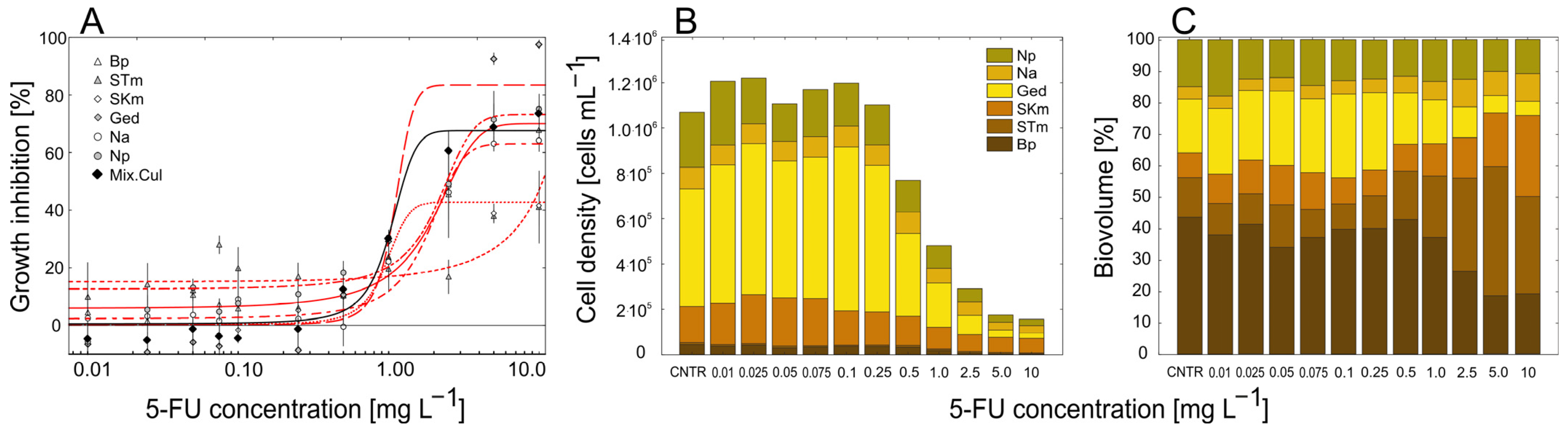
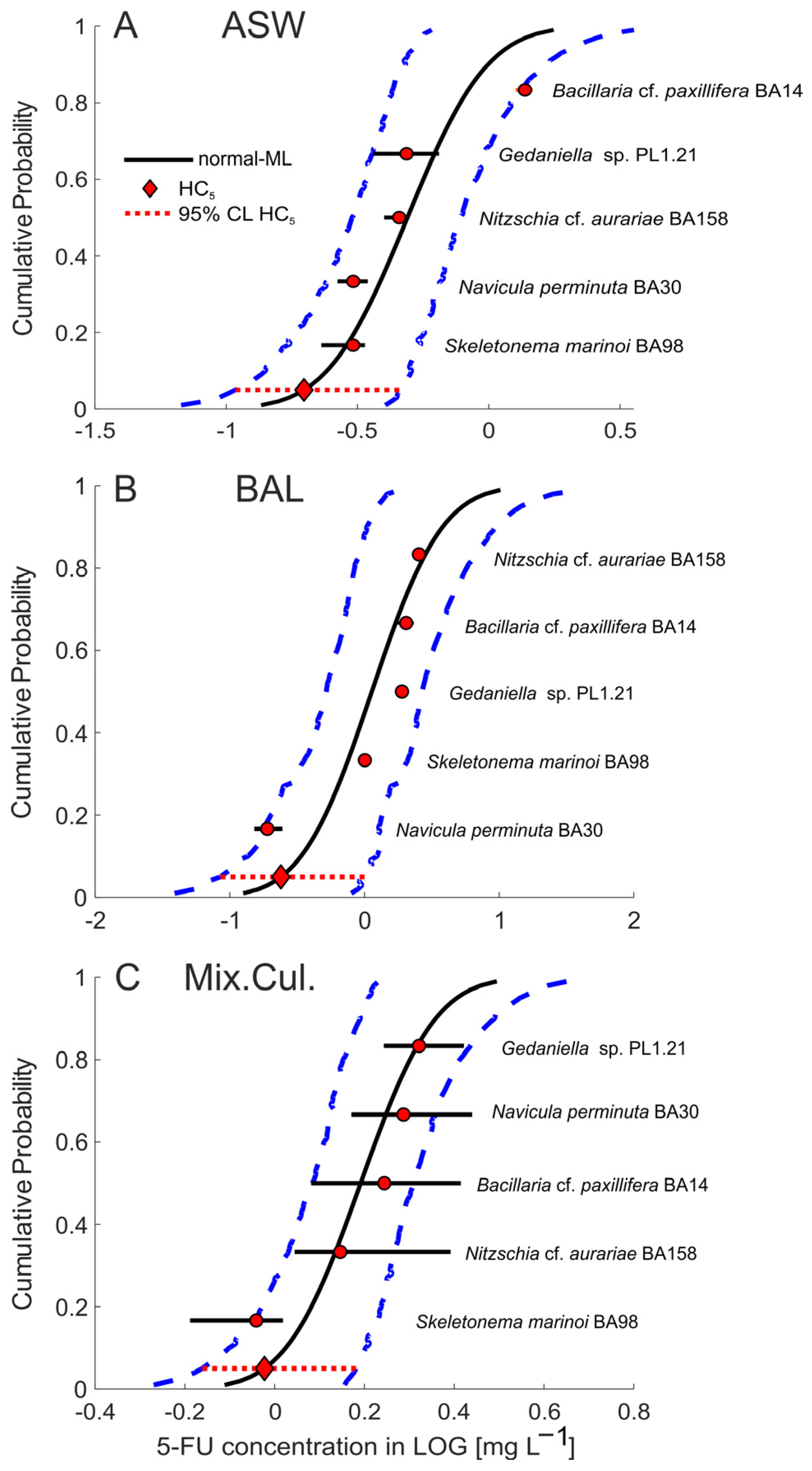



| Strain | Morphology and Life Form | Size | Salinity Tolerance Range a | Freshwater Tolerance | Optimum Salinity † |
|---|---|---|---|---|---|
| Bacillaria cf. paxillifera BA14 (Bp) | benthic, pennate, biraphid solitary, motile cells | large diatom, biovolume: 1933 μm3 | euryhaline 2–30 | No | 7–13 brackish |
| Gedaniella sp. PL1.21 (Ged) | benthic/tychoplanktonic, pennate, araphid non-motile cells growing in a chain-like colony, lying on/floating above sediment | small diatom, biovolume: 63 μm3 | euryhaline 0–30 | limited growth | 23–30 brackish-marine |
| Navicula perminuta BA30 (Np) | benthic, pennate, biraphid solitary, motile cells | small diatom, biovolume: 117 μm3 | euryhaline 0–30 | limited growth | 17–20 brackish-marine |
| Nitzschia cf. aurariae BA158 (Na) | benthic, pennate, biraphid solitary, motile cells | small diatom, biovolume: 80 μm3 | euryhaline 3.5–30 | No | 20–30 brackish-marine |
| Skeletonema marinoi BA98 (SKm) | planktonic, centric non-motile cells forming chain-like colonies | small diatom, biovolume: 94 μm3 | euryhaline 8–30 | No | 20–30 brackish-marine |
| Stephanocyclus meneghinianus BA10 (STm) | planktonic, centric solitary, non-motile cells | large diatom, biovolume: 2643 μm3 | euryhaline 0–16 | Yes | 0–16 brackish |
| Parameter | Pore Water | Sea Water |
|---|---|---|
| Temperature | 24.5 | 24.4 |
| Salinity | 6.8 | 6.7 |
| NO3− | 1.9 | 0.47 |
| NH4+ | 0.4 | 0.01 |
| PO43− | 0.16 | 0.04 |
| ASW | BAL | ASW22 | CP + IF | Six-Strain Mixed Cultures | |
|---|---|---|---|---|---|
| Bacillaria cf. paxillifer BA14 | 0.69 ± 0.01 a/III | 0.80 ± 0.01 b/V | - | 0.69 ± 0.003 a/III | 0.99 ± 0.02 c/IV* |
| Stephanocyclus meneghinianus BA10 | 0.47 ± 0.01 b/I | 0.53 ± 0.01 b/II | - | 0.31 ± 0.02 a/I | 0.67 ± 0.05 c/II-III |
| Skeletonema marinoi BA98 | 0.50 ± 0.01 a/I | 0.45 ± 0.02 a/I | 0.85 ± 0.002 d/II | 0.66 ± 0.02 c/II-III | 0.56 ± 0.01 b/II |
| Gedaniella sp. PL1.21 | 0.62 ± 0.01 a/II | 0.87 ± 0.01 c/VI | 0.84 ± 0.01 c/II | 0.62 ± 0.01 a/II | 0.75 ± 0.03 b/III |
| Nitzschia cf. aurariae BA158 | 0.83 ± 0.01 c/IV | 0.65 ± 0.01 b/IV | 1.12 ± 0.005 d/III | 0.82 ± 0.01 c/IV | 0.39 ± 0.03 a/I* |
| Navicula perminuta BA30 | 0.95 ± 0.01 d/V | 0.059 ± 0.01 a/III | 0.69 ± 0.01 b/I | 0.85 ± 0.01 c/IV | 0.72 ± 0.03 b/III |
| Six-strain mixed cultures—Total | 0.66 ± 0.02 |
| Species | ASW | BAL | ASW22 | CP + IF | Six-Strain Mixed Cultures |
|---|---|---|---|---|---|
| Bacillaria cf. paxillifer BA14 | 1.38 ± 0.05 ab/III | 2.05 ± 0.10 b/III | - | 0.75 ± 0.01 a/II-III | 1.84 ± 0.31 b/I-II* |
| Stephanocyclus meneghinianus BA10 | n.d. | n.d. | - | n.d. | n.d. |
| Skeletonema marinoi BA98 | 0.30 ± 0.03 a/I | 1.01 ± 0.02 c/II | n.d. | 0.60 ± 0.01 b/II | 1.02 ± 0.09 c/I |
| Gedaniella sp. PL1.21 | 0.50 ± 0.06 a/II | 1.90 ± 0.03 c/III | 1.12 ± 0.13 b/II | 0.52 ± 0.11 a/I-II | 2.12 ± 0.19 c/II* |
| Nitzschia cf. aurariae BA158 | 0.46 ± 0.02 a/I-II | 2.54 ± 0.01 e/IV | 1.95 ± 0.03 d/III | 0.87 ± 0.03 b/III | 1.16 ± 0.04 c/I |
| Navicula perminuta BA30 | 0.31 ± 0.02 a/I | 0.19 ± 0.02 a/I | 0.41 ± 0.04 a/I | 0.34 ± 0.02 a/I | 1.73 ± 0.13 b/I-II |
| Six-strain mixed cultures—Total | 1.05 ± 0.02 |
| HC5 (95% CL) | PNEC (95% CL) AF = 10 | PNEC (95% CL) AF = 200 | |
|---|---|---|---|
| ASW | 0.198 (0.110–0.471) | 0.0198 (0.0110–0.0471) | 0.00099 (0.00055–0.0024) |
| BAL | 0.240 (0.088–1.019) | 0.0240 (0.0088–0.1019) | 0.00120 (0.00044–0.0051) |
| Six-strain mixed cultures | 0.949 (0.690–1.518) | 0.0949 (0.0690–0.1518) | 0.00475 (0.00345–0.0076) |
Disclaimer/Publisher’s Note: The statements, opinions and data contained in all publications are solely those of the individual author(s) and contributor(s) and not of MDPI and/or the editor(s). MDPI and/or the editor(s) disclaim responsibility for any injury to people or property resulting from any ideas, methods, instructions or products referred to in the content. |
© 2025 by the authors. Licensee MDPI, Basel, Switzerland. This article is an open access article distributed under the terms and conditions of the Creative Commons Attribution (CC BY) license (https://creativecommons.org/licenses/by/4.0/).
Share and Cite
Pniewski, F.F.; Sowa, E.; Tylkowski, B. Ecotoxicity of 5-Fluorouracil Towards Diatoms from Brackish Coastal Shallows. Water 2025, 17, 3506. https://doi.org/10.3390/w17243506
Pniewski FF, Sowa E, Tylkowski B. Ecotoxicity of 5-Fluorouracil Towards Diatoms from Brackish Coastal Shallows. Water. 2025; 17(24):3506. https://doi.org/10.3390/w17243506
Chicago/Turabian StylePniewski, Filip F., Ewelina Sowa, and Bartosz Tylkowski. 2025. "Ecotoxicity of 5-Fluorouracil Towards Diatoms from Brackish Coastal Shallows" Water 17, no. 24: 3506. https://doi.org/10.3390/w17243506
APA StylePniewski, F. F., Sowa, E., & Tylkowski, B. (2025). Ecotoxicity of 5-Fluorouracil Towards Diatoms from Brackish Coastal Shallows. Water, 17(24), 3506. https://doi.org/10.3390/w17243506