Article

Flux of Inorganic Carbon as Dissolved, Suspended, and Bed Loads through a Karstic Basin


Department of Geology & Geophysics, Louisiana State University, Baton Rouge, LA 70803, USA
*
Author to whom correspondence should be addressed.
Water 2019, 11(4), 644; https://doi.org/10.3390/w11040644
Submission received: 27 February 2019 / Revised: 13 March 2019 / Accepted: 15 March 2019 / Published: 28 March 2019
(This article belongs to the Special Issue Hydraulic Behavior of Karst Aquifers)

Abstract

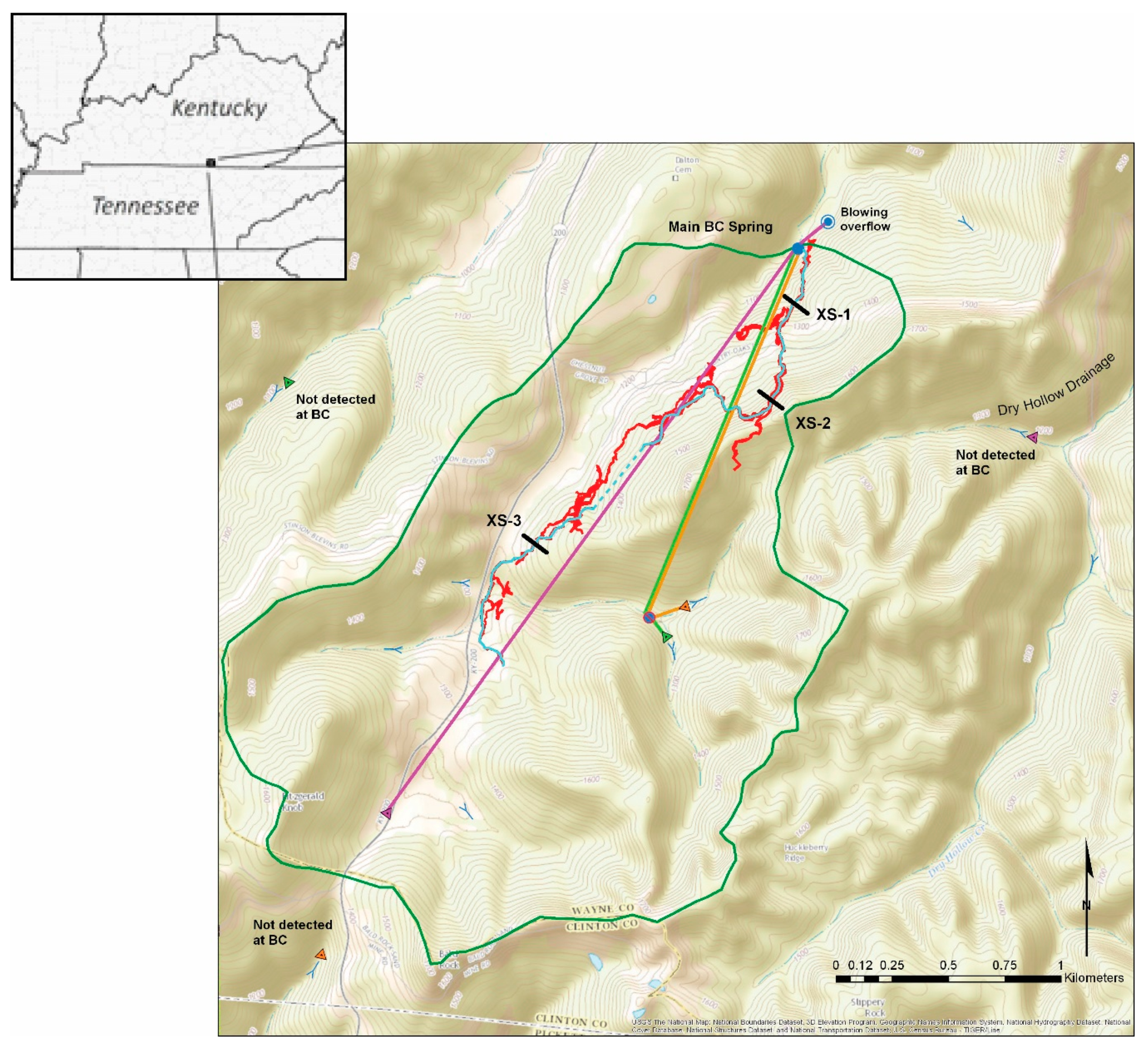
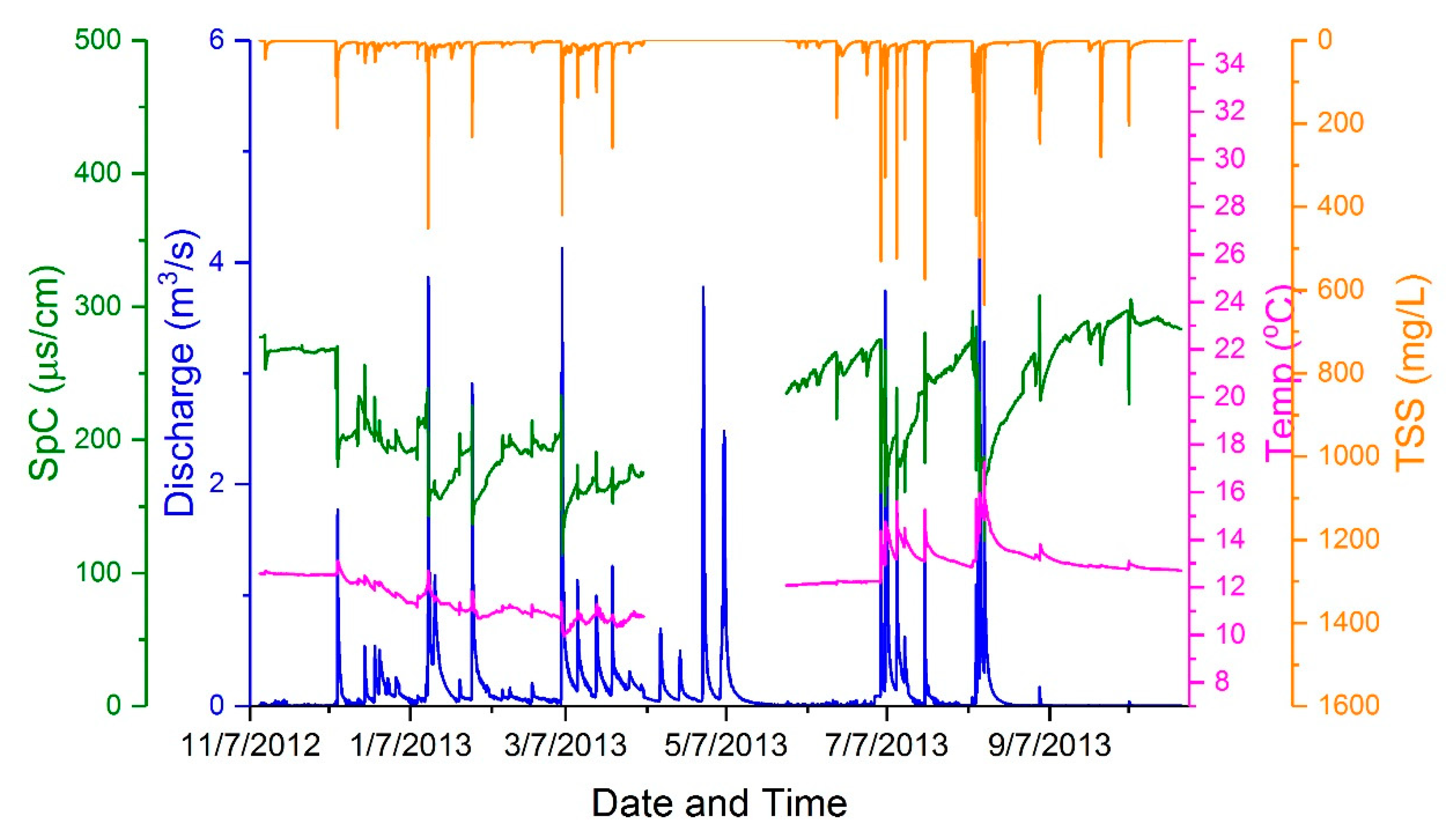
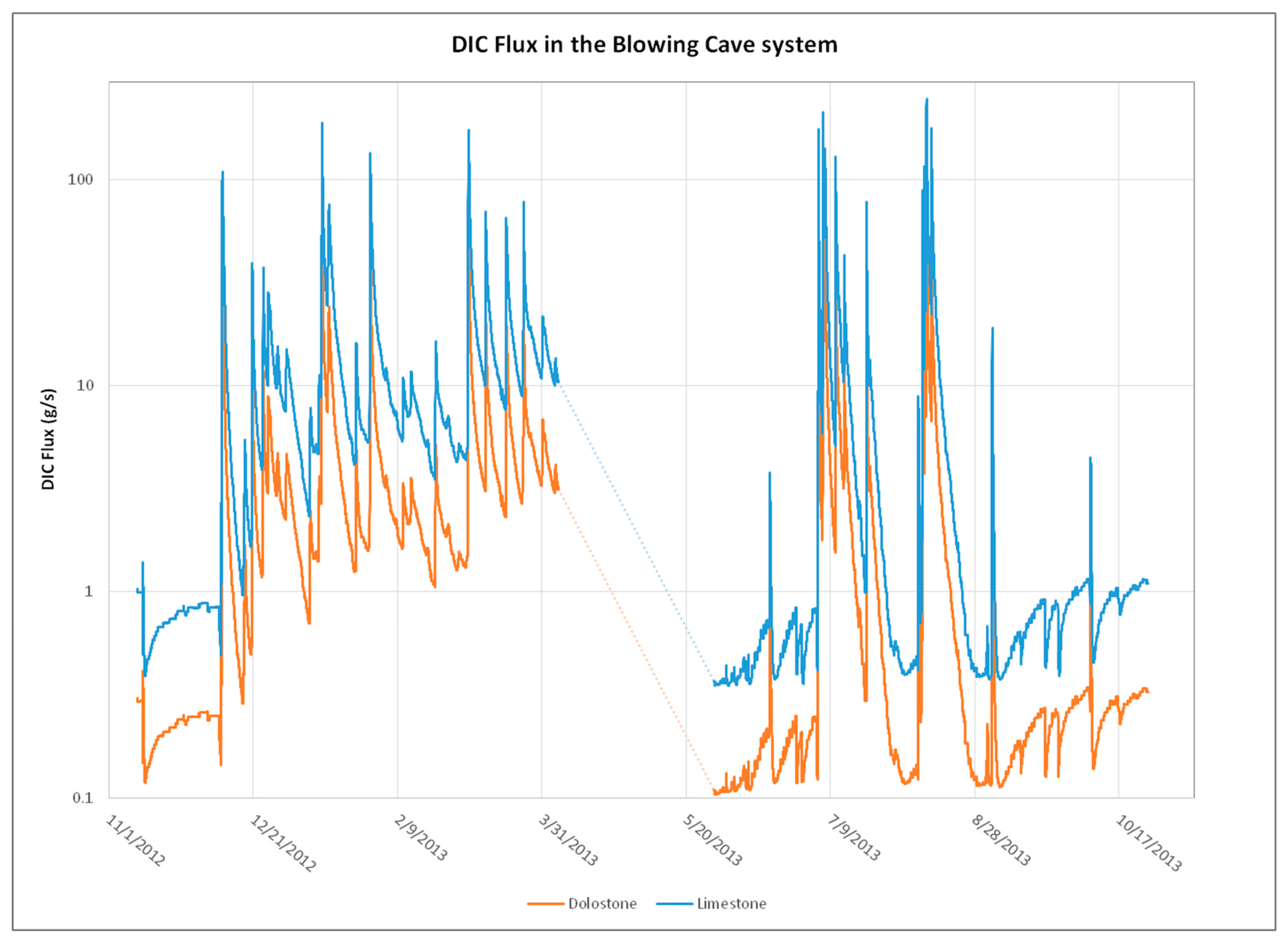
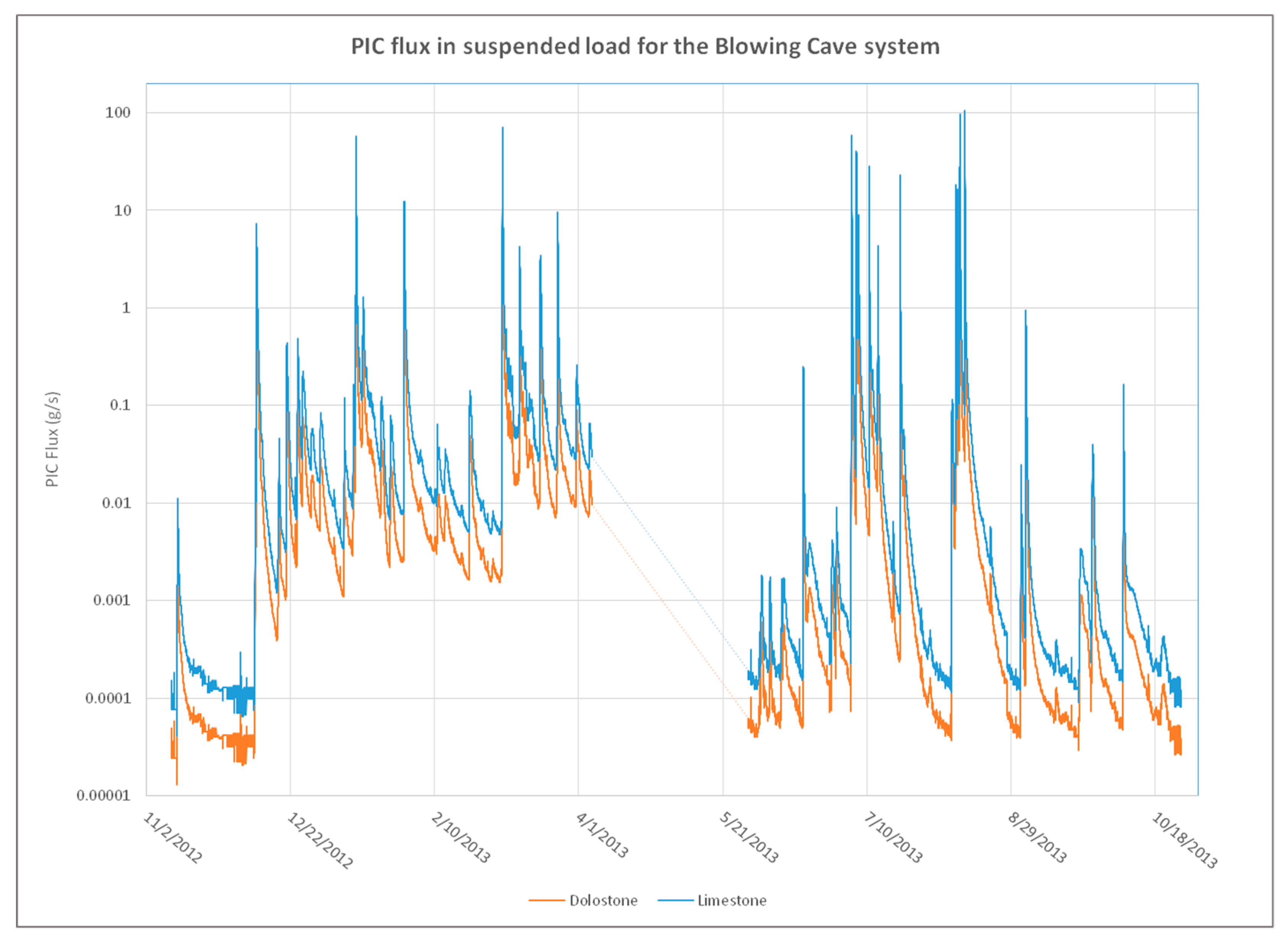
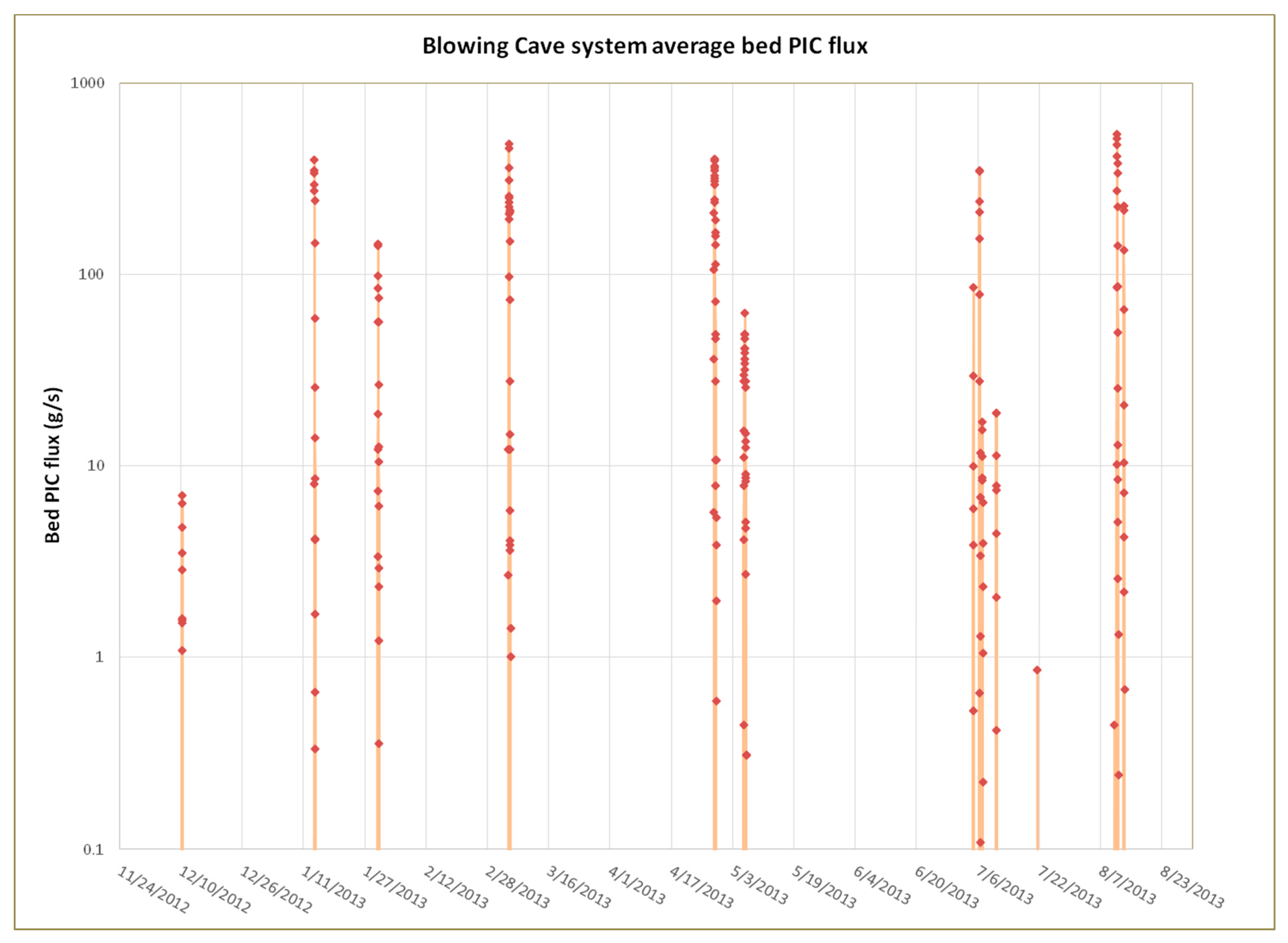
Most studies of carbonate bedrock weathering have focused on the dissolved inorganic carbon (DIC) flux while dismissing particulate inorganic carbon (PIC) as insignificant. However, under certain flow conditions PIC flux may be an important term in carbonate weathering. In this study, the total inorganic carbon (TIC) flux was calculated in a fluviokarst basin. Water samples and in situ data loggers were used to determine suspended sediment concentration and water chemistry. The mass of PIC within suspended sediments was quantified by cation/anion analysis of dual filtered/unfiltered samples. The flux of bed load material was calculated via stream power calculations. The analysis of recorded storm events indicated that PIC flux is moderate but can be significant during peak storm discharges. A small storm with a 0.87-month return period produced a PIC flux of 14 g s−1 and a DIC flux of 150 g s−1 at 1.4 m3 s−1 discharge. The largest storm had a return period of 7.7 months, a peak discharge of 4.6 m3 s−1, and peak PIC flux of 620 g s−1 compared to a peak DIC flux of 350 g s−1. During storm events, bed load was the most significant component of the total PIC flux, exceeding the suspended load flux by an order of magnitude. When calculated on an annual basis, the data show that PIC contributes about 10 percent to total inorganic carbon removal.
Keywords: suspended load; dissolved load; bed load; inorganic carbon; karst; cave stream suspended load; dissolved load; bed load; inorganic carbon; karst; cave stream