Impacts from HONO Chemistry on Atmospheric Oxidation Capacity: A Case Study in Shanghai



Abstract
1. Introduction
2. Materials and Methods
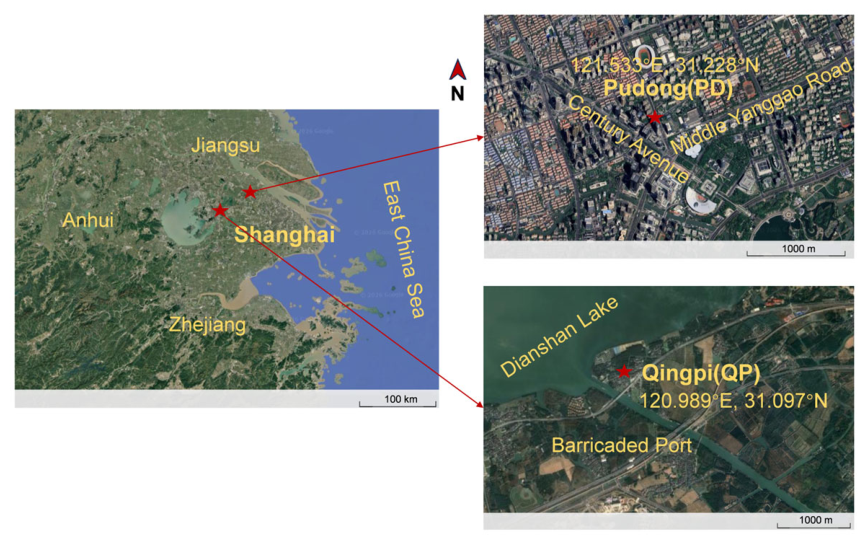
2.1. Site Description
2.2. Measurement of Air Pollutants
2.3. Photochemical Box Modeling
3. Results
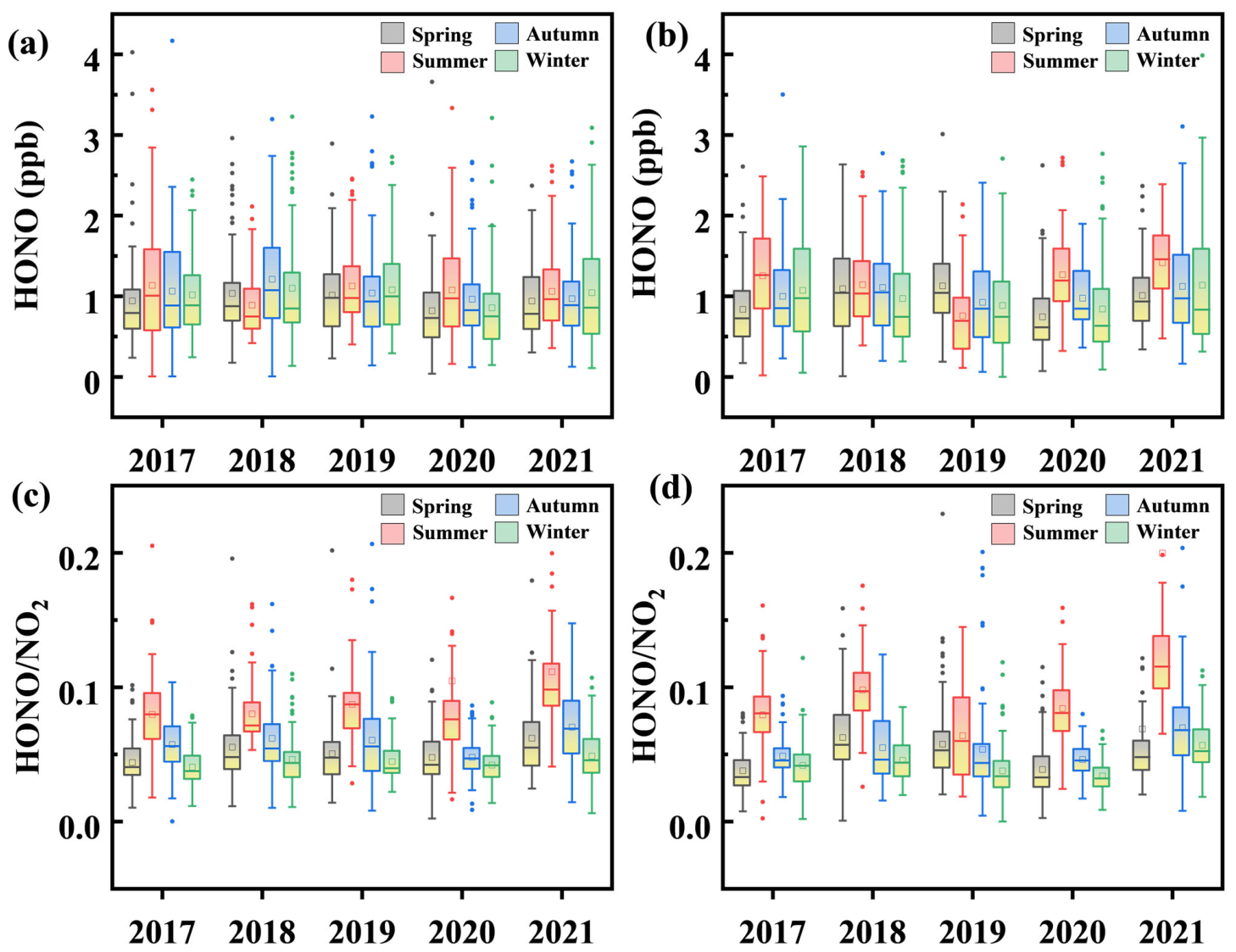
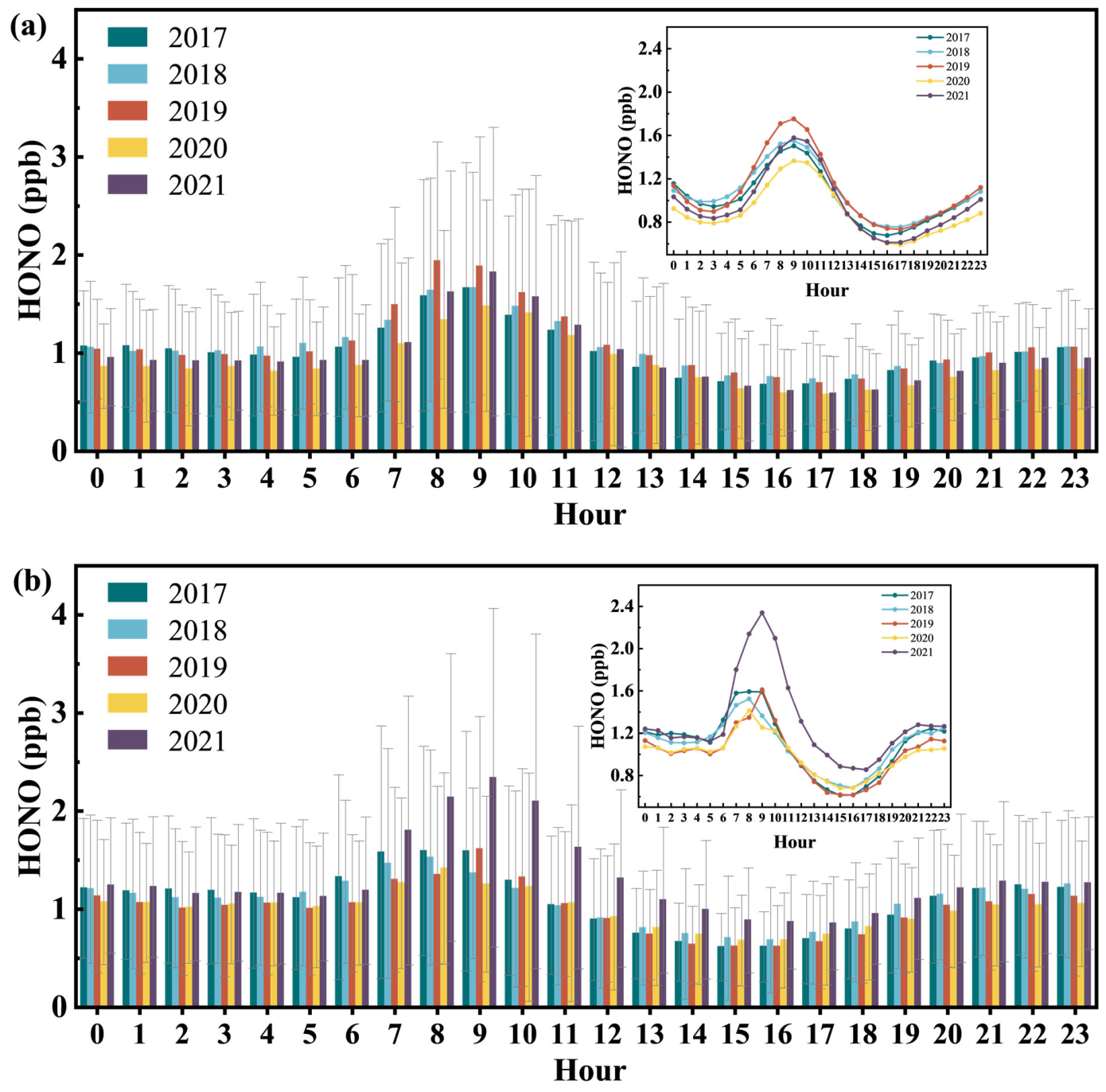
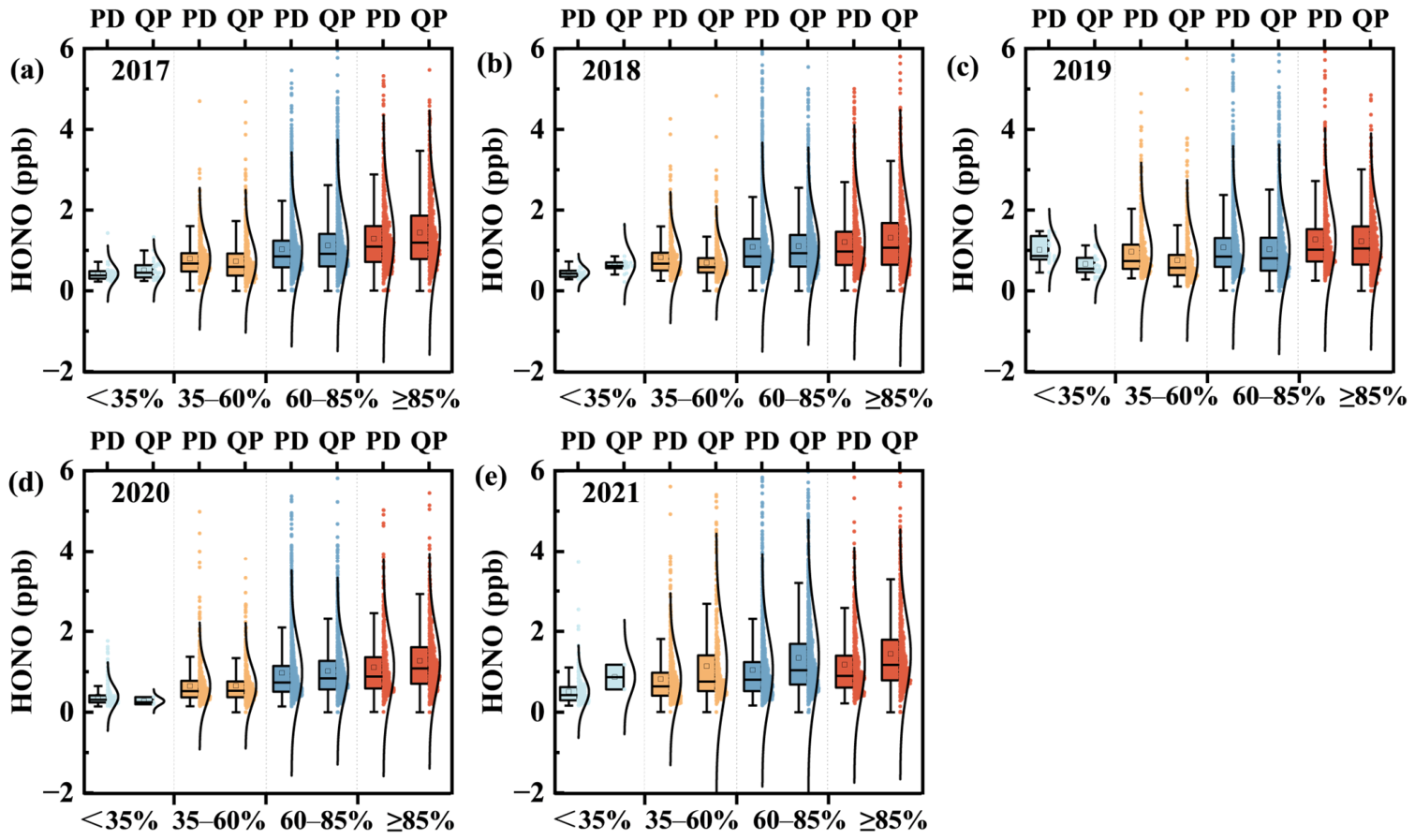
3.1. Annual Trend of HONO in Shanghai
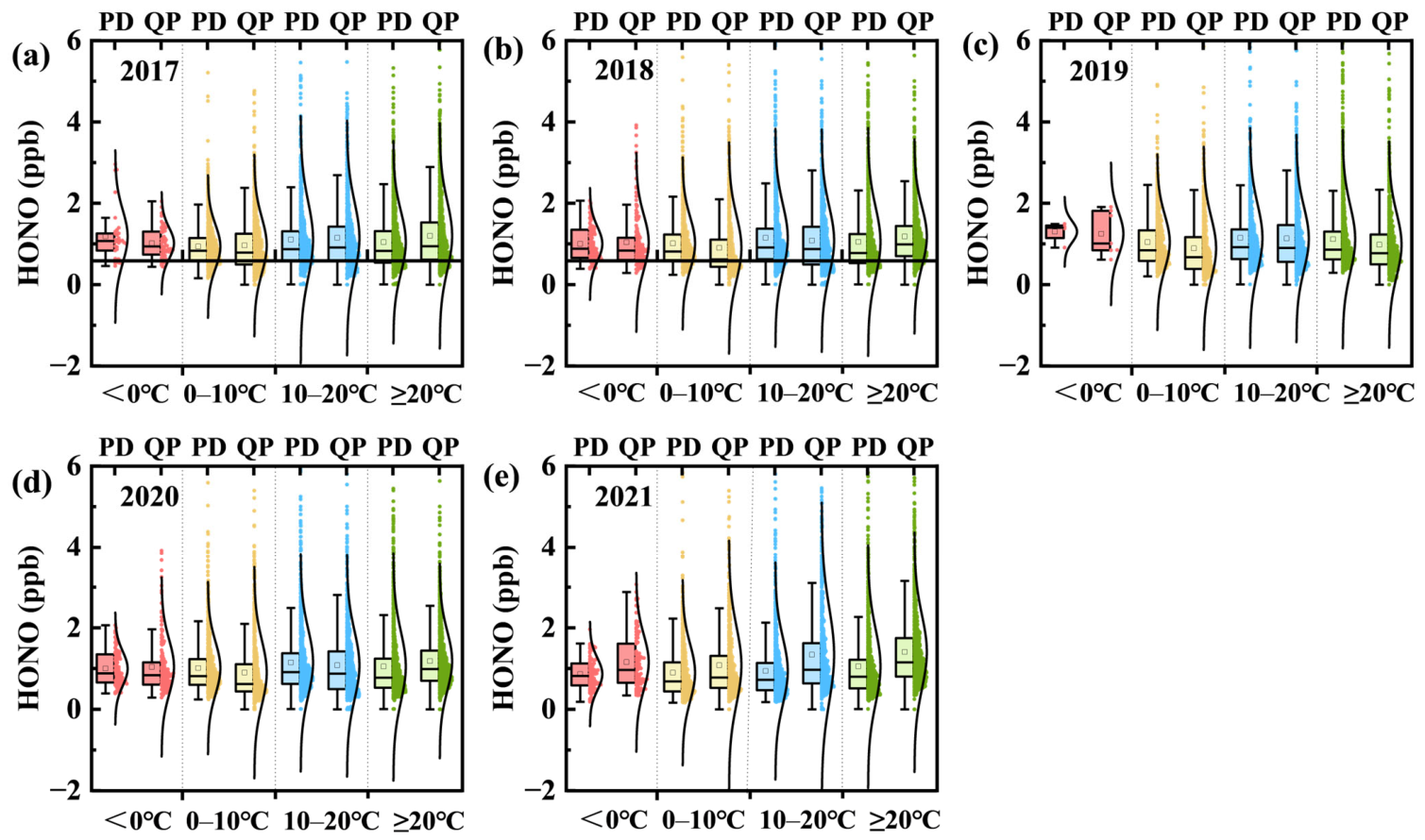
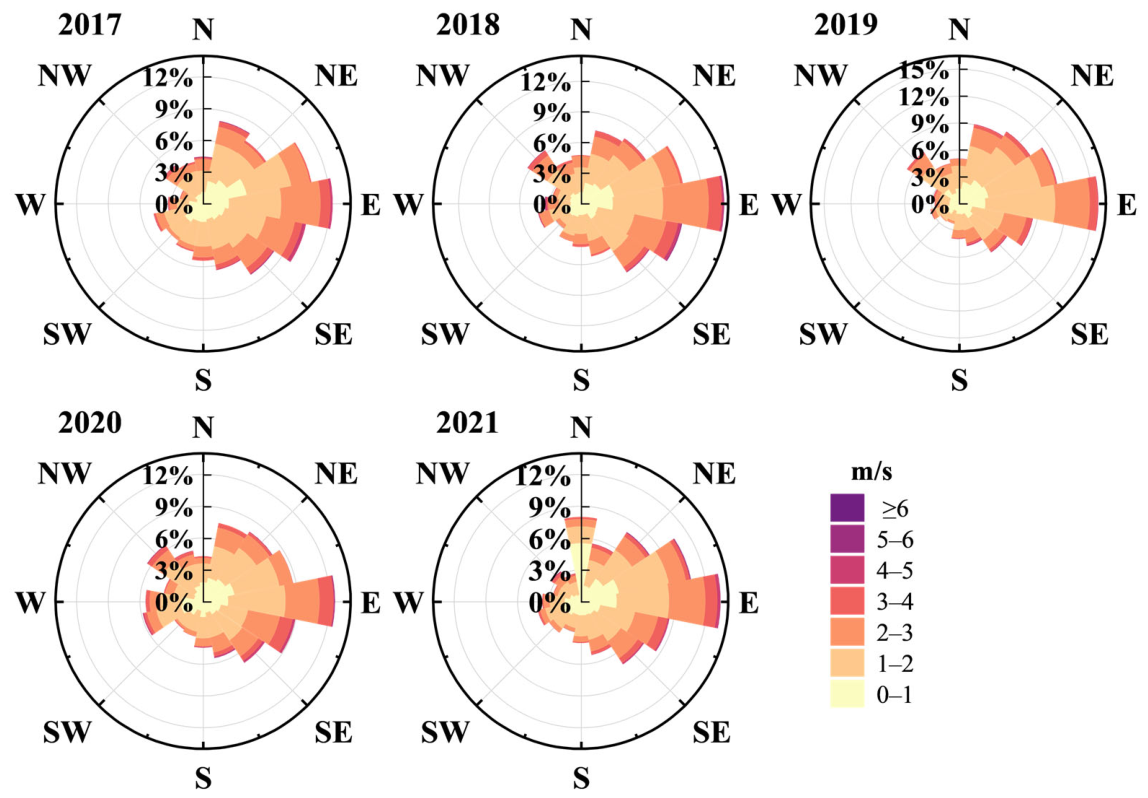
3.2. The Impact of Meteorological Factors on HONO Concentration
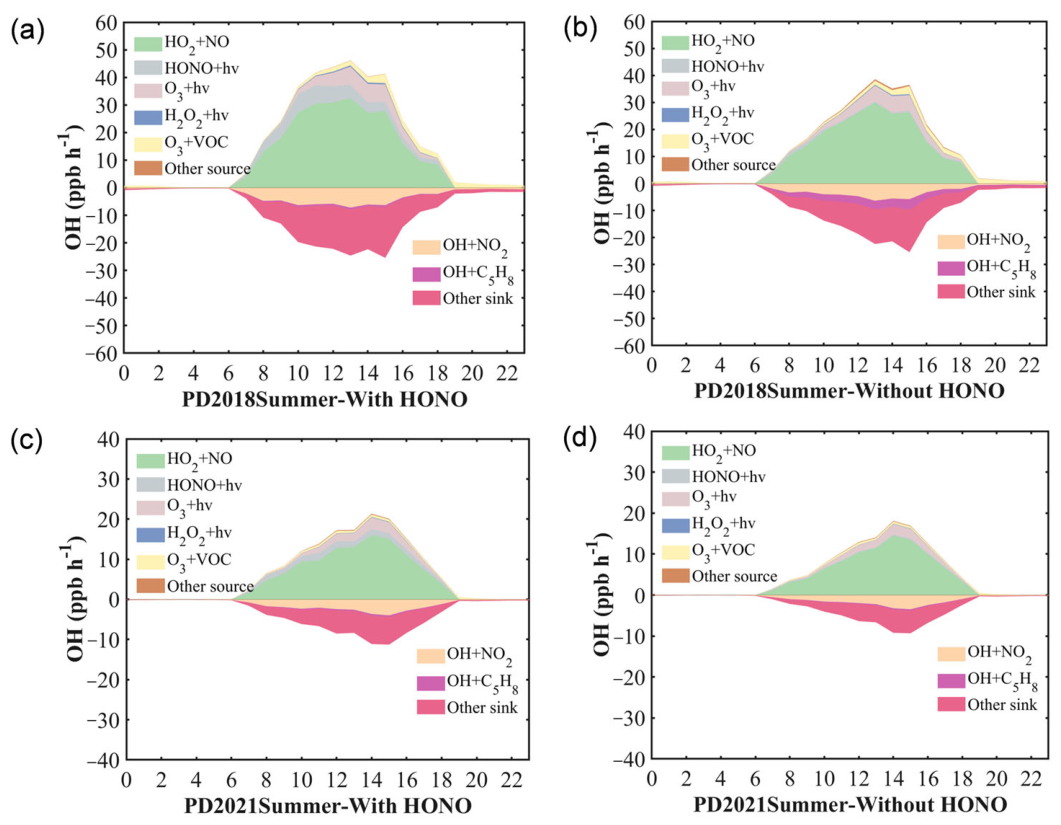
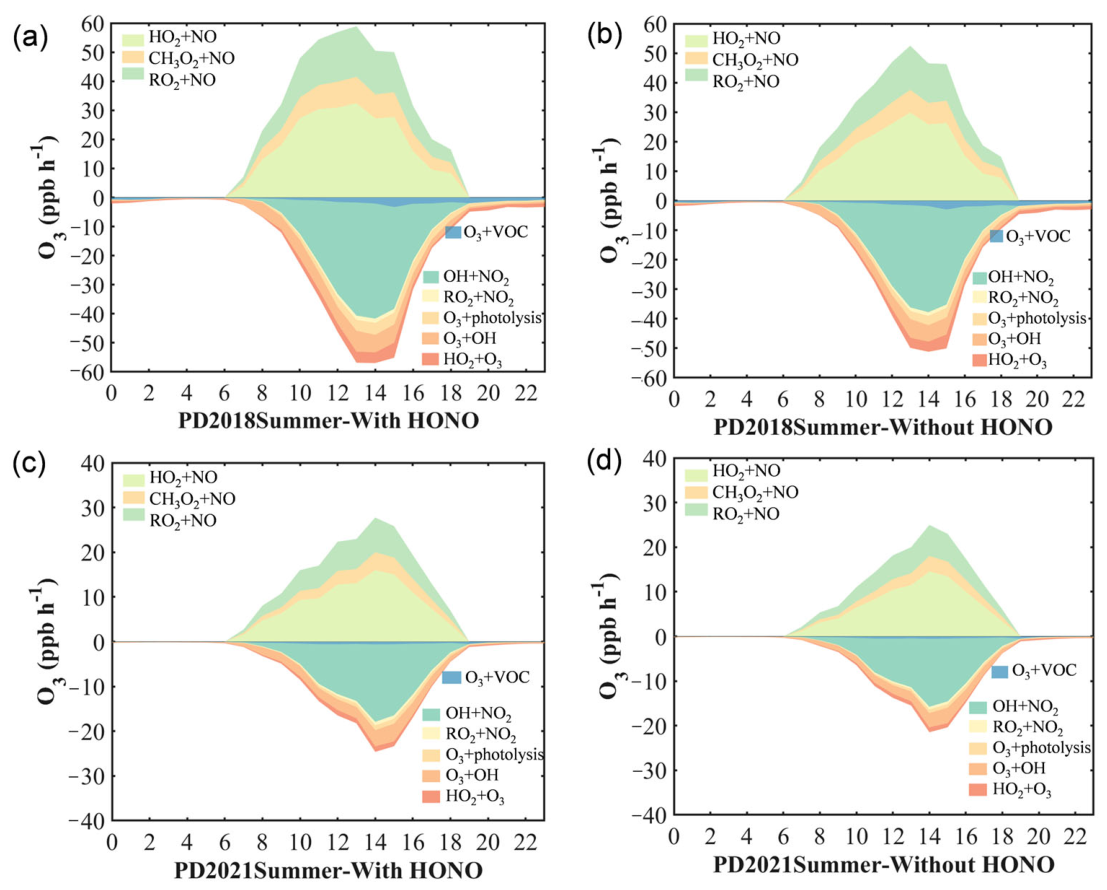
3.3. HONO Impacts on Atmospheric Oxidation Capacity
4. Conclusions
Supplementary Materials
Author Contributions
Funding
Institutional Review Board Statement
Informed Consent Statement
Data Availability Statement
Acknowledgments
Conflicts of Interest
Abbreviations
| HONO | Nitrous acid |
| AOC | Atmospheric oxidation capacity |
| PD | Pudong |
| QP | Qingpu |
| RNS | Reactive nitrogen species |
| NOX | Nitrogen oxides |
| VOCs | Volatile organic compounds |
| YRD | Yangtze River Delta |
| F0AM | Framework for 0-D Atmospheric Modelling |
| MCM | Master Chemistry Mechanism |
| PBL | Planetary boundary layer |
| RH | Relative humidity |
| UV | Ultraviolet |
| FID | Flame ionization detector |
| MS | Mass spectrometry |
| RIR | Relative Incremental Reactivity |
References
- Chan, K.L.; Wang, S.; Liu, C.; Zhou, B.; Wenig, M.O.; Saiz-Lopez, A. On the summertime air quality and related photochemical processes in the megacity Shanghai, China. Sci. Total Environ. 2017, 580, 974–983. [Google Scholar] [CrossRef]
- Liu, Y.; Zhang, Y.; Chaofan, L.; Yan, C.; Feng, Z.; Zheng, F.; Fan, X.; Chen, Y.; Wang, W.; Chu, B.; et al. The promotion effect of nitrous acid on aerosol formation in wintertime in Beijing: The possible contribution of traffic-related emissions. Atmos. Chem. Phys. 2020, 20, 13023–13040. [Google Scholar] [CrossRef]
- Su, H.; Cheng, Y.F.; Shao, M.; Gao, D.F.; Yu, Z.Y.; Zeng, L.M.; Slanina, J.; Zhang, Y.H.; Wiedensohler, A. Nitrous acid (HONO) and its daytime sources at a rural site during the 2004 PRIDE-PRD experiment in China. J. Geophys. Res. Atmos. 2008, 113, D14312. [Google Scholar] [CrossRef]
- Sarwar, G.; Roselle, S.J.; Mathur, R.; Appel, W.; Dennis, R.L.; Vogel, B. A comparison of CMAQ HONO predictions with observations from the Northeast Oxidant and Particle Study. Atmos. Environ. 2008, 42, 5760–5770. [Google Scholar] [CrossRef]
- Romanias, M.N.; El Zein, A.; Bedjanian, Y. Reactive uptake of HONO on aluminium oxide surface. J. Photochem. Photobiol. A Chem. 2012, 250, 50–57. [Google Scholar] [CrossRef]
- El Zein, A.; Bedjanian, Y. Reactive Uptake of HONO to TiO2 Surface: “Dark” Reaction. J. Phys. Chem. A 2012, 116, 3665–3672. [Google Scholar] [CrossRef]
- Li, X.; Brauers, T.; Häseler, R.; Bohn, B.; Fuchs, H.; Hofzumahaus, A.; Holland, F.; Lou, S.; Lu, K.D.; Rohrer, F.; et al. Exploring the atmospheric chemistry of nitrous acid (HONO) at a rural site in Southern China. Atmos. Chem. Phys. 2012, 12, 1497–1513. [Google Scholar] [CrossRef]
- Stemmler, K.; Ndour, M.; Elshorbany, Y.; Kleffmann, J.; D’Anna, B.; George, C.; Bohn, B.; Ammann, M. Light induced conversion of nitrogen dioxide into nitrous acid on submicron humic acid aerosol. Atmos. Chem. Phys. 2007, 2007, 4237. [Google Scholar] [CrossRef]
- Ndour, M.; D’Anna, B.; George, C.; Ka, O.; Balkanski, Y.; Kleffmann, J.; Stemmler, K.; Ammann, M. Photoenhanced uptake of NO2 on mineral dust: Laboratory experiments and model simulations. Geophys. Res. Lett. 2008, 35, L05812. [Google Scholar] [CrossRef]
- Xia, H.; Huang, D.; Bao, F.; Li, M.; Zhang, Y.; Chen, C.; Zhao, J. Photochemical aging of Beijing urban PM2.5: Production of oxygenated volatile organic compounds. Sci. Total Environ. 2020, 743, 140751. [Google Scholar] [CrossRef] [PubMed]
- Ye, C.; Gao, H.; Zhang, N.; Zhou, X. Photolysis of Nitric Acid and Nitrate on Natural and Artificial Surfaces. Environ. Sci. Technol. 2016, 50, 3530–3536. [Google Scholar] [CrossRef]
- Ye, C.; Zhang, N.; Gao, H.; Zhou, X. Photolysis of Particulate Nitrate as a Source of HONO and NOx. Environ. Sci. Technol. 2017, 51, 6849–6856. [Google Scholar] [CrossRef]
- Li, B.; Gao, J.; Chen, C.; Wen, L.; Zhang, Y.; Li, J.; Zhang, Y.; Du, X.; Zhang, K.; Wang, J. Exploring HONO production from particulate nitrate photolysis in representative regions of China: Characteristics, influencing factors, and environmental implications. Atmos. Chem. Phys. 2024, 24, 13183–13198. [Google Scholar] [CrossRef]
- Romer, P.S.; Wooldridge, P.J.; Crounse, J.D.; Kim, M.J.; Wennberg, P.O.; Dibb, J.E.; Scheuer, E.; Blake, D.R.; Meinardi, S.; Brosius, A.L.; et al. Constraints on Aerosol Nitrate Photolysis as a Potential Source of HONO and NOx. Environ. Sci. Technol. 2018, 52, 13738–13746. [Google Scholar] [CrossRef] [PubMed]
- Andersen, S.T.; Carpenter, L.J.; Reed, C.; Lee, J.D.; Chance, R.; Sherwen, T.; Vaughan, A.R.; Stewart, J.; Edwards, P.M.; Bloss, W.J.; et al. Extensive field evidence for the release of HONO from the photolysis of nitrate aerosols. Sci. Adv. 2023, 9, eadd6266. [Google Scholar] [CrossRef] [PubMed]
- Pitts, J.N., Jr.; Sanhueza, E.; Atkinson, R.; Carter, W.P.L.; Winer, A.M.; Harris, G.W.; Plum, C.N. An investigation of the dark formation of nitrous acid in environmental chambers. Int. J. Chem. Kinet. 1984, 16, 919–939. [Google Scholar] [CrossRef]
- Chen, D.; Zhou, L.; Wang, W.; Lian, C.; Liu, H.; Luo, L.; Xiao, K.; Chen, Y.; Song, D.; Tan, Q.; et al. Integrating Chemical Mechanisms and Feature Engineering in Machine Learning Models: A Novel Approach to Analyzing HONO Budget. Environ. Sci. Technol. 2024, 58, 22267–22277. [Google Scholar] [CrossRef] [PubMed]
- Zhang, W.; Tong, S.; Lin, D.; Li, F.; Zhang, X.; Wang, L.; Ji, D.; Tang, G.; Liu, Z.; Hu, B.; et al. Atmospheric chemistry of nitrous acid and its effects on hydroxyl radical and ozone at the urban area of Beijing in early spring 2021. Environ. Pollut. 2023, 316, 120710. [Google Scholar] [CrossRef]
- Elshorbany, Y.F.; Kurtenbach, R.; Wiesen, P.; Lissi, E.; Rubio, M.; Villena, G.; Gramsch, E.; Rickard, A.R.; Pilling, M.J.; Kleffmann, J. Oxidation capacity of the city air of Santiago, Chile. Atmos. Chem. Phys. 2009, 9, 2257–2273. [Google Scholar] [CrossRef]
- Lu, K.; Rohrer, F.; Holland, F.; Fuchs, H.; Bohn, B.; Brauers, T.; Chang, C.-C.; Häseler, M.; Hu, M.; Kita, K.; et al. Observation and modelling of OH and HO2 concentrations in the Pearl River Delta 2006: A missing OH source in a VOC rich atmosphere. Atmos. Chem. Phys. 2012, 2012, 1541–1569. [Google Scholar] [CrossRef]
- Stutz, J.; Kim, E.S.; Platt, U.; Bruno, P.; Perrino, C.; Febo, A. UV-visible absorption cross sections of nitrous acid. J. Geophys. Res. Atmos. 2000, 105, 14585–14592. [Google Scholar] [CrossRef]
- Stone, D.; Whalley, L.K.; Heard, D.E. Tropospheric OH and HO2 radicals: Field measurements and model comparisons. Chem. Soc. Rev. 2012, 41, 6348–6404. [Google Scholar] [CrossRef] [PubMed]
- Seinfeld, J.H.; Pandis, S.N.; Noone, K.J. Atmospheric Chemistry and Physics: From Air Pollution to Climate Change. Phys. Today 1998, 51, 88–90. [Google Scholar] [CrossRef]
- Gu, R.; Zheng, P.; Chen, T.; Dong, C.; Wang, Y.n.; Liu, Y.; Liu, Y.; Luo, Y.; Han, G.; Wang, X.; et al. Atmospheric nitrous acid (HONO) at a rural coastal site in North China: Seasonal variations and effects of biomass burning. Atmos. Environ. 2020, 229, 117429. [Google Scholar] [CrossRef]
- Alicke, B.; Geyer, A.; Hofzumahaus, A.; Holland, F.; Konrad, S.; Pätz, H.W.; Schäfer, J.; Stutz, J.; Volz-Thomas, A.; Platt, U. OH formation by HONO photolysis during the BERLIOZ experiment. J. Geophys. Res. Atmos. 2003, 108, PHO 3-1–PHO 3-17. [Google Scholar] [CrossRef]
- Elshorbany, Y.F.; Kleffmann, J.; Kurtenbach, R.; Lissi, E.; Rubio, M.; Villena, G.; Gramsch, E.; Rickard, A.R.; Pilling, M.J.; Wiesen, P. Seasonal dependence of the oxidation capacity of the city of Santiago de Chile. Atmos. Environ. 2010, 44, 5383–5394. [Google Scholar] [CrossRef]
- Sillman, S. The use of NO, H2O2, and HNO3 as indicators for ozone-NOx -hydrocarbon sensitivity in urban locations. J. Geophys. Res. Atmos. 1995, 100, 14175–14188. [Google Scholar] [CrossRef]
- Atkinson, R. Atmospheric chemistry of VOCs and NOx. Atmos. Environ. 2000, 34, 2063–2101. [Google Scholar] [CrossRef]
- Liu, P.; Xue, C.; Ye, C.; Liu, C.; Zhang, C.; Wang, J.; Zhang, Y.; Liu, J.; Mu, Y. The Lack of HONO Measurement May Affect the Accurate Diagnosis of Ozone Production Sensitivity. ACS Environ. Au 2023, 3, 18–23. [Google Scholar] [CrossRef]
- Ye, C.; Lu, K.; Ma, X.; Qiu, W.; Li, S.; Yang, X.; Xue, C.; Zhai, T.; Liu, Y.; Li, X.; et al. HONO chemistry at a suburban site during the EXPLORE-YRD campaign in 2018: Formation mechanisms and impacts on O3 production. Atmos. Chem. Phys. 2023, 23, 15455–15472. [Google Scholar] [CrossRef]
- Zhang, R.; Sarwar, G.; Fung, J.C.H.; Lau, A.K.H.; Zhang, Y. Examining the Impact of Nitrous Acid Chemistry on Ozone and PM over the Pearl River Delta Region. Adv. Meteorol. 2012, 2012, 140932. [Google Scholar] [CrossRef]
- Fu, X.; Wang, T.; Zhang, L.; Li, Q.; Wang, Z.; Xia, M.; Yun, H.; Wang, W.; Yu, C.; Yue, D.; et al. The significant contribution of HONO to secondary pollutants during a severe winter pollution event in southern China. Atmos. Chem. Phys. 2019, 19, 1–14. [Google Scholar] [CrossRef]
- Kleffmann, J. Daytime Sources of Nitrous Acid (HONO) in the Atmospheric Boundary Layer. ChemPhysChem 2007, 8, 1137–1144. [Google Scholar] [CrossRef]
- Zhang, W.; Tong, S.; Ge, M.; An, J.; Shi, Z.; Hou, S.; Xia, K.; Qu, Y.; Zhang, H.; Chu, B.; et al. Variations and sources of nitrous acid (HONO) during a severe pollution episode in Beijing in winter 2016. Sci. Total Environ. 2019, 648, 253–262. [Google Scholar] [CrossRef]
- Bernard, F.; Cazaunau, M.; Grosselin, B.; Zhou, B.; Zheng, J.; Liang, P.; Zhang, Y.; Ye, X.; Daële, V.; Mu, Y.; et al. Measurements of nitrous acid (HONO) in urban area of Shanghai, China. Environ. Sci. Pollut. Res. 2016, 23, 5818–5829. [Google Scholar] [CrossRef]
- Feng, T.; Zhao, S.; Liu, L.; Long, X.; Gao, C.; Wu, N. Nitrous acid emission from soil bacteria and related environmental effect over the North China Plain. Chemosphere 2022, 287, 132034. [Google Scholar] [CrossRef]
- Zhang, L.; Li, Q.; Wang, T.; Ahmadov, R.; Zhang, Q.; Li, M.; Lv, M. Combined impacts of nitrous acid and nitryl chloride on lower-tropospheric ozone: New module development in WRF-Chem and application to China. Atmos. Chem. Phys. 2017, 17, 9733–9750. [Google Scholar] [CrossRef]
- Ge, Y.; Shi, X.; Ma, Y.; Zhang, W.; Ren, X.; Zheng, J.; Zhang, Y. Seasonality of nitrous acid near an industry zone in the Yangtze River Delta region of China: Formation mechanisms and contribution to the atmospheric oxidation capacity. Atmos. Environ. 2021, 254, 118420. [Google Scholar] [CrossRef]
- Hu, B.; Duan, J.; Hong, Y.; Xu, L.; Li, M.; Bian, Y.; Qin, M.; Fang, W.; Xie, P.; Chen, J. Exploration of the atmospheric chemistry of nitrous acid in a coastal city of southeastern China: Results from measurements across four seasons. Atmos. Chem. Phys. 2022, 22, 371–393. [Google Scholar] [CrossRef]
- Ni, X.; Sun, C.; Zhang, Y.; Liang, B.; Zhou, S.; Lan, G.; Zhao, J. Atmospheric HONO formation during and after the Spring Festival holidays in a coastal city of China. J. Environ. Sci. 2023, 127, 251–263. [Google Scholar] [CrossRef] [PubMed]
- Liu, Y.; Nie, W.; Xu, Z.; Wang, T.; Wang, R.; Li, Y.; Wang, L.; Chi, X.; Ding, A. Semi-quantitative understanding of source contribution to nitrous acid (HONO) based on 1 year of continuous observation at the SORPES station in eastern China. Atmos. Chem. Phys. 2019, 19, 13289–13308. [Google Scholar] [CrossRef]
- Crilley, L.R.; Kramer, L.J.; Ouyang, B.; Duan, J.; Zhang, W.; Tong, S.; Ge, M.; Tang, K.; Qin, M.; Xie, P.; et al. Intercomparison of nitrous acid (HONO) measurement techniques in a megacity (Beijing). Atmos. Meas. Tech. 2019, 12, 6449–6463. [Google Scholar] [CrossRef]
- Heland, J.; Kleffmann, J.; Kurtenbach, R.; Wiesen, P. A New Instrument to Measure Gaseous Nitrous Acid (HONO) in the Atmosphere. Environ. Sci. Technol. 2001, 35, 3207–3212. [Google Scholar] [CrossRef]
- Cao, T.; Wang, H.; Li, L.; Lu, X.; Liu, Y.; Fan, S. Fast spreading of surface ozone in both temporal and spatial scale in Pearl River Delta. J. Environ. Sci. 2024, 137, 540–552. [Google Scholar] [CrossRef]
- Zhang, J.; Chen, C.; Su, Y.; Guo, W.; Fu, X.; Long, Y.; Peng, X.; Zhang, W.; Huang, X.; Wang, G. Characterization of summertime single aerosol particles in Chengdu (China): Interannual evolution and impact of COVID-19 lockdown. Sci. Total Environ. 2024, 907, 167765. [Google Scholar] [CrossRef] [PubMed]
- Feng, J.; Ren, E.; Hu, M.; Fu, Q.; Duan, Y.; Huang, C.; Zhao, Y.; Wang, S. Budget of atmospheric nitrous acid (HONO) during the haze and clean periods in Shanghai: Importance of heterogeneous reactions. Sci. Total Environ. 2023, 900, 165717. [Google Scholar] [CrossRef]
- Cui, L.; Li, R.; Zhang, Y.; Meng, Y.; Fu, H.; Chen, J. An observational study of nitrous acid (HONO) in Shanghai, China: The aerosol impact on HONO formation during the haze episodes. Sci. Total Environ. 2018, 630, 1057–1070. [Google Scholar] [CrossRef]
- Wolfe, G.M.; Marvin, M.R.; Roberts, S.J.; Travis, K.R.; Liao, J. The Framework for 0-D Atmospheric Modeling (F0AM) v3.1. Geosci. Model Dev. 2016, 9, 3309–3319. [Google Scholar] [CrossRef]
- Xue, C. Substantially Growing Interest in the Chemistry of Nitrous Acid (HONO) in China: Current Achievements, Problems, and Future Directions. Environ. Sci. Technol. 2022, 56, 7375–7377. [Google Scholar] [CrossRef]
- Yu, C.; Wang, Z.; Xia, M.; Fu, X.; Wang, W.; Jun Tham, Y.; Chen, T.; Zheng, P.; Li, H.; Shan, Y.; et al. Heterogeneous N2O5 reactions on atmospheric aerosols at four Chinese sites: Improving model representation of uptake parameters. Atmos. Chem. Phys. 2020, 20, 4367–4378. [Google Scholar] [CrossRef]
- Zang, H.; Zhao, Y.; Huo, J.; Zhao, Q.; Fu, Q.; Duan, Y.; Shao, J.; Huang, C.; An, J.; Xue, L.; et al. High atmospheric oxidation capacity drives wintertime nitrate pollution in the eastern Yangtze River Delta of China. Atmos. Chem. Phys. 2022, 22, 4355–4374. [Google Scholar] [CrossRef]
- Rohrer, F.; Berresheim, H. Strong correlation between levels of tropospheric hydroxyl radicals and solar ultraviolet radiation. Nature 2006, 442, 184–187. [Google Scholar] [CrossRef]
- Jia, C.; Tong, S.; Zhang, W.; Zhang, X.; Li, W.; Wang, Z.; Wang, L.; Liu, Z.; Hu, B.; Zhao, P.; et al. Pollution characteristics and potential sources of nitrous acid (HONO) in early autumn 2018 of Beijing. Sci. Total Environ. 2020, 735, 139317. [Google Scholar] [CrossRef]
- Zhang, X.; Tong, S.; Jia, C.; Zhang, W.; Wang, Z.; Tang, G.; Hu, B.; Liu, Z.; Wang, L.; Zhao, P.; et al. Elucidating HONO formation mechanism and its essential contribution to OH during haze events. npj Clim. Atmos. Sci. 2023, 6, 55. [Google Scholar] [CrossRef]
- Liu, J.; Li, B.; Deng, H.; Yang, Y.; Song, W.; Wang, X.; Luo, Y.; Francisco, J.S.S.; Li, L.; Gligorovski, S. Resolving the Formation Mechanism of HONO via Ammonia-Promoted Photosensitized Conversion of Monomeric NO2 on Urban Glass Surfaces. J. Am. Chem. Soc. 2023, 145, 11488–11493. [Google Scholar] [CrossRef] [PubMed]
- Gil, J.; Lee, M.; Lee, H.; Jang, J. Seasonal Characteristics of HONO Variations in Seoul during 2021–2022. J. Korean Soc. Atmos. Environ. 2023, 39, 308–319. [Google Scholar] [CrossRef]
- Spataro, F.; Ianniello, A.; Esposito, G.; Allegrini, I.; Zhu, T.; Hu, M. Occurrence of atmospheric nitrous acid in the urban area of Beijing (China). Sci. Total Environ. 2013, 447, 210–224. [Google Scholar] [CrossRef]
- Stutz, J.; Alicke, B.; Ackermann, R.; Geyer, A.; Wang, S.; White, A.B.; Williams, E.J.; Spicer, C.W.; Fast, J.D. Relative humidity dependence of HONO chemistry in urban areas. J. Geophys. Res. Atmos. 2004, 109, D03307. [Google Scholar] [CrossRef]
- Wang, S.; Zhou, R.; Zhao, H.; Wang, Z.; Chen, L.; Zhou, B. Long-term observation of atmospheric nitrous acid (HONO) and its implication to local NO2 levels in Shanghai, China. Atmos. Environ. 2013, 77, 718–724. [Google Scholar] [CrossRef]
- Liu, Y.; Ni, S.; Jiang, T.; Xing, S.; Zhang, Y.; Bao, X.; Feng, Z.; Fan, X.; Zhang, L.; Feng, H. Influence of Chinese New Year overlapping COVID-19 lockdown on HONO sources in Shijiazhuang. Sci. Total Environ. 2020, 745, 141025. [Google Scholar] [CrossRef] [PubMed]
- Burling, I.; Yokelson, R.; Griffith, D.; Johnson, T.; Veres, P.; Roberts, J.; Warneke, C.; Urbanski, S.; Reardon, J.; Weise, D.; et al. Laboratory measurements of trace gas emissions from biomass burning of fuel types from the Southeastern and Southwestern United States. Atmos. Chem. Phys. Discuss. 2010, 10, 11115–11130. [Google Scholar] [CrossRef]
- Shi, X.; Ge, Y.; Zheng, J.; Ma, Y.; Ren, X.; Zhang, Y. Budget of nitrous acid and its impacts on atmospheric oxidative capacity at an urban site in the central Yangtze River Delta region of China. Atmos. Environ. 2020, 238, 117725. [Google Scholar] [CrossRef]
- Wen, L.; Chen, T.; Zheng, P.; Wu, L.; Wang, X.; Mellouki, A.; Xue, L.; Wang, W. Nitrous acid in marine boundary layer over eastern Bohai Sea, China: Characteristics, sources, and implications. Sci. Total Environ. 2019, 670, 282–291. [Google Scholar] [CrossRef]
- Xing, C.; Xu, S.; Song, Y.; Liu, C.; Liu, Y.; Lu, K.; Tan, W.; Zhang, C.; Hu, Q.; Wang, S.; et al. A new insight into the vertical differences in NO2 heterogeneousreaction to produce HONO over inland and marginal seas. Atmos. Chem. Phys. 2023, 23, 5815–5834. [Google Scholar] [CrossRef]
- Gu, R.; Shen, H.; Xue, L.; Wang, T.; Gao, J.; Li, H.; Liang, Y.; Xia, M.; Yu, C.; Liu, Y.; et al. Investigating the sources of atmospheric nitrous acid (HONO) in the megacity of Beijing, China. Sci. Total Environ. 2022, 812, 152270. [Google Scholar] [CrossRef]
- Cheng, P.; Ling, J.; Gong, Y.; Yang, W.; Wang, S.; Han, B.; Li, X.; Yuan, B.; Pei, C.; Shen, J.; et al. Understanding Nitrous Acid (HONO) in the Urban Boundary Layer Using Continuous HONO Measurements at a 450 m Tall Tower in Guangzhou, China. Environ. Sci. Technol. 2025, 59, 10411–10421. [Google Scholar] [CrossRef]
- Xuan, H.; Liu, J.; Zhao, Y.; Cao, Q.; Chen, T.; Wang, Y.; Liu, Z.; Sun, X.; Li, H.; Zhang, P.; et al. Relative humidity driven nocturnal HONO formation mechanism in autumn haze events of Beijing. npj Clim. Atmos. Sci. 2024, 7, 193. [Google Scholar] [CrossRef]
- Wang, L.; Wen, L.; Xu, C.; Chen, J.-M.; Wang, X.; Yang, L.; Wang, W.; Yang, X.; Sui, X.; Yao, L.; et al. HONO and its potential source particulate nitrite at an urban site in North China during the cold season. Sci. Total Environ. 2015, 538, 93–101. [Google Scholar] [CrossRef]
- Hao, Q.; Jiang, N.; Zhang, R.; Yang, L.; Li, S. Characteristics, sources, and reactions of nitrous acid during winter at an urban site in the Central Plains Economic Region in China. Atmos. Chem. Phys. 2020, 20, 7087–7102. [Google Scholar] [CrossRef]
- Finlayson-Pitts, B.J.; Wingen, L.M.; Sumner, A.L.; Syomin, D.; Ramazan, K.A. The heterogeneous hydrolysis of NO2 in laboratory systems and in outdoor and indoor atmospheres: An integrated mechanism. Phys. Chem. Chem. Phys. 2003, 5, 223–242. [Google Scholar] [CrossRef]
- Bloss, W.J.; Kramer, L.; Crilley, L.R.; Vu, T.; Harrison, R.M.; Shi, Z.; Lee, J.D.; Squires, F.A.; Whalley, L.K.; Slater, E.; et al. Insights into air pollution chemistry and sulphate formation from nitrous acid (HONO) measurements during haze events in Beijing. Faraday Discuss. 2021, 226, 223–238. [Google Scholar] [CrossRef]
- Zhu, Y.; Wang, Y.; Zhou, X.; Elshorbany, Y.F.; Ye, C.; Hayden, M.; Peters, A.J. An investigation into the chemistry of HONO in the marine boundary layer at Tudor Hill Marine Atmospheric Observatory in Bermuda. Atmos. Chem. Phys. 2022, 22, 6327–6346. [Google Scholar] [CrossRef]
- Fan, Y.; Li, Y.; Bejan, A.; Wang, Y.; Yang, X. Horizontal extent of the urban heat dome flow. Sci. Rep. 2017, 7, 11681. [Google Scholar] [CrossRef]
- Wang, Q.; Fan, Y.; Hang, J.; Li, Y. Interacting urban heat island circulations as affected by weak background wind. Build. Environ. 2019, 160, 106224. [Google Scholar] [CrossRef]
- Sun, Y.; Zhang, N.; Ao, X.; Gao, Y. Numerical Studies on the Influence of Building Morphology on Urban Canopy Wind Speed. J. Adv. Model. Earth Syst. 2024, 16, e2023MS003881. [Google Scholar] [CrossRef]
- Theeuwes, N.E.; Ronda, R.J.; Harman, I.N.; Christen, A.; Grimmond, C.S.B. Parametrizing Horizontally-Averaged Wind and Temperature Profiles in the Urban Roughness Sublayer. Bound. Layer Meteorol. 2019, 173, 321–348. [Google Scholar] [CrossRef]
- Wang, Q.; Wang, Y.; Fan, Y.; Hang, J.; Li, Y. Urban heat island circulations of an idealized circular city as affected by background wind speed. Build. Environ. 2019, 148, 433–447. [Google Scholar] [CrossRef]
- Rohrer, F.; Bohn, B.; Brauers, T.; Brüning, D.; Johnen, F.J.; Wahner, A.; Kleffmann, J. Characterisation of the photolytic HONO-source in the atmosphere simulation chamber SAPHIR. Atmos. Chem. Phys. 2005, 5, 2189–2201. [Google Scholar] [CrossRef]
- Anderson, D.C.; Duncan, B.N.; Fiore, A.M.; Baublitz, C.B.; Follette-Cook, M.B.; Nicely, J.M.; Wolfe, G.M. Spatial and temporal variability in the hydroxyl (OH) radical: Understanding the role of large-scale climate features and their influence on OH through its dynamical and photochemical drivers. Atmos. Chem. Phys. 2021, 21, 6481–6508. [Google Scholar] [CrossRef]
- Zhong, X.; Shen, H.; Zhao, M.; Zhang, J.; Sun, Y.; Liu, Y.; Zhang, Y.; Shan, Y.; Li, H.; Mu, J.; et al. Nitrous acid budgets in the coastal atmosphere: Potential daytime marine sources. Atmos. Chem. Phys. 2023, 23, 14761–14778. [Google Scholar] [CrossRef]
- Ren, X.; Harder, H.; Martinez, M.; Lesher, R.L.; Oliger, A.; Simpas, J.B.; Brune, W.H.; Schwab, J.J.; Demerjian, K.L.; He, Y.; et al. OH and HO2 Chemistry in the urban atmosphere of New York City. Atmos. Environ. 2003, 37, 3639–3651. [Google Scholar] [CrossRef]
- Chen, T.; Xue, L.; Zheng, P.; Zhang, Y.; Liu, Y.; Sun, J.; Han, G.; Li, H.; Zhang, X.; Li, Y.; et al. Volatile organic compounds and ozone air pollution in an oil production region in northern China. Atmos. Chem. Phys. 2020, 20, 7069–7086. [Google Scholar] [CrossRef]
- Wang, W.; van der A, R.; Ding, J.; van Weele, M.; Cheng, T. Spatial and temporal changes of the ozone sensitivity in China based on satellite and ground-based observations. Atmos. Chem. Phys. 2021, 21, 7253–7269. [Google Scholar] [CrossRef]
- Zhang, J.; Lian, C.; Wang, W.; Ge, M.; Guo, Y.; Ran, H.; Zhang, Y.; Zheng, F.; Fan, X.; Yan, C.; et al. Amplified role of potential HONO sources in O3 formation in North China Plain during autumn haze aggravating processes. Atmos. Chem. Phys. 2022, 22, 3275–3302. [Google Scholar] [CrossRef]
- Johnson, M.S.; Philip, S.; Meech, S.; Kumar, R.; Sorek-Hamer, M.; Shiga, Y.P.; Jung, J. Insights into the long-term (2005–2021) spatiotemporal evolution of summer ozone production sensitivity in the Northern Hemisphere derived with the Ozone Monitoring Instrument (OMI). Atmos. Chem. Phys. 2024, 24, 10363–10384. [Google Scholar] [CrossRef]
- Zhang, S.; Sarwar, G.; Xing, J.; Chu, B.; Xue, C.; Sarav, A.; Ding, D.; Zheng, H.; Mu, Y.; Duan, F.; et al. Improving the representation of HONO chemistry in CMAQ and examining its impact on haze over China. Atmos. Chem. Phys. 2021, 21, 15809–15826. [Google Scholar] [CrossRef] [PubMed]
- Ji, D.; Gao, W.; Maenhaut, W.; He, J.; Wang, Z.; Li, J.; Du, W.; Wang, L.; Sun, Y.; Xin, J.; et al. Impact of air pollution control measures and regional transport on carbonaceous aerosols in fine particulate matter in urban Beijing, China: Insights gained from long-term measurement. Atmos. Chem. Phys. 2019, 19, 8569–8590. [Google Scholar] [CrossRef]
- Ren, J.; Xie, S. Diagnosing ozone-NOx-VOC sensitivity and revealing causes of ozone increases in China based on 2013–2021 satellite retrievals. Atmos. Chem. Phys. 2022, 22, 15035–15047. [Google Scholar] [CrossRef]
- Donzelli, G.; Suarez-Varela, M.M. Tropospheric Ozone: A Critical Review of the Literature on Emissions, Exposure, and Health Effects. Atmosphere 2024, 15, 779. [Google Scholar] [CrossRef]
- Shan, D.; Du, Z.; Zhang, T.; Zhang, X.; Cao, G.; Liu, Z.; Yao, Z.; Tang, K.; Liang, S. Variations, sources, and effects on ozone formation of VOCs during ozone episodes in 13 cities in China. Front. Environ. Sci. 2023, 10, 1084592. [Google Scholar] [CrossRef]
- Zhu, J.; Wang, S.; Gu, C.; Jiang, Z.; Zhang, S.; Xue, R.; Yan, Y.; Zhou, B. Why did ozone concentrations remain high during Shanghai’s static management? A statistical and radical-chemistry perspective. Atmos. Chem. Phys. 2024, 24, 8383–8395. [Google Scholar] [CrossRef]
- Xue, L.K.; Wang, T.; Gao, J.; Ding, A.J.; Zhou, X.H.; Blake, D.R.; Wang, X.F.; Saunders, S.M.; Fan, S.J.; Zuo, H.C.; et al. Ground-level ozone in four Chinese cities: Precursors, regional transport and heterogeneous processes. Atmos. Chem. Phys. 2014, 14, 13175–13188. [Google Scholar] [CrossRef]
- Wang, W.; Parrish, D.D.; Li, X.; Shao, M.; Liu, Y.; Mo, Z.; Lu, S.; Hu, M.; Fang, X.; Wu, Y.; et al. Exploring the drivers of the increased ozone production in Beijing in summertime during 2005–2016. Atmos. Chem. Phys. 2020, 20, 15617–15633. [Google Scholar] [CrossRef]
- West, J.J.; Naik, V.; Horowitz, L.W.; Fiore, A.M. Effect of regional precursor emission controls on long-range ozone transport—Part 1: Short-term changes in ozone air quality. Atmos. Chem. Phys. 2009, 9, 6077–6093. [Google Scholar] [CrossRef]
- Liu, H.J.; Zhao, C.S.; Nekat, B.; Ma, N.; Wiedensohler, A.; van Pinxteren, D.; Spindler, G.; Mueller, K.; Herrmann, H. Aerosol hygroscopicity derived from size-segregated chemical composition and its parameterization in the North China Plain. Atmos. Chem. Phys. 2014, 14, 2525–2539. [Google Scholar] [CrossRef]
- Farmer, D.K.; Cappa, C.D.; Kreidenweis, S.M. Atmospheric processes and their controlling influence on cloud condensation nuclei activity. Chem. Rev. 2015, 115, 4199–4217. [Google Scholar] [CrossRef]
- Chang, M.C.; Sioutas, C.; Kim, S.; Gong, H.; Linn, W.S. Reduction of nitrate losses from filter and impactor samplers by means of concentration enrichment. Atmos. Environ. 2000, 34, 85–98. [Google Scholar] [CrossRef]
- Eichler, M.; Michel, B.; Thomas, M.; Gabriel, M.; Klages, C.P. Atmospheric-pressure plasma pretreatment for direct bonding of silicon wafers at low temperatures. Surf. Coat. Technol. 2008, 203, 826–829. [Google Scholar] [CrossRef]
- Xue, C.; Zhang, C.; Ye, C.; Liu, P.; Catoire, V.; Krysztofiak, G.; Chen, H.; Ren, Y.; Zhao, X.; Wang, J.; et al. HONO budget and its role in nitrate formation in the rural north china plain. Environ. Sci. Technol. 2020, 54, 11048–11057. [Google Scholar] [CrossRef] [PubMed]
- Xue, C.; Ye, C.; Kleffmann, J.; Zhang, C.; Catoire, V.; Bao, F.; Mellouki, A.; Xue, L.; Chen, J.; Lu, K.; et al. Atmospheric measurements at Mt. Tai—Part I: HONO formation and its role in the oxidizing capacity of the upper boundary layer. Atmos. Chem. Phys. 2022, 22, 3149–3167. [Google Scholar] [CrossRef]
- Han, C.; Yang, W.; Wu, Q.; Yang, H.; Xue, X. Heterogeneous Photochemical Conversion of NO2 to HONO on the Humic Acid Surface under Simulated Sunlight. Environ. Sci. Technol. 2016, 50, 5017–5023. [Google Scholar] [CrossRef]
- McDuffie, E.E.; Womack, C.C.; Fibiger, D.L.; Dube, W.P.; Franchin, A.; Middlebrook, A.M.; Goldberger, L.; Lee, B.H.; Thornton, J.A.; Moravek, A.; et al. On the contribution of nocturnal heterogeneous reactive nitrogen chemistry to particulate matter formation during wintertime pollution events in Northern Utah. Atmos. Chem. Phys. 2019, 19, 9287–9308. [Google Scholar] [CrossRef]
- Li, Y.; Wang, X.; Wu, Z.; Li, L.; Wang, C.; Li, H.; Zhang, X.; Zhang, Y.; Li, J.; Gao, R.; et al. Atmospheric nitrous acid (HONO) in an alternate process of haze pollution and ozone pollution in urban Beijing in summertime: Variations, sources and contribution to atmospheric photochemistry. Atmos. Res. 2021, 260, 105689. [Google Scholar] [CrossRef]
- Wong, K.; Oh, H.J.; Lefer, B.; Rappenglück, B.; Stutz, J. Vertical profiles of nitrous acid in the nocturnal urban atmosphere of Houston, TX. Atmos. Chem. Phys. Discuss. 2010, 11, 3595–3609. [Google Scholar] [CrossRef]
- Wong, K.; Tsai, C.; Lefer, B.; Grossberg, N.; Stutz, J. Modeling of daytime HONO vertical gradients during SHARP 2009. Atmos. Chem. Phys. 2013, 13, 3587–3601. [Google Scholar] [CrossRef]
- Liu, Y.; Lu, K.; Li, X.; Dong, H.; Tan, Z.; Wang, H.; Zou, Q.; Wu, Y.; Zeng, L.; Hu, M.; et al. A Comprehensive Model Test of the HONO Sources Constrained to Field Measurements at Rural North China Plain. Environ. Sci. Technol. 2019, 53, 3517–3525. [Google Scholar] [CrossRef]


Disclaimer/Publisher’s Note: The statements, opinions and data contained in all publications are solely those of the individual author(s) and contributor(s) and not of MDPI and/or the editor(s). MDPI and/or the editor(s) disclaim responsibility for any injury to people or property resulting from any ideas, methods, instructions or products referred to in the content. |
© 2026 by the authors. Licensee MDPI, Basel, Switzerland. This article is an open access article distributed under the terms and conditions of the Creative Commons Attribution (CC BY) license.
Share and Cite
Zhang, W.; Hu, M.; Feng, J.; Fu, Q.; Wang, S. Impacts from HONO Chemistry on Atmospheric Oxidation Capacity: A Case Study in Shanghai. Atmosphere 2026, 17, 558. https://doi.org/10.3390/atmos17060558
Zhang W, Hu M, Feng J, Fu Q, Wang S. Impacts from HONO Chemistry on Atmospheric Oxidation Capacity: A Case Study in Shanghai. Atmosphere. 2026; 17(6):558. https://doi.org/10.3390/atmos17060558
Chicago/Turabian StyleZhang, Wei, Ming Hu, Jialiang Feng, Qingyan Fu, and Shunyao Wang. 2026. "Impacts from HONO Chemistry on Atmospheric Oxidation Capacity: A Case Study in Shanghai" Atmosphere 17, no. 6: 558. https://doi.org/10.3390/atmos17060558
APA StyleZhang, W., Hu, M., Feng, J., Fu, Q., & Wang, S. (2026). Impacts from HONO Chemistry on Atmospheric Oxidation Capacity: A Case Study in Shanghai. Atmosphere, 17(6), 558. https://doi.org/10.3390/atmos17060558