
Article

Preliminary Study of the Isotopic Characteristics of Atmospheric Ammonia at a Coal Coking Industrial Park in Taiyuan, China, Using OGAWA Sampling

1
School of Environment and Resources, Taiyuan University of Science and Technology, Taiyuan 030024, China
2
Shanxi Ecological Environment Monitoring and Emergency Response Centre (Shanxi Academy of Eco-Environmental Sciences), Taiyuan 030027, China
3
National Key Laboratory of Deep Space Exploration, School of Earth and Space Sciences, University of Science and Technology of China, Hefei 230026, China
4
Shanxi Key Laboratory of Coordinated Management and Control for Environmental Quality, Taiyuan University of Science and Technology, Taiyuan 030024, China
5
State Key Laboratory of Atmospheric Boundary Layer Physics and Atmospheric Chemistry, Institute of Atmospheric Physics, Chinese Academy of Sciences, Beijing 100029, China
6
State Key Laboratory of Organic Geochemistry, Guangzhou Institute of Geochemistry, Chinese Academy of Sciences, Guangzhou 510640, China
*
Authors to whom correspondence should be addressed.
Atmosphere 2026, 17(5), 483; https://doi.org/10.3390/atmos17050483
Submission received: 15 March 2026 / Revised: 29 April 2026 / Accepted: 6 May 2026 / Published: 8 May 2026
(This article belongs to the Special Issue Air Pollution: Emission Characteristics and Formation Mechanisms)

Abstract

Ammonia (NH3) is an important alkaline gas and a key precursor to secondary inorganic aerosol. In the Fen River valley, coking plants are concentrated due to transportation advantages, while NH3 emissions from coking processes have received limited attention despite their potential importance. In this study, atmospheric NH3 was sampled by OGAWA samplers in a typical coal coking industrial park in Taiyuan during autumn and winter of 2024–2025, and its nitrogen isotopic composition was used for source apportionment. The results showed that the NH3 concentration in the industrial park was 27.4 ± 3.8 μg m−3, significantly higher than that in the urban area (9.3 ± 4.2 μg m−3) and higher than winter levels reported for North China cities. The δ15N-NH3 was −29.7 ± 1.6‰ and increased to −14.7 ± 1.6‰ after correcting for passive sampling bias. Source apportionment further indicated that NH3 in the industrial park was dominated by non-agricultural sources (80.7%), with ammonia slip as the largest contributor (34.2 ± 20.1%), followed by coal combustion (25.8 ± 16.5%), traffic emissions (20.7 ± 11.6%) and agricultural sources (19.3 ± 11.6%). Therefore, some measures should be taken to reduce the NH3 emissions from ammonia slip and traffic during autumn and winter.

1. Introduction

As an important atmospheric alkaline gas, ammonia (NH3) reacts with SO2, NOx, and other acidic species and leads to the formation of secondary inorganic aerosols, which often aggravate PM2.5 pollution episodes in some regions of northern China [1]. Previous studies have reported atmospheric NH3 concentrations in urban and suburban areas worldwide. In urban areas of northern China, atmospheric NH3 concentrations are generally higher, typically ranging from 10 to 30 μg m−3 in cities such as Beijing, Xi’an, and other cities in the North China Plain [2]. By comparison, lower concentrations have been reported in locations outside China, such as Toronto, Rhode Island, and Gwangju [3,4,5]. Agricultural sources, particularly nitrogen fertilizer application and livestock breeding, are the predominant contributors to atmospheric NH3 in rural and suburban areas, accounting for 44–65% of total emissions [6,7,8]. In urban areas, nonagricultural sources, including traffic emissions, solid waste, coal and biomass combustion, and ammonia slip from power plants, accounted for more than 70% of total NH3 emissions [6,9], which were important contributors to atmospheric NH3 in urban areas across China, the United States, and Europe [4,10,11,12,13]. Among these sources, ammonia slip from coal-fired power plants has increased markedly in recent decades. According to a sector-specific inventory, NH3 emissions from coal-fired power plants in China increased from 0.01 Gg in 1998 to 41 Gg in 2019, accounting for 5.1% of national NH3 emissions in that inventory year [14]. More recent national inventories indicate that total NH3 emissions in China remained dominated by agricultural sources in 2020, while industrial-related sources also contributed a non-negligible share [15]. Some studies showed that the reduction of nitrogen fertilizer application and centralized treatment of livestock waste could effectively decrease atmospheric NH3 concentrations in rural areas [16]. Optimizing industrial layout and conducting effective pollution-control measures, particularly denitrification, may help to reduce atmospheric NH3 from nonagricultural sources in urban areas [17]. Compared with urban or rural regions, atmospheric NH3 concentrations in suburban areas were usually influenced simultaneously by industrial activities, traffic emissions, and agricultural emissions, and their sources may vary in autumn and winter under the influence of meteorological conditions. Given the complex sources and environmental importance of atmospheric NH3, regulatory guidance in China remains limited. This regulatory gap makes the assessment of atmospheric NH3 pollution particularly challenging in suburban and industrial areas affected by multiple emission sources.
Stable nitrogen isotope techniques have been widely applied to the source apportionment of atmospheric NH3. The nitrogen isotopic signatures from agricultural emissions had been most extensively characterized in previous studies. Nitrogen fertilizer application was one of the major sources of atmospheric NH3 in China, and its δ15N-NH3 generally ranged from −56.1 to −8.9‰, which were strongly temperature-dependent, generally peaking in spring and summer [18,19,20]. Combustion-related sources, such as traffic emissions and ammonia slip from coal-fired power plants, generally exhibited isotopic signatures ranging from −28.2‰ to 10.1‰. The δ15N-NH3 from agricultural volatilization sources was typically depleted, whereas that associated with non-agricultural sources was relatively enriched, including combustion, traffic, and industrial denitrification processes. δ15N-NH3 in traffic-related emissions ranged from −13.3 to 10.1‰, influenced by multiple factors, including fuel type (gasoline or diesel), the operating status of the selective catalytic reduction (SCR) system, and driving conditions [6,21,22]. For gasoline vehicles, δ15N-NH3 values associated with over-oxidation in three-way catalysts (TWC) range from −7.3 to 9.0‰ [23], whereas tailpipe ammonia slip from diesel trucks under excessive urea injection exhibited a broader range of −17.4 to 13.6‰ [24]. NH3 emitted from coal and biomass combustion was generally related to the release of NH3 as an intermediate product under incomplete combustion conditions, with the range of δ15N-NH3 values from −28.2 to 4.1‰ [6,25]. In high-temperature industrial flue-gas denitrification processes, many studies have focused on ammonia slip, and the isotopic signatures depend on the urea or synthesized NH4+ introduced during denitrification, with δ15N-NH3 values ranging from −16.1 to 12.9‰ [6,18,20]. δ15N-NH3 could be a useful tracer for distinguishing agricultural from nonagricultural sources.
Shanxi was the region with the highest industrial NH3 emissions in China, emitted by the nitrogen fertilizer and coal coking industries [14], where PM2.5 pollution remained the most severe nationwide. The Taiyuan Basin is a major center surrounded by coal coking plants in Shanxi and is also characterized by intensive agricultural activities. During autumn and winter, it was a regional hotspot of PM2.5 pollution and an important source area for pollutant transport [26,27,28]. The concentration characteristics and source profiles of atmospheric NH3 remained poorly understood in relation to coal coking processes, and few studies have reported isotope-constrained quantitative source apportionment. In this study, atmospheric NH3 in a coal coking industrial park was investigated using OGAWA passive samplers and stable nitrogen isotopes to characterize its concentrations, isotopic signatures, and source contributions. The data from this study provide a scientific basis and control strategies for regional atmospheric NH3 management and PM2.5 reduction.

2. Materials and Methods

2.1. Site Description

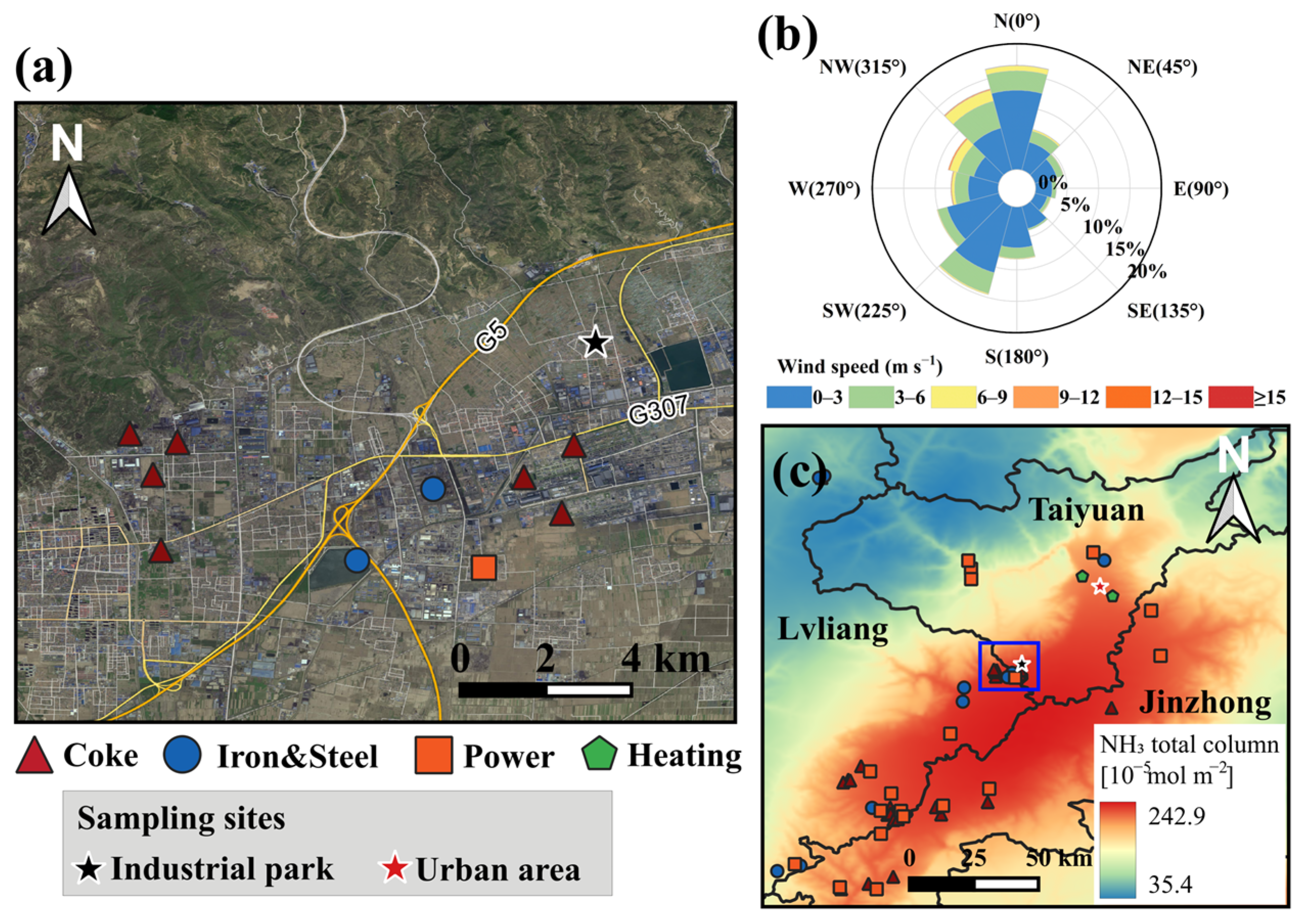
The sampling site was located in the southwestern suburban area, Taiyuan City (37°35′ N, 112°16′ E) (Figure 1c), which is a major area for coal coking and heavy chemical industries in Shanxi Province, including coking plants, steel plants, power plants, and heating plants (Figure 1a). The site is approximately 3.0 km and 7.5 km away from the two coking industrial parks, respectively, and about 4.5 km away from the steel plant. The G5 Expressway and G307 Highway, which traverse the Taiyuan Basin, are major routes for transporting coal and coke. The surrounding area is densely populated and is also an agricultural zone with intensive livestock breeding. During autumn and winter, residential heating is provided by small coal-fired stoves. An urban site was simultaneously selected in downtown Taiyuan (37°52′ N, 112°32′ E), where there are residential communities, commercial buildings, some restaurants, etc., in the surrounding area.

2.2. Sampling and Analysis

Atmospheric NH3 was sampled by OGAWA passive samplers equipped with pre-coated citric acid collection pads obtained from OGAWA & Company, USA, Inc. (Pompano Beach, FL, USA) [19]. Gaseous NH3 diffused into the OGAWA sampler and was captured by citric acid-coated filter pads. The filters were extracted with ultrapure water (18.2 MΩ·cm) in the laboratory. Under alkaline conditions, NH4+ in the extract was oxidized to NO2 with hypobromite. After the reaction, sodium arsenite solution was added to remove the excess hypobromite, and sodium azide was then used to quantitatively convert NO2 to N2O under strongly acidic conditions. The resulting N2O was introduced via a purge-and-trap concentrator and analyzed using a gas-source Isotope Ratio Mass Spectrometer (IRMS; MAT-253 Plus, Thermo Fisher Scientific, Waltham, MA, USA) for nitrogen isotope ratios. Sodium arsenite, sodium azide, and the other reagents used in the analysis were purchased from Shanghai Aladdin Biochemical Technology Co., Ltd. (Shanghai, China). Ultrapure water (18.2 MΩ·cm) was produced using a Milli-Q ultrapure water purification system (Merck Millipore, Darmstadt, Germany). Detailed analytical procedures were described in Walters [4].
Sampling was conducted from 18 November 2024 to 7 March 2025. Samples were collected every two weeks, and a total of seven samples (DYZ-1 to DYZ-7) were obtained. PM2.5, SO2, NO2, CO, wind speed, wind direction, air temperature, and relative humidity were obtained simultaneously from continuous monitoring at the study site (Table S1). The hourly NH3 data used for the urban NH3-based PSCF analysis were obtained from continuous observations of water-soluble gases using a MARGA ADI 2080 instrument, Applikon Analytical B.V., Schiedam, The Netherlands [30]. The original data were recorded at a temporal resolution of hourly, and period-averaged values were calculated for comparison with the two-week integrated NH3 samples (in Supplementary Materials SI.xlsx). Because passive sampling for δ15N-NH3 analysis requires sufficient accumulated NH3 mass for reliable isotopic determination, a biweekly integrated sampling strategy was adopted in this study. This design was intended to characterize period-averaged NH3 concentrations and isotopic compositions during the autumn-winter campaign, rather than short-term temporal variability.

2.3. Source Apportionment of δ15N-NH3

Atmospheric NH3 is often converted to NH4+ in the atmosphere, which is accompanied by the loss of atmospheric NH3 and nitrogen isotopic fractionation. The isotopic composition of initial ammonia (δ15N-NHx) can be inferred based on isotopic mass balance. In this study, atmospheric NH3 and particulate NH4+ were not measured simultaneously, and the atmospheric δ15N-NH3 was therefore approximately used for the source apportionment model. A total of 15‰ was added to the atmospheric δ15N-NH3 values in this study to adjust the passive sampling deviation [31]. This correction was adopted based on previous laboratory and field studies of passive-sampler-derived δ15N-NH3. Kawashima et al. [32] showed that when the collected NH3 mass was low, δ15N-NH3 measured by the Ogawa passive sampler was typically depleted by about 10–15‰ relative to the reference value, and this bias was relatively insensitive to sampler type and experimental temperature, including conditions close to those encountered in the present autumn–winter campaign. Bhattarai et al. [20] also applied a +15‰ correction in an atmospheric NH3 isotope source-apportionment study. Therefore, +15‰ was used here as the main correction scenario.
A Bayesian mixing model was constructed (MixSIAR, version 3.1.12) to quantify the sources of atmospheric NH3 [33]. Livestock breeding, coal combustion, ammonia slip, and traffic emissions were selected as the major emission sources, with isotopic source signatures of −27.5 ± 4.9‰ [6], −20.0 ± 4.8‰ [6], −11.5 ± 3.7‰ [18,20], and −1.5 ± 6.2‰ [6], respectively (Table S2). Convergence of the MCMC chains was diagnosed by the Gelman–Rubin and Geweke methods. The results showed that the Gelman–Rubin statistic for all chains was less than 1.01, indicating good consistency among chains (Table S3).

3. Results and Discussion

3.1. Atmospheric NH3 Concentrations

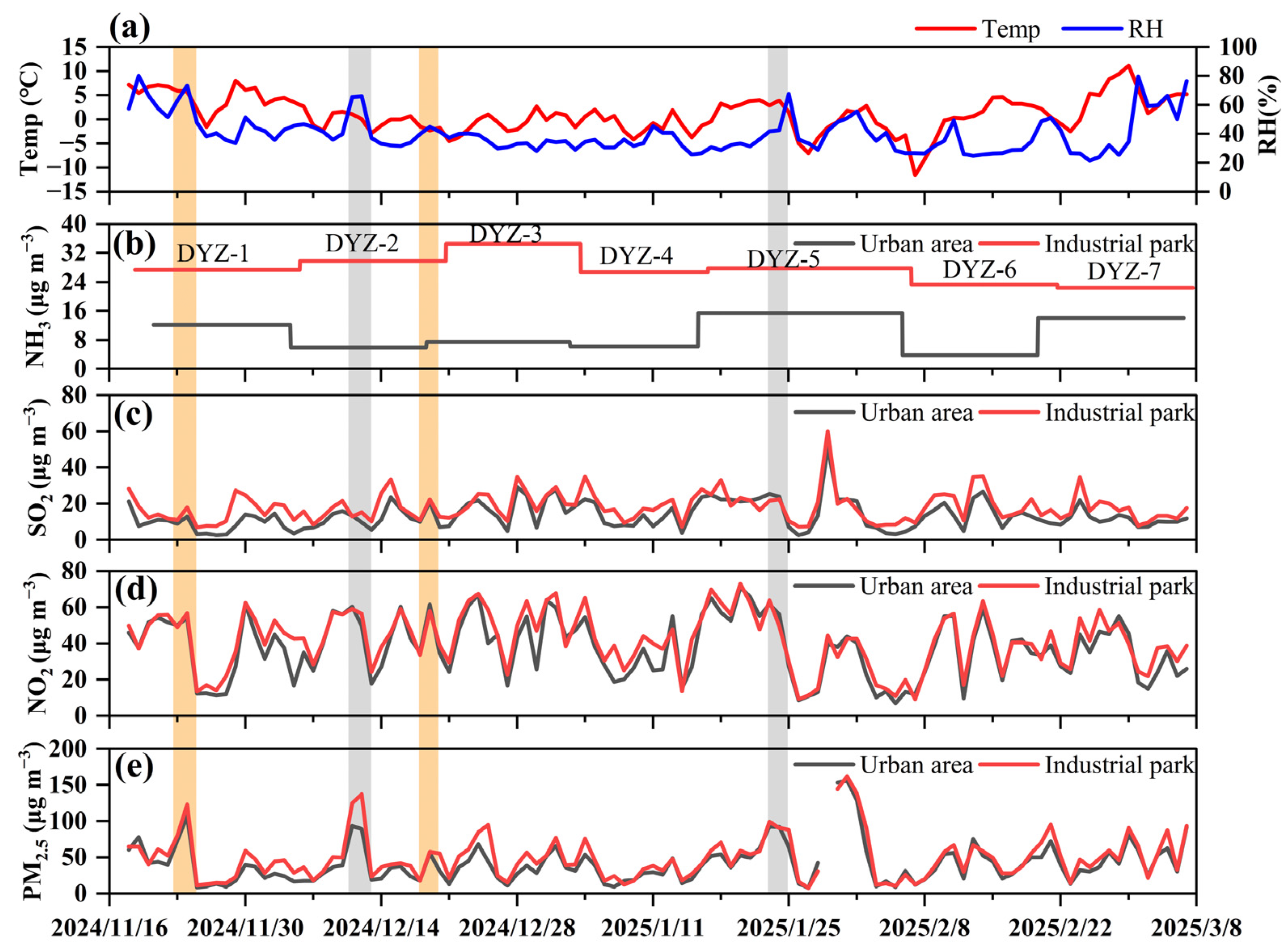
The atmospheric NH3 concentration in the industrial park of Taiyuan was 27.4 ± 3.8 μg m−3, approximately 2.95 times that in the urban area (9.3 ± 4.2 μg m−3; paired t-test, p = 0.0003) during autumn and winter. Winter atmospheric NH3 concentrations reported for North China cities such as Baoding, Tianjin, and Beijing were 10.5, 7.2, and 7.2 μg m−3, respectively, indicating the influence of traffic emissions and nearby industrial activities [34]. Atmospheric NH3 concentrations reported for Houston in the United States [35] and Akita Prefecture in Japan [36] were 1.8 μg m−3 and 1.8 ± 1.5 μg m−3, respectively, which were substantially lower than those observed in Chinese cities and likely reflect lower traffic-related NH3 emissions and tighter control of agricultural fertilizer application (Table 1). Ren et al. [30] reported an NH3 concentration of 7.5 ± 4.6 μg m−3 in downtown Taiyuan using MARGA online measurements, consistent with the concentration observed at the downtown site in this study. Given the relatively low agricultural NH3 emissions in winter in the Taiyuan Basin, the elevated NH3 concentrations are mainly attributed to coal coking and related industrial processes.
The Taiyuan Basin was characterized by low wind speeds and stagnant atmospheric conditions, with a mean wind speed of 2.39 m s−1, resulting in the near-surface accumulation of pollutants during autumn and winter. The wind rose in Figure 1b further shows two dominant sectors, north and southwest, indicating basin-constrained airflow during the sampling period. The southwest sector is particularly important because it overlaps with the major industrial corridor and transport routes near the sampling site, thereby favoring the short-range transport and accumulation of NH3 and co-emitted pollutants under stagnant conditions. Northerly airflow may reflect regional transport along the basin, while the generally low wind speed limited atmospheric dispersion overall. NH3 showed temporal variations similar to those of NO2, CO, and SO2, whereas PM2.5 increased later, which may be related to intermittent pollutant transport toward urban Taiyuan under weak southerly winds (Figure 2). Under adverse meteorological conditions, emission control measures were implemented for major industrial sources in Taiyuan to mitigate NO2 emissions. For example, NH3 concentrations increased to 34.6 μg m−3 during the DYZ-3 period, while NO2 and CO increased concurrently. The increase in NH3 may be explained by enhanced ammonia slip during the short-term emission-control period. To meet stricter NOx emission limits, NH3 injection in SCR systems may have increased, thereby promoting ammonia slip. DYZ-5 corresponded to the period with the highest PM2.5 concentration. Pollutants were transported toward downtown Taiyuan under weak southerly winds. NO2, CO, and NH3 decreased simultaneously at the industrial site, while PM2.5, NH3, NO2, CO, and SO2 reached elevated levels at the urban site. These results indicate a qualitative association between NH3 and co-pollutants, especially NO2, CO, and SO2, although the limited number of integrated NH3 samples does not support a robust formal correlation analysis. The industrial park site is situated near the coal coking industrial park and major transport routes. Ammonia slip and volatilization during coal coking production, together with ammonia emissions from heavy-duty diesel and natural gas trucks transporting coal and coke, were the main contributors to elevated regional atmospheric NH3. IASI showed a winter NH3 column concentration hotspot over the industrial park area (Figure 1c), which was 25.1% higher than that over downtown Taiyuan and corresponded with the distribution of industrial enterprises, supporting the elevated NH3 concentrations observed at ground level in the industrial area [29].

3.2. Isotopic Characteristics of Atmospheric NH3

The atmospheric δ15N–NH3 values in the industrial park ranged from −31.5‰ to −26.9‰, with a mean of −29.7 ± 1.6‰. After adjusting for passive sampling bias, the mean δ15N–NH3 value increased to −14.7 ± 1.6‰ in the industrial park, whereas the corresponding corrected mean value in the urban area was −14.0 ± 3.2‰. Variability was greater in the urban area than in the industrial park, although the mean values at the two sites were comparable (paired t-test, p = 0.521). The industrial park maintained a relatively narrow δ15N–NH3 range, indicating a more stable isotopic composition. δ15N–NH3 in the industrial park during autumn and winter was generally enriched in 15N. Similar isotopic signatures have been reported in Chinese cities dominated by non-agricultural sources, including Beijing (−10.7 ± 4.1‰) [10], Xi’an (−16.4 ± 6.3‰) [37], and Chengdu (−9.3 ± 5.1‰) [38]. These results indicate limited agricultural influence and dominance of non-agricultural emissions. This pattern is consistent with the substantial contribution of continuous background emissions in the industrial park. More negative δ15N–NH3 values observed in the urban area (e.g., −20.7‰), by contrast, indicate a stronger influence of mixed sources.
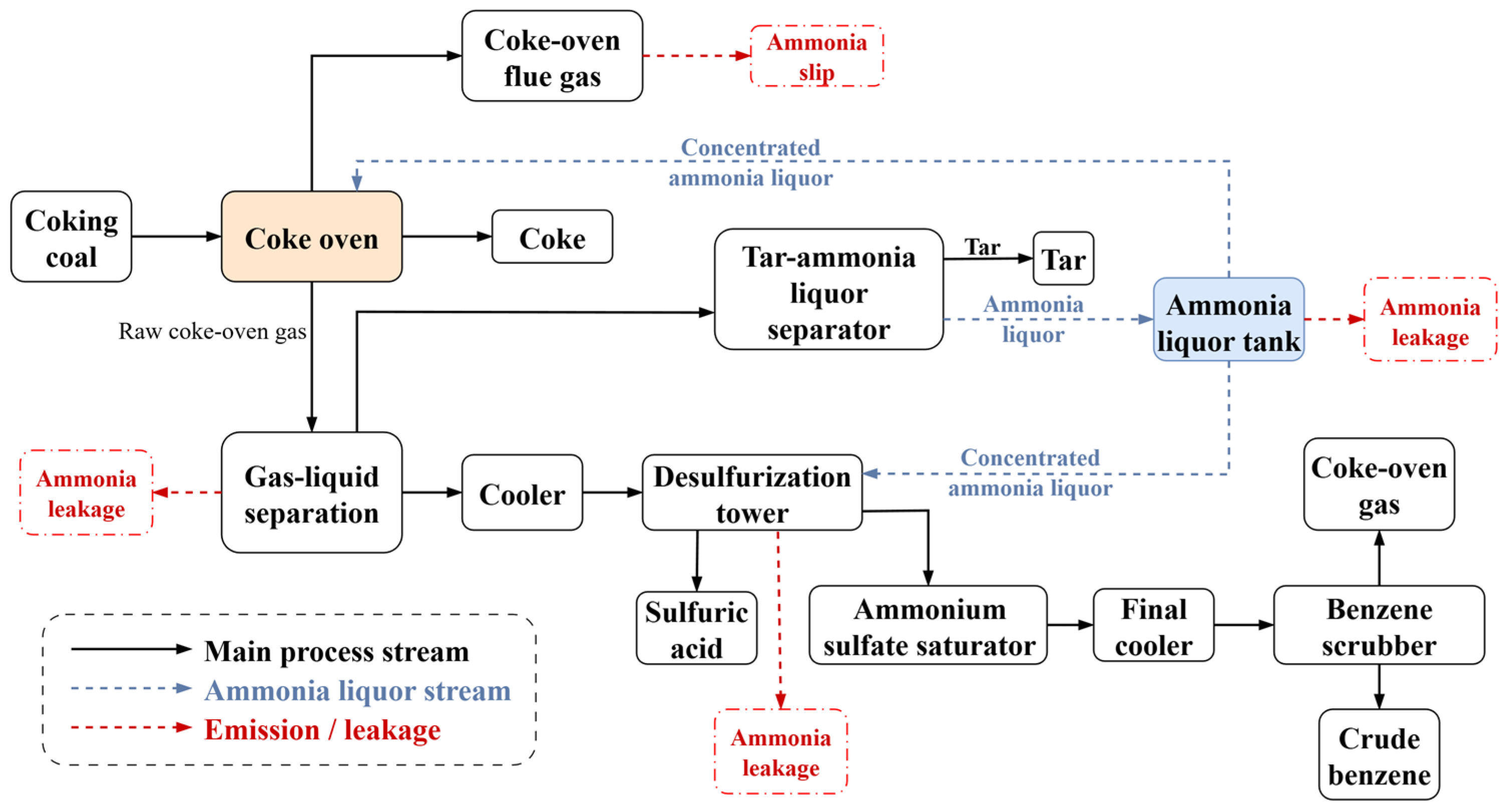
Figure 3 illustrates NH3 generation, utilization, and major leakage stages during the coal coking production process. NH3 is an important component of raw coke oven gas and a precursor for ammonium sulfate synthesis in coal coking production. NH3 volatilization occurs throughout the raw gas system, circulating liquid system, and wastewater system, rather than being limited to a single emission point in the coking process. NH3 emissions from coal coking involve multiple process stages and may undergo significant isotopic fractionation. δ15N–NH3 values of −9‰ and −20.1‰ have been reported for coke-oven gases from the flues of coking and steel plants, respectively [39,40]. Research on ammonia slip has primarily focused on SCR-equipped coal-fired power plants (CFPPs). Emissions from CFPPs are generally considered to originate primarily from ammonia slip, with δ15N–NH3 values ranging from −16.1‰ to 12.9‰ [6,18,20], as the relatively high combustion efficiency of CFPPs limits the direct production of NH3 from coal combustion. The isotopic composition of atmospheric NH3 in the industrial park is characteristic of non-agricultural sources, such as ammonia slip, traffic emissions, and coal combustion. Variations in δ15N–NH3 among cities reflect differences in source structure together with site functional settings, autumn and winter meteorological conditions, and seasonal variations in emissions.

3.3. Source Apportionment of Ambient NH3

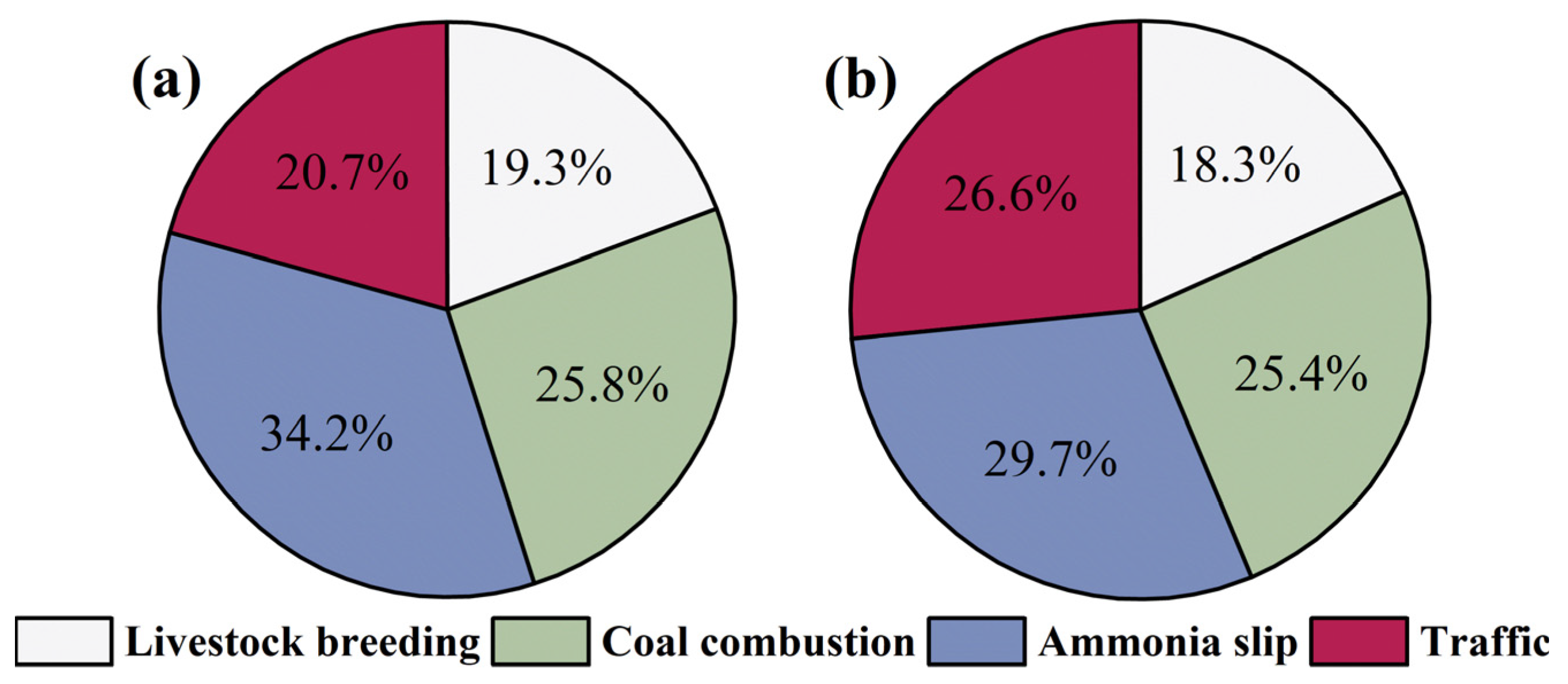
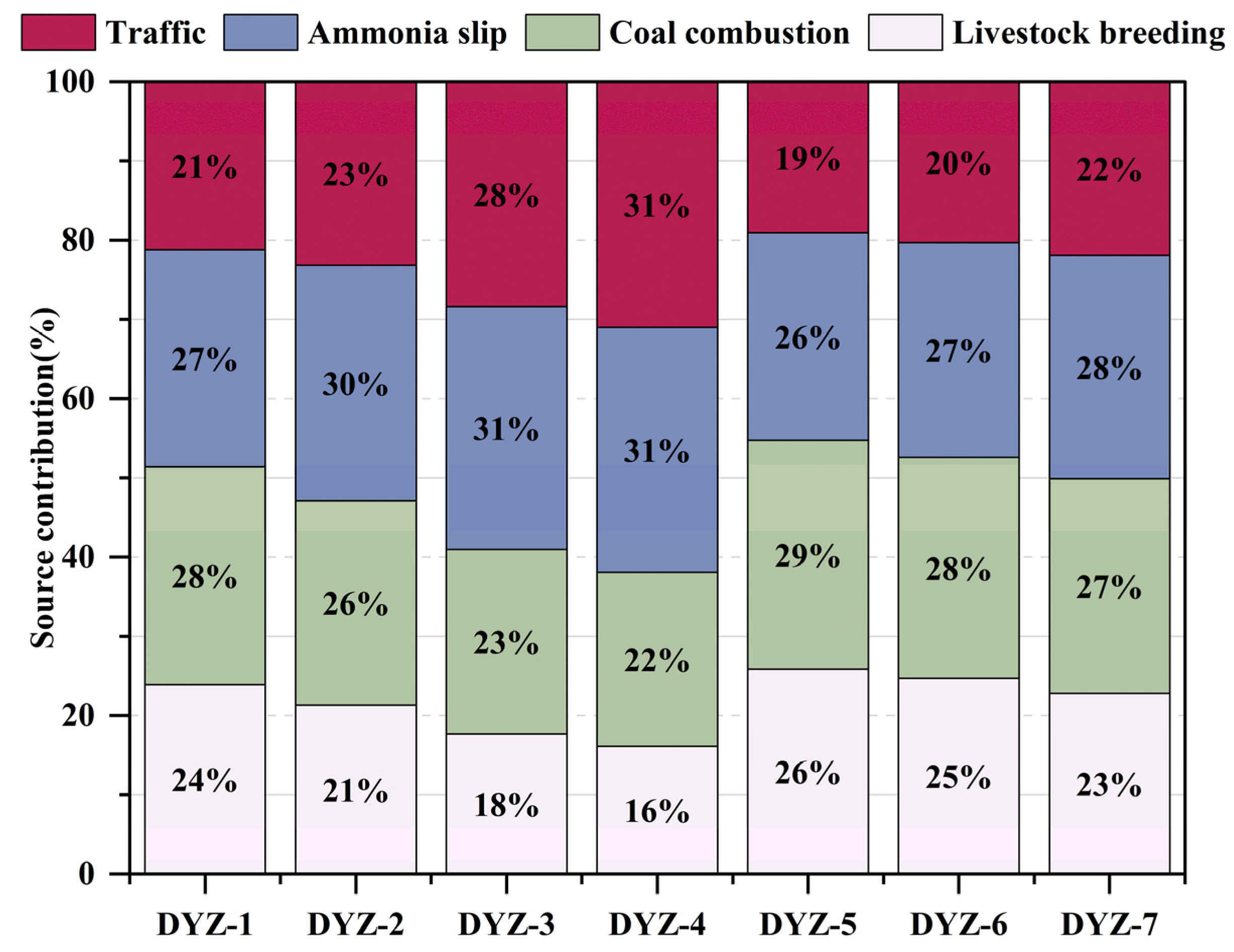
Source apportionment results (Figure 4) showed that atmospheric NH3 in the industrial park of Taiyuan during autumn and winter of 2024–2025 was dominated by non-agricultural sources, with a combined contribution of 80.7%. Ammonia slip was the dominant contributor to atmospheric NH3 at the industrial park site. In the urban area, non-agricultural sources accounted for 81.7% of total NH3, with ammonia slip, traffic emissions, and coal combustion contributing at comparable levels. Based on the time series, DYZ-5 covered the Spring Festival (16 January 2025–6 February 2025). Ammonia slip contributions during DYZ-4 were higher than those during DYZ-6, consistent with production activity levels, with DYZ-4 corresponding to a high-load period and DYZ-6 representing the post-Spring Festival low-load period. Traffic-related contributions showed a temporal pattern similar to that of ammonia slip. Coal-combustion contributions reached a high value during DYZ-6, consistent with increased heating demand during the Spring Festival period. Non-agricultural sources dominated atmospheric NH3 emissions in both Taiyuan and the Beijing–Tianjin–Hebei region, but ammonia slip dominates in the industrial park of Taiyuan, whereas traffic emissions dominate in cities of the Beijing–Tianjin–Hebei region [9].
Taiyuan has a typical continental climate. Decreasing temperatures promote stagnant meteorological conditions, which hinder pollutant dispersion and favor pollutant accumulation in autumn and winter. Pollutant emissions are further elevated by increased heating demand during this period. During the sampling period, four heavy air pollution warnings were issued in Taiyuan. Industrial sources were required to reduce emissions of major pollutants, such as NO2, by more than 30%. Ammonia emissions from the coking process, including volatilization and ammonia slip, contributed to elevated ambient NH3 concentrations. Higher loading of flue-gas SCR units further increased ammonia slip through increased consumption of ammonia-based reducing agents [41]. Despite these fluctuations, the contribution of ammonia slip remained relatively stable across the sampling periods (~5%) (Figure 5), consistent with the characteristics of stable background emissions in the industrial park. Winter coal-fired heating remains an uncontrollable emission source in the counties and county-level cities of the Taiyuan Basin, owing to the incomplete implementation of centralized heating in these areas. Low-temperature and stagnant conditions lead to increased heating demand and higher pollutant emissions. Coal-combustion contributions showed greater variability than those of ammonia slip. Periods of elevated coal-combustion contributions also coincided with increases in atmospheric SO2. Traffic-related NH3 contributions varied by about 12%, reflecting intensified vehicle activity linked to the transport of coal and coke by heavy-duty trucks in Shanxi. The Taiyuan Basin is a major agricultural product supply area for the Taiyuan region. Although the contribution of livestock breeding showed relatively large variation (~10%), considering that low temperatures in autumn and winter usually suppress NH3 volatilization and that agricultural activity in the study area is generally weak in winter, this source can still be understood together with ammonia slip as a relatively stable background emission. In summary, effective NH3 mitigation in the industrial park during autumn and winter should prioritize ammonia emissions from the coking process—including volatilization and ammonia slip from industrial denitrification systems—while also implementing coordinated reductions in residential coal combustion and traffic emissions.

3.4. Analysis of Potential Source Contributions

Atmospheric NH3 is an important alkaline precursor of secondary PM2.5. It reacts with acidic species such as H2SO4 and HNO3 to form ammonium sulfate and ammonium nitrate, thereby contributing substantially to fine particulate matter formation under favorable atmospheric conditions [30]. Therefore, regional transport processes affecting NH3 can also influence PM2.5 formation and accumulation, especially during autumn and winter when stagnant meteorological conditions favor secondary aerosol production.
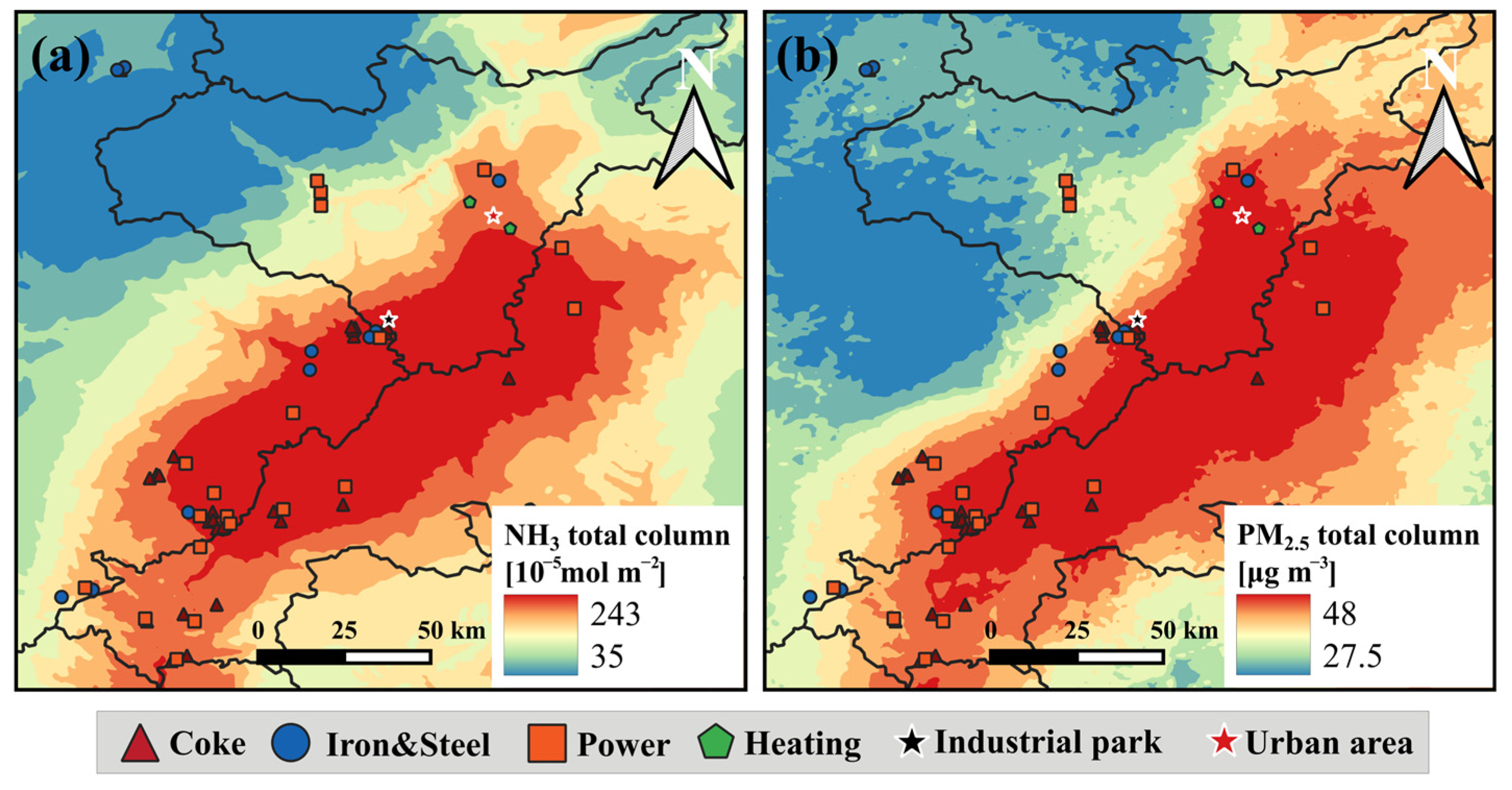
In the present study, continuous high time resolution NH3 observations were available only at the urban site. This data limitation prevented a unified NH3-based source contribution function (PSCF) analysis for both functional areas. Considering the important role of NH3 in PM2.5 formation, we first examined whether NH3 and PM2.5 exhibited comparable regional spatial features. Satellite-derived NH3 total columns and PM2.5 total columns both showed enhanced values over the southern to central parts of the Taiyuan region, particularly around the urban area, the industrial park, and areas with intensive anthropogenic activities (Figure 6). This regional consistency suggests that NH3-related pollution and PM2.5 accumulation were affected by similar transport and accumulation conditions during the observation period.
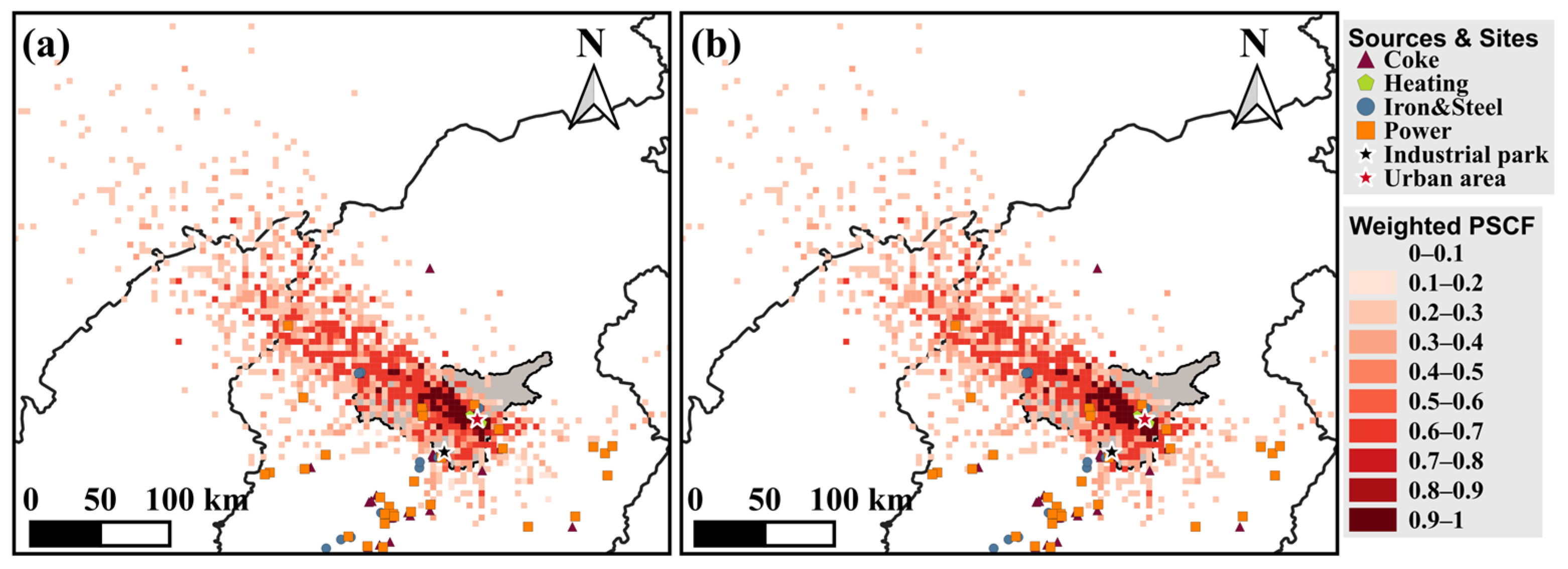
To further link this regional consistency with receptor-based transport analysis, PSCF calculations based on both NH3 and PM2.5 were conducted at the urban site. The NH3-based PSCF pattern was highly similar to the PM2.5-based PSCF pattern (Figure 7). This similarity indicates that, at least for the urban site during the observation period, PM2.5-based PSCF captured the major transport features relevant to NH3 pollution. Together, the consistent satellite distributions of NH3 and PM2.5 and the similar NH3-based and PM2.5-based PSCF patterns at the urban site support the use of PM2.5-based trajectory and PSCF analyses as auxiliary indicators for comparing transport characteristics between the industrial park and urban area.
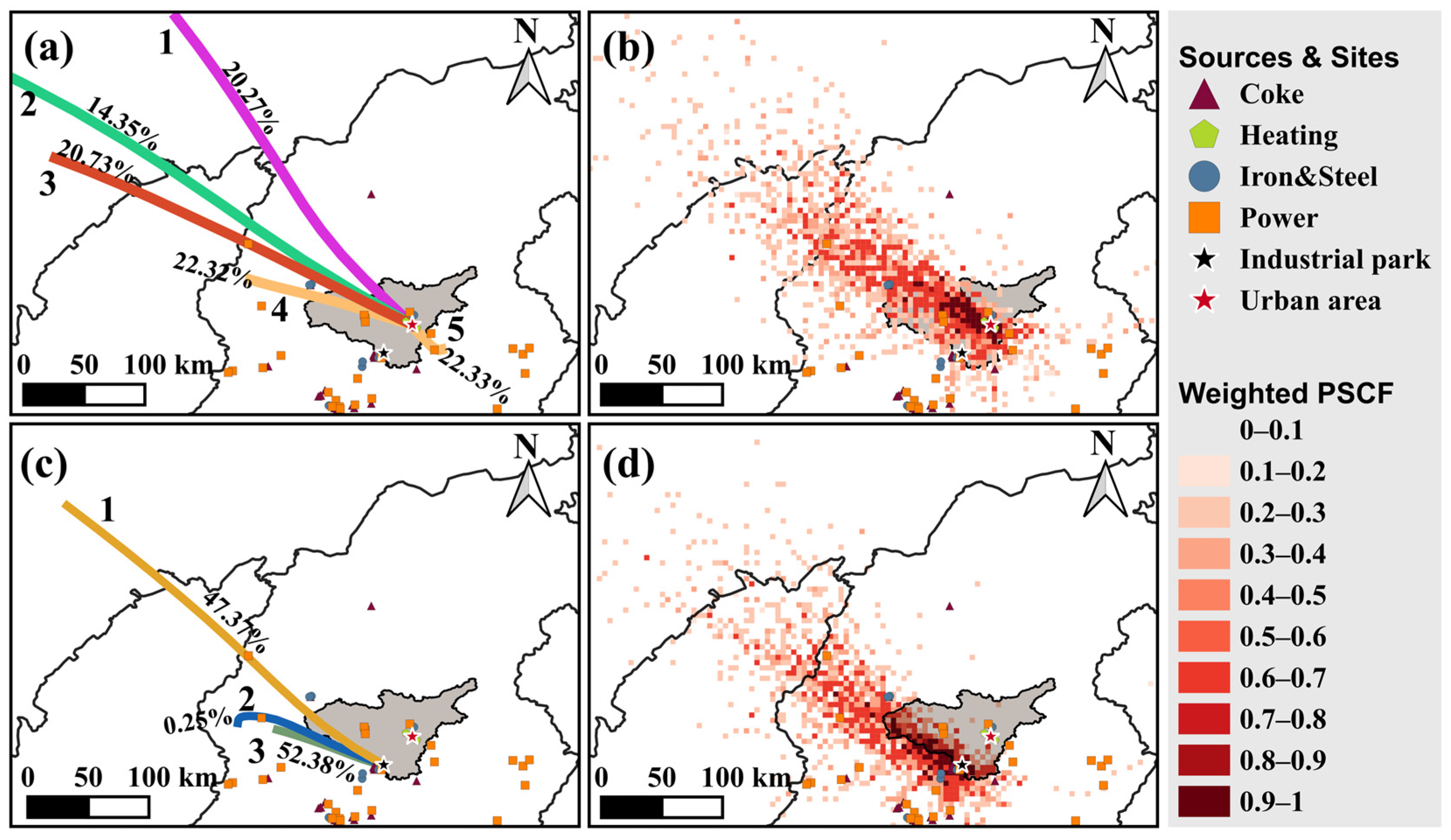
The air-mass pathways for the industrial park were dominated by short-range transport, with only trajectory 1 originating from the northwestern region. PM2.5 in the industrial park was primarily influenced by local emissions, secondary formation, and pollutant accumulation due to the combined effects of local topography and low wind speed. In the urban area, a combined pattern of northwestward removal and southwestward accumulation was observed, as trajectories 1–3 originated from the northwest (55.35%), while trajectories 4–5 originated from the industrial park (Figure 8).
PSCF analysis showed that highly weighted PSCF regions were mainly distributed around the receptor sites and industrial zones in the southwest–northwest sector. Potential source regions in the industrial park were highly concentrated, indicating strong local source characteristics. In contrast, the potential source regions in the urban area were widespread. This pattern suggests that PM2.5 pollution in the urban area reflects the combined effects of local accumulation and transport from the industrial park. The back-trajectory results were consistent with the PSCF analysis, further indicating that local industrial emissions dominated PM2.5 pollution episodes. Industrial emissions were identified as the major source of NH3/NHx in both the industrial park and the urban area [41], as supported by the NH3 isotope source apportionment results.

3.5. Uncertainty and Limitations

Several sources of uncertainty should be considered when interpreting the source-apportionment results. First, the analysis was constrained by a single isotope system, δ15N-NH3, which provides limited discriminatory power when different NH3 sources exhibit overlapping isotopic signatures. Second, uncertainty is also associated with the source signatures adopted in the MixSIAR model. In this study, source signatures were incorporated as probability distributions defined by literature-derived mean ± standard deviation values. We preferentially selected source profiles determined using comparable NH3 collection and isotopic analytical methods and geographically relevant source signatures whenever possible. For example, the ammonia-slip signature was selected from measurements reported for coal-fired power plants in Shanxi [20], which are more regionally representative of local fuel characteristics and SCR operating conditions. Third, atmospheric NH3 was collected using passive samplers, and a fixed correction of +15‰ was applied to account for the passive-active sampling bias reported in previous studies. Although this correction improves comparability, it may also introduce additional uncertainty into the adjusted δ15N-NH3 values.
In addition, only seven biweekly integrated NH3 samples were collected during the autumn-winter campaign. Although this strategy was suitable for obtaining sufficient sample mass for isotopic analysis, it was insufficient to resolve short-term variability, such as diurnal cycles, weekday-weekend differences, and rapid pollution episode dynamics. Therefore, the observed relationships between NH3, co-pollutants, and meteorological conditions should be regarded as qualitative rather than definitive mechanistic evidence. Overall, these limitations do not change the main conclusion that non-agricultural emissions dominated atmospheric NH3 in the industrial park during the study period.

4. Conclusions

Atmospheric NH3 sources in Taiyuan were investigated by OGAWA passive sampling and nitrogen stable isotope analysis. NH3 concentrations in the industrial park and urban area during the sampling time were 27.4 ± 3.8 μg m−3 and 9.3 ± 4.2 μg m−3, respectively. δ15N–NH3 values were −14.7 ± 1.6‰ in the industrial park and −14.0 ± 3.2‰ in the urban area and were close to those for source signatures of coal combustion and ammonia slip, indicating that NH3 sources in the industrial park mainly originated from industrial emissions and combustion processes. Source apportionment indicated that non-agricultural sources accounted for 80.7% and 81.7% in the industrial park and urban area, respectively, and ammonia slip was the largest contributor (34.2 ± 20.1%), followed by coal combustion (25.8 ± 16.5%) and traffic emissions (20.7 ± 11.6%). More attention should be paid to ammonia slip from denitrification systems and reductions in coal combustion and traffic emissions in the industrial park in autumn and winter. Furthermore, the results could not distinguish between NH3 volatilization from the coal-coking process and ammonia slip in the stack gas for the sampling method, which will be systematically investigated in future work.

Supplementary Materials

The following supporting information can be downloaded at: https://www.mdpi.com/article/10.3390/atmos17050483/s1, SI.xlsx: Dataset containing integrated NH3 observations and hourly auxiliary pollutant and meteorological data used for comparison between two-week integrated NH3 samples and period-averaged online measurements, including sample ID, site type, NH3 concentration, δ15N, SO2, NO2, CO, PM2.5, wind speed, wind direction, atmospheric pressure, temperature, and relative humidity at the urban and industrial park sites. Table S1: Primary observations and meteorological conditions for each two-week integrated sampling period at the industrial park site in Taiyuan during autumn and winter of 2024–2025. Table S2: Source signatures used in the MixSIAR model. Table S3: Summary of MixSIAR settings and convergence diagnostics.

Author Contributions

Conceptualization, T.G., W.Y., Q.H. and Y.C.; methodology, T.G. and Y.C.; data curation, T.G., W.Y. and X.H.; investigation, T.G., Z.L. and W.Y.; validation, W.Y., R.C. and J.N.; resources, Q.H., Y.C., D.J., X.W., L.G., R.C. and J.N.; writing—original draft preparation, T.G.; writing—review and editing, T.G., W.Y., Q.H., Y.C., R.C. and J.N.; visualization, T.G.; funding acquisition, W.Y., R.C. and J.N.; project administration, R.C. and J.N. All authors have read and agreed to the published version of the manuscript.

Funding

This research was funded by the National Key R&D Program of China (2023YFC3709500), the Key Research and Development Program of Shanxi Province (202402090301025), Scientific and Technological Innovation Programs of Higher Education Institutions in Shanxi (2022P007), and the National Natural Science Foundation of China (42077201).

Institutional Review Board Statement

Not applicable.

Informed Consent Statement

Not applicable.

Data Availability Statement

The raw data supporting the conclusions of this article will be made available by the authors upon request.

Conflicts of Interest

The authors declare no conflicts of interest.

References

  1. Liu, X.; Wang, H.; Wang, F.; Lv, S.; Wu, C.; Zhao, Y.; Zhang, S.; Liu, S.; Xu, X.; Lei, Y.; et al. Secondary Formation of Atmospheric Brown Carbon in China Haze: Implication for an Enhancing Role of Ammonia. Environ. Sci. Technol. 2023, 57, 11163–11172. [Google Scholar] [CrossRef]
  2. Wang, S.; Nan, J.; Shi, C.; Fu, Q.; Gao, S.; Wang, D.; Cui, H.; Saiz-Lopez, A.; Zhou, B. Atmospheric ammonia and its impacts on regional air quality over the megacity of Shanghai, China. Sci. Rep. 2015, 5, 15842. [Google Scholar] [CrossRef]
  3. Hu, Q.; Zhang, L.; Evans, G.J.; Yao, X. Variability of atmospheric ammonia related to potential emission sources in downtown Toronto, Canada. Atmos. Environ. 2014, 99, 365–373. [Google Scholar] [CrossRef]
  4. Walters, W.W.; Karod, M.; Willcocks, E.; Baek, B.H.; Blum, D.E.; Hastings, M.G. Quantifying the importance of vehicle ammonia emissions in an urban area of northeastern USA utilizing nitrogen isotopes. Atmos. Chem. Phys. 2022, 22, 13431–13448. [Google Scholar] [CrossRef]
  5. Kim, J.-S.; Bais, A.L.; Kang, S.-h.; Lee, J.; Park, K. A semi-continuous measurement of gaseous ammonia and particulate ammonium concentrations in PM2.5 in the ambient atmosphere. J. Atmos. Chem. 2012, 68, 251–263. [Google Scholar] [CrossRef]
  6. Li, Y.; Liu, J.; George, C.; Herrmann, H.; Gu, M.; Yang, M.; Wang, Y.; Mellouki, A.; Pan, Y.; Felix, J.D.; et al. Apportioning Atmospheric Ammonia Sources across Spatial and Seasonal Scales by Their Isotopic Fingerprint. Environ. Sci. Technol. 2023, 57, 16424–16434. [Google Scholar] [CrossRef] [PubMed]
  7. Feng, S.; Xu, W.; Cheng, M.; Ma, Y.; Wu, L.; Kang, J.; Wang, K.; Tang, A.; Collett, J.L.; Fang, Y.; et al. Overlooked Nonagricultural and Wintertime Agricultural NH3 Emissions in Quzhou County, North China Plain: Evidence from 15N-Stable Isotopes. Environ. Sci. Technol. Lett. 2022, 9, 127–133. [Google Scholar] [CrossRef]
  8. Xiao, H.; Ji, C.; Ding, S.; Li, X. Strategic control of combustion-induced ammonia emissions: A key initiative for substantial PM2.5 reduction in Tianjin, North China Plain. Sci. Total Environ. 2024, 928, 172328. [Google Scholar] [CrossRef]
  9. Mgelwa, A.S.; Song, L.; Fan, M.; Li, Z.; Zhang, Y.; Chang, Y.; Pan, Y.; Gurmesa, G.A.; Liu, D.; Huang, S.; et al. Isotopic imprints of aerosol ammonium over the north China plain. Environ. Pollut. 2022, 315, 120376. [Google Scholar] [CrossRef]
  10. Gu, M.; Pan, Y.; Sun, Q.; Walters, W.W.; Song, L.; Fang, Y. Is fertilization the dominant source of ammonia in the urban atmosphere? Sci. Total Environ. 2022, 838, 155890. [Google Scholar] [CrossRef]
  11. Wen, Y.; Zhang, S.; Wu, Y.; Hao, J. Vehicular ammonia emissions: An underappreciated emission source in densely populated areas. Atmos. Chem. Phys. 2023, 23, 3819–3828. [Google Scholar] [CrossRef]
  12. Zhang, Y.; Ma, X.; Tang, A.; Fang, Y.; Misselbrook, T.; Liu, X. Source Apportionment of Atmospheric Ammonia at 16 Sites in China Using a Bayesian Isotope Mixing Model Based on δ15N-NHx Signatures. Environ. Sci. Technol. 2023, 57, 6599–6608. [Google Scholar] [CrossRef] [PubMed]
  13. Chen, Z.L.; Song, W.; Hu, C.C.; Liu, X.J.; Chen, G.Y.; Walters, W.W.; Michalski, G.; Liu, C.Q.; Fowler, D.; Liu, X.Y. Significant contributions of combustion-related sources to ammonia emissions. Nat. Commun. 2022, 13, 7710. [Google Scholar] [CrossRef]
  14. Chen, Y.; Zhang, Q.; Cai, X.; Zhang, H.; Lin, H.; Zheng, C.; Guo, Z.; Hu, S.; Chen, L.; Tao, S.; et al. Rapid Increase in China’s Industrial Ammonia Emissions: Evidence from Unit-Based Mapping. Environ. Sci. Technol. 2022, 56, 3375–3385. [Google Scholar] [CrossRef]
  15. Wang, C.; Liu, Z.; Zhang, X.; Zhang, L.; Zhou, F.; Ti, C.; Adalibieke, W.; Peng, L.; Zhan, X.; Reis, S.; et al. Managing Ammonia for Multiple Benefits Based on Verified High-Resolution Emission Inventory in China. Environ. Sci. Technol. 2025, 59, 5131–5144. [Google Scholar] [CrossRef]
  16. Liu, X.J.; Sha, Z.P.; Song, Y.; Dong, H.M.; Pan, Y.P.; Gao, Z.L.; Li, Y.E.; Ma, L.; Dong, W.X.; Hu, C.S.; et al. China’s atmospheric ammonia emission characteristicss, mitigation options and policy recommendations. Res. Environ. Sci. 2021, 34, 149–157. [Google Scholar] [CrossRef]
  17. Zhang, X.; Xie, Y.; Jiao, J.; Zhu, W.; Guo, Z.; Cao, X.; Liu, J.; Xi, G.; Wei, W. How to accurately assess the spatial distribution of energy CO2 emissions? Based on POI and NPP-VIIRS comparison. J. Clean. Prod. 2023, 402, 136656. [Google Scholar] [CrossRef]
  18. Felix, J.D.; Elliott, E.M.; Gish, T.J.; McConnell, L.L.; Shaw, S.L. Characterizing the isotopic composition of atmospheric ammonia emission sources using passive samplers and a combined oxidation-bacterial denitrifier approach. Rapid Commun. Mass Spectrom. 2013, 27, 2239–2246. [Google Scholar] [CrossRef] [PubMed]
  19. Chang, Y.; Liu, X.; Deng, C.; Dore, A.J.; Zhuang, G. Source apportionment of atmospheric ammonia before, during, and after the 2014 APEC summit in Beijing using stable nitrogen isotope signatures. Atmos. Chem. Phys. 2016, 16, 11635–11647. [Google Scholar] [CrossRef]
  20. Bhattarai, N.; Wang, S.; Xu, Q.; Dong, Z.; Chang, X.; Jiang, Y.; Zheng, H. Sources of gaseous NH3 in urban Beijing from parallel sampling of NH3 and NH4+, their nitrogen isotope measurement and modeling. Sci. Total Environ. 2020, 747, 141361. [Google Scholar] [CrossRef] [PubMed]
  21. Song, L.; Walters, W.W.; Pan, Y.; Li, Z.; Gu, M.; Duan, Y.; Lü, X.; Fang, Y. 15N natural abundance of vehicular exhaust ammonia, quantified by active sampling techniques. Atmos. Environ. 2021, 255, 118430. [Google Scholar] [CrossRef]
  22. Walters, W.W.; Song, L.; Chai, J.; Fang, Y.; Colombi, N.; Hastings, M.G. Characterizing the spatiotemporal nitrogen stable isotopic composition of ammonia in vehicle plumes. Atmos. Chem. Phys. 2020, 20, 11551–11567. [Google Scholar] [CrossRef]
  23. Berner, A.H.; David Felix, J. Investigating ammonia emissions in a coastal urban airshed using stable isotope techniques. Sci. Total Environ. 2020, 707, 134952. [Google Scholar] [CrossRef] [PubMed]
  24. Chang, Y.; Cheng, K.; Kuang, Y.; Hu, Q.; Gao, Y.; Huang, R.-J.; Huang, C.; Walters, W.W.; Lehmann, M.F. Isotopic Variability of Ammonia δ15N-NH3 Slipped from Heavy-Duty Vehicles Under Real-World Conditions. Environ. Sci. Technol. Lett. 2022, 9, 726–732. [Google Scholar] [CrossRef]
  25. Xiao, H.; Ding, S.; Li, X. Sources of NH4+ in PM2.5 and Their Seasonal Variations in Urban Tianjin China: New Insights from the Seasonal δ15N Values of NH3 Source. J. Geophys. Res. Atmos. 2024, 129, e2023JD040169. [Google Scholar] [CrossRef]
  26. Guo, W.; Zhang, Y.J.; Wang, Y.; Cheng, P.W.; Yan, S.M.; Zhao, H.Y.; Wang, W.Y.; Chen, L. The feature of PM2.5 pollution in Taiyuan Basin based on unmanned aerial vehicle observation. J. Earth Environ. 2025, 16, 484–498. [Google Scholar] [CrossRef]
  27. Wang, Y.; Wen, Y.; Cui, Y.; Guo, L.; He, Q.; Li, H.; Wang, X. Substantial changes of chemical composition and sources of fine particles during the period of COVID-19 pandemic in Taiyuan, Northern China. Air Qual. Atmos. Health 2022, 15, 47–58. [Google Scholar] [CrossRef]
  28. Guo, L.; Cui, Y.; He, Q.; Gao, W.; Pei, K.; Zhu, L.; Li, H.; Wang, X. Contributions of aerosol chemical composition and sources to light extinction during haze and non-haze days in Taiyuan, China. Atmos. Pollut. Res. 2021, 12, 101140. [Google Scholar] [CrossRef]
  29. ULB-LATMOS. IASI/Metop-B NH3 Level-3 Monthly Product (v4.0.1). Available online: https://iasi.aeris-data.fr/NH3_IASI_B_L3_data/ (accessed on 26 January 2026).
  30. Ren, M.; Guo, L.; Cui, Y.; He, Q.; Ji, D.; Wang, Y. Characteristics, regional transport and control strategies of atmospheric ammonia in urban Taiyuan, Fenwei Plain, China. Atmos. Pollut. Res. 2025, 16, 102505. [Google Scholar] [CrossRef]
  31. Bhattarai, N.; Wang, S.; Xu, Q.; Dong, Z.; Chang, X.; Jiang, Y.; Zheng, H. Nitrogen isotopes suggest agricultural and non-agricultural sources contribute equally to NH3 and NH4+ in urban Beijing during December 2018. Environ. Pollut. 2023, 326, 121455. [Google Scholar] [CrossRef]
  32. Kawashima, H.; Ogata, R.; Gunji, T. Laboratory-based validation of a passive sampler for determination of the nitrogen stable isotope ratio of ammonia gas. Atmos. Environ. 2021, 245, 118009. [Google Scholar] [CrossRef]
  33. Parnell, A.C.; Inger, R.; Bearhop, S.; Jackson, A.L. Source partitioning using stable isotopes: Coping with too much variation. PLoS ONE 2010, 5, e9672. [Google Scholar] [CrossRef]
  34. Pan, Y.; Tian, S.; Zhao, Y.; Zhang, L.; Zhu, X.; Gao, J.; Huang, W.; Zhou, Y.; Song, Y.; Zhang, Q.; et al. Identifying Ammonia Hotspots in China Using a National Observation Network. Environ. Sci. Technol. 2018, 52, 3926–3934. [Google Scholar] [CrossRef]
  35. Gong, L.; Lewicki, R.; Griffin, R.J.; Flynn, J.H.; Lefer, B.L.; Tittel, F.K. Atmospheric ammonia measurements in Houston, TX using an external-cavity quantum cascade laser-based sensor. Atmos. Chem. Phys. 2011, 11, 9721–9733. [Google Scholar] [CrossRef]
  36. Kawashima, H. Seasonal trends of the stable nitrogen isotope ratio in particulate nitrogen compounds and their gaseous precursors in Akita, Japan. Tellus B Chem. Phys. Meteorol. 2019, 71, 1627846. [Google Scholar] [CrossRef]
  37. Wu, C.; Wang, G.; Li, J.; Li, J.; Cao, C.; Ge, S.; Xie, Y.; Chen, J.; Liu, S.; Du, W.; et al. Non-agricultural sources dominate the atmospheric NH3 in Xi’an, a megacity in the semi-arid region of China. Sci. Total Environ. 2020, 722, 137756. [Google Scholar] [CrossRef] [PubMed]
  38. Xiao, H.; Xiao, H.-W.; Xu, Y.; Zheng, N.-J.; Xiao, H.-Y. Control of combustion related ammonia emissions can be effective in mitigating PM2.5 pollution in two megacities in Sichuan Basin, Southwest China. Atmos. Res. 2025, 320, 108059. [Google Scholar] [CrossRef]
  39. Bokhoven, C.; Theeuwen, H.J. Determination of the abundance of carbon and nitrogen isotopes in Dutch coals and natural gas. Nature 1966, 211, 927–929. [Google Scholar] [CrossRef]
  40. Heaton, T.H.E. 15N/14N ratios of nitrate and ammonium in rain at Pretoria, South Africa. Atmos. Environ. 1987, 21, 843–852. [Google Scholar] [CrossRef]
  41. Cheng, T.; Zhou, X.; Yang, L.; Wu, H.; Fan, H. Transformation and removal of ammonium sulfate aerosols and ammonia slip from selective catalytic reduction in wet flue gas desulfurization system. J. Environ. Sci. 2020, 88, 72–80. [Google Scholar] [CrossRef] [PubMed]
  42. Wei, J.; Li, Z.; Xue, W.; Sun, L.; Fan, T.; Liu, L.; Su, T.; Cribb, M. The ChinaHighPM10 dataset: Generation, validation, and spatiotemporal variations from 2015 to 2019 across China. Environ. Int. 2021, 146, 106290. [Google Scholar] [CrossRef] [PubMed]
Figure 1. Study area and sampling sites. (a) Location of the industrial park sampling site and major potential emission sources in the surrounding area; (b) wind direction and wind speed distribution during the sampling period; (c) IASI satellite-retrieved NH3 column concentrations in winter 2024–2025 [29], with the blue box indicating the area enlarged in panel (a).
Atmosphere 17 00483 g001
Figure 2. Time series of meteorological and pollutant data. (a) Temperature (Temp) and relative humidity (RH). (be) Pollutants (NH3, SO2, NO2 and PM2.5) at urban and industrial park sites. Orange shading: Level II (orange alert) heavy pollution response; gray shading: dispatch order implementation.
Atmosphere 17 00483 g002
Figure 3. Ammonia liquor generation and use and major ammonia leakage units in the coal coking process. White rounded boxes represent process units or products, the light orange box represents the coke oven, the light blue box represents the ammonia liquor tank, and red dashed boxes mark ammonia emission or leakage points.
Atmosphere 17 00483 g003
Figure 4. Isotope-based source apportionment of atmospheric NH3. (a) Industrial park; (b) urban area.
Atmosphere 17 00483 g004
Figure 5. Variations in source contributions to atmospheric NH3.
Atmosphere 17 00483 g005
Figure 6. Spatial distributions of satellite-derived NH3 and PM2.5 total columns over the Taiyuan region during the autumn and winter period. (a) NH3 total column concentration [29]; (b) PM2.5 total column concentration [42].
Atmosphere 17 00483 g006
Figure 7. Weighted PSCF distributions for hourly (a) NH3 and (b) PM2.5 at the urban site in Taiyuan during autumn and winter of 2024–2025. The NH3-based PSCF was conducted at the urban site because high-time-resolution NH3 observations were available only there.
Atmosphere 17 00483 g007
Figure 8. Clustered backward trajectories and PSCF results for PM2.5 at the urban and industrial park sites during the autumn and winter period. (a) Clustered backward trajectories at the urban site; (b) weighted PSCF distribution at the urban site; (c) clustered backward trajectories at the industrial park site; (d) weighted PSCF distribution at the industrial park site.
Atmosphere 17 00483 g008
Table 1. Comparison of atmospheric NH3 concentration levels and their δ15N values in Taiyuan and other cities.
CityConcentrations
(μg m−3)
δ15N-NH3 (‰)SiteSampling PeriodReference
Taiyuan27.4 ± 3.8−14.7 ± 1.6Industrial a18 November 2024–7 March 2025This study
Taiyuan9.3 ± 4.2−14.0 ± 3.2Urban a20 November 2024–6 March 2025This study
Taiyuan7.5 ± 4.6-Urban bWinter, 1 December 2021–30 November 2022[30]
Xi’an25.0 ± 9.9-Urban b1 January 2017–22 January 2017[37]
Baoding10.5-Urban bWinter, 2015–2016[34]
Tianjin7.2-Urban bWinter, 2015–2016[34]
Beijing7.2-Urban bWinter, 2015–2016[34]
Rhode Island0.9 ± 0.5−11.9 ± 5.0Urban b6 February 2018–1 February 2019[4]
Houston1.8-Urban b12 February 2010–1 March 2010[35]
Akita Prefecture1.77 ± 1.51−23.9 ± 6.7Rural bWinter, December 2009–December 2010[36]
a measured by passive sampling, b measured by active sampling.
Disclaimer/Publisher’s Note: The statements, opinions and data contained in all publications are solely those of the individual author(s) and contributor(s) and not of MDPI and/or the editor(s). MDPI and/or the editor(s) disclaim responsibility for any injury to people or property resulting from any ideas, methods, instructions or products referred to in the content.