Article

Horizontally Inhomogeneous Ionospheric Refraction Correction for Ground-Based Radar

College of Electronic Science and Technology, National University of Defense Technology (NUDT), Changsha 410073, China
*
Author to whom correspondence should be addressed.
Atmosphere 2026, 17(3), 331; https://doi.org/10.3390/atmos17030331
Submission received: 6 February 2026 / Revised: 16 March 2026 / Accepted: 18 March 2026 / Published: 23 March 2026

Abstract

Atmospheric refraction often influences the localization accuracy of ground-based radar for detecting space targets. Traditional methods generally utilize the measured troposphere and ionosphere data from the local station for atmospheric refraction correction and thus neglect the influence of atmospheric horizontal inhomogeneity. However, in practice, a horizontally inhomogeneous ionosphere often causes considerable residual errors in the measured range and elevation angle after refraction correction, especially for targets with low elevation angles. The ionospheric electron density profile along the wave propagation path is significantly different from that in the vertical direction of the local station, which further brings about challenges in the modeling and correction of atmospheric refraction errors. To address the above challenge, the effect of a horizontally inhomogeneous ionosphere on the range and elevation angle measured by ground-based radar is analyzed, and a geographic division modeling strategy for the ionospheric electron density along the propagation path for atmospheric refraction correction is proposed in this paper. The simulation results show that the oblique electron density distribution obtained from the proposed model agrees well with the results calculated by the International Reference Ionosphere (IRI) model, and the proposed methodology effectively suppresses residual errors in radar atmospheric refraction correction in the low-elevation detection case.

1. Introduction

Ground-based radar for space surveillance is capable of detecting orbital targets at different altitudes and measuring location information [1]. However, the atmospheric refraction effect can change the propagation path of trans-atmospheric radio waves, which have a non-negligible influence on the target range delay and pitch angle measured by ground-based radar [1,2,3,4]. The troposphere and ionosphere play dominant roles in atmospheric refraction effects. The troposphere, located in the lowest layer of the atmosphere, accounts for 99% of the atmospheric mass and is rich in various gases (nitrogen, oxygen, carbon dioxide, etc.) and water vapor mixtures. The irregular motion of these gases leads to non-uniform density, as well as unstable temperature and humidity distributions in the troposphere. These factors cause changes in the dielectric properties of the troposphere relative to a vacuum, resulting in scattering and refraction of the radio waves propagating through it. The ionosphere is the ionized region of Earth’s upper atmosphere, where charged particles are sufficiently abundant to affect radio wave propagation. Under the interaction of gravity, the vertical distribution of these ionized particles shows significant layered characteristics [5]. The ionosphere is typically divided into three layers based on the ionospheric electron density within different altitude ranges: the D layer (approximately 60–90 km), the E layer (approximately 90–150 km), and the F layer (approximately 150–500 km). Among these, the F layer is further divided into the F1 and F2 layers during the daytime, while the D and F1 layers disappear at night. The presence of charged particles changes the wave refraction index, and further causes refraction, group delay, and other effects. In particular, the atmospheric refraction effect is significant for low-frequency radar systems (such as P and L band) and for low-elevation cases, because the ionospheric refraction effect is more remarkable at lower frequencies, and the low-elevation case indicate a longer propagation path [4,5]. For example, in a case with a 3° elevation angle and carrier frequency in the P band (500 MHz), the measured range error can reach over 100 m. The measured elevation angle error can be more than 4 mrad, which severely affects the positioning performance of ground-based radar for space surveillance [5]. Comprehensively considering the influences of the troposphere and ionosphere, atmospheric refraction effects lead to the bending of electromagnetic wave propagation paths, making the measured range and elevation angle differ from their true values. Therefore, to achieve precise locations of space targets with ground-based radar, it is essential to correct refraction errors in radar measurement results.
Traditional approaches realize real-time atmospheric refraction correction using atmospheric refractive index distributions measured by devices such as microwave radiometers and global navigation satellite system (GNSS) receivers [5,6,7,8,9,10,11,12]. Some scholars applied convolutional neural network algorithms to vertical atmospheric refractive index profiles measured by microwave radiometers. This approach improved measurement accuracy by 30% and validated the feasibility of using radiometers for these measurements [8]. Others designed a device combining microwave radiometers and GNSS receivers to improve the accuracy of the measured atmospheric refractive index [9]. By leveraging the vertical profile of the atmospheric refractive index, an accurate error model for radar ranging and angle measurements can be established using ray-tracing principles to perform atmospheric refraction correction for ground-based radars [5,10,11]. Nevertheless, conventional ray-tracing studies frequently neglect horizontal atmospheric inhomogeneity. They typically assume that the refractive index remains uniform at any given altitude, implying that zenith measurements taken at the radar station can be universally applied across the local area. Therefore, traditional ray-tracing methods are mostly applicable to relatively quiet mid-latitude regions, where atmospheric horizontal variations are comparatively small. In contrast, in equatorial anomaly regions or high-latitude zones subjected to geomagnetic disturbances, horizontal inhomogeneity cannot be ignored.
Studies using mesoscale tropospheric forecasting models verified that tropospheric horizontal inhomogeneity has a negligible impact on radar measurements. For radar measurements at an elevation angle of five degrees, neglecting the horizontal variation in the tropospheric refractive index degrades the accuracy of range corrections by less than 1 m and elevation angle corrections by less than 0.05 mrad. In addition, the accuracy reduction further decreases as the elevation angle increases [11]. Differing from the troposphere, the ionospheric electron densities at the same altitude but different horizontal locations can vary significantly. Therefore, further modeling and correction of ionospheric horizontal inhomogeneity are highly necessary to effectively mitigate the residual radar error caused by ionospheric horizontal inhomogeneity.
This paper is organized as follows. Section 2 starts with a brief review of refraction correction for a horizontally homogeneous atmosphere in ground-based radar systems. Section 3 deeply analyzes the influence of horizontally inhomogeneous ionosphere on radar measurements. Section 4 proposes a geographic division modeling strategy for the ionospheric electron density along the propagation path and describes the principle of horizontally inhomogeneous ionospheric refraction correction. Section 5 conducts simulation analysis and verification. Finally, conclusions are drawn in Section 6.

2. Review of Refraction Correction for Horizontally Homogeneous Atmosphere

2.1. Wave Propagation Geometry

Since the atmospheric refractive index generally changes vertically, electromagnetic waves undergo refraction effects. The atmospheric refractive index in the stratosphere, mesosphere, and magnetosphere regions can be considered one, and thus the corresponding refraction effects are negligible. Considering that the atmospheric refractive index varies slowly vertically, it is reasonably assumed to be constant over a certain vertical range. Therefore, the atmospheric space can be divided into several spherical layers, and the waves propagate in a straight line within a single layer and refract at the interface between adjacent layers. The ray-tracing method is then used to accurately determine the propagation path.
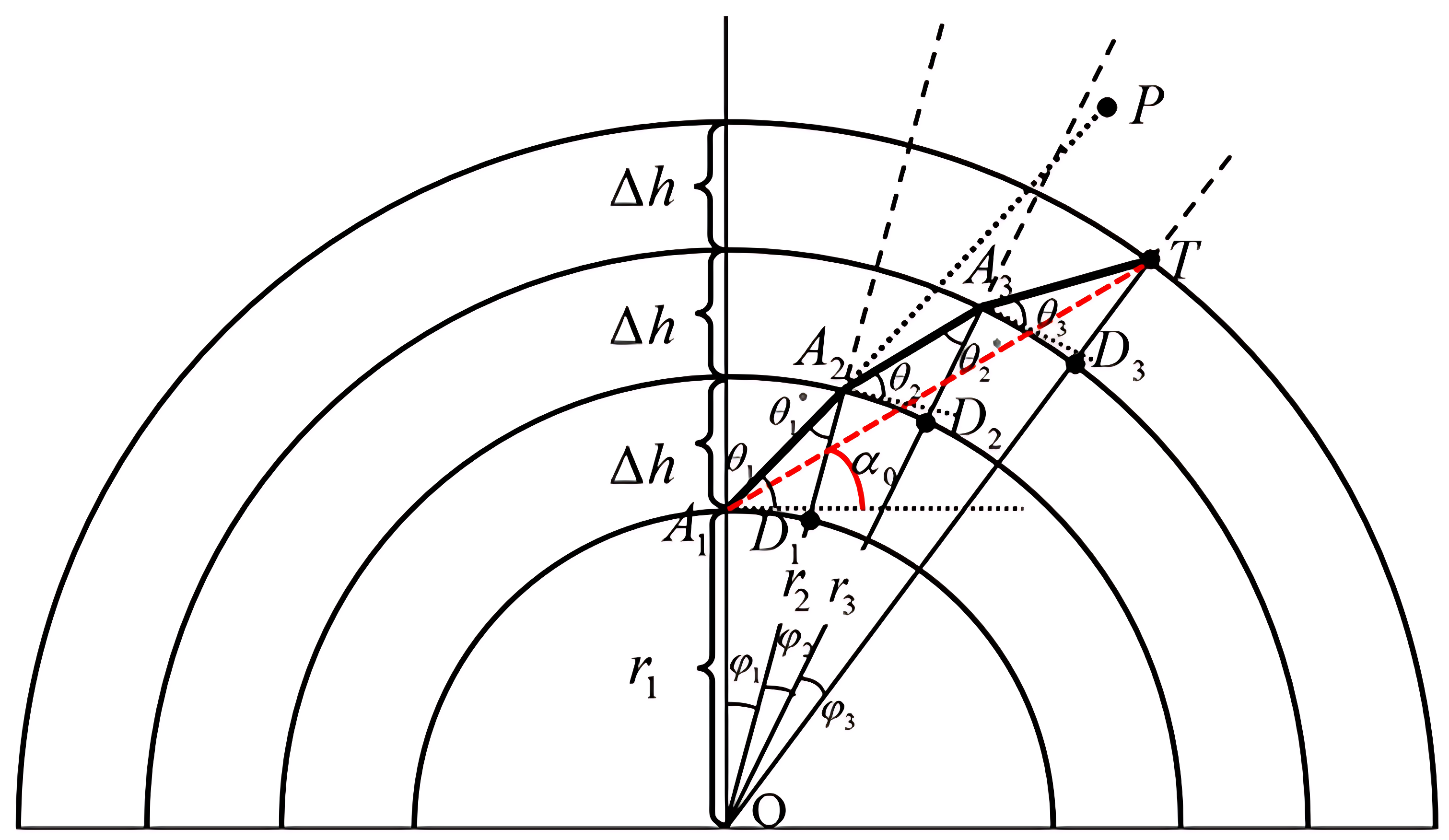
The propagation path of electromagnetic waves under the layering assumption is illustrated in Figure 1. In Figure 1, O is Earth’s center, A 1 is the ground-based radar station, A j is the penetration point of the jth layer, T is the target’s true position, P is the perceived target’s position due to atmosphere refraction, θ j is the elevation angle of the jth layer ( θ 1 is actually the measured elevation angle), θ j is the refraction angle of the jth layer, φ j is the geocentric angle of the jth layer, r 1 is the distance from the radar station to Earth’s center, r j is the distance from the penetration point A j to Earth’s center (it has r j + 1 = r j + Δ h , and Δ h is the layer thickness), D j is the intersection point between the line connecting the penetration point A j + 1 and Earth’s center with the jth spherical layer, α 0 is the corrected elevation angle of the target, and R 0 is the corrected range (i.e., the linear distance from A 1 to T). The ground-based radar detecting space targets transmits radio signals from the site A 1 . The signal propagates straight within the jth layer by a refractive index n j and refracts at the penetrating point between two adjacent layers due to the different refractive index, which finally forms a propagation path with a series of bold line segments from the target T to the radar station A 1 , as shown in Figure 1. The signal reaches the target T and reflects back to the radar antenna along the same path. The line from the target T to the radar station A 1 is illustrated as a red dashed line. Based on radar measurements, the target is interpreted to be located at P with an elevation angle θ 1 and a measured range value R M equaling the half product of the reception delay τ and the light speed c in a vacuum. Because the propagation speed changes across the different layers due to the varying refraction index, radar measurement calculating the range via the speed of light in a vacuum can cause significant ranging errors.
In this study, the ray-tracing algorithm serves as the fundamental physical model to calculate the signal propagation trajectory and the corresponding measurement errors. Unlike traditional ray-tracing methods, which assume a horizontally homogeneous atmosphere where the 1D refractive index depends solely on the altitude, our method utilizes a continuously updated, horizontally inhomogeneous refractive index field. The ray tracing is executed by numerically integrating the ray differential equations along the signal path. At each step of the numerical integration, the local refractive index and its spatial gradients are instantaneously updated using the GIM-adjusted ionospheric electron density. By tracking the accumulated electrical path length and the bending of the ray path, the actual refracted trajectory is simulated. Finally, the range and elevation angle errors are quantitatively derived by comparing this refracted trajectory with the theoretical straight-line geometric path between the radar station and the target.

2.2. Atmospheric Refraction Correction

Based on the above wave propagation geometric model, this part further introduces how radar measurements influenced by atmospheric refraction are corrected according to [5,11]. Some important parameters are derived as follows.
(1) For the elevation angle θ j of the jth layer, based on the Snell law, the relationship between the elevation and refraction angles of adjacent layers can be modeled as
n j × sin ( θ j ) = n j + 1 × sin ( 90 ° θ j + 1 )
Based on the sine theorem, it is also the case that
sin ( θ j ) r j = sin ( θ j + 90 ° ) r j + 1
By combining Equations (1) and (2) and using the recurrence method for 1 , 2 , , j , we can derive the relationship between the elevation angle θ j of the jth layer and the measured elevation angle θ 1 [5]:
cos ( θ j ) = n 1 r 1 n j r j cos ( θ 1 )
Therefore, based on the input vertical profiles of the atmospheric refractive index and the radar’s measured elevation angle, the wave propagation path between the target and radar site can be tracked and reconstructed.
(2) For the apparent target range R e , firstly, based on the sine theorem, the geocentric angle φ j of the jth layer can be accurately calculated as follows [11]:
φ j = arccos [ r j r j + 1 cos ( θ j ) ] θ j
Therefore, the accumulative geocentric angle ϕ is derived using ϕ = j = 1 m φ j , where m is the layer number of the assumed target.
Secondly, we can further derive the propagation path length of the jth layer [11]:
Δ l j = sin ( φ j ) cos ( θ j ) ( r j + Δ h )
Considering that the radar waves propagate at a speed v j = c / n j in the troposphere and at a speed v j = c · n j in the ionosphere, we can calculate the propagation time of the jth layer as Δ t j = Δ l j / v j . Thus, the total propagation time is t = j = 1 m Δ t j , which equals the real measured delay of the assumed target. However, the vacuum speed of light is generally used to calculate the range. Thus, we can calculate the apparent target range R e = c · t , which can be further derived by [11]
R e = j = 1 r j = 60 km n j sin ( φ j ) cos ( θ j ) ( r j + Δ h ) R e 1 + r j = 60 km m 1 n j sin ( φ j ) cos ( θ j ) ( r j + Δ h ) R e 2
Equation (6) is bounded by the 60 km altitude. The first part R e 1 corresponds to the apparent range below the 60 km altitude, mainly influenced by the troposphere. The latter part R e 2 corresponds to the apparent range above the 60 km altitude, mainly influenced by the ionosphere.
(3) For the corrected range R 0 and elevation angle α 0 of the assumed target, based on the sine theorem on the triangle Δ O A 1 T , we can derive α 0 as follows [5]:
α 0 = arctan cot ( ϕ ) r 1 r m + Δ h csc ( ϕ )
The corrected range R 0 (the linear distance between the target and radar site) can be precisely calculated via
R 0 = sin ( ϕ ) ( r m + Δ h ) cos ( α 0 )
Thus, the measurement errors of the elevation angle and range are
ε 0 = θ 1 α 0
Δ R = R e R 0
It is particularly noteworthy that at a low elevation angle of 3 ° , the signal traverses a significantly longer slant path through the atmosphere. Under these conditions, the cumulative bending and signal delay are highly pronounced, making rigorous step-by-step numerical integration of the ray-tracing equations essential for accurately determining the actual refracted ray path, apparent range, and ultimately the errors.
The primary premise of atmospheric refraction correction for radar measurement errors is to achieve the vertical atmospheric refractive index profile. The tropospheric refractive index can be derived by combining local meteorological parameters measured by the ground sensor with an empirical model. The key to acquiring the ionospheric refractive index is to find the vertical profile of the ionospheric electron density. This can be approximately deduced by combining the total electron content (TEC) measured by the local ionosonde equipment (e.g., the GNSS receiver) and the International Reference Ionosphere (IRI) model [13,14]. Based on the vertical profile of the atmospheric refractive index and the radar-measured elevation angle, we can use ray tracing to accurately reconstruct the propagation path of the radar signal through the atmosphere, thereby forming a segmented trajectory. Nevertheless, because the exact location of the target along this trajectory is unknown, it is necessary to incorporate the radar-measured range to determine the specific position of the target. According to the above derivation, we can establish a corresponding relationship between the apparent target range and the true range and elevation angle regarding the altitude samplings. This means that we can calculate a set of key parameters of the apparent target range, true range, and elevation angle versus the altitude. When the radar-measured apparent range is given, the true range and elevation angle can be determined via a lookup table and interpolation.

3. Influential Analysis of Horizontally Inhomogeneous Ionosphere on Radar Measurements

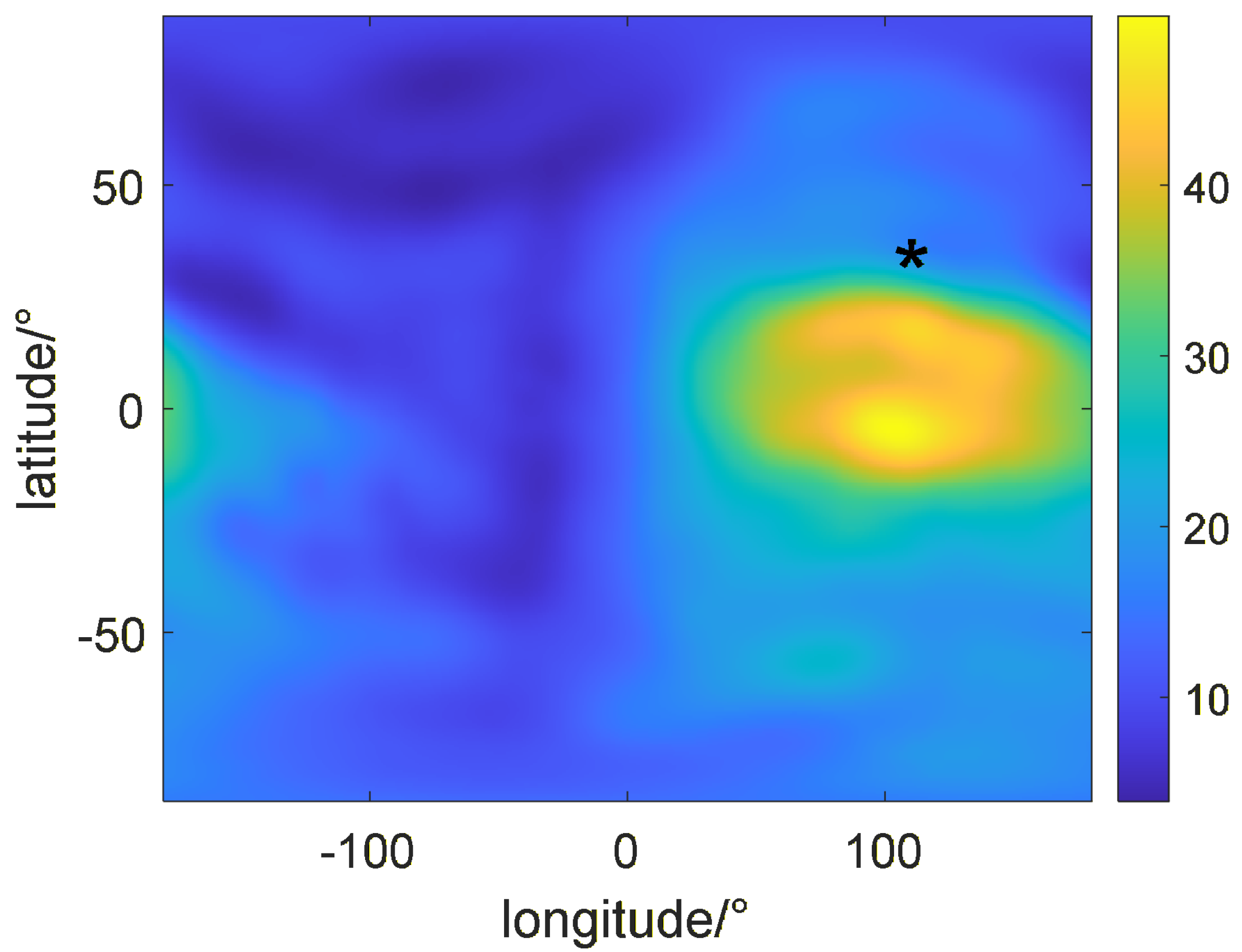
Existent studies show that the difference in measurement errors imposed by tropospheric horizontal inhomogeneity is essentially negligible for ground-based space target surveillance radars [10,11]. Therefore, this paper mainly analyzes the impact of ionospheric horizontal inhomogeneity on radar measurements. When working in high-latitude regions at high elevation angles, the ionospheric refractive index can be considered horizontally uniform due to the relatively small horizontal variation in ionospheric electron density. As a result, the electron density measured by the radar station can be used to approximate the electron density at the same altitude along the radar signal propagation path, and meanwhile, the changes in TEC due to the oblique difference should be considered. By comparison, when working in low-latitude regions, transition zones toward mid-latitudes, or at low elevation angles, two major challenges arise. On one hand, the ionosphere in these regions exhibits severe structural variations, prominently driven by phenomena like the equatorial ionization anomaly (EIA). These variations introduce steep latitudinal gradients in electron density, making horizontal inhomogeneity highly significant. On the other hand, low elevation angles significantly lengthen the slant propagation path. Consequently, the signal traverses a broader ionospheric range where these cumulative horizontal gradients cannot be ignored. These factors lead to significant differences between the electron density above the radar site and that along the propagation path of radar signals, thereby bringing about greater difficulties and challenges for atmospheric refraction correction. To describe the ionospheric horizontal inhomogeneity, as shown in Figure 2, we present an example of the global distribution of the ionospheric vertical TEC (VTEC) at 2:00 p.m. local time on 1 March 2011 (the radar site was assumed to be located at the point of “*”). This product is provided by the global ionospheric maps (GIMs) of the International GNSS Service (IGS) [15,16]. The VTEC at the south end of the radar site reached about 50 TECU, whereas that to the north reached only 20 TECU, demonstrating significant differences between the north and south. Therefore, if a radar detects the targets at the same altitude and elevation angle, then the atmospheric refraction error for southward measurements at this site is significantly greater than that for northward measurements.
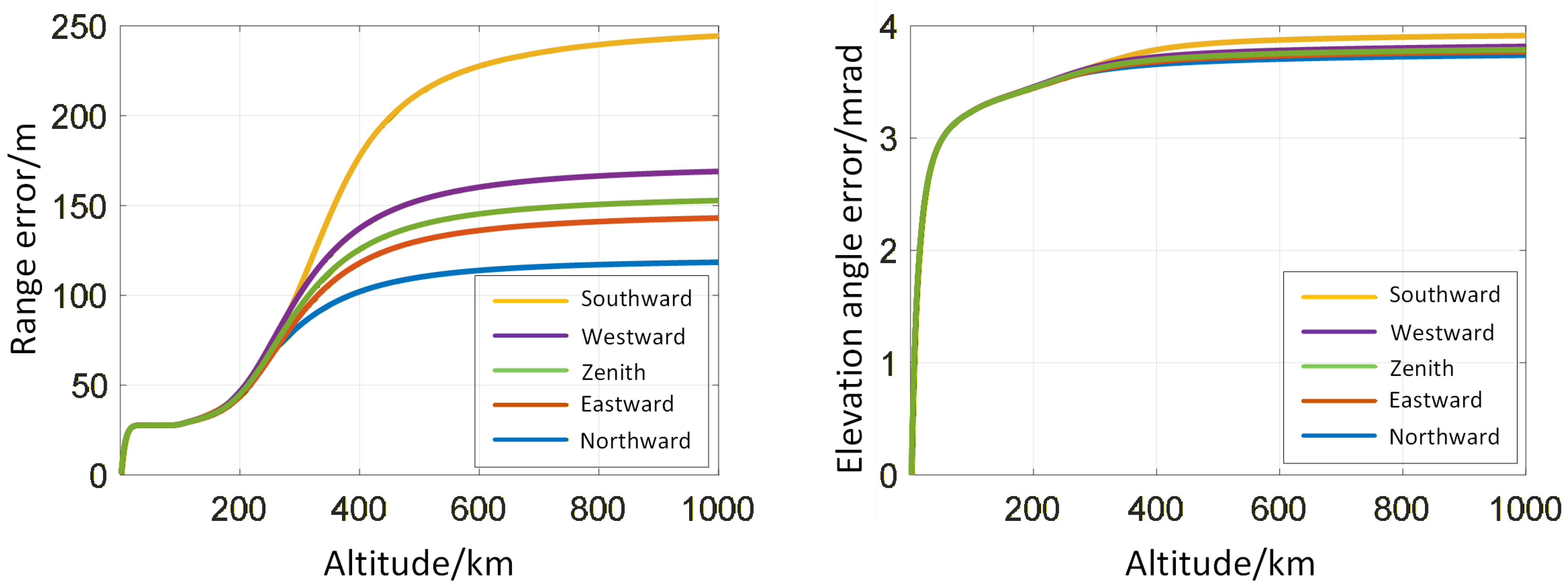
Then, we used the tropospheric Hopfield model [17] and the ionospheric IRI model to calculate the tropospheric and ionospheric refractive indexes regarding the different altitudes, respectively. Based on the abovementioned atmospheric refraction correction principle and procedure, we derived the atmospheric refraction errors for the ground-based radar operating at a carrier frequency of 500 MHz and at a measured elevation angle of 3 degrees. Based on the global VTEC distribution shown in Figure 2, the range and elevation angle errors in the radar measurements caused by atmospheric refraction were calculated, as shown in Figure 3. It can obviously be seen that when the radar detected space targets in different directions, significant differences existed in the errors of the measured range and elevation angle. Therefore, if the atmospheric refractive index above the radar site is directly used for atmospheric refraction correction (i.e., ignoring the influence of ionospheric horizontal inhomogeneity), then considerable residual errors can still remain after correction. For example, if the detected space target were located at an altitude of 1000 km, then the range error in the southward direction would reach 244.4 m, but it would only be 118.4 m in the northward direction. When the vertical ionospheric refraction index above the site was directly used for atmospheric refraction correction, the range correction value was 152.8 m, and thus the residual error reached 91.6 m for the southward measurement and −34.4 m for the northward measurement. Compared with the influence of ionospheric horizontal inhomogeneity on the radar range measurement, the influence on the radar elevation angle measurements was much slighter. For the same space target at the 1000 km altitude, the elevation error reached 3.913 mrad for the southward measurement and 3.739 mrad for the northward measurement. Similarly, neglecting ionospheric horizontal inhomogeneity, the total correction value for the elevation angle was 3.789 mrad. However, this assumption introduced residual elevation angle errors ranging from 0.05 mrad to 0.124 mrad, which corresponds to a relative error from approximately 1.3 % to 3.3 % of the total elevation correction. In summary, since the ray trajectory and the integrated electrical path length are strongly interrelated in the ray-tracing process, horizontal ionospheric inhomogeneity fundamentally alters the entire propagation path. Consequently, it introduces non-negligible, coupled relative errors in both the radar range and elevation angle measurements, making it a critical factor that must be strictly considered in high-precision atmospheric refraction correction.

4. Horizontally Inhomogeneous Ionospheric Refraction Correction

Based on the principles outlined in Section 2, atmospheric refraction correction relies on acquiring the precise refractive index along the signal path. To calculate the ionospheric refractive index specifically, it is crucial to measure the electron density along this propagation route. Nevertheless, it is hard to achieve electron density profiles with extensive spatial coverage and high spatiotemporal resolution. Widely distributed GNSS receiver stations and processing systems enable global or regional VTEC measurement. Deploying a GNSS receiver at the radar station facilitates local VTEC measurement. In general, the VTEC products are combined with the local empirical electron density profiles (such as from the IRI) to derive electron density profiles. It is inefficient and unsuitable for engineering applications to derive the ionospheric electron density by calculating the longitude, latitude, and altitude of every penetration point. Therefore, this section focuses on efficiently combining VTEC maps with empirical electron density profiles. This integration aims to derive accurate electron densities for the horizontally inhomogeneous ionosphere, ultimately correcting refraction errors in ground-based radar systems.
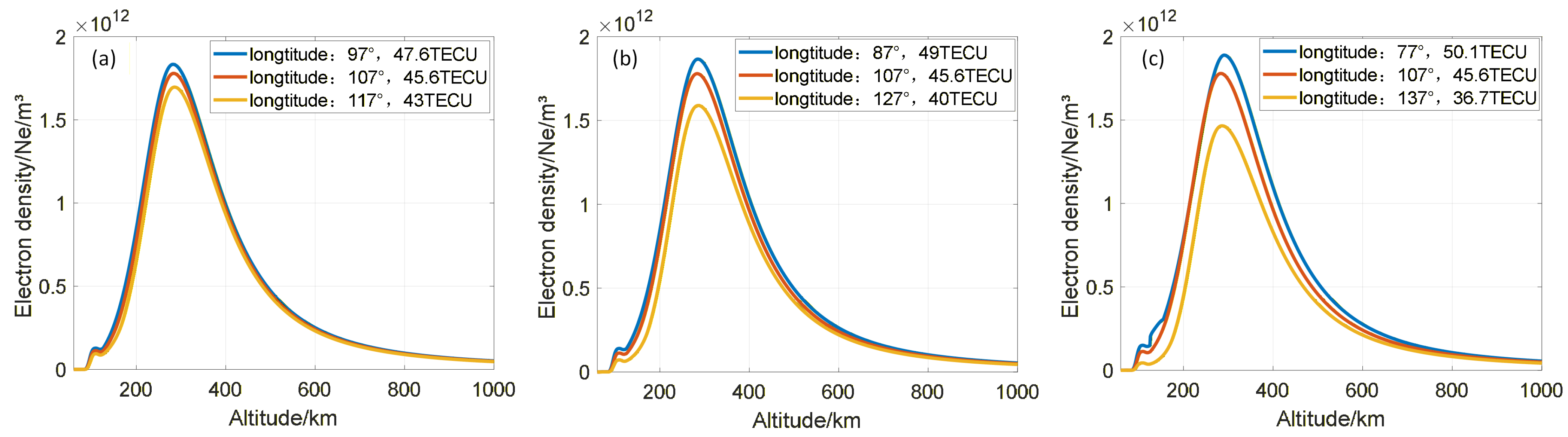
The ionospheric electron density profile with respect to the altitude exhibits a certain degree of horizontal correlation within a local area. Our idea is to use the electron density profiles from a few sites within a local area to derive the electron density of other sites across this area. To conduct an in-depth analysis of the horizontal correlation of electron density profiles, we first selected several sites with the same latitude but different longitudes and examined their electron density profiles using the IRI model. In Figure 4, the electron density profiles for 3:00 p.m. on 21 April 2023 (corresponding to an active ionospheric period) are presented. The latitude remained constant, while the longitude spacings were set to 10 degrees, 20 degrees, and 30 degrees. Observations indicate that sites sharing the same latitude but differing in longitude (within a 30 degree range) exhibited highly consistent electron density distributions, primarily varying only in magnitude. Naturally, this profile similarity strengthened as the longitudinal gap narrowed. Because the VTEC represents the vertical integral of the electron density profile, the profile ratio between two such locations can be effectively approximated by the ratio of their respective VTEC values. Therefore, the relationship between two electron density profiles can be modeled as follows:
N e 1 h = V T E C 1 V T E C 2 N e 2 h
where N e 1 h and N e 2 h represent the electron density profiles of the two sites with the same latitude but different longitudes (within a range of about 30 degrees) and V T E C 1 and V T E C 2 signify the corresponding VTEC values. In other words, based on the electron density profile of the local site, the electron density profile with a limited longitude spacing can be fitted by the VTEC ratio of two sites. Then, the ionospheric refractive index is calculated solely based on this adjusted electron density using the standard approximation formula for high-frequency radio waves, expressed as n 1 40.3 N e / f 2 , where f is the radar operating frequency. This approach ensures that the GIM products only act as horizontal modulators for the vertical electron density profiles.
To clarify the data processing pipeline, it is necessary to explain how the 3D refractive index field was constructed. The GIMs are solely utilized to provide high-precision VTEC observations. The computational workflow is as follows. First, an adjustment coefficient is calculated as the ratio of the GIM-derived VTEC to the background VTEC integrated from the IRI model. Second, the baseline electron density ( N e 2 ) profile provided by the IRI model is scaled by this coefficient to reconstruct an updated, horizontally inhomogeneous N e 1 profile. Finally, the ionospheric refractive index is calculated solely based on this adjusted electron density. This approach ensures that the GIM products only act as horizontal modulators for the vertical electron density profiles.
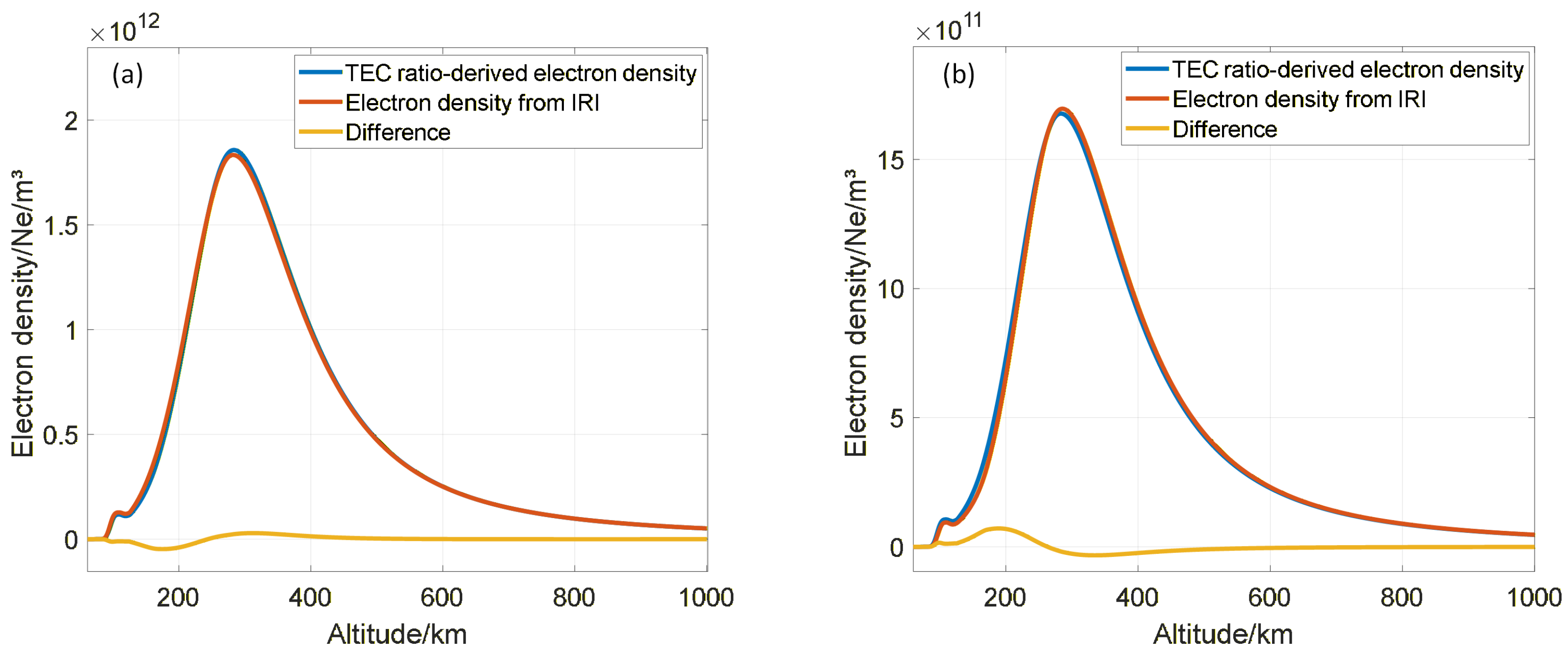
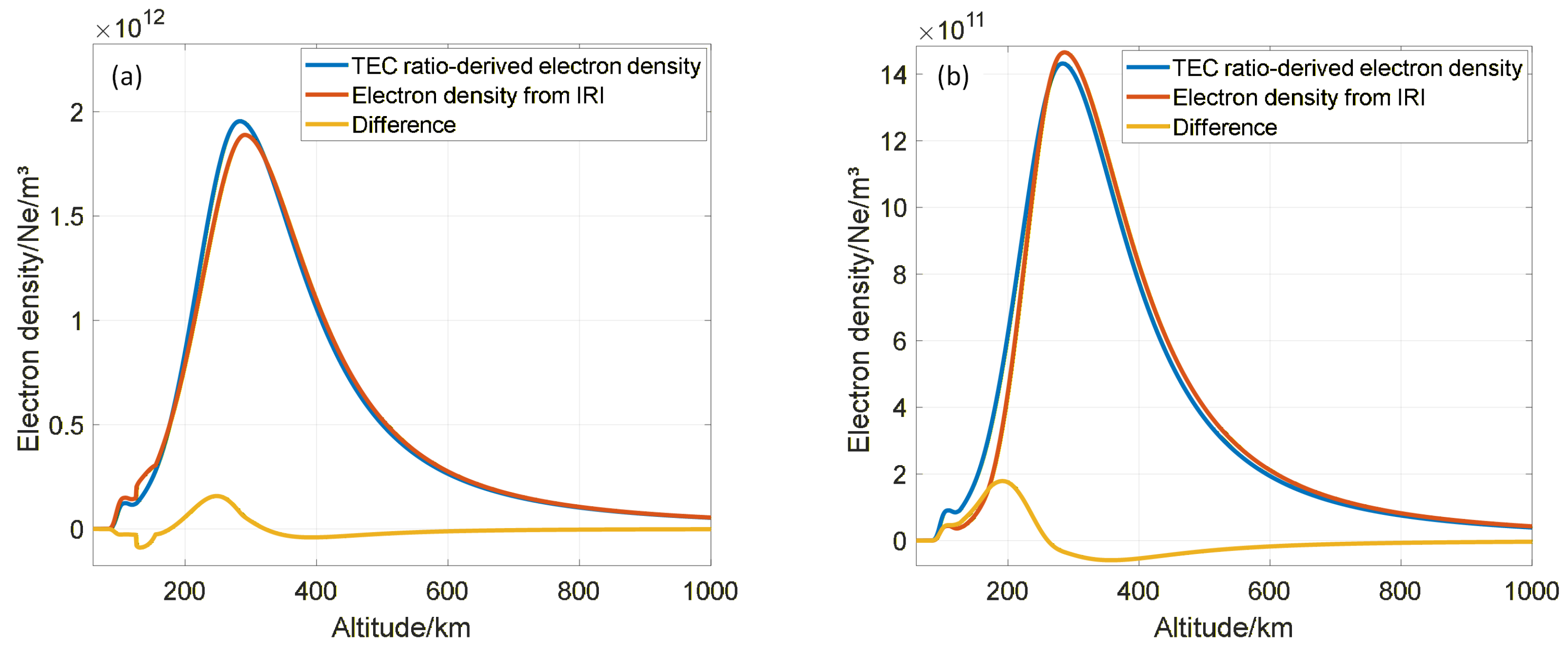
We next used the IRI to verify the above model approximation. The ionospheric electron density at 107 degrees longitude along with the VTEC map were used as a reference, and Equation (11) was calculated using the VTEC ratio to fit the electron density profiles at the longitudes of 117 degrees and 97 degrees with the same latitude. The results are shown in Figure 5. It can be seen that the fitted electron density profile was highly consistent with that directly provided from the IRI model, and the residual electron density was negligible. We further examined the approximation using a larger longitude spacing of 30 degrees, and the results are shown in Figure 6. It can be seen that the fitted electron density profile exhibited increasing discrepancies with that directly provided by IRI as the longitude spacing increased, and the discrepancies were mainly located at the altitude range from 120 to 350 km. Of course, the two profiles still maintained high consistency overall. It should be noted that when the radar observes a space target spanning 30 degrees longitude, the target must be at a relatively higher altitude. In detail, under the extreme condition where the elevation angle is zero, the target is at least at an altitude of over 700 km. The results in Figure 6 show that the fitted electron density profile was highly consistent with that from IRI at this altitude range. Therefore, it is reasonable to fit the ionospheric electron density profile at the neighboring longitude and same latitude by using the reference profile and VTEC ratio based on Equation (11).
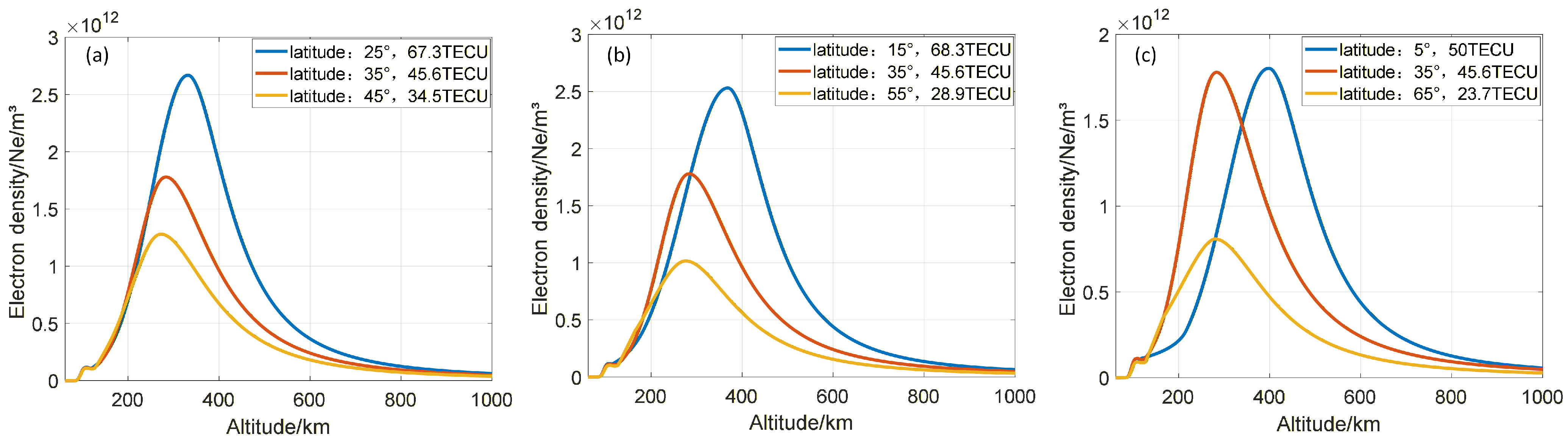
In addition, we further examined the electron density profiles at the sites with the same longitude but different latitudes. Figure 7 shows the electron density profiles provided by IRI at the same time at the site with latitude spacings of 10 degrees, 20 degrees, and 30 degrees. It is evident that the electron density profile varied significantly with the different peak magnitudes and altitudes, and this difference was more significant for lower latitudes, which makes the above approximation model impractical. Of course, as the latitude spacing decreased, the electron density difference also diminished. Therefore, it is reasonable to assume that the electron density profiles remained relatively stable within small latitude ranges, and thus a local region can be divided into several latitude block areas. For example, every five degrees latitude is a block. The electron density profile at the center of each block area serves as a reference, and profiles at other locations within this block area can be fitted using Equation (11).
The principle for horizontally inhomogeneous ionospheric refraction correction is described as follows. The local area centered on the radar site is divided into several block areas along the latitude line. By designating the latitudinal center of each block—which shares the radar’s longitude—as a reference point, we can accurately model the horizontal inhomogeneity of the local ionosphere. This modeling is achieved by integrating prior electron density profiles at these reference points with regional VTEC data. In detail, we should first calculate the longitude and latitude of the ionospheric penetration points for the radar signal traversing each layer, based on the ray-tracing model described in Section 2. Secondly, the electron density profile of the corresponding block is selected according to the longitude and latitude of each penetration point and fitted using VTEC data, thus finding the oblique electron density corresponding to each penetration point. Once the oblique ionospheric electron density profile along with the tropospheric refraction index is obtained, we perform atmospheric refraction correction for ground-based radar measurement based on the principle and procedure discussed in Section 2.

5. Simulation Analysis and Verification

In fact, incoherent scatter radars have been deployed in only a few areas to accurately measure the ionospheric electron density profile, and thus it is quite hard to find the oblique electron density for arbitrary directions and points. The acquisition of an ionospheric electron density profile in engineering applications mainly depends on ionospheric empirical models. Therefore, this section performs a comparison between the ionospheric horizontal inhomogeneity modeling results and the IRI model to validate the effectiveness.
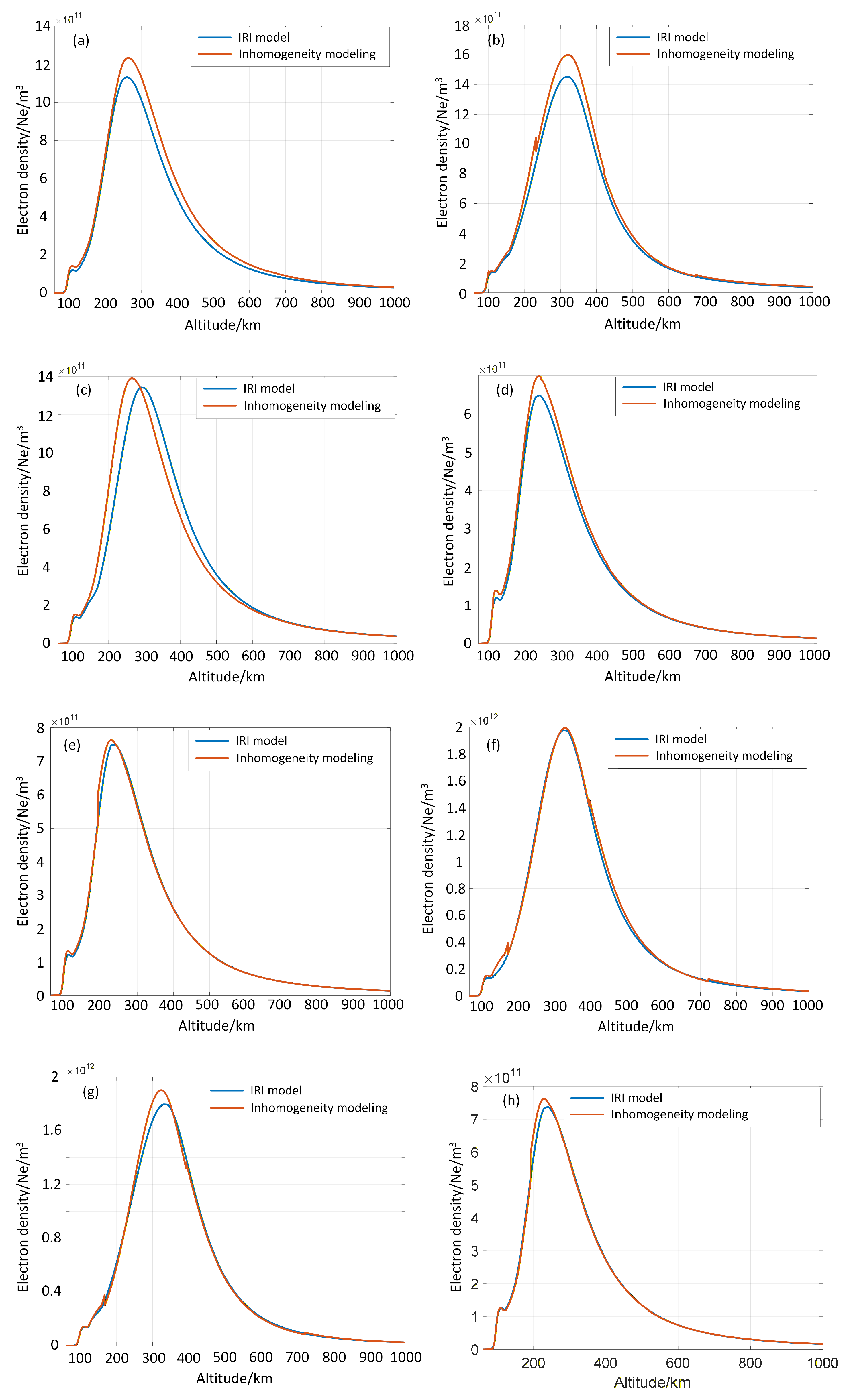
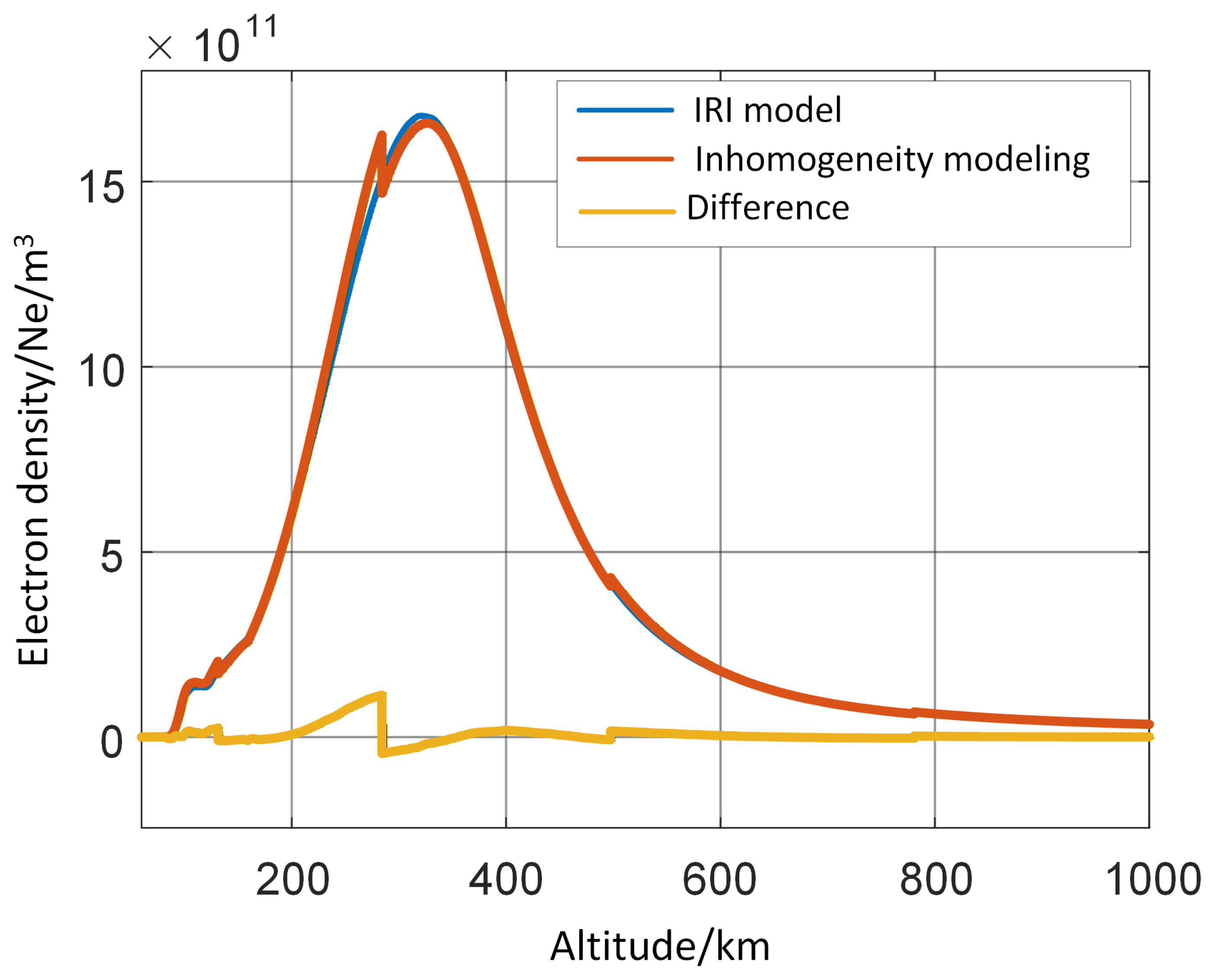
The simulation scenario selected was for a mid-latitude site in China at 2:00 p.m. local time on 1 March 2011, and the ground-based radar observed the targets with an elevation angle of three degrees. The oblique electron density profiles along the wave propagation paths in different directions (or azimuth angles) were calculated based on the above principle of ionospheric horizontal inhomogeneity modeling and refraction correction, which were further compared with the initial results provided by IRI, and the results are shown in Figure 8. The results indicate high agreement between the electron density distribution curves derived from inhomogeneity modeling and the IRI model across different azimuth angles, which validates the effectiveness of ionospheric horizontal inhomogeneity modeling.
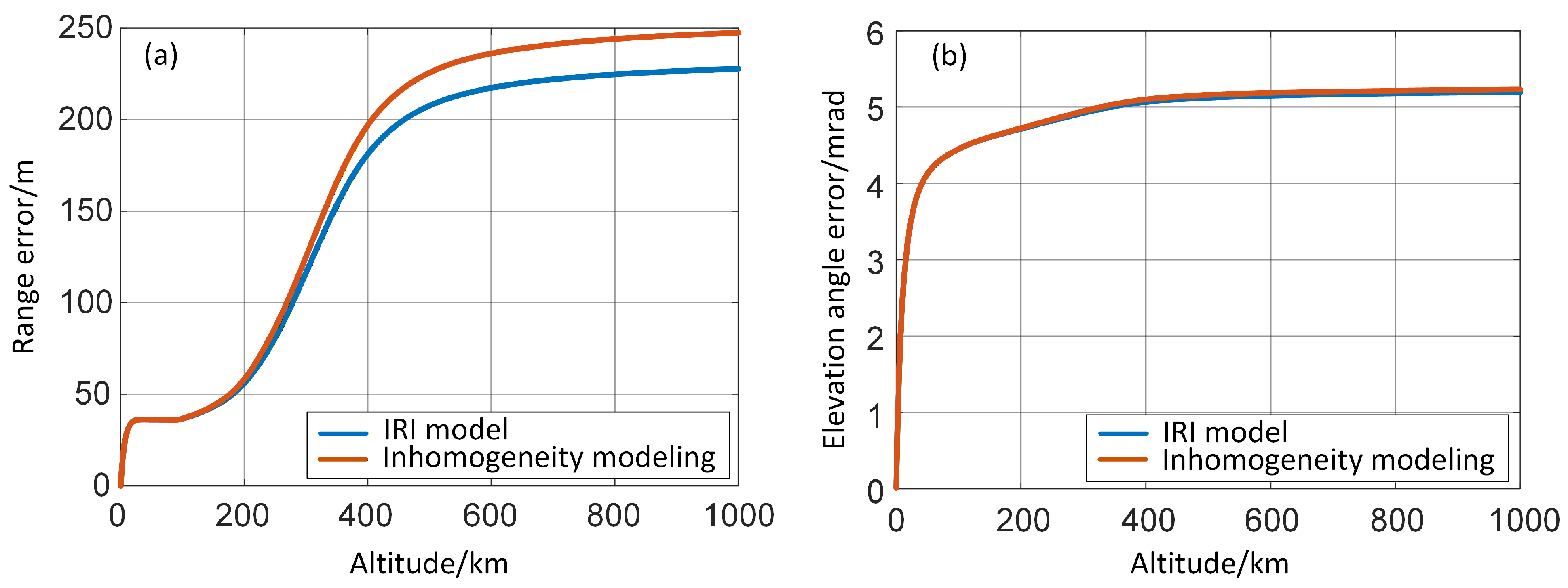
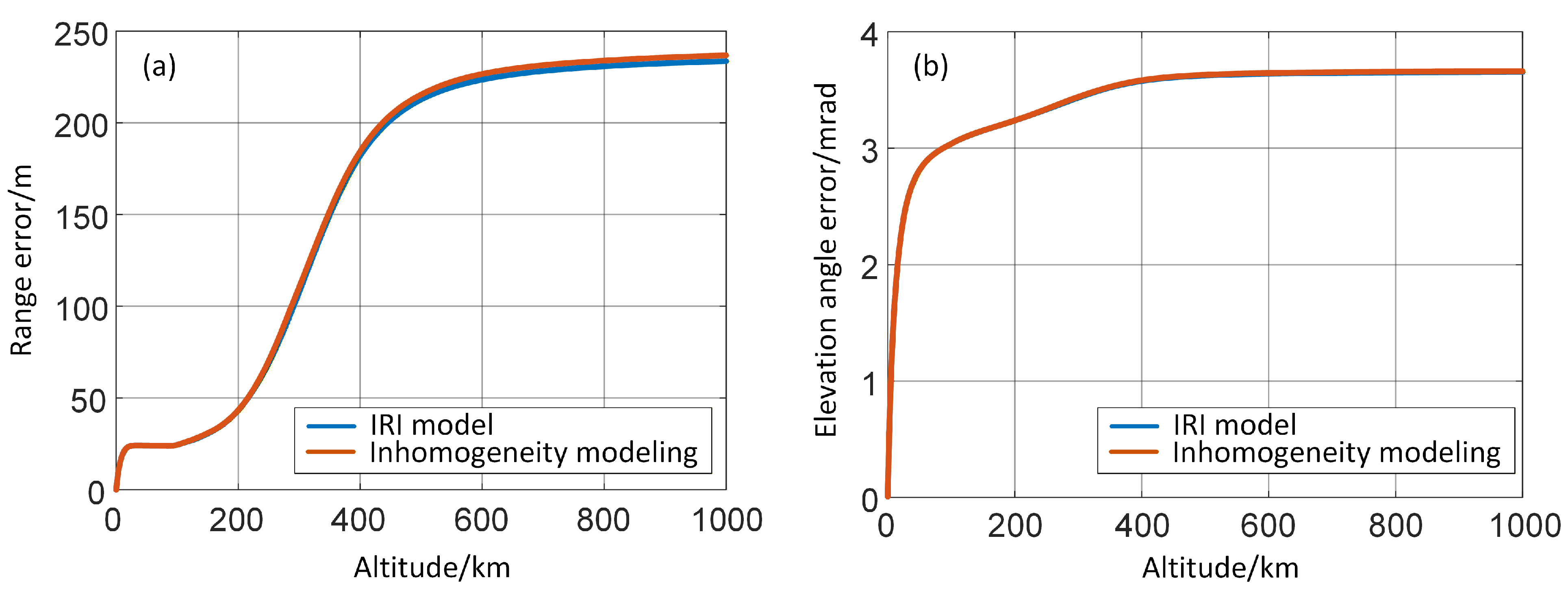
Because the ionosphere exhibits more pronounced horizontal inhomogeneity at lower latitudes, we used southward radar measurements as a representative case study. We then calculated and compared the radar measurement errors using oblique electron densities derived from two approaches: our inhomogeneous model and the standard IRI model. We employed the Hopfield model to derive the tropospheric refraction index profile and further applied the ray-tracing method to calculate the range and elevation angle errors, and the results are shown in Figure 9. This indicates that as the altitude increased over 350 km, the discrepancy in the range errors gradually rose, and the elevation angle errors were highly consistent. The results show that for a target located at an altitude of 1000 km, the difference in the elevation angle error was only about 0.036 mrad, and the range error differed by about 19.8 m. In other words, if the proposed methodology of ionospheric horizontal inhomogeneity modeling is used for atmospheric refraction correction, then the residual range error can decrease to 19.8 m, and the residual elevation angle error would be only 0.036 mrad, which indicates an extreme measurement condition with a rather small elevation angle (three degrees).
For the measured elevation angle adjusted to a larger value (five degrees) in the case of the southward measurement, a comparison of oblique electron densities along the signal propagation path based on the IRI model and inhomogeneity modeling is shown in Figure 10. It can be seen that both oblique electron density profiles were highly consistent, and the differential electron density was negligible, which demonstrates the effectiveness of ionospheric horizontal inhomogeneity modeling for atmospheric refraction correction. The atmospheric refraction errors were then calculated using the oblique electron density profiles derived from both methods, and the results are shown in Figure 11. This indicates that for a space target at an altitude of 1000 km, the difference in angle error was merely about 0.0064 mrad, and the range error differed by 3.17 m. Compared with the results in Figure 10 for an elevation angle of three degrees, as the measured elevation angle increased, the performance of the atmospheric refraction correction improved, and the residual range and elevation angle errors decreased. The above simulation results fully validate the rationality and feasibility of the ionospheric horizontal inhomogeneity modeling proposed in this paper.
Figure 5, Figure 6, Figure 8 and Figure 10 show significant electron density divergences between the 3D inhomogeneity modeling and the standard 1D local IRI profile. These differences occurred primarily in the ionospheric F-region (altitudes of 250–450 km). Both physical and geometric factors drove this divergence. This substantial difference was essentially governed by both physical and geometric factors. Physically, the F2 layer represents the peak of the absolute electron density, meaning that horizontal variations and latitudinal gradients (such as those induced by the EIA) were most intense within this altitude band. Geometrically, for rays propagating at lower elevation angles, reaching these high altitudes implies that the signal traveled a considerable horizontal distance from the radar station. Consequently, the true ray trajectory sampled a different geographic region with a distinct ionospheric structure, rendering the local zenith-based 1D profile highly inaccurate at these critical altitudes.

6. Conclusions

This paper mainly investigated horizontally inhomogeneous ionospheric refraction correction for ground-based radar that detects space targets. We deeply analyzed the effect of the horizontal inhomogeneous ionosphere on the range and elevation angle measured via ground-based radar and presented a geographic division modeling strategy for the ionospheric electron density along the propagation path for atmospheric refraction correction. The effectiveness of ionospheric horizontal inhomogeneity modeling was verified through comparative simulations with the IRI model. The results demonstrate that both the oblique electron density profile and atmospheric refraction errors calculated via ionospheric horizontal inhomogeneity modeling aligned well with those calculated with the IRI model. For low-elevation space targets, the signal propagation path spanned thousands of kilometers. Traditional ray tracing requires calculating the electron density at dense integration steps along this vast trajectory. Compared with the computationally prohibitive method of repeatedly querying complex global empirical models (such as IRI or the highly effective NeQuick model) at every single integration point to obtain the vertical electron density profile, our approach is significantly more efficient. By leveraging real-time VTEC maps to scale reference profiles derived from a limited number of model queries, the proposed methodology drastically reduces computational overhead. Crucially, it preserves essential horizontal gradient information, making the algorithm highly suitable for the strict real-time demands of operational radar systems.
It should be noted that the current validation was primarily conducted under a representative mid-latitude midday scenario to demonstrate the feasibility of the proposed geographic division modeling strategy. In practice, the ionosphere exhibits highly dynamic behaviors, such as strong longitudinal gradients during twilight and complex variations under different seasons and solar activities. Exhaustively evaluating and optimizing the robustness of the proposed methodology under these extreme and diverse space weather conditions will be the focus of our future work.

Author Contributions

Y.Z. initiated the research. Y.Z. carried out the simulation and wrote the manuscript. Z.D. helped revise the manuscript. Y.J. mainly provided technical support. All authors have read and agreed to the published version of the manuscript.

Funding

This research was funded by the National Natural Science Foundation of China (NSFC) under Grant No. 62471474.

Institutional Review Board Statement

Not aplicable.

Informed Consent Statement

Not applicable.

Data Availability Statement

The IRI data are available from https://kauai.ccmc.gsfc.nasa.gov/instantrun/iri/. The GIM data are available from https://igs.org/wg/ionosphere/ (both accessed on 15 March 2026).

Conflicts of Interest

The authors declare no conflicts of interest.

References

  1. Xu, Z.W.; Wu, J.; Wu, Z.S. A survey of ionosphere effects on space-based radar. Waves Random Media 2004, 14, S189–S273. [Google Scholar] [CrossRef]
  2. Zhang, Y.S.; Yu, C.R.; Ji, Y.F.; Dong, Z.; Zhang, Q.L.; Yu, L.; Gan, N.; Yao, B.D. A correction method of the Faraday rotation effect based on the frequency-domain ambiguity-resolving in spaceborne P-band full-polarimetric SAR. Acta Electron. Sin. 2023, 51, 585–592. [Google Scholar] [CrossRef]
  3. Ji, Y.F.; Dong, Z.; Zhang, Y.S.; Xiong, C.; Mao, W.F.; Wang, C. Research overview on ionospheric probing based on spaceborne synthetic aperture radars. J. Radars 2025, 14, 1323–1342. [Google Scholar] [CrossRef]
  4. Ji, Y.F.; Dong, Z.; Zhang, Y.S.; Wang, C. Transionospheric synthetic aperture radar observation: A comprehensive review. IEEE Geosci. Remote Sens. Mag. 2025, 13, 273–313. [Google Scholar] [CrossRef]
  5. Jiang, C.Y.; Wang, B.D. Atmospheric refraction corrections of radiowave propagation for airborne and satelliteborne radars. Sci. China (Ser. E) 2001, 31, 19–27. [Google Scholar]
  6. Yang, Z.Q.; Chen, X.M.; Zhao, Z.W. Empirical model for radio wave refractive error correction of troposphere. Chin. J. Radio Sci. 2008, 23, 580–584. [Google Scholar]
  7. Liu, Z.W.; Liu, F.T.; Gan, Y.Y.; Cheng, X.H. Application of microwave radiometer in the refractive error correction of radar measurement data. Chin. J. Radio Sci. 2011, 26, 1153–1157. [Google Scholar]
  8. Wang, N.; Lin, L.K.; Cheng, X.H.; Shu, T.; Sun, F. Radio wave refraction correction based on microwave radiometer measurement. J. Spacecr. Tt C Technol. 2014, 33, 506–511. [Google Scholar]
  9. Li, C.C.; Liu, K.; Zhu, Q.L.; Shan, Z.; Tao, K. Method of high-precision refraction error correction in S-band radar detection. J. Air Space Early Warn. Res. 2019, 33, 405–408. [Google Scholar]
  10. Tang, X.J.; Liu, M.R.; Qiao, J.D.; Zhou, C. Atmospheric refraction technology for space target surveillance radar. Chin. J. Radio Sci. 2024, 39, 148–155. [Google Scholar] [CrossRef]
  11. Wang, Z.K.; Ji, Y.F.; Dong, Z.; Tang, F.; Zhang, Y.; Zhang, Q.; Zhao, B.; Gao, H. Atmospheric refraction error correction approach for ground-based space-target surveillance radar. Chin. J. Radio Sci. 2024, 39, 570–578. [Google Scholar] [CrossRef]
  12. Zhang, S.Q.; Zhang, M.; Guo, F.C.; Li, X. Influence analysis of atmospheric refraction on TDOA and FDOA dual-station location error of air-to-ground and its correction. In Proceedings of the IEEE 4th International Conference on Signal and Image Processing (ICSIP), Wuxi, China, 19–21 July 2019; pp. 756–760. [Google Scholar]
  13. Bilitza, D.; Altadill, D.; Truhlik, V.; Shubin, V. International Reference Ionosphere 2016: From ionospheric climate to real-time weather predictions. Space Weather 2017, 15, 418–429. [Google Scholar] [CrossRef]
  14. Bilitza, D. IRI the international standard for the ionosphere. Adv. Radio Sci. 2018, 16, 1–11. [Google Scholar] [CrossRef]
  15. Hernandez-Pajares, M.; Juan, J.M.; Sanz, J.; Orus, R.; Garcia-Rigo, A.; Feltens, J.; Komjathy, A.; Schaer, S.C.; Krankowski, A. The IGS VTEC maps: A reliable source of ionospheric information since 1998. J. Geod. 2009, 83, 263–275. [Google Scholar] [CrossRef]
  16. Mannucci, A.J.; Wilson, B.D.; Yuan, D.N.; Ho, C.H.; Lindqwister, U.J.; Runge, T.F. A global mapping technique for GPS-derived ionospheric total electron content measurements. Radio Sci. 1998, 33, 565–582. [Google Scholar] [CrossRef]
  17. Hopfield, H.S. Two-quartic tropospheric refractivity profile for correcting satellite data. J. Geophys. Res. Solid Earth 1969, 74, 4487–4499. [Google Scholar] [CrossRef]
Figure 1. The geometry of wave propagation in the atmosphere. O is Earth’s center, A 1 is the ground-based radar station, T is the target’s true position. Red dash line A 1 to T is the corrected range R 0 .
Atmosphere 17 00331 g001
Figure 2. VTEC distribution of the GIMs, and Chengdu is marked with black asterisks.
Atmosphere 17 00331 g002
Figure 3. Range (left) and elevation angle (right) errors of radar measurements caused by atmospheric refraction regarding the target altitude for different measurement directions.
Atmosphere 17 00331 g003
Figure 4. Comparison of the ionospheric electron density profiles at the same latitude and different longitude locations (a) with the longitude spacing of 10 degrees, (b) with the longitude spacing of 20 degrees, and (c) with the longitude spacing of 30 degrees.
Atmosphere 17 00331 g004
Figure 5. The ionospheric electron density profile (longitude spacing: 10 degrees) was fitted by using the reference profile at 107 degrees longitude. The blue line signifies the fitted profile, and the red line signifies the profile provided by IRI as a comparison, while the yellow line signifies the difference. (a) The profile at 97 degrees longitude. (b) The profile at 117 degrees longitude.
Atmosphere 17 00331 g005
Figure 6. The ionospheric electron density profile (longitude spacing: 30 degrees) was fitted by using the reference profile at 107 degrees longitude. The blue line signifies the fitted profile, and the red line signifies the profile provided by IRI as a comparison, while the yellow line signifies the difference. (a) The profile at 77 degrees longitude. (b) The profile at 137 degrees longitude.
Atmosphere 17 00331 g006
Figure 7. Comparison of the ionospheric electron density profiles at the same longitude and different latitude locations (a) with a latitude spacing of 10 degrees, (b) with a latitude spacing of 20 degrees, and (c) with a latitude spacing of 30 degrees.
Atmosphere 17 00331 g007
Figure 8. Comparison of the oblique electron density profiles along the signal propagation path calculated by ionospheric inhomogeneity modeling and the IRI model for different directions (or azimuth angles): (a) eastward, (b) southward, (c) westward, and (d) northward, with (e) an azimuth angle of 45°, (f) an azimuth angle of 135°, (g) an azimuth angle of 225°, and (h) an azimuth angle of 315°.
Atmosphere 17 00331 g008
Figure 9. Comparison of the atmospheric refraction errors in radar measurement based on the IRI model and inhomogeneity modeling in the case of southward measurement with a measured elevation angle of 3 degrees. (a) Range error. (b) Elevation angle error.
Atmosphere 17 00331 g009
Figure 10. Comparison of the oblique electron density profiles along the signal propagation path calculated by ionospheric inhomogeneity modeling and the IRI model in the case of southward measurement with a measured elevation angle of 5 degrees.
Atmosphere 17 00331 g010
Figure 11. Comparison of the atmospheric refraction errors in radar measurement based on the IRI model and inhomogeneity modeling in the case of southward measurement with a measured elevation angle of 5 degrees. (a) Range error. (b) Elevation angle error.
Atmosphere 17 00331 g011
Disclaimer/Publisher’s Note: The statements, opinions and data contained in all publications are solely those of the individual author(s) and contributor(s) and not of MDPI and/or the editor(s). MDPI and/or the editor(s) disclaim responsibility for any injury to people or property resulting from any ideas, methods, instructions or products referred to in the content.