1. Introduction
Thunderstorms are dangerous natural phenomena that can endanger people and animals, spark wildfires, and disrupt transportation, housing, public utilities, and radio-electronic equipment. A key feature of the risks associated with thunderstorms in certain months is their total duration within a given month, referred to hereafter as TDT. Therefore, identifying probable trends in changes in TDT for a given month in different regions of the world is an important issue for meteorology, climatology, and emergency safety [
1]. This problem is of particular interest to regions with high socio-economic development potential, where the production of hydrocarbons is one of the leading sectors of the economy, and thunderstorms pose a real danger. One of these regions in Eurasia is the Caspian region, which comprises the territories of Azerbaijan, Iran, Kazakhstan, Russia, and Turkmenistan that border the Caspian Sea. The Atyrau and Mangistau regions of Kazakhstan have the longest stretch of the Caspian Sea coastline. The Atyrau region occupies a significant area in the western part of Kazakhstan. It is located in the Caspian Depression, to the north and east of the Caspian Sea, between the lower reaches of the Volga to the northwest and the Ustyurt Plateau to the southeast. The region’s terrain is predominantly flat. Much of it is covered by sand, salt marshes, and sand ridges up to 10 metres in height. In the north of the region, there are small hills and spurs of the Pre-Ural Plateau. The region has a sharply continental climate, which is extremely arid with hot summers and moderately cold winters [
2,
3]. The region’s economy is based on oil production. Notable oil fields in the region include Tengiz, Dauletaly, Zhana-Makat, Borkildakty, and East Tengiz. The Atyrau region encompasses the coast of the Northern Caspian Sea, the shallowest part of the basin, accounting for approximately 25% of the sea’s total area. The Mangystau region is located further south on the Mangyshlak Plateau. It is also an industrial region specialising in oil production. It produces 25% of all oil extracted in Kazakhstan (almost 20 million tonnes per year) and is home to the Aktau–Zhetibay–Uzen oil pipeline. Additionally, the Mangistau region is home to Kazakhstan’s “sea gate”—the city of Aktau [
4]. Oil production is one of the main industries in Kazakhstan’s Caspian region. Therefore, identifying likely trends in further changes to TDT as risk factors is of considerable practical and theoretical interest. Addressing this problem requires identifying the principal patterns of the process under study and the key characteristics of its development under contemporary conditions. However, most studies of meteorological processes in the Caspian region overlook this topic, focusing primarily on wind regimes, storm surges, swells, and sea waves. V. P. Gorbatenko investigated the synoptic conditions that lead to thunderstorms in Western Siberia and Kazakhstan. He found that thunderstorms most often occur during central and mixed forms of atmospheric circulation, particularly with the presence of high-altitude troughs. Up to 67% of all thunderstorms in Siberia and up to 80% in Kazakhstan are frontal in origin. Thunderstorms over Western Siberia most often occur during cyclones from the west and the central part of European Russia. Cyclones moving from the Caspian and Aral Seas are also frequently observed over northern and central Kazakhstan [
5,
6]. Variations in the total duration of atmospheric blocking (TDB) can significantly impact the recurrence of thunderstorms in a given month [
7,
8,
9]. During these periods, cloud cover is typically absent, so thunderstorms are not possible. S. I. Pryakhina, A. A. Kotova, and Yu. A. Podrezova [
10,
11] investigated the spatial and temporal characteristics of thunderstorms in various regions, with particular attention to the influence of macrocirculation processes. Roghani et al. [
12] presents a climatological survey of cyclones affecting the southern coast of the Caspian Sea. It focuses on their origin, trajectories, and seasonal characteristics. Analysis of 57 cyclonic systems revealed that over 70% of these processes act during the cold season, with significant diversity in intensity ranging from surface depressions to deep cyclones and storms. Using the HYSPLIT model to track air masses, it was also demonstrated that the Caspian region’s main sources of moisture are the Mediterranean and western Iran. The movement and development of cyclones are significantly influenced by the terrain.
When forecasting cyclonic activity in the region, it is necessary to consider both local and large-scale circulation factors [
13,
14]. In Ding et al. [
15], the characteristics of thunderstorms occurring over southern China and the South China Sea are analyzed. Using data from the LIS satellite sensor and the RPF radar base, it was found that the frequency and density of lightning discharges over the mainland are approximately twice as high as those over the sea. E. Voskresenskaya, V. Maslova, A. Lubkova, and V. Zhuravsky present an analysis of current and projected changes in winter cyclonic activity in the Mediterranean and Black Sea regions, based on the CMIP6 ensemble of models [
16]. The influence of atmospheric processes on the formation of convective clouds, from which thunderstorms develop, is also discussed. General climate data for Kazakhstan, as presented in 2023 Annual Bulletin of Climate Change Monitoring in Kazakhstan, confirm the region’s extremely continental climate.
The authors propose a method for identifying days on which meridional-type atmospheric blocking occurs over a specific area of the Northern Hemisphere. This methodology combines the approach suggested by B. L. Dzerdzeevsky [
17] with the method developed by Lejenas and Okland [
18,
19,
20]. It has been established that, during the current climatic period, the total duration of atmospheric blocking has increased over the Caspian region during the summer months. These findings imply that there are areas in the Caspian region where variations in atmospheric blocking are the primary cause of changes in the TDB. This hypothesis is nontrivial, as climate warming over the Caspian Sea enhances thermal convection, which intensifies thunderstorm formation along the coasts and may locally outweigh the suppressing influence of atmospheric blocking. Consequently, climate warming in the Caspian region may cause TDT to increase over certain areas for several months, even if TDB also increases [
21,
22].
This study attempts to test the hypothesis that variations in atmospheric blocking (TDB) influence interannual changes in the total duration of thunderstorms (TDT) in the northern Caspian region during spring and summer. Specifically, the study aims to (1) evaluate the statistical significance of the relationship between TDB and TDT across multiple locations, (2) examine spatial and seasonal patterns of thunderstorm activity in relation to atmospheric blocking, (3) identify trends in thunderstorm duration under current climate warming, and (4) assess the potential stabilizing role of atmospheric blocking in modulating convective activity and its implications for regional climate risk and adaptation planning.
2. Research Material and Methodology
To address the first two objectives, ERA5 reanalysis was used to assess TDB over the Caspian region. This source provides geopotential height information corresponding to atmospheric pressure values of 300, 500, and 850 hPa for each hour between 1959 and 2025 [
23,
24,
25]. The third objective was addressed using the observed start and end times of thunderstorms at weather stations in Atyrau, Ganyushkino, Inderborsk, Kulsary, Karabau, Makhambet, Novy Ushtagan, Peshnoy, and Sagiz in Kazakhstan, which were continuously recorded from 1977 to 2021 [
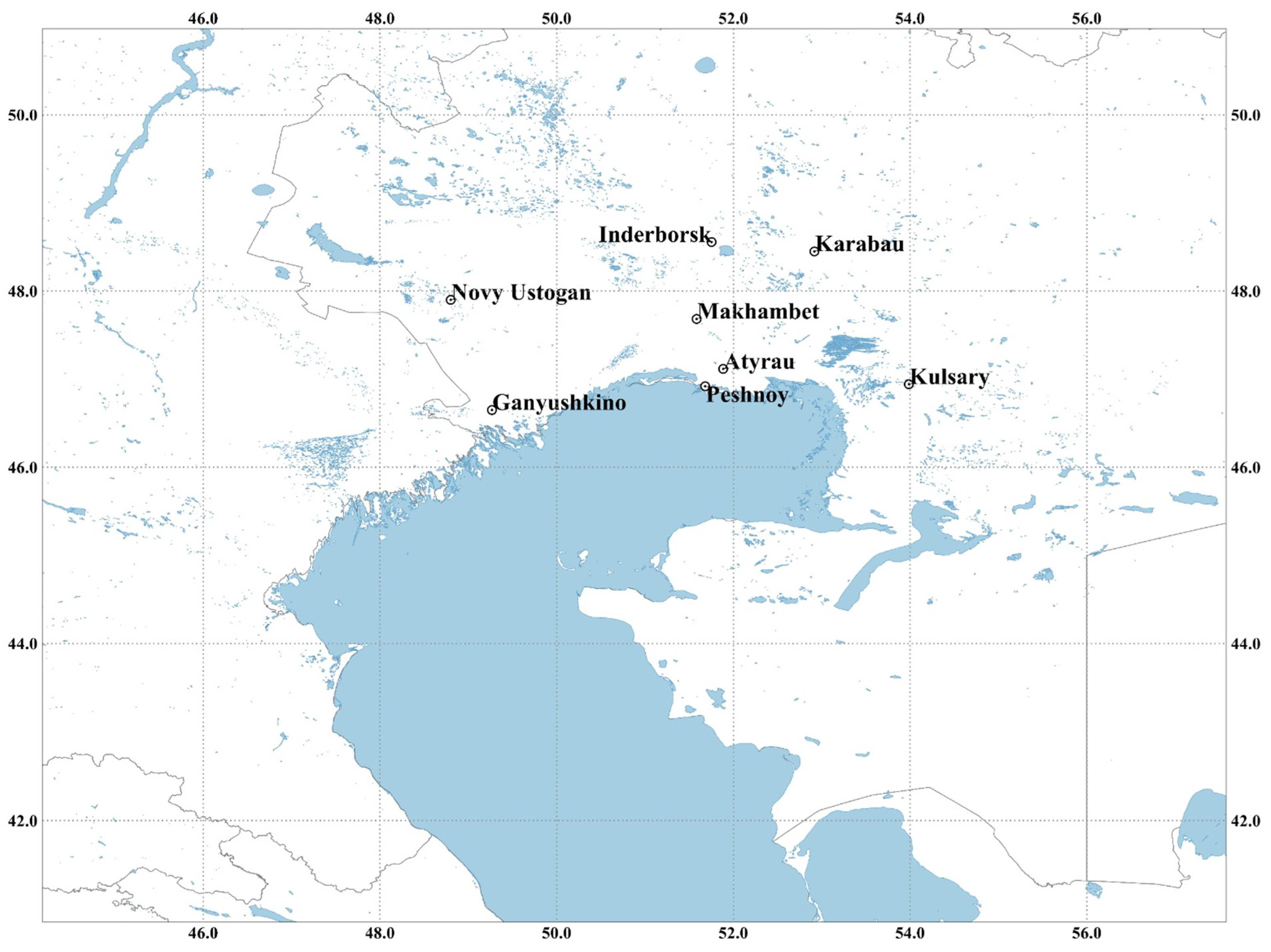
26]. The locations of these meteorological stations are shown in
Figure 1.
As illustrated in
Figure 1, the observation network comprises meteorological stations situated within the Atyrau region of Kazakhstan. The study assumes that the observed trends in TDT and TDB during 2012–2021 are representative of ongoing climatic conditions, providing a basis for assessing their potential persistence in the near future. Furthermore, the potential impact of regional climate warming on TDT variations in the Caspian region was integrated into the analysis. To achieve the research objectives, the study involved a comparative assessment of current process trends alongside an analysis of their evolution throughout the contemporary period of climate warming (defined as 1977–2021). It was also considered that thunderstorm activity in the Caspian region reaches its maximum frequency between May and August [
27,
28].
Atmospheric blocking events were identified using the Lejenas–Okland method [
29,
30,
31,
32], which was chosen for its computational efficiency and its ability to detect a broad range of blocking anticyclones, including those lacking classical dipole structures. While the classical Tibaldi–Molteni (Tibaldi–Hoskins) method is widely recognized for objectively identifying stationary dipoles or omega-shaped disturbances that disrupt zonal transport, it was not applied in this study [
33,
34,
35,
36]. The advantage of the Lejenas–Okland approach lies in its computational efficiency and its capacity to identify a broader spectrum of blocking anticyclones, including those without a distinct dipole structure. In accordance with this method, a blocking event was recorded if the specified threshold conditions were maintained for a minimum of five consecutive days at all grid nodes within the 40° N–55° N latitudinal band along the meridian corresponding to the respective observation point. First, sea-level atmospheric pressure exceeded 1015 hPa by at least 5 hPa. Second, the geopotential heights at 300, 500, and 850 hPa exceeded their respective monthly averages by at least 200 m
2/s
2. Third, the Lejenas–Okland criterion F(P) was negative for each isobaric surface considered, calculated as:
where I(l) = H(l, 40° N) − H(l, 60° N) is the Lejenas–Okland index; H is the height of the isobaric surface P mb, l is the longitude; this criterion is satisfied for the specified isobaric surfaces not only of 500 hPa, but also of 300 and 850 hPa.
Given the geographical location of the Caspian region, Total Duration of Atmospheric Blocking (TDB) values were calculated for all sectors of the Northern Hemisphere with a spatial resolution of 0.25°, situated between the 45 °E and 56 °E meridians, for the period of May through August. To validate the findings, statistical correlations were examined between interannual TDB variations in the eastern and western sectors of the Atyrau region, as well as between the regional average TDB and the broader Caspian basin. These relationships were assessed using 30-year segments of the time series. The resulting correlation coefficients were compared against a 99% significance threshold (p < 0.01) based on Student’s t-test. With 30 degrees of freedom, the critical value for significance was determined to be 0.48.
To evaluate the statistical stability of the identified trends for the 1959–2022 period, a sliding window analysis was performed with window lengths of 10 and 30 years. The slope (angular coefficient) of the linear trend (expressed in days yr
−1) served as the primary indicator for each window. A trend was classified as statistically significant if the confidence level exceeded 0.95. The methodology assumed that the residuals—defined as the deviations of the observed values from the linear trend—followed a normal probability distribution. This assumption was verified using the Pearson’s chi-squared test. The normality hypothesis was accepted if the probability of inaccuracy did not exceed 0.9. A trend within a window of duration T was deemed significant if the following inequality was satisfied:
where ABS is the operator for calculating the absolute value of its argument; a—the value of the angular coefficient of the linear trend; SDV is the standard deviation of the value of the indicator under consideration from the corresponding value of the linear trend of its time series. A similar trend assessment method was used in solving the second problem for the time series of interannual changes TDT for all observation points studied. As noted above, the assessment of trend significance relies on an assumption whose validity was tested using an agreement criterion and which is known to be unreliable for short time series. In the task under consideration, the series under study contain 30 or 10 values, as a result of which the obtained quantitative estimates of the value of the angular coefficient of the linear trend may be inaccurate. Therefore, the results should be regarded as qualitative rather than strictly quantitative.
3. Results
Using the methodology described in
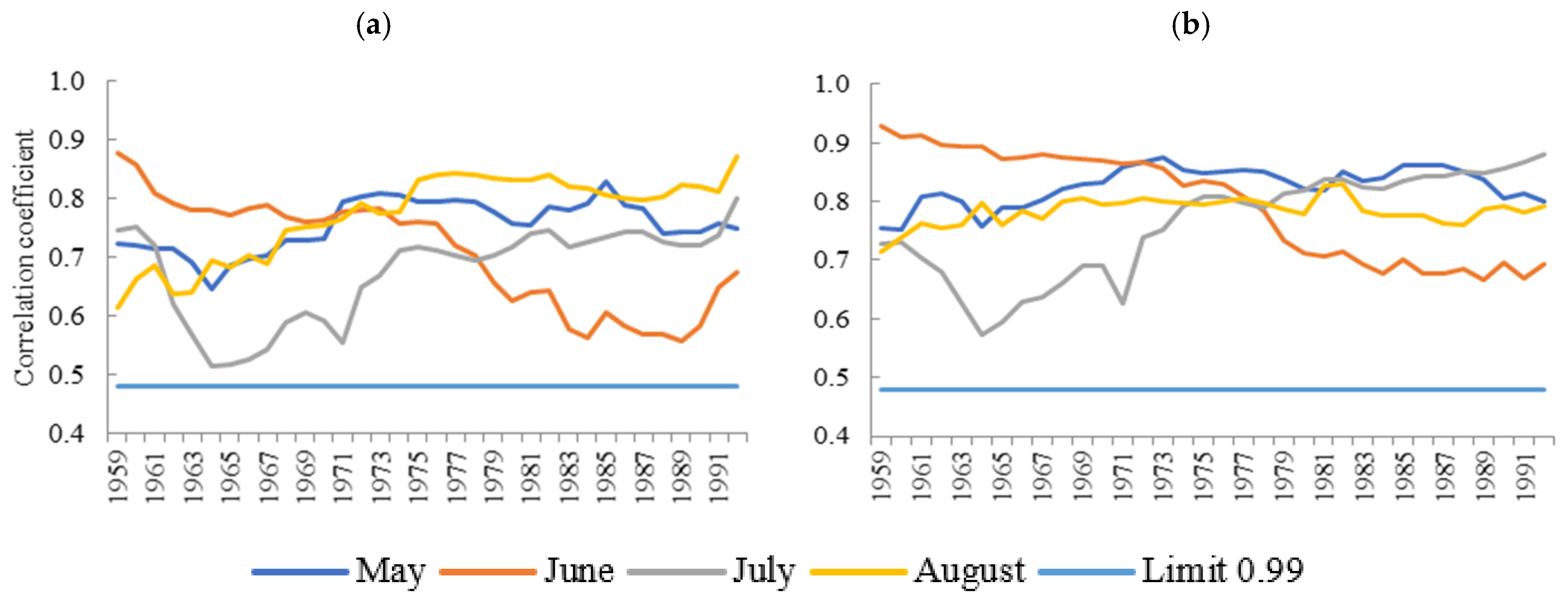
Section 2, TDB time series were constructed for each 0.25°-wide sector of the Northern Hemisphere within the Caspian region. Statistical relationships between interannual variations in TDB at sectors corresponding to the western and eastern borders of the Atyrau region were analyzed using sliding 30-year windows. Similarly, May–August TDT time series were formed based on average values for all sectors within the Atyrau region and for the broader Caspian region. The resulting trends and correlations are presented in
Figure 2.
As demonstrated in
Figure 2a, the statistical significance of the correlation between the analyzed processes exceeds the 99% confidence level, with correlation coefficients consistently surpassing 0.48. Analysis of the June data reveals a declining trend in correlation from 1959 to 1990, after which a period of intensification is observed. For the remaining months of the study period (after 1975), the correlation coefficients remain characterized by relative stationarity. These observed patterns are likely attributable to the spatial extent of the dominant atmospheric blocking sectors over Kazakhstan, which exceeds the longitudinal span of the Atyrau region.
Figure 2b further confirms that the influence of these sectors extends beyond the geographic boundaries of the Caspian region. This is substantiated by the high statistical reliability of the correlation (
p < 0.01; r > 0.48) observed across the study area.
The identification of a causal link between TDB dynamics and TDT trends within the Atyrau region allows these findings to be extrapolated to the western Caspian sector. This spatial generalization is justified by the synoptic scale of blocking events, which exert a coherent influence across the entire basin. Following the established methodology, TDB variations were analyzed for Northern Hemisphere sectors corresponding to the Atyrau region and the western Caspian using 10- and 30-year sliding windows.
The analysis of interannual TDB variations revealed a high degree of spatial coherence throughout the Caspian region. Correlation coefficients between the eastern and western sectors of the Atyrau region, as well as between the Atyrau region and adjacent Caspian territories, consistently exceeded the 99% confidence level. These results indicate that atmospheric blocking function as large-scale circulation system spanning several degrees of longitude, thus rendering blocking characteristics over Atyrau representative of the broader Caspian region.
In Western Kazakhstan, blocking events are primarily of the meridional type, likely driven by the interaction of airflows with regional orographic features. Additionally, such blockings may arise from large-scale instability in the zonal flow, resulting in the formation of split-type blocking (interacting anticyclone-cyclone systems) or omega-type blocking (a high-amplitude ridge flanked by two cyclones).
Meridional blocking typically results from the advection of cold, dry Arctic air masses [
18,
19,
20]. Due to their high density, these masses propagate rapidly toward lower latitudes within the near-surface layer, interacting with the underlying relief. This movement generates a turbulent boundary layer at the upper interface of the air mass, facilitating entrainment and moisture-heat exchange with the ambient atmosphere. As the Arctic air mass moves southward, it undergoes thermal transformation, characterized by increasing temperature and decreasing relative humidity due to sensible heat flux from the surface [
18,
19,
20].
Within several days, the air mass reaches the periphery of the subtropical anticyclone, facilitating the formation of a barometric ridge that connects the subtropical and Arctic high-pressure centers [
17]. This configuration effectively halts zonal transport, with the vertical extent of the ridge often reaching the tropopause and the lower stratosphere. Along the eastern periphery, continued Arctic air inflow leads to the development of a quasi-stationary, high-pressure blocking anticyclone. Conversely, the western periphery directs moist air northward, resulting in thermal transformation and increased precipitation in that sector.
Within the core of the blocking anticyclone, the air mass undergoes rapid diabatic heating while maintaining high density due to its negligible moisture content. The persistence of such conditions often leads to prolonged dry periods and atmospheric stability. Consequently, the development of deep convection is suppressed, making the occurrence of thunderstorms highly improbable during these periods [
19,
20].
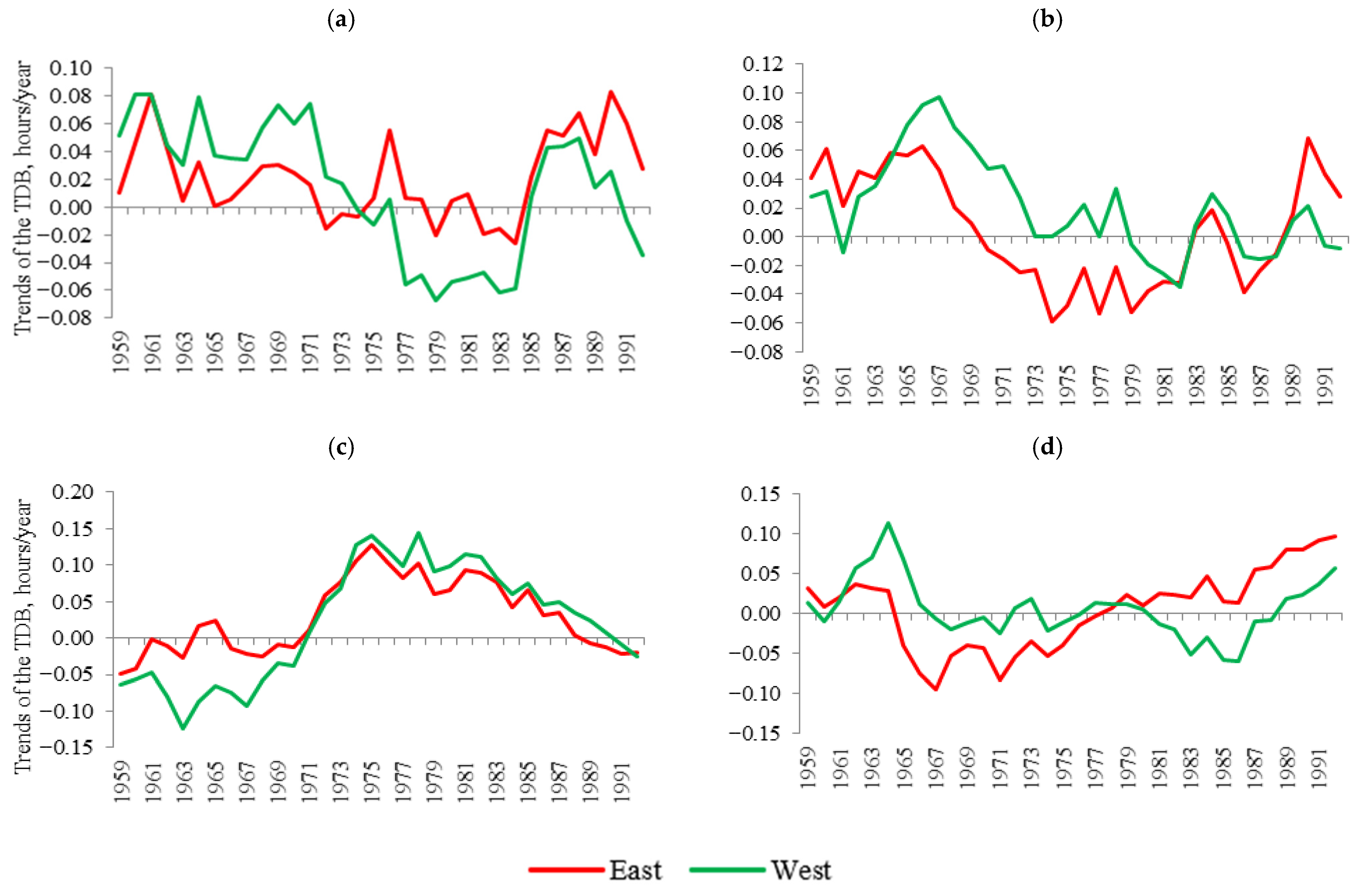
Figure 3 illustrates the dependence of the value of the angular coefficient of the linear trend TDB values on the year of the start of the 30-year sliding window for the western part of the Caspian region and the Atyrau region (eastern part) for May–August.
As can be seen in
Figure 3, the dependencies of the value of the angular coefficient of the linear trend TDB values (hour/year) for the Northern Hemisphere sectors corresponding to the Atyrau region (East) and the western part of the Caspian region (West) from the start year of the 30-year time interval for which they are estimated are significantly similar. The most significant element of this similarity is the correspondence between the dependencies considered for the period of modern climate warming (1977–2021). At the same time, the dependencies considered differ for individual months. Another significant factor is the difference in sign and magnitude of the TDB linear trend coefficient between western and eastern parts of the Caspian region during 1991–2020 period. For the Atyrau region, statistically significant increasing TDB trends are characteristic of May and August (since 1986) and June (since 1989).
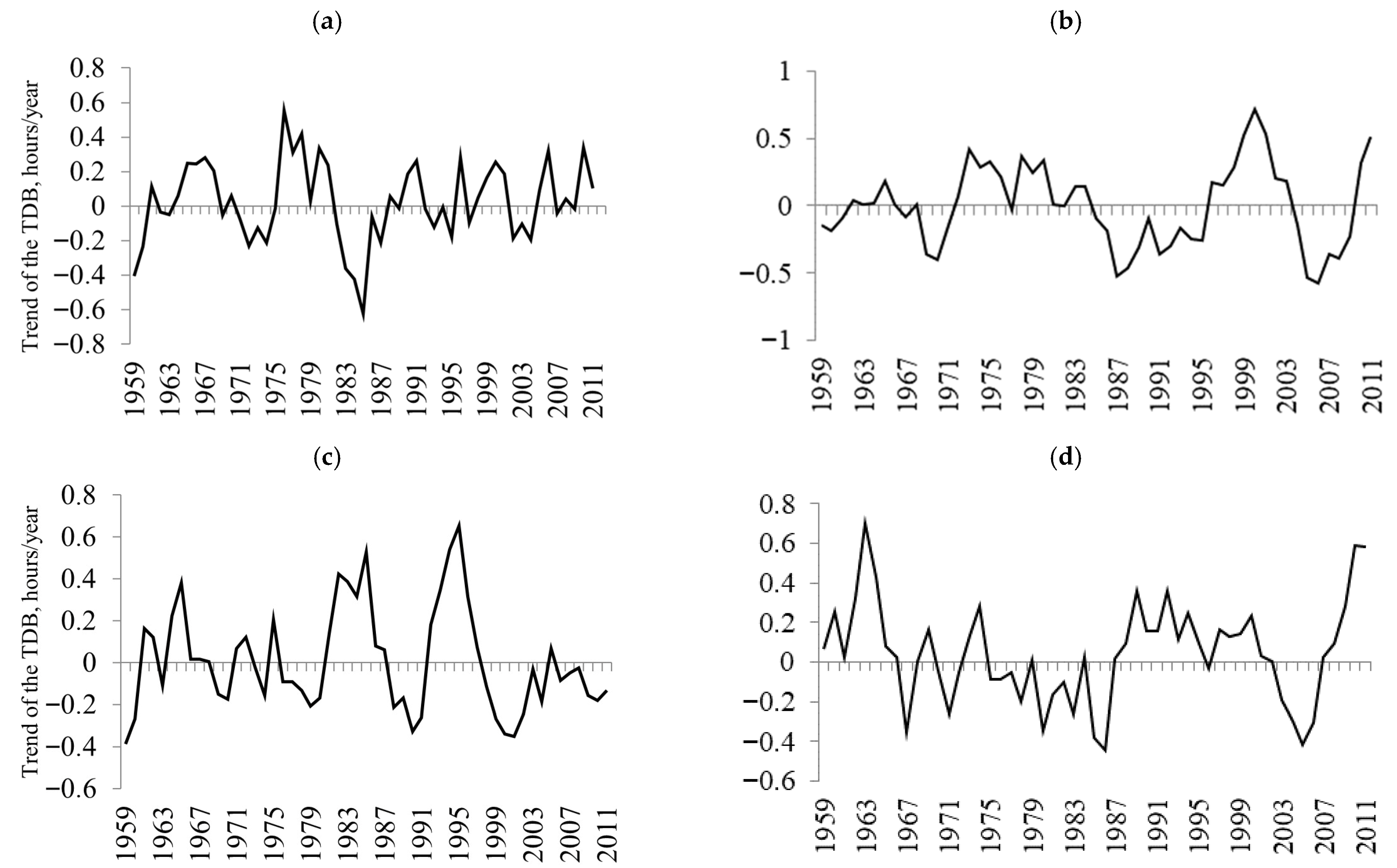
Figure 4 presents analogous results obtained using a 10-year sliding window.
Figure 4 shows statistically significant positive TDB trends for the Northern Hemisphere sector in the modern period are characteristic of May, June and August only since 2009. Comparison of
Figure 3 and
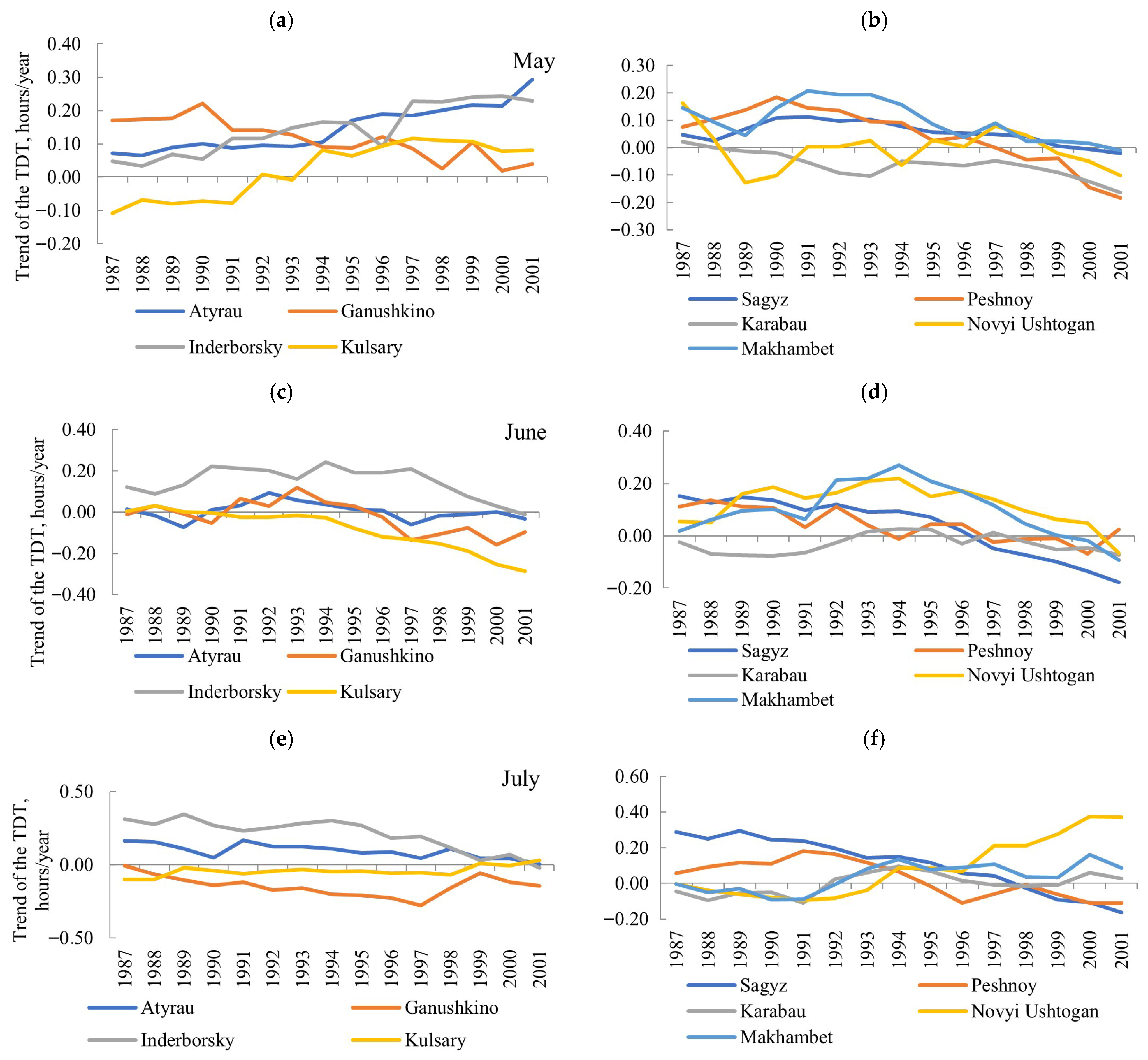
Figure 4 shows that the trends identified for the specified period may be stable. In solving the second task, TDT change trends were assessed for the same months and all study sites in the Atyrau region. As an example, the dependencies of the value of the angular coefficient of the linear trend TDT values for all study sites corresponding to May–July from the starting year of the 30-year sliding window are shown in
Figure 5.
Figure 5a,b show significant trends of TDT decrease in May for the Peshnoy (since 2000), Novy Ushtagan (since 2001) and Karabau (since 1990) stations. In
Figure 5c,d, such trends are observed in June at all stations except Inderborgsky and Peshnoy. In July, a significant decrease in TDT for 1959–2021 occurred in Ganyushkino (since 1989) and Peshnoy (since 1999), as shown in
Figure 5d,e. The reduction in the Average Thunderstorm Duration (ATD) is interpreted as a shortening of the temporal interval of existence for thunderstorm phenomena. This trend may be driven by a combination of thermodynamic and kinematic factors, as well as changes in regional atmospheric circulation. The shortening of ATD can be associated with the transformation of conditions that determine the energetic potential for convection. The primary energy source for thunderstorms is atmospheric instability (CAPE) [
18,
19,
20]. If climate change leads to a decrease in the vertical temperature gradient (the difference in temperature between the surface and altitude), this limits the reserve of available potential energy. Consequently, thunderstorms, despite potentially rapid development, lack sufficient energy for prolonged sustenance of their activity [
1,
5]. A deficiency of moisture in the middle tropospheric layers is another contributing factor. Despite the need for moisture influx for convection, the dryness of the air in the mid-layers can lead to intense evaporative cooling. This, in turn, results in the weakening of convection and the faster dissipation of thunderclouds. Kinematic factors must also be taken into consideration. The longevity of convective storms critically depends on the dynamic conditions within the atmosphere. Weakening of vertical wind shear [
1]. Strong vertical wind shear (the change in wind speed and/or direction with altitude) is essential for the formation and sustained existence of powerful thunderstorms. This shear plays a crucial role in separating the updrafts and downdrafts within the cloud, thus preventing its premature decay. Climatically induced weakening of wind shear during thunderstorm-prone periods (May–July) in the Atyrau region directly contributes to the formation of shorter-lived, single-cell thunderstorms, which is reflected in the decrease in ATD [
Figure 5].
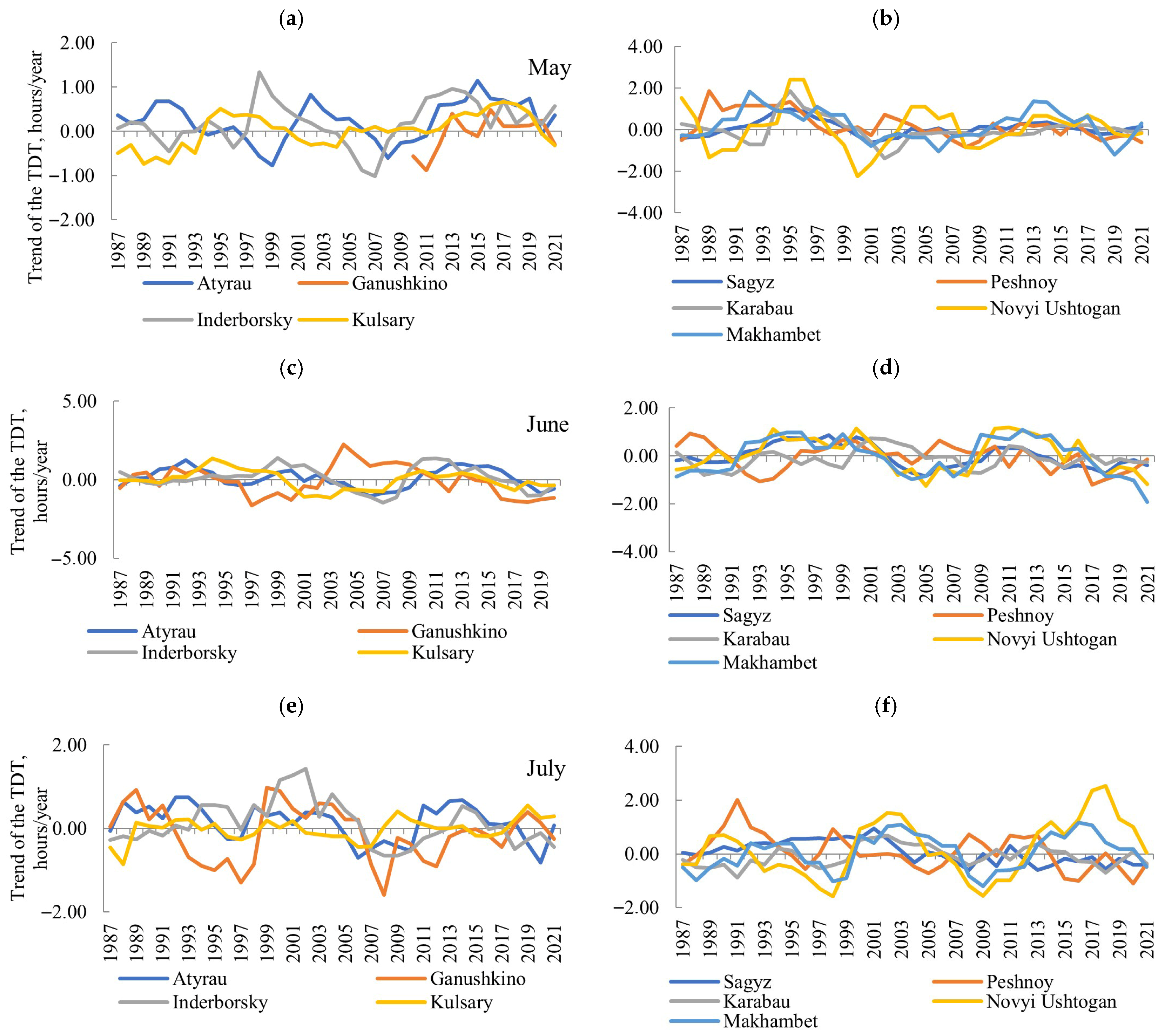
Figure 5 illustrates the variability of the analyzed indicators based on a 10-year sliding window analysis. Statistically significant downward trends in May TDT were identified at the Ganyushkino (since 2011), Kulsary (since 2010), Peshnoy (since 2009), Karabau (since 2010), and Novyi Ushtogan (since 2009) stations, while the remaining stations exhibited significant upward TDT trends. As shown in
Figure 5b,c, all observation points within the Atyrau region demonstrated significant reductions in June TDT over the 2006–2021 period. In July, similar declining trends were observed at Ganyushkino, Sagiz, Makhambet, and Inderborsky (starting from 2011), as well as at Peshnoy and Karabau (starting from 2008).
A comparative analysis of
Figure 5 and
Figure 6 indicates that the identified reductions in TDT from May to July are both statistically significant and stable across the majority of the monitoring network, with universal significance in June. The synthesis of results from
Figure 2,
Figure 3,
Figure 4,
Figure 5 and
Figure 6 supports the proposed hypothesis that the observed decrease in TDT across the Northern Caspian region is likely driven by the increasing atmospheric blocking frequency in the Northern Hemisphere.
The high degree of coherence between TDB trends in the eastern and western sectors of the Caspian region suggests that significant TDT reductions may occur throughout the basin. Given the stability of these trends over recent decades, the regional decrease in thunderstorm duration is likely in the future, if current circulation patterns persist.
So, the analysis of interannual variations in TDB revealed a high degree of spatial coherence across the Caspian region. Correlation coefficients between the eastern and western sectors of the Atyrau region, as well as between the Atyrau region and other parts of the Caspian basin, consistently exceeded the 99% confidence level. This indicates that atmospheric blockings are large-scale circulation systems that extend across several degrees of longitude. Therefore, the blocking characteristics identified over the Atyrau region can be regarded as representative of the broader Caspian region. The correlation coefficients between the number of thunderstorms and the recurrence of atmospheric blocking at all stations range from 0.88 to 0.95 (
Figure 6).
The assessment of TDB dynamics using 30-year and 10-year moving windows showed a general increase in the duration of atmospheric blocking over the Caspian region during the period of modern climate warming. The most distinct positive trends were recorded in May, June, and August, beginning around 1986, 1989, and 2009, respectively (
Figure 4 and
Figure 5). These results indicate that blocking episodes have become more frequent and longer-lasting during the main thunderstorm season. The similarity of TDB trends between the eastern (Atyrau) and western parts of the Caspian region confirms the regional-scale character of this process. Observational data from nine meteorological stations in the Atyrau region indicate a stable and statistically significant decrease in TDT over the past several decades. Negative trends were identified in May at the Peshnoy, Novy Ushtagan, and Karabau stations (since approximately 1990–2001), and in June across almost all observation points after 1989. In July, a persistent decline was observed at Ganyushkino and Peshnoy since the late 1990s. Analyses based on both 30-year and 10-year time windows confirmed that these trends are stable and not caused by short-term variability. The most pronounced reduction in TDT was recorded for June and July, corresponding to the period of maximum thunderstorm activity. A comparison of the TDB and TDT trends demonstrated a strong inverse relationship between these two variables. Periods with longer blocking durations were associated with a decrease in thunderstorm duration, particularly in June and August (
Figure 4,
Figure 5 and
Figure 6). This relationship suggests that enhanced atmospheric blocking suppresses convective activity by stabilizing the lower atmosphere and reducing vertical air motion. Conversely, months with reduced blocking activity were characterized by increased TDT values, reflecting a higher potential for convection under less stable conditions. This result confirms the hypothesis that the observed decrease in thunderstorm duration over the northern Caspian region is mainly due to the increasing persistence of atmospheric blocking. Although regional climate warming enhances thermal convection, its effect is counteracted by the stabilizing influence of prolonged high-pressure systems. The similarity of TDB trends between the eastern and western sectors of the Caspian basin supports the extension of these conclusions to the entire region.
4. Discussion
This study examines interannual trends in TDT in the northern Caspian region under ongoing climate warming, providing insights into the complex interactions among atmospheric processes. The findings reveal a nuanced pattern, in which an overall increase in TDT across the studied area—consistent with observations in other parts of Northern Eurasia—is accompanied by localized decreases in the 21st century. This apparent contradiction constitutes the central focus of the study, leading to the hypothesis that changes in TDB passing over the region are a primary driver of the observed TDT variations.
This hypothesis is tested through a comparative analysis of TDT and TDB trends over 30- and 10-year periods, with particular attention to the months from May to August. One of the key findings is the “universal correlation” between trends in TDT and TDB in June and August in the modern period. This suggests a strong and consistent relationship, indicating that atmospheric blocking exert a dominant control on thunderstorm activity during these crucial summer months. For May and July, although the correlation is not universal, a similar correspondence was identified in many locations across the region, indicating a broader, though perhaps less uniform, influence of atmospheric blocking. The established similarity between TDB trends in the studied northern Caspian region and those in western part of the Caspian region enables a meaningful generalization of the conclusions to the entire Caspian region. This reinforces the conclusion that atmospheric blocking exhibits regional-scale coherence. The study’s hypothesis is particularly relevant in the context of climate warming. Warming of the surface layer of the atmosphere can lead to increased thermal convection, which would conventionally be expected to increase thunderstorm activity [
21,
22]. However, the influence of atmospheric blocking introduces an opposing effect. They are characterized by stable atmospheric conditions and a lack of cloud cover, suppress thunderstorm formation. Therefore, an increase in TDB could lead to a decrease in TDT, even if thermal convection is enhanced by warming. The balance between increased warming-induced thermal convection and the suppressive effect of atmospheric blocking is a key finding of this study.
The above results indicate that, if the current scenario of increasing atmospheric blocking persists in combination with continued regional climate warming, the total duration of thunderstorms in the spring and summer months will continue to decrease is a critical prediction. This highlights the role of atmospheric blocking as a factor modulating the direct effects of climate warming on thunderstorm activity in the Caspian region. These findings provide practical implications for risk assessment and preparedness in a region where thunderstorms pose a real danger to the oil production industry and human well-being. Previous studies cited in the introduction provide a foundational understanding of thunderstorms in the region. In particular, Gorbatenko’s work [
5] on synoptic conditions leading to thunderstorms in Kazakhstan, and the studies by authors on increased TDT in Siberia due to thermal convection, establish the baseline understanding of thunderstorm drivers [
5,
10]. However, this study advances its focus on the modulating role of atmospheric blocking, a factor that has received comparatively limited attention in regional thunderstorm analyses. The earlier work by Shakina and Ivanova [
8] on the impact of TDB on thunderstorm recurrence supports the theoretical basis of this study’s hypothesis. The methodology employed by authors for identifying meridian-type atmospheric blocking, combining approaches from Dzerdzeevsky [
17] and Lejenas and Okland [
37], lends credibility to the TDB data used in this analysis. The finding that TDB has increased over the Caspian region during summer months in the current climatic period provides critical empirical support for the central hypothesis of the study. Overall, this research effectively addresses a gap in existing literature by specifically investigating the interaction between climate warming, atmospheric blocking, and thunderstorm duration in the Caspian region. While many studies focus on wind regimes, storm surges, and sea waves in this area, the present research brings attention to the equally important, yet less explored, aspect of thunderstorm activity.
Overall results show that, along the Caspian Sea coast, variations in atmospheric blocking have a stronger influence on the duration of thunderstorms during May–August than the direct effects of climate warming. This influence is most pronounced in June and August, while in May and July, some stations exhibit increased thunderstorm activity, reflecting the localized effects of surface warming. These patterns suggest that future changes in thunderstorm activity in the Caspian region are likely to follow the trends of atmospheric blocking, emphasizing its central role in regulating regional convective processes.
5. Conclusions
This study of interannual variations in TDT in the northern Caspian region under conditions of modern climate warming revealed a complex system of interrelated climatic mechanisms governing convective activity. Based on long-term observations and ERA5 reanalysis data, it has been established that both spatial and temporal trends in thunderstorm activity are closely linked to variations in TDB, thereby confirming the hypothesis of the dominant influence of large-scale circulation anomalies on regional convective activity. The study has identified a stable negative trend in thunderstorm duration during the spring–summer months, particularly in June and August, which is coupled with an increase in the duration of atmospheric blocking. This indicates that the growing frequency and persistence of blocking anticyclones create stable synoptic conditions that effectively suppress the development of convective clouds. This occurs despite the enhanced surface heating and thermal convection typically associated with overall climate warming. Spatial analysis showed that the patterns initially identified for the Atyrau region are also characteristic of the western part of the Caspian region. This finding allows for the extension of the conclusions to a broader area encompassing both the Caspian Sea and its coastal territories, thereby confirming the regional coherence of atmospheric circulation processes within this specific climatic zone. The statistical stability of the identified trends was confirmed through the analysis of 30- and 10-year moving intervals. If the current tendency toward increasing atmospheric blocking duration persist, a further decline in the total duration of thunderstorms in the region can be expected in the coming decades. The correlation coefficients between the number of thunderstorms and the recurrence of atmospheric blocking at all stations range from 0.88 to 0.95. Consequently, the research holds significant value from both theoretical and practical standpoints. From a theoretical perspective, it refines the understanding of the crucial role of atmospheric blocking as a key regulator of thunderstorm activity under global warming conditions. From a practical standpoint, the findings are highly relevant for climate risk assessment, meteorological hazard forecasting, and the development of adaptation measures in socioeconomically important areas of the Caspian region, particularly those associated with intensive oil production. Overall, the results of this research demonstrate that climate warming does not necessarily lead to a straightforward intensification of convective processes, as circulation anomalies such as atmospheric blocking may exert a counterbalancing and stabilizing effect—an insight for the improving of predictive models and regional adaptation strategies.
Future research should focus on studying the complex balance between warming and blocking in greater detail, as well as on eliminating methodological and geographical limitations. More detailed analysis is needed to quantify and refine the ‘delicate balance’ between the increase in thermal convection caused by climate warming and the suppressing, stabilising effect of atmospheric blocking. This will allow for more accurate predictions of the conditions under which one factor or the other will dominate. A separate analysis is needed of the conditions under which an increase in TDT is observed in May and July (observed at some stations). Finally, to strengthen the generalization of the results for the entire Caspian region, it is necessary to expand the database by including TDT observations from weather stations in the southern and western parts of the Caspian region, including Azerbaijan, Iran, Russia, and Turkmenistan in the analysis.