Article

Blue Hydrogen Cogeneration as an Energy Vector for a Sustainable Future: A Case for Alberta, Canada

by
Malcolm MacLeod
1,
Anne Aditola Titcombe
2 and
Eric Croiset
2,*
1
School of Environment & Sustainability, Royal Roads University, 2005 Sooke Road, Victoria, BC V9B 5Y2, Canada
2
Chemical Engineering Department, University of Waterloo, 200 University Ave. West, Waterloo, ON N2L 3G1, Canada
*
Author to whom correspondence should be addressed.
Atmosphere 2026, 17(3), 228; https://doi.org/10.3390/atmos17030228
Submission received: 27 December 2025 / Revised: 28 January 2026 / Accepted: 11 February 2026 / Published: 24 February 2026

Abstract

Hydrogen is a promising clean energy vector capable of decarbonizing future energy systems. This study explores blue hydrogen production via a modified autothermal reforming process, integrated with oxy-fuel combustion and carbon capture technologies. The process achieves approximately 99.8% carbon dioxide capture while co-generating electricity, improving both environmental and economic performance. A detailed techno-economic analysis for Alberta, Canada, shows that hydrogen can be produced at a competitive cost of $1.70 per kilogram, depending on natural gas supply pressure, with CO2 emissions of just 3.82 kg-CO2/kg-H2, meeting stringent international low-carbon thresholds. Key parameters like natural gas supply pressure, oxygen-to-methane ratio, and turbine pressure ratio were optimized for flexibility, efficiency, and cost-effectiveness. Sensitivity analysis identified financial, policy, and grid decarbonization factors as key drivers of production costs. Compared to other methods, this process stands out for its superior environmental and economic outcomes, particularly in regions with ample natural gas and carbon capture infrastructure. The study underscores the importance of process innovation in advancing sustainable blue hydrogen.

1. Introduction

To transition from an extractive to a sustainable energy system, the focus shifts from relying heavily on a few dominant energy sources to adopting a diverse mix of locally available energy resources. This system needs energy vectors that allow the transfer of energy across space and time, making it available for use far from its original source [1]. Hydrogen is considered a promising clean energy vector that could help reduce reliance on fossil fuels. Although it is the most abundant element in the universe, hydrogen is hardly in a usable form to be directly extracted from underground for clean energy purposes. To serve as a decarbonized energy vector, hydrogen must be sustainably produced from readily available compounds that contain it in large quantities. Two such molecules are water (H2O) and methane (CH4). Current commercial methods for hydrogen production include water electrolysis, which produces hydrogen and oxygen, and methane reforming (via steam, autothermal, or dry reforming), which generates hydrogen and carbon dioxide. The classification of hydrogen currently depends on its production source. Blue hydrogen refers to hydrogen produced from fossil fuels with carbon dioxide emissions captured. Green hydrogen is generated using electrolysis powered by clean, renewable energy sources. Grey hydrogen is produced from steam methane reforming without capturing the carbon dioxide emissions generated.
Despite several past setbacks, many countries, such as Canada, Germany, and Japan, are now committing to hydrogen as a key part of their future energy plans. These nations have launched national hydrogen strategies to drive the development of hydrogen as a clean energy vector. These strategies reflect a growing understanding that reducing and eventually eliminating anthropogenic greenhouse gas emissions is essential for preserving life as we know it. Hydrogen is seen as one of the viable alternative energy vectors, if the right policies, incentives, and infrastructure are put in place for its production, distribution, and end-use [2,3].
The production of hydrogen from natural gas in this paper is based on autothermal reforming, where steam, oxygen, and natural gas are mixed. Part of the natural gas is combusted with the oxygen, providing heat for the steam and methane to be reformed into hydrogen and carbon oxides. In its simplest form, the hydrogen is separated from the exhaust stream from this process, and the balance is vented to the atmosphere. To improve the environmental characteristics of the conventional steam methane reforming process, this paper focuses on a modified autothermal process to produce hydrogen in a closed-loop system which enables all the produced CO2 to be captured from a single point in the process. The combination of emerging technologies in the production of hydrogen makes this process unique, as neither oxy-fuel combustion nor autothermal reforming is currently employed commercially in the production of hydrogen. Furthermore, the process incorporates a cogeneration sub-system to capture some of the waste heat energy and generate electricity.
The objective of this study is to conduct a comprehensive assessment of an alternative blue hydrogen system, determining environmental impacts, as well as techno-economic viability of the proposed process design.

2. Literature Review

Hydrogen holds great potential as a clean energy vector, especially when combined with carbon capture and storage (CCS). Extensive research has been conducted on hydrogen production with CCS, focusing on various aspects of the production value chain. Antonini et al. modelled hydrogen production from natural gas and biomethane using CCS [4]. They found that, under ideal conditions, hydrogen can be produced from natural gas with environmental impacts similar to those of hydrogen produced from renewable electricity. Notably, using biomethane in the process can lead to net negative emissions since the solids digestate can retain additional carbon in the soil when used as fertilizer. Bui et al. [5] reviewed state-of-the-art CCS technologies and noted that while the cost of implementing these technologies is a barrier, other factors, such as political commitment and the industry’s preference to maintain the status quo of unabated fossil fuel use, are also limiting CCS adoption. Both Oni et al. [6] and Lewis et al. [7] showed that autothermal reforming (ATR) with CCS is the economically preferred technology for blue hydrogen production when implemented at scale. Okunlola et al. [8] demonstrated that ATR with CCS is economically competitive with other low-carbon hydrogen production technologies for the Japanese and Asian markets, based on the costs, technical readiness, and scalability of the production and transport of hydrogen from Alberta to various global markets. Emerging technologies, such as sorption-enhanced steam methane reforming [9] and integration of concentrated solar for steam generation to replace fossil fuel combustion in the steam methane reforming process [10], also show promise for blue hydrogen production.
Despite advancements in low-carbon hydrogen production technologies, significant barriers remain for its widespread adoption. According to Yue et al. [2] and Rasul et al. [3], the main obstacles to integrating hydrogen into the energy mix include high costs, efficiency limitations, scalability issues, and insufficient policy support. Barriers to large-scale production identified by Agyekum [11] and Litvenko [12] are the absence of a value chain for low-carbon hydrogen, the lack of international standards, and the hazards of hydrogen’s flammability, which require strict risk management. Yu et al. [13] also discuss the challenges associated with blue hydrogen as a transitional solution, noting the high costs of CCS and low capture efficiency linked to the risk of CO2 leakage.
The development of a hydrogen economy is still in its early stages, with wide disparities in how countries are approaching the adoption. Noussan et al. [14] review the hydrogen strategies of leading countries, showing that while Germany is focused on green hydrogen, countries like Japan and Canada are pursuing a broader low-carbon hydrogen approach without strict limitations on hydrogen colour. Jensterle et al. [15] dig deep into the role to be played by both green and blue hydrogen, while others [16,17] question whether blue hydrogen and CCS provide any benefits at all. In How Green is Blue Hydrogen?, Howarth and Jacobson [17] argue that “blue hydrogen has large climatic consequences”, emphasizing its ineffectiveness in reducing emissions when used for heating purposes. Hydrogen’s potential to decarbonize relies on its efficient use, such as in fuel cells that convert 50–60% of hydrogen’s energy into electricity. Japan, for instance, has integrated combined heat and power systems into its hydrogen strategy [18], with over 250,000 units deployed to produce distributed power and meet heating needs in buildings and industry [15]. Howarth and Jacobson’s assessment of blue hydrogen as unsuitable for decarbonization largely overlooks these benefits when used in fuel cells, instead focusing on low-efficiency heating applications, leading them to conclude that “blue hydrogen cannot be considered green.” Vogele [16] expands this critique, suggesting that the “future of CCS is gloomy” in terms of ecological impact and societal perception, often leading to the political and legal hurdles that make it financially challenging.
The present study focuses on the Canadian context, highlighting the potential for regional contributions to hydrogen development. Canada’s national hydrogen strategy [19] is focused on creating a low-carbon hydrogen economy by using regional resources and implementing carbon pricing policies to cut emissions. Provinces like Alberta [20], British Columbia [21], Ontario [22], and Quebec [23] each have crafted strategies tailored to their unique strengths. In British Columbia, research [24,25] indicates strong potential for blue hydrogen to help decarbonize the economy. However, policies are needed to transition from traditional unabated steam methane reforming to cleaner production methods. Alberta, aiming to integrate hydrogen domestically as a heavy duty vehicle fuel and become a “global supplier of choice in clean hydrogen exports” by 2030, plans to capitalize on its CCS infrastructure and natural gas resources [20]. Ontario and Quebec are focusing on using their clean, affordable electricity in green hydrogen production. Ontario aims to use hydrogen to supplement its natural gas supply for heating and to decarbonize steelmaking [22]. In addition to the aforementioned applications, Quebec also prioritizes high-temperature heating, replacing grey hydrogen in petroleum refining and production of methanol and other synthetic fuels [23]. Sabillon et al. [26] presented hydrogen-powered trains as a low-carbon solution for Ontario public transit, where optimized scheduling could make hydrogen even more cost-effective than direct railway electrification. Saskatchewan and Manitoba are also pursuing hydrogen initiatives, with Saskatchewan’s blue “Hydrogen Hub” aiming to leverage its CCS leadership to attract investment [27] and Manitoba partnering with companies like Charbone Hydrogen Corporation to expand green hydrogen production [28].
Federal and provincial carbon pricing policies further support these efforts by making carbon-intensive options more costly, incentivizing cleaner hydrogen production [29]. Together, national and regional initiatives are laying the groundwork for a hydrogen economy that utilizes local resources and builds infrastructure to enable widespread, cost-effective adoption across Canada. While these efforts demonstrate diverse approaches to hydrogen integration and highlight the potential for blue hydrogen as an energy vector in the global market, they also underscore the need for innovations to enhance its sustainability and competitiveness [30].
Although most studies on autothermal reforming rely on oxy-combustion within ATR, and some consider CCS, the preheating step typically involves burning natural gas in air, with the resulting flue gas vented to the atmosphere [6,7]. Very few studies have considered electricity cogeneration [4]. The proposed process combines autothermal reforming with oxy-combustion-based electricity cogeneration and carbon capture. A key feature of this process is that natural gas is first fed to the ATR, where the conversion is carefully controlled, so that the unconverted natural gas, after hydrogen separation, is subsequently used in an oxy-fuel boiler to generate heat and electricity, followed by CO2 capture. A unique attribute of this process is that it generates virtually no CO2 emissions to the atmosphere, while efficiently converting natural gas into hydrogen, heat, and electricity.

3. Process Overview and Methodology

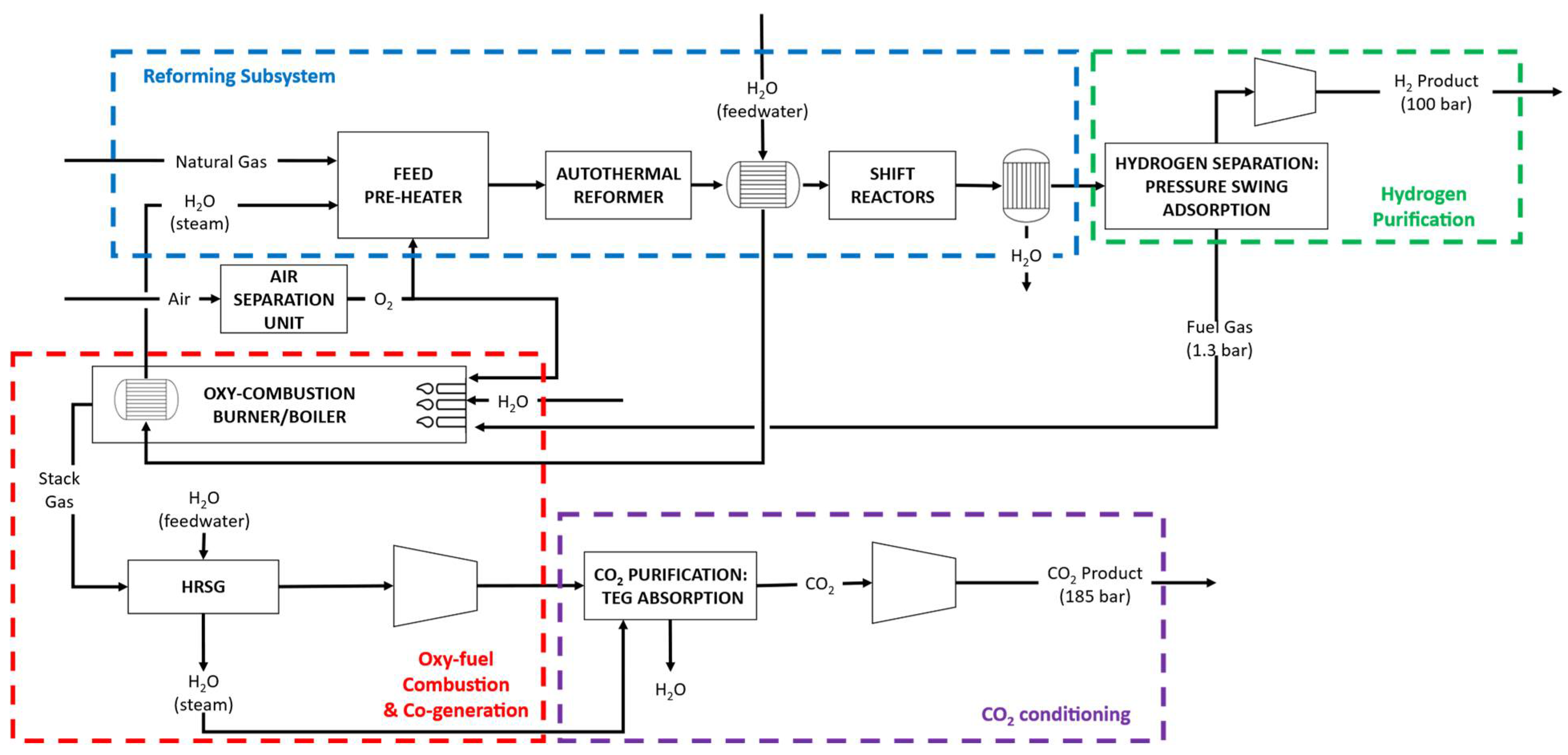
The proposed blue hydrogen system follows the block flow diagram in Figure 1.
The main inputs to this process are air, water, natural gas, and electricity, and the outputs are hydrogen, CO2 ready for pipeline and storage, and some electricity. The natural gas, produced in Alberta, has been sweetened to contain 94.6% methane, 4.4% ethane, 0.2% propane, 0.4% nitrogen, and 0.3% carbon dioxide with other trace elements [31]. The natural gas is considered free of sulphur and supplied through distribution mains to industrial sites at 12–35 bars. All material feed to the process is delivered at an ambient temperature of 15 °C. The oxygen used in the process is supplied by an air separation unit (ASU) that produces oxygen at 99.5% purity and a fixed flow rate of 5000 metric tons per day (mtpd). This production rate serves as the basis for the modelling in this study, as it reflects the capacity of a large-scale ASU.
One objective of this study is to evaluate the net overall CO2 emissions of the proposed process, including upstream emissions. Although this process handles nearly all (~99.8%) of the emissions generated within the process, the feedstock uses natural gas and electricity generated from Alberta’s natural gas-based grid, so it is critical to account for emissions related to utility consumption within the process boundary. The emission intensity of delivered natural gas is 0.575 kg CO2 e/kg CH4 [32], evaluated based on the gross heating value of methane. The electricity grid intensity is 0.490 kg CO2 e/kWh [33].
The natural gas and part of the oxygen are preheated with 800 °C steam from the oxy-fuel boiler and fed with the steam to the autothermal reformer unit, which is modelled based on the patent filed by Haldor Topsoe A/S [34] for large-scale reforming. The apparatus comprises a combustion chamber and a catalytic reactor connected by a duct that delivers the combustion products to the reactors and withdraws the reformed product. The following reactions describe the autothermal reforming process:
M e t h a n e   c o m b u s t i o n :     C H 4 + 2   O 2 C O 2 + 2   H 2 O         Δ H r x n o =   802.7   k J / m o l                                  
S t e a m   m e t h a n e   r e f o r m i n g : C H 4 + H 2 O C O + 3 H 2         Δ H r x n o = 206.2   k J / m o l                            
W a t e r   g a s   s h i f t   r e a c t i o n : C O + H 2 O C O 2 + H 2       Δ H r x n o = 41.1   k J / m o l                                                
Within a single reforming unit, the oxygen is completely consumed by a combustion reaction (Equation (1)) in the combustion chamber to generate the heat needed for the highly endothermic reforming reaction (Equation (2)) in the catalytic reactor. The steam methane reforming (SMR) reaction dictates that one mole of methane requires one mole of steam. Yet, most reforming processes are operated with steam-to-carbon molar ratios between 2 and 4 to reduce soot deposition [35] and ensure excess steam for higher carbon monoxide conversion in the subsequent water–gas shift reactors. In the proposed process, the steam also serves a quenching purpose for the high-temperature oxy-fuel combustion. The combustion in the autothermal reformer, since it occurs in the same chamber, generates more high-temperature steam (700–1000 °C) for the steam methane reformer. Here, the maximum S/C ratio is constrained by the heat available from the cogeneration unit to produce the high-pressure steam. The molar ratio of the oxygen gas to methane (O/C) fed to the autothermal reformer is defined within the range of 0.1 to 1 to control fuel conversion and prevent high-temperature methane cracking. The control of fuel conversion is important here, as the process uses unreacted CH4 in the oxy-combustion furnace unit to produce steam for the autothermal reformer. The product of the reformer, a mix of unconverted fuel and syngas, is cooled and fed to two water–gas shift reactors in series where more H2 is generated, and all CO is nearly converted to CO2. The resulting synthesis gas is cooled to 40 °C to condense out water.
The synthesis gas is delivered to a pressure swing adsorption (PSA) hydrogen purification section. Here, if the pressure is below 11 bar, it should be compressed to 11 bars, but if the natural gas feed is supplied at a higher pressure (>13 bar), the synthesis gas can be directly delivered to the PSA to recover 81% of the hydrogen gas product at 99.9% purity. The H2 product is further compressed to 100 bars, required for storage or delivery through a transmission pipeline [36]. The storage or site-specific usage of H2 is not considered in this study. The PSA off-gas, which is composed mainly of H2O/CH4/H2/CO2, is then compressed to a specified pressure suitable for recycling and directed to the cogeneration section, as seen in Figure 1. The pressure is selected based on the optimal pressure ratio needed for efficient electricity generation.
The off-gas is combusted with the rest of the oxygen from the ASU. The oxygen is compressed and added in stoichiometric quantities to limit methane, oxygen, and hydrogen in the burner stack/flue gas. In air, methane burns at a temperature of approximately 1800 °C, while in an oxy-fuel combustion process, the reaction temperature would increase to approximately 3000 °C. Hence, water is sprayed into the furnace to control the stack gas temperature. The stack gas at elevated pressures and high temperature is expanded to 10 bars in a gas turbine to generate electricity. The heat from the oxy-fuel boiler is used to generate superheated steam at 800 °C for the reformer. The low-pressure stack gas, still hot, is used to generate superheated steam at 215 °C and 20 bars for use in the succeeding CO2 purification unit.
In the CO2 purification unit, the stack gas is cooled to 40 °C and water is condensed out. The stack gas is further dehydrated in a triethylene glycol (TEG) dehydration unit using 99.5% mass fraction TEG to meet the CO2 specification of the Alberta Carbon Trunk Line at a maximum of 160 mg/Sm3 [37]. The stack gas is contacted with the TEG solvent in a scrubber. The TEG is regenerated using a still column with a reboiler at 200 °C and the solvent is further stripped of water using dry nitrogen from the ASU in a stripping column [38,39]. The dehydrated CO2 gas is compressed to 185 bars in a four-stage compressor.
To understand the energy and material demands of the autothermal reforming process, the models within each subsystem have been modelled in Aspen Plus. Refer to Supplementary Information for the specification details, in particular Section S1, Technical Model Specifications.

Economic Model Specifications

The main economic assessment in this study is the cost of producing hydrogen, which consists of the capital cost annualized over the plant useful life and the annual operating cost, as shown in Equation (4):
$   p e r   kg   H 2 = C A P C O S T i 1 + i n 1 + i n 1 +   O P C O S T H 2 P R O D   O P H O U R S    
where i is the interest rate (in %), n is the plant’s useful life (in years), OPCOST is the total annual operating cost (in $/year), CAPCOST is the total capital investment (in $), and H2PROD is the hourly production rate of hydrogen (in kg/h). The plant useful life is set as 20 years. All costs in this paper are estimated in USD for the cost year 2024. The 2024 exchange rate of 1 USD for 0.74 CAD was used where needed. The interest rate is the weighted average cost of the sources of capital—debt and equity—as shown in Equation (5):
i = ( ( 1 D R ) i E ) + ( D R i D )              
where DR is the debt ratio or the % of capital investment covered by debt, assumed as 60%; i E is the expected return on equity, assumed as 25%; and i D is the loan interest rate/cost of debt, assumed as 8%.
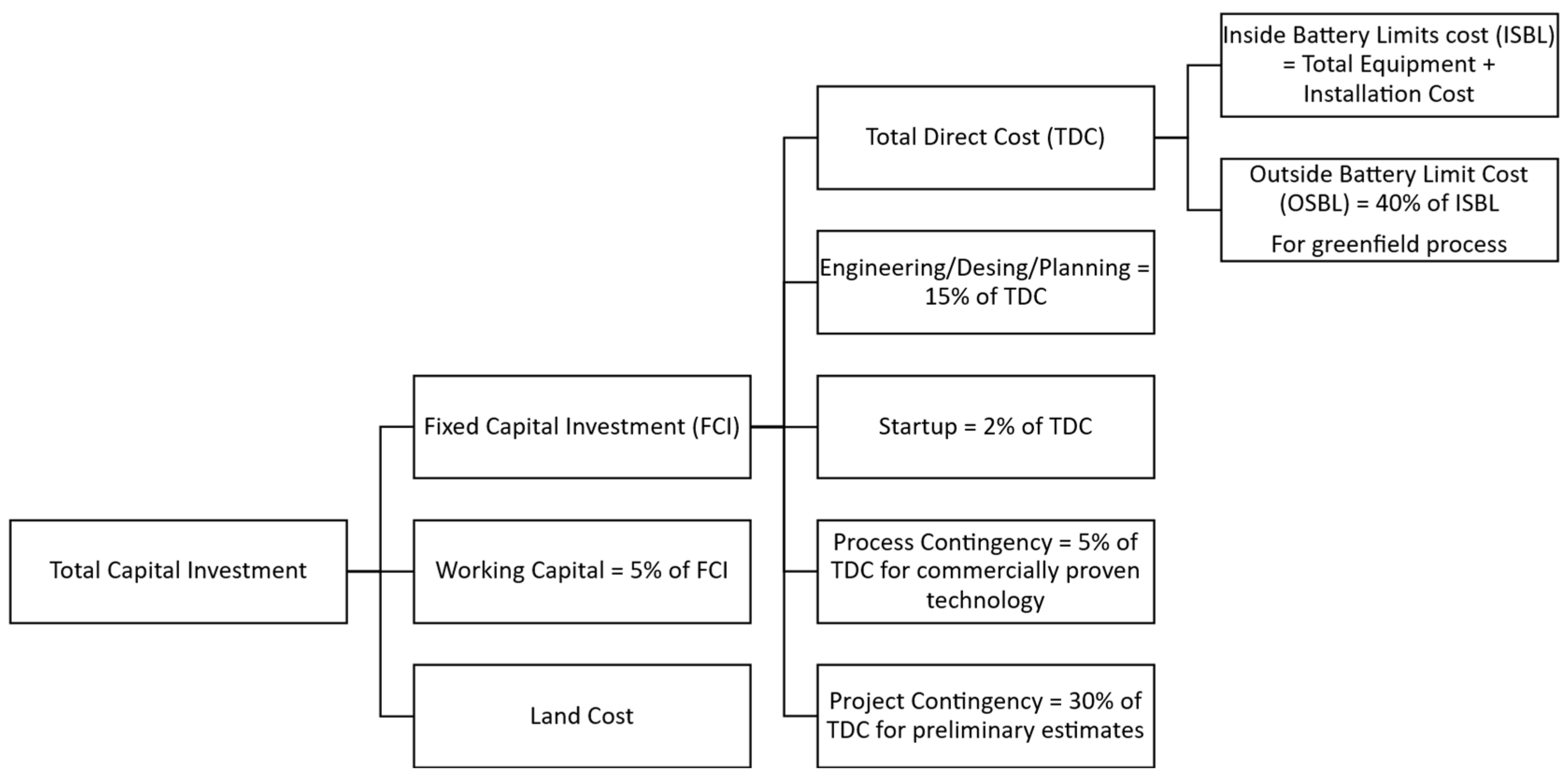
The total capital investment is based on equipment costs, which are primarily estimated using Aspen Process Economic Analyzer 2019 prices, and adjusted for inflation using the Chemical Engineering Plant Cost Index. The direct cost of each piece of equipment consists of both the equipment and installation costs. The estimation was carried out based on key design characteristics of each piece of equipment, e.g., operating temperature, pressure, flow rate, etc. For specialized equipment not available in the programme, scaled costs are estimated based on similar units published in the literature. The autothermal reformer cost is estimated based on NETL costing reports for blue hydrogen production [7]. The ASU cost is the average of scaled cost reported by two literature sources [40,41]. The total capital investment structure used is shown in Figure 2. The installed cost of the main equipment is shown in Table 1.
The total operating cost accounts for variable and fixed operating costs. The variable operating cost is mostly estimated based on hourly rates from the material balance. It is assumed that the plant operates for 8410 h, equivalent to 96% capacity or all-year continuous operation with 2 weeks of downtime. The variable operating cost includes the cost of all utilities and feedstock to the process. The catalyst and sorbent are assumed to be replaced every 5 years. The catalyst and sorbent prices are estimated based on wholesale supplier’s and Aspen Capital Cost estimator 2019 prices, respectively, adjusted for inflation using the Canadian Industrial Product Price Index. The electricity prices reflect Alberta electricity wholesale prices for oil and gas industrial users. It is assumed that a large body of water is easily accessible to the facility, with onsite cooling towers and treatment facility, so cooling water is not bought. The 2024 USD prices for the feedstock and utilities are shown in Table 2.
The fixed operating costs include labour, maintenance, and administrative costs. The labour costs were calculated based on the assumption that the plant requires a plant manager [48], an engineer [49], a maintenance supervisor, and three shift supervisors [50] with 12 operators per shift [51]. Their salaries were referenced from similar roles in the Canadian labour market. The annual maintenance cost was calculated as 5% of the fixed capital investment (FCI). Administrative costs and the salary overhead were set to 30% and 60% of the labour plus supervision cost, respectively. The annual insurance and taxes were set to 2% of the FCI.

4. Results and Discussions

4.1. Analysis of Operating Variables

The key performance criteria for the proposed technology are the specific natural gas and electricity consumption, the cost of hydrogen production, and the specific CO2 emissions. The net CO2 emissions include mostly the upstream emissions from electricity generation and natural gas production, as the blue hydrogen process captures nearly all the CO2 generated. We first evaluated the impact of three key operating conditions: reformer feed O2/CH4 ratio, the turbine pressure ratio, and natural gas supply pressure. A full factorial design of 18 runs was conducted to study these variables using the values in Table 3.
A regression model was constructed to find the optimal operating conditions, and the coefficients of each variable’s main and interaction effects were analyzed using an F-test to highlight their relative importance to the results. Table 4 shows the significance value for each effect based on its contribution to the variance of the predicted result. The bolded figures are the values less than 0.05, which are considered statistically significant to the results and must be included in the model equation.
The O2/CH4 ratio is statistically significant for each criterion in Table 4. The significance of its second-order effect shows that there exists a ratio that yields the maximum/minimum result in each case. The specific cost is impacted primarily by the O2/CH4 ratio. The specific CO2 emission is dependent on the O2/CH4 ratio and the turbine pressure ratio. The same observation can be made for the net electricity consumption. The natural gas consumption depends on all three variables.
Standard regression models, shown in Supplementary Information, Section S3, were constructed with the significant main effects and their interactions as the independent variables to estimate each performance criterion. The high R2 value and low p-value based on the analysis of variance (ANOVA) prove the goodness of fit of the models.
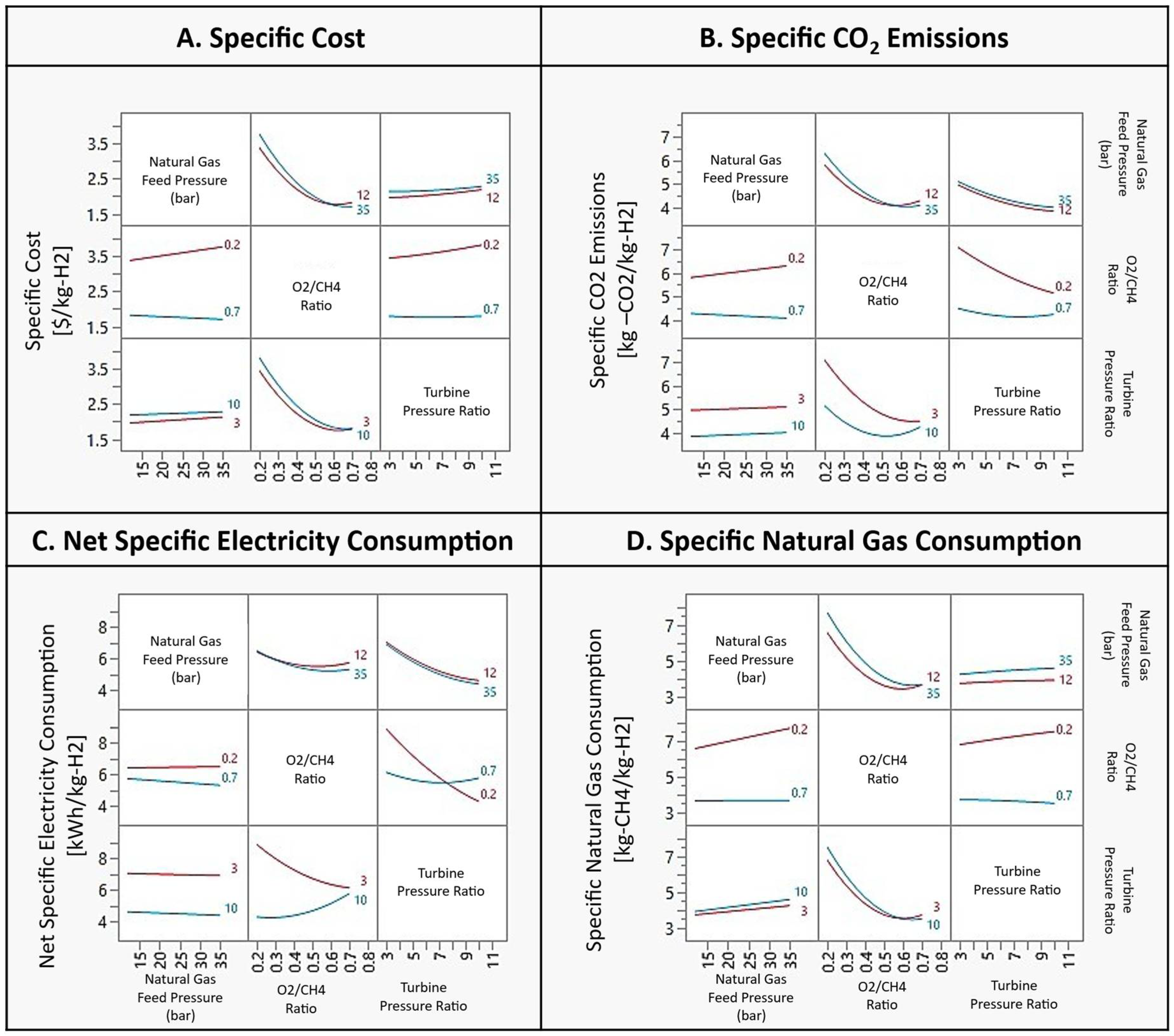
It is not only important that we know what variables are most significant but that we understand how they impact the key performance criteria. The interaction profiles for all the variables are presented in Figure 3 to describe the characteristics of their impact.
In Figure 3A,B, increasing the O2/CH4 reduces the cost of H2 production and the net CO2 emissions up to a minimum, after which it begins to increase. This minimum coincides with the point at which nearly all the methane (>99%) is converted in the reformer, and an additional increase in oxygen only serves to combust methane and increase the temperature in the reformer rather than generate hydrogen. There is also a different O2/CH4 ratio at each fuel pressure that yields minimum cost and emissions. This implies that the distribution of oxygen to thermal energy generation for the autothermal reformer vs. electricity generation requires optimization based on the natural gas supply pressure and the key performance criteria. In Figure 3D, the natural gas consumption is lower at a higher O2/CH4 ratio, as more methane gets consumed in the autothermal reactor, as opposed to recycled for cogeneration.
The effect of the pressure ratio is revealed in Figure 3B,C to have a greater impact on the net electricity consumption and the net CO2 emissions than on the H2 cost and natural gas consumption. Even though more electricity will be consumed in compressing the fuel and oxygen for the turbine, at higher pressure ratios, more electricity is generated onsite, reducing the net electricity consumption and the reliance on the grid.
The grid emissions were found to account for 38–69% of the total emissions, with higher values achieved when a lower fraction of the electricity is generated onsite. Consequently, the high-pressure ratio reduces the specific emissions. This impact varies depending on the O2/CH4 ratio. Figure 3C (sub-figure with the two curves intersecting with each other) shows that at a high O2/CH4 ratio, the impact of the turbine pressure ratio on the net electricity consumption is less apparent, whereas at low O2/CH4 ratio, the net electricity consumption decreases markedly when increasing the turbine pressure ratio. This is because at a higher O2/CH4 ratio, more fuel is converted to hydrogen, and less fuel is recycled to the cogeneration to generate electricity. So, even if more electricity is generated with higher turbine pressure ratios at higher O2/CH4, the excess hydrogen generated will reduce the net specific electricity consumption.
Another key point to note is that regardless of natural gas supply pressure in Figure 3A,B, the cost of H2 production and the net CO2 emissions remains comparable. From Figure 3D, there is some reduction in natural gas consumption at lower feed pressures owing to the higher conversion at lower pressure in the steam methane reformer. However, this advantage to the final cost is overridden by the additional cost of compressing the synthesis gas for the PSA units and the further compression needed for the hydrogen product.

4.2. Comparative Analysis of Optimized Process

Based on the findings from varying operating conditions and using the cost model developed in Section 4.1, the conditions that were selected to minimize the cost of blue hydrogen production at different natural gas supply pressures are shown in Table 5. The high and low fuel pressure conditions here refer to natural gas supply pressure of 12 bars and 35 bars, respectively.
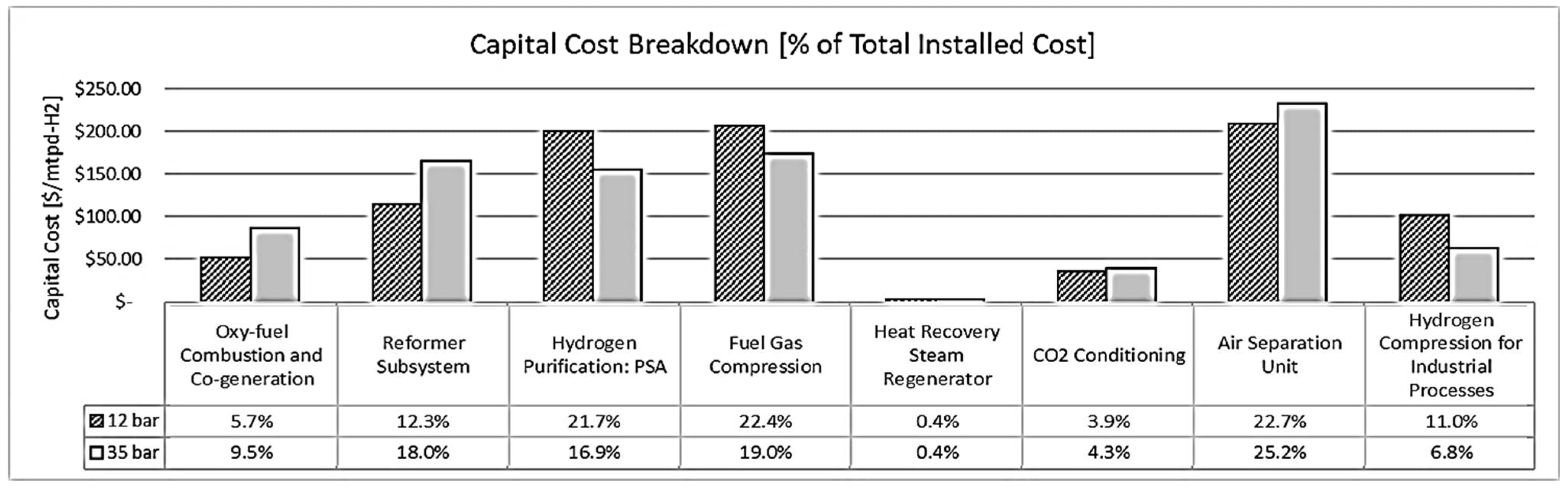
From Figure 3, it was seen that the feed pressure has a small impact on all key performance criteria (all curves for feed pressure at 12 and 35 bars are “close” to each other). This is reflected in Table 5, where optimized parameters and resulting outputs are not too different for both feed pressures. In both cases, the capital investment accounts for the largest fraction of the blue hydrogen production cost (54–55%). The $1.6–1.7 billion in upfront capital investment is comparable to the recent blue hydrogen project commitments in Alberta’s Industrial Heartland: $1.8 billion from Linde [52] and $1.6 billion from Air Products [40]. Figure 4 presents the breakdown of the capital cost, showing that the largest contributor to the capital cost is the air separation unit, a relatively mature technology for large-scale oxygen production. The next largest is the compression of fuel gas and hydrogen gas for cogeneration and delivery, respectively. This high compression requirement highlights the difference in the two scenarios considered: the higher natural gas supply pressure eliminates the need for extra compressors in the hydrogen purification PSA and product delivery, reducing the cost. The lower fuel feed pressure means that the reformer subsystem requires less material and thinner vessel walls and, consequently, a reduced capital cost, even though more synthesis gas is handled.
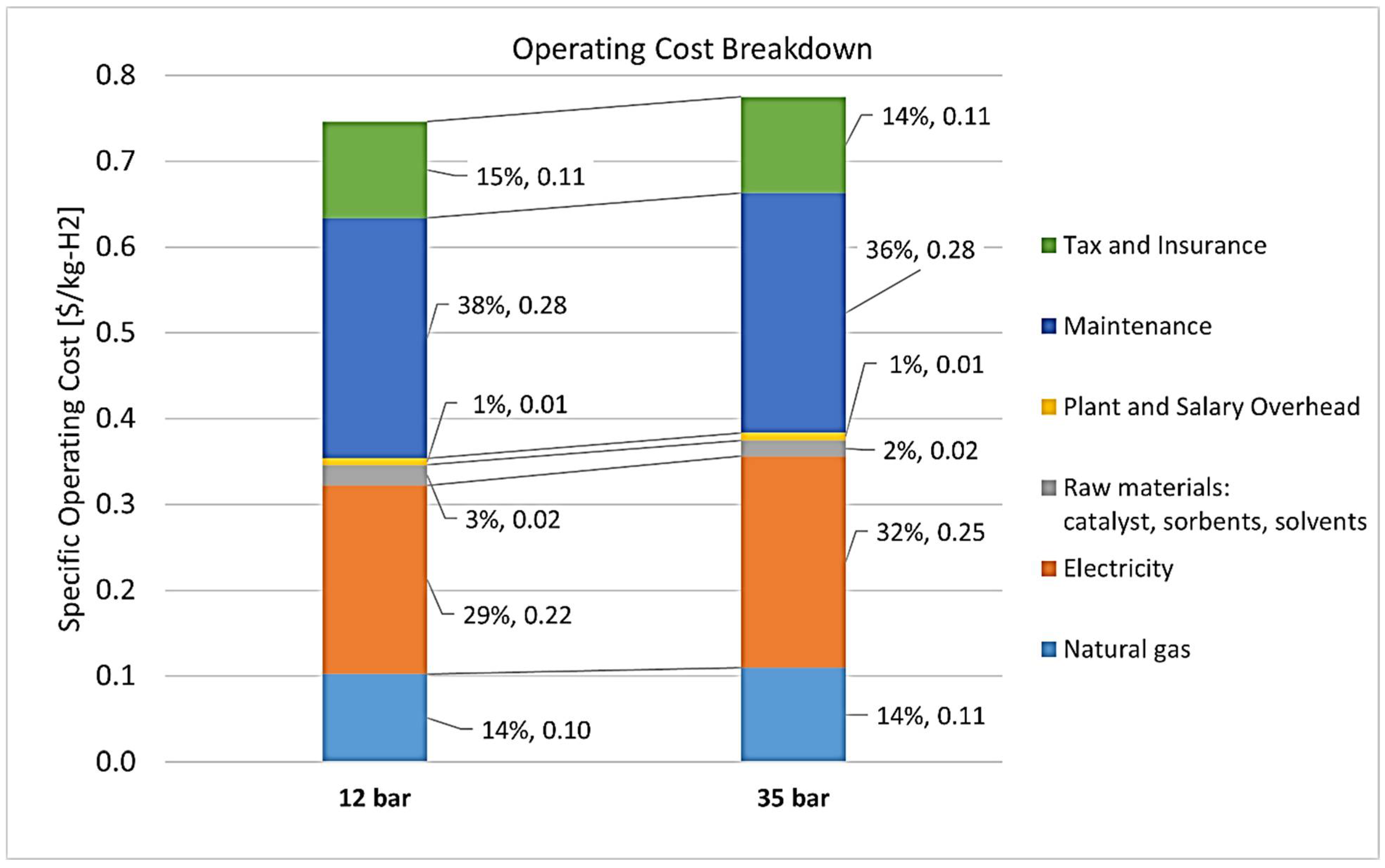
As seen in Table 5, the annual operating cost is higher in the low fuel supply pressure scenario. However, it becomes the opposite when considering the specific operating cost, as shown in Figure 5. The reason is the lower hydrogen production for the higher fuel supply pressure. Figure 5 indicates that the maintenance costs account for the largest operating cost (36–38%), which is a factor of the total investment cost and a fixed cost. The electricity cost is the most significant variable cost (29–32% of the total operating cost).
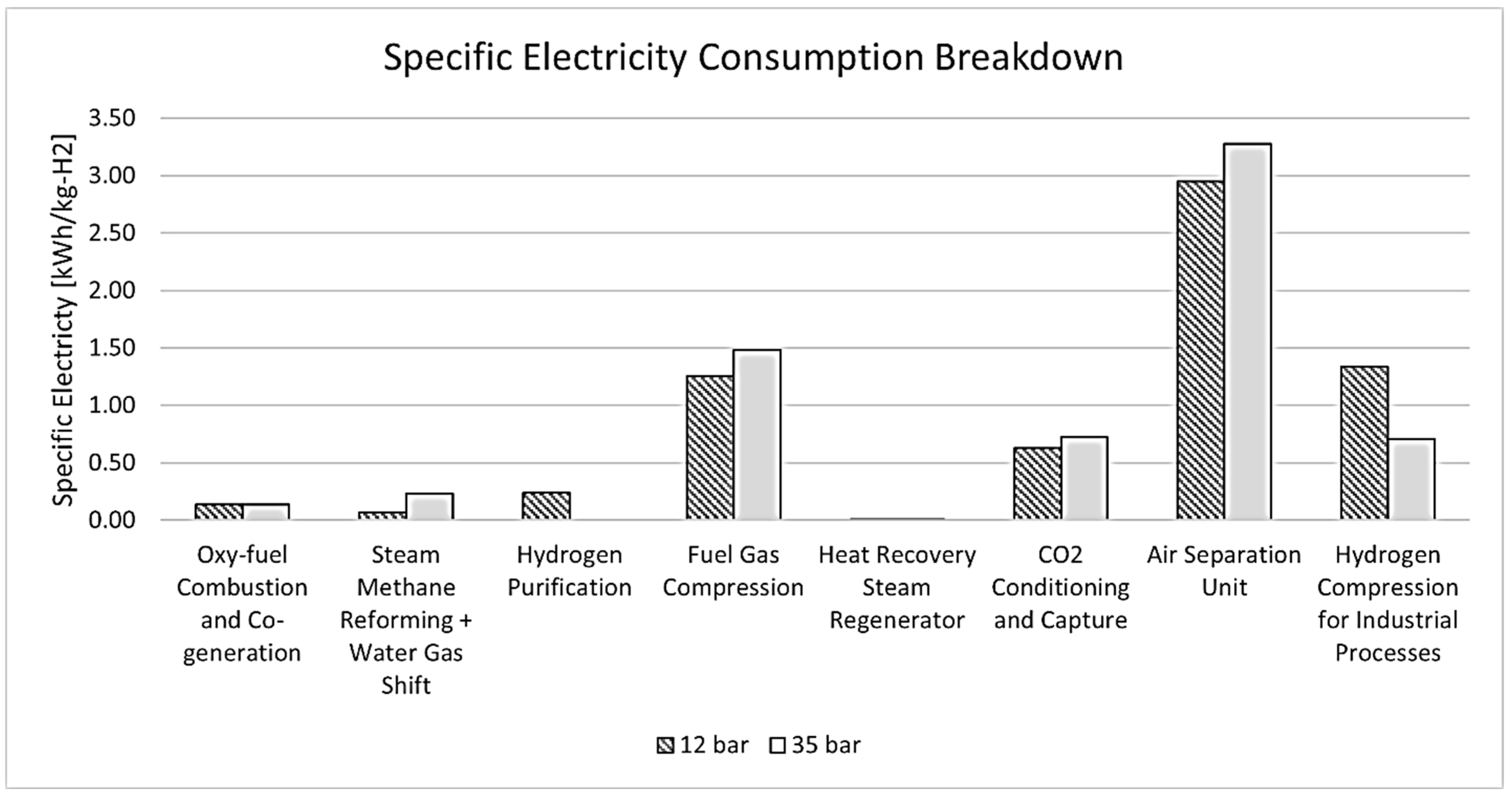
The gross electricity consumption of the proposed process in both scenarios shown in Table 5 is equivalent to about a quarter of the electricity supply of Alberta’s largest natural gas-fired power plant [41] and 2% of Alberta’s average electricity generation capacity (11,793 MW) [53]. The cogeneration plant contributes about a quarter of the gross electricity consumption. Still, with the expected net load, there might be higher outer battery limit costs associated with dedicated substations, high-voltage transmission lines, and backup power solutions. The electricity consumption is further broken down in Figure 6, which shows that the cryogenic air separation unit and the compression units are the major consumers. Consequently, any improvements in efficiency to these units could improve the cost. It also emphasizes how critical it is to reduce the specific oxygen consumption for hydrogen production.
From the cost comparisons of the two scenarios considered, we find that the cost of hydrogen production is similar (~1.7 $/kg H2), regardless of the natural gas supply pressure. So, designing for the available supply pressure to take advantage of the benefits of operating at either end might be preferable instead of introducing wasteful pressure-reducing stations or costly pressure booster stations for the natural gas.
As one of the key objectives of the blue hydrogen process is to reduce the emissions of conventional “grey” hydrogen, we evaluated the scope 1 (onsite) and scope 2 (purchased energy) emissions of the low fuel pressure case and compared them to different H2 production methods. The results are shown in Table 6. We assume that there is no fugitive methane emitted within the process and that any CO2 captured is permanently stored. In Table 6, we compared three hydrogen production processes to the process presented in this work (Case A).
In Case B, the CO2 conditioning and the steam generator units were removed to get the grey hydrogen results. In Case A, the blue hydrogen process yields a 70% reduction in emission from the grey hydrogen process, highlighting the significance of carbon capture in handling the onsite emissions. Although grey hydrogen is about 5% cheaper to produce than the blue hydrogen case, if these emissions are accounted for as a fixed carbon tax [e.g., 170 CAD/mt-CO2], it becomes 33% more expensive.
In Case C, we substituted the ASU, the highest electricity consumer and capital cost, with electrolysis units. The basis of this process is to use as much oxygen as the blue hydrogen case. The oxygen needed for the proposed process is generated alongside extra hydrogen, making the overall hydrogen production higher than the blue hydrogen process. From Table 6, the specific electricity consumption is nine times that of the proposed process, raising the emissions threefold.
In Case D, the production of hydrogen, equivalent to the base case, is generated only via electrolysis. Here, electricity consumption accounts for all the CO2 emitted, about seven times the blue hydrogen net CO2 emissions. Recall that this is assuming Alberta grid emissions. This case is proven more costly than the proposed process, with and without the carbon tax due to the electricity demands on the electrolysis process. Also, the byproduct oxygen could generate extra income.
We considered the environmental implications of using blue hydrogen to replace natural gas. For less exergetically efficient applications like heating, the emissions per lower heating value of blue H2 is nearly half of the net CO2 emission of equivalent natural gas at 60.4 kg-CO2/GJ. If hydrogen is used to generate electricity in a fuel cell operating at 42% efficiency (1/2 the maximum theoretical efficiency of 83.5%) instead of using natural gas with an emission intensity of 490 kg-CO2/kWh [33], the emission of the supplied electricity could be reduced by 55%. With solid-oxide fuel cells, an even higher efficiency of up to 70% can be achieved, yielding even greater gains in emission reduction.
There is no widely accepted international standard for blue hydrogen, but the EU has rolled out the first guarantee of origin scheme, “CertifHy”, which defines the low carbon hydrogen threshold at 4.37 kg-CO2/kg-H2 [54] based on a system boundary that includes electricity generation, fuel generation, and onsite emissions. From Table 6, our proposed process falls below this threshold in each scenario. However, when the transport emissions ranging from 0.5 to 11 kg-CO2/kg-H2 [55] are accounted for, whether the hydrogen product will still meet the criteria adequate for low-carbon hydrogen certification would depend on the distance and the method of transport, with gaseous pipeline transport being the preferable choice for distances up to 3000 km [55,56]. Several researchers have proposed and evaluated hydrogen carriers such as ammonia [55] and liquid organic hydrogen carriers like dibenzyl-toluene (DBT) [37] for longer distances and marine transport to limit the CO2 emission impact.
In Table 7, the proposed process is compared to other published autothermal blue hydrogen simulation results. The NETL process [7] is an autothermal reformer and a carbon capture process, which does not recycle fuel for cogeneration. Oni et al. [6] looked at a hypothetical hydrogen production plant in Alberta producing 607 tonnes/day of hydrogen, similar to the proposed process, but which recycles fuel gas for combustion in an air-fired process to only generate heat for the reformer.
The air separation unit accounts for the highest electricity load in all cases. The specific oxygen consumption is higher in the proposed process. The fuel gas compression needed for the gas turbine now adds significant electricity load. Even with the higher electrical cost of recycling, the processes with recycled fuel still show comparable levelized cost of production. The specific net CO2 emissions are comparable to the blue hydrogen process modelled by Oni et al. [6], which is also based on Alberta’s grid. The proposed process also maintains relatively high fuel conversion efficiency.

4.3. Cost Sensitivity Assessment

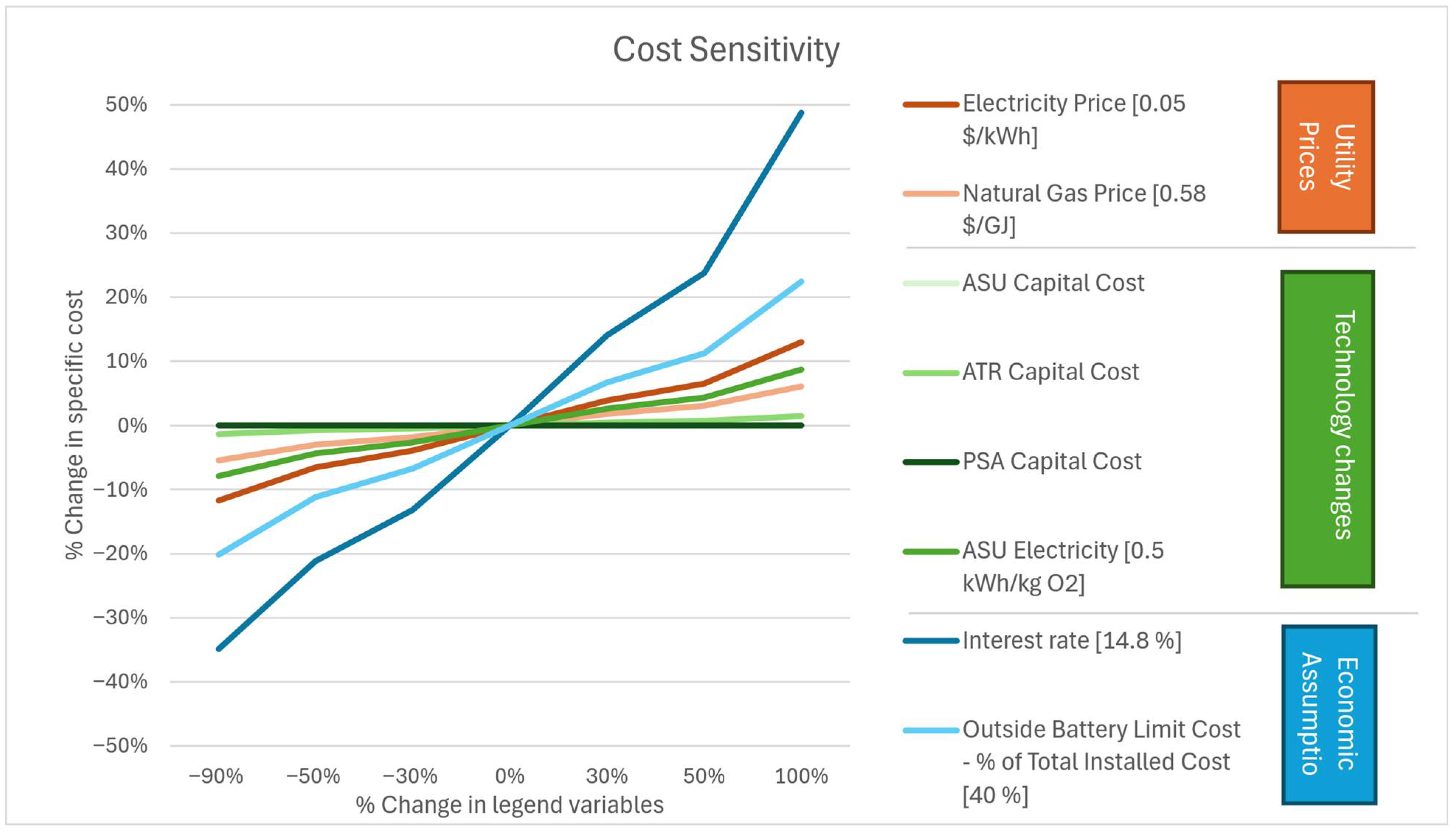
Mission Innovation, a global government initiative for clean energy development launched the Clean Hydrogen Mission to increase the cost-competitiveness of clean hydrogen by reducing end-to-end costs to $2 per kg by 2030 [30]. The cost of the proposed process within the production boundary falls well below this benchmark cost. However, in the low fuel pressure case, for example, with a CO2 transport and storage cost of 34 $/mt-CO2 (converted from 2021 cost of 30 CAD/mt-CO2 [37]), equivalent to 0.24 $/kg H2, and a pipeline transport cost included at 0.66 $/kg H2 for a 1000 km distance [55], the end-to-end cost comes to 2.58 $/kg H2. This falls 29% above the $2 per kg benchmark cost and the overshoot accounts for 34% of the production cost. So, we studied the sensitivity of this production cost to utility prices, technology changes, or economic analysis assumptions. The cost sensitivity plot for 12 bar natural gas supply scenarios is shown in Figure 7 (very similar plot for the 35 bar case not shown here).
First, comparing all categories shown, the economic assumptions show the greatest impact on the estimated production cost, with the interest rate being the highest. Here, the interest rate refers to the weighted average cost of debt and equity. Capital investment can be greatly reduced with lower interest rates, achieving as low as a 35% reduction in the most optimistic scenario at a 3% debt interest rate and no equity funding. Hence, lower loan interest rates or government loan guarantees and grant-based finance targeted at hydrogen infrastructure projects could achieve the benchmark end-to-end cost of 2 $/kg-H2 and incentivise the adoption of this process substantially. If widespread demand for hydrogen, e.g., adoption of fuel cells plants, vehicles and other industrial hydrogen applications remains uncertain [57], profitable production becomes unlikely, making it a high-risk project that attracts higher interest rates. The second most impactful parameter is the outside battery limit (OSBL) cost. If the OSBL cost doubles (i.e., increase by 100%), corresponding to a percentage of the ISBL cost, increasing from the base 40% to 80%, the specific cost of producing H2 would increase by 20%. Thus, a thorough preliminary assessment of auxiliary units such as substations, transformer upgrades, and water treatment units that could inflate the specific cost should be critically considered.
Significant reduction in the capital cost of the key technology such as the air separation units, the pressure swing absorber, and even newer technology such as the autothermal reformer has a lower impact on the production cost. Conversely, with a focus on operational improvements that improve the efficiency of the conventional ASU process, higher cost reduction can be achieved. Such modifications include multistage compression with an Organic Rankine Cycle (ORC) for energy recovery [42,58,59], using variable-speed drives on compressors instead of fixed-speed motors [60], energy recovery using expansion turbines for cooling [61], and improving the PSA/TSA unit used for pre-enriching of O2 in the feed gas [62,63]. Aneke and Wang showed the potential of ORC to achieve 0.2–11.5% reduction in ASU consumption [58]. He et al. proposed integrating ASU with liquid air energy storage system and energy recovery from chilled products to take advantage of fluctuating production capacity and reduce electricity costs by 5.77–7.65% [64,65]. Noting that to achieve just 5% reduction in specific cost, we would need to reduce the ASU energy consumption by 50%, which might be unrealistic. Implementing all these energy-saving measures requires extra investment, which might ultimately make this strategy cost-ineffective and calls for further economic investigation.
In Alberta, 85% of electricity is generated with fossil fuels, with natural gas currently representing 63% of the share [66] and this number is expected to increase as more coal power plants are phased out. Natural gas prices are volatile and subject to global geopolitical changes, increased generation and export, and increased demand for natural gas to replace coal in industrial processes and carbon taxes [67]. From September 2023 to September 2024, commercial electricity rate in Alberta fell by about 59% [47,68], directly reflecting a 81% reduction in natural gas prices in the same period [46]. So, it is not enough to consider the impact of natural gas separately from the electricity prices changes. For example, based on the Alberty Energy Regulator predictions of a 51% inflation of natural gas prices from 2024 till 2030 [67], the cost of H2 production will go up by 3.5%. But it could also lead to well over double the electricity price, overall leading to, at best, a 10% escalation in the cost of H2 production.
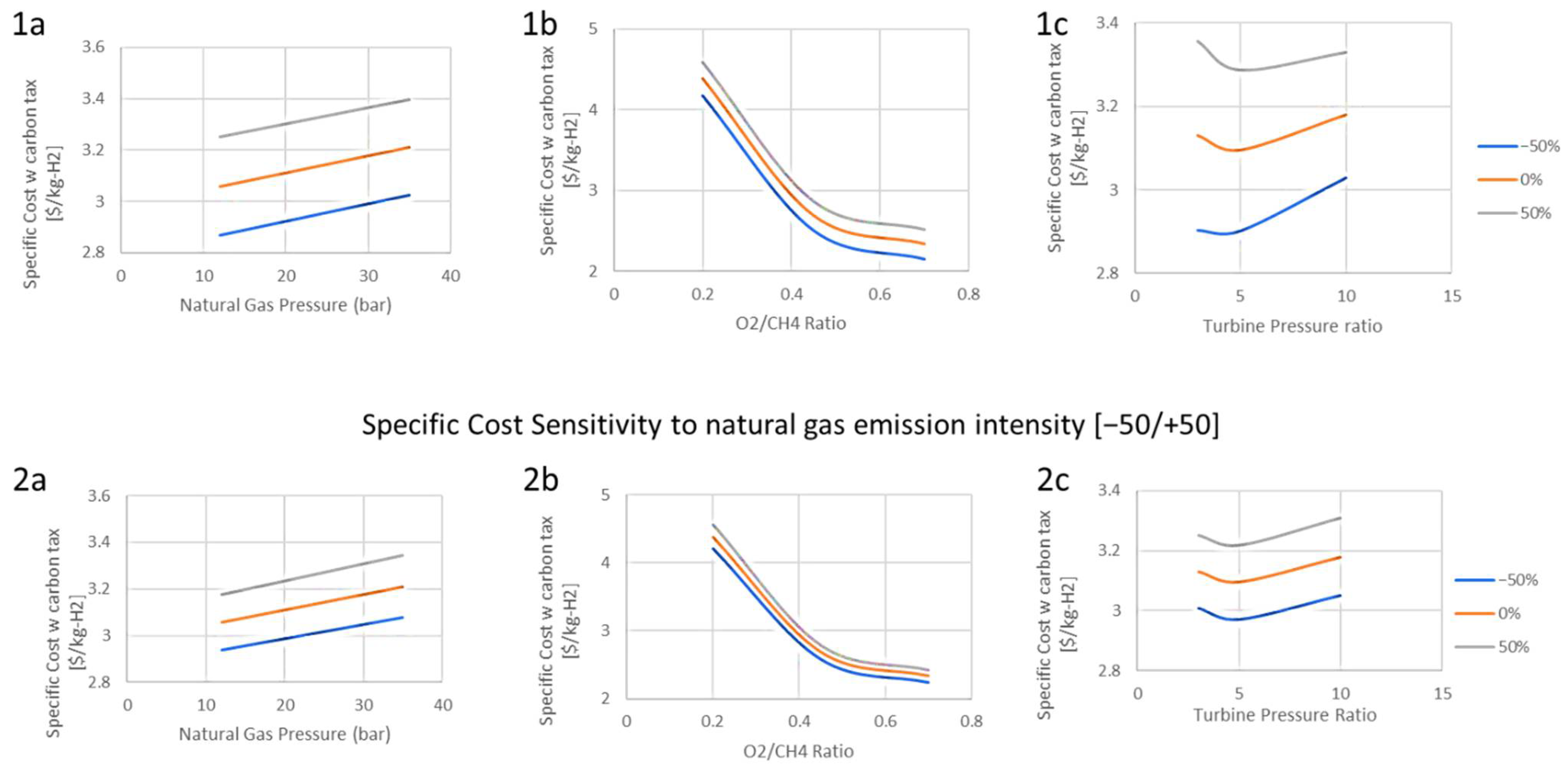
From Figure 8, we observed that the operating conditions that minimize cost could differ from the conditions that minimize emissions. In Figure 8, we included a fixed carbon tax at 170 CAD/mt-CO2 on the scope 1 and scope 2 emissions to evaluate how they impact the cost-optimal operating conditions. The plots show the average cost of all the runs at the specified operating conditions. Alberta’s grid emission has been trending down in recent years with a 46% reduction in the last 20 years [66]. There has also been a commitment to reducing the fugitive methane emissions associated with natural gas production emissions by 40–45% by 2030 [69]. Thus, the sensitivity of the hydrogen production cost (carbon tax inclusive) to grid and natural gas emission intensity changes is considered.
Comparing both utilities, we find that 50% reduction or increase in grid emission has twice the impact on the cost as the same % change in the natural gas upstream emissions. This suggest that rapidly expanding non-emitting electricity supply in the province would make this project even more attractive and hydrogen produced could be competitive in the export market. While unlikely, there is a possibility that the emission intensity could increase in the future due to the harsh regulatory landscape for renewable energy projects in the province [70,71], the legacy of the 2023 moratorium on such project [72], and a large addition of unabated natural gas-fired generation expected [73].
We also evaluated the impact of the carbon tax and emission intensity on the optimal conditions selected. With the inclusion of carbon tax, the production cost trends remain the same when the O2/CH4 ratio and the fuel pressure are changed. This means that regardless of emission changes and carbon tax obligations, the optimal fuel pressure and the O2/CH4 ratio would remain the same. In the case where the grid emissions are higher, there is a slight benefit to increasing the turbine pressure ratio up to a minimum cost point seen in Figure 8(1c). This benefit reduces as the grid gets cleaner, at which point the extra turbine electricity generation ceases to yield any cost benefits. Clearly, the proposed process offers the advantage of flexibility to use more internally produced electricity in a location with a heavy emission grid like Alberta.

5. Conclusions

The proposed blue hydrogen cogeneration process presents a commercially viable approach to sustainable hydrogen production by integrating the existing autothermal reforming, oxy-fuel combustion, and carbon capture technologies. This process demonstrates the potential to reduce emissions of fossil-based hydrogen compared to conventional methods, meeting stringent low-carbon hydrogen standards while leveraging the existing natural gas infrastructure and large CO2 storage capacity, such as in Alberta, Canada.
A total of 99.8% CO2 capture is achieved alongside 76% thermal value conversion of natural gas to hydrogen. Despite challenges such as high initial capital costs of $1.57–1.75 billion and the dependence on Alberta’s carbon-intensive grid, optimization of operational parameters, such as the natural gas supply pressure, O2/CH4 ratio, and the internal electricity generation through the turbine ratio, can make blue hydrogen economically attractive at about $1.7 per kg H2, without any CO2 reduction incentives.
By accounting for the costs of H2 transport and CO2 storage, the end-to-end cost increases to $2.58 per kg H2, which is 29% above the Clean Hydrogen Mission benchmark costs of $2 per kg. The parameters with the largest impact on the cost are the economic factors such as low interest rates and lower offsite costs, followed by the utility prices. Prospective efforts to reduce grid emission intensity and improve the energy efficiency of the ASU, PSA, and compressors can further reduce production costs.
Moreover, as Canadian federal and provincial policies continue to drive cleaner energy solutions through carbon pricing and investment in hydrogen infrastructure, the proposed process aligns with national objectives for decarbonization.

Supplementary Materials

The following supporting information can be downloaded at: https://www.mdpi.com/article/10.3390/atmos17030228/s1, Section S1: Technical Model Specifications; Section S1.1: Reformer subsystem; Table S1: Reformer and water gas shift reactor model specifications; Table S2: Steam methane reformer kinetic equations; Table S3: Water gas shift reaction kinetics; Section S1.2: Hydrogen purification; Table S4: PSA Sorbent requirements and bulk density; Table S5: PSA H2 separation specifications; Section S1.3: Oxy-fuel combustion and co-generation; Table S6: Heat recovery steam generator equipment specifications; Section S1.4: CO2 conditioning; Table S7: Triethylene glycol dehydration column and design specifications; Section S1.5: Air separation unit; Section S1.6: Ancillary units; Section S2: Capital Costing Indices; Section S3: Regression Model Building; Table S8: Regression models and summary of fit; Section S4: Process Flow Diagram; Figure S1: Overall Flowsheet; Figure S2: A100—Cogeneration Plant; Figure S3: A200—Reformer Subsystem; Figure S4: A300—Hydrogen Purification; Figure S5: A400—Fuel Gas Compression; Figure S6: A600—Heat Recovery Steam Generator; Figure S7: A600—CO2 Conditioning; Figure S8: A700—Air Separation Unit; Section S5: Raw data; Table S9: Cost-Optimal Scenario—35 bar natural gas supply pressure; Table S10: Cost-Optimal Scenario—12 bar natural gas supply pressure; Section S6: References [7,42,44,74,75,76,77,78,79,80,81,82,83].

Author Contributions

Conceptualization, M.M. and E.C.; methodology, M.M. and A.A.T.; formal analysis, M.M. and A.A.T.; investigation, M.M. and A.A.T.; resources, E.C.; data curation, E.C.; writing—original draft preparation, A.A.T.; writing—review and editing, M.M. and E.C.; supervision, E.C.; project administration, E.C.; funding acquisition, E.C. All authors have read and agreed to the published version of the manuscript.

Funding

This work was partially supported by the Natural Sciences and Engineering Research Council of Canada Alliance Mission Grant ALLRP 570606-2021.

Institutional Review Board Statement

Not applicable.

Informed Consent Statement

Not applicable.

Data Availability Statement

The original contributions presented in this study are included in the article/Supplementary Material. Further inquiries can be directed to the corresponding author.

Conflicts of Interest

The authors declare that they have no known competing financial interests or personal relationships that could have appeared to influence the work reported in this paper.

Abbreviations

The following abbreviations are used in this manuscript:
ASUair separation unit
ATRautothermal reforming
CAPCOSTtotal capital investment
CCScarbon capture and storage
DRdebt ratio
FCIfixed capital investment
H2PRODhourly production rate of hydrogen
HThigh temperature
LCOHlevelized cost of hydrogen
LTlow temperature
OPCHOURSoperating hours
OPCOSToperating cost
PSApressure swing adsorption
S/Csteam to carbon ratio
SMRsteam methane reforming
WGSwater gas shift

References

  1. Orecchini, F.; Santiangeli, A. Beyond smart grids—The need of intelligent energy networks for a higher global efficiency through energy vectors integration. Int. J. Hydrogen Energy 2011, 36, 8126–8133. [Google Scholar] [CrossRef]
  2. Yue, M.; Lambert, H.; Pahon, E.; Roche, R.; Jemei, S.; Hissel, D. Hydrogen energy systems: A critical review of technologies, applications, trends and challenges. Renew. Sustain. Energy Rev. 2021, 146, 111180. [Google Scholar] [CrossRef]
  3. Rasul, M.; Hazrat, M.; Sattar, M.; Jahirul, M.; Shearer, M. The future of hydrogen: Challenges on production, storage and applications. Energy Convers. Manag. 2022, 272, 116326. [Google Scholar] [CrossRef]
  4. Antonini, C.; Treyer, K.; Streb, A.; van der Spek, M.; Bauer, C.; Mazzotti, M. Hydrogen production from natural gas and biomethane with carbon capture and storage—A techno-environmental analysis. Sustain. Energy Fuels 2020, 4, 2967–2986. [Google Scholar] [CrossRef]
  5. Bui, M.; Adjiman, C.S.; Bardow, A.; Anthony, E.J.; Boston, A.; Brown, S.; Fennell, P.S.; Fuss, S.; Galindo, A.; Hackett, L.A.; et al. Carbon capture and storage (CCS): The way forward. Energy Environ. Sci. 2018, 11, 1062–1176. [Google Scholar] [CrossRef]
  6. Oni, A.; Anaya, K.; Giwa, T.; Di Lullo, G.; Kumar, A. Comparative assessment of blue hydrogen from steam methane reforming, autothermal reforming, and natural gas decomposition technologies for natural gas-producing regions. Energy Convers. Manag. 2022, 254, 115245. [Google Scholar] [CrossRef]
  7. Lewis, E.; McNaul, S.; Jamieson, M.; Henriksen, M.S.; Matthews, H.S.; White, J.; Walsh, L.; Grove, J.; Shultz, T.; Skone, T.J.; et al. Comparison of Commercial, State-of-the-Art, Fossil-Based Hydrogen Production Technologies; National Energy Technology Laboratory (NETL): Pittsburgh, PA, USA; Morgantown, WV, USA; Albany, OR, USA, 2022. [CrossRef]
  8. Okunlola, A.; Giwa, T.; Di Lullo, G.; Davis, M.; Gemechu, E.; Kumar, A. Techno-economic assessment of low-carbon hydrogen export from Western Canada to Eastern Canada, the USA, the Asia-Pacific, and Europe. Int. J. Hydrogen Energy 2022, 47, 6453–6477. [Google Scholar] [CrossRef]
  9. Yan, Y.; Manovic, V.; Anthony, E.J.; Clough, P.T. Techno-economic analysis of low-carbon hydrogen production by sorption enhanced steam methane reforming (SE-SMR) processes. Energy Convers. Manag. 2020, 226, 113530. [Google Scholar] [CrossRef]
  10. Boretti, A.; Banik, B.K. Advances in Hydrogen Production from Natural Gas Reforming. Adv. Energy Sustain. Res. 2021, 2, 2100097. [Google Scholar] [CrossRef]
  11. Agyekum, E.B.; Nutakor, C.; Agwa, A.M.; Kamel, S. A Critical Review of Renewable Hydrogen Production Methods: Factors Affecting Their Scale-Up and Its Role in Future Energy Generation. Membranes 2022, 12, 173. [Google Scholar] [CrossRef] [PubMed]
  12. VLitvinenko, V.S.; Tsvetkov, P.S.; Dvoynikov, M.V.; Buslaev, G.V. Barriers to implementation of hydrogen initiatives in the context of global energy sustainable development. J. Min. Inst. 2020, 244, 428–438. [Google Scholar] [CrossRef]
  13. Yu, M.; Wang, K.; Vredenburg, H. Insights into low-carbon hydrogen production methods: Green, blue and aqua hydrogen. Int. J. Hydrogen Energy 2021, 46, 21261–21273. [Google Scholar] [CrossRef]
  14. Noussan, M.; Raimondi, P.P.; Scita, R.; Hafner, M. The Role of Green and Blue Hydrogen in the Energy Transition—A Technological and Geopolitical Perspective. Sustainability 2020, 13, 298. [Google Scholar] [CrossRef]
  15. Jensterle, M.; Miha, J.; Narita, J.; Piria, R.; Samadi, S.; Prantner, M.; Crone, K.; Siegemund, S.; Kan, S.; Matsumoto, T.; et al. The Role of Clean Hydrogen in the Future Energy Systems of Japan and Germany; Adelphi Consult GmbH: Berlin, Germany, 2019. [Google Scholar]
  16. Vögele, S.; Rübbelke, D.; Mayer, P.; Kuckshinrichs, W. Germany’s “No” to carbon capture and storage: Just a question of lacking acceptance? Appl. Energy 2018, 214, 205–218. [Google Scholar] [CrossRef]
  17. Howarth, R.W.; Jacobson, M.Z. How green is blue hydrogen? Energy Sci. Eng. 2021, 9, 1676–1687. [Google Scholar] [CrossRef]
  18. Ministerial Council on Renewable Energy, Hydrogen and Related Issues. Basic Hydrogen Strategy; Ministerial Council on Renewable Energy, Hydrogen and Related Issues: Tokyo, Japan, 2017.
  19. Natural Resources Canada; Government of Canada. Hydrogen Strategy for Canada: Seizing the Opportunities for Hydrogen: A Call to Action. M134-65/2020E-PDF—Government of Canada Publications—Canada.ca. Available online: https://publications.gc.ca/site/eng/9.894114/publication.html (accessed on 23 December 2025).
  20. Alberta Hydrogen Roadmap. Alberta Hydrogen Roadmap—Open Government. Available online: https://open.alberta.ca/publications/alberta-hydrogen-roadmap/resource/538a7827-9d13-4b06-9d1d-d52b851c8a2a (accessed on 23 December 2025).
  21. British Columbia Hydrogen Strategy: A Sustainable Energy Transition. BC Bioenergy Network. Canada. Available online: https://coilink.org/20.500.12592/2q5v0g (accessed on 28 January 2026).
  22. Ontario’s Low-Carbon Hydrogen Strategy|Ontario.ca. Available online: http://www.ontario.ca/page/ontarios-low-carbon-hydrogen-strategy (accessed on 23 December 2025).
  23. Gouvernement du Québec. Québec Green Hydrogen and Bioenergy Strategy. Available online: https://www.quebec.ca/en/gouvernement/ministeres-organismes/economie/publications/strategy-green-hydrogen-bioenergy (accessed on 23 December 2025).
  24. Talebian, H. Cost Optimization of Hydrogen Fuel Supply Chain with Environmental Policy Integration: The Case for British Columbia. Ph.D. Thesis, University of British Columbia, Vancouver, BC, Canada, 2020. [Google Scholar] [CrossRef]
  25. Holtz, A. A Comparative Life Cycle Assessment of Hydrogen Production in British Columbia. Master’s Thesis, Royal Roads University, Victoria, BC, Canada, 2021. [Google Scholar]
  26. Sabillon, C.; Singh, B.N.; Venkatesh, B. Technoeconomic Models for the Optimal Inclusion of Hydrogen Trains in Electricity Markets. IEEE Trans. Transp. Electrif. 2019, 5, 758–768. [Google Scholar] [CrossRef]
  27. Saskatchewan Research Council. Sask is Going Blue: Hydrogen Hub will Promote Further Investment in the Province. Available online: https://www.src.sk.ca/news/sask-going-blue-hydrogen-hub-will-promote-further-investment-province (accessed on 23 December 2025).
  28. Charbone Hydrogen Corporation. CHARBONE HYDROGEN Announces a Partnership with the City of Selkirk for One of the First Western Canadian Production Facilities of Green Hydrogen. GlobeNewswire News Room. Available online: https://www.globenewswire.com/news-release/2022/06/15/2463059/0/en/CHARBONE-HYDROGEN-Announces-a-Partnership-with-the-City-of-Selkirk-for-one-of-the-First-Western-Canadian-Production-Facilities-of-Green-Hydrogen.html (accessed on 23 December 2025).
  29. Minister of Energy and Natural Resources of Canada. Hydrogen Strategy for Canada: Progress Report. Available online: https://natural-resources.canada.ca/climate-change/canadas-green-future/the-hydrogen-strategy/hydrogen-strategy-for-canada-progress-report/25678 (accessed on 23 December 2025).
  30. Clean Hydrogen Mission Action Plan. Mission Innovation, 2022. Available online: https://explore.mission-innovation.net/mission/clean-hydrogen/ (accessed on 24 October 2024).
  31. Enbridge Gas. Learn About Natural Gas. Available online: https://www.enbridgegas.com/about-enbridge-gas/learn-about-natural-gas (accessed on 27 September 2024).
  32. Alberta Innovates—Clean Resources Final Report Package. Available online: https://albertainnovates.ca/wp-content/uploads/2022/05/Life-Cycle-Analysis-of-Canadian-Natural-Gas.pdf (accessed on 10 February 2026).
  33. E. and C. C. Canada. Emission Factors and Reference Values. Available online: https://www.canada.ca/en/environment-climate-change/services/climate-change/pricing-pollution-how-it-will-work/output-based-pricing-system/federal-greenhouse-gas-offset-system/emission-factors-reference-values.html (accessed on 23 December 2025).
  34. Primdahl, I. Very Large Autothermal Reformer. US20030075482A1, 24 April 2003. Available online: https://patents.google.com/patent/US20030075482A1/en?oq=US20030075482A1 (accessed on 23 December 2025).
  35. Pashchenko, D.; Makarov, I. Carbon deposition in steam methane reforming over a Ni-based catalyst: Experimental and thermodynamic analysis. Energy 2021, 222, 119993. [Google Scholar] [CrossRef]
  36. Khan, M.A.; Young, C.; Mackinnon, C.; Layzell, D.B. The Techno-Economics of Hydrogen Compression. Transit. Accel. Tech. Briefs 2021, 1, 1–36. [Google Scholar]
  37. Alberta Carbon Trunk Line Project: Knowledge Sharing Report, 2021. Governemnt of Alberta, 2021. Available online: https://open.alberta.ca/publications/alberta-carbon-trunk-line-project-knowledge-sharing-report-2021 (accessed on 23 December 2025).
  38. Kong, Z.Y.; Mahmoud, A.; Liu, S.; Sunarso, J. Revamping existing glycol technologies in natural gas dehydration to improve the purity and absorption efficiency: Available methods and recent developments. J. Nat. Gas Sci. Eng. 2018, 56, 486–503. [Google Scholar] [CrossRef]
  39. Braek, A.; Almehaideb, R.; Darwish, N.; Hughes, R. Optimization of process parameters for glycol unit to mitigate the emission of BTEX/VOCs. Process Saf. Environ. Prot. 2001, 79, 218–232. [Google Scholar] [CrossRef]
  40. G. of Alberta. Air Products Hydrogen Production and Liquefaction Facility. Available online: https://majorprojects.alberta.ca/details/Air-Products-Hydrogen-Production-and-Liquefaction-Facility/4461 (accessed on 23 December 2025).
  41. The Shepard Energy Centre. Electricity Canada. Available online: https://www.electricity.ca/programs/centre-of-excellence/the-shepard-energy-centre/ (accessed on 23 December 2025).
  42. Young, A.F.; Villardi, H.G.D.; Araujo, L.S.; Raptopoulos, L.S.C.; Dutra, M.S. Detailed Design and Economic Evaluation of a Cryogenic Air Separation Unit with Recent Literature Solutions. Ind. Eng. Chem. Res. 2021, 60, 14830–14844. [Google Scholar] [CrossRef]
  43. Schmitt, T.; Leptinsky, S.; Turner, M.; Zoelle, A.; White, C.; Hughes, S.; Homsy, S.; Woods, M.; Hoffman, H.; Shultz, T.; et al. Cost and Performance Baseline for Fossil Energy Plants Volume 1: Bituminous Coal and Natural Gas to Electricity; National Energy Technology Laboratory (NETL): Pittsburgh, PA, USA; Morgantown, WV, USA; Albany, OR, USA, 2022. [CrossRef]
  44. Singh, D.; Croiset, E.; Douglas, P.; Douglas, M. Techno-economic study of CO2 capture from an existing coal-fired power plant: MEA scrubbing vs. O2/CO2 recycle combustion. Energy Convers. Manag. 2003, 44, 3073–3091. [Google Scholar] [CrossRef]
  45. Triethylene Glycol (TEG) Prices, News, Chart and Demand. Available online: https://www.imarcgroup.com/triethylene-glycol-pricing-report (accessed on 30 September 2024).
  46. Natural Gas Prices|Alberta Economic Dashboard. Available online: https://economicdashboard.alberta.ca/dashboard/natural-gas-price/ (accessed on 30 September 2024).
  47. Historical Electricity Rates|EPCOR Alberta. Available online: https://www.epcor.com/ca/en/ab/other/account/rates/current-and-historical-rates/historical-electricity-rates.html (accessed on 30 September 2024).
  48. E. and S. D. Canada. Manager, Gas Supply Operations in Canada|Wages—Job Bank. Available online: http://www.jobbank.gc.ca/explore_career/job_market_report/wage_occupation_report.xhtml (accessed on 30 September 2024).
  49. E. and S. D. Canada. Engineer, Natural Gas in Canada|Wages—Job Bank. Available online: http://www.jobbank.gc.ca/explore_career/job_market_report/wage_occupation_report.xhtml (accessed on 30 September 2024).
  50. E. and S. D. Canada. Petroleum Processing Shift Supervisor in Canada|Wages—Job Bank. Available online: http://www.jobbank.gc.ca/explore_career/job_market_report/wage_occupation_report.xhtml (accessed on 30 September 2024).
  51. Hydrogen Process Plant Operator in Canada|Wages—Job Bank. Available online: https://www.jobbank.gc.ca/marketreport/wages-occupation/20423/ca (accessed on 30 September 2024).
  52. Linde to Invest $2 bln in Canada to Supply Hydrogen to Dow’s Alberta Plant. Reuters. 27 August 2024. Available online: https://www.reuters.com/sustainability/climate-energy/linde-invest-2-bln-canada-supply-hydrogen-dows-alberta-plant-2024-08-27/ (accessed on 22 October 2024).
  53. Power Fail: A Breakdown of Alberta Electricity Numbers. Edmontonjournal. Available online: https://edmontonjournal.com/news/local-news/power-fail-a-breakdown-of-alberta-electricity-numbers (accessed on 23 December 2025).
  54. Fuel Cells and Hydrogen Joint Undertaking., Towards a Dual Hydrogen Certification System for Guarantees of Origin and for the Certification of Renewable Hydrogen in Transport and for Heating & Cooling: Final Report of Phase 2. LU: Publications Office. 2019. Available online: https://data.europa.eu/doi/10.2843/46282 (accessed on 23 October 2024).
  55. Di Lullo, G.; Giwa, T.; Okunlola, A.; Davis, M.; Mehedi, T.; Oni, A.; Kumar, A. Large-scale long-distance land-based hydrogen transportation systems: A comparative techno-economic and greenhouse gas emission assessment. Int. J. Hydrogen Energy 2022, 47, 35293–35319. [Google Scholar] [CrossRef]
  56. Cheng, W.; Cheng, Y.F. A techno-economic study of the strategy for hydrogen transport by pipelines in Canada. J. Pipeline Sci. Eng. 2023, 3, 100112. [Google Scholar] [CrossRef]
  57. Global Energy Perspective 2023: Hydrogen Outlook|McKinsey. Available online: https://www.mckinsey.com/industries/oil-and-gas/our-insights/global-energy-perspective-2023-hydrogen-outlook (accessed on 23 December 2025).
  58. Aneke, M.; Wang, M. Potential for improving the energy efficiency of cryogenic air separation unit (ASU) using binary heat recovery cycles. Appl. Therm. Eng. 2015, 81, 223–231. [Google Scholar] [CrossRef]
  59. Zhou, X.; Rong, Y.; Fang, S.; Wang, K.; Zhi, X.; Qiu, L.; Chi, X. Thermodynamic analysis of an organic Rankine–vapor compression cycle (ORVC) assisted air compression system for cryogenic air separation units. Appl. Therm. Eng. 2021, 189, 116678. [Google Scholar] [CrossRef]
  60. Saidur, R.; Mekhilef, S.; Ali, M.; Safari, A.; Mohammed, H. Applications of variable speed drive (VSD) in electrical motors energy savings. Renew. Sustain. Energy Rev. 2012, 16, 543–550. [Google Scholar] [CrossRef]
  61. Wang, K.; Tong, L.; Yin, S.; Yang, Y.; Zhang, P.; Liu, C.; Zuo, Z.; Wang, L.; Ding, Y. Novel ASU–LAES system with flexible energy release: Analysis of cycle performance, economics, and peak shaving advantages. Energy 2024, 288, 129720. [Google Scholar] [CrossRef]
  62. Jain, R.; LaCava, A.I. Process for Pre-Purification of Air for Separation. US5156657A, 20 October 1992. Available online: https://patents.google.com/patent/US5156657A/en (accessed on 23 December 2025).
  63. Zhang, P.; Wang, L. Numerical Analysis on the Performance of the Three-Bed Temperature Swing Adsorption Process for Air Prepurification. Ind. Eng. Chem. Res. 2013, 52, 885–898. [Google Scholar] [CrossRef]
  64. He, X.; Liu, Y.; Rehman, A.; Wang, L. Feasibility and performance analysis of a novel air separation unit with energy storage and air recovery. Renew. Energy 2022, 195, 598–619. [Google Scholar] [CrossRef]
  65. He, X.; Liu, Y.; Rehman, A.; Wang, L. A novel air separation unit with energy storage and generation and its energy efficiency and economy analysis. Appl. Energy 2021, 281, 115976. [Google Scholar] [CrossRef]
  66. C. E. R. Government of Canada. CER—Provincial and Territorial Energy Profiles—Alberta. Available online: https://www.cer-rec.gc.ca/en/data-analysis/energy-markets/provincial-territorial-energy-profiles/provincial-territorial-energy-profiles-alberta.html (accessed on 23 December 2025).
  67. AECO-C Price. Alberta Energy Regulator. Available online: https://www.aer.ca/providing-information/data-and-reports/statistical-reports/st98/prices-and-capital-expenditure/natural-gas-prices/aeco-c-price (accessed on 23 December 2025).
  68. G. of Alberta. Regulated Rates—Year at a Glance’. Available online: https://ucahelps.alberta.ca (accessed on 22 November 2024).
  69. S. Canada. 2023 Progress Report on the 2030 Emissions Reduction Plan: Part II’. Available online: https://www.canada.ca/en/services/environment/weather/climatechange/climate-plan/climate-plan-overview/emissions-reduction-2030/2023-progress-report/part-ii.html (accessed on 23 December 2025).
  70. AUC Inquiry into the Ongoing Economic, Orderly and Efficient Development of Electricity Generation in Alberta. Alberta Utilities Commission, Calgary, Alberta, Proceeding 28501, 2024. Available online: https://media.auc.ab.ca/prd-wp-uploads/regulatory_documents/Reference/28501_Inquiry-ModuleA-Report.pdf (accessed on 23 December 2025).
  71. G. of Alberta. Renewed Path Forward for Renewable Energy. Available online: https://www.alberta.ca/news.aspx (accessed on 23 November 2024).
  72. Investment Impact of Alberta’s Renewable Energy Moratorium. Available online: https://www.pembina.org/pub/investment-impact-albertas-renewable-energy-moratorium (accessed on 23 December 2025).
  73. Natural Gas. Alberta Energy Regulator. Available online: https://www.aer.ca/providing-information/data-and-reports/statistical-reports/st98/natural-gas (accessed on 23 December 2025).
  74. Numaguchi, T.; Kikuchi, K. Intrinsic kinetics and design simulation in a complex reaction network; steam-methane reforming. Chem. Eng. Sci. 1988, 2295–2301. [Google Scholar] [CrossRef]
  75. Adams Ii, T.A.; Barton, P.I. A dynamic two-dimensional heterogeneous model for water gas shift reactors. Int. J. Hydrogen Energy 2009, 34, 8877–8891. [Google Scholar] [CrossRef]
  76. Tarun, C. Techno-Economic Study of CO2 Capture from Natural Gas Based Hydrogen Plants. Available online: http://hdl.handle.net/10012/2837 (accessed on 27 December 2025).
  77. Newsome, D.S. The Water-Gas Shift Reaction. Catal. Rev. Sci. Eng. 1980, 21, 275–318. [Google Scholar] [CrossRef]
  78. Biswas, S.; Ramachandra, S.; Hans, P.; Kumar, S.P.S. Materials for Gas Turbine Engines: Present Status, Future Trends and Indigenous Efforts. J. Indian Inst. Sci. 2022, 102, 297–309. [Google Scholar] [CrossRef]
  79. Ciafone, D.J. Gas Turbines: Technology, Efficiency, and Performance; Nova Science Publisher: Hauppauge, NY, USA, 2011. [Google Scholar]
  80. Baksh, M.S.A.; Ackley, M.W. Pressure Swing Adsorption Process for the Production of Hydrogen. Available online: https://patents.google.com/patent/US6340382B1/en (accessed on 28 September 2024).
  81. Ohadi, M.M.; Buckley, S.G. High temperature heat exchangers and microscale combustion systems: Applications to thermal system miniaturization. Exp. Therm. Fluid Sci. 2001, 5, 207–217. [Google Scholar] [CrossRef]
  82. Air Liquide Engineering & Construction. Available online: https://engineering.airliquide.com/sites/engineering/files/2022-09/technohandbook11oct.pdf (accessed on 30 September 2024).
  83. Chemical Engineering Design: Principles, Practice and Economics of Plant and Process Design. Available online: https://dl.icdst.org/pdfs/files4/d48497b51cc05d194648c3987a07f920.pdf (accessed on 27 December 2025).
Figure 1. Block flow diagram of the autothermal reforming plant with CO2 capture.
Atmosphere 17 00228 g001
Figure 2. Capital cost levels and elements.
Atmosphere 17 00228 g002
Figure 3. Interaction profiles showing the impact of operating variables on (A) specific cost, (B) specific CO2 emissions, (C) net specific electricity consumption, and (D) specific natural gas consumption.
Atmosphere 17 00228 g003
Figure 4. Specific installation cost of each of the blue hydrogen cogeneration processes at different natural gas supply pressures.
Atmosphere 17 00228 g004
Figure 5. Specific operating cost of the blue hydrogen cogeneration process at different natural gas supply pressures.
Atmosphere 17 00228 g005
Figure 6. Breakdown of electricity consumption in the blue hydrogen cogeneration process at different natural gas supply pressures.
Atmosphere 17 00228 g006
Figure 7. Sensitivity of specific cost of production to techno-economic parameters according to category: utility prices, technology changes, and economic modelling assumptions.
Atmosphere 17 00228 g007
Figure 8. Sensitivity of carbon tax-inclusive cost to operating variables and emission intensity of utilities: (1a) grid emission intensity and natural gas feed pressure, (1b) grid emission intensity and O2/CH4 ratio, and (1c) grid emission intensity and turbine pressure ratio; (2a) natural gas emission intensity and natural gas feed pressure, (2b) natural gas emission intensity and O2/CH4 ratio, and (2c) natural gas intensity and turbine pressure ratio.
Atmosphere 17 00228 g008
Table 1. Installed cost of main equipment.
Cost YearBase Production RateInstalled CostScale FactorReference
Autothermal Reformer2018660 MTPD-H28,955,8000.84NETL report [7]
Air Separation Unit—Reference 120212134 MTPD-O254,940,000.00 0.6Young et al. [42]
Air Separation Unit—Reference 220183214 MTPD-O2176,394,000.00 0.6NETL report [43]
Air Separation Unit—Reference 320037920 MTPD-O2155,000,000.00 0.6Singh et al. [44]
Electrolysis—Reference 1201617.2 MTPD-O26,500,000.00 0.6Confidential report—Hydrogenics
Electrolysis—Reference 2201352.6 MTPD-O213,000,000.00 0.6Confidential report—Next Hydrogen
Table 2. Feedstock and utility prices.
FeedstockUnitPriceComment
Triethylene Glycol CO2 dehydration$1.34/kg [45]
Catalyst: Ni/MgAl2O4 Autothermal reformer$55.00/kg Wholesale suppliers
Catalyst: Fe/Cr2O3 High-temperature water–gas shift reactor$20.00/kg Wholesale suppliers
Catalyst: Cu/Zn/Al2O3 Low-temperature water–gas shift reactor$35.00/kg Wholesale suppliers
Sorbent: Alumina Pressure swing adsorber$4.09/kg Aspen Capital Cost Estimator
Sorbent: Activated Carbon Pressure swing adsorber$4.66/kg Aspen Capital Cost Estimator
Sorbent: CaX zeolite Pressure swing adsorber$6.69/kgAspen Capital Cost Estimator
Utilities Price
Natural gas $0.58/GJ [46]
Electricity $0.05/kWh [47]
Table 3. Description of key operating variables.
VariableValueDescription
Natural Gas Feed Pressure [bar]{12, 35}This is the range of supply pressure from the main distribution.
Turbine Pressure Ratio{3, 5, 10}The gas turbine’s outlet pressure is fixed at 10 bar, so this ratio directly influences the turbine feed pressure.
O2/CH4 Ratio{0.2, 0.45, 0.7}This is the ratio of oxygen to the methane present in the natural gas that is fed to the reformer. This influences the methane conversion and the operating temperature in the reformer. A 100% methane conversion and unrealistic operating temperatures exceeding 1200 °C are achieved beyond the upper range.
Table 4. Effect summary showing the p-value of each effect.
p-Value
EffectsSpecific Cost [$/kg-H2]Specific CO2 Emissions
[kg CO2/kg H2]
Net Specific Electricity Consumption [kWh/kg H2]Specific Natural Gas Consumption [kg CH4/kg H2]
Fuel Pressure (bar)0.061 *0.1060.3650.000
O2/CH4 Ratio 0.0000.0000.0030.000
Turbine Pressure Ratio0.124 *0.0000.0000.003
Fuel Pressure (bar) × O2/CH4 Ratio0.0100.9020.2900.000
Fuel Pressure (bar) × Turbine Pressure Ratio0.6050.0090.8560.139
O2/CH4 Ratio × Turbine Pressure Ratio0.0730.0000.0000.000
Fuel Pressure (bar) × O2/CH4 Ratio × Turbine Pressure Ratio0.7880.3820.5670.190
O2/CH4 Ratio × O2/CH4 Ratio 0.0100.0000.0250.000
Turbine Pressure Ratio × Turbine Pressure Ratio 0.6940.0920.090 *0.539
* included in final model to improve goodness of fit.
Table 5. Model results for cost-optimal high-fuel pressure and a high-fuel-pressure scenario.
InputsUnitBlue Hydrogen—Low Fuel PressureBlue Hydrogen—High Fuel Pressure
Natural Gas Supply Pressurebar1235
Turbine Pressure Ratio 55
O2/CH4 Ratio 0.620.67
H2O/CH4 Ratio 2.653.10
PSA Recovery 81.6%81.6%
CO2 Capture Rate 99.9%99.9%
Outputs
Hydrogen Production MTPD847763
Specific Cost $/kg H21.681.71
Total Capital Investment
(% of specific cost)
$1,747,000,000
(55%)
1,570,000,000
(54%)
Operating Cost
(% of specific cost)
$/year224,000,000
(45%)
210,000,000
(46%)
Specific Net Electricity ConsumptionkWh/kg-H25.024.93
Gross Electricity ConsumptionMWe233.6208.8
Electricity GenerationMWe56.652.3
Specific Natural Gas Consumptionkg-CH4/kg-H23.375.90
Table 6. Net CO2 emissions comparison of grey, blue, and electrolytic hydrogen production process.
InputsUnitCase ACase BCase CCase D
Process Description Blue H2,
O2 from ASU
Grey H2
(No CCS)
Blue H2,
O2 from electrolysis
H2 from electrolysis only
Natural Gas Supply Pressurebar121212-
Hydrogen Production MTPD8478471472847
Specific Net Electricity ConsumptionkWh/kg-H24.393.7640.252.5
Specific CO2 Emission
(Scope 1 and Scope 2)
kg-CO2/kg-H23.8212.812.125.7
Onsite Emissionskg-CO2/kg-H20.019.620.010.00
Grid emissions @ 490 g CO2 e/kWh [33]kg-CO2/kg-H22.461.8419.725.7
Upstream Natural Gas Emissions @ 0.4 kg CO2 e/kg-CH4 [32]kg-CO2/kg-H21.351.351.350.00
Emission per Lower Heating Value of H2
@ 120 MJ/kg H2
kg-CO2/GJ29.2107101214
Emission per Electrical Value of H2 @ 16.6 kWh/kg H2 kg-CO2/GJ2117727301551
Specific Cost (w/o Emission)$/kg H21.681.592.103.32
Specific Cost
(with Scope 1 + 2 Emission Tax @ 170 CAD/mt-CO2)
$/kg H22.133.203.626.56
Table 7. Comparison to published autothermal blue-hydrogen process.
[7][6]Model—12 Bar NGModel B—35 Bar NG
Cost Year 2018202020242024
Hydrogen Productiontonne/day660607847763
Natural Gas Consumptionkg/h91,066137,792119,265115,011
Hydrogen Delivery Pressurebar6570100100
O2/CH4 Ratio 0.5300.5900.6200.670
H2O/CH4 Ratio 1.5701.7002.6403.100
ATR Pressurebar28351235
PSA Pressurebar24201130
PSA Recovery 85%70%81%81%
ASU O2 Purity 95%Not Specified99.5%99.5%
ATR Outlet TemperatureC1090900878973
Methane Conversion in ATR 99%92%99%100%
CO2 Delivery Pressurebar15385185185
Electricity LoadMWe11091234209
Gross Electricity ConsumptionkWh/kg-H24.003.596.636.57
1st Highest Electricity Load ASU (51%)ASU (40%)ASU (41%)ASU (41%)
2nd Highest Electricity Load Hydrogen compression (25%)Hydrogen compression (18%)Fuel gas compression (20%)Fuel gas compression (23%)
3rd Highest Electricity Load CO2 capture (13%)CO2 capture (4%)H2 compression (20%)H2 compression (18%)
Net Electricity ConsumptionkWh/kg-H24.003.595.024.91
Fuel Conversion Efficiency [HHV-H2/HHV-Natural Gas]0.780.470.760.71
LCOH—Cost Year 2024$/kg-H22.111.691.681.71
Emission per kg H2kg CO2/kg-H25.703.913.823.87
Specific Oxygen Consumptionkg O2/kg-H25.153.785.906.55
HHV = High Heating Value; LCOH = Levelized Cost of Hydrogen.
Disclaimer/Publisher’s Note: The statements, opinions and data contained in all publications are solely those of the individual author(s) and contributor(s) and not of MDPI and/or the editor(s). MDPI and/or the editor(s) disclaim responsibility for any injury to people or property resulting from any ideas, methods, instructions or products referred to in the content.