The Contribution of the Thin and Dense Cloud to the Microphysical Properties of Ice Clouds over the Tibetan Plateau and Its Surrounding Regions



Abstract
1. Introduction
2. Data and Methods
2.1. Data
2.1.1. Vertical Feature Mask (VFM) Product
2.1.2. Cloud Profile (CPro) Product
2.1.3. ERA5 Reanalysis Data
2.2. Methodology
2.2.1. Data Gridding and Spatial Matching
2.2.2. Study Area
3. Results
3.1. Seasonal Characteristics of Ice Clouds
3.1.1. Seasonal Differences in Horizontal Spatial Distribution
3.1.2. Vertical Profile Characteristics
3.1.3. Monthly Variations in the Backscatter Coefficient
3.2. Differences in Distribution and Microphysical Properties in Four Ice Cloud Types
3.2.1. Horizontal Distribution Characteristics
3.2.2. Microphysical Variable Comparisons
3.3. Microphysical Characteristics and Meteorological Environments of the Thin and Dense Clouds
3.3.1. Microphysical Characteristics of the Thin and Dense Clouds
3.3.2. Contrasts in Meteorological Element Distributions of the Thin and Dense Clouds
4. Conclusions
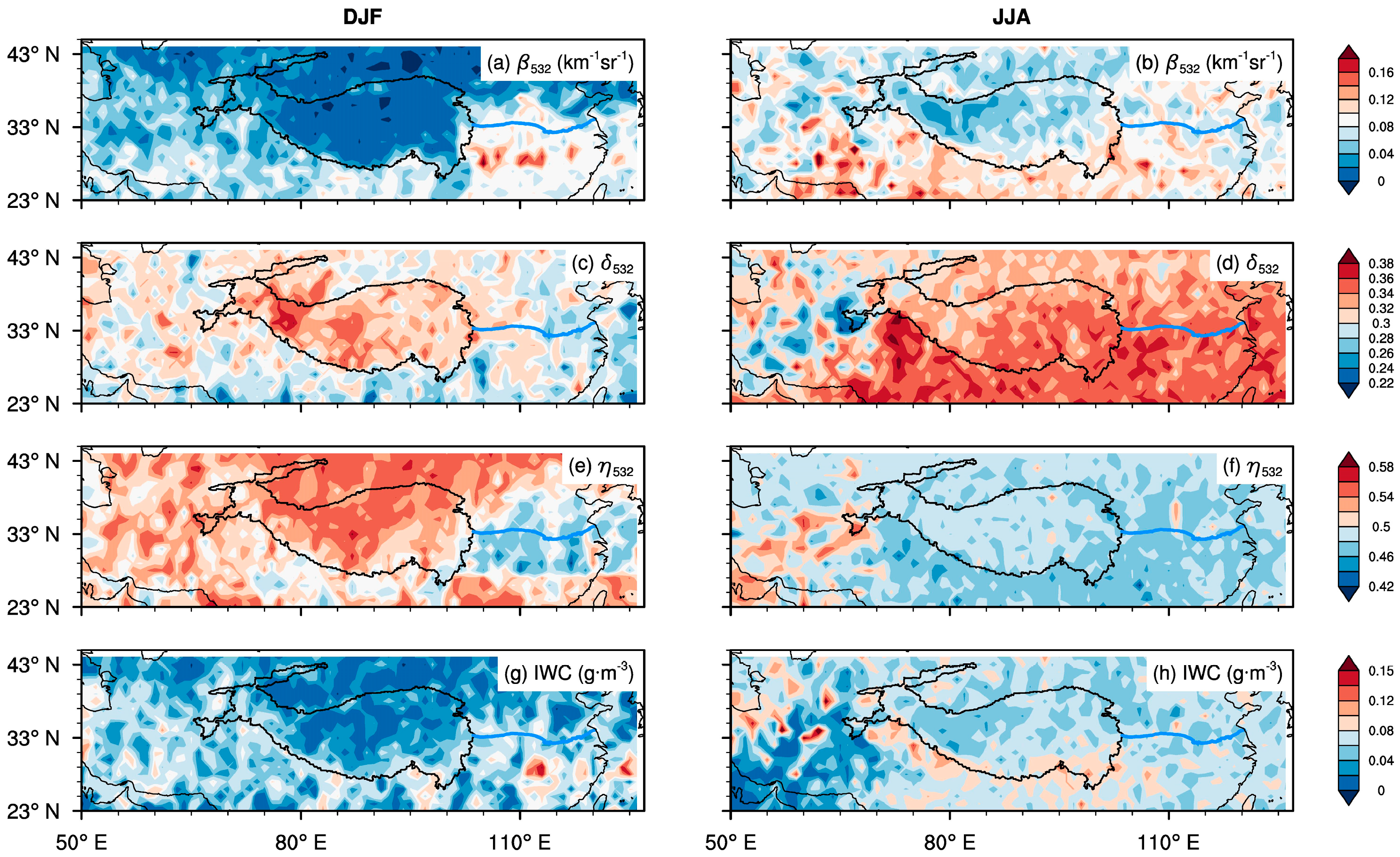
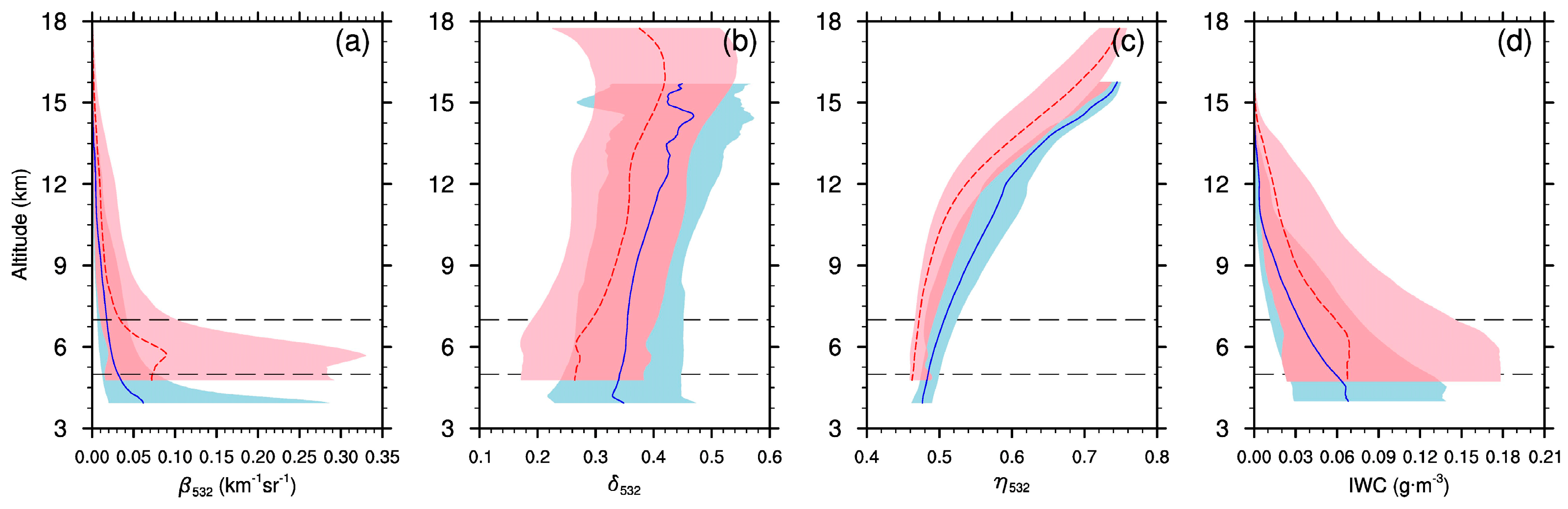
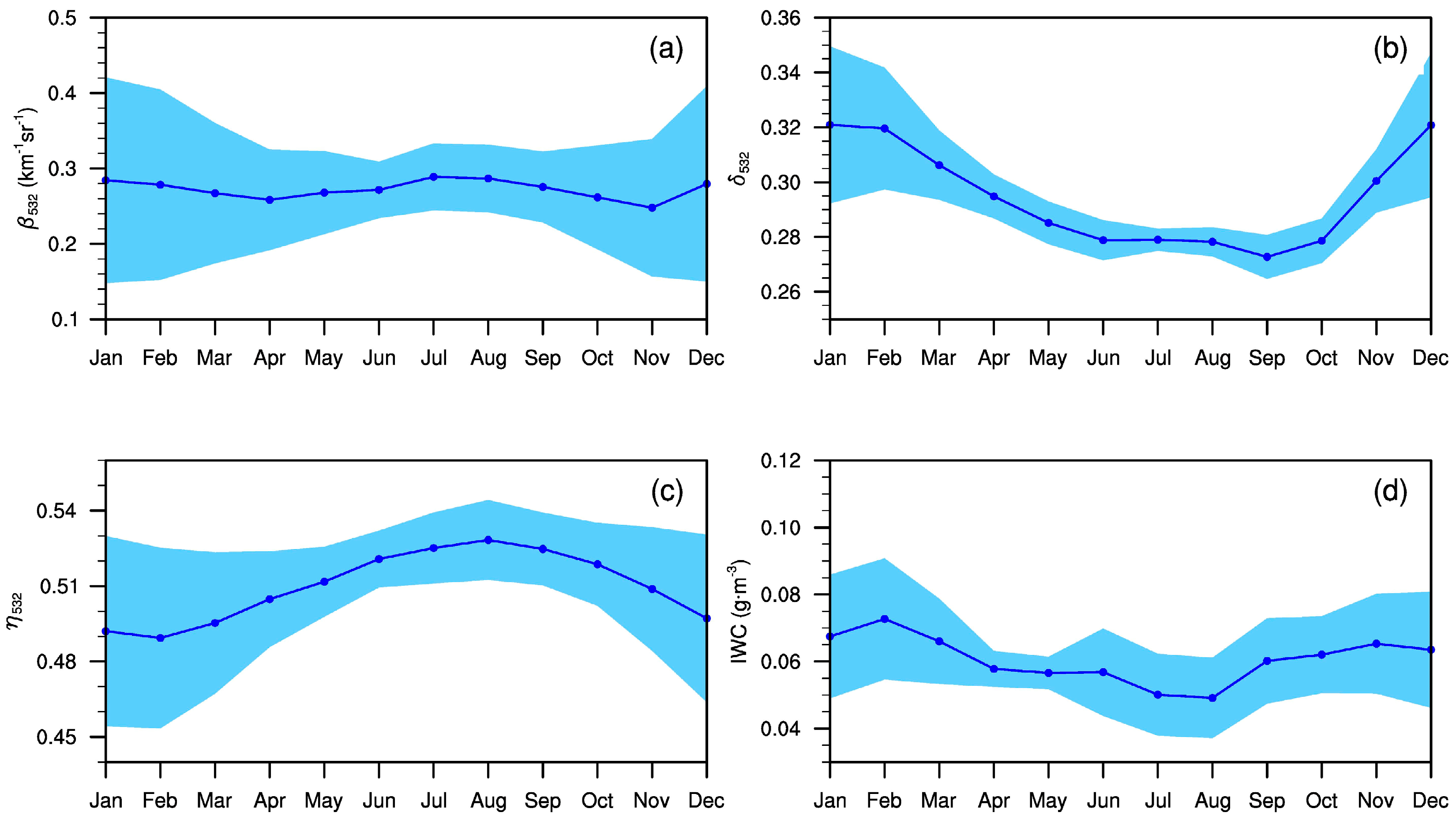
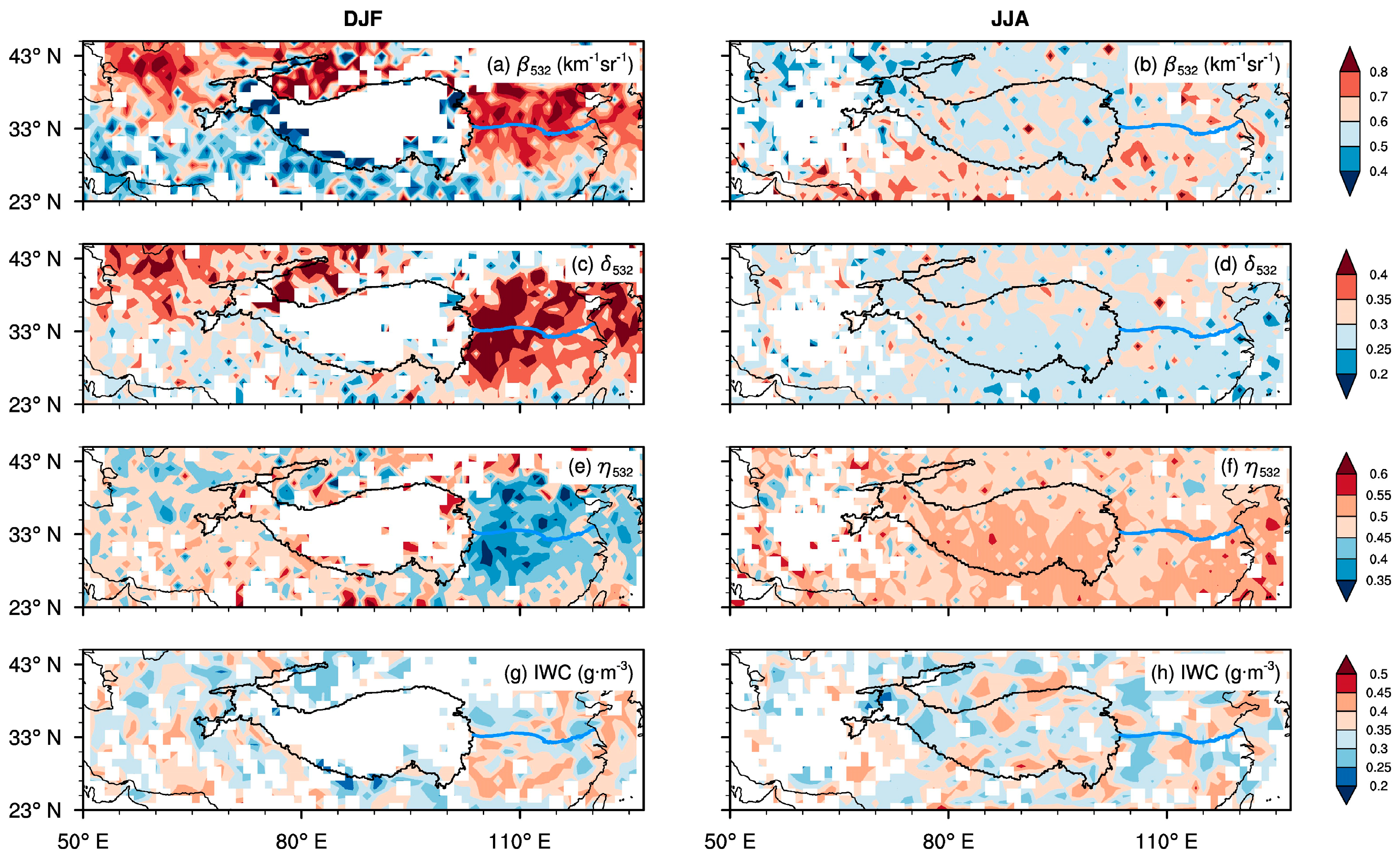
- Ice clouds over the Tibetan Plateau and surrounding regions show marked seasonal variation. In winter, the highest backscatter () and ice-water content (IWC) occurred in the south of the Qinling-Huaihe Line, the Sichuan Basin and the Yangtze Plain. In summer, these maximum move onto the Plateau, and the cloud height rises by about 1 km. Vertically, the maximum value of is near 6 km in summer but only around 4 km in winter, highlighting the pronounced seasonal contrast in the microphysical properties of Plateau ice clouds.
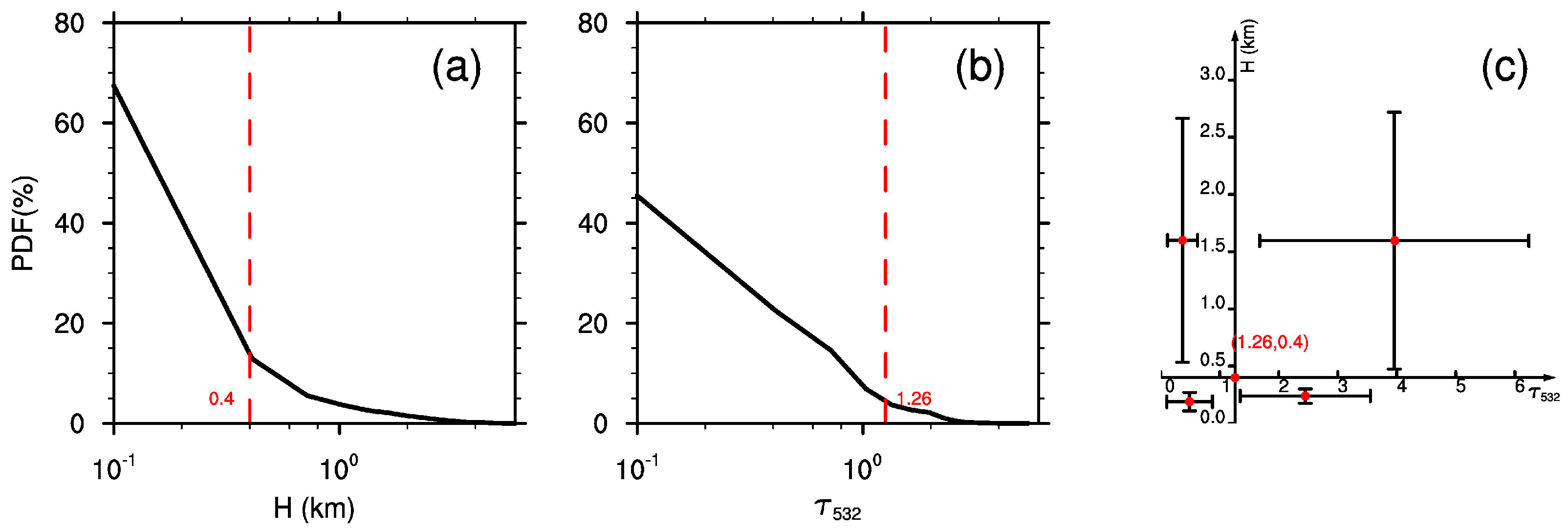
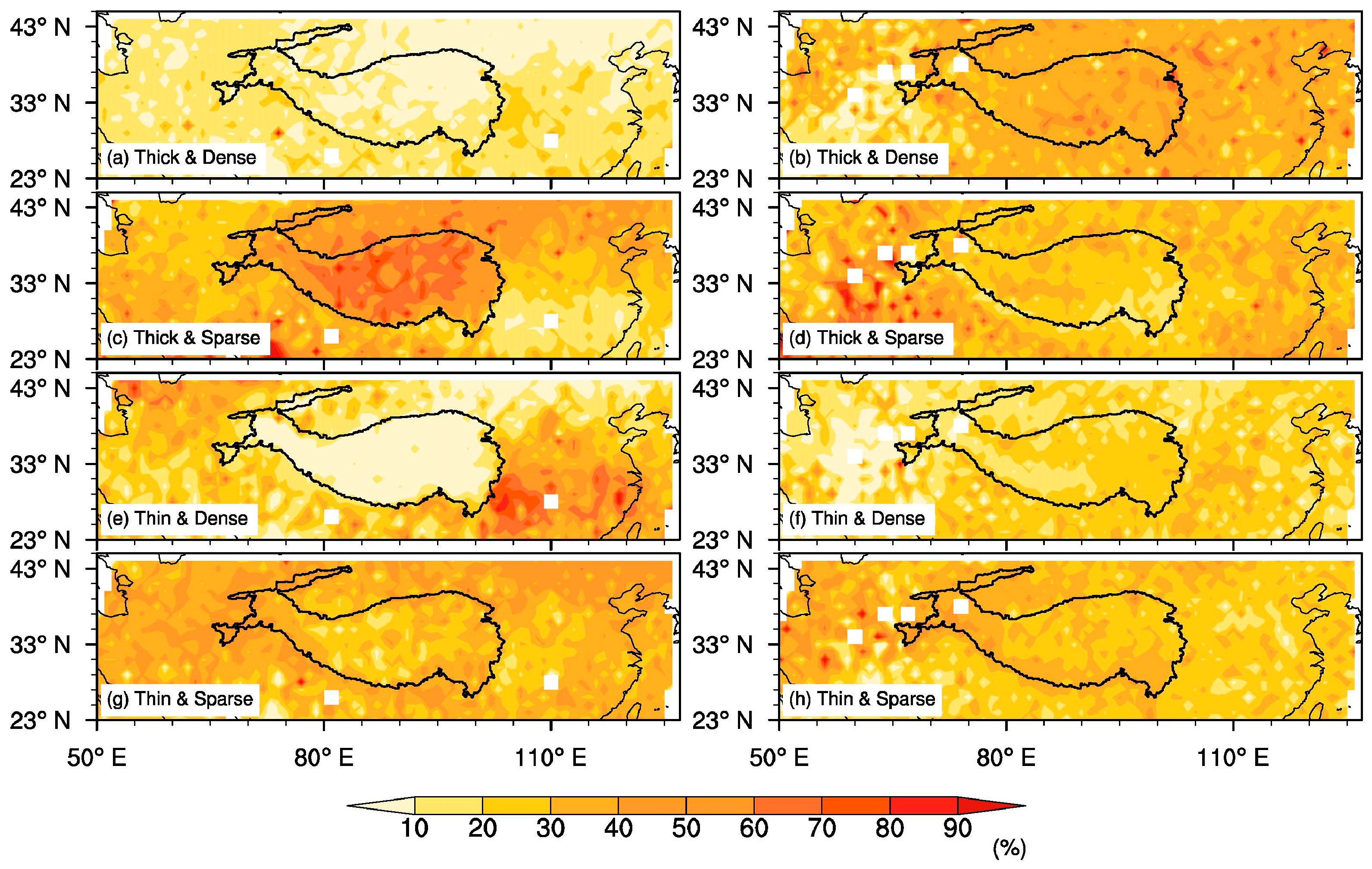
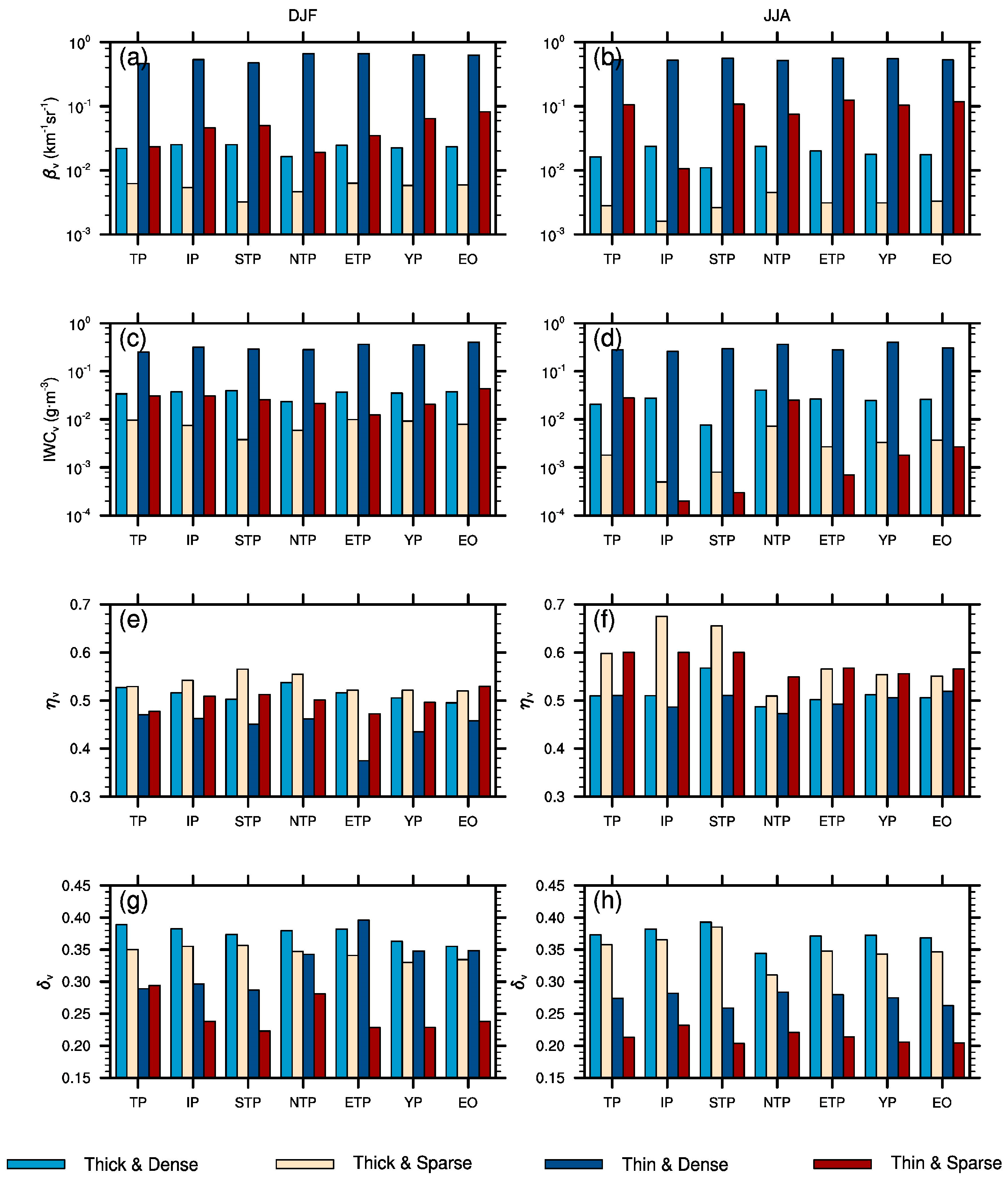
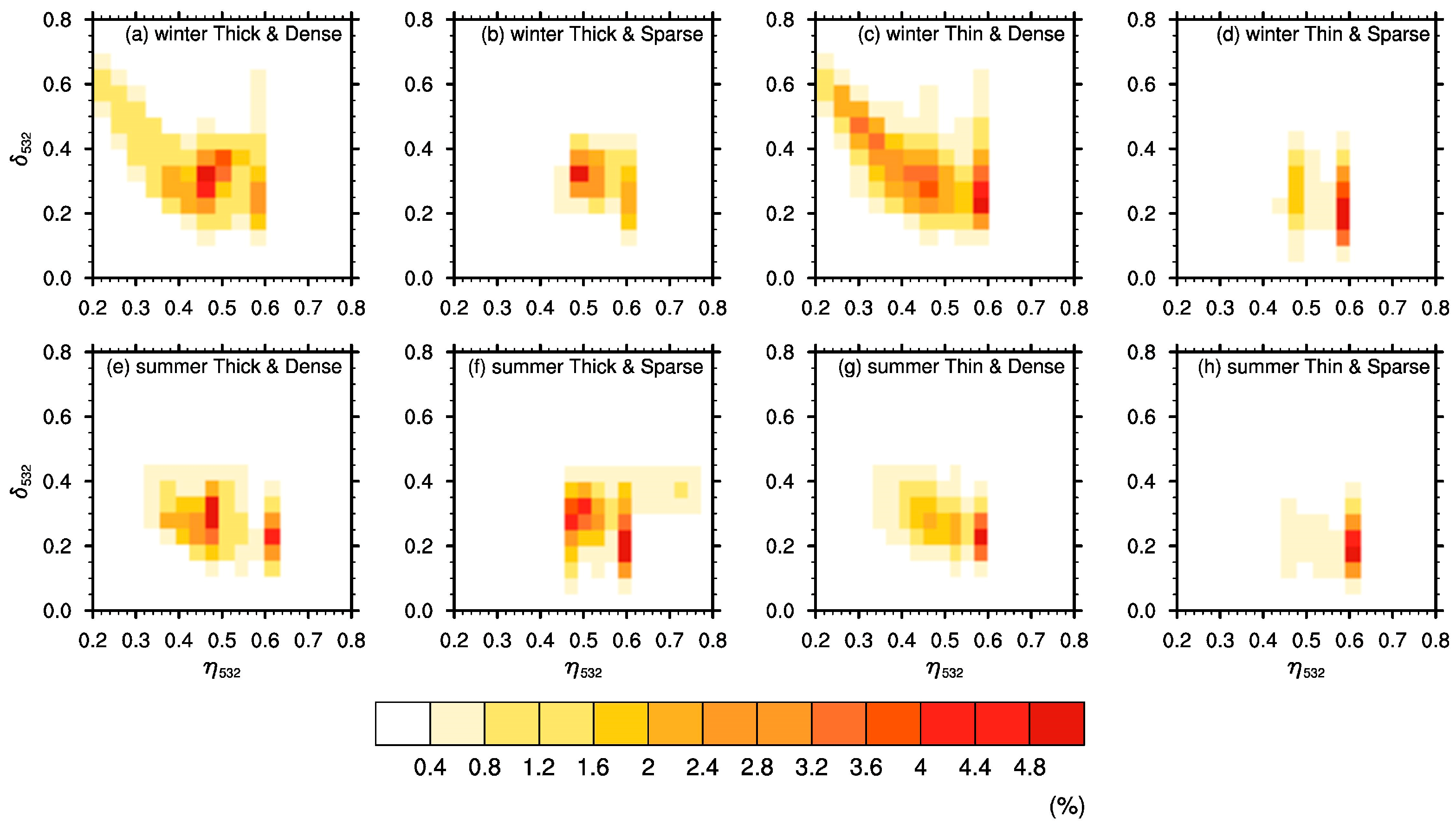
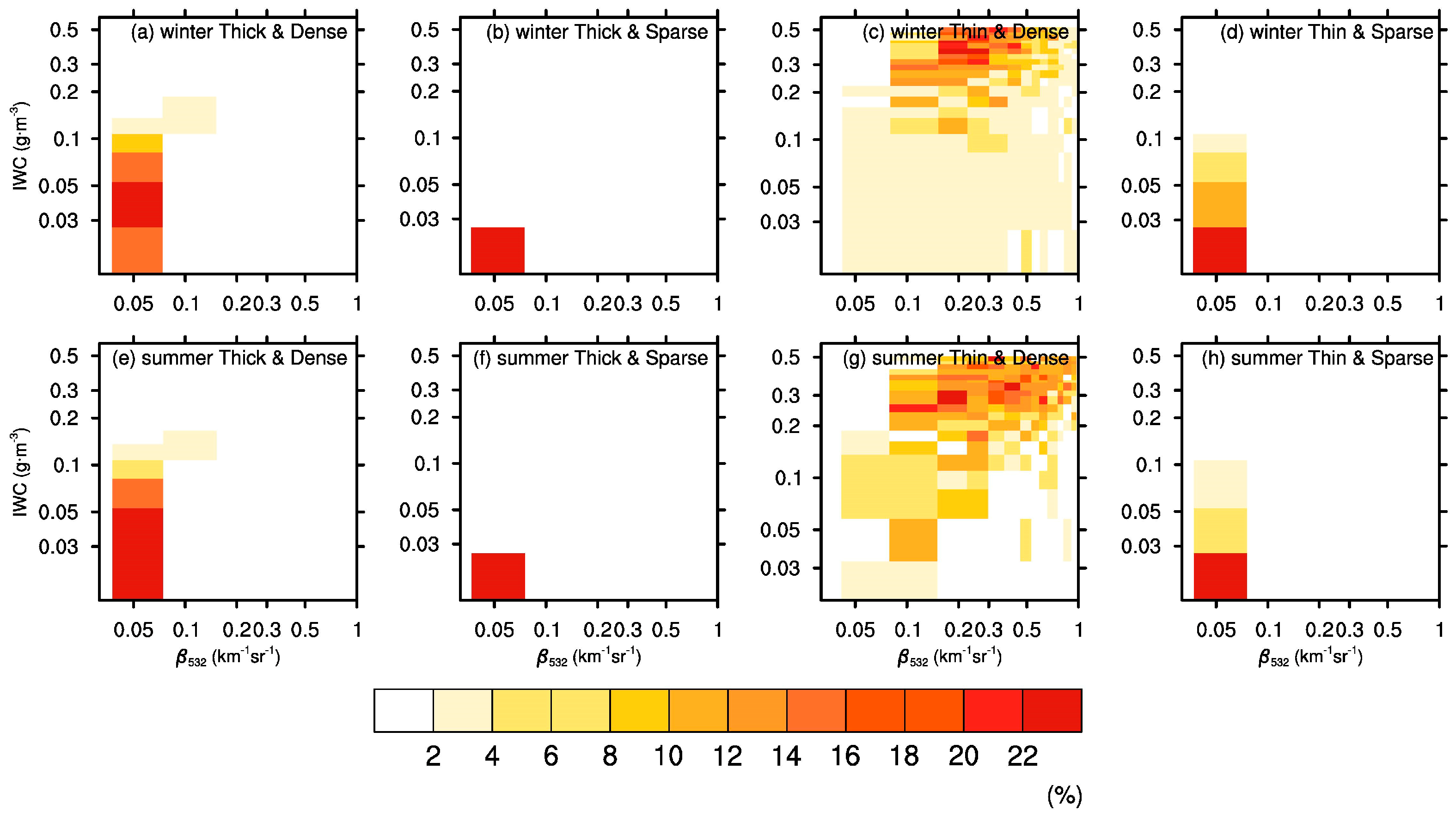
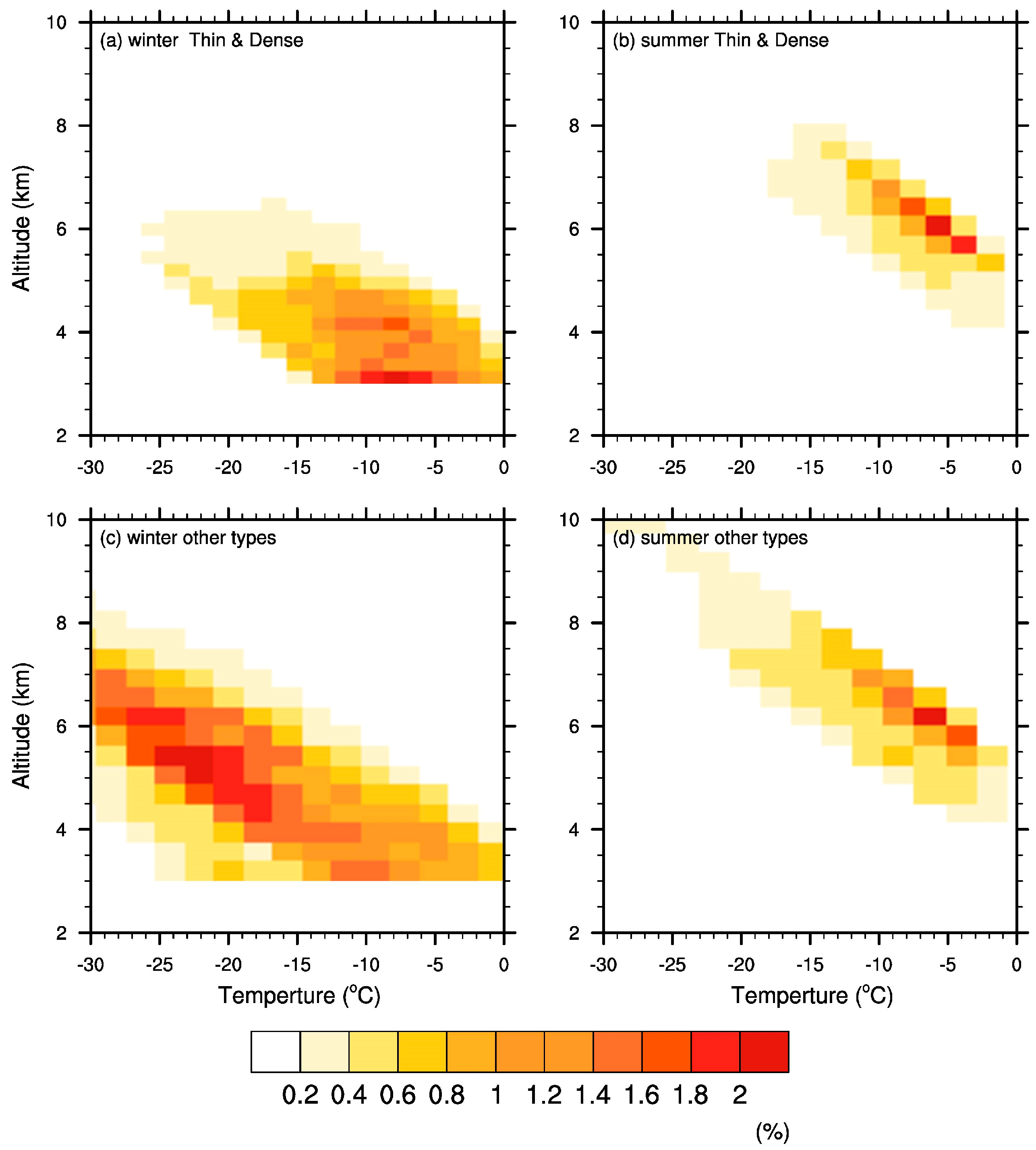
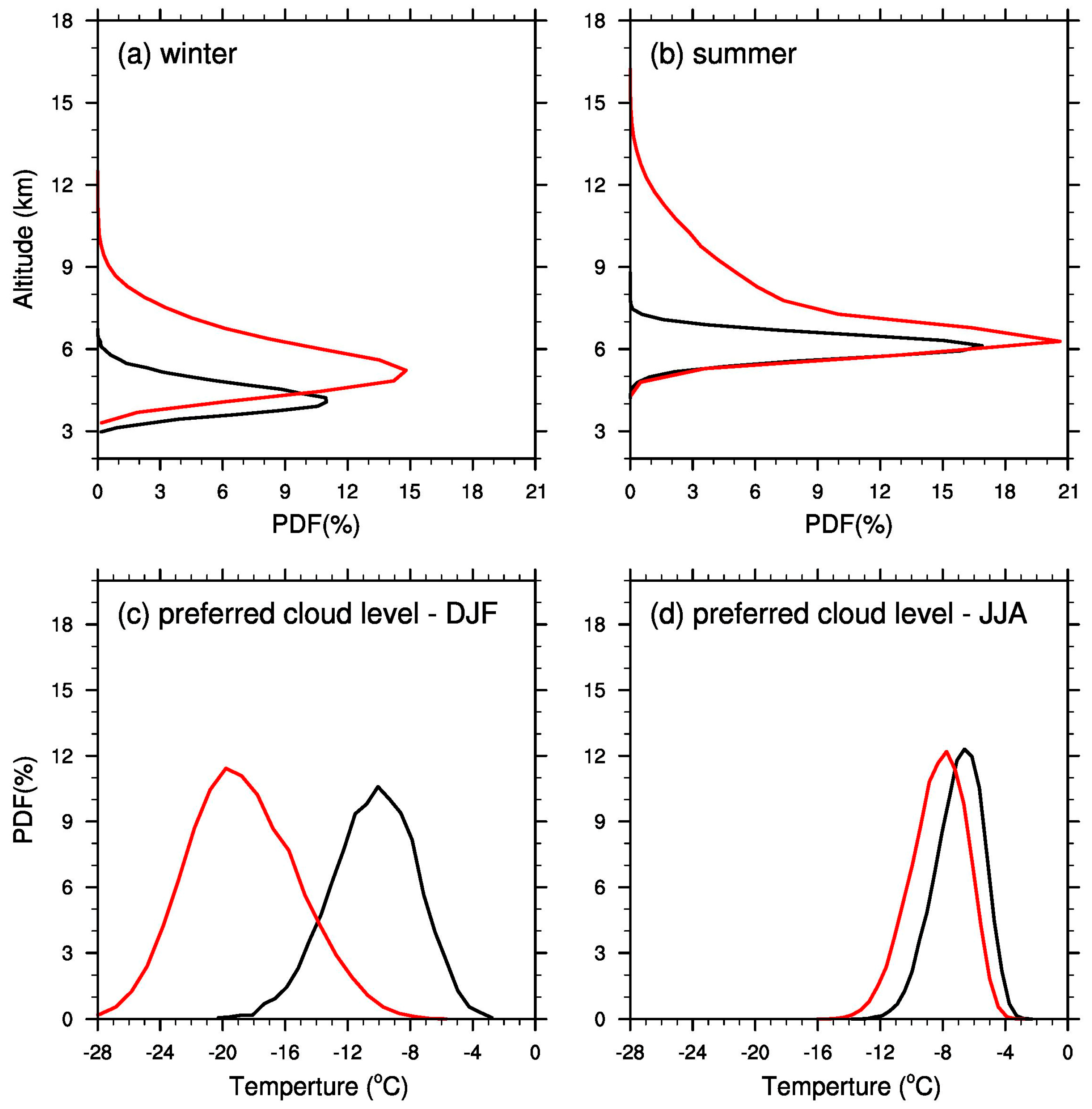
- The thin and dense clouds, defined by a geometric thickness of less than 0.4 km and an optical thickness exceeding 1.26, are extremely rare over the Tibetan Plateau in winter, yet they account for more than 30 percent of local ice cloud cases in summer. Their preferred height rises from 3–4 km (approximately −15 °C to −5 °C) in winter to 6–8 km (approximately −10 °C to −5 °C) in summer. Optically, these geometrically thin clouds exhibit the highest and IWC with the lowest multiple scattering coefficient () and the highest depolarization ratio (). They mainly occur in the mid-troposphere under relatively warm atmospheric temperatures.
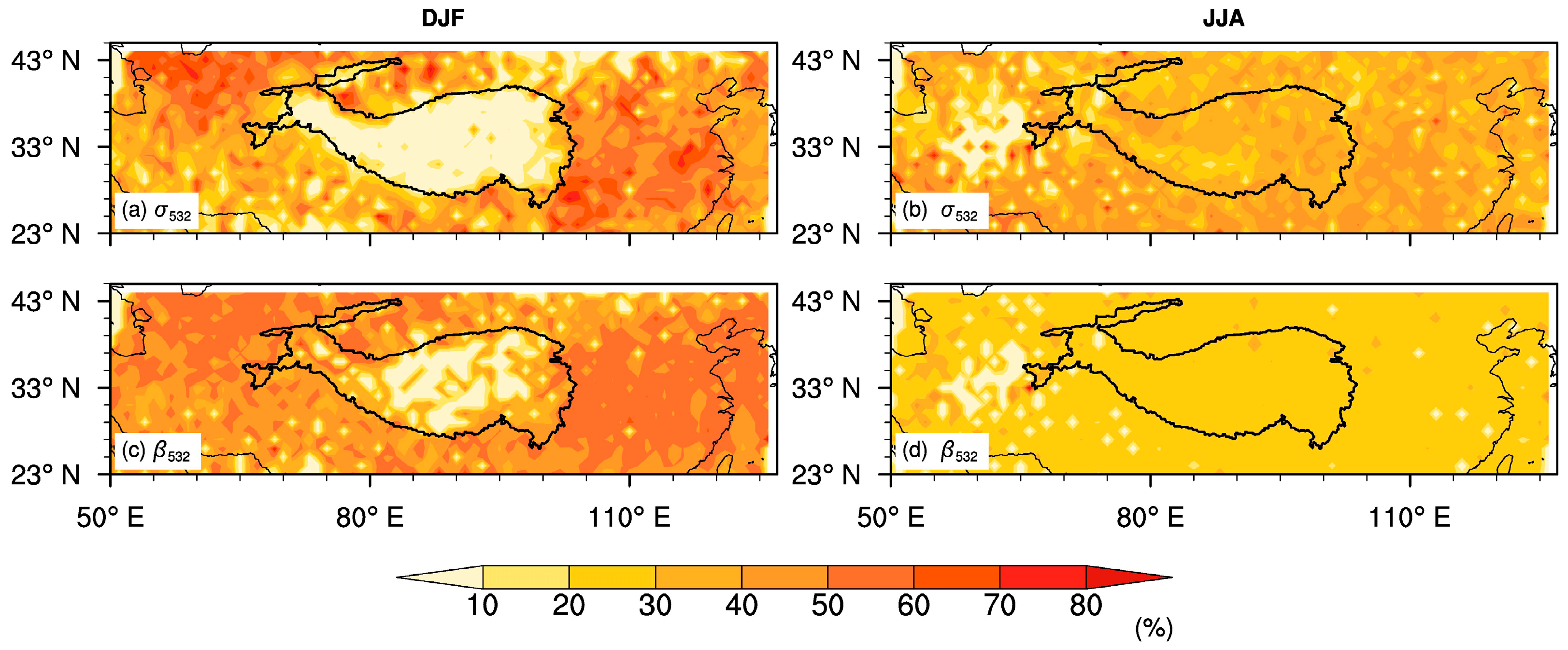
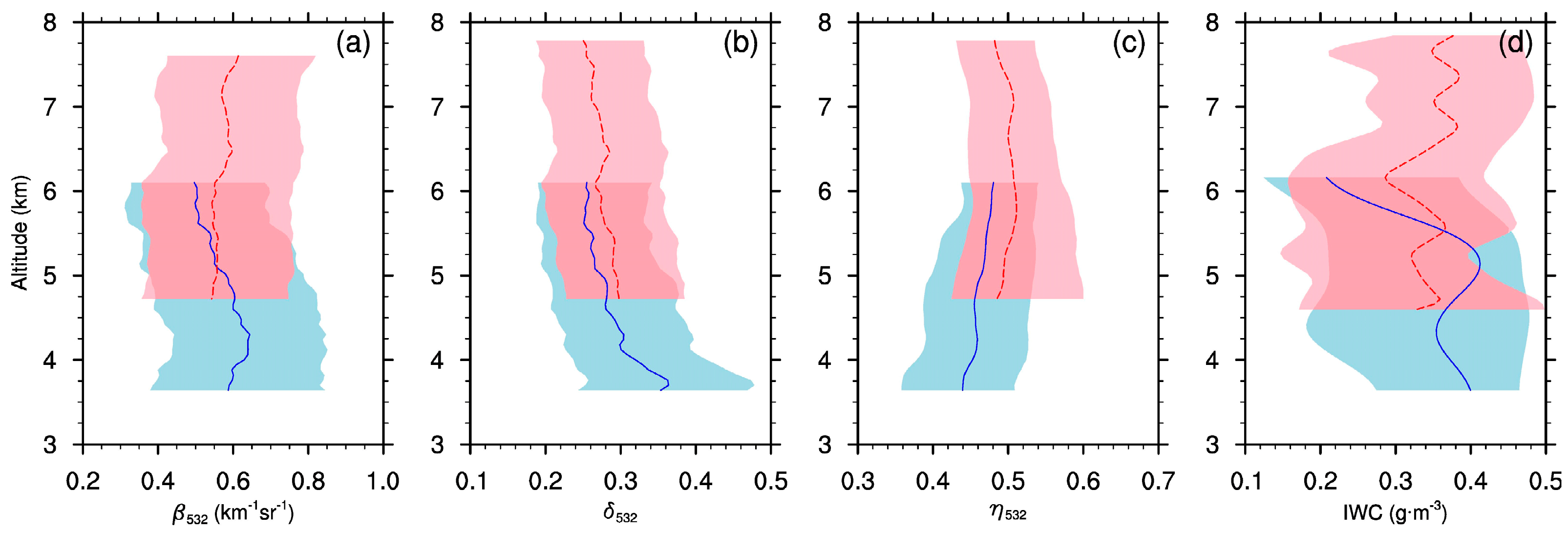
- The thin and dense clouds display outstanding optical and microphysical properties. Their backscatter coefficient () and ice water content (IWC) are one to two orders of magnitude higher than those of any other ice clouds type. Although these clouds represent only 10–20 percent of ice cloud occurrences over the Tibetan Plateau, they contribute approximately 30 percent of the total extinction and backscatter. As a result, they play a significant role in the regional radiation budget.
Author Contributions
Funding
Institutional Review Board Statement
Informed Consent Statement
Data Availability Statement
Conflicts of Interest
References
- Dong, X.Q. Preface to the special issue: Aerosols, clouds, radiation, precipitation, and their interactions. Adv. Atmos. Sci. 2018, 35, 133–134. [Google Scholar] [CrossRef]
- Bony, S.; Stevens, B.; Frierson, D.M.W.; Jakob, C.; Kageyama, M.; Pincus, R.; Shepherd, T.G.; Sherwood, S.C.; Siebesma, A.P.; Sobel, A.H.; et al. Clouds, circulation and climate sensitivity. Nat. Geosci. 2015, 8, 261–268. [Google Scholar] [CrossRef]
- Fermepin, S.; Bony, S. Influence of low-cloud radiative effects on tropical circulation and precipitation. J. Adv. Model. Earth Syst. 2014, 6, 513–526. [Google Scholar] [CrossRef]
- Li, X.Y.; Guo, X.L.; Zhu, J. Climatic features of cloud water distribution and cycle over China. Adv. Atmos. Sci. 2008, 25, 437–446. [Google Scholar] [CrossRef]
- Stephens, G.L. Cloud feedbacks in the climate system: A critical review. J. Clim. 2005, 18, 237–273. [Google Scholar] [CrossRef]
- Stubenrauch, C.J.; Rossow, W.B.; Kinne, S.; Ackerman, S.; Cesana, G.; Chepfer, H.; Di Girolamo, L.; Getzewich, B.; Guignard, A.; Heidinger, A.; et al. Assessment of Global Cloud Datasets from Satellites: Project and Database Initiated by the GEWEX Radiation Panel. Bull. Am. Meteorol. Soc. 2013, 94, 1031–1049. [Google Scholar] [CrossRef]
- Chi, Y.L.; Zhao, C.F.; Yang, Y.K.; Zhao, X.; Yang, J. Global characteristics of cloud macro-physical properties from active satellite remote sensing. Atmos. Res. 2024, 302, 107316. [Google Scholar] [CrossRef]
- Eliasson, S.; Buehler, S.A.; Milz, M.; Eriksson, P.; John, V.O. Assessing observed and modelled spatial distributions of ice water path using satellite data. Atmos. Chem. Phys. 2011, 11, 375–391. [Google Scholar] [CrossRef]
- Dion, I.A.; Ricaud, P.; Haynes, P.; Carminati, F.; Dauhut, T. Ice injected into the tropopause by deep convection—Part 1: In the austral convective tropics. Atmos. Chem. Phys. 2019, 19, 6459–6479. [Google Scholar] [CrossRef]
- Lee, S.S.; Li, Z.Q.; Mok, J.; Ahn, M.H.; Kim, B.G.; Choi, Y.S.; Jung, C.H.; Yoo, H.L. Interactions between aerosol absorption, thermodynamics, dynamics, and microphysics and their impacts on a multiple-cloud system. Clim. Dyn. 2017, 49, 3905–3921. [Google Scholar] [CrossRef]
- Cai, H.K.; Yang, Y.; Chen, Q.L. Distribution Characteristics of Cloud Types and Cloud Phases over China and Their Relationship with Cloud Temperature. Remote Sens. 2022, 14, 5601. [Google Scholar] [CrossRef]
- Bühl, J.; Seifert, P.; Engelmann, R.; Ansmann, A. Impact of vertical air motions on ice formation rate in mixed-phase cloud layers. NPJ Clim. Atmos. Sci. 2019, 2, 36. [Google Scholar] [CrossRef]
- Wang, Z.Z.; Chi, R.L.; Bo, L.; Jun, Z. Depolarization properties of cirrus clouds from polarization lidar measurements over Hefei in spring. Chin. Opt. Lett. 2008, 6, 235–237. [Google Scholar] [CrossRef]
- Sunilkumar, S.V.; Parameswaran, K. Temperature dependence of tropical cirrus properties and radiative effects. J. Geophys. Res.-Atmos. 2005, 110, D13205. [Google Scholar] [CrossRef]
- Duan, A.M.; Wu, G.X. Role of the Tibetan Plateau thermal forcing in the summer climate patterns over subtropical Asia. Clim. Dyn. 2005, 24, 793–807. [Google Scholar] [CrossRef]
- Chen, W.; Zhang, R.H.; Wu, R.G.; Wen, Z.P.; Zhou, L.T.; Wang, L.; Hu, P.; Ma, T.J.; Piao, J.L.; Song, L.; et al. Recent Advances in Understanding Multi-scale Climate Variability of the Asian Monsoon. Adv. Atmos. Sci. 2023, 40, 1429–1456. [Google Scholar] [CrossRef]
- Wu, G.; Zhuo, H.; Wang, Z.; Liu, Y. Two types of summertime heating over the Asian large-scale orography and excitation of potential-vorticity forcing I. Over Tibetan Plateau. Sci. China-Earth Sci. 2016, 59, 1996–2008. [Google Scholar] [CrossRef]
- Wu, G.; Duan, A.; Liu, Y.; Mao, J.; Ren, R.; Bao, Q.; He, B.; Liu, B.; Hu, W. Tibetan Plateau climate dynamics: Recent research progress and outlook. Natl. Sci. Rev. 2015, 2, 100–116. [Google Scholar] [CrossRef]
- Yan, Y.F.; Liu, Y.M.; Lu, J.H. Cloud vertical structure, precipitation, and cloud radiative effects over Tibetan Plateau and its neighboring regions. J. Geophys. Res.-Atmos. 2016, 121, 5864–5877. [Google Scholar] [CrossRef]
- Guan, Y.; Wang, X.; Huo, J.; Zhang, Z.; Duan, M.; Zong, X. Analysis of Macro- and Microphysical Characteristics of Ice Clouds over the Tibetan Plateau Using CloudSat/CALIPSO Data. Remote Sens. 2024, 16, 3983. [Google Scholar] [CrossRef]
- Wang, J.; Jian, B.D.; Wang, G.Y.; Zhao, Y.X.; Li, Y.R.; Letu, H.; Zhang, M.; Li, J.M. Climatology of Cloud Phase, Cloud Radiative Effects and Precipitation Properties over the Tibetan Plateau. Remote Sens. 2021, 13, 363. [Google Scholar] [CrossRef]
- Zhang, F.; Yu, Q.-R.; Mao, J.-L.; Dan, C.; Wang, Y.; He, Q.; Cheng, T.; Chen, C.; Liu, D.; Gao, Y. Possible mechanisms of summer cirrus clouds over the Tibetan Plateau. Atmos. Chem. Phys. 2020, 20, 11799–11808. [Google Scholar] [CrossRef]
- Boucher, O.; Randall, D.; Artaxo, P.; Bretherton, C.; Feingold, G.; Forster, P.; Kerminen, V.-M.; Kondo, Y.; Liao, H.; Lohmann, U. Clouds and aerosols. In Climate Change 2013: The Physical Science Basis. Contribution of Working Group I to the Fifth Assessment Report of the Intergovernmental Panel on Climate Change; Cambridge University Press: Cambridge, UK, 2013; pp. 571–657. [Google Scholar]
- Myers, T.A.; Scott, R.C.; Zelinka, M.D.; Klein, S.A.; Norris, J.R.; Caldwell, P.M. Observational constraints on low cloud feedback reduce uncertainty of climate sensitivity. Nat. Clim. Change 2021, 11, 501–507. [Google Scholar] [CrossRef]
- Zelinka, M.D.; Myers, T.A.; McCoy, D.T.; Po-Chedley, S.; Caldwell, P.M.; Ceppi, P.; Klein, S.A.; Taylor, K.E. Causes of Higher Climate Sensitivity in CMIP6 Models. Geophys. Res. Lett. 2020, 47, e2019GL085782. [Google Scholar] [CrossRef]
- Kramer, R.J.; Soden, B.J.; Pendergrass, A.G. Evaluating Climate Model Simulations of the Radiative Forcing and Radiative Response at Earth’s Surface. J. Clim. 2019, 32, 4089–4102. [Google Scholar] [CrossRef]
- Taylor, P.C. The Role of Clouds: An Introduction and Rapporteur Report. Surv. Geophys. 2012, 33, 609–617. [Google Scholar] [CrossRef]
- Zhao, Y.; Li, J.; Zhang, W.; Deng, C.; Li, Y. Cloud Response Is Significantly Biased by CMIP6 Over the Tibetan Plateau. Geophys. Res. Lett. 2022, 49, e2022GL100903. [Google Scholar] [CrossRef]
- Bjordal, J.; Storelvmo, T.; Alterskjær, K.; Carlsen, T. Equilibrium climate sensitivity above 5 °C plausible due to state-dependent cloud feedback. Nat. Geosci. 2020, 13, 718–721. [Google Scholar] [CrossRef]
- Hu, L.; Sun, Z.; Deng, D.; Roff, G. Evaluation of Summer Monsoon Clouds over the Tibetan Plateau Simulated in the ACCESS Model Using Satellite Products. Adv. Atmos. Sci. 2019, 36, 326–338. [Google Scholar] [CrossRef]
- Zhu, X.H.; Konoshonkin, A.; Wang, Z.Z.; Kustova, N.; Shishko, V.; Timofeev, D.; Tkachev, I.; Wang, Y.J.; Liu, D. Backscattering properties of quasi-horizontally oriented ice crystals for scanning lidars with small tilt angles. Opt. Express 2025, 33, 14012–14022. [Google Scholar] [CrossRef]
- Zhu, X.H.; Wang, Z.Z.; Liu, D.; Cai, H.K. The First Global Insight of Cirrus Clouds Characterized by Hollow Ice Crystals From Space-Borne Lidar. Geophys. Res. Lett. 2024, 51, e2024GL109852. [Google Scholar] [CrossRef]
- Zhu, X.H.; Wang, Z.Z.; Konoshonkin, A.; Kustova, N.; Shishko, V.; Timofeev, D.; Tkachev, I.; Liu, D. Backscattering properties of randomly oriented hexagonal hollow columns for lidar application. Opt. Express 2023, 31, 35257–35271. [Google Scholar] [CrossRef] [PubMed]
- Yang, P.; Hioki, S.; Saito, M.; Kuo, C.-P.; Baum, B.A.; Liou, K.-N. A Review of Ice Cloud Optical Property Models for Passive Satellite Remote Sensing. Atmosphere 2018, 9, 499. [Google Scholar] [CrossRef]
- Wu, D.; Hu, Y.X.; McCormick, M.P.; Yan, F.Q. Global cloud-layer distribution statistics from 1 year CALIPSO lidar observations. Int. J. Remote Sens. 2011, 32, 1269–1288. [Google Scholar] [CrossRef]
- Li, J.; Wang, W.-C.; Dong, X.; Mao, J. Cloud-radiation-precipitation associations over the Asian monsoon region: An observational analysis. Clim. Dyn. 2017, 49, 3237–3255. [Google Scholar] [CrossRef]
- Yin, J.; Wang, D.; Xu, H.; Zhai, G. An investigation into the three-dimensional cloud structure over East Asia from the CALIPSO-GOCCP Data. Sci. China Earth Sci. 2015, 58, 2236–2248. [Google Scholar] [CrossRef]
- Winker, D.M.; Hunt, W.H.; McGill, M.J. Initial performance assessment of CALIOP. Geophys. Res. Lett. 2007, 34, L19803. [Google Scholar] [CrossRef]
- Yorks, J.E.; Hlavka, D.L.; Vaughan, M.A.; McGill, M.J.; Hart, W.D.; Rodier, S.; Kuehn, R. Airborne validation of cirrus cloud properties derived from CALIPSO lidar measurements: Spatial properties. J. Geophys. Res.-Atmos. 2011, 116, D19207. [Google Scholar] [CrossRef]
- Rogers, R.R.; Hostetler, C.A.; Hair, J.W.; Ferrare, R.A.; Liu, Z.; Obland, M.D.; Harper, D.B.; Cook, A.L.; Powell, K.A.; Vaughan, M.A.; et al. Assessment of the CALIPSO Lidar 532 nm attenuated backscatter calibration using the NASA LaRC airborne High Spectral Resolution Lidar. Atmos. Chem. Phys. 2011, 11, 1295–1311. [Google Scholar] [CrossRef]
- Liu, Z.Y.; Vaughan, M.; Winker, D.; Kittaka, C.; Getzewich, B.; Kuehn, R.; Omar, A.; Powell, K.; Trepte, C.; Hostetler, C. The CALIPSO Lidar Cloud and Aerosol Discrimination: Version 2 Algorithm and Initial Assessment of Performance. J. Atmos. Ocean. Technol. 2009, 26, 1198–1213. [Google Scholar] [CrossRef]
- Kim, S.W.; Berthier, S.; Raut, J.C.; Chazette, P.; Dulac, F.; Yoon, S.C. Validation of aerosol and cloud layer structures from the space-borne lidar CALIOP using a ground-based lidar in Seoul, Korea. Atmos. Chem. Phys. 2008, 8, 3705–3720. [Google Scholar] [CrossRef]
- Pappalardo, G.; Wandinger, U.; Mona, L.; Hiebsch, A.; Mattis, I.; Amodeo, A.; Ansmann, A.; Seifert, P.; Linné, H.; Apituley, A.; et al. EARLINET correlative measurements for CALIPSO: First intercomparison results. J. Geophys. Res.-Atmos. 2010, 115, D00H19. [Google Scholar] [CrossRef]
- Mioche, G.; Josset, D.; Gayet, J.F.; Pelon, J.; Garnier, A.; Minikin, A.; Schwarzenboeck, A. Validation of the CALIPSO-CALIOP extinction coefficients from in situ observations in midlatitude cirrus clouds during the CIRCLE-2 experiment. J. Geophys. Res.-Atmos. 2010, 115, D00H25. [Google Scholar] [CrossRef]
- Hersbach, H.; Bell, B.; Berrisford, P.; Hirahara, S.; Horányi, A.; Muñoz-Sabater, J.; Nicolas, J.; Peubey, C.; Radu, R.; Schepers, D.; et al. The ERA5 global reanalysis. Q. J. R. Meteorol. Soc. 2020, 146, 1999–2049. [Google Scholar] [CrossRef]
- Kukulies, J.; Chen, D.L.; Wang, M.H. Temporal and spatial variations of convection and precipitation over the Tibetan Plateau based on recent satellite observations. Part I: Cloud climatology derived from CloudSat and CALIPSO. Int. J. Climatol. 2019, 39, 5396–5412. [Google Scholar] [CrossRef]
- Gryspeerdt, E.; Sourdeval, O.; Quaas, J.; Delanoë, J.; Krämer, M.; Kühne, P. Ice crystal number concentration estimates from lidar-radar satellite remote sensing—Part 2: Controls on the ice crystal number concentration. Atmos. Chem. Phys. 2018, 18, 14351–14370. [Google Scholar] [CrossRef]
- Shang, H.Z.; Letu, H.S.; Nakajima, T.Y.; Wang, Z.M.; Ma, R.; Wang, T.X.; Lei, Y.H.; Ji, D.B.; Li, S.S.; Shi, J.C. Diurnal cycle and seasonal variation of cloud cover over the Tibetan Plateau as determined from Himawari-8 new-generation geostationary satellite data. Sci. Rep. 2018, 8, 1105. [Google Scholar] [CrossRef] [PubMed]
- Young, S.A.; Vaughan, M.A.; Garnier, A.; Tackett, J.L.; Lambeth, J.D.; Powell, K.A. Extinction and optical depth retrievals for CALIPSO’s Version 4 data release. Atmos. Meas. Tech. 2018, 11, 5701–5727. [Google Scholar] [CrossRef]
- Kalapureddy, M.C.R.; Patra, S.; Dhavale, V.; Nair, M.R. CloudSat inferred contrasting monsoon intra-seasonal variation in the cloud vertical structure over Indian regions. Clim. Dyn. 2023, 61, 1567–1589. [Google Scholar] [CrossRef]
- Winker, D.M.; Vaughan, M.A.; Omar, A.; Hu, Y.X.; Powell, K.A.; Liu, Z.Y.; Hunt, W.H.; Young, S.A. Overview of the CALIPSO Mission and CALIOP Data Processing Algorithms. J. Atmos. Ocean. Technol. 2009, 26, 2310–2323. [Google Scholar] [CrossRef]
- Giannakaki, E.; Balis, D.S.; Amiridis, V.; Kazadzis, S. Optical and geometrical characteristics of cirrus clouds over a Southern European lidar station. Atmos. Chem. Phys. 2007, 7, 5519–5530. [Google Scholar] [CrossRef]
- Lawson, R.P.; Jensen, E.; Mitchell, D.L.; Baker, B.; Mo, Q.X.; Pilson, B. Microphysical and radiative properties of tropical clouds investigated in TC4 and NAMMA. J. Geophys. Res.-Atmos. 2010, 115, D00J08. [Google Scholar] [CrossRef]
- Zhang, M.H.; Lin, W.Y.; Klein, S.A.; Bacmeister, J.T.; Bony, S.; Cederwall, R.T.; Del Genio, A.D.; Hack, J.J.; Loeb, N.G.; Lohmann, U.; et al. Comparing clouds and their seasonal variations in 10 atmospheric general circulation models with satellite measurements. J. Geophys. Res.-Atmos. 2005, 110, D15S02. [Google Scholar] [CrossRef]
- Wu, Y.Q.; Gao, J.; Zhao, A.B. Cloud properties and dynamics over the Tibetan Plateau—A review. Earth-Sci. Rev. 2024, 248, 104633. [Google Scholar] [CrossRef]
- Dima, I.M.; Wallace, J.M. On the seasonality of the Hadley cell. J. Atmos. Sci. 2003, 60, 1522–1527. [Google Scholar] [CrossRef]
- Xing, Y.X.; Chen, Y.; Yan, S.R.; Cao, X.Y.; Zhou, Y.; Zhang, X.Y.; Shi, T.L.; Niu, X.Y.; Wu, D.Y.; Cui, J.C.; et al. Dust storms from the Taklamakan Desert significantly darken snow surface on surrounding mountains. Atmos. Chem. Phys. 2024, 24, 5199–5219. [Google Scholar] [CrossRef]
- Huo, J.; Tian, Y.; Wu, X.; Han, C.; Liu, B.; Bi, Y.; Duan, S.; Lyu, D. Properties of ice cloud over Beijing from surface Ka-band radar observations during 2014–2017. Atmos. Chem. Phys. 2020, 20, 14377–14392. [Google Scholar] [CrossRef]
- Deng, X.; Xie, C.B.; Liu, D.; Wang, B.X.; Xing, K.M.; Chen, J.F.; Ji, J.; Wang, Y.J. Characteristics and seasonal variations of cirrus clouds from ground-based lidar and satellite observations over Shouxian Area, China. Opt. Express 2024, 32, 21102–21120. [Google Scholar] [CrossRef]
- Aswini, M.A.; Ruchith, R.D.; Das, S.K.; Ramaswamy, V.; Muraleedharan, P.M.; Kumar, A. Seasonal distribution of cirrus cloud characteristics and their rapid descent from polarization lidar measurements at the west coast of India. Theor. Appl. Climatol. 2023, 154, 43–57. [Google Scholar] [CrossRef]
- Gierens, K.; Wilhelm, L.; Hofer, S.; Rohs, S. The effect of ice supersaturation and thin cirrus on lapse rates in the upper troposphere. Atmos. Chem. Phys. 2022, 22, 7699–7712. [Google Scholar] [CrossRef]





| Month | Jan | Feb | Mar | Apr | May | Jun | Jul | Aug | Sep | Oct | Nov | Dec |
|---|---|---|---|---|---|---|---|---|---|---|---|---|
| lidar profiles | 1748 | 1632 | 1680 | 1891 | 2031 | 1742 | 1690 | 1700 | 1325 | 1651 | 1672 | 1784 |
Disclaimer/Publisher’s Note: The statements, opinions and data contained in all publications are solely those of the individual author(s) and contributor(s) and not of MDPI and/or the editor(s). MDPI and/or the editor(s) disclaim responsibility for any injury to people or property resulting from any ideas, methods, instructions or products referred to in the content. |
© 2026 by the authors. Licensee MDPI, Basel, Switzerland. This article is an open access article distributed under the terms and conditions of the Creative Commons Attribution (CC BY) license.
Share and Cite
Cai, H.; Li, F.; Chen, Q.; Mao, Y.; Shi, C. The Contribution of the Thin and Dense Cloud to the Microphysical Properties of Ice Clouds over the Tibetan Plateau and Its Surrounding Regions. Atmosphere 2026, 17, 149. https://doi.org/10.3390/atmos17020149
Cai H, Li F, Chen Q, Mao Y, Shi C. The Contribution of the Thin and Dense Cloud to the Microphysical Properties of Ice Clouds over the Tibetan Plateau and Its Surrounding Regions. Atmosphere. 2026; 17(2):149. https://doi.org/10.3390/atmos17020149
Chicago/Turabian StyleCai, Hongke, Fangneng Li, Quanliang Chen, Yaqin Mao, and Chong Shi. 2026. "The Contribution of the Thin and Dense Cloud to the Microphysical Properties of Ice Clouds over the Tibetan Plateau and Its Surrounding Regions" Atmosphere 17, no. 2: 149. https://doi.org/10.3390/atmos17020149
APA StyleCai, H., Li, F., Chen, Q., Mao, Y., & Shi, C. (2026). The Contribution of the Thin and Dense Cloud to the Microphysical Properties of Ice Clouds over the Tibetan Plateau and Its Surrounding Regions. Atmosphere, 17(2), 149. https://doi.org/10.3390/atmos17020149