Article

Concentration of PM2.5 and PM10 Particulate Matter in Various Indoor Environments: A Literature Review


by
Angelika Baran
and
Ewa Zender-Świercz
*
Faculty of Environmental Engineering, Geomatics and Renewable Energy, Kielce University of Technology, 25-314 Kielce, Poland
*
Author to whom correspondence should be addressed.
Atmosphere 2026, 17(1), 45; https://doi.org/10.3390/atmos17010045
Submission received: 27 October 2025 / Revised: 23 December 2025 / Accepted: 26 December 2025 / Published: 29 December 2025
(This article belongs to the Section Air Quality and Health)

Abstract

Indoor exposure to particulate matter (PM2.5 and PM10) remains a significant public health problem, especially in high-traffic areas, where outdoor pollution, building characteristics, and user activity jointly influence indoor air quality. This study aims to synthesise and compare the effectiveness of key technical solutions to reduce indoor PM concentrations in different types of buildings. A comprehensive review and comparative analysis of published experimental and field studies were conducted, covering residential, educational, office, medical, sports, and heritage buildings. The interventions evaluated included mechanical ventilation and filtration systems, portable HEPA air cleaners, integrated building envelope solutions, airflow optimisation strategies, and selected auxiliary technologies. Reported performance metrics such as baseline indoor and outdoor PM concentrations, air exchange rate (ACH), filter class, clean air delivery rate (CADR), and percentage reduction were systematically analysed. The results indicate that mechanical filtration, particularly high-efficiency HVAC (Heating Ventilation and Air-Conditioning) systems and HEPA filters, provide the most reliable and repeatable reductions in PM2.5 and PM10, especially under controlled airflow and recirculation conditions. Integrated approaches that combine airtight building envelopes, mechanical ventilation, and local air purification achieved the highest overall effectiveness. The findings confirm that successful PM mitigation requires context-specific multicomponent strategies tailored to building type, outdoor pollution load, occupancy, and ventilation design.

1. Introduction

The PM10 and PM2.5 particles are becoming increasingly important in the context of public health and air quality. Since 2013, they have been classified as Group 1 carcinogens by the IARC [1]. It is worth paying attention not only to outdoor pollution but also to the pollutants present indoors [2]. Indoor air quality (IAQ) can be significantly worse than outdoor air quality. The impact of fine particulate matter on human health is complex and should not be overlooked. The effects of PM10 and PM2.5 are not limited to respiratory diseases, but also include cardiovascular, metabolic, and neoplastic disorders. It is the cumulative and coexisting burden of multiple diseases that largely determines the overall health impact of particulate matter, thereby influencing work capacity and comfort in occupational environments.
Suspended particulate matter PM10 and PM2.5 is defined as the fraction of particles with an aerodynamic diameter of ≤10 µm and ≤2.5 µm, respectively, determined based on the sampling characteristics of a reference sampler according to the EN 12341 standard [3]. These fractions include particles that can remain airborne for extended periods. They can penetrate the lungs and enter the bloodstream. In office environments, pollutants often accumulate on office equipment, building materials, and even furniture [3,4].
IAQ is of key importance for human health. Improper indoor air parameters can lead to health problems such as allergies, asthma, or other respiratory diseases. To support the World Health Organisation (WHO), studies on the effects of PM2.5 and PM10 particles on human health were carried out. PM2.5 and PM10 were found to be significantly associated with all-cause mortality. These causes included deaths from cardiovascular disease (ischemic heart disease), cerebrovascular disease, respiratory diseases, lower respiratory tract infections, and lung cancer [4,5,6,7]. Furthermore, research findings indicate that air pollution, especially the presence of PM2.5 and PM10 particles, may contribute to increased transmission and higher mortality from diseases such as COVID-19 [8,9,10,11].
In 2021, the World Health Organisation (WHO) released revised global air quality guidelines that significantly tightened the recommended exposure limits for particulate matter. The new guideline values for indoor and outdoor environments specify annual limits of 5 µg·m−3 for PM2.5 and 15 µg·m−3 for PM10, as well as 24 h limits of 15 µg·m−3 for PM2.5 and 45 µg·m−3 for PM10 [12]. These updated thresholds reflect strong epidemiological evidence, demonstrating that adverse health effects occur even at low concentrations of fine particles.
Recent measurements carried out in residential, educational, office, and service buildings frequently show concentrations that exceed these WHO recommendations, particularly in spaces with limited ventilation or strong internal emission sources such as cooking, biomass combustion, or particle resuspension. Studies published between 2021 and 2024 report typical indoor PM2.5 levels ranging between 20–80 µg·m−3, with episodic peaks that substantially exceed outdoor background values [12,13,14,15,16]. The WHO stresses that there is no safe threshold for PM2.5, and that chronic exposure above the recommended limits is strongly associated with cardiovascular disease, respiratory disorders, and increased all-cause mortality [3,4,5,6,7,12].
Growing evidence indicates that HEPA (high-efficiency particulate air filtration), as part of a comprehensive risk management strategy, can reduce indoor PM2.5 concentrations and benefit cardiovascular health by reducing exposure to particulate matter [17,18,19,20]. Reduction in indoor pollutant concentrations is also influenced by the use of air purifiers and advanced air conditioning systems [21,22,23,24,25,26]. People are estimated to spend approximately 90% of their time indoors [27,28]. In that case, interventions aimed at lowering PM2.5 concentrations in indoor environments may be an effective way to reduce overall exposure to (particulate matter) PM. Therefore, effective indoor air management requires the implementation of high-efficiency filtration, properly designed mechanical ventilation, and continuous monitoring of IAQ parameters. Integrating current WHO guidelines into this review highlights the discrepancy between recommended concentrations and real indoor conditions and underscores the need for more research on the performance of particulate reduction technologies in indoor environments [12].
The purpose of this article is to review current scientific knowledge on PM concentrations in indoor environments. This article focusses on discussing the available literature on emission sources, concentration levels, and applied methods to reduce the pollution of particulate matter indoors. Analysis also helps identify research gaps that can serve as a basis for future studies and complement existing scientific projects in this field.
The novelty of this article lies in its comprehensive and interdisciplinary approach to the assessment of PM2.5 and PM10 concentrations in a wide range of indoor environments, including residential, educational, office, medical, sports, and heritage buildings. The originality of this work is further reflected in the integration of environmental engineering, public health, measurement technologies, and technical solutions to improve indoor air quality. This article synthesises and compares the results of empirical and field studies conducted in different countries, climatic zones, and functional contexts. It took into account the influence of factors such as ventilation, airtightness of the building envelope, occupant activity, seasonality, and episodic outdoor pollution events.
A key element of the originality of this paper is the comparative analysis of the effectiveness of the main technical solutions applied to reduce indoor PM2.5 and PM10 concentrations, including HVAC systems equipped with high-efficiency and HEPA filters, portable air purifiers, and integrated approaches combining mechanically controlled ventilation, filtration, and building design solutions. Systematic comparison of technical parameters (e.g., air exchange rate, filter class, and clean air delivery rate—CADR) with the reduction in particulate matter in the air achieved enables the formulation of application-orientated conclusions that are relevant for designers, engineers, and decision-makers. This article also highlights the role of innovative mitigation strategies, such as the use of biodegradable filters and green walls, indicating directions for the further development of applied research.
The contribution of this work to science is expressed through the identification of research gaps and the need for further analysis, particularly with respect to the relationship between long-term PM concentration measurements and their real impact on human health and performance. This article also emphasises the importance of proper selection and interpretation of measurement methods and outlines directions for future research, including the development of innovative technologies to improve indoor air quality.
The importance of this article for science comes from its holistic approach to the problem of particulate matter in indoor air. It not only synthesises existing knowledge, but also provides a foundation for developing recommendations for designers, engineers, and decision-makers responsible for creating healthy indoor environments. It also serves as a starting point for further studies on the effects of PM on sensitive groups, such as children and office workers, and on the effectiveness of innovative air quality improvement technologies. Consequently, this article constitutes an important contribution to the ongoing discussion of sustainable construction and public health, its interdisciplinary character strengthening its scientific value.

2. Methodology

This study includes scientific papers on the concentration of particulate matter in indoor environments. The review covers publications that discuss the impact of PM concentrations on human health, applied measurement technologies, and strategies to reduce high levels of particulate matter indoors. Studies based solely on IAQ modelling were excluded from the analysis. Publications that exclusively address particulate matter in outdoor environments were also excluded.
The literature review of PM was conducted in major scientific databases, such as Web of Science and Scopus. The selection of databases was based on their interdisciplinary nature and broad thematic coverage in the fields of environmental engineering, indoor comfort, and ventilation systems. The search strategy relied on the use of keyword combinations related to the main research topics, in this case: indoor environment, particulate matter, PM2.5, and PM10. Additional criteria included information on the measurement devices used and the methods applied to reduce PM2.5 and PM10 concentrations in indoor air.
The selection of case studies included in the article resulted from the adopted literature review methodology and the substantive criteria related to the purpose of the study. The analysis comprised publications addressing:
Indoor PM2.5 and PM10 concentrations;
Their impact on building occupants;
Measurement methods;
Pollutant reduction strategies.
Selection criteria:
Availability of high-quality empirical data
Representativeness of different types of public-use buildings
The review covered the following building categories:
Educational buildings;
Medical facilities;
Sports facilities;
Other public buildings: libraries, offices, museums.
Therefore, these examples represent a broad functional range of buildings in which IAQ research is conducted most frequently.
Diversity of climatic, urban, and social contexts
The selected studies originate from regions with:
A desert climate;
A mediterranean climate;
A temperate and highly industrialised climate;
A continental climate.
The selection process involved analysing the titles and abstracts, followed by full-text evaluation for PM studies that met the inclusion criteria. Publications that did not meet the thematic requirements were excluded.
The publications collected were systematically analysed to create tables and summaries. Finally, the data from selected papers were organised and grouped into thematic categories. The results were also presented in descriptive form, which allowed the identification of research gaps and the determination of main directions for future studies.

3. Results

3.1. Particulate Matter PM2.5 and PM10 in Indoor Environments

3.1.1. Air Pollution Concentration and Its Impact on Human Health

WHO has shown that poor air quality contributes to chronic respiratory diseases, cardiovascular disease, erebrovascular disease, and diseases affecting multiple organs among urban residents [4,5,6,7,12]. There is a clear relationship between staying in indoor environments with polluted air and mortality. PM2.5 fine particulate matter is defined as the fraction of airborne particles with an aerodynamic diameter ≤ 2.5 µm, determined by the sampling efficiency (cutoff characteristic) of the reference method specified in EN 12341, and is currently recognised as the main risk indicator in IAQ indices [3,26,27,29,30]. These compounds penetrate the human body and can cause lung damage. They may also act as an agent of infectious diseases [31]. Studies conducted in various cities around the world have examined the correlation between PM2.5 concentration and chronic obstructive pulmonary disease (COPD). In Massachusetts (USA), individuals diagnosed with lung disease were shown to be exposed to low levels of PM2.5, resulting in reduced lung function [30,32]. In cities such as Helsinki, Athens, Amsterdam, Birmingham, New York, and Seattle, research did not confirm a direct correlation between PM2.5 concentration and lung diseases [13,30,33]. However, in Mexico City, a significant increase in coughing and sputum production was observed with each 10 µg·m−3 increase in personal exposure to PM2.5 [30,34].
The United States Environmental Protection Agency (US EPA) regulates outdoor air quality. It does not have a formal mandate for indoor air quality, which is typically managed through guidelines and recommendations. According to the EPA, indoor pollution levels can be up to 100 times higher than outdoors and are classified as one of the top five environmental threats to public health. There is a strong correlation between air quality and human health, which is why obtaining a complete history of environmental exposure from patients is crucial [35,36,37]. Health problems resulting from poor indoor air quality are difficult to diagnose and may affect a person’s health even years after exposure. More research is needed to address the growing number of new pollutants and their possible side effects. It is also important to better define the effects of volatile organic compounds (VOCs) and the impact of poor IAQ on healthcare costs [38]. The US EPA defines VOCs as organic chemical compounds that readily evaporate at room temperature. The WHO classifies VOCs as organic compounds with boiling points between 50 and 260 °C, including aldehydes, ketones, alcohols, aromatic hydrocarbons, and terpenes. According to the standard definitions adopted by both the US EPA and the WHO, VOCs represent a broad group of organic chemicals characterised by high vapour pressure and their ability to easily transition into the gas phase under typical indoor environmental conditions [12,37,39].
The dynamics of PM in indoor microenvironments differ fundamentally from outdoor aerosol behaviour due to distinct source profiles, physicochemical transformations, and exposure patterns. Outdoor PM is largely governed by combustion-related emissions (traffic, industry), secondary aerosol formation, and mineral dust, while indoor PM originates also from microenvironment-specific activities including cooking, tobacco smoking, biomass heating, cleaning products, material off-gassing, and occupant-induced resuspension [12,13,17,23,29,40]. Indoor-generated particles typically have higher fractions of organic carbon, ultrafine particles, and semi-volatile species, and may contain products of indoor chemistry (e.g., ozone-VOC reaction products), while outdoor PM commonly exhibits higher contributions of inorganic ions, secondary sulphates/nitrates, and traffic-related metals [23,29,33,41]. These compositional distinctions can alter toxicological potency: indoor PM often exhibits elevated oxidative potential associated with reactive organic components, and mixed indoor/outdoor particle populations can change size distribution and hygroscopicity, affecting deposition in the respiratory tract. Finally, the pathways of exposure differ: indoor exposure is characterised by prolonged low ventilation conditions and close proximity to sources [40,41], which can produce a higher integrated personal dose despite sometimes lower ambient concentrations. Understanding these mechanistic differences is essential to interpret indoor measurements and design targeted mitigation (ventilation, high-efficiency filtration, source control) [42,43,44].
In addition, methodological papers highlight that the interpretation of differences requires consideration of the measurement techniques used, since optical monitors may differ from reference methods depending on the type of aerosol [42,43,44]. Table 1 summarises the key differences between particulate matter in indoor and outdoor environments, highlighting distinct emission sources, formation mechanisms, chemical composition, and associated health impacts.

3.1.2. Air Pollution Concentration in Residential Buildings

A year-long study of PM2.5 concentrations in both outdoor and indoor air was conducted in the city of Larissa, Greece [30]. Indoor air monitoring was performed in residential buildings located near intersections and in suburban areas. Lung function was assessed using measurements of maximum expiratory flow (PEF) and symptoms such as wheezing and coughing, which worsened over periods longer than 14 days. The monitoring network consisted of ten GreenYourAir Device 1178/PM2.5 sensors installed inside and outside the buildings. These devices were designed and developed by the GreenYourAir research team (Larissa, Greece). They are part of the GreenYourAir research group project, which developed both the methodology and the hardware—including the sensor, expansion shield and Arduino YUN module—for self-assembly and use within a monitoring network. The GreenYourAir Device 1178/PM2.5 sensors operate on the principle of optical light scattering using a laser photometer, which measures the optical diameter of particles. Air is drawn into the measurement chamber, where particulate matter scatters a laser beam. The intensity and pattern of scattered light are detected by a photodiode, allowing the device to determine the particle concentration based on calibrated algorithms that convert optical signals into PM2.5 mass concentrations. The sensors are factory calibrated and rely on the standard optical detection method widely used in low-cost particulate matter monitors [30]. The results were recorded every three minutes for 24 h cycles, collecting more than five million measurements. The study was carried out between 15 November 2021 and 15 November 2022. The results showed that the average annual indoor PM2.5 concentration was 63.9 µg·m−3 [30], which is approximately 13 times higher than the WHO guideline value. Indoor PM2.5 levels were higher near fireplaces (459 µg·m−3) [30] or in areas affected by tobacco smoke. In homes that use biomass for heating, PM2.5 concentrations reached 225 µg·m−3 [30]. A negative effect of PM2.5 on PEF was recorded, attributed to the chemical composition of the particles produced during biomass combustion. Lung function also deteriorated during the fall. Exposure to PM2.5 in home microenvironments was significantly associated with wheezing. The study coincided with the COVID-19 pandemic, which may explain the weak correlation between the increase in PM2.5 and the incidence of lung disease [30].
Shrestha et al. [36] conducted a study to verify how outdoor air pollution, particularly wildfire smoke plumes, traffic-related emissions, and other sources, affect IAQ in residential buildings. The authors analysed concentrations of PM2.5, black carbon (BC), carbon monoxide (CO), and nitrogen dioxide (NO2). The investigation was a field study conducted under real residential conditions and included 28 low-income homes in the Denver metropolitan area, Colorado (USA), during the wildfire seasons of 2016 and 2017. Low-cost Dylos monitors were installed in homes to measure particle number concentrations in the PN2.5 size range (representing fine particles), along with black carbon detectors (BC). Measurements were carried out continuously for 2 to 7 days in each dwelling. The monitoring was carried out indoors and outdoors, with outdoor instruments placed 0.6 to 3 m from the external walls of the building. To isolate the influence of indoor emission sources (such as cooking, smoking, and cleaning), residents were asked to complete a diary of activity in time. Subsequently, all sharp concentration peaks associated with indoor activities were excluded from the data set. During periods characterised by the presence of wildfire smoke plumes (“plume cover”), both indoor and outdoor pollutant concentrations increased substantially, demonstrating a strong indoor–outdoor coupling of particulate pollution [36].
The PM2.5 concentrations reported in Table 2 were derived from the concentrations of the number of PN0.5–2.5 particles measured using Dylos DC1700 monitors. PM2.5 mass concentrations were calculated using an empirical linear regression calibration developed by the authors based on co-located gravimetric reference PM2.5 measurements. During intense wildfire smoke episodes, outdoor PM2.5 concentrations increased from approximately ~6 µg·m−3 to ~23 µg·m−3 [36], while indoor PM2.5 levels increased from ~4–5 µg·m−3 [36] to ~15–18 µg·m−3 [36]. This clearly confirms the strong infiltration of particles initiated from outdoor into indoor environments. Under wildfire conditions, indoor air pollution increased approximately 3.6 times compared to background levels. These findings demonstrate that episodic outdoor air pollution events significantly affect indoor air quality, even in the absence of strong indoor emission sources [36].
This study identified several key factors that modulate the impact of outdoor pollution on indoor air quality, including [36]:
-
Building airtightness: homes with better insulation exhibited lower infiltration coefficients.
-
Type of ventilation and heating systems: dwellings with low filtration efficiency mechanical ventilation systems showed higher indoor-to-outdoor (I/O) ratios for PM2.5 and BC compared to naturally ventilated buildings.
-
Occupant behaviour: prolonged window opening increased indoor BC levels, particularly during outdoor pollution episodes.
-
Proximity to major roads: homes located closer to high-traffic roads generally exhibited higher indoor PM and BC concentrations, indicating an additional contribution from traffic-related emissions.
Even in the absence of indoor sources, outdoor episodic events such as wildfire smoke can cause rapid and substantial increases in indoor PM2.5 concentrations, especially in leaky buildings without mechanical air filtration. Therefore, effective protection of indoor environments requires an integrated approach that combines building airtightness, controlled ventilation, and efficient air filtration [36].
Park et al. [50] studied how the type of water (for example, tap, mineral, filtered, distilled) and the humidification method (ultrasonic vs. natural humidifiers) affect the concentration of PM2.5 in domestic environments—specifically the ‘white dust’ generated by humidifiers. The experiment was carried out in a room of 3.8 m × 2.95 m × 2.8 m in South Korea. Before the test, room temperature was maintained at 24 °C, air conditioning filters were removed, humidity was reduced below 40%, and the baseline dust concentration was kept below 10 µg·m−3 using an air purifier. The study showed that ultrasonic humidifiers strongly disperse minerals from the water, generating very high concentrations of PM2.5. In small rooms, PM2.5 levels reached 350 µg·m−3 [50]. Using distilled water almost completely eliminated the problem. Evaporative humidifiers naturally did not generate white dust regardless of water type [50].
In Jiaotong University dormitories in central Beijing, indoor air quality was assessed using two types of monitoring devices: the Qingping Air Monitor Lite (Qingping Technology Co., Ltd., Beijing, China), a consumer-grade optical laser scattering sensor measuring the optical diameter of PM2.5 and PM10 in real-time, and the ARA N-FRM Sampler (CleanAir Engineering, Inc, Palatine, Illinois, United States), a reference-grade device based on the U.S. EPA-approved nonfilter reference method (N-FRM) for gravimetric analysis of particulate matter. This analysis provides measurements aligned with the aerodynamic diameter defined by regulatory standards [51]. Each dorm room (15 m2) was occupied by one student. National PM2.5 measurements were taken using reference instruments, such as tapered element oscillating microbalances (TEOM). The results showed that PM2.5 concentrations at night were significantly lower than daytime levels, which closely matched outdoor conditions. The highest concentrations occurred during meal preparation in adjacent rooms. During the absence of the student, the CO2/PM2.5 ratio ranged from 30 to 45 ppm/(µg∙m−3) [51]. The office rooms on the 14th floor, far from pollution sources, had PM2.5 levels about three times lower than nearby outdoor monitoring stations 3 km away. In winter, with closed windows, indoor PM2.5 levels were around 11 µg·m−3, three times lower than outdoors. When the windows were opened, the concentrations increased. In dormitory rooms, PM2.5 levels during the heating season were 17 µg·m−3 [51], again lower than outdoor levels. Cafeteria emissions during lunch hours were a significant source of PM2.5 [51].
Kadiri et al. [52] studied 73 households of elderly asthma patients in Lowell, Massachusetts (USA), to determine PM2.5 and NO2 levels in homes with gas stoves. Measurements were taken for 5 to 7 days between December 2020 and July 2022, along with environmental and survey data. The mean indoor PM2.5 concentration was 16.2 µg·m−3 [52].
Indoor levels were significantly higher than outdoor levels (for both NO2 in all seasons and PM2.5 in all except summer). The study showed that the use of the stove (p = 0.71) and the type of stove (p = 0.3) did not significantly influence the levels of PM2.5, both p-values were much higher than the usual 0.05 threshold, indicating that there was no statistical significance [52].
Significant influencing factors included [52]:
-
Frequent use of an air fresheners (6–7 days a week) (p = 0.0016);
-
Living near a gas station (<0.5 miles) (p = 0.01);
-
Season—lower PM2.5 in summer than in winter (p = 0.03).
High indoor concentrations despite low outdoor levels indicated that internal sources were the main contributors to PM2.5 exposure. Higher winter concentrations were attributed to poor ventilation and intensive heating use. Frequent use of air fresheners increased PM2.5 and may aggravate asthma symptoms. The kitchen hoods, which are often recirculating, did not reduce the concentrations. The study did not include ventilation systems, apartment size, or cooking methods, which can affect short-term emissions. Gravimetric filters and personal pumps collected aerosol samples throughout the period and then weighed them in laboratories. Sensors recorded stove vibrations and heat, allowing an estimate of active cooking time. Temperature and relative humidity were also monitored. Outdoor NO2 and PM2.5 levels were obtained from the US EPA monitoring station in Chelmsford, MA, approximately 8 km away [52]. The findings reported by Kadiri et al. [52] reflect the specific indoor conditions of the studied households and should not be generalised. Nevertheless, similar patterns indicating the dominance of indoor sources over outdoor background levels have been independently observed in other environments, including biomass-heated homes [23,29], kindergartens in rural and urban settings [41], and healthcare facilities with limited ventilation [53,54].
Kasuar et al. [55] conducted a review of the literature which showed that the indoor environment of residential buildings in Pakistan is frequently characterised by extremely high concentrations of particulate matter, often exceeding the WHO guidelines for PM2.5 and PM10 by several orders of magnitude [12,55]. The review found that households that use traditional fuels, such as biomass, wood, coal, kerosene, or mixed solid fuels, are exposed to extremely elevated particle levels. The reported concentrations of PM2.5 in rural homes relying on biomass for cooking typically ranged from 4000 to 9000 µg∙m−3, while households exposed to environmental tobacco smoke reached a maximum of approximately 1800 µg∙m−3. These values not only drastically exceed health-based thresholds, but also illustrate how incomplete combustion, poor ventilation, and proximity to emission sources create highly hazardous indoor conditions. In urban environments, absolute concentrations were generally lower; however, the presence of cigarette smoke, gas stoves, burning of incense, and the infiltration of pollutants related to traffic continued to substantially influence indoor levels of PM2.5 and PM10. Based on the available literature, Kasuar et al. also compared IAQ in selected South Asian countries as a function of key determinants. This comparison is presented in Table 2 [55].
The PM2.5 and PM10 values are presented in Table 3 based on the scientific literature for South Asian countries. The scale is large due to the high variability between rural and urban areas. In countries where biomass is the dominant fuel (Pakistan, Nepal, India, Bangladesh), PM2.5 concentrations exceed the WHO standard (15 µg·m−3—daily average value) many times [12,55]. Bhutan and Sri Lanka exhibit lower levels of pollution in cities due to a higher share of LPG and better ventilation conditions. The strongest predictors of high concentrations of PM2.5 are fuel type and indoor ventilation [55].
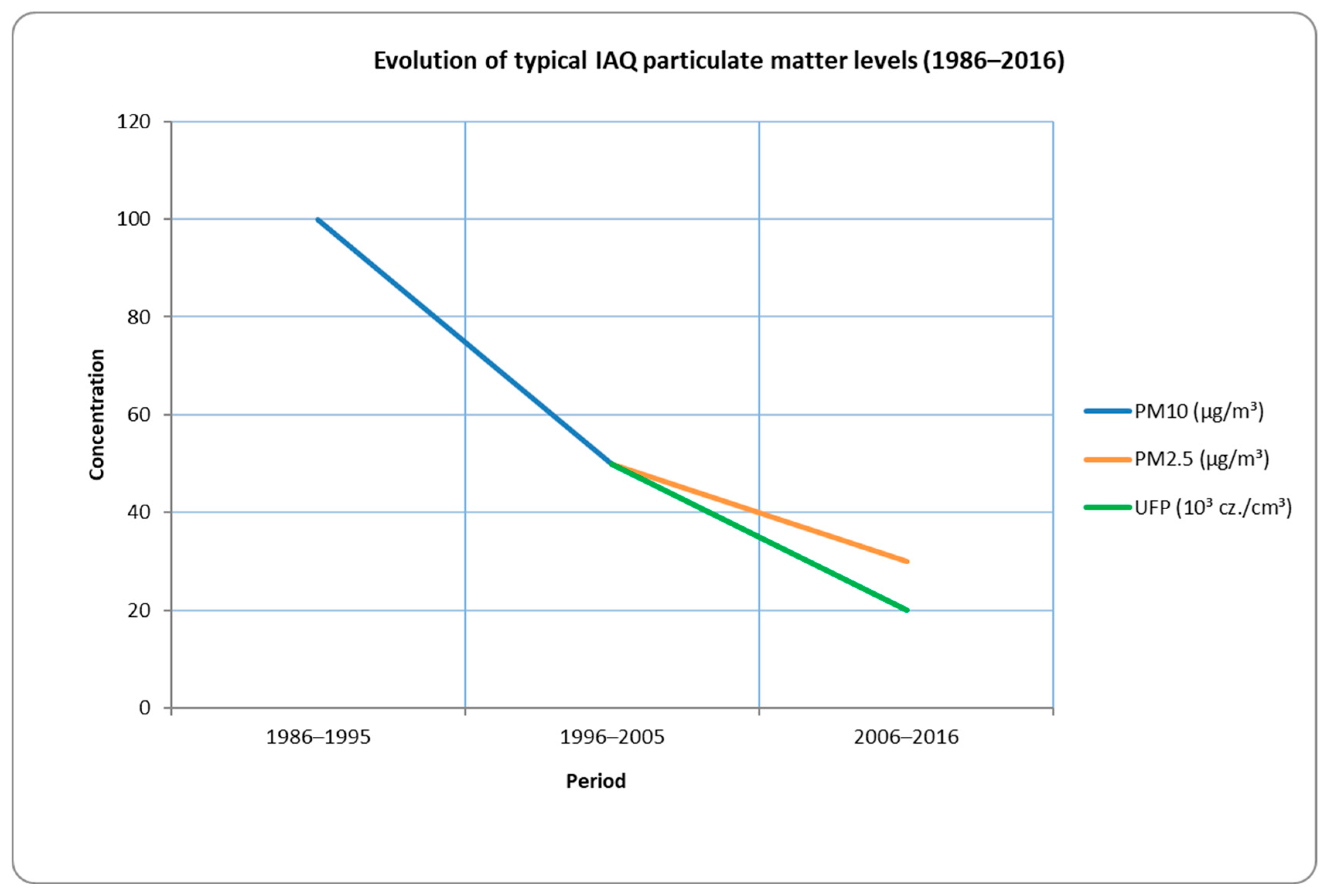
Tham [14] reviewed IAQ studies from 1986 to 2016, synthesising the findings on pollutants (gases, particulates, VOCs), their sources, mechanisms of action, health and cognitive effects, and technical solutions. The review showed how the focus of the research evolved over time: early work (1980s–1990s) emphasised PM10 and pollutants from tobacco smoke and combustion of domestic fuels. After 1995, the focus shifted to PM2.5 and ultrafine particles (UFP < 0.1 µm), linked to new toxicological findings. In the 2000s, studies examined secondary particle formation from reactions between ozone and terpenes in cleaning agents and building materials. The review confirmed that indoor PM concentrations are strongly influenced by outdoor infiltration, determined mainly by the air exchange rate (ACH). At the same time, indoor sources (cooking, candles, cleaning) can cause short-term spikes that exceed outdoor levels. Therefore, health risk assessments must consider both infiltration and specific indoor emissions. Numerous epidemiological and experimental studies confirmed the links between PM exposure and respiratory symptoms (cough, wheezing, asthma) [14], as well as sick building syndrome (SBS) and building-related diseases (BRI). In the past decade, researchers have also focused on cognitive effects and productivity. Indoor air is not just ‘diluted outdoor air’, it is an active reactive environment. Airtight buildings, reduced ventilation, and new materials improve energy efficiency, but often worsen IAQ. The integration of ventilation, filtration, and air purification strategies in modern and renovated buildings is crucial. Measurement methods evolved from gravimetric filters and photometers to optical particle counters (OPCs), scanning mobility particle sizers (SMPSs), and real-time chemical analysis techniques such as PTR-MS [14].
According to Figure 1 [14]:
-
Between 1986 and 1995, research focused mainly on PM10;
-
From the mid-1990s, the emphasis shifted to PM2.5 (20–80 µg·m−3) and ultrafine particles (103–105 particles·cm−3);
-
After 2006, the studies also included secondary organic aerosols; typical levels of PM2.5 decreased (10–50 µg·m−3), and UFP stabilised at 103–104 particles·cm−3.
Figure 1. Evolution of typical indoor particulate matter levels (1986–2016) based on [14].
Atmosphere 17 00045 g001

3.1.3. Air Pollution Concentration in Public-Use Buildings

Today, indoor air quality is extremely important because people spend about 90% of their time in buildings [5]. Sensitive groups include children and adolescents who are subject to compulsory education and spend approximately 30% of their time in educational facilities. Children and adolescents are considered a sensitive population due to the ongoing development of their respiratory and immune systems, and previous studies indicate that they spend a substantial proportion of their time indoors, including in educational facilities, which significantly contributes to their daily exposure to indoor air pollutants [13,33,41]. Air pollution, especially the presence of PM2.5 particle matter, has a significant impact on the health and cognitive abilities of students. The main causes of IAQ problems in school environments are inadequate ventilation and poor indoor air quality, which is influenced by biological and chemical pollutants, as well as particulate matter [40,56].
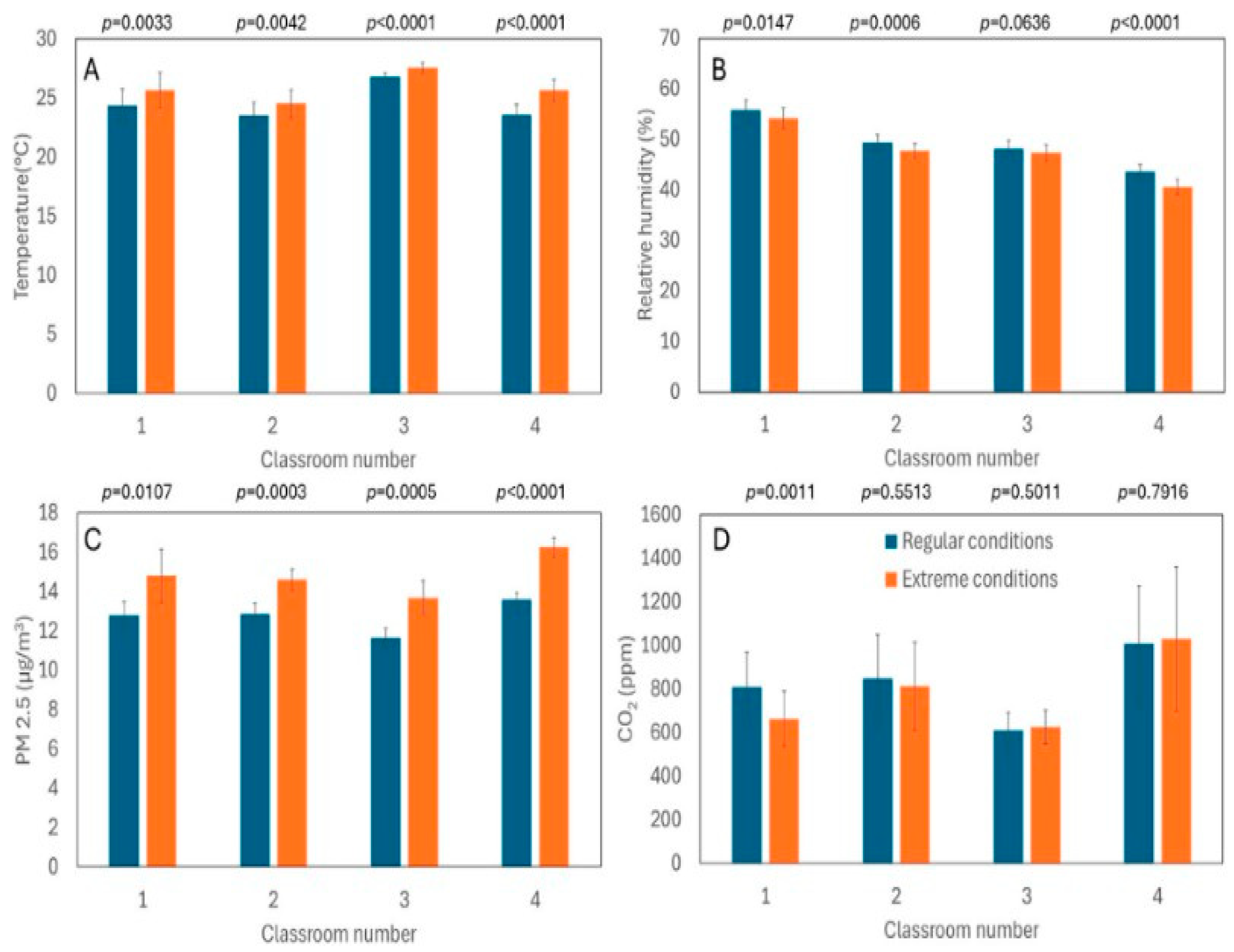
A study on the concentration of particulate matter was carried out in one of the schools located near the Red Sea in Eilat [40]. The building was constructed in 1967. The measurements were carried out throughout May 2023. During this period, a climatic phenomenon, a sandstorm, also occurred. The monitored IAQ parameters included temperature (T), relative humidity (RH), carbon dioxide (CO2), and fine particulate matter (PM2.5). These parameters were selected as key indicators of thermal comfort, ventilation effectiveness, and particulate pollution, but represent only a subset of the factors used to comprehensively assess IAQ, which can also include volatile organic compounds (VOCs), nitrogen oxides (NOx), ozone (O3), and other chemical and biological contaminants. Measurements were taken on four floors, in classrooms with varying numbers of students, located in different parts of the school. The basic constant parameters during which air quality was measured were as follows: air temperature ranged from 17 °C to 33 °C during occupancy hours (8:00–14:00), and relative humidity ranged between 20% and 60%. The appearance of the sandstorm significantly contributed to the increase in PM2.5 concentrations within classrooms. This indicates a direct relationship between the indoor environment and the prevailing outdoor meteorological conditions. The results of air pollution measurements, including concentrations of PM2.5, are shown in Figure 2, which presents variations in levels of temperature, relative humidity, PM2.5, and CO2 [40].
In Figure 2, the variations in the measured parameters are presented: temperature (A), relative humidity (B), PM2.5 (C), and carbon dioxide concentration CO2 (D), over a specific time period—in this case, from the 130th to the 160th day of 2023 [40]. The pronounced increase in PM2.5 visible in panel (C) corresponds to a sandstorm event reported in the literature [40], which caused a sharp increase in dust from the desert in the outdoor and resulted in a marked increase in indoor particulate levels. This event highlights the strong influence of external desert dust intrusions on indoor air quality in the studied region.
The sandstorm influenced both the temperature and the PM2.5 concentration values, as shown in Figure 2. The concentration increased by approximately 16%, which confirms the impact of outdoor environmental conditions on the indoor environment [40].
In Figure 3, the values of individual air parameters under extreme conditions (after the sandstorm) are shown as orange bars, and in reference to standard conditions as navy blue bars [40].
In 2023, the average annual concentration of PM10 measured by the station of the Israeli Ministry of Environmental Protection was 39.9 µg·m−3 [40], with a standard deviation of 26.8 µg·m−3 [40], which is significantly higher than the WHO recommended value of 15 µg·m−3 [12,40]. After analysing the measurements, the ratio of PM2.5 to PM10 under normal conditions remained stable; therefore, the annual average concentration of PM2.5 inside the building was estimated at 10 µg·m−3. This value is double the annual limit recommended by the WHO for PM2.5, which is 5 µg·m−3 [12,40]. The study also showed that the location of the classroom influenced the concentration of PM2.5, and that the highest levels were recorded in the classrooms located on the upper floors [40].
A study was also conducted in a Portuguese secondary school located in the municipality of Ponte de Sor, Portalegre district [57], to determine the correlation between the well-being of teachers and indoor air pollution. The school building was renovated in 2010, when a ventilation and air conditioning system was installed, and new windows (which cannot be opened manually) were installed. Using commercially available sensors, measurements were taken for CO2, VOCs, fine particulate matter (PM2.5 and PM10), temperature (T), and relative humidity (RH). The following sensors were used: SCD30 for CO2 (range 400–10,000 ppm, accuracy ± 30 ppm); MiCS-VZ-89TE (SGX Sensortech, Corcelles-Cormondrèche, Switzerland) for VOCs generic (range 0–1000 ppb in isobutylene); HPMA115S0 (Honeywell International Inc., Charlotte, North Carolina, the United States) for monitoring PM2.5 and PM10 (range 0–1000 µg·m−3, accuracy 15%); and SHT31 (Sensirion AG, Stäfa, Switzerland) for temperature and humidity (accuracy ± 0.3 °C for temperature and ±2% for RH). Measurements were carried out in May 2023 in nine classrooms. Before measurements were taken, teachers completed questionnaires about their subjective well-being. The total mean concentration of PM2.5 was 19.6 ± 11.6 µg·m−3 [57], ranging from 4.2 ± 0.0 µg·m−3 [57] (class B2, seventh monitored classroom) to 78.0 ± 14.5 µg·m−3 [57] (class C2, twenty-fourth monitored classroom). Taking into account the global WHO guideline of 5 µg·m−3, only 2% of the measured values were below this threshold [12,57]. For PM 10, the values were 0 ± 17.4 µg·m−3 [57], ranging from 3.5 ± 1.3 µg·m−3 [57] (room B2, seventh classroom) to 96.1 ± 2.9 µg·m−3 [57] (room C3, twentieth classroom). These are average levels below the Portuguese legal limit for PM10, which follows the EU Air Quality Directive (2008/50/EC) and sets the daily threshold at 50 µg·m−3 [57,58], with an overall mean of approximately 30 µg·m−3. Regarding teacher perception, the study indicated that the only environmental parameter significantly associated with perceived IAQ was air temperature [57].
To further improve our understanding of IAQ, a study was conducted to evaluate air parameters in schools equipped with green roof systems [16]. The primary school examined is located in Nea Smyrni, a southern suburb of Athens, Greece, near the port of Piraeus. The building was constructed in 1954, renovated in 2000, and equipped with a green roof system in 2008. The roof covers an area of 374 m2, contains lightweight soil 150 mm thick, and is planted with low vegetation. The school uses natural ventilation (based on gravity). PM concentrations were measured in both the green roof area and the classroom located directly below it. The outdoor PM10 concentration ranged from 21.88 to 72.02 µg·m−3 [16], while indoor PM10 levels ranged from 21.11 to 50.92 µg·m−3 [16]. The study showed that particulate concentrations depend on seasonal variations, and that higher levels were recorded in winter due to heating activities. In this case, no correlation was found between the concentrations of PM2.5 and PM10. Wind speed was found to have a negative effect on PM10 levels: the lower the wind speed, the higher the PM10 concentration. The main sources of pollution were traffic and heating from nearby residential buildings. Based on the results, it was concluded that the implementation of a green roof system had no significant impact on indoor air quality in this case [16]. Although the case study conducted in Nea Smyrni provides valuable information on PM10 levels in a school equipped with a green roof system [16], the results cannot be used to directly extrapolate the isolated effect of the green roof on indoor particulate concentrations. The building operated under natural ventilation was located in an urban area influenced by traffic emissions from the Piraeus region, and exhibited typical seasonal variability for Mediterranean climates. These factors, together with the age and history of the renovation of the building, contribute substantially to indoor air quality and limit the ability to attribute the differences observed in PM10 solely to the presence of a green roof [16].
This interpretation is consistent with other studies reviewed in the manuscript, which indicate that indoor PM levels in schools and similar facilities are shaped by a combination of ventilation characteristics, outdoor pollution levels, occupancy patterns, and structural features, rather than by any single architectural intervention [12,16,40,58].
Children up to 7 years of age represent a social group particularly vulnerable to the effects of air pollution due to the ongoing development of their respiratory systems. Given the increased risk, a study was carried out to assess IAQ in four kindergartens located in the Gliwice region, a typical industrial area in Upper Silesia. In addition, the kindergartens were located in areas with different characteristics: two in rural zones and two in urban zones [41].
-
SU-1 (Sikornik district—urban area 1);
-
PU-2 (Pszczyńska Street—urban area 2)—kindergarten located 50 m from a street;
-
R-3 (village of Przezchlebie—rural area 3);
-
SR-4 (village of Świętoszowice—rural area 4)—kindergarten located 50 m from the A1 highway.
Indoor and outdoor PM fractions were collected according to the reference procedure PN-EN 12341: 2014 [3,41]. However, it should be noted that this standard was withdrawn on 29 January 2024. The study was conducted from 9 December 2013 to 14 March 2014. The highest indoor PM concentrations were recorded in the kindergarten SR-4 (rural area near the highway), while the lowest were found in the kindergarten SU-1 (urban residential area). In general, PM levels were higher in rural areas (although the differences were not statistically significant: p = 0.10–0.51) [41]. In classrooms occupied by older children (group I), PM concentrations were significantly higher (p < 0.03 for PM2.5, PM10, TSP; p = 0.08 for PM1), probably due to increased physical activity [41]. Based on the study results presented in [41], a summary table was prepared showing the mean concentrations of PM (µg·m−3) inside the classrooms during activities (N = 48 samples).
Based on data from Table 4, it can be concluded that in kindergartens with natural ventilation, particulate matter concentrations (PM1, PM2.5, PM10, TSP) were higher, especially in classrooms for older children and in rural areas with heavy traffic (near the highway). PM1 was not included in the analysis because it is not regulated by any standard, e.g., EN 12341 [3,41].
To improve IAQ, Swedish kindergartens were equipped with mechanical ventilation systems, which reduced PM2.5 concentrations to values ranging from 3.2 to 9.3 µg·m−3 [41]. Another important factor was the level of activity of the children. PM2.5 concentrations were higher among the older groups of children and the lowest among the youngest groups, particularly during naptime. Future research should focus on identifying correlations between pollutant concentrations and health symptoms in kindergartens, as well as their impact on children’s attendance [41].
Between 1 February 2023 and 31 January 2024, a study was conducted to monitor IAQ in three areas of the orthopaedic department in a hospital in Târgu Mureș, Romania [53]: emergency room (ER/admissions), outpatient clinic, and patient ward. The aim was to compare the concentrations of key pollutants between these areas, assess seasonal variations, and assess the effectiveness of air purifiers in the ER zone. The study did not involve human subjects. PM2.5 concentrations were measured using the light scattering method. A set of sensors per zone was installed, mounted at a height of approximately 1.2 m. The building was equipped with a central heating system, maintaining indoor parameters at: temperature 18–24 °C, relative humidity 35–45%, and air velocity below 0.25 m·s−1. The study compared pollutant emissions in the ER area with and without an air purifier (AlecoAir P80 Traditio (AlecoAir, Roșu, Romania), capacity 650 m3·h−1). The highest annual concentrations of PM2.5 between the zones were as follows: in the ER equal to 75.4 µg·m−3, in the outpatient clinic equal to 30.5 µg·m−3, and in the patient room equal to 15.25 µg·m−3. Lower concentrations of particulate matter in the ER were recorded in summer and fall compared to spring and winter. Due to the use of air purifiers, a reduction in PM2.5 concentration was statistically significant (p = 0.014). The purifiers effectively reduced PM2.5 levels [53,54]. According to reference thresholds based on WHO guidelines, PM2.5 and CO2 concentrations in the ER zone repeatedly exceeded acceptable limits [53]. Based on the available literature, the dimensions of the room were not reported in the original publications [53,54] and therefore cannot be included in the manuscript.
Kuo et al. [45] conducted research in six private fitness centres in Taichung, Taiwan. In the study, the authors designated individual fitness facilities with abbreviations: FL5 and FL4—fitness centres located in different residential buildings in the Fengle district (Taichung), respectively, on the 5th and 4th floors, and EF—a fitness centre located in the East Fengle area. For the measurements, Aerocet-831 devices were used to determine concentrations of PM1, PM2.5, PM4, and PM10. The instruments were placed in the main user activity zones, 0.5 m from the exercise equipment and 3 m from the doors. Measurements were taken for 3 to 10 h during the day [45].
Based on the results obtained in the fitness centres [45], Table 5 compares the air quality standards established by the Environmental Protection Agency (EPA) with the actual measurements from the facilities.
Table 6 presents the correlation coefficients (R) between the selected parameters [45].
According to the findings reported in the studies, such as that by Kuo et al. [45], indoor ozone concentrations are frequently below the detection limit due to the high reactivity of Ozone (O3) and its rapid depletion through reactions with NO, VOCs, and surface deposition. Therefore, the values reported as zero in Table 5 indicate nondetectable levels rather than the complete absence of ozone. As reported in a scientific article by Kuo et al. [45], the R2 values presented in Table 6 were derived from regression analyses that evaluated the relationships between indoor PM2.5 concentrations and environmental parameters such as CO2, temperature, relative humidity, and outdoor PM2.5. These correlations were used to identify the relative influence of indoor emissions, occupancy patterns, ventilation, and outdoor infiltration on particulate levels [45].
The limit values in Table 6 are based on the WHO Air Quality Guidelines (2021) for PM2.5 and PM10, as referenced in the studies included in this review [12,16,27,58]. The thresholds used for CO2 follow commonly applied IAQ and ventilation standards reported in the literature [12,58], while the recommended ranges for temperature and relative humidity are consistent with the IAQ and indoor comfort criteria described in the references [40,41].
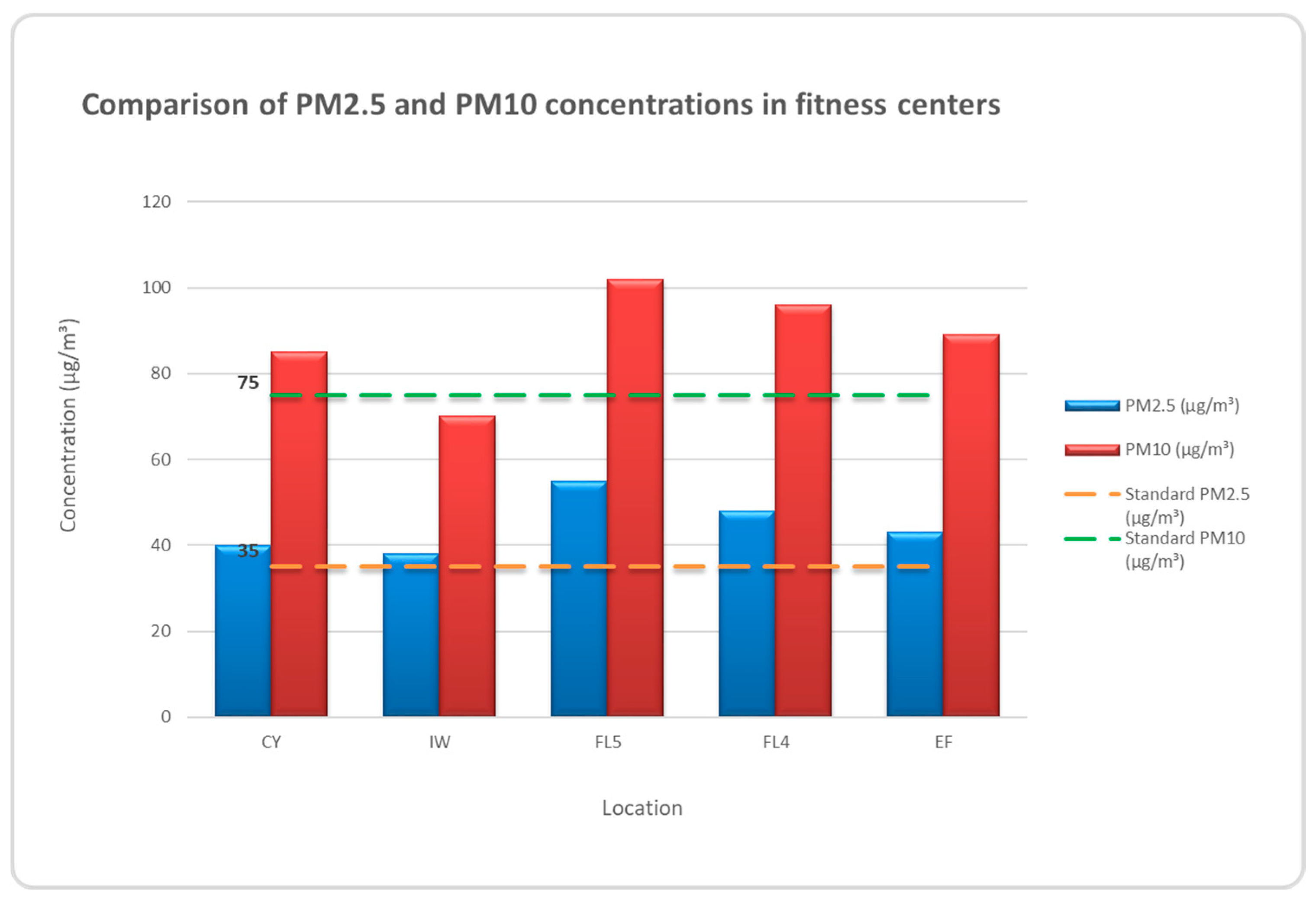
Figure 4 illustrates the measured concentrations of PM2.5 and PM10 in individual fitness centres compared to established standards [45].
From the graph presented in Figure 4, it can be inferred that [45]:
-
PM2.5 concentrations exceed the standard limit (35 µg·m−3) in all fitness centres, particularly in FL5 and FL4.
-
PM10 concentrations also exceed the allowed level (75 µg·m−3) in most facilities, especially in FL5 (102.6 µg·m−3) and FL4 (96.4 µg·m−3).
Based on the research conducted [45], it was found that decorations and interior furnishings alone do not determine air quality—their impact depends on the type of materials used, the efficiency of the ventilation system and the age of the building. Synthetic grass flooring and training mats tend to accumulate dust; therefore, their use should be reconsidered [45].
Another sports facility where particulate matter concentrations were measured was a sports hall in Warsaw [59]. The authors simultaneously measured particulate fractions inside the hall and outdoors during two 20-day series: one during the non—heating season (May to June 2017) and the other during the heating season (October to November 2017). The study compared the concentration levels and origins of PM indoors and outdoors at different times of the day and year. An analysis was also performed to determine the particle size distribution, assess the usefulness of automatic (optical) measurements compared to the reference method, and estimate daily inhalation doses of respirable dust (PM4) for students, physical education teachers, and athletes. The following particulate fractions were analysed: PM1, PM2.5, PM4, PM10, and TSP (PM100). Optical DustTrak 8534 monitors were used indoors and DustTrak 8533 monitors outdoors, with 1 min readings [42]. In winter, the average concentrations of nearly all fractions were higher (both indoors and outdoors) than in summer. Optical aerosol monitors (DustTrak 8534 indoors and DustTrak 8533 outdoors (TSI Incorporated, Shoreview, Minnesota, the United States)) were used to record one-minute concentrations of particulate matter in the measured size fractions. These instruments operate on a light scattering principle and provide high time-resolution data, which is particularly useful for capturing the dynamic variability of PM levels. However, optical mass estimates may differ from gravimetric reference values due to variations in aerosol composition and particle size distribution. Therefore, in accordance with good research practice, DustTrak measurements were interpreted with caution, and the use of colocation with reference samplers and the application of correction factors is recommended when deriving exposure metrics. The limitations associated with optical monitors in quantitative dose assessment are explicitly acknowledged in the manuscript. These limitations have been widely documented in the literature, highlighting substantial differences between optical-grade and reference-grade measurements, and emphasising the need for calibration and appropriate correction procedures [6,42,43,44].
Representative mean PM concentrations were as follows [42,59]:
-
Hall, summer: PM1 = 29 µg·m−3, PM2.5 = 30 µg·m−3, PM4 = 31 µg·m−3, PM10 = 18 µg·m−3, TSP = 40 µg·m−3;
-
Outdoor area, summer: PM1 = 22 µg·m−3, PM2.5 = 23 µg·m−3, PM4 = 24 µg·m−3, PM10 = 13 µg·m−3, TSP = 27 µg·m−3;
-
Hall, winter: PM1 = 38 µg·m−3, PM2.5 = 39 µg·m−3, PM4 = 40 µg·m−3, PM10 = 33 µg·m−3, TSP = 45 µg·m−3;
-
Outdoor area, winter: PM1 = 56 µg·m−3, PM2.5 = 52 µg·m−3, PM4 = 52 µg·m−3, PM10 = 31 µg·m−3, TSP = 29 µg·m−3.
During the summer, internal sources dominated, mainly due to exerciser movement, the resuspension of settled dust, and air circulation between indoor areas. On the contrary, during winter, the influence of outdoor air increased, with fine particles entering the building from municipal heating systems. The study [42] also presented the daily inhalation dose—the amount of PM entering the lungs during one day. Daily doses of PM4 were calculated for students, physical education teachers, and athletes. The average daily doses of particles (PM4) were determined using the deterministic approach developed by the US Environmental Protection Agency (US EPA) [39,59].
Table 7 presents the average daily doses of PM4 for individual groups of people [59].
The highest doses of respirable particles were recorded among athletes, reaching 473 µg·d−1 [59] during the heating season. This results from prolonged exposure time and a higher inhalation rate (InhR). To assess relative exposure, the doses expressed in micrograms were also recalculated per kilogramme of body weight per day. The average body weight was assumed to be 50.6 kg for children and 71.6 kg for adults [59]. The highest relative doses (per kilogramme of body weight) were found in students—children breathe more intensely during physical activity, and their lower body mass means that the particulate load per kilogramme is higher than in adults. During the heating season, the doses were 3–4 times higher than in the non-heating period, confirming the significant impact of the external pollution background (transport of PM from the outside to the indoor air) [59].
Air quality was also assessed in office spaces within bank buildings [60]. These facilities were located at Jalan Rakyat, Brickfields, Kuala Lumpur; Jalan Tangsi, Kuala Lumpur; Jalan Bukit, Bandar Kajang, Selangor; Seksyen 9, Shah Alam, Selangor; Subang Jaya, Selangor; and Precinct 8, Putrajaya. Measurements were carried out from August 2018 to January 2019, between 9:00 a.m. and 4:00 p.m. The total hazard ratio (THR) is a statistical measure used in the analysis to evaluate the risk of exposure to air pollutants. It represents the overall measure of the exposure of workers to various airborne contaminants. To calculate the Hazard Ratio (HR) for each pollutant and the Total Hazard Ratio for each bank (THRBank), Equations (1) and (2) were applied [43,61,62].
H R l = C l R f C l
T H R B a n k = H R l
where
Cl—average measured concentration, µg·m−3
RfCl—reference concentration, µg·m−3
The study was carried out in bank vaults [60]. The highest average PM10 concentration was recorded at 35.12 µg·m−3, while the maximum temporary PM10 concentration reached 60 µg·m−3. The highest average PM2.5 level was 53.05 µg·m−3, and the maximum temporary PM2.5 concentration was 59.00 µg·m−3. The concentrations of PM10 were below the standard threshold of 150 µg·m−3, but the concentrations of PM2.5 exceeded the standard limit of 25 µg·m−3. Four banks showed indoor-to-outdoor (I/O) ratios close to unity, indicating a significant influence of outdoor sources on indoor PM10 concentrations.
Wenner et al. [63] investigated how fine particulate matter (PM2.5) concentrations vary with height in high-rise buildings (Chicago) both indoors and outdoors. The purpose of the study was to evaluate the extent to which outdoor pollution infiltrates indoor spaces and how the height of the building influences this process. Eight PurpleAir sensors (PurpleAir, LLC, Draper, UT, USA) were used in the study, four outdoor PA-II and four indoor PA-I (Touch version), which measured PM2.5 as well as temperature, humidity, and barometric pressure. PurpleAir sensors were selected because their data are integrated with experimental air quality maps developed by the U.S. Environmental Protection Agency (EPA) and the U.S. Forest Service. Previous research had already evaluated the performance of PurpleAir monitors (PurpleAir, LLC, Draper, UT, USA), and newly developed correction factors can be applied to adjust reported PM2.5 values to better match Federal Equivalent Method (FEM) measurements [64,65,66,67]. Measurements were carried out from 8 April to 7 May 2023. The sensors were placed on the 1st, 4th, 6th, and 9th floors of an office building in the Edgewater district of Chicago, and an additional outdoor sensor was mounted on the 14th floor of a nearby residential building (approximately 800 m away) [63].
The study results indicated that [63]:
-
Above the fourth floor, the concentrations decreased by approximately 0.11 µg·m−3 per metre;
-
Indoor PM2.5 concentrations increased slightly with height: on average by +0.02 µg·m−3 per metre, from 5.3 µg·m−3 (1st floor) to 5.8 µg·m−3 (9th floor);
-
Outdoor concentrations varied throughout the day;
-
Indoor concentrations remained relatively stable, except for an increase in the morning on the ninth floor between 9:00 am and 3:00 pm, probably related to office activities.
The study did not account for seasonal variation, location differences, or comparisons with other buildings [63].
Wu et al. [68] examined how PM2.5 (particles ≤ 2.5 µm) and CO2 concentrations affect occupant satisfaction and cognitive performance during mental work. The study was carried out in a simulated conference room located at the College of Civil Engineering and Architecture and the Centre for Balance Architecture at Zhejiang University in Hangzhou, China. The indoor environment had thermal and acoustic conditions typical of local office settings: temperature 24–26 °C, relative humidity 40–60%, illumination 300 lux, and noise level 40 dB. Controlled increases in PM2.5 concentration were applied, with exposure levels set at 10, 25, 35, 50, and 75 µg·m−3 [68]. PM2.5 was measured using a nephelometer calibrated against a DustTrak II monitor. Participants rated their satisfaction with air quality and the general environment through questionnaires, while cognitive performance was evaluated through four tasks that evaluated comprehension, memory, perception, and visual attention. The results showed that at low CO2 concentrations (450–700 ppm), each increase of 1 µg·m−3 in PM2.5 corresponded to a +0.5% increase in dissatisfaction [68]; at high levels of CO2 (720–900 ppm), the same increase of 1 µg·m−3 in PM2.5 resulted in a +1.1% increase in dissatisfaction [68]. The precision of performance in tasks that evaluate comprehension, memory, perception, and visual attention decreased as PM2.5 increased (p < 0.05). When PM2.5 concentrations increased from 10 to 75 µg·m−3, visual attention decreased from 104% to 96% [68]. The α coefficient (change in productivity per change in PM2.5) was −0.10% [68], which means that each 1 µg·m−3 increase in PM2.5 reduced cognitive productivity by approximately 0.10%. The authors emphasise the need for longer and more extensive experiments in realistic office environments, taking into account different demographic groups (age, health status, workplace characteristics) [68].
The health effects associated with exposure to PM2.5 and PM10 in public buildings include several well-documented outcomes. Elevated particulate levels negatively affect cognitive functions and learning performance, for example, by increasing student absenteeism, reducing attention, and impairing executive functions [30,40]. Indoor PM exposure has also been shown to influence athletic performance and user comfort in sports facilities, where high levels of particle resuspension are associated with deteriorated respiratory parameters during physical activity [45,59]. Similar impacts have been reported in office environments, where elevated PM levels contribute to decreased cognitive efficiency and symptoms associated with sick building syndrome [14,41]. Furthermore, particulate matter poses particular risks to vulnerable groups such as children, hospital patients, older adults, and people with chronic diseases, who are more susceptible to the adverse respiratory and cardiovascular impacts of PM2.5 and PM10 [1,4,41,69].

3.1.4. Concentration of Air Pollution in Historical Buildings

The issue of concentrations of particulate matter concentrations (PM2.5 and PM10) was investigated by a long-term study carried out inside the Potala Palace Museum in Tibet, China [69]. The analysis used X-ray fluorescence (XRF). These studies demonstrated that the concentration of PM1–10 particulate matter outside the building was lower than inside the museum rooms. The particles were classified into four categories: soil dust carried indoors by tourists, incense ash, pollutants resulting from human activity, and ore particles. In such environments, these particles can combine with chemical contaminants, which, when deposited in historical books, lead to damage to cultural artefacts. The following dust analysis methods were applied: chemical mass balance model (CMB), enrichment factor method (EF), factor analysis model (FA), isotopic tracer method, and positive matrix factorisation model (PMF). These techniques are commonly used internationally to identify sources of particulate matter. Studies have been carried out in numerous museums around the world, demonstrating the harmful effects of particulate matter on historical artefacts. These investigations and their results are summarised in Table 8 [69].
The studies carried out, summarised in Table 5, considered numerous external factors that influence indoor air quality, including geographical location and altitude above sea level. In the investigation, tourists played an important role, as their presence contributed to an increase in the concentration of particulate matter within historic buildings. Therefore, the PM10 concentration depends on the tourist season.
In the context of historic buildings and museums, indoor concentrations of PM2.5 and PM10 are relevant not only for the preservation of cultural heritage but also for the health of the visitor and staff. As highlighted in studies focused on museums [69], particulate matter can originate both from outdoor infiltration and indoor sources such as visitor movement, cleaning activities, and material ageing. Exposure to elevated levels of PM in these environments can contribute to respiratory symptoms, eye and throat irritation, and decreased comfort during prolonged visits, particularly among sensitive individuals such as children, older adults, and people with asthma or chronic respiratory diseases [4]. Staff members who spend extended periods inside exhibition spaces or storage rooms can experience cumulative exposure, which, according to broader epidemiological evidence, can increase the risk of reduced lung function, systemic inflammation, and cardiovascular stress [6,30]. These health considerations emphasise the importance of controlling particulate levels in museums, not only to protect collections but also to ensure safe and healthy indoor conditions for visitors and employees.

3.1.5. Concentration of Air Pollution in the Indoor Environment—Summary

The review of the literature indicates that the concentrations of particulate matter PM2.5 and PM10 in indoor environments significantly exceed the levels recommended by the WHO, particularly in residential, educational, office and historical buildings. In residential dwellings, the main sources of particulate emissions are cooking and biomass combustion. In educational facilities, especially in preschools and schools, particulate concentrations often exceed standards several times, and an additional factor that increases PM levels is the physical activity of the children. In office and sports buildings, both indoor sources (equipment, finishing materials, and intensive movement) and infiltration of outdoor air play a critical role. In heritage buildings, high particulate concentrations not only pose health risks to the occupants but also contribute to the degradation of historical artefacts.
The literature analysis indicates that indoor PM2.5 and PM10 concentrations do not exhibit exclusively stable behaviour, but may undergo rapid episodic increases as a result of transient outdoor pollution events, such as wildfires, dust storms, winter smog episodes, or temperature inversions [36,40,54]. These events lead to short-term, but often very intense, increases in the concentrations of particulate matter in the ambient air, which subsequently penetrate into indoor environments through infiltration and air exchange processes [30,45]. Studies conducted during wildfire smoke episodes have shown that outdoor PM2.5 concentrations may increase several times relative to background levels, accompanied by a simultaneous and pronounced increase in indoor concentrations [54]. Shrestha et al. reported an increase in outdoor PM2.5 from background levels of approximately ~6 µg∙m−3 to ~23 µg∙m−3 during intense smoke episodes, with a simultaneous increase in indoor PM2.5 concentrations to approximately ~15–18 µg∙m−3 [54]. This indicates that under wildfire conditions, indoor air quality can deteriorate up to 3–4 times compared to background conditions, even in the absence of strong indoor emission sources. Similar relationships have also been observed in desert regions, where dust storm events caused distinct short-term increases in PM10 and PM2.5 concentrations in school buildings and public facilities [40,67]. The degree of infiltration of pollutants originating outdoors into indoor environments is highly variable and depends on a variety of factors, including the airtightness of the building envelope, the intensity and mode of ventilation, the effectiveness of air filtration, and the behaviour of the occupant (e.g., window opening during pollution episodes) [30,45,68]. In buildings characterised by low airtightness and the absence of effective mechanical filtration, a rapid and almost immediate increase in indoor PM concentrations was observed after outdoor peaks [45]. In contrast, in buildings equipped with controlled mechanical ventilation and high-efficiency air filtration systems, this effect can be significantly mitigated [68]. Inclusion of episodic increases in PM2.5 and PM10 allows for a more dynamic and realistic interpretation of indoor–outdoor relationships. It demonstrates that even in the absence of strong indoor emission sources, indoor air quality can experience a short-term but potentially health-relevant deterioration driven by the current outdoor aerosol situation [45,67,68].
Despite the broad evidence base, a major issue remains the lack of consistent, long-term, and multi-site studies that comprehensively assess seasonal variability, the impact of local emission sources, and the relationship between pollution levels and health outcomes in sensitive populations. Most existing research consists of short-term measurement campaigns or case studies, which limits the generalisability of the findings. The interrelationships between microclimatic parameters (temperature, humidity, ventilation) and the dynamics of PM concentrations indoors remain unexplored.
The most significant research gap is the absence of integrated analyses combining environmental parameters (PM2.5, PM10, CO2, VOCs, humidity, temperature) with a simultaneous assessment of personal exposure and the effectiveness of technical interventions, including long-term evaluations of mechanical ventilation systems, air purifiers, and innovative solutions such as green walls and biodegradable filters. Future research should focus on continuous (on-line) monitoring of indoor air quality across various building types and on the development of sustainable PM reduction technologies that take into account each energy efficiency with occupant comfort.
In the context of office buildings, a particularly evident research gap concerns the optimal selection and use of air purifiers. Although numerous studies confirm the effectiveness of portable filtration devices in reducing PM2.5 and PM10 concentrations, clear guidelines are lacking regarding their optimal placement, integration with ventilation systems, and adjustment of operational parameters to the specific conditions of office environments.
Table 9 synthesises current scientific knowledge on the chemical composition of PM2.5 and PM10 in various types of buildings, based on the literature cited in this article [4,5,6,7,14,30,40,41,45,59,69]. Despite the substantial variation in concentration levels and emission sources, indoor environments share several characteristics, including high levels of organic compounds, the presence of secondary organic aerosols (SOAs), mineral particles generated by resuspension, and inorganic ions infiltrating the air outside. According to the studies referenced, museums and heritage buildings are among the best characterised environments with respect to particulate chemical speciation, mainly due to the use of advanced analytical methods such as XRF, PMF, and CMB [73]. In contrast, schools, homes, and sports facilities are typically described qualitatively, with an emphasis on user activity, ventilation conditions, and material-dependent emissions as key determinants of particulate composition. The table complements the literature review and highlights the need for further long-term quantitative studies of the chemical composition in different categories of buildings.

3.2. Measurement Methodology for Particulate Matter PM2.5 and PM10

The Air Quality Index (AQI) is understood as a numerical value calculated based on the measurement of pollutants such as ozone (O3), nitrogen dioxide (NO2), carbon monoxide (CO), and particulate matter (PM10 and PM2.5). This index has also begun to be used to assess indoor air quality. To determine air quality, the AQI is expressed on a scale from 0 to 500, where 0 indicates ideal air quality, while 500 represents air quality hazardous to human health [77].
Currently, air quality sensors are used that rely on optical particle counting technology. The use of optical particle counting in air quality monitoring offers numerous advantages; however, the lack of standardisation in proprietary algorithms results in differences in measurement results. This means that two sensors operating in the same environment may produce different results. Factors that influence this include uncertainties in aerosol calibration characteristics, the way to develop or test the algorithm, and procedures for estimating the mass concentration from particle counts. One such device is the Plantower PMS 5003 [78,79].
Various measurement instruments are applied in air quality monitoring and research. In their study [6], the authors used the following devices to measure the concentrations of PM2.5 and PM10 [6]:
-
PCE-PQC 34 Air Quality Monitor (PCE Deutschland GmbH, Meschede, Germany)—The device operates with advanced particle counting technology, enabling measurement of particulate concentrations with diameters of <10 μm (PM10), <5 μm (PM5), <2.5 μm (PM2.5) and <1 μm (PM1), with a flow rate of 2.83 L·min−1 and a detection range of 0.3 to 25 μm. Calibration is carried out according to technical specifications. Precise calculations of the mass of the particle in µg·m−3 are enabled by its high sensitivity and integrated mass concentration mode. To ensure high accuracy, the device uses a long-life laser diode.
-
inBiot (MICA) (inBiot Monitoring S.L., Spain) and Kaiterra devices (Kaiterra, Crans-Montana, Switzerland)—These sensors are commercially available and certified under RESET and WELL standards. They operate using laser scattering technology for particulate measurement and are based on proprietary algorithms. The technical parameters of these devices are presented in Table 10.
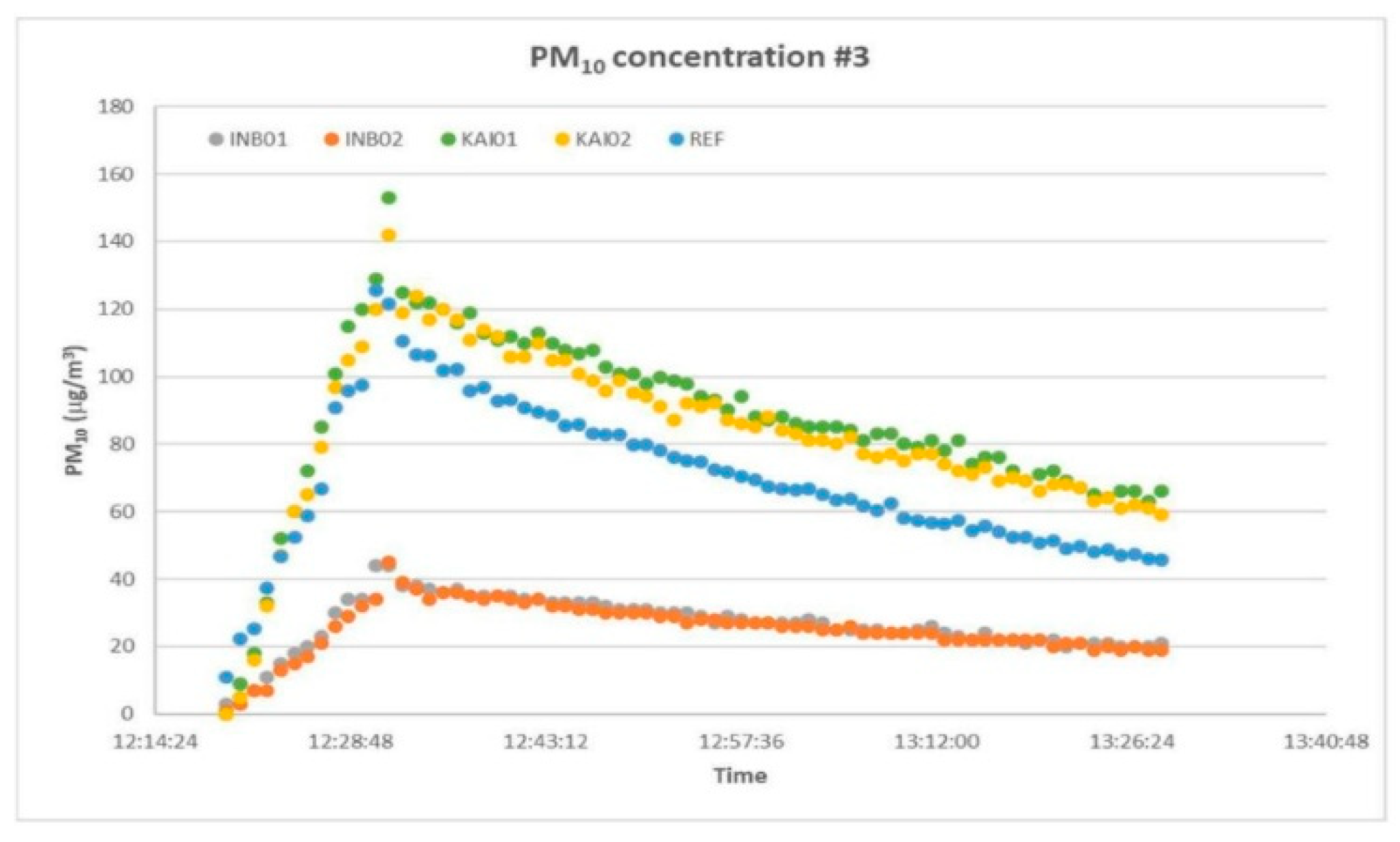
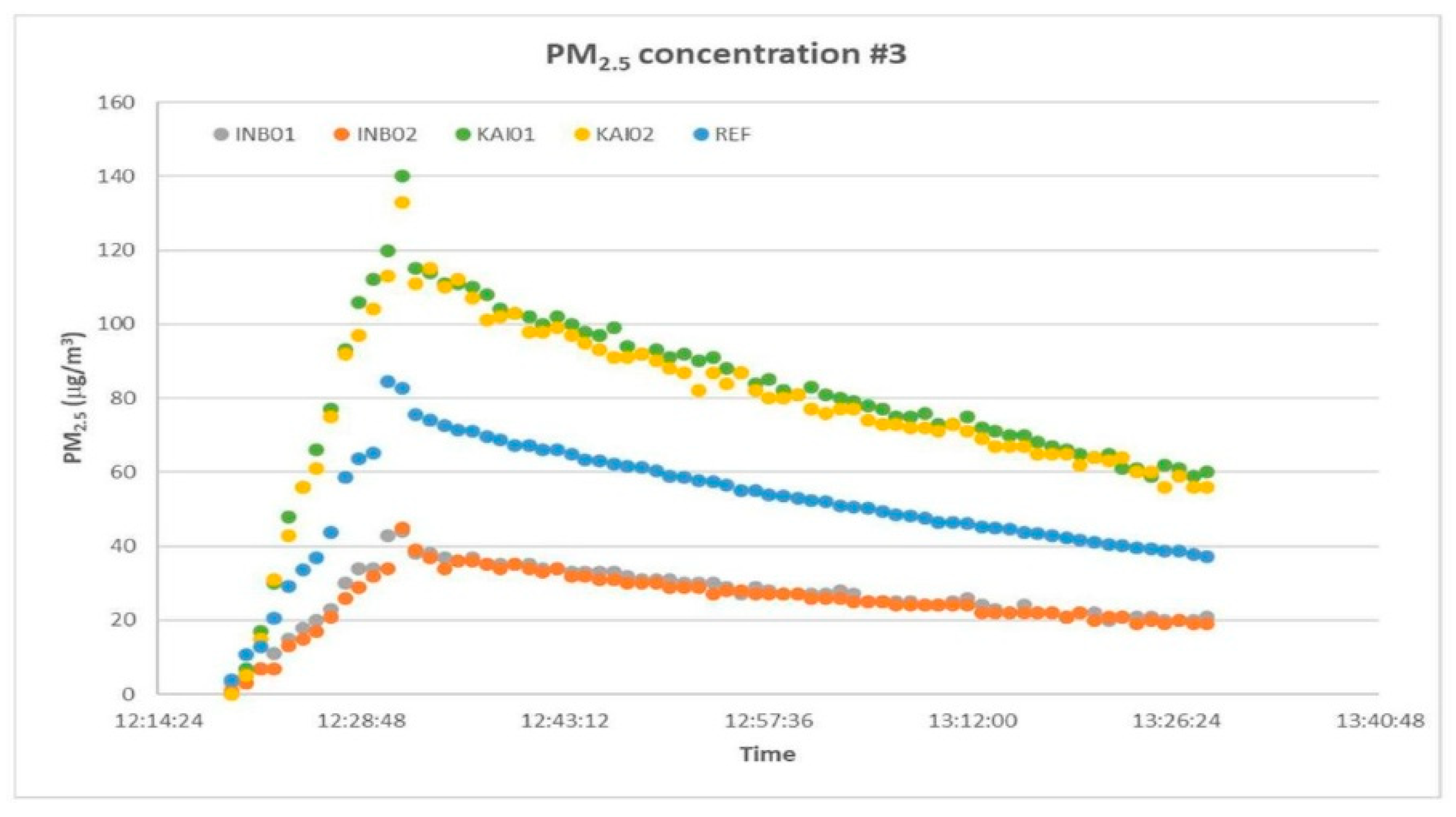
Based on laboratory research [6], it was found that sensors with the technical parameters listed in Table 10 tend to underestimate concentration values, with errors ranging from 38% to 65%. However, for smaller particles, the recorded concentrations were consistent with those obtained by the reference sensor (REF). The comparison of the measurement results of commercial sensors widely available is presented in Figure 5.
Figure 5 and Figure 6 present the measurement results (for PM2.5 and PM10, respectively) obtained from the inBiot (MICA) sensors (INB01, INB02) and the Kaiterra sensors (KAI01, KAI02), compared to the REF reference sensor. Kaiterra sensors were found to be more accurate than the inBiot (MICA) devices.
For PM10 particles, measurement underestimation was also observed. The errors for inBiot (MICA) sensors ranged from 52% to 73%, while for Kaiterra sensors, they ranged from 0.3% to 45%. These relationships are illustrated in Figure 6 [6].
The discrepancy observed between the low-cost sensors and the reference instrument in Figure 5 and Figure 6 is consistent with the limitations described in the studies cited in [6,77,78,79]. As demonstrated in these publications, low-cost optical sensors, whether used for indoor, outdoor, or combined IAQ monitoring, show sensitivity to short-term fluctuations in aerosol composition, humidity, and particle size distribution, which leads to noticeable deviations from gravimetric or regulatory-grade methods.
According to Caselles Nuñez et al. [77] and Abulude et al. [79], short comparison periods tend to amplify sensor noise and do not allow the algorithmic averaging or correction factor calibration needed to achieve stable agreement with reference devices. Wallace and Ott [78] further highlight that long-term co-location is essential for accurately distinguishing indoor-generated PM2.5 from infiltrated outdoor PM, and that short sampling windows can produce artificially low R2 values due to transient concentration spikes. Aguado et al. [6] similarly show that the validation of IAQ tools requires long, stable monitoring periods to ensure reliable performance metrics.
Therefore, the discrepancies shown in Figure 5 and Figure 6 should be interpreted in light of these methodological limitations, as short-duration comparisons are known to cause a significant divergence between low-cost optical sensors and reference instruments. Another sensor used to measure PM2.5 concentrations in indoor air is the Canāree A1 sensor (Piera Systems, Mississauga, Canada). It is used to measure pressure, temperature, relative humidity, CO2, BVOCs, and particulate matter (ranging from PM1 to PM10) [79].
PurpleAir sensors are also used in air quality monitoring [77,78]. These devices employ optical particle sensors manufactured by Plantower (Plantower Technology, Nanchang, China). The sensors contain one or two lasers with a wavelength of approximately 650 nm, which scatter aerosols introduced into the monitor housing by a small fan. The design allows for independent measurement of indoor and outdoor air quality. The Plantower PMS-5003 (Plantower Technology, Nanchang, China) device is typically used outdoors, while the PA-I model, equipped with a single PMS-1003 sensor (Plantower Technology, Nanchang, China), is designed for indoor applications. These sensors operate on the basis of proprietary algorithms, but they allow long-term estimation (from months to years) of PM2.5 concentrations originating from indoor sources [77,78].
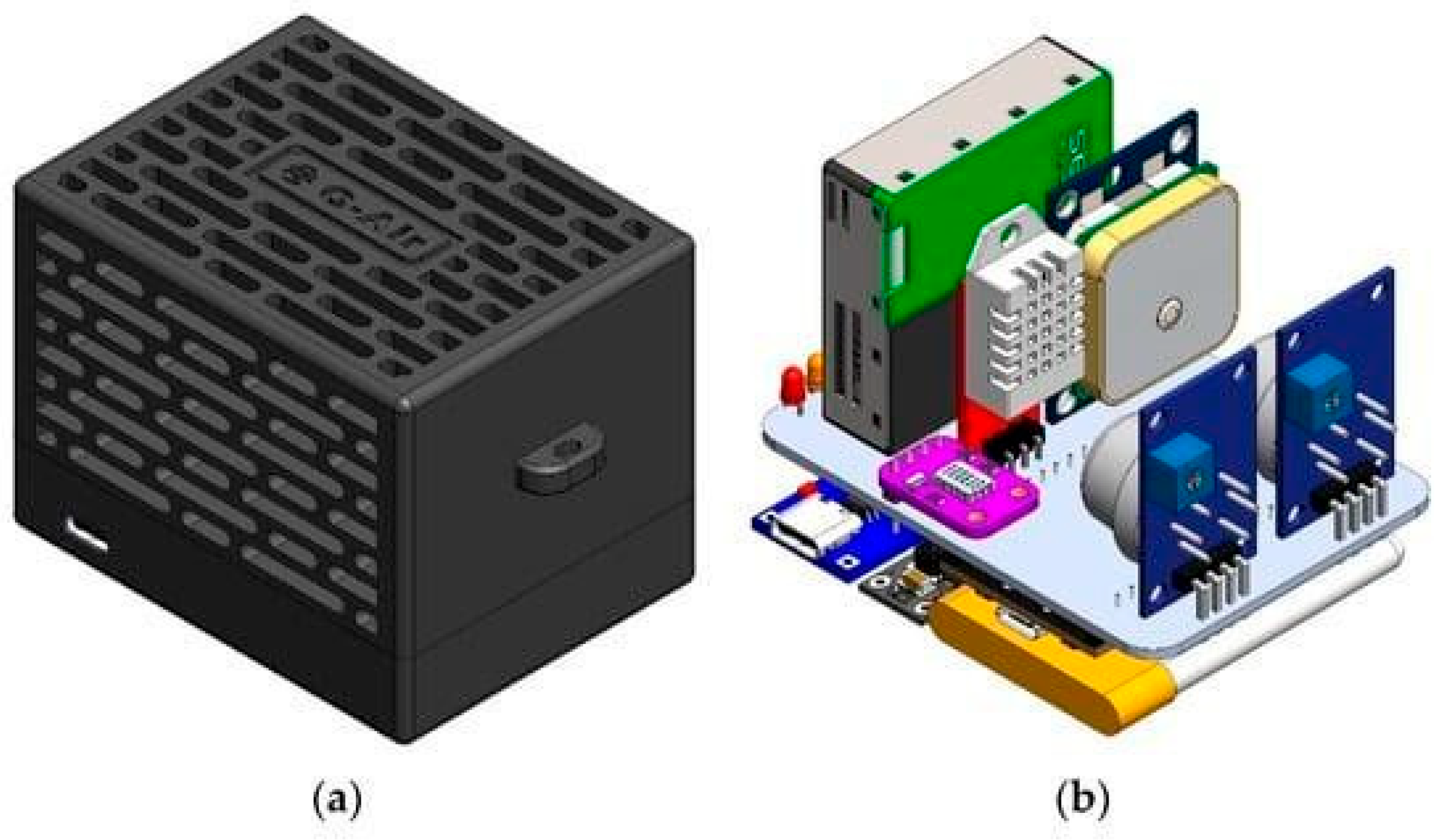
An increasing number of innovative devices are being developed to enable precise air quality assessment. One such instrument is the Q-Air device (a device of Wallace design [78]), which collects, processes, stores, and visualises measurement data. The device is equipped with integrated sensors that determine the location and simultaneously measure the concentrations of particulate matter (PM10 and PM2.5), as well as the gaseous components present in airflow, carbon monoxide (CO), nitrogen dioxide (NO2), and ozone (O3). It also records environmental parameters such as temperature and humidity. Measurements are collected by an ESP32 microprocessor (Espressif Systems, Shanghai, China) and the analysed results are published to a cloud server (Blynk) (Blynk Inc., New York, USA) via the MQTT communication protocol. A dedicated mobile application has been developed for the device. Figure 7 shows the Q-Air measurement device and its components [77]. The complete unit has dimensions of 6 cm × 6 cm × 8 cm.
The literature review does not allow for a definitive indication of the best measurement device or method. Sensors used for particulate matter concentration measurements, while also enabling the measurement of additional parameters, include the following:
-
TSI SidePak AM510—personal dust monitor (PM2.5, PM10).
-
TSI DustTrak II/DRX—portable dust monitor (PM1, PM2.5, PM4, PM10).
-
GrayWolf AdvancedSense Pro—multifunctional IAQ monitor (PM, VOCs, CO2, T, RH).
-
PCE-PQC 34—reference particle counter (PM1, PM2.5, PM4, PM10).
-
PurpleAir—networked optical PM sensor (PM1, PM2.5, PM10).
-
inBiot MICA—IAQ monitor (CO2, PM, VOCs, T, RH).
-
Kaiterra—IAQ monitor (CO2, PM2.5, VOCs, T, RH).
-
Canāree A1—personal IAQ sensor (PM, VOCs, CO2, T, RH).
-
Q-Air—IAQ device (PM, CO2, CH2O, VOCs, T, RH).
Table 11 presents a comparison of measurement devices along with their technical specifications. The data collected demonstrate the wide range of possibilities available to researchers.
The most commonly used PM concentration analysers in scientific studies described in the literature are:
-
TSI DustTrak, SidePak, PCE-PQC 34, PurpleAir;
-
DustTrak/SidePak—controlled studies (schools, fitness centres);
-
PurpleAir—epidemiological and population studies.
In Table 11, a comparison of the measurement devices used for the assessment of PM concentrations is presented. It is important to note the differences in the applied measurement methodologies. The studies varied both in terms of the average times and in terms of the seasons during which measurements were made. Some analyses relied on short-term records (e.g., 1 min or 5 min intervals), while others used hourly or daily averages, which may influence the degree of short-term variability smoothing and the visibility of pollution episodes. The seasonal context also proved to be highly relevant. Measurements carried out during the heating season generally reported higher levels of PM, particularly in regions with a substantial contribution from residential combustion. On the contrary, the non-heating season measurements reflected the influence of natural ventilation, meteorological conditions, and occupant activity. Therefore, comparing the results requires accounting for seasonal variability as a key factor that modifies the concentrations of indoor particulate matter. Differences in instrument calibration and measurement uncertainty were also observed. Some devices (e.g., DustTrak, SidePak) required calibration against the reference method (PN-EN 12341) [3], whereas low-cost optical sensors exhibit higher uncertainty and strong sensitivity to relative humidity. Gravimetric methods, on the other hand, offer the highest accuracy but a lower temporal resolution. These methodological discrepancies affect the comparability of data sets in different measurement campaigns [30,39,42,43,44,45,51,52,57,59,69,80,81,82,83,84,85,86,87,88].
Low-cost optical particle counters (OPCs), such as Plantower (Plantower Technology, Nanchang, China), PurpleAir (PurpleAir, LLC, Draper, Utah, USA)and HPMA sensors (rHoneywell Sensing and Productivity Solutions, Charlotte, North Carolina, USA), require appropriate calibration and data correction procedures to ensure reliable mass concentration estimates of PM2.5 and PM10. A key limitation of optical sensors is their sensitivity to relative humidity (RH), which affects particle hygroscopic growth and light scattering efficiency. Numerous studies have demonstrated that elevated RH leads to a systematic overestimation of PM2.5 mass concentrations if no correction is applied [44,63,64,65]. Therefore, empirical RH correction models based on field colocation with reference grade gravimetric or beta-attenuation monitors are commonly implemented, most often in the form of linear or multivariate regression relationships [43,63,65].
The detection limits of low-cost OPCs are generally on the order of 1–2 µg·m−3 for PM2.5, depending on the sensor type, the average interval, and the environmental conditions [44,63,64]. Short averaging times (e.g., 10 s, 1 min) are associated with higher signal noise, while longer averaging intervals (5–60 min) significantly improve signal stability and correlation with reference instruments [43,44,63,64]. Consequently, most field studies apply a temporal average of at least 1–10 min to reduce random measurement error.
Conversion of particle number counts to mass concentrations requires assumptions regarding the particle density and refractive index. Low-cost OPCs generally assume spherical particles with a fixed refractive index (typically 1.5–1.6) and a constant effective density (commonly in the range of 1.2–1.7 g·cm−3), which may not accurately represent the aerosol composition of the real world [43,63,64]. Deviations in particle composition, the dominance of hygroscopic species, and the presence of wildfire smoke or dust aerosols introduce additional bias in the optical-to-mass conversion process [64,65].
Therefore, uncertainty propagation in interstudy comparisons is governed by several cumulative factors: uncertainties in calibration models, RH correction performance, particle density assumptions, optical response variability, and temporal averaging strategies [43,62,63,64,65]. As a result, discrepancies of 20% to 50% between different low-cost sensors and between sensor systems and reference instruments are commonly reported under real-world conditions [43,63,64]. These sources of uncertainty must be considered when comparing PM2.5 and PM10 levels between studies employing different types of OPC, calibration strategies, and environmental conditions.
Despite these limitations, when properly calibrated and RH-corrected, low-cost OPCs provide robust tools for continuous indoor–outdoor PM monitoring, assessment of infiltration.
Table 12 presents the classification of the measurement instruments used to assess indoor air quality, including their operating principles, typical particle fractions, measurement ranges, time resolution, and typical applications.
The measurement methods described in this subsection serve not only as tools for characterising PM2.5 and PM10 levels in indoor environments, but also as fundamental instruments for the quantitative evaluation of the effectiveness of remediation and mitigation measures. Continuous concentration monitoring, together with simultaneous indoor and outdoor measurements, enables the analysis of concentration changes before and after the implementation of specific interventions (e.g., air filtration, ventilation modifications, tightening of building envelopes), as well as the determination of indicators such as the I/O ratio and the infiltration factor. These parameters allow an objective assessment of the degree of pollutant reduction and the effectiveness of the applied technical solutions.

3.3. Methods for Reducing the Concentration of Particulate Matter PM2.5 and PM10

In the context of air quality, PM10 and PM2.5 are two key indicators that should draw our special attention. Reducing PM10 and PM2.5 levels is an important topic in the context of improving air quality, and ventilation plays a significant role in this process. Proper ventilation not only allows for the exchange of polluted indoor air, but also contributes to reducing the concentration of fine particulate matter that is harmful to health [4,6].
In the case of mechanical exhaust ventilation, the velocity of air decreases with distance from the exhaust outlet. This results in reduced pollution capture. A study [46] was carried out to improve pollutant capture by generating additional swirling ventilation airflows. A vortex exhaust ventilation system was found to generate sufficient air velocity to capture pollutants at greater distances (≥600 mm) than a conventional mechanical exhaust system. Vortex exhaust ventilation was shown to reduce PM10 concentration in the air by 18.7% [46].
An experimental method to reduce PM2.5 levels in indoor air is a ventilation system integrated with sensors that monitor carbon dioxide (CO2), total volatile organic compounds (TVOC), formaldehyde, relative humidity (RH), temperature (T), fine particles (PM2.5), and nitrogen dioxide (NO2). This system includes mechanical exhaust ventilation with humidity control (MEV-rh) and combined mechanical exhaust control of CO2 and humidity (MEV-rb). The study showed an improvement in indoor air quality, with a 20% reduction in average CO2 concentration and a 5% reduction in PM2.5 levels [47].
A study [21] was conducted at a school in Stockton, California, where a filtration system was implemented to reduce PM2.5 concentrations by using portable air purifiers and upgraded filters in the mechanical ventilation system. The effectiveness of air filtration strategies was evaluated based on their ability to reduce PM2.5 concentrations. HealthPro Plus Air Purifiers by IQAir (Goldach) (IQAir, Steinach, Switzerland) were used, with six airflow settings of 70, 130, 220, 290, 340, and 510 m3·h−1, equipped with HEPA filters [21,48]. The ventilation system was fitted with MERV-13 filters(IQAir, Steinach, Switzerland) designed to capture 85% of particulate matter [21,49]. The MERV-13 HVAC filters and air purifiers, individually and in combination, showed particle filtration efficiency ranging from 14 to 56%. As a result, the average PM2.5 concentration in classrooms was below the EPA annual standard of 9 µg·m−3. In one classroom, the average PM2.5 concentration was below the WHO annual indoor standard of 5 µg·m−3. In rooms equipped with air purifiers, PM2.5 concentrations further decreased overnight [12,21].
An integrated system of mechanical ventilation, air conditioning, and dehumidification can significantly contribute to the removal of indoor air pollutants. To carry out the study, an environmental chamber was constructed according to the GB/T 18801-2022 standard [22,89]. The chamber consists of an inner chamber and an outer chamber. The inner chamber has dimensions of 6.1 m × 3.00 m × 3.20 m. The outer temperature-controlled chamber measured 7.95 m × 4.00 m × 3.20 m. The inner chamber was equipped with an air conditioner, mechanical ventilation, and an air purifier arranged as shown in Figure 8.
To simulate the heat gains from the windows and doors, heating cables were installed. Four thermal manikins were used for the experiment, generating a total heat output of 240 W. An air conditioner (Figure 8) with a capacity of 2.6 kW was installed on the chamber wall at a height of 2.4 m. The air-outlet angle of the air conditioner was set at 39°, with a supply air velocity of 2.33 m·s−1. Mechanical ventilation supplied 120 m3·h−1 of air through 24 cm × 24 cm inlet and outlet openings located on one side of the chamber, as shown in Figure 8. The air purifier delivered 36 m3·h−1 of purified air. The manufacturer reported a purification efficiency of 98% for PM2.5 particle matter. The air velocity at the purifier outlet was 4 m·s−1. The purifier was factory equipped with a top air outlet and a side air inlet. In the experiment, the purifier achieved a supply air velocity of 3.85 m·s−1 and an air discharge angle of 35 °. It was placed directly opposite the air conditioner. The initial particle concentration in the chamber was 300 µg·m−3. For mechanical ventilation, the air supply velocity was 1.5 m·s−1. When the air purifier operated alone, air pollution decreased by 15 µg·m−3 [22] in 46 min. According to the study, for more effective performance, the purifier should be placed near occupied work areas. When the air conditioner was also activated, air pollution decreased faster. The air cleaning time was reduced by 15.2% [22]. However, the positioning of the devices proved to be a key factor. The devices must be installed opposite each other, as otherwise their air streams interfere with each other. By applying a general supply–exhaust ventilation system, a dilution effect of pollutants was achieved, reducing air purification time by 32.6% [22].
Chao. et al. [90] investigated the effectiveness of air purifiers in reducing indoor PM2.5 and PM10 concentrations under different ventilation conditions. The study was carried out in a laboratory test room with controlled volume and well-defined ventilation conditions. The laboratory room had the following dimensions: floor area 28 m2, room height 3 m, and volume 84 m3 (28 m2 × 3 m). Measurement points were distributed within the breathing zone at a height of 0.8 to 1.5 m above the floor. Controlled concentrations of particulate matter were introduced into the room using a laboratory aerosol generator. The initial concentrations of PM2.5 and PM10 were approximately 150–200 µg∙m−3 [90] and 200–250 µg∙m−3 [90], respectively. These values served as controlled baseline concentrations to test the efficiency of the air purifiers [90].
Typical HEPA air purifiers designed for rooms with a volume of 80–100 m3 were tested. The devices were equipped with H13-class HEPA filters and fans with adjustable airflow rates. The air purifiers were placed centrally in the room to ensure uniform air distribution or near a wall, simulating a less optimal placement in real indoor environments. Three airflow rates were tested: low (150 m3∙h−1), medium (250 m3∙h−1), and high (400 m3∙h−1). The purifiers operated until a predetermined reduction in PM concentration was achieved (e.g., 80% relative to the baseline level) [90].
Measurements were performed in three ventilation scenarios: a closed room (no ventilation), natural ventilation (partially open windows), and mechanical ventilation (HVAC system). Laser sensors measured PM concentrations in real time at 4 to 6 points within the breathing zone. The results were verified using the gravimetric method (filtration and weighing of samples). Changes in concentration over time, reduction rate, and differences between PM2.5 and PM10 were analysed. Table 13 presents a summary of the reduction in PM2.5 and PM10 concentrations depending on the location of the purifier, the airflow setting, and the ventilation scenario [90].
Based on the data, Chao et al. [90] concluded that the shortest reduction time was achieved when the air purifier was placed centrally and operated at the maximum airflow rate (400 m3∙h−1). The time indicated in Table 13 represents the duration required to achieve the specified percentage reduction in PM relative to the baseline concentration. PM2.5 required more time for removal than PM10 due to its smaller size and longer residence time in the air. Natural or mechanical ventilation affected the cleaning rate, prolonging the reduction time compared to a closed room. The authors emphasise that this was a laboratory study, where conditions may differ from those of real apartments or offices. The study did not assess the effects of long-term exposure to PM2.5 and PM10 [90].
Based on a study conducted in a senior residential building in Detroit [23], the effectiveness of portable air purifiers (PAFs) of the HEPA type (LE) and True HEPA (HE) was evaluated in reducing the main indoor sources of PM2.5 and limiting the infiltration of pollutants. Participants (40 individuals, with a mean age of 67 years) were randomly assigned to three different three-day intervention periods [23]:
-
‘Sham’ period (air purifiers operated but without filters);
-
Period with LE filter (low-efficiency HEPA-type);
-
Period with HE filter (true HEPA, high efficiency).
The main indoor sources of PM2.5 were identified as follows [23]:
-
Organic pollutants mainly from domestic activities such as cooking (45%);
-
Resuspension and infiltration of pollutants related to traffic and waste combustion products (14%);
-
Secondary aerosols (13%);
-
Tobacco smoke (7%);
-
Urban dust (2%);
-
Unidentified sources (19%).
In the study [23], two types of portable air purifiers were compared with a device operating in “sham” mode (purifier on, but without a filter). The LE (Low Efficiency HEPA-type) purifier used a HEPA-like filter (a filter medium with HEPA-like characteristics, similar construction to HEPA filters, used in air purification devices; specific manufacturer, city and country are not specified in the references because ‘HEPA-like’ refers to the type of filter rather than a specific branded product) with reduced filtration efficiency, while the HE (True HEPA) purifier was equipped with a genuine HEPA filter, capable of removing ≥99.97% of 0.3 µm particles. The study showed that both types of filters effectively reduced PM2.5 concentrations indoors. During the ‘sham’ period, the mean concentration was 17.5 µg·m3; with the LE filter, it decreased to 8.4 µg·m−3, and with the HE filter, to 7.0 µg·m−3. Furthermore, infiltration of outdoor pollutants decreased from 79% during the ‘sham’ period to 61% with the LE filter and 51% with the HE filter.
A study carried out in a kindergarten in Daejeon [24] (South Korea) aimed to determine optimal operational scenarios for mechanical ventilation and air purifier operation that would simultaneously reduce levels of CO2 and PM2.5 without increasing the inflow of outdoor pollutants. The study was carried out during the winter (January to March 2023) in two classrooms, each measuring 57.42 m2. Outdoor PM2.5 concentrations in winter were higher than in other seasons [91], which could lead to increased indoor levels due to the infiltration of pollutants from outside [92]. PM2.5 was monitored using an optical particle counter (OPC, Grimm) (GRIMM Aerosol Technik GmbH & Co. KG, Ainring, Germany). A simulation scenario was created with a ventilation system operating at 345 m3·h−1 equipped with a standard filter and an air purifier with an airflow rate of 210 m3·h−1. Analysis showed that the simulated PM2.5 concentration was 20% [24] higher than the measured value. This indicated that the numerical model predicted additional particle accumulation because ventilation introduced outdoor pollutants, while the weak filter and low-efficiency purifier failed to effectively remove them. The next scenario involved ventilation at 345 m3·h−1 with a standard filter and an air purifier with higher airflow (480 m3·h−1). The concentration of PM2.5 was approximately 16% [24] lower than in the actual measurements. The more efficient air purifier effectively reduced the levels of particulate matter even when the ventilation system introduced them from the outside. The role of the air purifier is crucial, but its efficiency alone cannot solve the problem if the ventilation filter is not effective enough. The third scenario included ventilation with a 345 m3·h−1 airflow equipped with a MERV-13 filter (75% efficiency) and an air purifier with moderate airflow (210 m3·h−1). PM2.5 levels were reduced by more than 50% [24] compared to actual measurements. On days with high outdoor concentrations (up to 26.5 µg·m−3 [24]), indoor levels remained below 15 µg·m−3, consistent with WHO guidelines [12]. Scenario 3 demonstrated that the most effective solution combines adequate ventilation with high-efficiency filtration (MERV-13) and air purifier support. The model did not account for the influence of physical activity of the children. A properly designed ventilation system combined with air purifiers ensures fresh air and low levels of particulate [24].
In Seoul subway stations, a study [93] aimed to improve air quality, with the goal of achieving by 2024 that PM10 and PM2.5 particulate matter concentrations should not exceed 50 µg·m−3 and 30 µg·m−3 indoors, respectively [93]. Previous measurements indicated that the average values were significantly higher 111 µg·m−3 for PM10 and 58 µg·m−3 for PM2.5 [93]. It was decided to examine how changes in the layout of air conditioning diffusers and improved filtration could affect particle distribution across different stations zones. Three simulation scenarios were developed. In Scenario A, the diffusers were evenly distributed throughout the central sections of the ceiling of the waiting room. This was a typical configuration found in many subway stations, a relatively simple and symmetrical top-down air supply layout. The centrally supplied air was intended to spread evenly throughout the space. However, in practice, it did not create an effective barrier near entrances, escalators, or platform screen doors (PSDs). The average concentration of PM10 was approximately 33.5 µg·m−3, and PM2.5 was approximately 12 µg·m−3 [93]. Although the values met general standards, local exceedances were observed near the entrances and PSDs. Scenario B involved placing diffusers along the walls. The diffusers were mainly located near exterior entrances, corridors leading to platforms, and PSDs. This configuration functioned as an ‘air curtain’. A stream of clean air blowing from the walls limited the inflow of polluted air from tunnels and areas of the ground level. Air flow had a clearly directional character, creating protective zones at critical points. A reduction of 10.5% in PM10 and 5% in PM2.5 was recorded compared to Scenario A [93]. The improvement in decomposition was significant even with the same filtration efficiency (70%). The most significant improvement occurred near entrances and escalators, where pollutants were most often infiltrated. Scenario C involved concentrating the diffusers in the central area. In this variant, most of the diffusers are concentrated in the central part of the room. A ‘clean air core’ was created in the centre of the space. Air was delivered mainly to the central zone of the hall, while areas near the walls and entrances were less protected. As a result, polluted air could freely flow into the interior. This phenomenon led to the mixing of air masses and a faster spread of particles. Increases of 9% in PM10 and 18% in PM2.5 were recorded compared to Scenario A [93]. Not only filter efficiency, but also diffuser location geometry determines air quality in the subway. Even with 70% filtration, a significant improvement can be achieved (Scenario B) if the air is directed to where the pollutants actually flow [93]. Lee et al. [94] developed high-efficiency electrostatic filters for air conditioners in subway stations, which improved both air quality and energy efficiency.
A study aimed at improving indoor air quality was conducted in an office environment in Taiwan [25], located in a subtropical region characterised by high humidity and temperature. Ventilation and climate control were provided by a central air conditioning system. Of the employees, 86% reported symptoms of sick building syndrome, such as headaches and concentration problems. For the purpose of the study, multifunctional sensors were installed to measure temperature, relative humidity, and particulate matter concentrations (PM2.5, PM10, TSP). The sensor locations included two workstations and an area near the photocopier, identified as a potential pollution source. Eight cost-effective and easily implementable interventions were proposed [25]:
-
Introduction of forced ventilation;
-
Restoration of the air exchange system;
-
Cleaning of air conditioning filters;
-
Installation of air diffusers in the ceiling equipped with air filters;
-
Removal of sealed office grilles;
-
Replacement of heavy carpets with better ventilated flooring materials.
After implementing the proposed measures, the air quality (PM) in the workstation area improved. For PM2.5, the improvement index increased from 0.05 (before) to 1.5 (after interventions); for TSP (total particulate matter) from 0.91 to 3.54; and for PM10 from 2.45 to 4.02 [25].
In residential buildings in Seoul, an analysis was conducted to examine the impact of two parameters of ventilation and filtration systems, airflow rate and filter efficiency, on PM2.5 particulate matter concentration. Twenty-four simulation scenarios were developed, combining four airflow rates (100, 200, 400, and 600 m3·h−1) with three levels of filter efficiency: 35% (MERV-9), 65% (MERV-11), and 95% (MERV-16). Four combinations of pollution conditions were considered [26]:
-
LL—low outdoor and low indoor levels;
-
HL—high outdoor and low indoor levels;
-
LH—low outdoor and high indoor levels;
-
HH—high levels both outdoors and indoors.
The results showed that, for the HH scenario, a reduction in PM2.5 concentration was achieved with a high airflow rate (600 m3·h−1) and high filtration efficiency (95%). In turn, low airflow combined with equally high efficiency also resulted in a significant improvement. On the basis of the simulations, the use of low-efficiency filters combined with high airflow rates was found to be inadvisable. This configuration led to a rapid increase in PM2.5 concentration as outdoor pollution levels rose. For the LH scenario, a high airflow rate was the key factor, regardless of the efficiency of the filter. For the HL scenario, effective strategies included combining high airflow with a high-quality filter or using low airflow with high-efficiency filters (≥0.65). In the LL scenario, a noticeable improvement occurred when filters with at least 65% efficiency were used; air quality continued to improve as airflow increased. When low-quality filters (<65%) are used, ventilation should be limited, as it can deteriorate indoor air quality by introducing pollutants from outside [26].
Based on data obtained from the literature [26], the research results were analysed and Table 14 was prepared, presenting the percentage reduction in PM2.5 depending on airflow rate, filter efficiency, and simulation scenario.
Filtration systems are used to reduce the concentration of particulate matter. According to research [95], the efficiency of the materials used in the filters is constantly being improved. The new filtration materials that are the most commonly used include electret materials, nanomaterials, fibreglass, and PTFE-based materials [95].
Li et al. [96] demonstrated that a very thin layer of PTFE (polytetrafluoroethylene) nanofibers, produced by electrospinning onto a PTFE microfiber substrate, forms a composite filter membrane (CPFMs) that combines high PM capture efficiency with breathability and hydrophobicity (resistance to water and dirt). The study aimed to compare a ‘bare’ PTFE microfiber substrate with the same substrate coated with PTFE nanofibers and to evaluate aerosol filtration efficiency (PM2.5 and PM7.25). The filtration efficiency (DEHS) for PM2.5 was 44.778% for the substrate alone, compared to 98.905% for the composite. The thin nanofiber layer significantly increased filtration efficiency without compromising breathability.
Studies [97] were conducted on the use of electrostatic precipitators (ESPs) as air cleaner devices for indoor environments. ESPs use an electrostatic field to charge airborne particles via corona discharge at a conductive electrode. The charged particles are then attracted to an oppositely charged collecting electrode. This method effectively removes particulates while generating minimal airflow resistance. However, more studies are needed on the by-products generated by ESPs (such as ozone and aldehydes), their amounts, and their potential health impacts [98]. ESPs achieve very high efficiency (95 to 98% [99]) in particulate removal while maintaining low pressure drop and energy efficiency. Particles within the size range of 0.2–0.35 μm are more difficult to remove compared to those between 0.35 and 8.7 μm [99]. The efficiency of ESPs reached approximately 85% for PM2.5 under optimal conditions (airflow 4.5 m3·h−1, voltage +12 kV), with a very low ozone level of 17 ppb [97].
Filtration systems reduce particulate matter concentrations in the air, but often use environmentally harmful, non-biodegradable materials. To advance this field, research is being conducted on the technical properties of filters with Pickering emulsion [100] or made from cellulose pulp extracted from banana pseudo-stems [101]. A filter with a basis weight of 160 g·m−2 was developed [101]. This is a biodegradable biopolymer-based filter. It is also recyclable. It was produced through two main processes: alkaline treatment and bleaching. The filtration method is based on particle separation through retention on a porous surface. In the context of biomass use, woody biomass filters achieved particle retention efficiencies ranging from 70% to 97% [102,103]. For banana pulp filters, bleached versions showed capture efficiencies of approximately 90% for PM10 and PM2.5 particles [101].
An innovative method currently being studied for the reduction of PM2.5 is the use of so-called green walls. Plants naturally filter air through various phytoremediation mechanisms, including phytoextraction (phytoaccumulation), phytostabilization (phytoimmobilization), phytovolatilization, phytodegradation (phytotransformation), and phytofiltration [102,103]. The study [103] was carried out in a closed air-conditioned room equipped with two green walls, each measuring 140 cm by 210 cm, as shown in Figure 9. The room was also equipped with 39 sensors. PM2.5 concentrations were measured using devices equipped with Sensirion® SP30 sensors (Sensirion AG, Staefa, Switzerland), TSI QUEST® Technologies EVM Series Environmental Monitor Systems (TSI Incorporated (Quest Technologies), Shoreview, Minnesota, United States), and Comon Invent® Sensirion® units (Comon Invent B.V., Nijmegen, Netherlands).
The diffusion of pollutants into the room was achieved using a spraying system. It should be noted that the particulate matter concentrations generated for this phytoremediation experiment were higher than those typically found in many indoor environments, and therefore may not fully represent real-world indoor exposure scenarios. After introducing the particles, their concentrations between 10:47 and 11:08 were 377 µg·m−3, 134 µg·m−3, and 148 µg·m−3, respectively. At 00:00 on 28 October 2023, the concentrations had decreased to 12, 8, 10, and 0 µg·m−3, respectively [103].
Streit et al. [104] conducted a study to assess whether common indoor potted plants can reduce PM2.5 concentrations in an enclosed environment with air recirculation. The experiment was carried out under controlled laboratory conditions in a specially designed test chamber equipped with an internal air circulation system. The chamber was constructed of a smooth synthetic material to minimise unintended particulate deposition. Its structure was rigid and fully sealed to prevent infiltration of outdoor air. Air recirculation was maintained using a fan and airflow velocity was kept at approximately 0.3 m·s−1. The inlet and outlet were placed to ensure a uniform distribution of the particles and to promote effective interaction between the circulating air and the leaf surfaces of the plants. Environmental parameters were kept constant, with the temperature maintained at 22–24 °C, moderate and controlled relative humidity, and no natural daylight. The plants were illuminated using LED lighting with characteristics similar to those of daylight. During each experimental trial, ten plants of a single species were placed inside the chamber. Four plant species were examined: Epipremnum aureum, Chlorophytum comosum, Nephrolepis exaltata, and Maranta leuconeura. All plants were placed on a dedicated stand or platform to ensure identical exposure to airflow conditions within the chamber. Figure 10 shows the plants used for the research [104].
Incense sticks were used to generate PM2.5 particles, providing high and repeatable PM2.5 concentrations as well as a realistic particle size distribution. After the smoke was produced, the particles were evenly dispersed throughout the chamber by the recirculation system. Changes in PM2.5 concentration were recorded over a period of 0 to 240 min (4 h). Each experiment was carried out under two conditions:
-
The chamber without plants—serving as the control (baseline);
-
The chamber with plants—containing ten plants of a single species.
This comparison allowed the researchers to determine how the presence of plants influenced the decay rate of PM2.5 concentration. The primary instrument used in the study was the AirGradient Open Air O-1PST equipped with a Plantower PMS5003T sensor (Plantower Technology, Nanchang, China). Measurements were taken continuously at one-minute intervals. Although the PMS5003T sensor is factory calibrated, the researchers monitored measurement stability throughout the study; the chamber was cleaned after each trial, and the system was evaluated against the control condition identically.
All plant species tested accelerated the decline in PM2.5 concentration compared to the control chamber. Nephrolepis exaltata exhibited the highest effectiveness—after 4 h, the concentration decreased from an initial ~300 µg/m3 [104] to ~38.4 µg/m3 [104]. Maranta leuconeura, despite being tested for the first time for PM removal, also showed notable particle retention, especially during the initial phase (up to approximately 60 min). Epipremnum aureum and Chlorophytum comosum showed very similar PM decay profiles—less effective than Nephrolepis, yet still clearly more efficient than the plant-free control. The reduction was initially rapid (with the greatest decrease occurring during the first hour) and gradually slowed thereafter. After 4 h, the difference between the plant trials and the control remained substantial [104].
Table 15 summarises the results of the conducted experiment. The findings indicate that potted plants may accelerate the deposition of PM2.5 particles in an enclosed space with air recirculation, suggesting their potential use as a passive supplement to indoor air quality improvement systems, particularly in settings where other solutions are more difficult to implement. The results confirm that the effectiveness of phytoremediation depends on numerous factors, including plant species, leaf surface area, leaf morphology, and microclimatic conditions (airflow velocity, humidity). These dependencies also introduce certain limitations: the efficiency observed under real world conditions (with ventilation, multiple sources of PM, and variable environmental parameters) may be lower than that achieved in laboratory settings [104].
The authors highlight the need to standardise the testing methodologies for potted plants (including airflow conditions, humidity, leaf surface quantification, and PM type), as such harmonisation would improve comparability between studies [104].
Tang [105] distinguishes two primary types of green wall systems. The first type, green facades, consists of building façades covered with climbing plants whose roots are located directly on the ground or in containers, allowing vegetation to grow upward along the wall surface. The second type, living walls (also referred to as living green walls, vertical gardens, or green wall systems), comprises vertical structures containing a growth substrate (e.g., peat, coconut fibre, soil) placed in pockets, trays, modules, or panels in which plants are grown. Such systems can be continuous or modular, allowing flexibility in design, adaptation, and scalability [105].
Green walls can contribute to air pollution mitigation through several mechanisms, including the deposition of particulate matter (PM), the increased surface area for particle capture, the removal of gaseous and chemical pollutants, and the potential for ‘regeneration’ of the surface. Although most of the studies identified in the review concern outdoor environments, Tang highlights that installing the living walls indoor (e.g., in offices, shopping centres, or public buildings) can also effectively improve indoor air quality. The review cites studies demonstrating that an active living wall composed of five plant species installed indoors resulted in approximately 73% lower PM and TVOC concentrations compared to an identical active wall without plants. Another study reported that an indoor living wall of 0.25 m2 planted with Chlorophytum comosum achieved removal efficiencies of ~53.4% [105] for TSP/PM10 and ~48.2% [105] for PM2.5 under defined airflow conditions. The review identifies several factors that improve the performance of green walls in indoor environments. These include appropriate plant selection, particularly leaf traits such as texture, presence of trichomes, leaf shape, and structural complexity, which influence particle capture efficiency. High foliage density and increased leaf area also support improved particle deposition. Furthermore, effective ventilation and airflow distribution, as well as controlled microclimatic conditions (humidity, temperature, and lighting), are essential for maintaining both plant health and air-cleaning efficiency [105].
Tang also emphasises the limitations and variability in the performance of the green wall. The effectiveness of green walls in the removal of PM or gaseous pollutants depends strongly on multiple factors, including plant species, humidity, rainfall or moisture conditions (for outdoor systems), wall height, and proximity to emission sources. Consequently, the results of individual studies may not be readily generalisable in different environmental contexts or system configurations [105].
Wang et al. [106] conducted a study in Shanghai, China, in urban roadside environments with high traffic density. Research focused on the impact of roadside vegetation on PM2.5 and PM10 concentrations. Green belts were shown to reduce particulate matter levels by an average of 15 to 35%. Measurements were made using portable laser sensors and stationary optical monitors along sections of the road with varying traffic intensity. The results highlight the importance of urban planning, vegetation density, and height in reducing pedestrian exposure to airborne particulate matter. However, the article does not address indoor air quality [106].
Recent studies confirm that an effective reduction in particulate matter concentrations (PM2.5 and PM10) in indoor environments requires an integrated approach that combines technical solutions with organisational measures. The most commonly used method is mechanical ventilation with heat recovery, which, when combined with high-quality filtration (HEPA and activated carbon filters), allows for a significant reduction in airborne particle concentrations. Air purifiers serve as a complementary solution.
In public and educational spaces, multistage filtration air conditioning systems are increasingly being used. In residential buildings, mobile solutions such as compact air purifiers and air quality sensors integrated with smart building systems are gaining popularity. Additionally, research is being conducted on biodegradable filters (for example, made from cellulose pulp obtained from banana pseudo-stems) and green walls, which use plant biological processes to help reduce particulate matter and volatile organic compounds.
However, there is still a lack of systematic and long-term analyses of the effectiveness of these technologies in different types of buildings and climatic conditions. The impact of innovative solutions (such as green walls, biomass-based filter materials, and photocatalytic systems) under real operating conditions remains also inadequately understood. It is also necessary to develop methods that integrate PM concentration reduction with the improvement in other air quality parameters, such as humidity. Future research should focus on integrating online sensors with ventilation and air purification systems, enabling dynamic adjustment of device operation parameters to current pollution levels, and developing passive technologies such as self-cleaning surfaces and plant-based systems with proven efficiency.
The review of the literature identifies a significant research gap on the use of mobile air purifiers in office environments. Studies confirm the effectiveness of portable devices in reducing particulate matter concentrations (PM2.5 and PM10), but clear guidelines are still lacking regarding:
-
The optimal placement of air purifiers within office spaces;
-
The integration of air purifiers with existing ventilation systems;
-
Adjustment of operating parameters to the specific conditions of office environments (including the number of occupants, the type of furniture, and the characteristics of airflow).
In practice, this means that devices are often selected in a simplified way based on the manufacturer’s declared CADR (Clean Air Delivery Rate), the size of the room specified in the technical specifications, and the type of filters used (most commonly HEPA H13/H14 combined with carbon filters). Such an approach does not always ensure effective performance under real conditions, where factors such as furniture arrangement, internal emission sources, outdoor air infiltration, and building location play an important role.
Heo et al. [107] developed a novel ozone forecasting method using fuzzy expert systems and neural networks. The study described an approach to predict daily maximum ozone concentrations at four monitoring sites in Seoul, South Korea. The hybrid approach, which integrates fuzzy logic with neural networks, allowed the capture of complex and non-linear relationships between meteorological parameters, photochemical precursors, and ozone levels. Importantly, this concept can be extended to other atmospheric pollutants, particularly PM2.5 and PM10, particulate matter with which ozone exhibits strong chemical and emission-related correlations. Tropospheric ozone and fine particulate matter share common precursors, such as nitrogen oxides (NOx), volatile organic compounds (VOCs), and secondary reaction products formed in the atmosphere. In many urban areas, NOx and VOC emissions originate primarily from fossil fuel combustion, road traffic, the energy sector, and industry. These same combustion processes also produce primary PM10 and PM2.5 emissions, while NOx and VOCs act as precursors for secondary aerosols, including nitrates, sulphates, and secondary organic aerosols (SOAs), which constitute a significant fraction of PM2.5. Consequently, changes in ozone precursor emissions simultaneously affect particulate matter dynamics. The co-occurrence of high O3 and PM2.5 episodes is also driven by similar meteorological conditions, intense solar radiation, low wind speed, and stable atmospheric layers that limit pollutant dispersion and enhance photochemical reactions [107].
Fuzzy neural systems can be used not only for ozone forecasting, as demonstrated by Heo. et al., but also for integrated prediction of PM2.5 and PM10. Incorporating these technologies into air quality management systems can significantly improve early warning of smog episodes, optimise emission reduction strategies, and support public health and urban planning decision-making. Neural networks effectively handle non-linear dependencies and provide forecasts superior to traditional statistical models [107,108].
Corani [109] compared classical feedforward neural networks, their pruned versions, and lazy learning methods to predict air pollutants, with particular emphasis on ozone and PM10 at monitoring stations in Milan. The data set included hourly (or daily aggregated) measurements of standard pollutants, i.e., PM10 (primary focus), ozone (O3), and typical meteorological variables (temperature, humidity, wind speed, and direction), as well as NOx and other precursor gases where available. The study compared three model classes: Feedforward neural networks (FFNNs), Pruned neural networks, and Lazy learning methods (e.g., k-NN, local models). The analysis showed that the three model classes can provide operationally useful PM10 forecasts. From an emission reduction policy perspective, the results support the integration of long-term strategies with short-term operational actions guided by predictive models. Corani’s models also demonstrated that accurate forecasts (especially local) increase the effectiveness of intervention measures and allow a more efficient allocation of air quality management resources [109].

3.4. Effectiveness of PM2.5 and PM10 Reduction Methods in Various Building Use Conditions and Limitations Resulting from Their Use

The effectiveness of technical interventions aimed at reducing indoor concentrations of PM2.5 and PM10 is determined by external environmental conditions, patterns of indoor space use, and technological characteristics of filtration and air cleaning systems. Evidence drawn from studies conducted in residential, educational, sports, office, medical, and historical buildings demonstrates substantial variability in achievable particle reduction efficiencies, as well as distinct functional limitations associated with specific air-cleaning technologies [4,5,6,7,13,26,27,28,29,30,32,33,40,41,45,53,54,59].
In stable outdoor conditions with low background particle loads, HVAC systems equipped with MERV 11 to 13 filters typically achieve PM2.5 reductions of 30 to 55% and PM10 reductions of 20 to 40% [14,21,22,23]. Portable air cleaners that incorporate HEPA filters provide removal efficiencies ranging from 45% to 85%, although their performance is highly dependent on the proper placement of the devices in occupied spaces [17,18,19,20,53]. In ventilation systems that depend solely on natural airflow, even when supplemented with portable purifiers, the achievable reductions are markedly lower and generally remain below 30%. Under high-background conditions, such as during smog episodes, wildfire smoke intrusions, or dust storms, particle infiltration into buildings intensifies substantially [30,36,40,54]. During such events, the effectiveness of MERV 11–13 filters decreases from 15 to 30%, while HEPA-based systems maintain considerably higher efficiency, achieving 55 to 90% reductions in PM2.5 [53]. In buildings with elevated air permeability, particularly in heritage structures, overall effectiveness decreases further, often reaching only 5 to 25% [69,70,71,72,73,74,75,76].
Indoor occupancy contributes an additional determinant of particle concentrations. Increased human activity, especially in schools, preschools, and sports facilities, improves secondary particle resuspension, which can decrease the effectiveness of filtration by 10 to 40% [41,45,59]. In unoccupied rooms, PM2.5 concentrations below 5 µg·m−3 can be achieved when HEPA is combined with high levels of air recirculation [53].
Filtration-based interventions also differ in terms of operational constraints and the potential generation of by-products. Mechanical filtration systems do not produce chemical by-products; however, they entail increased airflow resistance, elevated energy consumption, the need for regular filter replacement, and risks associated with microbial degradation of used filter media. The structural limitations of some HVAC systems may also preclude the use of high-density filter materials. In contrast, ionisation, ozone generation, and UV-C air cleaning technologies can induce the formation of secondary pollutants, including ozone, aldehydes, and ultrafine particles produced through ozone–VOC reactions [38,45]. Due to potential adverse health effects, these technologies should not be used in occupied indoor environments. Research on ultrasonic humidifiers also indicates that the use of tap water or mineral water leads to the emission of mineral particulate matter (“white dust”) with PM2.5 concentrations exceeding 300 µg·m−3; these effects can be mitigated by using distilled water or adopting evaporative humidification technologies. Emerging filtration media, including biodegradable or naturally derived fibre materials, offer promising environmental benefits; however, their filtration efficiency is generally lower than synthetic filters, typically providing 25 to 50% reductions in PM2.5, with additional limitations observed under high humidity conditions [14].
Studies evaluating HVAC upgrades, portable HEPA, and airflow optimisation consistently show that the highest PM2.5 reduction is achieved through integrated approaches that combine mechanical filtration, recirculation, and localised HEPA purification. Proper positioning of filtration devices plays a crucial role, as removal efficiency may differ by a factor of two depending on proximity to emission sources and occupant zones. In high-activity environments, such as sports halls, preschools, and fitness centres, minimising resuspension through an appropriate airflow design is essential. In historical buildings, the effectiveness of the intervention is governed primarily by the degree of enclosure and the limitations in air infiltration. Ozone or UFP generating technologies should be restricted to controlled environments where occupant exposure does not occur.
Table 16 synthesises the effectiveness of key technical technology aimed at reducing indoor concentrations of PM2.5 and PM10 under varying environmental and operational conditions. It integrates evidence from residential, educational, medical, commercial, sport, and heritage buildings, illustrating both reduction ranges and the technological or operational constraints that shape real-world performance. This structured overview supports a comparative understanding of intervention efficiency and highlights the importance of contextual factors such as outdoor pollution load, occupancy, ventilation strategy, and building airtightness.
The collected research demonstrates that no single technology is universally optimal; instead, the effectiveness of PM2.5 and PM10 reduction technologies depends on the interaction between building characteristics, outdoor air quality, occupancy-driven resuspension, and the physical placement or integration of filtration devices. Mechanical filtration (HVAC and HEPA) consistently provides the most reliable reductions, particularly under controlled airflow and recirculation conditions. However, interventions that involve ionisation or ozone generation introduce chemical by-products that limit their applicability in occupied spaces. Furthermore, heritage buildings and high-activity environments present unique constraints, underscoring the need for context-specific customised air quality management strategies.
For the purpose of a concise comparison of the effectiveness of applied solutions aimed at reducing particulate matter concentrations in different types of buildings, the results presented in the article were compiled into a single compact summary table. Table 17 includes baseline indoor and outdoor concentrations of PM2.5 and PM10, the technical parameters of the applied solutions (including the air exchange rate, ACH, the class of the applied filters, or the CADR value), as well as the magnitude achieved of the effect expressed as the percentage change in concentration relative to baseline conditions. This approach enables a direct comparison of the effectiveness of the intervention in different categories of buildings (including residential, educational, office, and sports facilities) and different dust reduction strategies.

4. Conclusions

A review of the literature clearly indicates that indoor concentrations of particulate matter (PM2.5 and PM10) often exceed the WHO guidelines and that indoor sources such as cooking, biomass burning, tobacco smoke, and human activity may be more significant than outdoor pollution infiltration. Children and the elderly are particularly vulnerable, as confirmed by studies conducted in educational, residential, and sports facilities. PM2.5 and PM10 particulate matter represent one of the most serious threats to indoor air quality and human health. In residential and office buildings, additional factors that determine exposure levels include outdoor air infiltration and seasonality related to the heating period. In historical buildings, this issue becomes even more important, as particulate matter contributes not only to adverse health effects, but also to the degradation of cultural heritage.
Currently applied technical solutions, such as mechanical ventilation with high-efficiency filtration (HEPA), air purifiers, and advanced air conditioning systems, demonstrate high efficiency in reducing PM2.5 concentrations. Research is also being carried out on innovative methods, including biodegradable filters made from cellulose-based materials and green wall systems that can act as natural biofilters. However, clear and long-term analyses confirming their effectiveness under real operating conditions are still lacking. The effectiveness of applied technologies depends on a complex interaction between building characteristics, outdoor air quality, intensity of building use, the phenomenon of resuspension, and the spatial arrangement and integration of the filtration devices. The most reliable and repeatable reduction effects were achieved through mechanical filtration, particularly in HVAC systems and with the use of HEPA filters, especially under conditions of controlled airflow and recirculation. The results clearly confirm the superior effectiveness of integrated approaches that combine a tight building envelope, efficient mechanical ventilation, and local air purification. Such solutions make it possible to achieve the highest reductions in particulate matter concentrations, especially during episodes of high outdoor air pollution. At the same time, it was demonstrated that proper placement of filtration devices plays a crucial role in the effectiveness achieved: depending on their location relative to emission sources and occupant zones, the particle removal efficiency may differ by up to a factor of two.
It should be noted that many office buildings accommodate people who spend an average of eight hours a day inside, thus being exposed to elevated concentrations of particulate matter in polluted air. Despite the importance of this issue for employee health, relatively few scientific publications analyse the effectiveness of indoor air quality improvement methods specifically in office environments. In many cases, office buildings cannot undergo costly upgrades to ventilation systems or major structural modifications to install new systems. In such situations, portable air purifiers become a valuable and practical non-invasive solution. When properly selected and placed, these devices provide an effective method for reducing PM2.5 and PM10 concentrations while allowing flexible implementation without interference with existing technical infrastructure.
Identification of this problem allows one to identify several key directions for future research. Long-term and multicentre programmes for indoor air quality monitoring are required, taking into account seasonality and the diversity of building types. Studies should be conducted on the relationship between indoor particulate exposure and respiratory, cardiovascular, and cognitive disorders. A comprehensive assessment of the economic and environmental effectiveness of new technologies, such as biodegradable filters and passive green systems, is also necessary. There is still a lack of solutions that integrate particulate matter reduction with the control of other key air quality parameters, such as CO2 concentration and relative humidity.
In summary, improving indoor air quality requires a holistic approach that combines technological solutions, modern building design, user awareness, and coherent regulatory frameworks. The continued development of interdisciplinary research on indoor air quality and the implementation of sustainable PM reduction strategies are key to reducing the global health burden associated with exposure to particulate matter.

Author Contributions

A.B.: Methodology, Data curation, Conceptualization, Writing—original draft. E.Z.-Ś.: Supervision, Formal analysis, Funding acquisition, Review and editing. All authors have read and agreed to the published version of the manuscript.

Funding

Research was funded in whole or in part by Subsidy from the Ministry of Science and Higher Education 05.0.08.00/1.02.001/SUBB.IKFB.25.002.

Institutional Review Board Statement

This is not applicable.

Informed Consent Statement

This is not applicable.

Data Availability Statement

The raw data supporting the conclusions of this article will be made available by the authors on request.

Conflicts of Interest

The authors declare that they have no competing interests.

References

  1. International Agency for Research on Cancer. Outdoor Air Pollution. In IARC Monographs on the Evaluation of Carcinogenic Risks to Humans; IARC Publications: Lyon, France, 2016; Volume 109. [Google Scholar]
  2. Settimo, G.; Yu, Y.; Gola, M.; Buffoli, M.; Capolongo, S. Challenges in IAQ for indoor spaces: A comparison of the reference guideline values of indoor air pollutants from the governments and international institutions. Atmosphere 2023, 14, 633. [Google Scholar] [CrossRef]
  3. PN-EN 12341:2024-01; Ambient Air—Standard Gravimetric Measurement Method for the Determination of the PM10 or PM2.5 Mass Concentration of Suspended Particulate Matter. Polish Committee for Standardization: Warsaw, Poland, 2024.
  4. Chen, J.; Hoek, G. Long-term exposure to PM and all-cause and cause-specific mortality: A systematic review and meta-analysis. Environ. Int. 2020, 143, 105974. [Google Scholar] [CrossRef] [PubMed]
  5. Wesseling, J.; de Ruiter, H.; Blokhuis, C.; Drukker, D.; Weijers, E.; Volten, H.; Vonk, J.; Gast, L.; Voogt, M.; Zandveld, P.; et al. Development and implementation of a platform for public information on air quality, sensor measurements, and citizen science. Atmosphere 2019, 10, 445. [Google Scholar] [CrossRef]
  6. Aguado, A.; Rodríguez-Sufuentes, S.; Verdugo, F.; Rodríguez-López, A.; Figols, M.; Dalheimer, J.; Gómez-López, A.; González-Colom, R.; Badyda, A.; Fermoso, J. Verification and usability of indoor air quality monitoring tools in the framework of health-related studies. Air 2025, 3, 3. [Google Scholar] [CrossRef]
  7. Leikauf, G.D.; Kim, S.-H.; Jang, A.-S. Mechanisms of ultrafine particle-induced respiratory health effects. Exp. Mol. Med. 2020, 52, 329–337. [Google Scholar] [CrossRef]
  8. Nair, A.N.; Anand, P.; George, A.; Mondal, N. A review of strategies and their effectiveness in reducing indoor airborne transmission and improving indoor air quality. Environ. Res. 2022, 216, 113579. [Google Scholar] [CrossRef]
  9. Srivastava, A. COVID-19 and air pollution and meteorology-an intricate relationship: A review. Chemosfera 2021, 263, 128297. [Google Scholar] [CrossRef]
  10. Czwojdzińska, M.; Terpińska, M.; Kuźniarski, A.; Płaczkowska, S.; Piwowar, A. Exposure to PM2.5 and PM10 and COVID-19 infection rates and mortality: A one-year observational study in Poland. Biomed. J. 2021, 44, 25–36. [Google Scholar] [CrossRef]
  11. Austin, W.; Carattini, S.; Gomez-Mahecha, J.; Pesko, M.F. The effects of contemporaneous air pollution on COVID-19 morbidity and mortality. J. Environ. Econ. Manag. 2023, 119, 102815. [Google Scholar] [CrossRef]
  12. World Health Organization. WHO Global Air Quality Guidelines: Particulate Matter (PM2.5 and PM10), Ozone, Nitrogen Dioxide, Sulfur Dioxide and Carbon Monoxid; World Health Organization: Geneva, Switzerland, 2021. [Google Scholar]
  13. Hsu, S.O.; Ito, K.; Lippmann, M. Effects of thoracic and fine PM and their components on heart rate and pulmonary function in COPD patients. J. Expo. Sci. Environ. Epidemiol. 2011, 21, 464–472. [Google Scholar] [CrossRef]
  14. Tham, K.W. Indoor air quality and its effects on humans—A review of challenges and developments in the last 30 years. Energy Build. 2016, 130, 637–650. [Google Scholar] [CrossRef]
  15. Šedivá, T.; Štefánik, D. The Seasonality of PM and NO2 Concentrations in Slovakia and a Comparison with Chemical-Transport Model. Atmosphere 2024, 15, 1203. [Google Scholar] [CrossRef]
  16. Barmparesos, N.; Saraga, D.; Karavoltsos, S.; Maggos, T.; Assimakopoulos, V.D.; Sakellari, A.; Bairachtari, K.; Assimakopoulos, M.N. Chemical composition and source apportionment of PM10 in a green-roof primary school building. Appl. Sci. 2020, 10, 8464. [Google Scholar] [CrossRef]
  17. Chen, R.; Zhao, A.; Chen, H.; Zhao, Z.; Cai, J.; Wang, C.; Yang, C.; Li, H.; Xu, X.; Ha, S.; et al. Cardiopulmonary Benefits of Reducing Indoor Particles of Outdoor Origin: A Randomized, Double-Blind Crossover Trial of Air Purifiers. J. Am. Coll. Cardiol. 2015, 65, 2279–2287. [Google Scholar] [CrossRef]
  18. Allen, R.W.; Carlsten, C.; Karlen, B.; Leckie, S.; van Eeden, S.; Vedal, S.; Wong, I.; Brauer, M. An air filter itervention study of endothelial function among healthy adults in a woodsmoke-impacted community. Am. J. Respir. Crit. Care Med. 2011, 183, 1222–1230. [Google Scholar] [CrossRef]
  19. Bräuner, E.V.; Forchhammer, L.; Møller, P.; Barregard, L.; Gunnarsen, L.; Afshari, A.; Wåhlin, P.; Glasius, M.; Dragsted, L.O.; Basu, S.; et al. Indoor particles affect vascular function in the aged. An air filtration-based intervention study. Am. J. Respir. Crit. Care Med. 2008, 177, 419–425. [Google Scholar] [CrossRef]
  20. Haryanto, B. (Ed.) Air Pollution—A Comprehensive Perspective; IntechOpen: London, UK, 2012. [Google Scholar]
  21. Thompson, M.; Castorina, R.; Chen, W.; Moore, D.; Peerless, K.; Hurley, S. Effectiveness of air filtration in reducing PM2.5 exposures at a school in a community heavily impacted by air pollution. Atmosphere 2024, 15, 901. [Google Scholar] [CrossRef]
  22. Jia, L.; Ge, J.; Wang, Z.; Jin, W.; Wang, C.; Dong, Z.; Wang, C.; Wang, R. Synergistic impact on indoor air quality: The combined use of air conditioners, air purifiers, and fresh air systems. Buildings 2024, 14, 1562. [Google Scholar] [CrossRef]
  23. Klaver, Z.M.; Crane, R.C.; Ziemba, R.A.; Bard, R.L.; Adar, S.A.; Brook, R.D.; Morishita, M. Reduction of outdoor and indoor PM2.5 source contributions via portable air filtration systems in a senior residential facility in Detroit, Michigan. Toxics 2023, 11, 1019. [Google Scholar] [CrossRef]
  24. Lee, D.; Kim, Y.; Hong, K.-J.; Lee, G.; Kim, H.-J.; Shin, D.; Han, B. Strategies for effective management of indoor air quality in a kindergarten: CO2 and fine particulate matter concentrations. Toxics 2023, 11, 931. [Google Scholar] [CrossRef]
  25. Sung, W.-P.; Chen, T.-Y.; Liu, C.-H. Strategy for improving the indoor environment of office spaces in subtropical cities. Buildings 2022, 12, 412. [Google Scholar] [CrossRef]
  26. Kim, J.-H.; Yeo, M.-S. Effect of flow rate and filter efficiency on indoor PM2.5 in ventilation and filtration control. Atmosphere 2020, 11, 1061. [Google Scholar] [CrossRef]
  27. Matz, C.J.; Stieb, D.M.; Davis, K.; Egyed, M.; Rose, A.; Chou, B.; Brion, O. Effects of age, season, gender and urban-rural status on time-activity: Canadian human activity pattern survey 2 (CHAPS 2). Int. J. Environ. Res. Public Health 2014, 11, 2108–2124. [Google Scholar] [CrossRef] [PubMed]
  28. Report of Indoor Air Quality, United States Environmental Protection Agency, 2025. Available online: https://www.epa.gov/indoor-air-quality-iaq (accessed on 22 August 2025).
  29. Jiang, X.Q.; Mei, X.D.; Feng, D. Air pollution and chronic airway diseases: What should people know and do? J. Thorac. Dis. 2016, 8, E31–E40. [Google Scholar] [CrossRef] [PubMed]
  30. Xydi, I.; Saharidis, G.; Kalantzis, G.; Pantazopoulos, I.; Gourgoulianis, K.I.; Kotsiou, O.S. Assessing the impact of spatial and temporal variability in fine particulate matter pollution on respiratory health outcomes in asthma and COPD patients. J. Pers. Med. 2024, 14, 833. [Google Scholar] [CrossRef] [PubMed]
  31. Gao, N.; He, Q.; Niu, J. Numerical study of the lock-up phenomenon of human exhaled droplets under a displacement ventilated room. Build. Simul. 2012, 5, 51–60. [Google Scholar] [CrossRef]
  32. Hart, J.E.; Grady, S.T.; Laden, F.; Coull, B.A.; Koutrakis, P.; Schwartz, J.D.; Moy, M.L.; Garshick, E. Effects of indoor and ambient black carbon and PM2.5 on pulmonary function among individuals with COPD. Environ. Health Perspect. 2018, 126, 127008. [Google Scholar] [CrossRef]
  33. de Hartog, J.J.; Ayres, J.G.; Karakatsani, A.; Analitis, A.; Brink, H.T.; Hameri, K.; Harrison, R.; Katsouyanni, K.; Kotronarou, A.; Kavouras, I.; et al. Lung function and indicators of exposure to indoor and outdoor particulate matter among asthma and COPD patients. Occuppational Environ. Med. 2010, 67, 2–10. [Google Scholar] [CrossRef]
  34. Cortez-Lugo, M.; Ramírez-Aguilar, M.; Pérez-Padilla, R.; Sansores-Martínez, R.; Ramírez-Venegas, A.; Barraza-Villarreal, A. Effect of personal exposure to PM2.5 on respiratory health in a Mexican panel of patients with COPD. Int. J. Environ. Res. Public Health 2015, 12, 10635–10647. [Google Scholar] [CrossRef]
  35. Li, Z.; Wen, Q.; Zhang, R. Sources, health effects and control strategies of indoor fine particulate matter (PM2.5): A review. Sci. Total Environ. 2017, 586, 610–622. [Google Scholar] [CrossRef]
  36. Shrestha, P.M.; Humphrey, J.L.; Carlton, E.J.; Adgate, J.L.; Barton, K.E.; Root, E.D.; Miller, S.L. Impact of Outdoor Air Pollution on Indoor Air Quality in Low-Income Homes during Wildfire Seasons. Int. J. Environ. Res. Public Health 2019, 16, 3535. [Google Scholar] [CrossRef]
  37. Zhang, L.; Ou, C.; Magana-Arachchi, D.; Vithanage, M.; Vanka, K.S.; Palanisami, T.; Masakorala, K.; Wijesekara, H.; Yan, Y.; Bolan, N.; et al. Indoor particulate matter in urban households: Sources, pathways, characteristics, health effects, and exposure mitigation. Int. J. Environ. Res. Public Health 2021, 18, 11055. [Google Scholar] [CrossRef] [PubMed]
  38. Seguel, J.M.; Merrill, R.; Seguel, D.; Campagna, A.C. Indoor air quality. Am. J. Lifestyle Med. 2016, 11, 284–295. [Google Scholar] [CrossRef] [PubMed]
  39. US Environmental Protection Agency. Exposure Factors Handbook; EPA: Washington, DC, USA, 2011.
  40. Kochavi, S.A.; Kira, O.; Gal, E. Real-time monitoring of environmental parameters in schools to improve indoor resilience under extreme events. Smart Cities 2025, 8, 7. [Google Scholar] [CrossRef]
  41. Mainka, A.; Zajusz-Zubek, E. Indoor air quality in urban and rural preschools in upper Silesia, Poland: Particulate matter and carbon dioxide. Enviromental Res. Public Helth 2015, 12, 7697–7711. [Google Scholar] [CrossRef]
  42. Chang, L.T.-C.; Leys, J.; Heidenreich, S.; Koen, T. Determining aerosol type using a multichannel DustTrak DRX. J. Aerosol Sci. 2018, 126, 68–84. [Google Scholar] [CrossRef]
  43. Available online: https://tsi.com/products/aerosol-and-dust-monitors/aerosol-and-dust-monitors/dusttrak%E2%84%A2-ii-aerosol-monitor-8532 (accessed on 22 August 2025).
  44. Available online: https://tsi.com/products/aerosol-and-dust-monitors/aerosol-and-dust-monitors/dusttrak%E2%84%A2-drx-aerosol-monitor-8533ep (accessed on 22 August 2025).
  45. Kuo, P.-Y.; Chen, C.-Y.; Wu, T.-Y. Influence of interior decorations on indoor air quality in fitness centers. Eng. Proc. 2023, 55, 56. [Google Scholar] [CrossRef]
  46. Song, Y.W.; Kim, S.E.; Park, J.-C. Indoor air pollutant (PM 10, CO2) reduction using a vortex exhaust ventilation system in a mock-up room. Buildings 2025, 15, 144. [Google Scholar] [CrossRef]
  47. Lopes, M.B.; Kanama, N.; Poirier, B.; Guyot, G.; Ondarts, M.; Gonze, E.; Mendes, N. A numerical and experimental study to compare different IAQ-based smart ventilation techniques. Buildings 2024, 14, 3555. [Google Scholar] [CrossRef]
  48. Available online: https://www.iqair.com/ (accessed on 22 August 2025).
  49. ASHRAE Standard 52.2; Method of Testing General Ventilation Air-Cleaning Devices for Removal Efficiency by Particle Size. Performance and Recommendations. ASHRAE: Peachtree Corners, GA, USA, 2017.
  50. Park, Ś.; Seo, J.; Lee, Ś. Distribution characteristics of indoor PM2.5 concentration based on the water type and humidification method. Int. J. Environ. Res. Public Health 2020, 17, 8638. [Google Scholar] [CrossRef]
  51. Wang, Q.; Ao, R.; Chen, H.; Li, J.; Wei, L.; Wang, Z. Characteristics of PM2.5 and CO2 concentrations in typical functional areas of a University campus in Beijing based on low-cost sensor monitoring. Atmosphere 2024, 15, 1044. [Google Scholar] [CrossRef]
  52. Kadiri, K.; Turcotte, D.; Gore, R.; Bello, A.; Woskie, S.R. Determinants of indoor NO2 and PM2.5 concentration in senior housing with gas stoves. Toxic 2024, 12, 901. [Google Scholar] [CrossRef] [PubMed]
  53. Moldovan, F.; Moldovan, Ł. Indoor air quality in an orthopedic hospital from Romania. Toxic 2024, 12, 815. [Google Scholar] [CrossRef] [PubMed]
  54. Chen, R.; Zhang, X.; Wang, P.; Xie, K.; Jian, J.; Zhang, Y.; Zhang, J.; Yuan, Y.; Na, P.; Yi, M.; et al. Transparent thermoplastic polyurethane air filters for efficient electrostatic capture of particulate matter pollutants. Nanotechnology 2019, 30, 015703. [Google Scholar] [CrossRef]
  55. Kasuar, A.; Ahmada, I.; Zhu, T.; Shahzada, H. Impact of Indoor Air Pollution in Pakistan—Causes and Management. Pollutants 2023, 3, 293–319. [Google Scholar] [CrossRef]
  56. Järvi, K.; Vornanen-Winqvist, C.; Mikkola, R.; Kurnitski, J.; Salonen, H. Online questionnaire as a tool to assess symptoms and perceived indoor air quality in a school environment. Atmosphere 2018, 9, 270. [Google Scholar] [CrossRef]
  57. Canha, N.; Correia, C.; Mendez, S.; Gamelas, C.A.; Felizardo, M. Monitoring indoor air quality in classrooms using low-cost sensors: Does the perception of teachers match reality? Atmosphere 2024, 15, 1450. [Google Scholar] [CrossRef]
  58. Portaria n.o 138-G/2021. Portaria n.o 138-G/2021—Requisitos Para a Avaliação Da Qualidade Do Ar Interior Nos Edifícios de Comércio e Serviços. Diário República, 1 July 2021; Volume 1, p. 128. Available online: https://diariodarepublica.pt/dr/detalhe/portaria/138-g-2021-166296490 (accessed on 22 August 2025).
  59. Bralewska, K.; Rogula-Kozłowska, W.; Bralewski, A. Size-segregated particulate matter in a selected sports facility in Poland. Sustainability 2019, 11, 6911. [Google Scholar] [CrossRef]
  60. Saidin, H.; Razak, A.A.; Mohamad, M.F.; Ul-Saufie, A.Z.; Zaki, S.A.; Othman, N. Hazard evaluation of indoor air quality in bank offices. Buildings 2023, 13, 798. [Google Scholar] [CrossRef]
  61. Wallace, L. Cracking the code-Matching a proprietary algorithm for a low-cost sensor measuring PM1 and PM2.5. Sci. Total Environ. 2023, 893, 164874. [Google Scholar] [CrossRef]
  62. Available online: https://tsi.com/discontinued-products/sidepak-personal-aerosol-monitor-am510 (accessed on 22 August 2025).
  63. Wenner, M.M.; Ries-Roncalli, A.; Whalen, M.C.R.; Jing, P. The relationship between indoor and outdoor fine particulate matter in a high-rise building in Chicago monitored by PurpleAir sensors. Sensors 2024, 24, 2493. [Google Scholar] [CrossRef]
  64. Magi, B.I.; Cupini, C.; Francis, J.; Green, M.; Hauser, C. Evaluation of PM2.5 measured in an urban setting using a low-cost optical particle counter and a Federal Equivalent Method Beta Attenuation Monitor. Aerosol Sci. Technol. 2020, 54, 147–159. [Google Scholar] [CrossRef]
  65. Malings, C.; Tanzer, R.; Hauryliuk, A.; Saha, P.K.; Robinson, A.L.; Presto, A.A.; Subramanian, R. Fine particle mass monitoring with low-cost sensors: Corrections and long-term performance evaluation. Aerosol Sci. Technol. 2020, 54, 160–174. [Google Scholar] [CrossRef]
  66. Mehadi, A.; Moosmüller, H.; Campbell, D.E.; Ham, W.; Schweizer, D.; Tarnay, L.; Hunter, J. Laboratory and field evaluation of real-time and near real-time PM2.5 smoke monitors. J. Air Waste Manag. Assoc. 2020, 70, 158–179. [Google Scholar] [CrossRef]
  67. Barkjohn, K.K.; Gantt, B.; Clements, A.L. Development and application of a United States wide correction for PM2.5 data collected with the PurpleAir sensor. Atmos. Meas. Tech. 2021, 14, 4617–4637. [Google Scholar] [CrossRef] [PubMed]
  68. Wu, J.; Weng, J.; Xia, B.; Zhao, Y.; Song, Q. The synergistic effect of PM2.5 and CO2 concentrations on occupant satisfaction and work productivity in a meeting room. Int. J. Environ. Res. Public Health 2021, 18, 4109. [Google Scholar] [CrossRef]
  69. Zhang, G.; Li, W.; Cheng, Q.; Zhou, Z.; Wang, Q.; Peng, Z. Source identification and characterization of indoor particulate matter in Potala Palace museum. Buildings 2023, 13, 2138. [Google Scholar] [CrossRef]
  70. Daher, N.; Ruprecht, A.; Invernizzi, G.; de Marco, C.; Miller-Schulze, J.; Heo, J.B.; Shafer, M.M.; Schauer, J.J.; Sioutas, C. Chemical characterization and source apportionment of fine and coarse particulate matter inside the refectory of Santa Maria Delle Grazie church, home of Leonardo Da Vinci’s “Last Supper”. Environ. Sci. Technol. 2011, 45, 10344–10353. [Google Scholar] [CrossRef]
  71. Masková, L.; Smolík, J.; Travnickova, T.; Havlica, J.; Ondráčková, L.; Ondráček, J. Contribution of visitors to the indoor PM in the National Library in Prague, Czech Republic. Aerosol Air Qual. Res. 2016, 16, 1713–1721. [Google Scholar] [CrossRef]
  72. Wang, L.; Xiu GChen, Y.; Xu, F.; Wu, L.; Zhang, D. Characterizing particulate pollutants in an Enclosed Museum in Shanghai, China. Aerosol Air Qual. Res. 2015, 15, 319–328. [Google Scholar] [CrossRef]
  73. de Bock, L.A.; van Grieken, R.E.; Camuffo, D.; Grime, G.W. Microanalysis of museum aerosols to elucidate the soiling of paintings: Case of the Correr Museum, Venice, Italy. Environ. Sci. Technol. 1996, 30, 3341–3350. [Google Scholar] [CrossRef]
  74. Gysels, K.; Deutsch, F.; van Grieken, R. Characterisation of particulate matter in the Royal Museum of Fine Arts, Antwerp, Belgium. Atmos. Environ. 2002, 36, 4103–4113. [Google Scholar] [CrossRef]
  75. Hu, T.; Lee, S.; Cao, J.; Chow, J.C.; Watson, J.G.; Ho, K.; Ho, W.; Rong, B.; An, Z. Characterization of winter airborne particles at Emperor Qin’s Terra- cotta Museum, China. Sci. Total Environ. 2009, 407, 5319–5327. [Google Scholar] [CrossRef] [PubMed]
  76. Krupińska, B.; Worobiec, A.; Rotondo, G.G.; Novaković, V.; Kontozova VRo, C.-U.; van Grieken, R.; de Wael, K. Assessment of the air quality (NO2, SO2, O3 and particulate matter) in the Plantin-Moretus Museum/Print Room in Antwerp, Belgium, in different seasons of the year. Microchem. J. 2012, 102, 49–53. [Google Scholar] [CrossRef]
  77. Caselles Nuñez, J.G.; Contreras Negrette, O.A.; de Jesús Beleño Sáenz, K.; Díaz Sáenz, C.G. Design and implementation of an indoor and outdoor air quality measurement device for the detection and monitoring of gases with hazardous health effects. Eng. Proc. 2025, 83, 13. [Google Scholar] [CrossRef]
  78. Wallace, L.; Ott, W. Long-term indoor-outdoor PM2.5 measurements using PurpleAir Sensors: An improved method of calculating indoor-generated and outdoor-infiltrated contributions to potential indoor exposure. Sensors 2023, 23, 1160. [Google Scholar] [CrossRef]
  79. Abulude, F.O.; Gbotoso, A.O.; Ademilua, S.O. Indoor air measurements with a low- cost air quality sensor: A preliminary report. Eng. Proc. 2023, 48, 31. [Google Scholar] [CrossRef]
  80. Available online: https://graywolfsensing.com/iaq-graywolf-update/ (accessed on 22 August 2025).
  81. Available online: https://www.reichelt.com/de/en/shop/product/pce-pqc_34eu_particle_counter-413117 (accessed on 22 August 2025).
  82. Available online: https://www2.purpleair.com/products/purpleair-pa-ii?variant=40067691774049 (accessed on 22 August 2025).
  83. Available online: https://www.inbiot.es (accessed on 22 August 2025).
  84. Available online: https://www.kaiterra.com (accessed on 22 August 2025).
  85. Available online: https://pierasystems.com (accessed on 22 August 2025).
  86. Available online: https://smartairfilters.com (accessed on 22 August 2025).
  87. Available online: https://www.mouser.pl/ (accessed on 22 August 2025).
  88. Available online: https://metone.com (accessed on 22 August 2025).
  89. Chinese Standard GB/T 18801-2022; Air Cleaner. State Administration for Market Regulation. Standardization Administration of the People’s Republic of China: Beijing, China, 12 October 2022.
  90. Chao, Q.; Zhang, S.; Li, Z.T.; Wen, C.h.J.; Lu, W.Z. Transmission mitigation of COVID-19: Exhaled contaminants removal and energy saving in densely occupied space by impinging jet ventilation. Build. Environ. 2023, 232, 110066. [Google Scholar] [CrossRef]
  91. Lee, M. An analysis on the concentration characteristics of PM2.5 in Seoul, Korea from 2005 to 2012. Asia Pac. J. Atmos. Sci. 2014, 50, 585–594. [Google Scholar] [CrossRef]
  92. Martins, N.R.; da Graça, G.C. Impact of outdoor PM2.5 on natural ventilation usability in California’s nondomestic buildings. Appl. Energy 2017, 189, 711–724. [Google Scholar] [CrossRef]
  93. Kim, S.-G.; Sung, G.; Yook, S.-J.; Kim, M.; Park, D. Reducing PM10 and PM2.5 concentrations in a subway station by changing the diffuser arrangement. Toxics 2022, 10, 537. [Google Scholar] [CrossRef] [PubMed]
  94. Lee, H.; Sung, J.-H.; Kim, M.; Kim, Y.-S.; Lee, Y.; Kim, Y.-J.; Han, B.; Kim, H.-J. Development of electrostatic-precipitator-type air conditioner for reduction of fine particulate matter in subway. IEEE Trans. Ind. Appl. 2022, 58, 3992–3998. [Google Scholar] [CrossRef]
  95. Sun, F.; Zhang, X.; Xue, T.; Cheng, P.; Yu, T. The performance testing and analysis of common new filter materials: A case of four filter materials. Materials 2024, 17, 2802. [Google Scholar] [CrossRef] [PubMed]
  96. Li, X.; Wang, X.X.; Yue, T.-T.; Xu, Y.; Zhao, M.-L.; Yu, M.; Ramakrishna, S.; Long, Y.-Z. Waterproof-breathable PTFE nano- and microfiber membrane as high efficiency PM2.5 filter. Polymers 2019, 11, 590. [Google Scholar] [CrossRef]
  97. Pirhadi, M.; Mousavi, A.; Sioutas, C. Evaluation of a high flow rate electrostatic precipitator (ESP) as a particulate matter (PM) collector for toxicity studies. Sci. Total Environ. 2020, 739, 140060. [Google Scholar] [CrossRef]
  98. Afshari, A.; Ekberg, L.; Forejt, L.; Mo, J.; Rahimi, S.; Siegel, J.; Chen, W.; Wargocki, P.; Zurami, S.; Zhang, J. Electrostatic precipitators as an indoor air cleaner—A literature review. Sustainability 2020, 12, 8774. [Google Scholar] [CrossRef]
  99. Sokolovskij, E.; Kilikevičius, A.; Chlebnikovas, A.; Matijošius, J.; Vainorius, D. Innovative electrostatic precipitator solutions for efficient removal of fine particulate matter: Enhancing performance and energy efficiency. Machines 2024, 12, 761. [Google Scholar] [CrossRef]
  100. Fan, X.; Wang, Y.; Zhong, W.-H.; Pan, S. Hierarchically Structured All-Biomass Air Filters with High Filtration Efficiency and Low Air Pressure Drop Based on Pickering Emulsion. ACS Appl. Mater. Interfaces 2019, 11, 14266–14274. [Google Scholar] [CrossRef]
  101. Martín-Cruz, Y.; Bordón, P.; Pulido-Melián, E.; Saura-Cayuela, T.; Monzón, M. Development of cellulose air filters for capturing fine and ultrafine particles through the valorization of banana cultivation biomass waste. Environments 2024, 11, 50. [Google Scholar] [CrossRef]
  102. Lee, H.; Jun, Z.; Zahra, Z. Phytoremediation: The sustainable strategy for improving indoor and outdoor air quality. Environments 2021, 8, 118. [Google Scholar] [CrossRef]
  103. Falzone, C.; Jupsin, H.; el Jarroudi, M.; Romain, A.-C. Advancing methodologies for investigating PM2.5 removal using green wall system. Plants 2024, 13, 1633. [Google Scholar] [CrossRef]
  104. Streit, E.; Schabauer j Korjenic, A. Evaluating Particulate Matter Reduction by Indoor Plants in a Recirculating Air System. Atmosphere 2025, 16, 783. [Google Scholar] [CrossRef]
  105. Tang, K.H.D. Green Walls as Mitigation of Urban Air Pollution: A Review of Their Effectiveness. Res. Ecol. 2023, 5, 1–13. [Google Scholar] [CrossRef]
  106. Wang, Z.; He, H.; Zhao, H.; Peng, Z. Spatiotemporal analysis of pedestrian exposure to submicron and coarse particulate matter on crosswalk at urban intersection. Elsevier Build. Environ. 2021, 204, 108149. [Google Scholar] [CrossRef]
  107. Heo, J.-S.; Kim, D.-S. A new method of ozone forecasting using fuzzy expert and neural network systems. Sci. Total Environ. 2004, 325, 221–237. [Google Scholar] [CrossRef]
  108. Gómez-Sanchis, J.; Martín-Guerrero, J.D.; Soria-Olivas, E.; Vila-Francés, J.; Carrasco, J.L.; Valle-Tascón, S. Neural networks for analyzing the relevance of input variables in the prediction of tropospheric ozone concentration. Environ 2006, 40, 6173–6180. [Google Scholar] [CrossRef]
  109. Corani, G. Air quality prediction in Milan: Feed-forward neural networks, pruned neural networks and lazy learning. Ecol. Model. 2005, 185, 513–529. [Google Scholar] [CrossRef]
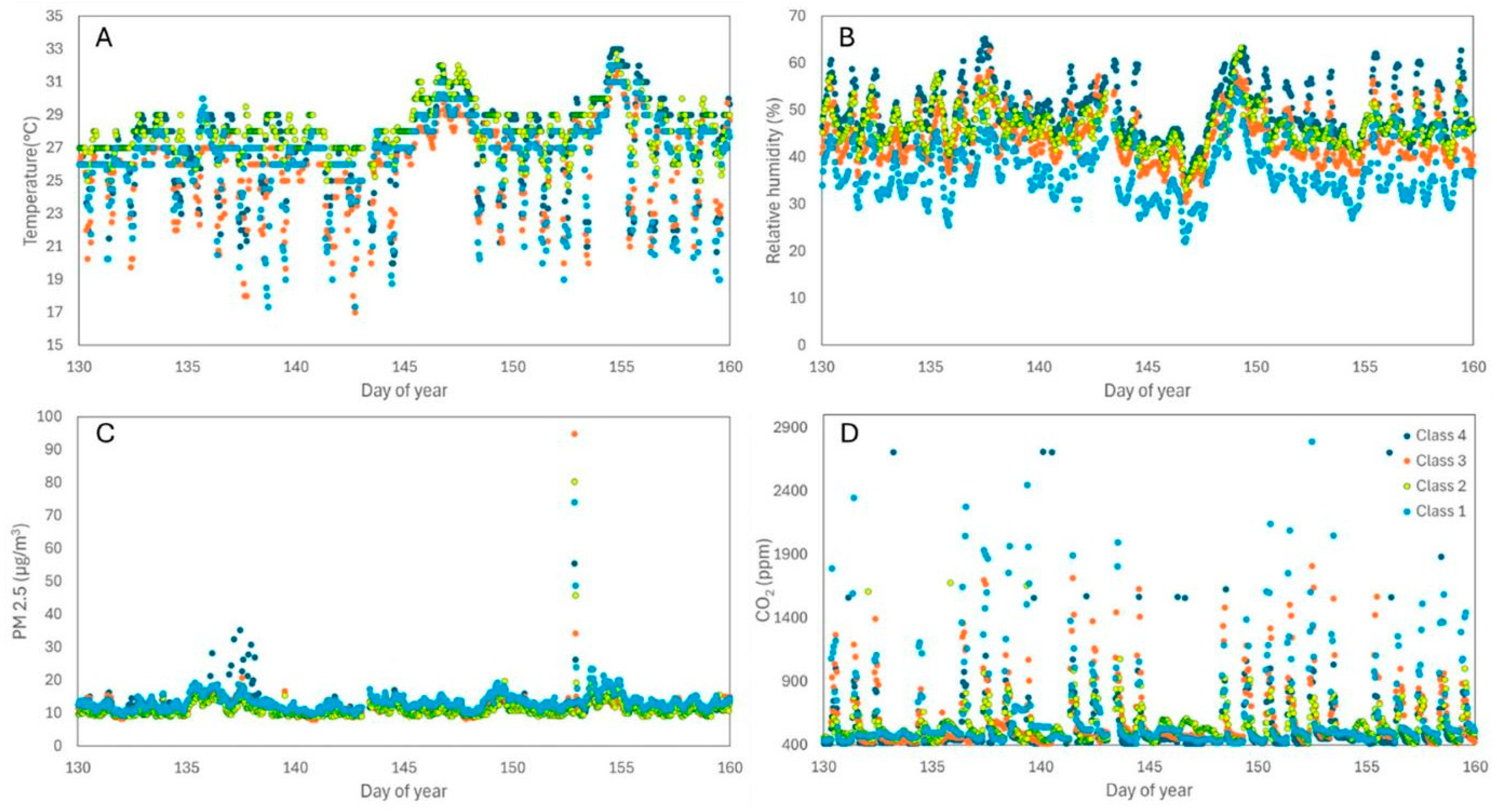
Figure 2. Changes in temperature (A), relative humidity (B), PM2.5 (C), and CO2 (D) in the period 130 to 160 days of 2023 [40].
Atmosphere 17 00045 g002
Figure 3. Daily mean values (8:00–14:00) of temperature (A), relative humidity (B), PM2.5 (C), and CO2 (D) in normal and extreme conditions [40].
Atmosphere 17 00045 g003
Figure 4. Comparison of PM2.5 and PM10 concentrations in fitness centres based on [45].
Atmosphere 17 00045 g004
Figure 5. PM2.5 concentration chart measured with the commercially available sensors INB01, INB02, KAI01, KAI02 compared to the reference sensor (REF) [6].
Atmosphere 17 00045 g005
Figure 6. Graph of PM10 particle concentration measured by sensors widely available on the market INB01, INB02, KAI01, KAI02 compared to the reference sensor (REF) [6].
Atmosphere 17 00045 g006
Figure 7. Q-Air device: (a) assembled unit, (b) components of the device [77].
Atmosphere 17 00045 g007
Figure 8. Experimental chamber: (a) schematic of the experimental setup; (b) real interior view of the chamber [22].
Atmosphere 17 00045 g008
Figure 9. Green wall located in the experimental cabin [103].
Atmosphere 17 00045 g009
Figure 10. Chlorophytum comosum (a), Epipremnum aureum (b), Nephrolepis exaltata (c), and Maranta leuconeura (d) [104].
Atmosphere 17 00045 g010
Table 1. Comparison of indoor vs. outdoor particulate matter (PM).
CategoryIndoor PMOutdoor PMReferences
Main emission sourcesCooking, biomass heating, tobacco smoke, cleaning agents, off-gassing of material, resuspension from occupant behaviourTraffic emissions, industry, combustion, mineral dust, secondary atmospheric aerosols[13,17,23,29,40,41]
Composition characteristicsHigher organic carbon, ultrafine particles (UFP < 0.1 µm), semi-volatile compounds, ozone–VOC reaction productsHigher inorganic ions, secondary sulphates/nitrates, traffic-related metals[23,29,33,41]
Dominant chemical processesIndoor reactions: ozone + VOC − SOA, emissions from materials, and household chemicalsAtmospheric photochemistry, secondary aerosol formation from VOC precursors[14,15,45]
Toxicological impactHigher oxidative potential due to reactive organic fraction; UFP penetrate deeper into lungsToxicity influenced by metals, sulphates, nitrates; more PM10/mineral particles[23,29,33,41]
Exposure conditionsLong exposure (90% of the time indoors), low ventilation, proximity to sources means a higher personal doseShorter exposure; dependent on weather and pollution transport[3,4,5,6,7,30,40,41]
Ventilation and infiltrationLow air exchange rates increase PM accumulation, indoor spikes exceed outdoor levelsPM infiltrates the interior through leakage/ventilation; influenced by AER[14]
Mitigation strategiesHEPA, mechanical ventilation, air purifiers, source controlEmission regulations, industrial filters, low-emission zones, traffic management[12,21,22,23,24,25,26,46,47,48,49]
Table 2. Indoor and outdoor particulate matter concentrations during wildfire smoke episodes in low-income homes [36].
ScenarioLocationMedian PM2.5 (PN0.5–2.5 Proxy) [µg∙m−3]Change Relative to BackgroundBlack Carbon (BC)Notes
No smoke plume (background)Outdoor~6 µg·m−3Reference levelLowTypical urban background in Denver area
No smoke plume (background)Indoor~4–5 µg·m−3Reference levelVery lowBuildings without strong indoor combustion sources
Moderate wildfire smokeOutdoor~12–15 µg·m−3~2–2.5 × increaseIncreasedLong-range transported wildfire smoke
Moderate wildfire smokeIndoor~8–10 µg·m−3~2 × increaseIncreasedPartial infiltration from outdoors
High wildfire smoke plumeOutdoor~23 µg·m−3~3.8 × increase vs. backgroundHighIntense regional wildfire episode
High wildfire smoke plumeIndoor~15–18 µg·m−3~3.6 × increase vs. backgroundSignificantly increasedStrong infiltration of outdoor PM
Homes < 200 m from major roadIndoorUp to ~20 µg·m−3 during plumeHigher than residential backgroundElevatedAdditional impact of traffic emissions
Table 3. Comparative IAQ in South Asian countries based on [55].
CountryDominant Household FuelsMain Indoor Pollution SourcesBuilding and Ventilation CharacteristicsTypical PM2.5 (µg·m−3)Typical PM10 (µg·m−3)Key Factors Affecting IAQ
PakistanBiomass, wood, coal; LPG in citiesBiomass cooking, tobacco smoke, waste burning, infiltration of traffic emissionsPoor ventilation, lack of exhaust hoods, indoor kitchens, leaky building envelope4000–9000 (biomass), 200–500 (urban LPG); up to 1800 with ETS5000–12,000 (biomass), 300–600 (urban)Biomass, dense urban structure, poor ventilation, low awareness
IndiaBiomass, dung cakes, LPG, coalBiomass cooking, incense burning, ETS, infiltration from road trafficRural: single-room homes, low ventilation; Urban: better ventilation but high infiltration500–5000 (rural), 150–400 (urban)800–7000 (rural), 200–600 (urban)Biomass, population density, external pollution, lack of hoods
NepalWood, biomass, LPG (urban)Biomass cooking, traditional stoves, waste burningRural clay houses with very low ventilation; Urban areas with hoods3000–6000 (rural), 100–300 (urban)4000–8000 (rural), 200–500 (urban)High-altitude stagnation, biomass use
BangladeshBiomass, coal, natural gasCooking, ETS, mosquito coils, high humidity and mouldLow ventilation, often no separate kitchen; strong infiltration in cities200–3000 (rural), 150–400 (urban)400–5000 (rural), 200–600 (urban)Humidity, high population density, incense and coils
BhutanWood, biomass, LPGTraditional cooking fires, wood heating, incense smokeWooden buildings, often single-zone layouts, moderate ventilation300–1500 (rural), <100 (urban)400–2000 (rural), <150 (urban)Wood heating, incense, traditional kitchens
Sri LankaBiomass, LPGBiomass cooking in rural areas, waste burning, humidity and mouldBetter ventilation; many houses use open-window design200–1500 (rural), 50–150 (urban)300–2000 (rural), 100–300 (urban)Biomass (rural), humidity, infiltration from traffic
Table 4. Indoor air PM concentrations based on [41]. (TSP total concentration).
Location/GroupPM1
(µg·m−3)
PM2.5
(µg·m−3)
PM10
(µg·m−3)
TSP
(µg·m−3)
SU-1 (I)—older51.2170.59117.57134.43
SU-1 (II)—younger25.9741.1768.2673.05
PU-2 (I)78.89106.06149.81163.81
PU-2 (II)33.7049.0679.9296.78
PR-3 (I)83.64102.05135.93147.54
PR-3 (II)78.1380.94104.90124.24
SR-4 (I)102.11125.69166.12184.24
SR-4 (II)49.0467.6581.4991.19
Average—urban area~47.4~66.7~103.9~117.0
Average—Rural/rural with traffic influence~78.2~94.1~122.1~136.8
Table 5. Air quality standards according to the EPA (Taiwan) and measured results from fitness centres based on [45].
ParameterEPA Standard (Taiwan)Range of Results
in the Fitness Centres Surveyed
Exceedances
CO2≤1000 ppm776 ppmFL5—776 ppm
CH2O≤0.08 ppm0.20–1.36 ppmAll fitness centres
VOCs≤0,56 ppm0.6–1.21 ppmFL4
PM2.5≤35 µg·m−330.6–55.3 µg·m−3FL5—55.3 µg·m−3; FL4—48.1 µg·m−3; EF—42.3 µg·m−3;
PM10≤75 µg·m−370.8–102.6 µg·m−3FL5—102.6 µg·m−3; FL4—96.4
µg·m−3; EF—89.23 µg·m−3;
CO≤9 ppm0–2 ppmNo exceedances
O3≤0.06 ppm0 ppmNo exceedances
Table 6. Correlations between parameters based on [45].
DependenceR (Correlation Coefficient)
Temperature—CH2O/CO2/VOCs0.3–0.7 (moderate)
Humidity—CH2O/CO2/VOCs0.3–0.7 (moderate)
CH2O—VOCs>0.7 (strong)
CO2—VOCs>0.7 (strong)
CH2O—CO2>0.7 (strong)
PM2.5/PM10—Temperature0.3–0.5 (moderate)
O3—other parameters0 (no correlation)
Table 7. Numerical results (average daily doses of PM4) based on [59].
GroupHeating Season
(µg·d−1)
Off Season
(µg·d−1)
Heating Season
(µg·kg−1·d−1)
Off Season
(µg·kg−1·d−1)
Students337926.72
Teachers3771185.31.6
Sportsman4731456.61.8
Table 8. Summary of research on particulate matter in air inside historic buildings around the world.
No.CityObjectType of StudyStudy Results
1.China
[69]
Potala Palace Museum in TibetX-ray fluorescence analysis (XRF)Studies have shown that the concentration of PM1–10 particulate matter outdoors was lower than indoors. Airborne particles were classified into four categories: soil dust brought in by outdoor tourists, incense ash, human-induced pollution, and ores.
2.Milan
[70]
The refectory of the Church of Santa Maria Delle Grazie, which houses Leonardo da Vinci’s “The Last Supper”chemical mass
balance model
11.2% of the particles came from gasoline cars, urban soil and wood smoke
3.Czech Republic
[71]
The Baroque Library Hall of the National Library in Praguechemical mass
balance model
Tourists contribute to 35% of indoor particulate matter
4.China
[72]
Museum in the Shanghai CBDchemical mass
balance model
The coarse particles were mainly soot aggregates and minerals, while the fine particles were mainly soot aggregates. Ca, Si, Al, Na, C, O, S, and Mg were enriched in the coarse particles, and S was mainly enriched in the fine particles.
5.Italy
[73]
The Correa Museum in Piazza SAN Marco in Veniceelectron probe X-ray microanalysis and scanning electron microscopy with energy-dispersive X-ray measurement (SEM-EDX)Calcium-rich particles, aluminosilicates, and organic materials were the most dominant particles. Calcium-rich solid particles (from poor wall condition)
6.Belgium
[74]
Royal Art Gallery of Antwerpchemical mass
balance model
In winter, construction activities were the main source of Ca- and Ca-Si-rich particles. Sea salt was also present in the atmosphere. In summer, Ca concentrations were low, while S concentrations were abundant.
7.China
[75]
Museum of the Terracotta Warriors and Horses of Emperor Qinelectron microscopy and energy-dispersive X-ray spectrometry (SEM-EDX)Most of the airborne particles in the museum consisted of soil dust, sulphur-containing particles, and low-sulphur particles such as soot aggregates and biogenic particles—tourists contribute to indoor particulate matter
8.Belgium
[76]
Plantin-Moretus Museum/Printing Workshop Antwerpenergy-dispersive X-ray fluorescence (EDXRF) and electron probe microanalyzer (EPMA) methodsThe results show that in the fine fraction, the proportion of C-rich particles ranged from 35% to 80%, while in the coarse fraction these values ranged from 25% to 45%.
Table 9. Comparative table—chemical composition of PM2.5 and PM10 in different types of buildings.
Building TypeOrganic Compounds (OC, UFP, SVOC, SOA)Mineral Components (e.g., Si, Al, Ca, Dust)Secondary Ions (SO42−, NO3, NH4+)Trace Metals (e.g., Fe, Zn, Pb, Cu)NotesReferences
Homes/Apartmentshigh levels of OC, UFP, SVOC, SOA—cooking, smoking, cleaning productsdust resuspensionno detailed datano data on metalsHigh organic emissions related to occupant activity.[4,6,14,30]
Schools (general)high organic fraction and UFP (typical for indoor PM)mineral dust, resuspension from floors and carpets (schools and sports halls)no detailed datano dataInfluenced by student activity and outdoor infiltration.[40,41,45]
Green-roof school (PM2.5–PM10) not specified in the articlemineral fractions of PM (based on the study title: chemical composition and source apportionment)ions present in study but not detailed in the articlemetals analysed but not specifiedThe article provides the reference only, not the chemical composition.[16]
Officesdominance of organic compounds—O3 + VOC reactions and emissions from office materialsresuspension (general indoor PM characteristics)no detailed datano dataInfluenced by office materials and poor ventilation.[4,14,41]
Sports facilitiesorganic fractions linked to user activity, UFP—typical indoor PMstrong dust resuspension from floors and synthetic sport surfacesno datano dataMain mechanism: particle resuspension, not aerosol chemistry.[3,41]
Museums (XRF analyses, PM2.5/PM10)presence of organic aerosols (from materials and conservation products)mineral particles (Si, Al, Ca) listed in analytical descriptionssulphates, nitrates—typical ions identified in XRF/PMF studiesFe, Pb, Zn, Cu—typical metals identified in museum studiesThe most detailed chemical speciation among all building categories.[65]
Table 10. Technical specifications of indoor air quality monitoring devices [6].
DeviceMICA (inBiot)Sensedge Mini (Kaiterra)
Measured parametersCO2, PM1, PM2.5, PM4, PM10,
Formaldehyde, TVOC, Temperature, RH
CO2, PM2.5, PM10, TVOC,
Temperature, RH
Measurement accuracy PM±5 µg·m−3 + ±5% (0–100 µg·m−3); ±10%
(100–1000 µg·m−3)
±3 µg·m−3 (0–30 µg·m−3); ±10%
(30–1000 µg·m−3)
Measurement technologylaser scattering technologylaser scattering technology
Technical certificatesRESET, WELLRESET, WELL
Cost (€)500750
Table 11. Comparison of measurement devices used for the assessment of PM concentration, including technical data.
No.DeviceSensor TypeMeasured ParametersTypical ApplicationsAccuracy/Role in
Research
Measurement RangeCalibration Criteria and Methodology (Initial and Ongoing)
1TSI SidePak AM510
[62]
Portable dust monitorPM2.5, PM10Personal exposure, sports, schoolsHigh, mobile0.001–20 mg·m−3 (1–20,000 µg·m−3)Factory calibration with Arizona Test Dust; annual field verification against gravimetric reference; requires correction factors depending on aerosol type
2TSI DustTrak II/DRX
[43]
Laser dust monitorPM1, PM2.5, PM4, PM10Laboratories, epidemiology,
fitness
Very high,
reference
0.001–150 mg·m−3 (II), 0.001–400
mg·m−3 (DRX)
Factory-calibrated to ISO 12103-1 A1 dust (Standard Number: ISO 12103-1, Title of Standard: Road vehicles—Test dust for filter evaluation—Part 1: Arizona test dust, Publisher: International Organization for Standardization (ISO), Geneva, Switzerland, 2016); regular co-location with FRM/FEM samplers; aerosol-specific correction factors (per study protocols).
3GrayWolf AdvancedSense
[80]
IAQ—multi-parameterPM, VOCs, CO2, T, RHComprehensive IAQ researchVery highup to 100,000 µg·m−3 (depending on the module)Multi-parameter calibration via certified calibration gases (CO2, VOCs), RH/T chamber calibration; periodic drift correction recommended by manufacturer.
4PCE-PQC 34
[81]
Particle counterPM1, PM2.5, PM4, PM10, number of particlesScientific research, referenceVery high0.3–25 µm (size range, mass dependent mode)SO-based particle counter calibration; annual laboratory calibration for laser scattering efficiency; validation via co-location with reference particle counters.
5PurpleAir
[82]
Optical PM sensorPM1, PM2.5, PM10Citizen science networks, global monitoringAverage (compensated by quantity)0–1000 µg·m−3Field calibration through long-term co-location; humidity correction algorithms; EPA-endorsed linear models; continuous drift correction
6inBiot MICA
[83]
IAQCO2, PM2.5, PM 10, VOCs, T, RHSchools, offices, educationGood, implementation0–1000 µg·m−3Initial lab calibration (CO2, VOCs); PM module calibrated against reference optical counters; periodic auto-calibration routines (CO2) and field verification.
7Kaiterra
[84]
IAQCO2, PM2.5, VOCs, T, RHOffices, homes, schoolsPopular, easy to use0–1000 µg·m−3Factory calibration for CO2 and VOCs via calibration gases; PM via optical scattering chamber; routine algorithmic drift compensation.
8Canāree A1
[85]
Personal IAQPM2.5, PM10, VOCs, CO2, T, RHIndividual monitoringGood, unique mobility0–6000 µg·m−3Multi-parameter initial calibration; PM via optical scattering; TVOC via calibration gas; ongoing auto-adjustment and field co-location recommended.
9GreenYourAir Device
1178/PM2.5
[30]
PM network sensorPM2.5Fieldwork (Greece)AverageMeasurement every 3 min, long-termPM sensor calibrated via manufacturer reference instrument; periodic field co-location recommended due to drift; high variability requires correction factors.
10Qingping Air Monitor Lite
[51,86]
IAQ sensorPM2.5, CO2, T, RHAcademician (Beijing)Satisfactory0–1000 µg·m−3Initial optical calibration; NDIR calibration for CO2; humidity and temperature compensation; field verification required for research applications.
11Sampler ARA N-FRM
[51]
Reference samplerPM2.5Reference studiesVery high
(reference)
Reference methodReference gravimetric method; calibration traceable to national standards; routine mass calibration with certified microbalance; zero and span checks.
12HPMA115S0
[58,87]
Sensor PMPM2.5, PM10Schools (Portugal)Average (15%)0–1000 µg·m−3Factory-calibrated PM module; requires humidity compensation; periodic field co-location due to known ±15% uncertainty.
13Aerocet-831
[45,88]
Portable metrePM1, PM2.5, PM4, PM10Fitness Centres (Taiwan)Average0–1000 µg·m−3Optical calibration following NIST-traceable procedures; zero and span checks before measurement; recommended annual calibration in controlled conditions.
14DustTrak 8533/8534
[42,44,59]
Laser dust monitorPM1, PM2.5, PM4, PM10, TSPSports hallsVery high0.001 to 150 µg·m−3—1 min readingsInitial calibration to ISO test dust; strong dependence on aerosol type; long-term co-location essential; humidity correction required; validated in sports halls.
15Personal pump + gravimetric filters
[52]
GravimetricPM2.5Epidemiological studies (USA)Very high
(reference)
Gravimetric methodFlow calibration before/after sampling using a certified flow calibrator; mass calibration via microbalance; method traceable to EPA FRM.
16XRF + CMB, EF, FA, PMF
[69]
Analytical methodsChemical composition PM2.5 i PM10Identification of sources in museumsVery highComposition analysisAnalytical method calibration using certified reference materials; cross-validation of elemental signals; methodological QA/QC per US EPA compendium.
Table 12. Classification of PM2.5 and PM10 measurement instruments and their accuracy, validation, and limitations for indoor applications based on [43,61,62,63,64,65,66].
PART A. INSTRUMENT TAXONOMY
Instrument TypeOperating PrincipleTypical FractionsMeasurement RangeTime ResolutionTypical Application
Gravimetric methods (reference)Particle collection on filters and mass determinationPM1, PM2.5, PM4, PM10, TSP1–1000 µg·m−324 hReference methods, instrument validation
TEOM/BAMOscillating microbalance or beta radiation attenuationPM2.5, PM100–1000 µg·m−31–60 minMonitoring stations, long-term measurements
Optical laser photometers (DustTrak, Aerocet)Light scatteringPM1, PM2.5, PM4, PM101–10,000 µg·m−31 s–1 minDynamic monitoring, short-term exposure assessment
Low-cost optical sensors (Plantower, PurpleAir)Laser light scatteringPM2.5, PM100–1000 µg·m−31–80 sNetwork monitoring, online IAQ systems
Particle counters (OPC, SMPS)Particle counting and size classificationUFP, PM1103–106 particles·cm−3SecondsAerosol research, toxicological studies
PART B. VALIDATION, ACCURACY, AND SYSTEMATIC ERRORS
Instrument TypeTypical AccuracyMain Error SourcesCalibration RequirementSuitability for IAQ
Gravimetric methodsVery high (reference method)Lack of time resolution, loss of semi-volatile fractionsBalance and flow calibrationExcellent for scientific studies
TEOM/BAMHigh (±10–15%)Evaporation of semi-volatile compoundsRegular calibrationVery good for continuous monitoring
Optical photometersModerate (±20–30%)Aerosol composition and humidity dependenceLocal calibration recommendedGood for time-trend analysis
Low-cost sensorsLow–moderate (±30–60%)Humidity, aerosol type, sensor driftCorrection vs. FEM requiredSuitable for indicative monitoring
OPC/SMPSVery high for particle numberConversion of number to massLaboratory calibrationMainly for specialised research
PART C. AIR QUALITY INDICES (AQI) IN INDOOR APPLICATIONS
AspectMethodological Remarks
Original purpose of AQIDeveloped for outdoor air quality assessment
Limitations for IAQDoes not reflect long-term exposure in indoor environments
Interpretation risksPotential underestimation of risk at low AQI during prolonged exposure
RecommendationAQI should be used only as a supplementary indicator together with absolute PM2.5 and PM10 concentrations and WHO guideline values
PART D. SUMMARY OF ACCURACY FOR INDOOR APPLICATIONS
Instrument ClassSuitability for Scientific ResearchSuitability for Building MonitoringData Correction Required
Reference methodsVery highLow (cost, time resolution)No
Professional optical photometersHighHighYes (humidity, aerosol composition)
Low-cost sensorsLimitedVery high (online IAQ monitoring)Always required
Table 13. Reduction in PM2.5 and PM10 concentrations depending on air purifier location, airflow rate, and ventilation scenario based on [90].
Ventilation ScenarioAir Purifier LocationAirflow Rate (m3∙h−1)PM2.5—Reduction (%)PM10—Reduction (%)Time to Achieve Reduction PM2.5 (min)Time to Achieve Reduction PM10 (min)
No ventilationCentre15065704030
No ventilationCentre25080852520
No ventilationCentre40095981210
No ventilationNear wall15050555040
No ventilationNear wall25070753025
No ventilationNear wall40090921512
Natural ventilationCentre15060654535
Natural ventilationCentre25075802822
Natural ventilationCentre40092951411
Natural ventilationNear wall15045505545
Natural ventilationNear wall25065703227
Natural ventilationNear wall40088901613
Mechanical ventilationCentre15063684232
Mechanical ventilationCentre25078832621
Mechanical ventilationCentre40093961310
Mechanical ventilationNear wall15048525242
Mechanical ventilationNear wall25068723328
Mechanical ventilationNear wall40090931714
Table 14. Percentage values of PM2.5 concentration reduction depending on air flow, filter efficiency, and simulation scenario based on [26].
Flow
(m3·h−1)
Filter Efficiency
(%)
ScenarioPM2.5 Reduction
(%)
10035LL7
10065HL15
10095LH20
10095HH22
60035LL29
60065HL32
60095LH35
60095HH38
Table 15. PM2.5 values after 60, 120, and 240 min [104].
Attempt60 min120 min240 min
Reference172.90 ± 6.11119.46 ± 4.8158.03 ± 5.05
Epipremnum aureum161.05 ± 3.39107.87 ± 2.7248.77 ± 3.28
Chlorophytum comosum158.16 ± 3.41105.17 ± 3.0145.91 ± 1.7
Nephrolepis exaltata147.58 ± 6.9892.58 ± 6.2838.36 ± 3.29
Maranta leuconeura147.89 ± 6.1199.13 ± 6.5146.16 ± 3.53
Table 16. Effectiveness of technical technology to reduce indoor PM2.5/PM10 under different conditions and associated limitations.
TechnologyTypical PM2.5 ReductionTypical PM10 ReductionConditions with Highest EffectivenessConditions Limiting Effectiveness (High Outdoor Load/Occupancy)By-Products/LimitationsReferences
HVAC—MERV 11–13 filtration30–55%20–40%Stable outdoor conditions; recirculation modeHigh infiltration during smog or wildfire episodes (drop to 15–30%)Increased pressure drop, energy use, frequent filter replacement[18,19,20,36]
HVAC with HEPA (H13–H14)50–80%40–70%Hospitals, schools, controlled ventilation systemsReduced by secondary emissions and resuspension in occupied spacesInstallation constraints, high cost[10,18,53,54]
Portable HEPA air purifiers45–85%25–60%Small/medium rooms; optimal placementEfficiency decreases by 10–40% due to occupant activityHighly placement-dependent[17,18,19,20,21,53,59]
Natural ventilation + air purifier20–40%10–30%Mild outdoor pollution, high air exchangeHigh outdoor load increases indoor infiltrationAirflow uncontrolled; variable efficiency[30,40,54]
Novel filtration media (biodegradable/natural fibres)25–50%20–40%Low humidity; moderate pollution loadHigh humidity reduces stability; limited durabilityStructural degradation; microbial growth risk[14]
Ionisers, ozone generators, UV-C technologies30–60% (variable)20–50%Controlled environments without occupantsPresence of VOCs and human exposure increases formation of secondary pollutantsOzone, aldehydes, ultrafine particles[38,45]
Ultrasonic humidifiers (secondary PM) (increase of PM2.5)Mineral “white dust” formation >300 µg·m−3Emission of mineral aerosols; depends on water quality[50]
Integrated systems (airtightness + HVAC + HEPA)55–90%40–75%High outdoor pollution events; low infiltrationHigh occupancy reduces performance by 10–25%Dependent on building envelope quality[29,30,40,69,70,71,72,73,74,75,76]
Airflow layout optimisation/purifier placement+20–50% above standard configuration+15–40%Central placement; unobstructed airflowPoor positioning (corners, under windows) may reduce efficiency by 50%Requires airflow assessment[41,45,59]
Table 17. Compact summary of PM2.5/PM10 results and remediation efficiency between building types.
Building CategorySpecific FacilityBaseline PM2.5 (Indoor)Baseline PM10 (Indoor)Post-Intervention PM2.5Post-Intervention PM10I/OACH/AirflowFilter Class/CADREffect Size (%)SeasonDominant PM SourcesMethods/NotesReference
Schools
SchoolStockton, USA not reportednot measured14–56% reduction (no absolute µg/m3 reported)not measured PAC airflow 70–510 m3/hPortable HEPA PAC + MERV − 13 HVAC14–56%Autumn–WinterOutdoor infiltration; occupancyClassroom monitoring; scenarios with PAC and HVAC; absolute post-PM not provided[21]
KindergartenDaejeon, Korea~35 µg/m3not reported~18 µg/m3not reported Mechanical ventilation ~20.4 m3/h per childMERV≈13~49%WinterIndoor sources + infiltrationHybrid model + measured data; post-PM partly modelled[24]
SchoolIsrael~10 µg/m3not measurednot measurednot measured~0.25naturalnone+16% (increase)springsandstormClassroom monitoring during desert dust intrusion; indoor–outdoor comparison using optical PM sensors.[40]
SchoolPortugal4.2–78 µg/m33.5–96 µg/m3not measurednot measurednot measuredHVAC, no ACH datacentral filter, no classnot measuredspringoccupants, dustClassroom monitoring; HVAC operation during school hours; filter-based PM sampling; no post-mitigation scenario.[57]
SchoolGreecenot measured21–51 µg/m3not measurednot measured~1naturalnone0%variousroad trafficIndoor–outdoor PM10 monitoring near traffic; gravimetric method; evaluation of green roof influence.[16]
KindergartensSilesia41–125 µg/m368–166 µg/m3not measurednot measured~1naturalnone30–70% increaseWinterresuspensionSeasonal indoor measurements in occupied classrooms; portable optical PM monitors; focus on resuspension effects.[41]
KindergartensSwedennot measurednot measured3.2–9.3not measurednot measuredmechanical, high ACHMERV ≥ 1170–85% reductionvariouslow indoor sourcesLong-term monitoring with mechanical ventilation; PM assessed before and after MERV filtration; optical + reference instruments.[41]
Offices
OfficeTaiwan~28 µg/m3~62 µg/m3~15 µg/m3~55 µg/m3 HVAC (upgraded)Central filters (class not specified)46% PM2.5; 44% PM10AnnualInfiltration; office equipmentBefore–after measurement comparison[25]
OfficeMalaysia53 µg/m335 µg/m3not measurednot measured~1air conditioningno HEPAno reductionAnnualinfiltrationIndoor PM monitoring during working hours; fixed optical PM sensors; evaluation under split-unit air conditioning[60]
OfficeChicago5.3–5.8 µg/m3not measurednot measurednot measured~0.2mechanicalno HEPA±5%springinfiltrationPaired indoor–outdoor monitoring in mechanically ventilated offices; reference-grade PM2.5 instrumentation; short-term campaign.[63]
Residential buildings
HomesWildfire smoke/USA 4–5 → 15–18 µg/m3not measured30–74% reduction (PAC/HEPA)not measured0.7Low ACHHEPA PAC (varied CADR)30–74%Wildfire season/SummerWildfire smoke; infiltrationMultiple homes; reductions depend on CADR and tightness[36]
Apartment/homeUltrasonic humidifier/Korea<10 → 350 µg/m3not measured<10 µg/m3 after interventionnot measurednot measuredNo ACH dataNo filter (source control)~97%AnnualMineral aerosol (white dust)Small test room (3.8 × 2.95 × 2.8 m); rapid PM rise from water minerals[50]
ApartmentsGreece63.9 µg/m3not measurednot measurednot measurednot measurednatural, no datano filternot measuredAnnualsmoking, infiltrationLong-term indoor monitoring using gravimetric PM samplers; background residential conditions; no mitigation scenario tested.[30]
ApartmentsSouth Asian Countries (Pakistan, India, Nepal, Bangladesh, Bhutan, Sri Lanka)225–9000 µg/m3300–12,000 µg/m3not measurednot measurednot measurednaturalno filter80–95%winterbiomass combustionField measurements in biomass-using households; filter-based gravimetric sampling; values synthesised from multiple studies[55]
Hospitals
Hospital (ER)Romania75.4 µg/m3not measured41.5–49.0 µg/m3not measurednot measuredMechanical + PACHEPA PAC CADR 650 m3/h35–45%VariousOccupant activityMeasured PM drop; no absolute post-PM provided. continuous PM2.5 monitoring in emergency unit; evaluation before and after portable air purifier deployment; optical sensors calibrated to reference.[53]
Museums
MuseumMultiple (review)indoor typically > outdoorvariesno datano data usually nonevaries; often no HEPA20–60% increaseTourist seasonVisitors; resuspensionHeterogeneous methods; no standardised monitoring;
Methods/Notes: Continuous indoor and outdoor monitoring in exhibition spaces; optical particle counters; correlation with visitor density.
Review
Sport facilities
Fitness centreTaiwan30–55 µg/m370–103 µg/m3not measurednot measurednot measuredair conditioning, no ACH datano HEPAno reductionAnnualmovement, resuspensionReal-time PM monitoring during exercise sessions; optical PM sensors; assessment under standard air-conditioning only.[45]
Sports hallPoland30–39 µg/m318–33 µg/m3not measurednot measured~1mechanicalnone+30% in winterseasonalresuspensionSeasonal indoor PM monitoring during sports activities; gravimetric reference sampling; comparison winter vs. summer.[59]
Disclaimer/Publisher’s Note: The statements, opinions and data contained in all publications are solely those of the individual author(s) and contributor(s) and not of MDPI and/or the editor(s). MDPI and/or the editor(s) disclaim responsibility for any injury to people or property resulting from any ideas, methods, instructions or products referred to in the content.