
Tree Ring Width of Styphnolobium japonicum Reveals Summer Maximum Temperature Variations in Northwestern Yan Mountains over the Past 433 Years


Abstract
1. Introduction
2. Materials and Methods
2.1. Study Area Overview
2.2. Tree-Ring Data Collection
2.3. Climate Data Acquisition
2.4. Data Processing Methods
- (1)
- The tree-ring width chronology was developed by applying negative exponential curves in the ARSTAN (v.49M2) programme, a process referred to as detrending. The procedure was applied to remove the age-related growth trend, whilst endeavouring to preserve low-frequency climate signals to the greatest extent [39]:
- (2)
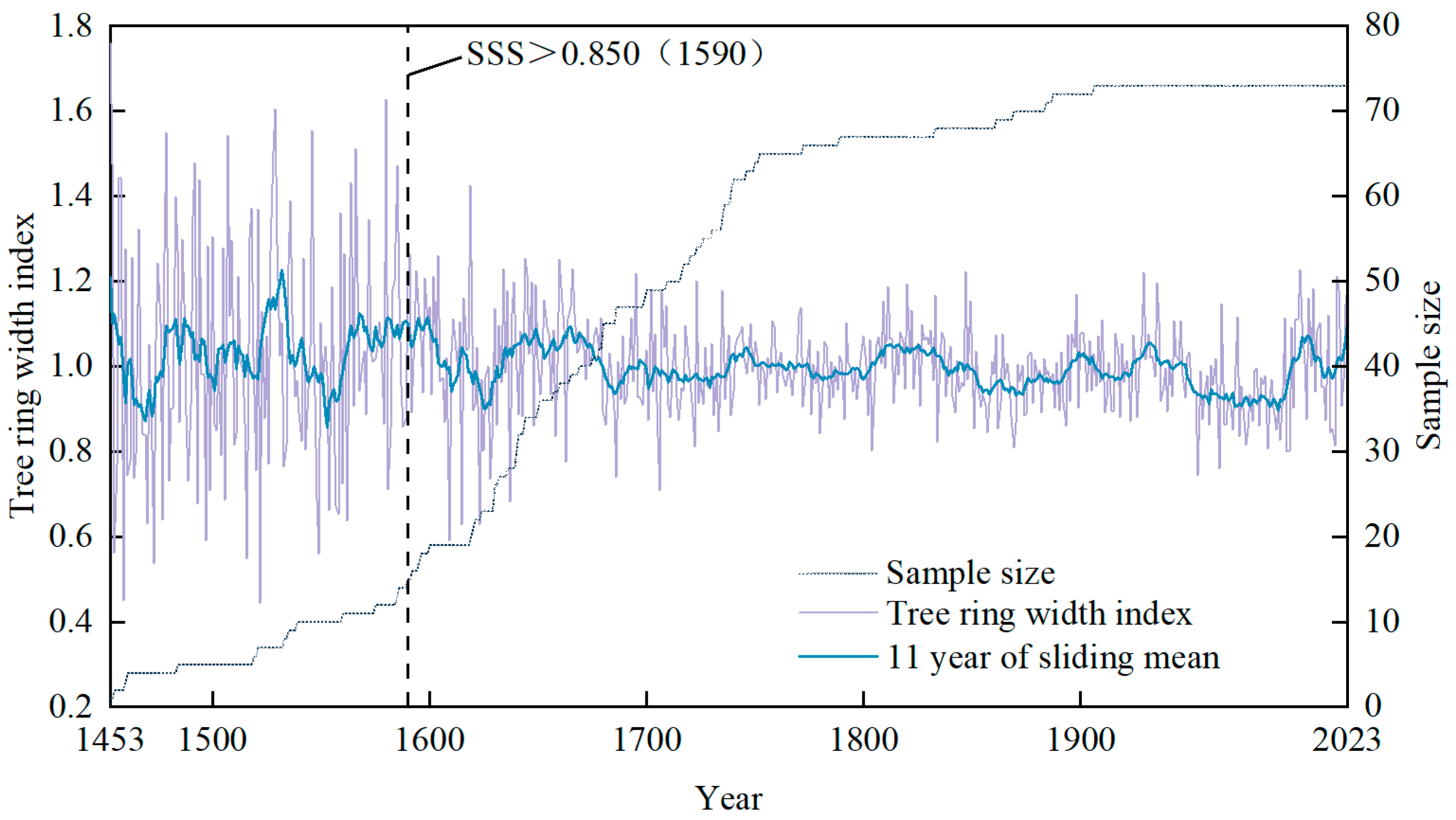
- The detrended ring-width series were averaged to generate a chronology, using the biweight robust mean method. To ascertain the minimum replication threshold for the chronology, the Subsample Signal Strength (SSS) criterion was utilised. The period with SSS values exceeding 0.85 was designated as the reliable interval, thereby ensuring both the reliability of the reconstructed series and the maximum possible temporal coverage. Both a Standard (STD) chronology and a Residual (RES) chronology were developed. The STD chronology was selected for analysis to maximise the retention of potential low-frequency climate signals that may arise from the inherent persistence of the climate system. Such signals may include drought legacy effects or large-scale climate modes. The quality of the standard chronology was evaluated by means of statistical analysis, the results of which included the mean sensitivity and the signal-to-noise ratio.
- (3)
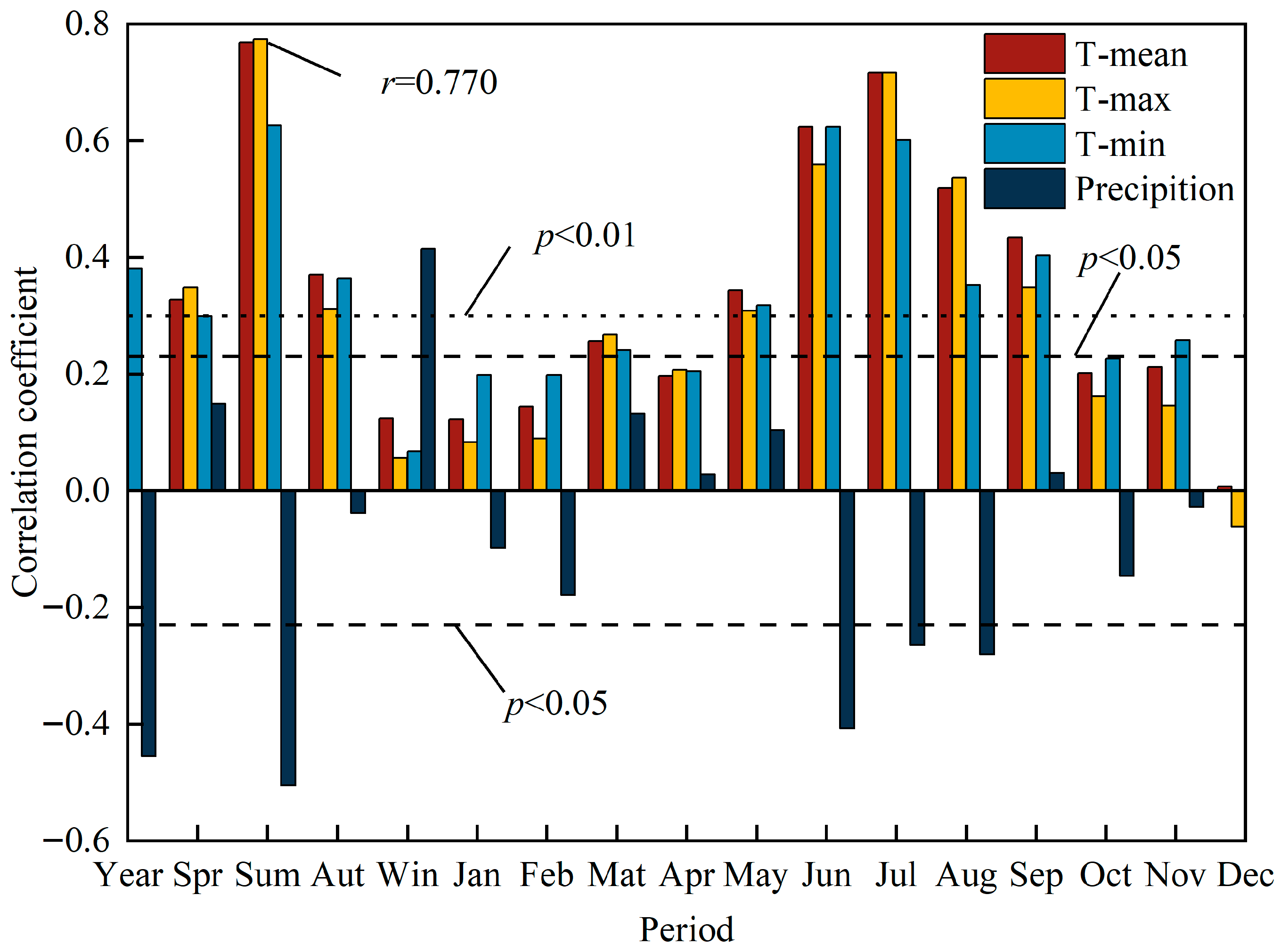
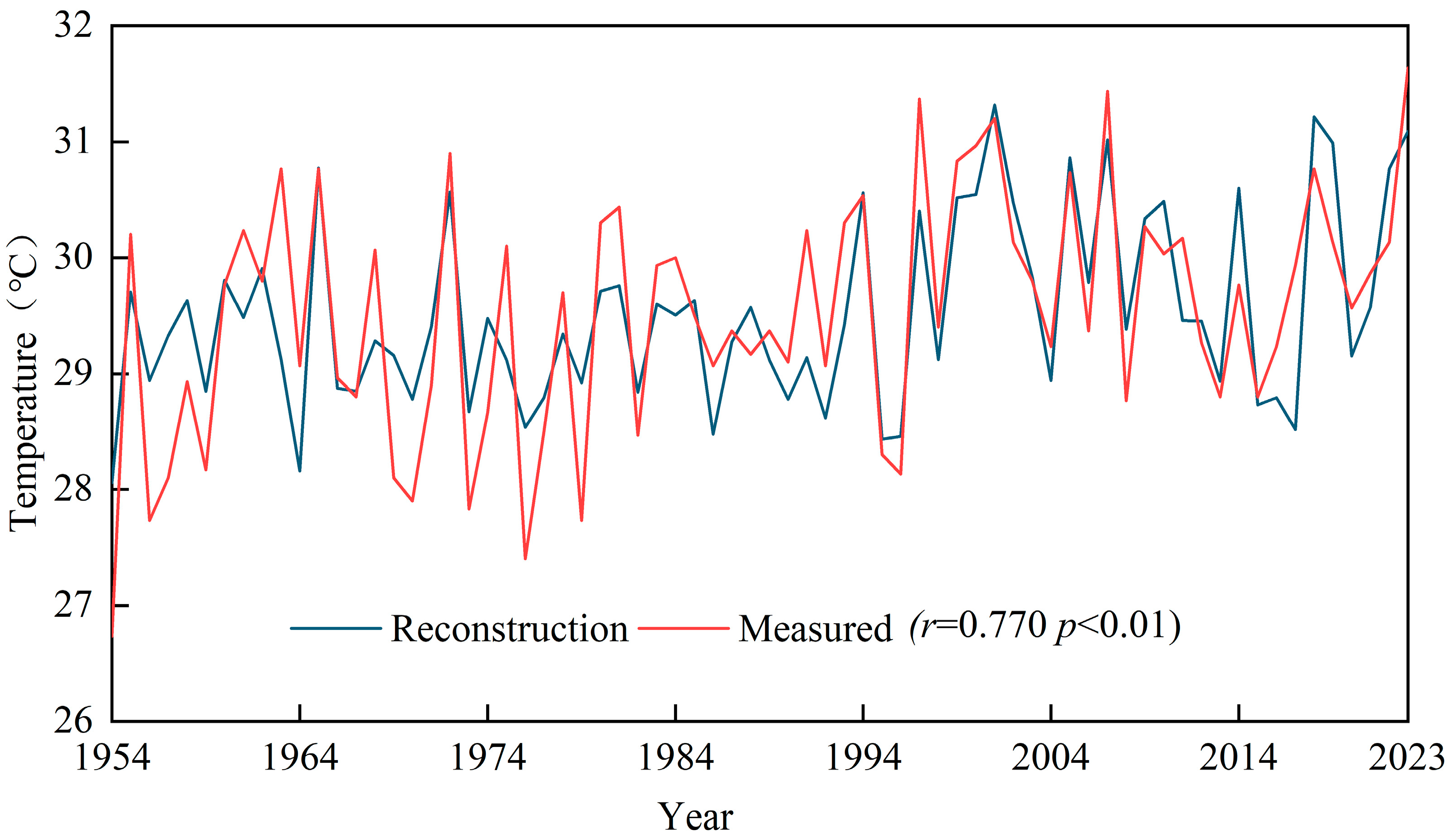
- Pearson correlation analysis was performed using [40] to assess correlations between the aforementioned hydrometeorological data and the standardised Styphnolobium japonicum width chronology. Given the robust correlation between summer maximum temperatures and the standardised chronology (r = 0.770, p < 0.01), a reconstructed historical summer maximum temperature sequence was selected for further analysis.
- (4)
- The summer maximum temperature sequence for the study area was reconstructed using a linear regression model [41].
- (5)
- The stability and reliability of the reconstructed model were systematically evaluated using the split-simple [42]. The statistical assessment framework incorporated core accuracy metrics including Pearson correlation coefficient (r), coefficient of determination (R2), adjusted coefficient of determination (R2adj), reduction in error (RE), and coefficient of efficiency (CE). Additionally, sign tests (ST) were carried out to validate the consistency of trend changes. To examine whether model residuals conformed to regression assumptions, the Durbin-Watson test (DW) was employed to diagnose the independence of residuals derived from the calibrated models across each subinterval, thereby validating the fundamental assumptions of the regression models. The conventional two-interval division fails to fully capture the low-decadal fluctuations between climate and growth dynamics. In this study, the entire study period is subdivided into four intervals to detect abrupt temperature shifts and identify corresponding trend variations. Considering that shorter intervals may yield excessively high RE and CE values, the present analysis was supplemented with leave-one-out cross-validation to verify the stability of the reconstruction model [43,44,45].
- (6)
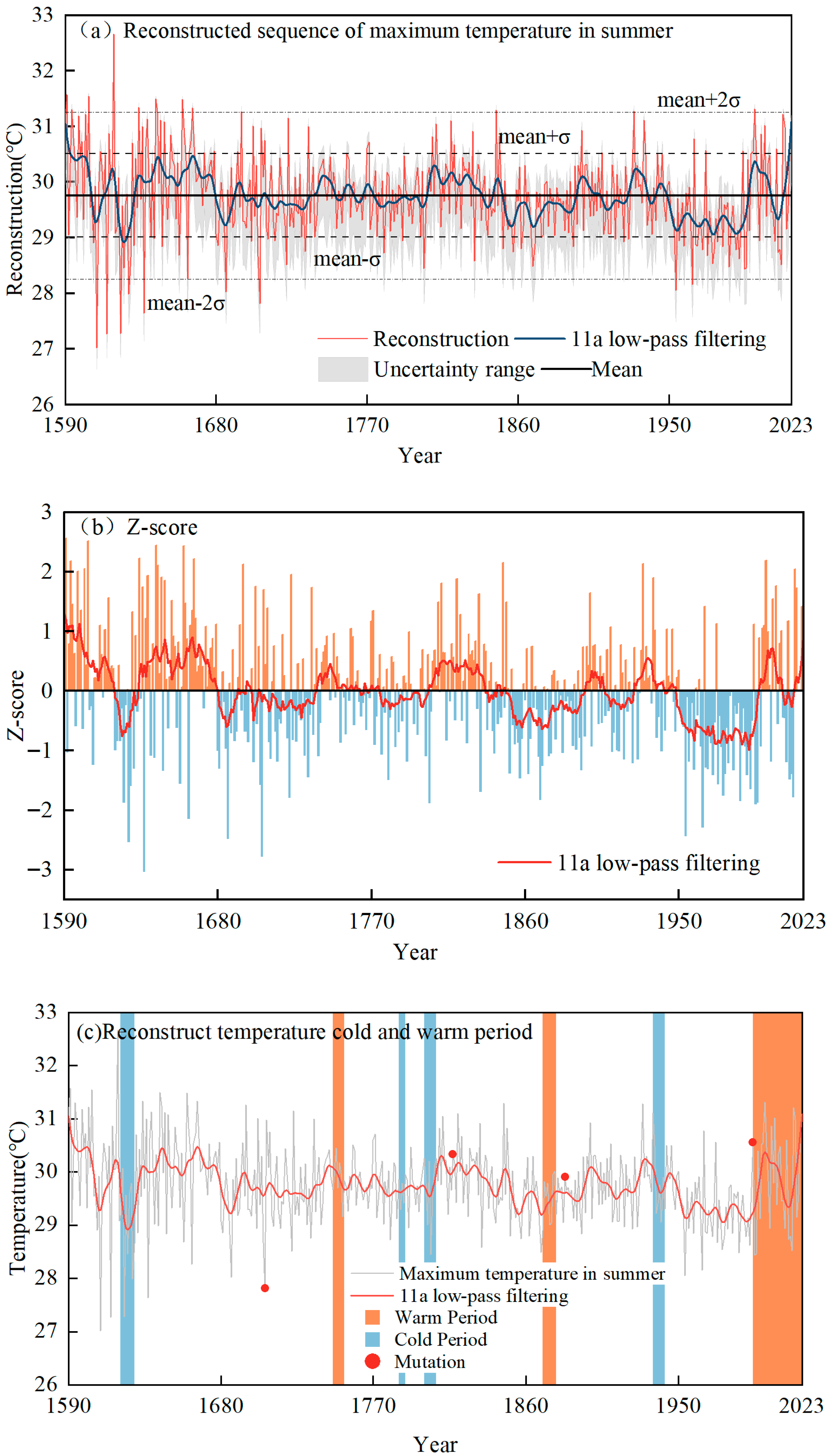
- The Mann–Kendall trend test [46] was conducted to identify abrupt transition years in reconstructed temperature series. This approach eliminates the requirement for data to conform to a normal distribution, rendering it especially well-suited for testing temperature and precipitation datasets.
- (7)
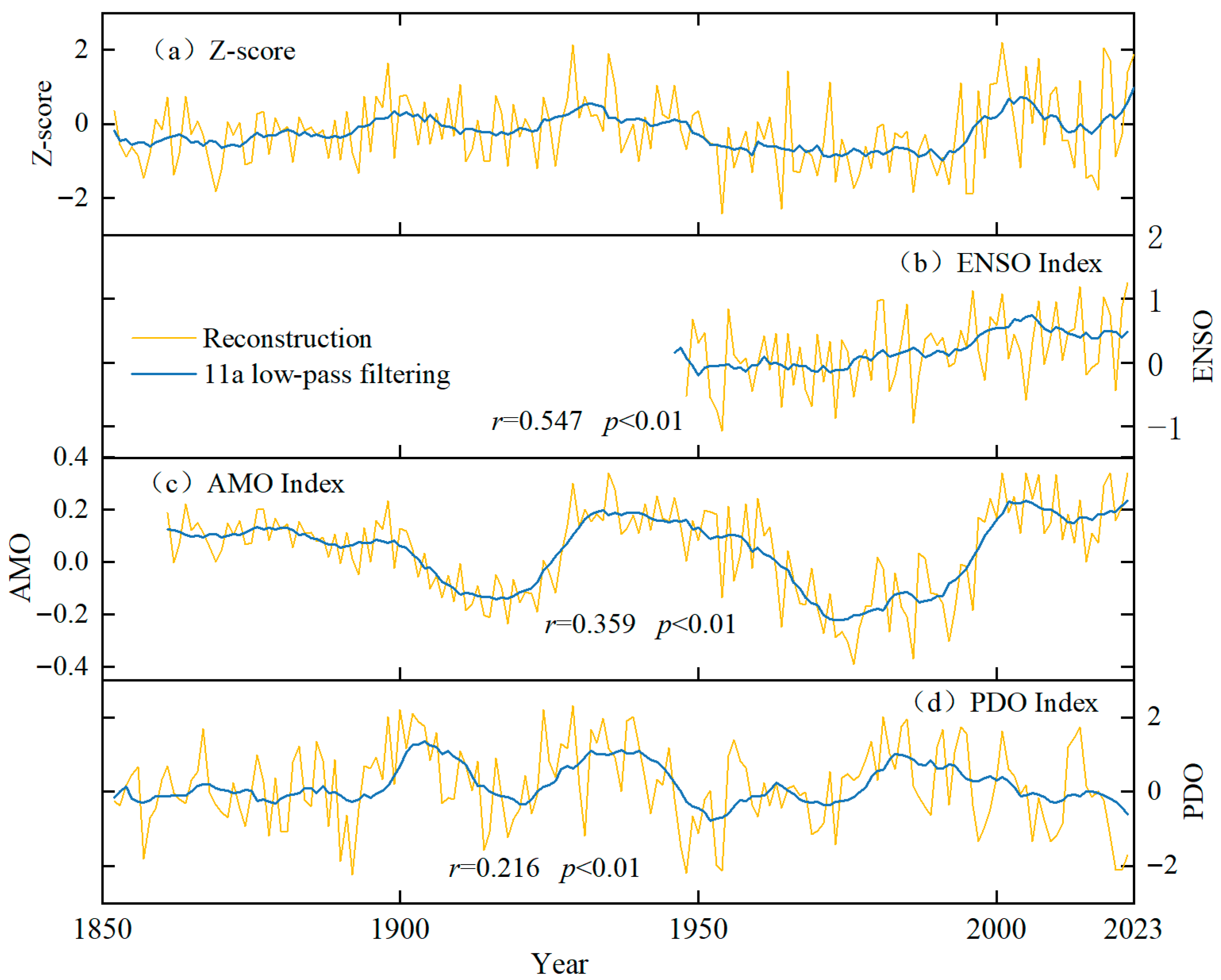
- To delve into the trend of reconstructed temperature series, Z-source [47] was employed to standardise the reconstructed series.where T represents the reconstructed temperature sequence value, MN denotes the reconstructed mean value, and SD indicates the standard deviation.Z-score = (T − MN)/SD
- (8)
- The coefficient of variation (Cv) [48] indicates the frequency and magnitude of temperature variations:Cv = |SD/MN|
- (9)
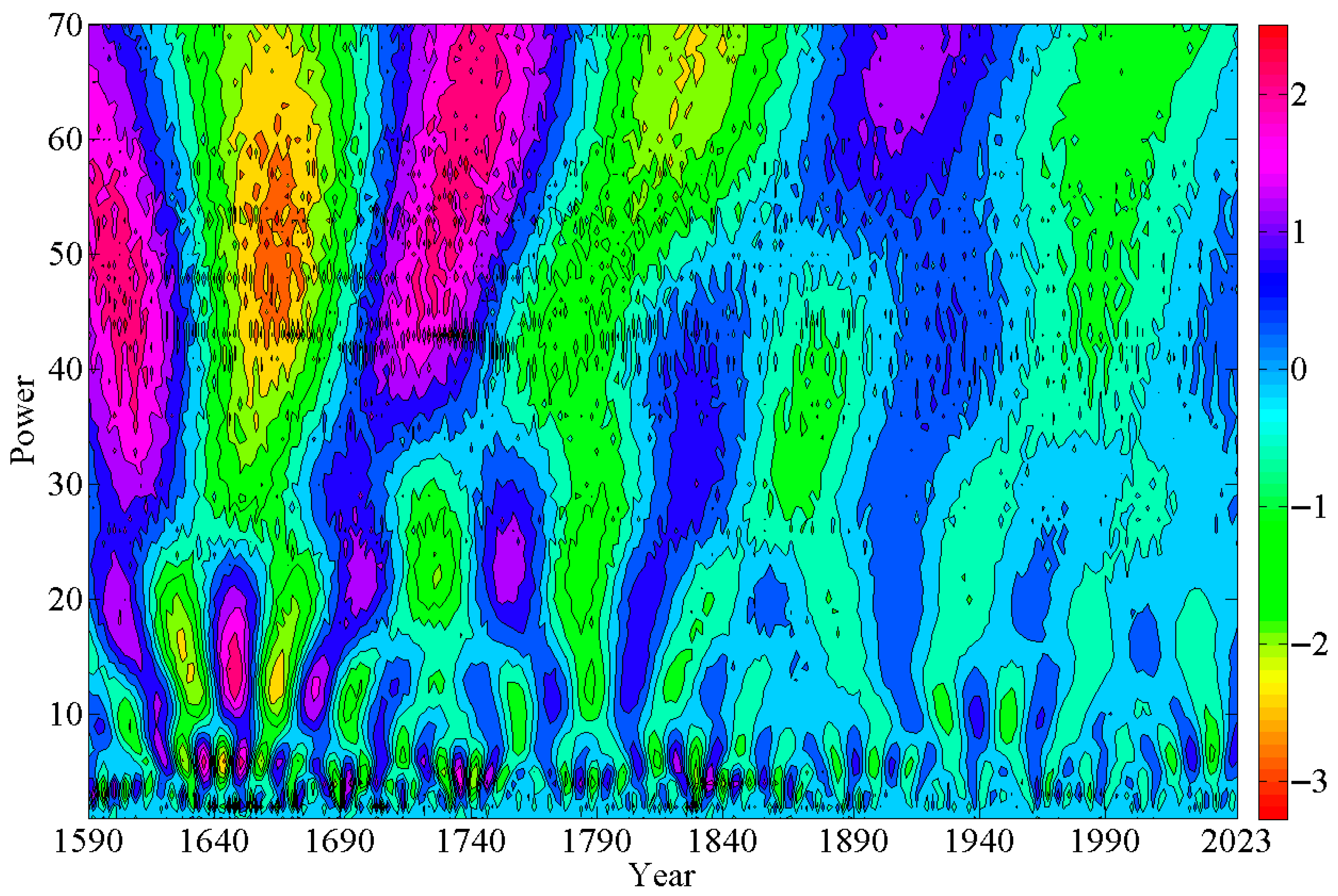
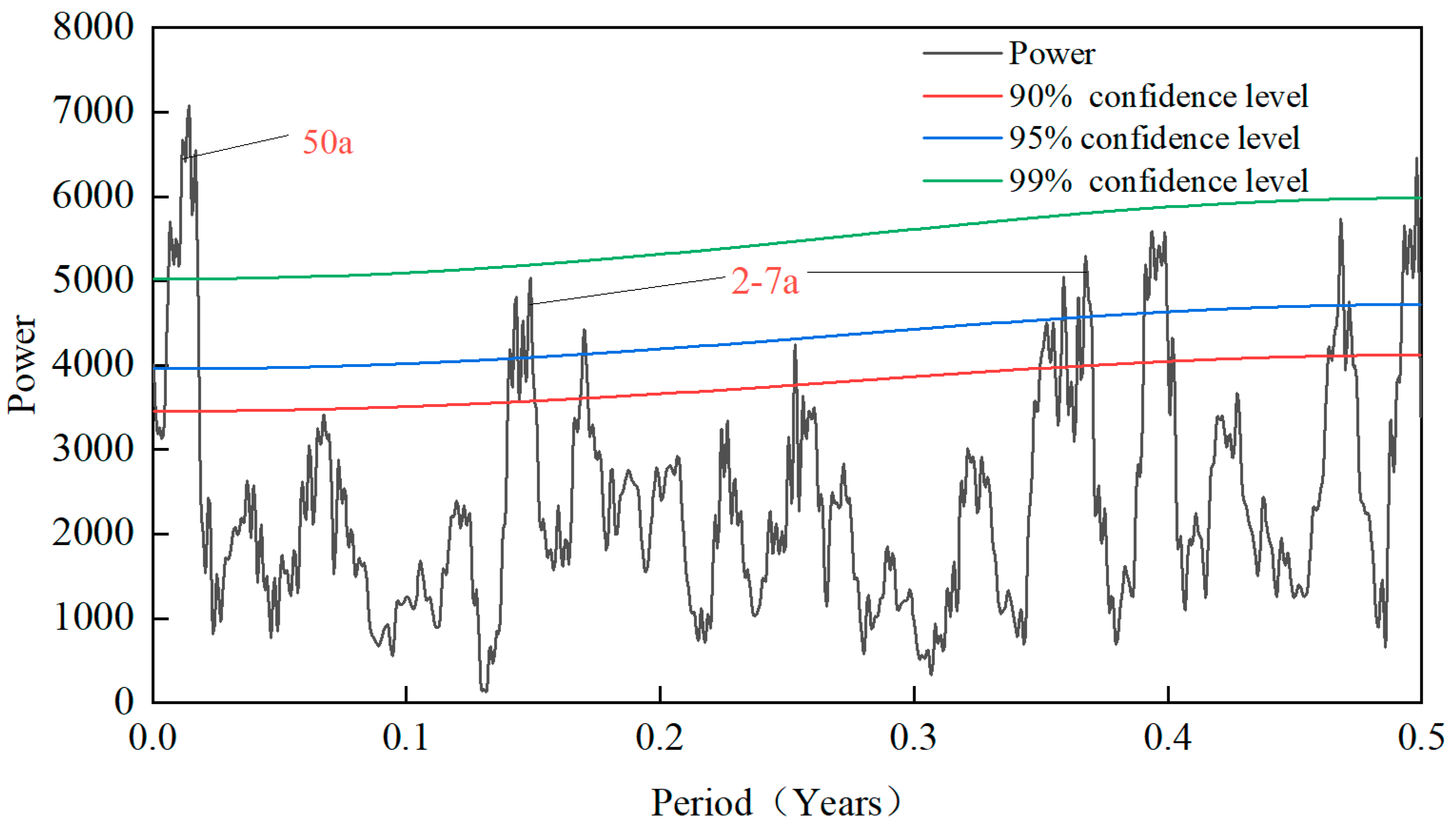
- The periodic variation characteristics of temperature series were reconstructed by integrating Morlet wavelet analysis with MTM multi-window spectral analysis.
- (10)
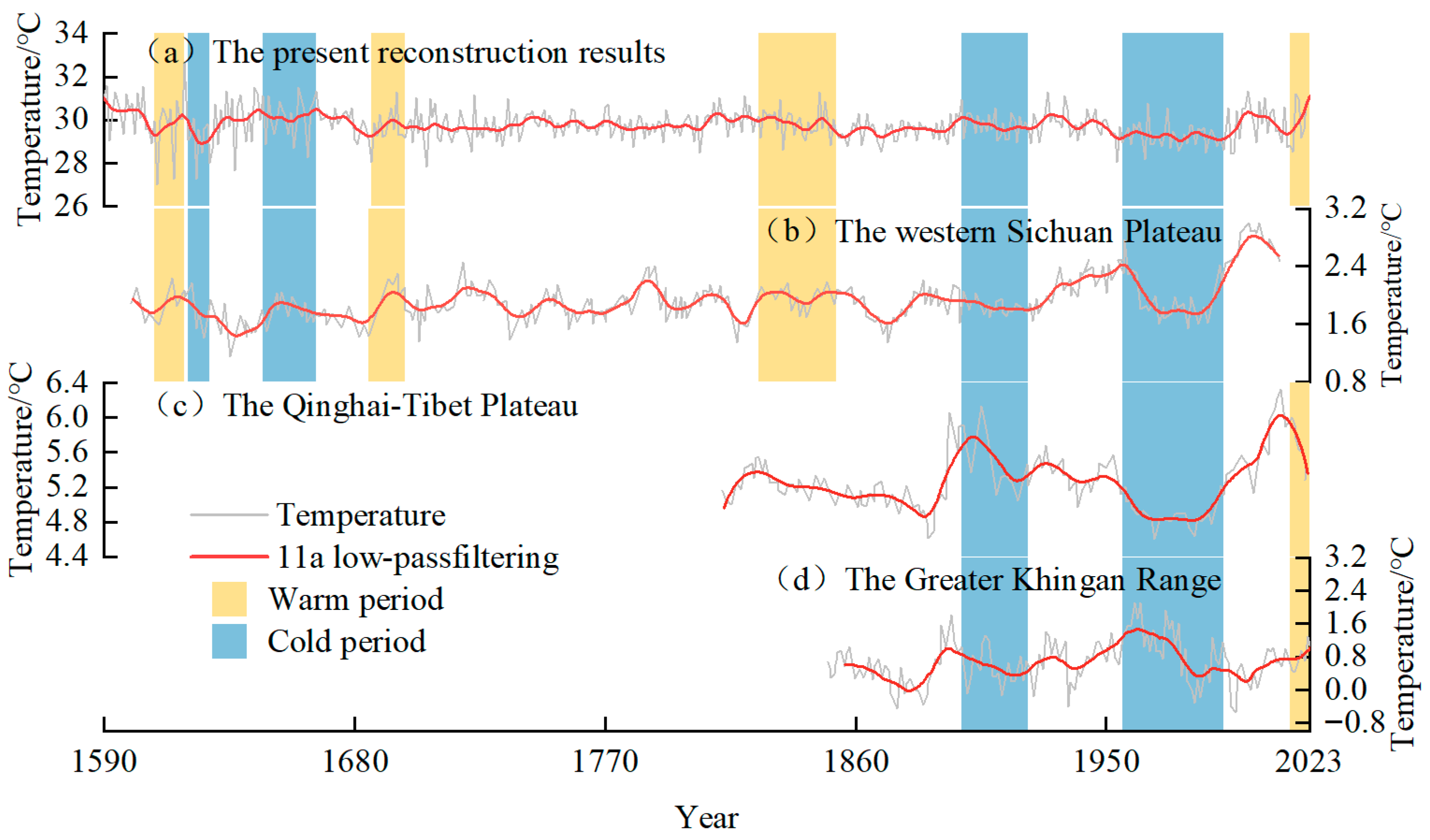
- A cold/warm period was defined as a sequence of two or more consecutive years where temperatures were consistently classified into the same category. Specifically, a warm year was identified as one with temperatures exceeding mean + 1σ, and a cold year as one with temperatures below mean − 1σ. Here, σ represents the standard deviation.
3. Results and Analysis
3.1. Chronology Construction and Validation
3.2. Relationship Between Tree Radial Growth and Climate
3.3. Summer Maximum Temperature Reconstruction and Analysis
3.3.1. Reconstruction of Summer Maximum Temperature
3.3.2. Feature Analysis of Summer Maximum Temperature Reconstruction
4. Discussion
4.1. Reconstructing the Relationship Between Temperature and Large-Scale Ocean-Atmosphere Circulation Modes
4.2. Comparison with Other Temperature Reconstruction Results
4.3. Methodological Considerations and Limitations
5. Conclusions
- (1)
- Herein, Styphnolobium japonicum was collected to establish a tree-ring width chronology for the northwestern Yan Mountains spanning 1590–2023. The investigation was conducted to ascertain the correlation between tree-ring width and temperature/precipitation, so as to enhance public understanding of temperature variations in the Yan Mountains. The findings demonstrate a robust correlation between the radial growth of Styphnolobium japonicum in the designated study area and local summer maximum temperatures (r = 0.770, p < 0.01). This observation provides substantial insights into the growth conditions of trees and the historical hydrometeorological changes that have occurred.
- (2)
- The standardised tree-ring width chronology (STD chronology) of Styphnolobium japonicum was utilised to reconstruct over 400 years of historical summer maximum temperatures in the designated study area, demonstrating a high degree of reliability. The reconstructed series revealed significant climatic fluctuations in the northwestern Yan Mountains over the past four centuries, marked by distinct abrupt temperature changes and sustained cold/warm periods. Since the late 20th century, a marked warming trend has become pronounced, with the rate of warming in the study area exceeding the range of historical natural variability. This emphasises the exacerbated reaction of the monsoon marginal zone to climate change under global warming.
- (3)
- This study further investigated the correlation between three climate modes (ENSO, PDO, and AMO) and variations in summer maximum temperatures within the study area. As indicated by the results, these climate modes might be consistent with the radial growth of Styphnolobium japonicum by regulating regional hydrotemperature conditions. Specifically, observed precipitation variations during the study period showed synchrony with ENSO activity, while the compound phenomenon of high temperatures and drought stress coincided temporally with the synergistic fluctuations of PDO and AMO. Furthermore, during certain periods, the superimposition of warm phases of these climate modes on the global warming background may have collectively intensified climatic stresses, suggesting possible connection mediated by these stresses with the radial growth of Styphnolobium japonicum.
Author Contributions
Funding
Institutional Review Board Statement
Informed Consent Statement
Data Availability Statement
Conflicts of Interest
Correction Statement
References
- Zhou, A.; Yuan, C. Global warming intensifies once-in-a-decade extreme precipitation in summer in China. Atmos. Ocean. Sci. Lett. 2025, 18, 50–55. [Google Scholar] [CrossRef]
- Liang, C.; Yuan, J. The evolving distribution of humidity conditional on temperature and implications for compound heat extremes across China in a warming world. Atmos. Ocean. Sci. Lett. 2025, 18, 11–16. [Google Scholar] [CrossRef]
- Feng, J.; Qin, T.; Lv, X.; Liu, S.; Wen, J.; Chen, J. Frequent drought and flood events in the Yellow River Basin, increasing future drought trends in the middle and upper reaches. Int. J. Appl. Earth Obs. Geoinf. 2025, 139, 104511. [Google Scholar] [CrossRef]
- Fleischmann, A.; Rabelo, R.; Tregidgo, D.; Benitz, T.; Viana, F.M.F.; Franco, D.d.L.; Hercos, A.; Maranhão, L.; Bicudo, T.; Camelo, P.; et al. Unprecedented social-ecological impacts of the 2023 extreme drought in the central Amazon. Sci. Rep. 2025, 15, 41239. [Google Scholar] [CrossRef]
- Luo, Y.; Gao, L.; Fu, X.; Si, L.; Li, X.; Du, N.; Yuan, Y.; Zhang, X.; Deng, Y. Widespread vegetation damage in Asian Interior due to the 2022 extreme drought. Environ. Res. 2026, 288 Pt 1, 123213. [Google Scholar] [CrossRef]
- Wu, Y.; Zhang, J.; Qu, J.; Miao, Z.; Fang, X.; Liu, J. Intensified clustered extreme precipitation in the North China in the early autumn and the association with Arctic ice loss. Clim. Dyn. 2025, 63, 287. [Google Scholar] [CrossRef]
- Li, Z.; Guo, W.; Wang, Y.; Zhang, Y.; Zhang, S.; Zhu, X.; Xu, N. Glacier melting phenology changes in the Tibetan Plateau from 1981 to 2020. Catena 2025, 257, 109199. [Google Scholar] [CrossRef]
- Muhammad, S.; Tian, L. Changes in the ablation zones of glaciers in the western Himalaya and the Karakoram between 1972 and 2015. Remote Sens. Environ. 2016, 187, 505–512. [Google Scholar] [CrossRef]
- Nie, W.; She, D.; Xia, J. Five-Century monthly streamflow reconstruction of the upper Brahmaputra River reveals Historically frequent and intense Drought-Flood abrupt alternation events. J. Hydrol. 2025, 658, 133195. [Google Scholar] [CrossRef]
- Huang, X.; Yin, J.; Kang, S.; Brunner, M.; Hao, W. Deep learning-constrained projection of global fluvial floods and their socioeconomic implications under global warming. Environ. Res. Lett. 2025, 20, 124006. [Google Scholar] [CrossRef]
- IPCC. Summary for policymakers. In Climate Change 2023: Synthesis Report. Contribution of Working Groups I, II and III to the Sixth Assessment Report of the Intergovernmental Panel on Climate Change; Lee, H., Romero, J., Eds.; IPCC: Geneva, Switzerland, 2023; pp. 1–34. [Google Scholar]
- Zhang, D.E.; Liang, Y. A long lasting and extensive drought event over China in 1876–1878. Adv. Clim. Change Res. 2010, 1, 91–99. [Google Scholar] [CrossRef]
- Panyushkina, I.P.; Meko, D.; Macklin, M.; Toonen, W.; Mukhamadiev, N.; Konovalov, V.; Ashikbaev, N.; Sagitov, A. Runoff variations in Lake Balkhash Basin, Central Asia, 1779–2015, inferred from tree rings. Clim. Dyn. 2018, 51, 3161–3177. [Google Scholar] [CrossRef]
- Shi, X.; Gao, L.; Deng, Y.; Zhang, Y.; Zhang, X.; Gou, X. A tree-ring based streamflow reconstruction for the Taohe River (Gannan Plateau, China) associated with the Asian-Pacific Oscillation since 1325 CE. Catena 2024, 241, 108027. [Google Scholar] [CrossRef]
- Zhao, S.; Li, S.; Liu, Q.; Li, L.; Zhao, Y.; Du, M.; Yang, Z.; Hu, F.; Zhang, Z.; Guo, J. Response of treeline dynamics to climate change on the northern slope of Taibai Mountain, China. Dendrochronologia 2025, 94, 126402. [Google Scholar] [CrossRef]
- Wang, J.; Li, Q.; Liu, Y.; Ren, M.; Jia, Z.; Wu, Y.; Xu, Y.; Seo, J.-W.; Sun, C.; Song, H.; et al. Water vapor signals and climate influences in northeastern China: Insights from tree-rings and precipitation δ18O. J. For. Res. 2025, 36, 128. [Google Scholar] [CrossRef]
- Wang, X.; Wang, Z.; Liu, M.; Zhang, D.; Luo, T.; Li, X.; Du, B.; Qiu, Y.; Li, L.; Zhao, Y. Reconstruction of minimum May temperatures in northeast China since 1797 AD based on tree ring width in Pinus sylvestris var. mongolica. Forests 2024, 15, 2015. [Google Scholar] [CrossRef]
- Huang, R.; Yin, H.; Zhu, H.; Liang, E.; Ullah, A.; Meier, W.J.H.; Asad, F.; Braeuning, A.; Griessinger, J. A late summer temperature reconstruction based on tree-ring maximum latewood density since AD 1246 on the southeastern Tibetan Plateau. Quat. Sci. Rev. 2025, 355, 109266. [Google Scholar] [CrossRef]
- Zhao, X.; Fang, K.; Chen, F.; Martín, H.; Roig, F.A. Reconstructed Jing River streamflow from western China: A 399-year perspective for hydrological changes in the Loess Plateau. J. Hydrol. 2023, 621, 129573. [Google Scholar] [CrossRef]
- Pandey, U.; Nakatsuka, T.; Mehrotra, N.; Zhen, L.; Kato, Y.; Sano, M.; Shah, S.K. Tree-rings stable isotope (δ18O and δ2H) based 368 years long term precipitation reconstruction of South Eastern Kashmir Himalaya. Sci. Total Environ. 2023, 892, 164640. [Google Scholar] [CrossRef] [PubMed]
- Qin, L.; Yuan, Y.; Yu, S.; Shang, H.; Zhang, T.; Zhang, R. Responses of radial growth and stable carbon isotopes to climate in the northern Tianshan Mountains. Dendrochronologia 2023, 80, 126098. [Google Scholar] [CrossRef]
- Lu, Q.; Liu, X.; Tan, L.; Keppler, F.; Treydte, K.; Wieland, A.; Zhang, L.; Shi, X.; Zhang, Y.; Wang, Y.; et al. Tree-ring δ2H records of lignin methoxy indicate spring temperature changes since 20th century in the Qinling Mountains, China. Dendrochronologia 2022, 76, 126020. [Google Scholar] [CrossRef]
- Papú, S.; Ortega-Rodriguez, D.R.; Roig, F.A.; Navas, F. Incidence of controlled water restriction on density and chemical profiles in tree rings of Araucaria araucana seedlings. Ecol. Process. 2024, 13, 45. [Google Scholar] [CrossRef]
- Büntgen, U. Experimental evidence for a thermal limitation of plant cell wall lignification at the alpine treeline. Alp. Bot. 2023, 133, 179–182. [Google Scholar] [CrossRef]
- Fonti, P.; Babushkina, E.A. Tracheid anatomical responses to climate in a forest-steppe in Southern Siberia. Dendrochronologia 2016, 39, 32–41. [Google Scholar] [CrossRef]
- Wang, H.; Zuo, Z.; Zhang, R.; Peng, L.; Zhang, K.; Chen, D.; Xiao, D.; You, Q.; Dai, G.; Zhang, R.; et al. Thermodynamic effect dictates influence of the Atlantic Multidecadal Oscillation on Eurasia winter temperature. NPJ Clim. Atmos. Sci. 2024, 7, 151. [Google Scholar] [CrossRef]
- Sui, C.; Yu, L.; Karpechko, A.Y.; Feng, L.; Liu, S. Influence of the Atlantic Multidecadal Oscillation and Interdecadal Pacific Oscillation on Antarctic surface air temperature during 1900 to 2015. Acta Oceanol. Sin. 2024, 43, 48–58. [Google Scholar] [CrossRef]
- Zhang, S.; Liu, Y.; Dong, B.; Sheng, C. Decadal modulation of the relationship between tropical Southern Atlantic SST and subsequent ENSO by Pacific Decadal Oscillation. Geophys. Res. Lett. 2023, 50, e2023GL104878. [Google Scholar] [CrossRef]
- Trascasa-Castro, P.; Maycock, A.C.; Ruprich-Robert, Y.; Turco, M.; Staten, P.W. Atlantic multidecadal variability modulates the climate impacts of El Niño–Southern Oscillation in Australia. Environ. Res. Lett. 2023, 18, 084029. [Google Scholar] [CrossRef]
- Khan, A.; Chen, F.; Saleem, S.; Chen, Y.; Zhang, H.; Bakhtiyorov, Z. Tree-ring maximum latewood density reveals unprecedented warming and long-term summer temperature in the upper Indus Basin, northern Pakistan. Sci. Total Environ. 2024, 956, 177393. [Google Scholar] [CrossRef]
- Shi, J.; Wang, H.; Li, J.; Shi, S.; Xu, J.; Zhang, Y.; Lu, H. Unprecedented early summer warming recorded in tree rings on the central eastern Tibetan Plateau over the past three centuries. Clim. Dyn. 2023, 61, 5735–5745. [Google Scholar] [CrossRef]
- Xu, S.; Zheng, C.; Zhang, Z.; Shang, Z.; Kong, X.; Zhao, Z. Altitudinal difference of growth–climate response models in the coniferous forests of southeastern Tibetan Plateau, China. Forests 2024, 15, 1265. [Google Scholar] [CrossRef]
- Xu, H.; Wang, J.; Liu, J.; Peng, X.; Pourtahmasi, K. Evolution of megadrought and pluvial events in the Qaidam Basin and Hexi Corridor, Northwest China, during the period 455–2100 CE. Int. J. Climatol. 2024, 44, 4462–4477. [Google Scholar] [CrossRef]
- Wang, X.; Wang, Z.; Zhang, D.; Yu, S.; Zhang, T.; Luo, T.; Li, X.; Du, B.; Cheng, X. Response of Pinus sylvestris var. mongholica tree-ring density to climatic factors in Northeast China under climate warming background. Front. For. Glob. Change 2025, 8, 1531983. [Google Scholar] [CrossRef]
- Wang, Z.; Zhang, D.; Zhang, T.; Li, X.; Wang, X.; Luo, T.; Zhong, S.; Song, K. Reconstructing the temperature and precipitation changes in the northern part of the Greater Khingan Mountains over the past 210 years using tree ring width data. Forests 2024, 15, 1450. [Google Scholar] [CrossRef]
- Huang, R.; Luo, W.; Liu, Y.; Wang, J.; Zhang, L. Spatiotemporal Variations and Driving Mechanisms of Vegetation Phenology Across Different Vegetation Types in Yan Mountain from 2000 to 2022. Remote Sens. 2025, 17, 3051. [Google Scholar] [CrossRef]
- Stokes, M.A.; Smiley, T.L. An Introduction to Tree-Ring Dating; University of Chicago Press: Chicago, IL, USA, 1969. [Google Scholar]
- Grissino-Mayer, H. Evaluating crossdating accuracy: A manual and tutorial for the computer program COFECHA. Tree-Ring Res. 2001, 57, 205–221. [Google Scholar]
- Holmes, R.L.; Adams, R.K.; Fritts, H.C. Users Manual for Program ARSTAN, in Tree-Ring Chronologies of Western North America: California, Eastern Oregon and Northern Great Basin; Laboratory of TreeRing Research, University of Arizona: Tucson, AZ, USA, 1986; pp. 50–65. [Google Scholar]
- Keyimu, M.; Li, Z.; Zhang, G.; Fan, Z.; Wang, X.; Fu, B. Tree ring–based minimum temperature reconstruction in the central Hengduan Mountains, China. Theor. Appl. Climatol. 2020, 141, 359–370. [Google Scholar] [CrossRef]
- Liu, Y.; Wang, L.; Li, Q.; Cai, Q.; Song, H.; Sun, C.; Liu, R.; Mei, R. Asian summer monsoon-related relative humidity recorded by tree ring δ18O during last 205 years. J. Geophys. Res. 2019, 124, 9824–9838. [Google Scholar] [CrossRef]
- Wang, T.; Bao, A.; Xu, W.; Yu, R.; Zhang, Q.; Jiang, L.; Nzabarinda, V. Tree-ring-based assessments of drought variability during the past 400 years in the Tianshan mountains, arid Central Asia. Ecol. Indic. 2021, 126, 107702. [Google Scholar] [CrossRef]
- Cook, E.R.; Kairiukstis, L.A. Methods of Dendrochronology: Applications in the Environmental Sciences; Kluwer: Dordrecht, The Netherlands, 1990. [Google Scholar]
- Durbin, J.; Watson, G.S. Testing for serial correlation in least squares regression: I. Biometrika 1950, 37, 409–428. [Google Scholar] [CrossRef]
- Meehl, G.A.; Hu, A.; Arblaster, J.M.; Fasullo, J.; Trenberth, K.E. Externally forced and internally generated decadal climate variability associated with the Interdecadal Pacific Oscillation. J. Clim. 2013, 26, 7298–7310. [Google Scholar] [CrossRef]
- Zhao, Y.; Keyimu, M.; Li, Z.; Chen, Y.; Wei, J.; Wang, X.; Fan, Z. Summer mean temperature reconstruction during the past 285 years based on tree-ring in northern Gaoligong Mountains, northwestern Yunnan of China. Geogr. Ann. A 2021, 103, 69–82. [Google Scholar] [CrossRef]
- Poljanšek, S.; Ceglar, A.; Levanič, T. Long-term summer sunshine/moisture stress reconstruction from tree-ring widths from Bosnia and Herzegovina. Clim. Past 2013, 9, 27–40. [Google Scholar] [CrossRef]
- Jin, X.; Xu, Q.; Liu, S.R.; Jiang, C.Q. Relationships of stable carbon isotope of Abies faxoniana tree-rings to climate in sub-alpine forest in Western Sichuan. Acta Ecol. Sin. 2014, 34, 1831–1840. [Google Scholar] [CrossRef]
- Rossi, S.; Deslauriers, A.; Griçar, J.; Seo, J.W.; Rathgeber, C.B.; Anfodillo, T.; Morin, H.; Levanic, T.; Oven, P.; Jalkanen, R. Critical temperatures for xylogenesis in conifers of cold climates. Glob. Ecol. Biogeogr. 2008, 17, 696–707. [Google Scholar] [CrossRef]
- Seo, J.W.; Eckstein, D.; Olbrich, A.; Jalkanen, R.; Salminen, H.; Schmitt, U.; Fromm, J. Climate control of wood formation: Illustrated for Scots pine at its northern distribution limit. In Cellular Aspects of Wood Formation; Fromm, J., Ed.; Springer: Berlin/Heidelberg, Germany, 2013; Volume 20, pp. 159–185. [Google Scholar]
- Huang, X.; Dai, D.; Xiang, Y.; Yan, Z.; Teng, M.; Wang, P.; Zhou, Z.; Zeng, L.; Xiao, W. Radial growth of Pinus massoniana is influenced by temperature, precipitation, and site conditions on the regional scale: A meta-analysis based on tree-ring width index. Ecol. Indic. 2021, 126, 107659. [Google Scholar] [CrossRef]
- Xu, C.; Buckley, B.M.; Promchote, P.; Wang, S.Y.S.; Pumijumnong, N.; An, W.; Sano, M.; Nakatsuka, T.; Guo, Z. Increased variability of Thailand’s Chao Phraya River peak season flow and its association with ENSO variability: Evidence from tree ring δ18O. Geophys. Res. Lett. 2019, 46, 4863–4872. [Google Scholar] [CrossRef]
- Medina, F.D.; Zossi, B.S.; Elias, A.G. Changes on the summer Rx1-ENSO and Rx1-SAM relations over Northern Argentina driven by PDO phases. Theor. Appl. Climatol. 2025, 156, 95. [Google Scholar] [CrossRef]
- Wang, X.; Duan, W.; Tan, M.; Cai, B.; Zhao, J.; Ning, Y.; Cheng, H.; Wang, L.; Ma, Z.; Edwards, R.L.; et al. Variability of PDO identified by a last 300-year stalagmite δ18O record in Southwest China. Quat. Sci. Rev. 2021, 261, 106947. [Google Scholar] [CrossRef]
- Zhang, R.; Delworth, T.L.; Held, I.M. Can the Atlantic Ocean drive the observed multidecadal variability in Northern Hemisphere mean temperature? Geophys. Res. Lett. 2007, 34, 346–358. [Google Scholar] [CrossRef]
- Zou, L.L.; Xu, S.S.; Zheng, C.G.; Li, S.R.; Lian, W.J.; Shang, Z.Y.; Zhang, Z.G.; Kong, X.G.; Zhao, Z.J. Relationship between the tree ring width of Sabina saltuaria and climate factors in Haizi Mountain, Daocheng, Sichuan. J. Glaciol. Geocryol. 2021, 43, 917–927. [Google Scholar] [CrossRef]
- Keyimu, M.; Li, Z.; Liu, G.; Fu, B.; Fan, Z.; Wang, X.; Wu, X.; Zhang, Y.; Halik, U. Tree-ring based minimum temperature reconstruction on the southeastern Tibetan Plateau. Quat. Sci. Rev. 2021, 251, 106712. [Google Scholar] [CrossRef]



| Statistical Indicator | Calculated Value |
|---|---|
| Average | 0.997 |
| Median | 0.996 |
| Standard Deviation | 0.114 |
| First-order autocorrelation coefficient | 0.514 |
| Average correlation coefficient between each sequence and the main sequence | 0.367 |
| Average correlation coefficient between trees | 0.228 |
| Signal-to-noise ratio | 8.736 |
| Sample representativeness | 0.863 |
| Subsample Coefficient > 0.850 for the First Year (Trees) | 1590 |
| Average sensitivity | 0.529 |
| Calibration (1954–1970) | Verification (1971–1987) | Calibration (1988–2004) | Verification (2005–2023) | Full-Period Calibration (1954–2023) | |
|---|---|---|---|---|---|
| r | 0.675 | 0.801 | 0.886 | 0.772 | 0.774 |
| R2 | 0.456 | 0.642 | 0.786 | 0.596 | 0.598 |
| R2adj | 0.420 | 0.618 | 0.771 | 0.572 | 0.593 |
| F | 12.576 | 26.90 | 54.97 | 25.09 | 10.521 |
| RE | 0.673 | 0.679 | |||
| CE | 0.642 | 0.596 | |||
| ST | 14+/3− | 16+/3− | |||
| ST1 | 13+/3− | 15+/3− | |||
| DW | 1.425 | 2.560 | 1.653 | 2.333 | 1.859 |
Disclaimer/Publisher’s Note: The statements, opinions and data contained in all publications are solely those of the individual author(s) and contributor(s) and not of MDPI and/or the editor(s). MDPI and/or the editor(s) disclaim responsibility for any injury to people or property resulting from any ideas, methods, instructions or products referred to in the content. |
© 2025 by the authors. Licensee MDPI, Basel, Switzerland. This article is an open access article distributed under the terms and conditions of the Creative Commons Attribution (CC BY) license (https://creativecommons.org/licenses/by/4.0/).
Share and Cite
Mao, S.; Ma, L.; Sun, B.; Zhang, Q.; Huang, X.; Lu, C.; Zhang, Z.; Yuan, J. Tree Ring Width of Styphnolobium japonicum Reveals Summer Maximum Temperature Variations in Northwestern Yan Mountains over the Past 433 Years. Atmosphere 2025, 16, 1390. https://doi.org/10.3390/atmos16121390
Mao S, Ma L, Sun B, Zhang Q, Huang X, Lu C, Zhang Z, Yuan J. Tree Ring Width of Styphnolobium japonicum Reveals Summer Maximum Temperature Variations in Northwestern Yan Mountains over the Past 433 Years. Atmosphere. 2025; 16(12):1390. https://doi.org/10.3390/atmos16121390
Chicago/Turabian StyleMao, Shengxiang, Long Ma, Bolin Sun, Qiang Zhang, Xing Huang, Chang Lu, Ziyue Zhang, and Jiamei Yuan. 2025. "Tree Ring Width of Styphnolobium japonicum Reveals Summer Maximum Temperature Variations in Northwestern Yan Mountains over the Past 433 Years" Atmosphere 16, no. 12: 1390. https://doi.org/10.3390/atmos16121390
APA StyleMao, S., Ma, L., Sun, B., Zhang, Q., Huang, X., Lu, C., Zhang, Z., & Yuan, J. (2025). Tree Ring Width of Styphnolobium japonicum Reveals Summer Maximum Temperature Variations in Northwestern Yan Mountains over the Past 433 Years. Atmosphere, 16(12), 1390. https://doi.org/10.3390/atmos16121390