
Assessment of Threshold Wind Velocities of Industrial Granular Materials: A Comparative Evaluation of Experimental Methods
 , , and
Abstract
1. Introduction
2. Materials and Methods
2.1. Materials
2.2. Experimental Devices
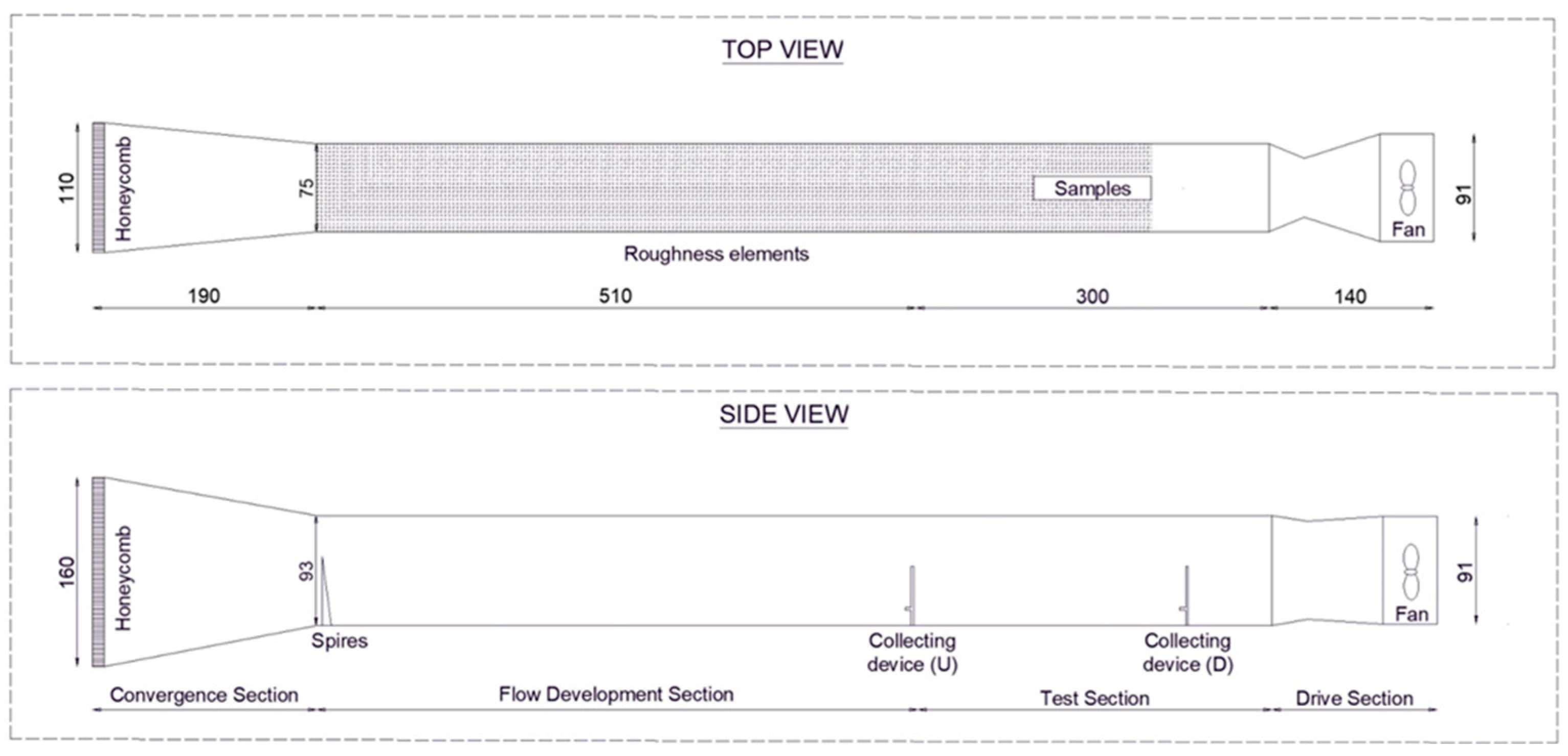
2.2.1. DICAAR Environmental Wind Tunnel
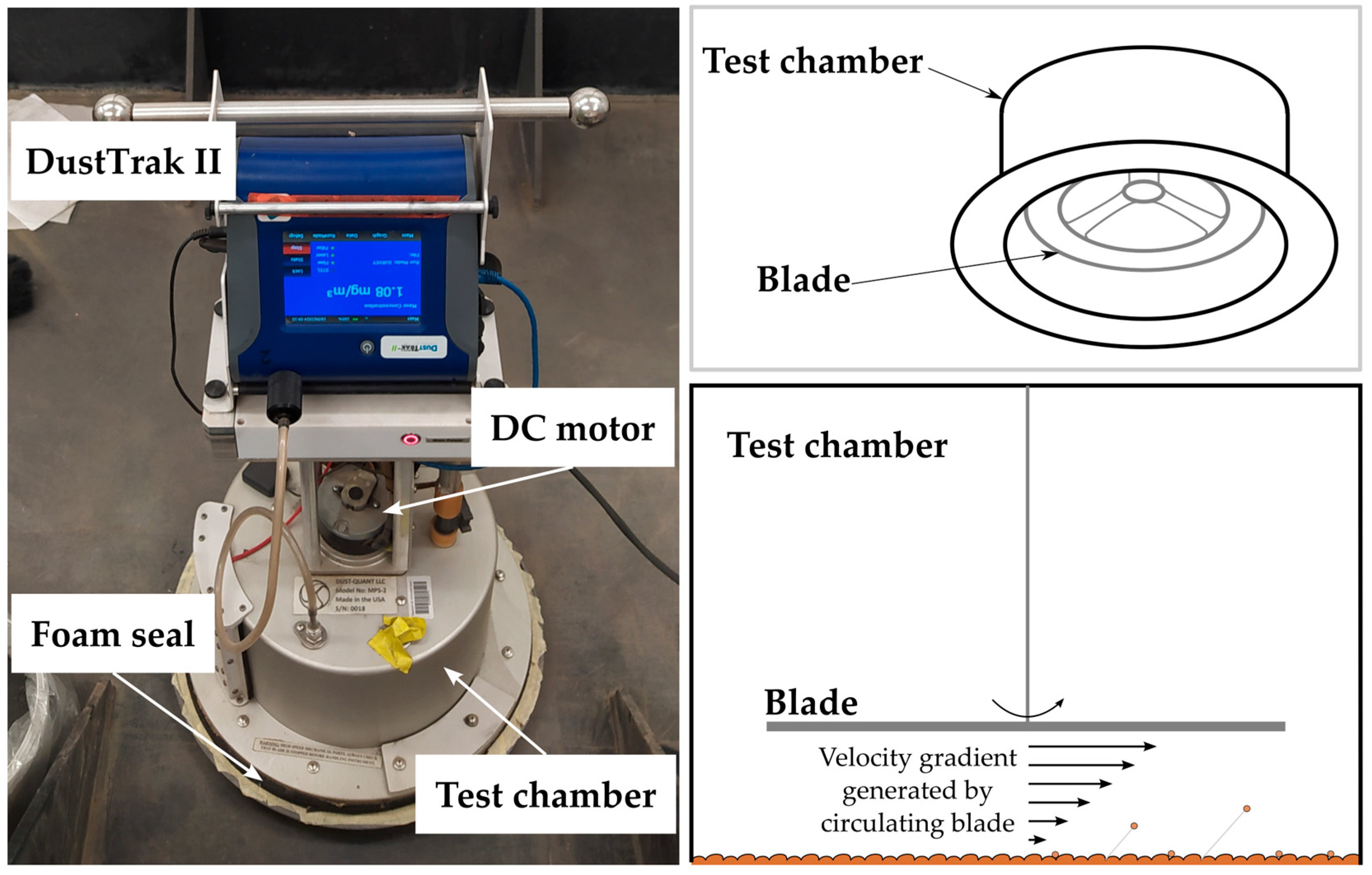
2.2.2. PI-SWERL
2.3. Procedures for the Estimation of the Threshold Friction Velocity
2.3.1. EPA Procedure
2.3.2. Surface Threshold Friction Velocity Analysis Through DICAAR EWT
2.3.3. Surface Threshold Friction Velocity Analysis Through PI-SWERL
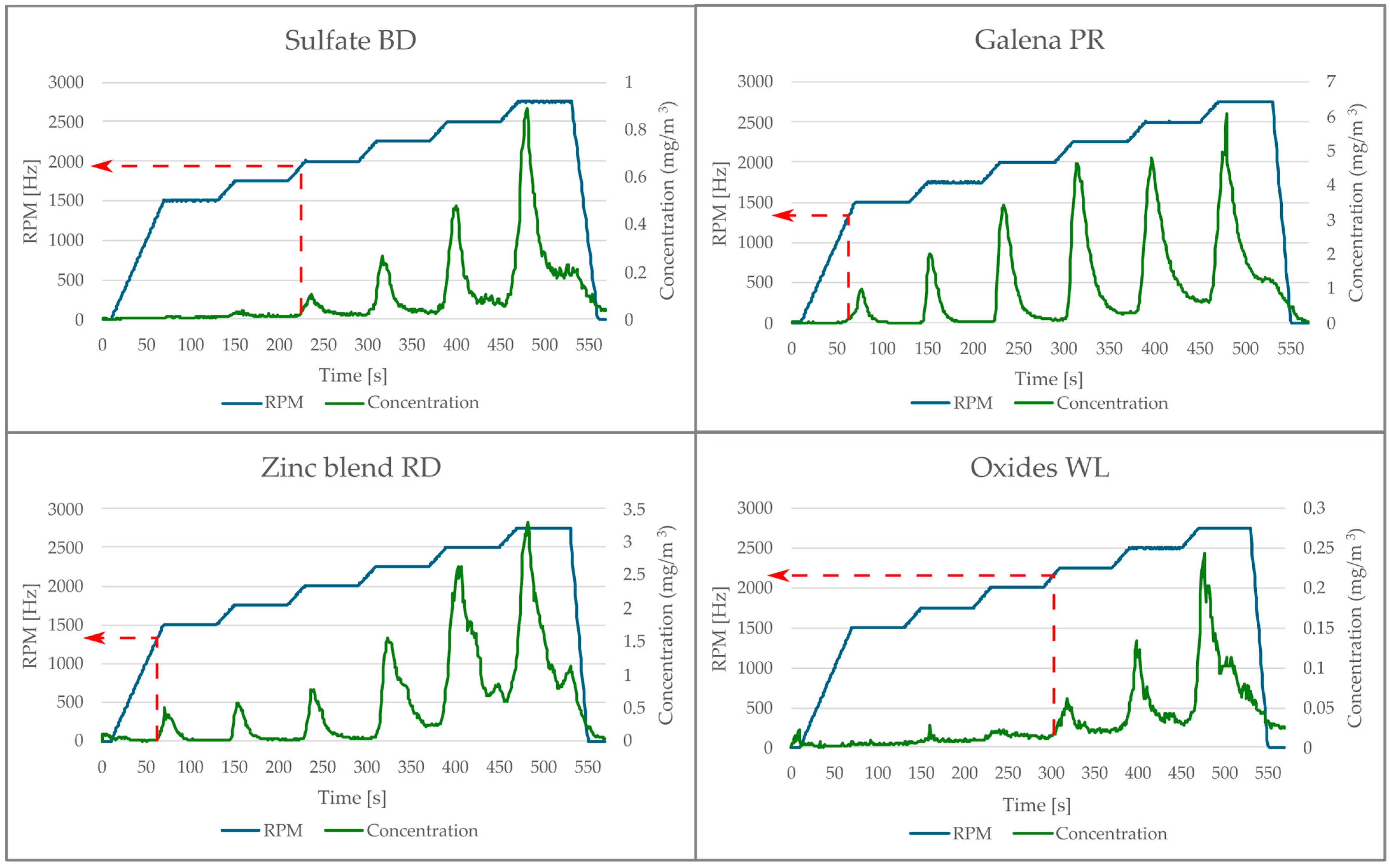
- Start-up phase: 10 s at 0 RPM with the ventilation system active (100 L min−1) to clean the air in the chamber;
- Ramp phase: a gradual increase in RPM from 0 to a target value of 1500 RPM over 60 s;
- Constant phase: RPM constant for 60 s;
- Ramp phase: RPM increased by 250 over 20 s;
- Repetition of phases 3 and 4 until reaching a constant RPM of 2750;
- Final phase: RPM decreased to 0 within 30 s.
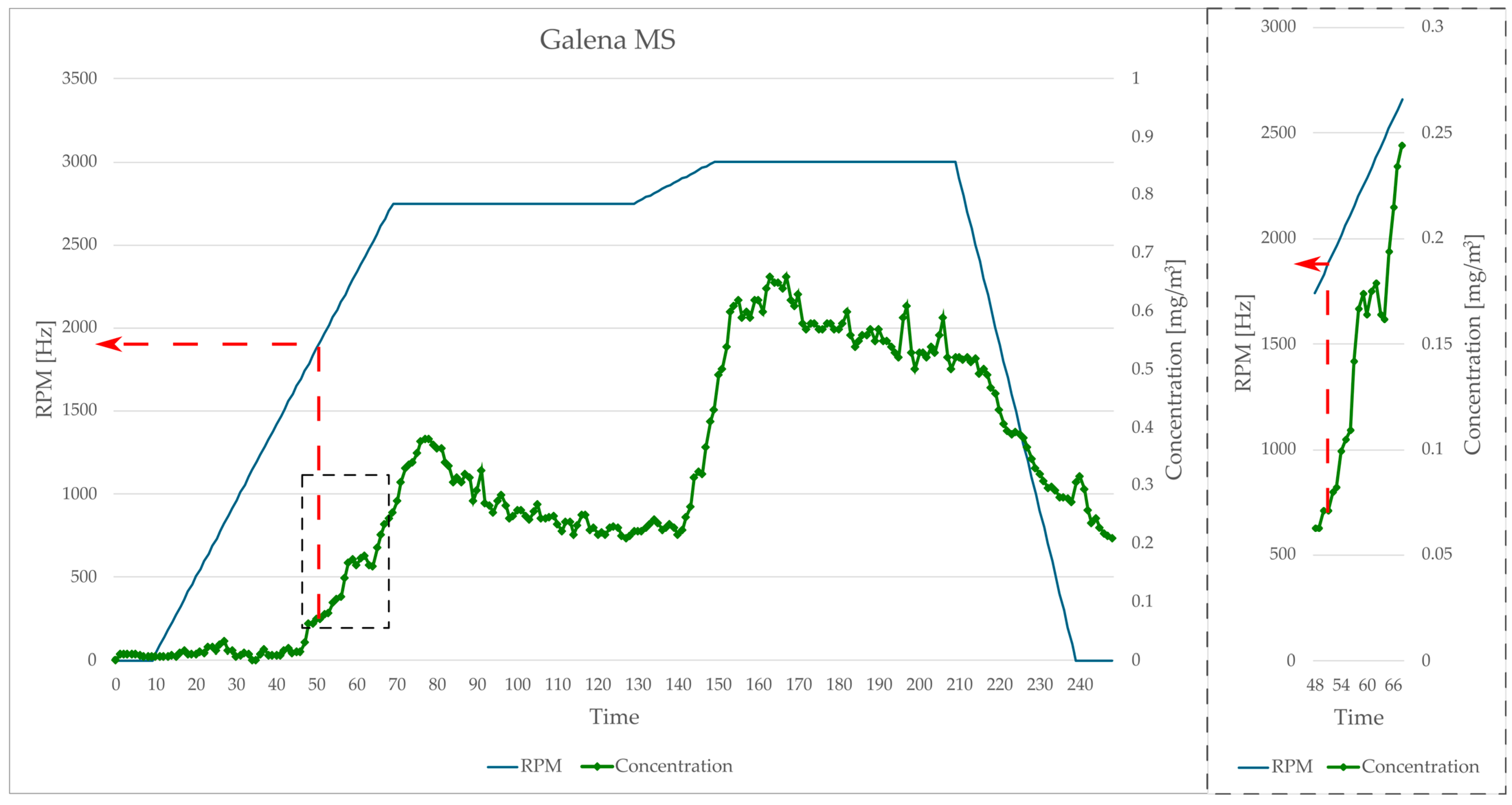
- Start-up phase: 10 s at 0 RPM with active ventilation (100 L min−1) to clean the air;
- Ramp phase: slow increase in RPM from 0 to a target of 2750 RPM over 60 s;
- Constant phase: RPM maintained at 2750 for 60 s;
- Ramp phase: RPM increased from 2750 to 3000 over 20 s;
- Constant phase: RPM held at 3000 for 60 s;
- Final phase: RPM decreased to 0 within 30 s.
3. Results
3.1. EPA Procedure
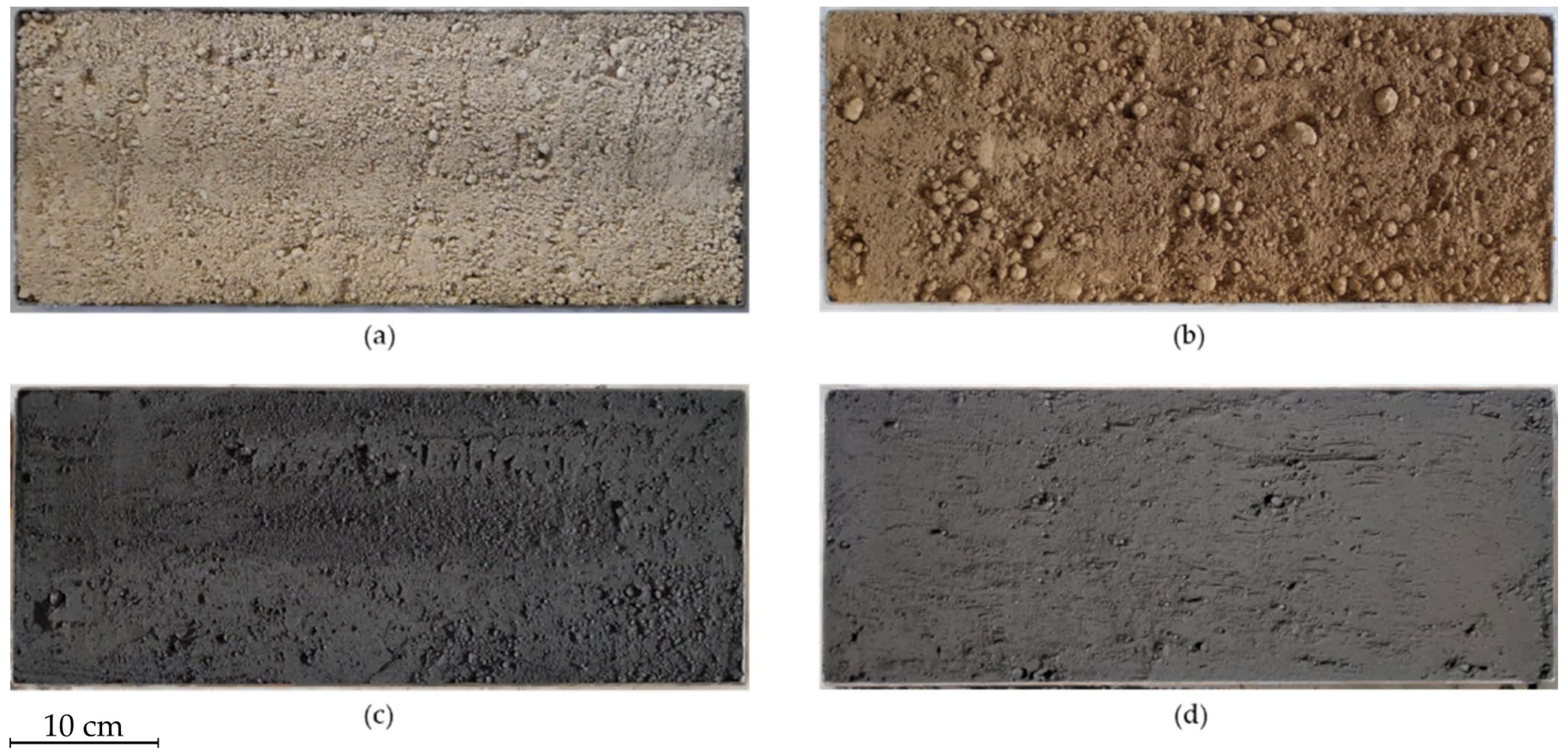
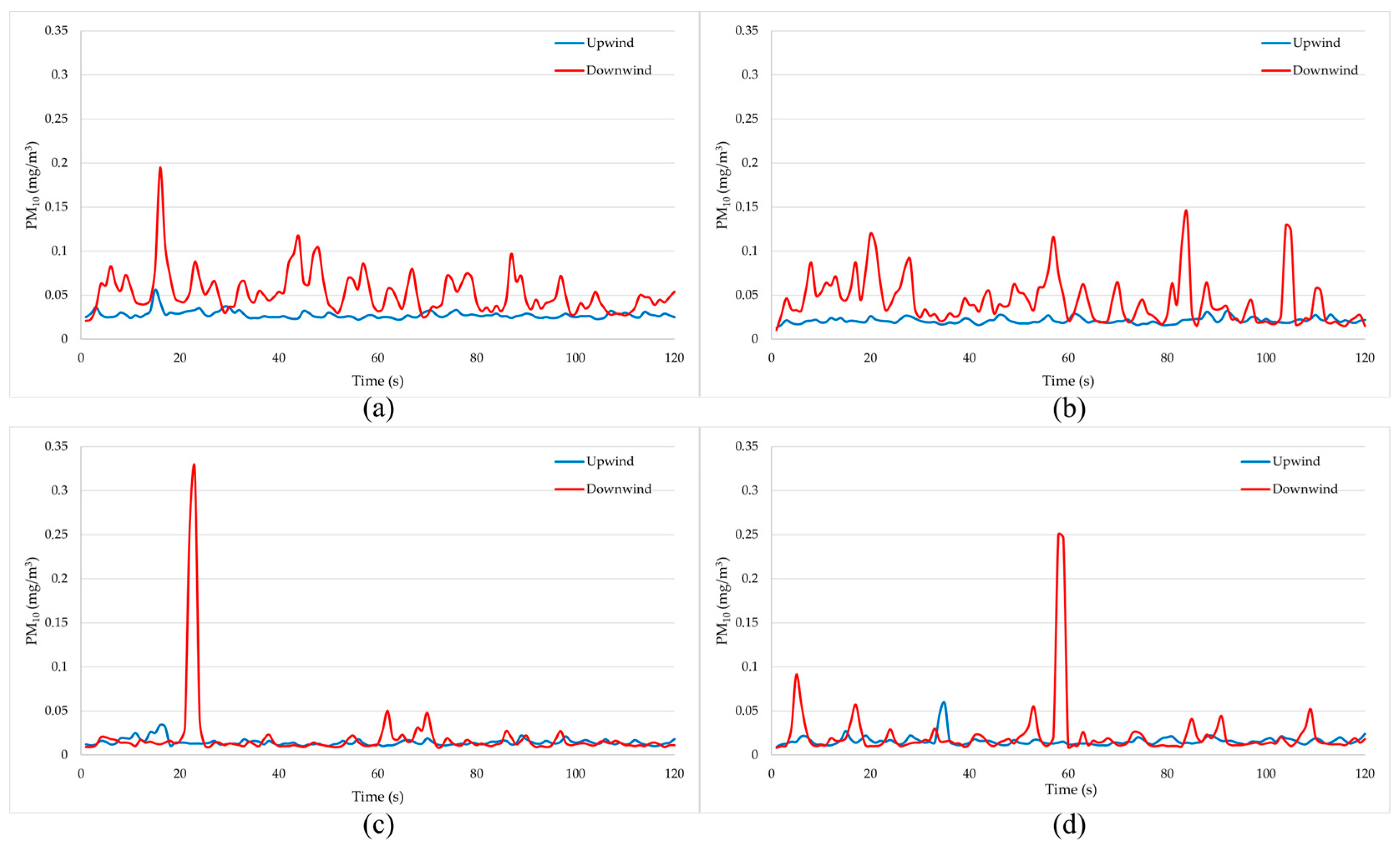
3.2. DICAAR EWT
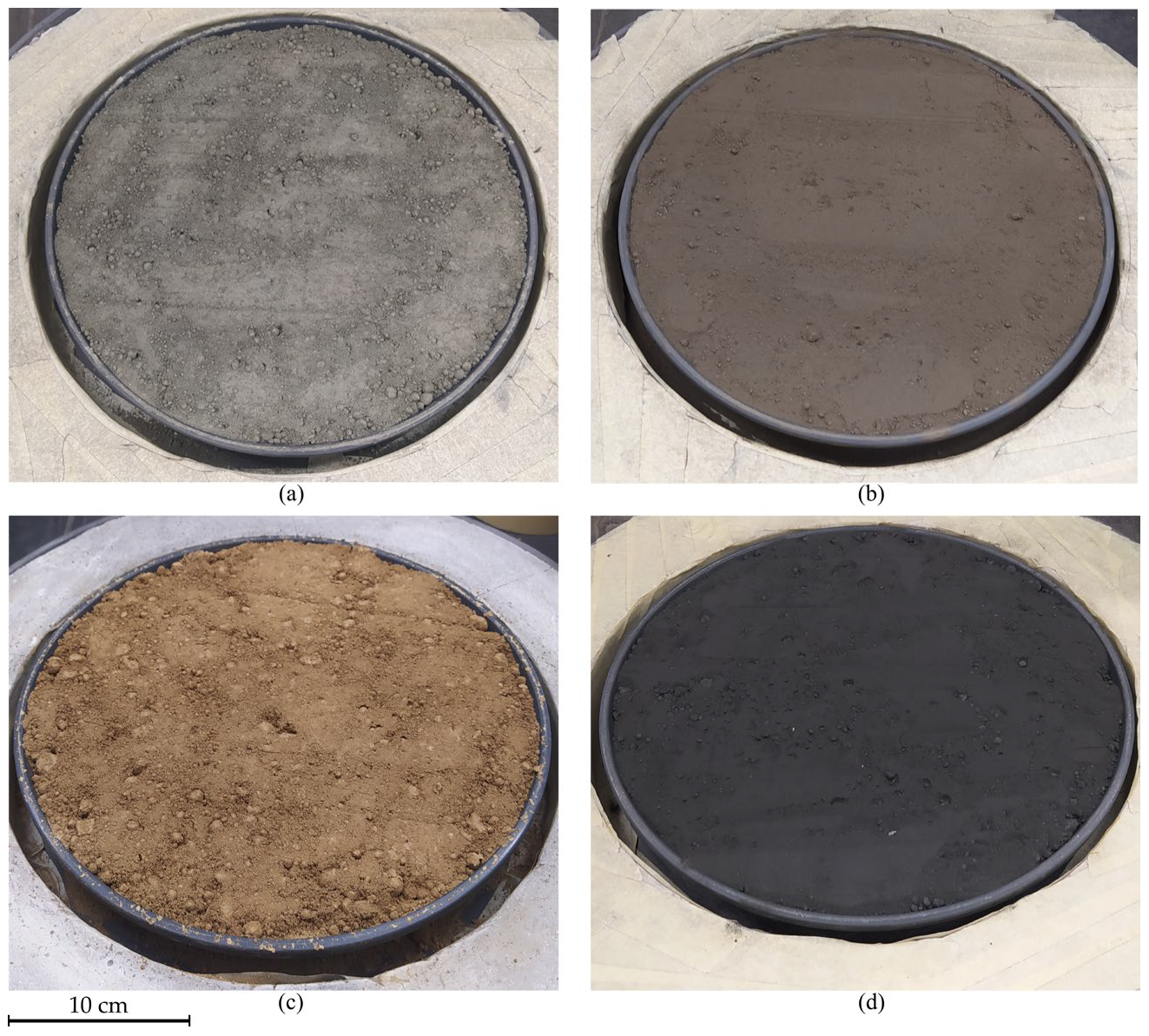
3.3. PI-SWERL
4. Discussion
4.1. Comparison of the Materials’ Erosion Resistance
- EPA Procedure: low threshold friction velocity values were determined for zinc blende PR and RD, and galena PR (u*t < 0.43 m/s), sulphates AD, and galena PN and PN (u*t = 0.43 m/s). In contrast, higher values were recorded for sulphates BD (u*t = 0.76 m/s), and especially for gypsum GP and oxides WL (u*t = 1 m/s).
- Wind Tunnel Tests: the threshold friction velocity was found to be 0.34 m/s for sulphates AD and zinc blende PR. Higher values were measured for zinc blende RD, galena PR and PN (u*t = 0.40 m/s), sulphates BD and galena MS (u*t = 0.44 m/s). The materials that showed the highest resistance to wind erosion were oxides WL (u*t = 0.47 m/s) and gypsum GP (u*t = 0.53 m/s).
- PI-SWERL Tests: Threshold friction velocity values ranged between 0.29 and 0.34 m/s for the two zinc blendes (PR and RD), galena PR and PN, and sulphates AD. Higher values were found for galena MS (u*t = 0.41 m/s), sulphates BD (u*t = 0.61 m/s), and oxides WL (u*t = 0.60 m/s). Gypsum GP was not tested with this method.
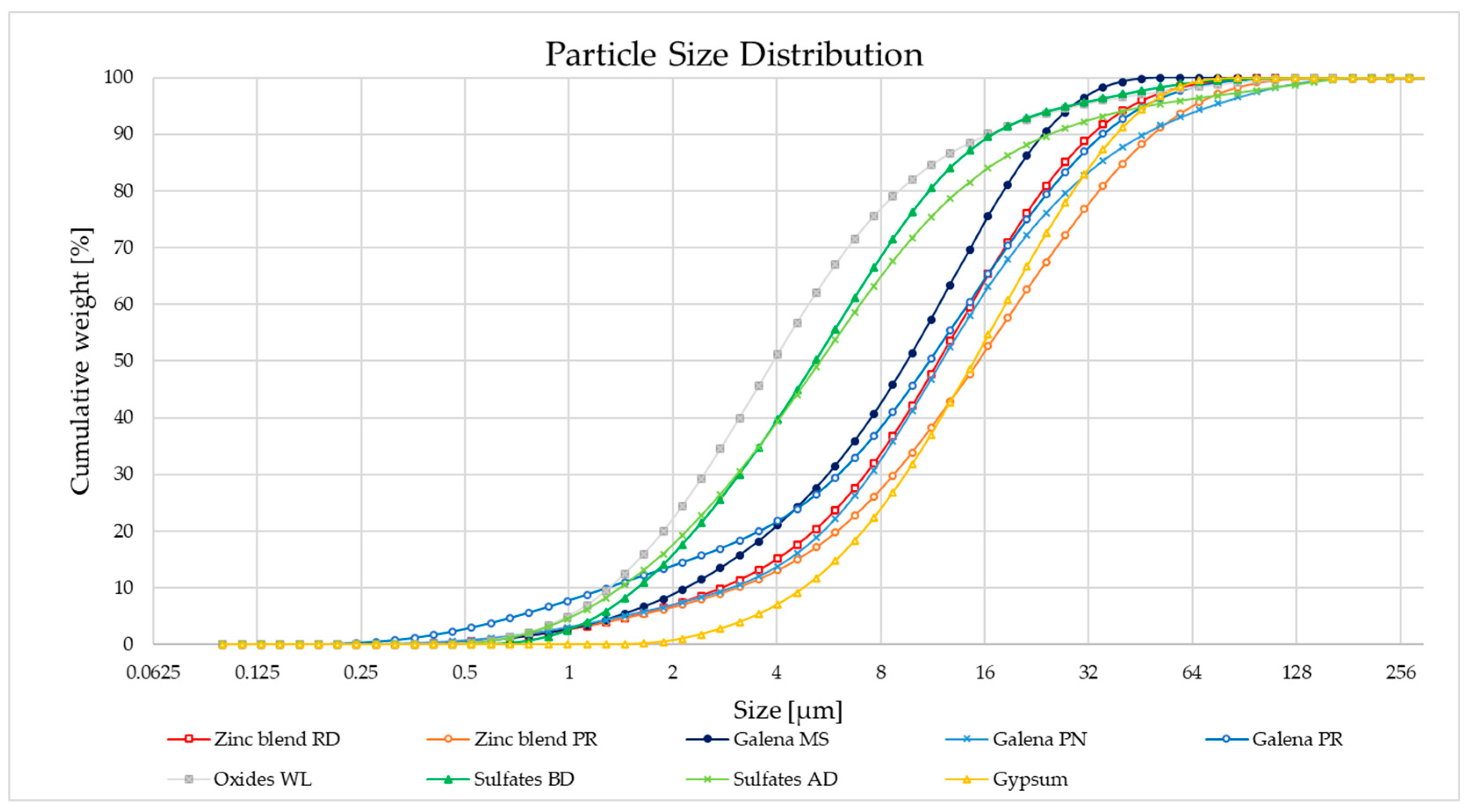
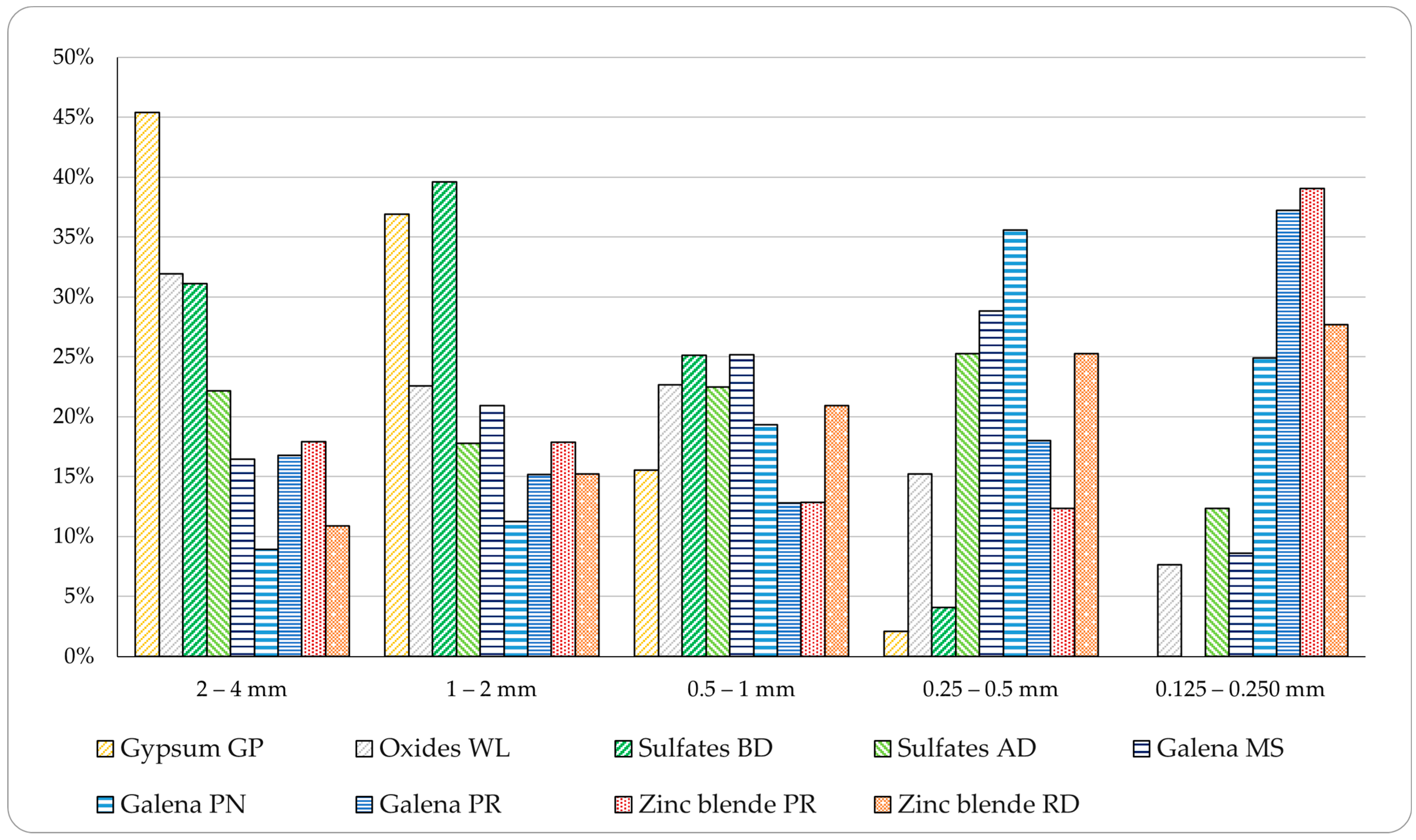
- No dependency was found between the Particles Size Distribution and the threshold velocity. Materials with overlapping PSD exhibited very different threshold friction velocities, such as gypsum GP and zinc blende PR. The lack of a clear relationship between PSD and the emissivity of materials under wind erosion is consistent with the findings of Alfaro et al. [51].
- The specific weight also did not show a clear influence on the threshold velocity of the materials. For instance, gypsum GP and sulphates BD (both characterized by very high threshold velocities) have lower specific weights than all the zinc blende and galena samples, which instead displayed lower thresholds across all methods.
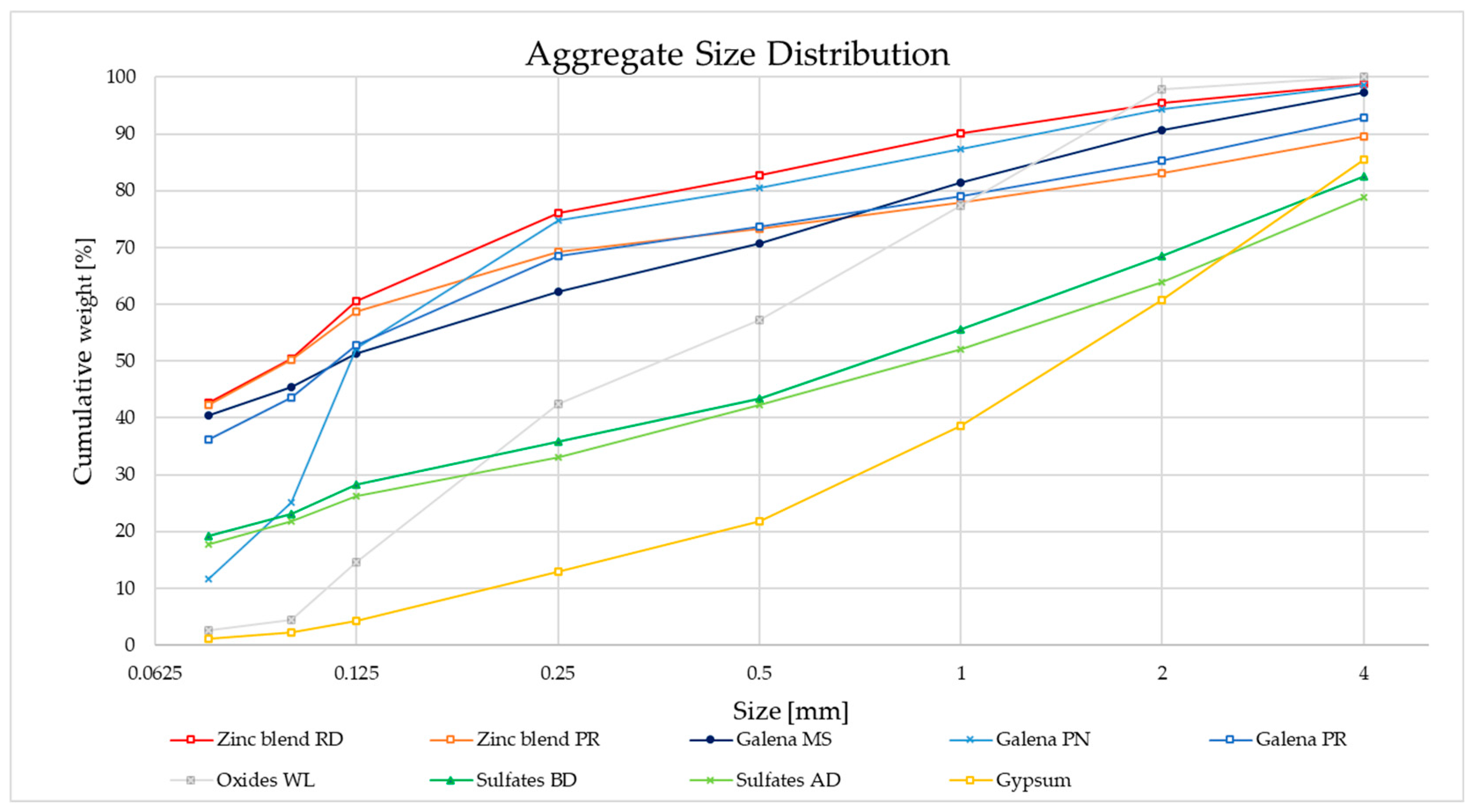
- A clear dependency was observed between the threshold velocity and the Aggregates Size Distribution of materials, whereby higher friction threshold velocities were consistently associated with larger median aggregate sizes. The only anomalous behavior was observed for sulphates AD, which exhibited a very low threshold velocity despite a high ASD. This outcome may be attributed either to the high propensity of the aggregates to break apart during saltation or to the greater availability of loose fine material on the surface compared to the other materials. The dependence of PM emissions on ASD has already been reported in previous research [51,52].
4.2. Comparison of Procedures
5. Conclusions
Author Contributions
Funding
Institutional Review Board Statement
Informed Consent Statement
Data Availability Statement
Conflicts of Interest
References
- Dockery, D.W.; Pope, C.A.; Xu, X.; Spengler, J.D.; Ware, J.H.; Fay, M.E.; Ferris, B.G.; Speizer, F.E. An Association between Air Pollution and Mortality in Six U.S. Cities. N. Engl. J. Med. 1993, 329, 1753–1759. [Google Scholar] [CrossRef]
- Pope, C.A. Lung Cancer, Cardiopulmonary Mortality, and Long-Term Exposure to Fine Particulate Air Pollution. JAMA 2002, 287, 1132. [Google Scholar] [CrossRef]
- Chen, J.; Hoek, G. Long-Term Exposure to PM and All-Cause and Cause-Specific Mortality: A Systematic Review and Meta-Analysis. Environ. Int. 2020, 143, 105974. [Google Scholar] [CrossRef] [PubMed]
- Orellano, P.; Reynoso, J.; Quaranta, N.; Bardach, A.; Ciapponi, A. Short-Term Exposure to Particulate Matter (PM10 and PM2.5), Nitrogen Dioxide (NO2), and Ozone (O3) and All-Cause and Cause-Specific Mortality: Systematic Review and Meta-Analysis. Environ. Int. 2020, 142, 105876. [Google Scholar] [CrossRef] [PubMed]
- Dentoni, V.; Grosso, B.; Pinna, F.; Lai, A.; Bouarour, O. Emission of Fine Dust from Open Storage of Industrial Materials Exposed to Wind Erosion. Atmosphere 2022, 13, 320. [Google Scholar] [CrossRef]
- Bagnold, R.A. The Physics of Blown Sand and Desert Dunes; Springer Netherlands: Dordrecht, The Netherlands, 1941; ISBN 978-94-009-5684-1. [Google Scholar]
- Shao, Y.; Lu, H. A Simple Expression for Wind Erosion Threshold Friction Velocity. J. Geophys. Res. 2000, 105, 22437–22443. [Google Scholar] [CrossRef]
- Gillette, D.A.; Adams, J.; Endo, A.; Smith, D.; Kihl, R. Threshold Velocities for Input of Soil Particles into the Air by Desert Soils. J. Geophys. Res. 1980, 85, 5621–5630. [Google Scholar] [CrossRef]
- Gillette, D.A.; Blifford, I.H.; Fryrear, D.W. The Influence of Wind Velocity on the Size Distributions of Aerosols Generated by the Wind Erosion of Soils. J. Geophys. Res. 1974, 79, 4068–4075. [Google Scholar] [CrossRef]
- Loosmore, G.A.; Hunt, J.R. Dust Resuspension without Saltation. J. Geophys. Res. 2000, 105, 20663–20671. [Google Scholar] [CrossRef]
- Shao, Y.; Raupach, M.R.; Findlater, P.A. Effect of Saltation Bombardment on the Entrainment of Dust by Wind. J. Geophys. Res. 1993, 98, 12719–12726. [Google Scholar] [CrossRef]
- Bullard, J.E.; McTainsh, G.H.; Pudmenzky, C. Aeolian Abrasion and Modes of Fine Particle Production from Natural Red Dune Sands: An Experimental Study. Sedimentology 2004, 51, 1103–1125. [Google Scholar] [CrossRef]
- Alfaro, S.C.; Gaudichet, A.; Gomes, L.; Maillé, M. Modeling the Size Distribution of a Soil Aerosol Produced by Sandblasting. J. Geophys. Res. 1997, 102, 11239–11249. [Google Scholar] [CrossRef]
- Shao, Y. A Model for Mineral Dust Emission. J. Geophys. Res. 2001, 106, 20239–20254. [Google Scholar] [CrossRef]
- Shao, Y. (Ed.) Physics and Modelling of Wind Erosion; Atmospheric and Oceanographic Sciences Library; Springer: Dordrecht, The Netherlands, 2008; Volume 37, ISBN 978-1-4020-8894-0. [Google Scholar]
- Kok, J.F.; Parteli, E.J.R.; Michaels, T.I.; Karam, D.B. The Physics of Wind-Blown Sand and Dust. Rep. Prog. Phys. 2012, 75, 106901. [Google Scholar] [CrossRef] [PubMed]
- Pi, H.; Webb, N.P.; Huggins, D.R.; Li, S. Effects of Secondary Soil Aggregates on Threshold Friction Velocity and Wind Erosion. Land. Degrad. Dev. 2023, 34, 16–27. [Google Scholar] [CrossRef]
- Nickling, W.G.; Ecclestone, M. The Effects of Soluble Salts on the Threshold Shear Velocity of Fine Sand. Sedimentology 1981, 28, 505–510. [Google Scholar] [CrossRef]
- Fécan, F.; Marticorena, B.; Bergametti, G. Parametrization of the Increase of the Aeolian Erosion Threshold Wind Friction Velocity Due to Soil Moisture for Arid and Semi-Arid Areas. Ann. Geophys. 1999, 17, 149–157. [Google Scholar] [CrossRef]
- Duan, S.; Cheng, N.; Xie, L. A New Statistical Model for Threshold Friction Velocity of Sand Particle Motion. CATENA 2013, 104, 32–38. [Google Scholar] [CrossRef]
- Sharratt, B.S.; Vaddella, V. Threshold Friction Velocity of Crusted Windblown Soils in the Columbia Plateau. Aeolian Res. 2014, 15, 227–234. [Google Scholar] [CrossRef]
- Shao, Y.; Klose, M. A Note on the Stochastic Nature of Particle Cohesive Force and Implications to Threshold Friction Velocity for Aerodynamic Dust Entrainment. Aeolian Res. 2016, 22, 123–125. [Google Scholar] [CrossRef]
- U.S. Environment Protection Agency. EPA AP-42, CH 13.2.5: Industrial Wind Erosion 2006; U.S. Environment Protection Agency: Washington, DC, USA, 2006. [Google Scholar]
- Roney, J.A.; White, B.R. Definition and Measurement of Dust Aeolian Thresholds. J. Geophys. Res. 2004, 109. [Google Scholar] [CrossRef]
- Roney, J.A.; White, B.R. Estimating Fugitive Dust Emission Rates Using an Environmental Boundary Layer Wind Tunnel. Atmos. Environ. 2006, 40, 7668–7685. [Google Scholar] [CrossRef]
- McKenna Neuman, C.; Boulton, J.W.; Sanderson, S. Wind Tunnel Simulation of Environmental Controls on Fugitive Dust Emissions from Mine Tailings. Atmos. Environ. 2009, 43, 520–529. [Google Scholar] [CrossRef]
- Sanderson, R.S.; McKenna Neuman, C.; Boulton, J.W. Windblown Fugitive Dust Emissions from Smelter Slag. Aeolian Res. 2014, 13, 19–29. [Google Scholar] [CrossRef]
- Avecilla, F.; Panebianco, J.E.; Buschiazzo, D.E. Variable Effects of Saltation and Soil Properties on Wind Erosion of Different Textured Soils. Aeolian Res. 2015, 18, 145–153. [Google Scholar] [CrossRef]
- Avecilla, F.; Panebianco, J.E.; Buschiazzo, D.E. A Wind-Tunnel Study on Saltation and PM 10 Emission from Agricultural Soils. Aeolian Res. 2016, 22, 73–83. [Google Scholar] [CrossRef]
- Wu, W.; Yan, P.; Wang, Y.; Dong, M.; Meng, X.; Ji, X. Wind Tunnel Experiments on Dust Emissions from Different Landform Types. J. Arid. Land. 2018, 10, 548–560. [Google Scholar] [CrossRef]
- Richards-Thomas, T.; McKenna-Neuman, C. Wind Tunnel-Based Comparison of PM10 Emission Rates for Volcanic Ash and Glaciogenic Aerosol Sources Within Iceland. JGR Atmos. 2020, 125. [Google Scholar] [CrossRef]
- Dentoni, V.; Grosso, B.; Pinna, F. Experimental Evaluation of PM Emission from Red Mud Basins Exposed to Wind Erosion. Minerals 2021, 11, 405. [Google Scholar] [CrossRef]
- Desert Research Institute. Available online: https://www.dri.edu/ (accessed on 17 October 2025).
- Etyemezian, V.; Nikolich, G.; Ahonen, S.; Pitchford, M.; Sweeney, M.; Purcell, R.; Gillies, J.; Kuhns, H. The Portable In Situ Wind Erosion Laboratory (PI-SWERL): A New Method to Measure PM10 Windblown Dust Properties and Potential for Emissions. Atmos. Environ. 2007, 41, 3789–3796. [Google Scholar] [CrossRef]
- Sweeney, M.; Etyemezian, V.; Macpherson, T.; Nickling, W.; Gillies, J.; Nikolich, G.; McDonald, E. Comparison of PI-SWERL with Dust Emission Measurements from a Straight-sline Field Wind Tunnel. J. Geophys. Res. 2008, 113, 2007JF000830. [Google Scholar] [CrossRef]
- Von Holdt, J.R.; Eckardt, F.D.; Wiggs, G.F.S. Landsat Identifies Aeolian Dust Emission Dynamics at the Landform Scale. Remote Sens. Environ. 2017, 198, 229–243. [Google Scholar] [CrossRef]
- Etyemezian, V.; Gillies, J.A.; Mastin, L.G.; Crawford, A.; Hasson, R.; Van Eaton, A.R.; Nikolich, G. Laboratory Experiments of Volcanic Ash Resuspension by Wind. JGR Atmos. 2019, 124, 9534–9560. [Google Scholar] [CrossRef]
- Vos, H.; Fister, W.; Eckardt, F.; Palmer, A.; Kuhn, N. Physical Crust Formation on Sandy Soils and Their Potential to Reduce Dust Emissions from Croplands. Land 2020, 9, 503. [Google Scholar] [CrossRef]
- Van Leeuwen, C.C.E.; Fister, W.; Vos, H.C.; Cammeraat, L.H.; Kuhn, N.J. A Cross-Comparison of Threshold Friction Velocities for PM10 Emissions between a Traditional Portable Straight-Line Wind Tunnel and PI-SWERL. Aeolian Res. 2021, 49, 100661. [Google Scholar] [CrossRef]
- Sweeney, M.R.; Lacey, T.; Forman, S.L. The Role of Abrasion and Resident Fines in Dust Production from Aeolian Sands as Measured by the Portable in Situ Wind Erosion Laboratory (PI-SWERL). Aeolian Res. 2023, 63–65, 100889. [Google Scholar] [CrossRef]
- Smits, N.; Goossens, D.; Riksen, M. Effect of Pedestrian Trampling on Aeolian Sand Dynamics on Beach Surfaces: An Experimental Study. Geomorphology 2024, 455, 109181. [Google Scholar] [CrossRef]
- ASTM C471M-25; Test Methods for Chemical Analysis of Gypsum and Gypsum Products (Metric). ASTM International: Washington, DC, USA, 2025. [CrossRef]
- Mastersizer|Laser Diffraction Particle Size Analyzers. Available online: https://www.malvernpanalytical.com/en/products/product-range/mastersizer-range (accessed on 19 November 2025).
- Panebianco, J.E.; Mendez, M.J.; Buschiazzo, D.E. PM10 Emission, Sandblasting Efficiency and Vertical Entrainment During Successive Wind-Erosion Events: A Wind-Tunnel Approach. Bound.-Layer. Meteorol. 2016, 161, 335–353. [Google Scholar] [CrossRef]
- DustTrakTM DRX Aerosol Monitor 8533. Available online: https://tsi.com/products/aerosol-and-dust-monitors/aerosol-and-dust-monitors/dusttrak%E2%84%A2-drx-aerosol-monitor-8533 (accessed on 19 November 2025).
- Pinna, F.; Grosso, B.; Lai, A.; Bouarour, O.; Armas, C.; Serci, M.; Dentoni, V. Design, Validation and CFD Modeling of an Environmental Wind Tunnel. Atmosphere 2024, 15, 77. [Google Scholar] [CrossRef]
- Sweeney, M.R. Dust Emission Processes. In Treatise on Geomorphology; Elsevier: Amsterdam, The Netherlands, 2022; pp. 235–258. ISBN 978-0-12-818235-2. [Google Scholar]
- Etyemezian, V.; Gillies, J.A.; Shinoda, M.; Nikolich, G.; King, J.; Bardis, A.R. Accounting for Surface Roughness on Measurements Conducted with PI-SWERL: Evaluation of a Subjective Visual Approach and a Photogrammetric Technique. Aeolian Res. 2014, 13, 35–50. [Google Scholar] [CrossRef]
- DustTrakTM II Aerosol Monitor 8530. Available online: https://tsi.com/products/aerosol-and-dust-monitors/aerosol-and-dust-monitors/dusttrak%E2%84%A2-ii-aerosol-monitor-8530 (accessed on 19 November 2025).
- Macpherson, T.; Nickling, W.G.; Gillies, J.A.; Etyemezian, V. Dust Emissions from Undisturbed and Disturbed Supply—limited Desert Surfaces. J. Geophys. Res. 2008, 113, 2007JF000800. [Google Scholar] [CrossRef]
- Alfaro, S.C.; Rajot, J.L.; Nickling, W. Estimation of PM20 Emissions by Wind Erosion: Main Sources of Uncertainties. Geomorphology 2004, 59, 63–74. [Google Scholar] [CrossRef]
- Alfaro, S.C.; Gomes, L. Modeling Mineral Aerosol Production by Wind Erosion: Emission Intensities and Aerosol Size Distributions in Source Areas. J. Geophys. Res. 2001, 106, 18075–18084. [Google Scholar] [CrossRef]
- Cornelis, W.M.; Gabriels, D.; Hartmann, R. A Parameterisation for the Threshold Shear Velocity to Initiate Deflation of Dry and Wet Sediment. Geomorphology 2004, 59, 43–51. [Google Scholar] [CrossRef]
- Sharratt, B.S.; Vaddella, V.K.; Feng, G. Threshold Friction Velocity Influenced by Wetness of Soils within the Columbia Plateau. Aeolian Res. 2013, 9, 175–182. [Google Scholar] [CrossRef]
- Castellanos, A. The Relationship between Attractive Interparticle Forces and Bulk Behaviour in Dry and Uncharged Fine Powders. Adv. Phys. 2005, 54, 263–376. [Google Scholar] [CrossRef]
- Sweeney, M.R.; Mason, J.A. Mechanisms of Dust Emission from Pleistocene Loess Deposits, Nebraska, USA. JGR Earth Surf. 2013, 118, 1460–1471. [Google Scholar] [CrossRef]



| Material | Gypsum GP | Oxides WL | Sulphates BD | Sulphates AD | Galena MS | Galena PN | Galena PR | Zinc Blende PR | Zinc Blende RD |
|---|---|---|---|---|---|---|---|---|---|
| Moisture content [%] | 38 | 7 | 21 | 17 | 6 | 3 | 2 | 4 | 3 |
| Specific weight [kN/m3] | 16 | 44 | 27 | 31 | 54 | 52 | 51 | 34 | 34 |
| PSD-d50 [µm] | 17 | 4 | 6 | 6 | 11 | 14 | 13 | 17 | 13 |
| ASD-d50 [mm] | 1.500 | 0.375 | 0.750 | 0.875 | 0.110 | 0.125 | 0.110 | 0.100 | 0.105 |
| Fan Rotation Frequency [RPM] | Wind Velocity at 2 cm Above Floor (u2cm) [m/s] | Wind Friction Velocity (u*) [m/s] | Wind Velocity Reported at 10 m (u10m) [m/s] |
|---|---|---|---|
| 1650 | 3.98 | 0.34 | 8.82 |
| 1800 | 4.32 | 0.37 | 9.68 |
| 1950 | 4.74 | 0.40 | 10.39 |
| 2100 | 4.99 | 0.44 | 11.32 |
| 2255 | 5.39 | 0.47 | 12.08 |
| 2400 | 5.68 | 0.50 | 12.85 |
| 2550 | 6.08 | 0.53 | 13.66 |
| 2700 | 6.42 | 0.57 | 14.39 |
| Mode [mm] | u*t [m/s] |
|---|---|
| 3 | 1 |
| 1.5 | 0.76 |
| 0.75 | 0.58 |
| 0.375 | 0.43 |
| 0.188 | <0.43 |
| Material | Gypsum GP | Oxides WL | Sulphates BD | Sulphates AD | Galena MS | Galena PN | Galena PR | Zinc Blende PR | Zinc Blende RD |
|---|---|---|---|---|---|---|---|---|---|
| Mode [mm] | 3.00 | 3.00 | 1.50 | 0.375 | 0.375 | 0.375 | 0.188 | 0.188 | 0.188 |
| EPA u*t [m/s] | 1 | 1 | 0.76 | 0.43 | 0.43 | 0.43 | <0.43 | <0.43 | <0.43 |
| Variation in PM10 Concentrations (Downwind-Upwind) [%] | |||||||||
|---|---|---|---|---|---|---|---|---|---|
| u* [m/s] | Gypsum GP | Oxides WL | Sulphates BD | Sulphates AD | Galena MS | Galena PN | Galena PR | Zinc Blende PR | Zinc Blende RD |
| 0.34 | 0 | 0 | 0 | 92 | 0 | 0 | 5 | 22 | 0 |
| 0.37 | 0 | 0 | 16 | - | 8 | 4 | 5 | 68 | 19 |
| 0.40 | 0 | 0 | 0 | - | 0 | 107 | 49 | - | 125 |
| 0.44 | 0 | 0 | 34 | - | 36 | - | - | - | - |
| 0.47 | 0 | 29 | - | - | - | - | - | - | - |
| 0.50 | 0 | - | - | - | - | - | - | - | |
| 0.53 | 39 | - | - | - | - | - | - | - | |
| 0.56 | - | - | - | - | - | - | - | - | |
| Material | Gypsum GP | Oxides WL | Sulphates BD | Sulphates AD | Galena MS | Galena PN | Galena PR | Zinc Blende PR | Zinc Blende RD |
|---|---|---|---|---|---|---|---|---|---|
| EWT u*t [m/s] | 0.53 | 0.47 | 0.44 | 0.34 | 0.44 | 0.40 | 0.40 | 0.34 | 0.40 |
| ut at 2 cm [m/s] | 6.08 | 5.39 | 4.99 | 3.98 | 4.99 | 4.74 | 4.74 | 3.98 | 4.32 |
| ut at 10 m [m/s] | 14.39 | 12.08 | 11.32 | 8.82 | 11.32 | 10.39 | 10.39 | 8.82 | 9.68 |
| Material | Gypsum GP | Oxides WL | Sulphates BD | Sulphates AD | Galena MS | Galena PN | Galena PR | Zinc Blende PR | Zinc Blende RD |
|---|---|---|---|---|---|---|---|---|---|
| PI-SWERL u*t [m/s] | / | 0.60 | 0.61 | 0.34 | 0.41 | 0.31 | 0.31 | 0.29 | 0.32 |
| Standard deviation [m/s] | / | 0.065 | 0.078 | 0.008 | 0.087 | 0.011 | 0.018 | 0.017 | 0.025 |
| Material | Gypsum GP | Oxides WL | Sulphates BD | Sulphates AD | Galena MS | Galena PN | Galena PR | Zinc Blende PR | Zinc Blende RD |
|---|---|---|---|---|---|---|---|---|---|
| EPA u*t [m/s] | 1 | 1 | 0.76 | 0.43 | 0.43 | 0.43 | <0.43 | <0.43 | <0.43 |
| EWT u*t [m/s] | 0.53 | 0.47 | 0.44 | 0.34 | 0.44 | 0.40 | 0.40 | 0.34 | 0.40 |
| PI-SWERL u*t [m/s] | / | 0.60 | 0.61 | 0.34 | 0.41 | 0.31 | 0.31 | 0.29 | 0.32 |
Disclaimer/Publisher’s Note: The statements, opinions and data contained in all publications are solely those of the individual author(s) and contributor(s) and not of MDPI and/or the editor(s). MDPI and/or the editor(s) disclaim responsibility for any injury to people or property resulting from any ideas, methods, instructions or products referred to in the content. |
© 2025 by the authors. Licensee MDPI, Basel, Switzerland. This article is an open access article distributed under the terms and conditions of the Creative Commons Attribution (CC BY) license (https://creativecommons.org/licenses/by/4.0/).
Share and Cite
Lai, A.; Grosso, B.; Kuhn, N.J.; Pinna, F.; Fister, W.; Sogos, G.; Dentoni, V. Assessment of Threshold Wind Velocities of Industrial Granular Materials: A Comparative Evaluation of Experimental Methods. Atmosphere 2025, 16, 1360. https://doi.org/10.3390/atmos16121360
Lai A, Grosso B, Kuhn NJ, Pinna F, Fister W, Sogos G, Dentoni V. Assessment of Threshold Wind Velocities of Industrial Granular Materials: A Comparative Evaluation of Experimental Methods. Atmosphere. 2025; 16(12):1360. https://doi.org/10.3390/atmos16121360
Chicago/Turabian StyleLai, Alessio, Battista Grosso, Nikolaus J. Kuhn, Francesco Pinna, Wolfgang Fister, Giulio Sogos, and Valentina Dentoni. 2025. "Assessment of Threshold Wind Velocities of Industrial Granular Materials: A Comparative Evaluation of Experimental Methods" Atmosphere 16, no. 12: 1360. https://doi.org/10.3390/atmos16121360
APA StyleLai, A., Grosso, B., Kuhn, N. J., Pinna, F., Fister, W., Sogos, G., & Dentoni, V. (2025). Assessment of Threshold Wind Velocities of Industrial Granular Materials: A Comparative Evaluation of Experimental Methods. Atmosphere, 16(12), 1360. https://doi.org/10.3390/atmos16121360