Article

Multi-Model Ensemble Prediction of Summer Precipitation in China Based on Machine Learning Algorithms


1
Jiangsu Climate Center, Jiangsu Meteorology Bureau, Nanjing 210009, China
2
Institute of Physics Science and Technology, Yangzhou University, Yangzhou 225012, China
*
Author to whom correspondence should be addressed.
Atmosphere 2022, 13(9), 1424; https://doi.org/10.3390/atmos13091424
Submission received: 17 August 2022 / Revised: 30 August 2022 / Accepted: 31 August 2022 / Published: 2 September 2022

Abstract

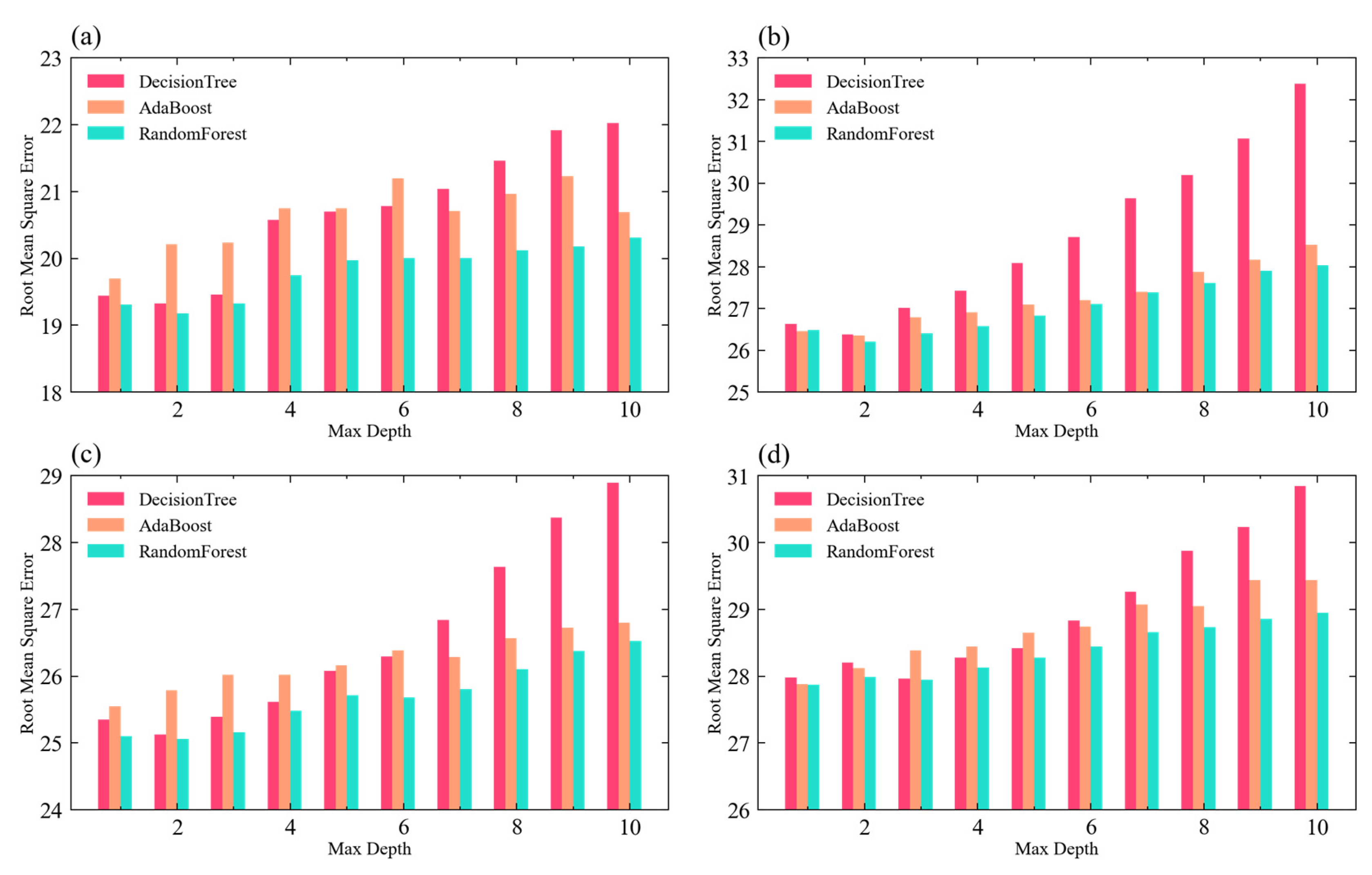
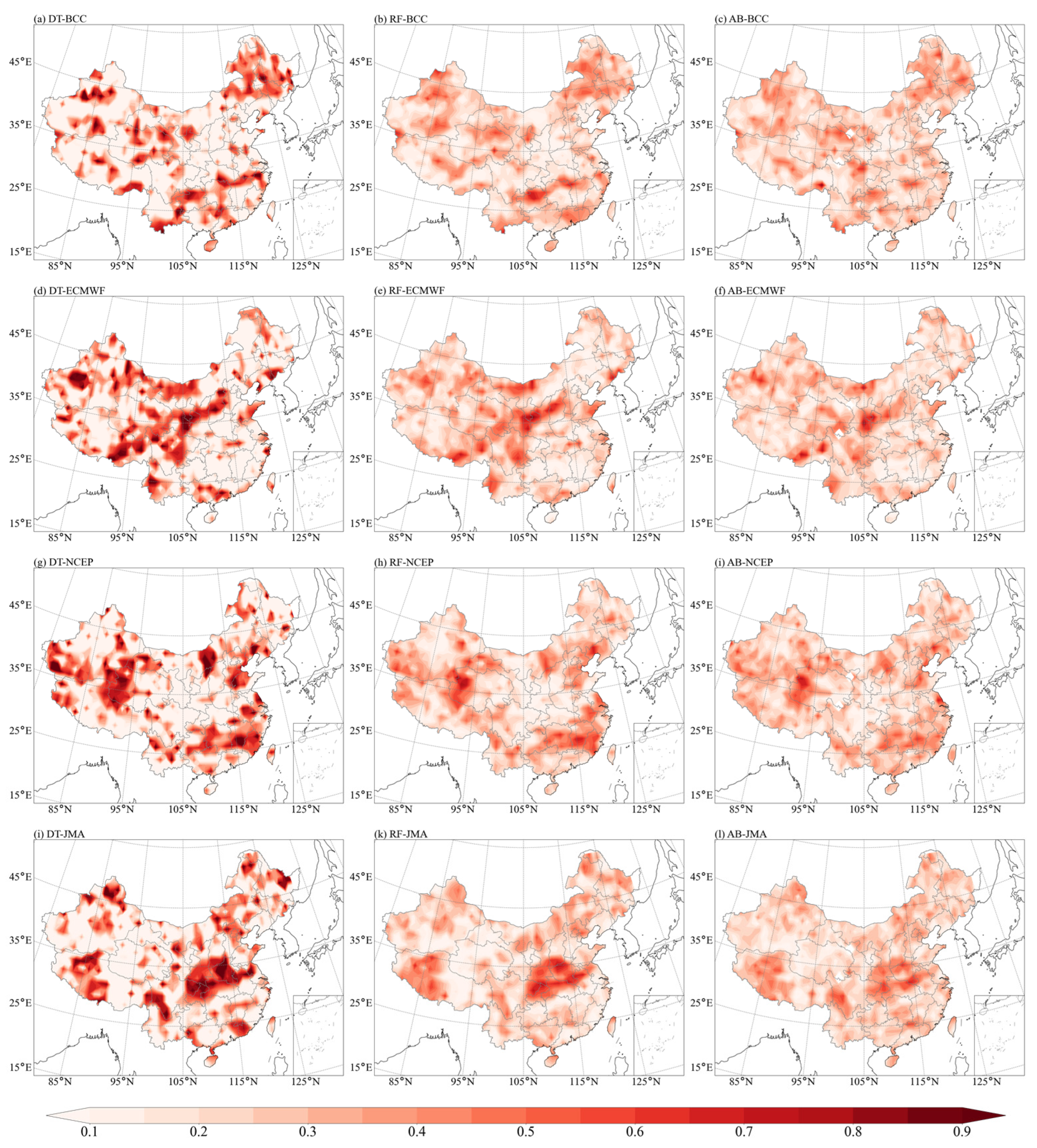
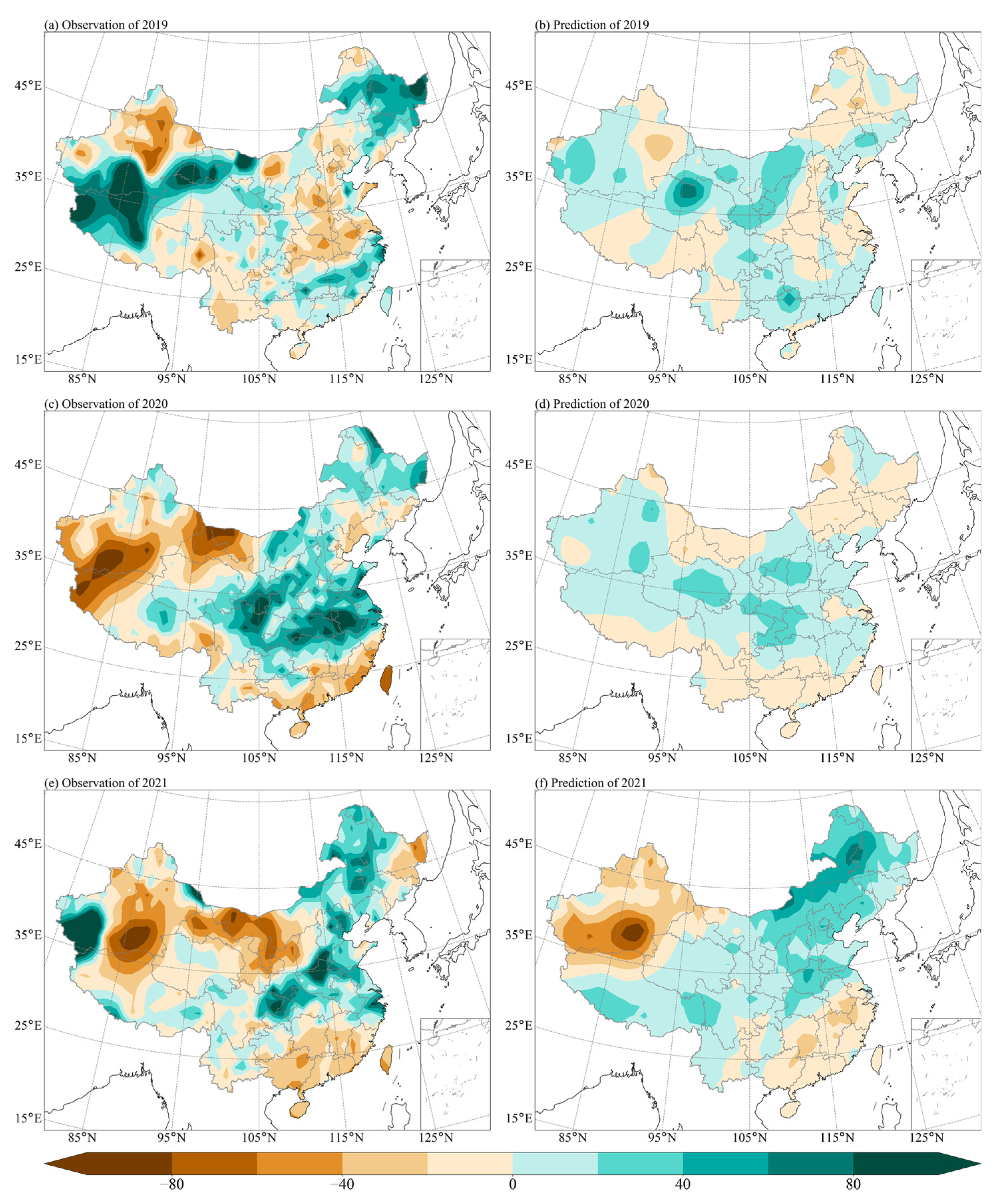
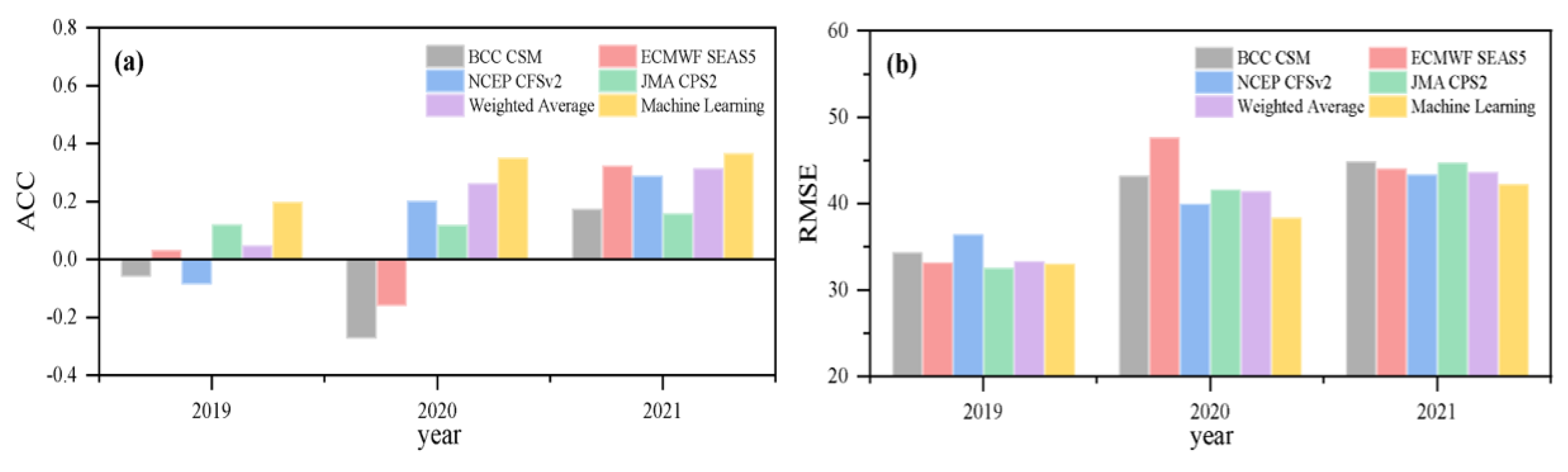
The development of machine learning (ML) provides new means and methods for accurate climate analysis and prediction. This study focuses on summer precipitation prediction using ML algorithms. Based on BCC CSM1.1, ECMWF SEAS5, NCEP CFSv2, and JMA CPS2 model data, we conducted a multi-model ensemble (MME) prediction experiment using three tree-based ML algorithms: the decision tree (DT), random forest (RF), and adaptive boosting (AB) algorithms. On this basis, we explored the applicability of ML algorithms for ensemble prediction of seasonal precipitation in China, as well as the impact of different hyperparameters on prediction accuracy. Then, MME predictions based on optimal hyperparameters were constructed for different regions of China. The results showed that all three ML algorithms had an optimal maximum depth less than 2, which means that, based on the current amount of data, the three algorithms could only predict positive or negative precipitation anomalies, and extreme precipitation was hard to predict. The importance of each model in the ML-based MME was quantitatively evaluated. The results showed that NCEP CFSv2 and JMA CPS2 had a higher importance in MME for the eastern part of China. Finally, summer precipitation in China was predicted and tested from 2019 to 2021. According to the results, the method provided a more accurate prediction of the main rainband of summer precipitation in China. ML-based MME had a mean ACC of 0.3, an improvement of 0.09 over the weighted average MME of 0.21 for 2019–2021, exhibiting a significant improvement over the other methods. This shows that ML methods have great potential for improving short-term climate prediction.
Keywords: machine learning; climate models; multi-model ensemble; short-term climate prediction; precipitation machine learning; climate models; multi-model ensemble; short-term climate prediction; precipitation