Article

Concentration Characteristics and Photochemical Reactivities of VOCs in Shenyang, China
1
Institute of Atmospheric Environment, China Meteorological Administration, Shenyang 110166, China
2
Shenyang Ecological Environment Monitoring Center of Liaoning Province, Shenyang 110169, China
*
Author to whom correspondence should be addressed.
Atmosphere 2021, 12(10), 1240; https://doi.org/10.3390/atmos12101240
Submission received: 12 August 2021 / Revised: 20 September 2021 / Accepted: 20 September 2021 / Published: 23 September 2021
(This article belongs to the Special Issue Air Pollution in China)

Abstract

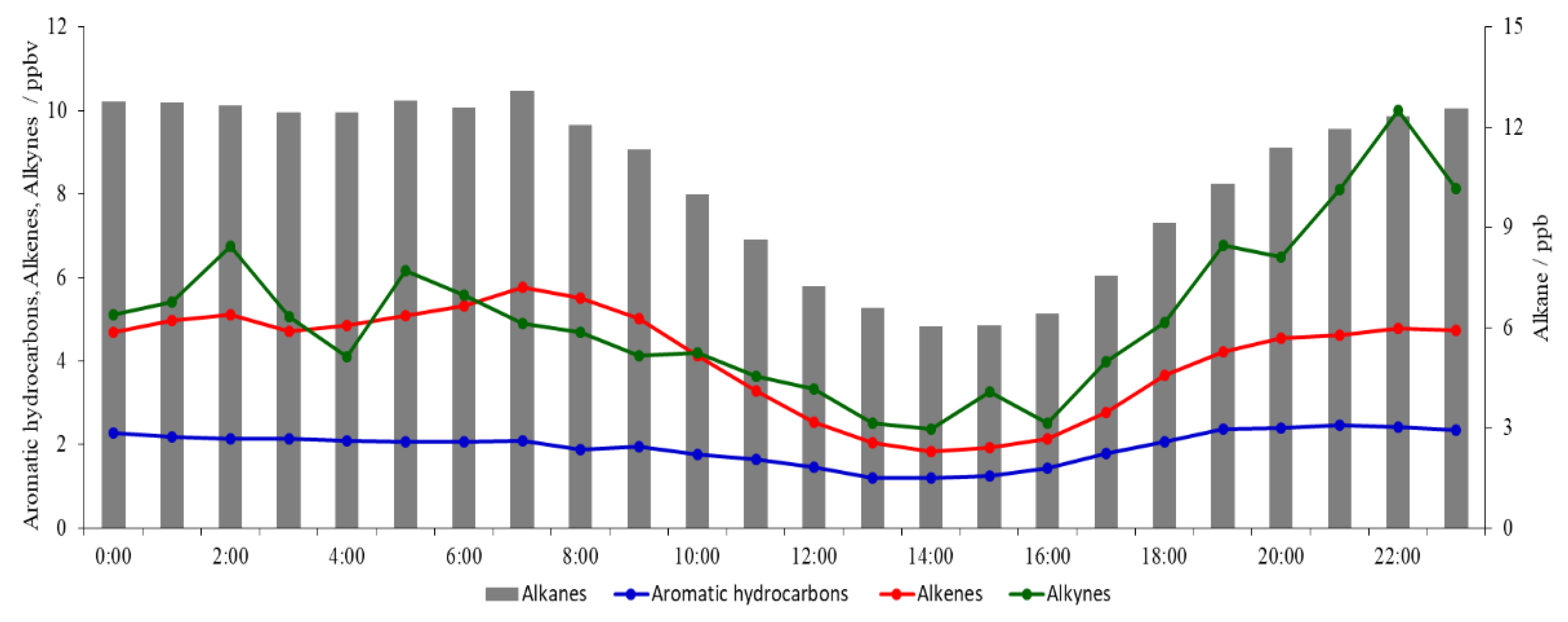
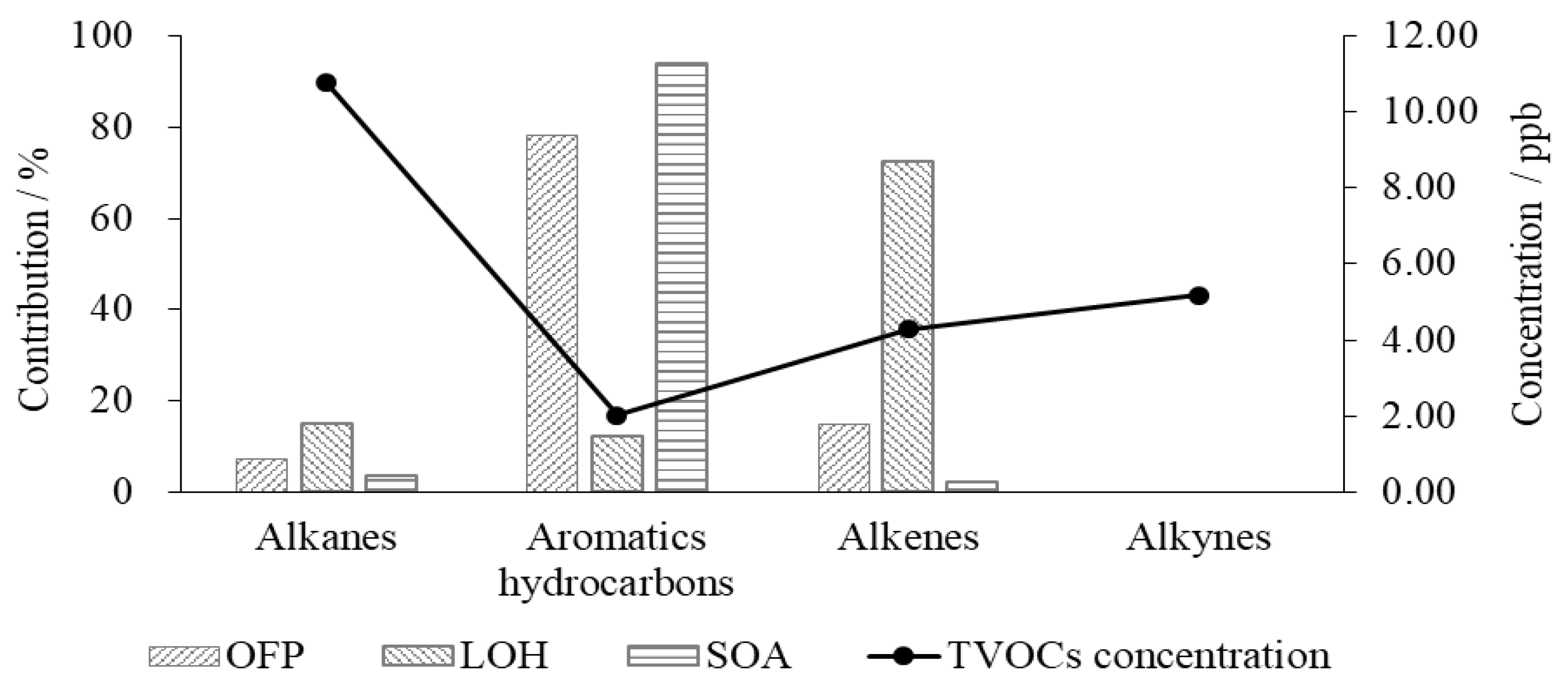
We investigated the seasonal and diurnal characteristics of volatile organic compound (VOC) concentrations in Shenyang, China, using the whole-year hourly data of 52 types of VOC at three sites over the year 2019. The photochemical reactivities of VOCs were also studied by analyzing the influence of VOCs on ozone and secondary organic aerosol (SOA) formation potential and the hydroxyl radical consumption rate. It is shown that the order of VOC concentrations from high to low is alkanes, alkynes, alkenes, and aromatic hydrocarbons. For various types of VOCs, the maximum appeared in the morning and at night, whereas the minimum appeared in the afternoon. The contributions of VOCs to ozone formation potential are highest for aromatic hydrocarbons with a value of 78%, followed by alkenes and alkanes, among which toluene and isoprene contributed the most. The contributions of VOCs to SOA formation potential are also highest for aromatic hydrocarbons with a value of 94%, followed by alkanes and alkenes, among which the contributions of toluene and benzene add up to over 70%. Being the most active type of VOCs in atmospheric chemical reactions, aromatic hydrocarbons are the dominant contributor to the formation of both ozone and SOA, and therefore being able to control of the use of a large number of solvents and vehicle exhaust emissions would be an effective way to regulate the formation of ozone and SOA in Shenyang.
Keywords: VOCs; photochemical reactivities; ozone; SOA VOCs; photochemical reactivities; ozone; SOA