Article

Ozone Trends from Two Decades of Ground Level Observation in Malaysia


1
Centre for Tropical Climate Change System, Institute of Climate Change, Universiti Kebangsaan Malaysia, UKM Bangi 43600, Malaysia
2
National Centre for Atmospheric Science, Department of Chemistry, University of Cambridge, Lensfield Road, Cambridge CB2 1EP, UK
3
Department for Earth Sciences and Environment, Faculty of Science and Technology, Universiti Kebangsaan Malaysia, UKM Bangi 43600, Malaysia
4
Institute of Oceanography and Environment, Universiti Malaysia Terengganu, Kuala Nerus 21030, Malaysia
*
Author to whom correspondence should be addressed.
Atmosphere 2020, 11(7), 755; https://doi.org/10.3390/atmos11070755
Submission received: 28 June 2020 / Revised: 10 July 2020 / Accepted: 15 July 2020 / Published: 17 July 2020
(This article belongs to the Special Issue Changes in the Composition of the Atmosphere)

Abstract

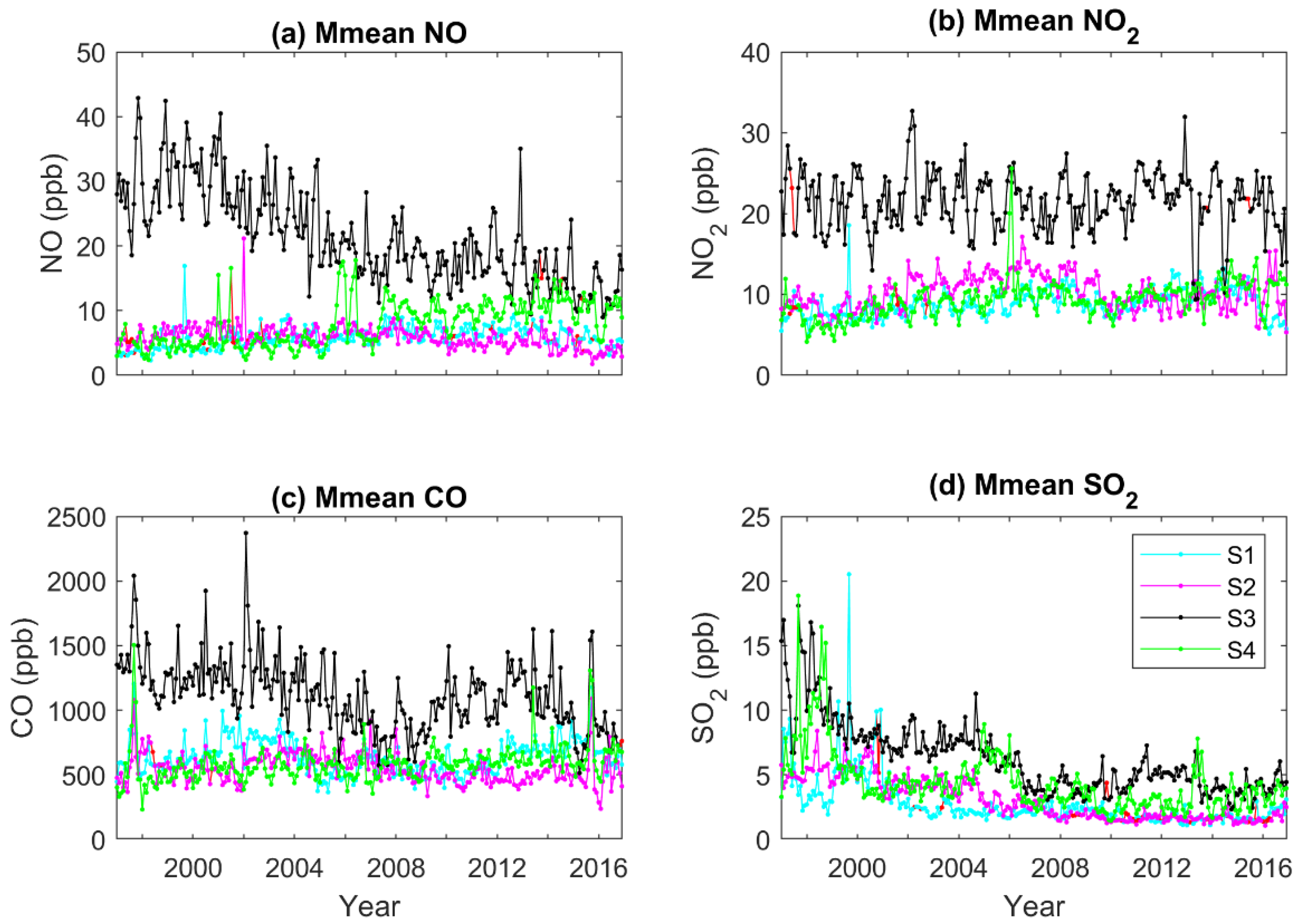
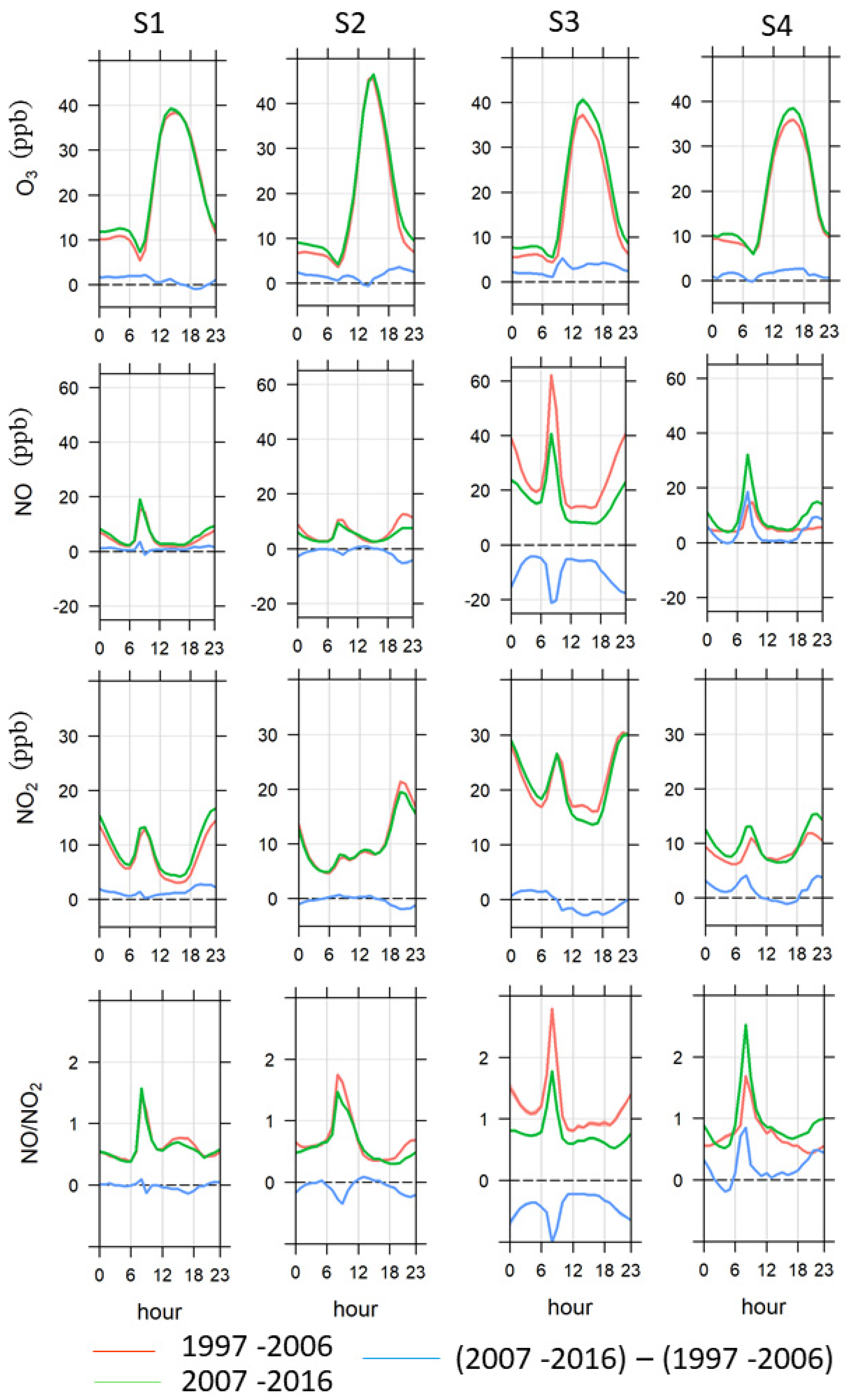
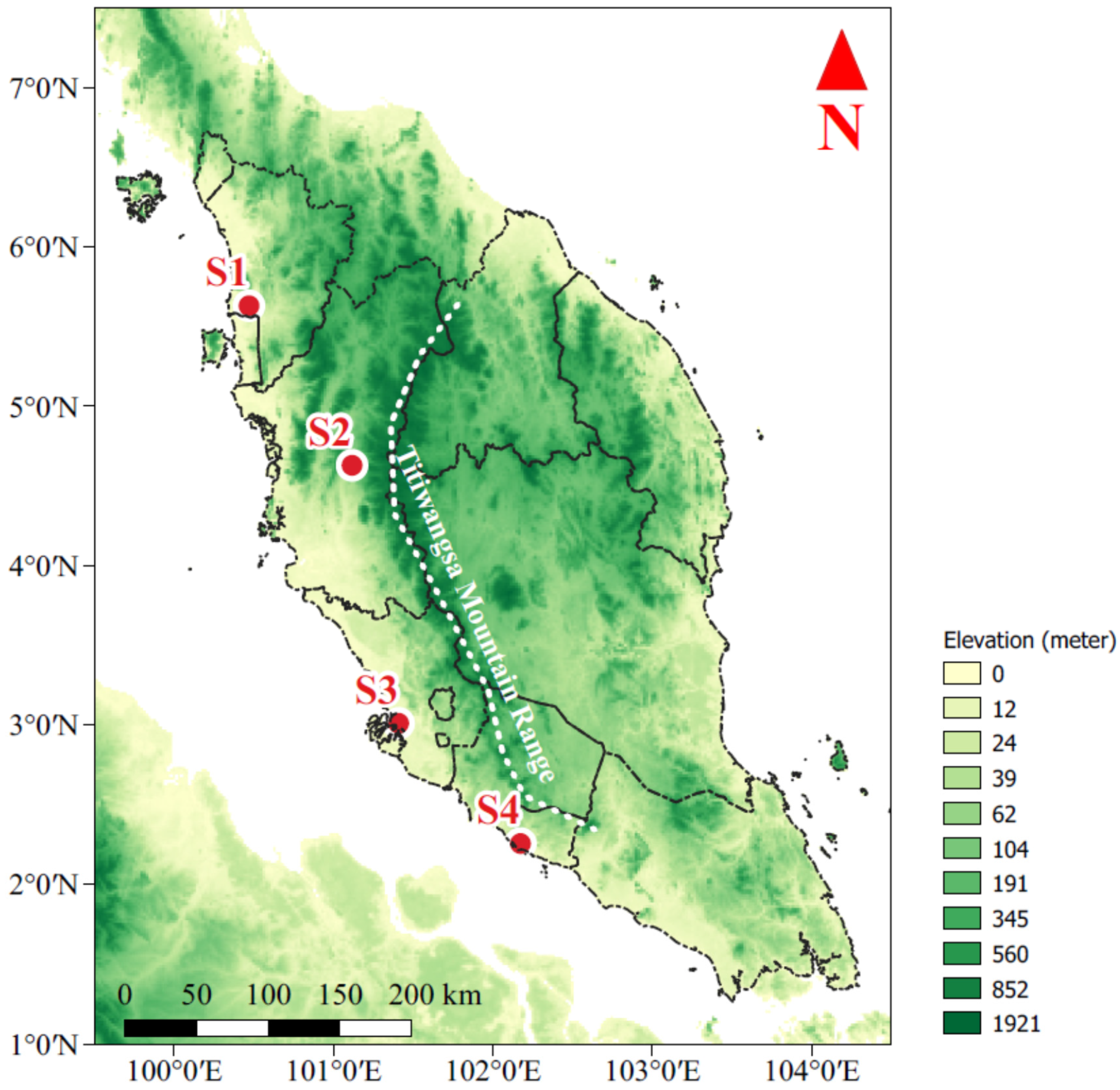
We examine the change in surface ozone and its precursor behavior over 20 years at four locations in western Peninsular Malaysia which have undergone urban-commercial development. Trend and correlation analyses were carried out on ozone and oxides of nitrogen observation data over the periods of 1997–2016 as well as the decadal intervals of 1997–2006 and 2007–2016. Diurnal variation composites for decadal intervals were also plotted. Significant increasing ozone concentrations were observed at all locations for the 20-year period, with a range between 0.09 and 0.21 ppb yr−1. The most urbanized location (S3) showed the highest ozone trend. Decadal intervals show that not all stations record significant increasing trends of ozone, with S1 recording decreasing ozone at a rate of −0.44 ppb yr−1 during the latter decade. Correlation analysis showed that only oxides of nitrogen ratios (NO/NO2) had significant inverse relationships with ozone at all stations corresponding to control of ozone by photostationary state reactions. The diurnal composites show that decadal difference in NO/NO2 is mostly influenced by change in nitric oxide concentrations.
Keywords: ozone precursors; long term ozone measurements; gaseous pollutant ratios ozone precursors; long term ozone measurements; gaseous pollutant ratios