Article

Caenorhabditis elegans Deficient in DOT-1.1 Exhibit Increases in H3K9me2 at Enhancer and Certain RNAi-Regulated Regions

Department of Biochemistry, BU Genome Science Institute, Boston University School of Medicine, Boston, MA 02118, USA
*
Author to whom correspondence should be addressed.
Present address: Department of Medical and Molecular Genetics, King’s College London, London SE1 9RT, UK.
Cells 2020, 9(8), 1846; https://doi.org/10.3390/cells9081846
Submission received: 15 May 2020 / Revised: 29 July 2020 / Accepted: 29 July 2020 / Published: 6 August 2020
(This article belongs to the Special Issue Heterochromatin Formation and Function)

Abstract

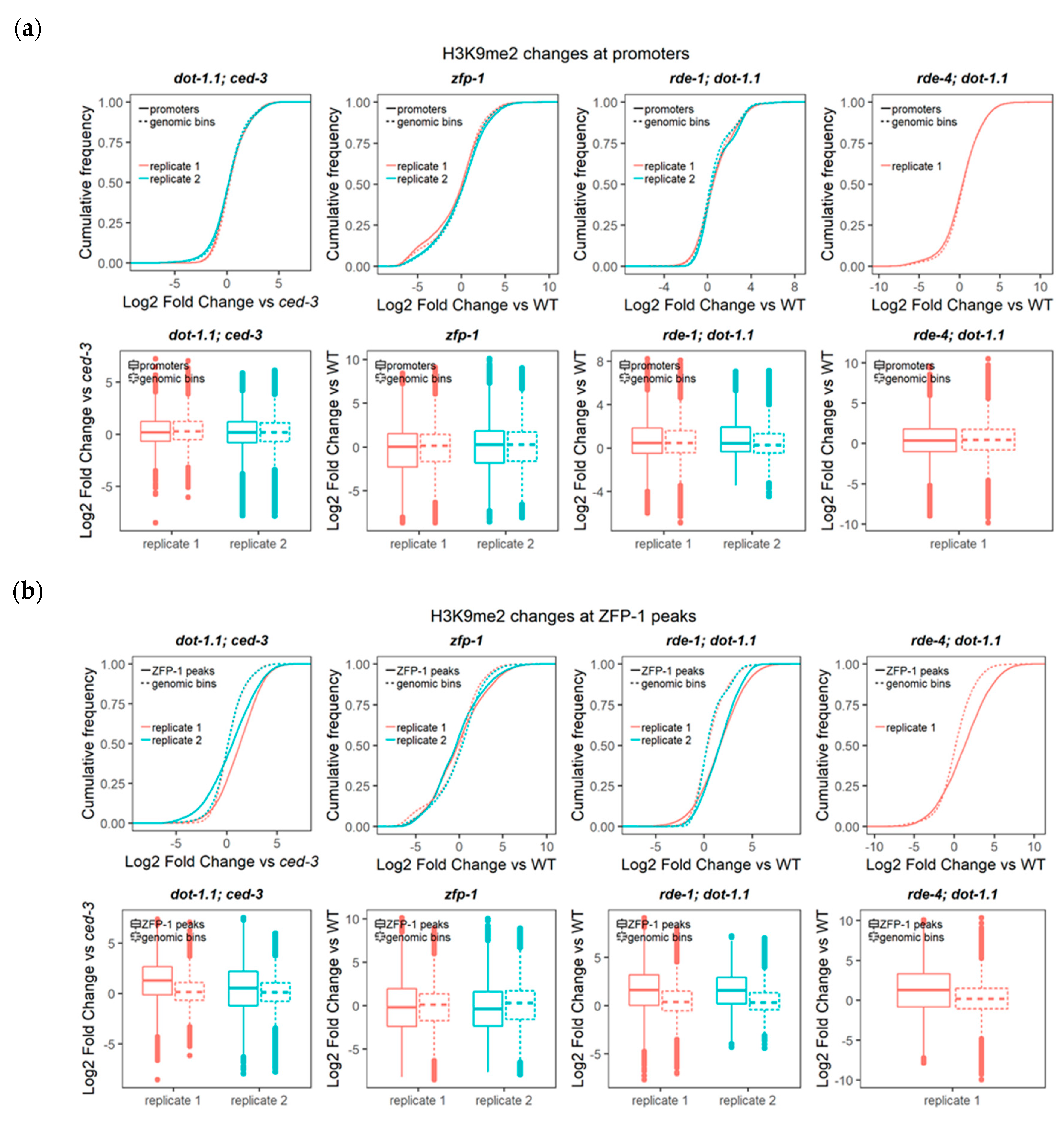
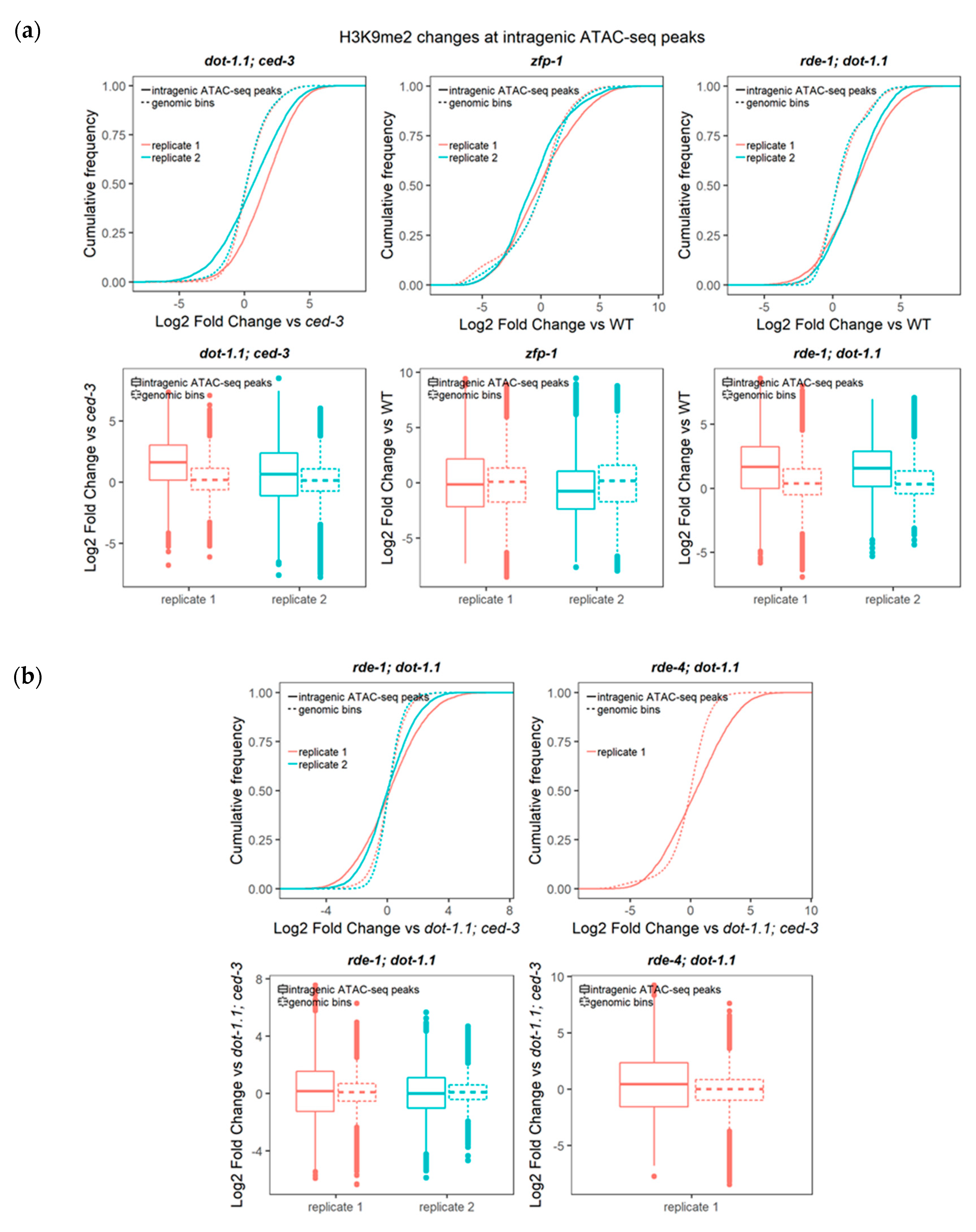
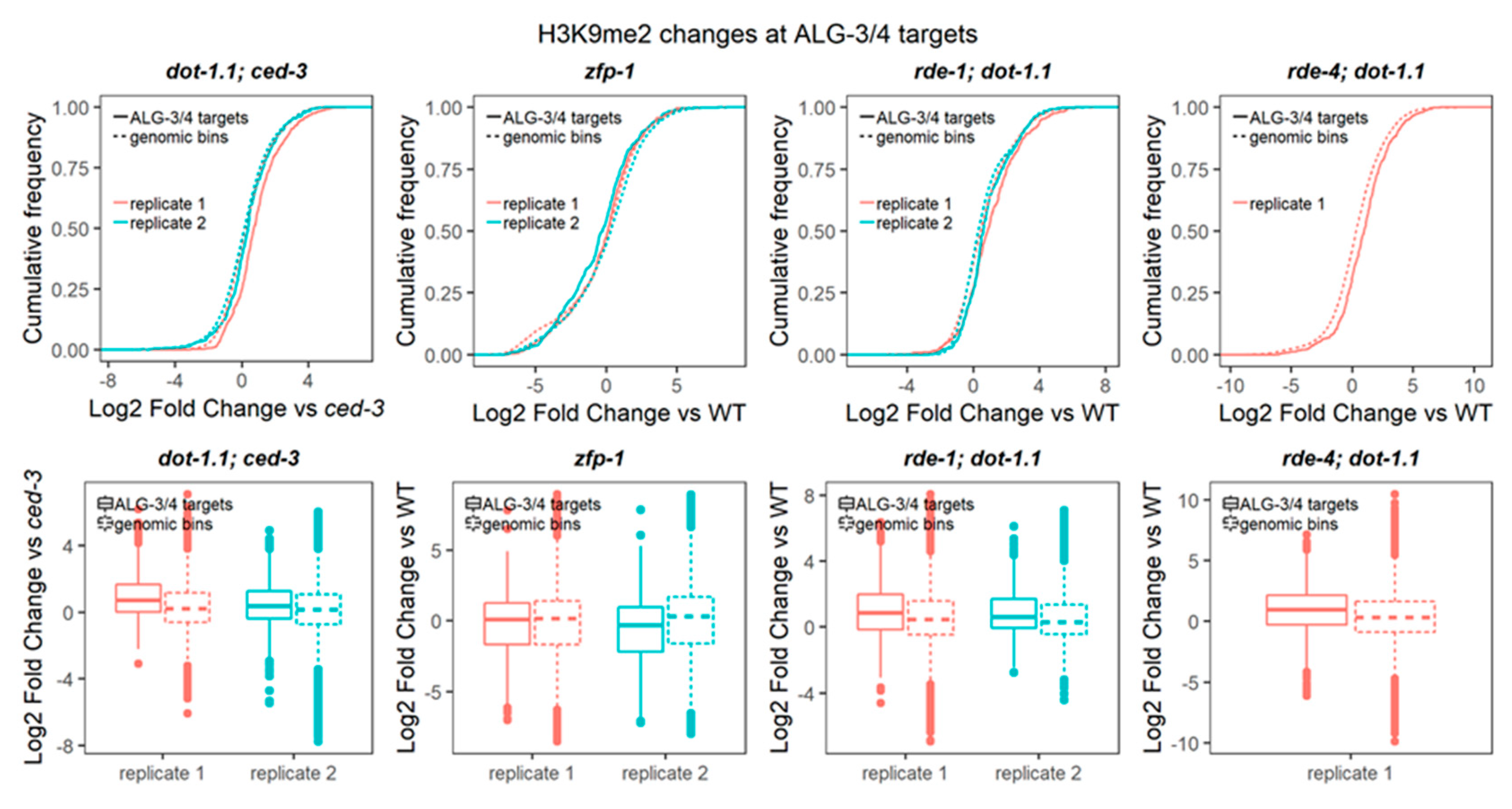
The methylation of histone H3 at lysine 79 is a feature of open chromatin. It is deposited by the conserved histone methyltransferase DOT1. Recently, DOT1 localization and H3K79 methylation (H3K79me) have been correlated with enhancers in C. elegans and mammalian cells. Since earlier research implicated H3K79me in preventing heterochromatin formation both in yeast and leukemic cells, we sought to inquire whether a H3K79me deficiency would lead to higher levels of heterochromatic histone modifications, specifically H3K9me2, at developmental enhancers in C. elegans. Therefore, we used H3K9me2 ChIP-seq to compare its abundance in control and dot-1.1 loss-of-function mutant worms, as well as in rde-4; dot-1.1 and rde-1; dot-1.1 double mutants. The rde-1 and rde-4 genes are components of the RNAi pathway in C. elegans, and RNAi is known to initiate H3K9 methylation in many organisms, including C. elegans. We have previously shown that dot-1.1(−) lethality is rescued by rde-1 and rde-4 loss-of-function. Here we found that H3K9me2 was elevated in enhancer, but not promoter, regions bound by the DOT-1.1/ZFP-1 complex in dot-1.1(−) worms. We also found increased H3K9me2 at genes targeted by the ALG-3/4-dependent small RNAs and repeat regions. Our results suggest that ectopic H3K9me2 in dot-1.1(−) could, in some cases, be induced by small RNAs.
Keywords: DOT-1.1/DOT1L; Caenorhabditis elegans; H3K79; H3K9; enhancer; chromatin; ChIP-seq DOT-1.1/DOT1L; Caenorhabditis elegans; H3K79; H3K9; enhancer; chromatin; ChIP-seq