


Abstract
Vpr is a lentiviral accessory protein that is expressed late during the infection cycle and is packaged in significant quantities into virus particles through a specific interaction with the P6 domain of the viral Gag precursor. Characterization of the physiologically relevant function(s) of Vpr has been hampered by the fact that in many cell lines, deletion of Vpr does not significantly affect viral fitness. However, Vpr is critical for virus replication in primary macrophages and for viral pathogenesis in vivo. It is generally accepted that Vpr does not have a specific enzymatic activity but functions as a molecular adapter to modulate viral or cellular processes for the benefit of the virus. Indeed, many Vpr interacting factors have been described by now, and the goal of this review is to summarize our current knowledge of cellular proteins targeted by Vpr.
1. Introduction
Primate lentiviruses are a group of retroviruses that cause slowly progressing, often incurable diseases. A characteristic feature of these viruses is the presence of accessory genes that vary in number from virus to virus (Figure 1). The least complex lentivirus is Equine Infectious Anemia Virus (EIAV), which aside from the prototypic gag, pol, and env genes, encodes only a single accessory gene, S2, that is not found in any of the other lentiviruses. Interestingly, however, the EIAV S2 gene product appears to be a functional homolog of the Nef protein encoded by human and simian lentiviruses in that it has the ability to counteract the antiviral activity of the host factors SERINC3 and SERINC5 [1]. At the other end of the complexity spectrum are the human and simian immunodeficiency viruses, which encode four accessory genes each, including vif, vpr, vpx, vpu, and nef. Of those, vif, vpr, and nef are encoded by almost all HIVs and SIVs, while vpu and vpx genes are found only in a limited set of these viruses (Figure 1). Some accessory open reading frames have also been described for the oldest integrations of lentiviruses. However, none of these open reading frames has been assigned to Vpr indicating that vpr is a more recently acquired accessory gene [2,3].
Figure 1.
Lentiviral genome organization. Lentiviral genomes share significant similarities with respect to the location of the structural gag, pol, and env genes. However, they differ in number and type of accessory proteins. All but EIAV encode a vif gene, and all primate lentiviruses (i.e., human and simian immunodeficiency viruses) encode vpr and nef genes, whereas vpu and vpx genes are limited to HIV-1 and HIV-2 and related viruses, respectively. HIV = Human Immunodeficiency Virus, SIV = Simian Immunodeficiency Virus, EIAV = Equine Infectious Anemia Virus, CAEV = Caprine Arthritis Encephalitis Virus, JDV = Jembrana Disease Virus, BIV = Bovine Immunodeficiency Virus.
The function of the various lentiviral accessory proteins has been extensively studied and it is now clear that none of them have enzymatic activity. Instead, all accessory proteins appear to function as molecular adaptors to connect or reprogram viral and cellular functions at least in part for the purpose of neutralizing innate host defense mechanisms (for review see [4]). While the research community has gained significant mechanistic insights into the functions of Vif, Vpu, Vpx, and Nef proteins, the role of Vpr in viral replication and pathogenesis has remained largely an enigma. Early on, Vpr was shown to enhance HIV-1 replication in T cells and was the first accessory protein to be found encapsidated into virions [5,6]. Indeed, while other HIV accessory proteins such as Vif and Nef seem to be packaged relatively nonspecifically without apparent interaction with structural viral proteins, studies on Vpr identified sequences in the P6 domain of the viral Gag precursor, as well as in Vpr, required for the specific packaging of Vpr into virions [7,8,9,10], which is facilitated by oligomerization [11,12,13]. Of note, Vpr is not packaged in equimolar amounts to Gag.
Indeed, quantitative analyses indicate that the ratio of Gag to HIV-1 Vpr is approximately 7:1 [14]. Assuming 5000 Gag molecules per virion, virus particles would contain about 700 Vpr molecules [5,14,15]. Other estimates for the amounts of HIV-1 Vpr packaged into virions are somewhat lower with approximately 275 molecules per virion [16]. HIV-2 was found to package even less Vpr (40–50 copies). However, these viruses additionally package large amounts of Vpx (2000–3000 copies) [17]. The specific packaging of Vpr through an interaction with the viral Gag precursor suggests a function for Vpr early during virus replication. However, trans-complementation studies did not reveal an effect of virus-associated Vpr in single-round infections of monocytes [18]. On the other hand, studies investigating the error rate of HIV-1 reverse transcriptase revealed a four-fold higher error rate in reverse transcripts in the absence of Vpr [19,20]. The reduced error rate in the presence of Vpr was dependent on it being packaged into viral particles, thus implying a role for virus-associated Vpr during the early phase of virus replication [19]. Furthermore, it was reported that Vpr inhibits the aminoacylation of tRNALys, thereby promoting tRNALys packaging into viral particles where it is required for the initiation of reverse transcription [21]. It is interesting that in mature virions, Vpr remains associated with the viral core despite the quantitative loss of p6 from core preparations [14]. Cellular localization studies indicate that in infected cells, Vpr primarily localizes to the nucleus suggesting a role of Vpr in later stages of virus replication [22,23,24]. Despite all of these insights, some of which have been reported as much as 30 years ago, the precise role of virion-associated Vpr remains unclear. Part of the challenge in characterizing the function of Vpr has been the fact that its contribution to viral replication in most commonly used experimental tissue culture systems such as immortalized CD4+ T cell lines (e.g., A3.01, Jurkat, H9, or CEM-SS) is generally modest (see Figure 2A–D) [22,23]. On the other hand, studies first performed on HIV-2 identified a severe restriction of vpr-defective virus for virus replication in macrophages [25], an observation that was confirmed later for HIV-1 as well [18,26,27]. Indeed, our own studies confirmed a severe restriction of vpr-defective HIV-1 AD8 in differentiated THP-1 cells and terminally differentiated primary human monocyte-derived macrophages (Figure 2E,F). Interestingly, while HIV-1 Vpr was found to be crucial for the infection of macrophages, it did not facilitate the infection of non-dividing CD4+ T cells [28].
Figure 2.
Replication of wild type (WT) and Vpr-defective (Vpr(−) HIV-1 in various cell types. A3.01, Jurkat, H9, and CEM-SS are human CD4+ T cell lines that support the replication of X4-tropic HIV-1 (e.g., NL4-3). THP-1 is a human monocytic cell line and MDM are primary human monocyte-derived macrophages. Terminally differentiated MDM and differentiated THP-1 cells are susceptible to infection by R5-tropic HIV-1 (e.g., AD8). NL43wt, NL43vpr(−), AD8wt, and AD8vpr(−) virus stocks were prepared by transfecting corresponding molecular clones into HEK293T cells. Virus-containing supernatants were harvested 24 h after transfection, filtered, and concentrated by centrifugation through a 20% sucrose cushion. Pelleted viruses were suspended in RPMI medium, adjusted to equal reverse transcriptase activity and used to infect the above cell lines. Culture supernatants were collected for 14 days in 2–3-day intervals and virus-associated reverse transcriptase activity was determined and plotted as a function of time. We found that wild type and Vpr-defective NL43 viruses replicated with very similar kinetics in all four T cell lines tested (panels A–D) suggesting that Vpr is not critical for virus replication in these cells. In contrast, replication of Vpr-defective AD8 virus in THP-1 cells and in MDM was severely restricted (panels E,F) demonstrating the importance of Vpr for replication in these cells.
Studies performed in non-human primates provide a glimpse into the in vivo importance of Vpr. One study reported that SIVmac lacking a translation initiation codon in vpr replicated with similar kinetics as vpr-positive virus in vitro in macaque lymphocyte cultures as well as the human CEMx174 cell line. However, upon infection of rhesus macaques, the same vpr-defective virus rapidly reverted back to a functional ATG in more than half of the infected animals [29]. Similarly, virus isolated from a lab worker who had been accidentally infected with the vpr-defective HIV-1 IIIB isolate revealed reversion of the vpr ATG [30]. These observations suggest that Vpr may be critical for virus replication in vivo under certain circumstances but is dispensable for replication in most tissue culture systems. Another study, however, found no significant differences between wt and Vpr-null SIVmac replication in vivo and progression to AIDS [31].
Although the mechanism by which Vpr contributes to viral pathogenesis remains unclear, viruses with mutations in vpr are found to be abundant in long-term non-progressor patients [32], further suggesting that Vpr expression is important for virus replication in vivo.
Only recently have we begun to understand the possible role(s) of Vpr for virus replication at a mechanistic level. It is now appreciated that Vpr can assemble a CRL4DCAF1 E3 ubiquitin ligase complex mediated by the WD40 protein VprBP (DCAF1) [33,34] to target multiple cellular proteins for proteasomal degradation [35,36,37,38,39,40,41,42,43,44,45,46,47,48,49,50,51,52]. Many but not all of the proteins targeted by Vpr are involved in cellular DNA repair and cell cycle arrest [53]. Nevertheless, we still have a long way to go to fully understand the functional properties of this highly conserved lentiviral protein. It is generally assumed that, like all other lentiviral accessory proteins, Vpr functions as an adaptor molecule to interact not only with the P6 region of the Gag precursor but also with host factors to either induce their degradation or to otherwise modulate their activities. Thus, the recent focus in the Vpr field has been the identification and characterization of host factors targeted by Vpr. The current review aims at summarizing our current knowledge on Vpr and its functional interaction with host factors. Since much of the work on Vpr has been done on HIV-1 Vpr, Vpr here stands for HIV-1 Vpr unless otherwise specified.
2. Mutational Characterization of Vpr
Vpr (Viral Protein R) is a protein with an apparent molecular mass of about 15 kDa [54]. Vpr has been reported to be post-translationally modified by phosphorylation at three serine residues (S79, S94, S96), a feature that may be important for its biological activity [55]. Two of these serine residues (S79, S96) are highly conserved. Overall, however, Vpr reveals a significant degree of sequence polymorphism (www.hiv.lanl.gov). As mentioned above, polymorphisms in Vpr may be functionally significant as one study identified a correlation between Vpr polymorphisms and long-term non-progressor phenotypes (LTNP) [32]. One has to keep in mind, however, that many of the sequences deposited in the Los Alamos database are derived from integrated, potentially defective, proviral genomes rather than from replicating viruses. Therefore, correlations of sequence polymorphisms with functional properties need to be taken with a grain of salt unless supported by experimental data. Indeed, introducing mutations into the vpr gene and analyzing its functional consequences in vitro has been a common approach to investigating the function of the Vpr protein. It is therefore, not surprising that over the years, numerous Vpr mutants were constructed and their functional properties studied. A summary of the reported mutations and their functional properties is listed in Table 1. It is more than likely that other mutants not shown in this table were constructed and tested but escaped our attention. For this, we apologize.
Table 1.
Vpr mutants and their functional phenotypes.
3. Role of Vpr in Nuclear Import of Viral Preintegration Complexes
In terms of virus replication, one of the earliest reported functions of Vpr was its role in nuclear import of lentiviral preintegration complexes presumably by facilitating its docking to nuclear pores [60,76,77,78,79,80,81,82,83,84,85]. Such a function occurs before Vpr can be synthesized in the infected cell and would thus have to be performed by Vpr that is associated with the incoming virus particle. As mentioned above, HIV-1 virions contain several hundred copies of Vpr [14], which are present in the nucleoprotein complex (also referred to as the preintegration complex) [76,86]. Upon fusion with the plasma membrane and partial uncoating, the preintegration complex moves along cellular microfilaments to the nuclear pore [87] and eventually is transported into the nucleus. Recent advances in imaging technologies allow for the tracking of single particles as they enter a cell. From such experiments, it was concluded that a substantial amount of Vpr that is present in viral particles is released from the preintegration complex shortly after fusion of the virus with the target cell and accumulates in the nucleus in a diffuse pattern [88]. There is evidence that nuclear import of the HIV-1 preintegration complex is a slow process, and that part of the uncoating occurs directly at the nuclear pore [89]. However, mutational analyses of Vpr suggest that Vpr targeting to the nuclear pore, while improving HIV-1 replication in macrophages, is not absolutely required for virus replication in these cells [56]. Thus, the precise role of Vpr in the nuclear uptake of viral preintegration complexes remains unclear. Indeed, there are a number of additional factors for which a role in nuclear import of preintegration complexes was reported. For instance, imaging studies demonstrated that aside from Vpr, HIV-1 CA and the nuclear pore component Nup358 are important for nuclear targeting of the preintegration complex [89,90]. Furthermore, transportin-3 (TNPO3) [91] and the nuclear pore complex component nucleoporin 153 (NUP153) [92,93,94] were shown to be important for infection by HIV-1. Yet other studies suggest a role for integrase [86,95] as well as a central polypurine tract-central termination sequence (cPPT-CTS) in nuclear entry [96]. Finally, two nuclear envelope proteins, SUN1 [97] and SUN2 [98,99,100], were shown to affect the nuclear import of HIV-1 preintegration complexes. It is fair to say that the nuclear uptake of HIV-1 preintegration complexes is a complex process that is still not fully understood in all its mechanistic details. As far as Vpr is concerned, there is evidence that it has functions above and beyond the support of nuclear entry. Indeed, while immunocytochemical analyses typically show an accumulation of Vpr in the nucleus, there are significant amounts of Vpr in the cytoplasm. In fact, mutation of the nuclear export signal in Vpr demonstrated that nuclear export of Vpr is required for replication in macrophages [101] although it is not required for p6-mediated packaging into virions [65].
4. Vpr and Transcriptional Regulation
Integrated HIV-1 proviruses carry long terminal repeats (LTRs) at both ends, which have binding sites for several host transcription factors [102]. Most prominent are two recognition sites for NFκB and three binding sites for Sp1 all of which are located in the LTR region upstream of the transcription start site [103]. NFκB is a cellular transcription factor with broad effects on transcriptional regulation of cellular genes (reviewed in [104]). These include TRAF1, TRAF2, a cellular inhibitor of apoptosis (c-IAP)1, c-IAP2, Mcl-1, IEX-1L, Bcl-xL, and A1/Bfl-1, all of which are able to inhibit activation of caspases at various steps in the caspase pathway ([105] and references therein). Typically, NFκB is expressed in an inactive cytoplasmic form that consists of the p50/p65 heterodimeric NFκB complex and the 37 kDa inhibitor IκB, which prevents nuclear translocation of the p50/p65 complex. Phosphorylation of IκB at two conserved serine residues through upstream signal-induced kinases leads to proteasomal degradation of IκB by the SCFTrCP complex and results in the translocation of NFκB to the nucleus and transcriptional activation of genes carrying NFκB binding sites [106,107,108]. Indeed, inhibition of NFκB activation by HIV-1 Vpu, which sequesters TrCP, thereby interfering with the TrCP-dependent degradation of IκB, was shown to drive HIV-infected cells into apoptosis [105,109]. The transcription factor Sp1 is considered a basal transcription factor whose main role appears to be the regulation of housekeeping genes. Interestingly, Sp1 has the ability to recruit transcription machinery in the absence of a TATA box [110]. With regard to HIV-1, both NFκB and Sp1 can act as transcriptional activators [111,112]. HIV-1 transcriptional activation through Sp1 was reported to involve a leucine-zipper motif in Vpr, which stabilizes the binding of multiple Sp1 transcription factors to the three Sp1 sites on the HIV-1 LTR [113,114]. This mode of action implies that Vpr may regulate not only transcription from the HIV LTR but impact expression of other genes that are under the control of Sp1, which indeed has been reported [115]. Transcriptional activation via NFκB was shown to be mediated through the p300 transcriptional co-activator, which promotes cooperative interactions between the Rel A subunit of NFκB and cyclin B1.Cdc2 [116]. In addition, HIV-1 Vpr was shown to stimulate the NFkB and AP-1 signaling through an upstream signaling pathway involving transforming growth factor-β-activated kinase 1 (TAK1) [73]. Vpr induces phosphorylation of TAK1, which results in TAK1 activation and ultimately NFκB activation [73]. However, Vpr was also shown to be able to act as a transcriptional repressor. For instance, Vpr was found to inhibit the NFκB pathway by upregulating IκB expression [117]. Furthermore, SIVcol and SIVolc Vpr were found to suppress NF-κB activation in a DCAF1-independent manner, leading to decreased production of IFNs in later stages of infection [118]. Other genes whose expression is regulated by Vpr are IFNA1 [119,120], glucocorticoid receptor [121,122], as well as IL-6 and IL-10 [123]. Finally, Vpr was implicated in the regulation of HIV latency as serum Vpr was able to activate virus expression in resting PBMC from HIV-infected individuals [124,125]. In addition, a recent study reports that CTIP2, a cellular factor associated with chromatin-modifying enzymes, contributes to HIV-1 gene silencing in latently infected cells but is degraded by Vpr via a Cul4A-DDB1-DCAF1 ubiquitin ligase complex [126]. Thus, Vpr may contribute to the reversal of HIV-1 latency in latently infected cells. Whether Vpr acts as a transcriptional activator or repressor may ultimately depend on the cellular milieu and the relative levels of Vpr-interacting activating or repressing factors.
5. Vpr Effect on Env Stability in Macrophages
A recent study investigating the role of Vpr in terminally differentiated macrophages found that, consistent with a previous report [18], Vpr had no effect on the first round of infection but significantly impacted de novo virus production following the initial infection [120]. In fact, it was noted that Vpr-deficient virions contained significantly lower amounts of Env protein, which was attributed to increased lysosomal degradation of Env [120]. A subsequent study found that Vpr increases Env expression in dendritic cells and CEM.NKR cells [127]. However, these authors suggest that Env degradation in the absence of Vpr occurs via endoplasmic reticulum-associated protein degradation (ERAD). Thus, while there is a consensus about the Env-stabilizing effect of Vpr, the mechanism of Env destabilization/degradation in the absence of Vpr remains under debate. And, of course, the mechanism by which Vpr affects Env expression remains unclear as well. One hypothesis is that macrophages express a cell type-specific restriction factor that targets newly synthesized Env [120]. Indeed, a recent study that was published as a non-peer-reviewed preprint in bioRxiv implicates mannose receptor (MR) as the macrophage-specific host factor [128]. MR expression was previously shown to be downmodulated in HIV-infected macrophages to counteract a BST2-like activity that interfered with the detachment of newly synthesized particles from the cell surface [129]. While previous studies implicated Nef and Tat in the downmodulation of MR [130,131], the most recent study reports an involvement of Vpr. Indeed, Vpr appeared to be sufficient for the efficient inhibition of MR expression in productively infected macrophages [128]. Surprisingly, silencing of MR reduced the dependence of Env expression on Vpr. A proposed model suggests that the interaction of MR with Env is detrimental to Env stability, although the underlying mechanism remains to be investigated. Previous studies on the interaction of Env with CD4 found that such complexes are actually highly stable and trapped in the ER [132]. Thus, it is not immediately obvious why the interaction of Env with MR should lead to the degradation of Env. Finally, transient expression of MR in 293T cells does not induce Vpr-dependent changes in Env expression (our own unpublished data), suggesting that there may be additional factors involved in the Vpr-dependent stabilization of Env in macrophages. Indeed, as discussed below, Tet2 was implicated in Vpr-mediated enhancement of HIV-1 Env processing and viral infectivity in macrophages [133].
6. Vpr-Induced Cell Cycle Arrest and Apoptosis.
Vpr causes G2/M arrest in cycling cells, but the underlying mechanism, as well as the functional importance to the virus, remain controversial [17,67,119,134,135,136,137,138,139,140,141,142,143,144,145]. Indeed, the ability to cause cell cycle arrest is conserved among various primate Vprs [78,146]. Yet, its benefit(s) to HIV replication has remained unclear. The reason is, at least in part, that many cell types, in which Vpr induces G2/M arrest, do not exhibit a significant replication defect in the absence of Vpr. Also, the ability of Vpr to induce G2/M arrest is cell-type specific. For instance, SIVAGM and SIVSYK Vpr are able to induce G2/M arrest in African green monkey cells but not in human cells whereas HIV-1, HIV-2, and SIVSM Vpr proteins function in both simian and human cell types [147]. Nevertheless, it has been reported that cells in G0 and early G1 phase are not permissive to HIV replication, whereas cells in the G2 phase are permissive [148]. This is true not only for terminally differentiated macrophages, which rarely divide [149] but also for cells that were arrested in G2 by gamma-irradiation [148]. Such cells are able to continue protein synthesis but cannot proceed into mitosis [148]. One cellular target of Vpr that presumably is involved in cell cycle progression is human Vpr-interacting protein (hVIP), also referred to as Mov34. Mov34 was identified more than twenty years ago as a Vpr interacting factor through a yeast two-hybrid screen [150]. However, follow-up studies examining its biological function are scarce and not recent [151,152]. Mov34 is a member of the eIF3 family, a large multimeric complex that regulates transcriptional events and is essential for G1/S and G2/M phase progression through the cell cycle [152]. Cell cycle progression is regulated by cyclin-dependent kinases (CDK) whose expression level varies throughout the cell cycle and whose activity is controlled by interaction with cyclins and by phosphorylation/dephosphorylation of specific residues in the respective CDK (reviewed in [153]). Progression of cells from the G2 to M phase requires the interaction of the CDK p34cdc2 with cyclin B. Cyclin B levels are high late in the G2 phase leading to dephosphorylation of inhibitory residues on p34cdc2, thus triggering progression to M phase. The Vpr-induced G2/M arrest was shown to involve a reduction in p34cdc2 kinase activity, which was associated with increased phosphorylation at two inhibitory phosphorylation sites on p34cdc2 [154]. The same study also showed that mutants of Vpr that were defective for inducing G2/M arrest failed to inhibit p34cdc2/cyclin B kinase activity. Conversely, the expression of constitutively active p34cdc2 mutants inhibited Vpr-induced G2/M arrest [154]. How exactly Vpr accomplishes this task remains unclear. Interestingly, the induction of both cell cycle G2/M arrest and apoptosis by virion-associated Vpr requires viral entry but not viral replication, since reverse transcriptase and protease inhibitor treatments do not prevent these Vpr effects [71,155].
More recent studies suggest that G2/M arrest encompasses factors involved in DNA damage control [35,36,37,38,63,156,157]. In support of that, silencing of DCAF1 or expression of Vpr mutants unable to bind DCAF1, abolished G2/M arrest [35,36,37,38,63]. The requirement of DCAF1 for Vpr-induced G2/M arrest suggests that it involves the proteasomal degradation of one or more cellular factors. Vpr also induces host-cell apoptosis, and this effect has been linked to cell-cycle arrest [158] but was also reported to be caused by direct effects of Vpr on mitochondrial membrane permeability [159]. Induction of apoptosis does not require de novo Vpr synthesis [160]. The effect of Vpr on apoptosis is inhibited in cells expressing high levels of the host factor gelsolin, which competes with Vpr for binding to the voltage-dependent anion channel (VDAC) [161]. Finally, it has been shown that Vpr induces autophagy in the infected CD4+ T cells. Experiments performed on THP-1 cells indicate that autophagy might play a role in the cellular response to virus infection in macrophages as well [162].
7. Vpr-Induced Protein Degradation
Genetic studies designed to measure the in vivo mutation rate of HIV-1 revealed that the mutation rate in the absence of Vpr was up to four times higher than in Vpr expressing virus [19]. This effect was attributed to the interaction of Vpr with DNA repair enzymes uracil DNA glycosylase (UNG2 [163,164]) and the UV excision repair enzyme RAD23A [121]. The human UNG gene is expressed by alternative splicing as a mitochondrial form (UNG1) and a nuclear form (UNG2) [165]. Nuclear UNG2, as well as the related uracil deglycosylase SMUG1, were subsequently shown to be degraded by Vpr via a proteasomal degradation pathway [66]. In the absence of Vpr, both UNG2 and SMUG1 are packaged into viral particles [66,166] and it was argued that excision of uracil from HIV-1 cDNA, which can be created by APOBEC3G-mediated deamination of cytosine residues or by mis- incorporation of dUTP during reverse transcription could lead to fragmentation of the viral genome, thereby exacerbating the antiviral effect of APOBEC3G [66].
Thus, preventing virion incorporation of UNG2 or SMUG1 through Vpr-mediated proteasomal degradation could be beneficial to viral fitness, especially under conditions of low cellular dNTP pools that could promote misincorporation of dUTP. In the course of studying effects of Vpr on the cell cycle, a Vpr-associated E3 ubiquitin ligase complex was identified consisting of Cul4, DDB1 (damaged DNA binding protein 1), DDA1 (DDB1 and DET1 associated 1), and VprBP (also referred to as DCAF1) [35]. The formation of this complex was required for Vpr-induced G2/M arrest. Furthermore, recombinant UNG2 was found to specifically interact with Vpr to form a heterotrimeric complex with DCAF1 in vitro as well as in vivo [34]. Recently, the crystal structure of the DDB1-DCAF1-Vpr-UNG2 complex was solved [41]. The structure of the complex is schematically shown in Figure 3. Structural analysis of this complex revealed that Vpr binds DCAF1 in a manner similar to Vpx despite limited sequence similarity, i.e., primarily through the N-terminal tail and helix α3 [41]. The same study also revealed that Vpr uses structural mimicry to bind UNG2 through its DNA binding domain. Thus, like Vif, Vpu, and Vpx, the HIV-1 Vpr protein has evolved as an adaptor molecule that functions by connecting a cellular E3 ubiquitin ligase complex to cellular substrates resulting in their ubiquitination and subsequent proteasomal degradation.
Figure 3.
Schematic structure of the CRL4DCAF1 E3 ubiquitin ligase complex assembled by Vpr for the ubiquitination and subsequent degradation of Vpr-interacting substrates (X). Binding of cellular factor X (e.g., HLTF, Exo1, Mus81, ZIP, Tet2, and other thus unidentified substrates) to Vpr induces its poly-ubiquitination through the Vpr-associated E3 ubiquitin ligase complex, which marks these proteins for subsequent degradation by the cellular proteasome machinery.
8. Proteins Targeted by Vpr
Early studies on Vpr relied on yeast-two-hybrid assays [167] or phage display screening [168] for the identification of Vpr-interacting cellular proteins such as UNG2 [169]. Technological advances have made it possible to study changes in whole cellular proteomes in response to viral infection or other external factors. Indeed, a recent study compared total proteomes of uninfected CEM-T4 T cells to cells infected with WT or Vpr-defective HIV-1 [53]. The authors observed depletion of previously reported Vpr targets, including HLTF [39,40], ZGPAT [46], MCM10 [137], UNG [66], TET2 [43], and MUS81 and EME1 [42,119]. Furthermore, they observed the depletion of DCAF1. DCAF1 is a component of the E3 ubiquitin ligase complex used by Vpr to degrade cellular targets and had been previously identified as a target of Vpr [170]. In addition to these known targets of Vpr, the study identified almost 2000 other cellular proteins whose expression was affected by HIV-1 in the presence of Vpr [53]. Some of the Vpr interacting factors with promising functions are listed in Table 2. Of note, this global effect of HIV-1 Vpr was not observed for HIV-2 Vpr. Surprisingly, the number of proteins downmodulated following infection with Vpr-defective virus was very small. Also, a DCAF1 binding defective Vpr mutant (Q65R) was almost completely inactive indicating that regulation of cellular proteins by Vpr requires the assembly of the DCAF1/DDB1/Cul4 E3 ubiquitin ligase complex. Overall, Vpr was necessary and sufficient to cause significant depletion of at least 302 proteins and upregulation of 413 [53]. Of the 302 proteins depleted by Vpr, more than 80% resided in the nucleus. Interestingly, of the Vpr targets known to be involved in G2/M arrest (i.e., MCM10, MUS81, and EME1), only depletion of MCM10 correlated with G2/M arrest in CEM-T4 cells in the proteomics study [53]. However, the study identified three additional factors (SMN1, CDCA2, and ZNF267) whose depletion phenocopied Vpr-induced cell cycle arrest. One possible weakness of this study is that it was done in a cell-type that does not require Vpr for efficient virus replication [171]. Thus, only time will tell, which (if any) of the Vpr-responsive factors identified above is the true target that needs to be depleted by Vpr to allow for replication in terminally differentiated macrophages.
Table 2.
Table of Vpr interacting partners.
9. Does Vpr Deplete HDAC to Sustain Active LTR-Driven Virus Production?
As noted in the introduction, Vpr was implicated in the regulation of HIV latency based on the fact that serum Vpr was able to activate virus expression from resting PBMC from HIV-infected individuals [124,125] as well as the observation that CTIP2, a cellular factor associated with chromatin-modifying enzymes, is degraded by Vpr [126]. Intriguingly, Vpr was found to also deplete class I histone deacetylases (HDACs) on chromatin [45,172]. Histone deacetylases are enzymes involved in the regulation of gene expression. Histone acetylation is normally found on actively transcribed genes (reviewed in [173]). Indeed, hyperacetylation of histones on the HIV-1 LTR was found to be correlated with the active transcription of HIV-1 provirus [174], whereas hypoacetylation of those histones was correlated with HIV-1 latency [175]. Importantly, inhibition of HDACs by HDAC inhibitors was found to reactivate latent HIV-1 [176]. This observation has stimulated efforts to employ HDAC inhibitors as a means to purge the viral reservoir [177]. As far as natural reactivation of HIV-1 from latency is concerned, Vpr was found to deplete all members of the class 1 HDAC family without significantly affecting the other HDAC classes [45,172]. However, even in a Vpr overexpression system, depletion of HDAC I proteins was never complete suggesting a presence of a thus far undefined regulatory mechanism. Nevertheless, these results suggest that Vpr plays a role in sustaining an active LTR and maintain active virus production in infected macrophages [45].
10. Vpr Activates SLX4 to Promote Cell Cycle Arrest and May Help the Virus Escape from Immune Sensing
SLX4 is a protein involved in DNA repair. Its proposed function is to process DNA intermediates and to act in crosslink repair through interaction with SLX1, XPF-ERCC1, and Mus81-EME1 [178,179]. The SLX4 complex is a SUMO E3 ligase that SUMOylates SLX4 itself and the XPF subunit of the DNA repair/recombination XPF-ERCC1 endonuclease [180]. Binding of Vpr was shown to cause premature activation of the SLX4 complex and to promote cell cycle arrest [119]. Knockdown of any component of the SLX4complex resulted in the failure of Vpr to cause cell cycle arrest [42]. It is important to note that Vpr-induced activation of the SLX4 complex is not a consequence of G2/M arrest but precedes cell cycle arrest [181]. Cell cycle arrest involves Vpr-induced activation of the DNA damage surveillance proteins ataxia-telangiectasia-mutated kinase (ATM) and ATM and Rad3-related kinase (ATR) that detect DNA lesions and trigger downstream signaling cascades [182,183]. Interestingly, the interaction of Vpr with SLX4 does not result in proteasomal degradation of SLX4 but leads to ubiquitination of Mus81 and hyperphosphorylation of EME1, which may result in the digestion of viral DNA and help to escape immune sensing [181,184]. It is unclear how SLX4 might discriminate intact viral DNA that could lead to productive infection from defective DNA that needs to be destroyed. One hypothesis states that only short DNAs generated by reverse transcription errors may be sensitive to nucleases [181]. While the potential contribution of Vpr towards escape from immune sensing is an important function, the effects of Vpr on SLX4 are unlikely to explain the reported restriction of Vpr-defective HIV-1 in differentiated macrophages and the rather subtle restriction reported for T cell lines.
11. Vpr-Induced Degradation of the DNA Repair Endonuclease Mus81 Is Genetically Separable from Vpr-Induced Cell Cycle Arrest. What Is the Benefit for HIV-1?
Mus81 is a DNA repair endonuclease that plays an essential role in the completion of homologous recombination during DNA repair events. Mus81 facilitates rapid DNA replication and mediates cellular responses to exogenous replication stress [185]. Mus81 forms a complex with its cofactor EME1, which binds SLX4 and SLX1 to form a four-subunit complex [42]. It was reported that Vpr directly binds to SLX4 and induces an untimely activation of the SLX4-associated Mus81-Eme1 complex through PLK1-mediated phosphorylation of EME1 [119]. Vpr caused a DCAF1-dependent decrease in Mus81 levels while levels of SLX4 seemed to be unaffected by binding to Vpr [119]. However, degradation of Mus81 is probably independent of the Vpr function to cause G2/M arrest. In fact, Mus81 degradation is genetically separable from Vpr’s ability to induce G2/M arrest [52].
12. Vpr-Induced Degradation of HLTF Is Genetically Separable from Vpr-Induced Cell Cycle Arrest
Helicase-like transcription factor (HLTF) HLTF is the human ortholog of yeast Rad5 and has roles in transcription, chromatin remodeling, DNA damage repair, and tumor suppression (reviewed in [186]). In conjunction with SHPRH, it coordinates different forms of postreplication DNA repair [187]. It also plays a role in the G2/M transition and apoptosis in brain cells [188]. Two recent studies independently identified HLTF as a target of HIV-1 Vpr [39,40]. In one study, a proteomics approach was used to identify novel Vpr-interacting proteins [40]. The second study employed stable isotope labeling by amino acids (SILAC). This analysis identified HLTF as the only protein among 2000 analyzed, whose expression in Vpr-expressing cells was significantly reduced [39]. Both studies confirmed that Vpr caused degradation of HLTF through a DCAF1-dependent proteasomal pathway. Because of its known role in regulating G2/M transition, it was conceivable that Vpr affects HLTF to exploit its function in the cell cycle arrest via the interaction with SLX4. However, both studies found that Vpr-mediated degradation of HLTF is independent of G2/M arrest but appears to precede this arrest and is genetically separable from G2/M arrest. Interestingly, HIV-2 Vpr was unable to induce degradation of HLTF [40]. Both in HIV-1 infected T cells, and in primary macrophages, Vpr was found to down-regulate HLTF [39]. However, siRNA-mediated silencing of HLTF in macrophages did not alleviate the Vpr restriction of these cells [39], suggesting that HLTF is not the (only) factor whose expression in macrophages restricts the replication of Vpr-defective HIV-1. Further evidence that HLTF is not solely responsible for the restriction of Vpr-defective virus in macrophages comes from the observation that replication of HIV-2 in human macrophages is Vpr-dependent, yet, HIV-2 Vpr does not deplete HLTF. More recently, it was reported that Vpr counteracts HLTF-mediated restriction of HIV-1 infection in T cells [189]. The investigators used a pairwise replication competition assay (PRCA) rather than the usual parallel replication studies to measure the relative replication fitness of WT versus Vpr-defective virus in Jurkat cells. Under such conditions, HLTF was found to restrict the replication of Vpr-defective virus. However, silencing of HLTF and ExoI, either alone or in combination, only partially reversed the Vpr-defect suggesting that inhibition of replication of Vpr-defective HIV-1 in terminally differentiated macrophages likely involves additional factors and may in fact be a multifactorial process.
13. Vpr Induces Degradation of Exo1 but the Benefits to Viral Replication Are Unclear
Exo1 is a member of the Rad2 family of nucleases that in vitro was shown to possess 5′->3′ exonuclease and 5′-flap endonuclease activities (for review see [190]). Exo1 plays a role in homologous recombination during meiosis. It also plays a role in nucleotide excision repair. Exo1 was identified as a target of Vpr in the course of a focused screen of postreplication DNA repair proteins [191]. Vpr was shown to induce degradation of Exo1 in a proteasome-dependent but cell cycle-independent manner. Interestingly, si-RNA-mediated depletion of Exo1 did not phenocopy the Vpr-induced cell-cycle arrest, suggesting that Exo1 depletion by Vpr does not fully explain the Vpr-induced G2/M cell cycle arrest [191]. As discussed in the section on HLTF above, silencing of HLTF and ExoI, either alone or in combination, only partially reversed the Vpr-defect suggesting that inhibition of replication of Vpr-defective HIV-1 in terminally differentiated macrophages may involve additional factors [189].
14. Vpr Induces Degradation of the Transcriptional Repressor ZIP: What Is in It for HIV-1?
ZIP, also known as ZGPAT, is a transcriptional repressor that was recently identified as a factor repressing the EGFR oncogene expression and suppressing breast carcinogenesis [192]. ZIP functions by recruiting the nucleosome remodeling and deacetylase complex. A splice variant, sZIP, was shown to antagonize the repressor function of ZIP [193]. Both ZIP and sZIP were recently identified as Vpr interacting proteins [46]. In fact, both proteins were found to be degraded by Vpr in a DCAF1-dependent manner in transiently transfected HeLa cells. Expression of ZIP or sZIP does not appear to be limited to macrophages, and it does not appear to have a role in Vpr-mediated G2/M arrest. Thus, the functional relevance of ZIP or sZIP degradation by Vpr is currently unclear.
15. Vpr-Induced Degradation of APOBEC3G: Vif is Not Impressed
APOBEC3G is a cytidine deaminase with potent antiviral activity [194]. APOBEC3G was identified as the major target of Vif, which induces its proteasomal degradation thus enabling HIV-1 to replicate in APOBEC3G-expressing cells [195]. In the absence of Vif, APOBEC3G is packaged into virus particles and can cause deamination-induced mutations in the viral genome during reverse transcription. Deamination of cytidine residues produces deoxyuridine, which can be read as threonine residues during second-strand synthesis, resulting in G to A mutations in the plus strand. In addition, the presence of deoxyuridine residues in viral cDNA may trigger cellular DNA repair mechanisms that could lead to fragmentation of the viral genome. The presence of Vif during particle production effectively blocks the encapsidation of APOBEC3G both by proteasomal degradation as well as through degradation-independent mechanisms [194]. More recently, Vpr was implicated in the proteasomal degradation of APOBEC3G [47]. Depletion of APOBEC3G by Vpr required DCAF1 but was only observed in transient transfection studies. Indeed, the infection of A3.01 cells, which express sub-lethal levels of APOBEC3G, allows for replication of Vif-defective virus expressing Vpr [196]. However, only Vif-expressing WT virus but not Vif-defective virus reduced levels of endogenous APOBEC3G during the course of infection (our own unpublished data). These results suggest that the effect of Vpr on APOBEC3G expression under physiological conditions is very limited.
16. Vpr Degrades Tet-2 to Promote Virus Production by Increasing Expression of IL-6
DNA can be modified by methylation of cytosine (resulting in 5-methylcytosine (5mC). 5-mC methylation is a type of epigenetic modification known to affect cellular transcription, X-chromosome inactivation, and genomic imprinting and was until recently thought to be irreversible [197]. The identification of Tet (Ten eleven translocation) proteins led to the realization that Tet2 is a member of the family of DNA dioxygenases, which catalyze iterative oxidation of 5-mC, eventually leading to demethylation of cytosine [198]. Inactivation of TET enzymes was shown to cause developmental defects and hematopoietic malignancies [199]. Interestingly, regulation of Tet2 activity involves an interaction with DCAF1 that in normal cells, induces mono-ubiquitination of Tet2 and promotes Tet2 binding to chromatin [199]. In contrast, expression of Vpr in HIV-infected cells induces poly-ubiquitination of Tet 2, resulting in its proteasomal degradation [43]. This leads to increased HIV-1 replication through a mechanism that is unrelated to Vpr-induced G2/M cell cycle arrest [43]. Instead, Tet2 was found to actively repress IL-6 expression by recruiting HDAC to the IL-6 promoter [200]. Vpr-mediated degradation of Tet was shown to increase the production of IL-6 in HIV-infected macrophages which was associated with increased virus production, as shown by the sensitivity of this effect to IL-6-neutralizing antibodies [43]. In addition to its effect on IL-6 expression, Tet2 was shown to affect interferon-induced transmembrane protein 3 (IFITM3) expression by reducing the demethylation of the IFITM3 promoter [133]. Indeed, it was shown that macrophages constitutively express IFITM3 in a Tet2-dependent manner. IFITM3 together with IFITM2 was previously reported to restrict HIV-1 infection by antagonizing the HIV-1 Env glycoprotein processing and virion incorporation [201]. Expression of Vpr was shown to enhance Env processing and packaging by degrading Tet2, which in turn reduces IFITM3 expression. Thus, reduced IFTIM3 expression enhanced Env processing and virion infectivity and sustained IL-6 expression to increase HIV-1 replication.
17. Conclusions and Outlook
Vpr is a viral accessory protein that plays a critical role in virus replication in vivo. Characterization of the physiologically relevant function(s) of Vpr has been hampered by the lack of convenient cell systems in which to test Vpr phenotypes. Nevertheless, many novel Vpr interacting factors were described over the course of recent years. However, for most of these factors, their precise mode of action relevant to Vpr function remains incompletely understood. It will be important to assess the physiological relevance of all the Vpr targets in relevant cell types. Despite recent progress in gene silencing and gene knockout techniques, working with primary human cells, and in particular, MDM, remains tedious. Thus, a focus of future research will have to be to improve technical procedures for working with MDM. In addition, systematic screening for additional Vpr interacting factors, especially proteins expressed primarily in macrophages, will be required to further our understanding of the role of Vpr in the virus life cycle.
Funding
This work was supported by the Intramural Research Program of the NIH, NIAID (1 Z01 AI000669).
Acknowledgments
We thank Sandra Kao, Eri Miyagi, Hideki Saito, and Damien Ferhadian for critically reading the manuscript.
Conflicts of Interest
The authors declare no conflict of interest
References
- Chande, A.; Cuccurullo, E.C.; Rosa, A.; Ziglio, S.; Carpenter, S.; Pizzato, M. S2 from equine infectious anemia virus is an infectivity factor which counteracts the retroviral inhibitors SERINC5 and SERINC3. Proc. Natl. Acad. Sci. USA 2016, 113, 13197–13202. [Google Scholar] [CrossRef] [Scilit] [PubMed]
- Han, G.Z.; Worobey, M. A primitive endogenous lentivirus in a colugo: Insights into the early evolution of lentiviruses. Mol. Biol. Evol. 2015, 32, 211–215. [Google Scholar] [CrossRef] [Scilit] [PubMed]
- Hron, T.; Fabryova, H.; Paces, J.; Elleder, D. Endogenous lentivirus in Malayan colugo (Galeopterus variegatus), a close relative of primates. Retrovirology 2014, 11, 84. [Google Scholar] [CrossRef] [Scilit] [PubMed]
- Strebel, K. HIV accessory proteins versus host restriction factors. Curr. Opin. Virol. 2013, 3, 692–699. [Google Scholar] [CrossRef] [Scilit] [PubMed]
- Cohen, E.A.; Dehni, G.; Sodroski, J.G.; Haseltine, W.A. Human immunodeficiency virus vpr product is a virion-associated regulatory protein. J. Virol. 1990, 64, 3097–3099. [Google Scholar] [PubMed]
- Yu, X.F.; Matsuda, M.; Essex, M.; Lee, T.H. Open reading frame vpr of simian immunodeficiency virus encodes a virion-associated protein. J. Virol. 1990, 64, 5688–5693. [Google Scholar]
- Kondo, E.; Gottlinger, H.G. A conserved LXXLF sequence is the major determinant in p6gag required for the incorporation of human immunodeficiency virus type 1 Vpr. J. Virol. 1996, 70, 159–164. [Google Scholar]
- Bachand, F.; Yao, X.J.; Hrimech, M.; Rougeau, N.; Cohen, E.A. Incorporation of Vpr into human immunodeficiency virus type 1 requires a direct interaction with the p6 domain of the p55 gag precursor. J. Biol. Chem. 1999, 274, 9083–9091. [Google Scholar] [CrossRef] [Scilit]
- Selig, L.; Pages, J.C.; Tanchou, V.; Preveral, S.; Berlioz-Torrent, C.; Liu, L.X.; Erdtmann, L.; Darlix, J.; Benarous, R.; Benichou, S. Interaction with the p6 domain of the gag precursor mediates incorporation into virions of Vpr and Vpx proteins from primate lentiviruses. J. Virol. 1999, 73, 592–600. [Google Scholar]
- Jenkins, Y.; Pornillos, O.; Rich, R.L.; Myszka, D.G.; Sundquist, W.I.; Malim, M.H. Biochemical analyses of the interactions between human immunodeficiency virus type 1 Vpr and p6(Gag). J. Virol. 2001, 75, 10537–10542. [Google Scholar] [CrossRef] [Scilit]
- Fritz, J.V.; Dujardin, D.; Godet, J.; Didier, P.; De Mey, J.; Darlix, J.L.; Mely, Y.; de Rocquigny, H. HIV-1 Vpr oligomerization but not that of Gag directs the interaction between Vpr and Gag. J. Virol. 2010, 84, 1585–1596. [Google Scholar] [CrossRef] [Scilit] [PubMed]
- Venkatachari, N.J.; Walker, L.A.; Tastan, O.; Le, T.; Dempsey, T.M.; Li, Y.; Yanamala, N.; Srinivasan, A.; Klein-Seetharaman, J.; Montelaro, R.C.; et al. Human immunodeficiency virus type 1 Vpr: Oligomerization is an essential feature for its incorporation into virus particles. Virol. J. 2010, 7, 119. [Google Scholar] [CrossRef] [Scilit] [PubMed]
- Zhao, L.J.; Wang, L.; Mukherjee, S.; Narayan, O. Biochemical mechanism of HIV-1 Vpr function. Oligomerization mediated by the N-terminal domain. J. Biol. Chem. 1994, 269, 32131–32137. [Google Scholar] [PubMed]
- Muller, B.; Tessmer, U.; Schubert, U.; Krausslich, H.G. Human immunodeficiency virus type 1 Vpr protein is incorporated into the virion in significantly smaller amounts than gag and is phosphorylated in infected cells. J. Virol. 2000, 74, 9727–9731. [Google Scholar] [CrossRef] [Scilit] [PubMed]
- Briggs, J.A.; Simon, M.N.; Gross, I.; Krausslich, H.G.; Fuller, S.D.; Vogt, V.M.; Johnson, M.C. The stoichiometry of Gag protein in HIV-1. Nat. Struct. Mol. Biol. 2004, 11, 672–675. [Google Scholar] [CrossRef] [Scilit] [PubMed]
- Accola, M.A.; Bukovsky, A.A.; Jones, M.S.; Gottlinger, H.G. A conserved dileucine-containing motif in p6(gag) governs the particle association of Vpx and Vpr of simian immunodeficiency viruses SIV(mac) and SIV(agm). J. Virol. 1999, 73, 9992–9999. [Google Scholar]
- Kewalramani, V.N.; Park, C.S.; Gallombardo, P.A.; Emerman, M. Protein stability influences human immunodeficiency virus type 2 Vpr virion incorporation and cell cycle effect. Virology 1996, 218, 326–334. [Google Scholar] [CrossRef] [Scilit]
- Connor, R.I.; Chen, B.K.; Choe, S.; Landau, N.R. Vpr is required for efficient replication of human immunodeficiency virus type-1 in mononuclear phagocytes. Virology 1995, 206, 935–944. [Google Scholar] [CrossRef] [Scilit]
- Mansky, L. The mutation rate of human immunodeficiency virus type 1 is influenced by the vpr gene. Virology 1996, 222, 391–400. [Google Scholar] [CrossRef] [Scilit]
- Mansky, L.M.; Temin, H.M. Lower in vivo mutation rate of human immunodeficiency virus type 1 than that predicted from the fidelity of purified reverse transcriptase. J. Virol. 1995, 69, 5087–5094. [Google Scholar]
- Stark, L.A.; Hay, R.T. Human immunodeficiency virus type 1 (HIV-1) viral protein R (Vpr) interacts with Lys-tRNA synthetase: Implications for priming of HIV-1 reverse transcription. J. Virol. 1998, 72, 3037–3044. [Google Scholar] [PubMed]
- Cohen, E.A.; Terwilliger, E.F.; Jalinoos, Y.; Proulx, J.; Sodroski, J.G.; Haseltine, W.A. Identification of HIV-1 vpr product and function. J. Acquir. Immune Defic. Syndr. 1990, 3, 11–18. [Google Scholar] [PubMed]
- Ogawa, K.; Shibata, R.; Kiyomasu, T.; Higuchi, I.; Kishida, Y.; Ishimoto, A.; Adachi, A. Mutational analysis of the human immunodeficiency virus vpr open reading frame. J. Virol. 1989, 63, 4110–4114. [Google Scholar]
- Lu, Y.L.; Spearman, P.; Ratner, L. Human immunodeficiency virus type 1 viral protein R localization in infected cells and virions. J. Virol. 1993, 67, 6542–6550. [Google Scholar]
- Hattori, N.; Michaels, F.; Fargnoli, K.; Marcon, L.; Gallo, R.C.; Franchini, G. The human immunodeficiency virus type 2 vpr gene is essential for productive infection of human macrophages. Proc. Natl. Acad. Sci. USA 1990, 87, 8080–8084. [Google Scholar] [CrossRef] [Scilit]
- Balliet, J.W.; Kolson, D.L.; Eiger, G.; Kim, F.M.; McGann, K.A.; Srinivasan, A.; Collman, R. Distinct effects in primary macrophages and lymphocytes of the human immunodeficiency virus type 1 accessory genes vpr, vpu, and nef: Mutational analysis of a primary HIV-1 isolate. Virology 1994, 200, 623–631. [Google Scholar] [CrossRef] [Scilit]
- Westervelt, P.; Henkel, T.; Trowbridge, D.B.; Orenstein, J.; Heuser, J.; Gendelman, H.E.; Ratner, L. Dual regulation of silent and productive infection in monocytes by distinct human immunodeficiency virus type 1 determinants. J.Virol. 1992, 66, 3925–3931. [Google Scholar]
- Eckstein, D.A.; Sherman, M.P.; Penn, M.L.; Chin, P.S.; De Noronha, C.M.; Greene, W.C.; Goldsmith, M.A. HIV-1 Vpr enhances viral burden by facilitating infection of tissue macrophages but not nondividing CD4+ T cells. J. Exp. Med. 2001, 194, 1407–1419. [Google Scholar] [CrossRef] [Scilit]
- Lang, S.M.; Weeger, M.; Stahl-Hennig, C.; Coulibaly, C.; Hunsmann, G.; Müller, J.; Müller-Hermelink, H.; Fuchs, D.; Wachter, H. and Daniel, M.M. Importance of vpr for infection of rhesus monkeys with simian immunodeficiency virus. J. Virol. 1993, 67, 902–912. [Google Scholar]
- Beaumont, T.; van Nuenen, A.; Broersen, S.; Blattner, W.A.; Lukashov, V.V.; Schuitemaker, H. Reversal of human immunodeficiency virus type 1 IIIB to a neutralization-resistant phenotype in an accidentally infected laboratory worker with a progressive clinical course. J. Virol. 2001, 75, 2246–2252. [Google Scholar] [CrossRef] [Scilit]
- Gibbs, J.S.; Lackner, A.A.; Lang, S.M.; Simon, M.A.; Sehgal, P.K.; Daniel, M.D.; Desrosiers, R.C. Progression to AIDS in the absence of a gene for vpr or vpx. J. Virol. 1995, 69, 2378–2383. [Google Scholar] [PubMed]
- Hadi, K.; Walker, L.A.; Guha, D.; Murali, R.; Watkins, S.C.; Tarwater, P.; Srinivasan, A.; Ayyavoo, V. Human immunodeficiency virus type 1 Vpr polymorphisms associated with progressor and nonprogressor individuals alter Vpr-associated functions. J. Gen. Virol. 2014, 95, 700–711. [Google Scholar] [CrossRef] [Scilit] [PubMed]
- McCall, C.M.; Miliani de Marval, P.L.; Chastain, P.D., 2nd; Jackson, S.C.; He, Y.J.; Kotake, Y.; Cook, J.G.; Xiong, Y. Human immunodeficiency virus type 1 Vpr-binding protein VprBP, a WD40 protein associated with the DDB1-CUL4 E3 ubiquitin ligase, is essential for DNA replication and embryonic development. Mol. Cell. Biol. 2008, 28, 5621–5633. [Google Scholar] [CrossRef] [Scilit]
- Ahn, J.; Vu, T.; Novince, Z.; Guerrero-Santoro, J.; Rapic-Otrin, V.; Gronenborn, A.M. HIV-1 Vpr loads uracil DNA glycosylase-2 onto DCAF1, a substrate recognition subunit of a cullin 4A-ring E3 ubiquitin ligase for proteasome-dependent degradation. J. Biol. Chem. 2010, 285, 37333–37341. [Google Scholar] [CrossRef] [Scilit] [PubMed]
- Hrecka, K.; Gierszewska, M.; Srivastava, S.; Kozaczkiewicz, L.; Swanson, S.K.; Florens, L.; Washburn, M.P.; Skowronski, J. Lentiviral Vpr usurps Cul4-DDB1[VprBP] E3 ubiquitin ligase to modulate cell cycle. Proc. Natl. Acad. Sci. USA 2007, 104, 11778–11783. [Google Scholar] [CrossRef] [Scilit]
- Belzile, J.P.; Duisit, G.; Rougeau, N.; Mercier, J.; Finzi, A.; Cohen, E.A. HIV-1 Vpr-mediated G2 arrest involves the DDB1-CUL4AVPRBP E3 ubiquitin ligase. PLoS Pathog. 2007, 3, e85. [Google Scholar] [CrossRef] [Scilit]
- Le Rouzic, E.; Belaidouni, N.; Estrabaud, E.; Morel, M.; Rain, J.C.; Transy, C.; Margottin-Goguet, F. HIV1 Vpr arrests the cell cycle by recruiting DCAF1/VprBP, a receptor of the Cul4-DDB1 ubiquitin ligase. Cell Cycle 2007, 6, 182–188. [Google Scholar] [CrossRef] [Scilit]
- Wen, X.; Duus, K.M.; Friedrich, T.D.; de Noronha, C.M. The HIV1 protein Vpr acts to promote G2 cell cycle arrest by engaging a DDB1 and Cullin4A-containing ubiquitin ligase complex using VprBP/DCAF1 as an adaptor. J. Biol. Chem. 2007, 282, 27046–27057. [Google Scholar] [CrossRef] [Scilit]
- Lahouassa, H.; Blondot, M.L.; Chauveau, L.; Chougui, G.; Morel, M.; Leduc, M.; Guillonneau, F.; Ramirez, B.C.; Schwartz, O.; Margottin-Goguet, F. HIV-1 Vpr degrades the HLTF DNA translocase in T cells and macrophages. Proc. Natl. Acad. Sci. USA 2016, 113, 5311–5316. [Google Scholar] [CrossRef] [Scilit]
- Hrecka, K.; Hao, C.; Shun, M.C.; Kaur, S.; Swanson, S.K.; Florens, L.; Washburn, M.P.; Skowronski, J. HIV-1 and HIV-2 exhibit divergent interactions with HLTF and UNG2 DNA repair proteins. Proc. Natl. Acad. Sci. USA 2016, 113, E3921–E3930. [Google Scholar] [CrossRef] [Scilit]
- Wu, Y.; Zhou, X.; Barnes, C.O.; DeLucia, M.; Cohen, A.E.; Gronenborn, A.M.; Ahn, J.; Calero, G. The DDB1-DCAF1-Vpr-UNG2 crystal structure reveals how HIV-1 Vpr steers human UNG2 toward destruction. Nat. Struct. Mol. Biol. 2016, 23, 933–940. [Google Scholar] [CrossRef] [Scilit] [PubMed]
- Zhou, X.; DeLucia, M.; Ahn, J. SLX4-SLX1 Protein-independent Down-regulation of MUS81-EME1 Protein by HIV-1 Viral Protein R (Vpr). J. Biol. Chem. 2016, 291, 16936–16947. [Google Scholar] [CrossRef] [Scilit] [PubMed]
- Lv, L.; Wang, Q.; Xu, Y.; Tsao, L.C.; Nakagawa, T.; Guo, H.; Su, L.; Xiong, Y. Vpr Targets TET2 for Degradation by CRL4(VprBP) E3 Ligase to Sustain IL-6 Expression and Enhance HIV-1 Replication. Mol Cell 2018, 70, 961–970.e5. [Google Scholar] [CrossRef] [Scilit] [PubMed]
- Wang, H.; Guo, H.; Su, J.; Rui, Y.; Zheng, W.; Gao, W.; Zhang, W.; Li, Z.; Liu, G.; Markham, R.B.; et al. Inhibition of Vpx-Mediated SAMHD1 and Vpr-Mediated Host Helicase Transcription Factor Degradation by Selective Disruption of Viral CRL4 (DCAF1) E3 Ubiquitin Ligase Assembly. J. Virol. 2017, 91, e00225-17. [Google Scholar] [CrossRef] [Scilit] [PubMed]
- Romani, B.; Baygloo, N.S.; Hamidi-Fard, M.; Aghasadeghi, M.R.; Allahbakhshi, E. HIV-1 Vpr Protein Induces Proteasomal Degradation of Chromatin-associated Class I HDACs to Overcome Latent Infection of Macrophages. J. Biol. Chem. 2016, 291, 2696–2711. [Google Scholar] [CrossRef] [Scilit]
- Maudet, C.; Sourisce, A.; Dragin, L.; Lahouassa, H.; Rain, J.C.; Bouaziz, S.; Ramirez, B.C.; Margottin-Goguet, F. HIV-1 Vpr induces the degradation of ZIP and sZIP, adaptors of the NuRD chromatin remodeling complex, by hijacking DCAF1/VprBP. PLoS ONE 2013, 8, e77320. [Google Scholar] [CrossRef] [Scilit]
- Zhou, D.; Wang, Y.; Tokunaga, K.; Huang, F.; Sun, B.; Yang, R. The HIV-1 accessory protein Vpr induces the degradation of the anti-HIV-1 agent APOBEC3G through a VprBP-mediated proteasomal pathway. Virus Res. 2015, 195, 25–34. [Google Scholar] [CrossRef] [Scilit]
- Spragg, C.J.; Emerman, M. Antagonism of SAMHD1 is actively maintained in natural infections of simian immunodeficiency virus. Proc. Natl. Acad. Sci. USA 2013, 110, 21136–21141. [Google Scholar] [CrossRef] [Scilit]
- Casey Klockow, L.; Sharifi, H.J.; Wen, X.; Flagg, M.; Furuya, A.K.M.; Nekorchuk, M.; de Noronha, C.M.C. The HIV-1 protein Vpr targets the endoribonuclease Dicer for proteasomal degradation to boost macrophage infection. Virology 2013, 444, 191–202. [Google Scholar] [CrossRef] [Scilit]
- Wen, X.; Casey Klockow, L.; Nekorchuk, M.; Sharifi, H.J.; de Noronha, C.M. The HIV1 protein Vpr acts to enhance constitutive DCAF1-dependent UNG2 turnover. PLoS ONE 2012, 7, e30939. [Google Scholar] [CrossRef] [Scilit]
- Lim, E.S.; Fregoso, O.I.; McCoy, C.O.; Matsen, F.A.; Malik, H.S.; Emerman, M. The Ability of Primate Lentiviruses to Degrade the Monocyte Restriction Factor SAMHD1 Preceded the Birth of the Viral Accessory Protein Vpx. Cell Host Microbe 2012, 11, 194–204. [Google Scholar] [CrossRef] [Scilit] [PubMed]
- DePaula-Silva, A.B.; Cassiday, P.A.; Chumley, J.; Bosque, A.; Monteiro-Filho, C.M.R.; Mahon, C.S.; Cone, K.R.; Krogan, N.; Elde, N.C.; Planelles, V. Determinants for degradation of SAMHD1, Mus81 and induction of G2 arrest in HIV-1 Vpr and SIVagm Vpr. Virology 2015, 477, 10–17. [Google Scholar] [CrossRef] [Scilit] [PubMed]
- Greenwood, E.J.D.; Williamson, J.C.; Sienkiewicz, A.; Naamati, A.; Matheson, N.J.; Lehner, P.J. Promiscuous Targeting of Cellular Proteins by Vpr Drives Systems-Level Proteomic Remodeling in HIV-1 Infection. Cell Rep. 2019, 27, 1579–1596.e7. [Google Scholar] [CrossRef] [Scilit]
- Wong-Staal, F.; Chanda, P.K.; Ghrayeb, J. Human immunodeficiency virus type III: The eighth gene. AIDS Res. Hum. Retrovir. 1987, 3, 33–39. [Google Scholar] [CrossRef] [Scilit] [PubMed]
- Zhou, Y.; Ratner, L. Phosphorylation of Human Immunodeficiency Virus Type 1 Vpr Regulates Cell Cycle Arrest. J. Virol. 2000, 74, 6520–6527. [Google Scholar] [CrossRef] [Scilit]
- Jacquot, G.; Le Rouzic, E.; David, A.; Mazzolini, J.; Bouchet, J.; Bouaziz, S.; Niedergang, F.; Pancino, G.; Benichou, S. Localization of HIV-1 Vpr to the nuclear envelope: Impact on Vpr functions and virus replication in macrophages. Retrovirology 2007, 4, 84. [Google Scholar] [CrossRef] [Scilit]
- Zhou, X.; DeLucia, M.; Hao, C.; Hrecka, K.; Monnie, C.; Skowronski, J.; Ahn, J. HIV-1 Vpr protein directly loads helicase-like transcription factor (HLTF) onto the CRL4-DCAF1 E3 ubiquitin ligase. J. Biol. Chem. 2017, 292, 21117–21127. [Google Scholar] [CrossRef] [Scilit]
- Maudet, C.; Bertrand, M.; Le Rouzic, E.; Lahouassa, H.; Ayinde, D.; Nisole, S.; Goujon, C.; Cimarelli, A.; Margottin-Goguet, F.; Transy, C. Molecular insight into how HIV-1 Vpr protein impairs cell growth through two genetically distinct pathways. J. Biol. Chem. 2011, 286, 23742–23752. [Google Scholar] [CrossRef] [Scilit] [PubMed]
- Miller, C.M.; Akiyama, H.; Agosto, L.M.; Emery, A.; Ettinger, C.R.; Swanstrom, R.I.; Henderson, A.J.; Gummuluru, S. Virion-Associated Vpr Alleviates a Postintegration Block to HIV-1 Infection of Dendritic Cells. J. Virol. 2017, 91, e00051-17. [Google Scholar] [CrossRef] [Scilit]
- Vodicka, M.A.; Koepp, D.M.; Silver, P.A.; Emerman, M. HIV-1 Vpr interacts with the nuclear transport pathway to promote macrophage infection. Genes Dev. 1998, 12, 175–185. [Google Scholar] [CrossRef] [Scilit]
- Zander, K.; Sherman, M.P.; Tessmer, U.; Bruns, K.; Wray, V.; Prechtel, A.T.; Schubert, E.; Henklein, P.; Luban, J.; Neidleman, J.; et al. Cyclophilin A interacts with HIV-1 Vpr and is required for its functional expression. J. Biol. Chem. 2003, 278, 43202–43213. [Google Scholar] [CrossRef] [Scilit] [PubMed]
- Selig, L.; Benichou, S.; Rogel, M.E.; Wu, L.I.; Vodicka, M.A.; Sire, J.; Benarous, R.; Emerman, M. Uracil DNA glycosylase specifically interacts with vpr of both human immunodeficiency virus type 1 and simian immunodeficiency virus of Sooty Mangabeys, but binding does not correlate with cell cycle arrest. J. Virol. 1997, 71, 4842–4846. [Google Scholar] [PubMed]
- DeHart, J.L.; Zimmerman, E.S.; Ardon, O.; Monteiro-Filho, C.M.; Arganaraz, E.R.; Planelles, V. HIV-1 Vpr activates the G2 checkpoint through manipulation of the ubiquitin proteasome system. Virol. J. 2007, 4, 57. [Google Scholar] [CrossRef] [Scilit] [PubMed]
- Collins, D.R.; Lubow, J.; Lukic, Z.; Mashiba, M.; Collins, K.L. Vpr Promotes Macrophage-Dependent HIV-1 Infection of CD4+ T Lymphocytes. PLoS Pathog. 2015, 11, e1005054. [Google Scholar] [CrossRef] [Scilit]
- Jenkins, Y.; Sanchez, P.V.; Meyer, B.E.; Malim, M.H. Nuclear export of human immunodeficiency virus type 1 Vpr is not required for virion packaging. J. Virol. 2001, 75, 8348–8352. [Google Scholar] [CrossRef] [Scilit]
- Schrofelbauer, B.; Yu, Q.; Zeitlin, S.G.; Landau, N.R. Human Immunodeficiency Virus Type 1 Vpr Induces the Degradation of the UNG and SMUG Uracil-DNA Glycosylases. J. Virol. 2005, 79, 10978–10987. [Google Scholar] [CrossRef] [Scilit]
- Goh, W.C.; Rogel, M.E.; Kinsey, C.M.; Michael, S.F.; Fultz, P.N.; Nowak, M.A.; Hahn, B.H.; Emerman, M. HIV-1 Vpr increases viral expression by manipulation of the cell cycle: A mechanism for selection of Vpr in vivo. Nat. Med. 1998, 4, 65–71. [Google Scholar] [CrossRef] [Scilit]
- Caly, L.; Saksena, N.K.; Piller, S.C.; Jans, D.A. Impaired nuclear import and viral incorporation of Vpr derived from a HIV long-term non-progressor. Retrovirology 2008, 5, 67. [Google Scholar] [CrossRef] [Scilit]
- Waldhuber, M.G.; Bateson, M.; Tan, J.; Greenway, A.L.; McPhee, D.A. Studies with GFP-Vpr fusion proteins: Induction of apoptosis but ablation of cell-cycle arrest despite nuclear membrane or nuclear localization. Virology 2003, 313, 91–104. [Google Scholar] [CrossRef] [Scilit]
- Sawaya, B.E.; Khalili, K.; Gordon, J.; Taube, R.; Amini, S. Cooperative interaction between HIV-1 regulatory proteins tat and vpr modulates transcription of the viral genome. J. Biol. Chem. 2000, 275, 35209–35214. [Google Scholar] [CrossRef] [Scilit]
- Lum, J.J.; Cohen, O.J.; Nie, Z.; Weaver, J.G.; Gomez, T.S.; Yao, X.J.; Lynch, D.; Pilon, A.A.; Hawley, N.; Kim, J.E.; et al. Vpr R77Q is associated with long-term nonprogressive HIV infection and impaired induction of apoptosis. J Clin. Investig. 2003, 111, 1547–1554. [Google Scholar] [CrossRef] [PubMed]
- Mologni, D.; Citterio, P.; Menzaghi, B.; Zanone Poma, B.; Riva, C.; Broggini, V.; Sinicco, A.; Milazzo, L.; Adorni, F.; Rusconi, S.; et al. Vpr and HIV-1 disease progression: R77Q mutation is associated with long-term control of HIV-1 infection in different groups of patients. AIDS 2006, 20, 567–574. [Google Scholar] [CrossRef] [Scilit] [PubMed]
- Liu, R.; Lin, Y.; Jia, R.; Geng, Y.; Liang, C.; Tan, J.; Qiao, W. HIV-1 Vpr stimulates NF-kappaB and AP-1 signaling by activating TAK1. Retrovirology 2014, 11, 45. [Google Scholar] [CrossRef] [Scilit] [PubMed]
- Yao, X.J.; Mouland, A.J.; Subbramanian, R.A.; Forget, J.; Rougeau, N.; Bergeron, D.; Cohen, E.A. Vpr stimulates viral expression and induces cell killing in human immunodeficiency virus type 1-infected dividing Jurkat T cells. J. Virol. 1998, 72, 4686–4693. [Google Scholar] [PubMed]
- Zhou, Y.; Lu, Y.; Ratner, L. Arginine residues in the C-terminus of HIV-1 Vpr are important for nuclear localization and cell cycle arrest. Virology 1998, 242, 414–424. [Google Scholar] [CrossRef] [Scilit]
- Heinzinger, N.K.; Bukrinsky, M.I.; Haggerty, S.A.; Ragland, A.M.; Kewalramani, V.; Lee, M.A.; Gendelman, H.E.; Ratner, L.; Stevenson, M.; Emerman, M. The Vpr protein of human immunodeficiency virus type 1 influences nuclear localization of viral nucleic acids in nondividing host cells. Proc. Natl. Acad. Sci. USA 1994, 91, 7311–7315. [Google Scholar] [CrossRef] [Scilit]
- Popov, S.; Rexach, M.; Ratner, L.; Blobel, G.; Bukrinsky, M. Viral protein R regulates docking of the HIV-1 preintegration complex to the nuclear pore complex. J. Biol. Chem. 1998, 273, 13347–13352. [Google Scholar] [CrossRef] [Scilit]
- Fletcher, T.M., 3rd; Brichacek, B.; Sharova, N.; Newman, M.A.; Stivahtis, G.; Sharp, P.M.; Emerman, M.; Hahn, B.H.; Stevenson, M. Nuclear import and cell cycle arrest functions of the HIV-1 Vpr protein are encoded by two separate genes in HIV-2/SIV(SM). EMBO J. 1996, 15, 6155–6165. [Google Scholar] [CrossRef] [Scilit]
- Mahalingam, S.; Ayyavoo, V.; Patel, M.; Kieber-Emmons, T.; Weiner, D.B. Nuclear Import, Virion Incorporation, and Cell Cycle Arrest/Differentiation Are Mediated by Distinct Functional Domains of Human Immunodeficiency Virus Type 1 Vpr. J. Virol. 1997, 71, 6339–6347. [Google Scholar]
- Fouchier, R.A.; Meyer, B.E.; Simon, J.H.; Fischer, U.; Albright, A.V.; Gonzalez-Scarano, F.; Malim, M.H. Interaction of the human immunodeficiency virus type 1 Vpr protein with the nuclear pore complex. J. Virol. 1998, 72, 6004–6013. [Google Scholar]
- Jenkins, Y.; McEntee, M.; Weis, K.; Greene, W.C. Characterization of HIV-1 vpr nuclear import: Analysis of signals and pathways. J. Cell Biol. 1998, 143, 875–885. [Google Scholar] [CrossRef] [Scilit] [PubMed]
- Subbramanian, R.A.; Yao, X.J.; Dilhuydy, H.; Rougeau, N.; Bergeron, D.; Robitaille, Y.; Cohen, E.A. Human immunodeficiency virus type 1 Vpr localization: Nuclear transport of a viral protein modulated by a putative amphipathic helical structure and its relevance to biological activity. J. Mol. Biol. 1998, 278, 13–30. [Google Scholar] [CrossRef] [Scilit] [PubMed]
- Henklein, P.; Bruns, K.; Sherman, M.P.; Tessmer, U.; Licha, K.; Kopp, J.; de Noronha, C.M.; Greene, W.C.; Wray, V.; Schubert, U. Functional and structural characterization of synthetic HIV-1 Vpr that transduces cells, localizes to the nucleus, and induces G2 cell cycle arrest. J. Biol. Chem. 2000, 275, 32016–32026. [Google Scholar] [CrossRef] [Scilit] [PubMed]
- Nitahara-Kasahara, Y.; Kamata, M.; Yamamoto, T.; Zhang, X.; Miyamoto, Y.; Muneta, K.; Iijima, S.; Yoneda, Y.; Tsunetsugu-Yokota, Y.; Aida, Y. Novel nuclear import of Vpr promoted by importin alpha is crucial for human immunodeficiency virus type 1 replication in macrophages. J. Virol. 2007, 81, 5284–5293. [Google Scholar] [CrossRef] [Scilit]
- Le Rouzic, E.; Mousnier, A.; Rustum, C.; Stutz, F.; Hallberg, E.; Dargemont, C.; Benichou, S. Docking of HIV-1 Vpr to the nuclear envelope is mediated by the interaction with the nucleoporin hCG1. J. Biol. Chem. 2002, 277, 45091–45098. [Google Scholar] [CrossRef] [Scilit]
- Gallay, P.; Swingler, S.; Song, J.; Bushman, F.; Trono, D. HIV nuclear import is governed by the phosphotyrosine-mediated binding of matrix to the core domain of integrase. Cell 1995, 83, 569–576. [Google Scholar] [CrossRef] [Scilit]
- McDonald, D.; Vodicka, M.A.; Lucero, G.; Svitkina, T.M.; Borisy, G.G.; Emerman, M.; Hope, T.J. Visualization of the intracellular behavior of HIV in living cells. J. Cell Biol. 2002, 159, 441–452. [Google Scholar] [CrossRef] [Scilit]
- Desai, T.M.; Marin, M.; Sood, C.; Shi, J.; Nawaz, F.; Aiken, C.; Melikyan, G.B. Fluorescent protein-tagged Vpr dissociates from HIV-1 core after viral fusion and rapidly enters the cell nucleus. Retrovirology 2015, 12, 88. [Google Scholar] [CrossRef] [Scilit]
- Burdick, R.C.; Delviks-Frankenberry, K.A.; Chen, J.; Janaka, S.K.; Sastri, J.; Hu, W.S.; Pathak, V.K. Dynamics and regulation of nuclear import and nuclear movements of HIV-1 complexes. PLoS Pathog. 2017, 13, e1006570. [Google Scholar] [CrossRef] [Scilit]
- Dharan, A.; Talley, S.; Tripathi, A.; Mamede, J.I.; Majetschak, M.; Hope, T.J.; Campbell, E.M. KIF5B and Nup358 Cooperatively Mediate the Nuclear Import of HIV-1 during Infection. PLoS Pathog. 2016, 12, e1005700. [Google Scholar] [CrossRef] [Scilit]
- Christ, F.; Thys, W.; De Rijck, J.; Gijsbers, R.; Albanese, A.; Arosio, D.; Emiliani, S.; Rain, J.C.; Benarous, R.; Cereseto, A.; et al. Transportin-SR2 imports HIV into the nucleus. Curr. Biol. 2008, 18, 1192–1202. [Google Scholar] [CrossRef] [Scilit] [PubMed]
- Brass, A.L.; Dykxhoorn, D.M.; Benita, Y.; Yan, N.; Engelman, A.; Xavier, R.J.; Lieberman, J.; Elledge, S.J. Identification of host proteins required for HIV infection through a functional genomic screen. Science 2008, 319, 921–926. [Google Scholar] [CrossRef] [Scilit]
- Konig, R.; Zhou, Y.; Elleder, D.; Diamond, T.L.; Bonamy, G.M.; Irelan, J.T.; Chiang, C.Y.; Tu, B.P.; De Jesus, P.D.; Lilley, C.E.; et al. Global analysis of host-pathogen interactions that regulate early-stage HIV-1 replication. Cell 2008, 135, 49–60. [Google Scholar] [CrossRef] [Scilit]
- Matreyek, K.A.; Engelman, A. The Requirement for Nucleoporin NUP153 during Human Immunodeficiency Virus Type 1 Infection Is Determined by the Viral Capsid. J. Virol. 2011, 85, 7818–7827. [Google Scholar] [CrossRef] [Scilit] [PubMed]
- Borrenberghs, D.; Dirix, L.; De Wit, F.; Rocha, S.; Blokken, J.; De Houwer, S.; Gijsbers, R.; Christ, F.; Hofkens, J.; Hendrix, J.; et al. Dynamic Oligomerization of Integrase Orchestrates HIV Nuclear Entry. Sci. Rep. 2016, 6, 36485. [Google Scholar] [CrossRef] [Scilit]
- Riviere, L.; Darlix, J.L.; Cimarelli, A. Analysis of the viral elements required in the nuclear import of HIV-1 DNA. J. Virol. 2010, 84, 729–739. [Google Scholar] [CrossRef] [Scilit]
- Luo, X.; Yang, W.; Gao, G. SUN1 Regulates HIV-1 Nuclear Import in a Manner Dependent on the Interaction between the Viral Capsid and Cellular Cyclophilin A. J. Virol. 2018, 92, e00229-18. [Google Scholar] [CrossRef] [Scilit]
- Donahue, D.A.; Amraoui, S.; di Nunzio, F.; Kieffer, C.; Porrot, F.; Opp, S.; Diaz-Griffero, F.; Casartelli, N.; Schwartz, O. SUN2 Overexpression Deforms Nuclear Shape and Inhibits HIV. J. Virol. 2016, 90, 4199–4214. [Google Scholar] [CrossRef] [Scilit] [PubMed]
- Donahue, D.A.; Porrot, F.; Couespel, N.; Schwartz, O. SUN2 Silencing Impairs CD4 T Cell Proliferation and Alters Sensitivity to HIV-1 Infection Independently of Cyclophilin A. J. Virol. 2017, 91, e02303-16. [Google Scholar] [CrossRef] [Scilit] [PubMed]
- Lahaye, X.; Satoh, T.; Gentili, M.; Cerboni, S.; Silvin, A.; Conrad, C.; Ahmed-Belkacem, A.; Rodriguez, E.C.; Guichou, J.F.; Bosquet, N.; et al. Nuclear Envelope Protein SUN2 Promotes Cyclophilin-A-Dependent Steps of HIV Replication. Cell Rep. 2016, 15, 879–892. [Google Scholar] [CrossRef] [Scilit]
- Sherman, M.P.; de Noronha, C.M.; Eckstein, L.A.; Hataye, J.; Mundt, P.; Williams, S.A.; Neidleman, J.A.; Goldsmith, M.A.; Greene, W.C. Nuclear export of Vpr is required for efficient replication of human immunodeficiency virus type 1 in tissue macrophages. J. Virol. 2003, 77, 7582–7589. [Google Scholar] [CrossRef] [Scilit] [PubMed]
- Cullen, B.R. Regulation of HIV-1 gene expression. FASEB J. 1991, 5, 2361–2368. [Google Scholar] [CrossRef] [Scilit] [PubMed]
- Karn, J. Tat, a novel regulator of HIV transcription and latency. HIV Seq. Compend. 2000 2000, 2–18. [Google Scholar]
- Serasanambati, M.; Chilakapati, S.R. Function of nuclear factor kappa B (NF-kB) in human diseases-a review. South Indian J. Biol. Sci. 2016, 2, 368–387. [Google Scholar] [CrossRef] [Scilit]
- Akari, H.; Bour, S.; Kao, S.; Adachi, A.; Strebel, K. The human immunodeficiency virus type 1 accessory protein Vpu induces apoptosis by suppressing the nuclear factor kappaB-dependent expression of antiapoptotic factors. J. Exp. Med. 2001, 194, 1299–1311. [Google Scholar] [CrossRef] [Scilit]
- Spencer, E.; Jiang, J.; Chen, Z.J. Signal-induced ubiquitination of IkappaBalpha by the F-box protein Slimb/beta-TrCP. Genes Dev. 1999, 13, 284–294. [Google Scholar] [CrossRef] [Scilit]
- Yaron, A.; Hatzubai, A.; Davis, M.; Lavon, I.; Amit, S.; Manning, A.M.; Andersen, J.S.; Mann, M.; Mercurio, F.; Ben-Neriah, Y. Identification of the receptor component of the IkappaBalpha-ubiquitin ligase. Nature 1998, 396, 590–594. [Google Scholar] [CrossRef] [Scilit]
- Latres, E.; Chiaur, D.S.; Pagano, M. The human F box protein beta-Trcp associates with the Cul1/Skp1complex and regulates the stability of beta-catenin. Oncogene 1999, 18, 849–854. [Google Scholar] [CrossRef] [Scilit]
- Bour, S.; Perrin, C.; Akari, H.; Strebel, K. The Human Immunodeficiency Virus Type 1 Vpu Protein Inhibits NF-kappa B Activation by Interfering with beta TrCP-mediated Degradation of Ikappa B. J. Biol. Chem. 2001, 276, 15920–15928. [Google Scholar] [CrossRef] [Scilit] [PubMed]
- Beishline, K.; Azizkhan-Clifford, J. Sp1 and the ‘hallmarks of cancer’. FEBS J 2015, 282, 224–258. [Google Scholar] [CrossRef] [Scilit]
- Jones, K.A.; Kadonaga, J.T.; Luciw, P.A.; Tjian, R. Activation of the AIDS retrovirus promoter by the cellular transcription factor, SP1. Science 1986, 232, 755–759. [Google Scholar] [CrossRef] [Scilit] [PubMed]
- Böhnlein, E.; Lowenthal, J.W.; Siekevitz, M.; Ballard, D.W.; Franza, B.R.; Greene, W.C. The same inducible nuclear proteins regulate mitogen activation of both the interleukin-2 receptor-alpha gene and type 1 HIV. Cell 1988, 53, 827–836. [Google Scholar] [CrossRef] [Scilit]
- Wang, L.; Mukherjee, S.; Jia, F.; Narayan, O.; Zhao, L.J. Interaction of virion protein Vpr of human immunodeficiency virus type 1 with cellular transcription factor Sp1 and trans--activation of viral long terminal repeat. J. Biol. Chem. 1995, 270, 25564–25569. [Google Scholar] [CrossRef] [Scilit] [PubMed]
- Wang, L.; Mukherjee, S.; Narayan, O.; Zhao, L.J. Characterization of a leucine-zipper-like domain in Vpr protein of human immunodeficiency virus type 1. Gene 1996, 178, 7–13. [Google Scholar] [CrossRef] [Scilit]
- Amini, S.; Saunders, M.; Kelley, K.; Khalili, K.; Sawaya, B.E. Interplay between HIV-1 Vpr and Sp1 modulates p21(WAF1) gene expression in human astrocytes. J. Biol. Chem. 2004, 279, 46046–46056. [Google Scholar] [CrossRef] [Scilit] [PubMed]
- Felzien, L.K.; Woffendin, C.; Hottiger, M.O.; Subbramanian, R.A.; Cohen, E.A.; Nabel, G.J. HIV transcriptional activation by the accessory protein, VPR, is mediated by the p300 co-activator. Proc. Natl. Acad. Sci. USA 1998, 95, 5281–5286. [Google Scholar] [CrossRef] [Scilit] [PubMed]
- Ayyavoo, V.; Mahboubi, A.; Mahalingam, S.; Ramalingam, R.; Kudchodkar, S.; Williams, W.V.; Green, D.R.; Weiner, D.B. HIV-1 Vpr suppresses immune activation and apoptosis through regulation of nuclear factor kappa B. Nat. Med. 1997, 3, 1117–1123. [Google Scholar] [CrossRef] [Scilit]
- Hotter, D.; Krabbe, T.; Reith, E.; Gawanbacht, A.; Rahm, N.; Ayouba, A.; Van Driessche, B.; Van Lint, C.; Peeters, M.; Kirchhoff, F.; et al. Primate lentiviruses use at least three alternative strategies to suppress NF-kappaB-mediated immune activation. PLoS Pathog. 2017, 13, e1006598. [Google Scholar] [CrossRef] [Scilit] [PubMed]
- Laguette, N.; Bregnard, C.; Hue, P.; Basbous, J.; Yatim, A.; Larroque, M.; Kirchhoff, F.; Constantinou, A.; Sobhian, B.; Benkirane, M. Premature Activation of the SLX4 Complex by Vpr Promotes G2/M Arrest and Escape from Innate Immune Sensing. Cell 2014, 156, 134–145. [Google Scholar] [CrossRef] [Scilit] [PubMed]
- Mashiba, M.; Collins, D.R.; Terry, V.H.; Collins, K.L. Vpr overcomes macrophage-specific restriction of HIV-1 Env expression and virion production. Cell Host Microbe 2014, 16, 722–735, Erratum in 2015, 17, 414. [Google Scholar] [CrossRef] [Scilit] [PubMed]
- Kino, T.; Gragerov, A.; Kopp, J.B.; Stauber, R.H.; Pavlakis, G.N.; Chrousos, G.P. The HIV-1 virion-associated protein vpr is a coactivator of the human glucocorticoid receptor. J. Exp. Med. 1999, 189, 51–62. [Google Scholar] [CrossRef] [Scilit] [PubMed]
- Agarwal, N.; Iyer, D.; Patel, S.G.; Sekhar, R.V.; Phillips, T.M.; Schubert, U.; Oplt, T.; Buras, E.D.; Samson, S.L.; Couturier, J.; et al. HIV-1 Vpr induces adipose dysfunction in vivo through reciprocal effects on PPAR/GR co-regulation. Sci. Transl. Med. 2013, 5, 213ra164. [Google Scholar] [CrossRef] [Scilit]
- Roux, P.; Alfieri, C.; Hrimech, M.; Cohen, E.A.; Tanner, J.E. Activation of transcription factors NF-kappaB and NF-IL-6 by human immunodeficiency virus type 1 protein R (Vpr) induces interleukin-8 expression. J. Virol. 2000, 74, 4658–4665. [Google Scholar] [CrossRef] [PubMed]
- Levy, D.N.; Refaeli, Y.; MacGregor, R.R.; Weiner, D.B. Serum Vpr regulates productive infection and latency of human immunodeficiency virus type 1. Proc. Natl. Acad. Sci. USA 1994, 91, 10873–10877. [Google Scholar] [CrossRef] [Scilit] [PubMed]
- Levy, D.N.; Refaeli, Y.; Weiner, D.B. Extracellular vpr protein increases cellular permissiveness to human immunodeficiency virus replication and reactivates virus from latency. J. Virol. 1995, 69, 1243–1252. [Google Scholar] [PubMed]
- Forouzanfar, F.; Ali, S.; Wallet, C.; De Rovere, M.; Ducloy, C.; El Mekdad, H.; El Maassarani, M.; Ait-Ammar, A.; Van Assche, J.; Boutant, E.; et al. HIV-1 Vpr mediates the depletion of the cellular repressor CTIP2 to counteract viral gene silencing. Sci. Rep. 2019, 9, 13154. [Google Scholar] [CrossRef] [Scilit]
- Zhang, X.; Zhou, T.; Frabutt, D.A.; Zheng, Y.H. HIV-1 Vpr increases Env expression by preventing Env from endoplasmic reticulum-associated protein degradation (ERAD). Virology 2016, 496, 194–202. [Google Scholar] [CrossRef] [Scilit]
- Lubow, J.; Collins, D.R.; Mashiba, M.; Peterson, B.; Virgilio, M.; Collins, K.L. Mannose receptor is a restriction factor of HIV in macrophages and is counteracted by the accessory protein Vpr. BioRxiv 2019, 742197. [Google Scholar] [CrossRef] [Scilit]
- Sukegawa, S.; Miyagi, E.; Bouamr, F.; Farkasova, H.; Strebel, K. Mannose Receptor 1 Restricts HIV Particle Release from Infected Macrophages. Cell Rep. 2018, 22, 786–795. [Google Scholar] [CrossRef] [Scilit]
- Caldwell, R.L.; Egan, B.S.; Shepherd, V.L. HIV-1 Tat represses transcription from the mannose receptor promoter. J. Immunol. 2000, 165, 7035–7041. [Google Scholar] [CrossRef] [Scilit]
- Vigerust, D.J.; Egan, B.S.; Shepherd, V.L. HIV-1 Nef mediates post-translational down-regulation and redistribution of the mannose receptor. J. Leukoc. Biol. 2005, 77, 522–534. [Google Scholar] [CrossRef] [Scilit] [PubMed]
- Bour, S.; Boulerice, F.; Wainberg, M.A. Inhibition of gp160 and CD4 maturation in U937 cells after both defective and productive infections by human immunodeficiency virus type 1. J. Virol. 1991, 65, 6387–6396. [Google Scholar] [PubMed]
- Wang, Q.; Su, L. Vpr Enhances HIV-1 Env Processing and Virion Infectivity in Macrophages by Modulating TET2-Dependent IFITM3 Expression. mBio 2019, 10, e01344-19. [Google Scholar] [CrossRef] [Scilit] [PubMed]
- Belzile, J.P.; Abrahamyan, L.G.; Gerard, F.C.; Rougeau, N.; Cohen, E.A. Formation of mobile chromatin-associated nuclear foci containing HIV-1 Vpr and VPRBP is critical for the induction of G2 cell cycle arrest. PLoS Pathog. 2010, 6, e1001080. [Google Scholar] [CrossRef] [Scilit]
- Terada, Y.; Yasuda, Y. Human immunodeficiency virus type 1 Vpr induces G2 checkpoint activation by interacting with the splicing factor SAP145. Mol. Cell. Biol. 2006, 26, 8149–8158. [Google Scholar] [CrossRef] [Scilit]
- Re, F.; Braaten, D.; Franke, E.K.; Luban, J. Human immunodeficiency virus type 1 Vpr arrests the cell cycle in G2 by inhibiting the activation of p34cdc2-cyclin B. J. Virol. 1995, 69, 6859–6864. [Google Scholar]
- Romani, B.; Shaykh Baygloo, N.; Aghasadeghi, M.R.; Allahbakhshi, E. HIV-1 Vpr Protein Enhances Proteasomal Degradation of MCM10 DNA Replication Factor through the Cul4-DDB1[VprBP] E3 Ubiquitin Ligase to Induce G2/M Cell Cycle Arrest. J. Biol. Chem. 2015, 290, 17380–17389. [Google Scholar] [CrossRef] [Scilit]
- Liang, Z.; Liu, R.; Lin, Y.; Liang, C.; Tan, J.; Qiao, W. HIV-1 Vpr protein activates the NF-kappaB pathway to promote G2/M cell cycle arrest. Virol. Sin. 2015, 30, 441–448. [Google Scholar] [CrossRef] [Scilit]
- Berger, G.; Lawrence, M.; Hue, S.; Neil, S.J. G2/M cell cycle arrest correlates with primate lentiviral Vpr interaction with the SLX4 complex. J. Virol. 2015, 89, 230–240. [Google Scholar] [CrossRef] [Scilit]
- Rogel, M.E.; Wu, L.I.; Emerman, M. The human immunodeficiency virus type 1 vpr gene prevents cell proliferation during chronic infection. J. Virol. 1995, 69, 882–888. [Google Scholar]
- Fregoso, O.I.; Emerman, M. Activation of the DNA Damage Response Is a Conserved Function of HIV-1 and HIV-2 Vpr That Is Independent of SLX4 Recruitment. mBio 2016, 7, e01433-16. [Google Scholar] [CrossRef] [Scilit] [PubMed]
- Hohne, K.; Businger, R.; van Nuffel, A.; Bolduan, S.; Koppensteiner, H.; Baeyens, A.; Vermeire, J.; Malatinkova, E.; Verhasselt, B.; Schindler, M. Virion encapsidated HIV-1 Vpr induces NFAT to prime non-activated T cells for productive infection. Open Biol. 2016, 6, 160046. [Google Scholar] [CrossRef] [Scilit] [PubMed]
- Jowett, J.B.M.; Planelles, V.; Poon, B.; Shah, N.P.; Chen, M.L.; Chen, I.S.Y. The human immunodeficiency virus type 1 vpr gene arrests infected T cells in the G2 + M phase of the cell cycle. J. Virol. 1995, 69, 6304–6313. [Google Scholar] [PubMed]
- Iordanskiy, S.; Zhao, Y.; Dubrovsky, L.; Iordanskaya, T.; Chen, M.; Liang, D.; Bukrinsky, M. Heat shock protein 70 protects cells from cell cycle arrest and apoptosis induced by human immunodeficiency virus type 1 viral protein R. J. Virol. 2004, 78, 9697–9704. [Google Scholar] [CrossRef] [Scilit] [PubMed]
- Hrimech, M.; Yao, X.J.; Branton, P.E.; Cohen, E.A. Human immunodeficiency virus type 1 Vpr-mediated G(2) cell cycle arrest: Vpr interferes with cell cycle signaling cascades by interacting with the B subunit of serine/threonine protein phosphatase 2A. EMBO J. 2000, 19, 3956–3967. [Google Scholar] [CrossRef] [Scilit] [PubMed]
- Planelles, V.; Jowett, J.B.; Li, Q.X.; Xie, Y.; Hahn, B.; Chen, I.S. Vpr-induced cell cycle arrest is conserved among primate lentiviruses. J. Virol. 1996, 70, 2516–2524. [Google Scholar]
- Stivahtis, G.L.; Soares, M.A.; Vodicka, M.A.; Hahn, B.H.; Emerman, M. Conservation and host specificity of Vpr-mediated cell cycle arrest suggest a fundamental role in primate lentivirus evolution and biology. J. Virol. 1997, 71, 4331–4338. [Google Scholar]
- Lewis, P.; Hensel, M.; Emerman, M. Human immunodeficiency virus infection of cells arrested in the cell cycle. EMBO J. 1992, 11, 3053–3058. [Google Scholar] [CrossRef] [Scilit]
- Roszer, T. Understanding the Biology of Self-Renewing Macrophages. Cells 2018, 7, 103. [Google Scholar] [CrossRef] [Scilit] [PubMed]
- Mahalingam, S.; Ayyavoo, V.; Patel, M.; Kieber-Emmons, T.; Kao, G.D.; Muschel, R.J.; Weiner, D.B. HIV-1 Vpr interacts with a human 34-kDa mov34 homologue, a cellular factor linked to the G2/M phase transition of the mammalian cell cycle. Proc. Natl. Acad. Sci. USA 1998, 95, 3419–3424. [Google Scholar] [CrossRef] [Scilit] [PubMed]
- Ramanathan, M.P.; Ayyavoo, V.; Weiner, D.B. Choice of expression vector alters the localization of a human cellular protein. DNA Cell Biol. 2001, 20, 101–105. [Google Scholar] [CrossRef] [Scilit] [PubMed]
- Ramanathan, M.P.; Curley, E., 3rd; Su, M.; Chambers, J.A.; Weiner, D.B. Carboxyl terminus of hVIP/mov34 is critical for HIV-1-Vpr interaction and glucocorticoid-mediated signaling. J. Biol. Chem. 2002, 277, 47854–47860. [Google Scholar] [CrossRef] [Scilit] [PubMed]
- Morgan, D.O. Cyclin-dependent kinases: Engines, clocks, and microprocessors. Ann. Rev. Cell Dev. Biol. 1997, 13, 261–291. [Google Scholar] [CrossRef] [Scilit] [PubMed]
- He, J.; Choe, S.; Walker, R.; Di Marzio, P.; Morgan, D.O.; Landau, N.R. Human immunodeficiency virus type 1 viral protein R (Vpr) arrests cells in the G2 phase of the cell cycle by inhibiting p34cdc2 activity. J. Virol. 1995, 69, 6705–6711. [Google Scholar] [PubMed]
- Hrimech, M.; Yao, X.J.; Bachand, F.; Rougeau, N.; Cohen, E.A. Human immunodeficiency virus type 1 (HIV-1) Vpr functions as an immediate-early protein during HIV-1 infection. J. Virol. 1999, 73, 4101–4109. [Google Scholar] [PubMed]
- Schrofelbauer, B.; Hakata, Y.; Landau, N.R. HIV-1 Vpr function is mediated by interaction with the damage-specific DNA-binding protein DDB1. Proc. Natl. Acad. Sci. USA 2007, 104, 4130–4135. [Google Scholar] [CrossRef] [Scilit]
- Tan, L.; Ehrlich, E.; Yu, X.F. DDB1 and Cul4A are required for human immunodeficiency virus type 1 Vpr-induced G2 arrest. J. Virol. 2007, 81, 10822–10830. [Google Scholar] [CrossRef] [Scilit]
- Andersen, J.L.; Le Rouzic, E.; Planelles, V. HIV-1 Vpr: Mechanisms of G2 arrest and apoptosis. Exp. Mol. Pathol. 2008, 85, 2–10. [Google Scholar] [CrossRef] [Scilit]
- Jacotot, E.; Ravagnan, L.; Loeffler, M.; Ferri, K.F.; Vieira, H.L.; Zamzami, N.; Costantini, P.; Druillennec, S.; Hoebeke, J.; Briand, J.P.; et al. The HIV-1 viral protein R induces apoptosis via a direct effect on the mitochondrial permeability transition pore. J. Exp. Med. 2000, 191, 33–46. [Google Scholar] [CrossRef] [Scilit]
- Stewart, S.A.; Poon, B.; Jowett, J.B.; Xie, Y.; Chen, I.S. Lentiviral delivery of HIV-1 Vpr protein induces apoptosis in transformed cells. Proc. Natl. Acad. Sci. USA 1999, 96, 12039–12043. [Google Scholar] [CrossRef] [Scilit] [PubMed]
- Qiao, H.; McMillan, J.R. Gelsolin segment 5 inhibits HIV-induced T-cell apoptosis via Vpr-binding to VDAC. FEBS Lett. 2007, 581, 535–540. [Google Scholar] [CrossRef] [Scilit] [PubMed]
- Zhou, H.Y.; Zheng, Y.H.; He, Y.; Chen, Z.; He, B. The role of autophagy in THP-1 macrophages resistance to HIV- vpr-induced apoptosis. Exp. Cell Res. 2017, 351, 68–73. [Google Scholar] [CrossRef] [Scilit] [PubMed]
- Bouhamdan, M.; Benichou, S.; Rey, F.; Navarro, J.M.; Agostini, I.; Spire, B.; Camonis, J.; Slupphaug, G.; Vigne, R.; Benarous, R.; et al. Human immunodeficiency virus type 1 Vpr protein binds to the uracil DNA glycosylase DNA repair enzyme. J. Virol. 1996, 70, 697–704. [Google Scholar] [PubMed]
- Willetts, K.E.; Rey, F.; Agostini, I.; Navarro, J.M.; Baudat, Y.; Vigne, R.; Sire, J. DNA repair enzyme uracil DNA glycosylase is specifically incorporated into human immunodeficiency virus type 1 viral particles through a Vpr-independent mechanism. J. Virol. 1999, 73, 1682–1688. [Google Scholar] [PubMed]
- Nilsen, H.; Otterlei, M.; Haug, T.; Solum, K.; Nagelhus, T.A.; Skorpen, F.; Krokan, H.E. Nuclear and mitochondrial uracil-DNA glycosylases are generated by alternative splicing and transcription from different positions in the UNG gene. Nucleic Acids Res. 1997, 25, 750–755. [Google Scholar] [CrossRef] [Scilit]
- Mansky, L.M.; Preveral, S.; Selig, L.; Benarous, R.; Benichou, S. The interaction of vpr with uracil DNA glycosylase modulates the human immunodeficiency virus type 1 In vivo mutation rate. J. Virol. 2000, 74, 7039–7047. [Google Scholar] [CrossRef] [Scilit]
- Young, K.H. Yeast two-hybrid: So many interactions, (in) so little time. Biol. Reprod. 1998, 58, 302–311. [Google Scholar] [CrossRef] [Scilit]
- Smith, G.P. Filamentous fusion phage: Novel expression vectors that display cloned antigens on the virion surface. Science 1985, 228, 1315–1317. [Google Scholar] [CrossRef] [Scilit]
- Planelles, V.; Benichou, S. Vpr and its interactions with cellular proteins. Curr Top Microbiol Immunol 2009, 339, 177–200. [Google Scholar] [CrossRef] [Scilit]
- Lapek, J.D., Jr.; Lewinski, M.K.; Wozniak, J.M.; Guatelli, J.; Gonzalez, D.J. Quantitative Temporal Viromics of an Inducible HIV-1 Model Yields Insight to Global Host Targets and Phospho-Dynamics Associated with Protein Vpr. Mol. Cell. Proteom. 2017, 16, 1447–1461. [Google Scholar] [CrossRef] [Scilit]
- Zhou, T.; Dang, Y.; Baker, J.J.; Zhou, J.; Zheng, Y.-H. Evidence for Vpr-dependent HIV-1 Replication in Human CD4+ CEM.NKR T-Cells. Retrovirology 2012, 9, 93. [Google Scholar] [CrossRef] [Scilit] [PubMed]
- Romani, B.; Kamali Jamil, R.; Hamidi-Fard, M.; Rahimi, P.; Momen, S.B.; Aghasadeghi, M.R.; Allahbakhshi, E. HIV-1 Vpr reactivates latent HIV-1 provirus by inducing depletion of class I HDACs on chromatin. Sci. Rep. 2016, 6, 31924. [Google Scholar] [CrossRef] [Scilit] [PubMed]
- Bartova, E.; Krejci, J.; Harnicarova, A.; Galiova, G.; Kozubek, S. Histone modifications and nuclear architecture: A review. J. Histochem. Cytochem. 2008, 56, 711–721. [Google Scholar] [CrossRef] [Scilit] [PubMed]
- Sheridan, P.L.; Mayall, T.P.; Verdin, E.; Jones, K.A. Histone acetyltransferases regulate HIV-1 enhancer activity in vitro. Genes Dev. 1997, 11, 3327–3340. [Google Scholar] [CrossRef] [Scilit] [PubMed]
- Lusic, M.; Marcello, A.; Cereseto, A.; Giacca, M. Regulation of HIV-1 gene expression by histone acetylation and factor recruitment at the LTR promoter. EMBO J. 2003, 22, 6550–6561. [Google Scholar] [CrossRef] [Scilit] [PubMed]
- Matalon, S.; Rasmussen, T.A.; Dinarello, C.A. Histone deacetylase inhibitors for purging HIV-1 from the latent reservoir. Mol. Med. 2011, 17, 466–472. [Google Scholar] [CrossRef] [Scilit] [PubMed]
- Deeks, S.G. HIV: Shock and kill. Nature 2012, 487, 439–440. [Google Scholar] [CrossRef] [Scilit]
- Fekairi, S.; Scaglione, S.; Chahwan, C.; Taylor, E.R.; Tissier, A.; Coulon, S.; Dong, M.Q.; Ruse, C.; Yates, J.R.; Russell, P.; et al. Human SLX4 Is a Holliday Junction Resolvase Subunit that Binds Multiple DNA Repair/Recombination Endonucleases. Cell 2009, 138, 78–89. [Google Scholar] [CrossRef] [Scilit]
- Svendsen, J.M.; Smogorzewska, A.; Sowa, M.E.; O’Connell, B.C.; Gygi, S.P.; Elledge, S.J.; Harper, J.W. Mammalian BTBD12/SLX4 Assembles a Holliday Junction Resolvase and Is Required for DNA Repair. Cell 2009, 138, 63–77. [Google Scholar] [CrossRef] [Scilit]
- Guervilly, J.H.; Takedachi, A.; Naim, V.; Scaglione, S.; Chawhan, C.; Lovera, Y.; Despras, E.; Kuraoka, I.; Kannouche, P.; Rosselli, F.; et al. The SLX4 complex is a SUMO E3 ligase that impacts on replication stress outcome and genome stability. Mol. Cell 2015, 57, 123–137. [Google Scholar] [CrossRef] [Scilit]
- Blondot, M.L.; Dragin, L.; Lahouassa, H.; Margottin-Goguet, F. How SLX4 cuts through the mystery of HIV-1 Vpr-mediated cell cycle arrest. Retrovirology 2014, 11, 117. [Google Scholar] [CrossRef] [PubMed]
- Poon, B.; Jowett, J.B.; Stewart, S.A.; Armstrong, R.W.; Rishton, G.M.; Chen, I.S. Human immunodeficiency virus type 1 vpr gene induces phenotypic effects similar to those of the DNA alkylating agent, nitrogen mustard. J. Virol. 1997, 71, 3961–3971. [Google Scholar] [PubMed]
- Roshal, M.; Kim, B.; Zhu, Y.; Nghiem, P.; Planelles, V. Activation of the ATR-mediated DNA damage response by the HIV-1 viral protein R. J. Biol. Chem. 2003, 278, 25879–25886. [Google Scholar] [CrossRef] [Scilit] [PubMed]
- Bregnard, C.; Benkirane, M.; Laguette, N. DNA damage repair machinery and HIV escape from innate immune sensing. Front. Microbiol. 2014, 5, 176. [Google Scholar] [CrossRef] [Scilit]
- Fu, H.; Martin, M.M.; Regairaz, M.; Huang, L.; You, Y.; Lin, C.M.; Ryan, M.; Kim, R.; Shimura, T.; Pommier, Y.; et al. The DNA repair endonuclease Mus81 facilitates fast DNA replication in the absence of exogenous damage. Nat. Commun. 2015, 6, 6746. [Google Scholar] [CrossRef] [Scilit]
- Unk, I.; Hajdu, I.; Blastyak, A.; Haracska, L. Role of yeast Rad5 and its human orthologs, HLTF and SHPRH in DNA damage tolerance. DNA Repair 2010, 9, 257–267. [Google Scholar] [CrossRef] [Scilit]
- Lin, J.R.; Zeman, M.K.; Chen, J.Y.; Yee, M.C.; Cimprich, K.A. SHPRH and HLTF act in a damage-specific manner to coordinate different forms of postreplication repair and prevent mutagenesis. Mol. Cell 2011, 42, 237–249. [Google Scholar] [CrossRef] [Scilit]
- Helmer, R.A.; Foreman, O.; Dertien, J.S.; Panchoo, M.; Bhakta, S.M.; Chilton, B.S. Role of helicase-like transcription factor (hltf) in the G2/m transition and apoptosis in brain. PLoS ONE 2013, 8, e66799. [Google Scholar] [CrossRef] [Scilit]
- Yan, J.; Shun, M.C.; Zhang, Y.; Hao, C.; Skowronski, J. HIV-1 Vpr counteracts HLTF-mediated restriction of HIV-1 infection in T cells. Proc. Natl. Acad. Sci. USA 2019, 116, 9568–9577. [Google Scholar] [CrossRef] [Scilit]
- Tran, P.T.; Erdeniz, N.; Symington, L.S.; Liskay, R.M. EXO1-A multi-tasking eukaryotic nuclease. DNA Repair 2004, 3, 1549–1559. [Google Scholar] [CrossRef] [Scilit]
- Yan, J.; Shun, M.C.; Hao, C.; Zhang, Y.; Qian, J.; Hrecka, K.; DeLucia, M.; Monnie, C.; Ahn, J.; Skowronski, J. HIV-1 Vpr Reprograms CLR4(DCAF1) E3 Ubiquitin Ligase to Antagonize Exonuclease 1-Mediated Restriction of HIV-1 Infection. mBio 2018, 9, e01732-18. [Google Scholar] [CrossRef] [Scilit] [PubMed]
- Li, R.; Zhang, H.; Yu, W.; Chen, Y.; Gui, B.; Liang, J.; Wang, Y.; Sun, L.; Yang, X.; Zhang, Y.; et al. ZIP: A novel transcription repressor, represses EGFR oncogene and suppresses breast carcinogenesis. EMBO J. 2009, 28, 2763–2776. [Google Scholar] [CrossRef] [Scilit] [PubMed]
- Yu, W.; Li, R.; Gui, B.; Shang, Y. sZIP, an alternative splice variant of ZIP, antagonizes transcription repression and growth inhibition by ZIP. J. Biol. Chem. 2010, 285, 14301–14307. [Google Scholar] [CrossRef] [Scilit] [PubMed]
- Goila-Gaur, R.; Strebel, K. HIV-1 Vif, APOBEC, and intrinsic immunity. Retrovirology 2008, 5, 51. [Google Scholar] [CrossRef] [Scilit]
- Sheehy, A.M.; Gaddis, N.C.; Choi, J.D.; Malim, M.H. Isolation of a human gene that inhibits HIV-1 infection and is suppressed by the viral Vif protein. Nature 2002, 418, 646–650. [Google Scholar] [CrossRef] [Scilit]
- Miyagi, E.; Kao, S.; Fumitaka, M.; Buckler-White, A.; Plishka, R.; Strebel, K. Long-term passage of Vif-null HIV-1 in CD4+ T cells expressing sub-lethal levels of APOBEC proteins fails to develop APOBEC resistance. Virology 2017, 504, 1–11. [Google Scholar] [CrossRef] [Scilit]
- Smith, Z.D.; Meissner, A. DNA methylation: Roles in mammalian development. Nat. Rev. Genet. 2013, 14, 204–220. [Google Scholar] [CrossRef] [Scilit]
- An, J.; Rao, A.; Ko, M. TET family dioxygenases and DNA demethylation in stem cells and cancers. Exp. Mol. Med. 2017, 49, e323. [Google Scholar] [CrossRef] [Scilit]
- Nakagawa, T.; Lv, L.; Nakagawa, M.; Yu, Y.; Yu, C.; D’Alessio, A.C.; Nakayama, K.; Fan, H.Y.; Chen, X.; Xiong, Y. CRL4(VprBP) E3 ligase promotes monoubiquitylation and chromatin binding of TET dioxygenases. Mol. Cell 2015, 57, 247–260. [Google Scholar] [CrossRef] [Scilit]
- Zhang, Q.; Zhao, K.; Shen, Q.; Han, Y.; Gu, Y.; Li, X.; Zhao, D.; Liu, Y.; Wang, C.; Zhang, X.; et al. Tet2 is required to resolve inflammation by recruiting Hdac2 to specifically repress IL-6. Nature 2015, 525, 389–393. [Google Scholar] [CrossRef] [Scilit]
- Yu, J.; Li, M.; Wilkins, J.; Ding, S.; Swartz, T.H.; Esposito, A.M.; Zheng, Y.M.; Freed, E.O.; Liang, C.; Chen, B.K.; et al. IFITM Proteins Restrict HIV-1 Infection by Antagonizing the Envelope Glycoprotein. Cell Rep. 2015, 13, 145–156. [Google Scholar] [CrossRef] [Scilit] [PubMed]
- Miyatake, H.; Sanjoh, A.; Murakami, T.; Murakami, H.; Matsuda, G.; Hagiwara, K.; Yokoyama, M.; Sato, H.; Miyamoto, Y.; Dohmae, N.; et al. Molecular Mechanism of HIV-1 Vpr for Binding to Importin-alpha. J. Mol. Biol. 2016, 428, 2744–2757. [Google Scholar] [CrossRef] [Scilit] [PubMed]
- Taneichi, D.; Iijima, K.; Doi, A.; Koyama, T.; Minemoto, Y.; Tokunaga, K.; Shimura, M.; Kano, S.; Ishizaka, Y. Identification of SNF2h, a chromatin-remodeling factor, as a novel binding protein of Vpr of human immunodeficiency virus type 1. J Neuroimmune Pharmacol. 2011, 6, 177–187. [Google Scholar] [CrossRef] [Scilit] [PubMed]
- Sabbah, E.N.; Druillennec, S.; Morellet, N.; Bouaziz, S.; Kroemer, G.; Roques, B.P. Interaction between the HIV-1 protein Vpr and the adenine nucleotide translocator. Chem. Biol. Drug Des. 2006, 67, 145–154. [Google Scholar] [CrossRef] [Scilit] [PubMed]
- Solbak, S.M.; Wray, V.; Horvli, O.; Raae, A.J.; Flydal, M.I.; Henklein, P.; Henklein, P.; Nimtz, M.; Schubert, U.; Fossen, T. The host-pathogen interaction of human cyclophilin A and HIV-1 Vpr requires specific N-terminal and novel C-terminal domains. BMC Struct. Biol. 2011, 11, 49. [Google Scholar] [CrossRef] [Scilit]
- Jacotot, E.; Ferri, K.F.; El Hamel, C.; Brenner, C.; Druillennec, S.; Hoebeke, J.; Rustin, P.; Metivier, D.; Lenoir, C.; Geuskens, M.; et al. Control of Mitochondrial Membrane Permeabilization by Adenine Nucleotide Translocator Interacting with HIV-1 Viral Protein R and Bcl- 2. J. Exp. Med. 2001, 193, 509–520. [Google Scholar] [CrossRef] [Scilit]
- Withers-Ward, E.S.; Mueller, T.D.; Chen, I.S.; Feigon, J. Biochemical and structural analysis of the interaction between the UBA(2) domain of the DNA repair protein HHR23A and HIV-1 Vpr. Biochemistry 2000, 39, 14103–14112. [Google Scholar] [CrossRef] [Scilit]
- Jackson, S.; Xiong, Y. CRL4s: The CUL4-RING E3 ubiquitin ligases. Trends Biochem. Sci. 2009, 34, 562–570. [Google Scholar] [CrossRef] [Scilit]
- Chen, R.; Le Rouzic, E.; Kearney, J.A.; Mansky, L.M.; Benichou, S. Vpr-mediated incorporation of UNG2 into HIV-1 particles is required to modulate the virus mutation rate and for replication in macrophages. J. Biol. Chem. 2004, 279, 28419–28425. [Google Scholar] [CrossRef] [Scilit]
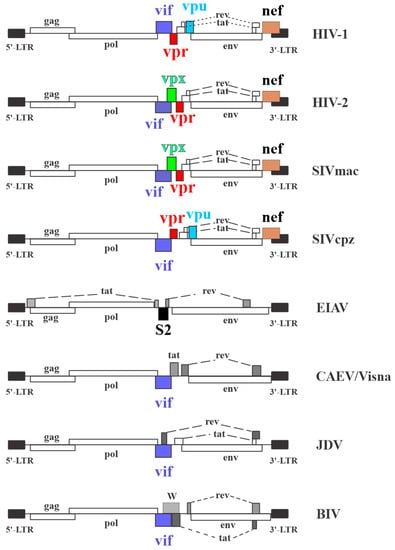
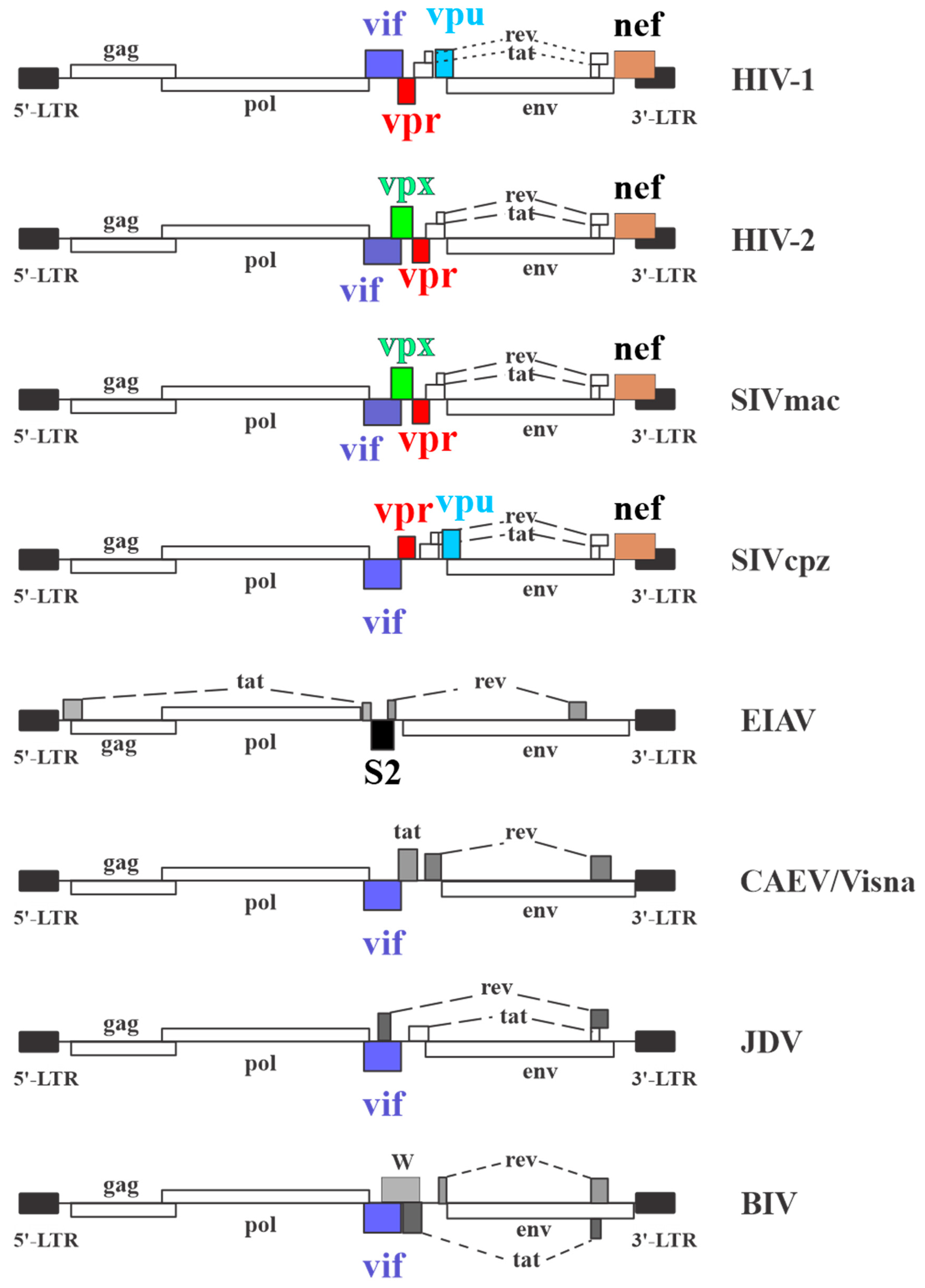
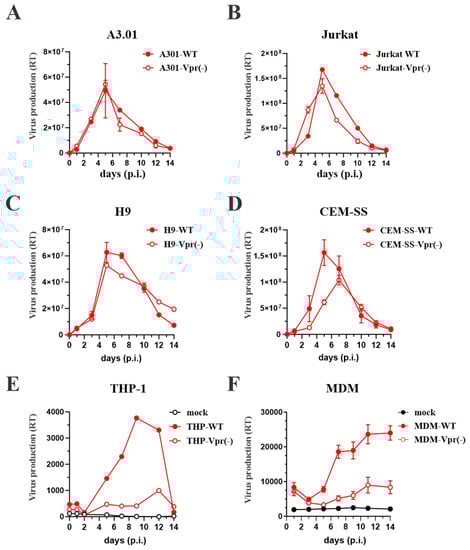
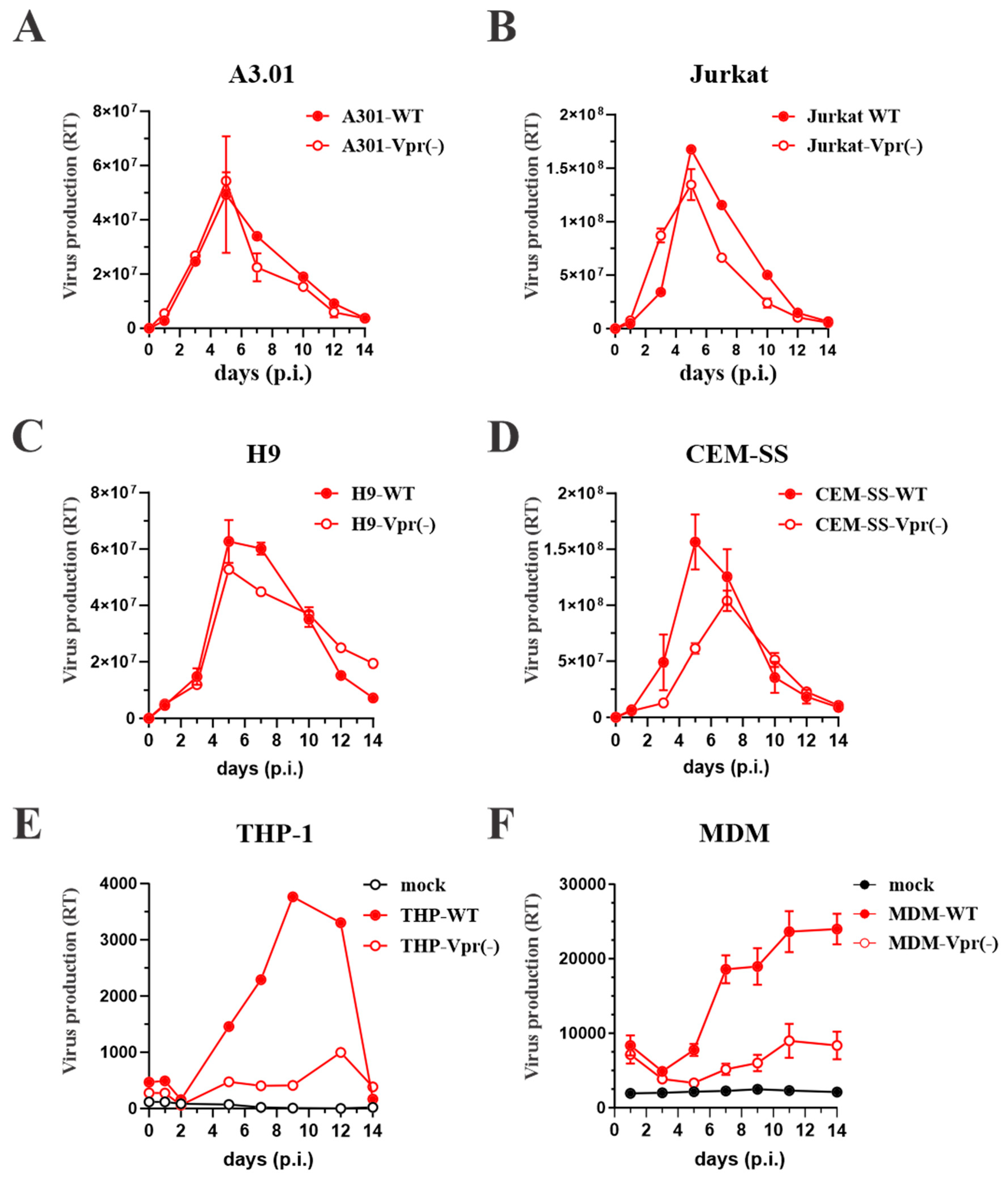
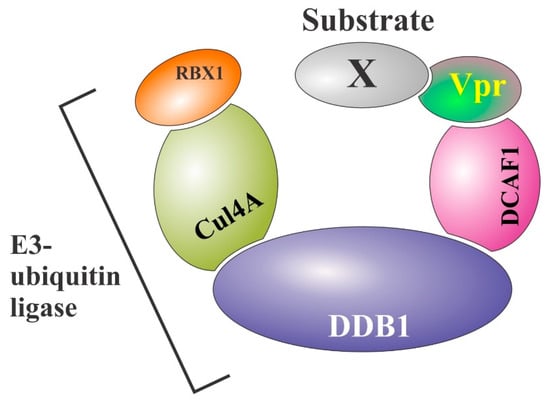
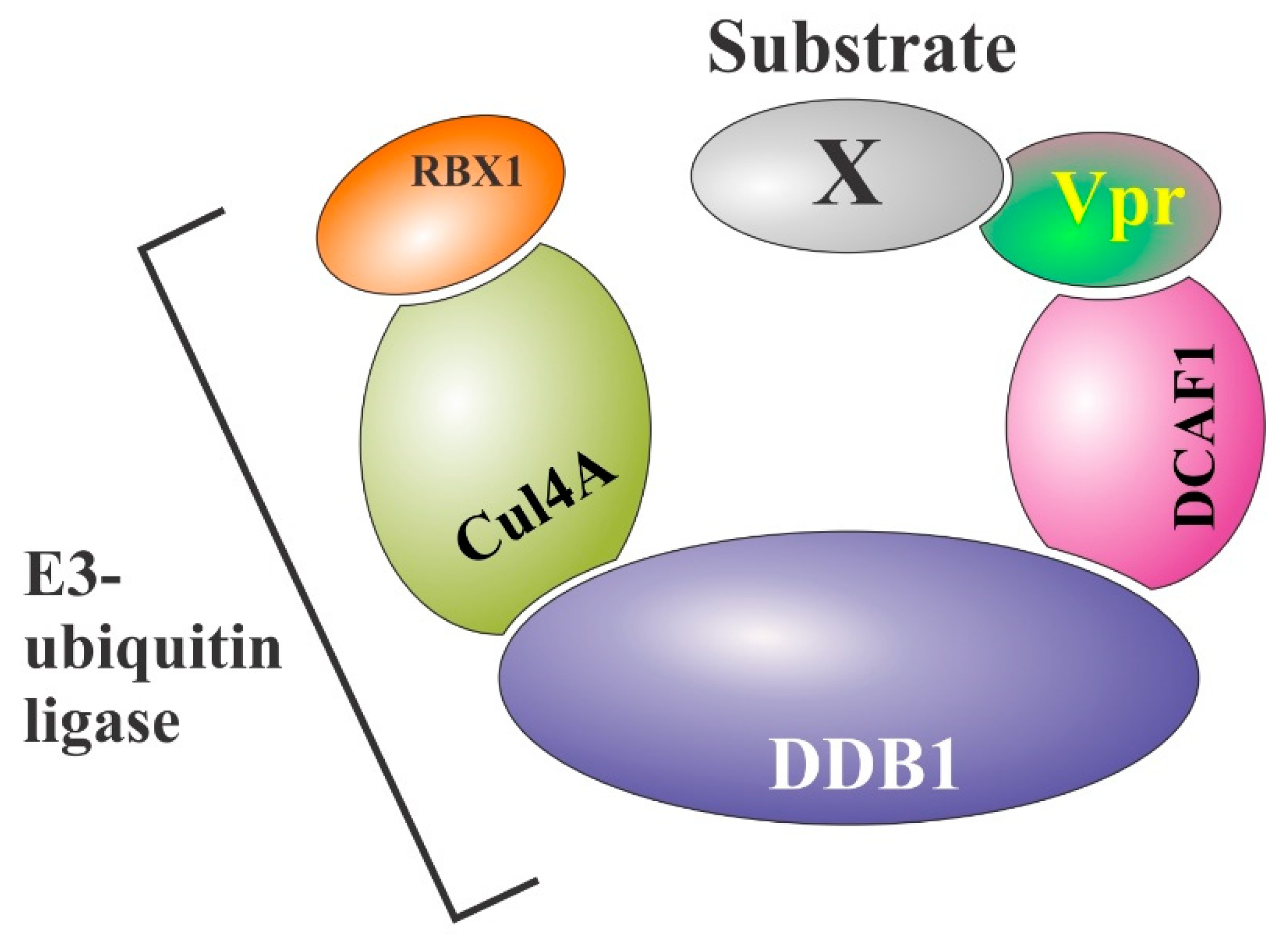

© 2019 by the authors. Licensee MDPI, Basel, Switzerland. This article is an open access article distributed under the terms and conditions of the Creative Commons Attribution (CC BY) license (http://creativecommons.org/licenses/by/4.0/).