Driving Naive State Induction Using Human Wharton Jelly-Mesenchymal Stem Cell-Derived Conditioned Medium in Rhesus Monkey Embryonic Stem Cells

 , ,
, ,  ,
,
Highlights
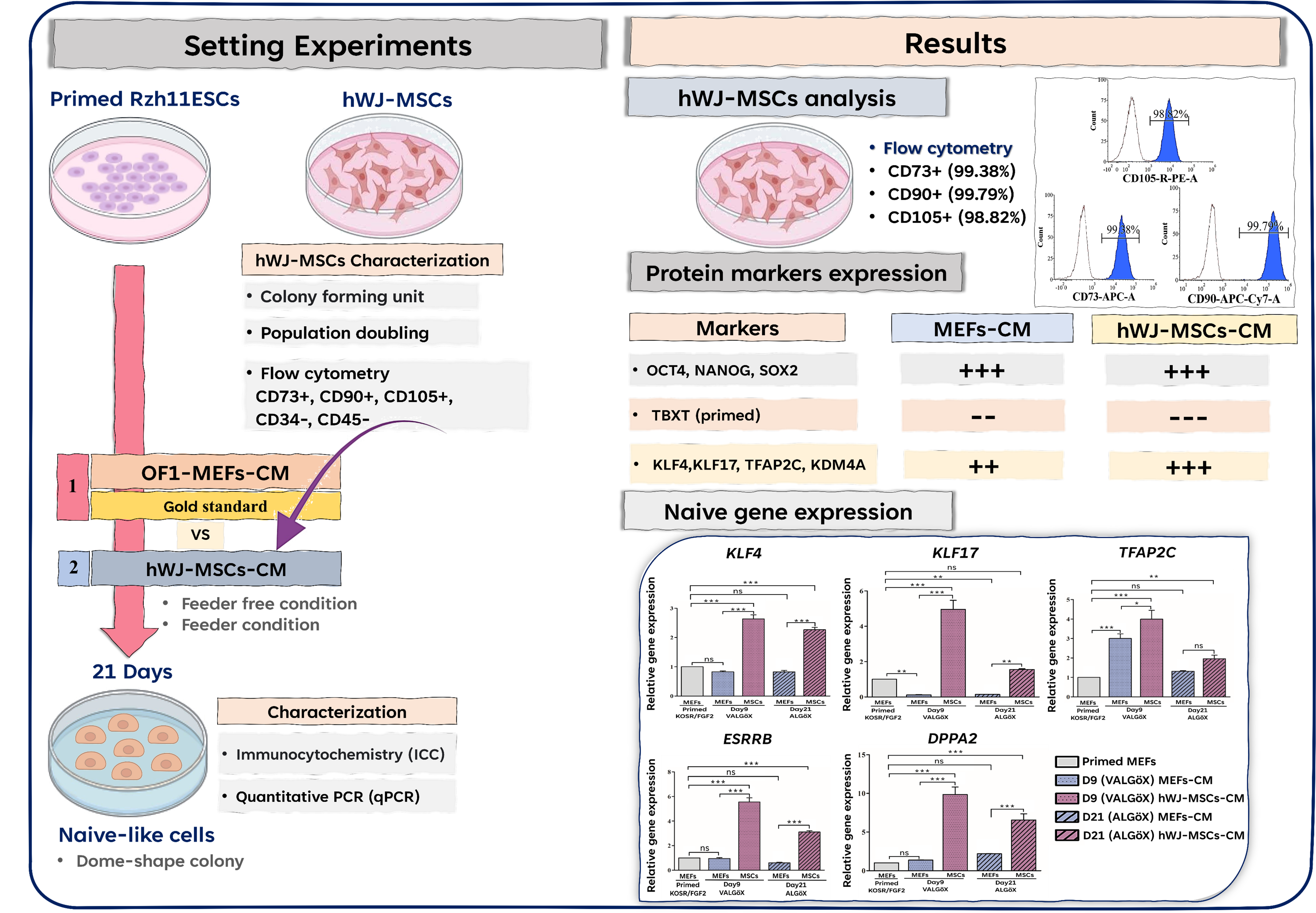
- hWJ-MSCs promote primed-to-naive conversion in RhESCs.
- hWJ-MSCs-CM more robustly induced the expression of key naive markers, including KLF4, KLF17, ESRRB, TFAP2C and DPPA2.
- hWJ-MSCs-CM as a novel culture medium for enhancing naive pluripotency in primate ESCs.
- hWJ-MSCs provide a human-compatible, xeno-free alternative to traditional MEFs-based systems.
Abstract
1. Introduction
2. Materials and Methods
2.1. Chemicals and Reagents
2.2. Cells and Culture Media
2.3. hWJ-MSCs Characterization
2.4. Conditioned Media Preparation
2.5. Conversion of rhESCs to the Naive State
2.6. Immunofluorescence and Imaging
2.7. Real-Time Quantitative PCR (qPCR)
2.8. Statistical Analysis
3. Results
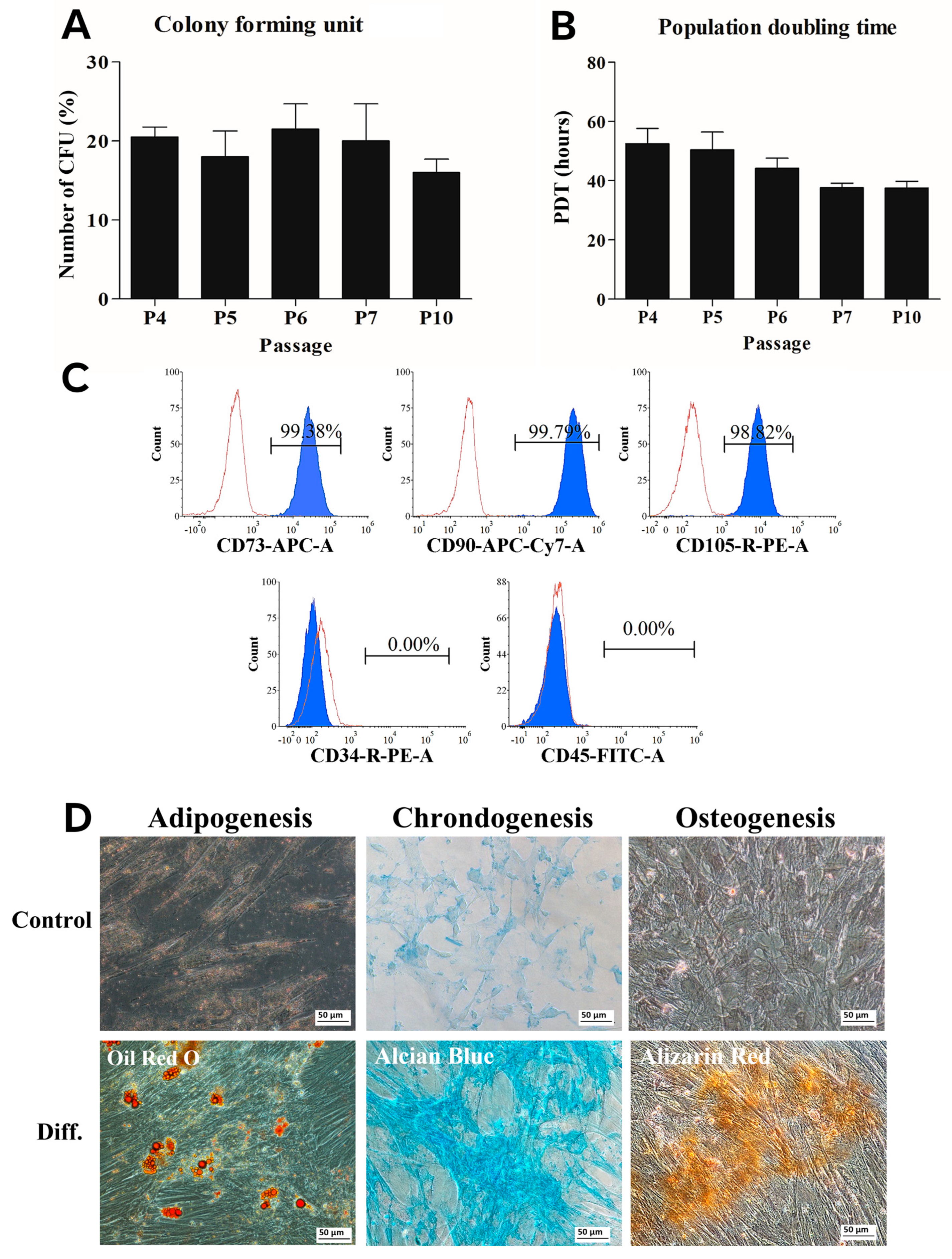
3.1. hWJ-MSC Characterization
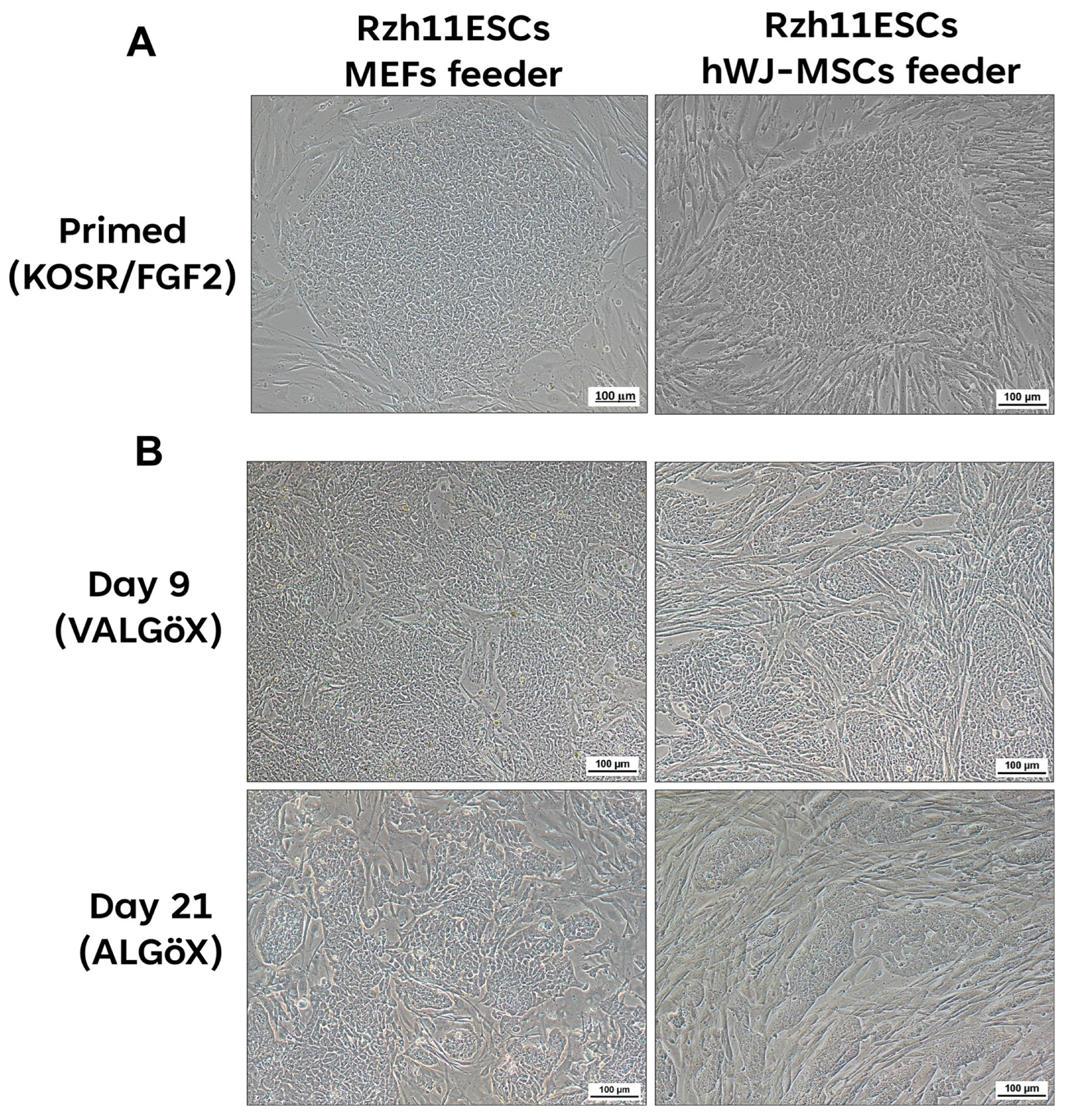
3.2. Propagation of Rzh11ESCs Using MEFs and hWJ-MSCs-Derived Feeder Cells
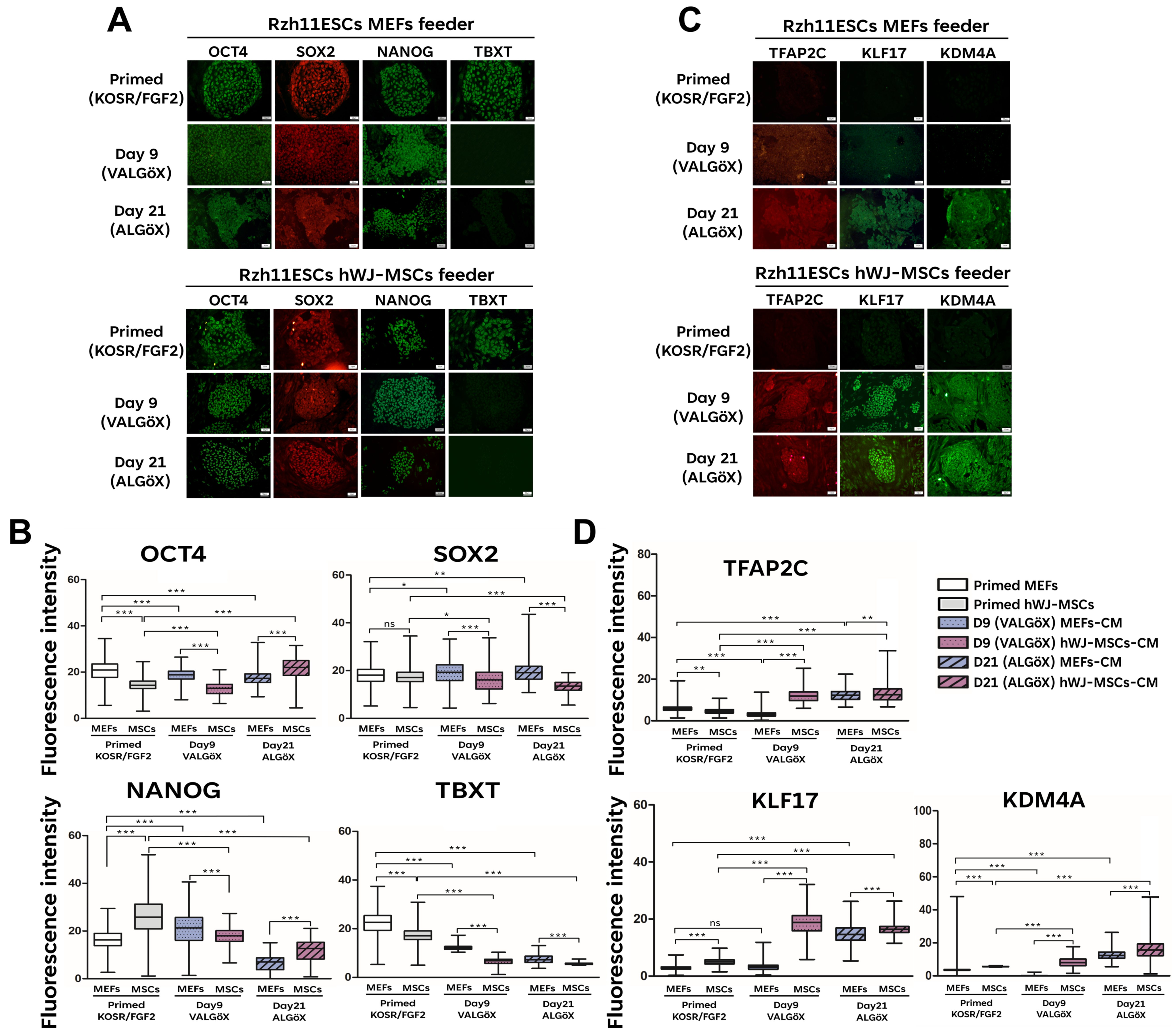
3.3. Propagation of Rzh11ESCs Using hWJ-MSCs-Derived Conditioned Medium
3.4. hWJ-MSCs-Derived Conditioned Medium Enhances Primed-to-Naive State Conversion
4. Discussion
5. Conclusions
Author Contributions
Funding
Institutional Review Board Statement
Informed Consent Statement
Data Availability Statement
Acknowledgments
Conflicts of Interest
Abbreviations
| bFGF | Basic fibroblast growth factor |
| CjESCs | Marmoset ESCs |
| CyESCs | Cynomolgus monkey |
| CFU | Colony-forming unit |
| ESCs | Embryonic stem cells |
| EpiSCs | Epiblast stem cells |
| FBS | Fetal bovine serum |
| FGF2 | Fibroblast growth factor 2 |
| NHPs | Non-human primates |
| HDACs | Histone deacetylases |
| hWJ-MSCs | Human Wharton’s Jelly-derived mesenchymal stem cells |
| hWJ-MSCs-CM | hWJ-MSCs-conditioned media |
| KO-DMEM | Knockout Dulbecco’s modified Eagle’s medium |
| KOSR | Knockout serum replacement |
| LIF | Leukemia inhibitory factor |
| MEFs | Mouse embryonic fibroblasts |
| MEFs-CM | MEFs-conditioned media |
| NEAA | Non-essential amino acids |
| PSCs | Pluripotent stem cells |
| PSG | Penicillin-streptomycin-glutamine |
| rhESCs | Rhesus monkey embryonic stem cells |
| RT | Room temperature |
| TGF-β3 | Transforming growth factor-beta 3 |
| PFA | Paraformaldehyde |
| SAHH | S-adenosyl homocysteine hydrolase |
References
- Nichols, J.; Smith, A. Naïve and primed pluripotent states. Cell Stem Cell 2009, 4, 487–492. [Google Scholar] [CrossRef]
- Weinberger, L.; Ayyash, M.; Novershtern, N.; Hanna, J.H. Dynamic stem cell states: Naïve to primed pluripotency in rodents and humans. Nat. Rev. Mol. Cell Biol. 2016, 17, 155–169. [Google Scholar] [CrossRef]
- Guo, G.; von Meyenn, F.; Santos, F.; Chen, Y.; Reik, W.; Bertone, P.; Smith, A.; Nichols, J. Naive pluripotent stem cells derived directly from isolated cells of the human inner cell mass. Stem Cell Rep. 2016, 6, 437–446. [Google Scholar] [CrossRef]
- Wang, Y.; Zhao, C.; Hou, Z.; Yang, Y.; Bim, Y.; Wang, H.; Zhang, Y.; Gao, S. Unique molecular events during reprogramming of human somatic cells to induced pluripotent stem cells (iPSCs) at naïve state. eLife 2018, 7, e29518. [Google Scholar] [CrossRef] [PubMed]
- Giulitti, S.; Pellegrini, M.; Zorzan, I.; Martini, P.; Gagliano, O.; Mutarelli, M.; Ziller, M.J.; Cacchiarelli, D.; Romualdi, C.; Elvassore, N.; et al. Direct generation of human naive induced pluripotent stem cells from somatic cells in microfluidics. Nat. Cell Biol. 2019, 21, 275–286. [Google Scholar] [CrossRef]
- Buckberry, S.; Liu, X.; Poppe, D.; Tan, P.J.; Sun, G.; Chen, J.; Nguyen, T.V.; de Mendoza, A.; Pflueger, J.; Frazer, T.; et al. Transient naive reprogramming corrects hiPS cells functionally and epigenetically. Nature 2023, 620, 863–872. [Google Scholar] [CrossRef] [PubMed]
- Fang, R.; Liu, K.; Zhao, Y.; Li, H.; Zhu, D.; Du, Y.; Xiang, C.; Li, X.; Liu, H.; Miao, Z.; et al. Generation of naive induced pluripotent stem cells from rhesus monkey fibroblasts. Cell Stem Cell 2014, 15, 488–497. [Google Scholar] [CrossRef] [PubMed]
- Chen, Y.; Niu, Y.; Li, Y.; Ai, Z.; Kang, Y.; Shi, H.; Xiang, Z.; Yang, Z.; Tan, T.; Si, W.; et al. Generation of Cynomolgus Monkey Chimeric Fetuses using Embryonic Stem Cells. Cell Stem Cell 2015, 17, 116–124. [Google Scholar] [CrossRef]
- Honda, H.; Kawano, Y.; Izu, H.; Choijookhuu, N.; Honsho, K.; Nakamura, T.; Yabuta, Y.; Yamamoto, T.; Takashima, Y.; Hirose, M.; et al. Discrimination of Stem Cell Status after Subjecting Cynomolgus Monkey Pluripotent Stem Cells to Naïve Conversion. Sci. Rep. 2017, 7, 45285. [Google Scholar] [CrossRef] [PubMed]
- Bergmann, S.; Penfold, C.A.; Slatery, E.; Siriwardena, D.; Drummer, C.; Clark, S.; Strawbridge, S.E.; Kishimoto, K.; Vickers, A.; Tewary, M.; et al. Spatial profiling of early primate gastrulation in utero. Nature 2022, 609, 136–143. [Google Scholar] [CrossRef]
- Li, J.; Zhu, Q.; Cao, J.; Liu, Y.; Lu, Y.; Sun, Y.; Li, Q.; Huang, Y.; Shang, S.; Bian, X.; et al. Cynomolgus monkey embryo model captures gastrulation and early pregnancy. Cell Stem Cell 2023, 30, 362–377. [Google Scholar] [CrossRef]
- Pham, H.T.; Perold, F.; Pijoff, Y.; Doerflinger, N.; Rival-Gervier, S.; Givelet, M.; Moulin, A.; Ressaire, M.; Da Silva Fernandes, E.; Bidault, V.; et al. Efficient generation of germline chimeras in a non-rodent species using rabbit induced pluripotent stem cells. Nat. Commun. 2025, 16, 5165. [Google Scholar] [CrossRef]
- Kuo, S.C.; Chio, C.C.; Yeh, C.H.; Ma, J.T.; Liu, W.P.; Lin, M.T.; Lin, K.C.; Chang, C.P. Mesenchymal stem cell-conditioned medium attenuates the retinal pathology in amyloid-β-induced rat model of Alzheimer’s disease: Underlying mechanisms. Aging Cell 2021, 20, e13340. [Google Scholar] [CrossRef]
- da Silva Meirelles, L.; Chagastelles, P.C.; Nardi, N.B. Mesenchymal stem cells reside in virtually all post-natal organs and tissues. J. Cell Sci. 2006, 119, 2204–2213. [Google Scholar] [CrossRef]
- Chamberlain, G.; Fox, J.; Ashton, B.; Middleton, J. Concise review: Mesenchymal stem cells: Their phenotype, differentiation capacity, immunological features, and potential for homing. Stem Cells 2007, 25, 2739–2749. [Google Scholar] [CrossRef]
- Abbasi-Malati, Z.; Roushandeh, A.M.; Kuwahara, Y.; Roudkenar, M.H. Mesenchymal Stem Cells on Horizon: A New Arsenal of Therapeutic Agents. Stem Cell Rev. Rep. 2018, 14, 484–499. [Google Scholar] [CrossRef]
- Acuto, S.; Lo Iacono, M.; Baiamonte, E.; Lo Re, R.; Maggio, A.; Cavalieri, V. An optimized procedure for preparation of conditioned medium from Wharton’s jelly mesenchymal stromal cells isolated from umbilical cord. Front. Mol. Biosci. 2023, 10, 1273814. [Google Scholar] [CrossRef]
- Putkhao, K.; Kocerha, J.; Cho, I.K.; Yang, J.; Parnpai, R.; Chan, A.W. Pathogenic cellular phenotypes are germline transmissible in a transgenic primate model of Huntington’s disease. Stem Cells Dev. 2013, 22, 1198–1205. [Google Scholar] [CrossRef] [PubMed]
- Afanassieff, M.; Tapponnier, Y.; Savatier, P. Generation of Induced Pluripotent Stem Cells in Rabbits. In Induced Pluripotent Stem (iPS) Cells. Methods and Protocols, 2nd ed.; Turksen, K., Nagy, A., Eds.; Humana Press: New York, NY, USA, 2014; Volume 1357, pp. 149–172. [Google Scholar] [CrossRef]
- Somredngan, S.; Theerakittayakorn, K.; Nguyen, H.T.; Ngernsoungnern, A.; Ngernsoungnern, P.; Sritangos, P.; Ketudat-Cairns, M.; Imsoonthornruksa, S.; Keeratibharat, N.; Wongsan, R.; et al. The Efficiency of Neurospheres Derived from Human Wharton’s Jelly Mesenchymal Stem Cells for Spinal Cord Injury Regeneration in Rats. Int. J. Mol. Sci. 2023, 24, 3846. [Google Scholar] [CrossRef] [PubMed]
- Srisutush, J.; Samruan, W.; Anwised, P.; Amzal, A.; Rognard, C.; Savatier, P.; Aksoy, I.; Thumanu, K.; Parnpai, R. Characterization of Rhesus Macaque Embryonic Stem Cells in Primed and Naive-like Cell States of Pluripotency Using Fourier Transform Infrared (FTIR) Microspectroscopy. Int. J. Mol. Sci. 2025, 26, 9514. [Google Scholar] [CrossRef] [PubMed]
- Aksoy, I.; Rognard, C.; Moulin, A.; Marcy, G.; Masfaraud, E.; Wianny, F.; Cortay, V.; Ménard, A.B.; Doerflinger, N.; Dirheimer, M.; et al. Apoptosis, G1 phase stall, and premature differentiation account for low chimeric competence of human and rhesus monkey naïve pluripotent stem cells. Stem Cell Rep. 2021, 16, 56–74. [Google Scholar] [CrossRef]
- Bharti, D.; Shivakumar, S.B.; Park, J.K.; Ullah, I.; Subbarao, R.B.; Park, J.S.; Lee, S.L.; Park, B.W.; Rho, G.J. Comparative analysis of human Wharton’s jelly mesenchymal stem cells derived from different parts of the same umbilical cord. Cell Tissue Res. 2018, 372, 51–65. [Google Scholar] [CrossRef]
- Wang, H.S.; Hung, S.C.; Peng, S.T.; Huang, C.C.; Wei, H.M.; Guo, Y.J.; Fu, Y.S.; Lai, M.C.; Chen, C.C. Mesenchymal stem cells in the Wharton’s jelly of the human umbilical cord. Stem Cells 2004, 22, 1330–1337. [Google Scholar] [CrossRef]
- Dominici, M.; Le Blanc, K.; Mueller, I.; Slaper-Cortenbach, I.; Marini, F.; Krause, D.; Deans, R.; Keating, A.; Prockop, D.; Horwitz, E. Minimal criteria for defining multipotent mesenchymal stromal cells. The International Society for Cellular Therapy position statement. Cytotherapy 2006, 8, 315–317. [Google Scholar] [CrossRef]
- Fong, C.Y.; Subramanian, A.; Gauthaman, K.; Venugopal, J.; Biswas, A.; Ramakrishna, S.; Bongso, A. Human umbilical cord Wharton’s jelly stem cells undergo enhanced chondrogenic differentiation when grown on nanofibrous scaffolds and in a sequential two-stage culture medium environment. Stem Cell Rev. Rep. 2012, 8, 195–209. [Google Scholar] [CrossRef] [PubMed]
- Bates, L.E.; Silva, J.C. Reprogramming human cells to naïve pluripotency: How close are we? Curr. Opin. Genet. Dev. 2017, 46, 58–65. [Google Scholar] [CrossRef] [PubMed]
- Zhou, J.; Hu, J.; Wang, Y.; Gao, S. Induction and application of human naive pluripotency. Cell Rep. 2023, 42, 112379. [Google Scholar] [CrossRef] [PubMed]
- Hanna, J.; Cheng, A.W.; Saha, K.; Kim, J.; Lengner, C.J.; Soldner, F.; Cassady, J.P.; Muffat, J.; Carey, B.W.; Jaenisch, R. Human embryonic stem cells with biological and epigenetic characteristics similar to those of mouse ESCs. Proc. Natl. Acad Sci. USA 2010, 107, 9222–9227. [Google Scholar] [CrossRef]
- Drobiova, H.; Sindhu, S.; Ahmad, R.; Haddad, D.; Al-Mulla, F.; Al Madhoun, A. Wharton’s jelly mesenchymal stem cells: A concise review of their secretome and prospective clinical applications. Front. Cell Dev. Biol. 2023, 11, 1211217. [Google Scholar] [CrossRef]
- Osnato, A.; Brown, S.; Krueger, C.; Andrews, S.; Collier, A.J.; Nakanoh, S.; Londoño, M.Q.; Wesley, B.T.; Muraro, D.; Brumm, A.S.; et al. TGFβ signalling is required to maintain pluripotency of human naïve pluripotent stem cells. eLife 2021, 10, e67259. [Google Scholar] [CrossRef]
- Theunissen, T.W.; Powell, B.E.; Wang, H.; Mitalipova, M.; Faddah, D.A.; Reddy, J.; Fan, Z.P.; Maetzel, D.; Ganz, K.; Shi, L.; et al. Systematic identification of culture conditions for induction and maintenance of naive human pluripotency. Cell Stem Cell 2014, 15, 471–487. [Google Scholar] [CrossRef] [PubMed]
- Buecker, C.; Srinivasan, R.; Wu, Z.; Calo, E.; Acampora, D.; Faial, T.; Simeone, A.; Tan, M.; Swigut, T.; Wysocka, J. Reorganization of enhancer patterns in transition from naive to primed pluripotency. Cell Stem Cell 2014, 14, 838–853. [Google Scholar] [CrossRef] [PubMed]
- Takashima, Y.; Guo, G.; Loos, R.; Nichols, J.; Ficz, G.; Krueger, F.; Oxley, D.; Santos, F.; Clarke, J.; Mansfield, W.; et al. Resetting transcription factor control circuitry toward ground-state pluripotency in human. Cell 2014, 158, 1254–1269. [Google Scholar] [CrossRef] [PubMed]





| Type of Antibodies (Ab) | Antibodies Named | Dilution | Company #Cat. No |
|---|---|---|---|
| Primary Ab | Rabbit anti-OCT4 | 1:200 | Santa Cruz Biotechnology (Dallas, TX, USA) #K0620 |
| Rabbit anti-NANOG | 1:200 | Cell Signaling Technology (Danvers, MA, USA) #4903S | |
| Goat anti-SOX2 | 1:200 | R&D Systems (Minneapolis, MN, USA) #AF2018 | |
| Rabbit anti-TBXT | 1:100 | Cell Signaling Technology (Danvers, MA, USA) #81694S | |
| Goat anti-TFAP2C | 1:50 | R&D Systems (Minneapolis, MN, USA) #AF5059 | |
| Rabbit anti-KLF17 | 1:200 | Sigma-Aldrich (St. Louis, MO, USA) #HPA024629 | |
| Sheep anti-KDM4A | 1:50 | R&D Systems (Minneapolis, MN, USA) #AF6434 | |
| Rabbit anti-H3K9me3 | 1:200 | Abcam (Cambridge, UK) #ab8898 | |
| Rabbit anti-H3K14ac | 1:200 | Abcam (Cambridge, UK) #ab52946 | |
| Secondary Ab | Goat anti-Rabbit Alexa Fluor 488 | 1:300 | Invitrogen (Carlsbad, CA, USA) #A32731 |
| Donkey-anti-Goat Alexa Fluor 594 | 1:300 | Thermoscience (Waltham, MA, USA) #A32758 | |
| Goat anti-Mouse Alexa Fluor 568 | 1:300 | Invitrogen (Carlsbad, CA, USA) #A11031 | |
| Goat anti-Mouse Alexa Fluor 488 | 1:300 | Invitrogen (Carlsbad, CA, USA) #M31504 |
| Gene Type | Gene | Primer Sequence (5′-3′) | Annealing Temperature (°C) |
|---|---|---|---|
| Housekeeping gene | GADPH | F: GGAGCGAGATCCCTCCAAAAT R: GGCTGTTGTCATACTTCTCATGG | 54 |
| Pluripotency genes | OCT4 | F: AGTGTGGTTCTGTAACCGGC R: GACCGAGGAGTACAGTGCAG | 58 |
| NANOG | F: AGTCCTGCTTGCAGTTCCAG R: TCAGGTTGCATGTTCGTGGA | 55 | |
| SOX2 | F: AACCAGCGCATGGACAGTTA R: CGAGCTGGTCATGGAGTTGT | 56 | |
| Primed specific genes | TBXT | F: CTTCAGCAAAGTCAAGCTCACC R: TGAACTGGGTCTCAGGGAAGCA | 56 |
| OTX2 | F: AAAGTGAGACCTGCCAAAAAGA R: TGGACAAGGGATCTGACAGTG | 56 | |
| Naive specific genes | KLF4 | F: CCCTACCTCGGAGAGAGACC R: GGATGGGTCAGCGAATTGGA | 58 |
| KLF17 | F: CCTTACCGCTGCAACTACGA R: ATAGGGCCTCTCACCTGTGT | 57 | |
| TFAP2C | F: GTTCTCAGAAGAGCCAAGTCG R: TCGGCTTCACAGACATAGGC | 56 | |
| ESRRB | F: TGCCCTATGACGACAAGCTG R: TGAGCGTCACAAACTCCTCC | 58 | |
| DPPA2 | F: GTACGCCTGCAGTTTCATGC R: TCTATGCCTGGGGATGGGAA | 55 | |
| DPPA5 | F: GGTCGTGGTTTACGGTTCCT R: AGTTTGAGCATCCCTCGCTC | 56 |
Disclaimer/Publisher’s Note: The statements, opinions and data contained in all publications are solely those of the individual author(s) and contributor(s) and not of MDPI and/or the editor(s). MDPI and/or the editor(s) disclaim responsibility for any injury to people or property resulting from any ideas, methods, instructions or products referred to in the content. |
© 2026 by the authors. Licensee MDPI, Basel, Switzerland. This article is an open access article distributed under the terms and conditions of the Creative Commons Attribution (CC BY) license.
Share and Cite
Anwised, P.; Moorawong, R.; Samruan, W.; Srisutush, J.; Somredngan, S.; Aksoy, I.; Savatier, P.; Parnpai, R. Driving Naive State Induction Using Human Wharton Jelly-Mesenchymal Stem Cell-Derived Conditioned Medium in Rhesus Monkey Embryonic Stem Cells. Cells 2026, 15, 626. https://doi.org/10.3390/cells15070626
Anwised P, Moorawong R, Samruan W, Srisutush J, Somredngan S, Aksoy I, Savatier P, Parnpai R. Driving Naive State Induction Using Human Wharton Jelly-Mesenchymal Stem Cell-Derived Conditioned Medium in Rhesus Monkey Embryonic Stem Cells. Cells. 2026; 15(7):626. https://doi.org/10.3390/cells15070626
Chicago/Turabian StyleAnwised, Preeyanan, Ratree Moorawong, Worawalan Samruan, Jittanun Srisutush, Sirilak Somredngan, Irene Aksoy, Pierre Savatier, and Rangsun Parnpai. 2026. "Driving Naive State Induction Using Human Wharton Jelly-Mesenchymal Stem Cell-Derived Conditioned Medium in Rhesus Monkey Embryonic Stem Cells" Cells 15, no. 7: 626. https://doi.org/10.3390/cells15070626
APA StyleAnwised, P., Moorawong, R., Samruan, W., Srisutush, J., Somredngan, S., Aksoy, I., Savatier, P., & Parnpai, R. (2026). Driving Naive State Induction Using Human Wharton Jelly-Mesenchymal Stem Cell-Derived Conditioned Medium in Rhesus Monkey Embryonic Stem Cells. Cells, 15(7), 626. https://doi.org/10.3390/cells15070626