Selection of Salicylic Acid Tolerant Epilines in Brassica napus


Abstract
1. Introduction
2. Materials and Methods
2.1. Selection of Resistant Canola Lines
2.2. Quantitative Reverse Transcription-PCR (RT-qPCR)
2.3. Tolerance to Botrytis Cinerea
2.4. Determination of Ascorbate Concentration
2.5. Field Trials
2.6. Chromatin Immunoprecipitation Sequencing (ChIP-Seq)
3. Results
3.1. Repeated Selection Leads to Canola Lines with Higher Tolerance to SA
3.2. SA Treatment Induces Water Loss in Canola Seedlings
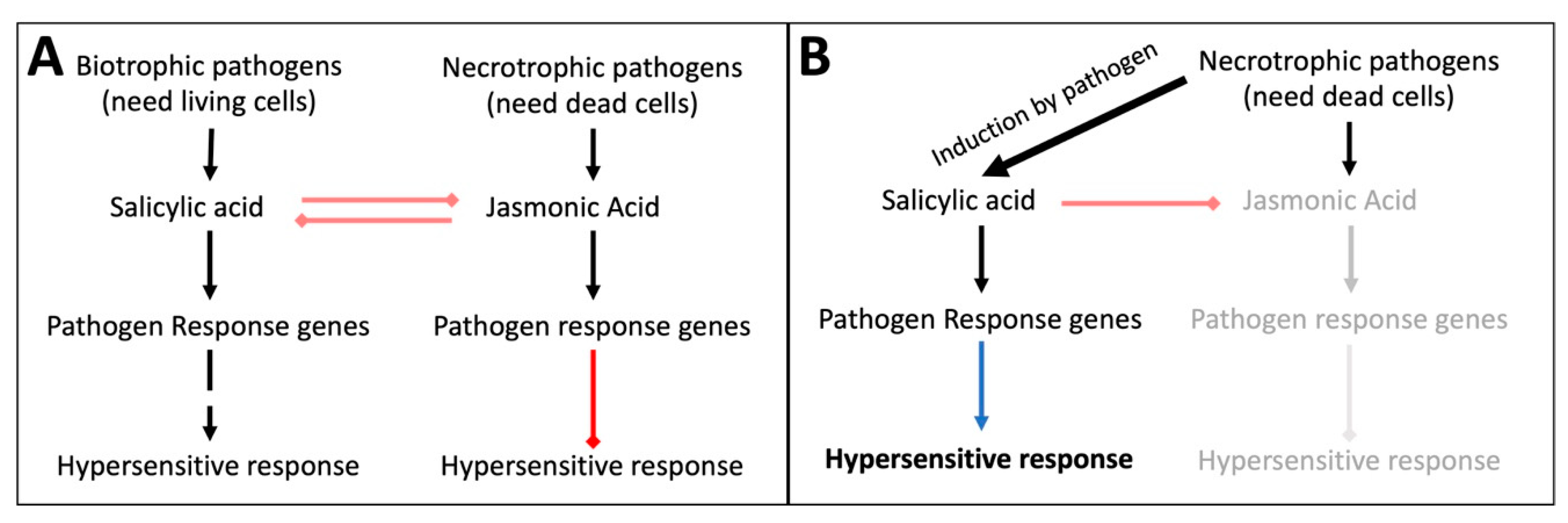
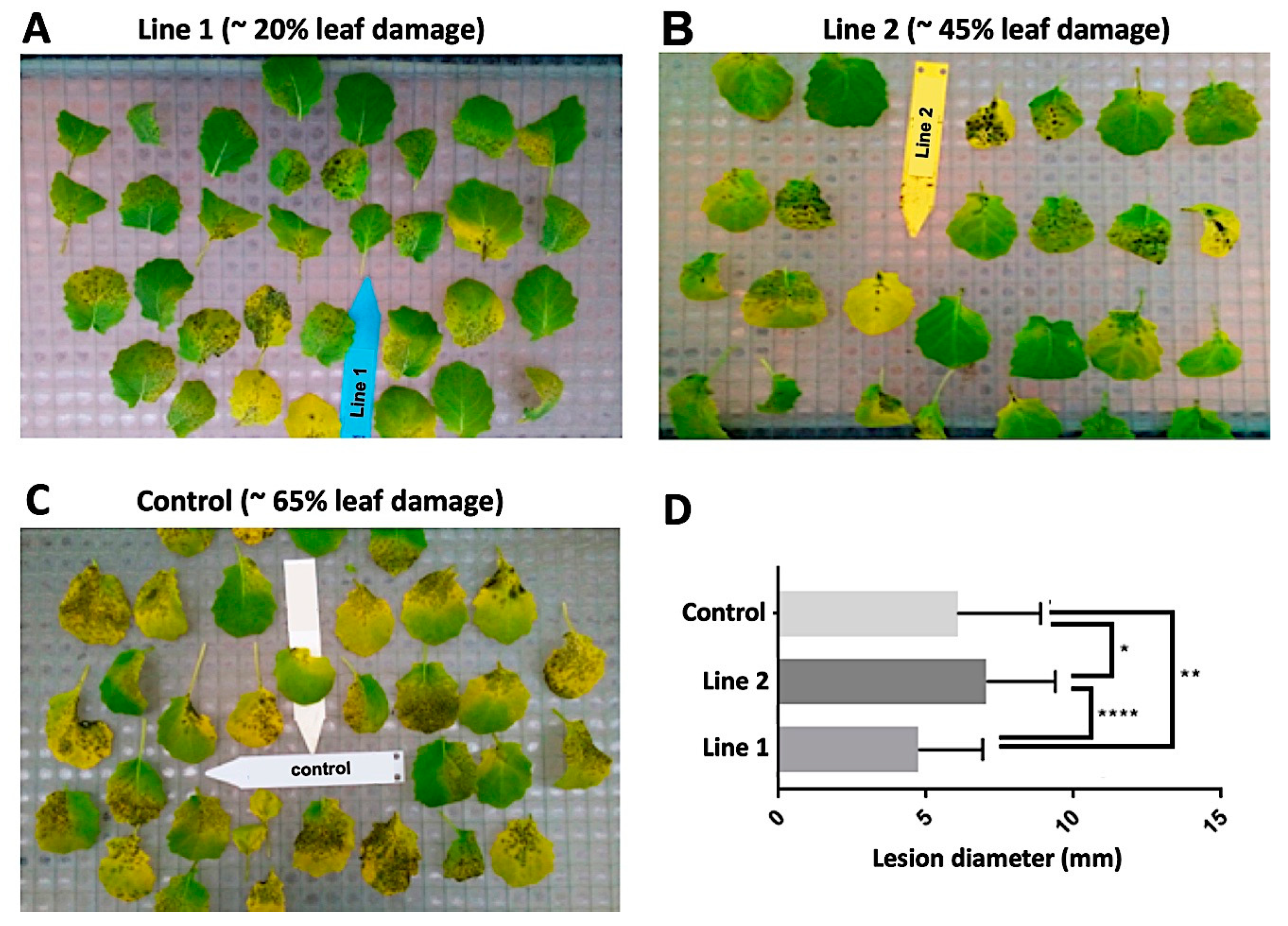
3.3. The SA-Tolerant Lines are More Tolerant to BOTRYTIS Cinerea
3.4. Seed Yield of the Selected Lines are Similar to Those of the Control
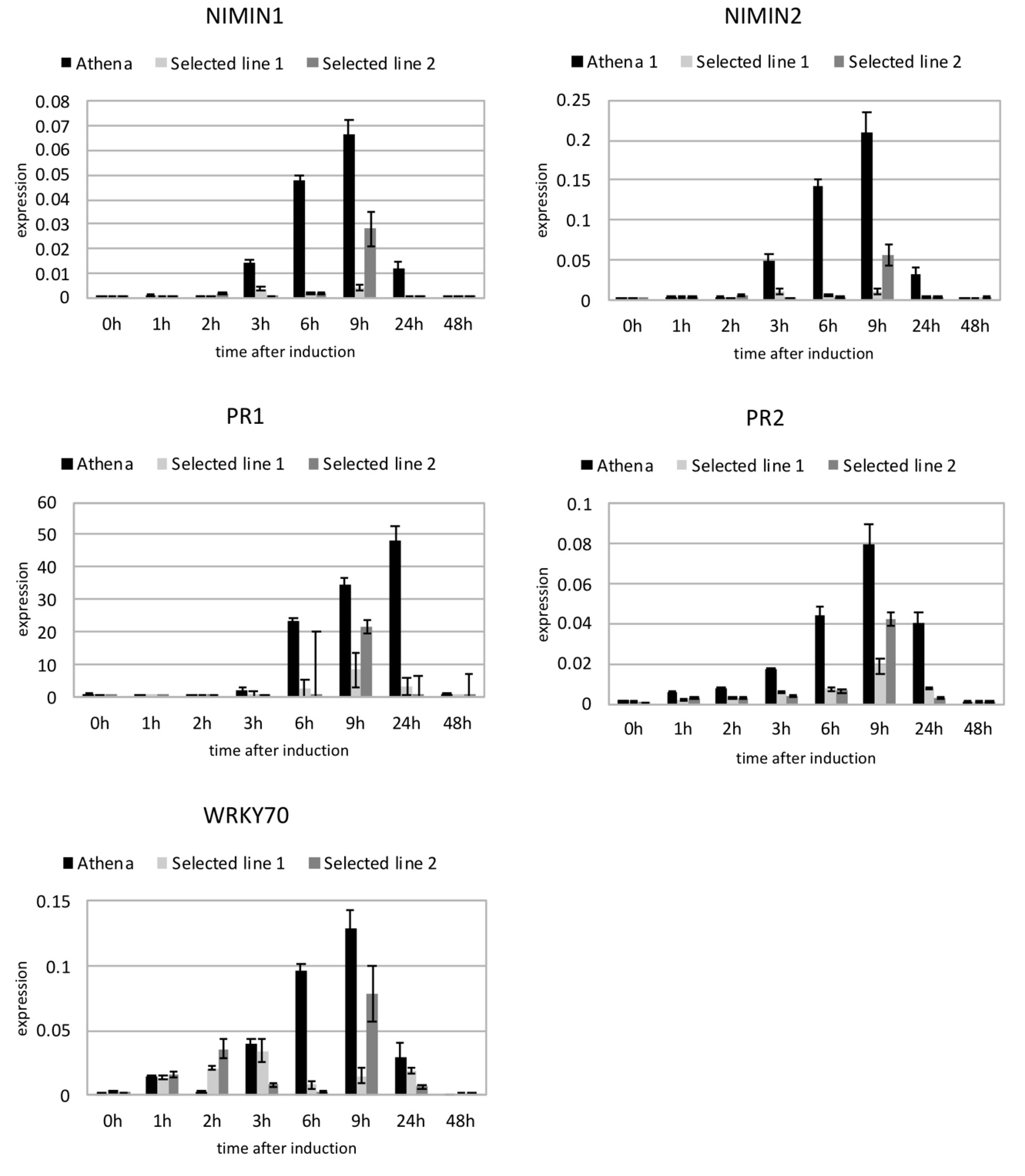
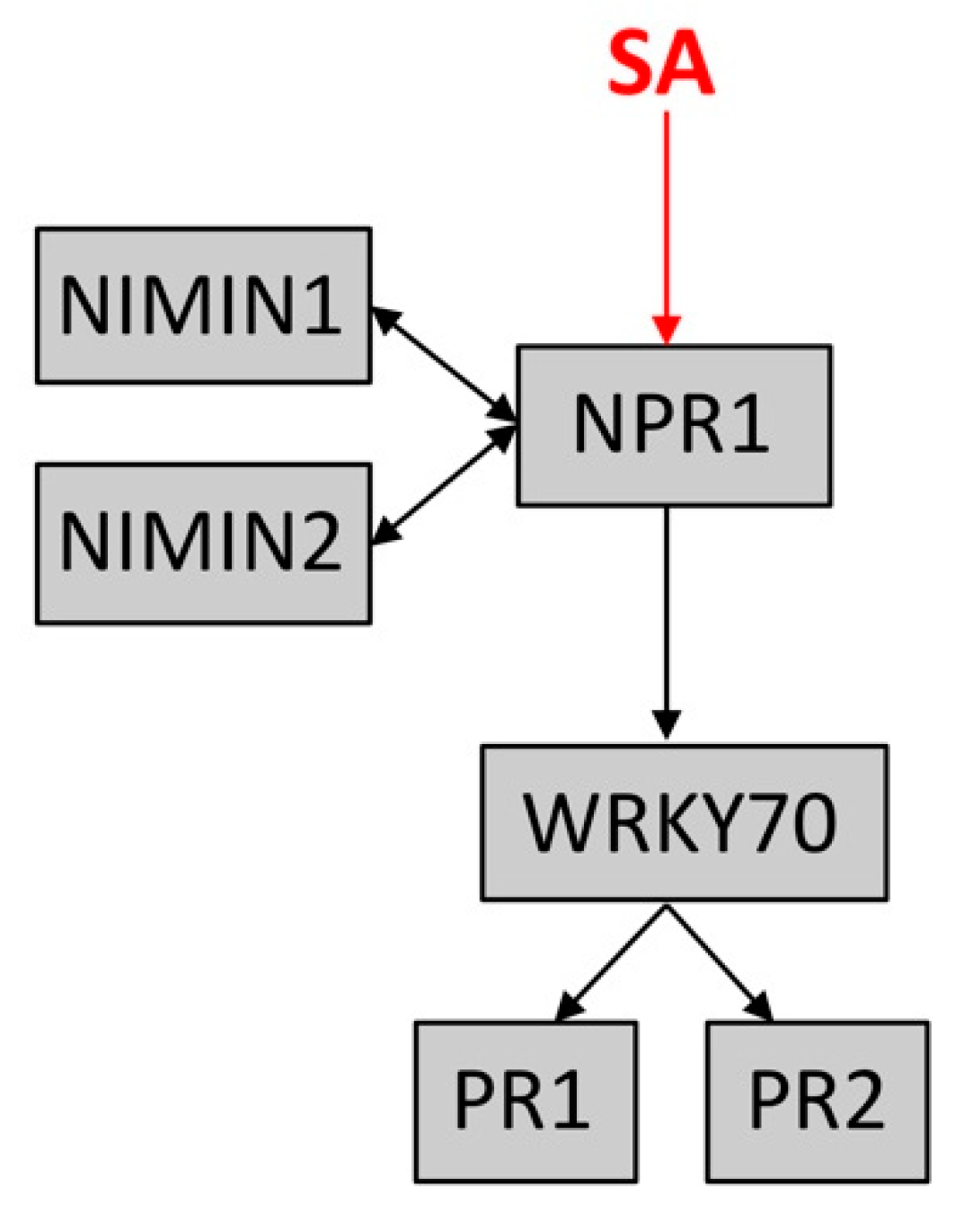
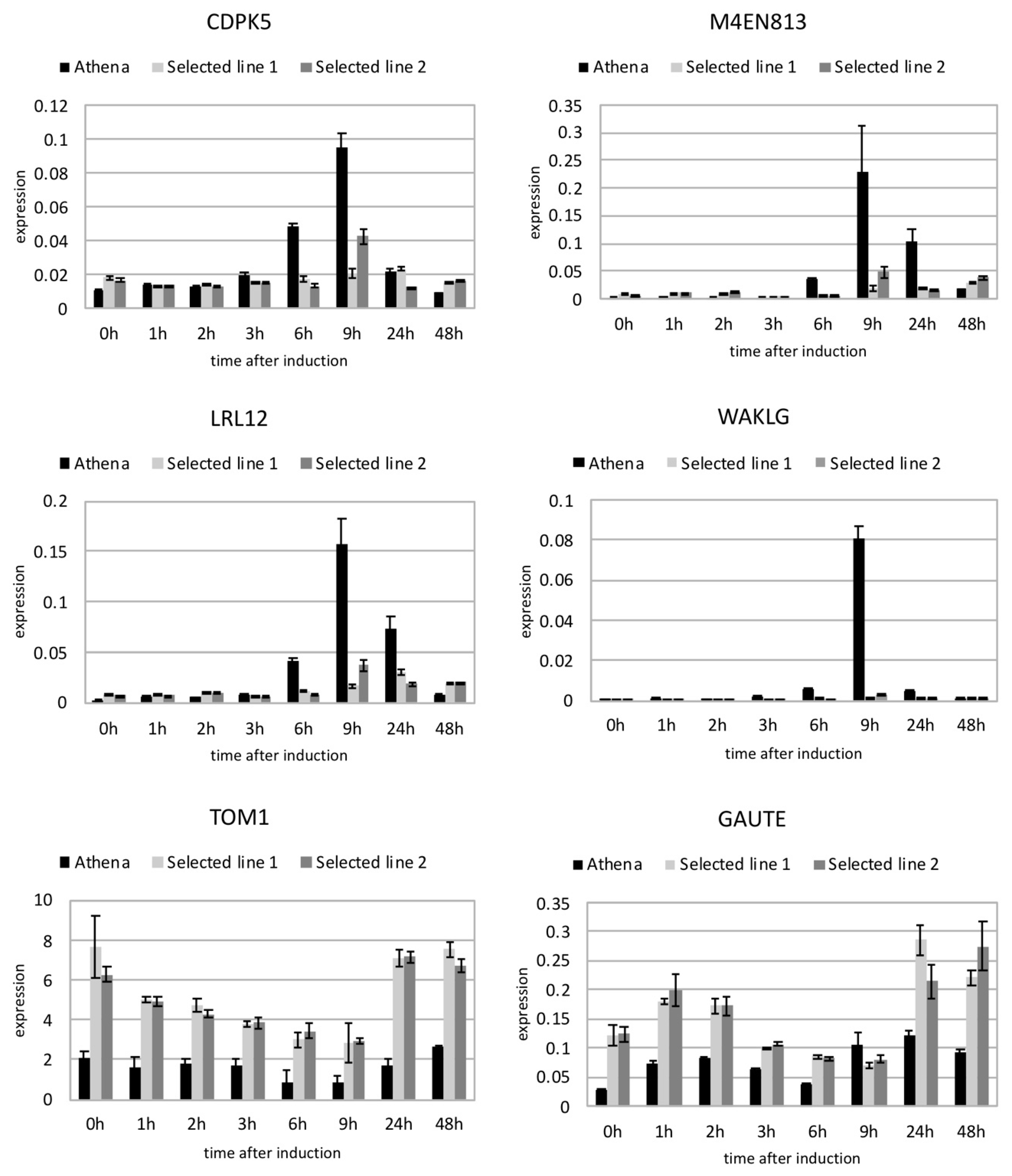
3.5. Known Genes in the SA Pathway Exhibit Changed Expression Levels
3.6. The Gene Expression with Unknown Connection to the SA Pathway Is Modified
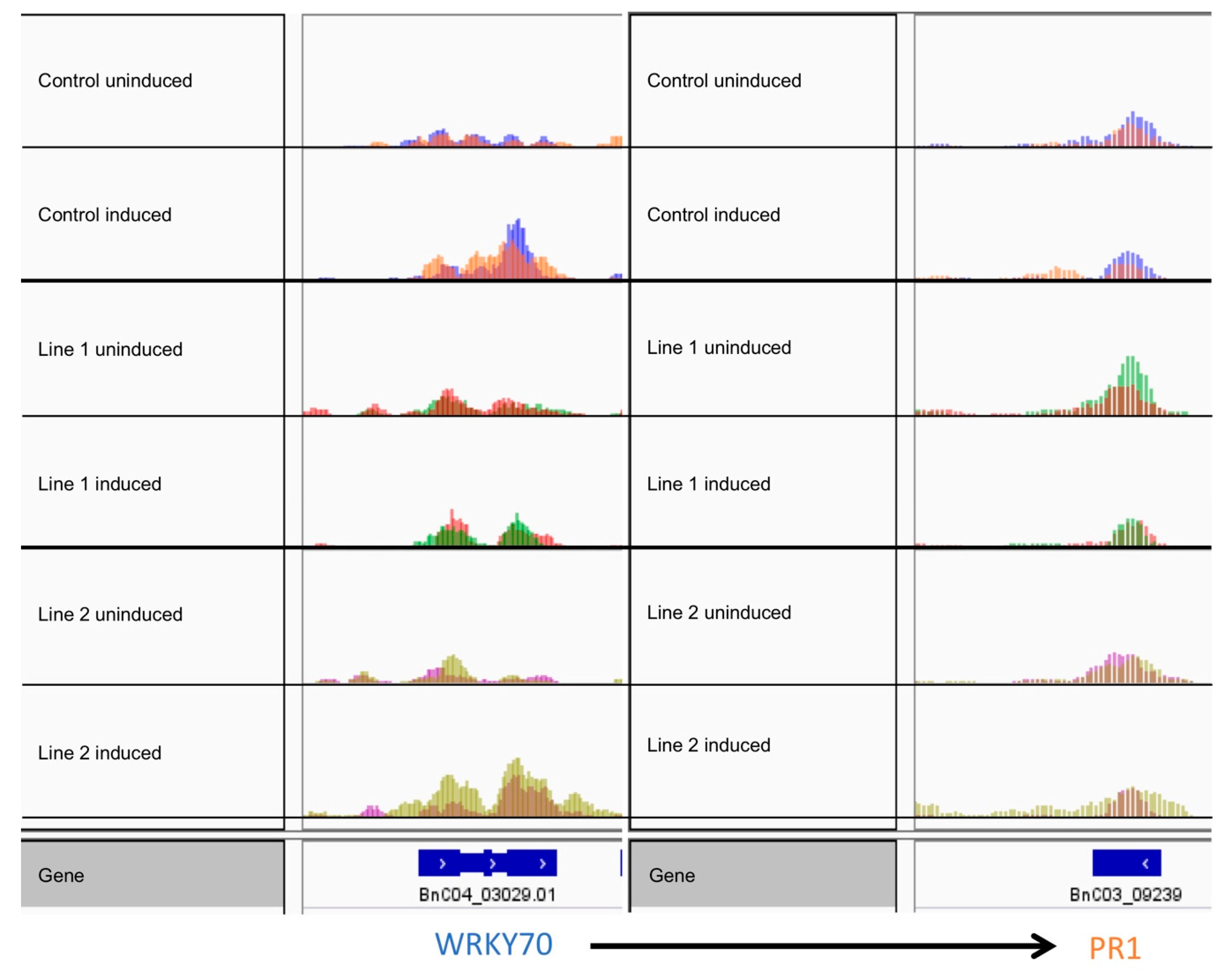
3.7. Changes in H3K4me3
4. Discussion
Supplementary Materials
Author Contributions
Funding
Acknowledgments
Conflicts of Interest
References
- Lee, S.J.; Rose, J.K.C. Mediation of the transition from biotrophy to necrotrophy in hemibiotrophic plant pathogens by secreted effector proteins. Plant Signal. Behav. 2010, 5, 769–772. [Google Scholar] [CrossRef] [Scilit] [PubMed]
- Chowdhury, S.; Basu, A.; Kundu, S. Biotrophy-necrotrophy switch in pathogen evoke differential response in resistant and susceptible sesame involving multiple signaling pathways at different phases. Sci. Rep. 2017, 7, 17251. [Google Scholar] [CrossRef] [Scilit] [PubMed]
- Thomma, B.P.H.J.; Eggermont, K.; Pennickx, I.A.M.A.; Mauch-Mani, B.; Vogelsang, R.; Cammue, B.P.A.; Broekaert, W.F. Separate jasmonate-dependent and salicylate-dependent defense-response pathways in Arabidopsis are essential for resistance to distinct microbial pathogens. Proc. Natl. Acad. Sci. USA 1998, 95, 15107–15111. [Google Scholar] [CrossRef] [Scilit] [PubMed]
- Glazebrook, J. Contrasting mechanisms of defense against biotrophic and necrotrophic pathogens. Annu. Rev. Phytopathol. 2005, 43, 205–227. [Google Scholar] [CrossRef] [Scilit] [PubMed]
- Shah, J. The salicylic acid loop in plant defense. Curr. Opin. Plant Biol. 2003, 6, 365–371. [Google Scholar] [CrossRef] [Scilit]
- Ishikawa, K.; Yoshimura, K.; Harada, K.; Fukusaki, E.; Ogawa, T.; Tamoi, M.; Shigeoka, S. AtNUDX6, an ADP-ribose/NADH pyrophosphohydrolase in Arabidopsis, positively regulates NPR1-dependent salicylic acid signaling. Plant Physiol. 2010, 152, 2000–2012. [Google Scholar] [CrossRef] [Scilit] [PubMed]
- Li, T.; Hu, Y.; Du, X.; Tang, H.; Shen, C.; Wu, J. Salicylic acid alleviates the adverse effects of salt stress in Torreya grandis cv. Merrillii seedlings by activating photosynthesis and enhancing antioxidant systems. PLoS ONE 2014, 9, e109492. [Google Scholar] [CrossRef] [Scilit]
- Shah, J.; Kachroo, P.; Klessig, D.F. The Arabidopsis ssi1 mutation restores pathogenesis-related gene expression in npr1 plants and renders defensin gene expression salicylic acid dependent. Plant Cell 1999, 11, 191–206. [Google Scholar] [CrossRef] [Scilit]
- Alvarez, M.E.; Nota, F.; Cambiagno, D.A. Epigenetic control of plant immunity. Mol. Plant Pathol. 2010, 11, 563–576. [Google Scholar] [CrossRef] [Scilit]
- Clarke, J.D.; Volko, S.M.; Ledford, H.; Ausubel, F.M.; Dong, X. Roles of salicylic acid, jasmonic acid, and ethylene in cpr-induced resistance in Arabidopsis. Plant Cell 2000, 12, 2175–2190. [Google Scholar] [CrossRef] [Scilit]
- Mur, L.A.J.; Kenton, P.; Atzorn, R.; Miersch, O.; Wasternack, C. The outcomes of concentration-specific interactions between salicylate and jasmonate signaling include synergy, antagonism, and oxidative stress leading to cell death. Plant Physiol. 2006, 140, 249–262. [Google Scholar] [CrossRef] [Scilit] [PubMed]
- Van Loon, L.C.; Van Strien, E.A. The families of pathogenesis-related proteins, their activities, and comparative analysis of PR-1 type proteins. Physiol. Mol. Plant Pathol. 1999, 55, 85–97. [Google Scholar] [CrossRef] [Scilit]
- Van Loon, L.C.; Rep, M.; Pieterse, C.M.J. Significance of inducible defense-related proteins in infected plants. Annu. Rev. Phytopathol. 2006, 44, 135–162. [Google Scholar] [CrossRef] [Scilit] [PubMed]
- Dong, X. NPR1, all things considered. Curr. Opin. Plant Biol. 2004, 7, 547–552. [Google Scholar] [CrossRef] [Scilit] [PubMed]
- Dixelius, C.; Bohman, S.; Wretblad, S. Disease resistance. In Brassica; Pua, E.-C., Douglas, C.J., Eds.; Springer: Berlin, Germany, 2004; pp. 253–271. ISBN 978-3-642-05783-0. [Google Scholar] [CrossRef] [Scilit]
- Rahman, T.A.E.; Oirdi, M.E.; Gonzalez-Lamothe, R.; Bouarab, K. Necrotrophic pathogens use the salicylic acid signaling pathway to promote disease development in tomato. Mol. Plant Microbe Interact. 2012, 25, 1584–1593. [Google Scholar] [CrossRef] [Scilit] [PubMed]
- Tiedemann, A.V. Evidence for a primary role of active oxygen species in induction of host cell death during infection of bean leaves with Botrytis cinerea. Physiol. Mol. Plant Pathol. 1997, 50, 151–166. [Google Scholar] [CrossRef] [Scilit]
- Govrin, E.M.; Levine, A. The hypersensitive response facilitates plant infection by the necrotrophic pathogen Botrytis cinerea. Curr. Biol. 2000, 10, 751–757. [Google Scholar] [CrossRef] [Scilit]
- Rossi, F.R.; Krapp, A.R.; Bisaro, F.; Maiale, S.J.; Pieckenstain, F.L.; Carrillo, N. Reactie oxygen species generated in chloroplasts contribute to tobacco leaf infection by the necrotrophic fungus Botrytis cinerea. Plant J. 2017, 92, 761–773. [Google Scholar] [CrossRef] [Scilit]
- Hauben, M.; Haesendonckx, B.; Standaert, E.; Van Der Kelen, K.; Azmi, A.; Akpo, H.; Van Breusegem, F.; Guisez, Y.; Bots, M.; Lambert, B.; et al. Energy use efficiency is characterized by an epigenetic component that can be directed through artificial selection to increase yield. Proc. Natl. Acad. Sci. USA 2009, 106, 20109–20114. [Google Scholar] [CrossRef] [Scilit]
- De Block, M.; Van Lijsebettens, M. Energy efficiency and energy homeostasis as genetic and epigenetic components of plant performance and crop productivity. Curr. Opin. Plant Biol. 2011, 14, 275–282. [Google Scholar] [CrossRef] [Scilit]
- Verkest, A.; Byzova, M.; Martens, C.; Willems, P.; Verwulgen, T.; Slabbinck, B.; Rombaut, D.; Van de Velde, J.; Vandepoele, K.; Standaert, E.; et al. Selection for improved energy use efficiency and drought tolerance in canola results in distinct transcriptome and epigenome changes. Plant Physiol. 2015, 168, 1338–1350. [Google Scholar] [CrossRef] [Scilit] [PubMed]
- Schmidt, M.; Byzova, M.; Martens, C.; Peeters, M.; Raj, Y.; Shukla, S.; Verwulgen, T.; De Block, M.; Van Lijsebettens, M. Methylome and epialleles in rice epilines selected for energy use efficiency. Agronomy 2018, 8, 163. [Google Scholar] [CrossRef] [Scilit]
- Hellemans, J.; Mortier, G.; De Paepe, A.; Speleman, F.; Vandesompele, J. qBase relative quantification framework and software for management and automated analysis of real-time quantitative PCR data. Genome Biol. 2007, 8, R19. [Google Scholar] [CrossRef] [Scilit] [PubMed]
- Zhang, Y. Biological role of ascorbate in plants. In Ascorbic Acid in Plants: Biosynthesis, Regulation and Enhancement; Zhang, Y., Ed.; Springer: New York, NY, USA, 2013; pp. 35–43. ISBN 978-1-4614-4126-7. [Google Scholar]
- Akram, N.A.; Shafiq, F.; Ashraf, M. Ascorbic acid- a potential oxidant scavenger and its role in plant development and abiotic stress tolerance. Front. Plant Sci. 2017, 8, 613. [Google Scholar] [CrossRef] [Scilit] [PubMed]
- Withers, J.; Dong, X. Posttranslational modifications of NPR1: A single protein playing multiple roles in plant immunity and physiology. PloS Pathol. 2016, 12, e1005707. [Google Scholar] [CrossRef] [Scilit] [PubMed]
- Miura, K.; Tada, Y. Regulation of water, salinity, and cold stress responses by salicylic acid. Front. Plant Sci. 2014, 5, 4. [Google Scholar] [CrossRef] [Scilit]
- Liu, S.; Kracher, B.; Ziegler, J.; Birkenbihl, R.P.; Somssich, I.E. Negative regulation of ABA signaling by WRKY33 is critical for Arabidopsis immunity towards Botrytis cinerea 2100. eLife 2015, 4, e07295. [Google Scholar] [CrossRef] [Scilit]
- He, Y.; Li, Z. Epigenetic environmental memories in plants: establishment, maintenance, and reprogramming. Trends Genet. 2018, 34, 856–866. [Google Scholar] [CrossRef] [Scilit]
- Raju, S.K.K.; Shao, M.-R.; Sanchez, R.; Xu, Y.-Z.; Sandhu, A.; Graef, G.; Mackenzie, S. An epigenetic breeding system in soybean for increased yield and stability. Plant Biotechnol. J. 2018, 16, 1836–1847. [Google Scholar] [CrossRef] [Scilit]
- Busconi, M.; Soffritti, G.; Stagnati, L.; Marocco, A.; Marcos Martínez, J.; De Los Mozos Pascual, M.; Fernandez, J.A. Epigenetic stability in saffron (Crocus sativus L.) accessions during four consecutive years of cultivation and vegetative propagation under open field conditions. Plant Sci. 2018, 277, 1–10. [Google Scholar] [CrossRef] [Scilit]
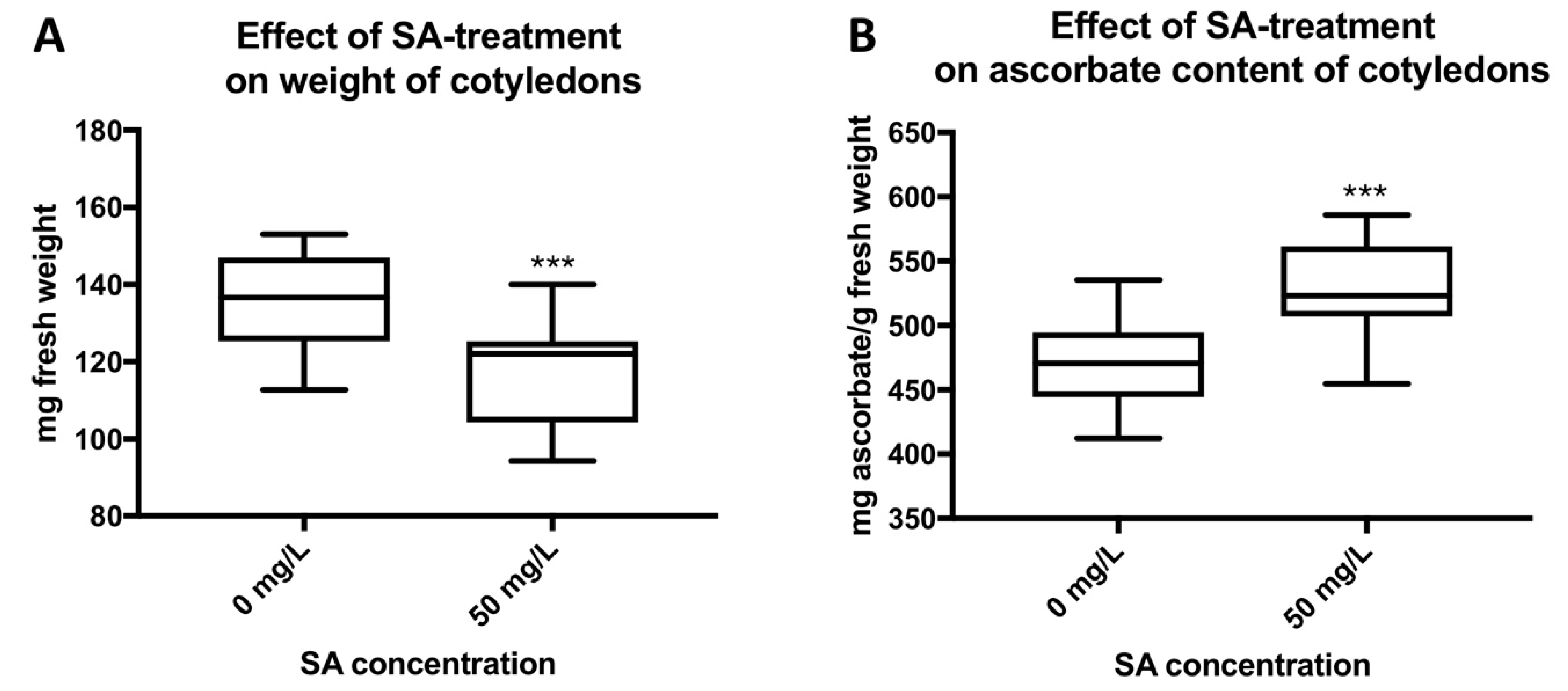


| Line | mg Fresh Weight of Three Cotyledons a | 50 mg/L versus 0 mg/L SA | ||||
|---|---|---|---|---|---|---|
| 0 mg/L SA | 50 mg/L SA | |||||
| Mean | SE b | Mean | SE b | % Weight Loss | Adjusted p Value c | |
| Line 1 | 401.2 | 10.8 | 366.5 | 8.6 | 8.6 | 0.091 |
| Line 2 | 364.5 | 8.8 | 331.1 | 6.3 | 9.2 | 0.191 |
| Control | 406.7 | 9.4 | 352.5 | 9.4 | 13.3 | 0.0008 |
| Line | mg Ascorbate/g Fresh Weight a | 50 mg/L versus 0 mg/L SA | ||||
|---|---|---|---|---|---|---|
| 0 mg/L SA | 50 mg/L SA | |||||
| Mean | SE b | Mean | SE b | % Ascorbate Increase | Adjusted p Value c | |
| Line 1 | 491 | 11 | 522 | 10 | 6.3 | 0.22 |
| Line 2 | 496 | 11 | 527 | 8 | 6.3 | 0.35 |
| Control | 472 | 9 | 525 | 10 | 12.3 | 0.003 |
© 2019 by the authors. Licensee MDPI, Basel, Switzerland. This article is an open access article distributed under the terms and conditions of the Creative Commons Attribution (CC BY) license (http://creativecommons.org/licenses/by/4.0/).
Share and Cite
Klemme, S.; De Smet, Y.; Cammue, B.P.A.; De Block, M. Selection of Salicylic Acid Tolerant Epilines in Brassica napus. Agronomy 2019, 9, 92. https://doi.org/10.3390/agronomy9020092
Klemme S, De Smet Y, Cammue BPA, De Block M. Selection of Salicylic Acid Tolerant Epilines in Brassica napus. Agronomy. 2019; 9(2):92. https://doi.org/10.3390/agronomy9020092
Chicago/Turabian StyleKlemme, Sonja, Yorick De Smet, Bruno P. A. Cammue, and Marc De Block. 2019. "Selection of Salicylic Acid Tolerant Epilines in Brassica napus" Agronomy 9, no. 2: 92. https://doi.org/10.3390/agronomy9020092
APA StyleKlemme, S., De Smet, Y., Cammue, B. P. A., & De Block, M. (2019). Selection of Salicylic Acid Tolerant Epilines in Brassica napus. Agronomy, 9(2), 92. https://doi.org/10.3390/agronomy9020092